Differences: Author Voice vs. Character Voice vs. Tone

There is an article, about just this subject, on the Writers & Artists website by Claire ADMIN (sic) It is dated 4 December 2024, and, as it is well written, I’m presenting it.

Unfortunately, it isn’t clear who Claire ADMIN is. A search on the website reveals four authors named Claire, and the link to ‘Claire ADMIN’ doesn’t work.

“Writing terms can be difficult and confusing. We break down the difference between author voice, character voice and tone.

Voice is the author’s personal style. It’s all about how you – the author – describe things; your choice of words, punctuation styles, whether you use short sharp sentences, long running sentences, or a mixture of both.

Voice isn’t something that can be taught, but it is something that can be developed. An author’s voice is instinctual and unique, just like a finger print, however it can take years for an author to develop their own clear voice.

So what makes a strong author voice? If you hide the cover of a book, read the opening page, and know who the author is then they’ve done a great job of creating a strong voice. Here are a few examples from some of my favourite authors and how I recognise their writing.   

  • Kiran Millwood Hargrave has a distinct poetic, melodic prose.
  • Katherine Rundell writes playfully and has some of the most visual metaphors out there. I bet good money that I could pick a Katherine Rundell metaphor out of a line-up!
  • Sally Rooney writes clean, simple language. Snappy sentences and short, sharp scenes of action are then followed by lengthier moments of character interiority

Think about the authors whose books you will automatically pre-order. What keeps pulling you to them? What is it about their writing that stands out? 

Character voice

Yet, an author’s voice isn’t to be confused with character voice. This is all about how your characters come across on the page and how they express themselves, both externally and internally. Character voice can be dictated by many things including their backstory, background, quirks and foibles, motivations and inspirations, personality traits, which can include strengths and flaws, as well as their dialect and word choice. 

A character’s voice will end with that book (unless it is a series) whereas the author’s voice will usually remain consistent throughout all of their books. Each character in your book should have a distinct voice and this is all to do with creating a band of characters who have different interests, quirks, strengths and weaknesses etc. 

The strength of a character’s voice is intertwined with the strength of the initial character creation. Think about some of your most memorable characters in fiction and make a note of what it is about them that stands out. 

For example, Violet Baudelaire in A Series of Unfortunate Events is always rational and brave, even in dire circumstances. When she ties her hair with a ribbon, she is able to access her technical, logical mind and come up with an invention that will save her and her siblings from harm.

Tone

Tone is a writer’s attitude toward the subject and the mood implied by an author’s word choice. Tone can change throughout a story, based on the different situations, conflicts or settings that are introduced. A clear tone can help readers to understand the emotion of a particular scene or part in a story. There are many different types of tone, from happy to sad, sarcastic to serious, creepy to light-hearted, curious to conflicted etc. Sometimes, If you don’t convey the right tone for the right situation, readers will feel confused and unsure as to how they are meant to be feeling towards specific characters or moments in your plot. 

Finding your author voice, character voice and the right tone are important to get right because without them, your story might lack depth and your readers could struggle to fully connect with your story.

Review: Dealing with Feeling

When I saw the announcement for this newly published book, I recalled how my mother had taught me to deal with my feelings: “banish them, unless they’re good.” You won’t be surprised that I’ve spent many years dealing (often ineffectively) with negative feelings, and on reading the book I found that many others have had the same experience.

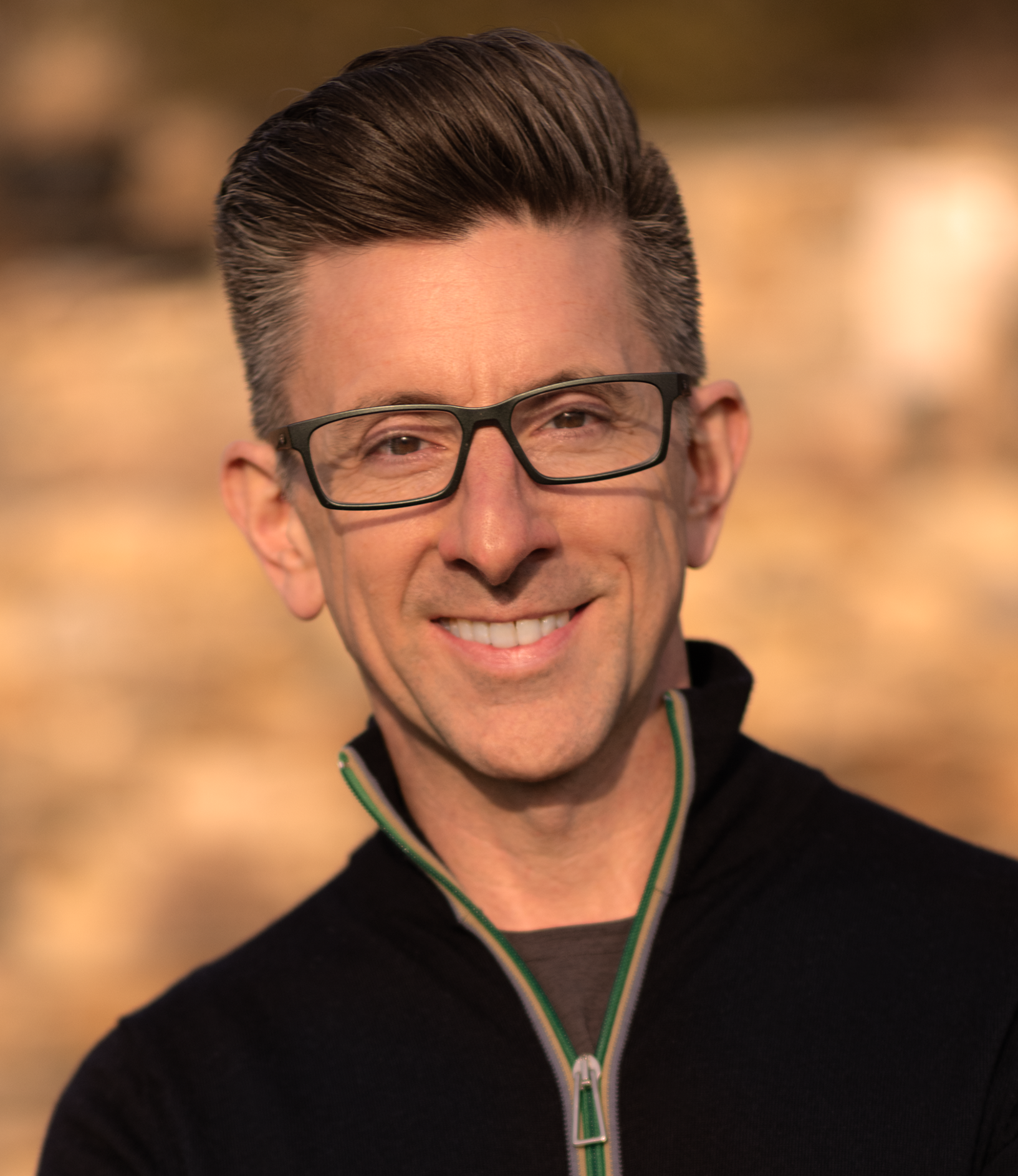
The book was written by Marc Brackett, who is the founding director of the Yale Center for Emotional Intelligence and a professor in the Child Study Center of Yale University. He is the author of the bestselling book Permission to Feel (translated into 27 languages) and which has transformed how individuals, schools and organisations approach emotional intelligence. He has headlined at more than 700 conferences, and advises Fortune 500 companies on integrating emotional intelligence into workplace culture.

Marc Brackett

Marc begins the book with a story about a short-tempered encounter that he had with his mother-in-law after a stressful day. His point is that even he is learning.

He then describes the seven reasons we can’t deal with our feelings:

  1. We don’t value our emotions
  2. We don’t recognise that dealing with feelings is a useful skill
  3. Nobody taught us at home
  4. Nobody taught us at school either
  5. We love the quick fix
  6. We rather treat ailments than prevent them
  7. There is no institutional support for regulation (of our emotions)

He then introduces the concept of regulation of emotions, which is a series of steps we can take to get control of our emotions. Co-regulation is the steps we can take to influence the emotions of others. There are detailed examples of how these concepts work in practice.

He says that it is important to correctly label the emotions we are feeling; this introduces clarity to the process. Next, he introduces four strategies for emotional regulation: quieting the mind and body; thinking critically about what is or has happened; gaining emotional strength through relationships with others; and keeping ourselves healthy. There are further chapters on how children learn emotional regulation and becoming the best version of yourself. The book also includes a practical guide to building emotional regulation skills.

For all the numbered reasons mentioned above, mastering emotional regulation is not am easy subject to teach. One can come across as a superficial expert or a ‘wannabe’ expert. But Mr Brackett’s use of personal examples from his learning experience, his sympathy for people who get it wrong, and his use of familiar language, give the reader confidence in him as a teacher. He also connects emotional regulation to such familiar topics as mindfulness, empathy, yoga, cultivating friends, and personal health care in order to make ER seem less esoteric and more ordinary. His tone and his language are inclusive and friendly. This book will be a valuable guide and handbook for many of us.

Just Jump

Harry Bingham, the Founder and CEO of Jericho Writers, makes a good point about the inertia we sometimes feel as writers.

He says, “Just Jump!”

Harry says, “

Ray Bradbury, the author of Farenheit 451 and much else, was a fan of the future. A fan of boldness and technological adventure.  In an interview with the New York Times, he said, “If we listened to our intellect, we’d never have a love affair. We’d never have a friendship. We’d never go into business because we’d be cynical: ‘It’s gonna go wrong.’ Or ‘She’s going to hurt me.’ Or ‘I had a couple of bad love affairs so therefore …’ Well, that’s nonsense. You’re going to miss life. You’ve got to jump off the cliff all the time and build your wings on the way down.”  That cliff-jumper is you. It’s me. It’s all of us.  It’s certainly true for any first-time novelist. My first book was a giant 180,000 words long. (And yes, it went to print at that length. And no, it’s not a length that publishers are especially looking for. But if a book is good enough, the length is kinda immaterial.)  I was naïve. I literally had no idea that writing a book and getting it published might be hard. I just assumed I could do it, and would do it. My track record (Oxford University, fancy American bank) was one of achievement. I knew I liked reading. I’d always assumed I’d end up being an author. So: write a book – how hard could it be? I knew how to write a sentence, so just do that over and over, and I’d have a book.  Everyone receiving this email is less naïve. The tone of voice needed for a fast commercial adventure-caper was not the same tone as that had produced success in Oxford philosophy essays. Once I’d written 180,000 words, I looked back at the start and realised it was … ahem, in need of vigorous editing. The kind of editing that involved selecting 60,000 words and hitting Delete. So I deleted the rubbish and rewrote it. Wrote it better.   But:  That wasn’t a failure. It was the second most important step on the road to success. The most important was writing the first word, the first sentence, the first paragraph, the first chapter. The most important step is always the same: it’s jumping off the cliff in the first place.  Deleting 60,000 words was the next crucial step: acknowledging that what I’d done wasn’t good enough; that more work could fix it; that I needed to design and use some better wings.  But you don’t get to the better-wing-design stage until you’ve got to the plummeting-downwards-out-of-control stage. You need them both.  And honestly: the challenges probably get a little bit less as you write more books, get them published, get paid, learn the industry, build a readership. But each book is its own cliff – its own well of uncertainty.  As you know, I’m a huge believer in nailing an elevator pitch before you start writing. I don’t care about pretty formulations – I don’t mind whether you have the kind of phrase that would look good on a book jacket or movie poster. But a list of ingredients that would spark interest in a potential book-buyer? That’s essential.  But oh sweet lord, there is a huge gap between knowing that you have, in theory, a commercially viable novel and actually making it so. I have sometimes written books that flowed, start to finish, with no huge mid-point challenges, but those have been the exception. Mostly, there’s been a hole – a gap – a problem.  I’m not a huge fan of pre-planning novels in vast detail. (But do what you like: it’s whatever works for you.) The only way to find that hole is to leap off the cliff. It’s the flying through the air that tells you what wings you need.  So jump.  Be uncertain.  Jump anyway.  Take the biggest boldest leap you can, knowing that you don’t have the answers.  Just jump.  Jump knowing that your wings aren’t ready. They get born by jumping. Wings that surprise you and delight you and complete you.  So jump.  Good luck. And happy Christmas.     

Could AI Write a War and Peace?

In last Saturday’s Telegraph there was an article by Tom McArdle with the title “Waterstones chief: AI could produce the next War and Peace”.

James Daunt, CEO, Waterstones and Barnes & Nobel

THE chief exec­ut­ive of Water­stones has said he is open to the com­pany selling books cre­ated by Arti­fi­cial Intel­li­gence, as long as they are clearly labelled.

James Daunt said it would be “up to the reader” whether to pur­chase them if they end up on his stores’ book­shelves.

There are major con­cerns from authors about the impact AI-gen­er­ated con­tent will have on the book industry, after a recent study found most writers feared their jobs were at risk from the tech­no­logy.

But Mr Daunt, who has been the CEO of Water­stones since 2011, told BBC’s Big Boss pod­cast that AI could pro­duce “the next War and Peace”.

“There’s a huge pro­lif­er­a­tion of AI-gen­er­ated con­tent and most of it is not books that we should be selling,” he said. “Hope­fully, pub­lish­ers avoid it; we as book­sellers would cer­tainly, nat­ur­ally and instinct­ively, dis­dain it.”

A Uni­versity of Cam­bridge study last month found wide­spread con­cerns from nov­el­ists about their jobs being replaced by the tech­no­logy and fears that work writ­ten by humans could become “an expens­ive lux­ury”.

In response, Mr Daunt said: “At the more lit­er­ary end I don’t see that being the case. There is a clear iden­ti­fic­a­tion of read­ers with authors, and book­sellers play an import­ant role in join­ing authors and read­ers.

“That does require a real per­son.

“As a book­seller, we sell what pub­lish­ers pub­lish, but I can say that, instinct­ively, that is something we would recoil [from]. It’s really import­ant that authors earn a liv­ing.”

Asked whether the high-street book­shop would sell AI books, he said: “We would never inten­tion­ally sell an AI-gen­er­ated book that was dis­guising itself as being other than that.”

When pressed on whether he would con­sider it if they were clearly labelled, he respon­ded: “Yeah, if it was clear what it was, then I think it’s up to the reader.

“Do I think that our book­sellers are likely to put those kinds of books front and centre? I would be sur­prised.”

He warned that given the exor­bit­ant sums of money being spent by tech com­pan­ies on AI, it was hard to know its lim­its.

“Who’s to know,” he said. “They are spend­ing tril­lions and tril­lions on AI and maybe it’s going to pro­duce the next War and Peace. If people want to read that book – AI-gen­er­ated or not – we will be selling it. As long as it doesn’t pre­tend to be something that it isn’t.”

Dan Brown’s Latest

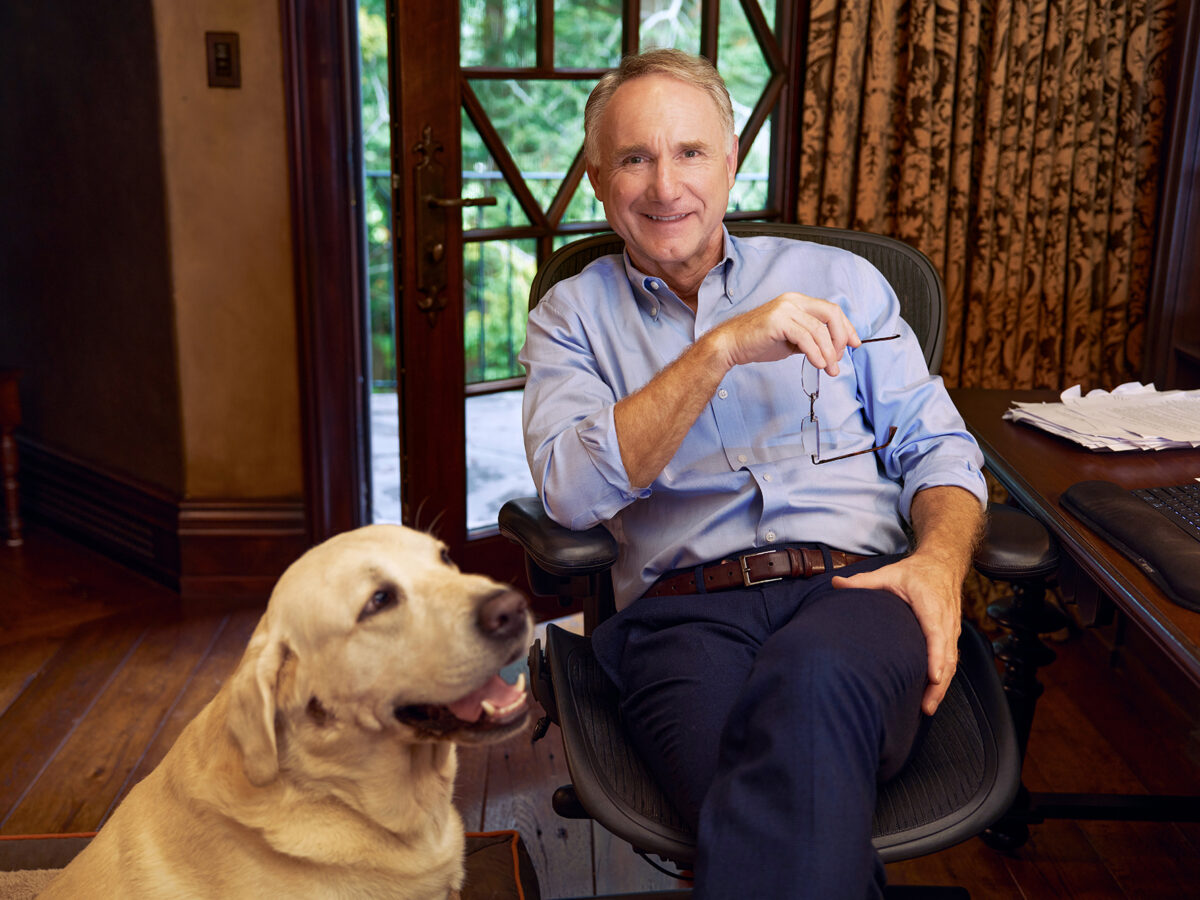
Back is September, I reported on an interview with Dan Brown about his new novel, The Secret of Secrets, reported by Hillel Italie of the Associated Press.

For those of who are fans of Brown, I have to confess that Brown went to the same high school I did: Phillips Exeter Academy in Exeter, New Hampshire, although Brown was class of ’82 and I was ’56.

Dan Brown

The reason I mention this is that Brown is interviewed by Matt Miller, in the Fall 2025 issue of The Exeter Bulletin, the alumni magazine. Matt W. Miller is an award-winning poet, essayist and educator. He taught English and coached football at the Academy for 18 years and is currently an associate lecturer in creative writing at the University of Massachusetts Boston.

MM: The last installment of your Robert Langdon series came out eight years ago. What does it feel like to return to that character?

It’s like I never left. He and I share a lot of the same passions: history, art, codes, treasure hunts. I live vicariously through him. I sit alone in the dark with a computer, and he runs around the world. It’s a lot of fun.

MM: The book explores the noetic sciences, a multidisciplinary field that studies subjective experience and consciousness using scientific methods. What drew you to that subject?

I wrote a book called The Lost Symbol about 12 years ago in which there was a character, Katherine Solomon, and she was a noetic scientist. As I was writing that character and learning a little bit about noetics, I thought, oh my god, human consciousness is a book in itself. I thought it would be the book I wrote after The Lost Symbol, but it was too hard. I didn’t know enough about consciousness. I never imagined it would take eight years, but it’s an ethereal topic. I always felt like I was trying to get my arms around smoke, just trying to figure out how to write this.

MM: It’s a deeply researched book. Was there some “aha!” point when you knew this subject had to be the subject?

I read about an experiment in precognition where different parts of the brain light up when you see different kinds of images. In the study, the brain was lighting up before an image was seen. So, what does that mean? Perhaps the brain is creating what image to see. Or there was precognitive knowledge of what was about to be seen. Or perhaps time flows in two directions. Any of those answers, and you’re like, what? None of that makes sense. This experiment made me really think that, from a personal level, I had to understand consciousness. And as a writer, I had to figure out how to share it in a fun package.

MM: How do you balance getting all that researched information about politics, history, science, physics and metaphysics into the novel while also moving forward narrative action and character development?

You make sure that the data dump that you are performing is directly relevant to whatever character you’re writing about. Langdon could be walking down the street and think, oh, Petřín Tower, and I give a two-minute dissertation on Petřín Tower, which feels like an aside, and that’s boring. The information has to be part of solving a puzzle. It must be linear to the plot, not ancillary. And don’t fall in love with your research. If it doesn’t serve the plot, it goes.

MM: That’s the toughest thing for writers, knowing what to cut.

The delete key has to be your best friend. Any artist or musician understands the importance of blank space or silence. The rests and silences give the melody to that place. It’s the same way in writing. You need to let your writing breathe.

MM: You thank your editor Jason Kaufman in your acknowledgments. Does an editor, like a writing teacher, help you see where you need to pull back or where you need more?

That’s exactly what Jason does. He’ll read something and say: “Hey, this is great, but we don’t need four paragraphs about Prague Castle. We need two.” Then he’ll also say: “Oh, you just glossed over this thing. I want to know more about that.” He not only shares my taste, he has perspective, which is what you lose as a writer. It’s nice to have somebody come in and read it as a first-time reader, which is really the only way to know how it’s reading at all.

MM: The Secret of Secrets is set in Prague. What drew you to that city?

Setting is critical. Location is a character. Prague has a personality, as does Paris, as does the Arctic Circle. Wherever you’re setting a book, it needs to be integral to the plot. When I decided to write about consciousness, I knew it had to be Prague. Prague has been the mystical center of Europe since the 1500s, when Emperor Rudolf recruited mystics to come to Prague to talk to the Great Beyond. As far as character goes, Prague is perfect for a Langdon book. There are passageways and a door with seven locks and crypts and cathedrals and all sorts of secrets.

MM: As Langdon learns more about the nature of nonlocalized consciousness, I kept thinking about artificial intelligence. If AI could develop consciousness, where would that consciousness come from? Is it created? Is it tapped into?

Can we create artificial consciousness? When you have enough synapses, does it just happen? It seems unlikely that it just happens. And this whole new model of the brain as a receiver of consciousness changes everything because if we’re trying to build an AI to receive consciousness, it’s a much easier proposition. It’s not like you have to build something that can create all the hopes and dreams and creativity and memories and all that. You just have to receive it. I actually think that this model of consciousness is pretty exciting and makes the quest for artificial consciousness more attainable, as well as consciousness after bodily death.

MM: Not to give too much away, but there’s a fascinating section in the novel about halos and how they are rendered in art. Langdon saw the beams of light as emanating out of halos. But then he realizes he may have misread the images, that the beams are radiating back into the halos, and that is consciousness coming in.

Right. And if you read Scripture, really any religion, one receives the word of God. You don’t conjure God; God flows in. And we kind of miss that. That could be consciousness flowing in because it is not housed within the brain, as materialists presume, but outside the brain.

MM: You have a golem character. In the Jewish tradition, the Golem is a created being, an artificial intelligence with consciousness.

Yes, one of the reasons I chose the Golem is that it’s this inanimate object that can be infused with consciousness just by writing a magic symbol, or a code, on its forehead.

MM: Do you think that this novel and its topic of a nonlocalized consciousness may have a particular prescience in these times?

I hope so. There’s no bigger topic than human consciousness. It’s the lens through which we experience reality, experience ourselves and other people. The fear of death is the universal fear. Religious or atheist, we all are curious and unsettled by the fact that our lives are finite. This notion of what happens when we die is the big question. If we can adopt a mindset where we realize that human consciousness survives death, maybe some of that fear starts to dissolve. And the thing about the fear is that it’s really the catalyst for a lot of bad behavior.

MM: Do you believe in this idea you bring up in the novel that if consciousness transcends our physical self, then we can move beyond the borders of mortality and by doing so move beyond the borders between each other?

Yes, I do. If we can start to understand that this life is just one stop on a much bigger journey, bigger than things like nationalism, country, race and all those things that separate us, then it’s quite possible that humanity could move forward in a benevolent fashion.

Non-AI Novels Will Be a ‘Luxury’

There is an article in today’s Telegraph written by Tom Mc Ardle which reports on a study done by Dr Clementine Collett at Cambridge University on AI’s effects on literary trends.

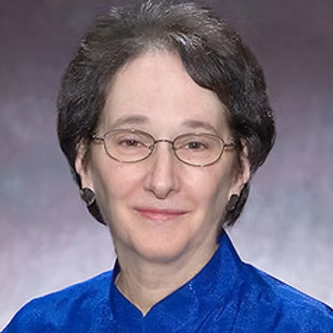
Dr Clementine Collett is a DPhil student on the ‘Information, Communication and the Social Sciences’ course at the Oxford Internet Institute. Clementine’s doctoral research explores gender bias in artificial intelligence (AI) recruitment technology.

Clementine has worked as lead author on reports such as IA and Gender: Four Proposals for Future Research (2019) with the Leverhulme Centre for the Future of Intelligence at the University of Cambridge and The Effects of AI on the Working Lives 0f Women (2022) with the IDB, OECD and UNESCO.

Dr Clementine Collett

Novels written without artificial intelligence will become an “expensive luxury”, according the report.

Dr Clementine Collett has claimed that the creative market could become “tiered”, with only those who could afford human-written work being able to read it.

“[There] is a real concern from literary creatives that we will have a two-tier market, more so than we have already,” she told BBC Radio 4’s Today programme.

“Where human-written work will be more expensive – a luxury item.Those who can afford it will read human-written novels and AI generated content will be cheap or free and that will potentially have big societal implications as well.”

Dr Collett, who conducted the study at the University of Cambridge’s Minderoo Centre for Technology and Democracy (MCTD), interviewed to nearly 400 literary creatives across the UK about the threat of generative AI.

“There is widespread concern from novelists that generative AI trained on vast amounts of fiction will undermine the value of writing and compete with human novelists,” she said.

Dr Collett called on the Government to weigh up the economic growth it has so far prioritised by developing AI, against the potential impact on the creative industries, including readers and the novel itself.

The study found that almost two thirds (59 per cent) of novelists reported that their work had already been used to train large language models, which power AI tools, without permission or payment.

Such practices have already impacted the livelihoods of those surveyed, with more than a third (39 per cent) reporting their income being negatively affected by AI.

The report found genre fiction, especially romance, thrillers and crime, is more at risk from displacement than more highbrow literary fiction. Dr Collett said this was because of their more “formulaic” make up.

“We don’t know what generative AI is going to be able to do in the future in terms of producing more original content,” she added.

“It’s really important because novels are such a bedrock of our thriving British creative industry and they’re the core part of our humanity.” She called on Government intervention to help protect the industry.

Prof Gina Neff, executive director of the MCTD, said: “Our creative industries are not expendable collateral damage in the race to develop AI. They are national treasures worth defending.”

A spokesman for the Department for Science, Innovation and Technology said: “We’ve always been clear on the need to work with both the creative industries and the AI sector to drive AI innovation and ensure robust protections for creators.”

Review: The Confessions of Saint Augustine

I persuaded myself to buy this book after reading that, “The Confessions of Saint Augustine is one of the most influential autobiographies ever written. In this timeless work, Saint Augustine, Bishop of Hippo, candidly reflects on his moral struggles, spiritual journey, and ultimate conversion to Christianity. With honesty and depth, his shares his transformation from a life of sin to one of faith and grace.”

The Conversion of Saint Augustine

Augustine was born in 354 in Thagaste (now Souk Ahras, Algeria) in the Roman privince of Numidia. His mother, Monnica, was a devout Christian; his father Patricius was a pagan who converted to Christianity on his deathbed. Scholars generally agree that Augustine and his family were Berbers, an ethnic group indigenous to North Africa, but were heavily Romanized, speaking only Latin at home as a matter of pride and dignity.

At the age of 11, Augustine was sent to school at Madaurus a small Numidian city about 31 kilometres south of Thagaste. There he became familiar with Latin literature, as well as pagan beliefs and practices. His first insight into the nature of sin occurred when he and a number of friends stole pears from a neighbourhood garden.

At the age of 17, through the generosity of his fellow citizen Romanianus, Augustine went to Carthage  to continue his education in rhetoric, though it was above the financial means of his family. Despite the good warnings of his mother, as a youth Augustine lived a hedonistic lifestyle for a time, associating with young men who boasted of their sexual exploits. Augustine began a relationship with a young woman in Carthage. Though his mother wanted him to marry a person of his class, the woman remained his lover. He was warned by his mother to avoid fornication (sex outside marriage), but Augustine persisted in the relationship for over fifteen years.  He ended his relationship with his lover in order to prepare to marry a teenage heiress. By the time he was able to marry her, however, he had already converted to Christianity and decided to become a Christian priest and the marriage did not happen.

After converting to Christianity, Augustine turned against his profession as a rhetoric professor in order to devote more time to preaching. In 391 Augustine was ordained a priest in Hippo Regius (now Annaba), in Algeria. He was especially interested in discovering how his previous rhetorical training in Italian schools would help the Christian Church achieve its objective of discovering and teaching the different scriptures in the Bible. He became a famous preacher, and was noted for combating the Manichaean religion, to which he had formerly adhered. He preached around 6,000 to 10,000 sermons when he was alive; however, there are only around 500 sermons that are accessible today. In 395, he was made Bishop of Hippo. He remained in that position until his death in 430. Bishops were the only individuals allowed to preach when he was alive and he scheduled time to preach after being ordained despite a busy schedule made up of preparing sermons and preaching at other churches besides his own.

 As a theologian and philosopher, his writings deeply influenced the development of Western philosophy and Western Christianity, and he is viewed as one of the most important Church Fathers of the Latin Church. His many important works include The City of God, On Christian Doctrine and Confessions

When I started reading Confessions, I was expecting a clear and complete confession of his sins, together with a detailed account of what persuaded him to convert to Christianity. The detail is missing. He confesses, however, to the theft of the pears and to relationships with concubines. He mentions the influence of his mother, but there is little about his conversion. Much of the book is devoted to his praise of God. From the very beginning if the book, he is clearly a man of very deep faith, though he regarded himself as sinner, and the transition from sinner to saint is granted. He also engages in philosophical discussions. The book was translated into ‘thou and thee English’. I found the book long (345 pages) and disappointing.

World-Building with Sound

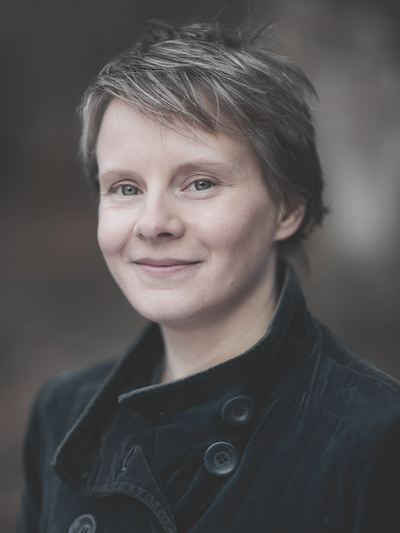
Jaimi Ryan has an article dated 11 October 2025 in Writer’s Digest on the subject of using descriptions of sound creating the world of a novel. She says, “Audio drama isn’t just about dialogue. It’s the hiss of a radiator, the crunch of boots on dry leaves and the pause before a truth is revealed. Just as novelists use language to build immersive worlds, audio creators use sound to transport listeners into spaces that exist only in the imagination.”

Jaimi Ryan is a seasoned Podcast Producer and Sound Designer with a background in music production. After pivoting from music to podcasting in 2017, she has had a wide range of podcasting experiences including podcast creation, remote recording, audio restoration, post production, content editing and hosting.

Jaimi Ryan

Jaimi offers ten examples of how sound effectively in fiction deepen world-building and heighten storytelling. Sound provides another sensory dimension to our creation of the world in the reader’s imagination.

1. Establish Setting Through Ambient Sound

Think of ambient sound as the aural equivalent of a setting paragraph. In prose, you might write: The bustling tavern smelled of smoke and spilled ale. In a podcast, you can build the same tavern with clinking glasses, murmured conversations, a lute playing softly in the corner, and the occasional burst of laughter.

A great example of this is The Magnus Archives, which often drops listeners into a location without explanation, simply using a faint hum of fluorescent lights or the drone of a tape recorder to situate listeners in an archival office.

2. Use Sound as Characterization

Characters don’t have to be introduced only with dialogue. Their sound signatures (the objects, rhythms, or textures that follow them) can give immediate recognition.

For instance, maybe a character’s arrival is always marked by the swish of warm-up pants or heavy footsteps with an irregular gate. A fantasy warrior might be defined by the clanking of armor, and maybe a futuristic smuggler always powers down a ship with a metallic sigh. These repeated cues become auditory shorthand.

3. Control Pacing With Silence

Writers know the power of white space. A sentence fragment on its own line can punch harder than a full paragraph. In audio, silence has the same effect.

A long pause before a confession can feel like holding your breath. A sudden drop into stillness after a loud scene can jar listeners into alertness. Even half a second of silence can sharpen a joke’s timing.

Think of silence not as empty, but as intentional space. The absence of sound is still a sound choice, and you want to be sure there are no unintentional silences.

4. Layer Sound for Emotional Resonance

Prose layers tone through metaphor, diction, and rhythm. Dialogue sits in the foreground, but what happens underneath can amplify emotion.

Example: A tender scene might include a faint piano or the distant chirp of crickets, lending warmth. A horror moment could include barely audible whispers under a monologue, or a low drone slowly increasing in volume, unsettling the listener without ever being directly acknowledged.

The trick is subtlety. Too many layers muddy the track. But the right two or three can make a scene unforgettable.

5. Build Tension With Repetition

Writers often use recurring images or motifs, and sound can do the same.

Consider the steady drip of water in a dungeon scene. If it returns across episodes, it builds anticipation: Why does it matter? Or a few distant, unexplained “monster roars” early on. Each recurrence adds dread until the beast finally appears.

6. Use Perspective and Proximity

Audio production can mimic point of view. A voice whispering directly in one ear (using stereo panning) creates intimacy, an almost conspiratorial feel. A muffled argument heard through a wall distances the listener, making them an eavesdropper rather than a participant.

This is the audio equivalent of close third-person versus omniscient narration. Ask yourself: how “close” should the audience feel to this moment? Then adjust the sound perspective accordingly.

7. Contrast Soundscapes

Sometimes the most effective worldbuilding comes from playing the sound against the situation. A gruesome scene underscored by cheerful music, or a high-stakes conversation happening over chirping birds or children playing can disorient the listener in interesting ways and create dramatic tension.

8. Map Geography Through Sound Cues

Listeners can “see” a space through audio cues. Footsteps shifting from tile to gravel tell us a character is moving outdoors. A voice echoing differently in each room maps an environment in our heads. For even more immersion, consider stereo panning sound effects to the left or right, or even moving from one ear to the other to put the listener in the middle of a scene. Those footsteps can move from tile to gravel, and they can also move from the left ear to the right as though the character is walking by the listener.

9. Treat Sound Effects as Symbols

Sounds can function like symbols in prose. A tolling bell might signal both time passing and the inevitability of death. If you repeat sounds strategically, they accrue significance. They become thematic shorthand, much like recurring images and motifs in a novel.

10. Marry Soundscape and Dialogue

Finally, remember that sound is your setting, your imagery, even your punctuation. Pacing is heavily affected by the way the dialogue interacts with the sound environment.

A rapid-fire exchange over pounding rain creates urgency. Slow, deliberate dialogue against a hushed forest soundscape encourages reflection. Moments of soundscape without dialogue can create immersion, tension, reflection, or whatever mood you’re trying to build while also giving the listener a moment to digest what is happening in the story.

As you experiment, listen to how other audio dramas and films use sound. Notice when a silence unnerves you, when a sound effect feels over-the-top, when background noise deepens immersion. Don’t forget to have some fun with it, audio is an exciting medium for creative storytelling.

Review: The Bustamante Story

The subtitle of this book is ‘& Behind the Scenes of Shadow Cell’. The author is ‘Harry Greene’.

After reading an article in the Atlantic about two CIA agents who fell in love on an assignment involving the creation of a shadow cell inside a global competitor of USA, I searched on Amazon for their book.

There appeared to be several, but I couldn’t find one with Shadow Cell in the main title. So I picked this one out as a likely candidate.

This book at 135 pages. The interesting information in it could have been divulged in ten pages. It is repetitious on several subjects: tight security at CIA; the two agents felt under great pressure at CIA for their relationship; the agents were clever, top performers. There were almost no examples backing up these assertions. The author is very careful to speak kindly of the CIA and the agents, and not to mention even a trivial fact which might be classified. He probably wants to be clear of any litigation, should his real name be known.

How wrong my choice was! This one is most likely a knock off of the real book (pictured below). A knock-off written by a Joe Bloggs under the pen name of a Harry Green. There is a Harry Green listed on Amazon who has written 16 fiction and non-fiction books on various subjects, none of which include the CIA. This book has an ISBN number (which no longer comes up on Amazon searches). In fact, this book no longer exists according to Amazon. This book doesn’t mention its publisher or its printer. It says only that the book was printed in New Haven, Connecticut on 10 September 2025. There is no author biography or statement of his/her relationship to the agents or the CIA. The narrator starts right in as if he had permission to tell the story.

The real book: a New York Times Bestseller!

Interestingly, I don’t believe the real book was listed on amazon.co.uk when I bought the knock-off. In fact, it still doesn’t seem to be listed. I just bought a real copy on amazon.com. It was published on 9 September 2025.

So what’s all the hubbub about? Well, here’s the publicity from the real thing:

INSTANT NEW YORK TIMES BESTSELLER | A thrilling firsthand account by husband-and-wife CIA operatives who, against all odds, triumphed in a deadly cat-and-mouse game against a mole within the agency—an unprecedented insider account of 21st-century spycraft in the tradition of Argo and Black Ops.
 
Andrew and Jihi Bustamante were a “tandem couple”: married spies who’d dedicated their lives to the CIA. They met as trainees at Langley, and got married while hunting terrorists across the globe. Then, suddenly, they were assigned to a mission so sensitive and explosive that the CIA still has never acknowledged it. The CIA’s source network in a country code-named “Falcon”—one of America’s most formidable rivals—had been compromised by a mole, and the agency needed a new way to collect intelligence there. Young newlyweds, the Bustamantes were considered safe choices for this daunting task precisely because they had no experience in Falcon. They were also loyal, forgettable, and completely disposable—operatives who could help to strengthen the CIA’s position in Falcon while simultaneously serving as bait for the mole.
 
But although their superiors at the CIA didn’t realize it, the Bustamantes also brought another advantage to the table: a granular understanding of how terrorist cells operate, and how the agency could exploit those same tactics to keep America safe. Assembling a rag-tag team of fellow operatives and recruiting new sources from Falcon, the Bustamantes pioneered a new way of spying by building a cell of their own—right at the heart of the CIA.

The propulsive, untold tale of one of history’s greatest intelligence crises and the unlikely band of agents who were sent in to clean up the mess, Shadow Cell allows us to peer behind the curtain to see how today’s spy wars are being fought—and won.”

AI Controversy

There is an article in the Atlantic magazine on 19 September about how the publishing industry views AI. It is written by Boris Kachka, Senior Editor of the Atlantic. He titles the article ‘Publishing’s New Microgenre’

Boris Kachka

“Book publishing has, let’s say, a complicated relationship with artificial intelligence. Earlier this month, Anthropic settled a lawsuit brought by authors and publishers, agreeing to pay $1.5 billion after training its chatbot, Claude, on pirated text; hundreds of such copyright lawsuits against data-scraping tech companies are still making their way through the courts. Many in the culture industries see AI as not just a thief but an existential competitor, ready to replace human writers at every turn. Yet publishers are also fascinated by the technology (and not only because they use it for marketing and other tasks). The major imprints have been churning out a robust collection of books (more than 20 this year, by my count) that explain, extol, deride, fictionalize, and occasionally incorporate AI.

Among these recent releases, one overarching theme is a debate occurring between so-called accelerationists and doomers—those who think superintelligence will hugely benefit humanity and those who suspect it will kill us all. Adam Becker, a journalist and former astrophysicist, disagrees with both groups. Becker, the author of the recent anti-utopian critique More Everything Forever, wrote about his problems with a new dystopian manifesto, If Anyone Builds It, Everyone Dies, by Eliezer Yudkowsky and Nate Soares.

Becker’s main objection to both sides is that they overhype the long-term, world-altering effects of superintelligence while downplaying the “much more immediate and well-founded concerns about the dangers of thoughtlessly deployed technology,” he writes. The kinds of ongoing changes that he would prefer to focus on are well accounted for in 2025’s AI book haul. Readers can find out more about how AI’s processes resemble the workings of our brains (or don’t); how the technology is changing medicine, warfare, education, business, and politics; how it has already profoundly altered society. But to me, the most interesting of the crop (or maybe just the most fun) are the works that explore our individual relationships with AI, through fiction or memoir.

Novels such as Amy Shearn’s Animal Instinct and Jayson Greene’s UnWorld imagine chatbots standing in for boyfriends or dead loved ones; politician-author Stacey Abrams invents a rogue medical-AI company in her latest legal thriller, Coded Justice. Hamid Ismailov’s wildly experimental novel We Computers, translated from Uzbek and longlisted for a 2025 National Book Award, creates an alternate history in which a 1980s computer intelligently generates a new kind of mind-expanding, transnational literature.

Occupying a category all its own is Searches, a fragmented memoir in which Vauhini Vara works through her complex feelings about technology. Vara interweaves the story of the rise of the internet with the narrative of her life and work as a tech reporter. She also includes strange interludes: prose-poetic lists of her Google searches; a collection of her Amazon-purchase reviews; and, most strikingly, a series of long interactions with ChatGPT-3 as she works to revise an essay about a sister who died years ago. As Matteo Wong noted in his Atlantic article about the book, the large language model produced what Vara considered to be the essay’s best lines while also inserting plenty of lies. She wound up employing the bot not to think for her, but to prod her into a different kind of thinking; it forced her, she writes, “to assert my own consciousness by writing against the falsehoods.” I enjoyed the book in part because it was less about what technology is doing to us than what we are doing in response.”