Reading Is Down; Book Sales Are Up?

Yesterday the Telegraph had an article to this effect written by Hannah Boland, the Retail Editor.
Hannah said, “Across Britain, fewer and fewer people are reading books. The data are plain as day.

The number of children who read outside of school every day has halved over the past two decades, while the number of children who say they enjoy reading in their spare time is down by 36pc.

Among adults, reading numbers are also in freefall. In a YouGov survey last year, two in five people said they had not read or listened to a book in the past year – compared with around a quarter of adults in 2001.

For Waterstones, figures such as these would be expected to raise alarm bells. With the high street in crisis, you would think the decline of reading would put businesses such as Waterstones next in line to face the chop.

Yet the mood is anything but sombre at Britain’s biggest bookseller. In fact, Waterstones’ owners are so confident in the business that they are gearing up for a multibillion-pound stock market listing, with a float expected as soon as this summer.

This month, it emerged that Elliott Advisors, the company’s owner, had lined up advisers at Rothschild to work on the process.

The private equity group is preparing to list both Waterstones and its US cousin Barnes & Noble together as one business.

In a sign of just how well Waterstones appears to be doing, Elliott is understood to be leaning towards the London Stock Exchange for a debut of the combined company.
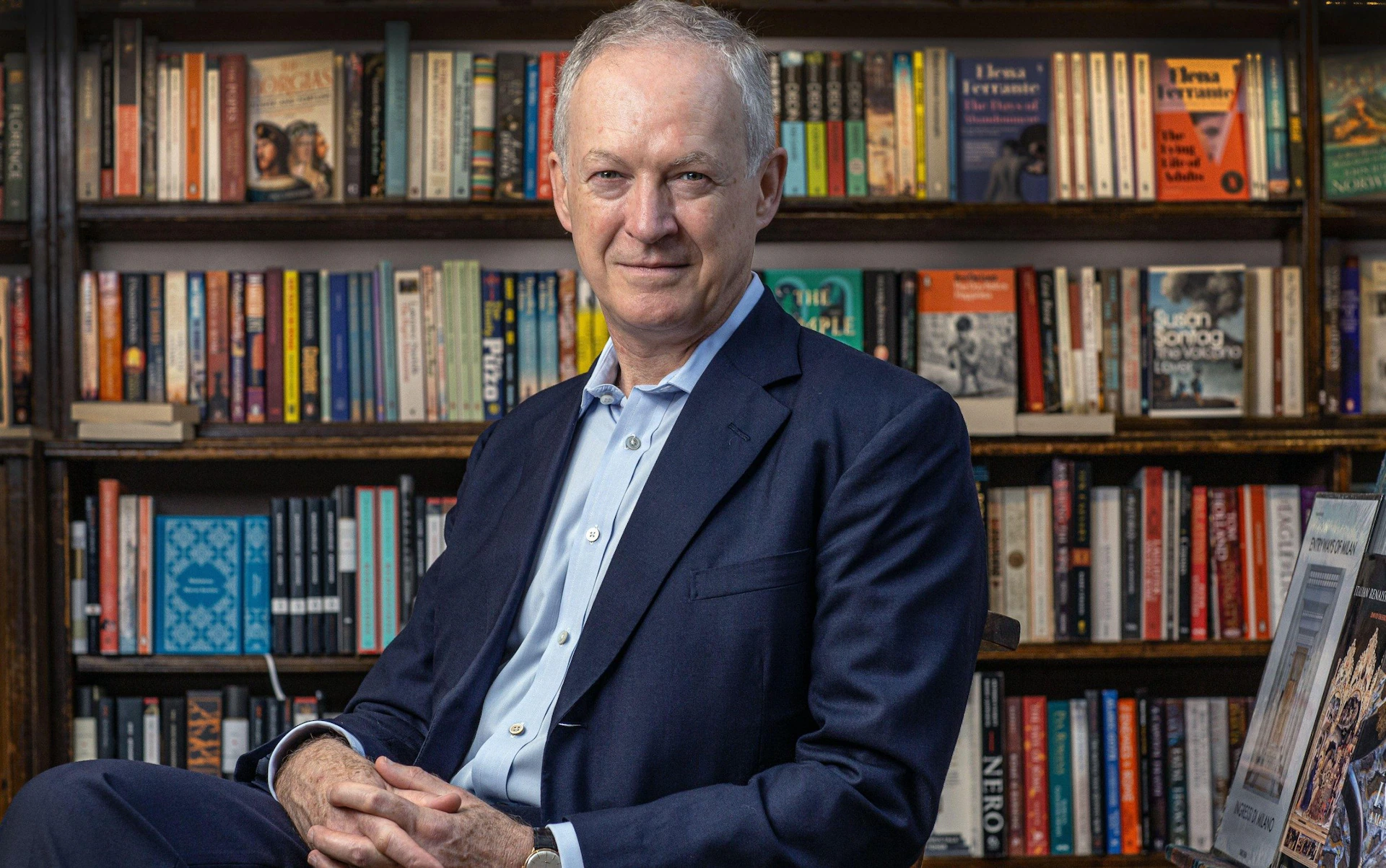
James Daunt, the bookseller’s lauded chief executive who also runs Barnes & Noble, is himself a Briton.

Daunt, who runs both booksellers, described 2025 as a “fantastic year for us”, with both the US and UK businesses expanding into new areas.

Barnes & Noble opened 67 new stores while Waterstone is adding around 10 new shops a year, even though expansion is harder given it is so well-established.

“Stories of declines in reading evidently do not correlate to book buying,” he says. “Publishers and independent booksellers, as well as ourselves, are all doing well in both the US and the UK.”

The figures back him up. The number of independent booksellers across the UK rose slightly last year, even as the high street was struck by a series of retail collapses and store closures.

Between them, Barnes & Noble and Waterstones made a profit of $400m (£300m) last year, with sales standing at $3bn.

That is despite Barnes & Noble facing the same problem with declining reading numbers as Waterstones. A study by the University of Florida in August found that the number of Americans reading for pleasure had plunged by 40pc over the past 20 years.

Official accounts show that Waterstones’ sales rose to £565.6m for the 12 months to May 3, compared with £528.4m a year earlier, according to documents published on Companies House this week. It made pre-tax profits of £40m for the year.

Barnes & Noble opened 67 new stores while Waterstone is adding around 10 new shops a year, even though expansion is harder given it is so well-established.

Waterstones recently said it had been boosted by growing demand for “romantasy” novels – known colloquially as fairy porn.

These fantastical tales of heroines being swept off their feet by knights and wizards have gained huge numbers of fans among British women.

Sarah J Maas, author of romantasy novel A Court of Thorns and Roses, has sold more than 75 million copies of her books globally. Publisher Bloomsbury said demand for Maas’s books helped it to the highest first-half sales and earnings in its history last year.

Elliott is understood to be planning to remain as the biggest shareholder in the combined bookselling business for some time following the market debut, which may give new investors more confidence in its future.

One banking source suggested now was as good a time as any for Elliott to kick off the process of listing Waterstones on the stock market and realising some return on its investment.

“Everything is a bit s–t,” they said. “But that’s not going to change anytime soon and there have been so few returns back on private equity that if they can, they probably should.”

For Daunt, his focus continues to be on the day-to-day. Over the past week, he has been travelling down the west coast of the US to visit Barnes & Noble shops. Despite falling reader numbers across both the US and UK, Daunt says stores are thriving.

“Bookselling is presently vibrant,” he says.

Soon he will find out if investors agree.”
“The Book Began to Take on a Life of Its Own”

There is an article, written by Bridget Collins, on the Writer’s Digest website dated 20 August 2024 with a title very similar too the above. It caught my attention because I have written one novel where I experienced the same feeling that the book was writing itself. That novel is Seeking Father Khaliq, which is the best novel I’ve written. I wanted to find out what Ms Collins experience was.

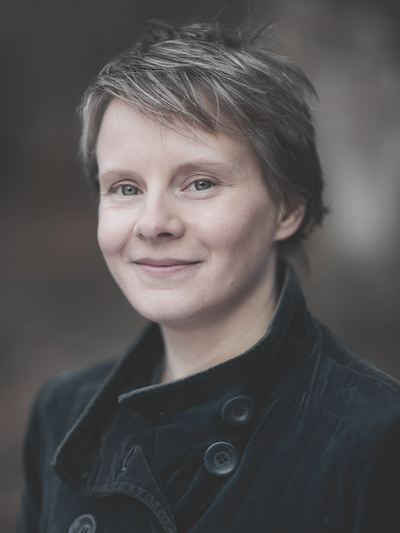
Bridget Collins is the international bestselling author of The Binding and The Betrayals. She is also the author of seven acclaimed books for young adults and has had two plays produced, one at the Edinburgh Festival Fringe. Bridget trained as an actor at the London Academy of Music and Dramatic Art after reading English at King’s College, Cambridge. She lives in Kent, U.K

Bridget Collins

Ms Collins says, “I’ve been fascinated by the concept of silence for a long time, especially the way that it can be both a blessed escape from noise and a prison—I wanted to write a story that evoked that ambivalence and explored what it would mean to be able to control not only what you hear but what everyone else hears. The book is about silence as a luxury, as a magic spell, and as a weapon, but most of all it’s about power and seduction, and about how we become complicit in huge and terrible things—and about how we can try to put that right.

“I can’t remember exactly when I had the idea, but it would have been some time in 2019. Then I actually started writing in January 2020—so it took a long time to get from first draft to publication. And it went through three major redrafts, and changed an enormous amount—everything, from the central relationship to the narrative voice and the structure, changed! The only thing that stayed the same was the ending. It was probably the most difficult book I’ve written to date, with characters coming and going and taking an enormous struggle to pin down. But as I wrote and rewrote, the book began to take on a life of its own, and there was something quite magical about that.

“One of the most interesting and rewarding features of writing the book was working with an authenticity reader from the d/Deaf community. She was absolutely brilliant, and although I’d tried to do as much research as possible in advance of her input, it was really special to have the benefit of her experience and expertise. She had some fascinating insights into the characters and historical background of the book, and also made me think a lot about what I was saying in the context of d/Deaf culture and the current political conversations around that. Not to mention the obligatory moment of any editing process where someone points out something that should have been obvious and you cringe inside…!

“I think because this book was such a hard slog and I had to start from nothing over and over again, there weren’t many surprises—what seemed to happen was a very slow process of revelation and refinement. The book told me, over the course of those drafts, what it wanted to be; but it was like chipping away at a block of stone, watching it take shape inch by inch. That said, the biggest (and in some ways most exciting) change was the female narrator, who only began to speak for herself in the second draft, and then became more and more important.

“I would love it to transport my readers to a vivid, immersive world where they can watch a compelling story unfold—and if it stays with them after they come back to real life, that would be lovely too.”

I can confirm that there is something magical when the book begins to take control in your mind. I didn’t have Bridget’s experience with The Silence Factory of having major rewrites, because I had an idea of the two major characters, the setting and the issue between them. The book wanted the additional characters, and settings and plot. I had to do a lot of research to produce a credible story, but that was part if the fun.

Is AI Killing Reading, Too?

There is an article on The Conversation website by Naomi S Brown, Professor Emerita Linguistics at American University, dated 13 August 2025, which makes just that point.

Professor Baron is interested in language and technology, written language, reading, the history and structure of English, and higher education. She is a former Guggenheim Fellow, Fulbright Fellow, and Visiting Scholar at the Stanford Center for Advanced Study in the Behavioral Sciences. Her books include Always On: Language in an Online and Mobile World (which won the English-Speaking Union’s Duke of Edinburgh English Language Book Award for 2008), Words Onscreen: The Fate of Reading in a Digital World (2015), and How We Read Now: Strategic Choices for Print, Screen, and Audio (2021). Her newest book (forthcoming) is Who Wrote This? How AI and the Lure of Efficiency Threaten Human Writing.

Naomi S Baron

Ms Baron says:”A perfect storm is brewing for reading.

AI arrived as both kids  and adults were already spending less time reading books than they did in the not-so-distant past. A new study shows the amount of reading for pleasure that Americans are doing is down 40% since the early 2000s.

As a linguist, I study how technology influences the ways people read, write and think.

This includes the impact of artificial intelligence, which is dramatically changing how people engage with books or other kinds of writing, whether it’s assigned, used for research or read for pleasure. I worry that AI is accelerating an ongoing shift in the value people place on reading as a human endeavor.

Everything but the book

AI’s writing skills have gotten plenty of attention. But researchers and teachers are only now starting to talk about AI’s ability to “read” massive datasets before churning out summaries, analyses or comparisons of books, essays and articles.

Need to read a novel for class? These days, you might get by with skimming through an AI-generated summary of the plot and key themes. This kind of possibility, which undermines people’s motivation to read on their own, prompted me to write a book about the pros and cons of letting AI do the reading for you.

Palming off the work of summarizing or analyzing texts is hardly new. CliffsNotes dates back to the 1950s. Centuries earlier, the Royal Society of London began producing summaries of scientific papers that appeared in its voluminous “Philosophical Transactions.” By the mid-20th century, abstracts had become ubiquitous in scholarly articles. Potential readers could now peruse the abstract before deciding whether to tackle the piece in its entirety.

The internet opened up an array of additional reading shortcuts. For instance, Blinkist is an app-based, subscription service that condenses mostly nonfiction books into roughly 15-minute summaries – called “Blinks” – that are available in both audio and text.

But generative AI elevates such workarounds to new heights. AI-driven apps like BooksAI provide the kinds of summaries and analyses that used to be crafted by humans. Meanwhile, BooksAI.chat invites you to “chat” with books. In neither case do you need to read the books yourself.

If you’re a student asked to compare Mark Twain’s “The Adventures of Huckleberry Finn” with J. D. Salinger’s “The Catcher in the Rye” as coming-of-age novels, CliffsNotes only gets you so far. Sure, you can read summaries of each book, but you still must do the comparison yourself. With general large language models or specialized tools such as Google NotebookLM, AI handles both the “reading” and the comparing, even generating smart questions to pose in class.

The downside is that you lose out on a critical benefit of reading a coming-of-age novel: the personal growth that comes from vicariously experiencing the protagonist’s struggles.

In the world of academic research, AI offerings like SciSpace, Elicit and Consensus combine the power of search engines and large language models. They locate relevant articles and then summarize and synthesize them, slashing the hours needed to conduct literature reviews. On its website, Elsevier’s ScienceDirect AI gloats: “Goodbye wasted reading time. Hello relevance.”

Maybe. Excluded from the process is judging for yourself what counts as relevant and making your own connections between ideas.

Reader unfriendly?

Even before generative AI went mainstream, fewer people were reading books, whether for pleasure or for class.

In the U.S., the National Assessment of Educational Progress reported that the number of fourth graders who read for fun almost every day slipped from 53% in 1984 to 39% in 2022 . For eighth graders? From 35% in 1984 to 14% in 2023. The UK’s 2024 National Literacy Trust survey revealed that only one in three 8- to 18-year-olds said they enjoyed reading in their spare time, a drop of almost 9 percentage points from just the previous year.

Similar trends exist among older students. In a 2018 survey of 600,000 15-year-olds across 79 countries, 49% reported reading only when they had to. That’s up from 36% about a decade earlier.

The picture for college students is no brighter. A spate of recent articles has chronicled how little reading is happening in American higher education. My work with literacy researcher Anne Mangen found that faculty are reducing the amount of reading they assign, often in response to students refusing to do it.

Emblematic of the problem is a troubling observation from cultural commentator David Brooks:

“I once asked a group of students on their final day at their prestigious university what book had changed their life over the previous four years. A long, awkward silence followed. Finally a student said: ‘You have to understand, we don’t read like that. We only sample enough of each book to get through the class.’”

Now adults: According to YouGov, just 54% of Americans read at least one book in 2023. The situation in South Korea is even bleaker, where only 43% of adults said they had read at least one book in 2023, down from almost 87% in 1994. In the U.K., The Reading Agency observed declines in adult reading and hinted at one reason why. In 2024, 35% of adults identified as lapsed readers – they once read regularly, but no longer do. Of those lapsed readers, 26% indicated they had stopped reading because of time spent on social media.

The phrase “lapsed reader” might now apply to anyone who deprioritizes reading, whether it’s due to lack of interest, devoting more time to social media or letting AI do the reading for you.

All that’s lost, missed and forgotten

Why read in the first place?

The justifications are endless, as are the streams of books and websites making the case. There’s reading for pleasure, stress reduction, learning and personal development.

You can find correlations between reading and brain growth in children, happiness, longevity, and slowing cognitive decline.

This last issue is particularly relevant as people increasingly let AI do cognitive work on their behalf, a process known as cognitive offloading. Research has emerged showing the extent to which people are engaged in cognitive offloading when they use AI. The evidence reveals that the more users rely on AI to perform work for them, the less they see themselves as drawing upon their own thinking capacities. A study employing EEG measurements found different brain connectivity patterns when participants enlisted AI to help them write an essay than when writing it on their own.

It’s too soon to know what effects AI might have on our long-term ability to think for ourselves. What’s more, the research so far has largely focused on writing tasks or general use of AI tools, not on reading. But if we lose practice in reading and analyzing and formulating our own interpretations, those skills are at risk of weakening.

Cognitive skills aren’t the only thing at stake when we rely too heavily on AI to do our reading work for us. We also miss out on so much of what makes reading enjoyable – encountering a moving piece of dialogue, relishing a turn of phrase, connecting with a character.

AI’s lure of efficiency is tantalizing. But it risks undermining the benefits of literacy.”

Differences: Author Voice vs. Character Voice vs. Tone

There is an article, about just this subject, on the Writers & Artists website by Claire ADMIN (sic) It is dated 4 December 2024, and, as it is well written, I’m presenting it.

Unfortunately, it isn’t clear who Claire ADMIN is. A search on the website reveals four authors named Claire, and the link to ‘Claire ADMIN’ doesn’t work.

“Writing terms can be difficult and confusing. We break down the difference between author voice, character voice and tone.

Voice is the author’s personal style. It’s all about how you – the author – describe things; your choice of words, punctuation styles, whether you use short sharp sentences, long running sentences, or a mixture of both.

Voice isn’t something that can be taught, but it is something that can be developed. An author’s voice is instinctual and unique, just like a finger print, however it can take years for an author to develop their own clear voice.

So what makes a strong author voice? If you hide the cover of a book, read the opening page, and know who the author is then they’ve done a great job of creating a strong voice. Here are a few examples from some of my favourite authors and how I recognise their writing.   

  • Kiran Millwood Hargrave has a distinct poetic, melodic prose.
  • Katherine Rundell writes playfully and has some of the most visual metaphors out there. I bet good money that I could pick a Katherine Rundell metaphor out of a line-up!
  • Sally Rooney writes clean, simple language. Snappy sentences and short, sharp scenes of action are then followed by lengthier moments of character interiority

Think about the authors whose books you will automatically pre-order. What keeps pulling you to them? What is it about their writing that stands out? 

Character voice

Yet, an author’s voice isn’t to be confused with character voice. This is all about how your characters come across on the page and how they express themselves, both externally and internally. Character voice can be dictated by many things including their backstory, background, quirks and foibles, motivations and inspirations, personality traits, which can include strengths and flaws, as well as their dialect and word choice. 

A character’s voice will end with that book (unless it is a series) whereas the author’s voice will usually remain consistent throughout all of their books. Each character in your book should have a distinct voice and this is all to do with creating a band of characters who have different interests, quirks, strengths and weaknesses etc. 

The strength of a character’s voice is intertwined with the strength of the initial character creation. Think about some of your most memorable characters in fiction and make a note of what it is about them that stands out. 

For example, Violet Baudelaire in A Series of Unfortunate Events is always rational and brave, even in dire circumstances. When she ties her hair with a ribbon, she is able to access her technical, logical mind and come up with an invention that will save her and her siblings from harm.

Tone

Tone is a writer’s attitude toward the subject and the mood implied by an author’s word choice. Tone can change throughout a story, based on the different situations, conflicts or settings that are introduced. A clear tone can help readers to understand the emotion of a particular scene or part in a story. There are many different types of tone, from happy to sad, sarcastic to serious, creepy to light-hearted, curious to conflicted etc. Sometimes, If you don’t convey the right tone for the right situation, readers will feel confused and unsure as to how they are meant to be feeling towards specific characters or moments in your plot. 

Finding your author voice, character voice and the right tone are important to get right because without them, your story might lack depth and your readers could struggle to fully connect with your story.