Paperback vs Hardcover: Which Is Best?

Maris Kreizman digs into which is best for Reader and Writer on Literary Hub dated 20 March 2026.

Maris Kreizman hosted the literary podcast, The Maris Review, for four years. Her essays and criticism have appeared in the New York Times, New York Magazine, The Atlantic, Vanity Fair, Esquire, The New Republic, and more. Her essay collection, I Want to Burn This Place Down, is forthcoming from Ecco/HarperCollins.

Maris Kreizman

Maris says, “If you conducted a survey, I am fairly certain you’d find that the majority of readers prefer paperbacks to hardcover books. I have no stats to back this up, but I know what I’ve heard anecdotally for years. Paperbacks are lighter and smaller and more lithe, easier to put in a pocket or a backpack and carry around. They’re also significantly cheaper. Now that the kind of mass market paperback you could find in any local grocery or drugstore have officially been retired, you’d think that the mighty trade paperback would rule the world (of books, at least).

But it’s not that simple. When my publisher originally planned for my debut essay collection to be a trade paperback original, I begged and begged them to change their minds. I had written a humorous collection, which is the genre of book that is ground zero for the TPO format, but I also wanted the essays to be seen as literary. But I know from having covered books for decades that a hardcover release signals, at least to me, that the publisher is more invested in the title.

I knew that having a hardcover release would mean more reviewers would take my book more seriously. I wasn’t planning on being a megabestseller, but I did want to make sure I got as much review coverage as possible. And, of course, the price of hardcovers is higher, which means there’s more profit, especially because the royalty split for authors is 10-15 percent for hardcover and only 7.5-10 percent for paperback.

Recently Barnes & Noble has tried to convince more publishers to publish paperback originals, particularly for YA and middle grade books. But choosing a format to please one vendor, no matter the size of that vendor, is limiting, especially when smaller indie bookstores run on such tight margins in the first place.

This is not to say that all trade paperbacks are unserious or undeserving of coverage. Paperback imprints like Vintage and Picador, as well as a great number of indie press imprints, are putting out new and impressive originals regularly. In fact in the 1980’s some of the greatest works in literature were put out as TPOs. This, of course, was before Amazon devalued the price of hardcovers so that readers expected to get brand new hardcovers at trade paper prices. I would love to read a good piece about what has happened to the viability of trade paperbacks between then and now.

I love when I see a trade paperback reprint find another life in its new format. Maybe the publisher changes the jacket design to emphasize themes that resonated with readers, or maybe there are new review blurbs that make the book design pop. At best, the trade paper reprint gives both the author and publisher a second chance at success.

My essay collection was published last July, so this coming July will see the paperback edition. I know just how lucky I am to get to be published in both formats: often, if a book isn’t a big seller in hardcover, the publisher won’t bother with a paperback at all. I hope that readers who don’t buy new hardcovers (who I don’t blame one bit) might find their way to it now. I hope the slimmer, cheaper version of my book will take a whole different journey in its new format even if we’re sticking with the old cover design, which was already totally perfect. But I also worry.

For about a year in the pre-Covid times, I reviewed five or six new-in-paperback books a month for Vulture/New York Magazine. Again, I don’t have any stats, but I’m fairly certain that approximately four or five people read those columns in total, and they were all publicists. I didn’t realize how good I had it then.

The idea of books slipping through the cracks and remaining undiscovered keeps me up at night. Currently there is not nearly enough coverage even for new hardcovers, let alone trade paper reprints. I currently don’t cover reprints because I already feel weirdly responsible for covering as many new books as I possibly can (alas, I am only one person so I am constantly feeling inadequate). I am constantly trying to stay up to date with new releases and publishers keep on putting out more. This would be a very good problem if there were more people covering books overall.

And yet, my favorite table at a bookstore will always be the new paperback table. It’s the ultimate place of discovery. In an ideal world, the trade paperback is the format for longevity, the kind of book that is perennially in stock and available at your favorite local indie so that new readers can find it again and again.”
Writing: How a Passion Can Drive Inspiration

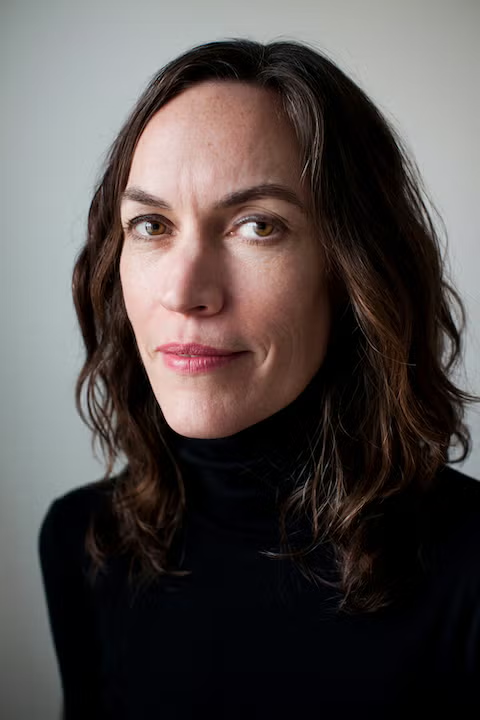
There is an interview in Writer’s Digest of author Rae Meadows about how her love of gymnastics shaped one of her novels.

Rae Meadows is the author of four previous novels, including I Will Send Rain. She is the recipient of multiple awards, including the Goldenberg Prize for Fiction, the Hackney Literary Award for the novel, and the Utah Book Award. Her work has appeared in many literary journals, as well as Under Purple Skies: The Minneapolis AnthologyContexts, and online.

She grew up admiring the Soviet gymnasts of the 1970s, and in her 40s decided to go back to the thing she loved as a child. She now trains regularly in adult gymnastics. She lives with her family in Brooklyn. 

Rae Meadows

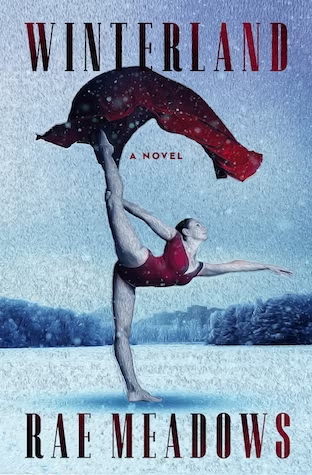
Elevator pitch for the book: In 1970, in an Arctic town on the far edge of the Soviet Union, a young mother disappears leaving a mystery that haunts her husband and daughter, Anya, a gymnast in the grueling state system. From the wild tundra of Norilsk to the golden age of Soviet gymnastics to gritty late-90s Brooklyn, Winterland is the story of a woman—and an era—shaped by glory and loss.

What prompted you to write this book?

If I could point to one thing that set the novel in motion for me, it was reading about Elena Mukhina, the Soviet gymnast who won all-around gold at the 1978 World Championships. She broke her neck two years later, just before the Olympics, performing a skill on the floor she was not prepared for, which left her a quadriplegic.

Her injury was then covered up by the Soviets. There is a character in the book based on Mukhina, and she plays a pivotal role in Anya’s life.

How long did it take to go from idea to publication? And did the idea change during the process?

It took about four years from idea to publication, with COVID mucking up the process. When I first began the novel, there was going to be a peripheral character who was a former gymnast. But I loved researching so much—my life orbits around gymnastics as a mom, a fan, and a passionate adult gymnast—gymnastics soon took over.

I could spend hours watching videos of Soviet gymnasts and call it research. I wrote much of the book in the parent area of the gym where my daughter trains.

Were there any surprises or learning moments in the publishing process for this title?

It’s hard for me to believe this is my fifth novel. I feel so fortunate. Each publishing experience has been different, but this one has been by far the best.

I had the absolute lottery win of having Amy Einhorn as an editor, and I felt like she “got” this book from the beginning. I am an understated writer to a fault, and she pushed me to be less subtle, which I think improved the book immensely. I was able to trust the editing process more than I ever had before.

Were there any surprises in the writing process for this book?

For one, I never thought I would use my high school Russian! I am a big believer in serendipity in the process. Winterland was initially going to be set entirely in Brooklyn, but I read an article about Norilsk, where the novel is set, and it just took root in my imagination.

I don’t outline or do much planning when I write. I generally know the beginning and the end, which makes for many surprises along the way.

What do you hope readers will get out of your book?

I hope Winterland feels transportive, a book readers can immerse themselves in. It’s set in the not-too-distant past, but the Soviet Union is a vanished place, despite some eerie similarities of late. Much of the novel takes place in a city carved out of the Arctic by gulag labor, one that is still closed to anyone not granted permission to enter, so to me it has an otherworldly quality.

And, of course, I want readers to feel for the characters, especially Anya, to follow her from age eight into adulthood. I have always been drawn to the idea of extraordinary stories behind ordinary lives. She could be someone you see on the subway and she has this remarkable past.

If you could share one piece of advice with other writers, what would it be?

My very first writing teacher used to call excess setting up of a scene “furniture moving.” Streamline, take out the furniture moving, trust your reader to get from A to B without describing every last detail in between.

Review: Lord of the Flies

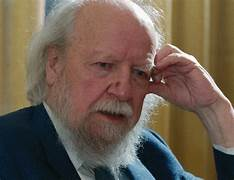
As I mentioned in a previous post, with the release of the movie by this same title made it necessary for me to read this classic novel. I wouldn’t be able to see the movie, because I know my wife wouldn’t enjoy it, and I had not bought a copy because its theme struck me as gruesome. I’ve had the same problem with the Hunger Games, but with that movie out, I had to buy and read it, I’m glad I read both of them. In neither case does the author write the story as gruesomely as its theme. In both cases, the story is told without emotional embroidery, leaving the reader to consider what the author is saying about humanity.

Lord of the Flies was written by William Golding (19 September 1911 – 19 June 1993) who was a British novelist, playwright, and poet. Best known for his debut novel Lord of the Flies  (1954), Golding published another 12 volumes of fiction in his lifetime. In 1980, Golding was awarded the Booker Prize for Rites of Passage, the first novel in what became his sea trilogy, To the Ends of the Earth. Golding was awarded the 1983 Nobel Prize in Literature. As a result of his contributions to literature, Golding was knighted in 1988. He was also a fellow of the Royal Society of Literature. In 2008, The Times ranked Golding third on its list of “The 50 greatest British writers since 1945”.

William Golding

From 1935 to 1940, Golding taught English, Greek, drama and philosophy at English schools. In 1940 he joined the Royal Navy, was assigned to a destroyer and left the Navy in 1945 as a lieutenant. He was married and had two children. He had a difficult relationship with alcohol most of his adult life. Golding published 12 novels, 2 collections and 3 non-fiction works.

The novel begins when a British aeroplane has crashed on an isolated island. The only survivors are boys in their middle childhood. A fair-haired boy named Ralph and a fat boy nicknamed Piggy find a conch shell, which Ralph uses as a horn to gather the survivors. Ralph immediately commands authority over the other surviving boys using the conch, and is elected their “chief”. A red-haired boy named Jack, and a quiet boy named Simon use Piggy’s glasses to create a signal fire. The boys become paranoid about an imaginary monster called the ‘beast’. One night, an air battle occurs near the island and the body of a fighter pilot  drifts down in a parachute. Twin boys Sam and Eric mistake the corpse for the beast.  Ralph leads some of the boys, including those who were to attend the fire on a wild pig hunt which culminates in a feast. Tensions rise over the maintenance of the fire and the reality of the beast. Jack makes a tribe of his boys, who paint their faces and engage in ritual dances. Simon, who discovers who the beast really is, rushes to tell Jack, but he is mistaken for the beast and killed by the frenzied boys. Jack and his tribe steal Piggy’s glasses, the only means of starting a fire. Ralph goes to Jack’s camp with Piggy, Sam, and Eric to confront Jack and retrieve the glasses. In the rebellious spirit against Ralph’s authority, the tribe drops a boulder that kills Piggy and shatters the conch. Ralph learns that Jack plans to hunt him. The next morning, Jack’s tribe sets fire to the forest. Ralph narrowly escapes the boys and the fire, and while fleeing, falls down in front of a uniformed adult – a British naval officer who has landed on the island to investigate the fire. 

How can pre-adolescent boys lose their humanity, forsaking all values of friendship, kindness and justice, and become savage, murderous animals? Golding’s novel answers the question with convincing credibility. The author makes use of the wild environment, the perilous situation, the lack of any supervision, and the uncertain outlook to nudge the boys down the wrong path, but he also paints vulnerable characters, communicating inadequately, misperceiving reality to make such a horrible result entirely believable. A truly masterful piece of writing!

Review: Cherished Belonging

One of my sons-in law sent me this book. Since he is a widely-read, intelligent and very likeable guy, I have read it and enjoyed it.

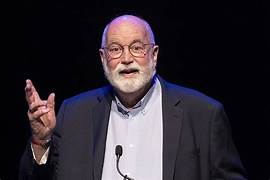
Cherished Belonging was written by Gregory Joseph Boyle (born May 19, 1954), who is an American Jesuit priest and the founder and director of Homeboy Industries, the world’s largest gang intervention and rehabilitation program. He is the former pastor of Dolores Mission Church in Los Angeles.

Gregory Boyle

At the conclusion of his theology studies, Boyle spent a year living and working with Christian communities in Cochabamba, Bolivia. Upon his return in 1986, he was appointed pastor of Dolores Mission Church, a Jesuit parish in the Boyle Heights  neighborhood of East Los Angeles that was then the poorest Catholic church in the city. At the time, the church sat between two large public housing projects and amid the territories of eight gangs.  Referred to as the “decade of death” in Los Angeles between 1988-1998, there were close to a thousand people per year killed in Los Angeles from gang related crime.

By 1988, in an effort to address the escalating problems and unmet needs of gang-involved youth, Boyle, alongside parish and community members, began to develop positive opportunities for them, including establishing an alternative school and a day-care program, and seeking out legitimate employment, calling this initial effort Jobs for a Future. 

In the wake of the 1992 Los Angeles riots, Jobs for a Future and Proyecto Pastoral, a community organising project begun at the parish, launched their first social enterprise business, Homeboy Bakery. Initial funding for the bakery was donated by the late film producer Ray Stark. In the ensuing years, the success of the bakery created the groundwork for additional social enterprise businesses, leading Jobs for a Future to become an independent nonprofit organization, Homeboy Industries.

This book doesn’t really have a plot, but that doesn’t make it any less readable. The nine chapters each have a title which may serve as a summary of the content. But for me, the chapters are unimportant, apart from dividing the book (212 pages) into nine convenient parts. The content, alone, is what makes this book a thought-provoking, fascinating collection of stories and reflections on the stories.

Here’s an example of a story. “Adrian stands in front of an almost entirely white group of criminal justice majors and graduate counselors at Lorcas College in Dubuque. He’s a stocky guy, with the expected tattoos etched on his neck and face and shaved-smooth head. After fifteen years in prison and only a brief three months with us at Homeboy, his trip here was his first on a plane and the only time he’s stood in front of a group to tell his story. Actually, he had been out of state before. During his tenure locked up, they had transferred Adrian to Oklahoma from Calipatria State Prison. It took them thirty-nine hours on a bus. He was shackled at the ankles, the waist, and the wrists. The inmates never got off the bus the entire time. ‘To me,’ he tells me. ‘it was torture’. The most noticeable feature of Adrian’s presentation is his sweet-natured voice. It’s not just younger than his thirty-four years it has a quality that is so pure and gentle. It is soulful and true. You just want to listen to him. His authenticity keeps folks spellbound: ‘I know that most people would take one look at me . . . i mean you would see me walking down the street, and you would cross to the other side. But what you don’t know about me is that if I had only one dollar left and you needed it, it would be yours. If you were shirtless, I would give you mine. If your car conked out, I’d help you push it.’ Everyone in the room believed him,”

There are about two hundred stories like that in the book. What’s more each of the characters in those stories stands out as unique: each with his/her own peculiarities. So, the theme of the book is that God loves each of in spite of our faults, and that each of us should show love to the other regardless of the circumstances. It is clear that the culture of Homeboy is primarily one of love. What isn’t covered by the book is how Homeboy gets new members to shed their aggression and defensive nastiness. Apparently the culture of love is so strong that it is both a magnet and a force for change. There are also coaches who are assigned to the new ‘homies’.

Why don’t we have Homeboys in every major city?