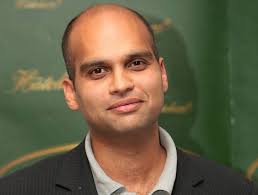
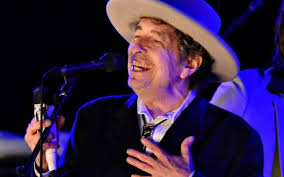
Charlie Smith, Novelist

I’m always interested in other writers: what motivates them to write as they do, and their techniques.  My high school alumni magazine has an interview with Charlie Smith (class of ’65), who has written eight novels, a book of novellas, and eight books of prize-winning poetry.  He has won the Aga Khan Prize, the Levinson prize, the J. Howard and Barbara M.J. Wood prize, a Guggenheim Fellowship, and a grant from the National Endowment for the Arts.  His writing has appeared in magazines and journals such as The New Yorker, The Paris Review, Harper’s, The New Republic, the New York Times, and The Nation. He lives in New York City and Key West.

download

Charlie Smith

His latest novel, Ginny Gall, is the “story of Delvin Walker, and African-American born in Tennessee in 1913.  Young Delvin loses his mother when she flees their home after being accused of murder; is taken in by the kind and literate Cornelius Oliver; has to hightail it out of town after a skirmish with a white boy; and rides the US railroad system in a bid to find a home, a place, his life.  The novel sprawls across the America of Jim Crow and the Great Depression, steeped in segregation, violence and destitution of the era, while vibrantly capturing the making of a man – and a writer.”

Smith is asked about the origins of the story: “Well I’m not really a writer who forecasts his novels; I just start off writing.  But this novel does have a faint template: there are certain skeletal bones that reference the Scottsboro Boys in Alabama in 1931, nine young black men who were pulled off a train, accused of raping a couple of white women and thrown into prison.  Those facts were more than I usually have to go on when I start writing.

“One of the things I wanted to do was write an imagined biography about a young man in peril in the South, the extreme difficulty that someone can find himself in – not of his own making – and how he responds to it.  As far as  the character being a writer, it wasn’t something I thought of before I started the book, but as I moved along, I found myself interested in the side of Delvin that would culminate in someone who was becoming a writer.  So I went along that way, and that’s what followed.”

Smith is asked: “Even the bleakest parts of the book had this sort of light shining on them because of the way you used your language.  Did you maintain that language to show how Delvin’s mind works?”

“Some of that is simply the way I write.  I write pretty dark books – but this one is very light-spattered despite all the trouble and grief – it’s kind  of a square dance compared to the books I usually write.  But the juxtaposition of dark and light is an important part of how I approach a novel, and some of these decisions are intuitive decisions, they’re not something I organize ahead of time.  So the lightness you’re referring to is somewhat characteristic of how I write novels, but it’s also characteristic of this particular person – Delvin Walker – of how he experiences life.”

I must say that I’ve found it beneficial to lay out an rough outline of a novel before I start writing: who the characters are, where and when the action takes place, and the message or point of the story.  It seems to me that Charlie Smith had done exactly this when he says “an imagined biography about a young man in peril in the South, the extreme difficulty that someone can find himself in – not of his own making – and how he responds to it.”  I agree with him that what happens in the story isn’t planned in advance.  It evolves from the characters and the message of the novel.  I usually write a more detailed outline of each chapter before I begin writing it, and this will be a listing of events and reactions to them.  But while I’m writing a novel, the plot and the characters evolve over time.  For example, when I’m about halfway through, I begin to get a sense of how the story will end.  I also agree that the use of language is very important in setting the mood of the story, which changes as events unfold.  Language is also vital in creating distinctive characters.
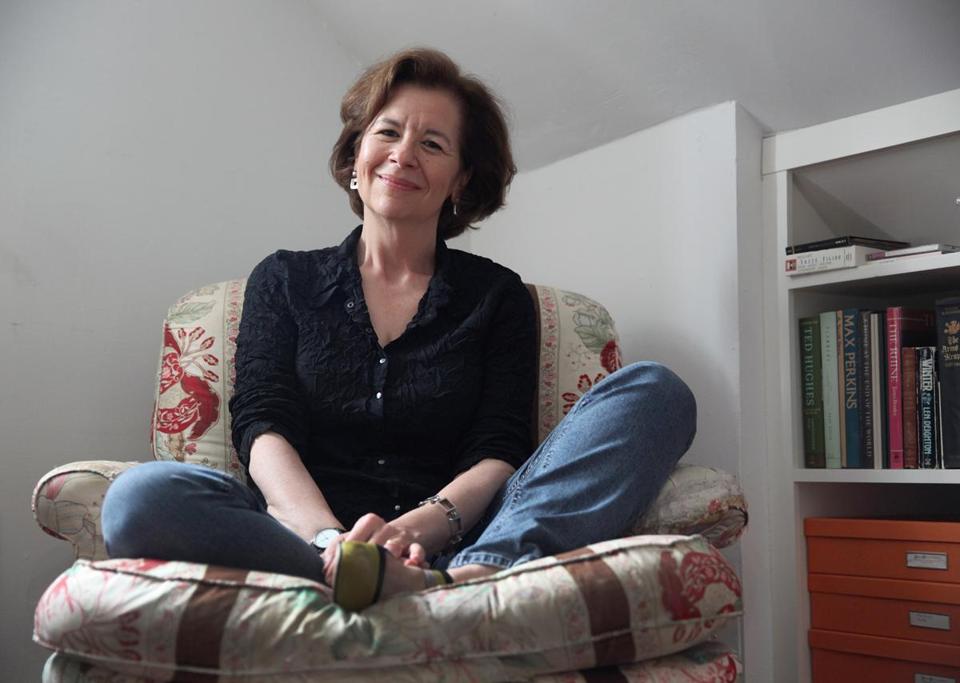
Joan Wickersham

There is an interview called “Inside the Writing Life” in my high school alumni magazine.  A prominent English instructor is interviewing Joan Wickersham who graduated nearly two decades after me.  Ms Wickersham has been writing most of the time since graduation; her work includes her memoir and 2008 National Book Award finalist, The Suicide Index; a book of short fiction, The News from Spain; and The Paper Anniversary, a novel.  She writes a regular op-ed column for The  Boston Globe; her writing has been published in prominent literary journals; and she has read her work on National Public Radio.

maeda_writers_g1

Joan Wickersham

Two questions and answers in this interview caught my eye.

Q: (David Weber) “You’ve sustained your output over many years.  Does the problem of writer’s block seem remote to you, or have you struggled at times to give your work the priority required?”

Wickersham: “There’s a very funny little moment in a movie I once saw, where a bored, impatient woman is trying to figure out where a piece fits in a jigsaw puzzle and she finally just puts in somewhere and smacks it in with her fist.  Writer’s block is a sign that what I’m doing isn’t working, and I can’t fix it by trying to ram something into a place where it doesn’t belong. It can take months to figure out that what I thought was a piece of the sky is actually a piece of the ocean, or that its a part of a different puzzle altogether.  I hate writer’s block, but I’m always grateful to it in hindsight.  It usually means that what I’ve been writing is somehow false, which is just as bad in fiction as nonfiction.  Writer’s block slows me down and makes me throw out pages and drafts – after I’d been working on the book about my father’s suicide for nine years, I threw out a 400 page manuscript and started over – but getting stuck can be an important investment in finding the right way to tell a story.”

I like this way of thinking about writer’s block: it’s not you that are the problem; it’s the story.  Sometimes, when I sit down to write, I feel cornered.  I’ll look back over what  I’ve written, and ask myself ‘what’s not working?’  Other times, particularly when I’m lying awake at night, I’ll start feeling uneasy about the direction of a particular novel.  That feeling generally leads to surgery.  When I was writing Sable Shadow & The Presence, I threw out and re-wrote whole chapters of the book, which has gone on to win eight awards.

Q: “Does a fully realized piece require its own new form, not just descriptive skill and the authority of honesty?”

Wickersham: “A lot of what I’m doing when I write is trying to figure out the inherent rules of a particular piece – the form or structure which will be most true to the story.  My husband, Jay, is trained as an architect.  A long time ago, when I was struggling to write about my father’s suicide, he told me that the students at the École des Beaux-Arts begin each design with a parti – an organizing principle.  I found this idea of the parti exciting and liberating.  I’d been wresting for years with how to organize the messy and painful story of my father’s death, and part of the problem was that the story defied any attempt at a conventional linear narrative.  When I stumbled in the parti of organizing the book as an index, suddenly I had this cool, numb structure that simultaneously imposed order and ridiculed the idea of imposing order on an inherently chaotic experience”.

I never heard of the term parti before, but it makes sense.  The novel I’m currently working on has an unusual organizing principle: two increasingly hostile narrators, whose identity is obscure at first, tell alternating chapters about three, very different, young protagonists over whom they have influence, but no control.  The setting is present day East Africa.

Review: Selection Day

My wife bought me a copy of this novel – signed by the author!  – while I was briefly in the hospital (nothing very serious) and I wanted something to read.  Hospitals are a great place to read: one is always waiting for the next procedure to take place; one can make oneself comfortable; and it is not particularly noisy!  She bought it because I had asked for a novel by a Man Booker shortlist author.  The author, Aravind Adiga, actually won the Man Booker in 2008 for his first novel, The White Tiger.  Adiga was born in Madras (new Chennai) India in 1974; after achieving his secondary school certificate, he emigrated with his family to Australia, where he graduated from high school in Sydney.  He graduated, next, from Columbia University in 1997 and subsequently studied English literature at Magdelan College, Oxford.  He began his business career as a financial journalist with the Financial Times, Money and Time before becoming freelance.

download

Aravind Adiga

Selection Day is a book focused on Indian cricket and its effect on a Mumbai slum family of two boys and their compulsive father.  Radha, the older brother, expects to fulfill his father’s dream of being selected for a top Indian team.  Tommy Sir, a coach/agent/promoter introduces the boys father, Mohan, to a ‘businessman’, Anand Mehta, who pays Mohan a stipend in return for a large slice of the boy’s earnings when they become famous.  Unexpectedly, Manju, the younger boy, is the better batsman, scoring 497 not out in a crucial contest.  Radha has a ‘weight transfer problem’ which is inhibiting his effectiveness as a batsman.  Enter a rival, Javed, a cocky, rebellious, rich kid who is also a fine batsman, and who happens to be gay.  Manju, at the center of the story, is his older brother’s best friend and rival, and his father’s severest but respectful critic.  The younger batsman is torn between his admiration for Javed, and his reluctance to commit to an intimate relationship; and between careers in cricketing or in science.

Selection Day offers a rich mixture of conflicted, imperfect characters with whom the reader cannot help but empathize.  The setting of Mumbai is drawn with natural clarity; one feels truly present.  And without being a ‘book about cricket’, Selection Day, presents the culture, the mystique, the competitiveness of Indian youth critic captivatingly, without technical fussiness.  The dialogue is credible, but occasionally seems too tangential to lead the reader to any firm conclusions.  Perhaps, this is Mr Adiga’s intention with this novel: to make the point that, try as one might, there can never be the achievement of one’s ultimate dream.

This sense of failure seems to carry over into the two concluding parts of the novel: what happens after selection day and in the epilogue.  One cannot help but be engaged by the beautiful writing, the energy, and the unfolding future in the lead up to selection day.  The writing is as good, but the energy and the future have dissipated after selection day.  Perhaps this novel could feel more whole, more consistent, if dreams could be scaled back rather than dispelled, and the energy and the future modestly re-directed.

A Nobel Artist

Bob Dylan’s selection to receive the Nobel Prize for literature in 2016 has stirred up considerable controversy.  People are either strongly in favor or very much opposed.  The award seems to be intended for a unique poet/songwriter.  The Nobel Academy said Dylan “Created new poetic expressions within the great American song tradition”.  Sara Danius, the Nobel Academy’s permanent secretary, said she “hoped” the decision would not be heavily criticized.  She said, “If you look back, far back, 2,500 years or so, you discover Homer and Sappho and they wrote poetic texts that were meant to be listened to.  They were meant to be performed, often together with instruments. and it’s the same way with Bob Dylan.”

Here are some Dylan lyrics:

From Tangled up in Blue (Blood on the Tracks, 1975):

We always did feel the same       We just saw it from a different point of view       Tangled up in blue

From My Back Pages (Another Side of Bob Dylan, 1964):

“Equality”, I spoke the word as if a wedding vow       Ah, I was so much older then, I’m younger than that now

From Lay Lady Lay (Nashville Skyline. 1969:

Lay, lady, lay, lay across my big brass bed       Whatever colors you have in your mind      I’ll show them to you and you’ll see them shine

From Sad Eyed Lady of the Lowlands (Blonde on Blonde, 1966)

With your mercury mouth in the missionary times     And your eyes like smoke and your prayers like rhymes        And your silver cross and your your voice like chimes    Oh, who do they think could bury you?

images

Bob Dylan

Objections surfaced quickly all over the world.  One commentator labeled the selection, “an ill-conceived nostalgia award.”  Another said it insulted “ten thousand fine writers” who could have won the award in his place.  Fiammetta Rocco, manager of the Man Booker International Prize and culture editor of The Economist, said, “It’s a gimmick.  With all the extraordinary fiction that is being written all over the world, by writers whose lives are in danger and who could to some degree be protected by a Nobel Prize, why do this?  Bob Dylan doesn’t need it.  He is an old white man who is rich, famous, and physically safe”.

But, Professor Seamus Perry, head of the English faculty at Oxford University, said, “Dylan winning the Nobel was always the thing you thought should happen in a reasonable world but still seemed quite unimaginable in this one.  He is, more than any other, the poet of our times, as Tennyson was of his, representative yet wholly individual, humane, angry, funny, and tender by turn; really, wholly himself, one of the greats.”  Salman Rushdie said it was a “great choice” and the Dylan is “the brilliant inheritor of the bardic tradition”.

Edna Gundersen’s article, resulting from a recent interview of Dylan, appeared in last Saturday’s Daily Telegraph.  In the interview, Dylan says that the award was, “amazing, incredible.  Who ever dreams of something like that?”  And that he intends to attend the awards ceremony in Stockholm “if it’s at all possible.”  She says: “In interviews over the years, the famously unpredictable Dylan has been by turns combative, amiable, taciturn, philosophical, charismatic, caustic and cryptic.  He has seemed, most of all, on being fiercely private and frustratingly unknowable.  His apparent toying with the Noble committee cannot be said to have come entirely out of the blue.”  When asked whether he could have just taken the calls from the Noble Committee, he says, “Well, I’m right here”, as if it was just a matter of the committee dialing the right number.  Ms Gundersen says: “As a painter, writer, film-maker, actor and disc-jockey, Dylan plainly sees no limitations to artistic expression.”  I think one should add ‘musician’ and ‘sculptor’ to that list.

As for me, I think the award is a great choice.  It recognizes a man of extraordinary talent, who speaks for the times.  Is it a ‘gimmick’?  No.  I would call it a ‘departure from the norm’ which is sometimes necessary to breathe new life into an old process.  What about the ‘ten thousand other writers’?  Would selecting one of the ten thousand have satisfied the other nine thousand nine hundred and ninety-nine?  I don’t think so; it would, if anything, have intensified their sense of entitlement.  What about the writers whose lives are in danger and who could be ‘protected by a Noble Prize’?  Is it the function of a Nobel Prize for Literature to protect writers?  I don’t think so.  There will always be writers who are hated by their governments.  God bless these writers!  Bravo, Nobel Committee!


Writing Contests: A Cautionary Tale

Warren Adler published the following article, extracted below, on the Huffington Post Books page in June of last year.  Until I read it, I hadn’t realised there was such explosive growth of on-line writing contests.

Warren Adler is best known for The War of the Roses, his masterpiece fictionalization of a macabre divorce turned into the Golden Globe and BAFTA nominated dark comedy hit starring Michael Douglas, Kathleen Turner and Danny DeVito. Adler’s international hit stage adaptation of the novel will premiere on Broadway in 2016. Adler has also optioned and sold film rights for a number of his works including Random Hearts, The Sunset Gang, The War of the Roses – The Children,Target Churchill, Residue, Mourning Glory, and Capitol Crimes.

index

Warren Adler

“When I started the Warren Adler Short Story Contest in 2006 I had rather lofty ideas about integrity and fidelity to the goal of resurrecting the popularity of the short story which was in decline. I appointed qualified people, meaning people who were either authors themselves or teachers of literature or creative writing with the taste and experience to judge the submissions honestly.

“It was a difficult chore at best and I wanted to guarantee that those who were the chosen winners were the very best of those who submitted their work. I offered cash prizes out of my own pocket. The first Prize Winner received $1000 and prizes were offered for our second and third choices. The submissions were free of charge.

“In addition to the cash prizes I promised that the prizewinning stories would be published as an e-book anthology on Amazon and offered for sale with royalties given to the authors of the stories. My hope, of course, was to give a boost not only to the short story format but also to the writing careers of the talented writers who participated. The book, as promised, is available on Amazon.

“The digital publishing revolution was in its infancy and I believe I was the first novelist to ever create such a contest on the Internet. As the cyber world grew so did the submissions. It became difficult and time consuming to read all of the offerings and finding enough quality judges to devote the time to honest assessment was becoming exceedingly burdensome to administer. The last thing I wanted to do was jeopardize the integrity of the contest.

“Eventually I had no choice but to begin charging a small submission fee designed to perhaps curb the number of submissions as well as to provide judges with a stipend that would make it worth their time. Above all, the goal was to maintain the integrity of the contest and further the original goals of the enterprise.

“After seven years of sponsoring the contest, I opted for a hiatus. It was a victim of its own success. To do it right required time, personnel and resources. I finally suspended the contest. I had no desire to create a startup and it was interfering with my own busy writing career.

“What I didn’t imagine was the tsunami of writing contests that it inspired. Worse, I never suspected that it would serve as a business model for entrepreneurs to get into the game just for profit.

“I am somewhat suspect of the value these contests hold for participants.

“Self-publishing requires self-promotion. It is an absolute necessity and comes with the territory, requiring time, effort and funding. The goal is “discoverability.” Most never achieve it, regardless of the quality of their work.

“The rise of self-published fiction authors has been spectacular. Unfortunately the glut has made it difficult for them to stand out from the crowd however excellent their writing is. Genre writers with promotional skills along with lots of money and time might find a niche, although the odds of making enough money to give up their day job is long.

“These writing contests, with their prestigious sounding names, offer the impression of quality promotion for the winners and, of course, bragging rights which can be dubious and of suspect value. One wonders who the judges are that are taking on such a massive amount of submissions. Few of these contest sponsors reveal their methods or the people who read this mass of material and make their judgments. It is often true of the most prestigious awards like the Pulitzer and the Nobel and I often wonder how some of the winners have reached the attention of the judges and who makes the screening decisions.

“By and large, internet-based contests tend to always charge a submission fee, which accounts for the sponsor’s profits as well as its proliferation. Considering that these contests are expanding they must be profitable for the sponsors and are inspiring others to create mirror image money-making opportunities using a similar business plan. Their targets are vulnerable, aspiring writers desperate for recognition and the realization of their dreams.

“Most of these contests are based upon dreams of literary glory, popularity, riches and movie adaptations on the part of authors. All truly believe that their work is deserving of recognition, popularity and prestige. Many probably fit that description. Indeed the sponsors know this and exploit it. It is the key to their monetary success.

“There is a great deal of literary talent out there who go unrecognized and do not attract the traditional publishers. Of course it works both ways. The traditional publishers sometimes gamble on first novels and often lose their bets in the sales arena. Such is the nature of the beast.

“This is not meant to be a blanket condemnation of writing contests. But since the Internet is a vast swamp of snake oil salesman hawking worthless schemes, products and ideas, consider this a cautionary tale.”

My experience of writing contests is very similar to the picture Mr Adler paints.  I have entered a number of contests with most of my books, and I have won some ‘awards’ – but no money.  Even winning first place in a genre did not merit a financial award.  So, I have a wall covered with award certificates.  Invariably, I had to pay an entry fee.  To me, this doesn’t seem unreasonable: there are administrative costs and (presumably) judges fees to be paid.  But, I have never learned how the judging would take place, let alone the identity of a single judge.  I attended one award ceremony in London, at which I expected a journalist or two to be present: there were none.  Attendees consisted of some of the authors who won awards and two low-ranking admin people representing the contest.

Having said this, I still try out new contests that appear to offer more value, particularly those that offer a critique of the work submitted.

Review: So Much for That

This novel attracted my attention as it is written by Lionel Schriver, the author of We Need to Talk About Kevin, which won the Orange Prize for fiction in 2005 and which has sold over one million copies in twenty-five languages. Lionel Schriver wrote seven novels before Kevin, which she called her ‘make or break’ creation after seven years of professional disappointment and ‘virtual obscurity’. Six of her seven novels were published; one failed to find a publisher. Since Kevin, Ms Schriver has written five novels, including So Much for That, which was published in 2010. She is an inspiration to all of us novelists who feel that our creations have not received the deserved recognition.

index

Lionel Schriver

So Much for That’s principal character, Shep Knacker, is an entrepreneurial handyman, who is both skilled and likeable. He is able to sell his New York City-based business for one million dollars, and his plan is to move his wife Glynis, his son Zach, and his daughter Amelia to Pemba Island off the coast of Tanzania to live her rest of their lives in low-cost, stress-free comfort. Glynis, though she has been involved in numerous searches around the world to find the perfect place for their ‘Afterlife’, has doubts. Just as she is being confronted with a decision to go or to stay, she is diagnosed with a virulent form of cancer. Escape to Pemba has to be postponed while Glynis undergoes months of treatment. The American healthcare system being what it is, Shep’s nest egg is gradually depleted by co-insurance payments and invoices for un-covered treatments. In order to keep the insurance he has, Shep must continue on the payroll of his prior company, under the unsympathetic supervision of the new owner. Glynis finds that the likely cause of her cancer is exposure to asbestos, with which she had contact in her metal-working hobby. She decides to sue the company which made the asbestos products. Just as Shep is on the verge of bankruptcy, Glynis wins her case and the money received covers an Afterlife in Pemba.

There are several other characters, including Shep’s friend, Jackson, who engages in diatribes against the Mooches (the freeloaders) and the systems that lets them take advantage of the Mugs. Jackson’s daughter, Flicka, who suffers from a horrible, terminal, childhood illness is a vehicle, along with Glynis, for debating the value of human life. There are doctors of doubtful honesty with their patients. And there are decisions about whether to be a Mooch or a Mug.

So Much for That is an entertaining story. It is human, sad, funny, heroic, and, and it is difficult to put down. I felt, at times, though, that the author was lecturing me about the dreadful state of healthcare in the US, and other assorted inequities in life. Several characters, including Flicka, and Shep’s sister, Beryl, are so polarised that one tends to lose what sympathy we should have for them. At the outset, I found it difficult to buy into Shep’s vision of the Afterlife; acceptance of his vision came when his troubles grew acute. Occasionally, I found the text somewhat oblique. For example: “It was disconcerting to be systematically punished for what might have engendered a modicum of gratitude.” Why not say: “He was annoyed to be punished for acts of kindness”? Sometimes, for me, the dialogue didn’t ring true, but perhaps I am being too picky.


I liked So Much for That. It makes some very important points about what is to be human: what’s good about our humanity and what’s not so good.

Review: A God in Ruins

For the last couple of weeks, I’ve been out of the office: my PC has been neglected, but I’ve done some reading.

A God in Ruins by Kate Atkinson is without a doubt the best book I’ve read in a long time, and it’s easy to see why it won last year’s Costa Book Award.  In fact, the judges called it, “Utterly magnificent and in a class of its own.  A genius book.”

The author has some pretty heavy-weight credentials.  Kate Atkinson won the Whitbread (now Costa) Book of the Year in 1995 with her first novel, Behind the Scenes at the Museum.  Her four bestselling novels featuring former detective Jackson Brodie became the BBC television series.  Her last novel, Life After Life, was the winner of the 2013 Costa Novel Award.  She was appointed MBE in the 2011 Queen’s Birthday Honours.

index

Kate Atkinson

A God in Ruins is the story of Teddy Todd, a would-be poet, lover of the countryside, and heroic bomber pilot during World War II.  The story begins in 1925 and zig-zags back and forth in time until its conclusion in 2012.  As the number of his completed combat missions piles up, Teddy does not expect to see the ‘Afterwards’ in which he will become a husband and a father.  Throughout the story, he faces life as it is without complaints about lost opportunities, heartbreak, or feelings un-expressed.  He is surrounded by the characters of his own family and by some of the family who are neighbours.

The writing is captivating and tight; there is no excess baggage here even though the book runs to over 500 pages.  The characters are distinct, and the story line never lags.  What most impressed me about the novel was the authenticity of the descriptions of flying bombing missions in a Halifax, but then, at the end of the book is a three page bibliography of sources.  Ms Atkinson did a lot of research!  I understand why it too two years to write this novel.  There is an interesting device she used which turns fiction on its head.  Fascinating!  But I’m not going to give it away.  Sometimes I felt slightly put off by the broken chronology, but in reading the book over a period of days, I began to feel that it was building nicely to a conclusion.  This is a novel which fully engages both one’s emotions and one’s beliefs.

How do you know if you’re a good writer?

Last month, there was an article in the online Huffington Post by Brook Warner, with the subtitle: “3 Ways to Get Validation of Your Writing’.  I agree with most of what she says:

“Writing stands out to me as the craft that people most easily dismiss and judge.  Because of its accessibility – anyone can do it and everyone seems to be doing it – writing is to the arts what running is to sports.  There are elites and there are hobbyists.  Unlike music, art and film, there’s a low barrier to entry.  You don’t need an instrument other than your hand, a canvas other than a piece of paper; not do you need a team, a budget, or outsider talent to practice your craft.  Everyone thinks they can do it, and the truth is that a lot of people do it well.  One of the great difficulties publishing faces right now is that there are many, many good books worthy of being published, but rather than finding ways to celebrate hobbyists and emerging talent (which is what’s happening in film), the industry has instead turned its back and turned up its nose at the very people who make possible what they do for a living: aspiring authors.

“So how, given this climate where the odds for success are stacked against you, the industry itself has no vested interest in you until you prove yourself a talent, and everyone thinks they can write, how are you supposed to know whether what you’re writing is worthwhile?”

She mentions three places to start:

1. Get a professional opinion

“You have to pay for this, but it’s worthwhile to get your work assessed at some point in your writing process, sooner rather than later.  This is a high level opinion from someone who knows good writing.  People who read for a living are qualified to pick apart your work and tell you what’s working and not working. . . . Your family and friends are not good readers for your work.  While all readers are subjective, family and friends are the most subjective. . . .”

She mentions that her company She Writes Press offers an assessment of 25 pages of an author’s work.  But apparently, this is part of an expensive co-operative-publishing package.  I think it can be money well invested if one selects a real professional reviewer.

2. Submit your work to contests and at conferences

“Judges of literary of literary contests are selected because they are readers.  They love good books and good writing, and they have wisdom and expertise to impart.  Contests are valuable not just for the accolades you might get, but for the feedback. It’s a cheap way to see what a stranger thinks of your work. . . .”

In my experience, one doesn’t get good quality feedback from most contests.  There tends to be cursory and superficial, or non-existent feedback.  What I have found to be useful is the ‘batting average’ one gets from submitting a particular work to multiple contests.  I have entered Sable Shadow & The Presence in about ten contests.  It has won eight awards ranging from honourable mention (2) to runner up (2) to winner (4) of the fiction category.  I must be doing something right, and this is consistent with my own view that Sable Shadows is a serious, quality piece of work.

3. Submit your work to an agent or publisher

“Many writers I know are so eager to pitch agents and editors that they go out too early, before their books or proposals are fully cooked.  But if you’re suffering from a need to know whether there’s any merit to your project, I believe (though some may disagree with me) that it doesn’t hurt to send to  a handful of agents or editors (not both at the same time) to test the waters. . . .”

I have done this with all six of my published books, but I’m still using my original publisher.  The amount of feedback I have received has been is essentially zero.  It should be said, however, that there is a skill in approaching an agent, as I have learned from reading the 2015 Guide to  Literary Agents.  A considerable amount of effort is required to produce a winning proposal.

Ms Warner poses another question at the close of her blog: “How do I know if I’m done?”  Her point is that if you’re a serious writer, you’re never done.  You keep on learning and writing with greater skill.  I agree completely.

I think I would be inclined to add a fourth item: Read and Write Book Reviews.  I find that reading good quality, recommended books, exposes me to the diverse techniques and skills of other authors.  And when I require myself to write a review of the book, I force myself to identify what I admired about the writing and what I felt didn’t work.

Review: Remains of the Day

This ‘modern classic’ was first published in 1989, and won the Booker Prize that year. While I had heard of the novel, I had never read it; I was further motivated to read it as a Booker Prize winner and by the author being a Japanese writer I didn’t know.

Kazou Ishiguro was born in Nagasaki, Japan in 1954 and moved to the UK at the age of five. He has written six novels, all of which have won prizes or received major recognition. He currently lives in London with his wife and daughter.

untitled

Kazou Ishiguro

The novel is told in the first person by Stevens, who was the butler in Darlington Hall, which was the residence of Lord Darlington in the 1930’s. Darlington Hall was a grand place, with many servants, Stevens having overall responsibility. Lord Darlington was a man of considerable wealth and influence, both socially and politically. He died after the war, and Darlington Hall was sold to an American, Mr Faraday, who has downsized both the staff and the use of the Hall.

Much of the book is Stevens’ recollections of events that took place when his lordship was in residence, and we learn that Stevens is preoccupied with the extent to which he was (like his father) a top butler. Stevens comes to define a top butler as a true professional who carries great dignity to his profession. The descriptions of relationships (and dialogue) among staff and with the lord of the manor are brilliant: they convey clearly the culture of the English aristocracy in the 20’s and 30’s.

Mr Faraday plans to be in the States for an extended period, and he suggests to Stevens that he take the motorcar on a sightseeing trip. Stevens accepts his offer and coincidently decides to call on a Miss Kenton who was the one who supervised all the housemaids at Darlington Hall. Miss Kenton left the Hall years ago, and has married. Now, Stevens wonders whether he can persuade her to return to the Hall, as there are hints that her marriage is in difficulty. The working relationship between Stevens and Kenton was very formal, but one cannot help but wonder if there is an unacknowledged attraction between them.   In the last chapter, they meet again, and the message of the novel is revealed: Stevens muses: “After all, what can we ever gain forever looking back and blaming ourselves if our lives have not turned out quite as we might have wished?”

The novel moves at a very leisurely pace, with very little action. Major events are recounted by Stevens factually and without emotion. The characters, the setting and the story-telling all completely support that retrospective, self-doubting theme. In spite of Stevens’ wordiness, his character shines through in a way that he is able to maintain the reader’s attention.

If one is looking for tale with plenty of action and excitement, The Remains of the Day would not be a good choice. But if one would like to curl up with a superbly-written story, immersed in history, and long-forgotten characters, a story that succeeds admirably in making its point, then Remains is for you.

As a sort of aside, I would add that the criteria for winning the Booker Prize may have shifted over the last twenty-five years. It’s hard to imagine that a novel with little overt physical or emotional action could win, given the level of current competition.

Review: H is for Hawk

Having read Henry Marsh’s Do No Harm, which was shortlisted for the Costa Book of the Year Award, I have now read H is for Hawk by Helen Macdonald which won the top prize.

IMG_20150522_0001

H is for Hawk tells the experiences of Helen Macdonald, a writer, illustrator, historian and lecturer at Cambridge University in training a wild hawk. Macdonald had some advantages in this task: she was fascinated by falconry and hawks as a child, and she had experience of hunting with hawks, but she had never trained a wild hawk to hunt. There was a major disadvantage: her much-loved father, a renowned photographer, had just died suddenly when she acquired the hawk for £800 from a breeder in Northern Ireland. Much of the book deals with the intense commitment and frustrations which the falconer must endure over the lengthy process of winning the trust of a wild predatory animal so that it works together with the falconer in killing wild game. The goshawk in the book has personality: feral, proud and beautiful, unpredictable, iconic. One learns, incidentally, that Macdonald is a scholar, an intelligent and sensitive person, but the author also exposes her vulnerabilities: in particular, her crippling grief over the loss of her father. In parallel with the story of Macdonald’s goshawk, she tells the story of T H White, now deceased, a dedicated, but somewhat eccentric falconer and the author of The Goshawk. We learn of his mistakes and his anguish as he tries to train a goshawk. So this book operates at several levels: a present, objective account of the training of a wild hawk; there is a past, reported account of the training of a different hawk; there are psychological explorations of both the author and her role model, T H White. This may sound rather complex, and, in a way, it is, but Macdonald weaves it all together beautifully so that it is quite natural.

The writing, in style and language is exquisite. In particular, the descriptions of natural settings and the behaviour of the hawk are breath-taking. For example: “. . . she (the hawk) sees something through the trees, out there on the other side of the hedge. Her pupils grow wide. She snakes her neck and flattens her crown, and the tiny grey hair-feathers around her beak and eyes crinkle into a frown that I’ve learned means there’s something there.” And: “The fields are shorn, yellowed into stalky, rabbit-grazed sward spotted with foraging rooks.”

H is for Hawk is clearly a major labour of love. This love and its result: a durable classic about nature, surely merited the Costa Award.

As a child, I was very interested in falconry; I read everything I could lay my hands on the subject – even flirting with the idea of obtaining a hawk. For me, H is for Hawk has a special resonance, but I suspect that some potential readers may be put off by a book on falconry. For those potential readers, I would say, “This isn’t just a book about falconry. It’s a book about nature, the human condition, grief, joy, life and death.”