AI Controversy

There is an article in the Atlantic magazine on 19 September about how the publishing industry views AI. It is written by Boris Kachka, Senior Editor of the Atlantic. He titles the article ‘Publishing’s New Microgenre’

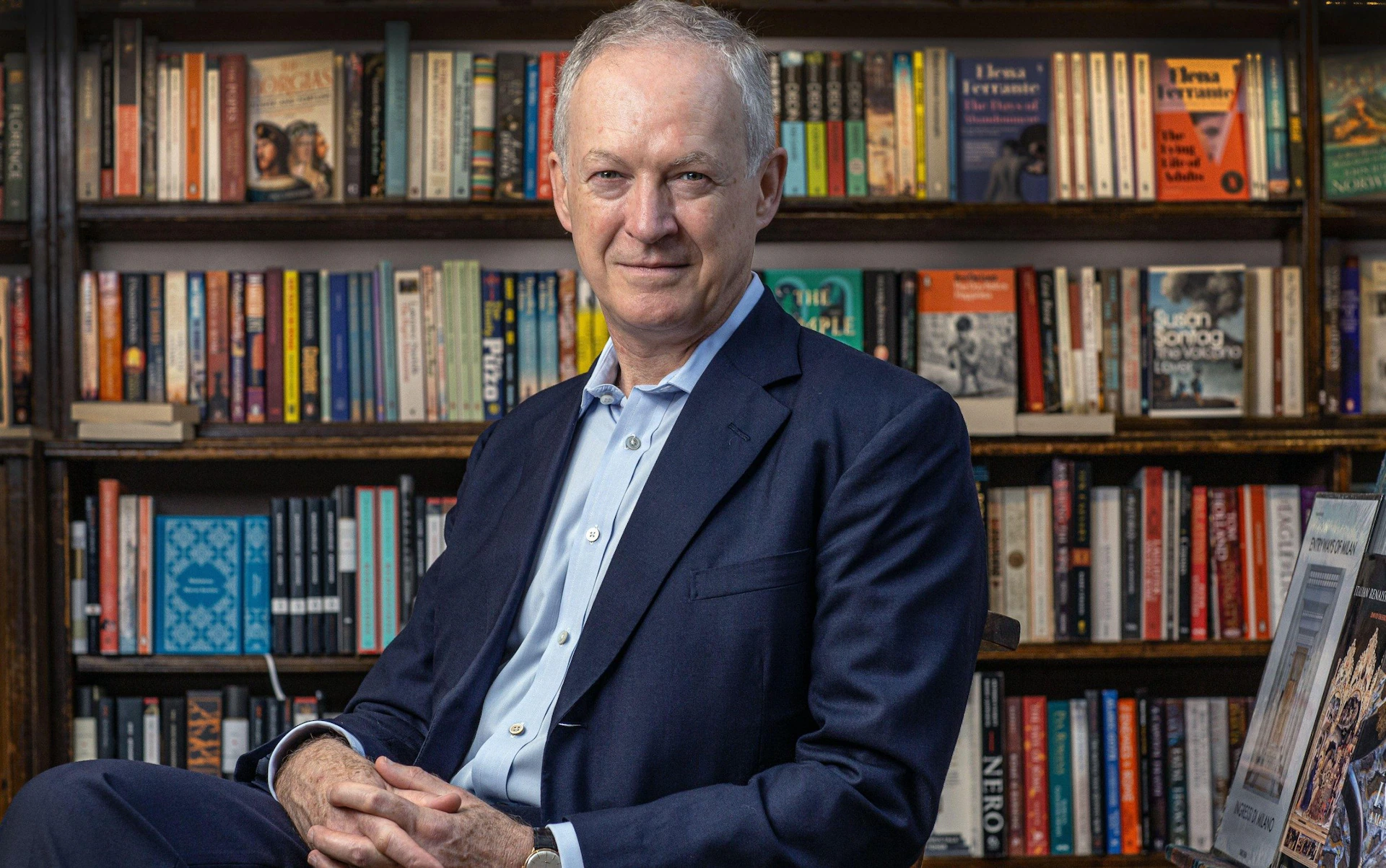
Boris Kachka

“Book publishing has, let’s say, a complicated relationship with artificial intelligence. Earlier this month, Anthropic settled a lawsuit brought by authors and publishers, agreeing to pay $1.5 billion after training its chatbot, Claude, on pirated text; hundreds of such copyright lawsuits against data-scraping tech companies are still making their way through the courts. Many in the culture industries see AI as not just a thief but an existential competitor, ready to replace human writers at every turn. Yet publishers are also fascinated by the technology (and not only because they use it for marketing and other tasks). The major imprints have been churning out a robust collection of books (more than 20 this year, by my count) that explain, extol, deride, fictionalize, and occasionally incorporate AI.

Among these recent releases, one overarching theme is a debate occurring between so-called accelerationists and doomers—those who think superintelligence will hugely benefit humanity and those who suspect it will kill us all. Adam Becker, a journalist and former astrophysicist, disagrees with both groups. Becker, the author of the recent anti-utopian critique More Everything Forever, wrote about his problems with a new dystopian manifesto, If Anyone Builds It, Everyone Dies, by Eliezer Yudkowsky and Nate Soares.

Becker’s main objection to both sides is that they overhype the long-term, world-altering effects of superintelligence while downplaying the “much more immediate and well-founded concerns about the dangers of thoughtlessly deployed technology,” he writes. The kinds of ongoing changes that he would prefer to focus on are well accounted for in 2025’s AI book haul. Readers can find out more about how AI’s processes resemble the workings of our brains (or don’t); how the technology is changing medicine, warfare, education, business, and politics; how it has already profoundly altered society. But to me, the most interesting of the crop (or maybe just the most fun) are the works that explore our individual relationships with AI, through fiction or memoir.

Novels such as Amy Shearn’s Animal Instinct and Jayson Greene’s UnWorld imagine chatbots standing in for boyfriends or dead loved ones; politician-author Stacey Abrams invents a rogue medical-AI company in her latest legal thriller, Coded Justice. Hamid Ismailov’s wildly experimental novel We Computers, translated from Uzbek and longlisted for a 2025 National Book Award, creates an alternate history in which a 1980s computer intelligently generates a new kind of mind-expanding, transnational literature.

Occupying a category all its own is Searches, a fragmented memoir in which Vauhini Vara works through her complex feelings about technology. Vara interweaves the story of the rise of the internet with the narrative of her life and work as a tech reporter. She also includes strange interludes: prose-poetic lists of her Google searches; a collection of her Amazon-purchase reviews; and, most strikingly, a series of long interactions with ChatGPT-3 as she works to revise an essay about a sister who died years ago. As Matteo Wong noted in his Atlantic article about the book, the large language model produced what Vara considered to be the essay’s best lines while also inserting plenty of lies. She wound up employing the bot not to think for her, but to prod her into a different kind of thinking; it forced her, she writes, “to assert my own consciousness by writing against the falsehoods.” I enjoyed the book in part because it was less about what technology is doing to us than what we are doing in response.”

How Did Waterstones Become a High Street Success?

There is an article in today’s Telegraph, by Claire Allfree that explains how Waterstones became a high street success in the face of on-line giants like Amazon. The article focuses on James Daunt, Waterstones CEO. Excerpts are below.

James Daunt

“James Daunt is running between meetings and apologies for having to dash off for a minute before we can begin our chat. While he is gone I squint at the books in his New York office, but alas the Zoom screen is such that I can make out only one title – a biography of the artist Andy Warhol. Quite what a bookshelf would tell you about Daunt though is a moot point: he reads anything and everything.

“I try to knock through a non-fiction book once a week. I’ve just finished The Quiet Coup by Mehrsa Baradaran [about the market failures of American neoliberalism]. I’m reading a book on inflation. Although I’m having a tough time with novels at the moment. I haven’t hit upon something that’s made me feel ‘wow’.”

On second thoughts, perhaps you can deduce from this that Daunt cares very much about the health of new fiction, and that he is deeply concerned about the economy. Neither should be a surprise: Daunt is, after all, the most powerful man in Western bookselling. His footprint has been all over the books we buy and where we buy them ever since he founded the six-store Daunt Books chain, opening its first location on Marylebone High Street in London in 1990 at the age of 26.

Daunt Books’ Marylebone location is one of London’s most famous (and photographed) independent bookshops 

In 2011, he was appointed managing director of Waterstones at a time when the chain was in a seeming death loop of forced branch closures and collapsing profits; by 2024 sales had reached £528.4 million, up 17 per cent on the year before, with profits for the same year soaring by £20 million to hit £32.8 million.

In 2019, he became the chief executive of the then floundering US book chain Barnes and Noble (he splits his time between New York and the four-storey Hampstead home he shares with his wife Katy Steward, who works in health care; the couple have two adult daughters) and has overseen an aggressive reboot and expansion, opening 50 stores last year and with another 50 planned for this.

So successful have both companies become that rumours are circulating that Elliott Management, the private equity firm that owns them, plan to float them on the stock exchange. Daunt, though, 61, dismisses such corporate gossip as though it were a bad smell. “These are not my plans at all,” he says, reluctant to disclose any further details for both companies beyond their steady and remorseless growth. “Much of it is pure speculation: one sees that a private equity firm buys a business and assumes that five years on, if the business is doing well, they will sell it. To be honest I lack the imagination to see why one would do things any differently to how we do it now.”

Indeed. The success of Waterstones in the UK is a rare, possibly unique bright spot in a retail market otherwise dominated by the collapse into administration of big brands (Ted Baker is among the latest to be plunged into crisis) and declining profits (Asda announced their worst Christmas since 2015, with sales slumping by more than 5 per cent over the festive period).

“What makes us different is that we stubbornly and tenaciously held on in places where other people have left, so you’ll find us in Grimsby and Middlesborough long after M&S have abandoned these places,” says Daunt. The Waterstones vision is as much ideological as financial. “We have a bookshop in Ayr because it matters that we are there.”

So why is Waterstones soaring and everywhere else floundering? Covid helped: sales rose 73 per cent in 2021-2022 as half of adults doubled their reading time during lockdown and an artfully curated bookshelf became a Zoom must-have accessory. “Most retailers appeal to a relatively small demographic – teenagers, or older men and so forth. We sell to everyone.”

“We have huge advantages,” he argues. “What we sell has a fixed price that we don’t set [book prices are set by the publishers]. So we are remarkably well protected from the consequences of excessive inflation.” Fair enough, but that fixed price is creeping up – it’s now common for literary hardbacks to sell at £22. 

“But inflation has been remarkably modest in the UK book market, much less than it is in any other. When I first started selling books in 1990, a paperback was £6. Nor do we sell items that go out of date. Also we are aspirational. Our reach goes beyond the middle class bracket. Many parents want their children to read.”

Daunt’s argument is for a system whereby some communities are taxed more than others. “Sensible structures should be put in place so that Marylebone High Street, which is never going to struggle for occupancy, doesn’t benefit in the way Barrow-in-Furness should.” He doesn’t agree that one answer might be for shops to follow the Waterstones model, which places huge emphasis on the social and aesthetic experience of shopping and targets each shop directly at the needs of its local community.

“The problem is not the shop keeper or the environment. You need to provide an environment that allows them to thrive. And if you give an online retailer a massive incentive to open a huge warehouse, then you are stripping employment from local high streets, which is of huge social and cultural benefit. So don’t shout at the retailer, shout at the warehouse, and this has to be something that starts in Westminster.”

“I was a nice middle-class child who was taken down to Caledonian Road library to pick out my books from a very early age and had my nose in a book from the moment I could read,” he says. “Clearly if one is privileged enough to grow up, in my case with library books, it helps foster a love for reading. We were a nuclear family, although because of my father’s job I was sent to boarding school [Sherborne, in Dorset] which is a way of being educated I suppose. I certainly haven’t subjected my own children [Molly, who works for a security and counter terrorism think tank and is also completing a masters in Middle Eastern Studies at SOAS university, and Eliza, who is studying history at Yale] to that.”

Daunt’s argument is for a system whereby some communities are taxed more than others. “Sensible structures should be put in place so that Marylebone High Street, which is never going to struggle for occupancy, doesn’t benefit in the way Barrow-in-Furness should.” He doesn’t agree that one answer might be for shops to follow the Waterstones model, which places huge emphasis on the social and aesthetic experience of shopping and targets each shop directly at the needs of its local community.

“The problem is not the shop keeper or the environment. You need to provide an environment that allows them to thrive. And if you give an online retailer a massive incentive to open a huge warehouse, then you are stripping employment from local high streets, which is of huge social and cultural benefit. So don’t shout at the retailer, shout at the warehouse, and this has to be something that starts in Westminster.”

In person, Daunt has an air of careful affability. He was born in Islington in 1963. His father, who died in 2023, was the diplomat Timothy Daunt, while his mother, Patricia, brought up James and his two younger sisters – Eleanor, who works for a fragrance company, and Alice, who runs Daunt Travel, a high-end travel business. The house was bookish and he remembers school holidays as being “very intellectual”.

Daunt read history at Cambridge and on leaving joined JP Morgan in 1985, until Katy, at that point his girlfriend, suggested that perhaps he might want to do something else with his life. He set up his first Daunt shop in 1990, taking over an antiquarian bookstore on Marylebone High Street. “Running a business is not at all the tradition of the Daunt family,” he says. “Daunts tend to be either school teachers or public servants, and if you are neither of those things, you tend to join the church.”

There is a vaguely ecclesiastical beauty about the original Daunt shop, with its gorgeous Edwardian gallery and lofty calm. It set the image for the subsequent five Daunt stores that followed, which, given their locations (Holland Park, Hampstead, Belsize Park), retain an air of monied exclusivity, something of which Daunt is well aware.

“There has always been the accusations [with Daunt Books] of being leafy or snobby, and it’s a type that we undoubtedly are: you only have to listen to my accent to hear who I am. But the customer I could always identify was the taxi driver. They are and remain a really good customer base for us because they keep lots of books.”

When he was asked to take over Waterstones by its new owner, the Russian oligarch Alexander Mamut, no one thought he could do it. Amazon was selling books online at aggressive discounts, and there were apocalyptic warnings about the rise of the ebook.

Instead, Daunt set about applying the independent Daunt ethos to Waterstones and, in what seemed a particularly kamikaze move at the time, severing its relationship with publishers. No more in-store promotion displays paid for by publishing houses, a revenue stream that had brought in £27 million a year. And no more three for two discount tables either. He cleared out the management at a loss of 200 jobs and handed buying power to individual stores. “I hate homogeneity,” he says. “The idea is that each time you are creating a bookshop for the local community.”

He has his critics. Some accuse him of being ruthless, an iron fist wrapped in a velvet glove. Is he? “I don’t know if I’m ruthless but I am single-minded as to what a good book shop is. And I don’t compromise on that and I never change my notion of what that is. I will never let people be useless. The key to that, and the bit people have found a bit ruthless, is that I require my bookshops to be run by booksellers. And if you are not interested in books and you don’t read and you don’t care then work somewhere else.”

With such reach and influence can come accusations of excessive curating, even censorship. Daunt bats them away. “We get accused periodically of going all woke, it’s nonsense. Or you get a bit of outrage from some author who says we are no longer stocking their book. And over the years I’ve been accused of not stocking almost every sort of book.”

All the same, does he agree the book industry is increasingly convulsed by the subject of what can and cannot be published? As leading publishers shy away from books with a gender critical perspective, or books with a pro-Israel stance.

“I don’t recognise that. Of course publishers make missteps. They go and clean up Roald Dahl and it’s just absurd. It was a bit of a stupid thing to do. But publishing is such a vigorous landscape that these missteps are soon corrected.”

Do these “missteps” affect what Waterstones select to buy? “Our job is to curate a sensible array of books. And when it comes to books about the Israel and Gaza conflict, we’ve had some real bestsellers such as The Genius of Israel [by Saul Singer and Dan Senor, about Israel’s strength as a nation]. Admittedly, this has been in areas with strong Jewish communities but it was ever thus. We are not dictating to anyone.”

“Yes, sometimes we make mistakes. We made a mistake with Hannah Barnes’ book about the Tavistock Clinic [Time to Think, an exposé of the Tavistock NHS gender clinics which multiple publishers refused to publish; it was eventually published by Swift in 2023] by underestimating how many copies we would need [when it was first published]. So when it sold out, we had to go back to Swift and ask for more copies. It’s a problem for about 10 days. People say ‘you are boycotting it’. We are not boycotting it; we’ve just sold out our initial order.””

How to Talk About Your Book

Maris Kreizman has put some advice (for herself) on the Literary Hub website dated two days ago.

Maris Kreizman hosted the literary podcast, The Maris Review, for four years. Her essays and criticism have appeared in the New York Times, New York Magazine, The Atlantic, Vanity Fair, Esquire, The New Republic, and more. Her essay collection, I Want to Burn This Place Down, is forthcoming from Ecco/HarperCollins.

She says, “Today I have my very first press event for my new book, which is out in July. I, along with three other wonderful Ecco authors, will take part in a lunchtime Zoom meeting with various members of the media and booksellers, during which we’ll be interviewed by Ecco’s associate publisher. I’ve been thinking a lot about what to say, and how to talk about my book in general.

I will not use this space to workshop anything, I promise. I’m not here to sell this book to you. But I do think my many years as a books journalist has primed me to understand what makes for a good talk, and I want to tell you about what I think works, while also reminding myself. Stage fright is real, after all.

I won’t have a script, just a few notes. I know how important it is to actually have a conversation, and that means being present and listening to what other people are saying, too.

The goal is to talk about the book in more detail than the marketing copy that my editor so carefully crafted for me, but to still be pithy and precise. The book has gone through so many iterations, and I have to have a handle on what it is now, after many rounds of edits and much feedback from my agent and editor and a few trusted friends.

In my career covering books, in podcasts and in print, I’ve conducted hundreds of author interviews, and the very best ones featured writers who were able to make a tight, cohesive narrative out of, well, the narrative they’d already written. As an author, getting the story right is the most important part of writing a book, but getting the story of the story right is the most important part of promoting it, of getting readers to want to buy it.

Often the authors who have the best grasp on the concept of storytelling to sell their own work are also teachers, the ones who are used to speaking to an audience in classes and keeping their attention until the end of the session. The biggest pros I’ve encountered have four or five stories that they can trot out for any occasion when they’re talking about the book. Does this mean that every article or interview they do is entirely original? Absolutely not. Do average readers read every single piece of press that’s written about a particular book, even the ones they’re interested in? Absolutely not.

It has just about always been the job of the author to help sell the book long after they’ve finished the job of writing it. I think we like to pretend that in the past authors could simply write a book and then keep their heads down, letting their publishers take care of getting the word out. To be fair, before the technological changes of the 21st century (namely social media) authors could be more passive in the promotion of their books—Philip Roth never had to connect with readers on Twitter or do a bunch of podcasts, after all. But he did have to, in interviews and at bookstore talks and signings, make readers want to buy what he was selling.

Now, in a landscape where books don’t get tons of traditional media coverage and social media overall gets less and less reliable, it’s more important than ever for authors to take an active role in talking about their books (reminder: we love our in-house publicists and marketing gurus, but there’s only so much they can do on a tight schedule with a punishing work load). As icky as it may feel to have to be the chief salesperson of one’s own book as well as the writer, who else has more of a vested interest in making sure the book finds readers?

My hope is that after I’ve discussed my book today, more people in the industry will actually get a chance to read it, and they’ll be able to tell me what they think my book is about. They have more distance from the work than I do, and I welcome their interpretations. In fact I welcome any good faith takes on my book, although because I am also the chief protector of my own sensitive feelings, I may not have the emotional bandwidth to consider them all.”

I agree with what Maris says, and I’d like to add some points:

  • Her listeners will want to know what the book is about – no more than three sentences: time, place and key events.
  • They don’t want to hear a summary of the plot.
  • They will be interested in anything particularly unusual about a key character or event.
  • You can talk briefly about the development arc of a key character – particularly if it’s positive.
  • If you had to do some special research (interviewing people/going places), that’s worth mentioning.
  • They would like to hear from you about what makes you feel good about the book.
  • How about touching on what motivated you to write the book, and how you got the idea for it.

Do I Have to Write a Novel?

There is an article on the Electric Lit website by Amy Stuber dated 1 October 2024 which rang bells for me. Its title is “I Love Short Stories Do I Have to Write a Novel?”

Amy Stuber’s fiction has appeared in the Missouri Review, New England Review, the Masters Review, and elsewhere. She’s an editor at Split Lip Magazine, and she lives in Lawrence, KS. Her debut story collection, Sad Grownups, will be released in October 2024,

Amy Stuber

Ms Stuber says, “In 1993, I published my first decent story in a literary journal and a few months later received a letter from an agent whose name I recognized. I’d written short stories in college classes, sent them off, and typically the only thing that came back was a rejection, housed in the self-addressed-stamped envelope I’d sent with the story, my own handwriting preparing me for the paper inside that said thanks, no or we liked this, but.

The agent letter was a surprise, and I was buoyed by it for days. The letter went something like this, “I enjoyed your short story. I’d be interested in seeing more of your work. Do you have a novel?” It felt great  to be approached. It was flattering. But the answer was no: I didn’t have a novel.

A few years later, I received another agent letter after another story publication. A few years after that, an email. The notes all said some version of “I liked your short story. But do you have a novel?”

I’d heard from my graduate school creative writing teachers, who taught us only to read and write short stories, that a fiction writer’s final form was novelist, or at least, they said, that was the publishing industry’s core belief. The books that sold well, the books editors at big publishing houses wanted to acquire, were novels. Collections could be published, sure, but they were afterthoughts or add-ons.

Whenever it came up, the “do you have a novel” question made me a little indignant. Novels use words and sentences, obviously, just like short stories, but they require a different skillset, as well as a lot of attributes, like patience and a good memory and discipline, that I—first as a 20-something who just wanted to write poem fragments on my forearms and listen to Pavement, and later as a parent, shellacked with two smallish kids and a full-time job—did not have. If I could write even a third of a short story over a few weeks, it felt like a win. 

When my kids were more self-sufficient and I found myself with actual pockets of time to write and submit, I started getting wildly, embarrassingly jealous of every Publisher’s Marketplace announcement I saw. More egalitarian and generous writers would Tweet about how “there’s enough success for everyone, there’s plenty to go around,” but I, then in my 40s, felt like maybe there wasn’t. Maybe short story writers, all of us vying to win the same few small-press collection contests that ran each year, were doomed to not have book deals. I decided to try to feel content about publishing individual stories in literary magazines and pushed aside the idea of a book. 

The next time an agent emailed me was 2020, and it was the same line as ever. “Do you have a novel?” No. “I really cannot sell a collection on its own.” Okay, I understand. “Do you plan to write a novel?” I guess. Maybe? 

I signed with the agent, which was a leap of faith more for her than for me. I started trying to expand a short story I’d published, to build it somehow into a novel. In most ways, it was like trying to make a bathmat work as a rug in a room the size of a ballroom. Still, I wrote early in the morning, on weekend days, while waiting for doctor’s appointments, on all-hands meetings. I remember even feeling a little bit hopeful, like, “Maybe I’m doing it, maybe I’m really writing a novel, finally,” like this magic land, unenterable for twenty plus years, was opening to me. 

In the end, my draft was more of a loose assemblage of stories. The plottier parts that lurched each chapter forward, the parts that made it a possible novel, weren’t working. When I expressed self-doubt to my agent, she asked me, more than once, if this was “the book [I wanted] to send into the world,” which felt pretty jagged. I remember thinking, Well, the book I want to send into the world is my short story collection. Maybe I even said it out loud. 

The process was flattening. People wanted “propulsion,” and I was focused on sentences and moments. I liked the quiet pockets I was able to build into short stories but that felt harder to make work in a novel.  

In a stupid fit of “now what?” I frantically, in a few months, wrote a whole other novel. The agent hated it, which stung, but it was likely hate-worthy. 

How did I spend the pandemic? I speed-wrote two novels, only to realize I am not a novelist, or at least not yet, and market trends, traditional publishing’s seeming demands for books that rapid-cycled you from beginning to end in one sitting, weren’t going to make me one. 

In summer 2022, I parted ways amicably with my agent and returned to story writing. She told me if I started working on another novel project, she’d take a look. I didn’t fault her. Agents have been told collections don’t sell. So many of them have to deal with the industry realities of looking for plot-heavy books. This isn’t to say there aren’t brilliant and successful poetic, experimental, quiet novels – there obviously are. But if you’ve queried an agent lately, you know: propulsion and plot are king. 

I disassembled the second novel draft and built some short stories from the parts, then wrote some new stories, too. I understood stories and loved how within one I could focus intensely, think about every word, and I could experiment without worrying about staying on a path of forward momentum. I revamped my short story collection, sandwiched in some new stories, moved things around, took out the flash fiction.

This, I thought, feels like the book I want to send out into the world. 

I submitted it to the same few indie presses and university contests where I’d sent earlier versions of a collection and had been rejected more than once. At this point, only a few of the stories were the same. What the hell, I thought. I was 54 and had gotten my first “but do you have a novel?” agent letter thirty years earlier. 

And then I waited. Items in my Submittable queue changed from Received to In Progress. 

In August, I moved my daughter into her first dorm room in a tall building, and I thought, simplistically probably, about how the dorm, each floor, with each room another person, style, story, was a collection, and how so many things in the world were more an assemblage of disparate parts than a mellifluous whole. My daughter, who is also a writer, said it didn’t make sense for people to be so weird about short stories. Why was publishing so opposed to short fiction, when the world seemed to want and love short-form everything else?

In September, a few weeks after leaving my daughter in New York, in my haze of sadness that was like an anvil hitting me repeatedly and saying you fucking fool why did you help make a person who is designed to leave you, I got an email from one of the small presses. I saw the re: ____ subject line, and I braced myself for the rejection those emails usually are. Instead, it was a nice editor I’d corresponded with a few years before, telling me they wanted to publish my collection.

I was so numbed by life that month, by all the accumulative sadnesses of being 50-something in a whirlpool of life change, that I wasn’t sure how to feel. But when I stood up from my computer to walk around the neighborhood and look at all the familiar things, so many of which had years of memories attached to them, each their own little story, I let myself feel happy. This wasn’t the novel. It wasn’t the Big 5. But it felt truer to the writer I wanted to be.

Small presses, less beholden to concerns over big sales, are able to publish collections and the kinds of books Big Publishing tells writers we shouldn’t bother making. For that, I’m grateful. 

As is true of so many writers I know, some of my favorite texts are short stories. Each time I come upon a new collection in the library or in a bookstore, I get excited about the hive of situations and characters I’m about to dive into and the room for experimentation. It feels like so much possibility. 

I remember hearing last year that a lot of traditionally published debut novels sell only in the hundreds of copies. The managing editor of the small press that accepted my collection told me something like, “During the life of the book, a good outcome would be selling 1000 copies.” A thousand sounded good. Better than the hundred of some novels. Big Fiction’s insistence on the novel as default is maybe a failure of marketing or the imagination about what a book can be and do. 

I’m trying again to write something that approaches a novel, but this time I’m letting myself lean into my tendencies and reminding myself that a novel does not require a traditional narrative arc, nor a set number of scenes and beats. So I’m trying a “novel in stories,” and I’m not writing it with some big splashy publication in mind. I’m writing it when and how I want to write it. 

After an excerpt of the novel-in-stories project won an Honorable Mention in a contest, an agent I adore, a “dream agent,” messaged me and asked me if I had the full novel ready.  I don’t, at least not yet. But when I do, I hope I’m able to pull together a whole made of small slices of the world pulsing together, a collection in its own way, that champions the short form while also feeling like a whole. To the industry, maybe it will even be considered a novel. 

Is this just an essay about someone who wanted to and couldn’t sell a novel so now wants to champion the short story? Maybe a little. But, more, it’s about a circuitous path away from and back to the thing I actually enjoy writing, that the industry told me I shouldn’t do if I wanted to succeed.” 

I may be in the same boat as Amy, but I got in it at a different port. I’ve written ten published novels. Some are good, some are rubbish, but none have sold 1000 copies. I want to try short stories, and I’m about 2/3 of the way to completing a collection – a collection of good short stories, enjoyable to write and to read. Maybe this is what I should have been doing!

Lost Novel Is A Best Seller 83 Years Later

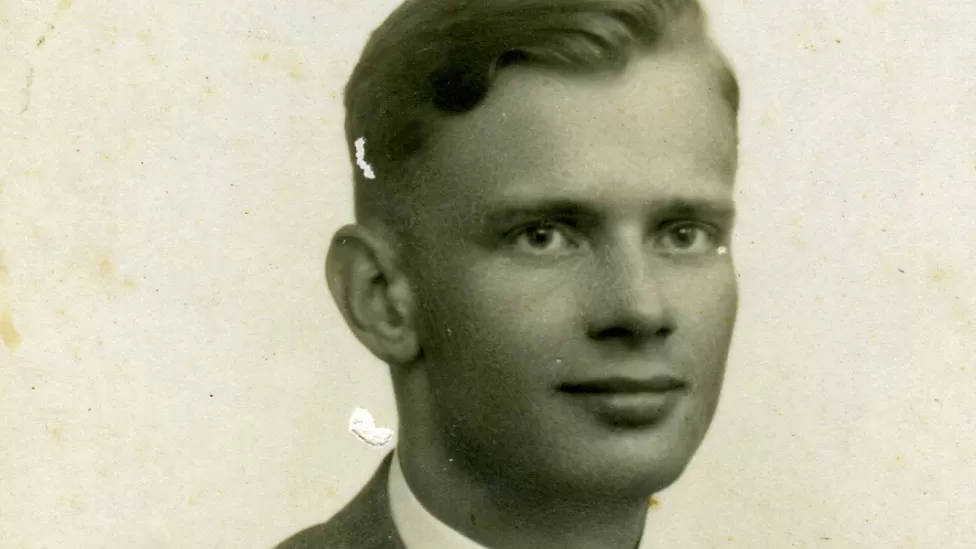
An article dated 17 May 2021, on the BBC News website caught my eye. It had a picture of the author, Ulrich Alexander Boschwitz, who died in 1942 at the age of 27. He had written the novel 4 years earlier.

Ulrich Alexander Boschwitz

“Ulrich Alexander Boschwitz’s The Passenger is about a Jewish man who – like the author – attempts to escape the rise of the Nazi regime.

It was rediscovered in 2018 after the author’s niece told an editor about it.

The book has had stellar reviews and has now entered The Sunday Times list of top 10 hardback fiction bestsellers.

The UK edition sold almost 1,800 copies last week to put it at number 10 on the list.

It was written in the weeks after Kristallnacht (the Night of Broken Glass, also known as the November Pogrom), the outbreak of mass violence against Jews in Germany and Austria in November 1938.

It tells the story of a Jewish businessman called Otto van Silbermann, who hears a knock at his door from Nazi Storm Troopers and quickly realises he must flee.

He and his wife stuff all their money into a suitcase and end up boarding train after train across Germany as they try to make their escape.

Boschwitz himself had left Germany three years earlier after anti-Semitic laws were enacted.

His book was published in the US and UK in 1939 and 40 respectively, but made little impact and soon went out of print. The author died in 1942 at the age of 27 when a boat he was travelling on was torpedoed by the Germans.

Boschwitz’s niece contacted German editor Peter Graf after reading an interview with him about another novel he had rediscovered.

She told him about her uncle and the book, the original typescript of which was in the archive of the National Library in Frankfurt.

Graf went there and told the BBC that as soon as he read it, he ‘knew that this was an important novel’.

He decided to edit and revise the book and it was published in Germany. It has now been released in 20 other languages so far this year.

He believes the novel, written more than 80 years ago, has a powerful message for modern society.

Graf added that the novel was essentially about ‘the disenfranchisement of a hitherto respected and well-off citizen’. He added: ‘Anyone who reads the fate of Otto Silbermann will understand a lot about human values and how terrorism and the lack of courage of the masses make terror against individual groups possible.'”

The article says this about the author: “Boschwitz was a young business apprentice who left Germany in 1935 and emigrated to Norway with his mother. Later he lived in France and stayed in Belgium and Luxembourg. Both came to England shortly before the outbreak of World War Two in 1939.

They were arrested as enemy aliens and Boschwitz was sent to Australia, where he spent two years in an internment camp.

In 1942, Boschwitz was allowed to leave the camp, but the ship taking him back to England was torpedoed by German U-boats.”

I have been watching the BBC4 documentary The US and the Holocaust, which makes the point that in the late 1930’s the US and much of Europe had very little sympathy for the plight of German Jews. In the US, this was attributable, in part, to the terrible state of the economy and the opposition to immigration as it was feared jobs would be lost to immigrants. There was also a view that confronting Germany about its treatment of Jews would stir up trouble. More recently, with a clearer understanding of the Holocaust, and the publication of books like The Diary of Anne Frank, sentiments have shifted dramatically.

In the Sunday Times, David Mills wrote: “There have been a number of great novels about the Second World War that have come to light again in recent times, most notably Suite Française and Alone in Berlin. I’m not sure that The Passenger might not be the greatest of them.”

Publishing Today

Below are some of Harry Bingham’s thoughts on the state of book publishing today. Harry is the founder of Jericho Writers. It’s a good time to be a writer!

Harry Bingham

Self-publishing

Ten years ago, self-pub wasn’t really a thing. Now it certainly is. These days, there’s no longer any good public data for the scale of the self-pub market, but very roughly you should assume that self-published titles sell as many copies as all Big 5 titles on Amazon combined – in other words, one heck of a lot. Indeed, there are corners of the reading globe (romance and erotica especially) where self-publishing utterly dominates.

What’s more, indie authors make money. Again, public data is no longer available, but when it was, it was clear that at every single income level you care to name, there were more indie authors earning at that level than trad-published ones. More million-dollar indies. More $100K indies. And so on down. I’m certain that that basic picture hasn’t changed.

Multiple imprints

A friend of mine is currently selling a book, via a top British agent at a top British agency. The list of editors who are receiving that book include (of course) all the Big 5. It may surprise you to learn that the book doesn’t go to just one editor per publisher. It goes to as many editors, at as many imprints, as may be right for the book. From memory, the book is therefore going to two editors in different bits of HarperCollins, the same at PRH, and so on.

If an auction arises, those two HarperCollins editors, let’s say, might find themselves bidding against each other. A PRH / S&S merger wouldn’t necessarily reduce the number of editors that an agent pitched to. It would just change the email addresses of one recipient.

The long tail

Good publishing simply does not stop at the big firms.

My friend had as many small- to mid-sized publishers on that submissions list as Big 5 editors. And honestly? I think it’s simply 50/50 whether the book ends with a large house or a small one. The right publisher for that book will be one where the editorial, design and marketing visions align the best … along with a dollop of good chemistry between author and editor. A real passion from a Faber or a Bloomsbury or a Granta would (to my mind) be a better deal than a more lukewarm offer from a larger firm. (Those are British firms, but there are similar firms in the US and elsewhere too.)

The quality in some of these smaller houses is incredible. You often get more daring publishing, greater willingness to take risks, and generally bolder decisions at every level of the firm. You also, as an author, actually feel important to the firm, which is not something that’s easy to feel when you’re in the grip of one of the big machines. I once rejected an offer from a top, top quality British independent and I’ve always wonder if I did the right thing. If I had to guess, I’d say probably not.

Money

Most authors I know don’t ultimately care about money anyway. Yes, they want to be paid properly for their work, and they want that side of things to be handled with proper justice and professionalism, but the real payoff is more intangible. It’s the passion of a publisher, the respect of a community of peers, the book in the bookshop, the reviews and comments. All those things are every bit as likely – perhaps likelier – for authors working with strong indie presses as for those working with the Big 5.

The Big 5 firms are great. The indie publishers are better than they’ve ever been. Self-publishing creates a tremendously inspiring and effective route for countless authors.

Author-led marketing tools are the best they’ve ever been.

Barnes & Noble and Waterstones (respectively the flagship bookchains in the US and UK) are both in better shape than ever.

The independent bookstore sector has lost a lot of poor-quality stores, but the strong ones remain strong.

Books (thanks, especially to low cost ebook pricing) are insanely affordable – and you can read in any format you choose much more easily than before.

The simple fact is that it’s better to be an author today than at any point in the last two decades. Indeed, that’s probably underselling it. I think it’s easy to argue that this is the best ever time to be an author.”

How The Times’ Best Seller List Comes Together

There was an article in The New York Times on 2 October 2020, written by the “Best Seller Lists Staff” and I quote from it below:

“Times Insider explains who we are and what we do, and delivers behind-the-scenes insights into how our journalism comes together.

“Come holiday or hurricane, one thing you can count on is that The New York Times’ best-seller lists will be published online every Wednesday at 7 p.m. Eastern. And those lists will be dated for the print Book Review, where they will appear 11 days later. This is just one of the many quirks of the work we — the three-member BSL team, as we call ourselves — do, combining data science, investigative reporting and our own special blend of foxhole humor.

“As much as we wish some myths were true, such as that the lists are determined by an automated data spigot with a secret algorithm or our executive editor’s throwing darts at the wall, the work of putting together the lists requires the full-time efforts of the three of us and the support of an information technology team.

“The sales data that drives what books make the lists, and where they land within them, is sent by stores giant, tiny and in-between all across the country. It reflects the previous week’s Sunday-to-Saturday sales period, which stores begin to report to us over the weekend. We receive numbers on millions of titles each week from tens of thousands of storefronts and online retailers as well as specialty and independent bookstores.

“So there’s a lot of data in need of herding. This is complicated by the fact that a single title in one binding, such as hardcover, can have a dozen or more International Standard Book Numbers or I.S.B.N.s, which are like Social Security numbers for books, depending on the different kinds of stores where it is sold. We must tie them together in our system and track all of them appropriately. Since our work must be kept under wraps until we publish, we use an assortment of code names for books, authors and stores.

“By noon on Mondays, we have received roughly 75 percent of the data and have some idea of what the best bets are going to be for new titles. But, as in sports, it’s not over until the final buzzer, which will come the following afternoon. Monday afternoons fly by because we continue to gather reports, help stores with technical issues and begin the stressful task of writing things we know will eventually be read by a lot of famous authors.

“We write descriptions for the new titles based on the blurbs on the books’ jackets or publishers’ websites. Most weeks, we have a dozen or so new titles across our 11 weekly lists. On busy weeks when we also close our seven monthly lists, we can have over 40 new titles. We have to make sure we have the correct title, author(s), publisher’s imprint and pertinent facts about the book before squeezing everything into a limited space on a tight deadline.

“Yes, this means we are ranking the books and writing their descriptions without having read the works. You might ask how we can choose which books are good if we aren’t first reading all of them. We don’t. Unlike the staff members of the Book Review, from whom we work independently, we aren’t making value judgments. We go off the sales data.

“The window for reporting each week closes at noon on Tuesdays. For the next few hours, we determine the final rankings, based on the sales data and details provided by stores. We want the lists to reflect what individual consumers are buying across the country instead of what is being bought in bulk by individuals or associated groups.

“During the finalization stage, the three of us gather in a room (or, these days, we get on the phone), and one editor reads each list from top to bottom as the other two double-check information. To stay alert, we sing some book titles to the tune of familiar songs. Recent chart toppers include: Tara Westover’s “Educated,” crooned to the rhythm of Peaches & Herb’s “Reunited”; Ijeoma Oluo’s “So You Want to Talk About Race,” delivered in the style of Salt-N-Pepa’s “Let’s Talk About Sex”; and Sean Hannity’s “Live Free or Die,” belted like Axl Rose wailing “Live and Let Die.”

“Once we complete the descriptions for the new titles, we send them to get copy-edited before they get published in our subscriber newsletter, online and in the print Book Review. On Wednesday evenings, people are either popping Champagne corks or calling for our heads. Whatever the reaction, it’s important to remember that the lists are less of a final judgment by readers on a book or topic and more of an ongoing conversation. Each week tells a different story. The only way to get a true sense of trends in the book world and in our culture is to look at the lists over many weeks, months and even years.”

This sounds like a complicated process, but maybe it’s the fairest way to do it.

Publishing Proverbs

A post by Paula Munier on the Career Authors website two days ago caught my attention.  It begins, “Publishing is rife with conventional wisdom but some of it is actually useful.”

Ms Munier’s website says, “My professional evolution mirrors that of publishing itself.  From my early days as a reporter to my latest incarnation as all-around content queen and bottle washer, I’ve reinvented myself as the publishing industry has changed—and keeps on changing. The only constant: My love of the written word. Over my 20-plus years in the business, I’ve conceived, created, produced, and marketed exceptional content in all formats across all markets for such media giants as WGBH, Fidelity, Disney, Gannett, F+W Media, Quarto, Greenspun Media Group, among others. ”

Paula Munier

Some of the publishing proverbs she mentions are as follows:

“1. The first page sells the book, the last page sells the next book.

I repeated this recently at a Zoom event and like an old dog full of old tricks I was surprised that so many writers there had not heard it. But it’s as true today as it was when I got my first job in book publishing some 25 years ago. The first page must grab the reader, the last page must satisfy the reader.

2. If there’s a gun on the wall in act one, it better fire in act two.

I’m paraphrasing Anton Chekhov here, whose classic advice on foreshadowing has become so beloved a dramatic principle that it’s now known as Chekhov’s Gun.

3. Don’t get it right, get it written.

I used to tell my reporters this when they were running late with their stories back in my newspaper days. I wasn’t the first to say it, but I do say it a lot, not only to those reporters but to authors when I was an acquisitions editor and to clients now that I’m an agent and ultimately to myself whenever I get stuck in my own writing. All you need is a first draft —and then you can fix it.

4. Writing is rewriting.

I repeat, writing is rewriting. Embrace the revision process and the advice of smart editors. Rewriting what separates the wannabes from the pros.

5. When in doubt, delete.

This is every editor’s mantra. So the next time you find yourself struggling to make some aspect of your story work, delete it instead. I learned this lesson again while revising A Hiding Place. . . . My editor suggested I lose one of my favorite clues, and I balked. I’d done all that research! But eventually I caved and the book is far better for it.

6. You can’t start the fire, but you can fuel it.

This is what the sales and PR and marketing people always tell you when you complain to your publisher that they’re not doing enough to promote your book. Which means that if the book doesn’t catch fire when it debuts, they’re not going to spend what they see as bad money after good trying to light up sales.

7. Hook, book, cook.

I heard an editor quote this just recently; apparently my swell fellow agent and author Eric Smith uses this phrase to describe the best way to pitch a project: 1) hook, as in high-concept premise; 2) book, as in what happens in the story; and 3) cook, as in you the author and what about you personally and/or professionally informs your work. A good formula for a pitch.

8. It takes a million words to make a writer.

When I was in my twenties, I joined my first writer’s group. The grande dame of the group was an erudite professor who was a far more experienced and successful writer than the rest of us. She regarded me as the neophyte I was and told me severely, “It takes a million words to make a writer.” She was correct, of course. A million words or 10,000 hours or just a hell of lot of writing and rewriting.

9. You can’t make a living but you can make a killing.

I first heard this attributed to James Michener, but many people have said it. And why not, since this is the unfortunate lot of artists, especially in America. Most artists can’t make a lavish living doing their art, but a lucky few find fame and fortune. Here’s hoping it’s you and me.

10. There’s no crying in publishing.

. . . I say There’s no crying in publishing. And then I quote the inimitable and prolific Jane C, Cleland, Agatha-winning author of nonfiction and fiction, who never complains about the vagaries of the publishing business. Rather, she says that she just tries to write a better book.”

I agree with all of the above, except for number 3.  I find that when I force myself to write at pace, as I did when I started writing, I produce too much cliché and uninteresting text.  This is particularly true when you’re trying to write a literary novel.  For me, it’s better to spend time trying to get it nearly right, an then go back and do some polishing.

Audio Books Continue to Mushroom

There is a press release dated 18 June 2020 from the Audio Publishers Association which tells an interesting story about the growth of audio books.

It says, in part:

“Audiobook sales and consumption continues to grow according to recently released results from the Audio Publishers Association’s annual sales survey conducted by independent research firm InterQ and their annual consumer survey conducted
by Edison Research. Based on information from responding publishers, U.S. audiobook sales in 2019 totaled 1.2 billion dollars, up 16% from the previous year, with a corresponding increase in units.

This continues the EIGHT-year trend of double-digit revenue growth.“Eight straight years of double-digit revenue growth is simply phenomenal,” says Chris Lynch, co-chair of the APA’s Research Committee and President & Publisher of Simon & Schuster Audio. “Even more encouraging are the continued upward trends in consumer listening behavior – both in how many titles they listen to per year and in their finding more time in their
day to listen.”

In addition to the sales increase, Edison Research’s national survey of American audiobook listeners ages 18 and up found that the average number of audiobooks listened to per year increased to 8.1 in 2020, up from 6.8 in 2019. The most popular audiobook genre continues to be Mysteries/Thrillers/Suspense. 57% of frequent audiobook listeners are under the age of 45; this is up from 51% in 2019. And audiobook publishers reported that there were 60,303 new titles produced in 2019, an 18% increase over 2018.

Other notable findings from the surveys include:
• Audiobook consumers place a high priority on quality of narration. Non-fiction and fiction listeners alike prefer a professional voice actor to the author as a narrator.
• For the third year in a row, more than 50% of audiobook listeners say they are making
“new” time to listen to audiobooks and consuming more books.
• A clear market for shorter audiobooks exists, with 43% of audiobook purchasers saying
they would buy an audiobook that is one to three hours long.
• The car remains the #1 overall place for listening, but the home remains the place where
people listen most often.”

From my point of view, I would agree with some of the survey’s findings.  My wife and I took a long car trip recently and we had downloaded some audiobooks.  One of the books was by Toni Morrison, but we couldn’t understand the author who was reading it.  In principle it seems right to have the author reading, but from a listener’s point of view, a professional voice actor is a better choice.  Instead, we listened to Wild Swans by Jung Chang read by Pik-Sem Lim.  Ms Lim must also be Chinese and her accent adds an air of authenticity, but her diction is clear and precise.  When I was doing a lot of travelling by car for business, I always had an audio book (on cassettes from the library).  Some of my favourites were the Flashman and Patrick O’Brian series


Books About Race and Anti-Racism: ‘Surging’

An article with the above title, Porter Anderson, appears in the June 16 issue of Publishing Perspectives.  Porter Anderson has been named International Trade Press Journalist of the Year in London Book Fair’s 2019 International Excellence Awards. He is Editor-in-Chief of Publishing Perspectives.

Porter Anderson

Excerpts from the article are as follows:

“A demonstration of how responsive the US marketplace can be to a national crisis: Have a look at Amazon Charts‘ nonfiction listings.

Normally updated on Wednesdays, these titles are showing No. 1 and 2 in both the charts’ Most Sold and Most Read categories to be, respectively White Fragility: Why It’s So Hard for White People to Talk About Racism (Beacon Press, 2018) and How to Be an Antiracist by Ibram X. Kendi (Penguin Random House, 2019), respectively.

Those two titles went onto the list two and three weeks ago, respectively just after, and one week after, George Floyd’s death for which former police officer Derek Chauvin now is charged with second-degree murder.

And just out a week ago, on June 9, Our Time Is Now: Power, Purpose, and the Fight for a Fair America (Macmillan/Henry Holt) is the timely new release from Stacey Abrams on voter suppression.

On the list of potential vice-presidential candidates for the Joe Biden ticket, Abrams’ book arrived with eerie timing last week–just as Georgia (where she has run for governor) went into a primary-election meltdown of voting-machine failures and waiting lines between four and eight hours long.

More from the Amazon Charts, Most Sold in nonfiction–and the timing on many of these, most on the list for one or two weeks, indicates the drivers to which publishing’s content is responding:

I think it’s pretty remarkable the extent to which writers and publishers are responding to a national crisis as evidenced by the dominance of these non-fiction works on the Amazon Most Sold List.