Social Media Backlash

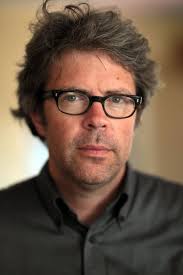
There was an article entitled “Authors Stifled by Fear of Social Media Backlash, Franzen Warns” which appeared in the 22 August edition of The Daily Telegraph.  Jonathan Franzen is an award-winning novel and author of Freedom and The Corrections.
images

Jonathan Franzen

Franzen claims it is becoming more difficult for writers to produce great novels in the era of social media because they are too frightened of a public backlash to be truthful.  He says that the “firewalls” protecting authors from their readers have now disappeared, and there is now too much pressure to use social media to promote new works.

The article says that he has famously refused to go on Twitter, having labelled it “unspeakably irritating”.  Now he has spoken of his concern it its impact on novelists, telling The Guardian: “The ways in which self-censorship operates – the fear of being called a bad name – people become very careful.  And it becomes very hard to be creative, actually.  Because you’re worried  about what you might be called, and whether its true or not.  There used to be rather serious firewalls between the artist and the buying public – the gallery, the publisher.  And technology demolishes that wall and basically says: self-promote or die.  And that is a bad head for any sort of artist to be forced into.”

Yesterday he was derided on Twitter after revealing he had once considered adopting an Iraqi orphan, adding: “One of the things that had put me in mind of adoption was a sense of alienation from the younger generation.  They seemed politically not the way they should be as young people.”

I’m afraid I don’t agree with much of what Franzen says.  I congratulate him for wanting to adopt and Iraqi orphan; let’s hope it wasn’t critics who dissuaded him!  I grew up in an era where we used to say to bullies, “Sticks and stones will break my bones, but names will never hurt me!”

I believe that if an author takes a well-reasoned position on a subject which may be controversial, and he is derided by trolls, there will be plenty of people who agree with the author but don’t bother to say so.  This is what good authors have done for centuries, and this is no time, in an age of social media and terrorism, for authors to lose their courage to speak freely!

Franzen might well say to me, “Well, but you have never been attacked by trolls.”  True.  But I’m certainly not going to change my position if they do.  Besides, I live in a country where personal threats are illegal.  There are some things which my characters have said in my novels which may very well offend some sensitive people.  They’ll just have to get over it.

As to social media, I have this blog and several Facebook accounts.  I’m on Goodreads and Amazon.  I’m not on Twitter – mainly for the reason that I don’t have time to prepare daily tweets.  The world is changing: get on board!

Franzen bemoans the loss of “firewalls”.  I don’t think that firewalls are helpful to the author in the long run.  Any artist should have access to the public’s reactions to his/her work – good or bad.  Dickens had very few “firewalls” between himself and the public.  Why should we?

The Secret of Great Writing

In the autumn of 1938, a sophomore at Radcliffe College, Francis Turnbull, sent her latest short story to family friend, F Scott Fitzgerald.  His response is recorded in F Scott Fitzgerald: A Life in Letters.

fitzgerald2

F Scott Fitzgerald

Dear Frances:

I’ve read the story carefully and, Frances, I’m afraid the price for doing professional work is a good deal higher than you are prepared to pay at present. You’ve got to sell your heart, your strongest reactions, not the little minor things that only touch you lightly, the little experiences that you might tell at dinner. This is especially true when you begin to write, when you have not yet developed the tricks of interesting people on paper, when you have none of the technique which it takes time to learn. When, in short, you have only your emotions to sell.

This is the experience of all writers. It was necessary for Dickens to put into Oliver Twist the child’s passionate resentment at being abused and starved that had haunted his whole childhood. Ernest Hemingway’s first stories ‘In Our Time’ went right down to the bottom of all that he had ever felt and known. In ‘This Side of Paradise’ I wrote about a love affair that was still bleeding as fresh as the skin wound on a haemophile.

The amateur, seeing how the professional having learned all that he’ll ever learn about writing can take a trivial thing such as the most superficial reactions of three uncharacterized girls and make it witty and charming — the amateur thinks he or she can do the same. But the amateur can only realize his ability to transfer his emotions to another person by some such desperate and radical expedient as tearing your first tragic love story out of your heart and putting it on pages for people to see.

That, anyhow, is the price of admission. Whether you are prepared to pay it or, whether it coincides or conflicts with your attitude on what is ‘nice’ is something for you to decide. But literature, even light literature, will accept nothing less from the neophyte. It is one of those professions that wants the ‘works.’ You wouldn’t be interested in a soldier who was only a little brave.

In the light of this, it doesn’t seem worth while to analyze why this story isn’t saleable but I am too fond of you to kid you along about it, as one tends to do at my age. If you ever decide to tell your stories, no one would be more interested than,

Your old friend,

F. Scott Fitzgerald

P.S. I might say that the writing is smooth and agreeable and some of the pages very apt and charming. You have talent — which is the equivalent of a soldier having the right physical qualifications for entering West Point.


F Scott Fitzgerald makes a very good point: that the most important skill of a writer (of fiction) is to be able to convey the feelings of his/her characters to the reader in a unique and compelling way.  It is not enough to tell the story clearly and neatly, gaining the reader’s attention. As he puts it, we have little interest in a ‘soldier who is a only little brave’.

How does one convey feelings in this compelling way?  First of all, as a writer, one must feel the feeling; it is not enough to imagine how it would feel.  Then, one must place oneself into the character so that the expression of the feeling is consistent with the character’s personality: different people express anger (for example) in different ways.  Finally, one has to ‘paint the picture’ carefully selecting from all the many available devices:  How does the character look?  What does she say?  What does he feel?  How do others react?  What does it sound like?  What’s a good analogy?

Easy to say.  Not so easy to do!

Payments by the Page

In yesterday’s Daily Telegraph there was an article “Amazon to Pay Authors by How Much We Read”.  It said that Amazon will begin paying royalties based on the number of pages read by Kindle users, rather than the books they download.  This system will begin on July 1 and “initially” applies to authors who self publish their books via the Kindle Direct Publishing Select (KDP Select), which makes books available to download from the Kindle library and to Amazon Prime customers.

The article said that if a reader abandons a book a quarter of the way in, the author will get only a quarter f the money they would have earned if the reader had finished the book.

Amazon claims its method is a fair way of rewarding authors who write lengthy books but have previously earned the same as someone who crafts 100 pages.  “We’re making this switch in response to great feedback we received from authors who asked us to better align payments with the length of books and how much customers read”, the company said.  “Under the new payment method, you’ll be paid for each page individual customers read of your book, the first time they read it.”  To prevent authors beating the system by enlarging the type and spreading our their work over a larger number of pages, Amazon has developed a “Kindle Edition Normalised Page Count” which standardises the font, line height and line spacing.

The article mentions Unfinished: Kindle’s most difficult books:

Capital in the 21st Century, by Thomas Piketty:  2.4% completed

A Brief History of Time, by Stephen Hawking: 6.6% completed

Thinking Fast and Slow, by Daniel Kahneman: 6.8% completed

Lean In, by Sheryl Sandberg: 12.3% completed

Flash Boys, by Michael Lewis: 21.7% completed

Also mentioned in the article was data released by Kobo, the Kindle rival, which showed that only 44% of readers finished The Goldfinch, by Donna Tartt, which was one of the biggest sellers in 2014.

Hari Kunzru, the award-winning author of The Impressionist, said the system “feels like the thin edge of a wedge.”

Peter Maass, a writer and editor, said on Twitter: “I’d like the same in restaurants – pay for how much of a burger I eat.”

Kerry Wilkinson, whose Jessica Daniel crime series propelled him to the top of the Amazon bestseller list as a self-published author, believes the system is fair.  “If readers give up on a title after half a dozen pages, why should the writer be paid in full?” he said.  “If authors don’t like it, they don’t have to use KDP Select.  It’s opt in, not opt out.”  But Wilkinson found it “eerie” that Amazon was keeping tabs on what – and how – you are reading.  Even if it’s anonymous, that’s a lot of data mining.”

To Kunzru’s comment, there is no reason this system could not be extended to all Kindle editions, so that whoever holds the copyright (usually the publisher) would be paid on the percentage of a title that is read.  And, of course, other e-books (like Kobo) could adopt the same system.  So, it definitely sounds to me like the thin edge of the wedge.

I think the system sounds fair for mass market books which are intended for a broad group of readers.  I suspect that readers of crime, thriller, romance, historical novels (and other genres) generally finish the books they have bought.  But I also suspect that non-fiction books (such as self-help, political, business, nature, science, environment, etc.) are probably not finished in many cases.  Does this suggest that their authors deserve a lesser reward?  I don’t think so (only one of my published books – from long ago – is in one of the latter categories).  A reader may buy a non-fiction book, read 25% of it, and still be pleased with the book: s/he may well feel that s/he got her money’s worth, and in such a case shouldn’t the author get the full royalty?

The other concern I have is about works of top-class, leading edge fiction.  The Hawk comes to mind.  I suspect that quite a few readers decided that the prose or the subject matter was not for them.  This may also be true of works by Salman Rushdie or Jonathan Franzen, where the writing just went over the reader’s head.  I suppose that one could argue that if a potential reader had to pay only say 25% of the cost of a book to try it, that would provide the reader with an incentive to buy it and at least try it.  And, it would provide the author with at least some compensation.  I’ll be interested to hear what the top-class authors have to say about the Amazon scheme.  I don’t think they’re going to like it.  After all, they’re probably selling a lot of books that end up on the I Once Tried to Read This shelf.


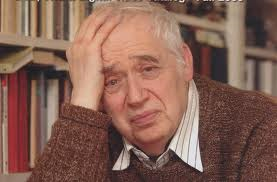
Professor Harold Bloom

On its ’10 Questions’ page at the back of Time Magazine, May 11th, there was a series of responses from Harold Bloom, who is a literary critic and Sterling Professor of Humanities at Yale University.  He comes across as an iconic, contrary, interesting figure, and while he was teaching at Yale while I was there, I never met the man.

untitled

In the ‘interview’ he makes several points about literature which interested me.  (He also discussed students and Yale and Naomi Wolf: of less interest.)

He was asked whether he was ever tempted to write a second novel, after The Flight to Lucifer.  His response was that on re-reading The Flight to Lucifer, he decided that writing fiction was not for him.  He was then asked what qualifies him to be a critic if he isn’t a novelist or a poet.  His answer was that he loves books.  To my mind, that’s a good answer.  To be a competent critic, one does not need to be a writer, but one must be an educated, insightful, voracious reader.  Good writers do not necessarily make good critics, and good critics can be poor writers.  What good writers and critics have in common is a love of reading.

He also says that ‘we live in an age of visual overstimulation’ and that the ‘pernicious screen’ destroys the ability to read well.  I’m not sure that it destroys our ability to read, but it certainly can distract us from reading, and I think this is particularly true of young people.

Bloom says that writers should read ‘only the best and most challenging and traditional’.  I don’t agree with this.  I think writers, as readers, need to experiment.  I find that when I read a book that is not one of the ‘best’ or is not ‘traditional’, my horizons are widened.  I can see mistakes that were made, and I can evaluate new approaches and techniques.  This is part of my learning process; sticking to the best, traditional literature narrows my vision.

Time asked Bloom whether he is familiar with ‘websites that provide reviews by common readers’.  Bloom’s response: “Their effect upon the mind is not good.  They do not enlarge and make the mind more keen and independent.  Reading is not in that sense a democratic process.  It is elitist.  It has to be elitist.”  What a lot of bullshit!  Bloom comes across as a dedicated elitist who wishes to protect his own sublime position as a critic.  While it may be true that many of the reviews posted on, for example, Amazon.com are cursory and less than insightful, it does not follow that such reviews should be deplored. Many readers have a desire to express their views on what they have read; to deny them the opportunity to express those views may take away part of their incentive to read.  Besides, a sophisticated review reader can find the wheat amid the chaff.  Reading is not a democratic process?  That’s a ridiculous statement!  If he meant that literary criticism is not a democratic process, I would agree.

Someday, I would like to meet Professor Bloom.

Review: Nichijo: The Testimony of John Provoo

As a participant in the Reader’s Favourite book review scheme, I had to select a book from among those that had been submitted for review. Nearly all of the books submitted are in electronic format. I prefer hard copies, so I selected the book I wanted to read and bought it on Amazon.

Nichijo: The Testimony of John Provoo interested me for several reasons: It concerned the Second World War in the Pacific, and there were elements of Buddhism and Japanese culture. (I read much of the book while on a recent trip to Japan.)

IMG_20150605_0001

The author is John Oliver who has a Batchelor’s degree in Political Science and Religious Studies from the University of California at Santa Barbara.  He was working in Hawaii when he met John Provoo and decided to tell his story. The book is therefore an autobiography; as it is written in the first person.

According to his ‘testimony’, John Provoo grew up in San Francisco, having been born in 1917. He was attracted to Buddhism and believed in the sanctity of all life. In March 1940, he went to Japan to study for the Buddhist priesthood.   He returned to the US in May 1941 under the threat of imminent war, and enlisted in the US Army. He was sent to the Philippines where he worked as a clerk in Army headquarters in Manila. He was captured by the Japanese in the Battle of Corregidor and became a prisoner of war. Much of the book concerns his time as a Japanese prisoner. Because of his fluency in Japanese and his understanding of Japanese culture he often had to deal directly with his captors. This led simultaneously to somewhat more lenient treatment of fellow prisoners and suspicions by the same fellow prisoners that Provoo was giving aid and comfort to the enemy. When he returned to the US, he was accused of collaboration with the enemy, was acquitted and re-enlisted in 1946. For most of the next ten years, he was pursued by the US Justice Department for treason, and underwent several trials, during which his homosexuality was used against him. Eventually, he was acquitted and went to Japan to complete his Buddhist training and to Hawaii, where, as a high level Buddhist priest he lived the rest of his life, dying in 2001.

One has the sense, in reading the book, of an honest re-counting of history, and, as such, it makes very interesting reading: in particular, the conflicted position in which a Japanese-speaking Provoo found himself as a Japanese prisoner of war; the shameful conduct of the Justice Department in mounting a hugely costly campaign against him and in using his homosexuality against him. It appears that John Oliver undertook a considerable amount of independent research to complete this book, and that he did not rely only on what Provoo told him.

There are several areas that are worth mentioning. John Provoo was clearly a very complex character, but one does not get a full understanding of this complexity in the book. Rather, the emphasis is on the historic (what was done) rather than the psychological (why it was done). Might it have been a more interesting piece of literature if instead of being entirely in the first person, the author had intervened as the narrator now and then? In the latter part of the book, there is too much name dropping (who the various interested parties were), and on exactly what they said. I think it would have been sufficient to summarise the key points, and use footnotes where essential. While the writing is good and effective, there is very little description of the various environments in which Provoo found himself: again the emphasis on history rather than literature.

That said, Nichijo, (Provoo’s name as a Buddhist priest) is quite an interesting read. I enjoyed it.

Review: H is for Hawk

Having read Henry Marsh’s Do No Harm, which was shortlisted for the Costa Book of the Year Award, I have now read H is for Hawk by Helen Macdonald which won the top prize.

IMG_20150522_0001

H is for Hawk tells the experiences of Helen Macdonald, a writer, illustrator, historian and lecturer at Cambridge University in training a wild hawk. Macdonald had some advantages in this task: she was fascinated by falconry and hawks as a child, and she had experience of hunting with hawks, but she had never trained a wild hawk to hunt. There was a major disadvantage: her much-loved father, a renowned photographer, had just died suddenly when she acquired the hawk for £800 from a breeder in Northern Ireland. Much of the book deals with the intense commitment and frustrations which the falconer must endure over the lengthy process of winning the trust of a wild predatory animal so that it works together with the falconer in killing wild game. The goshawk in the book has personality: feral, proud and beautiful, unpredictable, iconic. One learns, incidentally, that Macdonald is a scholar, an intelligent and sensitive person, but the author also exposes her vulnerabilities: in particular, her crippling grief over the loss of her father. In parallel with the story of Macdonald’s goshawk, she tells the story of T H White, now deceased, a dedicated, but somewhat eccentric falconer and the author of The Goshawk. We learn of his mistakes and his anguish as he tries to train a goshawk. So this book operates at several levels: a present, objective account of the training of a wild hawk; there is a past, reported account of the training of a different hawk; there are psychological explorations of both the author and her role model, T H White. This may sound rather complex, and, in a way, it is, but Macdonald weaves it all together beautifully so that it is quite natural.

The writing, in style and language is exquisite. In particular, the descriptions of natural settings and the behaviour of the hawk are breath-taking. For example: “. . . she (the hawk) sees something through the trees, out there on the other side of the hedge. Her pupils grow wide. She snakes her neck and flattens her crown, and the tiny grey hair-feathers around her beak and eyes crinkle into a frown that I’ve learned means there’s something there.” And: “The fields are shorn, yellowed into stalky, rabbit-grazed sward spotted with foraging rooks.”

H is for Hawk is clearly a major labour of love. This love and its result: a durable classic about nature, surely merited the Costa Award.

As a child, I was very interested in falconry; I read everything I could lay my hands on the subject – even flirting with the idea of obtaining a hawk. For me, H is for Hawk has a special resonance, but I suspect that some potential readers may be put off by a book on falconry. For those potential readers, I would say, “This isn’t just a book about falconry. It’s a book about nature, the human condition, grief, joy, life and death.”

Are Top Writers Cowards?

No less a literary figure than Sir Salman Rushdie has labelled a pair of novelist friends (Carey and Ondaatje) as cowards.  In case you didn’t hear about it, on May 5, the global writers’ organisation, PEN, awarded its annual Freedom of Expression Award to Charlie Hebdo, the French satirical magazine which lost eight journalists during an attack by Islamic extremist gunmen in January.  Charlie Hebdo had satirised Islam – amongst other targets.

Six prominent authors: Peter Carey (two-time Booker Prize winner for True History of the Kelly Gang and Oscar and Lucinda), Talye Selasi (author of Ghana Must Go), Michael Ondaatje (Booker Prize for The English Patient), Rachel Kushner (author of Telex from Cuba and The Flame Throwers), Francine Prose (who received the PEN translation prize in 1988), and Teju Cole (Nigerian-American writer) withdrew from the PEN event.

Rushdie, writing on Twitter and  making reference to Luigi Pirandello’s play, Six Characters in Search of an Author, said, “The award will be given. PEN is holding firm. Just six pussies.  Six authors in search of a bit of Character.”

Carey acknowledged that the murders of the journalists were an “hideous crime”, but he questioned PEN’s wish to champion Charlie Hebdo.  He said, “Was it a freedom-of-speech issue for PEN America to be self-righteous about?  All this is complicated by PEN’s seeming blindness to the cultural arrogance of the French nation, which does not recognise its moral obligation to a large and disempowered segment of their population.”

Gary Trudeau, the American cartoonist  who produced the Doomsday comic strip said, “By punching downward, by attacking a powerless, disenfranchised minority with crude, vulgar drawings closer to graffiti than cartoons, Charlie wandered into the realm of hate speech.”

Jo Glanville, director of English PEN, said that the protesting authors appeared to be confused between the principle of free speech and endorsing the message of Charlie Hebdo.  “The big mistake that these authors make is that they are essentially withdrawing their support for the principle of freedom of expression.  If freedom of expression means anything, then it’s supporting work that you don’t like.”  She said that Rushdie knew all too well the risks of causing offense: “It’s highly understandable that Salman Rushdie supports this in the way that he does.  When he was hiding after writing The Satanic Verses he was attacked by writers including John le Carré and Roald Dahl.”

images

In my view, Ms Glanville has hit the nail on the head: the objecting authors are confusing supporting freedom of expression with supporting material with which you don’t agree.  If one starts saying, “Well, I don’t think they should have said that and therefore I don’t think they deserve a prize for saying it”, one introduces an element of censorship into the process, which is intolerable.

I also don’t think that Carey’s comments about the French nation have anything whatever to do with the issue at hand: Charlie Hebdo is not a mouthpiece for the French government or the French people.  And I think it is wrong for Gary Trudeau to assume that Charlie Hebdo was “attacking a powerless, disenfranchised minority”, but if they were, and even if it was “hate speech” does it have to be suppressed?  In his column in The Times, Oliver Kamm wrote; “No one has a right to complain at having their religious beliefs mocked.  No one is ‘disempowered’ by being offended.  No one is entitled to redress for hurt feelings.”

For me, as a writer, the question is: what should I say?  I should be the judge of whether what I write is so offensive to some group of people that they will not see it as rational, but only as an attack.  If what I say is seen only as an attack, why do it?  My writing includes some religious content: Christian, Muslim and Jewish, and these passages, in particular, are where I have to ask the question.  But once I have answered it and once I have written, I fully expect that even those who disagree with what I’ve said will support my right to say it.

Review: Revere Beach Boulevard

I bought Revere Beach Boulevard because there was a piece in my alumni magazine about a fellow writer and a fellow alumnus, and I read most of it while I was on a brief holiday in Sicily.

untitled

Revere Beach Boulevard is a contemporary novel set in Revere, Massachusetts, a suburb of Boston. Four of the principal characters are an Italian-American family: Lucy, the mother, is dying of cancer; Vito, the father is a retired carpenter; Peter, a son in his forties, sells real estate and has a serious gambling addiction; Joanie, the older sister with a secret, is apparently a successful newsreader for a Boston TV station. The other characters – friends and acquaintances – are part of the immigrant culture of Family, Church, and Food, and as such, the novel does them justice. The plot revolves around Peter who is heavily in debt to the local Mafioso. He hasn’t the money to pay, and friends and family are largely losing patience, as is the malevolent Chelsea Eddie, who finds that he doesn’t hold all the cards. Joanne is about the run a TV special on criminals like Eddie.

Without revealing the outcome, the plot has all the elements of a well-written thriller. I found it difficult to put it down. But there is much more to it than a thriller: the examination of values like love, trust, faith and above all: who we are as human beings. The characters, particularly Peter, Vito and Alfonse – the police chief with a secret – are very real and imperfectly human.

Without detracting much from the value and readability of this novel, one aspect that I didn’t particularly like was that each of the characters told a part of the story. This meant that one often had to read a whole paragraph before one knew which of about nine characters was talking. I felt that Peter and an omniscient narrator could have told the story equally well. I had minor reservations about two of the characters. I didn’t think that Chelsea Eddie would worry so much about what Joanie would say about him on the air: any Mafioso worth his salt has an anti-libel lawyer on standby, and Joanie had no solid evidence. Maybe is she were FBI rather than a newsreader? For me, Joanie’s loss of self-control during her visit to her dying mother didn’t ring true. She is a highly-paid TV executive who fought her way up to that position. Distressed, but not an injured child. Neither of these quibbles had any impact on the splendid plot.

The final proof-reading of the text could have been better. Frequently there were extra spaces between words, and hyphens were used instead of dashes to offset parenthetical phrases. For me, this caused confusion.

I certainly recommend Revere Beach Boulevard. It is unusual; it is interesting; it is captivating; it is well-written

Review: Hidden Battlefields

‘Kitty’ posted the following review of Hidden Battlefields on Amazon.com:

Hidden Battlefields, the sequel to The Iranian Scorpion, finds Robert Dawson that book’s main character off on another assignment as an undercover agent for the DEA this time not in the Middle East but in Peru dealing with the guerrilla group, the Shining Path. Other characters from the first book make appearances here, too, as they work out some of their personal struggles dating from that time. There is Robert’s father, David; David’s fiancé, Mary Jo; a journalist Kate, friends to both Robert and David. If you are curious about the intricacies of the international drug trade you will learn much from Hidden Battlefields, as Robert’s work takes him from the jungles of Peru across the Atlantic to Africa and concluding in Italy. One admirable attribute of Mr Peace’s work is the incredible research he does in preparing his stories. One will not be disappointed, as we learn the details of international drug smuggling in several different countries and the behind the scene deals that are made, some involving governments, including ours. Mr Peace’s novels are not one dimensional. We have the plot of the drug trade, but once again we are treated to philosophical and theological discussions. Mary Jo and Robert discuss belief and free will, established churches and native rituals. However, we also have stimulating debates between Robert and Comrade Vancho, among others, who express their approval of Maoist socialism. But there is always a third thread woven into Mr Peace’s books and that is the tension in human relationships. In Hidden Battlefields we have an examination of parent/child relationships. Robert and his father have always had a “distant” personal relationship made more complicated in this book by Robert’s involvement with his father’s “fiancé.” That fiancé, Mary Jo is also dealing with her relationship with her father. The dynamics of both of those make for interesting reading and the solution to both have a satisfactory conclusion, thanks to a talented writer. Similarly, the author comes to a clever resolution of the romantic triangle – or should I say square. If you like adventure, philosophy, human relationships and romance this book will be your cup of tea. You won’t be able to put it down.

Clean Reader

I find the reaction to the Clean Reader app rather amusing.

screen322x572

The app was created by the Idaho parents Jared and Kirsten Maughan who were concerned that their daughter had read a book with words that made her uncomfortable.

The app is available on Apple and Android, and it works on a scale from “Clean”, which replaces swear words such as “f***” to “Squeaky Clean” which will replace words including “damn”.  It does not remove any words from a digital file, rather it puts an opaque highlight over the word.  The app can be turned off so that the reader can consume the book exactly as it was written.  On this basis, the creators claim that their app does no violate copyright because it doesn’t make changes to the file which contains the book.

Some authors have gone ballistic.

Joanne Harris, award-winning author of Chocolate and The Gospel of Loki fond the concept of Clean reader “infinitely more offensive than the words it blanks out”.   She added: ” We’ve been down this road before.  We should know where it leads by now.  It starts out by blanking out a few words.  It goes on to . . . stick fig leaves on statues.  It progresses to denouncing gay or Jewish artists as “degenerate”.  It ends up with burning libraries and erasing whole civilizations from history.”

Laurie Penny, a journalist and author said, “There’s now an app for taking swear words out of books.  I find this f***ing horrifying!”

Linda Acaster, a novelist from Yorkshire, stated: “The first act of censorship is to censor books.  The second is to ban them.   The third is to burn them.”

I’m pretty relaxed about this, and I don’t see this silly app as the “sharp end of the wedge” of a new drive for censorship.  I think Western society is liberal and mature enough not to get all upset about the use of the f-word.  After all, it’s used on day-time soap operas, and, if one listens carefully, is part of the vocabulary of the average twelve-year-old.

As an author, I don’t use swear words in descriptive text, because I think that there are alternative adjectives and adverbs that better express the picture I’m trying to convey.  But I certainly have put the f-word into the mouth of a character when his use of the word tells the reader something about him (or her).  (Real people do use profanity).

Would I worry that one of my grandchildren wanted to read one of my novels (The Iranian Scorpion, for example)?  It would depend on the age of the child.  I would say OK to a thirteen-year old who wanted to read it, after I explained what it was about.   (I would be more concerned about the violence than I would be about the drugs, sex and profanity, about which I think most teenagers have at least an abstract understanding.  Video games notwithstanding, I think that real adult violence can be hard to understand.)