“Government Speech”: A New Threat to Library Books

The Atlantic Daily, August 20, 2025, has an interesting article by Justin Richardson and Peter Parnell about how a new legal theory is being used by some libraries to ban certain books. The theory is that library books are government speech protected by the First Amendment. The government must be allowed to speak as it wishes. Thus, it can remove any library book it finds objectionable for any reason.

Justin Richardson is an associate clinical professor of psychiatry at Columbia University and the director of the university’s Center for Psychoanalytic Training and Research. In October, he will receive the Eleanor Roosevelt Award for Bravery in Literature.

Peter Parnell is a Broadway and Off Broadway playwright and TV writer. In October, he will receive the Eleanor Roosevelt Award for Bravery in Literature.

The authors say: “A decade ago, when the government of Singapore announced its decision to pulp every copy of our picture book, And Tango Makes Three, in the nation’s libraries, we felt profoundly lucky. Not for the pulping—that was alarming—but for the fact that the First Amendment guaranteed that this could never happen in America.

We’re not feeling quite so lucky anymore.

In 2023, our book was one of thousands pulled from library shelves around the country, and as we write, an evolving legal strategy being used to defend many such bans threatens to upend decades of precedent preserving the right to read. The danger this doctrine poses to free speech should worry us all—even those who would rather their children not learn about gay penguins.

In Tango, a pair of male chinstrap penguins in the Central Park Zoo become parents when a kindhearted zookeeper gives them an egg to hatch. (The story is both true and personal to us; when we wrote it, we were also trying to have a child.) Tango turned 20 in June, and for many of its years in print, it has been one of the most frequently challenged books in America. But until recently, it had never actually been removed from the collection of a public-school library, or any public library for that matter. That’s because of a 1982 Supreme Court decision establishing that freedom of speech includes the right to access the speech of others through their books. Every challenge to a public-library book since has been subject to the Court’s ruling that officials may not remove a book simply because they disagree with its viewpoint.

Things started to change for us when a teacher in Escambia County, Florida, complained that the goal of Tango was the “indoctrination” of students through an “LGBTQ agenda using penguins.” A committee responsible for reviewing educational materials for the county disagreed, concluding that the story teaches valuable lessons about science and tolerance and is appropriate for students of all ages. But the school board balked at the book’s message of acceptance. As one board member put it, “The fascination is still on that it’s two male penguins raising a chick.” Escambia pulled Tango from its school libraries, which serve roughly 40,000 children.

We sued Escambia in federal court for viewpoint discrimination (the case is ongoing). In casting about for a way to defend the ban, the school board landed on the theory that library books represent “government speech.” The government, the board explained, has its own First Amendment rights and must be allowed to speak as it wishes. Thus, it can remove any library book it finds objectionable for any reason.

When we first heard this argument, we thought it was absurd. But government-speech doctrine is not new. It was invoked by the Supreme Court in 2009, for example, to allow a Utah town to refuse to install a religious monument in a public park, and again in 2015 to permit the state of Texas to refuse to issue certain specialty license plates. Roughly speaking, the doctrine holds that any action deemed “government speech” is immune to the First Amendment claims of those whose speech is being censored.

No court had ever found that library books represent government speech before May of this year, when the United States Court of Appeals for the Fifth Circuit swept aside decades of precedent, including its own previous decisions, to allow the removal of 17 books—Isabel Wilkerson’s Caste, Maurice Sendak’s In the Night Kitchen, and Jazz Jennings’s Being Jazz, among others—from the public libraries of Llano County, Texas. Seven judges in the majority agreed that “a library’s collection decisions are government speech and therefore not subject to Free Speech challenge.” And with that, the books were gone.

The ruling will likely be appealed, and many expect that the Supreme Court will eventually have to decide whether the welter of books and opinions found in every public-library collection represents private speech that the government cannot suppress or government speech that it can censor as it wishes. Imagine the implications if the Court decides the latter. With each new school board, town council, or presidential election, a new set of books deemed out of step with the winner’s political agenda could be swept off the shelves. The government could choose with impunity to destroy any book it dislikes, whether On the Origin of Species or the Bible. The censorship of other forms of speech in public settings could soon follow.

Concern over the expanding use of government-speech claims is not limited to liberals. No less a conservative than Justice Samuel Alito has warned that the doctrine “is susceptible to dangerous misuse.” When the Supreme Court decided that Texas could censor specialty license plates, Alito issued a stinging dissent decrying what he saw as the doctrine’s encroachment on individual liberties. “Here is a test,” he offered: Imagine yourself next to a highway watching the license plates pass—plates variously honoring colleges, clubs, athletes, and cheeseburgers. “As you sat there watching these plates speed by, would you really think that the sentiments reflected in these specialty plates are the views of the State of Texas and not those of the owners of the cars?”

And what if you walked into your child’s school library and saw on its shelves Harry PotterAdventures of Huckleberry Finn, and Captain Underpants; the writings of James Baldwin and William F. Buckley Jr., Karl Marx and Adam Smith, Philip Roth, Laura Ingalls Wilder, and Alison Bechdel? Would you really think that each of these books expressed the views of your government?

We are not legal scholars. We are a playwright and a psychiatrist who wrote a children’s book about penguins. We cannot know how the justices of the Supreme Court might parse the precedents and the details of a case like ours if and when it reaches their bench. But we know where library books come from, and we know what they are for. They are not made by the government. They do not speak the government’s mind. Even small elementary-school collections speak in hundreds of disparate voices offering a wealth of perspectives on our children’s lives and their world—perspectives that all children deserve to hear.

Our daughter is one of them. Bans such as the one on Tango have marched for the past few years under the banner of “parents’ rights.” We’re parents too. And as the fathers of a now-16-year-old girl, we are determined to defend our daughter’s right to read and write and say what she wishes.

Eleven years ago, we followed the Singapore ban from a distant position of privilege that we now find embarrassing. Today, we hope Americans can learn from that example. In a nation where public demonstrations are tightly policed, hundreds of parents stood up to the government’s threat to destroy our book. On a July afternoon, they brought their young children—some in strollers, others holding their stuffies—along with copies of our book and others like it, to the steps of the National Library Building. They sat down and read to their kids. Their quietly powerful protest made international news, and the Singapore government backed down.

As we await decisions in our case and others like it across the country, we would do well to remember the value of putting our own voices to use, even or especially when the government would speak over us.”

AI-gatha Christie Is a Crime

In response to the article mentioned in my last post about the AI-powered service available from the BBC consisting of digital tutorials by famous writers like Agatha Christie, there is the article below which thoroughly trashes the idea. This article was published on the 3rd of May in the Telegraph and was written by Ruth Dudley Edwards.

Ruth Dudley Edwards (born 24 May 1944) is an Irish Unionist historian and writer, with published work in the fields of history, biography and crime fiction, and a number of awards won. Born in Dublin, Ireland, she has lived in England since 1965, and describes herself as British-Irish. Her revisionist approach to Irish history and her views have sometimes generated controversy or ridicule. She has been a columnist with the Irish Sunday Independent, the Daily Telegraph and Sunday Telegraph, and The News Letter.

Ruth Dudley Edwards

Ms Edwards said, “I try to be positive, so in my frequent Luddite moments I call upon my inner Pollyanna and remind myself of the many blessings of technology. Yet the news that the BBC has added to Maestro, its educational streaming platform, a course of 11 short online videos in which a recreated Agatha Christie tells you how to write crime fiction made me feel appropriately murderous.

Indeed, it’s given me inspiration for another short story deriding and killing publishers. But I won’t be asking AI for help. It’s likely to be the nuclear weapon employed by Big Brother to destroy original thought.

Yes, James Pritchard – who through Agatha Christie Ltd is the custodian of her legacy – has insisted that all writing advice given in 11 videos by his great-grandmother’s recreated voice and face be drawn wholly from her own words.

But after a lifetime of reading crime novels and more than four decades writing them, I think the whole idea of a disembodied voice mouthing the words selected by a team of academics is a horrid and dangerous way to go.

Agatha – which as a fellow member of the Detection Club I feel entitled to call her even though she died 20 years before I was elected – was a genius. She became the world’s best selling author because of her innate gifts when it came to plotting and her rare, unsentimental understanding of human nature and good and evil.

I read all her books in my youth, sneered at her writing in my pretentious years at university and during a bad bout of flu in my early 30s reread her and repented. I imbibed from her and others of her contemporaries like G K Chesterton and Edmund Crispin a love of the genre, especially when humour was added to the pot.

And then, unexpectedly, I was invited to write a crime novel, joined the Crime Writers’ Association and discovered a world of fun and friendship and very varied lives, for our members included cops and ex-convicts, doctors and nurses, musicians, bureaucrats and publicans. We would swap stories of how an episode in our lives had inspired us to have a go at telling a story from an improbable viewpoint. No subject was off-limits.

I’ve had several occupations, including in academia, public service and journalism, and have never come across such a congenial and sociable bunch as crime writers and readers. There’s a humility about them that I love and found rarely among academics and the literati. You couldn’t get from an algorithm or from lectures what I’ve learnt from my lovely, irreverent, self-deprecating and sometimes mad companions in that world.

You learn how to write primarily through reading. I don’t believe it can be taught, though I admit some people benefit from good editing, and there’s nothing wrong with handy hints. Indeed, I was a contributor to the highly entertaining Howdunit – published in honour of the 90th anniversary of the Detection Club – in which 90 of the living and some dead members muse on our trade. We collaborate on books occasionally, our planning meetings are hilarious and we donate the proceeds toward subsidising the next communal dinner.

My passion is free speech, and my blood freezes at the thought of how AI will be used by Big Brother. I bet all the casual racism and other kinds of wrongthink expressed in throwaway lines in the work of Agatha and her generation will not survive the first algorithmic sanitising.

“Who controls the past controls the future; who controls the present controls the past,” Orwell taught us.

AI can see off originality, courage, and truth in no time.”

Trump vs Librarians

There is an article written by Rainesford Stauffer in the 7 April 2025 edition of the Guardian.

 Rainesford Stauffer is a freelance writer, reporter, and Kentuckian. She’s the author of An Ordinary Age and All the Gold Stars. Her work has appeared in TIMEThe GuardianEsquireTeen VogueThe Cut, and other publications, and she writes the Work in Progress column at Teen Vogue. She was a 2022-2023 Rosalynn Carter Fellow for Mental Health Journalism.

 Rainesford Stauffer

She said, “For many librarians, the stakes of the job are high – they’re facing burnout, book bans, legislation pushed by rightwing groups, and providing essential resources in an effort to fill gaps in the US’s social safety net.

Now, as Donald Trump’s administration rolls out their agenda, many librarians are describing his policies as “catastrophic” to accessing information and the libraries themselves – institutions considered fundamental to democracy.

Rebecca Hass, the programming and outreach manager at the Anne Arundel county public library in Maryland, has seen the effects of Trump’s second term ripple in.

“The impact [is] on many different community partners and customers that are represented in some of the executive orders,” said Hass. “We get everyone at the library. When people lose their jobs, they come to the library. When they’re not sure what’s going on, they come to the library.”

Hass said the library received some pushback about LGBTQ+ programming, including protesters showing up to its trans Pride event. But the library is undeterred in efforts to meet community needs and supply resources, creating new resource pages on immigration and LGBTQ+ communities, and updating others. They have expanded partnerships, including with social workers in the library. Usage of the community pantry has increased.

Much of this is work the library has always done, Hass said, adding: “But now it’s taken on urgency and additional responsibilities.”

Emily Drabinski, an associate professor at the Queens College Graduate School of Library and Information Studies at the City University of New York, said that what is happening to librarians now mirrors what is happening to other workers.

“You don’t get paid enough to meet your basic needs. Your autonomy at work is consistently under threat. People who think that they know better how to do your job are trying to get the power to push you out of your position,” she said.

Some librarians described the impact of institutions capitulating to censorship on their work. A librarian in the deep south, who asked to remain anonymous in order to protect their safety, described tensions rising on their library board, and how the library is taking pre-emptive measures to make it challenging to find titles considered “controversial”.

“I see all that being as a measure of: ‘If we fly under the radar, we’ll be safe,’” they said. “But it’s sad because who gets left behind – for staff members of color, [or] who are visibly queer, who are disabled, we don’t get to turn off that part of ourselves.”

Meanwhile, Imani, an academic librarian in Texas who declined to give their full name for privacy concerns, is an active public library user, said “DEI removal” happened in her workplace in 2023. Now, they’re seeing increased scrutiny on how funds are spent, especially in regard to large databases.

“It’s really important that people know that this isn’t new at all,” she said, adding that she knew a school librarian who retired several years ago due to fears of criminalization. “At this point, many librarians have done every single thing they can to save things.”

Also, Imani noted, librarians are doing their work with “very little money, very little support [and] higher, higher demand”.

Elon Musk’s unofficial (sic)“department of government efficiency” recently gutted the Institute of Museum and Library Services, which the American Library Association noted greatly affects the important services they offer, including high-speed internet access, summer reading programs, veterans’ telehealth spaces and more, with the most intense losses in rural communities.

While the majority of public library funding comes from city and county taxes, according to EveryLibrary, the IMLS provides grants that support these critical services in every state.

Marisa Kabas, the independent journalist who writes the The Handbasket obtained a copy of a letter sent by IMLS’s acting director, Keith Sonderling, announcing that state library grantee funding would be terminated immediately. (Sonderling previously declared his intention to “restore focus on patriotism” to the IMLS, which many groups noted as an attack of freedom of expression.)

The IMLS submitted a budget request of $280m for 2025.

“That’s nothing in terms of the federal budget, yet it’s going to affect every single library in the country,” said Jessamyn West, who works in a rural, public library in Vermont in addition to working with the Flickr Foundation. “It’s going to make them scramble, it’s going to make them worry, and it’s going to make them have to make really difficult choices for the services that they give to their patrons.”

In many cases, the money is already spent because of contracts libraries had with governments, West added.

“We’re all pretty furious,” West said.

Librarians are speaking out about what communities could lose, including internet access and workforce development in Kentucky, the Talking Book and Braille Center in New Jersey, digital hotspots in North Carolina, and much more outlined in reporting from Book Riot. As librarians grappled with losses that would directly affect their work, the IMLS Instagram account issued posts appearing to mock grantees.

“It’s catastrophic,” Drabinski said, adding that IMLS funds significant library infrastructure, including ebook platforms and interlibrary loan systems. “Without those funds, many of those systems will grind to a halt. All of our work is about to become harder at the same time that the need for our resources and services will explode.”

Drabinski continued: “What we want is for people to be able to read, and for people to have enough. The problems that we face as American workers are similar to yours, and we share a fight.”

Trump’s Book Bann?

The Guardian’s website has an article by Ed Pilkington, dated 13 February 2025 under the title ‘Pentagon schools suspend library books for ‘compliance review’ under Trump orders’.

Ed Pilkington is Chief Reporter for The Guardian in the US

He wrote: “Tens of thousands of American children studying in Pentagon schools serving US military families have had all access to library books suspended for a week while officials conduct a “compliance review” under Donald Trump’s crackdown on DEI and gender equality.

The Department of Defense circulated a memo to parents on Monday that said that it was examining library books “potentially related to gender ideology or discriminatory equity ideology topics”. The memo, which has been obtained by the Guardian, said that a “small number of items” had been identified and were being kept for “further review”.

Books deemed to be in possible violation of the president’s executive orders targeting transgender people and so-called “radical indoctrination” of schoolchildren have been removed from library shelves. The memo states that the titles have been relocated “to the professional collection for evaluation with access limited to professional staff”.

The censorship of library books in defense department schools provoked a furious response from Jamie Raskin, the ranking Democrat on the House judiciary committee. He slammed the practice as “naked content and viewpoint censorship of books”, during a hearing on the “censorship-industrial complex” on Wednesday.

Raskin invited other members of Congress to join him in “denouncing the purge of books, the stripping of books from the Department of Defense libraries or any other public libraries in America”.

The purge of library books will affect up to 67,000 children being taught in Pentagon schools worldwide. The Guardian understands that all 160 schools, located in seven US states and 11 countries, are subject to the censorship.

The Guardian has obtained a list of books that have been caught up in the blanket evaluation. They include No Truth Without Ruth, a picture book for four-to-eight-year-olds about the late Ruth Bader Ginsburg, the second woman to sit on the US supreme court.

The book, by the award-winning writer Kathleen Krull, describes the sexist discrimination Ginsburg had to overcome in her rise to becoming a supreme court justice.

Other titles that have been caught up in the review include a book by the American Oscar-winning actor Julianne Moore. Freckleface Strawberry, also for four-to-eight year olds, features a young girl coming to terms with her freckles.

The Guardian invited the defense department to comment on the review of these and other titles, but a spokesperson did not refer to individual titles.

In a statement, the Department of Defense education activity confirmed that it was carrying out a review of library books as part of an examination of all “instructional resources”. The purpose was to ensure that Pentagon schools were aligned to Trump’s recent executive orders, Defending Women from Gender Ideology Extremism and Ending Radical Indoctrination in K-12 Schooling.”

All book banns, except those which include books advocating violence, are to my mind a violation of the concept of Freedom of Speech. In their enthusiasm for cancelling DEI and gender self-identity, the Trump administration has gone too far.

Homer Is a Distressing Poet?

The Daily Telegraph has an article in its 29 December 2024 issue which I find distressing. (I could not find an author attribution.)

Homer, author of the Iliad and the Odyssey classics

The article says, “Homer’s epic poems The Iliad and The Odyssey have been hit with trigger warnings by a university for “distressing” content.

The University of Exeter has come under fire after telling undergraduates they may “encounter views and content that they may find uncomfortable” in their Greek mythology studies.

In what has been branded as a “parody” and “bonkers”, students enroled on the Women in Homer module are told material could be “challenging”.

With references to sexual violence, rape and infant mortality, undergraduates are also advised they should “feel free to deal with it in ways that help (eg to leave the classroom, contact Wellbeing, and of course talk to the lecturer)” if content is “causing distress”.

However, the advice, which was obtained by the Mail on Sunday via Freedom of Information laws, has been ridiculed by both classics-loving Boris Johnson and experts alike.

The Iliad depicts the final weeks of the ten-year siege of the city of Troy by Greek city-states, while The Odyssey describes Odysseus’s successful journey back to Ithaca, set over multiple locations, timelines and alternative homelands.

Mr Johnson, who read classics at the University of Oxford and is a fan of Homer, said the ancient works provided the “foundation of Western literature”.

Reacting to news of the university’s warning, the former prime minister described the policy as “bonkers”, telling the paper: “Exeter University should withdraw its absurd warnings. Are they really saying that their students are so wet, so feeble-minded and so generally namby-pamby that they can’t enjoy Homer?

“Is the faculty of Exeter University really saying that its students are the most quivering and pathetic in the entire 28 centuries of Homeric studies?”

Historian Lord Andrew Roberts said students shouldn’t be “wrapped in cotton wool and essentially warned against ancient but central texts of the Western canon”.

Frank Furedi, emeritus professor of sociology at the University of Kent, added: “A university that decides to put a trigger warning on Homer’s Iliad and Odyssey has become morally disoriented to the point that it has lost the plot.”

Jeremy Black, the author of A Short History Of War, said the measure “can surely only be a parody”.

A spokesman from the University of Exeter told The Telegraph: “The University strongly supports both academic freedom and freedom of speech, and accepts that this means students may encounter views and content that they may find uncomfortable during their studies.

“Academics may choose to include a content warning on specific modules if they feel some students may find some of the material challenging or distressing.

“Any decision made to include a content warning is made by the academics involved in delivering the modules, and these help ensure students who may be affected by specific issues are not subjected to any potential unnecessary distress.”

The warnings on Homer’s work come amid an increasing number of works being slapped with trigger warnings.

Last week, it emerged that John Steinbeck’s Of Mice and Men was removed from the Welsh GCSE curriculum for the “psychological and emotional” harm caused by its racial slurs.

In October, the University of Nottingham received similar criticism for warning students of The Canterbury Tales’ “expressions of Christian faith”.

Earlier this year, Peter Pan and Alice in Wonderland were amongst a collection of children’s stories that were handed trigger warnings for “white supremacy” at York St John University.

In 2023, a disclaimer was added to the republishing of Nobel Prize-winning Ernest Hemingway’s The Sun Also Rises. Whilst deciding not to censor the book, publisher Penguin Random House’s note made clear the reissue did not constitute an “endorsement” of Hemingway’s original text.”

I remember that as a child my mother reading both the Iliad and the Odyssey to me and that I particularly enjoyed them, knowing that they had been written 2,800 years ago.. Are today’s young adults really so vulnerable to distress? If so, trigger warnings are necessary for 90% of the current news!

Book Banning in Britain

There is an article in today’s Daily Telegraph by Ben Lawrence which startled me. We’re all familiar with book banning in the US, the EU and elsewhere, but in the UK? (Ben is Commissioning Editor of the Telegraph.)

He said, “We are banning books again, and this time it appears to be a consequence of ill-informed hysteria. The Index on Censorship discovered that 28 of the 53 British school librarians they polled had been asked to remove books – many of which were LGBTQ+ titles – from their shelves. It appears that pressure had come from parents and, on some occasions, teachers too. For a society that’s meant to be modern and tolerant, these findings are depressing: the culture wars are failing to subside, and we seem to think nothing of using our children’s education as an ideological battleground.

That battle has been raging in America for several years. In March, the American Library Association reported that 2023 was an all-time peak for such censorship. I imagine that much of the opprobrium launched at titles such as All Boys Aren’t Blue by George M Johnson – the memoir of a young, queer, black activist – was led by Republican-Christian zealots. In Britain, however, the root causes are harder to deduce. Certainly, our national disease of knee-jerk reaction is partly to blame. According to the Index on Censorship, one worker was asked to remove all gay-related content from the school library due to a single complaint about a single book.

Yet the depressing thing is that we have long been intent on cutting off children from literature and its “dangers”, ignorant of the fact that books are crucial to young people’s development. The current situation in the UK smacks of the dark days of the 1980s, when Section 28 legislated that no local authority could “promote homosexuality”. In the line of fire was a ridiculously innocuous picture book from Denmark called Jenny Lives with Eric and Martin, which featured a small girl with two dads, and now looks about as morally corrupting as a Cliff Richard fan convention.

John Clarke, head of Haringey’s Community Information with a copy of Jenny Lives with Eric and Martin in September 1986

I sometimes doubt that those who are quick to show their outrage are even concerned about the morals of Britain’s children; it’s more about their own fear of the unfamiliar. Some books represent a world that exists outside their own limited boundaries, which they therefore can’t control. This was the case in the 1980s: Section 28 felt, in part, like the natural product of a society that had failed to come to terms with the Aids epidemic.

But what those who try to ban books consistently fail to realise is that any attempt to arrest social change will ultimately, in a functioning democracy, be doomed. Perhaps in China, where there are edicts against books that fight against communist values – Alice in Wonderland, for example, is banned for its anthropomorphisation of animals – a suppressed book really can stay buried. But in most places, the allure of a title in samizdat will always ensure its longevity.

For censors have always proved to be on the wrong side of history. Those who fettered the genius of James Joyce and banned Ulysses on the grounds of “obscenity now” look like narrow-minded killjoys. As for Lady Chatterley’s Lover by DH Lawrence? For what it’s worth, I’m still not convinced that it’s great literature, but its depiction of sex was a necessary step forward for British society, and the end of its ban a crucial catalyst for making England a more tolerant place.

It’s telling that one of the few authors who refused to defend Lady Chatterley during the 1960 trial at the Old Bailey was Enid Blyton, an author whose work now often looks mean-spirited and bigoted. In fact, Blyton’s books were banned from my own school library in the 1980s – along with Judy Blume’s progressive adolescent novel Forever – which just goes to show how times change.

And yet, although this news from the Index of Censorship is worrying, I still feel hopeful. Curious minds will always seek out good writing, however long it takes them to find it. Book banning may be a global industry – but the freedom to read will always prevail.”

Book Banners are Banned

The Guardian has an article by Maya Yang dated 9 June 2024 on its website which suggests that the tide is turning against book banners in the US. The federal cavalry has arrived in Texas.

“After a case spurred by complaints on books containing the words “butt” and “fart” as well as touching on the topics of racism and LGBTQ+ identity, an appellate court has ruled that Texas cannot ban books from libraries simply because officials “dislike the idea contained in those books”.

The fifth US circuit court of appeals issued its decision on Thursday in a 76-page majority opinion, which was written by Judge Jacques Wiener Jr and opened with a quote from American poet Walt Whitman: “The dirtiest book in all the world is the expurgated book.”

In its decision, the appellate court declared that “government actors may not remove books from a public library with the intent to deprive patrons of access to ideas with which they disagree”.

It added: “This court has declared that officials may not ‘remove books from school library shelves simply because they dislike the idea contained in those books and seek by their removal to prescribe what shall be orthodox in politics, nationalism, religion or other matters of opinion’.”

The appellate court’s latest decision follows a federal lawsuit filed in 2022 by seven Llano county residents against county and library officials for restricting and removing books from its public circulation.

The residents argued that the defendants violated their constitutional right to “access information and ideas” by removing 17 books based on their content and messages.

Those books include seven “butt and fart” books with titles including I Broke My Butt! and Larry the Farting Leprechaun, four young adult books on sexuality, gender identity and dysphoria – including Being Jazz: My Life as a (Transgender) Teen – and two books on the history of racism in the US, among them Caste and They Called Themselves the KKK.

Other books targeted by the ban were In the Night Kitchen, which contains cartoons of a naked child, as well as It’s Perfectly Normal: Changing Bodies, Growing Up, Sex and Sexual Health, according to court documents.

The books were removed after parents complained, with library officials referring to the books as “pornographic filth”.

In its majority decision, the overwhelmingly conservative appellate court ordered eight of the 17 books to be returned, including Being Jazz: My Life as a (Transgender) Teen, Caste and They Called Themselves the KKK.

Wiener wrote how a dissenting opinion from the Donald Trump appointee Kyle Duncan “accuses us of becoming the ‘Library Police’, citing a story by author Stephen King”.

“But King, a well-known free speech activist, would surely be horrified to see how his words are being twisted in service of censorship,” wrote Wiener, who was appointed during George HW Bush’s presidency.

“Per King: ‘As a nation, we’ve been through too many fights to preserve our rights of free thought to let them go just because some prude with a highlighter doesn’t approve of them.’ Defendants and their highlighters are the true library police.”

Wiener also said that “libraries must continuously review their collection to ensure that it is up to date” and engage in “removing outdated or duplicated materials … according to objective, neutral criteria”.

In a report released last October, the American Library Association found that Texas made the most attempts in the US to ban or restrict books in 2022. In total, the state made 93 attempts to restrict access to more than 2,300 books.

A wave of book banning has also emerged in Florida as part of the culture wars of the Republican governor, Ron DeSantis, on “wokeism”, a term meant to insult liberal values.

In January, a Florida school district removed dictionaries, encyclopedias and other books because the texts included descriptions of “sexual conduct”.

Meanwhile, in 2022, a Mississippi school district upheld the firing of an assistant principal after he read a humorous children’s book, I Need a New Butt, to his students.”

I don’t doubt that the litigation will continue but the 5th Circuit Court (one step below the Supreme Court) and a conservative court, has set a precedent which will be forced on other recalcitrant states.

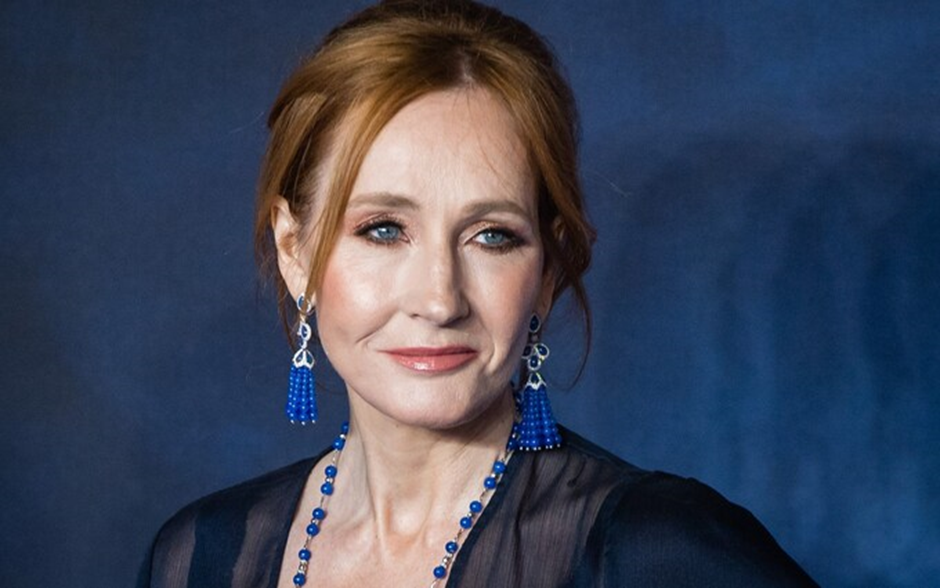
Our Heroine: JK Rowling

There is an article in today’s Telegraph by Allister Heath (the editor of the Sunday Telegraph) in which the editor, rightfully, refers to J K Rowling as a heroine.

J K Rowling

Mr Heath says, “JK Rowling is a modern British heroine, and all those who have vilified, defamed, threatened and traduced her should hang their heads in shame. She has proved to be a far more effective defender of common-sense values than all but a handful of MPs, exposing the cowardice and moral bankruptcy of much of Westminster and Whitehall.

She has fought indefatigably for ordinary people, for the truth, for the rights of women threatened by the rise of trans extremism, incurring horrific hatred from tens of thousands of deranged woke fanatics. She has had a dramatic impact on our politics, unlike the managerialist politicians who dominate the Cabinet, most of whom go with the flow on all “controversial” subjects and are thus content to be in office but not truly in power.

She has almost single-handedly neutralised trans extremism by running the most significant extra-parliamentary campaign in recent history, using little more than tweets and the occasional interview or speech. She is an inspiration to anti-woke dissidents across all continents, and to anybody who believes in the power of carefully chosen words to change the world.

Until Rowling entered the fray, the Tories, under the calamitous Theresa May, were poised to allow gender self-recognition, extremist trans groups had gone mainstream, it was taboo to scrutinise “gender-affirming care” for children or the Tavistock Centre, and Labour was careering into full woke mode. Today, thanks also to a few brave politicians, while the battle hasn’t been won, the extremists are in retreat.

Unusually given our selfish and venal public culture, Rowling has asked for nothing in return, has been given neither the damehood nor the peerage she deserves, and has in fact paid an immense price for helping to rescue her country. As if this weren’t enough, as the author of Harry Potter, she has done more for the UK, for our soft power, for the happiness of our children, for our economy and for the taxman than any current member of the Cabinet. 

How have we come to a point when a centre-Left billionaire author from Edinburgh represents Middle England’s views better than the London-centric establishment class, and even many “Conservative” politicians? And why did so few come to Rowling’s defence when she started to expose woke madness, most notably when she rightly slammed the growing use of the idiotic term “people who menstruate”? She tweeted: “I’m sure there used to be a word for these people. Someone help me out. Wumben? Wimpund? Woomud?”

When almost our entire establishment – politicians, judges, business leaders, cultural leaders – ran for cover, Rowling took on cancel culture and won. She has broken the spell, proving that the best way to defeat social-media mobs is to call their bluff. By sheer force of personality, by refusing to accept that she had lost her freedom of speech, by crafting tight, sharp and rigorous arguments, by standing up to the bullies, she has drastically shifted the Overton window on issues of gender and sex.

She was at it again this week, writing what many wanted to say but were still too scared to verbalise. Reacting to the fact that a transgender cat killer who murdered a stranger was being described as a woman – and that judges have been told to refer to defendants by their chosen pronouns, whether or not they have undergone surgery or applied for a gender recognition certificate – she lashed out. “I’m sick of this s—”, she said. “This is not a woman. These are not our crimes.”

Rowling has exposed the woke commissars’ ultimate lack of power: The mainstream majority will vote with its wallets and has no time for woke capital. The Harry Potter franchise continues to boom. Hogwarts Legacy, an action role-playing game, sold 22 million copies last year, making it the world’s best-selling video game, generating $1 billion and delivering more royalties to Rowling. 

In theory, the wealthy have the freedom to speak out; in practice, most feel that they have too much to lose and prefer to exercise their influence in private, by lobbying or via political donations. This is unhealthy. They should take a leaf out of Rowling’s book, as the likes of Bill Ackman, a fund manager, has done over the vicious epidemic of anti-Semitism in US universities.

Rowling’s emergence as our era’s leading feminist icon reminds us that the sensible Left and Right must work together, that they have much in common against the dark, extremist, authoritarian revolutionaries who seek to overthrow our society. I, for one, never thought I would come to appreciate Rowling so much, given her background as a Labour supporter. 

But none of that matters any longer: the attempt at eliminating the very concept of man and woman, the irreversible damage inflicted upon children who have had the misfortune of falling prey to social contagion, the attempt at cancelling gay people, the terrible risk to women and girls from the eradication of single-sex spaces in gyms and prisons, the despicable misogyny of those who seek to pretend that it is women, and not men, who commit many rapes and murders, all of these are issues of existential significance to our civilisation that require the unity of all sensible people, of Left, Right or neither. 

Rowling’s should be a model for other campaigns. At a time when Parliament is being cowed by Islamist extremists, we need more brave people to stand up for the silent majority. The answer isn’t to spout nonsense à la Lee Anderson, but to unrelentingly marshal reason and facts to expose the threat and danger to our liberties and democracy. Who will be the next J K Rowling?”

What a great piece of journalism!

AI Wins Prize

An article in today’s RTÉ website titled: “Japan literary laureate unashamed about using ChatGPT” caught my eye. There is no author contribution shown.

“The winner of Japan’s most prestigious literary award has acknowledged that about “5%” of her futuristic novel was penned by ChatGPT, saying generative AI had helped unlock her potential.

Since the 2022 launch of ChatGPT, an easy-to-use AI chatbot that can deliver an essay upon request within seconds, there have been growing worries about the impact on a range of sectors – books included.

Lauded by a judge for being “almost flawless” and “universally enjoyable”, Rie Kudan’s latest novel, “Tokyo-to Dojo-to” (“Sympathy Tower Tokyo”), claimed the biannual Akutagawa Prize yesterday.

Set in a futuristic Tokyo, the book revolves around a high-rise prison tower and its architect’s intolerance of criminals, with AI a recurring theme.

The 33-year-old author openly admitted that AI heavily influenced her writing process as well.

“I made active use of generative AI like ChatGPT in writing this book,” she told a ceremony following the winner’s announcement.

“I would say about 5% of the book quoted verbatim the sentences generated by AI.”

Outside of her creative activity, Ms Kudan said she frequently toys with AI, confiding her innermost thoughts that “I can never talk to anyone else about”.

ChatGPT’s responses sometimes inspired dialogue in the novel, she added.

Going forward, she said she wants to keep “good relationships” with AI and “unleash my creativity” in co-existence with it.

When contacted by AFP, the Society for the Promotion of Japanese Literature, the Akutagawa award’s organiser, declined to comment.

On social media, opinions were divided on Ms Kudan’s unorthodox approach to writing, with sceptics calling it morally questionable and potentially undeserving of the prize.

“So she wrote the book by deftly using AI … Is that talented or not? I don’t know,” one wrote on X, formerly known as Twitter.

But others celebrated her resourcefulness and the effort she put into experimenting with various prompts.

“So this is how the Akutagawa laureate uses ChatGPT – not to slack off but to ‘unleash creativity'”, another social media user wrote.

Titles that list ChatGPT as a co-author have been offered for sale through Amazon’s e-book self-publishing unit, although critics say the works are of poor quality.

British author Salman Rushdie told a press conference at the Frankfurt Book Fair in October that recently someone asked an AI writing tool to produce 300 words in his style.

“And what came out was pure garbage,” said the “Midnight’s Children” writer, to laughter from the audience.

The technology also throws up a host of potential legal problems.

Last year, John Grisham, Jodi Picoult and “Game of Thrones” author George RR Martin were among several writers who filed a class-action lawsuit against ChatGPT creator OpenAI over alleged copyright violation.

Along with the Authors Guild, they accused the California-based company of using their books “without permission” to train ChatGPT’s large language models, algorithms capable of producing human-sounding text responses based on simple queries, according to the lawsuit.”

From my point of view, the use of AI to produce literature must sort out the copyright problem. When that issue has been resolved, using AI to write, or co-write, books will be accepted as commonplace, legal and ethical. We human beings have always adopted new technology, even dangerous technology, having found the good in it.

Fighting AI

There is an article in Monday’s issue of the Daily Telegraph concerning a lawsuit filed by the New York Times against Microsoft and Open AI that, on the face of it, is about imitating copyright news articles. But what is at stake is whether an artificial intelligence company could ‘train’ its software on the works of, say, Salman Rushdie, and then produce new Salmon Rushdi titles without paying the author any royalty. The article which bears the title “Silicon Valley’s mimicry machines are trying to erase authors” is written by Andrew Orlowski who is a technology journalist who writes a weekly Telegraph column every Monday. He founded the research network Think of X and previously worked for The Register. 

Andrew Orlowski

Orlowski says, “Silicon Valley reacts to criticism like a truculent toddler throwing its toys out of the pram. But acquiring a bit of humility and self-discipline may be just what the child needs most. 

So the US tech industry should regard a lawsuit filed last week as a great learning experience.

The New York Times last week filed a copyright infringement against Microsoft and Open AI. 

The evidence presented alleges that ChatGPT created near-identical copies of the Times’ stories on demand, without the user first paying a subscription or seeing any advertising on the Times’ site. 

ChatGPT “recites Times content verbatim, closely summarizes it, and mimics its expressive style”, the suit explains.

In other words, the value of the material that the publisher generates is entirely captured by the technology company, which has invested nothing in creating it.

This was exactly the situation that led to the creation of copyright in the Statute of Anne in 1710, which first established the legal right to copyright for an author. Then, it was the printing monopoly that was keeping all the dosh.

The concept of an author, a subjective soul who viewed the world in a unique way, really arrived with the Enlightenment.

Now, the nerds of Silicon Valley want to erase it again. Attempts to do just that have already made them richer than anything a Stationer’s Guild member could imagine.

“Microsoft’s deployment of Times-trained LLMs (Large Language Models) throughout its product line helped boost its market capitalization by trillions of dollars in the past year alone,” the lawsuit notes, adding that OpenAI’s value has shot from zero to $90bn. 

With Open AI’s ChatGPT models now built into so many Microsoft products, this is a mimicry engine built on a global scale.

More ominously, the lawsuit also offers an abundance of evidence that “these tools wrongly attribute false information to The Times”. The bots introduce errors that weren’t there in the first place, it claims. 

They “hallucinate”, to use the Cambridge Dictionary’s word of the year. Publishers who are anxious about the first concern – unauthorised reproduction – should be even more concerned about the second.

Would a publisher be happy to see their outlet’s name next to a ChatGPT News response that confidently asserts, for example, that Iran has just launched cruise missiles at US destroyers? Or at London? 

These are purely hypotheticals but being the newspaper that accidentally starts World War III is not something that can be good for the brand in the long run.

Some midwit pundits and academics portrayed the lawsuit merely as a tactical licensing gambit. 

This year both Associated Press and the German giant Axel Springer have both cut licensing deals with Open AI. The New York Times is just sabre rattling in pursuit of a better deal, so the argument goes.

In response to the lawsuit, OpenAI insisted it respects “the rights of content creators and owners and [is] committed to working with them to ensure they benefit from AI technology and new revenue models”.

However, the industry is worried about much more than money.

Take, for example, the fact that the models that underpin ChatGPT need only to hear a couple of seconds of your child’s voice to clone it authentically. AI does not need to return the next day to perfect their impression. After that, it has a free hand to do what it will with its newfound ability.

So, the economic value of a licensing deal is impossible to estimate beforehand. And once done, it cannot be undone. As one publishing technology executive puts it, “you can’t un-bake the cake”.

Previous innovations in reproduction, from the photocopier to Napster, were rather different beasts, as the entrepreneur and composer Ed Newton-Rex noted this week. Past breakthroughs were purely mechanical or technological changes. But this new generation of AI tools marry technology with knowledge.

“They only work *because* their developers have used that copyrighted content to train on,” Newton-Rex wrote on Twitter, since rebranded as X. (His former employer, Stability AI, is also being sued for infringement).

Publishers and artists are entitled to think that without their work, AI would be nothing. This is why the large AI operations – and the investors hoping to make a killing from them – should be getting very nervous. They have been negligent in ignoring the issue until now.

“Until recently, AI was a research community that enjoyed benign neglect from copyright holders who felt it was bad form to sue academics,” veteran AI journalist Timothy B Lee wrote recently on Twitter. “This gave a lot of AI researchers the mistaken impression that copyright law didn’t apply to them. “It doesn’t seem out of the question that AI companies could lose these cases catastrophically and be forced to pay billions to plaintiffs and rebuild their models from scratch.”

Would wipe-and-rebuild be such a bad thing?

Today’s generative AI is just a very early prototype. Engineers regard a prototype as a learning experience too: it’s there to be discarded.  Many more prototypes may be developed and thrown away until a satisfactory design emerges. A ground-up rebuild can in some cases be the best thing that can happen to a technology product. There’s certainly plenty of room for improvement with this new generation of AI models. 

A Stanford study of ChatGPT looking at how reliable the chatbot was when it came to medicine found that less than half (41 percent) of the responses to clinical conditions agreed with the known answer according to a consensus of physicians. The AI gave lethal advice 7 per cent of the time.

A functioning democracy needs original reporting and writing so that we all benefit from economic incentives for creativity. We must carry on that Enlightenment tradition of original expression. 

Some may find such arguments pompous and any piety from the New York Times difficult to swallow. But there are bigger issues at stake. 

A society that gives up on respect for individual expression, and chooses to worship a mimicry machine instead, probably deserves the fate that inevitably awaits.”