Writing a Novella

Tara Deal has an article on the Writer’s Digest website, dated December 9, 2024 in which she talks about the’Allure’ of the novella for both readers and writers.

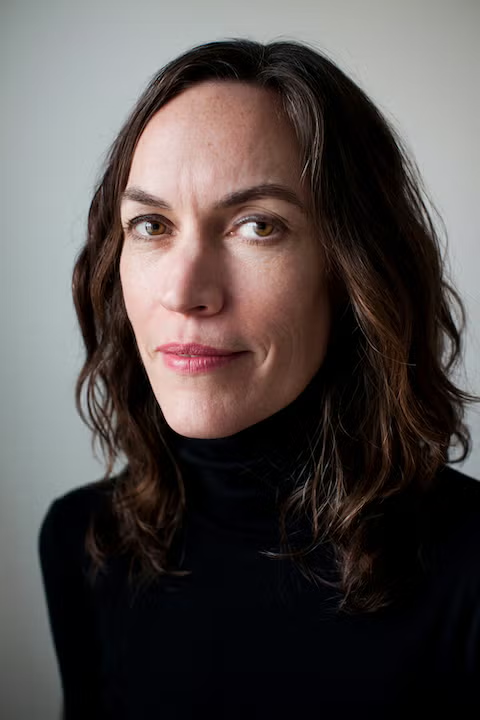
Tara Deal is the author of the award-winning novellas That Night Alive (Miami University Press) and Palms Are Not Trees After All (Texas Review Press). Her most recent novel, Life/Insurance, is the winner of the Fugere Prize from Regal House Publishing. She lives in New York City.

Tara Deal

Tara says, “Everyone talks about novellas getting a lot of attention these days because everyone’s attention span is shrinking (a novella is somewhere between 20,000 and 40,000 words), but short books have always been around, enduring, durable, made of quality materials. Stealth Wealth. Novellas are versatile, subtle, changing to suit the times. Metamorphosis. Because think of what a novella represents. The good life! (“Instagram’s Hottest Trend? Flexing Your Favorite Paperback,” according to Nylon magazine.) 

Imagine spotting someone reading a novella from afar, the flash of a bright blue dust jacket across the subway platform, the park, the plaza, or the palazzo. And even though it does take a bit of effort to read a novella, it’s not too much. 

But what if you’re a writer rather than a reader? What if you’re at home, with a computer, rather than out buying paperbacks with abandon, traveling around the world, and enjoying life at night? Is it really worth the effort to invest your time and money and short attention span into crafting a beautifully made, eternally desirable novella? Yes!

Imagine the exhilaration and accomplishment! Mild Vertigo. But how are you going to do it? With something so slim, almost fragile, approaching evanescence, you don’t want any shoddy workmanship to slip in.

How are you going to get a handle on it? I don’t know, but I’ve been working for years on novellas, trying to get it right. Working for years, sometimes giving up and escaping, packing too much into too many suitcases, heavy books for long flights, but always coming home to strip down, pare back, refresh, and rewrite. Back to trying to write a novella that will stand out from the crowd. How?

You want to make a good first impression, ideally on the first page. Your hook doesn’t have to be flashy, but it should be substantial, weighty. Quality at a Glance. So pick out a few essentials that work together, that you can repeat (if necessary), that you can recombine as your write. 

If you focus on one or two characters (rather than a crowd) and one strong story line (rather than trailing subplots), then you need to insert only a scattering of telling details (objects, phrases, names? Who can say.). But it’s always smart to invest in those evocative (provocative?) items that can go from day to evening. 

And this is no time to be frugal. Go all out on a few well-chosen items, as if you’re in Paris. Pretend there’s Never Any End to Paris. But it doesn’t matter where you are, in a city or on an island, in an apartment, An Apartment in Athens or New York, either way, wherever. Make room for what matters.

Strip away things from your text, as if you are a devoted minimalist committed to black and white. You can cut more than you think: description, dialogue, digressions. Think of Chanel, who said to always remove something from your outfit. Think of Hemingway and his iceberg. You need see only a little to imagine the depths. The Torrents of Spring. In a novella, everything is washed away to reveal a vein of gold. Or a vein of blood, depending.

As if you’re running for a plane about to leave for somewhere glamorous (Fez, Lisbon, Osaka? I don’t know. You have your own itinerary.). Keep checking your watch to make sure things are on schedule. Keep checking your novella, rereading as fast as possible, looking for any snags in the fabric. Time is running out. You are losing hours as you travel. Flatland. 

Are there any rough edges in your reading like burrs in the desert that make you look up and think of going somewhere else? Or are you lost in a dream? Does your novella feel like an enduring design that can’t be improved upon? The Time Machine.

Like the clasp on a necklace, with a satisfying click, the end of the story feels solid, satisfying. The Diamond as Big as the Ritz. You’ve strung along some scenes, some thoughts, and although they might have seem unbalanced to the casual reader, a window shopper who wasn’t committed, now everything hangs together, tight or loose, depending on your style. A gift. The Pearl.

Afterward, a moment of luxuriating. Self-Care. Whether you’re a reader or a writer. The Lover. Has the novella transported you? What do you remember? What will you tell people at dinner? Nothing. Quiet Luxury. You’re happy to have avoided the packaged tour through a bloated book that feels like a typical tourist’s itinerary with too much time wasted while waiting for those bits that are tender and delightful. 

With a novella, you always go straight to the heart of the matter, the marrow, the best parts, presented on a platter. As if on a terrace in Venice or looking out over Bangkok. The Stranger. The suburbs are far behind you, beyond you. The night turns purple. Do Not Disturb. Dream Story.

Review: Understanding Marxism

After reading the biography of Xi Jinping, I decided I needed to refresh my knowledge of Marxism. If Xi thinks Marxism is so good, what have I forgotten? So I bought this rather thin book by Richard D. Wolff.

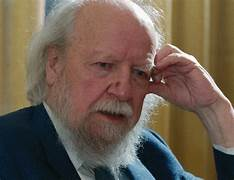
Wikipedia says, “Richard David Wolff (born April 1, 1942) is an American Marxian economist known for his work on economic methodology and class analysis. He is a professor emeritus of economics at the University of Massachusetts Amherst and a visiting professor in the graduate program in international affairs at The New School. Wolff has also taught economics at Yale University, City College of New York, University of Utah, Paris 1 Panthéon-Sorbonne University and The Brecht Forum in New York City.

Richard D Wolff

I was disappointed in this book. At only 75 pages, it can be read in less than two hours. It was written by an American professor with impressive teaching experience. I was hoping for a learned set of arguments about the benefits of Marxist economics, but what I got was a largely a high school level set of criticisms of capitalism. I know that capitalism treats many people unfairly. What I wanted to know was how and why Marxism would treat every one fairly with universal freedom.

Professor Wolff described how Marx defined various classes of people involved in the productive process, and how conflicts between the classes leads to inequities in the distribution of ‘surplus’. Marx’s theory was that the class of ‘surplus providers’ (workers) should be given an equal say to the ‘surplus appropriators’ (executives and investors), and Professor Wolff mentions cooperative organisations. These organisations can be successful in low technology organisations such as farming, where all class members have about the same level of knowledge. But in a pharmaceutical business, for example, a laboratory technician would not understand market dynamics, pharmaceutical pricing, approval processes, etc, and a cooperative model will not work there. While Marx himself did not advocate it, some communist governments have used government ownership as a sort of cooperative, usually without a formal voting process or much success, because government bureaucrats do not have either the knowledge or the experience to make vital resource-allocation decisions.

Marx appears to have been a social/economic class expert. He wasn’t particularly knowledgeable about modern economics.

If you are looking fora strong defense of Marxism, I would suggest you look elsewhere.

Writing the Book You Want to Rewrite

Beth Kander is interviewed by Robert Lee Brewer Writer’s Digest (published 12 December 2024) on how she entered a competition at the last minute.

Beth Kander is a novelist and playwright with tangled roots in the Midwest and Deep South. The granddaughter of immigrants, her writing explores how worlds old and new intertwine—or collide. Her work has been described as “riveting,” “emotional,” “expertly crafted,” and “habit-forming.” Expect twists, turns, and secrets, with surprising heart and humor. Beth has too many degrees and drinks too much coffee. Her favorite characters are her dashing husband and their two lovely kids.

Beth Kander

What prompted you to write this book?

This book definitely has a non-traditional origin. I was knee deep in another project when a friend texted to let me know that the pop culture site Hey Alma was having a Hanukkah movie pitch competition. Eager to procrastinate on my existing project, I checked the pitch competition deadline—and found out it was the very next day. Long story short (literally), I threw together a pitch for I Made It Out Of Clay, a quirky romcom-with-a-golem concept, submitted it at the 11th hour, and ultimately won the competition.

Industry folks started reaching out to me to inquire about film rights. My literary agent, Alli, passed along some great advice from a film agent colleague: “Write the book first, not the movie.” So, I set aside my other book projects and prioritized writing this novel. The story immediately provided myriad unconventional opportunities to explore big topics: grief and family dynamics and identity and adult friendships and turning 40 … I got to write about these heavy things while laughing and making monsters. What a gift.

How long did it take to go from idea to publication? And did the idea change during the process?

I won the pitch competition in December 2022. I was so inspired, I drafted the novel in two blurry months. My agent took it out on sub in February 2023. It sold at auction in March 2023, and publication was set for December 2024. So all told, a two-year-process from idea to publication. That’s fast—often, the writing alone can take longer than that! I’m grateful that although the acquisition happened fast, I had a great editor and plenty of time to revise the book, several times over. I loved spending the time really developing the story and connecting with each character.

Were there any surprises or learning moments in the publishing process for this title?

I’ve learned so much in the process of publishing this book that it’s honestly hard to even know where to begin, and there have been plenty of surprises along the way. But if I had to pull out the biggest lesson, it’s this: You just never know.

You can spend years working on a story you really believe in, only to have it languish and eventually fade away. You can have an overnight idea that becomes the story everyone’s eager to read. You can’t trust trends or tricks. You just have to keep trying. I think a lot about this two-panel meme, where the first panel is labeled “what people think success looks like” and shows an arrow moving steadily forward and up, and the second panel is labeled “what success actually looks like” and it shows a tangled mess that a forward-facing arrow finally re-emerges from… which feels relevant to the publishing process. But I’ve been over-the-top lucky to work with my agent, Alli, to navigate every detour along the way. And working on I Made It Out Of Clay with my editor, April, and the team at Mira/HarperCollins, has been a delight. Sometimes, gracefully and gratefully, the puzzle pieces slide into place.

You just never know.

Were there any surprises in the writing process for this book?

This was the fastest writing process I’ve ever undertaken. To go from a paragraph-long idea to a 90,000-word novel in two months is… well, not something I’d necessarily recommend, honestly. Thank God for coffee.

But what I realized is that I didn’t speed-write this book in a vacuum; it wasn’t an anomaly, or a fluke. It was a culmination. All those years, all those other stories; that was my training for this manuscript-marathon. I doubt I’ll keep that pace up with many subsequent projects, but I’m definitely holding fast to the lesson that even the projects that don’t pan out help shape the ones that will fly.

What do you hope readers will get out of your book?

There’s so much I hope that readers will get out of this book—catharsis, cackling-laughter, genuine enjoyment, a sense of release. There’s some strange stuff in the story (an actual monster!) but it’s really rooted in characters that I hope are relatable in all their imperfections and deep desires for something better. Most of all, I hope this book gives readers permission to laugh in the midst of sorrow or acknowledge sadness even as they dance for joy; to let complicated, conflicting emotions exist alongside each other on the page and in our lives. The publication of this book intersected with a profound loss in my own life, and I’ve become so grateful for anyone and anything that acknowledges that we can feel many things at once. If readers come away with that affirmation, I’ll be thrilled.

If you could share one piece of advice with other writers, what would it be?

Write the book you want to rewrite—because most of writing is revising! Don’t agonize over every word in a first draft; that will only slow you down. Just write the story. Get it onto the page. Drafting is the stage where you capture the idea. Revising is where you figure out how to really tell the story well.

Setting the Mood

Jo Schulte has an article on the Writer’s Digest website dated May 28, 2025 about how a writer can establish the mood in a story.

Jo Schulte

Jo Schulte grew up chasing fireflies in Michigan, spent many years navigating London’s publishing industry, and now calls Atlanta home, y’all. When she’s not writing, Jo can be found walking her dog, getting distracted by renovation projects, or enjoying a well-earned brunch (the housecleaning can wait).

Jo says, “Before characters speak or plot threads intertwine, before a reader knows the rules of a world or the stakes at hand, what greets them first—quietly, viscerally—is mood. Mood shapes tone, reinforces theme, and interacts with protagonists as deliberately as any villain or ally. It’s the foggy breath in the late autumn woods, the hum of neon lights in a dystopian alley, the salt tang in the air as a ship crests a storm-spined wave.

Mood isn’t just the flavor of a story—it’s the foundation of setting. Before readers know where they are, they need to know how to feel. That emotional tone becomes the lens through which they understand place. Setting isn’t a neutral canvas; it’s an invitation into a living, breathing world. A map might show where the towns are, but mood shows you how those towns feel. It’s where setting really begins.

If you sit down and start describing trees, you’re going to end up with—guess what?—trees. But if you sit down and ask, “What do I want the reader to feel here?”, your descriptions will carry emotional weight. A clearing in the woods can be peaceful, ominous, ancient, or desolate—it all depends on the tone you choose.

In The Whisperwood Legacy, I wanted a setting that felt like nostalgia gone sour. The story unfolds in an abandoned amusement park in the Appalachian Mountains—a place meant to feel like memory: familiar, even comforting, but wrong in the way a dream curdles when you try to hold onto it. The rides aren’t beautifully decaying; they’re stubbornly refusing to collapse, clinging to the past like a bruise that won’t fade. That feeling—of something rotting just beneath the surface—is the emotional tone that shaped every detail.

Tip: Before writing a scene, ask yourself what emotional undercurrent should hum beneath the surface. Is this a place that soothes, unsettles, tempts, or traps? Jot down two or three feelings the setting should carry—not just what it looks like. Let that guide every detail.

A strong setting doesn’t just look good—it works hard. It should reveal something about the characters, plot, or world. If it’s not doing at least one of those things, it’s just set dressing.

In The Whisperwood Legacy, the park is owned by the protagonist’s family. Every broken ride, every dusty booth, every desilvered mirror ties into the central mystery she’s unravelling. The setting isn’t just eerie; it’s personal. It matters to her, which means it matters to the reader.

Tip: Ask yourself, “Why this place? Why not somewhere else?” If the answer is “because it’s spooky,” dig deeper. Why this spooky place? What emotional or narrative connection does your protagonist have to it? Bonus points if it’s complicated.

A well-developed setting doesn’t just exist—it affects. To build one that resonates, you need more than a visual snapshot. The best settings reach into the body: They hum in your ears, cling to your skin, sit heavy in your lungs. They make readers feel something. That’s where sensory details come in—not as decoration, but as emotional cues.

We often talk about five senses, but there are more: temperature, balance, pressure, the sense of being watched. The goal isn’t to check off every sense—it’s to choose the ones that amplify the mood. A sticky floor can make a room feel oppressive. The sharp scent of antiseptic can make a hallway feel sterile and cruel. These choices turn static space into living atmosphere.

Tip: When developing a setting, ask which sensory detail best serves the emotional tone. Instead of listing what’s there, consider what your character notices and feels. A creaking stair might do more than a paragraph of visual description, particularly if it’s the only sound in a house that should be empty.

Setting isn’t static. As your character changes, their relationship to the world around them should shift too. This emotional arc is one of the most powerful tools in storytelling.

At the beginning of The Whisperwood Legacy, the park is a decaying monument stuffed with history. Then it becomes a puzzle. By the end, it’s something else entirely. That change in how the protagonist sees her surroundings reflects her internal transformation.

Tip: Identify two or three key locations in your story. How does your protagonist feel about each one at the start? How does that evolve? Let the setting mirror or contradict their emotional arc.

The most memorable settings aren’t pristine or sweeping—they’re specific. They’re strange. They have a sense of lived-in oddity that makes them feel multidimensional. The best details are the ones that make a reader pause and think, wait, what?

In Whisperwood, I could have just created a park with aesthetic attractions, but instead every facet of the park is connected not just to fairy tales, but deeply personal histories. For example,  the house on the park grounds isn’t just a home with vibes, it’s a clapboard mansion where the basement is off limits, the bedrooms are decorated and referred to by colors, and all the landlines have been ripped off the walls. These aren’t generic moody images—they’re eerie because they’re specific, and because that specificity matters to someone. Everything has history. Everything has a story.

Tip: Add one weird, memorable detail to every major setting. Make your world feel like it has secrets and history.

Ultimately, setting isn’t just where the story happens—it’s why the story feels the way it does. It anchors emotion, drives atmosphere, and creates the lens through which everything else is experienced. When you start with mood, you’re not just sketching a backdrop; you’re inviting the reader into a world with its own weather, weight, and wonder.

So set the scene like you mean it. Choose a mood that distorts the light into the temperature of your choosing. Build a place that does more than exist—make it ache, thrill, hum, lure, swoon, or unsettle. Turn a setting into its own story.”

Can AI Edit a Manuscript?

The Conversation website has an interesting article on this subject, written by Katherine Day, Lecturer, Publishing, The University of Melbourne, Reneé Otmar, Honorary Research Fellow, Faculty of Health, Deakin University, Rose Michael,Senior Lecturer, Program Manager BA (Creative Writing), RMIT University, and Sharon Mullins, Tutor, Publishing and Editing, The University of Melbourne, all of whom,presumably, are Australians. The article is dated February 12, 2024.

They say, “Writers have been using AI tools for years – from Microsoft Word’s spellcheck (which often makes unwanted corrections) to the passive-aggressive Grammarly. But ChatGPT is different.

ChatGPT’s natural language processing enables a dialogue, much like a conversation – albeit with a slightly odd acquaintance. And it can generate vast amounts of copy, quickly, in response to queries posed in ordinary, everyday language. This suggests, at least superficially, it can do some of the work a book editor does.

We are professional editors, with extensive experience in the Australian book publishing industry, who wanted to know how ChatGPT would perform when compared to a human editor. To find out, we decided to ask it to edit a short story that had already been worked on by human editors – and we compared the results.

The experiment: ChatGPT vs human editors

The story we chose, The Ninch (written by Rose), had gone through three separate rounds of editing, with four human editors (and a typesetter).

The first version had been rejected by literary journal Overland, but its fiction editor Claire Corbett had given generous feedback. The next version received detailed advice from freelance editor Nicola Redhouse, a judge of the Big Issue fiction edition (which had shortlisted the story). Finally, the piece found a home at another literary journal, Meajin, where deputy editor, Tess Smurthwaite, incorporated comments from the issue’s freelance editor and also their typesetter in her correspondence.

We had a wealth of human feedback to compare ChatGPT’s recommendations with.

We used a standard, free ChatGPT generative AI tool for our edits, which we conducted as separate series of prompts designed to assess the scope and success of AI as an editorial tool.

We wanted to see if ChatGPT could develop and fine tune this unpublished work – and if so, whether it would do it in a way that resembled current editorial practice. By comparing it with human examples, we tried to determine where and at what stage in the process ChatGPT might be most successful as an editorial tool.

The story includes expressive descriptions, poetic imagery, strong symbolism and a subtle subtext. It explores themes of motherhood, nature, and hints at deeper mysteries.

We chose it because we believe the literary genre, with its play and experimentation, poetry and lyricism, offers rich pickings for complex editorial conversations. (And because we knew we could get permission from all participants in the process to share their feedback.)

In the story, a mother reflects on her untamed, sea-loving child. Supernatural possibilities are hinted at before the tale turns closer to home, ending with the mother revealing her own divergent nature – and looping back to offer more meaning to the title:

pinching the skin between my toes … Making each digit its own unique peninsula.

Round 1: the first draft

We started with a simple, general prompt, assuming the least amount of editorial guidance from the author. (Authors submitting stories to magazines and journals generally don’t give human editors a detailed, prescriptive brief.)

Our initial prompt for all three examples was: “Hi ChatGPT, could I please ask for your editorial suggestions on my short story, which I’d like to submit for publication in a literary journal?”

Responding to the first version of the story, ChatGPT provided a summary of key themes (motherhood, connection to nature, the mysteries of the ocean) and made a list of editorial suggestions.

Interestingly, ChatGPT did not pick up that the story was now published and attributed to an author. Raising questions about its ability, or inclination, to identify plagiarism. Nor did it define the genre, which is one of the first assessments an editor makes.

ChatGPT’s suggestions were: to add more description of the coastal setting, provide more physical description of the characters, break up long paragraphs to make the piece more reader-friendly, add more dialogue for characterisation and insight, make the sentences shorter, reveal more inner thoughts of the characters, expand on the symbolism, show don’t tell, incorporate foreshadowing earlier, and provide resolution rather than ending on a mystery.

All good, if stock standard, advice.

ChatGPT also suggested reconsidering the title – clearly not making the connection between mother and daughter’s ocean affinity and their webbed toes – and reading the story aloud to help identify awkward phrasing, pacing and structure.

While this wasn’t particularly helpful feedback, it was not technically wrong.

ChatGPT picked up on the major themes and main characters. And the advice for more foreshadowing, dialogue and description, along with shorter paragraphs and an alternative ending, was generally sound.

In fact, it echoed the usual feedback you’d get from a creative writing workshop, or the kind of advice offered in books on the writing craft.

They are the sort of suggestions an editor might write in response to almost any text – not particularly specific to this story, or to our stated aim of submitting it to a literary publication.

Stage two: AI (re)writes

Next, we provided a second prompt, responding to ChatGPT’s initial feedback – attempting to emulate the back-and-forth discussions that are a key part of the editorial process.

We asked ChatGPT to take a more practical, interventionist approach and rework the text in line with its own editorial suggestions:

Thank you for your feedback about uneven pacing. Could you please suggest places in the story where the pace needs to speed up or slow down? Thank you too for the feedback about imagery and description. Could you please suggest places where there is too much imagery and it needs more action storytelling instead?

That’s where things fell apart.

ChatGPT offered a radically shorter, changed story. The atmospheric descriptions, evocative imagery and nods towards (unspoken) mystery were replaced with unsubtle phrases – which Rose swears she would never have written, or signed off on.

Lines added included: “my daughter has always been an enigma to me”, “little did I know” and “a sense of unease washed over me”. Later in the story, this phrasing was clumsily suggested a second time: “relief washed over me”.

The author’s unique descriptions were changed to familiar cliches: “rugged beauty”, “roar of the ocean”, “unbreakable bond”. ChatGPT also changed the text from Australia English (which all Australian publications require) to US spelling and style (“realization”, “mom”).

In summary, a story where a mother sees her daughter as a “southern selkie going home” (phrasing that hints at a speculative subtext) on a rocky outcrop and really sees her (in all possible, playful senses of that word) was changed to a fishing tale, where a (definitely human) girl arrives home holding up, we kid you not, “a shiny fish”.

It became hard to give credence to any of ChatGPT’s advice.

Esteemed editor Bruce Sims once advised it’s not an editor’s job to fix things; it’s an editor’s job to point out what needs fixing. But if you are asked to be a hands-on editor, your revisions must be an improvement on the original – not just different. And certainly not worse.

It is our industry’s maxim, too, to first do no harm. Not only did ChatGPT not improve Rose’s story, it made it worse.

What did the human editors do?

ChatGPT’s edit did not come close to the calibre of insight and editorial know-how offered by Overland editor Claire Corbett. Some examples:

There’s some beautiful writing and fantastic themes, but the quotes about drowning are heavy-handed; they’re given the job of foreshadowing suspense, creating unease in the reader, rather than the narrator doing that job.

The biggest problem is that final transition – I don’t know how to read the narrator. Her emotions don’t seem to fit the situation.

For me stories are driven by choices and I’m not clear what decision our narrator, or anyone else, in the story faces.

It’s entirely possible I’m not getting something important, but I think that if I’m not getting it, our readers won’t either.

Freelance editor Nicola, who has a personal relationship with Rose, went even further in her exchange (in response to the next draft, where Rose had attempted to address the issues Claire identified). She pushed Rose to work and rework the last sentence until they both felt the language lock in and land.

I’m not 100% sold on this line. I think it’s a little confusing … It might just be too much hinted at in too subtle a way for the reader.

Originally, the final sentence read: “Ready to make my slower way back to the house, retracing – overwriting – any sign of my own less-than more-than normal prints.”

The final version is: “Ready to make my slower way back to the house, retracing, overwriting, any sign of my own less-than, more-than, normal prints.” With the addition of a final standalone line: “I have seen what I wanted to see: her, me, free.”

Claire and Nicola’s feedback show how an editor is a story’s ideal reader. A good editor can guide the author through problems with point of view and emotional dynamics – going beyond the simple mechanics of grammar, sentence length and the number of adjectives.

In other words, they demonstrate something we call editorial intelligence.

Editorial intelligence is akin to emotional intelligence. It incorporates intellectual, creative and emotional capital – all gained from lived experience, complemented by technical skills and industry expertise, applied through the prism of human understanding.

Skills include confident conviction, based on deep accumulated knowledge, meticulous research, cultural mediation and social skills. (After all, the author doesn’t have to do what we say – ours is a persuasive profession.)

Round 2: the revised story

Next, we submitted a revised draft that had addressed Claire’s suggestions and incorporated the conversations with Nicola.

This draft was submitted with the same initial prompt: “Hi ChatGPT, could I please ask for your editorial suggestions on my short story, which I’d like to submit for publication in a literary journal?”

ChatGPT responded with a summary of themes and editorial suggestions very similar to what it had offered in the first round. Again, it didn’t pick up that the story had already been published, nor did it clearly identify the genre.

For the follow-up, we asked specifically for an edit that corrected any issues with tense, spelling and punctuation.

It was a laborious process: the 2,500-word piece had to be submitted in chunks of 300–500 words and the revised sections manually combined.

However, these simpler editorial tasks were clearly more in ChatGPT’s ballpark. When we created a document (in Microsoft Word) that compared the original and AI-edited versions, the flagged changes appeared very much like a human editor’s tracked changes.

But ChatGPT’s changes revealed its own writing preferences, which didn’t allow for artistic play and experimentation. For example, it reinstated prepositions like “in”, “at”, “of” and “to”, which slowed down the reading and reduced the creativity of the piece – and altered the writing style.

This makes sense when you know the datasets that drive ChatGPT mean it explicitly works toward the word most likely to come next. (This might be directed differently in the future, towards more creative, and less stable or predictable models.)

Round 3: our final submission

In the third and final round of the experiment, we submitted the draft that had been accepted by Meanjin.

The process kicked off with the same initial prompt: “Hi ChatGPT, could I please ask for your editorial suggestions on my short story, which I’d like to submit for publication in a literary journal?”

Again, ChatGPT offered its rote list of editorial suggestions. (Was this even editing?)

This time, we followed up with separate prompts for each element we wanted ChatGPT to review: title, pacing, imagery/description.

ChatGPT came back with suggestions for how to revise specific parts of the text, but the suggestions were once again formulaic. There was no attempt to offer – or support – any decision to go against familiar tropes.

Many of ChatGPT’s suggestions – much like the machine rewrites earlier – were heavy-handed. The alternative titles, like “Seaside Solitude” and “Coastal Connection”, used cringeworthy alliteration.

In contrast, Meanjin’s editor Tess Smurthwaite – on behalf of herself, copyeditor Richard McGregor, and typesetter Patrick Cannon – offered light revisions:

The edits are relatively minimal, but please feel free to reject anything that you’re not comfortable with.

Our typesetter has queried one thing: on page 100, where “Not like a thing at all” has become a new para. He wants to know whether the quote marks should change. Technically, I’m thinking that we should add a closing one after “not a thing” and then an opening one on the next line, but I’m also worried it might read like the new para is a response, and that it hasn’t been said by Elsie. Let me know what you think.

Sometimes editorial expertise shows itself in not changing a text. Different isn’t necessarily good. It takes an expert to recognise when a story is working just fine. If it ain’t broke, don’t fix it.

It also takes a certain kind of aerial, bird’s-eye view to notice when the way type is set creates ambiguities in the text. Typesetters really are akin to editors.

The verdict: can ChatGPT edit?

So, ChatGPT can give credible-sounding editorial feedback. But we recommend editors and authors don’t ask it to give individual assessments or expert interventions any time soon.

A major problem that emerged early in this experiment involved ethics: ChatGPT did not ask for or verify the authorship of our story. A journal or magazine would ask an author to confirm a text is their own original work at some stage in the process: either at submission or contract stage.

A freelance editor would likely use other questions to determine the same answer – and in the process of asking about the author’s plans for publication, they would also determine the author’s own stylistic preferences.

Human editors demonstrate their credentials through their work history, and keep their experience up-to-date with professional training and qualifications.

What might the ethics be, we wonder, of giving the same recommendations to every author asking for editing advice? You might be disgruntled to receive generic feedback if you expect or have paid for for individual engagement.

As we’ve seen, when writing challenges expected conventions, AI struggles to respond. Its primary function is to appropriate, amalgamate and regurgitate – which is not enough when it comes to editing literary fiction.

Literary writing aims to – and often does – convey so much more than what the words on screen explicitly say. Literary writers strive for evocative, original prose that draws upon subtext and calls up undercurrents, making the most of nuance and implication to create imagined realities and invent unreal worlds.

At this stage of ChatGPT’s development, literally following the advice of its editing tools to edit literary fiction is likely to make it worse, not better.

In Rose’s case, her oceanic allegory about difference, with a nod to the supernatural, was turned into a story about a fish.

ChatGPT is ‘like the new intern’

This experiment shows how AI and human editors could work together. AI suggestions can be scrutinised – and integrated or dismissed – by authors or editors during the creative process.

And while many of its suggestions were not that useful, AI efficiently identified issues with tense, spelling and punctuation (within an overly narrow interpretation of these rules).

Without human editorial intelligence, ChatGPT does more harm than help. But when used by human editors, it’s like any other tool – as good, or bad, as the tradesperson who wields it.

Building Tension in a Fictional Marriage

On the Writer’s Digest website, May 5,2025, author Paul Vidich examines the way three novels portray deception in fictional marriages to build tension and compelling stories.

Paul Vidich is the acclaimed author of The MercenaryThe Coldest WarriorAn Honorable Man, and The Good Assassin, and his fiction and nonfiction have appeared in the Wall Street JournalLitHubCrimeReadsFugueThe NationNarrative MagazineWordriot, and others. He lives in New York City.

Paul Vidich

Paul says: “What is more intimate than trust in a marriage? My new novel,The Poet’s Game, explores the marriage between a widower who left behind a long career in the CIA and his new, younger wife who works as a Russian translator in the agency. I wanted to examine a loving relationship that is full of joy and laughter, but where one spouse has a toxic secret that calls into question the loving relationship.

“Can two people love each other and still betray each other?  In The Poet’s Game, Alex Matthews and his wife, Anna Kuschenko, are trained to use lies and deceit in the course of their intelligence work, and they ultimately contend with a dark secret that will forever keep them from being entirely truthful with each other. How does a couple that uses deception in the normal course of their professional duties, approach intimacy in marriage?

“The marriages portrayed in The Odyssey, Rebecca, and Berlin Game artfully depict the tension between love and deception, and I studied the texts to see how the authors succeeded.

“Odysseus’s wife Penelope, often described by the epithet, long-suffering, is surrounded by suitors seeking her hand in marriage during her husband’s 20-year absence. He is gone and presumed dead. Penelope defends against the suitors’ entreaties, but it becomes increasingly difficult for her to remain steadfastly faithful. When Odysseus returns, he appears in disguise as a beggar, recognized only by his household’s elderly swineherd. He hides his identity from Penelope. Is he suspicious that she betrayed him and he doesn’t want to reveal himself while he investigates? His deception is one of the epic’s curiosities, but Odysseus’s withholding makes their ultimate reunion more satisfying and Odysseus’s deceit adds dimension to his character.

“Odysseus’s behavior is a good example of what John Le Carré said of complex characters: “The more identities a man has, the more they express the person they conceal.”

Rebecca, Daphne Du Maurier’s 1938 romantic thriller, uses suspense and deceit in a marriage differently. The unnamed first-person narrator, a naïve young woman in her 20s who is a companion to an older woman in Monte Carlo, happens to meet a vacationing wealthy Englishman, Maxim de Winter, a 42-year-old widower. They fall in love, marry, and he brings his new wife back to his estate in Cornwall – Manderley. Maxim’s household servants, and particularly his spinster housekeeper, Mrs. Danvers, take an immediate dislike to the young wife—comparing her disparagingly to the first Mrs. de Winter, Rebecca, who died a year earlier in a sailing accident. 

“At Mrs. Danvers’s suggestion, the new wife dresses in Rebecca’s clothes to please her husband, who mourns the dead Rebecca. But rather than please Maxim, he is angered. The new wife suspects something is not right in their marriage, but she is helpless to discover what is wrong. Only a freak storm one night that sinks a ship off the coast results in the discovery of the missing sunken sailboat, and Rebecca’s body. The discovery causes Maxim to confess to his new wife that his marriage to Rebecca was a sham. Rebecca was cruel and selfish, took many lovers, and on the night that he murdered her, Rebecca confessed she was with child from a beau.

“Layers of deceit are drawn back in the final scenes and all that was hidden from the narrator about Rebecca’s death comes to light, drawing Maxim and the narrator closer together. Jeopardy of the shared secret deepen their bond.

“Len Deighton’s 1983 novel, Berlin Game, features the loving couple of Bernard Samson, a middle-aged British intelligence officer working for MI6, and his wife, Fiona, also an MI6 intelligence officer. They have two children, live a respectable middle-class London life that is filled with the demands of parenting, family and friend obligations, and office scandals of adulterous colleagues. Samson is charged with exfiltrating an important East German asset and in the process confronts uncomfortable evidence that there may be a KGB traitor among his MI6 colleagues. Samson’s suspicions of treachery are confirmed when he is arrested in East Germany as he helps his asset escape, and is confronted by his wife, Fiona, dressed in a KGB uniform. She joined the enemy as a young college student drawn to communist ideology.

“The villain in Berlin Game is the wife. But, in spite of Fiona’s treachery, her relationship to Samson has all the appearances of an affectionate marriage with young children, an active social life, and the little intimacies of a hard-working couple. 

“In each of these marriages, one character’s lies and deceptions deepens the complexity of the relationship, and provide the surprises that make for a compelling story. One partner hides an important detail of their life, and the revelation of that detail operates to bring the couple closer together, or thrust them irreversibly apart. The reveal provides an insight into what a character wants from the spouse—Odysseus wants to test Penelope’s fidelity, Maxim wants to protect his new marriage, Fiona wants to hide her treason. Deception and a surprise reversal in the relationships propels the plots of these stories.

“Exposition is helpful to establish scenes and context, but dialogue provides the beating heart of the relationship and deployed effectively reveals the dynamic between husband and wife. Dialogue is used to imply, suggest, and hide and always for the purpose of adding to the unstable relationship between spouses. When characters come in contact with each other, sparks fly and the reader is riveted by the uncomfortable arguments and unexpected intimacies. The appearance of trust masks the inconsistencies and lies that point to betrayal. The best scenes are laden with uncertainty.

“A character’s hidden motives make use of complex maneuvers to maintain the dark secret, all the while under cover of a gauzy film of intimacy and love. The layering of intimacy and artifice creates three-dimensional characters who come alive on the page.” 

AI-gatha Christie Is a Crime

In response to the article mentioned in my last post about the AI-powered service available from the BBC consisting of digital tutorials by famous writers like Agatha Christie, there is the article below which thoroughly trashes the idea. This article was published on the 3rd of May in the Telegraph and was written by Ruth Dudley Edwards.

Ruth Dudley Edwards (born 24 May 1944) is an Irish Unionist historian and writer, with published work in the fields of history, biography and crime fiction, and a number of awards won. Born in Dublin, Ireland, she has lived in England since 1965, and describes herself as British-Irish. Her revisionist approach to Irish history and her views have sometimes generated controversy or ridicule. She has been a columnist with the Irish Sunday Independent, the Daily Telegraph and Sunday Telegraph, and The News Letter.

Ruth Dudley Edwards

Ms Edwards said, “I try to be positive, so in my frequent Luddite moments I call upon my inner Pollyanna and remind myself of the many blessings of technology. Yet the news that the BBC has added to Maestro, its educational streaming platform, a course of 11 short online videos in which a recreated Agatha Christie tells you how to write crime fiction made me feel appropriately murderous.

Indeed, it’s given me inspiration for another short story deriding and killing publishers. But I won’t be asking AI for help. It’s likely to be the nuclear weapon employed by Big Brother to destroy original thought.

Yes, James Pritchard – who through Agatha Christie Ltd is the custodian of her legacy – has insisted that all writing advice given in 11 videos by his great-grandmother’s recreated voice and face be drawn wholly from her own words.

But after a lifetime of reading crime novels and more than four decades writing them, I think the whole idea of a disembodied voice mouthing the words selected by a team of academics is a horrid and dangerous way to go.

Agatha – which as a fellow member of the Detection Club I feel entitled to call her even though she died 20 years before I was elected – was a genius. She became the world’s best selling author because of her innate gifts when it came to plotting and her rare, unsentimental understanding of human nature and good and evil.

I read all her books in my youth, sneered at her writing in my pretentious years at university and during a bad bout of flu in my early 30s reread her and repented. I imbibed from her and others of her contemporaries like G K Chesterton and Edmund Crispin a love of the genre, especially when humour was added to the pot.

And then, unexpectedly, I was invited to write a crime novel, joined the Crime Writers’ Association and discovered a world of fun and friendship and very varied lives, for our members included cops and ex-convicts, doctors and nurses, musicians, bureaucrats and publicans. We would swap stories of how an episode in our lives had inspired us to have a go at telling a story from an improbable viewpoint. No subject was off-limits.

I’ve had several occupations, including in academia, public service and journalism, and have never come across such a congenial and sociable bunch as crime writers and readers. There’s a humility about them that I love and found rarely among academics and the literati. You couldn’t get from an algorithm or from lectures what I’ve learnt from my lovely, irreverent, self-deprecating and sometimes mad companions in that world.

You learn how to write primarily through reading. I don’t believe it can be taught, though I admit some people benefit from good editing, and there’s nothing wrong with handy hints. Indeed, I was a contributor to the highly entertaining Howdunit – published in honour of the 90th anniversary of the Detection Club – in which 90 of the living and some dead members muse on our trade. We collaborate on books occasionally, our planning meetings are hilarious and we donate the proceeds toward subsidising the next communal dinner.

My passion is free speech, and my blood freezes at the thought of how AI will be used by Big Brother. I bet all the casual racism and other kinds of wrongthink expressed in throwaway lines in the work of Agatha and her generation will not survive the first algorithmic sanitising.

“Who controls the past controls the future; who controls the present controls the past,” Orwell taught us.

AI can see off originality, courage, and truth in no time.”

Agatha Christie a Writing Teacher?

This article by Benji Wilson was in the April 30th issue of the Telegraph.

Benji Wilson

Benji Wilson is a journalist based in London. He is a feature writer and interviewer for The Sunday Times, TV critic for The Telegraph and a columnist and critic for Private Eye. He is also the London correspondent for Emmy magazine as well as writing for USA Today and the Sydney Morning Herald. is the world’s best-selling author, so if you wanted to learn how to write a crime novel she’s the first person you’d ask.

Benji says, “Agatha Christie is the world’s best-selling author, so if you wanted to learn how to write a crime novel she’s the first person you’d ask. Unfortunately, she died in 1976. But in the age of AI, with a plot twist that would assuredly have had Christie herself itching to incorporate it in a book, death need not be the end. A new BBC Maestro course of online video lessons, made in conjunction with Christie’s estate, brings the queen of crime back to life.

“First and foremost, for me, this project is about looking at her process as a writer and paying homage to that,” says James Prichard, Christie’s great-grandson and the Chairman and CEO of Agatha Christie Limited. “One of the things I am proudest of that has happened over the last however many years is how seriously Agatha Christie is taken, which I don’t think was always the case. She is now held in the regard and esteem that she should be as a writer.”

It’s that esteem that will encourage wannabe Christies – in this case, myself – to pay their £120 for a Maestro subscription (which gets you a year’s access to all manner of courses from Stephen Bartlett to JoJo Moyes to Jo Malone). The new Agatha series is a short lecture course given by a recreation of the writer herself, with Christie’s face and voice somehow grafted on to a (brilliant) performance from the actor Vivien Keene. Delivered across 11 videos, all of less than 20 minutes, you sit and are spoken to – nothing interactive here – as Agatha takes you through plotting, structure, detectives and satisfying resolutions.

The difference to all the other BBC Maestro courses is that Christie’s writing advice is only sort-of delivered by Christie. But the message does come from the horse’s mouth, so to speak – it was one of the stipulations of the Christie estate that every one of the words that Keene speaks should have come from Christie’s pen.

“It had to be her lessons; it couldn’t be some made up thing,” says Prichard. “So we had a team of academics under Dr Mark Aldridge [an acknowledged Christie expert] to see to that.”

In order to fit with the BBC Maestro credo – ‘Let the greatest be your teacher’ – “It had to look and sound like her,” says Prichard. “And what they have done is extraordinary. The final thing was that it had to be of value to both aspiring writers and fans. And I think it does that. All I can say is I was speaking to my father on Friday and both of us agreed that we’d learned a hell of a lot from her that we didn’t know.”

If AI-gatha’s Maestro course could teach her own relatives a thing or two – Prichard said that he learned from the course that Christie’s books work because “they’re actually about people, and people never really change” — then surely it could help me? I was lucky enough to get an early view of the Christie course and can report that watching Agatha, or ‘Agatha,’ dole out aperçus on story structure, cast creation, plot twists, red herrings, and the art of suspense, was most of all… unnerving. A half-smiling Christie-bot stares barrel-straight down the camera with schoolmarm-ish supremacy. She seemed to sense my self-doubt, my daft plot ideas, my general unease.

There is also some mild unease at having AI involved at all. To authors, AI is perceived as a threat more than a boon.

“I’d be lying if I said there weren’t worries [about using AI],” says James Prichard. “But I believe and I hope that this is using AI in both a helpful and ethical way. The AI model of Agatha doesn’t work without the performance of Vivien Keene. This was not written by AI. It is a leading academic unearthing everything that she said about writing. And I believe that what we are delivering here in terms of her message is better presented and will reach more people as a result of being presented, if I can use inverted commas, ‘by her.’”

What kind of tutor is AI-gatha? The course shows that Christie plainly studied her craft and while she opens up saying, “I don’t feel I have any particular method when it comes to writing,” which is disappointing, she does in fact adhere to a broad methodology founded in meticulous planning.

“And I take it seriously,” she says, looking serious.

The importance of saying something – not preaching but there being some form of moral backbone to your story — is emphasised throughout. Readers like to see justice served, she says.

“I write to entertain but there is a dash of the old morality play in my work – hunting down the guilty to protect the innocent.”

But where to even start? That’s my problem. Agatha recommends – glory be! – idleness (but not sloth) as a fallow field where ideas can take seed. She encourages eavesdropping on conversations on buses as a source of characters and dialogue, and so I head to that virtual bus that is the Internet.”

Benji finds that Telegraph readers are keen on air fryers and he concocts a short, very silly story about people being murdered by exploding air fryers.

Trump vs Librarians

There is an article written by Rainesford Stauffer in the 7 April 2025 edition of the Guardian.

 Rainesford Stauffer is a freelance writer, reporter, and Kentuckian. She’s the author of An Ordinary Age and All the Gold Stars. Her work has appeared in TIMEThe GuardianEsquireTeen VogueThe Cut, and other publications, and she writes the Work in Progress column at Teen Vogue. She was a 2022-2023 Rosalynn Carter Fellow for Mental Health Journalism.

 Rainesford Stauffer

She said, “For many librarians, the stakes of the job are high – they’re facing burnout, book bans, legislation pushed by rightwing groups, and providing essential resources in an effort to fill gaps in the US’s social safety net.

Now, as Donald Trump’s administration rolls out their agenda, many librarians are describing his policies as “catastrophic” to accessing information and the libraries themselves – institutions considered fundamental to democracy.

Rebecca Hass, the programming and outreach manager at the Anne Arundel county public library in Maryland, has seen the effects of Trump’s second term ripple in.

“The impact [is] on many different community partners and customers that are represented in some of the executive orders,” said Hass. “We get everyone at the library. When people lose their jobs, they come to the library. When they’re not sure what’s going on, they come to the library.”

Hass said the library received some pushback about LGBTQ+ programming, including protesters showing up to its trans Pride event. But the library is undeterred in efforts to meet community needs and supply resources, creating new resource pages on immigration and LGBTQ+ communities, and updating others. They have expanded partnerships, including with social workers in the library. Usage of the community pantry has increased.

Much of this is work the library has always done, Hass said, adding: “But now it’s taken on urgency and additional responsibilities.”

Emily Drabinski, an associate professor at the Queens College Graduate School of Library and Information Studies at the City University of New York, said that what is happening to librarians now mirrors what is happening to other workers.

“You don’t get paid enough to meet your basic needs. Your autonomy at work is consistently under threat. People who think that they know better how to do your job are trying to get the power to push you out of your position,” she said.

Some librarians described the impact of institutions capitulating to censorship on their work. A librarian in the deep south, who asked to remain anonymous in order to protect their safety, described tensions rising on their library board, and how the library is taking pre-emptive measures to make it challenging to find titles considered “controversial”.

“I see all that being as a measure of: ‘If we fly under the radar, we’ll be safe,’” they said. “But it’s sad because who gets left behind – for staff members of color, [or] who are visibly queer, who are disabled, we don’t get to turn off that part of ourselves.”

Meanwhile, Imani, an academic librarian in Texas who declined to give their full name for privacy concerns, is an active public library user, said “DEI removal” happened in her workplace in 2023. Now, they’re seeing increased scrutiny on how funds are spent, especially in regard to large databases.

“It’s really important that people know that this isn’t new at all,” she said, adding that she knew a school librarian who retired several years ago due to fears of criminalization. “At this point, many librarians have done every single thing they can to save things.”

Also, Imani noted, librarians are doing their work with “very little money, very little support [and] higher, higher demand”.

Elon Musk’s unofficial (sic)“department of government efficiency” recently gutted the Institute of Museum and Library Services, which the American Library Association noted greatly affects the important services they offer, including high-speed internet access, summer reading programs, veterans’ telehealth spaces and more, with the most intense losses in rural communities.

While the majority of public library funding comes from city and county taxes, according to EveryLibrary, the IMLS provides grants that support these critical services in every state.

Marisa Kabas, the independent journalist who writes the The Handbasket obtained a copy of a letter sent by IMLS’s acting director, Keith Sonderling, announcing that state library grantee funding would be terminated immediately. (Sonderling previously declared his intention to “restore focus on patriotism” to the IMLS, which many groups noted as an attack of freedom of expression.)

The IMLS submitted a budget request of $280m for 2025.

“That’s nothing in terms of the federal budget, yet it’s going to affect every single library in the country,” said Jessamyn West, who works in a rural, public library in Vermont in addition to working with the Flickr Foundation. “It’s going to make them scramble, it’s going to make them worry, and it’s going to make them have to make really difficult choices for the services that they give to their patrons.”

In many cases, the money is already spent because of contracts libraries had with governments, West added.

“We’re all pretty furious,” West said.

Librarians are speaking out about what communities could lose, including internet access and workforce development in Kentucky, the Talking Book and Braille Center in New Jersey, digital hotspots in North Carolina, and much more outlined in reporting from Book Riot. As librarians grappled with losses that would directly affect their work, the IMLS Instagram account issued posts appearing to mock grantees.

“It’s catastrophic,” Drabinski said, adding that IMLS funds significant library infrastructure, including ebook platforms and interlibrary loan systems. “Without those funds, many of those systems will grind to a halt. All of our work is about to become harder at the same time that the need for our resources and services will explode.”

Drabinski continued: “What we want is for people to be able to read, and for people to have enough. The problems that we face as American workers are similar to yours, and we share a fight.”

Having Fun with Tropes

On the Writers Digest website there is an article by Catriona Silvey dated March 12, 2025 about the use of tropes in fiction.

Catriona Silvey

Catriona Silvey is the author of the international bestseller Meet Me in Another Life. She was born in Glasgow and grew up in Scotland and England. After collecting an unreasonable number of degrees from the universities of Cambridge, Chicago, and Edinburgh, she settled in Edinburgh where she lives with her husband and children.

Catriona says, “Time travel is the science fiction trope with the most mainstream appeal: see, for example, the huge success of The Time Traveler’s Wife, or the more recent hit The Ministry of Time. The attraction is obvious—who wouldn’t want to visit a seemingly unrecoverable past, or get a sneak preview of the future? Different kinds of time travel stories also allow the author to examine different themes. If the past can’t be changed, what does that mean for our ideas of free will? If it can, what happens to our sense of self when our history gets rewritten?

“In Love and Other Paradoxes, the question of what kind of time travel story they’re in becomes a subject of debate between Joe and Esi, and a driving force of the plot. Joe thinks they’re in a stable time loop, where the future will happen no matter what. Esi thinks they’re in a rewritable timeline, where she can make a change in the past and return to a different future. The stakes of who is right ratchet up over the course of the book, combining real implications for the characters with metatextual fun for the time-travel-savvy reader.

“Joe finds out he’s going to become a famous poet when Esi accidentally drops a published book of his future poetry. The book then becomes the catalyst for several key moments in the plot: When Esi tries to get it back, fearing that if Joe reads it, he’ll send the future chaotically off course; when Joe submits a poem from the book to a competition, borrowing from his future to enrich his present.

“From The Neverending Story to House of Leaves, the plot-triggering book has a time-honored history across genres. It’s a trope calculated to appeal to readers: A protagonist who’s glued to a book is automatically relatable. In Love and Other Paradoxes, Joe’s attitude to the book throughout the novel—whether he carries it around in his pocket, or shoves it in the bottom of a drawer—also serves the additional function of mirroring his changing attitude to his future self.

“Since long before Romeo and Juliet, we’ve been telling stories of people who fall in love but can’t be together. The twist on the trope in Love and Other Paradoxes is that for Joe and Esi, the reasons are more metaphysical than social: They both think he’s destined for Diana, the muse who will inspire his famous poetry. If Joe and Esi got together instead, it would put both of their long-dreamed-of futures in jeopardy.

“The joy of the forbidden love trope is that you can write two people who are perfect for each other, with all the flirting, banter, and warmth that entails, but maintain a bittersweet tension, since they know they can’t act on their feelings. And when those feelings become too strong to resist, the stakes of the characters giving in are deliciously high. It’s a built-in way to add intensity to a romance—no wonder it’s been one of the most perennially popular tropes in the genre.

“After his knowledge of the future derails his relationship with Diana, Joe enlists Esi as his dating coach to help him win back his future love. What follows is a classic case of the Matchmaker Crush trope, where two people who are ostensibly working to fix one of them up with a third party instead start to fall for each other.

“The scope for fun with this trope is huge. Makeovers, and the attending none-too-subtle hints at attraction; poking fun at the protagonist’s lack of romantic game; the ratcheting tension, as two people who are starting to become aware of their feelings for each other continue to maintain the charade that one of them is destined for someone else. As with many tropes, the key appeal of this one is that the reader knows where it’s going long before the characters do, leading to the potential for delicious dramatic irony.

“It’s in the nature of a Matchmaker Crush that it tends to lead to a love triangle. As Esi is falling for Joe, he is falling for her too, and he finds himself torn between her and Diana.

“A well-written love triangle is never just about being torn between two people; it’s about the protagonist being torn between two versions of themselves. A paradigm example is in The Hunger Games. While tough, militant Gale initially seems like a more natural match for Katniss, Peeta’s gentleness and persuasive powers make him a better fit for who she aspires to be. 

“In choosing between Diana and Esi, Joe is also deciding between two futures: a glorious, pre-defined future featuring a self he’s not even sure he wants to be any more, and a nebulous, open future, growing out of what he and Esi have learned about who they are in the present. Which one he chooses defines not just the romantic resolution, but also what the novel is trying to say about love, destiny, and how our ideas about the future can affect our present.”