Review: Foundations of Leninism

As I said in last week’s post, my immersion in the biography of Xi Jinping has motivated me to refresh my understanding of Marxism (last week) and Leninism (this week). I looked for a book on Leninism on Amazon, and I found Foundations of Leninism which had good reviews. It was written by J V Stalin.

Really? By Joseph Stalin? The book doesn’t clearly identify its author. It was copyrighted and printed in 2018 by the Bolsheviki Press, of Paden, Oklahoma, USA. On page 1, it does say:

written by J V Stalin

Source; Works: Volume 6, pages 71-196

The Soviet dictator, Joseph Vissarionovich Stalin was born ‘Dzhugashvili’ 18 December 1878 and died 5 March 1953. So, Yes, my conclusion is that the Soviet dictator, Joseph Stalin, did write this book- really a pamphlet of 92 pages, excerpted from his larger works, posthumously – but probably about 100 years ago, and in an entirely different context.

Joseph V Stalin

This short book – really a pamphlet of 92 pages. of which about 75 pages is really relevant text – deals with the Foundations of Leninism from a historical perspective. Apart from basic socialist concepts, there is very little ideology included in it. Stalin was a strong supporter of Lenin. and he certainly had front row seat.

The index is as follows:

  • The historical roots of Leninism: Marxism, socialism, feudalism, the Russian revolition
  • The dictatorship of the proletariat – as opposed to the ruling classes and the tzar
  • The peasant question: are they part of the proletariat?
  • The national question: which countries are involved and how?
  • Strategy and tactics – to be followed in various phases of a revolution.
  • The Party – organisational considerations.
  • Style of work: this two-page section characterises the culture of a Leninist party (Bolsheviks) as being a combination of ‘Russian revolutionary sweep, and American efficiency’; get it all done well.

Certainly, we know that Lenin was a very determined, dedicated individual.

I can’t recommend this book unless you’re interested in Bolshevik history.

Can AI Edit a Manuscript?

The Conversation website has an interesting article on this subject, written by Katherine Day, Lecturer, Publishing, The University of Melbourne, Reneé Otmar, Honorary Research Fellow, Faculty of Health, Deakin University, Rose Michael,Senior Lecturer, Program Manager BA (Creative Writing), RMIT University, and Sharon Mullins, Tutor, Publishing and Editing, The University of Melbourne, all of whom,presumably, are Australians. The article is dated February 12, 2024.

They say, “Writers have been using AI tools for years – from Microsoft Word’s spellcheck (which often makes unwanted corrections) to the passive-aggressive Grammarly. But ChatGPT is different.

ChatGPT’s natural language processing enables a dialogue, much like a conversation – albeit with a slightly odd acquaintance. And it can generate vast amounts of copy, quickly, in response to queries posed in ordinary, everyday language. This suggests, at least superficially, it can do some of the work a book editor does.

We are professional editors, with extensive experience in the Australian book publishing industry, who wanted to know how ChatGPT would perform when compared to a human editor. To find out, we decided to ask it to edit a short story that had already been worked on by human editors – and we compared the results.

The experiment: ChatGPT vs human editors

The story we chose, The Ninch (written by Rose), had gone through three separate rounds of editing, with four human editors (and a typesetter).

The first version had been rejected by literary journal Overland, but its fiction editor Claire Corbett had given generous feedback. The next version received detailed advice from freelance editor Nicola Redhouse, a judge of the Big Issue fiction edition (which had shortlisted the story). Finally, the piece found a home at another literary journal, Meajin, where deputy editor, Tess Smurthwaite, incorporated comments from the issue’s freelance editor and also their typesetter in her correspondence.

We had a wealth of human feedback to compare ChatGPT’s recommendations with.

We used a standard, free ChatGPT generative AI tool for our edits, which we conducted as separate series of prompts designed to assess the scope and success of AI as an editorial tool.

We wanted to see if ChatGPT could develop and fine tune this unpublished work – and if so, whether it would do it in a way that resembled current editorial practice. By comparing it with human examples, we tried to determine where and at what stage in the process ChatGPT might be most successful as an editorial tool.

The story includes expressive descriptions, poetic imagery, strong symbolism and a subtle subtext. It explores themes of motherhood, nature, and hints at deeper mysteries.

We chose it because we believe the literary genre, with its play and experimentation, poetry and lyricism, offers rich pickings for complex editorial conversations. (And because we knew we could get permission from all participants in the process to share their feedback.)

In the story, a mother reflects on her untamed, sea-loving child. Supernatural possibilities are hinted at before the tale turns closer to home, ending with the mother revealing her own divergent nature – and looping back to offer more meaning to the title:

pinching the skin between my toes … Making each digit its own unique peninsula.

Round 1: the first draft

We started with a simple, general prompt, assuming the least amount of editorial guidance from the author. (Authors submitting stories to magazines and journals generally don’t give human editors a detailed, prescriptive brief.)

Our initial prompt for all three examples was: “Hi ChatGPT, could I please ask for your editorial suggestions on my short story, which I’d like to submit for publication in a literary journal?”

Responding to the first version of the story, ChatGPT provided a summary of key themes (motherhood, connection to nature, the mysteries of the ocean) and made a list of editorial suggestions.

Interestingly, ChatGPT did not pick up that the story was now published and attributed to an author. Raising questions about its ability, or inclination, to identify plagiarism. Nor did it define the genre, which is one of the first assessments an editor makes.

ChatGPT’s suggestions were: to add more description of the coastal setting, provide more physical description of the characters, break up long paragraphs to make the piece more reader-friendly, add more dialogue for characterisation and insight, make the sentences shorter, reveal more inner thoughts of the characters, expand on the symbolism, show don’t tell, incorporate foreshadowing earlier, and provide resolution rather than ending on a mystery.

All good, if stock standard, advice.

ChatGPT also suggested reconsidering the title – clearly not making the connection between mother and daughter’s ocean affinity and their webbed toes – and reading the story aloud to help identify awkward phrasing, pacing and structure.

While this wasn’t particularly helpful feedback, it was not technically wrong.

ChatGPT picked up on the major themes and main characters. And the advice for more foreshadowing, dialogue and description, along with shorter paragraphs and an alternative ending, was generally sound.

In fact, it echoed the usual feedback you’d get from a creative writing workshop, or the kind of advice offered in books on the writing craft.

They are the sort of suggestions an editor might write in response to almost any text – not particularly specific to this story, or to our stated aim of submitting it to a literary publication.

Stage two: AI (re)writes

Next, we provided a second prompt, responding to ChatGPT’s initial feedback – attempting to emulate the back-and-forth discussions that are a key part of the editorial process.

We asked ChatGPT to take a more practical, interventionist approach and rework the text in line with its own editorial suggestions:

Thank you for your feedback about uneven pacing. Could you please suggest places in the story where the pace needs to speed up or slow down? Thank you too for the feedback about imagery and description. Could you please suggest places where there is too much imagery and it needs more action storytelling instead?

That’s where things fell apart.

ChatGPT offered a radically shorter, changed story. The atmospheric descriptions, evocative imagery and nods towards (unspoken) mystery were replaced with unsubtle phrases – which Rose swears she would never have written, or signed off on.

Lines added included: “my daughter has always been an enigma to me”, “little did I know” and “a sense of unease washed over me”. Later in the story, this phrasing was clumsily suggested a second time: “relief washed over me”.

The author’s unique descriptions were changed to familiar cliches: “rugged beauty”, “roar of the ocean”, “unbreakable bond”. ChatGPT also changed the text from Australia English (which all Australian publications require) to US spelling and style (“realization”, “mom”).

In summary, a story where a mother sees her daughter as a “southern selkie going home” (phrasing that hints at a speculative subtext) on a rocky outcrop and really sees her (in all possible, playful senses of that word) was changed to a fishing tale, where a (definitely human) girl arrives home holding up, we kid you not, “a shiny fish”.

It became hard to give credence to any of ChatGPT’s advice.

Esteemed editor Bruce Sims once advised it’s not an editor’s job to fix things; it’s an editor’s job to point out what needs fixing. But if you are asked to be a hands-on editor, your revisions must be an improvement on the original – not just different. And certainly not worse.

It is our industry’s maxim, too, to first do no harm. Not only did ChatGPT not improve Rose’s story, it made it worse.

What did the human editors do?

ChatGPT’s edit did not come close to the calibre of insight and editorial know-how offered by Overland editor Claire Corbett. Some examples:

There’s some beautiful writing and fantastic themes, but the quotes about drowning are heavy-handed; they’re given the job of foreshadowing suspense, creating unease in the reader, rather than the narrator doing that job.

The biggest problem is that final transition – I don’t know how to read the narrator. Her emotions don’t seem to fit the situation.

For me stories are driven by choices and I’m not clear what decision our narrator, or anyone else, in the story faces.

It’s entirely possible I’m not getting something important, but I think that if I’m not getting it, our readers won’t either.

Freelance editor Nicola, who has a personal relationship with Rose, went even further in her exchange (in response to the next draft, where Rose had attempted to address the issues Claire identified). She pushed Rose to work and rework the last sentence until they both felt the language lock in and land.

I’m not 100% sold on this line. I think it’s a little confusing … It might just be too much hinted at in too subtle a way for the reader.

Originally, the final sentence read: “Ready to make my slower way back to the house, retracing – overwriting – any sign of my own less-than more-than normal prints.”

The final version is: “Ready to make my slower way back to the house, retracing, overwriting, any sign of my own less-than, more-than, normal prints.” With the addition of a final standalone line: “I have seen what I wanted to see: her, me, free.”

Claire and Nicola’s feedback show how an editor is a story’s ideal reader. A good editor can guide the author through problems with point of view and emotional dynamics – going beyond the simple mechanics of grammar, sentence length and the number of adjectives.

In other words, they demonstrate something we call editorial intelligence.

Editorial intelligence is akin to emotional intelligence. It incorporates intellectual, creative and emotional capital – all gained from lived experience, complemented by technical skills and industry expertise, applied through the prism of human understanding.

Skills include confident conviction, based on deep accumulated knowledge, meticulous research, cultural mediation and social skills. (After all, the author doesn’t have to do what we say – ours is a persuasive profession.)

Round 2: the revised story

Next, we submitted a revised draft that had addressed Claire’s suggestions and incorporated the conversations with Nicola.

This draft was submitted with the same initial prompt: “Hi ChatGPT, could I please ask for your editorial suggestions on my short story, which I’d like to submit for publication in a literary journal?”

ChatGPT responded with a summary of themes and editorial suggestions very similar to what it had offered in the first round. Again, it didn’t pick up that the story had already been published, nor did it clearly identify the genre.

For the follow-up, we asked specifically for an edit that corrected any issues with tense, spelling and punctuation.

It was a laborious process: the 2,500-word piece had to be submitted in chunks of 300–500 words and the revised sections manually combined.

However, these simpler editorial tasks were clearly more in ChatGPT’s ballpark. When we created a document (in Microsoft Word) that compared the original and AI-edited versions, the flagged changes appeared very much like a human editor’s tracked changes.

But ChatGPT’s changes revealed its own writing preferences, which didn’t allow for artistic play and experimentation. For example, it reinstated prepositions like “in”, “at”, “of” and “to”, which slowed down the reading and reduced the creativity of the piece – and altered the writing style.

This makes sense when you know the datasets that drive ChatGPT mean it explicitly works toward the word most likely to come next. (This might be directed differently in the future, towards more creative, and less stable or predictable models.)

Round 3: our final submission

In the third and final round of the experiment, we submitted the draft that had been accepted by Meanjin.

The process kicked off with the same initial prompt: “Hi ChatGPT, could I please ask for your editorial suggestions on my short story, which I’d like to submit for publication in a literary journal?”

Again, ChatGPT offered its rote list of editorial suggestions. (Was this even editing?)

This time, we followed up with separate prompts for each element we wanted ChatGPT to review: title, pacing, imagery/description.

ChatGPT came back with suggestions for how to revise specific parts of the text, but the suggestions were once again formulaic. There was no attempt to offer – or support – any decision to go against familiar tropes.

Many of ChatGPT’s suggestions – much like the machine rewrites earlier – were heavy-handed. The alternative titles, like “Seaside Solitude” and “Coastal Connection”, used cringeworthy alliteration.

In contrast, Meanjin’s editor Tess Smurthwaite – on behalf of herself, copyeditor Richard McGregor, and typesetter Patrick Cannon – offered light revisions:

The edits are relatively minimal, but please feel free to reject anything that you’re not comfortable with.

Our typesetter has queried one thing: on page 100, where “Not like a thing at all” has become a new para. He wants to know whether the quote marks should change. Technically, I’m thinking that we should add a closing one after “not a thing” and then an opening one on the next line, but I’m also worried it might read like the new para is a response, and that it hasn’t been said by Elsie. Let me know what you think.

Sometimes editorial expertise shows itself in not changing a text. Different isn’t necessarily good. It takes an expert to recognise when a story is working just fine. If it ain’t broke, don’t fix it.

It also takes a certain kind of aerial, bird’s-eye view to notice when the way type is set creates ambiguities in the text. Typesetters really are akin to editors.

The verdict: can ChatGPT edit?

So, ChatGPT can give credible-sounding editorial feedback. But we recommend editors and authors don’t ask it to give individual assessments or expert interventions any time soon.

A major problem that emerged early in this experiment involved ethics: ChatGPT did not ask for or verify the authorship of our story. A journal or magazine would ask an author to confirm a text is their own original work at some stage in the process: either at submission or contract stage.

A freelance editor would likely use other questions to determine the same answer – and in the process of asking about the author’s plans for publication, they would also determine the author’s own stylistic preferences.

Human editors demonstrate their credentials through their work history, and keep their experience up-to-date with professional training and qualifications.

What might the ethics be, we wonder, of giving the same recommendations to every author asking for editing advice? You might be disgruntled to receive generic feedback if you expect or have paid for for individual engagement.

As we’ve seen, when writing challenges expected conventions, AI struggles to respond. Its primary function is to appropriate, amalgamate and regurgitate – which is not enough when it comes to editing literary fiction.

Literary writing aims to – and often does – convey so much more than what the words on screen explicitly say. Literary writers strive for evocative, original prose that draws upon subtext and calls up undercurrents, making the most of nuance and implication to create imagined realities and invent unreal worlds.

At this stage of ChatGPT’s development, literally following the advice of its editing tools to edit literary fiction is likely to make it worse, not better.

In Rose’s case, her oceanic allegory about difference, with a nod to the supernatural, was turned into a story about a fish.

ChatGPT is ‘like the new intern’

This experiment shows how AI and human editors could work together. AI suggestions can be scrutinised – and integrated or dismissed – by authors or editors during the creative process.

And while many of its suggestions were not that useful, AI efficiently identified issues with tense, spelling and punctuation (within an overly narrow interpretation of these rules).

Without human editorial intelligence, ChatGPT does more harm than help. But when used by human editors, it’s like any other tool – as good, or bad, as the tradesperson who wields it.

Liberation for Whom?

I’ve got to post some thoughts that have nothing to do with books or writing, but I’ve just have to get them off my chest. I’ll return to books and writing in a day of two.

Yesterday was Liberation Day in the States, according to Trump. My question is: Who was liberated? Abraham Lincoln took care of that problem over one hundred and fifty years ago. Any other Americans were not and certainly won’t be liberated by what happened yesterday. Nobody in the rest of the world was or will be liberated. Maybe it’s just the Big Man himself who was liberated from his hankering to try tariffs as the way to MAGA and to make America rich again.

I’ll come back to MAGA again later, but the rich part also appears doubtful. He seem to think that tariffs are paid by the importer to the government and that’s the end of it. But the importer (either a US company or an individual) has to take the payment from his/her/their own funds. Tariffs are, essentially, a tax on the importer. Yes, they make the government richer, but they also make the importing individual or company equally poorer.

When you consider the effects of tariffs, they definitely make the whole country poorer. First of all, they drive up prices for two reasons: they drive up the prices of imported goods and services, and no they longer provide a barrier against the lower prices of previously imported goods; as a result, domestic suppliers have an invitation to raise their prices. Inflation ramps up. Secondly, importing companies go out of business, because they can’t sell at the higher prices. (Think of foreign car dealerships.) Also, US companies that used to export are hit by the reciprocal tariffs find that they can’t sell either and close up shop. With companies closing, unemployment goes up, and our Gross National Product (a measure of our national wealth) goes down.

There are probably many imported items we can do without: Mercedes cars, French champagne, Japanese wagyu beef, and Chinese childrens’ toys. But what if we can’t sell our whiskey, Mustangs, soybeans, financial services, oil and gas, Levis and Harley Davidsons?

So how is this mess going to end? There are several. I don’t know which it will be.

Trump might back off and ‘cut some deals’. Yes, this is a possibility, but it’s unlikely to happen any time soon. There are over sixty countries who’ve been hit with tariffs. Each one is angry. Each one has a particular US vulnerability they want to hit – maybe it’s a particular rare metal that they have a kind of monopoly of. Negotiations are going to be messy and time consuming, and each one of those 60+ negotiations has the be handled by the Big Man, not by the Department of Commerce.

Congress could take control. With Congress controlled by the Republicans, that won’t be a near term event. Yes, Congress is angry that Trump broke his inauguration vow to follow the Constitution, which gives the right to set tariffs to Congress and not the President. But it’s going to take plenty of renegade Republicans to break ranks. Don’t hold your breath.

The US Supreme Court could hear a constitutional case and rule against the President. Maybe, but the Court is stacked in the President’s favor, and the court doesn’t often set speed records.

The World Trade Organisation (or anybody else) says Trump is wrong. Are you kidding?

I said I’d get back to MAGA, and I have some questions about Great Countries: Does a Great Country

  • shut down its entire foreign aid program, leaving millions of sick, hungry, poor, and terrified people on their own?
  • seek to do financial deals with countries which attack their neighbours and deprive their own people of human rights?
  • disregard and belittle international rules of behaviour which have been codified and adhered to by the large majority of nations?

No, I don’t think so.

Britain’s Wealth to Be Plundered?

Yesterday’s Telegraph has an article by Philip Johnston about the dangers of giving AI companies (particularly American ones) a free hand in training their artificial intelligence.

Philip Johnston has been with the Daily Telegraph for more than 20 years. He is currently assistant editor and leader writer and was previously home affairs editor and chief political correspondent.

Philip Johnston

He wrote, “Labour is planning to undermine copyright laws. The only winners will be the Silicon Valley tech bros.

Have you read any good books by Franklin Chase recently? Who on earth is he, you may well ask. I was on the Amazon site looking to pre-order Ungovernable, the diaries of Simon Hart, the former government chief whip, only to see another copy of almost the same book was already on Kindle. Moreover, it was “available instantly”, unlike Mr Hart’s which does not come out until the end of this week.

Only it wasn’t the same book, but an AI generated imitation with just 46 pages for £8.99. I downloaded it to find what might charitably be called a pile of old rubbish. “Politics is not for the weak,” its prologue begins. “It resembles a battlefield where alliances shift unpredictably, loyalty is often quickly exhausted and the difference between success and failure is extremely narrow. Few have navigated this perilous journey … Simon Hart is one of those exceptional individuals.”

Chapter one opens with the “August sun casting long shadows across the undulating hills of the Cotswolds” where a six-year-old Hart “dashed through the fields, his laughter carried by the breeze”. At least I hope this isn’t the real book. Who has got my wasted £8.99 I have no idea.

I called up Simon, an old acquaintance, and pointed out that this book by one Franklin Chase was basically pretending to be his and might be bought by an unwary would-be reader who had enjoyed the newspaper extracts of the real McCoy last week. He had recently been alerted to this but was told by his publishers that nothing could be done about it. “It is one of those those things in the new AI world” they said.

Indeed, it turns out that Mr Chase is quite a prolific mimic of other books. Among his recent publications are the memoirs of the actress Tuppence Middleton – Rising Through the Storm: A Journey of Fear, Fame and Fierce Resilience. Or the footballer Duncan Ferguson – From Prison Walls to Premier League Triumph. Or Robert Dessaix, the Australian author, Abandoned at Birth, Shaped by Love.

Each of these authors has a book coming out which these titles purport to emulate, all with the real name far larger than the enigmatic and indefatigable Chase, who is clearly an AI bot. These rip-offs are examples of the way generative AI is able to plunder massive amounts of data to create an almost instant book.

Since they are not plagiarised, they are strictly not a breach of copyright but doubtless they use information from some sources that should be protected. Amazon says it takes these fakes down if complaints are made but so many are appearing it is hard to keep up. Indeed, there is already another Simon Hart lookalike on the website: The Untold Story of a Modern Conservative by one Maeve Sterling, who also managed to publish a biography of Louis B Mayer this month.

The Labour Government now proposes to blunder into this brave new world by making it easier for tech giants to “mine” for creative material to feed into the voracious maws of their AI monsters. A 10-week consultation period into plans to remove copyright protections enjoyed by authors, musicians and others so that their work can be plundered to “train” their algorithms ended on February 24. This would be done by way of what is known as the text and data mining (TDM) exemption that currently applies to non-commercial research and would be extended to creative works still under copyright.

The work of British writers, composers and artists could be purloined allowing AI companies to profit from them and, in many cases, not repay the creator. The AI creations would then get IP protection despite having compromised the intellectual property of others. It is astonishing that a British government would contemplate this and yet this is the preferred option in the consultation paper.

Ministers are even planning to block an attempt in the House of Lords to preserve copyright laws by amending the Data (Use and Access) Bill now before Parliament. Baroness Kidron, a film-maker and crossbench peer behind the amendments, said this would be a “travesty”. She added: “The Government has just shown its colours again. It wants to make the UK an AI hub of America and they’re sacrificing the creative industries to do it.”

The Daily Telegraph in common with other newspapers has issued an eleventh-hour plea to ministers to drop the idea. If anything, they should be strengthening copyright against this wholly new and sinister attack on creative material.

Some big stars have joined the hue and cry. Brian May, the Queen guitarist, fears the industrial scale theft of other people’s talent by the AI behemoths cannot be stopped. Simon Cowell, the music producer, said the artistic livelihoods of many risk being wiped out. A letter signed by scores of artists said the Government’s approach “would smash a hole in the moral right of creators to present their work as they wish”, jeopardising the country’s reputation as a beacon of creativity.

The idea that a Labour government is bending over backwards to fill the coffers of Meta, Google and Elon Musk in this way is frankly baffling. So, too, was the Government’s refusal along with the Americans to sign a recent communiqué in Paris about controlling the growth of AI.

Sir Keir Starmer, who is to meet Donald Trump on Thursday, may have calculated that it would be better to be seen to support the AI Wild West that the new White House is happy to see and hope we get a slice of the action.

In the absence of anything else, Labour sees AI as the key to unlocking growth. Supporters say copyright restrictions get in the way of AI’s development and leave the UK struggling to catch up with America and China. Meanwhile, the people who invented AI are terrified about what it might do next.

Of course, the theft of creative material is hardly new. When a Christmas Carol was published in December 1843, knock-offs were on the streets within days claiming to be by Dickens. When a pirated version appeared in Peter Parley’s Illuminated Magazine the author sought an injunction against the publication.

He won but the magazine declared bankruptcy, leaving Dickens with costs of £700. It was thefts like these which necessitated copyright laws. It would be grotesque were Labour now to preside over their demise just to ingratiate themselves with J D Vance.”

Hows true! We’ll have to write to our MPs!

Controversy over Selecting Royal Fellows of Literature

The Guardian had an article on 29 January by Vanessa Thorpe, Arts and Media Correspondent, about proposed changed to the process of selecting fellows of the Royal Society of Literature.

Bernardine Evaristo, President, Royal Society of Literature

I quote from the article: “Fellows of the Royal Society of Literature, an august body founded in London in 1820, seemed poised to stride into the new year on a bold footing, with an inclusive programme of events and a revitalised membership. Its Booker prize-winning president, Bernardine Evaristo, alongside poet Daljit Nagra, chair of the society’s leadership council, were promising further modernisation soon.

But a major revolt among longer-term fellows is now threatening to destabilise the society. A council meeting of members next month will be forced to address a growing number of complaints.

‘There is a lot of turbulence,’ recent president Marina Warner told the Observer. ‘It is a question of a lack of respect for older members and a loss of institutional history, which was something fellows cherished.’

The RSL has not responded officially to public criticism, and did not respond to requests for comment, but this weekend the leadership sent out a letter to alert members to ‘a concerted campaign of disinformation’ and to ask them not to share this ‘misinformation’.

Set up under the patronage of George IV to ‘reward literary merit and excite literary talent’, the society, based in Somerset House, still has royal sponsorship from Queen Camilla. But those critical of its recent past speak of a ‘shambolic’ and ‘clubby’ institution – a place intended to shelter elite talent, rather than represent the wider community of accomplished writers.

‘The society should not just be for a group of older, rather entitled, people, however distinguished. These problems had to be sorted quickly,’ said one new fellow this weekend.

In a speech given last year, Evaristo challenged the assumption that the RSL was still ‘old-fashioned.’ It was, she said, now ‘very forward-looking, very progressive and committed to inclusion at every level’. Under the day-to-day leadership of director Molly Rosenberg the society has won greater funding and shed its cosy atmosphere.

But those same ‘radical moves’ heralded by Evaristo, designed to make the RSL more relevant and more diverse, have prompted a rebellion. The novelist and biographer Miranda Seymour recently resigned, and amid allegations of ‘scandalous’ disregard for proper procedures, a number of members have told the Observer they are considering following suit. This comes after the resignation in 2018 of Piers Paul Read in response to an initial call for younger fellows.

There are fears among members that the strife will soon rival divisions in the Society of Authors, where Philip Pullman stepped down as president last year because he claimed he could not speak freely in the role.

The RSL’s latest efforts to diversify followed Evaristo’s assessment that the charity ‘needed to change’ to become one that is ‘for all writers, rather than traditionally writers who are white and middle class’, and so last year 62 new fellows were inducted.

Plans for 2024 include a change to the method of electing fellows, who must have written a minimum of two distinguished works. Currently, to be recognised with fellowship an author must be nominated by an existing fellow or honorary fellow before being considered by the RSL council and senior officers. Under the new process the public will be invited to recommend writers for fellowship and then a series of broader-based election panels will consider the recommendations.

This is the sort of fundamental switch that unsettles writer Amanda Craig: ‘It used to be an enormous honour to become a fellow. But when people are just starting their writing careers, it is not the same.’

A former chair of the society, Anne Chisholm, told the Observer: ‘Of course the RSL, like all venerable institutions, has an imperfect past: it needed to change with the times. My worry is that the pace and style of change has lately been alienating too many fellows and disrespecting the RSL’s history.'”

I have given up my membership in RSL because it did not have events which interested me, not that I thought that there was anything wrong with the events. It is, clearly, an elitist and fusty organisation, but I think that any venerable institution invites disaster when it goes for sweeping changes. Far better, in my opinion to make careful, incremental changes, bringing the membership along at each step. The requirement for prospective fellows to have two distinguished works is probably fair, if one has a clear idea what a ‘distinguished’ work is. Under the old admission regime, long-time fellows looked for literary quality novels and scholarly non-fiction. Under the proposed regime, ‘broad-based election panels’ may have an entirely different idea of what a ‘distinguished work’ is. My concern is that literary quality may be sacrificed for popularity with particular readerships, genres, subject matters, or styles.

Hear Your Own Voice

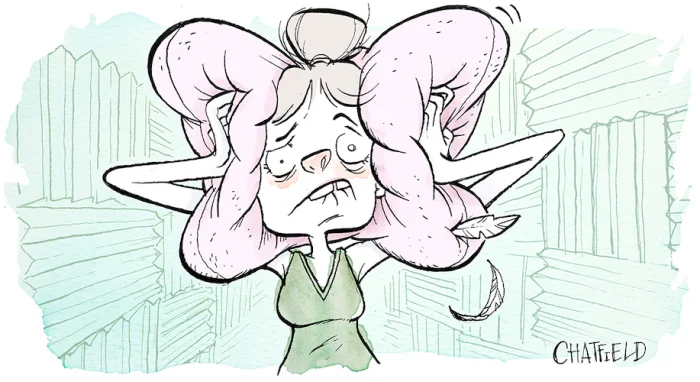
Jason Chatfield has an article on the Writers Digest website dated June 13, 2023 with the title ‘Five Ways to Turn Down the Volume to Hear Your Own Voice’. His basic point is we can’t hear our own genuine voice as writers with all the ambient noise.

Jason Chatfield is an Australian cartoonist and comedian based in New York. He is Australia’s most widely-syndicated cartoonist, producing the iconic comic strip Ginger Meggs which is syndicated daily in over 30 countries through Andrews McMeel Syndication. Ginger Meggs has been running since 1921, making it one of the longest-running comic strips in history, celebrating its 100th anniversary in 2021.

Jason says,”There’s something to be said for immersing yourself in the marketplace of ideas and being exposed to what your contemporaries are doing. There is, however, a very real danger that in doing so, you become the kind of creative individual that does more on-looking than creating.

The ability to yank yourself out of the endless slip-stream of “content” and quietly explore your own ideas is one that should be cultivated above all else. That is, unless, you like the idea of mimicking everyone around you by osmosis and wondering why nobody is noticing your work.

Artists only languish when their primary drive is to merely strive to keep up with what their peers are doing. If they are only exposed to the contemporary trends of their art form, their ideas will reflect that limitation. But, this isn’t a new problem. As long as art has been created, it has been mimicked and iterated on to the detriment of true originality.

For example, in 1801, Ludwig van Beethoven was lamenting the fact that he was slowly going deaf. By 1800, his hearing was in full decline. He was 30 years old. Over the following years, he had to accept that there was no hope of remission and would have to live the rest of his life without the ability to properly hear a musical note. He told people that without sound, his life would be meaningless. But what happened as a result changed the world and holds a lesson for us more than two centuries later.

By Age 46, Beethoven’s deafness was complete, so music only existed in his imagination. During that period, Beethoven was unable to hear the popular compositions of the day. Across the decades, while others were busy replicating each other with slight variations on the same themes, Beethoven was in his own mind, writing the music that he alone wanted to write. This ability to work in a creative silo culminated in his greatest work: his famous Ninth Symphony, which would define his unique style, change music permanently, and make him one of the greatest composers of all time.

With that in mind, here are five of my best pieces of advice for turning down the volume to hear your own unique voice:

1. Become Comfortable With Silence.

Becoming comfortable with silence is one of the hardest skills to cultivate in the modern world, but it is the most important. It’s made even harder with a seemingly infinite amount of ways to disturb the silence. We’ve become so used to cramming “content” into our audio and visual senses at all waking moments that we’ve lost the capacity to just be.

Be honest with yourself; can you remember the last time you left your house without your earbuds? Or got in your car without turning on the radio or a podcast, an audiobook, music, or something else to fill the dead air?

It can be tempting during quiet moments to simply play some soft background music, or some white noise, or even a loop of a crackling fireplace or some rain, but it is essential that your mind benefits from the absence of any sound whatsoever.

2. Deactivate Your Social Media.

We’ve lost much of our ability to examine our own thoughts, ideas, and opinions—to cultivate our own unique voice in the world. Most of the time, our opinions are just a simulacrum of those we’ve heard online, on every topic from immigration law to Taylor Swift. Here’s the truth: You don’t need to have an opinion on everything, even if the social media slipstream insists you do. Doing this is diverting your creative energy away from the things that would actually bear original artistic fruit.

If you have the ability to do so, I would highly recommend the practice of taking yourself as far from the aforementioned slipstream as you can: Deactivate all social media, remove the apps from your phone, and disable all notifications. Remove your default browser if it means you won’t be tempted to check social media in your browser app. If need be, you can reactivate them and showcase your work when you finally have something unique and original to share.

Think people will panic and wonder where you went if you stop posting to Instagram? I’m going to tell you a very upsetting truth that I and many others have discovered: Most of them won’t even notice. Try it for one month and tell me I’m wrong.

3. Clear Your Calendar.

Learning to say “No” to every invitation is a skill that needs to be learned like anything else. A “No” after saying “Yes” is even harder to master, but I guarantee you it will be of great value if you want to dig down and do the work needed to cultivate your most authentic work. As James Clear writes in his book, Atomic Habits, “No is a decision: Yes is a responsibility.”

In the same way that rest days are important for physical training, deliberately building in time to turn down the volume on the rest of the world is essential if you want to be able to cultivate your own distinct voice. By maintaining routine blocks of protected solitude, the world’s greatest artists have produced their most innovative creative work, pushing their medium forward into previously unexplored terrain. There’s absolutely no good reason for you not to do the same.

4. Get Away From It All.

Some of the most satisfying, deep and original creative work I’ve managed to accomplish as an artist has been during times of great isolation—picking up from the city and driving off to a tiny cabin in the woods with an empty sketchbook, a french press, and a bottle of scotch. (OK, and my dog.)

5. Bring Only What Is Necessary.

You’re going to be tempted to listen to something or read something if you bring novelties to fill the silence. Instead, bring only what is necessary to do your work. Nothing else. Limitation breeds extraordinary clarity and creativity. Turning down the volume includes not reading and looking at other artists’ work in print.

Try these tips today, and tell me they don’t make a massive difference to your creative output over the coming months.”

Endings Matter

In Harry Bingham’s latest email, he discusses the importance of the ending of a novel.

“I just realised that I write quite often about beginning a novel, and not all that often about ending it.

And yes: beginnings are important. If you don’t get your reader onto the story-train in that opening chapter, you’ve basically lost the game before it’s really started.

Endings matter at least as much as beginnings and the reason I don’t talk about them much is simply that endings mostly write themselves.

I don’t know about your experience, but my endings generally pass in a rush. It’s as though the entirety of the preceding novel is there to allow me to write the final chunk in a blaze of understanding and joy.

The understanding is: I know my characters. I know how all my little plot intricacies need to play out. I know what the grand finale needs to deliver. The prior 90,000 words involved me figuring those things out. The last 20,000 are my reward.

The joy is partly the ease of writing. But it’s also the joy of completing the arc. It’s like writing one long punchline, where you already know that the joke is going to land. I’ve certainly had some spectacularly happy writing sessions that haven’t involved endings. (Giving Fiona hypothermia in the snows of Love Story, with Murders was joyous. And I did enjoy burying her underground in The Dead House.) But mostly – the writing sessions I remember with most pleasure involve endings. Words flowing and the text satisfying.

So maybe you don’t need help with the endings. I think there’s an argument that if the preceding story has worked properly, the ending should just fall into place. But here, for what it’s worth, is a checklist to keep at hand …

Exterior drama

Have you properly completed your exterior drama? In the kind of books I write, that’ll typically involve some good splash of violence – a sinking boat, a fight, a burning building. But that’s not necessary. In Pride and Prejudice, the exterior ‘drama’ involves a naïve girl eloping with Mr Wrong and the Romantic Hero doing (off-screen) what Romantic Heroes are there to do. The off-screen quality of that drama is probably a little underweight for a modern audience, but so long as you have some dramatic action that’s well suited to your genre and readership, you’re fine.

Interior drama

The flipside of the exterior action needs to be some serious internal pressure. In a standalone novel, that pressure needs to have the sense of being pivotal – life-altering, life-defining. In a series novel, you can’t quite get away with a new life-defining moment with every instalment, but the stakes still need to be high. Series characters take a bit of a battering as a result. (I once did an ‘interview’ with Fiona, in which she grumped at me for giving her a rough time. Reading it back, I have to say that she’s in the right. I’ll never tell her that though.)

Romantic relationship

Most books, not all, will involve a romantic relationship. And – of course – the pressures of your grand finale are also pressures that test and define that relationship. You definitely don’t have to kiss and get married at the end of every book. I’ve ended a book with my protagonist ending what had seemed like a strong and constructive relationship. But when your character enters the furnaces of your ending, everything is tested, everything will either prove itself durable or fallible. The relationship can’t simply be as it was before. (Again, series characters need to play those things differently, but ‘differently’ doesn’t mean you can just ignore the issue.)

Other key friendships / relationships

Of course, there are a ton of other relationships that build up over the course of a book. Those might be best-friend type relationships, or children, or parents. They can (importantly) be office colleagues, which sounds dull but they can matter too. My detective’s relationship with her boss and other colleagues is just quite central to the architecture of her life and the books. These relationships too don’t need profound alteration necessarily, but they need some token of ending. A boss hugging your character (when he/she never normally would), or talking about a promotion, or offering a holiday – those things sound trivial, but they can define something important about everyone’s relationship to what has just happened. You don’t necessarily need much here. Half a page? A page? That might be ample. But if you book misses that page, it’ll never quite satisfy as it ought to.

Mystery resolution

Most books – not just crime novels – will often have some kind of mystery at the heart. That mystery will probably be unfolded in your grand action-climax, but that won’t always be true. Modern fiction has (rightly) moved away from that moustache-twirling final chapter where the Great Detective reveals the mystery to a completely static audience. But it’ll often be the case that little questions and niggles remain. Those things need to be addressed. It’s even OK if they’re addressed by saying, “We’ll never know exactly how / why / who X.” But you need to resolve your mysteries or acknowledge that you haven’t.

Movement

And, since we’ve just dissed static and moustache-twirling final chapters, I’d add that maintaining some kind of motion still matters at the end. Just as you’ll want to move settings fairly frequently in your middle chapters, I think you’ll want to do the same at the end. Physical motion is still a good way to convey story motion.

The closing shot

And –

There’s a theory in film-structure that the opening shot should show the ‘Before’ state of a character and the closing shot should show the ‘After’ – where the before/after vignettes somehow encapsulate the alteration brought about by the story. So to take the (vastly excellent) Miss Congeniality movie, the opening shot shows Sandra Bullock as goofy, unkempt, and without close female friends. The closing shot shows her kempt, still her, but now with close female friends. That’s the key transition in the movie.

I don’t quite like the mechanical nature of these movie plotting guides, but I do think it’s worth reflecting on the closing shot. What are you wanting to show? What’s the image of your character that you want to leave with your reader? In one of my books, a girl had been long separated from her father. Fiona’s last act in the book is to rejoin the two. She’s not physically present when the two meet – she’s set up the meeting, but remains in a car outside, watching. And that maybe is just the right tone for the book. Fiona plays this almost Christ-like role – suffering for others, undoing wrongs – but nevertheless remains on the outside of ordinary human society. That point isn’t made in any direct way, but it doesn’t have to be. An indirect point lingers longer than one made more crudely.

Novels Left Unpublished

Bryan VanDyke has an essay on The Millions website with the catchy title “To All the Novels I Never Published”. In my case, I’ve abandoned a novel after writing seventy pages, then come back a year and a half later, rewrote much of what I had written, and finally published it. But I’ve never put a completed manuscript in a drawer and left it there indefinitely. I was interested in what Mr VanDyke had to say.

Bryan VanDyke’s essays and fiction have appeared in The Millions, The Rumpus, Carve, and Pacific Standard. He is the author of Only the Trying, a book-length essay on the nature of illness and recovery. He lives in Manhattan with his wife and two children.

“I’ve had a manuscript locked in a drawer for three and a half years now. It’s a coming-of-age novel about a boy who believes a supernatural force has seized the minds of the adults in his life. He and his best friend confront and defeat the supernatural force, but victory comes at the cost of their innocence—the classic trade-off. I don’t know if it’s my best work, but it’s my favorite. Perhaps inevitably, I’m terrified of ever trying to sell it to someone.

I’m not new to this writing jig. A few weeks ago, I went deep into my hard drive archives and tallied the numbers. Here’s what I learned: over the last 25 years, I’ve finished seven novels, three dozen short stories, and 55 essays. The number of published pieces is, well, much smaller. This is all to say that I’m well acquainted with the creative process, its thralls and its jiltings. There is work that I’ve rushed to share with the world and work that I’ve held back. The hard part is getting wise to which is which.

In college, I pursued a double concentration in both poetry and fiction. That’s how much I wanted to be a writer. At the end of senior year, I won an award from the English Department for one of my short stories. A handful of students were honored at a small reception, and we received $300 checks from Alfred Appel, a professor and author of four books on Vladimir Nabokov (my first literary god). This check, Professor Appel told us, might be the most money you ever earn for a single piece of creative work. He grinned like he was joking. He wasn’t joking.

After college I was lucky enough—or damn fool enough, depending on your perspective—to jet straight off to an MFA program. To afford tuition, I juggled four jobs: I spent a part of each week as a web developer, a departmental admin, a researcher for a magazine, an LSAT teacher, and a tutor. I did most of my writing after midnight. I felt like the luckiest guy in the world.

At one point for a workshop I was paired with Mary Gordon, a thoughtful teacher and tenacious stylist whom I’d heard great things about. You’ll love her, one of my mentors said. Professor Gordon told me in our first private conference: I’m going to be hard on you because I think you’re a good writer. Oh, wow, I said, flattered. I suspect this was a line she delivered to many if not most students. If it was a ploy, it worked: I never thought she was harsh, even when she derided the archaic diction in my stories.

During class one afternoon Professor Gordon said: After I finish a novel, I always put it in a drawer for a year. All of the apprentices in the room sat up a little at this. A year? The disbelief was perceptible, like a shift in the wind. Yes, she insisted, gathering forcefulness as she repeated herself. You must do this with a book. It’s the only way to really figure out if something’s any good. You need space.

Her advice bothered me because it was both wise and inconvenient. Our entire MFA program was oriented around the idea that your thesis would be either a story collections or a novel—either way, you needed a finished manuscript in order to graduate.  With what I was paying in tuition, my pockets weren’t deep enough to wait a whole year to figure out if what I wrote was any good. I barreled onward, advice be damned, and when I finished my thesis, I turned it in. I had no time for locked drawers. 

I spent five years sharing and revising my first novel. I gathered feedback from agents and editors and friends. I incorporated their suggestions. I signed a contract with an agent. But I never managed to sell the book. The material never quite struck the mark. I only understood why after a critique from my mother, the woman who taught me to read, the relentless reader whose reading habits I first emulated. I had hoped to impress her with what I’d made, the product of all that effort, all that education, all that patience. “I don’t know what I just read,” she wrote on the first page of a print-out of the first chapter. 

She did not mean the words in unkindness; she was honestly confused by the novel’s cold open, a poetic description of a cleaning woman as she watches another woman ride a horse down a street. I had long believed that good writing could—would!—connect with anyone. Suddenly, I saw how the problem with my novel was bigger than my novel. I had to accept one of two unacceptable conclusions: either a) my core belief in the universality of good writing was not true; or, b) what I’d labored over for years wasn’t actually good writing. Now that I have the distance of years, I can reread those pages and see, ah, yes. The problem was a little bit of a), and a whole lot of b).

William Faulkner wrote two failed novels (his words) before he famously gave up writing for other people and began to write just for himself. The books he wrote after that volta are the ones that students still read for classes around the world. “Write for yourself” is easy to say, and even easier to understand, but in practice it’s dangerous. If you’re not careful, it leaves you with a hefty tally of novels, stories, and essays, proof that you’re a writer, but confusion about what being a writer has actually done for you. 

A few years later I wrote another novel, one that my wife told me had “perfect bones.” I posted to Facebook about how good I felt about her feedback. Other friends, some I knew well, some I hadn’t seen in years, asked to read the manuscript. Eager to share, I had copies of the text printed and bound and mailed to everyone who had inquired. Then I leaned back and waited to hear what people thought. I got at least one or two wonderful emails. A few short notes. But from half of the people, well, I’m still waiting for word.

Did they not like it? Did they not have time to read it? Did they shut the pages at some point and say quietly to an empty room, I don’t know what I just read? I don’t know. Perhaps there is only one thing I can be sure of: anything you put into the world is something that you must accept uncertainty about. Is it enjoyable? Was it understood? It’s impossible to know. It can no longer be your perfect idea. It isn’t even fully yours anymore.

All this has led me to conclude that any given piece of writing must be categorized: the ones you keep, and the ones you share. In order to truly finish a piece you must be ready to know what you want from it. Is it a book that you need many people to read? Or is it something you can lock in a drawer and smile after fondly, knowing you have done what you’ve done, even if no one else sees it? Some of the things that I write are for others, essays like this one. Some of them are just for me, like that novel in the drawer that I love. 

I have in truth shared the novel I love with a very select group. My teenage daughter read it in a day and said she wanted more—quite a compliment. My dad said the book’s setting made him think fondly of the town where he (and I) grew up. I sent the novel to a fellow writer, and she said it lifted her heart. I haven’t edited or revised the manuscript in ages but if I close my eyes I can still see the scenes. I feel the words. I don’t have a synopsis and I don’t have a plan and I don’t have an expectation that anyone other than a handful people will ever read it—but what if I told you that this feeling, the feeling of a tale that I felt and then captured in words, is the best feeling I’ve ever had as a writer? The one that I love most? The one that I would never trade, even if it meant somebody paid me a bunch of money for this book in the drawer and all the other ones that I wrote and failed to sell, too? 

Nothing feels as good. Not even when someone tells me they’ve read my book and it was great. Not even when an editor writes back to tell me, yes, they’d like to run my essay. Don’t get me wrong or mark me as ungrateful. Those latter moments are great, even necessary at times. But they’re post facto. They’re director’s notes for a part that I’m no longer performing. Like life, art moves on.”

I don’t quite know what to make of this essay. It’s not clear to me why it didn’t get published. It’s his favourite, so why is he afraid of selling it? It’s not as if he would lose possession of it. If Bryan is reading this, yes, I’d like to read it.

Lost Novel Is A Best Seller 83 Years Later

An article dated 17 May 2021, on the BBC News website caught my eye. It had a picture of the author, Ulrich Alexander Boschwitz, who died in 1942 at the age of 27. He had written the novel 4 years earlier.

Ulrich Alexander Boschwitz

“Ulrich Alexander Boschwitz’s The Passenger is about a Jewish man who – like the author – attempts to escape the rise of the Nazi regime.

It was rediscovered in 2018 after the author’s niece told an editor about it.

The book has had stellar reviews and has now entered The Sunday Times list of top 10 hardback fiction bestsellers.

The UK edition sold almost 1,800 copies last week to put it at number 10 on the list.

It was written in the weeks after Kristallnacht (the Night of Broken Glass, also known as the November Pogrom), the outbreak of mass violence against Jews in Germany and Austria in November 1938.

It tells the story of a Jewish businessman called Otto van Silbermann, who hears a knock at his door from Nazi Storm Troopers and quickly realises he must flee.

He and his wife stuff all their money into a suitcase and end up boarding train after train across Germany as they try to make their escape.

Boschwitz himself had left Germany three years earlier after anti-Semitic laws were enacted.

His book was published in the US and UK in 1939 and 40 respectively, but made little impact and soon went out of print. The author died in 1942 at the age of 27 when a boat he was travelling on was torpedoed by the Germans.

Boschwitz’s niece contacted German editor Peter Graf after reading an interview with him about another novel he had rediscovered.

She told him about her uncle and the book, the original typescript of which was in the archive of the National Library in Frankfurt.

Graf went there and told the BBC that as soon as he read it, he ‘knew that this was an important novel’.

He decided to edit and revise the book and it was published in Germany. It has now been released in 20 other languages so far this year.

He believes the novel, written more than 80 years ago, has a powerful message for modern society.

Graf added that the novel was essentially about ‘the disenfranchisement of a hitherto respected and well-off citizen’. He added: ‘Anyone who reads the fate of Otto Silbermann will understand a lot about human values and how terrorism and the lack of courage of the masses make terror against individual groups possible.'”

The article says this about the author: “Boschwitz was a young business apprentice who left Germany in 1935 and emigrated to Norway with his mother. Later he lived in France and stayed in Belgium and Luxembourg. Both came to England shortly before the outbreak of World War Two in 1939.

They were arrested as enemy aliens and Boschwitz was sent to Australia, where he spent two years in an internment camp.

In 1942, Boschwitz was allowed to leave the camp, but the ship taking him back to England was torpedoed by German U-boats.”

I have been watching the BBC4 documentary The US and the Holocaust, which makes the point that in the late 1930’s the US and much of Europe had very little sympathy for the plight of German Jews. In the US, this was attributable, in part, to the terrible state of the economy and the opposition to immigration as it was feared jobs would be lost to immigrants. There was also a view that confronting Germany about its treatment of Jews would stir up trouble. More recently, with a clearer understanding of the Holocaust, and the publication of books like The Diary of Anne Frank, sentiments have shifted dramatically.

In the Sunday Times, David Mills wrote: “There have been a number of great novels about the Second World War that have come to light again in recent times, most notably Suite Française and Alone in Berlin. I’m not sure that The Passenger might not be the greatest of them.”