Review: The Meursault Investigation

This novel, written by Kamel Daoud, reveals the hidden side of Albert Camus’ novel The Stranger.  In The Stranger, Camus has his principal character, Meursault, shoot and kill a nameless Arab for no apparent reason other than possible disorientation from sunstroke.  In The Meursault Investigation, Daoud names the murdered Arab as ‘Musa’ (Moses), and considers the implications of the murder from the viewpoint of Musa’s brother ‘Harun’ (Aaron).

Camus was a French-Algerian philosopher, an ‘absurdist’ who held that human life is absurd.  He was also regarded as an existentialist (he disagreed) and a pacifist.  He was born in 1913, won the Nobel Prize for Literature in 1957, and died in 1960.  In The Stranger, which was published in 1942, Camus used the murder of the nameless Arab for no reason as an example of the absurdity of human life.

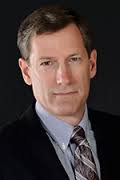
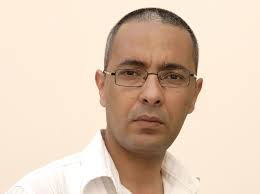
Kamel Daoud is an Algerian journalist based in Oman.  His background is similar to that of Camus: French-speaking, Algerian writer and philosopher. The Mersualt Investigation is Daoud’s first novel, published in 2015, and it has been recognised with several prizes in France.

index

Kamel Daoud

In The Mersault Investigatiom, Harun is in a bar in Oman reflecting morosely on his brother, his mother and the book by the listener’s hero (Camus).  Included in his reflections are thoughts on Algeria, its people and its relationship to France.  The tone of the book is pessimistic and its conclusions are ambiguous (much like the tone and content of The Stranger).  One is left with the impression that there can be no God, and that life itself can have no meaning.

This is not an enjoyable book to read, because of its pessimistic philosophy, and because nothing conclusive arises from its reflective monologue.  No new ‘facts’ emerge about any of the characters, except that Musa was a real person who was loved by his mother and close the the heart of his younger brother.  Still, one has the impression that The Mersault Investigation is a classic in the absurdist philosophical tradition.  If you liked Camus’ writing, you will certainly appreciate Daoud’s.  He has created a well-written philosophical sequel to one of Camus’ great works.

Trends in Novel Genres

Chip MacGregor is a “book guy” by his own admission, and he runs the MacGregor Literary Agency.  He was asked recently: “Can you tell us the latest trends you’re seeing in fiction?”  Here is the (abbreviated) answer from his blog:

index

Chip MacGregor

The continued growth of romance — particularly historical romance. Let’s face it, last year the publisher who saw the biggest growth was Harlequin, and they did it in a down year for most publishers. Readers in a bad economy like to escape by reading romance novels. You can roll your eyes if you want to, but it’s the truth.

Thrillers aren’t selling like they used to.  James Patterson and other bestselling novelists can still move large quantities, but once you move away from the bestselling authors, it’s much slower (and, frankly, much harder to place a new novelist). 

There is a renewed interest in Americana, particularly during sunnier days. We’re seeing interest in the Victorian and Edwardian periods, for example (assuming it’s fair to use British terms for American history). That seems to be a trend away from seeing so many wartime sagas — perhaps a reflection on our fatigue with the never-ending war in Iraq. 

We’ve seen a lot of growth with fiction that surrounds historical events. Not a retelling of the events, but of stories that touch on history. So, for example, we’re not seeing novels that re-tell the assassination of President Lincoln, but we ARE seeing novels that have to do with people who were in the vicinity, or who knew John Wilkes Booth, or who were at Ford’s Theater, or who were part of the chase to catch the conspirators, etc. Again, not so much focused on the event itself, but on characters who were influenced by the event. 

Literary fiction is definitely a growth category in American publishing. Take a look at any bestseller list, and you’ll see a lot of literary fiction. Not only that, but many of the books have a clear spiritual thread — something I don’t see many people recognizing or reporting on. 

One of the most-reported growth trends has been in paranormal fiction.

 I see mixed signals in the horror category. Some think it’s up; others think it has run its course. I don’t have a firm opinion one way or the other. 

Of course there has been huge growth in the Christian/inspirational category over the past 7 or 8 years. The incredible growth has slowed, making some think religious fiction is hurting, but that’s just not true. Christian fiction is still a HUGE category, and there is still growing interest from those houses who were late to jump on board during the heyday. So while, yes, we’re not seeing the big growth in titles that we did a couple years ago, compare the number of titles and the number of genres and sub-genres to what we saw just three years ago. 

One of the most visible areas of growth in the inspirational category has been Amish fiction (or “bonnet novels”). Some people have said that it’s going to fade out, but I don’t believe it. I think it has established itself as its own sub-genre. What Bev Lewis started and Cindy Woodsmall followed has turned into its own category of fiction. That sort of thing happens sometimes — consider Louis L’Amour creating the giant interest in westerns, or Edgar Allan Poe basically establishing horror fiction. People are still buying it, so it has clearly found its audience. 

He goes on the mention the growth of small presses (including those who specialise only in the production of e-books) and the growth of e-books themselves.  He continues: “I don’t think ink-and-paper books are going away any time soon — most every reader still loves printed books. But I’ve got three kids in their 20’s, and all of them are comfortable reading a book on a screen — even an iPhone screen. That tells me when their generation is in charge, the e-book will be a core business, not a side business. It will be a major part of every publishing decision, not simply a sub-rights discussion. 

I can comment on two genres mentioned above: thrillers, and spiritual literary fiction.  Five of the soon to be seven books I’ve published are in these two categories.  The three thrillers I’ve written are all pretty gripping, and realistic.  But, I’m beginning to feel ‘been there, done that.  Sable Shadow & The Presence is spiritual literary fiction, and it has won eight (minor) awards to date.  Writing it and the reaction I’ve had to it have motivated me to (nearly) complete my seventh novel, which has a definite spiritual dimension, and is set in the Middle East.  In spite of the fact a tremendous amount to research was required, I greatly enjoyed the experience.  I’ll tell you more about it as soon as the publishing contract is signed.
Booker Prize winner

This isn’t about who I think will win this year’s Booker Prize, but about a man who thinks he knows who will win and who won money last year on thirteen bets that The Narrow Road to the Deep North, Richard Flanagan would win.

An article in The Daily Telegraph begins: “A mystery punter who correctly predicted the winner of last year’s Man Booker Prize using a formula based on ‘Sherlock Holmes deductive reasoning’ is at it again, this time staking his money on Sunjeev Sahota.  The man, who goes by the name of ‘Mr Smith’, has visited a string of betting shops in and around Darlington, Co Durham, and placed the maximum stake on the British author’s novel The Year of the Runaways.  Ladbrokes has reacted by cutting Sahota’s odds from 10/1 to 5/2, because ‘Mr Smith’ has form: his successful thirteen bets last year.

“The man, described as middle-aged, well-spoken and fair haired, later rang a local newspaper to disclose his methods – and the fact that he had not read any book on the shortlist.  After reading online reviews of the books he picked the winner by studying Wikipedia biographies of the judges and working out which novels they would favour.  ‘I never read any of the books because, quite frankly, fiction is not my thing,’ he told the Northern Echo last year.  ‘I had, therefore, to spend much more time reviewing the judges than the actual books themselves.  I did a case study of each judge, using Wikipedia and YouTube, and read as much as I could about the books they had written, their interests, their politics and religious beliefs and then, through a process of Sherlock Holmes deductive reasoning, tried to intuit which books they would go for.’

“His worry that female judges would not like a war story – Flanagan’s novel was about a survivor of Burma’s ‘Death Railway’ – was assuaged by the fact it ‘had a love affair inserted into it that I guessed would keep the female judges from recoiling in horror at some of the gruesome aspects of the book.’  This year, he believes the six judges will settle on The Year of the Runaways, a tale  of Indian immigrants struggling to make a life for themselves in Sheffield.  The string of bets, made in shops in the Darlington area and backed up by online betting, puts Sahota’s book second only to Hanya Yanagihara’s A Little Life in the Ladbrokes odds.

If you fancy taking a punt, better make it today.  The winner will be announced tomorrow.

As we now know the winner is A Brief History of Seven Killings by Marlon James.  Let’s hope ‘Mr Smith’ didn’t ‘bet the ranch’ on Year of the Runaways.  2015 wasn’t the year to bet on the Ladbrokes favorites.

Review: Go Set a Watchman

I was one of the 100,000+ readers who bought a copy of Go Set a Watchman on its first day of issue. For me To Kill a Mockingbird is a great work of literary, social and political significance. So, I was anxious to read Harper Lee’s second (or first) novel which apparently served as the draft which became To Kill a Mockingbird. The pre-publication reviews of Watchman, which were largely uncomplimentary, didn’t deter me.

untitled

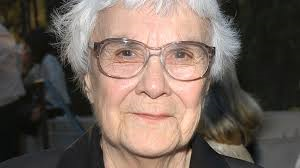
Harper Lee

So, Lee submitted a draft of Watchman to publisher J B Lippencott, where an editor suggested that she re-write the book in the first person, from the perspective of Scout, a young girl. The re-writing took two years, during which Lee became so frustrated she threw the manuscript out the window of her New York apartment into the snow. Her literary agent persuaded her to retrieve it and carry on. Reportedly, during the re-writing, Lee’s editor was closely involved with her.

Two of the principal characters, Scout and her father Atticus, appear in both novels. But, in Watchman, Scout has become Jean Louise, a twenty-something, new York-based, adult, and Atticus is now in his seventies, still living in the rural Alabama town. Three new major characters are introduced in Watchman: Henry Clinton, a life-long friend and marriage prospect; Aunt Alexandra, her father’s sister, an arch, small-town, Southern traditionalist; and Dr John, her father’s brother, and eccentric but wise philosopher. Jem, Scout’s older brother, is strangely dead.

In Mockingbird, the plot focused on the trial of a black man who is wrongly accused of raping a white woman; he is defended by Atticus, the small town lawyer. This tightly-focused plot yields themes of justice, racial and sexual equality, love and duty.

In Watchman, the story follows Jean Louise’s relationships with Henry, her aunt, her uncle and her father. Race is again an issue, but less dramatic and compelling: the grandson of Jean Louise’s childhood black, nanny/mentor has killed an old white man in a car accident which was the grandson’s fault. This time, Atticus is revealed as a racist who wants to limit the freedom and political power which black people have acquired over the preceding twenty years. The message I get from the book is that how one acts on vital issues, such as race relations, is determined by our conscience (the Watchman), and our conscience is influenced by our context, which must also be respected. At the very least, Watchman seems to be a watering down of the clear, landmark message of Mockingbird. Disappointing!

The characters, the setting, and the context of Watchman are all well defined, credible and real. These descriptions rely on interesting, unique writing. Some of the dialogue comes across as contrived, rather than natural. Frequently, there are references to obscure literary figures: these references tend to confuse rather than illuminate. Apart from my concerns about the message of the novel, the plot seems to have been created ad lib. Too much text is devoted to setting the context, and exploring dead ends (Jean Louise’s relationship with Henry), and not enough effort is exerted on defining the role and implications of the Watchman.

One can’t help but wonder if the editor behind Mockingbird were still alive and involved with Watchman, what would the recent novel be?

Review: No Longer Human

I bought this book by Osamu Dazai at the Kaizosha Book Store at Narita Airport on the way back from Tokyo to London. It was one of perhaps a dozen novels available in English from the bookstore.

untitled

Osamu Dazai

Having never read the work of a Japanese novelist, I was eager to try one.

The translator, Donald Keene, has an introduction in which he explains that the literal translation of the Japanese title, Ningen Shikaku, would be “Disqualified as a Human Being”. Having read the novel, I don’t feel that either title does the work justice, but I can’t think of a better one. Keene makes the point that Japanese writers and literary intellectuals, in general feel isolated (as is Yozo, the protagonist in No Longer Human) from the West, where the perception may be that Japanese writers have nothing interesting to offer.

Dazai (June 19, 1909 – June 13, 1948) grew up in a small town in the remote north of Japan. His family was wealthy and educated; Dazai himself was familiar with European literature, American cinema, modern painting and sculpture. So he was very much aware of Western culture. Dazai’s earlier novel, The Setting Sun, was reviewed by Richard Gilman in Jubilee: “Such is the power of art to transfigure what is objectively ignoble or depraved that The Setting Sun is actually deeply moving and even inspiring. . . . To know the nature of despair and to triumph over it in ways that are possible to oneself – imagination was Dasai’s only weapon – is surely a sort of grace.”

No Longer Human is told in the first person by Yozo the youngest child of a large, well-to-do family in the north of Japan. In this regard, Yozo’s background (and perhaps his feelings about others) mirror those of Dazai. The story begins in childhood and continues until about the age of thirty. Yozo is a good-looking child, but he suffers from and extreme lack of self-confidence, and to put my own diagnostic on it: he also suffers from some form of autism in the sense that he has difficulty interpreting the emotions and the motivations of others. His father, a powerful figure, remains remote. He feels disconnected from most of the humanity around him. His coping mechanism is to be the clown: valued by others as a sort of entertainer. While Yozo is obviously intelligent, his disconnection means that he has no real identity or a goal in life. Instead, he is buffeted hither and thither by the forces he encounters.

This theme of disconnection is central to No Longer Human, and it is reinforced by contrast with supporting characters. Yozo’s wife, Yoshiko, is trusting of other people to a fault. Yozo’s companion, Horiki, has an entirely selfish method of dealing with other people. Flatfish, Yozo’s family-imposed guardian, is entirely logical. Given that Japanese society is tightly constrained by a complex web of un-written rules of interaction, it must be particularly interesting in Japan to consider the fate of someone who has never learned the rules, but is Japanese.

Yozo stumbles from one disaster to another, but one cannot help but feel some sympathy for this crippled human being. These feelings of sympathy are aided by the various women who fall in love with Yozo for the “good boy, the angel” that he is. It deepens the tragedy that Yozo is unable to see past the feelings of self-denigration the kind, even loveable character that he is.

If No Longer Human is representative of modern Japanese literature, I would say: “Seek it out!”

Icarus as an Artist

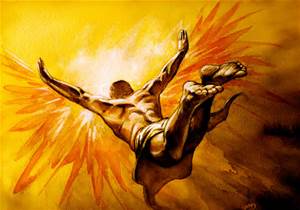
The myth of Icarus, who, with his father, Daedalus, tried to escape from Crete, using wings that his father made from feathers and wax, is subject to interpretation.  Icarus disobeyed his father’s instructions not to fly too high, because the heat of the sun would melt the wax of his wings.  Icarus flew too high, the wax melted and he fell into the sea.

th

The usual interpretation seems to be that it was hubris – over-ambition – which caused Icarus to fall to his death.  The moral being that we should not fly too low in our lives, as that would not do justice to our capabilities, but we should not try to fly higher than or capabilities.

A few days ago, I heard another interpretation: that Icarus is a symbol of the artist, trying always to stretch and improve his art.  This was suggested by Jorg Widman, clarinettist, composer and conductor.  He was conducting the London Chamber Orchestra and introducing his own piece: Icarus’ Lament.  He said that his piece was inspired by Charles Baudelaire’s poem Lament of an Icarus:

Lovers of whores don’t care,
happy, calm and replete:
But my arms are incomplete,
grasping the empty air.
Thanks to stars, incomparable ones,
that blaze in the depths of the skies,
all my destroyed eyes
see, are the memories of suns.
I look, in vain, for beginning and end
of the heavens’ slow revolve:
Under an unknown eye of fire, I ascend
feeling my wings dissolve.
And, scorched by desire for the beautiful,
I will not know the bliss,
of giving my name to that abyss,
that knows my tomb and funeral.

Jorg Widman’s Icarus Lament was an interesting piece – quite unconventional- played only by the string section of the orchestra.  It began with the violins playing a very high note, pausing momentarily and continuing.  One could visualise a winged creature beating its wings laboriously in very high flight.  Then came the cellos, playing a more sombre melody, as a sort of counter-force to the violins.  Finally, the violas joined in playing a more lively melody.  One definitely had the feeling of the creative force (violins) struggling to assert themselves over the force of gravity (cellos), while the world (violas) looked on.

So I suppose that Icarus could stand as a symbol of the artist who is not content with the safe journey, and who yearns to stretch his talents.

For myself, I see it slightly differently: as a learning and development process.  With each novel, I feel well, I’ve done that; what can I do next that’s a little more challenging?  I suppose what I don’t do is to focus on what my readers would like, because that will tend to be ‘more of the same’.  Rather, I think, if I do this new novel well, my readers will probably like it And if they don’t?  I hope that they’ll tell me what they didn’t like.  But, if they do like it, and I feel I’ve met my challenge, I’m ready to move on to the next challenge!

Personification of Evil

Sometimes there are evil characters in novels.  How do we create them and why?

imagesW5BD3VTZ

To get at the answers to these questions, we first have to understand what we mean by ‘evil’.  My Chambers Dictionary defines evil as ‘something which produces unhappiness or misfortune’.  But suppose we are considering a situation where a love affair has ended.  Is the one who ended it evil?  Most of us wouldn’t consider a married person evil if s/he ended an extra-marital affair, but one (or both) parties to the affair may be very unhappy.  Or consider someone who went to Las Vegas and lost £10,000 in a night of gambling.  S/he may consider the event a real misfortune, but I doubt that most of us consider gambling to be ‘evil’.  ‘Foolish’?  Yes.  To be avoided?  Yes.  But not ‘evil’.

For me, ‘evil’ is the creation of sin, and ‘sin’ is the act of intentional harm to another human being.  Notice the use of the word ‘intentional’.  With the use of ‘intentional’, the person who ended the affair did not commit a sin in ending the affair if s/he ended it without intending to hurt the other person.  The other person may indeed be hurt, but causing hurt was not the motivation for ending the affair.  Similarly, the gambler did not intend to hurt himself by continuing to gamble and lose.

I think it is fair to say that I tend to consider ‘evil’ as a semi-religious term, and, as such, it has extra significance.  For me, things and actions which are ‘good’ are God-given, while evil things and actions arise from God’s antithesis – call him the devil, if you wish.  We human beings are in the middle, pulled in both directions, but having free will – the freedom to choose.

Two of my novels deal with these themes.  Sin and Contrition has six characters, three boys and three girls whom we follow from the age of 13 to about 52.   Amongst them, they commit most of the available sins, except such violent sins as rape or murder.  (One of the characters, however, does go to war.)  There is always at least a weak intention to commit the sin, and generally a certain amount of repentance, but the character and his/her motivation is viewed in the unique situation in which they are found, so that I, as the author, try not to judge them.  Rather, I let them judge themselves, with, of course, the input of the world around them.  My expectation is that the reader will judge them.  The point I’m trying to make is that sometimes evil and sin are very clear, but often ‘extenuating circumstances’ make them less clear, and that this is what life is: challenging, a bit foggy and uncertain, even though there may be a beacon – often barely visible – to show the way.

The other novel is Sable Shadow and The Presence, which deals more explicitly with the ‘beacon’.  Sometimes the beacon is a God-send, but often it is not.  Who guides us and why?  Part of the answer is who and what we are as people: our identity, over which we have a great deal more control than we sometimes like to believe. Henry, the principal character in Sable Shadow and The Presence, uses his identity and a particular beacon to achieve a great success.  When multiple tragedies strike, he must change both his identity and his beacon!

The Outlook for Bookstores

The news about the health of bookstores has been pretty downbeat during the last couple of years.  Between 2000 and 2007 about 1,000 independent booksellers closed.  I was therefore pleased to see an article in Independent, the journal of the Independent Book Publishers Association.  The article, by Linda Carlson, was pretty full of good news, but somewhat lacking in statistics.

The one statistic which was reported: according to an article published in Slate, the membership of the American Booksellers Association increased more than 20% from 1,651 in 2009 to 2,094 in 2014.  While 20% is a substantial increase, the average annual increase is about 5%.  Still, this is healthy growth.  To put this increase in perspective, Donna Paz Kaufman, an industry consultant is quoted as saying: “Fewer entrepreneurs are stepping forward to own independent bookstores, even at a time when many communities throughout the country long to replace a Borders or Barnes & Noble store that proved too large to be sustainable.”  She goes on to say that some would-be entrepreneurs have family members who are risk-averse and cannot justify investing the family’s wealth in “something that still seems iffy”.  My impression is that the apparent ‘growth’ in ABA membership is actually the renewal of lapsed membership, rather than new members. Nonetheless, this is a good sign.

So, what is driving the improvement in outlook for independent bookstores?  Shane Gotwalls, of Gotwalls Books in Macon, Georgia says, “Feedback from our customers tell us that they are tired of impersonal on-line shopping. . . . We hear more and more often that there’s nothing like the smell of a bookstore. . . . We try to give the best service possible, and we believe our customers keep returning because we are successful with this goal.”

WinterRiver Books in Oregon has kept its sales from slipping with a policy of discounting hardcover editions of best sellers by 20%.

Mirian Sontz, CEO of Powell’s bookstores in Portland, Oregon says that the store sold almost 10,000 copies, prepublication, of Edan Lepucki’s debut novel, California, after Hatchette authors Stephen Colbert and Sherman Alex recommended, on air, that it be purchased from Powell’s in response to the Amazon-Hachette conflict!  Sontz says, “The conversation about conscious on-line shopping continues, thanks to this increased awareness.”

Flintridge Bookstore & Coffeehouse in La Canada, California reports that they provide core literature for the La Canada school district.  “We work very closely with public school faculty and staff and we stock titles on required reading lists.”  Flintridge also emphasizes local history, geography, and culture of the San Gabriel Mountain foothills.

Espresso Book Machines are a drawing card for several bookstores which have them.  While only a fraction of the inquiries received by the bookstores result in orders, many writers who use the machines return again and again for additional print runs.

Other tactics for drawing people into bookstores include hosting story hours for kids and YA book clubs.  Some bookstores offer tickets to author events.  The ticket may require a book purchase or offer a discount.  Elliott Bay Books now hosts 500 events a year and says that “events keep us in mind as a cool place to visit . . . but having customers buy books in order to attend can backfire by discouraging people from attending.”

In summary, each successful indie bookstore seems to have its own special identity and offerings which appeal to local customers.  It offers personal service to frustrated on-line customers, and the touch, feel and smell of actual books!

Hidden Battlefields

My sixth novel, Hidden Battlefields, has just been published.

A thriller tracking the movement of $250 million in cocaine from Peru, east of the Andes, down the Amazon, across the Atlantic and northwest Africa to southern Italy. Four of the main characters from The Iranian Scorpion star in Hidden Battlefields. Robert Dawson is the DEA agent who goes under cover as a Shining Path operative. David Dawson, a retired US Army general and Robert’s father, adds determined confusion. Mary Jo Mignot, the defence contractor with a top secret clearance, is David’s love interest. Or is she Robert’s? Kate Conway, the Pulitzer-Prize-winning journalist, is Robert’s love interest. Or is she David’s? New characters representing the Shining Path, Peruvian, Maoist terror organisation, and ‘Ndrangheta, the Italian crime syndicate are introduced.

The theme of the novel is conflicting personal priorities, and how they affect our identities.

Peace Cover Web