Review: The Marriage Portrait

I recently bought a copy of The Marriage Portrait by Maggie O’Farrell, having been attracted by the brief description of a historical novel involving a marriage in XVI century Italy, and by the author’s biography.

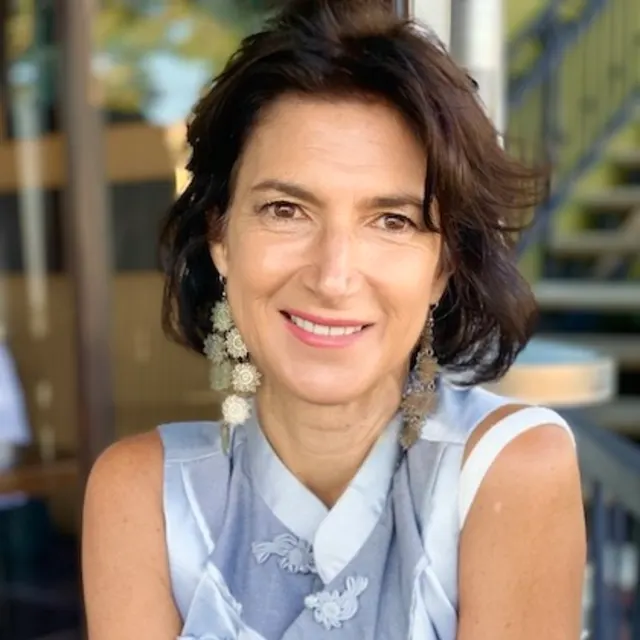
Maggie O’Farrell is the author of Hamnet, winner the Women’s Prize for Fiction 2020, and the memoir I am, I am, I am, both Sunday Times  no. 1 bestsellers. She was born in Northern Ireland in 1972 and raised in Wales and Scotland. Her novel The Hand that First Held Mine won the 2010 Costa Novel Award, and The Distance between Us won a Somerset Maugham Award. She currently lives in Edinburgh.

Maggie O’Farrell

The Marriage Portrait is set in XVI century Florence and Ferrara, Italy. The protagonist is Lucrezia, the fifth child of the Duke of Tuscany, a somewhat rebellious child, who stroked a captured tiger in the basement of her father’s castle and was thought to have charmed the beast. At the age of thirteen she was betrothed to Alfonso II, Duke of Ferrara who was more than ten years her senior. He had previously been betrothed to an older sister who died. Her marriage took place when she was sixteen in Florence and she moved to Ferrara as a young duchess with a maid, Emilia, who is two years older and the daughter of her childhood nanny. There is political intrigue in Ferrara, where Alfonso’s mother has taken up a hostile alliance. One of Alfonso’s two sisters, Elizabetta, is having an affair with the captain of the palace guards, Ercole Contrari, and the other sister, Nunciata, seems hostile to Lucrezia. When Alfonso discovers the love affair between Elizabetta and Ercole, he orders that Ercole be strangled by the brutal Baldassare, the dukes cousin, while Elizabetta is required to watch. It becomes clear to Lucrezia that she is required to produce a male heir for Alfonso. She must perform her marital duty frequently. Her husband sometimes strikes her as cruel and distant and warm and loving at other times. When the couple move to a remote hunting lodge, Lucrezia is convinced that her husband intends to murder her. He refers to a marriage portrait of Lucrezia as “my first duchess”. I won’t give away the ending which is quite satisfactory, but I will say that the real first duchess, on whom Lucrezia is based, was reported to have died of a “putrid fever”, but there were rumors that she was murdered by her husband. The real Alfonso II married twice more; neither duchess produced an heir.

I have only one major criticism of this novel, and that is that it is too long. It is 432 pages long, but it could be trimmed without any significant loss and it would gain urgency. Ms O’Farrell likes to describe her settings in poetic detail which makes them beautifully clear but a bit laborious. The plot of the novel is excellent. One is convinced of being immersed in XVI century Italy with characters who are living like royalty and servants can at best survive. The values and traditions of the times are captured as well. There is a frequent transition between a short chapter which is set in the final hunting lodge and an earlier, longer chapter containing events leading up to the end. This sequencing can be confusing, and I’m not convinced it is necessary to maintain the ‘is he really going to kill me?’ tension.

Hear Your Own Voice

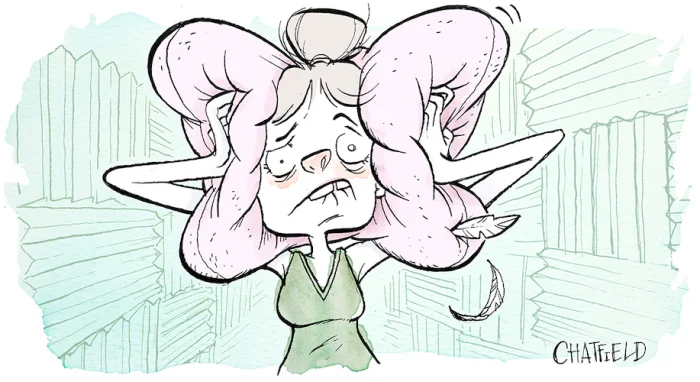
Jason Chatfield has an article on the Writers Digest website dated June 13, 2023 with the title ‘Five Ways to Turn Down the Volume to Hear Your Own Voice’. His basic point is we can’t hear our own genuine voice as writers with all the ambient noise.

Jason Chatfield is an Australian cartoonist and comedian based in New York. He is Australia’s most widely-syndicated cartoonist, producing the iconic comic strip Ginger Meggs which is syndicated daily in over 30 countries through Andrews McMeel Syndication. Ginger Meggs has been running since 1921, making it one of the longest-running comic strips in history, celebrating its 100th anniversary in 2021.

Jason says,”There’s something to be said for immersing yourself in the marketplace of ideas and being exposed to what your contemporaries are doing. There is, however, a very real danger that in doing so, you become the kind of creative individual that does more on-looking than creating.

The ability to yank yourself out of the endless slip-stream of “content” and quietly explore your own ideas is one that should be cultivated above all else. That is, unless, you like the idea of mimicking everyone around you by osmosis and wondering why nobody is noticing your work.

Artists only languish when their primary drive is to merely strive to keep up with what their peers are doing. If they are only exposed to the contemporary trends of their art form, their ideas will reflect that limitation. But, this isn’t a new problem. As long as art has been created, it has been mimicked and iterated on to the detriment of true originality.

For example, in 1801, Ludwig van Beethoven was lamenting the fact that he was slowly going deaf. By 1800, his hearing was in full decline. He was 30 years old. Over the following years, he had to accept that there was no hope of remission and would have to live the rest of his life without the ability to properly hear a musical note. He told people that without sound, his life would be meaningless. But what happened as a result changed the world and holds a lesson for us more than two centuries later.

By Age 46, Beethoven’s deafness was complete, so music only existed in his imagination. During that period, Beethoven was unable to hear the popular compositions of the day. Across the decades, while others were busy replicating each other with slight variations on the same themes, Beethoven was in his own mind, writing the music that he alone wanted to write. This ability to work in a creative silo culminated in his greatest work: his famous Ninth Symphony, which would define his unique style, change music permanently, and make him one of the greatest composers of all time.

With that in mind, here are five of my best pieces of advice for turning down the volume to hear your own unique voice:

1. Become Comfortable With Silence.

Becoming comfortable with silence is one of the hardest skills to cultivate in the modern world, but it is the most important. It’s made even harder with a seemingly infinite amount of ways to disturb the silence. We’ve become so used to cramming “content” into our audio and visual senses at all waking moments that we’ve lost the capacity to just be.

Be honest with yourself; can you remember the last time you left your house without your earbuds? Or got in your car without turning on the radio or a podcast, an audiobook, music, or something else to fill the dead air?

It can be tempting during quiet moments to simply play some soft background music, or some white noise, or even a loop of a crackling fireplace or some rain, but it is essential that your mind benefits from the absence of any sound whatsoever.

2. Deactivate Your Social Media.

We’ve lost much of our ability to examine our own thoughts, ideas, and opinions—to cultivate our own unique voice in the world. Most of the time, our opinions are just a simulacrum of those we’ve heard online, on every topic from immigration law to Taylor Swift. Here’s the truth: You don’t need to have an opinion on everything, even if the social media slipstream insists you do. Doing this is diverting your creative energy away from the things that would actually bear original artistic fruit.

If you have the ability to do so, I would highly recommend the practice of taking yourself as far from the aforementioned slipstream as you can: Deactivate all social media, remove the apps from your phone, and disable all notifications. Remove your default browser if it means you won’t be tempted to check social media in your browser app. If need be, you can reactivate them and showcase your work when you finally have something unique and original to share.

Think people will panic and wonder where you went if you stop posting to Instagram? I’m going to tell you a very upsetting truth that I and many others have discovered: Most of them won’t even notice. Try it for one month and tell me I’m wrong.

3. Clear Your Calendar.

Learning to say “No” to every invitation is a skill that needs to be learned like anything else. A “No” after saying “Yes” is even harder to master, but I guarantee you it will be of great value if you want to dig down and do the work needed to cultivate your most authentic work. As James Clear writes in his book, Atomic Habits, “No is a decision: Yes is a responsibility.”

In the same way that rest days are important for physical training, deliberately building in time to turn down the volume on the rest of the world is essential if you want to be able to cultivate your own distinct voice. By maintaining routine blocks of protected solitude, the world’s greatest artists have produced their most innovative creative work, pushing their medium forward into previously unexplored terrain. There’s absolutely no good reason for you not to do the same.

4. Get Away From It All.

Some of the most satisfying, deep and original creative work I’ve managed to accomplish as an artist has been during times of great isolation—picking up from the city and driving off to a tiny cabin in the woods with an empty sketchbook, a french press, and a bottle of scotch. (OK, and my dog.)

5. Bring Only What Is Necessary.

You’re going to be tempted to listen to something or read something if you bring novelties to fill the silence. Instead, bring only what is necessary to do your work. Nothing else. Limitation breeds extraordinary clarity and creativity. Turning down the volume includes not reading and looking at other artists’ work in print.

Try these tips today, and tell me they don’t make a massive difference to your creative output over the coming months.”

Endings Matter

In Harry Bingham’s latest email, he discusses the importance of the ending of a novel.

“I just realised that I write quite often about beginning a novel, and not all that often about ending it.

And yes: beginnings are important. If you don’t get your reader onto the story-train in that opening chapter, you’ve basically lost the game before it’s really started.

Endings matter at least as much as beginnings and the reason I don’t talk about them much is simply that endings mostly write themselves.

I don’t know about your experience, but my endings generally pass in a rush. It’s as though the entirety of the preceding novel is there to allow me to write the final chunk in a blaze of understanding and joy.

The understanding is: I know my characters. I know how all my little plot intricacies need to play out. I know what the grand finale needs to deliver. The prior 90,000 words involved me figuring those things out. The last 20,000 are my reward.

The joy is partly the ease of writing. But it’s also the joy of completing the arc. It’s like writing one long punchline, where you already know that the joke is going to land. I’ve certainly had some spectacularly happy writing sessions that haven’t involved endings. (Giving Fiona hypothermia in the snows of Love Story, with Murders was joyous. And I did enjoy burying her underground in The Dead House.) But mostly – the writing sessions I remember with most pleasure involve endings. Words flowing and the text satisfying.

So maybe you don’t need help with the endings. I think there’s an argument that if the preceding story has worked properly, the ending should just fall into place. But here, for what it’s worth, is a checklist to keep at hand …

Exterior drama

Have you properly completed your exterior drama? In the kind of books I write, that’ll typically involve some good splash of violence – a sinking boat, a fight, a burning building. But that’s not necessary. In Pride and Prejudice, the exterior ‘drama’ involves a naïve girl eloping with Mr Wrong and the Romantic Hero doing (off-screen) what Romantic Heroes are there to do. The off-screen quality of that drama is probably a little underweight for a modern audience, but so long as you have some dramatic action that’s well suited to your genre and readership, you’re fine.

Interior drama

The flipside of the exterior action needs to be some serious internal pressure. In a standalone novel, that pressure needs to have the sense of being pivotal – life-altering, life-defining. In a series novel, you can’t quite get away with a new life-defining moment with every instalment, but the stakes still need to be high. Series characters take a bit of a battering as a result. (I once did an ‘interview’ with Fiona, in which she grumped at me for giving her a rough time. Reading it back, I have to say that she’s in the right. I’ll never tell her that though.)

Romantic relationship

Most books, not all, will involve a romantic relationship. And – of course – the pressures of your grand finale are also pressures that test and define that relationship. You definitely don’t have to kiss and get married at the end of every book. I’ve ended a book with my protagonist ending what had seemed like a strong and constructive relationship. But when your character enters the furnaces of your ending, everything is tested, everything will either prove itself durable or fallible. The relationship can’t simply be as it was before. (Again, series characters need to play those things differently, but ‘differently’ doesn’t mean you can just ignore the issue.)

Other key friendships / relationships

Of course, there are a ton of other relationships that build up over the course of a book. Those might be best-friend type relationships, or children, or parents. They can (importantly) be office colleagues, which sounds dull but they can matter too. My detective’s relationship with her boss and other colleagues is just quite central to the architecture of her life and the books. These relationships too don’t need profound alteration necessarily, but they need some token of ending. A boss hugging your character (when he/she never normally would), or talking about a promotion, or offering a holiday – those things sound trivial, but they can define something important about everyone’s relationship to what has just happened. You don’t necessarily need much here. Half a page? A page? That might be ample. But if you book misses that page, it’ll never quite satisfy as it ought to.

Mystery resolution

Most books – not just crime novels – will often have some kind of mystery at the heart. That mystery will probably be unfolded in your grand action-climax, but that won’t always be true. Modern fiction has (rightly) moved away from that moustache-twirling final chapter where the Great Detective reveals the mystery to a completely static audience. But it’ll often be the case that little questions and niggles remain. Those things need to be addressed. It’s even OK if they’re addressed by saying, “We’ll never know exactly how / why / who X.” But you need to resolve your mysteries or acknowledge that you haven’t.

Movement

And, since we’ve just dissed static and moustache-twirling final chapters, I’d add that maintaining some kind of motion still matters at the end. Just as you’ll want to move settings fairly frequently in your middle chapters, I think you’ll want to do the same at the end. Physical motion is still a good way to convey story motion.

The closing shot

And –

There’s a theory in film-structure that the opening shot should show the ‘Before’ state of a character and the closing shot should show the ‘After’ – where the before/after vignettes somehow encapsulate the alteration brought about by the story. So to take the (vastly excellent) Miss Congeniality movie, the opening shot shows Sandra Bullock as goofy, unkempt, and without close female friends. The closing shot shows her kempt, still her, but now with close female friends. That’s the key transition in the movie.

I don’t quite like the mechanical nature of these movie plotting guides, but I do think it’s worth reflecting on the closing shot. What are you wanting to show? What’s the image of your character that you want to leave with your reader? In one of my books, a girl had been long separated from her father. Fiona’s last act in the book is to rejoin the two. She’s not physically present when the two meet – she’s set up the meeting, but remains in a car outside, watching. And that maybe is just the right tone for the book. Fiona plays this almost Christ-like role – suffering for others, undoing wrongs – but nevertheless remains on the outside of ordinary human society. That point isn’t made in any direct way, but it doesn’t have to be. An indirect point lingers longer than one made more crudely.

Review: The Maid

The second novel – a crime novel – that my wife and I listed to during the drive down to Sicily was The Maid by Nita Prose and narrated by Lauren Ambrose. It is certainly an entertaining book, though when we started to listen I wasn’t expecting a crime novel; I was expecting a romance or an adventure. It has sold over a million copies and won a couple of awards.

Ms Prose says, “As for my professional life, I work in the publishing industry. I began years ago as an intern, photocopying edited manuscripts and secretly snooping the fascinating margin conversations between editors and writers. Currently, I’m vice president and editorial director at Simon & Schuster in Toronto, Canada, where I have the privilege of working with an incredible array of authors and publishing colleagues whom I credit with teaching me, manuscript by manuscript, book by book, the wondrous craft of writing.”

Nita Prose

The central character is Molly, who is a maid in the Regency Grand Hotel, a job to which she feels she was born and is obsessively dedicated. She likes nothing more than restoring a filthy, messy room to perfection. She has such an orderly, Polly-Anna-ish mind that I thought she has learning disabilities until I learned that she had completed some university level courses. Molly lived alone with her grandmother, who has a similar character, is full of simple-minded advice, and who dies halfway through the book. The other characters are a supervising maid, who is lazy and apt to purloin tips that have been left for Molly. There was a boyfriend who stole a large nest egg which Molly’s grandma had been saving for them. Molly’s current crush is the hotel bartender, who has suspicious friends and treats her with indifference. The hotel manager is a harried soul who treats Molly with respect, and there is the hotel dishwasher, a conscientious Mexican worker whose immigration papers are not in order. Mr Black, an older, very rich, disagreeable man in doubtful businesses, and his younger, trophy wife are frequent guests at the hotel. Molly strikes up a friendship with the wife, and Molly finds Mr Black dead in his room. It was murder and Molly is the prime suspect according to a zealous police detective. Fortunately, the doorman has a daughter who is a very clever criminal lawyer and who devises a scheme to prove Molly not guilty and to reveal the actual perpetrator. A drugs operation involving the bartender, Mr Black and assorted outside thugs is discovered. Molly knows who actually killed Mr Black, but for personal, sympathetic reasons, she does not reveal the person at the trial.

Certainly it is a clever device to create a character who goes against our reflex notions of a hotel maid: invisible, unmotivated and slap-dash. This strange character wins our sympathy, though perhaps a little reluctantly in my case. For me, Molly is a little too dedicated to her simple-minded perfectionism to be fully credible. Perhaps if Molly had some learning disabilities she would have worked better for me. The writing is lively, though not of literary quality, nor should it be. The scenes and characters are clear. The plot is well conceived, and tension is maintained throughout. For me, Molly’s motivation not to reveal the true killer was not strong enough, and in the real world the killer would have been identified.

Characterisation

In his email of 10 March, Harry Bingham, of Jericho Writers, wrote about the problem of making characters memorable to the reader.

He said, “I’m reading a book at the moment that came recommended, a psychological thriller about a small, close group of friends.

I’ve started the book. I’m seventy pages in. I already know I won’t finish it.

The problem, a terribly common one, is that I haven’t bonded with the characters. They don’t feel like real people. If I’m honest, I can’t tell one from another.

Now, quite likely, part of the problem is me. I’m TERRIBLE with names and faces. Always have been, always will be. I forget character names in my own books. I fail to recognise people I know and have chatted with extensively. My uselessness in real life probably carries over into books too.

But good characterisation should still overcome reader idiocy. Perhaps I might be slow to assemble the characters in my head, but I should still get there in the end, no? I shouldn’t be fifty pages in and still have no meaningful idea of who these people are.

Also – alarmingly – this book has avoided all the common pitfalls. So, the author has:

  • Been sure to give the characters distinctive names. They’re not all Amy, Anna, Alice and Andy.
  • Given them distinct physical characteristics. We have (inevitably) the pretty sexy one, the hunk, the dark scowling one, and so on.
  • Put a bit of zing in their dialogue
  • Endowed them with plenty of interpersonal history, likes and dislikes, divergent backgrounds and so on.

It looks like the author has done all the things she’s meant to have done – all the things that the writing books suggest. All the things that, erm, helpful weekly emails on writing advice are likely to suggest.

So what’s the problem? Why do some books never quite ground themselves? Why do some characters end the book still feeling two-dimensional and unreal?

The short answer – I’m not sure.

The longer answer is threefold.

First, I’m confident that you can’t just introduce your characters in a rush. When you’re at a party, that “Harry, meet Amy, Baz, Charlie, Dino and Esmerelda” thing doesn’t really give you a chance to remember who everyone is. But if you get five or ten minutes chatting with Amy before you get to meet Baz, and so on, you’re likely to win this game. Amy is no longer just a face and a name. She’s now someone who comes stored with her own little fact-file. When you meet Baz, you have enough data on Amy that she can safely be put into storage as you meet Baz.

I think the same rule applies in books. Slower introductions are better. And if, for example, your book just does have a group of characters turning up in a cluster – a group of friends meeting up for a long weekend – you can still split them apart. Amy and Baz can hike to the house from the rural train station. Dino and Charlie can score a cheeky snog in the kitchen. Esmerelda can just be late (she’s always late) and arrive in a flurry at the end of chapter two.

And then too, I think you need to look away from, not directly at, the issue.

What I mean here is that you don’t solve the problem of character identification by aiming to provide a torrent of quick data. “Hey, reader, you haven’t met Charlie before, so here’s a quick summary of what you need to know. She’s the tall, blonde, pretty one, OK? Gifted at university (studied English), but wasted in a sort of glam-but-dead-endy PR job. Blah blah blah.”

That kind of introduction, especially if it comes amongst a spatter of other such introductions, is likely to wash over and through the reader. I think they just don’t work.

Instead, just show your characters in action. Then it’s simple: just tell the reader what the reader needs to know to make sense of the action. So let’s say that two or three friends have gone out to dinner. Leaving the restaurant, Charlie breaks a heel. You now have a perfectly sensible opportunity to describe her clothes. You might well use the chance to describe her appearance more generally. (“I could see passers-by looking over at us. A woman, blonde and pretty, in a silver sequinned dress, lying on the pavement. You can tell they thought she was drunk, and perhaps she was a bit …”)

You’re still conveying data to the reader, but you’re not doing so by presenting an index-card of facts. You’re doing so by telling a story. The reader doesn’t feel engaged by the index-card approach (it feels like work), but they do feel engaged by story (it’s why they’re reading.)

The third trick, I think, is that you can do much less than you think. It’s easy to think that you need to do it all: How tall is our pretty Charlie? What’s her eye colour? What do her mum and dad do for a living? Can she ride? (I bet she can ride.) Was she academically strong? Is she lazy? Does she love kids?

The more facts you shove at the reader, the more the reader is likely to resist.

And – it doesn’t matter.

Your mantra can be simply this: tell the reader what’s necessary for the story. Not more, not less.

That way, you’re not asking the reader to keep track of data that they don’t need. You’re giving them only what they do need, when they need it, in a way that slots logically into your story. Right at the end of the PSes, I’ve put a chunk of text from early in a novel – a group of five people going out to dinner.

What’s interesting to me, reading that chunk back in the light of this email, is how brusque I am. Two of my five characters aren’t relevant longer term, so I essentially discard them. I tell the reader next to nothing about them.

The other three do have longer term relevance, but even here I present virtually no character-data unless and until it becomes relevant to the moment in question. So one of the characters – David ‘Buzz’ Brydon – is a fit, intelligent, capable, courageous police officer. He’s not introduced like that, until it becomes relevant. Then, when the story needs him to run, Fiona says simply, “Buzz, who’s superfit …” That data slots so naturally into the story, that the reader just absorbs it with the story. There’s no sense anywhere of an index-card being presented.

With Buzz’s colleague, Jon Breakell, it’s the same thing to start with: appearances don’t matter. Then Fiona asks him to stay with the two women and he “puffs out his not-very-mighty chest and indicates his willingness to protect the women from all perils and dangers of this night.” That’s still hardly a complete physical description, but you already have something about him that’s memorable and presented in a way wholly congruent with the story-task at hand.

Buzz and Jon Breakell start to take shape as the story takes shape. The reader’s expected knowledge of those two keeps exact pace with the story itself.

You can do the same. Go slow. Stick with story. Do less than you think you ought to.”

And here is Harry’s text about the five characters:

“Pizza. Puddings. The works. A nice enough evening, except that it’s got to the point where everyone wants to go home.

So we troop up the Hayes, beneath a soft night sky and the first hints of oncoming rain. We’re talking of nothing much, when Buzz’s phone bleeps a text. He looks at the phone and says ‘Crime report. Up here.’

His finger points us up the Hayes, where it forks off into Victoria Place. He starts walking faster. I can see he wants to run, except he doesn’t want to abandon his Intended.

I say, ‘Jon, can you stay with Penny and Jade? We’ll meet you up by the castle.’

Jon nods. Puffs out his not-very-mighty chest and indicates his willingness to protect the women from all perils and dangers of this night. [As soon as Jon becomes relevant to the story, he starts to take shape. Fiona is characteristically colourful in the way she speaks about him, and we still don’t know hair colour or family background or that kind of thing, but we start to feel Jon because we see and feel him in the setting of a story.] Buzz and I jog, then outright run, up Victoria Place, then down Church Street.

Buzz, who’s superfit, says, ‘Double assault. Ambulance on the way. Uniforms present. Sounds nasty.’ [Now we start to get more data about Buzz – he’s fit, he’s efficient in a police-y sort of way – but again, we only get data relevant to the situation.]

I don’t comment, just run. The truth is, if the scene is already being attended by police and ambulance services, our services aren’t really required. Buzz isn’t even a detective these days. He now runs a Data Intelligence Team which helps the force direct its resources to where they’re most needed.

But still. Buzz is the kind of man whose boots run towards disasters, not away from them. My own, more elegant, boots share that same basic mentality. [More data in these two paras. Again, directly relevant to the matter at hand.]”

Short Stories

I’m writing a collection of short stories to be published as a book, and I found a post on the Writer’s Digest website written by Lisa Cupolo which is interesting.

Lisa Cupolo is the author of Have Mercy on Us (January, 2023; Regal House), which won the W.S. Porter Prize for a short story collection. Born in Niagara Falls, Canada, she has lived and worked all over the world but currently resided in Southern California, where she has taught fiction writing at Chapman University.

Lisa Cupolo

She says, “When writing my short story collection Have Mercy on Us, my biggest challenge was not getting too lost in my character’s backstory and presenting the trouble of the story right from the start.

“A novel tells us everything while the short story only tells us one thing,” V.S. Pritchard said. This is a great premise to hold onto while writing a short story; stories are a window into a life, not the whole enchilada.

These five tips for making sure you’re creating enough conflict to keep your reader turning the pages may seem like basics, but I still use them as good reminders about what’s crucial to writing an engaging short story. Often, I’ll write an entire draft and forget about a few of these necessary elements. But always, they show themselves through many revisions, as they are always necessary to make a story really sing.

1. Have your character want something.

Your character needs to be presented in a way that they desire something, but they do not have it yet. It can be a possession, a person, even a trip to somewhere. In the title story of my book, Alina is stalking her daughter’s boyfriend in a creepy way. In the first paragraph we learn she is outside the boyfriend’s apartment every morning, in the afternoons she’s at the coffee shop when he gets his cup of joe, she’s hoping he’ll be haunted by her presence.

He is the reason her daughter is in trouble, the story declares. I wrote this line after many revisions as I knew I had to be upfront about the conflict in the story. In this way, the reader wants to find out what the guy did to her daughter, and feels empathy for the mother in the situation.

2. Create a situation that involves danger.

Any kind of danger, from seeing a suspicious text on a spouse’s phone to being caught in a bank robbery. The tension of that situation is what carries the story forward and becomes its anchor. Unlike novels, every sentence in a short story has to involve developing the plot or revealing more about the character.

In revision, I tend to move paragraphs and reshape the way a story unfolds, not unlike rearranging furniture in a room. I cut big chunks that don’t need to be there, like taking out that old sofa you love, but in the end, it has to go.

In my story, “How I Became A Banker,” the first line is, When I was twelve I made a promise to myself, that I’d make a shitload of money. The reader immediately wants to know why the narrator made such a promise and at such a young age. Again, I didn’t come to this line until after many revisions.

3. Conjure up complications.

Whatever the situation you create, add some complication to it: Nicola is tempted to flirt with the tattoo artist, and does so, and then discovers that the tattoo artist’s assistant is an old school buddy of her boyfriend. She flirts because she is determined to ruin her life, her goal is self-destruction, not messing up her relationship.

It’s complicated and sorrowful and the reader is hooked. Be on the lookout for plots that surprise you. It’s usually a good thing.

4. Hide the real problem.

“It’s not the mud on the floor,” my mother used to say. She meant it as a metaphor for when things go wrong and it seems it’s one thing that’s bothering a person, but it’s usually something else.

For example, in my story “You’re Here Now,” Sylvie has never met her father but she’s on the way to his funeral. The story seems to be about the loss of ever having a relationship with her father, but the reader soon realizes the story is about the resentment she has toward her mother, who never let her see her father or his large family. It’s the hidden thing, the complication behind what is initially presented that can make stories so rich.

5. Make sure the readers know the trouble early, like a few paragraphs in.

It’s almost a cliché to say write a story and then delete the first two pages to get to the “heat” or “pulse” of it.

In Flannery O’Connor’s famous story “A Good Man is Hard to Find,” the first line gives trouble that seems minor, though it will lead to the catastrophe at the end: The grandmother didn’t want to go to Florida. It can be as simple as that, to start.”

I would add that there is almost no space for backstory in a short story. For this reason, any essential history about a character (and it really has to be essential – not nice to know) has to be inserted cleverly into dialogue or into brief descriptions of the character.

Creating Characters

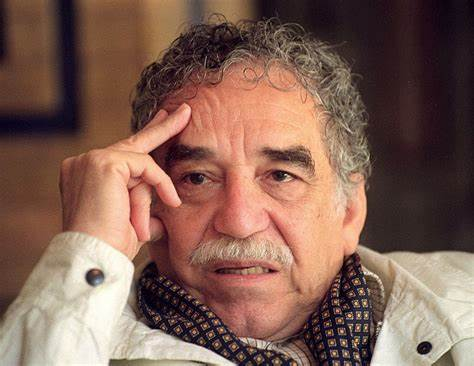
Under the Books section of the Guardian’s website, there is a So You Want to Be a Writer Page which has advice from prominent authors, living and dead. One piece of advice I found particularly appropriate was from Gabriel García Márquez on creating characters.

Gabriel José de la Concordia García Márquez (6 March 1927 – 17 April 2014) was a Colombian novelist, short-story writer, screenwriter, and journalist, known affectionately as Gabo or Gabito throughout Latin America. Considered one of the most significant authors of the 20th century, particularly in the Spanish language, he was awarded the 1972 Neustadt International Prize for Literature and the 1982 Nobel Prize in Literature. He pursued a self-directed education that resulted in leaving law school for a career in journalism. From early on he showed no inhibitions in his criticism of Colombian and foreign politics.

Gabriel García Márquez

He says, “Writing a character into being is like meeting someone you want to fall in love with. You don’t care (yet) about the facts of his/her life. Don’t overload us with too much information. Allow that to seep out later. We are attracted by a moment in time – a singular moment of flux or change or collapse – not by grand curricula vitae. So don’t generalise. Be specific. Go granular. The reader must fall in love with your characters quickly (or indeed, learn to hate them quickly).

We have to have something happen to them: something that jolts our tired hearts awake. Make it traumatic, make it mournful, make it jubilant, it doesn’t matter – just allow your reader to care for the physical body that your words evoke, the person behind the language. Later on in the story we can settle down with them and get to know them in a wider sense.

Sometimes we take a character from our own immediate lives and we build a new person upon that scarecrow. Or sometimes we take well-known characters in history and shape them in new ways. Either way we have a responsibility to write them into life.

In the end you should probably know your characters as well as you know yourself. You should be able to close your eyes and dwell inside that character’s body. The sound of her voice. The texture of her footsteps. Walk around with her for a while. Let her dwell in the rattlebag of your head. Make a mental list of who/what she is, where she comes from. Appearance. Body language. Unique mannerisms. Childhood. Conflicts. Desires. Voice. Allow your characters to surprise you. When it seems they should go right, send them left. When they appear too joyful, break them. When they want to leave the page, force them to stay a sentence longer. Complicate them. Conflict them. Give them forked tongues. This is what real life is all about. Don’t be too logical. Logic can paralyse us.

Nabokov says that his characters are just his galley slaves – but he’s Nabokov, and he’s allowed to say things like that. Let me respectfully disagree. Your characters deserve your respect. Some reverence. Some life of their own. You must thank them for surprising you, and for ringing the doorbell of your imagination.”

I think his point about being creative/imaginative with characters is very important, because it results in the reader being engaged with the character, trying to understand him/her and seeking to predict her/his next actions, which will (hopefully) surprise or delight us.

What Readers Hate

There is an interesting article on the Washington Post website dated 8 February 2023 by the Book Critic, Ron Charles, about what book readers hate.

Since the article is quite long, I have posted excerpts below:

“A few weeks ago, I asked readers of our Book Club newsletter to describe the things that most annoy them in books.

The responses were a tsunami of bile. Apparently, book lovers have been storing up their pet peeves in the cellar for years, just waiting for someone to ask. Hundreds and hundreds of people responded, exceeding my wildest dreams.

Dreams, in fact, are a primary irritation for a number of readers. Such reverie might have worked for Charles Dickens’s “A Christmas Carol” or Shakespeare’s “A Midsummer Night’s Dream” but no more, thank you very much. “I absolutely hate dream sequences,” writes Michael Ream. “They are always SO LITERAL,” Jennifer Gaffney adds, “usually an example of lazy writing.”

Laziness may be the underlying cause of several other major irritants.

Sharp-eyed readers are particularly exasperated by typos and grammatical errors. Patricia Tannian, a retired copy editor, writes, “It seems that few authors can spell ‘minuscule’ or know the difference between ‘flout’ and ‘flaunt.’” Katherine A. Powers, Book World’s audiobook reviewer, laments that so many “authors don’t know the difference between ‘lie’ and ‘lay.’”

“If those who write and publish the book won’t make the effort to get it right,” says Jane Ratteree, “the book doesn’t deserve my time and attention.”

A few words need to be retired or at least sent to the corner of the page for a timeout. Andrew Shaffer — a novelist himself — says no one should use “the word ‘lubricious’ more than once in a book (looking at you, James Hynes).” And don’t get that confused with “lugubrious,” which Wanda Daoust is equally tired of. Meanwhile, Cali Bellini finds that the word “preternatural” is “overused, abused and never necessary.”

While we’re at it, let’s avoid “bemused.” “It doesn’t mean what you think it means,” says Paula Willey.

If these responses suggest anything, it’s that readers don’t want to waste their time.

Excessive length was a frequent complaint. Jean Murray says, “First books by best-selling authors are reasonable in length; then they start believing that every word they write is golden and shouldn’t be cut.” She notes that Elizabeth George’s first novel, “A Great Deliverance” was 432 pages. Her most recent, “Something to Hide” is more than 700.

But it’s not just the books that are too long. Everything in them is too long, too. Readers complained about interminable prologues, introductions, expositions, chapters, explanations, descriptions, paragraphs, sentences, conversations, sex scenes, fistfights and italicized passages.

In fact, McCarthy may be the source of another frequent irritant: the evaporation of quotation marks. If it’s meant to seem sophisticated or streamlined, it’s not working. Speaking of Amor Towles’s “Lincoln Highway” Nancy George says the lack of “quotation marks for dialogue is just distracting.”

When authors don’t use quotation marks, “sometimes you have to reread a passage to determine who is speaking,” writes Linda Hahn.

It’s like a film director shooting in black-and-white to signal seriousness of purpose, writes Michael Bourne. Mostly, though, it just makes it hard to tell when the characters are talking. See?

Such confusion is akin to a larger objection: Readers have had quite enough of what Susan Mackay Smith calls “gratuitously confusing timelines.”

“Everything doesn’t have to be a linear timeline,” concedes Kate Stevens, “but often authors seem to employ a structure that makes the book unreadable (or at least very difficult to follow). There seems to be no reason why this is done other than to show off how clever they are.”

But clever authors are still preferable to preternaturally unrealistically clever children or talking animals, who are deeply irksome in novels — along with disabled characters who exist only to provide treacly inspiration.

And how discouraging at this late date to find so many “women who always need rescuing,” as Deborah Gravel puts it. The old sexist tropes are still shambling along in too many novels. Even when female characters are given modern-day responsibilities and occupations, they’re often pictured through the same old gauzy lens. “Nothing makes me put down a book faster,” writes Heather Martin-Detka, “than overly sexy descriptions of women in unsexy situations, e.g. a scientist at work in the lab.”

NJ Baker is done with “stupid women who start out with intelligence, then turn into blithering idiots over men who aren’t worth their shoe leather.” She admits, “Sure, it worked for Jane Austen (think ‘Pride and Prejudice’), but if you’re stuck in that type of story arc, you are not Austen.”

Of course, the classic objections that have dogged novels since they began are still current. Many readers are disgusted with explicit sex scenes (including references to “his member”) and gratuitous violence, especially against animals, children and women. “I love detective fiction of all sorts,” writes Margaret Crick, “but graphic descriptions that go on for pages, no.”

Surely, somewhere some cynical, market-driven AI scientist is working on a novel-writing program that can accommodate all these complaints for maximum marketability. Trouble is, the things we hate in books demonstrate not only infinite variety but infinite specificity.

And with that, we have come to the end.

Book writers, you’ve been warned.”

Writing that Moves Us

There is an interview in Writer’s Digest of Nguyễn Phan Quế Mai, who is the Vietnamese author of nine novels, in which she talks about writing The Mountains Sing, which was published in 2020 and reviewed by The New York Times.

Born into the Việt Nam War in 1973, Nguyễn Phan Quế Mai grew up witnessing the war’s devastation and its aftermath. She worked as a street seller and rice farmer before winning a scholarship to attend university in Australia. She is the author of eight books of poetry, fiction and nonfiction published in Vietnamese, and her writing has been translated and published in more than ten countries, most recently in Norton’s Inheriting the War anthology. She has been honored with many awards, including the Poetry of the Year 2010 Award from the Hà Nội Writers Association, as well as many grants and fellowships.

Nguyễn Phan Quế Mai

What prompted you to write this book?

Then, in 2012, when I was traveling with a Vietnamese friend in a car, I asked him what it was like for him during the Việt Nam War. He told me that he was 12 years old when Hà Nội was targeted by B-52 bombers. His parents were in Russia at that time and he was living with his grandmother, who saved him from the bombing raids. His story moved me so much. When I went home that evening, after putting my two young children to bed, I sat down at my computer and googled about the bombings of Hà Nội. I heard audio broadcasts of the sirens warning citizens about bombing raids. With tears running down my face, I penned 2,000 words which eventually become the opening scene of The Mountains Sing. I wrote without knowing where the story would lead me. But I knew I had to let Grandma Diệu Lan have many children, who would be separated by historical events which in turn lead them to becoming the enemy of one another.

How long did it take to go from idea to publication? And did the idea change during the process? 

I took me seven years to write and edit. My vision for the book stayed the same, but the objectives became clearer: that I needed to write about war to highlight the value of peace, about darkness to be able to talk about light, and about desperation to be able to bring a sense of hope.

Were there any surprises or learning moments in the publishing process for this title? 

I have published eight books in Vietnamese and The Mountains Sing is my first novel and first book I have written in English. I learned English in the eighth grade so penning this novel felt like climbing a mountain barefoot. I arrived at the mountaintop and am stunned that the magnificent view of all the love which has been pouring in for The Mountains Sing. Never in my wildest dream did I dare think my book would be reviewed on the New York Times, NPR and is picked as a Best Book of the Month/Season by The New York TimesThe Washington PostO, The Oprah MagazineUSA TodayReal Simple…. Readers’ feedback on Goodreads has also been amazing and I am grateful beyond words.

Were there any surprises in the writing process for this book? 

The Mountains Sing was fueled by my wish to have a grandmother. Both of my grandmas had died before my birth. Growing up, I was very jealous of my friends who had grandmothers to tell them tales and stories of their family. So I told myself I would write a novel one day with a grandmother figure in it. And finally I found Grandma Diệu Lan in The Mountains Sing.

I have no photos of my grandmothers and as I wrote the novel, I could imagine how my grandmothers looked, I could hear their voices. Grandma Diệu Lan and her granddaughter Hương are very real to me, as well as all other characters, including Hương’ parents, uncles, and aunt.

As a writer, I used to underestimate the power of imagination. I learned that once I let go of my fears and trusted my imagination, my writing will soar and take me where it is destined to be. Of course the imagination has to be grounded in knowledge for it to be believable, so research and hard work is key.

I used to be a documentary filmmaker, and a film director once told me: “You can’t make a good film unless your hands tremble behind the camera.” Let us write stories that move us to the core, because when our pen is trembling, the reader can feel it, too.

Having Fun!

I can particularly relate to the email which Harry Bingham sent out on Friday.

It starts out with a quote about having fun: “Benjamin Jowett was a Victorian professor of Greek, a theologian and a college reformer. Photos of him have a somewhat stern and whiskery air, but he is responsible for one of my favourite quotes ever:

We have sought truth, and sometimes perhaps have found it. But have we had any fun?

I love that. As writers, we’re not all that interested in truth, so perhaps we can rephrase: We have sought a decent story, and sometimes perhaps have told one. But have we had any fun?

That quote is in my head because it occurred to me this week that perhaps my best books are also the ones I most enjoyed writing. It’s certainly true that the ones I most laboured over ended up proficient enough, but less joyous in the reading.”

He goes on to mention several books that he has written that he enjoyed writing and people have enjoyed reading. He says, “Overall, I think it is true that a joyous writing experience leads to a better reading experience. That’s nice to know in one way. Most writers could make more money in other jobs – or indeed, use those other jobs to fund their writing time – so it definitely matters that writing is fun.

But life ain’t always easy and writing isn’t always pleasurable. What happens if you are finding the writing a slog? The joyous writing = good writing rule is a comfort if you’re having fun. But doesn’t that also mean that painful writing = bad writing? In which case, the rule seems to double your troubles.

I think maybe it does.

I do strongly believe that you should write mostly for the fun of it. If you’re not actually under contract to a publisher, then why write if you hate it? Of course, in any book, there’ll be tough patches that you just have to push through, but that’s the same as any challenging hobby. Overcoming those challenges is part of the joy.

But some books have the joy/challenge balance wrong. The joy’s never quite enough, the challenges rather too constant.

So what to do? As usual, I don’t really know the answer, but my personal cocktail of solutions includes the following:

  • KBO. This was a core part of Winston Churchill’s philosophy on life. If women were around, he expressed it as “KBO”. If they weren’t, he said it plainly: Keep Bu**ering On. In the end, an ability just to push through the tough patches is the single most important quality of any writer.
  • If possible, take a break. And the breakier the break, the better. A sharp change of routine – a holiday, a love affair – is going to work better than “everything the same, but no writing”.
  • Figure out if there’s a technical flaw somewhere. A big one this, especially for less experienced writers. So often enough, you start a project with enthusiasm. At about the 30,000 word mark, that enthusiasm starts to dissipate. Then you write more text, but it just seems pointless. You don’t like what you’ve written. You give up. And often, often, often it’s because of an identifiable and fixable technical fault. So it could be something you’re doing wrong in terms of points of view. Or your sense of place. Or your plotting. Or almost anything. Those things will make your writing seem bad (because in this one specific way, it is bad). Then, since you don’t know what the issue is or how to fix it, you just give up. That’s where a professional can help.
  • Cut. Oh my goodness, this is so simple and so powerful. If you are telling a good story in 120,000 words that you could express equally well in 90,000 words – and it’s very, very common to see such things – then you have attached a huge drag anchor to your narrative. It can never leap free because you are burdening the reader with 30,000 purposeless words. Cut, my friend. Cut more than you think you can cut. Take joy in cutting. You will feel your manuscript lift and surge forward in the water. It’ll love you for the surgery. Be ambitious.
  • The dagger in the table. And sometimes, simply enough, a narrative starts to drag because it’s a bit draggy. The set-up is great. The ending you have in mind is fantastic. But the bit in-between? It’s all a bit ho-hum. So kill someone. Or have a bank robbery. Or have someone get abducted or buried underground. Offer a mid-story incident that shatters the shape of the story that the reader was expecting. Write a novel with two climaxes. Plunge the dagger into the table and watch it quiver.
  • Ask yourself: have a nailed the basic concept for this novel? If you don’t have a stellar concept, your novel will never be stellar. If your concept – your elevator pitch – just isn’t all that strong, the novel will essentially be unsaleable no matter how many nice little plot turns you have in chapter 22, and no matter how quirky you make Aunt Maisie. And if you have embarked on a novel with too little zizz, then add it. You don’t have to scrap what you’ve written and start again. You just have to find the ingredient – a ghost, a murder, a secret letter, a splash of magic, a something – that gives life to all the rest.”

I think Harry is right: that fun can make big difference in writing. I’m working on a collection of short stories, and I’m having a lot of fun writing them. But I’ve decided to stick to some rules. First of all, my idea for a new story has to be thoroughly tested in my mind for at least a week until I’m sure that readers would enjoy the story. My second rule is if the text starts to lose momentum I stop and fix it, taking whatever time it takes. So far, I’ve had only one story that I just didn’t like after three pages. And my third rule is to look at my completed work through the eyes of a sceptical reader. I keep finding little flaws that are fixable.