Review: Tropic of Cancer

As you may know, this novel by Henry Miller was banned in the US as obscene for twenty-seven years after it was first published in Paris in 1934. Having never read any of Henry Miller’s work, I decided to start with this one. Now, having read it, I would say that it is not obscene (although it is occasionally explicit and does not shy away from bad language), it is, in my opinion, misogynistic. Henry Miller has little respect for women as equals.

Henry Miller was born in New York in 1891. Surprisingly, he attended City University for only one semester. (He writes with considerable skill and with an astonishing vocabulary.) He worked in personnel at Western Union for ten years before devoting himself entirely to writing. He developed a semi-autobiographical, stream of consciousness style. He lived in Paris during the 1930’s, in Greece briefly and in California until his death in 1980. He was married five times. His major works, aside from Tropic of Cancer, include The Rosy Crucifixion, Black Spring, Tropic of Capricorn and The Colossus of Maroussi.

Henry Miller

Tropic of Cancer is set in Bohemian Paris during the 1930’s when Miller was a destitute, struggling writer there, having separated from his second wife, whom he recollects warmly. The book is written in the first person, as Henry Miller, and is a commentary on the human condition from a low-down, devil-may-care perspective. Many of the characters are thinly disguised friends and associates of Miller’s. The narrative is disorderly, sometimes in the present and sometimes a recollection of past events. The subjects are the peculiarities of the characters, their influences on one another, the scarcity of money, various venues and scenes in the city, sexual encounters, writing, philosophy, and employment, all revealed unvarnished and with clarity. Millers’s writing is characterised by an eagerness to reveal all, and he views his desperate financial circumstances and challenging relationships with startling optimism.

Tropic of Cancer is clearly a literary milestone in its construction, style, subject and narrative. Strangely, perhaps, it makes an engaging read. One wants to discover what Henry will discover next. For me, there is no overarching theme or message, and if one tried to construct a philosophy from the events, it would probably be self defeating. For example, Miller seems to view the church disdainfully, but his observations are congruent with Christian theology. The writing is extraordinary its clarity and erudition. While I take strong exception to Miller’s view of the role of women, I have to admire the way he has described his experiences in Bohemian Paris in the 30’s. Is it a great literary treasure? I think not. Is it a book one should read. Yes!

Review: The Maid

The second novel – a crime novel – that my wife and I listed to during the drive down to Sicily was The Maid by Nita Prose and narrated by Lauren Ambrose. It is certainly an entertaining book, though when we started to listen I wasn’t expecting a crime novel; I was expecting a romance or an adventure. It has sold over a million copies and won a couple of awards.

Ms Prose says, “As for my professional life, I work in the publishing industry. I began years ago as an intern, photocopying edited manuscripts and secretly snooping the fascinating margin conversations between editors and writers. Currently, I’m vice president and editorial director at Simon & Schuster in Toronto, Canada, where I have the privilege of working with an incredible array of authors and publishing colleagues whom I credit with teaching me, manuscript by manuscript, book by book, the wondrous craft of writing.”

Nita Prose

The central character is Molly, who is a maid in the Regency Grand Hotel, a job to which she feels she was born and is obsessively dedicated. She likes nothing more than restoring a filthy, messy room to perfection. She has such an orderly, Polly-Anna-ish mind that I thought she has learning disabilities until I learned that she had completed some university level courses. Molly lived alone with her grandmother, who has a similar character, is full of simple-minded advice, and who dies halfway through the book. The other characters are a supervising maid, who is lazy and apt to purloin tips that have been left for Molly. There was a boyfriend who stole a large nest egg which Molly’s grandma had been saving for them. Molly’s current crush is the hotel bartender, who has suspicious friends and treats her with indifference. The hotel manager is a harried soul who treats Molly with respect, and there is the hotel dishwasher, a conscientious Mexican worker whose immigration papers are not in order. Mr Black, an older, very rich, disagreeable man in doubtful businesses, and his younger, trophy wife are frequent guests at the hotel. Molly strikes up a friendship with the wife, and Molly finds Mr Black dead in his room. It was murder and Molly is the prime suspect according to a zealous police detective. Fortunately, the doorman has a daughter who is a very clever criminal lawyer and who devises a scheme to prove Molly not guilty and to reveal the actual perpetrator. A drugs operation involving the bartender, Mr Black and assorted outside thugs is discovered. Molly knows who actually killed Mr Black, but for personal, sympathetic reasons, she does not reveal the person at the trial.

Certainly it is a clever device to create a character who goes against our reflex notions of a hotel maid: invisible, unmotivated and slap-dash. This strange character wins our sympathy, though perhaps a little reluctantly in my case. For me, Molly is a little too dedicated to her simple-minded perfectionism to be fully credible. Perhaps if Molly had some learning disabilities she would have worked better for me. The writing is lively, though not of literary quality, nor should it be. The scenes and characters are clear. The plot is well conceived, and tension is maintained throughout. For me, Molly’s motivation not to reveal the true killer was not strong enough, and in the real world the killer would have been identified.

Short Stories

I’m writing a collection of short stories to be published as a book, and I found a post on the Writer’s Digest website written by Lisa Cupolo which is interesting.

Lisa Cupolo is the author of Have Mercy on Us (January, 2023; Regal House), which won the W.S. Porter Prize for a short story collection. Born in Niagara Falls, Canada, she has lived and worked all over the world but currently resided in Southern California, where she has taught fiction writing at Chapman University.

Lisa Cupolo

She says, “When writing my short story collection Have Mercy on Us, my biggest challenge was not getting too lost in my character’s backstory and presenting the trouble of the story right from the start.

“A novel tells us everything while the short story only tells us one thing,” V.S. Pritchard said. This is a great premise to hold onto while writing a short story; stories are a window into a life, not the whole enchilada.

These five tips for making sure you’re creating enough conflict to keep your reader turning the pages may seem like basics, but I still use them as good reminders about what’s crucial to writing an engaging short story. Often, I’ll write an entire draft and forget about a few of these necessary elements. But always, they show themselves through many revisions, as they are always necessary to make a story really sing.

1. Have your character want something.

Your character needs to be presented in a way that they desire something, but they do not have it yet. It can be a possession, a person, even a trip to somewhere. In the title story of my book, Alina is stalking her daughter’s boyfriend in a creepy way. In the first paragraph we learn she is outside the boyfriend’s apartment every morning, in the afternoons she’s at the coffee shop when he gets his cup of joe, she’s hoping he’ll be haunted by her presence.

He is the reason her daughter is in trouble, the story declares. I wrote this line after many revisions as I knew I had to be upfront about the conflict in the story. In this way, the reader wants to find out what the guy did to her daughter, and feels empathy for the mother in the situation.

2. Create a situation that involves danger.

Any kind of danger, from seeing a suspicious text on a spouse’s phone to being caught in a bank robbery. The tension of that situation is what carries the story forward and becomes its anchor. Unlike novels, every sentence in a short story has to involve developing the plot or revealing more about the character.

In revision, I tend to move paragraphs and reshape the way a story unfolds, not unlike rearranging furniture in a room. I cut big chunks that don’t need to be there, like taking out that old sofa you love, but in the end, it has to go.

In my story, “How I Became A Banker,” the first line is, When I was twelve I made a promise to myself, that I’d make a shitload of money. The reader immediately wants to know why the narrator made such a promise and at such a young age. Again, I didn’t come to this line until after many revisions.

3. Conjure up complications.

Whatever the situation you create, add some complication to it: Nicola is tempted to flirt with the tattoo artist, and does so, and then discovers that the tattoo artist’s assistant is an old school buddy of her boyfriend. She flirts because she is determined to ruin her life, her goal is self-destruction, not messing up her relationship.

It’s complicated and sorrowful and the reader is hooked. Be on the lookout for plots that surprise you. It’s usually a good thing.

4. Hide the real problem.

“It’s not the mud on the floor,” my mother used to say. She meant it as a metaphor for when things go wrong and it seems it’s one thing that’s bothering a person, but it’s usually something else.

For example, in my story “You’re Here Now,” Sylvie has never met her father but she’s on the way to his funeral. The story seems to be about the loss of ever having a relationship with her father, but the reader soon realizes the story is about the resentment she has toward her mother, who never let her see her father or his large family. It’s the hidden thing, the complication behind what is initially presented that can make stories so rich.

5. Make sure the readers know the trouble early, like a few paragraphs in.

It’s almost a cliché to say write a story and then delete the first two pages to get to the “heat” or “pulse” of it.

In Flannery O’Connor’s famous story “A Good Man is Hard to Find,” the first line gives trouble that seems minor, though it will lead to the catastrophe at the end: The grandmother didn’t want to go to Florida. It can be as simple as that, to start.”

I would add that there is almost no space for backstory in a short story. For this reason, any essential history about a character (and it really has to be essential – not nice to know) has to be inserted cleverly into dialogue or into brief descriptions of the character.

Creating Characters

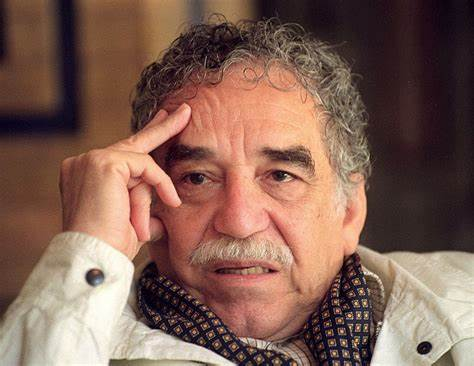
Under the Books section of the Guardian’s website, there is a So You Want to Be a Writer Page which has advice from prominent authors, living and dead. One piece of advice I found particularly appropriate was from Gabriel García Márquez on creating characters.

Gabriel José de la Concordia García Márquez (6 March 1927 – 17 April 2014) was a Colombian novelist, short-story writer, screenwriter, and journalist, known affectionately as Gabo or Gabito throughout Latin America. Considered one of the most significant authors of the 20th century, particularly in the Spanish language, he was awarded the 1972 Neustadt International Prize for Literature and the 1982 Nobel Prize in Literature. He pursued a self-directed education that resulted in leaving law school for a career in journalism. From early on he showed no inhibitions in his criticism of Colombian and foreign politics.

Gabriel García Márquez

He says, “Writing a character into being is like meeting someone you want to fall in love with. You don’t care (yet) about the facts of his/her life. Don’t overload us with too much information. Allow that to seep out later. We are attracted by a moment in time – a singular moment of flux or change or collapse – not by grand curricula vitae. So don’t generalise. Be specific. Go granular. The reader must fall in love with your characters quickly (or indeed, learn to hate them quickly).

We have to have something happen to them: something that jolts our tired hearts awake. Make it traumatic, make it mournful, make it jubilant, it doesn’t matter – just allow your reader to care for the physical body that your words evoke, the person behind the language. Later on in the story we can settle down with them and get to know them in a wider sense.

Sometimes we take a character from our own immediate lives and we build a new person upon that scarecrow. Or sometimes we take well-known characters in history and shape them in new ways. Either way we have a responsibility to write them into life.

In the end you should probably know your characters as well as you know yourself. You should be able to close your eyes and dwell inside that character’s body. The sound of her voice. The texture of her footsteps. Walk around with her for a while. Let her dwell in the rattlebag of your head. Make a mental list of who/what she is, where she comes from. Appearance. Body language. Unique mannerisms. Childhood. Conflicts. Desires. Voice. Allow your characters to surprise you. When it seems they should go right, send them left. When they appear too joyful, break them. When they want to leave the page, force them to stay a sentence longer. Complicate them. Conflict them. Give them forked tongues. This is what real life is all about. Don’t be too logical. Logic can paralyse us.

Nabokov says that his characters are just his galley slaves – but he’s Nabokov, and he’s allowed to say things like that. Let me respectfully disagree. Your characters deserve your respect. Some reverence. Some life of their own. You must thank them for surprising you, and for ringing the doorbell of your imagination.”

I think his point about being creative/imaginative with characters is very important, because it results in the reader being engaged with the character, trying to understand him/her and seeking to predict her/his next actions, which will (hopefully) surprise or delight us.

Having Fun!

I can particularly relate to the email which Harry Bingham sent out on Friday.

It starts out with a quote about having fun: “Benjamin Jowett was a Victorian professor of Greek, a theologian and a college reformer. Photos of him have a somewhat stern and whiskery air, but he is responsible for one of my favourite quotes ever:

We have sought truth, and sometimes perhaps have found it. But have we had any fun?

I love that. As writers, we’re not all that interested in truth, so perhaps we can rephrase: We have sought a decent story, and sometimes perhaps have told one. But have we had any fun?

That quote is in my head because it occurred to me this week that perhaps my best books are also the ones I most enjoyed writing. It’s certainly true that the ones I most laboured over ended up proficient enough, but less joyous in the reading.”

He goes on to mention several books that he has written that he enjoyed writing and people have enjoyed reading. He says, “Overall, I think it is true that a joyous writing experience leads to a better reading experience. That’s nice to know in one way. Most writers could make more money in other jobs – or indeed, use those other jobs to fund their writing time – so it definitely matters that writing is fun.

But life ain’t always easy and writing isn’t always pleasurable. What happens if you are finding the writing a slog? The joyous writing = good writing rule is a comfort if you’re having fun. But doesn’t that also mean that painful writing = bad writing? In which case, the rule seems to double your troubles.

I think maybe it does.

I do strongly believe that you should write mostly for the fun of it. If you’re not actually under contract to a publisher, then why write if you hate it? Of course, in any book, there’ll be tough patches that you just have to push through, but that’s the same as any challenging hobby. Overcoming those challenges is part of the joy.

But some books have the joy/challenge balance wrong. The joy’s never quite enough, the challenges rather too constant.

So what to do? As usual, I don’t really know the answer, but my personal cocktail of solutions includes the following:

  • KBO. This was a core part of Winston Churchill’s philosophy on life. If women were around, he expressed it as “KBO”. If they weren’t, he said it plainly: Keep Bu**ering On. In the end, an ability just to push through the tough patches is the single most important quality of any writer.
  • If possible, take a break. And the breakier the break, the better. A sharp change of routine – a holiday, a love affair – is going to work better than “everything the same, but no writing”.
  • Figure out if there’s a technical flaw somewhere. A big one this, especially for less experienced writers. So often enough, you start a project with enthusiasm. At about the 30,000 word mark, that enthusiasm starts to dissipate. Then you write more text, but it just seems pointless. You don’t like what you’ve written. You give up. And often, often, often it’s because of an identifiable and fixable technical fault. So it could be something you’re doing wrong in terms of points of view. Or your sense of place. Or your plotting. Or almost anything. Those things will make your writing seem bad (because in this one specific way, it is bad). Then, since you don’t know what the issue is or how to fix it, you just give up. That’s where a professional can help.
  • Cut. Oh my goodness, this is so simple and so powerful. If you are telling a good story in 120,000 words that you could express equally well in 90,000 words – and it’s very, very common to see such things – then you have attached a huge drag anchor to your narrative. It can never leap free because you are burdening the reader with 30,000 purposeless words. Cut, my friend. Cut more than you think you can cut. Take joy in cutting. You will feel your manuscript lift and surge forward in the water. It’ll love you for the surgery. Be ambitious.
  • The dagger in the table. And sometimes, simply enough, a narrative starts to drag because it’s a bit draggy. The set-up is great. The ending you have in mind is fantastic. But the bit in-between? It’s all a bit ho-hum. So kill someone. Or have a bank robbery. Or have someone get abducted or buried underground. Offer a mid-story incident that shatters the shape of the story that the reader was expecting. Write a novel with two climaxes. Plunge the dagger into the table and watch it quiver.
  • Ask yourself: have a nailed the basic concept for this novel? If you don’t have a stellar concept, your novel will never be stellar. If your concept – your elevator pitch – just isn’t all that strong, the novel will essentially be unsaleable no matter how many nice little plot turns you have in chapter 22, and no matter how quirky you make Aunt Maisie. And if you have embarked on a novel with too little zizz, then add it. You don’t have to scrap what you’ve written and start again. You just have to find the ingredient – a ghost, a murder, a secret letter, a splash of magic, a something – that gives life to all the rest.”

I think Harry is right: that fun can make big difference in writing. I’m working on a collection of short stories, and I’m having a lot of fun writing them. But I’ve decided to stick to some rules. First of all, my idea for a new story has to be thoroughly tested in my mind for at least a week until I’m sure that readers would enjoy the story. My second rule is if the text starts to lose momentum I stop and fix it, taking whatever time it takes. So far, I’ve had only one story that I just didn’t like after three pages. And my third rule is to look at my completed work through the eyes of a sceptical reader. I keep finding little flaws that are fixable.

Putting Emotion on the Page

Jane Freidman’s blog has a useful post about writing believable emotion. The post was written by Susan DeFreitas, who is the author of the novel Hot Season, which won a Gold IPPY Award, and the editor of Dispatches from Anarres: Tales in Tribute to Ursala K Le Guin, a finalist for the Foreword INDIES. An independent editor and book coach, she specializes in helping writers from historically marginalized backgrounds, and those writing socially engaged fiction, break through into publishing.

Susan DeFreitas

 “At the end of the day people won’t remember what you said or did, they will remember how you made them feel.

It’s a saying that applies well to fiction: people often don’t remember the plots of the novels they love, but they absolutely do remember how those books made them feel.

I think this is such a huge part of what makes us readers—and writers—to begin with: as James Michener put it, “the swirl and swing of words as they tangle with human emotions.”

Okay, but…how do you do that, exactly? Meaning, how do you actually generate strong emotions in the reader—and how do you get the reader to feel what your character is feeling in the moment?

There are some very specific points where you’re actually writing the character experiencing emotion in the moment.

And this is something that many otherwise excellent writers get wrong, I find, by slipping into a distanced point of views, an issue that can occur whether you’re writing in first person or third.

Here’s an example of an emotion written in a distanced way from the third person:

She felt angry. “Stop that!” she shouted.

And here it is from the first person:

I was stunned. “I’m leaving,” I announced.

On the surface, there doesn’t seem to be anything wrong with either of these little snippets—but the fact is, neither is likely to generate any real emotion in the reader, even if the author has set up those other key elements of the story in such a way as to predispose that reader to care.

So what will?

Let’s address why overt statements of emotion don’t work.

Think back to a time when you really were angry, or really were sad.

Did you realize, in the moment, that you were feeling angry?

Did you realize, in the moment, that you were sad?

Chances are, you didn’t. Not right away, at least. Because those words—angrysad—are the sort of labels we apply to our feelings after we’ve had a chance to process them. The feelings themselves are much more immediate and visceral.

To speak in the terms of brain science: Emotional labels like anger and sadness are generated by the frontal lobe, that advanced part of the human brain that can think about what it is thinking, and think about what it is feeling as well.

To truly put your reader in the emotional position of your POV character, you have to dig deeper, to the more primary thing, the feeling itself, which doesn’t occur in the frontal lobe at all, but rather in the older, more primal parts of the brain associated with our physical and social survival.

And that is best accomplished by body language and internal narration.

Tactic #1: Body language

Body language is generally the easier tactic for most of us to get a hold of, because we’re all quite familiar with the physical manifestations of emotion.

For anger, for instance, that might mean:

  • your hands balling up into fists
  • pursing your lips
  • clenching your napkin
  • feeling your jaw tighten
  • shoving something out of the way

Those are all physical manifestations of an emotion that tells us we may need to fight, to defend ourselves or others.

For feeling sad, that might mean:

  • feeling tears well up in your eyes
  • feeling heavy
  • needing to sit down
  • closing your eyes
  • taking a deep breath

Those are all physical manifestations of an emotion that tells us we may need to reveal our vulnerability to others, so we can get help—or that we may need to go to ground, conserve energy, and nurse our wounds.

Fiction is full of the physical manifestations of emotions, and writers can often go too far with it, having their characters leapfrog right from bad news to outright sobbing, with no pitstops in between for glassy eyes, a tear escaping down a cheek, and so forth.

But even so, this sort of “body language” is indispensable when it comes to really translating the emotion of the character to the reader. Because it’s this sort of language that the reader maps onto her own body, when she reads it.

This sort of thing actually helps your reader feel the emotion of the character, physically.

Tactic #2: Internal narrative

But to my mind, the more important tactic, when it comes to the generating emotion in the reader, are the thoughts that actually carry that emotion.

Feeling teary-eyed and heavy, feeling your jaw clench—that sort of body language carries emotion in a general sense. The thoughts associated with the specific emotions of a specific circumstance actually put us there, in this specific moment of the story.

For instance, here are some thoughts that might carry the emotion of anger in a specific circumstance:

Julie couldn’t believe it—her best friend had betrayed her, and hadn’t even had the decency to try to hide it. How had Julie so disastrously misjudged her? And here Julie had thought they’d still be friends when their kids were grown, when they were two old biddies getting up early to hit the estate sales…

And here are some thoughts that might carry the emotion of sadness in a specific circumstance:

Maybe I should have seen it coming, but I hadn’t. In fact, I hadn’t had the slightest idea that anything was even wrong until the moment she said it. And now everything I’d worked so hard to build was crumbling down around me…

These sorts of thoughts are part our internal narration—the story we tell ourselves about ourselves, and about what’s going on in our life. These sorts of thoughts help us formulate and preserve our identity, and to negotiate our social environment.

Internal narration  does a lot to show the reader the meaning the character takes from the event being related, which helps to keep us clearly in that person’s point of view—and helps us to feel exactly what they’re feeling.

Combining tactics

Now here’s the body language and the thoughts conveying anger combined:

Julie could feel her hands balling up into fists as she clenched the napkin in her lap. Her best friend had betrayed her, and hadn’t even had the decency to try to hide it. How had Julie so disastrously misjudged her? And here Julie had thought they’d still be friends when their kids were grown, when they were two old biddies getting up early to hit the estate sales…

Here’s the combined body language and thoughts conveying sadness:

I could feel tears prickling in my eyes, so I squeezed them shut. Maybe I should have seen it coming, but I hadn’t. In fact, I hadn’t had the slightest idea that anything was even wrong until the moment she said it. And now everything I’d worked so hard to build was crumbling down around me…”

This is a good little tutorial.

Review: The Beginning of Spring

I bought this book because it was listed by the Guardian as one of the best one hundred novels written in English, and I had never heard of it.

The author, Penelope Fitzgerald was born in London in 1915, and was one of the first women to graduate from Oxford. For a time in the 1960s she co-edited a literary magazine with her husband, an alcoholic, who was barred as a lawyer. This led to a decade of poverty during which the Fitzgeralds lived in subsidized housing. Mrs Fitzgerald taught theatre and at school until she was 70. Her writing career began at 58. She wrote nine novels, three of which, including this novel, were shortlisted for the Booker Prize. In 1979 she won the Booker Prize for a fourth novel, Offshore. She died in April 2000.

Penelope Fitzgerald

The Beginning of Spring is set largely in Moscow in 1913. The principal character is Frank Reid, an Englishman who was born in Moscow and has a printing business there. Without any notice, his wife Nellie leaves to go back to England with the three children, but while they are still in Russia, the children are sent back to their father. Frank contacts his wife’s brother, Charlie, but he does not know where she is.

Frank seeks a nanny to take care of the children. He rejects an older, professional nanny, who for reasons unknown has been dismissed from her position, and he hires a beautiful, young salesgirl, Lisa, from adepartment store. Lisa is quiet and serene; the children admire her. Frank falls in love with her, he makes advances and she reciprocates. A student who breaks into Frank’s printing business is apparently Lisa’s ex-lover. Selwyn Crane, Frank’s chief accountant confesses that he had planned to run away with Nellie, but he decided against it. Nellie went to live in a Tolstoyan community in England, but she decided she does not like the communal life, and suddenly returns to Moscow. Meanwhile, Lisa leaves Russia illegally.

This is a gentle, almost passive novel, which nonetheless holds one’s attention through the uncertainties of the intentions of the characters. Moreover, the descriptions of the settings, the characters and the events are of sufficient clarity that one feels comfortable with them, but one cannot predict the direction of travel. In fact, the novel ends without answering some of the lingering questions. Ms Fitzgerald’s descriptions of the culture, the people and the settings of Moscow a century ago, are startling in their unique accuracy. She studied Russian in he 1960’s and visited Moscow in 1975.

What makes this novel unique is its Moscow setting and its simultaneous clarity and uncertainty. The story is also quite captivating.

Page One

Last Friday’s email from Harry of Jericho Writers was about writing that first page of a book.

“The start of your book is a delicate, beautiful thing.

It has a joyous quality for sure. Something like cracking open an egg, the peep of new sun, climbing on board a train, feeling the flap of a sail, a rope straining at its mooring. You only get that feeling once per book, and it’s worth relishing.

You can go big, if you want to. You can start in the middle of a bar-room brawl, with bottles flying and chairs thwacking. Or you can start with something apparently small, except that the wriggle of a little story-worm catches the reader’s attention and, dammit, they find they’re hooked.

But, of course, there’s another issue with beginnings, a bothersome one. Because agents, blast them, start books from the beginning too and they are very unusual readers indeed. Partly, yes, they’re unusual in that they’re professionals looking for work they can sell. But also, they start reading literally thousands of novels a year. How many first pages does an average agent read? Maybe two thousand. How many actual books does an average agent read? Well, probably roughly as many as you do – or a few more, because they’re pros.

Because agents read so many opening pages, they are deeply – horribly – familiar with the clichés of the genre. That means, they are exquisitely sensitive to badness in openings.

What’s worse is this: the opening of your novel may well be the first thing you’ve ever written. It’s where you’re at your least experienced, not your most. That’s true in general, but it’s also true of this particular story. Midway through your book, you’ll know your characters better, your story better, your themes better, your voice better – everything better.

Which means that when an agent picks up your book it’s effectively an encounter between a Story Opening Super-Analyser and a scarily undercooked Story Writer. Not fair, right?

And look: nothing I go on to say in this email is absolute. You could pick some horrible cliché to open your novel with but, if you deliver that opening in a confident and well-written way, then any sane agent will read on, with interest. For everything I say below, you should bear in mind that there’s almost certainly a classic of world literature that takes the cliché and rebuilds it into something wonderful.

At the same time, clichés feel wrong for a reason. If you can avoid them, you probably should. And with that said …

Dreams

There’s something horribly schoolchildish about any story that starts with a dream, before, two or three paragraphs later, admitting, “Then I woke up.” It feels cool, but cool in much the same way that my kids think that making pots of green goo out of ordinary kitchen ingredients is cool. Once your age hits double-digits, it’s time to move on a bit.

I think there are also two more specific reasons for concern. One is that dreams are totally unboundaried. Not rule-governed. And that doesn’t just break the laws of life, but of stories too. Even kids’ fantasy fiction has rules that govern its fictional world. Opening without rules feels disappointing – the difference between a park kickabout and a World Cup tie.

The other is that, once you get two or three paragraphs in, you play that limp trick on the reader: ha, ha, fooled you, it was only a dream. That yields a feeling akin to disappointment. “You made me read this, on the premise that it mattered, but it didn’t matter. Oh.” I’d gently suggest that this is not a feeling you want anyone – still less an agent – to encounter on the first page of your novel.

Beds

More generally, one agent once told me that a stunning proportion of all manuscripts she read – she reckoned well over ten per cent – opened with a character in bed. She reckoned she’d almost never, perhaps literally never, offered representation for such a book.

There’s nothing obviously wrong with that. You could imagine some Beckettian novel that opens with a character in bed and keeps that character in pyjamas for most of the story. But … again, I think there are two specific issues here.

One is that you don’t want to bracket yourself with the ten per cent of novels that an agent is most inclined to reject. The other is this: why is it that so many authors start with a character in bed and (usually) waking up?

I think it’s that the writer themselves are warming up. They are aware of embarking on something new. Of introducing a new character to the world. So they start at the beginning: the opening of the day. As they move their character through toilet / shower / coffee / conflakes, they limber up, like your pre-gym warm-up.

And: don’t warm up. Or, if you do, don’t do it on page. Don’t do it anywhere that the reader is going to see it.

Poetry & prologues

The fantasy manuscripts we see start with a snatch of poetry by way of prologue. Or if not poetry, then myth, or incantation, or something similar.

And again, you’re going to tell me that Tolkein did this all the time, and maybe he did. But poetry (and myth and the rest of it) is, almost by definition, harder to penetrate than prose. An opening needs to gently lift the reader into your story vehicle and get them drifting away from the bank, the train gliding away from the platform.

Forcing the reader to wade through a couple of pages of (often quite dodgy) poetry is the opposite of that gently lifting model. It’s like you’ve built a low wall in between the reader and the railway carriage you want them to get into.

Too much, too soon

My least-favoured story opener is with highly extreme emotion of any sort. Often some horrible situation (a prisoner under torture), but really any sort of extreme emotion, conveyed with a plethora of emotional superlatives.

The reason why this doesn’t work is that stories have the quality of new social situations. You’re meeting characters for the first time. If your best friend had a terrible heartbreak sob story, you’d be prepared to listen to the whole thing, dishing out biscuits and tissues as needed. But if you had just for the very first time met a new parent at the school gate and you got the same excessively tearful download, you’d just want to pull away.

A reader doesn’t care about an emotional drama for its own sake. They care because they care about a character. And that means learning them, building them, creating the knowledge that will generate sympathy.

That’s the ‘too much’ error, and it’s a particular bogeyman of mine. But there’s a ‘too soon’ error as well.

That error is giving away your punchline much too early. You have a world where gravity can be rubbed away via a smartphone app? Or memory works only for twenty-four hours? Or your character, a woman, is working, disguised as a man, on board an old three-master?

Then great! I love it! What great ideas!

But don’t tell me about them. Not on the first page, nor even the third, nor anywhere in the first chapter. Yes, of course, you scatter tantalising clues. A coffee machine that has to be pulled down from the ceiling. Reminder post-its on the mirror. Some odd piece of behaviour by a ‘seaman’ apparently remembering a husband.

The clues are what tantalise. They’re what drag a reader through the story. Once you deliver your punchline (“An anti-gravity app! 24 hour memory!”), that particular sequence of clues carries no more force. For sure, other things will come along – you’ll start introducing the full Technicolor complexity of your story – but we’re talking about openings. If you want to get the reader into your story-vessel and pulling happily away from shore, then those tantalising clues are a brilliant way to maintain engagement. In time, as the reader bonds with your character, you won’t need the clues any more. But during this first chapter, don’t give the game away too early. Use the clues, delay the punchline.”

For me, on the first page – in fact in the first paragraph – I try to stick to these rules:

  • A character is introduced
  • An important theme of the book is revealed (what the book is about), and
  • An uncertain, but important issue or event is presented

Here, for example, is the opening of Seeking Father Khaliq:

“May I ask you, honoured Professor al-Busiri, if you will go to meet Princess Basheera?” 

I looked up reluctantly from the student essay I was reading, and considered the bearing of the woman who had entered my office unannounced.  She was tall and slender, graceful; she was motionless, but there was a suggestion of incipient mobility.  She was dressed in a black naqib and a jilbab so that I could see only her dark eyes.  Her voice, however, had an optimistic lilt to it.  She must be about thirty, I thought.

Deliberately, I pushed the essay to one side.  “Who, may I ask, is Princess Basheera?”

“She is my employer, sir.”

“And what does this Princess Basheera want with me?”

“She has an assignment that only you can fulfil, Professor.”

Review: Life after Life

This novel by Kate Atkinson won the Costa Novel Award in 2013. Her novel, A God in Ruins,which I greatly admired, also won the Costa. I wasn’t quite as taken by her third World War II novel, Transcription, but I was fascinated by the blurb on the back cover of Life after Life: “What if you had the chance to live your life again and again, until you finally got it right?”

Kate Atkinson

The novel begins in 1910 with the birth of Ursula Todd into an upper class English family in the London suburbs. There is a heavy snowstorm at the time and the doctor is unable to reach the house. The chord is wrapped around the baby’s neck, and unfortunately, she died. But there is another version where a 14 year-old maid recognises the problem, cuts the chord and the baby survives. And there is another version in which the doctor arrives in time. Similarly, when Ursula is a toddler at the beach with her older sister, they wade out into the sea and they are struck by a huge wave. Ursula drowns. No, she is saved by an elderly artist on the beach. Then, there is the time when she is taken advantage of as a teenager by the American friend of her brother and becomes pregnant. Or is she? No, she bats him away.

The story continues to the run up to the war. Ursula visits a family in Munich where she meets Eva Braun and her older lover, Adolf Hitler. Ursula’s family includes some remarkable and memorable characters, like her aunt, Izzie, who is a loose cannon socially, financially and romantically. Then there is Teddy the much-loved younger brother who becomes a bomber pilot and is killed in the war. Or no, he was shot down, parachuted, spent the remainder of the war in a prison camp, and finally made his way home.

Ms Atkinson’s descriptions of the London blitz of 1940 when Ursula worked as an area warden are astonishingly authentic, the settings devastating and the characters memorable. There are so many twists and turns in Ursula’s life, that one can’t be away from the story for very long.

There is a passage which occurs at the beginning and the end of the book in which Ursula assassinates Hitler in 1930 in a Munich cafe with a family handgun which she takes from her purse. She, in turn is killed in both versions, yet she lives to work into the 1950’s. Perhaps this is just her imagination of how the war may not have been.

For me, the idea of living one’s life again until one get’s it right is misleading and doesn’t actually happen in the book. Rather, it is a question of slightly different circumstances and reactions of the characters which make for a different result. So, the point for me is how a small bit of fortune – or misfortune – can dramatically change one’s life.

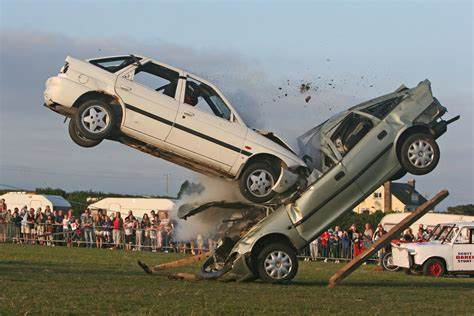
Car Crashes

Harry Bingham of Jericho Writers had some interesting thoughts in his email of a couple of weeks ago.

He said, “Let’s talk car crashes.”

“What if you have a writing car crash? A complete and total failure?

And, by the way, we need to be a bit careful to define terms here. If you’re writing your first novel and you make some plotting cock-ups, that’s not a failure – that’s just writing.

If you complete your work, edit it hard, then come to us for a manuscript assessment, only to be told that there are still a lot of issues, that too is not a failure. It’s just writing.

Same thing, indeed, if you go through the whole process, and send your stuff out to agents, and get some agents wanting to see the full manuscript only, ultimately, to say no. That’s disappointing, of course, but really, that’s a success. You wrote your very first novel and got it good enough, on that first outing, to have serious agents toying with the idea of taking you on? How is that not impressive?

So, yes, I have high standards for what constitutes a car crash. I think the key ingredients are (A) your work is way below the standard to be expected from someone of your experience – plus, (B) you’re completely in the dark about how bad things are. If you have the first element without the second, you don’t have a car-crash, you just have an unresolved editorial problem, and we all have those. Again: that’s just writing.

But, even on a strict definition, I had a total car crash early in my career – my only really bad experience.

I’d already sold my first book, via a highly contested auction, and the book went on to be a bestseller. So: good outcome, right?

Better still, I’d delivered the draft of my second book before the first was even launched. So: good author, right?

The trouble was that second book was AWFUL. I haven’t kept a draft of it and never re-read it, so I now only have a nightmare-style recall of what was in it. But – plotting, bad. Elevator pitch – worse. Writing – subpar. Characters – patchy and (yeugh) a bit icky too.

The draft was so bad that I got called into HarperCollins’ nice London offices for an editorial discussion. My editor and publisher, both very nice humans, told me – gently – how bad the book was.

I didn’t need a lot of telling. I wasn’t defensive. As soon as they started to talk it through, I realised they were right. Luckily, I had plenty of time to do a re-write. So I got home, copied the document into a Drafts folder that I could plunder for paragraphs here and there, then selected the whole document and hit delete.

This bestselling author had just deleted his second novel.

My redraft was about a million times better than the version before, and it was still the least good thing I’ve ever written. But it’s also where I really learned to be a writer. My first novel had just come too easily. The core idea had been a good one. My delivery was fine, or more than fine. But the absence of struggle had also meant an absence of knowhow. I’d read nothing at all about the craft of writing. It hadn’t occurred to me that I might need to do so. (We all know how to write, no? You just glue enough sentences together.)

That second novel was a wrestling match, start to finish. I read every book I could find on craft. I didn’t agree with everything I read, but even the process of disagreeing made me more reflective, more considered.

And that second book didn’t do badly. I got a sort-of film deal for it, which admittedly never quite materialised. The book was shortlisted for one of the big annual writing prizes. It sold a plump five-figures number of copies.

I still don’t love the book, but it did OK.

My reasons for offering you this story is threefold:

1. Car crashes happen

They’re not terminal. Don’t fret. Move on.

2. Use them to learn

I’m a huge believer in the importance of craft.

Writing technique is the sword and shield that protects you from disaster. It won’t protect you from mistakes – nothing does. But the better your basic writing craft, the quicker you’ll pick those issues up and the more rapidly you’ll solve them.

3. Protect yourself

The best way to avoid major problems, however, is to stop making them in the first place. The single strongest tool you have for doing that is a powerful idea for your book. The stronger that idea, the better your delivery is likely to be – and the less any errors of execution are likely to matter. Dan Brown is the ultimate exemplar here. He is a poor writer – but his Da Vinci Code idea was (for his particular market niche) one of genius. You could, I guess, say the same about EL James and Shades of Grey, except that her writing is even worse.

The reason I called my own personal car-crash a worst-best experience is because it made me a far better writer. It was the single biggest learning development of my writing life.

My first book was gifted to me. The rest? They were all worked for. And if I’m technically competent now, that’s largely because of the kick in the pants I got from that terrible second novel of mine.”