Review: Assyria: The Rise and Fall of the World’s First Empire

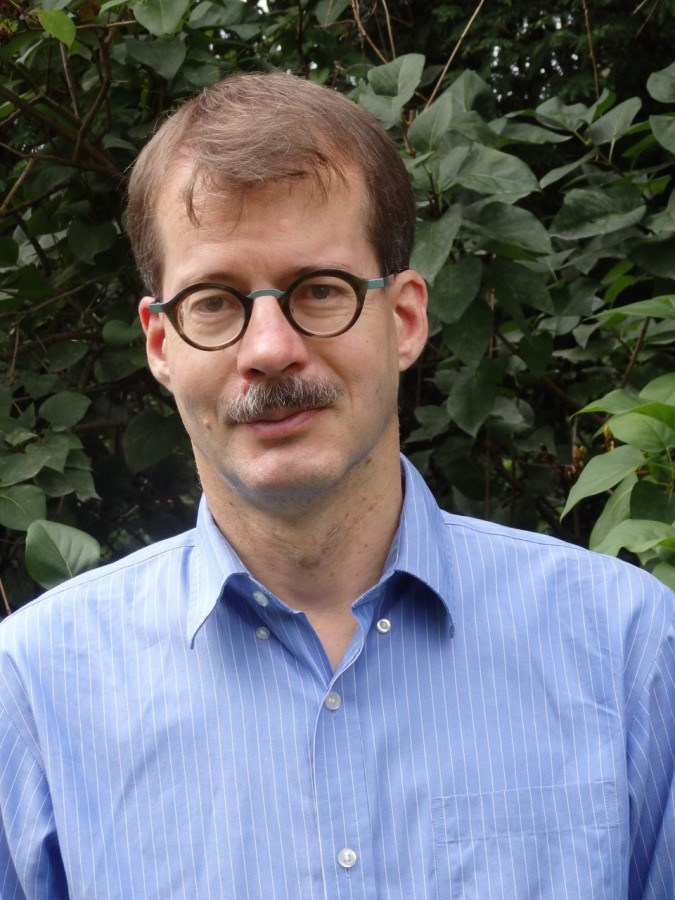
I ordered this book when it received some publicity in my alumni newsletter. I knew nothing about Assyria. My ancient history studies were confined to Greece, Rome and a bit about Egypt. it is written by Eckhart Frahm, who is professor of Assyriology in the Department of Eastern Languages and Civilizations at Yale. One of the world’s foremost experts on the Assyrian Empire, he is the author or coauthor of six books on Mesopotamian history and culture. He lives in New Haven, Connecticut.

Professor Eckhart Frahm

When this book arrived, I found that it was 420 pages long with 8 pages of colour photographs and 5 pages of maps. In addition, there are 55 pages of footnotes and a 20 page index. I thought, how am I going to get through this. I haven’t read a history book in about 70 years. But I soon found that Professor Frahm’s enthusiasm for his subject is quite infections. The book is written in the tone of a mystery which has been solved.

Professor Frahm divides the history of Assyria into three periods. The Old Assyrian period beginning is about 2000 BCE after the town of Ashur (in what is now Iraq) and its god of the same name became politically independent. At that time it was ruled by a popular assembly and a dynasty of hereditary leaders. In about 1700 BCE, Ashur went into a period of decline which lasted until the 14th century when Ashur got back on its feet and became a territorial state eager to expand by military means. This marked the beginning of the Middle Assyrian period. Assyria was now a full-fledged monarchy and began to see itself as equal to Babylonia and Egypt. In about 1100 BCE, Assyria suffered a number of set-backs including climate change, migration and internal tensions. The Neo-Assyrian period began in 934 BCE when a series of ruthless and competent kings took over the Assyrian throne. In 671 BCE, King Esarhaddon and his army conquered Egypt. This made Assyria a fully fledged empire including northeast Africa, the eastern Mediterranean, stretching east into western Iran, north to Anatolia and south to the Persian Gulf. But only half a century after Esarhaddon’s rule, Assyria collapsed and Ninevah, its capital, was destroyed by Babylonia.

This story is, of course, very much dependent on archaeological finds, and in particular, on thousands of clay cuneiform tablets which tell the details of what took place. These can be compared to what is contained in the Hebrew Bible. The cuneiform tablets deal with everything from the economic details to who was appointed the king’s cup bearer. There are records of nearly every Assyrian king over a period of nearly two thousand years. The culture, politics, economics and trade, agriculture, the military capabilities, the vassal states, the languages, literature and arts, as well as the daily life of ordinary people are covered. The Assyrian political model became a guide for the Babylonian and Persian Empires which followed. There is also a discussion about the damage done to monuments and artifacts by ISIS.

For me, the only short coming about the book is the maps, which do not relate the ancient cities to modern geography.

Assyria is a fascinating and enlightening read.

Review: How to Slay a Dragon

I saw some publicity about this book before it was published, and I ordered it. The dragon in the title refers to Vladimir Putin and the Kremlin, generally, and the author is Mikhail Khordorkovsky, who is a Russian oligarch who spent ten years in prison for criticising Putin. I decided it had to be a good read.

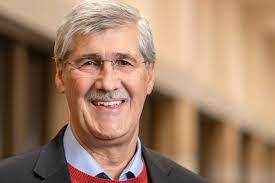
Mikhail Khordorkovsky

Khordorkovsky was born in Moscow in 1963 to a Jewish father and an Orthodox Christian mother, both his parents were engineers. He graduated with a degree in chemical engineering in 1986. As a young man, he was a fervent patriot, a committed communist and well introduced in the Soviet apparatus. In 1988 he founded a private bank and was a financial advisor to Boris Yeltsin. In the early 1990’s, he took advantage of runaway inflation to make a fortune in currency trading. In the mid 1990’s he bought 78% of the shares of Yukos, an oil conglomerate for 318 million dollars. (The shares were worth 5 billion dollars.) By 2003, the shares were worth $16 billion, and Khordorkovsky was the richest man in Russia. That same year, during a television appearance with Putin, he criticised the endemic corruption in Russia. He was then arrested for tax fraud and in 2005 he was sentenced to nine years in prison. Meanwhile, Yukos lost most of its value and was acquired by Rosneft, a state-owned company. In 2010, he was convicted of embezzlement and money laundering and his sentence was extended to 2017. Most independent observers, including Amnesty International, consider Khordorkovsky to be a prisoner of conscience.In prison he wrote of the need to “turn left” and adopt more liberal views in Russian governance, and he engaged in several hunger strikes for the benefit of fellow celebrity prisoners. In July 2014, the Permanent Court of Arbitration in The Hague ruled that the Russian government deliberately bankrupted Yukos to seize its assets and ordered it to reimburse Yukos shareholders a sum of approximately $50 billion. No such payments have been made. On 20 September 2014, Khodorkovsky officially relaunched the Open Russia movement , with a live teleconference broadcast with pro-democracy opposition and civil society activist groups in several Russian cities.  According to media reports around the time of the launch, Open Russia was intended to unite pro-European Russians in an attempt to challenge Putin’s grip on power. Khodorkovsky said the organization would promote independent media, political education, the rule of law, support for activists and journalists, free and fair elections and a program to reform Russia’s law enforcement and justice system. He has also said that the power should be shifted from Putin to parliament and the judiciary. He lives in London.

In How to Slay a Dragon, Khodorkovsky does not really address his ‘How to’ question except to suggest that it may happen from peaceful protest or uprising, what he calls a ‘revolution’. He is also vague about any role he might have in a future Russian government; he insists that he just wants to argue the case for a European style government in Russia. Nonetheless, it is clear that one doesn’t write a book as clear, comprehensive and as well argued at this one without having political ambitions. If it were up to me, I would put him in a high office. The strength of this book lies in the thoroughness of its coverage of the possibilities of government: empire vs nation state; superpower vs national interest; democracy vs autocracy; monopoly vs competition; how much freedom of speech; left or right inclination; justice vs mercy; parliamentary vs presidential republic. Khodorkovsky comes down on the liberal side of the available choices, and he is clear that Putin must go, Russia must change and victory should belong to Ukraine. The author makes these choices based on what is best for Russia, and he argues each case from the perspective of how the Russian culture is now, how it was historically, and how it should be for Russia’s and the world’s benefit. His knowledge of the details of Russian history is impressive. A very good read.

What Is a Short Story?

The website Blurb has a post with this title which I found interesting because I am currently writing a collection of short stories set in America. The author of this ‘blurb’ is not identified, and it is not dated.

“Compared to novels, short stories often get overlooked as an art form, but these singular works of fiction deserve a closer look. Short stories give readers all the compelling characters, drama, and descriptive language of great fiction but in a truly compact package.

So what is the secret behind those potent, carefully written gems? Here we tackle the definition of a short story, the key elements, examples, and some of the most common questions about short stories.

What is a short story?

A short story is a work of prose fiction that can be read in one sitting—usually between 20 minutes to an hour. There is no maximum length, but the average short story is 1,000 to 7,500 words, with some outliers reaching 10,000 or 15,000 words. At around 10 to 25 pages, that makes short stories much shorter than novels, with only a few approaching novella length. A piece of fiction shorter than 1,000 words is considered a “short short story” or “flash fiction,” and anything less than 300 words is rightfully called “microfiction.”

What are the key elements of a short story?

The setting of a short story is often simplified (one time and place), and one or two main characters may be introduced without full backstories. In this concise, concentrated format, every word and story detail has to work extra hard!

Short stories typically focus on a single plot instead of multiple subplots, as you might see in novels. Some stories follow a traditional narrative arc, with exposition (description) at the beginning, rising action, a climax (peak moment of conflict or action), and a resolution at the end. However, contemporary short fiction is more likely to begin in the middle of the action (in medias res), drawing readers right into a dramatic scene.

While short stories of the past often revolved around a central theme or moral lesson, today it is common to find stories with ambiguous endings. This type of unresolved story invites open-ended readings and suggests a more complex understanding of reality and human behavior.

The short story genre is well suited to experimentation in prose writing style and form, but most short story authors still work to create a distinct mood using classic literary devices (point of view, imagery, foreshadowing, metaphor, diction/word choice, tone, and sentence structure).

Short stories have one or two main characters

What is the history of the short story?

Short-form storytelling can be traced back to ancient legends, mythology, folklore, and fables found in communities all over the world. Some of these stories existed in written form, but many were passed down through oral traditions. By the 14th century, the most well-known stories included One Thousand and One Nights (Middle Eastern folk tales by multiple authors, later known as Arabian Nights) and Canterbury Tales (by Geoffrey Chaucer).

It wasn’t until the early 19th century that short story collections by individual authors appeared more regularly in print. First, it was the publication of the Brothers Grimm fairy tales, then Edgar Allen Poe’s Gothic fiction, and eventually, stories by Anton Chekhov, who is often credited as a founder of the modern short story.

The popularity of short stories grew along with the surge of print magazines and journals. Newspaper and magazine editors began publishing stories as entertainment, creating a demand for short, plot-driven narratives with mass appeal. By the early 1900s, The Atlantic MonthlyThe New Yorker, and Harper’s Magazine were paying good money for short stories that showed more literary techniques. That golden era of publishing gave rise to the short story as we know it today.

What are the different types of short stories?

Short stories come in all kinds of categories: action, adventure, biography, comedy, crime, detective, drama, dystopia, fable, fantasy, history, horror, mystery, philosophy, politics, romance, satire, science fiction, supernatural, thriller, tragedy, and Western. Here are some popular types of short stories, literary styles, and authors associated with them:  

  • Fable: A tale that provides a moral lesson, often using animals, mythical creatures, forces of nature, or inanimate objects to come to life (Brothers Grimm, Aesop)
  • Flash fiction: A story between 5 to 2,000 words that lacks traditional plot structure or character development and is often characterized by a surprise or twist of fate (Lydia Davis)
  • Mini saga: A type of micro-fiction using exactly 50 words (!) to tell a story
  • Vignette: A descriptive scene or defining moment that does not contain a complete plot or narrative but reveals an important detail about a character or idea (Sandra Cisneros)
  • Modernism: Experimenting with narrative form, style, and chronology (inner monologues, stream of consciousness) to capture the experience of an individual (James Joyce, Virginia Woolf)
  • Postmodernism: Using fragmentation, paradox, or unreliable narrators to explore the relationship between the author, reader, and text (Donald Barthelme, Jorge Luis Borges)
  • Magical realism: Combining realistic narrative or setting with elements of surrealism, dreams, or fantasy (Gabriel García Márquez)
  • Minimalism: Writing characterized by brevity, straightforward language, and a lack of plot resolutions (Raymond Carver, Amy Hempel)”

I don’t agree that the above list represents an inclusive list of ‘popular types of short stories’. The stories I write tend to be either plot or character driven. It is the length of the story (10 to 12 pages) which is challenging; there is only space for essential description, dialogue must be to the point, and action tends to be terse and clear. It is possible to inject tone through the language used by the narrator and the characters.

For me, the most important challenge is inventing new stories. I’ll need at least 25 stories, and at the moment, I’m only half way finished. I do rely on personal experiences, or stories which I’ve heard about which strike my fancy. On several occasions, I’ve started a story, realised that I wasn’t enthusiastic about it, and deleted it. The experience of writing a short story in quite intense compared to writing a novel.

Use of Crying

Benjamin Perry has an article on Writer’s Digest dated May 25, 2023 on how crying can shape a story and a character. His analysis strikes me as particularly useful to writers.

Benjamin Perry is a minister at Middle Church and an award-winning writer whose work has appeared in outlets like The Washington PostSlateSojourners, and Bustle. He has a degree in psychology from SUNY Geneseo and an MDiv from Union Theological Seminary.

Mr Perry says, “Why do characters cry? At face value, it’s an easy question: They cry because people cry. Authors want their creations to feel life-like, so just as characters share our laughter and struggle, our hopes and wild dreaming, they must share our weeping, too. But tears, like any action, can feel authentic or forced. When crying is handled poorly it can feel incidental at best and, at worst, a disingenuous attempt to make the reader feel something that the writer has not earned. However, when tears are artfully woven into the narrative, they can provide unparalleled emotional complexity and catharsis for the reader.

“In the two years I spent writing Cry, Baby: Why Our Tears Matter—a nonfiction book about the science and social ethics of crying—I was particularly attuned to how authors portrayed weeping in the fictional books I read. The book devotes an entire chapter to the way tears function in novels, myths, and sacred texts, but here I’ll condense a few of the bigger lessons I learned about how to effectively portray sobbing in a story.

1. Crying Isn’t Just About Sadness

“A common pitfall I see is writers only linking tears to sorrow. Obviously, sadness is a significant reason why people cry, but—even when it’s a principal cause—real emotions are usually more layered and multivalent. Often, it’s not just the sadness that makes our eyes well up, it’s frustration with our situation, anger at unjust circumstances, our longing for something different.

“There’s a scene in Torrey Peters’ wonderful novel Detransition, Baby where one of the main characters sits weeping on the floor of her ex-partner’s closet. Certainly, loss from the breakup is part of why she’s crying. But what truly gives the scene its power is how that loss mingles with her fragile hope about the possibility of becoming a mother—and the anger she feels about receiving what she longs for from someone she feels betrayed her. If crying is used as lazy shorthand for “sad,” we lose that emotional richness.

2. Weeping Helps to Cross a Threshold

“Crying is startlingly effective as an action to bring a character into a new place—either physically or in their heart. One of the most famous examples of this are the tears that Alice weeps when entering wonderland. Growing giant, she weeps a sea into which she later becomes literally awash. She must travel through that soggy morass to enter the door to a different world, a striking metaphor for the character’s emotional journey.

3. Link Tears to Transformation

“While tears are often connected to a particular emotion (anger, pride, joy, etc.), they’re also extremely effective to show how a character is changing or has changed. The archetypal example of this, for me, is Ebenezer Scrooge. Throughout A Christmas Carol, Charles Dickens punctuates Scrooge’s ghostly visions with frequent tears, to show how the experience is changing him. This all culminates on Christmas morning when Scrooge leaps from his bed, “laughing and crying in the same breath,” upon learning that there is still time for him to choose a different future.

4. Crying Shouldn’t Only Happen Where You Expect

“Because of social forces that shape who is more comfortable crying openly, there are many cultural misconceptions about crying. Men, for example, are far less frequently depicted crying in our stories. (And the absence of those portrayals is likely part of why so many men only feel comfortable crying in private.) There is so much power in subverting these expectations!

“It’s not a book, but one of my favorite recent depictions of masculinity is the titular character in Ted Lasso. The show follows an ebullient soccer coach who motivates his characters through praise and kindness. Part of what makes the character so vibrant, however, is the way he’s shown weeping in private moments—often literally in the dark. It’s the tension between the public joy and quiet sorrow that gives Ted so much pathos.

5. There Are Many Types of Tears

“We cry for so many reasons: Awe at the majesty of a forest; pride at accomplishing something long-awaited; confusion when something happens that we don’t expect; even cunning tears wielded to deceive. Part of the beauty and mystery of tears comes from the way that they refract the fullness of our humanity. So, embrace that complexity!

“The more you’re able to use tears in multifaceted ways, the nearer they will strike reality—and the more your reader will resonate with what’s on the page. Similarly, there are lots of ways we cry: a single glimmering tear, a silent stream, or the howling sorrow of full, body wracking sobs. Matching physical embodiment to the narrative event will cultivate realism, helping your characters come alive.”

Endings Matter

In Harry Bingham’s latest email, he discusses the importance of the ending of a novel.

“I just realised that I write quite often about beginning a novel, and not all that often about ending it.

And yes: beginnings are important. If you don’t get your reader onto the story-train in that opening chapter, you’ve basically lost the game before it’s really started.

Endings matter at least as much as beginnings and the reason I don’t talk about them much is simply that endings mostly write themselves.

I don’t know about your experience, but my endings generally pass in a rush. It’s as though the entirety of the preceding novel is there to allow me to write the final chunk in a blaze of understanding and joy.

The understanding is: I know my characters. I know how all my little plot intricacies need to play out. I know what the grand finale needs to deliver. The prior 90,000 words involved me figuring those things out. The last 20,000 are my reward.

The joy is partly the ease of writing. But it’s also the joy of completing the arc. It’s like writing one long punchline, where you already know that the joke is going to land. I’ve certainly had some spectacularly happy writing sessions that haven’t involved endings. (Giving Fiona hypothermia in the snows of Love Story, with Murders was joyous. And I did enjoy burying her underground in The Dead House.) But mostly – the writing sessions I remember with most pleasure involve endings. Words flowing and the text satisfying.

So maybe you don’t need help with the endings. I think there’s an argument that if the preceding story has worked properly, the ending should just fall into place. But here, for what it’s worth, is a checklist to keep at hand …

Exterior drama

Have you properly completed your exterior drama? In the kind of books I write, that’ll typically involve some good splash of violence – a sinking boat, a fight, a burning building. But that’s not necessary. In Pride and Prejudice, the exterior ‘drama’ involves a naïve girl eloping with Mr Wrong and the Romantic Hero doing (off-screen) what Romantic Heroes are there to do. The off-screen quality of that drama is probably a little underweight for a modern audience, but so long as you have some dramatic action that’s well suited to your genre and readership, you’re fine.

Interior drama

The flipside of the exterior action needs to be some serious internal pressure. In a standalone novel, that pressure needs to have the sense of being pivotal – life-altering, life-defining. In a series novel, you can’t quite get away with a new life-defining moment with every instalment, but the stakes still need to be high. Series characters take a bit of a battering as a result. (I once did an ‘interview’ with Fiona, in which she grumped at me for giving her a rough time. Reading it back, I have to say that she’s in the right. I’ll never tell her that though.)

Romantic relationship

Most books, not all, will involve a romantic relationship. And – of course – the pressures of your grand finale are also pressures that test and define that relationship. You definitely don’t have to kiss and get married at the end of every book. I’ve ended a book with my protagonist ending what had seemed like a strong and constructive relationship. But when your character enters the furnaces of your ending, everything is tested, everything will either prove itself durable or fallible. The relationship can’t simply be as it was before. (Again, series characters need to play those things differently, but ‘differently’ doesn’t mean you can just ignore the issue.)

Other key friendships / relationships

Of course, there are a ton of other relationships that build up over the course of a book. Those might be best-friend type relationships, or children, or parents. They can (importantly) be office colleagues, which sounds dull but they can matter too. My detective’s relationship with her boss and other colleagues is just quite central to the architecture of her life and the books. These relationships too don’t need profound alteration necessarily, but they need some token of ending. A boss hugging your character (when he/she never normally would), or talking about a promotion, or offering a holiday – those things sound trivial, but they can define something important about everyone’s relationship to what has just happened. You don’t necessarily need much here. Half a page? A page? That might be ample. But if you book misses that page, it’ll never quite satisfy as it ought to.

Mystery resolution

Most books – not just crime novels – will often have some kind of mystery at the heart. That mystery will probably be unfolded in your grand action-climax, but that won’t always be true. Modern fiction has (rightly) moved away from that moustache-twirling final chapter where the Great Detective reveals the mystery to a completely static audience. But it’ll often be the case that little questions and niggles remain. Those things need to be addressed. It’s even OK if they’re addressed by saying, “We’ll never know exactly how / why / who X.” But you need to resolve your mysteries or acknowledge that you haven’t.

Movement

And, since we’ve just dissed static and moustache-twirling final chapters, I’d add that maintaining some kind of motion still matters at the end. Just as you’ll want to move settings fairly frequently in your middle chapters, I think you’ll want to do the same at the end. Physical motion is still a good way to convey story motion.

The closing shot

And –

There’s a theory in film-structure that the opening shot should show the ‘Before’ state of a character and the closing shot should show the ‘After’ – where the before/after vignettes somehow encapsulate the alteration brought about by the story. So to take the (vastly excellent) Miss Congeniality movie, the opening shot shows Sandra Bullock as goofy, unkempt, and without close female friends. The closing shot shows her kempt, still her, but now with close female friends. That’s the key transition in the movie.

I don’t quite like the mechanical nature of these movie plotting guides, but I do think it’s worth reflecting on the closing shot. What are you wanting to show? What’s the image of your character that you want to leave with your reader? In one of my books, a girl had been long separated from her father. Fiona’s last act in the book is to rejoin the two. She’s not physically present when the two meet – she’s set up the meeting, but remains in a car outside, watching. And that maybe is just the right tone for the book. Fiona plays this almost Christ-like role – suffering for others, undoing wrongs – but nevertheless remains on the outside of ordinary human society. That point isn’t made in any direct way, but it doesn’t have to be. An indirect point lingers longer than one made more crudely.

Review: A Message from Ukraine

I bought a copy of Volodymyr Zelensky’s collected speeches at an airport bookshop in December. It’s a small book, just the size to wedge into a suitcase, 118 pages at £9.99, of which President Zelensky’s personal income from the book (at least £0.60 per copy) will go to his charity, United24, in support of Ukraine.

I’ve been impressed by Zelensky: his absolute commitment to his country, his ability to lead his people in their struggle against a much larger, heartless, autocratic and immoral aggressor, his skill at coaching Western democracies to come to his aid, but perhaps most of all for his restraint in not criticising donors who pinch pennies. It would be so tempting to call Macron out as a egotistical, French, Putin-loving, tightwad. But whatever he may have thought of Macron, he kept it pretty much to himself. And now, low and behold, there is a transformation: France is backing a military victory for Ukraine and is going to send Ukraine light tanks, prompting Germany to do the same and adding Patriot missile batteries.

Zelensky’s Wikipedia page reads: “Born to a Ukrainian Jewish family, Zelenskyy (in Ukrainian, his surname is spelt with two y’s) grew up as a native Russian speaker in Kryvyi Rih, a major city in central Ukraine. Prior to his acting career, he obtained a degree in law. He then pursued a career in comedy and created the production company Kvartal 95, which produced films, cartoons, and TV shows including the TV series Servant of the People, in which Zelenskyy played the role of the Ukrainian president. The series aired from 2015 to 2019 and was immensely popular. A political party bearing the same name as the television show was created in March 2018 by employees of Kvartal 95.

Zelenskyy announced his candidacy in the 2019 presidential election on the evening of 31 December 2018, alongside the New Year’s Eve address of then-president Petro Poroshenko on TV. A political outsider, he had already become one of the frontrunners in opinion polls for the election. He won the election with 73.23 percent of the vote in the second round, defeating Poroshenko. He has positioned himself as an anti-establishment and anti-corruption figure. As president, Zelenskyy has been a proponent of e-government and of unity between the Ukrainian and Russian speaking parts of the country’s population. His communication style makes extensive use of social media.  His party won a landslide victory in the snap legislative election held shortly after his inauguration as president. During the first two years of his administration, Zelenskyy oversaw the lifting of legal immunity for members of parliament, the country’s response to the COVID-19 pandemic and subsequent economic recession, and some limited progress in tackling corruption in Ukraine.

During his presidential campaign, Zelenskyy promised to end Ukraine’s protracted conflict with Russia, and he has attempted to engage in dialogue with Russian president Putin. Zelenskyy’s strategy during the Russian military buildup was to calm the Ukrainian populace and assure the international community that Ukraine was not seeking to retaliate. He initially distanced himself from warnings of an imminent war, while also calling for security guarantees and military support from NATO to “withstand” the threat. After the start of the invasion, Zelenskyy declared martial law across Ukraine and a general mobilisation of the armed forces. His leadership during the crisis has won him widespread international praise, and he has been described as a symbol of the Ukrainian resistance. Zelenskyy was named the Time person of the Year for 2022 and opinion polls in Ukraine have ranked him as Ukraine’s greatest president.”

The speeches – there are 16 of them – were selected by Zelensky for the book, and range from his inaugural address to the Ukrainian parliament to Ukrainian Independence Day on 24 August 2022. There is a useful preface by Arkady Ostrovsky, the Russian and Eastern Europe editor of the Economist. This is followed by an introduction by Zelensky in which he reflects on changing the past.

His speeches are focused on several themes. Ukraine is a free, sovereign, independent country. Russia is engaged in an illegal and immoral invasion. Russia must be stopped because ultimately, it is at war with Western democracy, its values and principles. If Ukraine loses the war, Europe itself will be next. Ukraine can and must win this war. It will end when all the Russian occupiers are gone.

The language and the images are highly motivational. This is an excellent, two-hour read.

Are Publishers Becoming Censors?

There is an article by Anita Singh in Yesterday’s Daily Telegraph in which Chimamanda Ngozi Adichie is quoted as saying that it is unlikely that Salman Rushdie’s novel The Satanic Verses would have been published had Rushdie written it today. Adichie goes on to say that it is unlikely that Rushdie would have decided to write it today.

Chimamanda Ngozi Adichie was born in Enugu, Nigeria in 1977. She grew up on the campus of the University of Nigeria, Nsukka, where her father was a professor and her mother was the first female Registrar. She studied medicine for a year at Nsukka and then left for the US at the age of 19 to continue her education on a different path. She graduated summa cum laude from Eastern Connecticut State University with a degree in Communication and Political Science. She has a Master’s Degree in Creative Writing from Johns Hopkins University and a Master of Arts degree in African History from Yale University. Her first novel, Purple Hibiscus (2003), won the Commonwealth Writers’ Prize, and her second novel, Half of a Yellow Sun (2006), won the Orange Prize. Her 2013 novel Americanah won the US National Book Critics Circle Award. Her most recent work, Notes On Grief, an essay about losing her father, was published in 2021. She was named one of TIME Magazine’s 100 Most Influential People in the World in 2015. In 2017, Fortune Magazine named her one of the World’s 50 Greatest Leaders. She is a member of both the American Academy of Arts and Letters and the American Academy of Arts and Sciences.

Chimamanda Ngozi Adichie

The article says, “In the first of this year’s BBC Radio 4 Reith Lectures, Ngozi Adichie spoke about freedom of speech.

She said: “Here is a question I’ve been thinking about: would Rushdie’s novel be published today? Probably not. Would it even be written? Possibly not.

“There are writers like Rushdie who want to write novels about sensitive subjects, but are held back by the spectre of social censure.

“Literature is increasingly viewed through ideological rather than artistic lenses. Nothing demonstrates this better than the recent phenomenon of ‘sensitivity readers’ in the world of publishing, people whose job it is to cleanse unpublished manuscripts of potentially offensive words.”

Ngozi Adichie said that publishers are also wary of committing “secular blasphemy”.

She claimed that the issue went far beyond the publishing world, with young people caught in an “epidemic of self-censorship” because they are too afraid of being cancelled.

The author faced her own backlash in 2017 after stating in an interview: “When people talk about, ‘Are trans women women?’ my feeling is [that] trans women are trans women.”

In her lecture, Ngozi Adichie said: “We now live in broad settled ideological tribes. Our tribes demand from us a devotion to orthodoxy and they abide not reason, but faith.

“Many young people are growing up in this cauldron afraid to ask questions for fear of asking the wrong questions. And so they practise an exquisite kind of self-censorship. Even if they believe something to be true or important, they do not say so because they should not say so.”

Ngozi Adichie said the alternative to this “epidemic” of self-censorship was people stating their beliefs and as a result facing a “terrible” online backlash of “ugly personal insults, putting addresses of homes and children’s schools online, trying to make people lose their jobs”.

She said: “To anyone who thinks, ‘Well, some people who have said terrible things deserve it,’: no. Nobody deserves it. It is unconscionable barbarism.

“It is a virtual vigilante action whose aim is not just to silence the person who has spoken but to create a vengeful atmosphere that deters others from speaking. There is something honest about an authoritarianism that recognises itself to be what it is.

“Such a system is easier to challenge because the battle lines are clear. But this new social censure demands consensus while being wilfully blind to its own tyranny. I think it portends the death of curiosity, the death of learning and the death of creativity.”

Ngozi Adichie called for a raising of standards on social media, and reforms including the removal of anonymous accounts.

She suggested that “opinion sharers, political and cultural leaders, editors [and] social media influencers” across the political spectrum should form “a coalition of the reasonable” to moderate extreme speech.

I agree with Ngozi Adichie that social media needs drastic reform to stop harmful misinformation, libel and threats. She seems to believe that the ‘tech’ owners of the social media platforms will not regulate properly because of the cost. She is right, but the cavalry is coming in two regiments. One regiment is government regulation and legislation which is starting to be announced and enacted. This will say ‘reform or pay billions’ and if social media platforms want of survive, they must change their business models. The other regiment is the digital advertisers, who, as the defunding of Twitter shows, do not want to be a part of their customers’ misery.

Publishers and authors are different kinds of problems. Publishers have historically had to navigate a fine line between capturing the public interest on the one hand and not causing public outrage on the other. Some authors face a similar set of choices. But neither publisher nor author has an incentive to lie or cover up the truth. On the contrary.

It seems to me that The Satanic Verses is a special case that has nothing to do with current truths or falsehoods. Most Muslims would regard passages in Verses as blasphemous, though is seems doubtful that Rushdie actually intended such severe criticism of Islam. To me, it seems that he intended the dream sequences featuring Mohammad (the Messenger), the polytheistic deities, the devil and the Prophet’s companion as a demonstration of how absolutist systems can go horribly wrong – one of the themes of the book. But the author framed the example with fictional characters and action which are completely contrary to Islam.

In September 2012, Rushdie expressed doubt that The Satanic Verses would be published today because of a climate of “fear and nervousness”. I agree that it wouldn’t be published even today, in 2022, but I wouldn’t attribute the decision to ‘fear and nervousness’. Today, most publishers would look at the manuscript and think, Muslims won’t like it and there will be mass protests. If he wants us to publish it, the dream sequences have to go.

You can call it the ‘sensitivity reader effect’, but really it’s a question about what’s good for the business.

Faith, Law & Writing

On Writer’s Digest (16-04-22), bestselling author Robert Whitlow talks about how he combines writing what he knows with writing what he’s passion about—faith and law—and how his characters get to that crossroad.

Robert Whitlow

Robert Whitlow is a film-maker and a best-selling author of fifteen legal thrillers. He is also a contributor to a short story The Rescuers, a story included in the book What The Wind Picked Up by The ChiLibris Ring. In 2001, he won the Christy Award for Contemporary Fiction, for his novel The Trial.

Mr Whitlow says, ” My newest novel, Relative Justice, sits squarely in the middle of the crossroads of faith, law, and writing. Well, maybe faith and law. The characters leave the writing part to me. But the journey referred to in the title of this article is often lived out by the fictitious people who inhabit the pages of the stories I write. How do my characters get to this crossroads? What are the rewards of the journey?

Let’s start with the law, not faith. In the real world, ethical attorneys (and the vast majority of lawyers I’ve known over the past 43 years as an attorney are ethical) don’t knowingly misrepresent the facts or the law. They strongly advocate for their client’s recollection of what took place and why the law should be applied in a certain way, but they don’t make up facts or evidence to deceive a jury or mislead the court. When writing about the law, believability of character is linked to accurate portrayal of the legal process.

One of the axioms repeated countless times at writer’s conferences is “write what you know.” Knowledge empowers creativity. By writing based on knowledge, an author can craft a story with nuance, texture, and freedom from stereotypes. I’m from the South. I’ve lived my entire life in Georgia, South Carolina, or North Carolina. My professional career has been spent as an attorney. I write southern, legal dramas, and I populate my novels with people drawn from the cultural soup I’ve eaten since I was a small child.

So, when writing a novel containing legal elements, I enter the creative arena with an awareness about the world of the law—trials, investigation, depositions, motions, client relationships, law office politics, etc. That knowledge is obtained either by direct experience, observation, or research. These are all a form of “knowing.” Only then can a story achieve the acceptance awarded by a discerning reader. Courtroom time can be compressed, cross-examination shortened, and shocking surprises inserted. But no writer wants a reader to stop in the middle of a chapter and inwardly think, “There’s no way anything like that could happen in real life!” Such a tragic moment takes the reader out of the world the author created and boots them into a place from which he or she may never return.

Relative Justice is a story about a small, southern law practice consisting of family members preparing to battle a behemoth drug company. It’s a David versus Goliath scenario. Every lawyer has a few rocks in his sling, but do the attorneys in the novel have the right ammunition and skill needed to slay a giant? If not, is there another way to legally bring down an imposing enemy? That’s the law part of the journey.

A second, less common axiom for writers is “write what you’re passionate about.” That’s equally important. For me, that means incorporating faith into the lives of my characters. Not every character, but faith is strategically interwoven into the lives of some of the people who inhabit my books. And because the world of faith is someplace I “know,” based on experience, observation, and research, it’s possible to achieve the goal of credibility. The reader may not agree with a character’s expression of faith (neither do I in every instance), but what a character believes and how it impacts life can be told in a way that fits with the flow of the novel to the intersection for faith and writing.

To safely arrive at this intersection, it’s necessary to avoid writing what I call “a crusader novel,” a story in which the writer has an agenda or message that the characters can’t carry. This doesn’t just happen in the Christian fiction genre. There are crusader novels written about many topics: environmentalism, race relations, and political agendas, to name a few. A book is relegated to this category when the author’s opinion becomes intrusive (preachy) and overrides the capacity of the characters to convey the message in a legitimate way consistent with who they are.

There’s nothing wrong with characters having opinions about a topic. But the writer must provide them with the background, education, or life circumstances that can justify what they believe and express. In Relative Justice, there are characters with various levels of faith or no faith at all. I take them as I find them and discover where a faith journey might believably take them, just as it occurs all the time in real life.”

Review: The Moral Imagination

This non-fiction work, subtitled The Art and Soul of Building Peace, was recommended to me by a colleague who is a peacebuilder. Since I am a trustee (chairman) of the Peaceful Change initiative, a UK peacebuilding charity, I felt I should read it. The book confirms much of what I have learned on the subject, and it explains why so many in the general public (including those who should know better) misunderstand it.

The author is John Paul Lederach, who is an American Professor of International Peacebuilding at Notre Dame University and a Distinguished Scholar at Eastern Mennonite University. He has a PhD in sociology from the University of Colorado. His academic work draws on his experience in the field as a mediator, negotiator, peacebuilding practitioner, trainer and consultant. At the international level, this has involved input into peace processes in Somalia, Northern Ireland, Nicaragua, Columbia and Nepal.  He has written widely on conflict resolution and mediation. He is a Mennonite Christian. He currently works for the foundation Humanity United.

John Paul Lederach

Lederach describes ‘Moral Imagination’ in terms of three parameters: an Awakening – the capacity to see things at a deeper level and beyond what initially meets the eye; a kind of Aesthetic Creativity which surpasses logic; and Transcendence, the refusal to be bound by the existing views of perceived reality. Having read the book, I would define Moral Imagination as: the application of God-given creativity, planned or accidental, so as to achieve a unique and valuable amelioration of a complex human problem. I say God-given, because its source is genuinely inspirational. Sometimes it is accidental – what Lederach refers to as serendipity. It is unique because every human situation is different. And it is rarely a ‘solution’ because complex human problems are almost never solved in one go.

Lederach says that there are four disciplines which are necessary for peacebuilding. These are relationship, paradoxical curiosity, creativity and risk. In peacebuilding it is essential to be able to visualise the complex web of relationships which make up any particular human society, because it is the dynamics of those relationships which can lead to conflicts. Paradoxical curiosity approaches social realities with a respect for complexity, a refusal resort to dualistic truths (e.g. good vs evil). Risk is the ability to step into the unknown without a guarantee of success or even safety.

Time is an important parameter in peacebuilding. Humanity has developed the capability of developing mechanisms and agreements for stopping violent conflict, but we have little capacity for building and sustaining a stable, peaceful society in an unstable environment. What is required for the latter task is the creation of a flexible, effective platform, which houses dynamic processes and patience.

An effective peacebuilder exhibits constructive pessimism in order to be aware of distrust in society, because distrust can be glossed over ignored, and violence will resume.

Lederach tells us that creativity in peacebuilding is more of an art than a technique. In this sense it is akin to writing haiku.

In terms of relationships, the peacebuilder must learn to think of them as a dynamic web which exists in all sorts of social spaces and which include unexpected interdependencies. Thoughtful, unhurried observation of this human web is essential.

Critical mass is not an effective test of numbers of people required to make a change successful, because the critical mass can override a vocal minority, and distrust is renewed. It is better to have a ‘yeast strategy’ in which small numbers of effective and trusted communicators become distributed throughout the society.

In modern, Western society we tend to think of time in the order of past, present, future. But in many societies, the past can lie ahead in the sense that the recent past, including the legacies of those recently deceased, can not only affect our futures, but our sense of who we are as a people and individuals. It is counterproductive in these societies to adopt a ‘forget the past’ solution. The past must be included in the future.

Finally, Lederach says that finding voice is an essential act in peacebuilding. Neglected members of society must also find their voices, and the peacebuilder him/herself must find their own, authentic voice, shaped by a sense of vulnerability and an appetite for risk.

Judging by the attitudes of many philanthropists, who view peacebuilding as a low return investment and one where achievements are difficult to measure, much of Lederach’s peacebuilding is not understood. What he is saying is that Moral Imagination Peacebuilding is the only way to achieve lasting peace in conflict-affected regions. Military solutions, mediated deals and other top-down solutions will ultimately unravel because they fail to address the underlying causes of the conflict. MIP takes time, patience, commitment and money, but the ultimate costs of continuing conflict are far greater.

This book should be read by every president, prime minister and secretary of state. And by those of us who wish for a more peaceful world.

Review: Freezing Order

I bought this book on a whim, knowing nothing about Bill Browder or his earlier best seller, Red Notice. Browder is an American-born, British financier who made his name and fortune in Russia after the collapse of the Soviet Union, when Russian companies were being privatised.

Bill Browder

Starting with $25 million in seed capital, he was able to grow Hermitage Capital to $4.5 billion in assets held. In 2005, Browder was blacklisted from Russia as a ‘threat to national security’. He claimed that his activist investor work was interfering in the flow of money between corrupt bureaucrats and their businessmen accomplices. In raids by corrupt Russian officials in 2007, the corporate seals of Hermitage were stolen, allowing the thieves to apply for and receive a corporate tax refund of £230 million. Remaining in Russia to look after Hermitage’s interests, Browder’s Russian lawyer, Sergei Magnitsky was arrested, charged with tax evasion and died in prison after mistreatment. In retaliation, Browder persuaded the US Congress to pass the Magnitsky Act, which provides for Russian human rights activists to be sanctioned. A similar act has been passed by the European Union and other countries. Browder testified that President Putin is “the biggest oligarch in Russia and the richest man in the world”, building a fortune by threatening Russian oligarchs and getting a 50% cut of their profits. He said, “I estimate that he has accumulated $200 billion of ill-gotten gains from these types of operations over his 17 years in power. He keeps his money in the West and all of his money in the West is potentially exposed to asset freezes and confiscation. Therefore, he has a significant and very personal interest in finding a way to get rid of the Magnitsky sanctions.”

The book covers the period 2008 to 2018, but it begins with Browder’s attempted arrest in Madrid in 2018 by Spanish police on a politically motivated Interpol arrest warrant which indicated that Browder was wanted in Moscow for ‘fraud’. At the time, he was in Madrid to meet with Spain’s top anti-corruption prosecutor. Through the rest of the fast-moving book, one is introduced to dozens of corrupt Russian officials and intermediaries, their actions and their photographs. There are many instances of Russian citizens who die under suspicious circumstances after becoming a threat to the official Russian line. One also meets the sleazy Western lawyers and intermediaries, who will do whatever Russia asks in exchange for a big payday. During his travels to testify and to promote the Magnitsky Act, Browder had to deal with constant interference, kidnapping threats, honey traps, defamation, threats to his family, and counter suits. Russian officials often turned the truth on its head to counter a threat. For example, a claim was made that Browder was actually the one who arranged the $230 million tax refund and took the money. Russian laws are ignored and contravened by officials.

As one reads the book, the reader feels that he is reliving what happened in real time. There is minute-to-minute detail of crucial events and the play of emotions.

After reading this book, and observing the events in Ukraine, I believe that the Kremlin and Putin are a major threat to Western democracy and the welfare of the Russian people.