US Supreme Court Rejects First Amendment Case

On July 6, Andrew Albanese reported In Publishers Weekly on a decision by the US Supreme Court that preserves protections for authors and journalists, but raises questions about the future of such protections.

US Supreme Court Justices

The case in question involves Guy Lawson’s 2015 book Arms and the Dudes: How Three Stoners from Miami Beach Became the Most Unlikely Gunrunners in History, the basis for the movie War Dogs.

In 2017, Shkelzen Berisha, the son of the former Prime Minister of Albania, sued Lawson and Simon & Schuster arguing that the book’s portrayal of his involvement in corrupt arms deals was defamatory. In December, 2018, a district court judge dismissed the lawsuit, holding that Berisha, as a “limited public figure,” failed to show “actual malice”.  In other words, by the standard set in the Supreme Court’s unanimous 1964 decision in New York Times v. Sullivan, Berisha failed to show that Lawson and S&S had published statements they knew to be false, or with “reckless disregard” as to whether or not they were false.

The 11th Circuit Court of Appeals unanimously affirmed the decision in September, 2020. And with the Supreme Court’s denial of Certioari last week the case is now over.

In a brief statement, S&S officials said they were gratified by the Supreme Court’s 7-2 ruling. “[The decision] affirms long held rights and protections for authors and journalists under the First Amendment and puts an end to a lawsuit that should never have been brought in the first place,” the statement reads.

But the biggest takeaway from the case may be that two of the court’s conservative justices apparently believe there should be more cases like Berisha’s.

In dissents that take aim more at today’s fractured media landscape than the merits of the case, Justices Thomas and Gorsuch question how well the standard articulated by the court in 1964 in Sullivan holds up today.

“What started in 1964 with a decision to tolerate the occasional falsehood to ensure robust reporting by a comparative handful of print and broadcast outlets has evolved into an ironclad subsidy for the publication of falsehoods by means and on a scale previously unimaginable,” Gorsuch writes. “If ensuring an informed democratic debate is the goal, how well do we serve that interest with rules that no longer merely tolerate but encourage falsehoods in quantities no one could have envisioned almost 60 years ago?”

While today’s media landscape is obviously different and challenging, the standard articulated in the New York Times v. Sullivan is widely regarded as a pillar of the American free press. Before the decision, handed down in March, 1964, public officials in southern states had effectively used the threat of libel and defamation actions against news organizations to suppress coverage of the civil rights movement. But the actual malice standard adopted by the court effectively mitigated the risk from costly defamation claims.

Gorsuch and Thomas are far from the only federal judges to urge a re-thinking of the Sullivan standard in recent years—though it is unclear from both dissents how the court’s intervention—as opposed to Congress’s—would alleviate the problems that have emerged in today’s media—a point Gorsuch acknowledged.

“I do not profess any sure answers. I am not even certain of all the questions we should be asking,” Gorsuch conceded in his dissent. “But given the momentous changes in the Nation’s media landscape since 1964, I cannot help but think the Court would profit from returning its attention, whether in this case or another, to a field so vital to the ‘safe deposit’ of our liberties.”

So, it seems to me that there will eventually be changes in the level of free speech protections now enjoyed by authors and journalists.
Review: The Pull of the Stars

As usual, I ran out of novels to read while on holiday in Sicily. I scoured the English shelves of the local bookstore and this time I found a winner: a novel by Emma Donoghue. The title, The Pull of the Stars did nothing for me but the back cover sounded promising: ‘Dublin1918 . . . unfamiliar flu . . . Best Novels of 2020 Daily Telegraph’.

According to the inside back cover, Emma Donoghue was born in Dublin in 1969 and was an Irish emigrant twice over, having spent eight years in Cambridge, England before moving to London, Ontario. She is best known for her novels, which range from the historical to the contemporary. Her international best seller Room, was the New York Times Best Book of 2010 and was shortlisted for the Booker, Commonwealth and Orange Prizes.

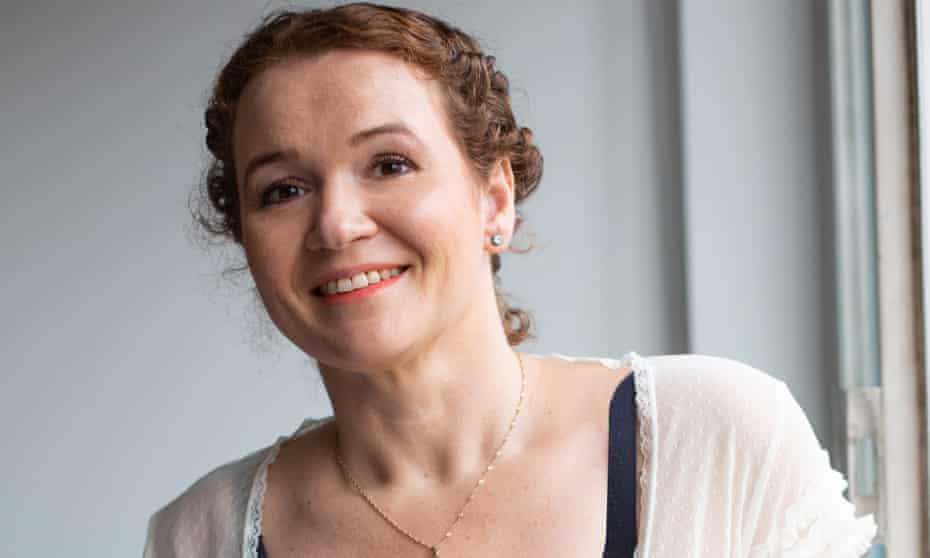
Emma Donohue

Nurse Julia Power, age 30, single, who lives with her younger brother, a shell-shocked casualty of the trenches of World War I, is the principal character. Through staff illness she has been assigned a tiny, three bed ward which is occupied by women in the late stages of pregnancy, and who have the fearsome disease which is taking so many lives. (The virus which causes the disease was not discovered until there was an electron microscope in 1935, and a vaccine was not developed until 1938.) There are two other supporting characters: a young volunteer, Bridie Sweeney, from a Dickensian home for orphaned children, and Doctor Kathleen Lynn, a real person, who violently opposed British rule, was Sinn Fein’s director of public health and founder of a free clinic on Charlemont Street. There is a constant flow of new patients onto the tiny ward. Julia and Bridie face seemingly every complication of pregnancy with the occasional help of Dr Lynn. Nurse and volunteer become attached under the continual life and death struggles they face. Bridie becomes ill with the flu and dies. Her loss for Julia (and the reader) is compensated partially by Julia’s spontaneous adoption of the newborn son of an impoverished woman who died of the flu.

This book is a magnificent piece of fiction. Julia, Bridie, Dr Lynn and all of their patients are real in their humanity and their flaws. One feels nearly suffocated in the tiny ward with it’s primitive medications and treatments. My hat is off to Ms Donohue for her compelling descriptions of early 20th century medication, the hospital culture, and the Dublin environment with its grinding poverty. From about page 30, the tension is unremitting and un-contrived. The reader becomes completely absorbed in this altogether different world a century ago, and its strange yet familiar problems.

I have just two comments about the book. The scene-setting which consumes the first thirty pages of the book lacks the powerful tension which engulfs the rest of the book. It is still very interesting reading; perhaps some foreshadowing would have helped increase the tension. When Bridie becomes ill during the last twenty pages, her death becomes a foregone conclusion and some of the tension disappears. It might have been better to introduce Bridie’s illness earlier with some doubtful symptoms and some denials. This could have intensified Bridie’s loss.

Review: Stakeholder Capitalism

I ordered this book some months ago when it first came out, intending to read it while I am in Sicily. It is one of the few non-fiction books I’ll read this year, and it is worth special mention.

It is written by Klaus Schwab who is the founder and executive chairman of the World Economic Forum, the International Organisation of Public-Private Cooperation, best known for its annual meeting in Davos, Switzerland.

Klaus Schwab

Mr Schwab makes the point that Shareholder Capitalism has failed. The form of capitalism which has been practiced throughout the Western World for the past fifty years is no longer fit for purpose. By focusing all the benefits of business on the owners of the business (the share holders), great injustices have been done to employees, the community, the general public, government and the planet.

In the first part of the book, he describes in some detail evidence against Shareholder Capitalism. The focus on giving shareholders nearly all the benefits has resulted in a shift in power away from labour unions and into the hands of management. Employee pay has stagnated, while executive pay has dramatically increased over the last half century. Communities have been devastated by the closure of local businesses and the relocation of the business overseas in order to improve profits for the shareholders. The general public has been injured by unregulated risk taking and non-competitive behaviour of businesses. Government has been unable to collect the taxes to which it would be entitled by tax avoidance schemes which benefit only shareholders. And insufficient attention has been paid to pollution as a cost saving which benefits only the shareholder.

Schwab argues that it is time to change our form of capitalism to one where the benefits are more fairly distributed, where employees have more of a say in their work and receive fairer compensation, where the needs of the community which houses the business are considered, where the government has a stronger regulatory role, and the life of the planet is given full attention.

This change, Schwab argues, can be brought about by repurposing companies so that they benefit their customers, their employees, society at large and their shareholders. He says, “in September 2020, the International Business Council of the World Economic Forum – comprising 140 of the largest global companies -presented the Stakeholder Capitalism Metrics. They are a core set of metrics and disclosures on the non-financial aspects of business performance, including variables such as greenhouse gas emissions, diversity, employee health and wellbeing.”

The book is well written and certainly persuasive. It is also timely. Although it is early days, I think that more attention should have been given to implementation of Stakeholder Capitalism. More examples of companies which have actually done it, and more about the actual metrics.

Left unsaid – likely for political reasons – is the application of stakeholder capitalism to the Chinese version of capitalism, where the main beneficiary is the Chinese Communist Party and its ideals.

The world would be a very different place if stakeholder capitalism were to be universally adopted.

Pessimistic (but Good)Advice

Harry Bingham, of Jericho Writers, in his email last week, had a rather sad story, and some good advice arising from the story. The key person in the story is Karen Jennings, the South African author.

Karen Jennings: ‘I finished the novel in 2017 and no one was interested.’
Karen Jennings

Harry said, “The Guardian newspaper ran an interview yesterday with a South African author, Karen Jennings.

“In one way, the article offers a standard literary tale. Roughly this: ‘Author writes book, this time about a lighthouse keeper and a refugee who washes up on his little island. Publisher buys book. Publisher publishes book. Book gets nominated for a major prize (in this case the Booker). Book increases its print run ten times over. Author suddenly starts to get a ton of positive attention. Big newspapers like the Guardian run flattering features. Life turns on its head.’

“You’ve already read a version of that story a million times, except that on this occasion there’s more honesty on view. The interview also tells us that Jennings finished the book in 2017. She didn’t (and doesn’t) have an agent. She found it very hard to get a publisher. When she did find one, (British micro press, Holland House), the team struggled to find anyone to endorse the book or give them a quote for the blurb. Prospects were so meagre that Holland House put out a print run of just five hundred copies (and it’s essentially impossible for anyone to make money at that level of sales.) When the book came out it was met, very largely, with silence.

“Loads of writers struggle to get an agent, struggle to get published, struggle to sell books, struggle to get that book noticed. That is pretty much the norm for our odd little industry. And, OK, on this occasion we’re talking about a micro press that is well used to dealing with small numbers. But the same phenomenon is common enough with the Big 5 houses as well. Yes, advances are generally larger and yes, sales expectations are consequently higher. But if your book gets a mediocre cover, it’ll die all the same. You don’t hear a lot about the books that just curl up and die, but there are a lot of them out there.

“This experience often calls for sacrifices. Karen Jennings is quoted as saying, ‘I’ve been really poor for a very long time. I don’t have much of a social life either. You know, I don’t have fancy clothes. I don’t have a car. I don’t have a house. I don’t have a career the way other people have.’

“Now that outcome, it seems to me, is optional. I urge writers – and I mean YOU – to look after your income sensibly. That mostly means: get a job and write in your spare time. Or marry someone rich. Or win the lottery or strike oil in your back yard. Please don’t make the mistake of looking to writing for your livelihood.

“There are a thousand books out there as good as Jennings’s. Most of those will just sell a few copies then be forgotten. It’s perfectly likely that Jennings’s book will perform decently, but not win the Booker Prize.

“Take a book that did win the Booker Prize: Julian Barnes’ The Sense of an Ending. That’s a major author winning a massive book prize – so it must be a great book, no? I mean, there can’t be any doubt about that, can there?

“Well, yes there can. Geoff Dyer, writing in the New York Times, commented: ‘This was not one of those years when the Man Booker Prize winner was laughably bad. No, any extreme expression of opinion about The Sense of an Ending feels inappropriate. It isn’t terrible, it is just so . . . average. It is averagely compelling (I finished it), involves an average amount of concentration and, if such a thing makes sense, is averagely well written.’

“Personally, I agree with Dyer. I think the book was obviously mediocre.

“So why did the book get so heavily praised? Well, the media likes to work with conventions – idées reçues, to use an older term. Once the media has formed an idea about a novelist (or, actually, an anything), it struggles to overturn or challenge that idea.

“Personally, I agree with Dyer. I think the book was obviously mediocre.

“So why did the book get so heavily praised? Well, the media likes to work with conventions – idées reçues, to use an older term. Once the media has formed an idea about a novelist (or, actually,

“So the Julian Barnes convention says, “Julian Barnes is a great novelist. Here he is writing about some Big and Important Topics. So this must be a Big and Important Book. Let’s say how great it is.” Easier to do that than to read the book and do some real critical thinking about it.

“Let’s summarise some of these thoughts.

“One: you can’t trust that excellence alone will bring you to national or international prominence. That may well not happen. Excellence is not enough.

“Two: you can’t rely on critics to determine the value of your book. For one thing, the critics are mostly unlikely to read or comment on your book. For another, what they say is often nonsense or a basket of conflicting opinions.

“Three: once an opinion has formed, that opinion is likely to hold like iron, no matter what the actual reality of the situation.

“It sets out the landscape for us as writers:

  • You need to enjoy the process of writing, because you may not earn money or fame.
  • You need to enjoy the process of publishing, for the same reason.
  • You need to trust your own inner assessment of the book, because you may not get any meaningful external commentary – and what you do get may be unhelpful anyway.

I think Harry makes a vital point: the reason we write is that we enjoy writing, not because we are seeking fame and fortune. If we start writing to achieve fame and fortune, we will almost certainly be disappointed.

Review: Of Human Bondage

Having never read any Somerset Maugham, I decided to read this one. Perhaps I would have been better advised to pick out one of his shorter novels – this one is exactly 700 pages – but as a semi-biographical novel, it gave me an insight into both his writing and his personality.

W Somerset Maugham

Maugham was born in the British embassy in Paris (and was therefore British) to the British lawyer, who handled the embassy’s legal affairs, and his wife. Both his parents died before he was ten and he was put into the care of his uncle, the vicar of Whitstable, Kent. He attended the King’s school in Canterbury, where his small stature and a stutter made him the butt of jokes by his contemporaries. He wrote steadily from the age of 15, and at 16 his uncle allowed him to study in Heidelberg, where he wrote his first book and had an affair with an Englishman ten years his elder. He returned to London, where, after a stint as an accountant, he studied medicine and was qualified as a doctor. In 1897, he published his first novel, Lisa of Lambeth, the immediate success of which persuaded him to abandon medicine and take up writing as a career. Maugham was particularly financially successful as a playwright, but he wrote short stories, travel books and a long list of novels. He was married in 1917 to Syrie Welcome, with whom he had a daughter in 1915. The marriage was unhappy, the couple separated, and Maugham lived most of the rest of his life on the French Riviera with a male partner. In 1962, Maugham sold a series of paintings which he had given to his daugher, Liza, who took him to court and won. The writer descended into mental illness, and unseemly vituperations which hurt his commercial image. He died in 1965.

Of Human Bondage is set in about 1900 and parallels Maugham’s real life until the protagonist, Philip Carey, becomes a qualified physician. As a nine-year-old, Philip is orphaned and put in the care of his uncle, the vicar of Blackstable. He is a shy, introverted boy, with club foot, who is harassed by his classmates at boarding school. Rather than accept a scholarship at Oxford, Philip goes to study art at Heidelberg University. In the company of an assortment of artistic friends, he discovers that he has little talent as an artist, and returns to London where he is an apprentice accountant for a brief spell before entering medical school. He meets Mildred a lower class waitress, who treats him with indifference, but he falls passionately in love with her. Mildred leaves Philip repeatedly for others, and descends into prostitution. While working at a hospital, Philip befriends a family man, Thorpe Athelny. Philip looses all his money on a failed investment and descends into abject poverty. He reconnects with Athelny who has an attractive but ordinary daughter, Sally. Sally and Philip admire each other, but do not profess love. Philip receives an inheritance from his uncle which allows him to finish medical school and be qualified. Sally fears she is pregnant. Philip decides to give up his dream of travelling the world to marry Sally. She tells him she is not pregnant, and that he is free to go. Philip decides to marry Sally and take up a post as a rural doctor.

Of Human Bondage is considered Somerset Maugham’s masterpiece. When it was issued (1915) it was criticized in both the the UK and the US. However, Theodore Dreiser, an influential American novelist and critic called it a work of genius and compared it to a Beethoven symphony. It has never been out of print since. Maugham himself was modest about his talent, saying that he was in the very first row of second class writers. In spite of its seven hundred page length, I found it calling me when I put it down. It is rich in characters, ideas, emotions and events. One has an almost constant desire to find out what happens next, and it is seldom what the reader anticipates. Maugham rarely ‘shows’; he ‘tells’, but most of his telling is about the intricate thought processes and feeling of the characters. In all their complexity they become knowable to the reader. Maugham derived the title from a passage in Ethics by Barch Spinoza: “The impotence of man to govern or restrain the emotions I call bondage, for a man who is under their control is not his own master … so that he is often forced to follow the worse, although he see the better before him.”

I have two criticisms of this novel. First, I find Philip’s passion for Mildred difficult to understand. She is unattractive, rude, selfish and fundamentally stupid. She should have been given one or two redeeming features. Second, the intricacies of Philip’s many friendships are, in only a few cases, contributing to the wealth of the novel. A modern editor would cut heavily in that area. Of Human Bondage has to be read as a great piece of historic fiction, not as a modern novel, which would be judged on today’s very competitive standards.

Can White Authors Write Black Characters?

There is an article on the HuffPost website by Lorraine Devon Wilke, dated 22 October 2017, with the title “Are White Authors Not Allowed To Tell Stories Involving Black Characters?” This interested me as I have recently written a novel in which a black billionaire is a principal character.

Author, artist, and cultural commentator, Lorraine Devon Wilke, shares her unique take on everything from the inflamed landscape of politics and evolving social mores, to the ever-changing influence of media, entertainment, and art. 

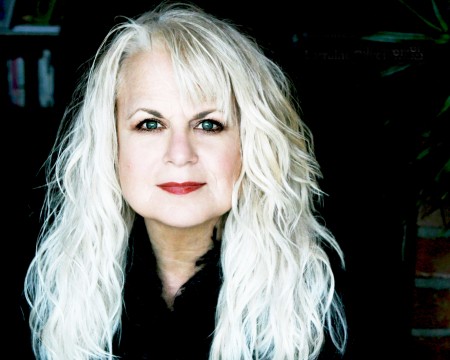
Lorraine Devon Wilke

Ms Wilke said, in part: “Storytellers are the chroniclers of our life and times. They memorialize history, dissect our complex and evolving world; they entertain and provoke and captivate. They are as diverse and eclectic as the characters they create and the stories they tell. It is their job to reflect who we are, what we experience, and what we can imagine. That’s a big canvas. It’s huge. And there’s no end to the variety of colors and hues that can be drawn upon it. Just as there is no end to the variety of artists weaving the tales drawn there.

Yet some believe there are rules to who gets to use which colors, who gets to draw outside the lines to tell stories that involve characters from different cultures. Some believe issues of race can only be voiced from within limited perspectives. Who gets to decide that? Who determines the answer to the title question?

I am a white author telling a story that involves black characters. This, as Anthony Horowitz, who’d been dissuaded from including a black character in one of his ten novels: was warned, is not considered “appropriate.” It’s seen as “patronizing.” Though, in following that paradigm, who, then, would be able to tell the story of an interracial relationship if neither race can write about the other? Personally, I find that to be madness, but I’ve now had agents from three different high-profile literary agencies specifically cite “appropriation” as their reasons for rejection:

  1. The first felt my “whiteness is kind of a problem,” she wrote: “This is a well written and serious novel; an issue-oriented novel that could not be more current… but there may be an issue of whose voice gets to represent race.”

2. The second asserted she couldn’t take it on because of “all the concerns about ‘cultural appropriation’ these days.”

3. The third felt the black male protagonist “didn’t sound black enough.” I won’t even parse that implication.

But the message was clear, at least from the point of view of these particular gatekeepers: white authors writing black characters are unmarketable. Beyond “inappropriate,” “these are brutal times in fiction and we’re not comfortable representing a book, no matter how good or worthy, in which that issue is present.”

How do we feel about that? As readers, writers, and consumers of cultural content?

I find it dangerous. I find it censuring. I find it condescending and discriminatory. I find any limitation to writers of any race to be the antithesis of art.

Industries, like the publishing industry, pendulate wildly as they attempt to transcend and reinvent, often without clarity about what’s next or what new turn culture might take while they’re trying to survive. So I get it. I get a literary agent telling me she “doesn’t have the courage” to take on a book that might stir controversy, that might garner commensurate cowardice from the publishers she’s trying to sell it to. It’s a business; she’s gotta make a living,

But if a book with black characters written by a white author is a “well written and serious novel; an issue-oriented novel that could not be more current,” and if that book — presented with fully-fleshed characters, with depth, sensitivity, and authentic reflections of all ethnicities involve — is rejected simply because it might trigger discomfort about “cultural appropriation,” what is the underlying message?

Literary discrimination. Artistic cowardice. Market segregation.

Is that really what we want from our artistic gatekeepers? Fear of controversy? Cultural timidity? The negation of an entire demographic of voices who dare to include diversity outside their own? Have we really come to a time of such hair-trigger sensitivity that we require our storytellers to limit their imaginations to only the race, creed and color they are?

Tell that to Harper Lee.

What Faulkner Had to Say About Writing

Amanda Patterson has a post on the Writer’s Write website on the ten comments William Faulkner made about writing.

Ms Patterson, on her Twitter site says, “I love books. I always carry two with me – one to write in and one to read.”

William Faulkner was an American writer, who died in 1962. He is a Nobel Prize winner who wrote primarily about the South. He offered plenty of advice to young writers in 1957 and 1958, when he was a writer-in-residence at the University of Virginia. His lectures and public talks were recorded and can heard at the university’s Faulkner audio archive. He was also interviewed extensively over the years.

William Faulkner
  1. Don’t be ‘a writer’ but instead be writing. Being ‘a writer’ means being stagnant. The act of writing shows movement, activity, life. When you stop moving, you’re dead. It’s never too soon to start writing, as soon as you learn to read. (The Daily Princetonian, 1958)
  2. I think it best to use as little dialect as possible because it confuses people who are not familiar with it. That nobody should let the character speak completely in his own vernacular. It’s best indicated by a few simple, sparse but recognisable touches. (From What’s the Good Word?)
  3. Read, read, read. Read everything—trash, classics, good and bad; see how they do it. When a carpenter learns his trade, he does so by observing. Read! You’ll absorb it. Write. If it’s good, you’ll find out. If it’s not, throw it out of the window. (The Western Review)
  4. I would say to get the character in your mind. Once he is in your mind, and he is right, and he’s true, then he does the work himself. All you need to do then is to trot along behind him and put down what he does and what he says… You’ve got to know the character. You’ve got to believe in him. You’ve got to feel that he is alive… After that, the business of putting him down on paper is mechanical. (From a University of Virginia graduate class in American fiction)
  5. [A good novelist] must never be satisfied with what he does. It never is as good as it can be done. Always dream and shoot higher than you know you can do. Don’t bother just to be better than your contemporaries or predecessors. Try to be better than yourself. (From an interview in Paris Review)
  6. The real truths come from human hearts. Don’t try to present your ideas to the reader. Instead, try to describe your characters as you see them. Take something from one person you know, something from another, and you yourself create a third person that people can look at and see something they understand. (The Daily Princetonian, 1958)
  7. For [writing] fiction the best age is from thirty-five to forty-five. Your fire is not all used up and you know more. Fiction is slower. For poetry the best age is from seventeen to twenty-six. Poetry writing is more like a skyrocket with all your fire condensed into one rocket.” (From an interview with The Western Review in 1947)
  8. A writer needs three things, experience, observation, and imagination—any two of which, at times any one of which—can supply the lack of the others. (From an interview in Paris Review)
  9. You can always find time to write. Anybody who says he can’t is living under false pretences. To that extent depend on inspiration. Don’t wait. When you have an inspiration put it down. Don’t wait until later and when you have more time and then try to recapture the mood and add flourishes. You can never recapture the mood with the vividness of its first impression. (From an interview with The Western Review in 1947)
  10. Probably any story that can’t be told in one sentence or at least one paragraph is not worth writing. (University of Virginia Q&A)

I think there are some very good points here. I particularly like his comments about bringing characters to life before writing about them. His comments about just trying to be better than yourself, and the one-sentence story make a lot of sense.

5 Pieces of Common Writing Advice You Should Absolutely Ignore

There is an article with this title written by Stephanie London on Writers Digest two days ago.

Originally from Australia, Stefanie lives in Toronto with her very own hero and is doing her best to travel the world. She frequently indulges in her passions for good coffee, lipstick, romance novels and anything zombie-related. She is a multi-award-wining USA Today bestselling author of contemporary romances and romantic comedies.

Photo credit:    Jimmy America   .
Stephanie London

Excerpts from her article are below.

“1. Show, don’t tell.

We’ve all heard the “moon glinting on broken glass” example of how to show rather than tell. However, this advice often seems to be applied too rigidly. Telling isn’t bad. Telling provides clarity and certainty.

One area where I find telling to be necessary is your character’s goal. In this instance, you can first tell and then show. It’s actually the layering of telling and showing which makes for a powerful story. However, if we spend the whole story showing your character working toward something without ever having the character acknowledging in uncertain terms, the attainment of that goal won’t have the same impact. Or worse, the reader may not actually know what the goal is or why the character wants to achieve it.”

I’ve been reading Of Human Bondage by Somerset Maugham. Obviously, he never heard of ‘show don’t tell’, but he uses the telling very effectively in giving the reader a clear view of what’s going on inside the protagonist’s head and of what he is feeling. The reader is well prepared when there is action and the showing.

“2. Write what you know.

I understand the theory behind this advice. Yes, we want to get our facts straight and write with authority. But this idea is completely limiting if you don’t ever give yourself room to step outside what you know. Besides, anything you don’t know can be researched. And the process of stepping beyond what we know to learn something new or to investigate an experience that doesn’t line up with our own is ultimately what will make us a more empathetic and well-rounded writer in the long run.”

Of the ten books I have written (eight are published to date), only three are based largely on my own experience, and these three have no extra critical acclaim. Seeking Father Khalik is based in the Middle East, and is about Islam. I spent as much time researching for it as I did writing it. It was well received.

“3. Don’t use a long word when a short one will do.

We want our writing to be clear and to allow the story or message to take centre stage. And we’ve all read prose where it sounds like the author had a thesaurus open on their desk. Some things to consider when it comes to word choice, however, are cadence and character.

Always opting for short words can give the cadence of your writing a very monotonous feel. Just as we should vary our sentence lengths, we should also vary our word length to avoid our writing feeling as though it drags. This is especially important now as many books are being put into audio format where a monotonous cadence is very obvious!

It’s also important, especially for character-driven fiction, that the word choice is appropriate for the character. If all your words are chosen for their short length, then your characters may end up sounding the same.”

I keep a thesaurus handy when I’m writing because now and then the word that comes to mind doesn’t express what I want to say. So I find a better synonym. Hemingway would probably agree with this advice. His novels are remarkable for their simplicity of language

“4. Don’t edit as you go (aka write now, edit later).

I’m going to contradict myself a bit here because I do generally follow this advice. However, this doesn’t work for all writers! That’s because there’s no style of writing that works universally for everyone. Some writers need to tweak as they go in order to fully understand the story they’re telling. I know plenty of writers who do their writing and editing in the same pass, which results in a very clean first version. Editing, for these writers, is part of their creative process.

One time you may want to ignore this even if you usually write now and edit later is if you have a strong feeling the book is going in the wrong direction. Going back to the start of the book can help you get your story on track and save you more wasted time in the long run.”

I tend to edit while I’m writing, edit again when I’ve finished a chapter, and when the manuscript is complete. Then I’ll edit again in response to my editor’s comments.

“5. Write every day.

Similar to the last piece of advice, anything which prescribes a certain way being the correct way is to be approached with caution. If you’re the kind of person who’s motivated by streaks or momentum, then writing every day may work. For plenty of writers, however, even very successful ones, writing every single day isn’t always practical, sustainable, or conducive to a creative work environment.

Personally, I write four to five days per week. I need the weekend to let my stories percolate in the background and when I’ve tried to write to seven days per week in the past, I was actually less productive. I know writers who write less than this with much success. There are also people who “binge write” where they’ll have huge word counts for a few weeks and then not write anything for the next few weeks while they refill the creative well.”

When I’m really engaged with a novel, I try to write every day, but the length of time can vary from between two and eight hours. I’ve started on my eleventh novel, but I’ve set it aside so I can focus on learning Italian. But, I’ll come back to it, incorporating some of the ideas I’ve had in the meantime.

P D James Talks About Writing

Although she didn’t publish her first novel until she was 42, Phyllis Dorothy James had been writing since childhood. A celebrated crime writer, she penned more than 20 books, including the Adam Dalgliesh mystery series. A year before her death in 2014, at the age of 94, she talked to Allison Feeney-Hart of BBC News.

P D James

“You can’t teach someone to know how to use words effectively and beautifully. You can help people who can write to write more effectively and you can probably teach people a lot of little tips for writing a novel, but I don’t think somebody who cannot write and does not care for words can ever be made into a writer. It just is not possible.

Nobody could make me into a musician. Somebody might be able to teach me how to play the piano reasonably well after a lot of effort, but they can’t make a musician out of me and you cannot make a writer, I do feel that very profoundly.

You absolutely should write about what you know. There are all sorts of small things that you should store up and use, nothing is lost to a writer. You have to learn to stand outside of yourself. All experience, whether it is painful or whether it is happy is somehow stored up and sooner or later it’s used.

I love situations where people are thrown together in unwelcome proximity. where all kinds of reprehensible emotions can bubble up. I think you must write what you feel you want to write because then the book is genuine and that comes through.

I believe that someone who can write, who has a feeling for words and knows how to use them will find a publisher. Because after all, publishers do still need to find new writers. We all get old and we die and that’s that and there have to be successors.

I think all we writers are different. It’s interesting, isn’t it, how different we are?

Some people have to have the room, the pen and others do everything on a computer. I write by hand and I can write more or less anywhere as long as I’ve got a comfortable chair, a table, an unlimited amount of biros to write with and lined paper to write on. And then the next day when my PA comes, which she does at 10 o’clock, then I’ve got quite a lot to dictate to her and she puts it on to the computer, prints it out and I do the first revision.

In a sense, therefore, I revise as I go. It’s important to get up early – before London really wakes and the telephone calls begin and the emails pile up. This is the best time for me, the time of quiet in the morning,

Goodness gracious, how the world of publishing has changed! It is much easier now to produce a manuscript with all the modern technology. It is probably a greater advantage now, more than ever before, to have an agent between you and the publisher.

Everything has changed and it’s really quite astonishing, because people can self-publish now. I would once have thought that that was rather a self-defeating way of doing it but actually publishers do look at what is self-published and there are examples of people picking up very lucrative deals.

To write well, I advise people to read widely. See how people who are successful and good get their results, but don’t copy them. And then you’ve got to write! We learn to write by writing, not by just facing an empty page and dreaming of the wonderful success we are going to have. I don’t think it matters much what you use as practice, it might be a short story, it might be the beginning of a novel, or it might just be something for the local magazine, but you must write and try and improve your writing all the time. Don’t think about it or talk about it, get the words down.

It is undoubtedly a lonely career, but I suspect that people who find it terribly lonely are not writers. I think if you are a writer you realise how valuable the time is when you are absolutely alone with your characters in complete peace. I think it is a necessary loneliness for most writers – they wouldn’t want to be always in the middle of everything having a wonderful life. I’ve never felt lonely as a writer, not really, but I know people do.

Something always sparks off a novel, of course. With me, it’s always the setting. I think I have a strong response to what I think of as the ‘spirit of a place’. I remember I was looking for an idea in East Anglia and standing on a very lonely stretch of beach. I shut my eyes and listened to the sound of the waves breaking over the pebble shore. Then I opened them and turned from looking at the dangerous and cold North Sea to look up and there, overshadowing this lonely stretch of beach was the great, empty, huge white outline of Sizewell nuclear power station. In that moment I knew I had a novel. It was called Devices and Desires.

Never go anywhere without a notebook because you can see a face that will be exactly the right face for one of your characters, you can see place and think of the perfect words to describe it. I do that when I’m writing, I think it’s a sensible thing for writers to do.

I’ve written little bits of my next novel, things that have occurred to me. I’ve got the setting already. I’ve got the title, I’ve got most of the plot and I shall start some serious writing of it next month, I think.

I never talk about a book before it is finished and I never show it to anybody until it is finished and I don’t show it to anybody even then, except for my publisher and my agent. Then there is this awful time until they phone.

I’m usually pretty confident by the time I’ve sent it in but I have those moments when I think, ‘well I sent it to them on Friday, by Saturday night they should be ringing up to say how wonderful it is!’

I’m always aware that people might have preferences and think that one book is better than another.

I am lucky to have written as many books as I have, really, and it has been a joy. With old age, it becomes very difficult. It takes longer for the inspiration to come, but the thing about being a writer is that you need to write.

What I am working on now will be another detective story, it does seem important to write one more. I think it is very important to know when to stop.

Some writers, particularly of detective fiction, have published books that they should not have published. I don’t think my publisher would let me do that and I don’t think my children would like me to. I hope I would know myself whether a book was worth publishing. I think while I am alive, I shall write. There will be a time to stop writing but that will probably be when I come to a stop, too.”

I usually try to edit pieces like this, because I’m conscious that most of you don’t want to read a long wheeze. But with this piece, as I read through it, the warmth and openness of Ms James prevents editing. I agree with everything she said, except that I’ve never been motivated and clinical enough to carry a notebook to record my observations.

Inspiration

I received an email from Harry the boss of Jericho Writers on the 7th of May. I’ve been saving it to share with you.

Harry Bingham

Harry said:

“One of the strangest experiences in any author’s life arrives the moment they sign their first two-book deal. (And yes: fiction is normally sold in chunks of two. There’s no rigorous logic operating there, except that the first book is the one that attracted the publisher and the second one gives them another opportunity to profit from the success of the first. It also, incidentally, gives them the opportunity to compound their loss if the first book loses money, as most first books do. And yes: Publishing Logic is not really the same thing as actual Logic-Logic.)
Anyway: we were talking about strangeness. And your first book almost certainly came to you in a rush of inspiration. Yes! I have to write that story. My head is full of these characters, these events, and I have to set them down. That opening burst of inspiration eventually produced a manuscript, some rejections, an acceptance and a book deal. Well done you.
But it also produces, right now, the expectation – indeed, the contractual obligation – that you will write another book of the same standard. Yikes! That inspiration? Where did it come from? How do you invoke it? How do you ask it to strike again, in the exact same spot as before, and in a timely enough way that you can meet the date written into your contract? The ask seems impossible. Seems – and sometimes is. I know a couple of authors whose second books simply didn’t meet the levels of their first.
In one case, I know the author simply bashed out a serviceable but uninspired second novel because she didn’t know what else to do. Her career never recovered. But there are solutions. There are ways for you to invoke that inspiration. To find it reliably and, as it were, to order. The trick is to forget about the bolt of lightning. That’s not what you’re looking for. You’re searching for the tickle of interest, a quickening of interest, the red thread lying in the blue.
Here’s a news story that tickled me today: The sheriff’s office announced Monday that [a woman from’ Salt Lake County], who had been missing since before Thanksgiving, had been found alive in an area not far from where she was camping. Authorities said the woman, who had yet to be publicly identified, “had lost a significant amount of weight and was weak” when she was found. She was lauded by the sheriff’s office as “resourceful,” living off grass, moss and water from a river. “We now believe she knowingly chose to remain in the area over the months since November 2020,” the sheriff’s office said in a news release. The bit I love about that is the grass and the moss. It’s such a great novelistic detail.
“Living off squirrels, edible tubers and insects” would have given a totally different and (to me) less interesting tale. Or another example: I was with a friend yesterday, who told me that she’d had a spate of burst tyres on her car. Each time she had a burst tyre, she got a call the next day from her (rather dodgy) ex, asking how she was. When she became suspicious at these coincidences, she checked her car and found a tracking device fixed to the inside rim of her wheel arch.
Or – Well, when I was wondering what to write about for my last book, I started browsing the website of the National Crime Agency and other similar outfits. There, I saw some references to antiquities fraud, which intrigued me. That criss-crossed with the idea that King Arthur was a genuine figure of the early Welsh Dark Ages. And what if …? What you notice here is that the story never arrives fully formed. It doesn’t even really present itself as a story, exactly. Not even the raw material for a story. At most, it presents as a kind of doorway into something. A portal. It is your task to bundle your way through that opening. To be active, not passive. So the woman in Utah with the moss and the grass: why was she there? What was it like for her? Was she running from something? Or to something? Who missed her? Who was looking for her? I don’t have much interest in what the actual answers to those questions are. Personally, I tend to discard the actual facts of any real-world story pretty quickly. It’s your answers that matter, not the actual facts of the case. Take that friend with the dodgy ex. The person in question threw the tracker away, changed her phone number, cut any kind of contact with the nutter. That was the end of her story, but your story would leave the actual facts almost immediately. Maybe she put a tracker on his car? Or started to mess with his head by popping her tracker onto the side of a lorry bound for France. Or …? The moral here, really, is that life – and your reading, and your existing interests – already furnish you with a million ideas for stories, far more than you could ever write. Your task is to notice those trembles of interest, then explore actively. Discard anything that doesn’t open out into something yet more inviting. Explore the pathways left open as deeply and actively as you can. “Actively” here means reading. It means writing. It means starting to write notes on possible stories. Inspiration can strike anyone, anywhere. But it only kindles fire when you’re at your desk, ready and working.

Harry makes an excellent point in his email. Inspiration is about exploring the hundreds of prompts we get from our native curiosity, and then arranging the answers into a story than has meaning for the reader and captures his/her attention.