What Literary Agents Dislike

Chuck Sambuchino contributed an interesting  post to the Writer UnBoxed blog, excerpts of which appear below.  Chuck is a freelance editor of query letters, synopses, book proposals, and manuscripts. As an editor for Writer’s Digest Books, he edits the Guide to Literary Agents.
img_1970

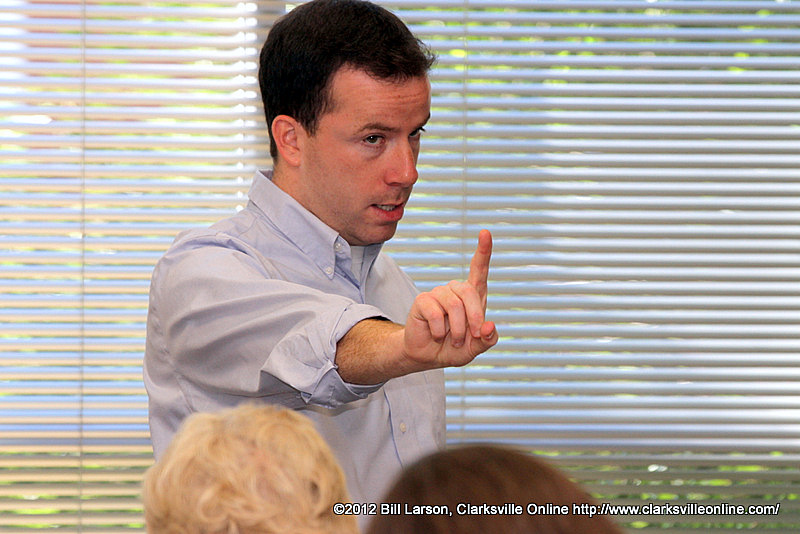
Chuck Sambuchino

“No one reads more prospective novel beginnings than literary agents. They’re the ones on the front lines — sifting through inboxes and slush piles. And they’re the ones who can tell us which Chapter 1 approaches are overused and cliche, as well as which techniques just plain don’t work. Below find a smattering of feedback from experienced literary agents on what they hate to see the first pages of a writer’s submission. Avoid these problems and tighten your submission!

FALSE BEGINNINGS

“I don’t like it when the main character dies at the end of Chapter 1. Why did I just spend all this time with this character? I feel cheated.”
– Cricket Freeman, The August Agency

“I dislike opening scenes that you think are real, then the protagonist wakes up. It makes me feel cheated.”
– Laurie McLean, Foreword Literary

PROLOGUES

“I’m not a fan of prologues, preferring to find myself in the midst of a moving plot on page 1 rather than being kept outside of it, or eased into it.”
– Michelle Andelman, Regal Agency

“Most agents hate prologues. Just make the first chapter relevant and well written.”
– Andrea Brown, Andrea Brown Literary Agency

“Prologues are usually a lazy way to give back-story chunks to the reader and can be handled with more finesse throughout the story. Damn the prologue, full speed ahead!”
– Laurie McLean, Foreword Literary

EXPOSITION/DESCRIPTION

“Perhaps my biggest pet peeve with an opening chapter is when an author features too much exposition – when they go beyond what is necessary for simply ‘setting the scene.’ I want to feel as if I’m in the hands of a master storyteller, and starting a story with long, flowery, overly-descriptive sentences (kind of like this one) makes the writer seem amateurish and the story contrived. Of course, an equally jarring beginning can be nearly as off-putting, and I hesitate to read on if I’m feeling disoriented by the fifth page. I enjoy when writers can find a good balance between exposition and mystery. Too much accounting always ruins the mystery of a novel, and the unknown is what propels us to read further.”
– Peter Miller, PMA Literary and Film Management

“I dislike endless ‘laundry list’ character descriptions. For example: ‘She had eyes the color of a summer sky and long blonde hair that fell in ringlets past her shoulders. Her petite nose was the perfect size for her heart-shaped face. Her azure dress—with the empire waist and long, tight sleeves—sported tiny pearl buttons down the bodice. Ivory lace peeked out of the hem in front, blah, blah.’ Who cares! Work it into the story.”
– Laurie McLean, Foreword Literary

STARTING TOO SLOW

“Characters that are moving around doing little things, but essentially nothing. Washing dishes & thinking, staring out the window & thinking, tying shoes, thinking.”
– Dan Lazaar, Writers House

“I don’t really like ‘first day of school’ beginnings, ‘from the beginning of time,’ or ‘once upon a time.’ Specifically, I dislike a Chapter 1 in which nothing happens.”
– Jessica Regel, Jean V. Naggar Literary Agency

VOICE

“I know this may sound obvious, but too much ‘telling’ vs. ‘showing’ in the first chapter is a definite warning sign for me. The first chapter should present a compelling scene, not a road map for the rest of the book. The goal is to make the reader curious about your characters, fill their heads with questions that must be answered, not fill them in on exactly where, when, who and how.”
– Emily Sylvan Kim, Prospect Agency

“I hate reading purple prose – describing something so beautifully that has nothing to do with the actual story.”
– Cherry Weiner, Cherry Weiner Literary

“A cheesy hook drives me nuts. They say ‘Open with a hook!’ to grab the reader. That’s true, but there’s a fine line between an intriguing hook and one that’s just silly. An example of a silly hook would be opening with a line of overtly sexual dialogue.”
– Daniel Lazaar, Writers House

“I don’t like an opening line that’s ‘My name is…,’ introducing the narrator to the reader so blatantly. There are far better ways in Chapter 1 to establish an instant connection between narrator and reader.”
– Michelle Andelman, Regal Literary

“Sometimes a reasonably good writer will create an interesting character and describe him in a compelling way, but then he’ll turn out to be some unimportant bit player.”
– Ellen Pepus, Signature Literary Agency

CHARACTERS AND BACKSTORY

“I don’t like descriptions of the characters where writers make them too perfect. Heroines (and heroes) who are described physically as being virtually unflawed come across as unrelatable and boring. No ‘flowing, wind-swept golden locks’; no ‘eyes as blue as the sky’; no ‘willowy, perfect figures.’ ”
– Laura Bradford, Bradford Literary Agency

“Many writers express the character’s backstory before they get to the plot. Good writers will go back and cut that stuff out and get right to the plot. The character’s backstory stays with them—it’s in their DNA.”
– Adam Chromy, Movable Type Management

“I’m turned off when a writer feels the need to fill in all the backstory before starting the story; a story that opens on the protagonist’s mental reflection of their situation is a red flag.”
– Stephany Evans, FinePrint Literary Management

“One of the biggest problems is the ‘information dump’ in the first few pages, where the author is trying to tell us everything we supposedly need to know to understand the story. Getting to know characters in a story is like getting to know people in real life. You find out their personality and details of their life over time.”
– Rachelle Gardner, Books & Such Literary

I agree with all of these points except ‘Prologue’ (in some cases).  I have a prologue in two of my novels.  The first novel has a prologue and an epilogue, set in a later time frame, to help the reader understand that the narrator is an adult who was a child in the story.  If I had it to do over again, I would do it differently.

Sable Shadow & The Presence has a prologue and an epilogue.  In this case, the prologue has no back story; rather, it jumps ahead and establishes a central theme of the novel.  The epilogue tells the reader what happened after that.  So, I think there situations where a prologue can be useful.

Authors’ Earnings

I was looking for information on authors’ earnings, and I spotted the post below on the UK edition of the Huff Post.  It was written by Sara Sheridan, a Scottish writer who works in several genres, but primarily historical fiction.  She is the creator of the Mirabelle Bevan mysteries.

index

Sara Sheridan

“I write historical fiction. I’ve been a full-time professional writer for almost 20 years. I realized early on that being an author is a hugely misunderstood job. Because there are no pay grades and very little structure, people make interesting assumptions about the profession. The writer is a mysterious figure, wandering lonely as a cloud, fired by inspiration, or perhaps a cocktail or two. Writers have it easy. If you write a bestseller or have your book made into a movie, you’ll never have to work again, or so the myth goes.

“When my first novel was optioned for film in 1999 the common response was “Off to Barbados?” The option was for £3,000 – this remains a fairly average figure for that kind of deal. In fact, the perception at the Society of Authors (which acts as a union for writers) is that in real terms, writers’ incomes have gone down over the last 10 years. The industry values publishers, editors and publicists (who are paid reliable salaries) but when it comes to writers, there are so many people who want the job, that conditions are tough. At publishing houses writers aren’t even treated as part of the team. It was interesting last year when Random House made record profits from 50 Shades of Grey, that it decided to award a bonus of $5,000 (just over £3,000) to everyone working in the US arm of the company. They did not include their writers.

“This decision stems from the underlying belief that writers are artists and artists should be doing whatever they do for love alone. Money sullies art and damn you for having bills. From figures compiled by the Authors Licensing and Collecting Society it is easy to see that for every JK Rowling or Ian Rankin there is a huge swathe of scribblers whose sales don’t merit even a living wage. Conversely, the top 10% of writers earn over 50% of the total income. Like all the creative industries, it’s a winner take all game.

“For publishers, the hunt is on to find those high earners so they commission more books than can possibly make it – and see what sticks. In the UK something just under quarter of a million traditionally printed books are published annually. Set that against the fact that the average first novel sells something in the order of 1,000 copies and you can see what writers are up against. Although given a (usually) small advance by a publisher, a writer still has to earn that money from sales.

“So how much does a writer have to sell to make it?

“Average earnings in the UK were around £26,500 in 2012. To make this amount on a book contract for a paperback edition selling at £7.99 that pays 10% a writer would need to sell 33,166 copies a year. And that’s if the book isn’t discounted as part of a 3 for 2 promotion, for example. That is a lot of books! To put it in perspective to get to number one in the UK paperback chart last month you’d have needed to sell almost 20,000 copies a week. This means that going to number 1 doesn’t even earn you the national average wage (and that book may have taken the writer months or even years to produce). The odds of making a mint are very long – writing is a risky profession. And like most jobs in the UK there is a glass ceiling. Female writers on average earn only 77.5% as much as their male counterparts. Their books are also less likely to get reviewed in the traditional press or for that matter win awards (apart from the prestigious Women’s Prize for Fiction, set up expressly to try to redress that balance).

“In 2005 (the latest figures available) the mean (average) figure that a professional writer-of-books in the UK earned was £28,340 but because there is such a huge bias at the top of the table, the median figure is far more telling. £12,330. Well below subsistence levels. As I said, it is the view of the Society of Authors that figure has now gone down in real terms. All this, I suppose, sounds like a complaint. The truth is that in the last several years although I haven’t reached the dizzying heights of that top 10%, I have done better than the mean. My books get reviewed in the national press. I love my job and it’s exciting to see the popularity of my books growing. Like all writers I live in hope that perhaps one day I’ll make it big and at least on the way I’m enjoying what I do. After all, it can take several books to get your break.

“There’s a larger issue though, than simply one writer (even if that writer is, well, me). Books have a vital place in our culture. They are the source of ideas, of stories that engage and stretch the imagination and most importantly, inspire. The digital revolution has wrest a little control away from corporate publishers and white, male, middle-aged critics, but the financial value put on the job of the writer and the misconceptions around that make it extremely difficult to enter the profession. If we don’t value the people who inspire us (and money is one mark of that) then what kind of culture are we building?”

The above may be a bit depressing if you’re an author trying to write for a living.  But for those of us who love to write, who have other sources of income, but are hoping one day to reach the number one position in sales, it can be at least a little annoying that one’s labour of love achieves so little remuneration.

Adult Coloring Books

I must live a very sheltered life because until this morning, I never heard of adult coloring books.  If I had to guess, I would have supposed that this was a very minor niche in the publishing business and that it is dedicated to adults with learning disabilities.  To my amazement, it was in part due to the sales of adult coloring books that kept print book publishing out of the red in 2015.  {Print book sales increased in 2015 over 2014, largely due to Big Publishing’s victory over Amazon: it won the right to a larger say in the pricing of ebooks.  As ebook prices increased, readers turned to the print versions.  As a whole, in 2015, the industry experienced a decline in sales (down 4.1% from 5.82 to 5.58 billion dollars)}.

So, adult coloring books are a big thing currently.  Here is what Laura Marsh had to say in an article last December in New Republic:

“In 1962, Barbra Streisand channeled all the emotional turmoil and lyric despair of an abandoned lover into what must be the strangest four minutes of pop music ever written. “Crayons ready?” she croons, “Begin to color me.”  The opening lines of the song, “My Coloring Book,” refer to that year’s fevered interest in coloring books for adults, much like the trend that has taken off recently. “For those who fancy coloring books / As certain people do,” Streisand sings, before asking listeners to fill her sorrowful life with equally sorrowful hues. When the song came out, coloring books for adults permeated pop culture, as Mort Drucker’s JFK Coloring Book spent 14 weeks at the top of the New York Times bestseller list in 1962, and sales of adult coloring books reached $1 million. Today, coloring books are perhaps even more profitable: Johanna Basford’s Secret Garden and Enchanted Forest were the two best-selling books on Amazon in April, responsible for some of the year’s recovery in print sales. (Basford has sold nearly 10 million coloring books since Secret Garden was published in 2013.) But their powerful appeal—enthusiasts say they are a “great way to de-stress” —has very little in common with adult coloring books from the 1960s. Where today’s titles offer consumers a neat package of therapy, escape and nostalgia, 1960s coloring books were both genuinely novel and subversive.

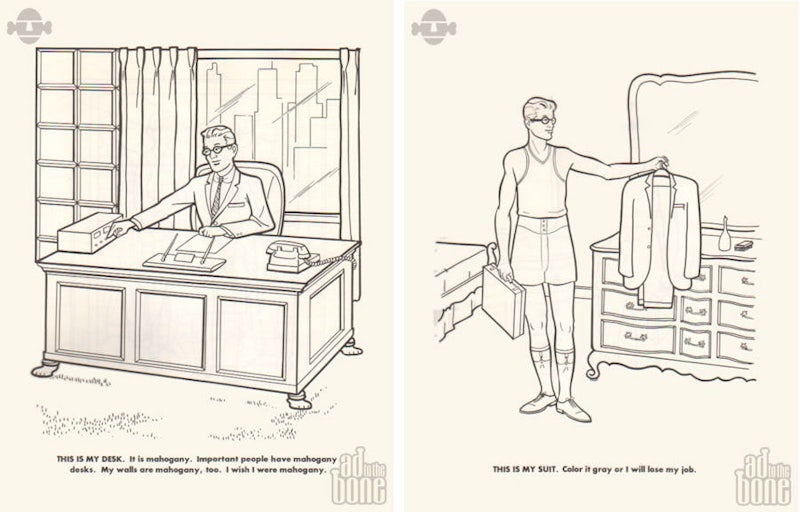
“The first adult coloring book, published in late 1961, mocked the conformism that dominated the post-war corporate workplace. Created by three admen in Chicago, the Executuve Coloring Book showed pictures of a businessman going through each stage in his day, as though teaching a child what daddy does at work. But the captions, which give instructions on how to color the image, are uniformly desolate. “This is my suit. Color it gray or I will lose my job,” reads a caption next to a picture of a man getting dressed for work. Another page shows men in bowler hats boarding their commuter train. “This is my train,” it reads. “It takes me to my office every day. You meet lots of interesting people on the train. Color them all gray.” The rare appearance of a non-gray color is even more disturbing: “This is my pill. It is round. It is pink. It makes me not care.”

From The Executive Coloring Book, 1961.Ad to the Bone

“The coloring books that followed managed to cover, between them, a selection of the decade’s neuroses: national security, the red scare, technology, sex, mental illness. Two popular books took aim at President Kennedy: Drucker’s JFK Coloring Book and Joe B. Nation’s New Frontier Coloring Book. There were coloring books that made fun of communists and coloring books that made fun of people who were scared of communists.  Krushchev’s Top Secret Coloring Book: Your First Red Reader caricatured Soviet leaders and life under communist rule, but was still deemed “objectionable” and banned in the United States Military. Meanwhile, the John Birch Society Coloring Book, which ridiculed conspiracy theorists and extremists, stretched the coloring book concept to its limits with a blank page, captioned: “How many Communists can you find in this picture? I can find 11. It takes practice.” In August 1963, the Washington Post reported on a doctor who proposed using a 12-page coloring booklet “as a diagnostic tool…to classify patients by their types of disorders” from schizophrenia to brain damage. The Post called it the ‘Psychotic’s Coloring Book’.”

Julia Felsenthal writing in the December 2015 issue of Vogue had this to say about more recent interest in adult coloring books:

“But, in spite of the fact that I do on occasion sketch and paint with watercolors, I’ve never once felt moved to pick up a coloring book and go to town. Nor did I imagine that people in my social sphere were doing so. Were those Instagram-famous coloring parties a total anomaly? Or were my other friends also secretly brandishing markers in their spare time?

“I posted the query to Facebook and the response—entirely from women—was surprisingly immediate and enthusiastic. “My aunt-in-law brought coloring books and fancy markers to Thanksgiving and I was all ‘pshhhh, really??’ ” wrote Dean, a designer in Chicago whose funky style I’ve long admired on social media. “Next thing I know, I’m suuuuper chill with a glass of wine, coloring a picture of a flower shop. It’s surprisingly kind of awesome.”

“Other ladies seemed to agree. “I do this,” an old colleague who works in video production admitted with a trace of sheepishness. A writer acquaintance raved about Chat Thérapie, a French, feline-themed coloring book she uses after dinner as a means to avoid screen-induced insomnia. A fashion-school grad explained that coloring-book patterns help her dream up jewelry designs. A mom of two avowed that the hobby keeps her sane. A friend in Austin described how coloring books have begun to appear at packed house parties, psychedelic concerts, and on camping trips. Another friend, a therapist, agreed with Beck that they’re best enjoyed while bingeing on TV.”

OK.  I get it.  But I don’t think I’ll enter the market any time soon.

Review: So Much for That

This novel attracted my attention as it is written by Lionel Schriver, the author of We Need to Talk About Kevin, which won the Orange Prize for fiction in 2005 and which has sold over one million copies in twenty-five languages. Lionel Schriver wrote seven novels before Kevin, which she called her ‘make or break’ creation after seven years of professional disappointment and ‘virtual obscurity’. Six of her seven novels were published; one failed to find a publisher. Since Kevin, Ms Schriver has written five novels, including So Much for That, which was published in 2010. She is an inspiration to all of us novelists who feel that our creations have not received the deserved recognition.

index

Lionel Schriver

So Much for That’s principal character, Shep Knacker, is an entrepreneurial handyman, who is both skilled and likeable. He is able to sell his New York City-based business for one million dollars, and his plan is to move his wife Glynis, his son Zach, and his daughter Amelia to Pemba Island off the coast of Tanzania to live her rest of their lives in low-cost, stress-free comfort. Glynis, though she has been involved in numerous searches around the world to find the perfect place for their ‘Afterlife’, has doubts. Just as she is being confronted with a decision to go or to stay, she is diagnosed with a virulent form of cancer. Escape to Pemba has to be postponed while Glynis undergoes months of treatment. The American healthcare system being what it is, Shep’s nest egg is gradually depleted by co-insurance payments and invoices for un-covered treatments. In order to keep the insurance he has, Shep must continue on the payroll of his prior company, under the unsympathetic supervision of the new owner. Glynis finds that the likely cause of her cancer is exposure to asbestos, with which she had contact in her metal-working hobby. She decides to sue the company which made the asbestos products. Just as Shep is on the verge of bankruptcy, Glynis wins her case and the money received covers an Afterlife in Pemba.

There are several other characters, including Shep’s friend, Jackson, who engages in diatribes against the Mooches (the freeloaders) and the systems that lets them take advantage of the Mugs. Jackson’s daughter, Flicka, who suffers from a horrible, terminal, childhood illness is a vehicle, along with Glynis, for debating the value of human life. There are doctors of doubtful honesty with their patients. And there are decisions about whether to be a Mooch or a Mug.

So Much for That is an entertaining story. It is human, sad, funny, heroic, and, and it is difficult to put down. I felt, at times, though, that the author was lecturing me about the dreadful state of healthcare in the US, and other assorted inequities in life. Several characters, including Flicka, and Shep’s sister, Beryl, are so polarised that one tends to lose what sympathy we should have for them. At the outset, I found it difficult to buy into Shep’s vision of the Afterlife; acceptance of his vision came when his troubles grew acute. Occasionally, I found the text somewhat oblique. For example: “It was disconcerting to be systematically punished for what might have engendered a modicum of gratitude.” Why not say: “He was annoyed to be punished for acts of kindness”? Sometimes, for me, the dialogue didn’t ring true, but perhaps I am being too picky.


I liked So Much for That. It makes some very important points about what is to be human: what’s good about our humanity and what’s not so good.

Review: A God in Ruins

For the last couple of weeks, I’ve been out of the office: my PC has been neglected, but I’ve done some reading.

A God in Ruins by Kate Atkinson is without a doubt the best book I’ve read in a long time, and it’s easy to see why it won last year’s Costa Book Award.  In fact, the judges called it, “Utterly magnificent and in a class of its own.  A genius book.”

The author has some pretty heavy-weight credentials.  Kate Atkinson won the Whitbread (now Costa) Book of the Year in 1995 with her first novel, Behind the Scenes at the Museum.  Her four bestselling novels featuring former detective Jackson Brodie became the BBC television series.  Her last novel, Life After Life, was the winner of the 2013 Costa Novel Award.  She was appointed MBE in the 2011 Queen’s Birthday Honours.

index

Kate Atkinson

A God in Ruins is the story of Teddy Todd, a would-be poet, lover of the countryside, and heroic bomber pilot during World War II.  The story begins in 1925 and zig-zags back and forth in time until its conclusion in 2012.  As the number of his completed combat missions piles up, Teddy does not expect to see the ‘Afterwards’ in which he will become a husband and a father.  Throughout the story, he faces life as it is without complaints about lost opportunities, heartbreak, or feelings un-expressed.  He is surrounded by the characters of his own family and by some of the family who are neighbours.

The writing is captivating and tight; there is no excess baggage here even though the book runs to over 500 pages.  The characters are distinct, and the story line never lags.  What most impressed me about the novel was the authenticity of the descriptions of flying bombing missions in a Halifax, but then, at the end of the book is a three page bibliography of sources.  Ms Atkinson did a lot of research!  I understand why it too two years to write this novel.  There is an interesting device she used which turns fiction on its head.  Fascinating!  But I’m not going to give it away.  Sometimes I felt slightly put off by the broken chronology, but in reading the book over a period of days, I began to feel that it was building nicely to a conclusion.  This is a novel which fully engages both one’s emotions and one’s beliefs.

Review: The Meursault Investigation

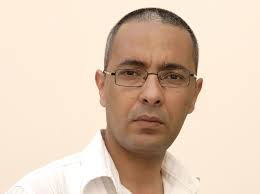
This novel, written by Kamel Daoud, reveals the hidden side of Albert Camus’ novel The Stranger.  In The Stranger, Camus has his principal character, Meursault, shoot and kill a nameless Arab for no apparent reason other than possible disorientation from sunstroke.  In The Meursault Investigation, Daoud names the murdered Arab as ‘Musa’ (Moses), and considers the implications of the murder from the viewpoint of Musa’s brother ‘Harun’ (Aaron).

Camus was a French-Algerian philosopher, an ‘absurdist’ who held that human life is absurd.  He was also regarded as an existentialist (he disagreed) and a pacifist.  He was born in 1913, won the Nobel Prize for Literature in 1957, and died in 1960.  In The Stranger, which was published in 1942, Camus used the murder of the nameless Arab for no reason as an example of the absurdity of human life.

Kamel Daoud is an Algerian journalist based in Oman.  His background is similar to that of Camus: French-speaking, Algerian writer and philosopher. The Mersualt Investigation is Daoud’s first novel, published in 2015, and it has been recognised with several prizes in France.

index

Kamel Daoud

In The Mersault Investigatiom, Harun is in a bar in Oman reflecting morosely on his brother, his mother and the book by the listener’s hero (Camus).  Included in his reflections are thoughts on Algeria, its people and its relationship to France.  The tone of the book is pessimistic and its conclusions are ambiguous (much like the tone and content of The Stranger).  One is left with the impression that there can be no God, and that life itself can have no meaning.

This is not an enjoyable book to read, because of its pessimistic philosophy, and because nothing conclusive arises from its reflective monologue.  No new ‘facts’ emerge about any of the characters, except that Musa was a real person who was loved by his mother and close the the heart of his younger brother.  Still, one has the impression that The Mersault Investigation is a classic in the absurdist philosophical tradition.  If you liked Camus’ writing, you will certainly appreciate Daoud’s.  He has created a well-written philosophical sequel to one of Camus’ great works.

Trends in Novel Genres

Chip MacGregor is a “book guy” by his own admission, and he runs the MacGregor Literary Agency.  He was asked recently: “Can you tell us the latest trends you’re seeing in fiction?”  Here is the (abbreviated) answer from his blog:

index

Chip MacGregor

The continued growth of romance — particularly historical romance. Let’s face it, last year the publisher who saw the biggest growth was Harlequin, and they did it in a down year for most publishers. Readers in a bad economy like to escape by reading romance novels. You can roll your eyes if you want to, but it’s the truth.

Thrillers aren’t selling like they used to.  James Patterson and other bestselling novelists can still move large quantities, but once you move away from the bestselling authors, it’s much slower (and, frankly, much harder to place a new novelist). 

There is a renewed interest in Americana, particularly during sunnier days. We’re seeing interest in the Victorian and Edwardian periods, for example (assuming it’s fair to use British terms for American history). That seems to be a trend away from seeing so many wartime sagas — perhaps a reflection on our fatigue with the never-ending war in Iraq. 

We’ve seen a lot of growth with fiction that surrounds historical events. Not a retelling of the events, but of stories that touch on history. So, for example, we’re not seeing novels that re-tell the assassination of President Lincoln, but we ARE seeing novels that have to do with people who were in the vicinity, or who knew John Wilkes Booth, or who were at Ford’s Theater, or who were part of the chase to catch the conspirators, etc. Again, not so much focused on the event itself, but on characters who were influenced by the event. 

Literary fiction is definitely a growth category in American publishing. Take a look at any bestseller list, and you’ll see a lot of literary fiction. Not only that, but many of the books have a clear spiritual thread — something I don’t see many people recognizing or reporting on. 

One of the most-reported growth trends has been in paranormal fiction.

 I see mixed signals in the horror category. Some think it’s up; others think it has run its course. I don’t have a firm opinion one way or the other. 

Of course there has been huge growth in the Christian/inspirational category over the past 7 or 8 years. The incredible growth has slowed, making some think religious fiction is hurting, but that’s just not true. Christian fiction is still a HUGE category, and there is still growing interest from those houses who were late to jump on board during the heyday. So while, yes, we’re not seeing the big growth in titles that we did a couple years ago, compare the number of titles and the number of genres and sub-genres to what we saw just three years ago. 

One of the most visible areas of growth in the inspirational category has been Amish fiction (or “bonnet novels”). Some people have said that it’s going to fade out, but I don’t believe it. I think it has established itself as its own sub-genre. What Bev Lewis started and Cindy Woodsmall followed has turned into its own category of fiction. That sort of thing happens sometimes — consider Louis L’Amour creating the giant interest in westerns, or Edgar Allan Poe basically establishing horror fiction. People are still buying it, so it has clearly found its audience. 

He goes on the mention the growth of small presses (including those who specialise only in the production of e-books) and the growth of e-books themselves.  He continues: “I don’t think ink-and-paper books are going away any time soon — most every reader still loves printed books. But I’ve got three kids in their 20’s, and all of them are comfortable reading a book on a screen — even an iPhone screen. That tells me when their generation is in charge, the e-book will be a core business, not a side business. It will be a major part of every publishing decision, not simply a sub-rights discussion. 

I can comment on two genres mentioned above: thrillers, and spiritual literary fiction.  Five of the soon to be seven books I’ve published are in these two categories.  The three thrillers I’ve written are all pretty gripping, and realistic.  But, I’m beginning to feel ‘been there, done that.  Sable Shadow & The Presence is spiritual literary fiction, and it has won eight (minor) awards to date.  Writing it and the reaction I’ve had to it have motivated me to (nearly) complete my seventh novel, which has a definite spiritual dimension, and is set in the Middle East.  In spite of the fact a tremendous amount to research was required, I greatly enjoyed the experience.  I’ll tell you more about it as soon as the publishing contract is signed.

What Makes a Best-Selling Novel?

I just stumbled on this article from The Daily Telegraph of 9 January 2014 and written by Matthew Sparkes.

Scientists have developed an algorithm which can analyse a book and predict with 84 per cent accuracy whether or not it will be a commercial success.  A technique called statistical stylometry, which mathematically examines the use of words and grammar, was found to be “surprisingly effective” in determining how popular a book would be.

The group of computer scientists from Stony Brook University in New York said that a range of factors determine whether or not a book will enjoy success, including “interestingness”, novelty, style of writing, and how engaging the storyline is, but admit that external factors such as luck can also play a role.

By downloading classic books from the Project Gutenberg (a library of over 50,000 free e-books) archive they were able to analyse texts with their algorithm and compare its predictions to historical information on the success of the work. Everything from science fiction to classic literature and poetry was included.  It was found that the predictions matched the actual popularity of the book 84 per cent of the time.  They found several trends that were often found in successful books, including heavy use of conjunctions such as “and” and “but” and large numbers of nouns and adjectives.

Less successful work tended to include more verbs and adverbs and relied on words that explicitly describe actions and emotions such as “wanted”, “took” or “promised”, while more successful books favoured verbs that describe thought processes such as “recognised” or “remembered”.  To find “less successful” books for their tests, the researchers scoured Amazon for low-ranking books in terms of sales. They also included Dan Brown’s The Lost Symbol, despite its commercial success, because of “negative critiques it had attracted from media”.

“Predicting the success of literary works poses a massive dilemma for publishers and aspiring writers alike,” said Assistant Professor Yejin Choi, one of the authors of the paper published by the Association if Computational Linguistics.  To the best of our knowledge, our work is the first that provides quantitative insights into the connection between the writing style and the success of literary works.  Previous work has attempted to gain insights into the ‘secret recipe’ of successful books. But most of these studies were qualitative, based on a dozen books, and focused primarily on high-level content – the personalities of protagonists and antagonists and the plots. Our work examines a considerably larger collection – 800 books – over multiple genres, providing insights into lexical, syntactic, and discourse patterns that characterise the writing styles commonly shared among the successful literature.”

What I find surprising about this study is statistical correlation between ‘writing style’ and popularity.  Eighty-four percent is a strong correlation!  Conjunctions tend to keep the action moving, hence their frequent use.  We’ve heard for some time that the use of adverbs is to be avoided, and that it is far better to choose a more accurate and descriptive verb.  The frequent use of adjectives makes sense; after all we’re trying to paint a picture in the reader’s mind, and well-chosen adjectives will improve the clarity of the picture.  It is interesting that verbs which convey action or emotion are less successful than verbs which convey thought processes.  Perhaps this is because it is easier for a reader to ‘tune in’ to thought processes than it is for him or her to feel the action or the emotion.  Is the corollary of this proposition a finding that thoughtful characters are more popular than active or emotional characters?  No.  I think this would be carrying the thought process too far.

It would be interesting if the algorithm were able to spot clichés or commonly used phrases, because these are thought to be a real turn-off for readers.

What do you think?

Payments to Authors

There was an interesting article in The Daily Telegraph two days ago about the payments authors receive from the publishers of e-books, as follows:

“Professional writers could become and ‘endangered species’ unless publishers start paying them properly for e-books, the Society of Authors has warned.  The society said lovers of literature would soon be left with less and less quality content.  In an open letter to publishers, the society called on executives to treat authors more fairly, drawing up less punishing contracts and paying them more.  Research has shown that the median income of British authors is £11,000, which the society argues is far below the ‘level deemed necessary for a socially acceptable living standard’.  Nicola Solomon, the society’s chief executive said: ‘Unless publishers treat their authors more equitably, the decline in the number of full-time writers could have serious implications for the breadth and quality of content that drives the economic success and cultural reputation of our creative industries’.  The society calls on publishers to give authors ‘at least 50%’ of revenue from their e-books, as opposed to a ‘mere 25%’, and not to ‘discriminate’ against writers who do not have powerful agents.”

If I look at the 100 Kindle edition paid best sellers on Amazon, the top price is $14.99 (3 books), and the cheapest books were $0.99 (20 books).  There is another list of the 100 Kindle edition free best sellers.  The books selling at very low prices are there because their authors are trying to promote them into best sellers.  This way the author gets ‘fame’ if not fortune.  But if one looks at the best authors, the prices seem to start at $8.99.  There are five J K Rowling books for sale at $8.99.  So, it’s fair to note that authors have some control over the price at which their books are sold as e-books, and, presumably, also some control over their level of royalties.

The problem, it seems to me, is for the relatively unknown author who is trying to make a living from writing good, serious literature.  Let’s say s/he can persuade the publisher to sell his/her e-book at $6.99, with a 25% commission.  If so, s/he will earn $1.75 a copy, and to make £11,000 per year,  s/he has to sell 9,400 copies per year.  This will put his/her book on somebody’s best seller list.  The point is that it is very difficult for a good, serious writer to make a living selling e-books, unless s/he has a best seller.  So, I think the Society of Authors has a point.

What can be done by whom?  I think it’s pretty unlikely that the publishers will all agree to raise their prices enough to give their authors 50% of the price.  They’ll be afraid of losing volume.  Besides, there’s plenty of margin for the publisher in an $8.99 e-book.  Production costs are far less than a dollar, so their major expenses are corporate overheads, author royalties, and advertising, over which they have control.  It’s even less likely that an ‘author’s union’ will be able to force through price increases.

But I think that once an author and a publisher have reached a basic deal to publish hard copies, there’s room for negotiation on the price of the e-book.  This negotiation would recognise the author’s per copy royalty on hard copies, the publishers costs, volume assumptions, and the sensible price differential between hard copies and e-copies from a user’s point of view.  For example, if the hard copy is selling for $17.50, and a Kindle fanatic wants the book, why wouldn’t s/he pay $12 for it, so that the author gets $4 per copy and the publisher gets $8?