There is an article in yesterday’s Telegraph by Cal Revely-Calder with a title similar to the above, which, for once, puts the shoe on the other foot. Instead of complaining about AI invading the creative space, it objects to those who admit AI to the literary space.
Cal Revely-Calder is the literary editor of the Telegraph.
He said, “Self-respect, Joan Didion once wrote, cannot be faked. It depends on “a sense of one’s intrinsic worth”. You can pretend or lie or dissemble if you want to boost your reputation, but in the end you’ll always lack “what was once called character”.
This thought occurs to me whenever – and these days it’s pretty often – I see someone in the literary world stand accused of secretly using AI. Recently, for those alleged sins, the novelist Mia Ballard has had her second book pulled from shelves; the politician Matt Goodwin has had his state-of-Britain polemic castigated; and the critic Alex Preston has had a book review near-disowned by the New York Times.
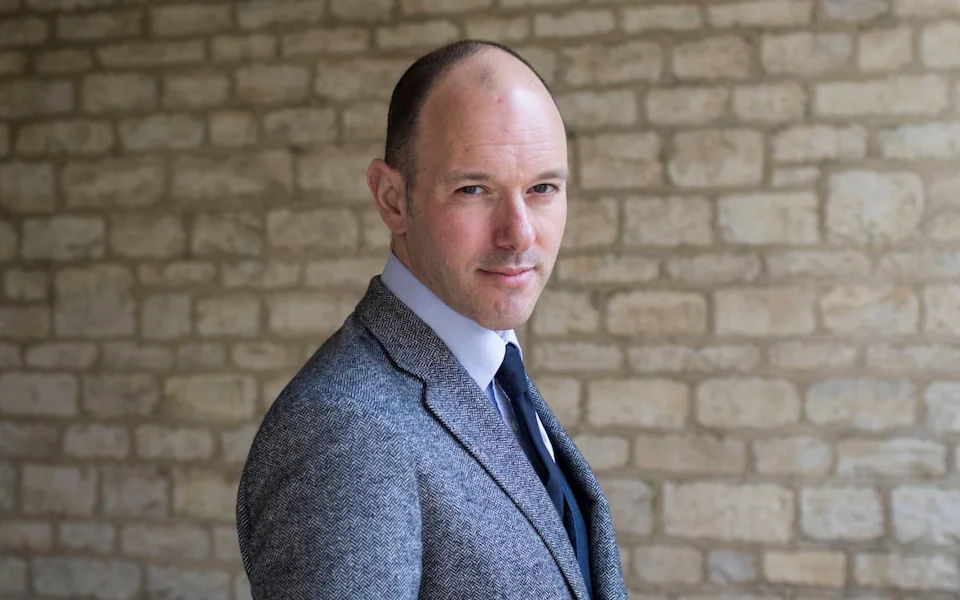
Alex Preston
All three have confessed to some degree of AI use and, to me, none of the confessions are good enough. Ballard blamed a human editor she had hired to revise her novel, though you might expect a novelist to check her own final draft. Preston blamed himself, claiming he had been struggling to meet the NYT’s demand – a modest 1,000 words – and, in desperation, had resorted to help from AI, which plagiarised a piece in the Guardian. Again, Preston seems not to have checked.
Goodwin has been more defensive. Confronted by critics who claimed that his new book, Suicide of a Nation, was full of ersatz quotations, dubious claims and incorrect facts, he retorted that the detractors were partly wrong and partly missing the point. After all, his core thesis – that migration is destroying Britain – was untouched; some “errors and typos” were inevitable if you self-published to avoid the “woke” publishing industry; and his opponents were “Lefties and losers” anyway. Goodwin insists that he was working from notes and did not use AI to write one word, merely (as he wrote in the Spectator) “to interrogate data”.
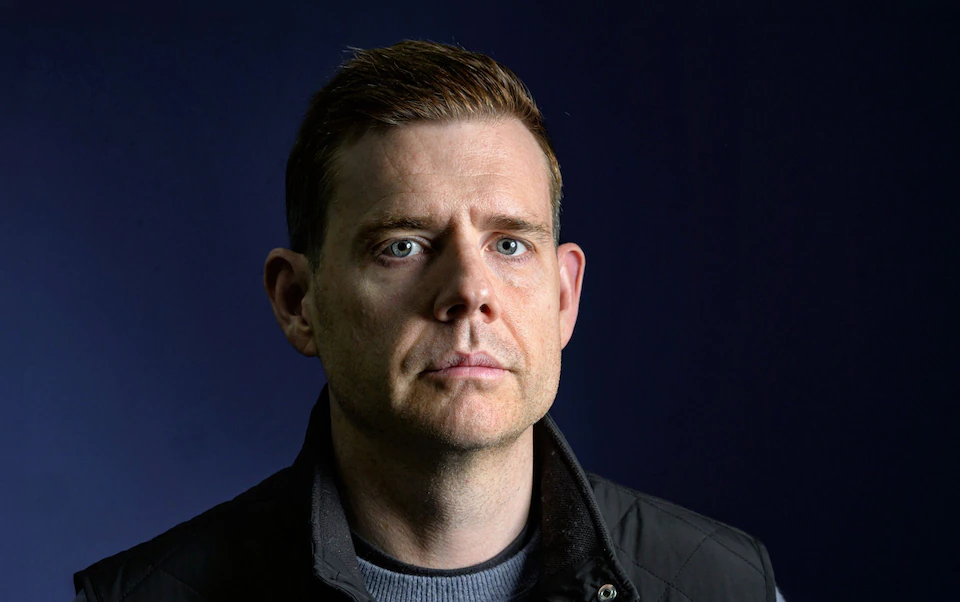
Matt Goodwin, academic-turned-politician, has admitted using AI ‘to interrogate data’ for his new book Suicide of a Nation Credit: Paul Cooper
But even if we believe him, and charge only Preston and Ballard with subcontracting their work to AI, something in the culture is clearly amiss. To use an AI tool may be wise if your job involves crunching data sets or summoning figures – though you would be advised to check the robot’s homework – and it is probably true that, in such empirical areas, its use will become society’s norm. To use such a tool if your job is to write, whether creatively or critically, misunderstands your brief. Writing is thinking. They are inseparable processes. Circumvent them and you may as well not have bothered. Readers are human beings, and they want human thoughts and feelings to be expressed.
This applies, to be clear, to non-fiction as well as fiction. Short of being a pure list of dates or statistics, any book of any genre requires a guiding intelligence. Writing and reading are parallel ways of touching another mind, another soul. That is what you, the reader, are doing now. People can use AI for computation or research, but if they use AI to write one per cent of their work, as Ballard and Preston certainly did – and, again, Matt Goodwin strongly denies it – they have abrogated one per cent of the essence that makes them a human being. Morality confers on us basic obligations; one of those is treating humans, ourselves and others, as creatures worthy of dignity. To filter yourself through a robot that cannot “know” anything, that just blends other people’s books into an oracular mulch – the plagiarism device on your phone – is to insult everyone involved.
You may think this sounds moralistic. Well, good. Publishing, like fast food or arms manufacturing, is an industry, and it will function amorally, by supply and demand unless someone takes the trouble to care and shape what it does. Hence we need people – editors, booksellers and, yes, writers – to preserve, for no reason greater than feeling and taste, the human element.
Without that preservation – and corners of Amazon already look this way – AI-created writing will extract and remix the real thing, then remix itself, in an ouroboros of slop. We will be drawing on data, past tense, to generate the future, and that way stagnation lies. Genres will calcify; mistakes will multiply. And the tide is rising. Talk to anyone behind the scenes, from agents to publishers, and you will hear that AI-written submissions are pouring onto their desks. The literary agency Curtis Brown complained last week that harried agents were, in turn, feeding submissions into ChatGPT to give them summaries, without the writer’s consent.
But that is the cost of convenience, the ruling lifestyle of our age. Why do anything difficult, complex or slow when you can get a machine to do it on your behalf? If this question seems genuine to you, and you are a writer, please stop. Do literally anything else. Because good writing is extremely difficult. Ask any novelist or critic worth their salt. It involves introspection and false starts and revisions, and interventions from editors, at least if you want to do it well; and the final product will comprise, however half-remembered and half-buried, every single one of those things, alchemically changed into something new – something, you hope, now worth the attention of someone else.
Preston, at least, seems repentant, though it is a mystery to me why anyone would cheat on a book review. Such pieces cannot be written en sufficient masse to earn you a living, no matter how much AI you use, and I say that as one of the few people left commissioning them. Ballard, for her part, has gone prudently silent. Goodwin has kept raging online; you can form your own judgment of him.
In the meantime, these writers’ varying fates, as with those who come next – and there will be more – should stand as a warning to the literary world. If writing is just a product to you, just the sum total of stuff you add together to form other stuff, then it might as well be done by AI, for what difference does it make? Writing becomes mere information, data, flat and lifeless, smoothly and efficiently recombined. But if it is more than that, as I hope for most people remains the case, keep it out of your books. Have some self-respect.”
I agree!
 William Peace Blog