The Sins of Amazon

There is an interesting article in the 23 June 2019 issue of The New York Times written by David Streitfeld, titled “What Happens After Amazon’s Dominance is Complete? Its Bookstore Offers Clues”.  It is too long to quote in its entirety, but I’ve excerpted it below:

“’The Sanford Guide to Antimicrobial Therapy’ is a medical handbook that recommends the right amount of the right drug for treating ailments from bacterial pneumonia to infected wounds. Lives depend on it.

The guide’s publisher, Antimicrobial Therapy, has, for the past two years, been confronted a flood of counterfeits — many of which were poorly printed and hard to read — in Amazon’s vast bookstore.

“This threatens a bunch of patients — and our whole business,” said Scott Kelly, the publisher’s vice president.

Mr. Kelly’s problems arise directly from Amazon’s domination of the book business  But Amazon takes a hands-off approach to what goes on in its bookstore, never checking the authenticity, much less the quality, of what it sells. It does not oversee the sellers who have flocked to its site in any organized way.

That has resulted in a kind of lawlessness. Publishers, writers and groups such as the Authors Guild said counterfeiting of books on Amazon had surged. The company has been reactive rather than proactive in dealing with the issue, they said, often taking action only when a buyer complains. Many times, they added, there is nowhere to appeal and their only recourse is to integrate even more closely with Amazon.

The scope of counterfeiting across Amazon goes far beyond books. E-commerce has taken counterfeit goods from flea markets to the mainstream, and Amazon is by far the e-commerce heavyweight. But books offer a way to see the depths of the issue.

“Being a tech monopoly means you don’t have to care about quality,” said Bill Pollock, a San Francisco publisher who has dealt with fake versions of his firm’s computer books on Amazon.

An Amazon spokeswoman denied that counterfeiting of books was a problem, saying, “This report cites a handful of complaints, but even a handful is too many and we will keep working until it’s zero.” The company said it strictly prohibited counterfeit products and last year denied accounts to more than one million suspected “bad actors.”

What happens after a tech giant dominates an industry is increasingly a question as lawmakers and regulators begin asking when dominance shades into a monopoly. This month, lawmakers in the House said they were scrutinizing the tech giants’ possible anticompetitive behavior. And the Federal Trade Commission is specifically examining Amazon.

Those who write a popular book open themselves up to being “summarized” on Amazon. At least eight books purport to summarize Bad Blood, John Carreyrou’s best-selling account of fraud in Silicon Valley. The popular novel “Where the Crawdads Sing” has at least seven summaries. “Discover a beautiful coming-of-age story without all of the unnecessary information included in the actual novel!” says one that has 19 five-star reviews, all of which read as if they were fake.

“I’m furiou,” the author, Andrew Seen Greer, tweeted after people complained last summer that fakes of his Pulitzer Prize-winning novel, “Less,” were being sold as the real thing. There was a counterfeit edition of Danielle Trussoni’s acclaimed memoir, “Falling Through the Earth,” on the site that misspelled her name on the cover. Lauren Groff said that there was an ‘illegal paperback’ of Florida, her National Book Award nominee, on Amazon.

Dead writers get hit, too. Arthur Miller’s “The Crucible” was pirated. So was a volume of classic stories by Jorge Luis Borges. For 18 months Amazon has sold a counterfeit of Agatha Christie’s “Murder on the Orient Express” despite warnings in reader reviews that it is a “monstrosity,” dispensing with such standard features as proofreading and paragraph indenting.

This is not really negligence on Amazon’s part. It is the company’s business model.  “It is your responsibility to ensure that your content doesn’t violate laws or copyright, trademark, privacy, publicity or other rights,” it tells prospective publishers and sellers.

At Antimicrobial Therapy, the first warning that something was amiss with the Sanford Guide came with reviews on Amazon. “Several pages smudged and unable to read,” one buyer said in 2017.  “Seems as the book was photocopied,” said a second. “Characters are smeared,” wrote a third.

The company, whose books were sold to Amazon by distributors, did test buys. It got some copies from Amazon and others from its third-party sellers, including UsedText4u, Robinhood Book Foundation and 24×7 Book. Of the 34 books that Mr. Kelly bought, at least 30 were counterfeit. None of the booksellers responded to requests for comment.

Mr. Kelly wrote to the retailer’s founder, Jeff Bezos, saying, “Amazon is knowingly and willfully fulfilling most orders for our title with counterfeits that may contain errors leading to injury or death of their patients.”

Mr. Kelly got a response two weeks later from “Raj,” a member of “the Amazon Seller Performance team.” Raj said that an unnamed third-party seller had been barred from selling the book but that the seller might now appeal directly to AMT, and that if the company wanted to retract the whole thing, here was what to do.  “They were very reluctant to actually engage with us about the problem,” Mr. Kelly said of Amazon.

In February, Amazon included counterfeiting in its financial disclosures as a risk factor for the first time saying it might not be able to prevent its merchants “from selling unlawful, counterfeit, pirated or stolen goods” or “selling goods in an unlawful or unethical manner.”  Yet the company has such a grip on books that counterfeits do not seem to harm it. They might even increase its business.

“A book takes a year or more to write,” said Andrew Hunt of the Pragmatic Bookshelf, a North Carolina publisher of computer books that had at least one of its titles stolen. “But to steal the book and upload it to Amazon takes only a minute.  And when someone buys a counterfeit, the real author may get cheated but Amazon still makes a sale. You could ask, What’s their incentive to do something?”

Bait-and-switch schemes are common in the Amazon bookstore. If someone wants to title a book of self-published poetry “To Kill a Mockingbird” — and someone did — Amazon will sell it next to Harper Lee’s classic novel. Some customers wrote in Amazon reviews that they felt tricked by the author of the verse “Mockingbird,” whose many other titles include “War and Peace” and “For Whom the Bell Tolls.”

In February, Amazon introduced a plan called Project Zero. No longer would brands have to report counterfeits and wait for the retailer to investigate. Project Zero, Amazon said, would give brands “an unprecedented ability to directly control and remove listings.”

Mr Pollock said Project Zero was a further insult. “Why should we be responsible for policing Amazon for fakes? That’s their job.”

The communications impasse between Amazon and Antimicrobial Therapy was complicated by the fact that they did not have a direct relationship. So in December, AMT opened vendor site on Amazon, with the bookseller getting a commission of about 20 percent on each copy sold. Under this arrangement, Amazon tells Antimicrobial Therapy where the customer lives, and the publisher ships the book from Sperryville.

As AMT was getting ready this spring to release the 2019 guide, it proposed an even deeper integration with Amazon.  “To eliminate the possibility of Amazon facilitating the sale of counterfeit books, we would like to offer Amazon the opportunity to serve as a wholesaler of our titles, cutting out the middle man,” Mr. Kelly wrote to the company. It was, in essence, rewarding Amazon by surrendering to its dominance. “We’d rather not be on Amazon,” Mr. Kelly said. “But we felt like we didn’t have a choice.”

* * *

My view is that Amazon does not want to engage with this problem at the scale that is required.  It would be too costly for them.  But, in my opinion, this is a short-sighted view.  The solution that may be coming is a requirement that any book seller, at any level, must warrant that the books it sells are free of any copyright defects.

Don’t Be Precious

The IBPA Independent magazine ran an article in the December 2017 issue which I missed at the time, but has recently re-surfaced.  It caught my attention because the full title is “Don’t Be Precious (with Your Ideas)”.

It was written by Scott Berkun, who, according to the Independent, is a bestselling author and popular speaker on creativity, philosophy, culture, business, and many other subjects. He is the author of six books, including The Myths of Innovation, Confessions of a Public Speaker, and The Year Without Pants.

Scott Berkun

“Three magic words for people who create things are: Don’t be precious. Being precious means you’re behaving as if the idea you’re working on is the most important thing in the history of the universe. It means you’ve lost perspective and can’t see the work objectively anymore. When you treat a work in progress too preciously, you trade your talents for fears. You become conservative, suppressing the courage required to make the tough choices that will resolve the work’s problems and let you finish. If you fear that your next decision will ruin the work, you are being precious.

“When I see a young writer struggling to finish a book, I say “don’t be precious.” If you truly love your craft, there are an infinity of projects in your future. There will be other chapters. Whatever you’re making, it doesn’t have to be perfect. Perfection is an illusion.

“Obsessing about every little choice is a surefire way to prevent great work from happening. Try a bold choice. Put the beginning at the end, or the top at the bottom. Blow your work up into jagged pieces and put them back together. You might just find this opens doors you didn’t even know were there. If you’re too precious, you miss the hundreds of big choices that might reveal the path to completion, or convince you the project is a puzzle that needs to be abandoned for a time. But if you spin your wheels faster and faster on smaller and smaller details, you’ll never move anywhere. You’ll never call anything finished, denying yourself the essential experience of looking back from a distance and learning from what you’ve already made.

“Some Buddhist monks make mandalas, intricate paintings made from colored grains of sand. When completed, the mandalas are destroyed. It’s a recognition that while your work might mean everything to you in the moment, in the grand scheme of your career, your life, and the universe itself, it’s just another thing that will someday fade away.

“Of course, it is important to strive for greatness. You should care deeply about people and ideas that matter to you. To make good things requires intense effort and practice. There’s a long history of masters, from Michelangelo to Twyla Tharp, who obsessed about the smallest details of their works and demanded the best from everyone who worked with them. In some ways, they were very precious indeed. But they didn’t let those ambitions stop them from finishing their works.

“It’s rarely discussed, but all good makers leave a legacy of abandoned drafts, unfinished works, mediocre projects, and failed ideas—work that enabled them to learn what they needed to finish the projects they are famous for. If your high standards, or self-loathing, is preventing your progress, don’t be precious about it. It takes hundreds of experiences with the cycle of starting, working, and finishing creative works before you have the talent to make finished things that match the grandeur of the ideas in your mind.”

I thought this is an excellent piece of advice, not only for artists of all sorts, but for also for practitioners of life in general.

Does Reading Fiction Make Us Better People?

An article with this title by Claudia Hammond was posted on the BBC Future website two days ago.  Not surprisingly, it caught my attention.

Claudia Hammond’s page in Wikipedia says that she is a British author, occasional TV presenter, and frequent radio presenter with the BBC World Service and BBC Radio 4.  Born in 1971, she was educated at Sussex University (applied psychology) and Surrey University (MSc health psychology) and has written three non-fiction books on psychological subjects.

Claudia Hammond

The article is quoted in full, below:

Every day more than 1.8 million books are sold in the US and another half a million books are sold in the UK. Despite all the other easy distractions available to us today, there’s no doubt that many people still love reading. Books can teach us plenty about the world, of course, as well as improving our vocabularies and writing skills. But can fiction also make us better people?

The claims for fiction are great. It’s been credited with everything from an increase in volunteering and charitable giving to the tendency to vote – and even with the gradual decrease in violence over the centuries.

Characters hook us into stories. Aristotle said that when we watch a tragedy two emotions predominate: pity (for the character) and fear (for yourself). Without necessarily even noticing, we imagine what it’s like to be them and compare their reactions to situations with how we responded in the past, or imagine we might in the future.

This exercise in perspective-taking is like a training course in understanding others. The Canadian cognitive psychologist Keith Oatley calls fiction “the mind’s flight simulator”. Just as pilots can practise flying without leaving the ground, people who read fiction may improve their social skills each time they open a novel. In his research, he has found that as we begin to identify with the characters, we start to consider their goals and desires instead of our own. When they are in danger, our hearts start to race. We might even gasp. But we read with luxury of knowing that none of this is happening to us. We don’t wet ourselves with terror or jump out of windows to escape.

Having said that, some of the neural mechanisms the brain uses to make sense of narratives in stories do share similarities with those used in real-life situations. If we read the word “kick”, for example, areas of the brain related to physically kicking are activated.  If we read that a character pulled a light cord, activity increases in the region of the brain associated with grasping.

To follow a plot, we need to know who knows what, how they feel about it and what each character believes others might be thinking. This requires the skill known as “theory of mind”.

With all this practise in empathising with other people through reading, you would think it would be possible to demonstrate that those who read fiction have better social skills than those who read mostly non-fiction or don’t read at all.

The difficulty with conducting this kind of research is that many of us have a tendency to exaggerate the number of books we’ve read. To get around this, Oatley and colleagues gave students a list of fiction and non-fiction writers and asked them to indicate which writers they had heard of. They warned them that a few fake names had been thrown in to check they weren’t lying. The number of writers people have heard of turns out to be a good proxy for how much they actually read.

Next, Oatley’s team gave people the “Mind in the Eyes” test, where you are given a series of photographs of pairs of eyes. From the eyes and surrounding skin alone, your task is to divine which emotion a person is feeling. You are given a short list of options like shy, guilty, daydreaming or worried. The expressions are subtle and at first glance might appear neutral, so it’s harder than it sounds. But those deemed to have read more fiction than non-fiction scored higher on this test – as well as on a scale measuring interpersonal sensitivity.

At the Princeton Social Neuroscience Lab, psychologist Diana Tamir has demonstrated that people who often read fiction have better social cognition. In other words, they’re more skilled at working out what other people are thinking and feeling.

People who read novels appear to be better than average at reading other people’s emotions, but does that necessarily make them better people? To test this, researchers at used a method many a psychology student has tried at some point, where you “accidentally” drop a bunch of pens on the floor and then see who offers to help you gather them up. Before the pen-drop took place participants were given a mood questionnaire interspersed with questions measuring empathy. Then they read a short story and answered a series of questions about to the extent they had felt transported while reading the story. Did they have a vivid mental picture of the characters? Did they want to learn more about the characters after they’d finished the story?

The experimenters then said they needed to fetch something from another room and, oops, dropped six pens on the way out. It worked: the people who felt the most  transported by the story and expressed the most empathy for the characters were more likely to help retrieve the pens.

You might be wondering whether the people who cared the most about the characters in the story were the kinder people in the first place – as in, the type of people who would offer to help others. But the authors of the study took into account people’s scores for empathy and found that, regardless, those who were most transported by the story behaved more altruistically.

Of course, experiments are one thing. Before we extrapolate to wider society we need to be careful about the direction of causality. There is always the possibility that in real life, people who are more empathic in the first place are more interested in other people’s interior lives and that this interest draws them towards reading fiction. It’s not an easy topic to research: the ideal study would involving measuring people’s empathy levels, randomly allocating them either to read numerous novels or none at all for many years, and then measuring their empathy levels again to see whether reading novels had made any difference.

Instead, short-term studies have been done. For example, Dutch researchers arranged for students to read either newspaper articles about riots in Greece and liberation day in the Netherlands or the first chapter from Nobel Prize winner Jose Saramago’s novel Blindness. In this story, a man is waiting in his car at traffic lights when he suddenly goes blind. His passengers bring him home and a passer-by promises to drive his car home for him, but instead he steals it.  When students read the story, not only did their empathy levels rise immediately afterwards, but provided they had felt emotionally transported by the story, a week later they scored even higher on empathy than they did right after reading.

Of course, you could argue that fiction isn’t alone in this. We can empathise with people we see in news stories too, and hopefully we often do. But fiction has at least three advantages. We have access to the character’s interior world in a way we normally do not with journalism, and we are more likely to willingly suspend disbelief without questioning the veracity of what people are saying. Finally, novels allow us to do something that is hard to do in our own lives, which is to view a character’s life over many years.

So the research shows that perhaps reading fiction does make people behave better. Certainly some institutions consider the effects of reading to be so significant that they now include modules on literature. At the University of California Irvine, for example, Johanna Shapiro from the Department of Family Medicine firmly believes that reading fiction results in better doctors and has led to the establishment of a humanities programme to train medical students.

It sounds as though it’s time to lose the stereotype of the shy bookworm whose nose is always in a book because they find it difficult to deal with real people. In fact, these bookworms might be better than everyone else at understanding human beings.

Review: Stony the Road

There was an article about this non-fiction book in either the New York Times or the Telegraph.  The book is subtitled, “Reconstruction, White Supremacy, and the Rise of Jim Crow.”  It was the subtitle that caught my interest: I know very little about the period following the American Civil War.  I think I have been reasonably well educated in American history, but the late 1860’s and 1870’s are pretty vague for me.  For example, I knew that there was a period of Reconstruction during which the physical damage of the war was somewhat rebuilt and slavery was abolished in practice.  But I didn’t know what or how it was done.  I also knew there were carpetbaggers, who were bad people, but I didn’t know what they did.  And I knew there was Jim Crow, which, as far as I knew was short hand for treating black people badly.  I had therefor hoped that this book, by Henry Louis Gates, Jr, a distinguished professor at Harvard, would fully enlighten me.

The flyleaf in the book says this about Professor Gates: “(He) is the Alphonse Fletcher University Professor and Director of the Hutchins Center for African and African American Research at Harvard University.  An award-winning film maker, literary scholar, journalist, cultural critic, and institution builder, Professor Gates has authored or coauthored twenty-four books and created twenty documentary films.”

Henry Louis Gates Jr.

The flyleaf also says, “Stony the Road examines America’ first post-war clash of images utilizing modern mass media to divide, overwhelm – and resist. Enforcing the stark color line and ensuring the roll back of the rights of formerly enslaved people, racist images were reproduced on an unprecedented scale thanks to advances in technology such as chromolithography, which enabled their widespread dissemination in advertisements, on postcards, and on an astonishing array of everyday objects.  Yet during the same period when the Supreme Court stamped ‘separate but equal’ as the law of the land, African Americans advanced the concept of the ‘New Negro’ to renew the fight for Reconstruction’s promise.  Against the steepest of odds, they waged war by other means: countering depictions of black people as ignorant, debased and inhuman with images of a vanguard of educated and upstanding men and women who were talented, cosmopolitan and urbane.”

There are references in the book to Redemption, a term applied to a renewal of local rule in the South, facilitated by white supremacists in the South, Reconstruction fatigue, and growing indifference in the North, and which led to the passage of Jim Crow segregation laws in the South, and the transition to the sharecropper scheme which kept the freed slaves in virtual slavery.

The book is a scholarly work of research detailing the strategies, the beliefs and the actions of leading blacks in the circumstances of extreme discrimination.  One can understand why, in the face of both white supremacy and indifference, the rather tepid response of the ‘New Negro’ was largely ineffective, and rampant racism continued in the United States for at least one hundred years after the Emancipation Proclamation.

For me, the only disappointment in this book is its focus on black leaders responses to the events, while I was seeking a better understanding white reactions and inactions at the time.

Reading

There is an article in the February 18-25 issue of Time magazine that caught my eye.

It begins, “‘The book is dead’ is a refrain I hear often.  When I say what I do, people ask, ‘Does anyone read anymore?’   It’s a throwaway remark: the book is obviously dead, or at least dying, right?”

The author is Lisa Lucas, who is director of the National Bok Foundation, which celebrates the best literature in America, and is the presenter of the National Book Awards.

Lisa Lucas

Her response is: “False.  When people say fighting for books is a futile battle, that’s the moment when my optimism kicks in.  A person who wants to lament the death of reading with me is a person who wants to be convinced otherwise.  I’m here for this fight.

“Not long ago I came across the Pew Research Center finding that 24% of Americans didn’t read a book in 2017.  Now, what I saw was that 76% of Americans did read a book.  If three-quarters of any group is participating in an activity, then you ae surrounded by people doing that very thing.  Meanwhile, book sales have increased every year since 2013.  The American Booksellers Association, which promotes independent bookstores, says its membership grew for the ninth year in a row in 2018.  While headlines proclaim that books are dying, the research says we are a nation of readers.

“Of course, we know that not everyone reads.  But we need to better understand who does and why, and how to encourage them to read more and more joyfully.  We need to figure out who has been left out of the conversation about books and welcome them into the fold with open arms.

“My colleagues at publishers, libraries, bookstores and literary nonprofits share such challenges. Our job is to build readers.  And we do this because the profound pleasures of a good book are for everyone, everywhere.  Storytelling is how we explore and make sense of this world and understand one another.   Because books absorb us and harness our imaginations, they are an essential medium for storytelling.

“Each day, more books are being published that speak to every kind of person, from every kind of place.  And so I believe readers can be built.  After all, we have unlimited invitations to this party.”

Writing Stronger Characters

The Well Storied website has a post by Kristen Kieffer – ’33 Ways to Write Stronger Characters’ – that I think is quite useful.  She divides her advice into three categories:

  1. Fourteen things to give your character
  2. Six things to make your character, and
  3. Thirteen things to find for your character

Ms Kieffer, according to her blog “is an author of fantasy fiction and creative writing resources. At Well-Storied, she strives to help writers craft sensational novels and build their very best writing lives”.  Her website offers workbooks, podcasts, a newsletter, Scrivener Tutorials and free courses,, as well as copies of her books.

Kristen Kieffer

I have selected below some of her more interesting points:

Give your characters a fear: Fear shapes the human experience, creating doubts and insecurities that plague our actions, mindsets, and relationships. Add a little necessary realism to your story by giving your character a few fears as well.

Give your characters a flaw: To be imperfect is to be human. Write a human story by giving your character personality flaws that play into their relationships, fears, disappointments, and discontent.

Give them a history: Our pasts shape who we become. Give your character a rich history that affects both the person they are when your story begins and how they will handle the journey to come.

Give them a quirk: Everyone has their strange qualities or habits, and often times, being a bit strange is just as exciting or memorable as being passionate. Help your character stand out from the crowd by giving them a quirk or two of their own.

Give them a desire: Desires are powerful motivators. They can push your character to great deeds just as quickly as they can tempt them to take action they’ll regret.

Make your characters complex: Don’t stop at simply creating a well-developed character. Actively work to bring your character’s complexities to life on the page by putting them in as many diverse situations as possible.

Make them unique:It’s easy to fall into stereotypes and worn-out character tropes, but don’t give in. Work instead to create characters unique to your story, ones that readers will instantly recognize as your own.

Make them relatable: To relate is to create connection, to see others as just as human as you are. Making even the most evil of characters relatable in some small way can give your character some much needed humanity.

Make them fail: Failure is a springboard to growth. Allowing your character to fail gives them the opportunity to learn from their mistakes and develop as human beings, creating excellent internal conflict for your story.

Make them suffer: Take your character from the highest heights to the lowest depths. By allowing your character to suffer (especially during the Dark Night of the Soul), you prove their mettle, endear readers to their cause, and define their growth as a result of their journey.

Find your characters’ identity: Understanding how your character defines themselves in life can help you better understand how they interact with and present themselves to the world. When defining your character’s identity, consider elements such as their gender identity, race, sexuality, religion, ancestry, and interests.

Find their refuge: When all seems lost, a safe haven can keep hope alive for your character. Allow your character to find this refuge when they most need it, so they can receive the respite they need to recharge for your story’s climax.

Find their redemption: Your character will screw up. They will make decisions that harm themselves or others. They will fail. It’s how they make things right that will define who they are at heart.

Review: Transcription

This is the new novel by Kate Atkinson.  I signed up for it last autumn, six months before it was published, because I very much liked A God in Ruins, her Costa Book Award winner in 2015 – her third time to win the award.

Kate Atkinson was born in York, England in 1951; she studied English Literature at Dundee University, winning her MA in 1974.  She went on to study for a doctorate in American Literature, but she failed at the oral examination stage.  She has written five Jackson Brodie novels, six other novels (three of which won the Costa Award or its predecessor, the Whitbread Award), two plays and a collection of short stories.  She lives in Edinburgh currently.

Kate Atkinson

The central character in Transcription is Juliet Armstrong, who, at age eighteen, becomes the typist in 1940 for the Security Service, MI5.  Her role is to transcribe the conversations a British agent has with German sympathisers: the Fifth Column.  Her boss thinks well enough of her that he gives her the assignment of getting close to Mrs Scaife, a German-sympathising British socialite, the wife of an admiral who has been interred for his pro-Nazi views.  Juliet succeeds rather well in this deception, arranging a meeting between Mr Vanderkamp, an American official opposed to war with Germany and who has access to US secrets, with Mrs Scaif, who intends to pass the information on to the Third Reich.  The pair are arrested as the information is passed between Vanderkamp and Scaife.  Juliet is also involved in the death of a pro-German woman who accidentally discovers that her conversations with the man she thought was a Gestapo are actually being recorded by the British.  Toward the end of the war, Juliet becomes sympathetic to the Russian cause, and an attempt is made to recruit her as a double agent for the British.

As usual, Ms Atkinson does a splendid job researching her subject matter, from the identities of the real-life players, to the settings, to the actual events and messages.  One is transported back to a blacked-out, war time London, where there was much going on in secret, well-lit places.  The principal characters: Juliet, her boss, Perry Gibbons, Godfrey Toby, the fake Gestapo, and Mrs Scaife as well as some of the minor characters are all distinctly drawn and entirely credible.  Ms Atkinson’s writing is confident and authoritative, leading the reader deftly into unexpected turns of events.  This is not a heavy, sinister novel; it has moments of humor and irony.

For me, there are two serious problems with this novel.  First, Juliet’s assignment as transcriber of the conversations is relatively unimportant in the war effort: nothing of significance is learned that will remotely affect the war’s outcome; and second, a large portion of the book is devoted to Juliet’s transcription efforts.  The novel would have been more interesting if it had more to do with Juliet’s spy persona, Iris Carter-Jenkins, and with more of the identity intrigue and double-dealing going on at high levels in MI5.  There were also some details that didn’t seem right to me.  For example, does it make sense for the man who has the power to force Juliet into a double agent’s role to bother sending her anonymous ‘You will pay for what you did’ messages?

This long-anticipated novel is not up to Kate Atkinson’s usual standards.

A Unique Japanese Bookstore

An article appeared in the March 1, 2019 issue of Kyodo News, and it caught my eye because it describes a unique Japanese bookstore, which:

  • charges admission
  • has only one copy of each book
  • buys the books, rather than taking them on consignment.
  • has books which are selected by the staff, rather than being current best sellers
  • arranges the books by relationships rather than by topic

The article was written by Mariko Tamura.  Excerpts from the article are below:

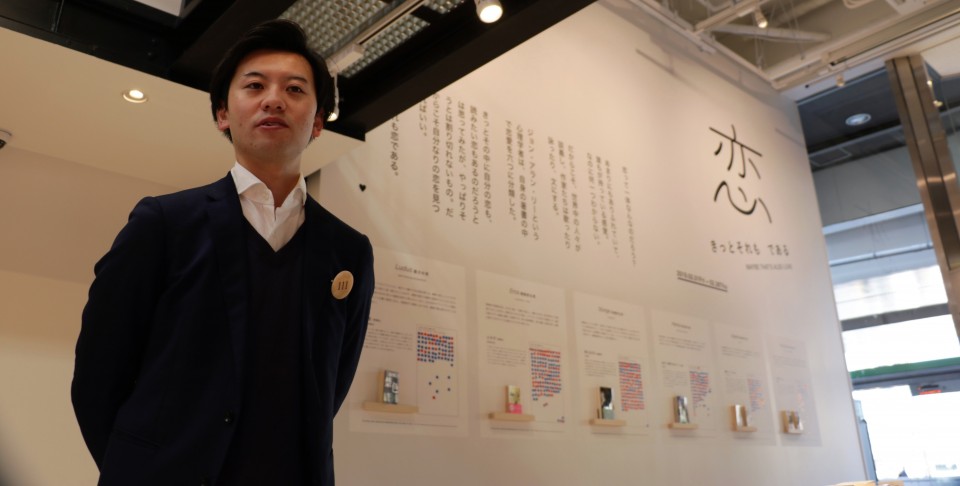
Walk into this new Tokyo bookstore and at first glance you could be forgiven for thinking you’ve stepped into an art gallery. With its elegant glass doors, spacious entryway, books displayed like exhibits on tables and captioned information on the walls, Bunkitsu is clearly no ordinary bookstore.

“That’s what we want people to think — that it’s an art gallery where they can encounter books,” said Hikaru Yoshino, the 26-year-old public relations officer.

Bunkitsu opened in December in Tokyo’s fashionable Roppongi district. The bookstore is unusual in that patrons can browse the 90 or so magazines in the reception area for free, but must pay 1,500 yen ($14) to peruse its 30,000 or so titles on the second floor, where there is also a cafe.

Customers are able to relax in the airy upstairs reading areas and get free refills of tea or coffee provided by the cafe. As the cafe also serves lunch, book hounds can spend all day there if they wish without having to go in search of food.

“Bunkitsu is a place for hard-core book lovers and, at the same time, it’s a place that invites people to walk in and discover books they never thought of reading,” Yoshino said.

There were some initial concerns among the bookstore’s concept team that a fee would discourage potential customers. But the price seemed reasonable considering the fact that a coffee in Tokyo usually costs between 400 and 500 yen and that customers would be able to sip from a bottomless cup while reading for two or three hours, said Yoshino.

They also believed that avid bookworms would welcome a space that offered a relaxed atmosphere coupled with the thrill of discovery.

“It’s like a treasure hunt,” said Yoshino as he passed by a wall lined with magazines. Flip open a panel displaying a particular magazine and more reading material on a related theme appears.

The shelves are curated by section into broad themes like “Travel” or “History” but the books seem tangentially linked.  Lined up next to a history book on Lenin is a series of comic books set during the Russian Revolution. Books are piled haphazardly on tables: a comic book on top of a philosophy book on top of a novel, but are linked somehow — the color black, movies, food. Here, calculated disorder creates happenchance.

“We recognize that if you have a particular book in mind, it is difficult to find it quickly here. But finding a new book is a once in a lifetime encounter. We want that surprise to bring customers back again and again,” said Yoshino.

Each book and magazine is the only copy in the store. Miss the chance to buy it and you might never get another. It’s a gamble for Bunkitsu as well.

Unlike other bookstores, Bunkitsu buys its books and does not sell them on consignment, meaning it must keep unsold copies. Books remain until they catch a reader’s eye.

While the store thinks about moving the merchandise, at the same time it prefers not to stock its shelves with popular works that would boost sales. Staff choose books according to their own interests and not on what’s trending at the time. The entry fee allows them some cushion to stock an eclectic lineup, says Akira Ito, the 36-year-old store manager.

Bunkitsu’s unique business model has not deterred sales so far, according to Ito and Yoshino, who say that between 30 to 40 percent of their customers purchase a book.

“It’s like buying a gift at a museum shop,” says Ito. “People have paid their entry fee so they feel invested in finding a book.”

Adds Yoshino, “They want to take home with them what they experienced here.”

Customers come in many varieties.

“I came here because my friend recommended this place and I wanted to get some new ideas for my job,” said Keito Kondo, a 28-year-old who does marketing for a beer company.

“I thought I might see books I hadn’t thought of,” he said as he sat in the cafe with a number of titles in front of him on sparking inspiration. “I usually buy books that I want from Amazon, but here I found books that I usually don’t read, such as on architecture and art.”

“I didn’t realize that I was interested in fashion until I came here,” said Masato Torikoshi, an 18-year-old student who enjoys studying at Bunkitsu. He twirls his chair to face stacks of fashion books on Issey Miyake, Marc Jacobs and Valentino.

“I was happy to see a customer stretch himself full length against a cushion and read,” Ito said.  In the back is an elevated platform against a large window where customers can kick off their shoes, lie against one of the colorful cushions and chat, read or drink coffee.

A 45-year-old hairdresser enjoyed the space one Monday afternoon. He said that the price was well worth it as people could stay there the whole day. “You can enjoy the sense that you have your own private room,” he said, coffee in hand.

Bookstores are closing down throughout Japan, says Yoshino, citing online behemoth Amazon and the popularity of e-books as possible reasons. But whether the Bunkitsu approach can stem that trend remains to be seen.

He says he is “not sure” if the bookstore’s business model can be exactly replicated elsewhere. While it works in Roppongi, another approach might be needed in a rural area, he said. “You have to look at what’s distinctive about a location. That could lead to different types of bookstores.”

“We need to try somehow to make bookstores survive,” said Yoshino. “We hope that creating Bunkitsu is one way to respond to this challenge.”

Review: A Farewell to Arms

I had never read this World War I novel by Ernest Hemingway, so that when my wife suggested that I select some books for us to listen to while we were driving down to Sicily, I selected it.  The particular edition I bought is read by John Slattery, an American film and television actor, who is best known, perhaps, for his role as Roger Sterling in the TV drama series Mad Men; his diction is excellent, he reads with the requisite emotional emphasis, and with the distinct accents of characters of various nationalities.

Hemingway, born in 1899, was a reporter for The Kansas City Star for a few months after graduation from high school before leaving for the Italian front in World War I to serve as an ambulance driver, having been rejected by the US Army because of his eyesight.  He was seriously wounded and returned home.  This experience formed the basis of his third novel, A Farewell to Arms.  Similarly, the love story of the protagonist in A Farewell to Arms with the British nurse, Catherine Barkley, is similar to Hemingway’s affair with the American nurse Agnes von Kurowsky, who was seven years his senior and he had planned to marry, but who become engaged to an Italian officer.

Ernest Hemingway

Frederick Henry, an American paramedical officer serving in the Italian Army in World War I, is introduced by an Italian doctor friend to a pretty British nurse, Catherine Barkley, and though Frederick does not want a relationship, he tries to seduce her.  In combat, he is wounded in the knee by a mortar shell and is sent to a hospital in Milan where Catherine has also been sent.  As Frederick’s knee slowly heals from surgery, he and Catherine spend time together and fall in love.  He is kicked out of the hospital for concealing alcohol, sent back to the front line, and by the time he can return to Milan, Catherine is three months’ pregnant.  When he returns to his unit, he finds that morale has declined precipitously, and not long after, the Austro-Hungarians break through the Italian lines at the Battle of Caporetto.  During the ensuing chaos, it becomes necessary to abandon the ambulances and Frederick kills an insubordinate sergeant.  He finds his way back to the main retreating column, and on crossing a bridge, he discovers that officers not accompanied by their men are suspected of cowardice and ‘treachery’, supposedly leading to the Italian defeat.  Solitary officers are being interrogated and summarily shot.  Frederick dives into the river and is carried downstream to a point where he can board a freight train which carries him to Milan.  At that point, he renounces his military service.  Catherine, however, has been relocated to Stresa, where he finds her, and he is aware that as a deserter, he is subject to execution.  Learning that he is about to be arrested, he and Catherine row a small boat some thirty-five miles up Lago Maggiore to Switzerland, where they are permitted to remain.  Catherine experiences a very difficult birth which results in a Cesarean delivery of a still-born boy, and she has a fatal hemorrhage.  Frederick returns to the hotel alone.

A Farewell to Arms is remarkable in its realistic, unadorned depiction of the absolute futility of war, and of the terrible price it can inflict on participants and bystanders, alike.  Without any actual combat scenes, one still has the sense of ultimately futile involvement.  Hemingway has a remarkable facility with dialogue that defines his characters.  Emotional impact is not explicit; rather, it is inherent in the careful scene setting, and the dialogue.  Exterior settings often leave one with not only a mental picture, but with the feeling such a place would evoke.  Indoor settings are brought to life with just a few words: a ladder-back chair here, a rickety table there.  Hemingway’s recollections of specific places like the Galleria in Milan are remarkably clear after over a decade time lapse.

The only fault I could find with this novel is that there were times that I felt that the pace needed to pick up a bit, particularly with Frederick and Catherine were together, and there was little really new in their interactions.  Of course, the ending is very sad, but the reader knows that the end will be tragic.

Review: The Immortalists

This novel attracted my attention because it has good reviews.  It also has about five pages of glowing blurbs; how can I go wrong?

The Immortalists was written by Chloe Benjamin, who also wrote The Anatomy of Dreams, which received the Edna Ferber Fiction Book Award.  She is a gradate of Vassar College (which was a happy hunting ground for dates when I was at university) and she received her MFA in fiction from the University of Wisconsin.

Chloe Benjamin

The Immortalists is set in 1969 in New York City’s Lower East Side.  Four Gold children, aged between seven and thirteen, are looking for a travelling psychic who can tell them the date of their individual deaths.  The first to die, on the forecast date, is Simon, the youngest, in his early twenties, of AIDS in San Francisco.  Klara, two years older than Simon, and a magician, who not only wants to entertain her audience with her magic and her death-defying feats, but wants the audience to believe in magic, dies on schedule of an apparent suicide in Las Vegas.  Klara’s older brother, Daniel, a doctor, becomes involved with a policeman who is investigating the psychic in connection with Simon’s and Klara’s deaths.  He is shot by the policeman as he tries to kill the psychic, whom he has tracked down; he, too, dies at the appointed time.  This leaves only Varya, who is expected to die at age eighty-eight.  Varya is involved in experimental work with primates to prove that lifespan can be increased by severely limiting the intake of particular foods, but at the cost of a comfortable life.  Varya leaves the experiment and the novel ends with Varya, at least thirty years before her appointed death, accompanied by her mother, Gertie, and Klara’s daughter, Ruby, while Ruby puts on a memorable magic show.

Ms Benjamin does a good job in persuading the reader to suspend disbelief regarding the reality of the psychic: we are not surprised when the first three siblings die, nor are we surprised that the police would be investigating.  What I particularly liked about this novel are the emotional connections between the siblings: love, regret and sorrow.  The character of Simon is extremely well drawn: his sense of urgency to experience his homosexuality at the expense of self preservation is clear.  Klara is also a unique character for her fascination with and commitment to magic.

For me, Daniel and Varga are not as clearly defined.  For example, what drives Daniel to confront the old woman mystic with a gun, and what drives Varga to be so preoccupied with her stringent diet when she has little to show for it except longevity.  I am also not clear as to why and how Klara chose suicide, or the character and motivation of Eddie, the policeman.  There is a valid attempt to suffuse the novel with an air of mystery and magic: a very difficult task, which I think is only partially successful.

This is a unique story with potentially very interesting, diverse characters; it has mystery and emotional content; it has great promise.  I’m afraid the editor let the author down slightly.