Agatha Christie a Writing Teacher?

This article by Benji Wilson was in the April 30th issue of the Telegraph.

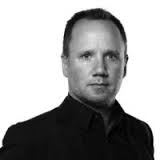
Benji Wilson

Benji Wilson is a journalist based in London. He is a feature writer and interviewer for The Sunday Times, TV critic for The Telegraph and a columnist and critic for Private Eye. He is also the London correspondent for Emmy magazine as well as writing for USA Today and the Sydney Morning Herald. is the world’s best-selling author, so if you wanted to learn how to write a crime novel she’s the first person you’d ask.

Benji says, “Agatha Christie is the world’s best-selling author, so if you wanted to learn how to write a crime novel she’s the first person you’d ask. Unfortunately, she died in 1976. But in the age of AI, with a plot twist that would assuredly have had Christie herself itching to incorporate it in a book, death need not be the end. A new BBC Maestro course of online video lessons, made in conjunction with Christie’s estate, brings the queen of crime back to life.

“First and foremost, for me, this project is about looking at her process as a writer and paying homage to that,” says James Prichard, Christie’s great-grandson and the Chairman and CEO of Agatha Christie Limited. “One of the things I am proudest of that has happened over the last however many years is how seriously Agatha Christie is taken, which I don’t think was always the case. She is now held in the regard and esteem that she should be as a writer.”

It’s that esteem that will encourage wannabe Christies – in this case, myself – to pay their £120 for a Maestro subscription (which gets you a year’s access to all manner of courses from Stephen Bartlett to JoJo Moyes to Jo Malone). The new Agatha series is a short lecture course given by a recreation of the writer herself, with Christie’s face and voice somehow grafted on to a (brilliant) performance from the actor Vivien Keene. Delivered across 11 videos, all of less than 20 minutes, you sit and are spoken to – nothing interactive here – as Agatha takes you through plotting, structure, detectives and satisfying resolutions.

The difference to all the other BBC Maestro courses is that Christie’s writing advice is only sort-of delivered by Christie. But the message does come from the horse’s mouth, so to speak – it was one of the stipulations of the Christie estate that every one of the words that Keene speaks should have come from Christie’s pen.

“It had to be her lessons; it couldn’t be some made up thing,” says Prichard. “So we had a team of academics under Dr Mark Aldridge [an acknowledged Christie expert] to see to that.”

In order to fit with the BBC Maestro credo – ‘Let the greatest be your teacher’ – “It had to look and sound like her,” says Prichard. “And what they have done is extraordinary. The final thing was that it had to be of value to both aspiring writers and fans. And I think it does that. All I can say is I was speaking to my father on Friday and both of us agreed that we’d learned a hell of a lot from her that we didn’t know.”

If AI-gatha’s Maestro course could teach her own relatives a thing or two – Prichard said that he learned from the course that Christie’s books work because “they’re actually about people, and people never really change” — then surely it could help me? I was lucky enough to get an early view of the Christie course and can report that watching Agatha, or ‘Agatha,’ dole out aperçus on story structure, cast creation, plot twists, red herrings, and the art of suspense, was most of all… unnerving. A half-smiling Christie-bot stares barrel-straight down the camera with schoolmarm-ish supremacy. She seemed to sense my self-doubt, my daft plot ideas, my general unease.

There is also some mild unease at having AI involved at all. To authors, AI is perceived as a threat more than a boon.

“I’d be lying if I said there weren’t worries [about using AI],” says James Prichard. “But I believe and I hope that this is using AI in both a helpful and ethical way. The AI model of Agatha doesn’t work without the performance of Vivien Keene. This was not written by AI. It is a leading academic unearthing everything that she said about writing. And I believe that what we are delivering here in terms of her message is better presented and will reach more people as a result of being presented, if I can use inverted commas, ‘by her.’”

What kind of tutor is AI-gatha? The course shows that Christie plainly studied her craft and while she opens up saying, “I don’t feel I have any particular method when it comes to writing,” which is disappointing, she does in fact adhere to a broad methodology founded in meticulous planning.

“And I take it seriously,” she says, looking serious.

The importance of saying something – not preaching but there being some form of moral backbone to your story — is emphasised throughout. Readers like to see justice served, she says.

“I write to entertain but there is a dash of the old morality play in my work – hunting down the guilty to protect the innocent.”

But where to even start? That’s my problem. Agatha recommends – glory be! – idleness (but not sloth) as a fallow field where ideas can take seed. She encourages eavesdropping on conversations on buses as a source of characters and dialogue, and so I head to that virtual bus that is the Internet.”

Benji finds that Telegraph readers are keen on air fryers and he concocts a short, very silly story about people being murdered by exploding air fryers.

Is Listening to Audio Books Really Reading?

Easy Listening posted this question on the Wired website:

I listen to a lot of books on audio. It works for me. But certain more literary friends of mine say it doesn’t quite count as reading. Part of me wants to read more, but I find it much easier to listen. What do you think? Should I care?”

Megan O’Gieblyn posted this scholarly answer:

“I wouldn’t put too much stock in what your “literary” friends say; they sound like bores. When it comes down to it, people who think about reading in terms of what “counts”—those who piously log their daily reading metrics and tally up the titles they’ve consumed on Goodreads—don’t seem to actually enjoy books all that much. Their moralistic gloom is evident in the extent to which reading has come to resemble exercise, with readers tracking their word-count metrics, trying to improve their speed, and joining clubs to keep them accountable.

“While some disciples of this culture are quick to dismiss audiobooks as a shortcut, they cannot seem to agree on why, exactly, listening is an inferior form of engagement. Some cite studies that have shown people who listen to books retain less than those who read them, which is bound up with how tempting it is to do other things while listening. (As easy as it is to multitask with audiobooks, the form does make it harder to return, after a spell of distraction, to the passage where your mind started to wander.) Others insist that audiobooks eliminate the reader’s responsibility to interpret things like irony, tone, and inflection, given that the person recording does the work of conveying emotion. According to this rather tenuous logic, listening to audiobooks is inferior precisely because it is easier—because it lacks the element of suffering that is incontrovertible evidence of accomplishment, the same way soreness is proof of a real workout.

“The larger problem, however, is in viewing books as a means to some other end. Many people who aspire to read more are motivated by the promise that doing so will prevent cognitive decline, improve brain connectivity, or increase emotional intelligence. Even the obsession with retention assumes that the purpose of reading is to absorb knowledge or nuggets of trivia that one can use to demonstrate cultural literacy or being “well read.” What all of this obscures is the possibility that books might be a source of intrinsic pleasure, an end in themselves. I’d be willing to bet, Easy Listening, that your earliest experiences with the joy of literature were aural. Most of us were read to by adults before we learned to read ourselves, and listening to audiobooks recalls the distinctive delight of being told a story: the rhythms of the prose made incarnate in a human voice; the dialog animated through the performance of a skillful reader; the ease with which our eyes, liberated from the page, are free to roam around the bedroom (or the aerobics room, or the landscape beyond the car windshield) so as to better imagine the actions of the narrative playing out.

“Oral storytelling predates writing by millennia, and many of the oldest stories in our literary canon existed for centuries as bardic tales before they were put down in print. The Homeric epics likely originated with bards who told them around fires and improvised their central plot points, which were passed down and adapted from one generation to the next. Evolutionary biologists have all sorts of conjectures about the utilitarian function of these rituals—storytelling may have emerged to deepen community bonds or model unfamiliar situations in ways that might have increased chances of survival—but I doubt that members of these cultures were consciously thinking, as so many readers are today, about how narrative exposure might boost their short-term memory or sharpen their capacity for empathy. Rather, they listened to stories because they were, quite simply, transfixed by their power.

“These early stories were largely composed in verse, at a time when poetry, music, and storytelling were often so intertwined as to be indistinguishable. And I suspect that audiobook fans are at least partly drawn to listening because it’s easier to discern the melodic qualities of prose, which often get lost when we quickly scan a page of text without actually hearing the words in our heads. There is some evidence that listening, as opposed to reading, engages the right hemisphere of the brain, which is more closely associated with music, poetry, and spirituality. This might explain why some religious texts are designed to be read aloud. The scholar Karen Armstrong recently pointed out that the term qur’ān means “recitation” and that the scripture’s many repetitions and variations take on their full effect only when they are voiced by a gifted reciter who can, as she put it, “help people to slow down their mental processes and enter a different mode of consciousness.”

“If you’re like most people I know, you probably find it difficult to recall the last time a book—regardless of how you consumed it—succeeded in altering your consciousness. Even your desire to “read more” contains a whiff of compulsion, suggesting that many books you’ve encountered have failed to live up to their transcendent potential. Anxieties about post-literacy tend to focus obsessively on the question of medium, and audiobooks are often hailed as one of the four horsemen of the apocalypse, alongside social media, visual entertainment, and the decline in attention spans. But it seems to me that there exists a more obvious explanation for why reading often feels so dull: Most books are very bad. The vast majority of them are uninspired, unconvincing, and poorly written. This has always been the case (surely there were some flops even among those bardic epics of yore), though it’s a truth that grows more elusive when we are led to believe that reading is not supposed to be enjoyable. When a culture falls prey to an obsession with “reading challenges” and daily word count goals, it is all too easy to become inured to the shoddiness of the texts we’ve chosen and more difficult to object to the offensive quality of many of the books on offer.

“My advice, Easy, is to be less discriminating about the medium and more choosy about the books you pick up. If you find that your mind is wandering or that you’re not able to fully enter into the reality of the narrative, consider that this might be a problem with the content, not the mechanism through which you are experiencing it. Audiobooks have some distinct advantages when it comes to this kind of discernment. It’s easier to identify a tin-eared writer when the book is read aloud. And the liberation from the physical discomforts of reading—neck pain, eye strain—makes it harder to blame one’s growing annoyance with a text on environmental factors, an excuse that leads so many readers to stick with bad books longer than they should. Most of all, though, I would urge you to trust your instincts—to “listen,” as it were, to the critic within who instinctively knows what is worth your time and who will rarely lead you astray.”

Review: The Maid

The second novel – a crime novel – that my wife and I listed to during the drive down to Sicily was The Maid by Nita Prose and narrated by Lauren Ambrose. It is certainly an entertaining book, though when we started to listen I wasn’t expecting a crime novel; I was expecting a romance or an adventure. It has sold over a million copies and won a couple of awards.

Ms Prose says, “As for my professional life, I work in the publishing industry. I began years ago as an intern, photocopying edited manuscripts and secretly snooping the fascinating margin conversations between editors and writers. Currently, I’m vice president and editorial director at Simon & Schuster in Toronto, Canada, where I have the privilege of working with an incredible array of authors and publishing colleagues whom I credit with teaching me, manuscript by manuscript, book by book, the wondrous craft of writing.”

Nita Prose

The central character is Molly, who is a maid in the Regency Grand Hotel, a job to which she feels she was born and is obsessively dedicated. She likes nothing more than restoring a filthy, messy room to perfection. She has such an orderly, Polly-Anna-ish mind that I thought she has learning disabilities until I learned that she had completed some university level courses. Molly lived alone with her grandmother, who has a similar character, is full of simple-minded advice, and who dies halfway through the book. The other characters are a supervising maid, who is lazy and apt to purloin tips that have been left for Molly. There was a boyfriend who stole a large nest egg which Molly’s grandma had been saving for them. Molly’s current crush is the hotel bartender, who has suspicious friends and treats her with indifference. The hotel manager is a harried soul who treats Molly with respect, and there is the hotel dishwasher, a conscientious Mexican worker whose immigration papers are not in order. Mr Black, an older, very rich, disagreeable man in doubtful businesses, and his younger, trophy wife are frequent guests at the hotel. Molly strikes up a friendship with the wife, and Molly finds Mr Black dead in his room. It was murder and Molly is the prime suspect according to a zealous police detective. Fortunately, the doorman has a daughter who is a very clever criminal lawyer and who devises a scheme to prove Molly not guilty and to reveal the actual perpetrator. A drugs operation involving the bartender, Mr Black and assorted outside thugs is discovered. Molly knows who actually killed Mr Black, but for personal, sympathetic reasons, she does not reveal the person at the trial.

Certainly it is a clever device to create a character who goes against our reflex notions of a hotel maid: invisible, unmotivated and slap-dash. This strange character wins our sympathy, though perhaps a little reluctantly in my case. For me, Molly is a little too dedicated to her simple-minded perfectionism to be fully credible. Perhaps if Molly had some learning disabilities she would have worked better for me. The writing is lively, though not of literary quality, nor should it be. The scenes and characters are clear. The plot is well conceived, and tension is maintained throughout. For me, Molly’s motivation not to reveal the true killer was not strong enough, and in the real world the killer would have been identified.

Review: The Ghost

I listened to this novel by Robert Harris on our drive down to Sicily from London.

Harris is a British novelist and journalist born in 1957. He was educate at Cambridge, and began his career at the BBC where he worked in news and current affairs programs. He became the political editor of The Observer at the age of 30. From 1982 to 1990 he wrote five non-fiction books. His first novel, a commercial success, was Fatherland, based on the Nazis having won the Second World War and published in 1992. He has written fourteen further novels. The Ghost was published in 2007 and was made into a film starring Pierce Brosnan.

Robert Harris

The Ghost is told in the first person by an unnamed professional ghostwriter, who is hired by a prominent publisher to complete the memoirs of Adam Lang, an ex-prime minister of the UK, thinly based on Tony Blair. Lang’s original ghostwriter, Mike McAra, a former aid to Lang, had died in strange circumstances, having fallen overboard from the Woods Hole Ferry. Most of the action takes place on Nantucket Island, Massachusetts, where the publisher owns a lavish summer home. Lang’s wife is depicted as a scheming manipulator, while Lang is having an affair with his attractive female assistant. Frustrated with having an opaque picture of the real Adam Lang, the ghostwriter gets into McAra’s rented car an allows it to follow a previously set destination. This takes him to a Professor Paul Emmett, who went to Cambridge with Lang, was an associate of Lang’s wife and was a CIA agent. Lang’s former Foreign Secretary, Richard Rycart, loosely based on Robin Cook, is now working at the UN and has produced documentation that Lang had four terror suspects arrested in Pakistan by the SAS, and turned over to the CIA for interrogation. Potentially, Lang would be charged with was crimes. The ghostwriter finds Rycart’s phone number in McAra’s files, and arranges to meet Rycart in New York, where Rycart confirms that he and McAra had concluded that Emmett had recruited Lang into the CIA. Lang is assassinated by a protester. The ghostwriter finishes the book, but does not reveal Lang’s secret, because he does not confirm it before he is killed.

The book is brilliantly read by Michael Jayston who uses a distinctive voice for each major character. The plot unfolds beautifully and with constant tension until it seems likely that Lang was a CIA agent. This seems far fetched and renders a satisfactory conclusion to the book nearly impossible. The writing is captivating, though it occasionally wanders into unnecessary detail. The characters are well draw and credible. Two events struck me as lacking substantiation: the fling between the ghostwriter and Lang’s wife and the beach scene at night where McAra’s body washed up.

Perhaps Mr Harris permitted his disenchantment with Tony Blair to overrule his literary craft.

Audio Books Continue to Mushroom

There is a press release dated 18 June 2020 from the Audio Publishers Association which tells an interesting story about the growth of audio books.

It says, in part:

“Audiobook sales and consumption continues to grow according to recently released results from the Audio Publishers Association’s annual sales survey conducted by independent research firm InterQ and their annual consumer survey conducted
by Edison Research. Based on information from responding publishers, U.S. audiobook sales in 2019 totaled 1.2 billion dollars, up 16% from the previous year, with a corresponding increase in units.

This continues the EIGHT-year trend of double-digit revenue growth.“Eight straight years of double-digit revenue growth is simply phenomenal,” says Chris Lynch, co-chair of the APA’s Research Committee and President & Publisher of Simon & Schuster Audio. “Even more encouraging are the continued upward trends in consumer listening behavior – both in how many titles they listen to per year and in their finding more time in their
day to listen.”

In addition to the sales increase, Edison Research’s national survey of American audiobook listeners ages 18 and up found that the average number of audiobooks listened to per year increased to 8.1 in 2020, up from 6.8 in 2019. The most popular audiobook genre continues to be Mysteries/Thrillers/Suspense. 57% of frequent audiobook listeners are under the age of 45; this is up from 51% in 2019. And audiobook publishers reported that there were 60,303 new titles produced in 2019, an 18% increase over 2018.

Other notable findings from the surveys include:
• Audiobook consumers place a high priority on quality of narration. Non-fiction and fiction listeners alike prefer a professional voice actor to the author as a narrator.
• For the third year in a row, more than 50% of audiobook listeners say they are making
“new” time to listen to audiobooks and consuming more books.
• A clear market for shorter audiobooks exists, with 43% of audiobook purchasers saying
they would buy an audiobook that is one to three hours long.
• The car remains the #1 overall place for listening, but the home remains the place where
people listen most often.”

From my point of view, I would agree with some of the survey’s findings.  My wife and I took a long car trip recently and we had downloaded some audiobooks.  One of the books was by Toni Morrison, but we couldn’t understand the author who was reading it.  In principle it seems right to have the author reading, but from a listener’s point of view, a professional voice actor is a better choice.  Instead, we listened to Wild Swans by Jung Chang read by Pik-Sem Lim.  Ms Lim must also be Chinese and her accent adds an air of authenticity, but her diction is clear and precise.  When I was doing a lot of travelling by car for business, I always had an audio book (on cassettes from the library).  Some of my favourites were the Flashman and Patrick O’Brian series


Royalty Rates

There is an article in the Nov/Dec issue of the IBPA Independent magazine written by Stephanie Beard, ‘The Royalty Rates Publishers Are Actually Offering’.  Ms Beard is the executive editor at Turner Publishing, and industry-leading independent publisher based in Nashville, Tennessee.  Turner has a backlist of over 5000 books and publishes 36 new books per year across all genres.

She says, “Over 100 publishers offered data for this article and responded to questions about royalty rates and release formats.  For these purposes, I am defining traditional publishing as a publishing house that releases books in print and, usually, e-book form that are then distributed through retailers, libraries, online sellers, etc.  These books are acquired by the publishing house’s editors and the rights are granted to the publisher through the signing of a publishing agreement wherein the publisher bears all or most of the editorial, marketing and distribution costs, and the author is, in exchange, pair royalties on sales derived from their books.

“With respect to responses about royalty rates, authors should expect to see rates based either on a percentage of the retail price set by the publisher or a percentage of net receipts or sales.  For royalty rates based on retail price, most publishers responded that their rates for paperback and hardcover formats were as low as 5%, averaged 7.5%, and were as high at 10% on hardcover.  In our poll, most publishers who responded pay their royalties based on net receipts or sales, which is the amount actually received by the publisher for sales of the books after discounts.  These amounts were surprisingly quite varied.  For paperback books sold. most publishers responded that their rates were between 10-15% (with the average being just shy of 12%) of net, with nearly every publisher noting that their hardcover rates are the same as their paperback rates.  The most surprising revelation came from e-books, which average 25%, but were sometimes as low as 10% and as high as 50% – proving that we are quite far from consensus across the industry when it comes to digital books.

“Publishers were also asked to share their subsidiary rights rates, which traditionally include audio, book club, foreign language, and other rights depending on the publisher’s  own abilities and rights programs.  The majority of publishers responded that their subsidiary rights are 50% of net, while there were some who offered as low at 10% and very few who offered rates as high s 70-80% (typically for audio rights).”

For me, a quick summary of all this is that authors working with a traditional publisher can expect royalties of about $1 per copy sold.

Bookshops: A Retail Bright Spot

Margareta Pagano’s article in the December 12th issue of the Evening Standard contained welcome news, ending with this: “But the best news of all is that people are buying books again in physical book shops, rather than on line with Amazon.  It’s difficult to get accurate figures, but there is a definite shift back to bricks and mortar: Waterstones, which bought Foyles earlier this year, is making excellent profits and opening new stores again.  And, for the first time in years, there are more new opening of book shops this year than closures.”

ResPublica says about Ms Pagano. “(She) is a columnist and the Independent and the Independent on Sunday. She is one of the UK’s leading financial journalists and has worked for the Daily Telegraph and the Sunday Telegraph, the Times and the Sunday Times. A founding editor of the Financial News, Margareta helped turn this specialist newspaper into one of the City’s premier online news services which is now part of Dow Jones. She also writes for the Spectator and the First Post and appears on TV as a financial commentator.”

Margareta Pagano

The article begins: ” . . . here’s as safe bet; you are going to buy or receive from someone in your family either Michelle Obama’s autobiography, Becoming, or The Ice Monster, by David Williams and Illustrated by Tony Ross. . . . To date, Obama’s Becoming is the fastest-selling, hardback, non-fiction title in the UK since Alex Ferguson’s My Autobiography published five ears ago. . . . It is being gobbled up by women of all ages around the country to give to their female friends and relatives.  They also reckon that with two million copies of Obama’s book having been sold worldwide more or less at the full price, Penguin Random House may be close to raking back much of the enormous $65 million (£50 million) advance paid to the Obama couple for their books- the former president, whose biography is out next year, has a job on his hands to beat his wife’s record.

“Like in the jewellery business, December is the Holy Grail for the book trade with u to 40% of all fiction and non-fiction books sold in the Christmas month.

“The latest figures from Nielsen BookScan show that sales for the year up to December 1 are 1.3% up on the year before at £1.3 billion, although volume sales are down a smidgen.  This is still along way off its pre-crash heyday, when sales between 2006 and 2007 hit a record £1.9 billion.  But Tom Tivnan of The Bookseller says the industry is going through a renaissance and reckons that sales this year could be a\s high as £1.6 billion after Christmas is taken into account.

“What is driving this revival? Fewer retailers are discounting prices, digital has opened up new markets and book shops have woken up to the need to host live events with authors and other experiences to attract readers.  Growth is most marked in the childrens’ books market and in audiobooks.  Audiobook sales are up 20% year on year and have created a new market, notably among men aged between 25 and 45, a demographic that traditionally reads the least.  In an era when time is short and the mood troubled, readers are also pouncing on ‘smart thinking’ books and authors who stir debate. That’s quite a contrast to the Ladybird books and adult colouring books which did so well after the crash.”

On a personal note, I should mention that Achieving Superpersonhood: Three East African Lives has been named winner in the Novel category, Pinnacle Book Achievement Awards, 2018.

Audio e-Books

There is an article in the December 2016 issue of the IBPA Independent magazine which caught my eye.  Entitled ‘Engaging Readers Through Sound’ it is written by Cameron Drew, who is Vice President of Publishing, Booktrack Ltd.  The article says that he is a veteran of the publishing industry with extensive experience in online retail and B2B commerce publishing.  Booktrack is based in Auckland, New Zealand.

download

Cameron Drew

I quote from the article:

“When we first began pioneering an immersive audio-enhanced experience at Booktrack, independent authors and publishers were among the first early adopters.  Independent publishers know what it’s like to navigate challenging environments, and they know how to stay focused on providing the best possible experience to readers.

“Booktrack is a reader-focused platform that allows users to dive deeper into the narrative worlds through the addition of a synchronized, movie style soundtrack.  As users read their favourite books on our platform, our technology tracks their reading speed ans enables ambient noise, sound effects and background music to play at precisely the right points in the text.

“It’s something new on an industry that loves tradition.  It’s prefect for publishers and authors who want to offer their readers something more than text but don’t want to take anything away form the beauty of the written word.  Because the soundtrack enhances a reader’s sense of place rather than taking them our of the narrative, Booktrack actually improves reader engagement and enjoyment of the text.  The Booktrack versions of titles aren’t meant to replace the paper-based versions, or even the straight e-pub versions.  The Booktrack experience is not for every reader; it reaches the readers who are ready for something outside the norm.

“The platform is also designed to be accessible to publishers and authors at all levels.  Self-published authors who want to try their hand at soundtracking their own work can use our creator tool for free to create a Booktrack version of their work.  Some authors have taken to using Booktrack as a promotion tool by embedding a Booktracked version of the first chapter of their work on their website.

“For our premium content from our publishing partners and top indie authors, our trained sound engineers create fully customised soundtracks.  Publishers and authors review the soundtrack at several points throughout the production process to ensure the soundscapes we create match the mood, tome and lot of the story.

“We currently have more than 200 premium titles for sale across all genres, half of which came from partnerships with top independent publishers including Sourcebooks, Skyhorse, Orca Books, Mighty Media, Light Messages, and Canelo.”

When I first read the article, I had the mistaken impression that Booktrack was repeating the written word – like an audio book.  Actually, what is added on the soundtrack is music or sound effects.  The soundtrack is ‘synchronised’ to the reader’s speed by the rate at which he or she is turning pages, and the soundtrack can be re-synchronised to the text by touching a word in the text.  The wearing of head phones may be an advantage for some readers in that ambient noise is excluded.  Use of the technology is free to authors, but I suspect that a finished book can be sold only through Booktrack to their 2.5 million ‘engaged readers’.  If an author wants to to have Booktrack add the soundtrack, they say they will do it at an average cost of $1000.  Reportedly, Booktrack has 20,000 tracks from which to choose.

A clever idea.  I have no idea how it works in practice, or how well it will sell.