Famous Books Turned Down by Publishers

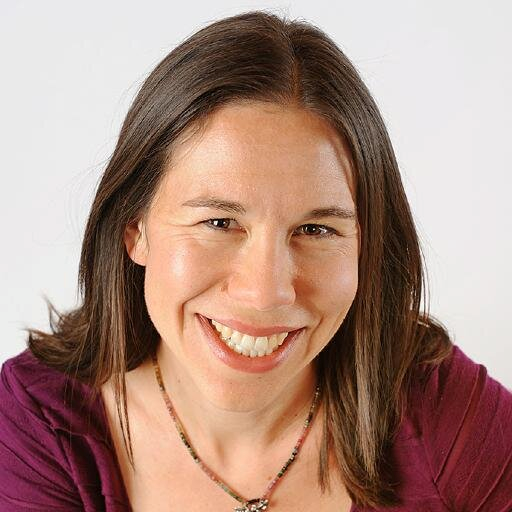
There was a column in The Daily Telegraph last month by Charlotte Runcie, who, as far as I can tell, is a poet and freelance journalist.  Her column includes five egregious examples of famous authors whose books were turned down by publishers.

Charlotte_Runcie-small

Charlotte Runcie

Carrie

Stephen King received so many rejection letters for Carrie that he kept them all on a spike in his bedroom.  When it was first published in 1974, it was a runaway success, and the paperback sold more than a million copies in its first year.

Harry Potter and the Philosopher’s Stone

J K Rowling’s first Harry Potter manuscript was snubbed by 12 different publishers.  Eventually, Bloomsbury took a chance on the debut novelist: they offered an advance of £1500 and suggested she get a day job, just in case.

The Spy Who Came in from the Cold

John le Carré’s Cold War classic was brutally rejected by a publisher whose dismissive verdict was that the writer hadn’t ‘got any future’.  Still, it fared better than William Golding’s Lord of the Flies, which was turned down 20 times.

Lolita

This daring novel was rejected by so many American publishers, including one who recommended ‘it be buried under a stone for a thousand years’, that Vladimir Nabokov eventually published it in France – a more enlightened market.

Moby Dick

Herman Melville’s manuscript was dismissed with a despairing note from a publisher who said, ‘First, we must ask, does it have to be a whale?  While this is rather delightful, if somewhat esoteric, plot device, we recommend an antagonist with a more popular visage among the younger readers.  For instance, could not the Captain be struggling with a depravity towards young, perhaps voluptuous maidens?’  The book was eventually published, whale and all, but Melville had to fund the typesetting himself.”

As Andrew Michael Hurley said about the frustrations of writers finding a willing publisher, in a previous post: “So many times you feel like giving up and thinking, this isn’t going to happen.  But it does. It absolutely does.”

Publishing Success

There is a story in The Daily Telegraph last month about how Andrew Michael Hurley achieved success with his first novel, The Loney which won the Costa Prize for the year’s best first novel.  This May, it won the Book of the Year award at the British Book Industry Awards.   Hurley is a former teacher from Preston (northern England).  He self-published two collections of stories before taking up part-time work as a librarian, so that he would have time to work on a novel.  He spent almost four years working on The Loney before showing it to friends and colleagues.

images

Andrew Michael Hurley

The people who read it, he recalls, “Said it was great – but where would it go in bookstores?”  (The novel is set on a wild stretch of northwest English coast, and mixes captivating descriptions of the landscapes with a mixture of the ridiculous and the terrifying.)  The article says, “It follows the activities of a small group of hardline Catholics – the narrator, his developmentally challenged adult brother, his fervently religious parents and two elderly friends – as they mount an expedition to a holy well in the company of their new parish priest.”

Three years ago, Mr Hurley couldn’t find a publisher anywhere.  “He sent it to agents and small publishers, all of whom responded either with silence or with polite notes of refusal.  Eventually, searching the internet for possible publishers, he came across Tartarus, a small press specialising in ‘literary supernatural/strange/horror fiction’ and run from a house in the Yorkshire Dales by the writers Ray Russell and Rosalie Parker.  ‘It was just one of many books when it arrived,’ says Russell.  ‘Ros read it and loved it, but I was slightly sceptical, mainly because over the years we’d had the impression that our customers preferred short story collections.  But as Ros said, the whole idea of Tartarus was to publish books that we liked – and if we liked then, hopefully other people would as well.’

“In London, the sharp-eyed publisher Mark Richards at John Murray read the book and recognised it, he says, as ‘a first novel of extraordinary assuredness.  It felt like the work of someone who had been writing for 40 years.’  He made contact with Hurley and the proprietors of Tartarus and arranged ‘to bring it to the mass market audience that the book could definitely reach.’

“Hurley says, ‘I’m 41 now, so it’s been a long time coming.  I’m very grateful that I can concentrate on doing something that I love more than anything else.  All the rest is just an added – though very welcome – extra. . . . I’m terrible at giving advise on writing,’ he says, ‘but perseverance has to be the key.  So many times you feel like giving up and thinking, this isn’t going to happen.  But it does.  It absolutely does.'”

When Your Book Becomes a Movie: Rewards and Pitfalls

Carol Pinchefsky has an article under the title Wizard Oil on the Intergalactic Medicine Show website about the pros and cons of having your book become a movie. She is a freelance writer of technology, games, and geekery for various publications living in New York.  Extracted below are some of the key points she makes.
index

Carol Pinchefsky

The Lord of the Rings films and the combined Harry Potter films have earned $7.3 billion. Both sets of movies were adapted from books.  Royalties from her adaptations have helped make Harry Potter author J.K. Rowling the second richest woman in entertainment, as well as the richest author in history. This number is higher than the gross domestic product of some small countries, including the Bahamas and Mongolia, enough to keep an author in orchid-scented paper and gold-dusted typewriter ribbon for several lifetimes. Most science fiction and fantasy authors are happy to get by on a fraction of that amount.

“Here’s how it works: a producer or production company ‘options’ a book — that is, buys the rights (typically for several thousand dollars) to adapt the book for a period of time (typically from eighteen months to two years). If the producers have not adapted the book when the agreed-upon the period of time lapses, the rights revert back to the author.  Few books that are optioned are actually produced; some books get optioned more than once. Although most optioned books languish in “development hell,” with promises of big-name stars dangled in front of the author, only to have the project stymied for years on end, sometimes these promises come to life.  . . . For some authors, seeing their books turned into extravagantly funded film is the culmination of a dream.  But is having a book adapted a good experience for the author?

“Financially, yes. The option fee is like free money: thousands of dollars for what amounts to almost no extra work. And if the book gets produced, the author receives royalties–even more free money.  Plus, books adapted for film or television also get an exposure and recognition that other books do not; curious cinephiles often find their ways to original material of a show they’ve enjoyed. This can catapult an author from a position of moderate success into bestsellerdom.

“But adaptation is not without potential hazards: comically bad acting, stupefying dialog, and a complete and utter lack of understanding of the original book have made their way into the cinema and onto the television…all bearing the name of the author.  (This happens with such frequency that fans of a particular book are reluctant to watch adaptations of their favorite books. Even though they would like to share their passion with the world, fans can bitterly resent shoddy or inconsistent portrait.  The author has no recourse, except to divorce him/herself from the production. But by then, her/his name has become linked to a disaster. For some, no amount of money can heal a wounded reputation.

“However, several authors can proudly bear witness to successes, where they’ve sat on set, consulted with the director, and even contributed to the script. More important to them, they have seen the characters and the worlds they’ve created come alive. “I went to visit the set, and my characters are there, only everybody else can see them too,” says Jim Butcher, author of the Dresden Files, now a new series on the SciFi channel.  Butcher’s joy did not end there. ‘I got to be an extra in one of the shots, I get to be one of Butters’ assistants and morgue guys and I help carry out a coffin.’

“Tanya Huff, author of Vicki Nelson Investigates series, says that not only was she treated well by the producers and asked her opinion on casting decisions, ‘I was so incredibly honoured to be asked to write a script for the show.  I’d never written a script…writing for television being very, very different than writing for print.’

“Despite their positive experiences, some authors were not completely unscathed. Although Mike Mignola, author of the Hellboy, was not present during initial talks with producers, he found that part of the process slightly uncomfortable: ‘They’re dissecting and reassembling your child. You don’t want to be in the room for that.’ For Butcher, ‘if anything, the worst thing has been critics. Apparently now that there’s success, the critics feel much more free to whip out the scalpels and go at you to draw blood.’  But those negative experiences pale next to the worst-case scenario that happened to acclaimed author Ursula K. Le Guin.  The adaptation of her Earthsea series had only a passing resemblance to her original material, for example, dark-skinned characters were made white. Le Guin disowned the made-for-TV movie.  ‘Despite lavish ‘promises’ of consultation, I was entirely excluded from the process. Both films were exploitive, using my books merely for the name and some character names and ideas, but arbitrarily changing and ‘stupidifying’ the story,’ says Le Guin.

“Authors find it flattering to know that people with money care enough about their book to spend months of their lives and millions of dollars on it. But this balm to the ego should not replace common sense. The authors whose books have been adapted have advice:

“Butcher says, ‘Make sure you’re working with an agent you can rely on. Make sure you stay in close contact with your agent. Make sure you read all the contracts, because they say things and you think you know what they mean and you don’t.’

“Le Guin says, “When it comes to the actual contract: If they tell you they love your marvelous book and are going to put it straight onto the screen just as it is, if they promise to send you the screenplay and listen to your reactions to it because they know you are greater than Shakespeare, if they give you a fancy title such as Creative Consultant–even if they give you some money to be Creative Consultant–if they tell you they will consult with you on all important points–don’t believe them…. Mostly the rule for the author is ‘Take the money and run.’ And never look back.’

“Huff says, ‘If the process goes off the rails, as sometimes it does, give your readers credit enough to realize that you had nothing to do with it. And if, as in my case, it’s a wonderfully realized extension of your work, smile and say thank you.’

“Authors with a specific vision as to how their works should be portrayed, and are not willing to compromise, should not allow their books to be filmed–no matter how tempting the financial reward (potentially billions of dollars, but more likely in the tens or perhaps hundreds of thousands). Know yourself.  Mignola says, ‘You have to remember film is an entirely different medium…. I think hopefully nobody is so naive that they think their work is going to be preserved as is on screen. And you don’t want them to mess with it, don’t let them have it.’

“But many authors would like to see their books reach a larger audience while concurrently lining their pockets. How does an author get her/his books turned into the next Hollywood blockbuster?  In all cases, my interviewees were approached by a production company, rather than contacting a production company themselves.  Literary agent Joshua A. Bilmes says this is almost always the case. ‘Just about every project that I have sold to Hollywood has been from somebody finding their own way to a property and wanting it.’

“‘You have to contact someone who has contacts in the film industry. There’s not a lot of forums for unsolicited work to get seen by the film industry,’ says Eli Kirschner, who works for Created By, a management company that specializes in adapting popular books into movies.  Kirschner says the best way for an author to get his/her works adapted is ‘getting your books publicized…. If a writer isn’t really well known or doesn’t get an Entertainment Weekly and Publisher’s Weekly review…I’d say that they do kind of have to know someone in the film business.’ Failing that, ‘If an author believes in his work, he can make a trip to LA and get his book in the hands of people who can do something with it,’ says Kirschner.

“Having a novel adapted is an arduous, lengthy process for an author. And for those who create their own universes and tend to work alone, the loss of control can be unsettling.

“But for some authors, the potential rewards outweigh the very real risks. As Huff says, ‘I have had my character, Henry Fitzroy’s, teeth at my throat. It doesn’t get better than that.'”


Writing Contests: A Cautionary Tale

Warren Adler published the following article, extracted below, on the Huffington Post Books page in June of last year.  Until I read it, I hadn’t realised there was such explosive growth of on-line writing contests.

Warren Adler is best known for The War of the Roses, his masterpiece fictionalization of a macabre divorce turned into the Golden Globe and BAFTA nominated dark comedy hit starring Michael Douglas, Kathleen Turner and Danny DeVito. Adler’s international hit stage adaptation of the novel will premiere on Broadway in 2016. Adler has also optioned and sold film rights for a number of his works including Random Hearts, The Sunset Gang, The War of the Roses – The Children,Target Churchill, Residue, Mourning Glory, and Capitol Crimes.

index

Warren Adler

“When I started the Warren Adler Short Story Contest in 2006 I had rather lofty ideas about integrity and fidelity to the goal of resurrecting the popularity of the short story which was in decline. I appointed qualified people, meaning people who were either authors themselves or teachers of literature or creative writing with the taste and experience to judge the submissions honestly.

“It was a difficult chore at best and I wanted to guarantee that those who were the chosen winners were the very best of those who submitted their work. I offered cash prizes out of my own pocket. The first Prize Winner received $1000 and prizes were offered for our second and third choices. The submissions were free of charge.

“In addition to the cash prizes I promised that the prizewinning stories would be published as an e-book anthology on Amazon and offered for sale with royalties given to the authors of the stories. My hope, of course, was to give a boost not only to the short story format but also to the writing careers of the talented writers who participated. The book, as promised, is available on Amazon.

“The digital publishing revolution was in its infancy and I believe I was the first novelist to ever create such a contest on the Internet. As the cyber world grew so did the submissions. It became difficult and time consuming to read all of the offerings and finding enough quality judges to devote the time to honest assessment was becoming exceedingly burdensome to administer. The last thing I wanted to do was jeopardize the integrity of the contest.

“Eventually I had no choice but to begin charging a small submission fee designed to perhaps curb the number of submissions as well as to provide judges with a stipend that would make it worth their time. Above all, the goal was to maintain the integrity of the contest and further the original goals of the enterprise.

“After seven years of sponsoring the contest, I opted for a hiatus. It was a victim of its own success. To do it right required time, personnel and resources. I finally suspended the contest. I had no desire to create a startup and it was interfering with my own busy writing career.

“What I didn’t imagine was the tsunami of writing contests that it inspired. Worse, I never suspected that it would serve as a business model for entrepreneurs to get into the game just for profit.

“I am somewhat suspect of the value these contests hold for participants.

“Self-publishing requires self-promotion. It is an absolute necessity and comes with the territory, requiring time, effort and funding. The goal is “discoverability.” Most never achieve it, regardless of the quality of their work.

“The rise of self-published fiction authors has been spectacular. Unfortunately the glut has made it difficult for them to stand out from the crowd however excellent their writing is. Genre writers with promotional skills along with lots of money and time might find a niche, although the odds of making enough money to give up their day job is long.

“These writing contests, with their prestigious sounding names, offer the impression of quality promotion for the winners and, of course, bragging rights which can be dubious and of suspect value. One wonders who the judges are that are taking on such a massive amount of submissions. Few of these contest sponsors reveal their methods or the people who read this mass of material and make their judgments. It is often true of the most prestigious awards like the Pulitzer and the Nobel and I often wonder how some of the winners have reached the attention of the judges and who makes the screening decisions.

“By and large, internet-based contests tend to always charge a submission fee, which accounts for the sponsor’s profits as well as its proliferation. Considering that these contests are expanding they must be profitable for the sponsors and are inspiring others to create mirror image money-making opportunities using a similar business plan. Their targets are vulnerable, aspiring writers desperate for recognition and the realization of their dreams.

“Most of these contests are based upon dreams of literary glory, popularity, riches and movie adaptations on the part of authors. All truly believe that their work is deserving of recognition, popularity and prestige. Many probably fit that description. Indeed the sponsors know this and exploit it. It is the key to their monetary success.

“There is a great deal of literary talent out there who go unrecognized and do not attract the traditional publishers. Of course it works both ways. The traditional publishers sometimes gamble on first novels and often lose their bets in the sales arena. Such is the nature of the beast.

“This is not meant to be a blanket condemnation of writing contests. But since the Internet is a vast swamp of snake oil salesman hawking worthless schemes, products and ideas, consider this a cautionary tale.”

My experience of writing contests is very similar to the picture Mr Adler paints.  I have entered a number of contests with most of my books, and I have won some ‘awards’ – but no money.  Even winning first place in a genre did not merit a financial award.  So, I have a wall covered with award certificates.  Invariably, I had to pay an entry fee.  To me, this doesn’t seem unreasonable: there are administrative costs and (presumably) judges fees to be paid.  But, I have never learned how the judging would take place, let alone the identity of a single judge.  I attended one award ceremony in London, at which I expected a journalist or two to be present: there were none.  Attendees consisted of some of the authors who won awards and two low-ranking admin people representing the contest.

Having said this, I still try out new contests that appear to offer more value, particularly those that offer a critique of the work submitted.

Social Media

I would really like your comments on this post, because while I’m engaged with social media – as I’ll tell you below – I’m not sure I’m making the most efficient/effective use of the various social media.

index

First of all, let me tell you what I have.  I have a website: http://www.williampeace.net, which is actually put in place by my publisher, but I update it from time to time.  The website has a page for each of my books with a sample chapter, synopsis, information about awards, links to Amazon, etc., and a little bit about me.  This blog runs down the margin of the website.  I have an author’s page on Amazon.  On Facebook, in addition to my personal page, I have an author’s page and a page for each of my books.  I have recently started to advertise Sable Shadow & the Presence on Facebook, and I’m getting about 10 Likes per day.  I have an author’s page on Goodreads, where this blog also runs.  I am currently advertising four of my books on Goodreads, but I’m only getting one or two clicks a week: I’ve set a pretty low budget.  When I review a book I’ve read (about once a month), in addition to posting the review here, I post it on Amazon and Goodreads.  When I review a book on Goodreads, the review appears on my personal Facebook page.

Then, there is this blog.  This will be my two hundred and fourteenth post over the course of four and a half years.  Generally, I try to post once a week, and I aim the blog at people like me who are trying to make their way as writers, or who are interested in what writers think and do.  Last year, I paid about £250 for SEO – by my internet service provider – but I haven’t seen a major increase in hits: I’m up from about two per day to four per day – average.

I haven’t done Twitter, although I have registered.  My view is that Twitter isn’t a good vehicle for a busy writer (what could I say every day about writing in less than 140 characters?)  I haven’t done UTube, again because I don’t think it’s the right medium for me.  I looked into Pinterest, but again, I felt that it didn’t fit.

One thing I’m planning to do is to start answering reader’s questions on Goodreads.  That would seem to be a good investment of my time.

What else would you suggest?  I have only two constraints:

  1.   I haven’t got much free time, and what free time I have, I would rather write than promote.
  2.   I’m willing to spend some money, but I’d like to know that I’m getting a return on my investment.  So far, the return has been only what I’ve learned about social media.

Authors Prohibited from Writing Blurbs

Brooke Warner, of hybrid publisher She Writes Press, recently posted a blog on the HuffPost Books US website in which she was very critical of traditional publishers.  What happened was that a traditionally published author agreed to write a blurb for a book that was to be published by She Writes Press.  The author checked with her editor at one of the big five publishing houses and the blurb was pulled.

untitled

Brooke Warner

The reason for the decision is that there is a difference in ‘values’ between traditional publishers and other publishers: traditional publishers believe that “publishers should invest in authors, but authors should not invest in themselves”.

My reaction: this makes no sense at all!  Why should authors be prohibited from investing in themselves?

Ms Warner said: “What should matter about a book is how well written it is–not the author platform or brand or how many followers a would-be author has. And yet, from a business perspective, of course it makes sense that this is what publishers today must focus on–or risk decimation. I left traditional publishing after a particularly symbolic experience, when I was actively discouraged from acquiring a book I believed in wholeheartedly but then met with excessive enthusiasm (and a large advance to back it) for a proposal propelled by a fancy agent, celebrity endorsements, and a whole lotta hot air. It wasn’t cannon fodder, and it ended up doing well for the company, but I’d compromised. I left three months later.”

She continues: “If you are asked to blurb a book, what should matter is whether you believe in it. If you don’t, you don’t blurb it. If you care enough about the author or the book, you offer your endorsement. End of story. It’s your choice. A blurb is a gift to the author. Authors do not pay for blurbs. They work hard to get them because the industry tells authors that they matter, that they sell books. She Writes Press authors have scored amazing blurbs–blurbs from New York Times best-selling authors and champions of people’s dreams. A publishing company, in my opinion, does not have the right to mandate whom its authors advocate in an attempt to control its reputation or to distance itself from “the other.” To do so smacks of elitism, one of traditional publishing’s lasting and detrimental flaws. We’ve already arrived at a place where people judge books on the writing, not on how those books make it into the marketplace. It’s time for traditional publishing to catch up, to pull its head out of the sand. That it’s lost sight of publishing’s mandate–to champion good books–speaks to its values. And those are values I certainly don’t share.”

Ms Warner – she was apparently quite angry when she wrote the blog – then mentioned a specific example of the ‘values’ of the big five: “Simon & Schuster has a self-publishing imprint called Archway, run by Author Solutions (of very questionable ethics who’ve been sued by authors and whose track record you can Google), which, awkwardly and oddly, is owned by Random House/Penguin. (Apparently Simon & Schuster has no qualms about the self-publishing arm of their business being owned by their biggest and direct traditional competitor.) One of the great promises of Archway is that you might get published by Simon & Schuster–if your book sells well enough. But their traditionally published authors apparently can’t and won’t blurb you. So there you go–you’re the pissed-upon little sibling. They happily run a self-publishing imprint, but they do whatever they can to distance that “subset” from the preferred children.

The war between the traditional press and the ‘upstarts’ is heating up!

Dealing with Pirates

The July issue of IBPA Independent magazine has an article entitled “My Battle with Pirates” by Rhonda Rees.

untitled

Rhonda Rees

The article begins:

Late one evening, shortly after I had self-published Profit and Profit with Public Relations: Insider Secrets to Make You a Success, I decided to run a Google search for it – and there it was, staring me right in the face.  My book, along with hundreds of others, was being given away free with the simple click of a button.  By the time I had discovered this, one website had already given away 600 copies of my book, and another one, which had the nerve to say that it had my blessing, had given away 1,500 copies.  As you can imagine, I was shocked.  And as I now know, you may find yourself in this very same unwanted position.  Any book can be pirated online.  It’s not just the famous writers and recording artists who are being ripped off.  Even the fact that I trademarked and registered my title here in the United States didn’t keep my book safe, since many pirates are located overseas.

I decided to take her advice and run a Google search: “<title of book> free download”.  Three of my six novels produced results of commercial websites that had my copyright material on them.  Two of the three promise “free downloads”.  All three referred me to the website http://www.donnaplay.com, where I had to register to be eligible for the free downloads.  It turned out that I had to provide my credit card information, because after a five day free trial, there is a monthly fee.  So the downloads aren’t really free.

The two websites that initially came up promising free downloads had contact forms where I could request that the page be deleted from their site.  The third had a similar request form, but it was not live, and the telephone and email information was obviously false.

So what does Ms Rees recommend?

  • Run a Whois search to find information such as who owns the domain names, where and when they were registered, and when they expire.
  • Send out emails to find out what company is hosting the site so that a DMCA (Digital Millennium Copyright Act) notice can be sent out.  The notice has to be correctly worded and DMCA.com can help with that task.  There is also a free sample DMCA letter posted by Gene Quinn, a patent attorney and the founder of IPWatchdog.com (ipwatchdog.com/2009/07/06/sample-dmca-take-down-letter/id-4501)
  • Send the DMCA takedown notice by email to the web hosting company which is obligated to notify its clients (the culprits) within 24 hours to have them remove all the information.

I, also, was rather shocked that half of my novels are being pirated.  I think my next step will be to get my publisher involved with http://www.donnaplay.com.  If that illegal site has three of my novels, they must have at least one hundred of the publishers other titles.

I’ll keep you posted!

Payments by the Page

In yesterday’s Daily Telegraph there was an article “Amazon to Pay Authors by How Much We Read”.  It said that Amazon will begin paying royalties based on the number of pages read by Kindle users, rather than the books they download.  This system will begin on July 1 and “initially” applies to authors who self publish their books via the Kindle Direct Publishing Select (KDP Select), which makes books available to download from the Kindle library and to Amazon Prime customers.

The article said that if a reader abandons a book a quarter of the way in, the author will get only a quarter f the money they would have earned if the reader had finished the book.

Amazon claims its method is a fair way of rewarding authors who write lengthy books but have previously earned the same as someone who crafts 100 pages.  “We’re making this switch in response to great feedback we received from authors who asked us to better align payments with the length of books and how much customers read”, the company said.  “Under the new payment method, you’ll be paid for each page individual customers read of your book, the first time they read it.”  To prevent authors beating the system by enlarging the type and spreading our their work over a larger number of pages, Amazon has developed a “Kindle Edition Normalised Page Count” which standardises the font, line height and line spacing.

The article mentions Unfinished: Kindle’s most difficult books:

Capital in the 21st Century, by Thomas Piketty:  2.4% completed

A Brief History of Time, by Stephen Hawking: 6.6% completed

Thinking Fast and Slow, by Daniel Kahneman: 6.8% completed

Lean In, by Sheryl Sandberg: 12.3% completed

Flash Boys, by Michael Lewis: 21.7% completed

Also mentioned in the article was data released by Kobo, the Kindle rival, which showed that only 44% of readers finished The Goldfinch, by Donna Tartt, which was one of the biggest sellers in 2014.

Hari Kunzru, the award-winning author of The Impressionist, said the system “feels like the thin edge of a wedge.”

Peter Maass, a writer and editor, said on Twitter: “I’d like the same in restaurants – pay for how much of a burger I eat.”

Kerry Wilkinson, whose Jessica Daniel crime series propelled him to the top of the Amazon bestseller list as a self-published author, believes the system is fair.  “If readers give up on a title after half a dozen pages, why should the writer be paid in full?” he said.  “If authors don’t like it, they don’t have to use KDP Select.  It’s opt in, not opt out.”  But Wilkinson found it “eerie” that Amazon was keeping tabs on what – and how – you are reading.  Even if it’s anonymous, that’s a lot of data mining.”

To Kunzru’s comment, there is no reason this system could not be extended to all Kindle editions, so that whoever holds the copyright (usually the publisher) would be paid on the percentage of a title that is read.  And, of course, other e-books (like Kobo) could adopt the same system.  So, it definitely sounds to me like the thin edge of the wedge.

I think the system sounds fair for mass market books which are intended for a broad group of readers.  I suspect that readers of crime, thriller, romance, historical novels (and other genres) generally finish the books they have bought.  But I also suspect that non-fiction books (such as self-help, political, business, nature, science, environment, etc.) are probably not finished in many cases.  Does this suggest that their authors deserve a lesser reward?  I don’t think so (only one of my published books – from long ago – is in one of the latter categories).  A reader may buy a non-fiction book, read 25% of it, and still be pleased with the book: s/he may well feel that s/he got her money’s worth, and in such a case shouldn’t the author get the full royalty?

The other concern I have is about works of top-class, leading edge fiction.  The Hawk comes to mind.  I suspect that quite a few readers decided that the prose or the subject matter was not for them.  This may also be true of works by Salman Rushdie or Jonathan Franzen, where the writing just went over the reader’s head.  I suppose that one could argue that if a potential reader had to pay only say 25% of the cost of a book to try it, that would provide the reader with an incentive to buy it and at least try it.  And, it would provide the author with at least some compensation.  I’ll be interested to hear what the top-class authors have to say about the Amazon scheme.  I don’t think they’re going to like it.  After all, they’re probably selling a lot of books that end up on the I Once Tried to Read This shelf.


Amazon: Friend or Foe?

An article entitled: “Amazon: Friend or Foe? A Simple Question with a Complicated Answer” is in the June 2015 issue of the Independent, the monthly journal of the Independent Book Publishers Association.  It is written by Mike Shatzkin, who is CEO of The Idea Logical Company and a publishing industry consultant.  His blog, the Shatzkin Files (idealog.com/blog) is the source of the article. I think it is worth summarising Mr Shatzkin’s points.

images

Mike Shatzkin

Mr Shatzkin begins by saying that Amazon has profoundly changed the publishing industry in three ways.  First, it has consolidated the book-buying audience online and delivers it with extraordinary efficiency.  For most publishers, Amazon is their most profitable account, if volume, returns and cost of servicing are taken into account.  Since this fact is almost never acknowledged, it is “one of the industry’s dirty little secrets”. For this reason, he says that Amazon must feel justified in trying to take more margin, an effort which the publishers resist because they don’t know where the demands will cease.  At the same time and in spite of the profitability of the Amazon account, many publishers feel more comfortable with a whole range of customer accounts.

Secondly, “Amazon just about singlehandedly created the e-book business”.  They made an e-reading device with built-in connectivity for direct downloading; this was done in pre-WiFi days so that Amazon was taking a risk that connection charges could destroy margins.  Amazon had the clout to persuade publishers to make more books available in e-versions, and they had the loyalty of book readers who bought e-books.

Finally, the success of the Kindle made self-publishing attractive.  E-books could be produced cheaply and sold at low prices with high margins.  It facilitated the process by creating an easy-to-use interface and efficient self-service.  Amazon represented a ready market for self-published e-books.

Shatzkin says that the first two of these three changes made Amazon a friend of the traditional publishing industry, while the third puts them more in the category of foe.

He goes on to say that Amazon’s data policies make them a foe: they do not share information.  Amazon does not use the industry standard identifier, the ISBN, for the titles that it publishes: it uses the ASIN and does not report on the volumes or the categories of ASIN’s.  There is a black hole in the data.

Amazon also does not report on its sales of used books.  The used book market may help publishers sell more new books as the used book market offers a means for buyers to get a portion of their investment back.  But at the same time, when used versions are available almost simultaneously with new books, they represent a downward pressure on new book prices.  Over time, as demand for a given title decreases and the volume of used copies for sale increases, the price of used copies will decline.  But only Amazon has the useful data about the used book market.

Traditional publishers have no idea how large Amazon’s proprietary book publishing business is.  What volumes?   What categories?  How will recently published Amazon titles affect the prospects for titles under consideration by traditional publishers?

Shatzkin says that Amazon never saw the book business as a stand alone business.  Rather, it was focused on creating “life-time customer value” across a broad range of products.  While it clearly dominates the English-speaking book world, language differences mean that book markets will remain ‘local’ for a long time and strong local players will be hard to dislodge.

He says that the Kindle and Amazon Prime are powerful tools to retain customer loyalty.  Once one subscribes to Prime, all shipping charges are waived, removing the incentive to buy from others.  And, of course, Amazon has the world’s largest selection of printed and digital books in one place.

Looking ahead, Shatzkin sees the subscription services, such as Scribd, Oyster, 24Symbols and Bookmate (as well as Amazon’s own Kindle Unlimited) as pulling customers away from á la carte book buying.  Most of these sales will come out of Amazon’s hide.

His conclusion: Amazon will remain dominant in most of the world for the foreseeable future.  Although, with the next round of marketplace changes, Amazon will be challenged as it will dominate a small portion of the overall market.

Books vs Politics

With an important election coming up in the UK in about six weeks, I decided that I ought to volunteer to help the political party which I favour.  At the last general election, I distributed leaflets door-to-door, and occasionally I would get a chance to talk to a voter.  This time, I responded to a general email soliciting help, and I found myself assigned to a constituency fifteen miles from home.  This made no sense to me (perhaps the party desperately needed help in the distant constituency), so I offered my services to the local party operation.  “What kind of work you want to do?” I was asked.  Did I want to canvas voters, or distribute literature or help out in the office?  “Where do you most need the help?” I asked.  “In the office.”

Since then, I’ve dedicated one afternoon a week to working in the local party office.  (I don’t mention which party, because this is not a political solicitation.)  My job is to input data: voting intentions, views on certain important questions, email addresses and phone numbers into a database which included all but the most recently registered voters.  This data is then used in advertisements, mail shots, emails, etc.  For me, the biggest challenge is reading the email addresses which volunteers scribble down on the doorstep.  I can usually get the gist of their other scribbled comments.

The office is quite a busy place.  On any given day, there are about four paid staff and another four volunteers beavering away.  Frequent visitors are the candidates, themselves, who come in to fill up their voter input memory, to talk strategy with the staff, or to review an outgoing missive.  Candidates are always very kindly and polite to the volunteers, but our opinions are not solicited: we are input generators.

One of the candidates, Dan, in particular (the office covers several constituencies), faces a particularly up-hill battle.  He faces an incumbent who is a mover and shaker in his party, and he won the last election with a substantial majority.  I don’t particularly like the incumbent.  I went to see him about an issue on which I felt strongly and on which Parliament would be voting.  I was in his presence for ten minutes, nine minutes of which was him talking around the topic.  I’m quite sure my one minute made no impression on him, and he voted against my view.

So, I’ve been thinking that new, up-and-coming authors are a lot like Dan: struggling to gain recognition in the face of an incumbent opponent (famous author), whom most of the voters (book buyers), know and recognise.  Maybe sometimes the party (publisher) will put enough money behind the candidate (new author) that New Author actually wins.  Or maybe Incumbent (Famous Author) makes enough mistakes and Candidate (New Author) has such a compelling pitch (The Book) that New Author wins.  Or maybe New Author and Candidate just get lucky and win a Seat in Parliament (Book Prize).

I’ll let you know what happens!