Famous Writing Quotes

The Reedsy blog has 170 quotations on writing from famous writers.  Here are some of my favourites:
  •  “You should write because you love the shape of stories and sentences and the creation of different words on a page. Writing comes from reading, and reading is the finest teacher of how to write.” — Annie Proulx
  • “The greatest part of a writer’s time is spent in reading, in order to write; a man will turn over half a library to make one book.” — Samuel Johnson
  • “Find a subject you care about and which you in your heart feel others should care about. It is this genuine caring, not your games with language, which will be the most compelling and seductive element in your style.” — Stephen King
  • “Write what disturbs you, what you fear, what you have not been willing to speak about. Be willing to be split open.” — Natalie Goldberg
  • “Sometimes the ideas just come to me. Other times I have to sweat and almost bleed to make ideas come. It’s a mysterious process, but I hope I never find out exactly how it works. I like a mystery, as you may have noticed.” — J.K. Rowling
  •  “Your writing voice is the deepest possible reflection of who you are. The job of your voice is not to seduce or flatter or make well-shaped sentences. In your voice, your readers should be able to hear the contents of your mind, your heart, your soul.” — Meg Rosoff
  • “There are some books that refuse to be written. They stand their ground year after year and will not be persuaded. It isn’t because the book is not there and worth being written — it is only because the right form of the story does not present itself. There is only one right form for a story and, if you fail to find that form, the story will not tell itself.” — Mark Twain
  • “First, find out what your hero wants, then just follow him.” — Ray Bradbury
  • “Get it down. Take chances. It may be bad, but it’s the only way you can do anything really good.” — William Faulkner
  •  “Abandon the idea that you are ever going to finish. Lose track of the 400 pages and write just one page for each day, it helps. Then when it gets finished, you are always surprised.” — John Steinbeck
  • “I don’t wait for moods. You accomplish nothing if you do that. Your mind must know it has got to get down to work.” — Pearl S. Buck
  • “I would advise any beginning writer to write the first drafts as if no one else will ever read them — without a thought about publication — and only in the last draft to consider how the work will look from the outside.” — Anne Tyler
  • “You don’t start out writing good stuff. You start out writing crap and thinking it’s good stuff, and then gradually you get better at it. That’s why I say one of the most valuable traits is persistence.” ― Octavia E. Butler
  •  “It is worth mentioning, for future reference, that the creative power which bubbles so pleasantly in beginning a new book quiets down after a time, and one goes on more steadily. Doubts creep in. Then one becomes resigned. Determination not to give in, and the sense of an impending shape keep one at it more than anything.” — Virginia Woolf
  • “When your story is ready for a rewrite, cut it to the bone. Get rid of every ounce of excess fat. This is going to hurt; revising a story down to the bare essentials is always a little like murdering children, but it must be done.” — Stephen King
  • “People say, ‘What advice do you have for people who want to be writers?’ I say, they don’t really need advice, they know they want to be writers, and they’re gonna do it. Those people who know that they really want to do this and are cut out for it, they know it.” — R.L. Stine
  • “Each writer is born with a repertory company in his head. Shakespeare has perhaps 20 players. I have 10 or so, and that’s a lot. As you get older, you become more skillful at casting them.” — Gore Vidal
Review: Gilead

I bought a copy of Gilead because it won the Pulitzer Prize of Fiction, and it appeared on a list of best twenty-first century novels.  It is written by Marilynne Robinson, who was born in 1943 and grew up in Sandoint, Idaho.  She graduated from Pembroke College magna cum laude and Phi Beta Kappa, receiving her doctorate in English from University of Washington.  Ms Robinson began teaching at the Iowa Writers’ Workshop in 1991, retiring in 2016.  Apart from Gilead, she has written three highly acclaimed novels and numerous essays and works of non-fiction.  Her novels are noted for their thematic depiction of both rural life and faith.

Marilynne Robinson

The novel begins in 1956 in Gilead, an unincorporated community in Adair County, Iowa, about 100 km southwest of Des Moines.  The Reverend John Ames, toward the end of his life, is beginning a letter to his young son which constitutes the book.  Ames is at least a third generation Congregational minister, and his father and grandfather were ordained ministers in Iowa and Kansas..  His first wife and daughter died, and he married a younger woman who visited his church about ten years ago.  The story includes anecdotes about his father, his childhood, his brother, Edward – a very bright atheist, and the search for the grave of his grandfather.  A particular focus is on the Broughton family; the father is a Presbyterian minister, also in his seventies; the son, Jack, is an enigmatic figure, who has a special relationship with Ames, dating back to his childhood, but Ames and Jack have difficulty confronting each other about Jacks sins and his agnosticism.  The language is gentle and pious; the setting is, as Edward says, ‘a backwater’.  Any significant actions have largely taken place somewhere else or in the past.  Nonetheless, this is a novel that captures the reader’s attention through the intellectual honest and simplicity of the Reverend Ames.

This isn’t a book about religion or faith per se, though there are references to one or the other on nearly every page.  Rather, it is a novel about the challenges of living a caring, devout, unadorned life, while the external world goes through its thoughtless, irresponsible gyrations.  The title of the novel raises the question of Jeremiah: “Is there no balm in Gilead?”  The answer has been the subject of religious debate for centuries.  There was a balm made from a tree in the region of Gilead (in Jordan), but how effective was it?  Gilead was a place famous for its iniquitous people.  There is also a traditional spiritual praising the balm of Gilead in spiritual terms.  Perhaps Ms Robinson’s intention was to stimulate her readers to consider the merits of Reverend Ames’ lifestyle.

The only reservation I had about this book is whether there should have been more engagement with members of the congregation to add dimensions to the question about the balm of Gilead, and less of the thoughts and musings of Reverend Ames, who, after all, is a clearly defined character from early in the novel.

We Need to Talk About Children’s Books in a Grown Up Way

There was an article in the Evening Standard on 28 January with the above title written by Katie Law, an ES journalist, covering the views of Lauren Child, the best-selling author-illustrator and current Children’s Laureate, on the problems faced by children’s books.

Lauren Child

Law says: “Lauren Child thinks children’s book publishing still gets a bad deal. It’s one of the reasons she is so happy to be a judge for this year’s Oscar’s Book Prize ‘There’s still a lot of snootiness about children’s books. Just look at the teeny-weeny percentage that get reviewed compared to adults. It’s as if there’s a kind of hierarchy.’

“Child is best known for her books featuring Clarice Bean, Charlie and Lola (who became a TV series), Ruby Redfort and Hubert Horatio, which together have sold more than five million copies worldwide. In the two decades since we first met quirky, snub-nosed Clarice Bean and her chaotic, trendy family, her legions of original fans have become adults. ‘The most touching experience in my whole career is talking to grown-ups who tell me what the book meant to them when they were growing up,’ says Child, 53. ‘It’s why I’m so passionate about the idea that children’s book writing and illustrating should get more recognition, and why prizes like Oscar’s Book Prize are so important, because there is so little coverage. We know that a child’s life can be changed by what they read, so why don’t we spend more time thinking about what that material is?’

“Pippi Longstocking, Mary Poppins and The Secret Garden — all of which she has illustrated — were the books that had the most profound effect on Child when she was growing up. ‘The Secret Garden was a gamechanger because it was about someone who was so hard to like. She was plain, had a horrible expression on her face, was bossy and ungrateful. As a child I felt like her, I felt all of those things. I felt it was me. So for children who might think bad things about themselves, these stories can help let them off the hook. It’s all a drip-drip effect, which is why it’s important we talk about children’s books in a grown-up way, in terms of what they’re about, rather than just saying ‘Isn’t it lovely?’

Clarice Bean

“Ms Child says: ‘We’re great at giving prizes for unusual adults’ books but not so good at praising people who have different ideas about children’s books; things need to be a bit more extraordinary.’ Her own trajectory is a great example: Clarice Bean only took off when she stopped trying to please her publishers. ‘I was young and kept trying to do what they wanted and getting it wrong, so every time I rewrote or redrew something, it would get more dead. It had none of me in it, so quite rightly they rejected it. I actually started writing Clarice Bean as a film and forgot about all the things you need to make a book, and that’s when the publishers suddenly became interested. It’s about the need to reject everything you think they want and find your own voice.’

“The National Literacy Trust finds that one in 11 children and young people in the UK don’t own a book (a figure that rises to one in eight children on free school meals), and that book ownership is one of the highest predictors of reading attainment and mental well-being.

“Child grew up in Wiltshire in a happy family not unlike Clarice Bean’s. Today she lives in north London with her partner, criminal barrister Adrian Darbishire, and their daughter Tuesday, now nearly nine, whom she adopted from Mongolia at the age of two-and-a-half after visiting the country as part of a Unesco project.  ‘Having Tuesday doesn’t change the way I write or illustrate but it does make me see more than ever how important illustration is. We had no common language when she arrived. But we did have drawing, and she was a natural right from the start, which really helped us communicate. It’s important for children that their drawings are looked at and that it has a wide role in education because it’s about learning to observe and understand, just like creative writing, and having these skills can make you much more empathetic.'”

I particularly agree with what Ms Child says about book publishers: they don’t know what they want, but when they find something eclectic that is well-written and full of the author’s passion, they go for it.


An Unwelcome Prize?

Last week’s Saturday Telegraph  had and article by Tristram Fane Saunders with the title, ‘Does Anybody Want To Be the Poet Laureate?’

In my early years at university, I used to write reams of ‘classic’, romantic poetry in iambic pentameter, and I would have been enchanted with the thought of being Poet Laureate of anywhere – even Atlantic City – if it had been offered to me.  But, had I read Mr Saunders’ article at the time, I might have had second thoughts.   As far as I can tell, Mr Saunders is a poet, a comic, writer,  translator, commentator for the Telegraph, and all around culture vulture.

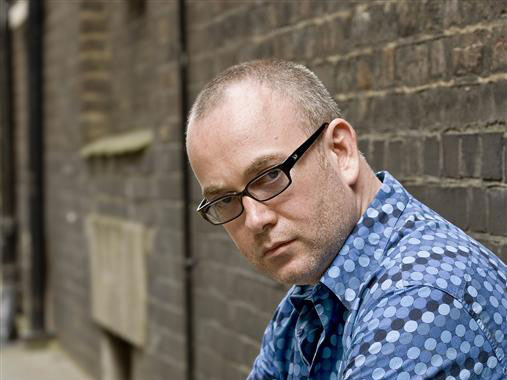
Tristram Fane Saunders

He says, “Who would want to be poet laureate? John Skelton, Henry VIII’s tutor and self-proclaimed “Lauryate”, had to put up with rivals “rudely revilyng me in the kynges noble hall”, and royal poets have faced mud-slinging ever since – especially from other poets.

“Dryden, the first modern laureate, called his successor, Shadwell, “a foul mass of corrupted matter”. George III’s poet Pye was guilty of churning out verse “doggedly and dully” according to Southey, who found he suffered from the same problem on inheriting the post.

“In 1999, the appointment of Andrew Motion was denounced as “a shameful failure of integrity and imagination” by Carol Ann Duffy. She had nothing against Motion, but felt the job should have gone to a woman. (Of course, a decade later, for the first time in history, it did.)

“As Duffy’s 10-year tenure comes to an end this year, it’s time for the country to choose its new bardic mascot. But who makes that choice? Until now it has been shrouded in obfuscation, but this time the Government has laid the whole process bare. A “steering group” of 15 named experts has been assembled from the heads of various literary festivals, libraries and poetry organisations around the UK. The group has drawn up a shortlist of four or five poets, culled from a longer list after a bit of back-and-forth with the Department for Digital, Culture, Media and Sport (DCMS).

“It is now up to the DCMS to make the final selection – or selections, if the first choice turns the post down, as Philip Larkin did in 1984. As a formality, the decision is passed on to the Prime Minister, who then submits it to the Queen for approval. In practice, however, the buck stops with the head of the DCMS, Culture Secretary Jeremy Wright.

“I don’t envy the steering group’s job. After all, how can you choose a laureate, when it’s still not altogether clear what a laureate is?

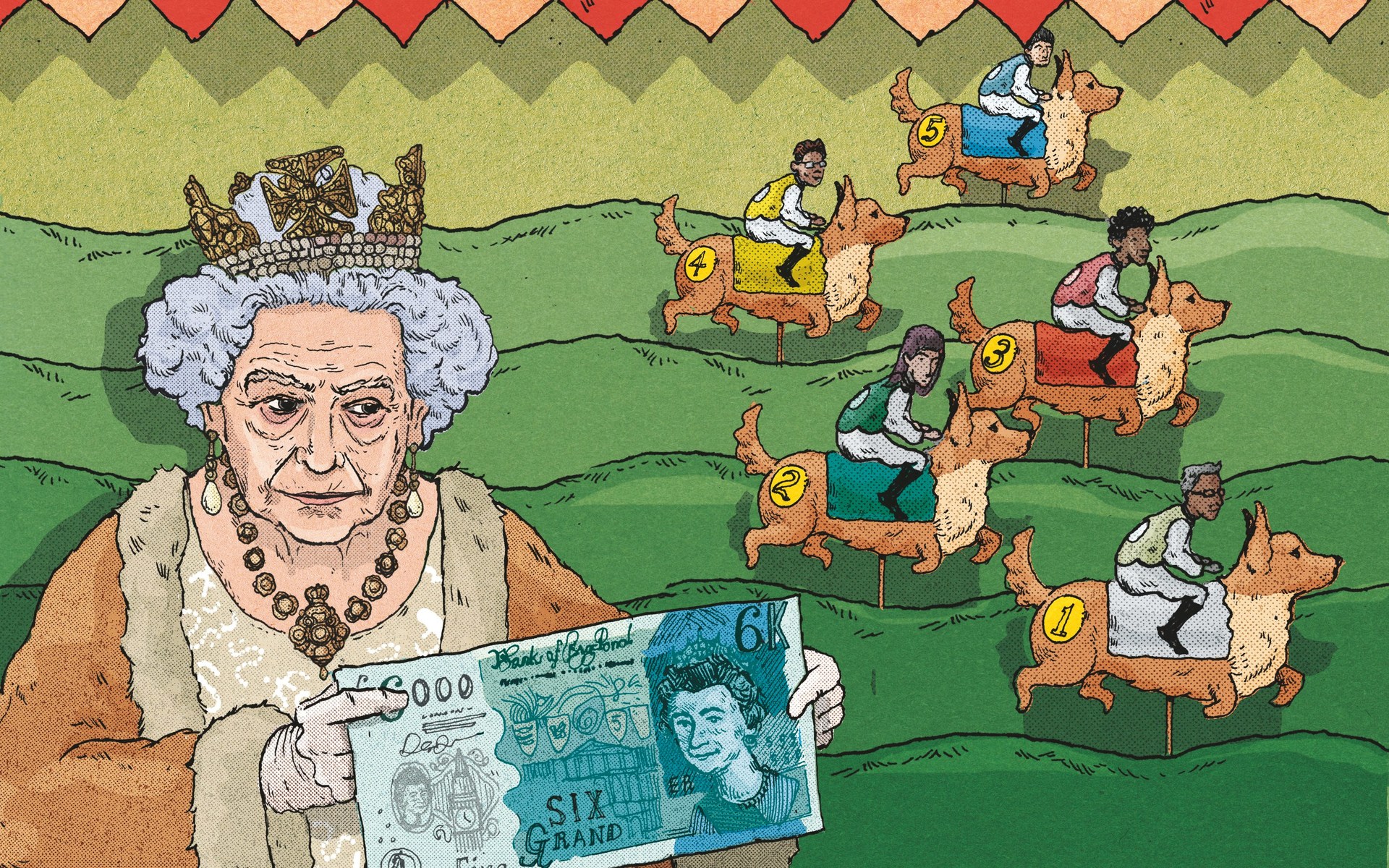
“In theory, being laureate entails no more work than being an OBE. The title is defined online by the royal household as “an honour awarded by HM to a poet whose work is of national significance”. Wordsworth only took the role after being assured by the Prime Minister that “you shall have nothing required of you”. The public may expect topical poems on state occasions, but the Queen doesn’t. Quit writing and move to Majorca, and you’ll still be eligible for your annual salary.

“That salary, as it happens, is £6,000, paid for by DCMS, and a “butt of sack” (cask of sherry) gifted by a vineyard in Spain. The booze was originally a gift received by Ben Jonson, unofficial laureate to James I and Charles I, then revived as part of Dryden’s honorarium. Duffy, Motion and Hughes all received their butt – measured into 720 bottles – from the same producers in Jerez.

“For the past 10 years Duffy has not been sitting on her butt, but giving it away at launches and selling it for charitable causes.

“The lack of hubbub around this year’s appointment is a far cry from the heady days of 1999, when the race was beset by one scandal after another. Rumours that Tony Blair wanted to “modernise” the position and reinvent it as a “People’s Laureate” (though denied by Downing Street) prompted an aghast letter from Hughes’s widow, leaked to the Telegraph, which accused Blair of jeopardising “the sanctity” of the post.

“Then a shortlist of five names was leaked, of which two had already ruled themselves out in verse: Seamus Heaney (“My passport’s green./ No glass of ours was ever raised/ To toast The Queen”) and Tony Harrison, who published a long poem attacking Blair, the monarchy and “toadies like Di-deifying Motion”.

“Derek Walcott, also on the list, was seen as a long shot by reporters at the time, due to doubts over whether he would be willing to move to the UK, and the lingering bad publicity of a 1996 sexual harassment allegation (though the claim was dropped). Of the five, that left only Motion and Duffy. Then came another leak: a Government “source” told the press Blair had quashed Duffy’s chances. The PM, it was claimed, was reportedly “worried about having a homosexual as poet laureate because of how it might play in Middle England”.

(In) “Bloomsbury, one bookseller is running an under-the-table sweepstake. I’m told three names have attracted significant bets from the literati there: Dalit Nagra, Alice Oswald and Lemn Sissay.  I’d add two more to that list: Jackie Kay, already Scotland’s laureate, and Simon Armitage, who’s been tipped as a laureate-in-waiting for at least 20 years.

“As for the laureateship, whoever gets it must have a thick skin. Take a leaf from Betjeman’s book. “Your appointment has been stigmatised as arbitrary and irrelevant,” Martin Amis once told the then poet laureate in a radio interview. “Do you, Sir John, feel yourself to be arbitrary and irrelevant?” Betjeman didn’t hesitate: “Yes, thank God.””

Review: I’d Die for You and Other Lost Stories

I found this book in a the English section of a book store in Capo d’Orlando, Sicily, and since I’d never read his work – of course, I’ve seen The Great Gatsby – I bought it, a collection of F Scott Fitzgerald’s unpublished short stories.  Perhaps the best feature of this book is that it is edited by Anne Margaret Daniel, and who provides a fascinating picture of the writer and his life through her notes and comments.

Anne Margaret Daniel

Her website says this about the editor: “Anne Margaret Daniel teaches at the New School University in New York City and at Bard College in Annandale-on-Hudson. Her articles and essays on literature and music have appeared for the past twenty years in books, critical editions, magazines, and journals from The New York Times to Hot Press to The Times Literary Supplement. Anne Margaret has degrees in American history and English literature from Harvard (A.B.), Georgetown (M.A.), and Princeton (Ph.D). She also has a J.D. from the University of Virginia School of Law. As a graduate student at Princeton in 1996, she gave the keynote lecture at the F. Scott Fitzgerald Centenary Conference held at his alma mater, and has published extensively on his writing, and on American Modernism, since.

There are eighteen short stories in this book, all previously unpublished.  Fitzgerald finished four novels: This Side of Paradise, The Beautiful and Damned, the Great Gatsby, Tender is the Night,  and, posthumously The Last Tycoon.  But he was a prolific short story-writer, with four collections of stories and 164 short stories published in magazines; he also worked as a screen-writer in Hollywood.  While his writing was popular during his lifetime, and he did achieve periods of financial success, he did not achieve critical acclaim until after his death in 1944.  (He was born in 1896.)  Much of his  writing was representative of the ‘Lost Generation’ of the 1920’s: jazz, flappers and speak-easys.  His short stories often appeared in the Saturday Evening Post, a magazine to which my parents subscribed.  He was an alcoholic from the time he graduated from Princeton; his heavy drinking lead to health problems in the 30’s and his death in ’44.

F Scott Fitzgerald

Most of the stories in this collection date from the 30’s, during the Depression, when Fitzgerald was trying to move his genre away from love stories about pretty, rich girls, parties and high living to the grittier aspects of real life.  During this period, his agent and publishing editors frequently demanded changes to soften the content, or rejected it entirely.  Also, during the period, he had spells of working in Hollywood, which, while financially attractive, was frustrating in that he viewed the literary output requirements as very ordinary and it took time away from his chosen pursuits.

His writing is imaginative and direct, without elaboration, and often involves a young, pretty, somewhat naive and love-struck girl and one or more older men with obvious character defects.  There is no sex, but it is sometimes implied.  The plot doesn’t end as one might expect, but rarely badly.

The first story in the book is The I.O.U. written in 1920 for Harper’s Bazaar which didn’t publish, nor did The Saturday Evening Post.  Fitzgerald was working on his second novel The Beautiful and Damned at the time, and the story was ‘lost in the shuffle’.  Yale’s Beinecke Library purchased the manuscript in 2012 for $194,500 (14 printed pages).  The story is a light-hearted satire of the publishing industry, featuring a stressed-out publisher, a mad-as-a-hatter psychic doctor/author, a war hero and a pretty girl.  The improbable antics are certainly entertaining, and the story ends with the public unmasking of the fraudulent author via an IOU for $3.80.

Gracie at Sea is a screen play scenario written for George Burns and Gracie Allen, who were a famous cinema comic duo at the time (1934).  It is based on the proposition that wealthy father will not allow his pretty, younger daughter to marry until her older, very awkward sister is married.  Gracie is the awkward sister and George Burns in the incompetent PR man hired to make Gracie look marriageable.  Everything goes wrong as one slap-stick scene follows another.  This may have worked in the hands of an able director, but as a screen play scenario written as a serious short story it falls completely flat, and Paramount didn’t buy it.

Travel Together written a year or two after Gracie at Sea concerns a Hollywood writer who is living the life of a hobo in order to gain experience for a screen play he is writing.  He meets a pretty, young hobo girl, with whom he travels to the west coast.  The girl is looking for a woman to whom her rich, senile father gave a large diamond just before he died; she views the diamond as her rightful inheritance.  It is a lovely, imaginative story.

There are plenty of other good stories in this collection; some of them ahead of their time in dealing with taboos like un-married pregnancy, illicit funding of college sports, suicide and criminal activities.  Fitzgerald wanted to tell it like it is, not like his audience might have wanted it to be.  This made his efforts to change genres more difficult, and his finances more strained, while his ventures into Hollywood were frustrating, and his own health and that of his wife were deteriorating.

Has Television Killed the Novel?

The Daily Telegraph had an article by Anita Singh, Arts and Entertainment Editor on January 3 in which Neil Cross, creator of the TV police series Luther, claimed that television has killed the novel.  He says that the 20th century was blessed with novels like Lady Chatterley’s Lover, Lolita, The Colour Purple and The Handmaiden’s Tale that changed the way we see the world, bu that there are no equivalents in the 21st century.

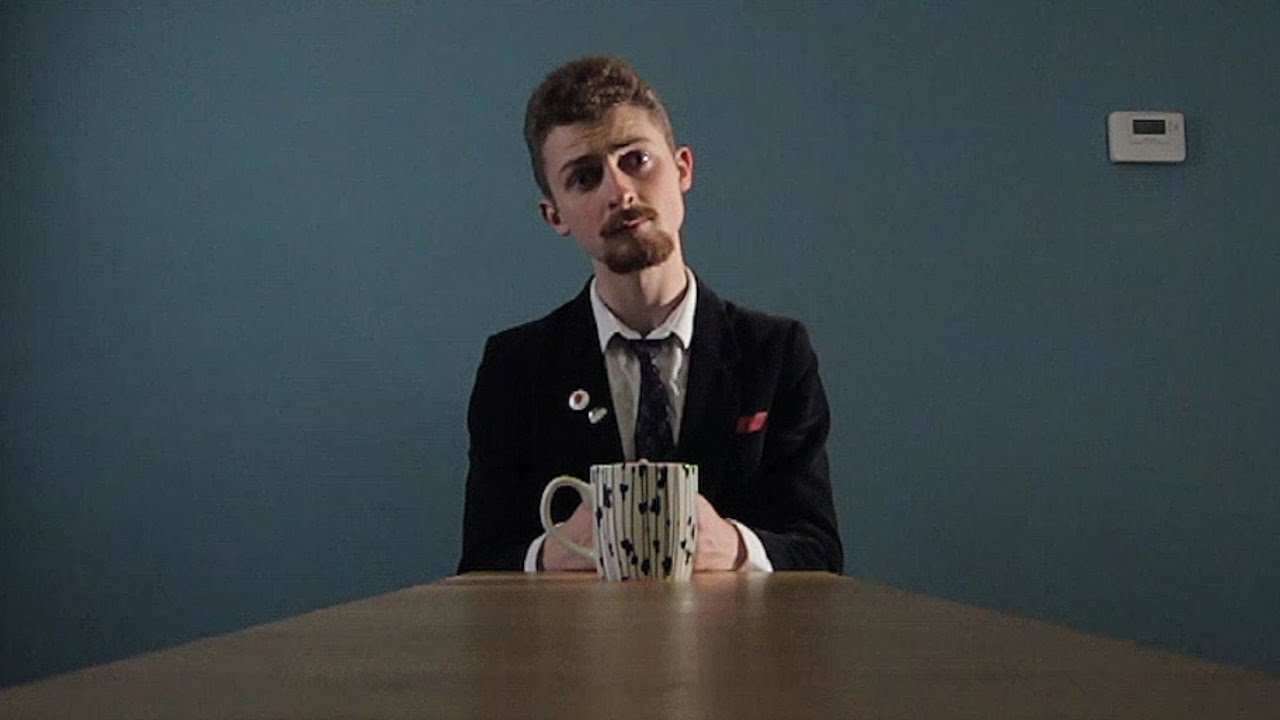
Neil Cross

Neil Cross was born in Bristol in 1969; he graduated from the university of Leeds with a degree in English and Theology.  His initial career was solely as a novelist, and his first novel, Mr In Between, was published in 1998 and later made into a film.   He has written seven titles for TV, the longest running of which is Luther; two screen plays and nine novels.  He lives in Wellington, New Zealand.

The article says: “Cross, who has written several novels of his own and a well-received memoir, said, ‘I like books, but I can’t think of a novel published since the year 2000 that is as culturally important as The Sopranos or The Wire or Breaking Bad.  I just think that the narrative function of television is supplanting the novel.’  He went on: ‘I think the way that television is being watched is replacing the societal and cultural function of the novel.  We consume television like we used to read books.  Instead of a chapter before I turn off my light, it is now one more TV episode before I turn the light off.’

“Cross argued that episodic television is ‘fulfilling a similar function’ to novels of the Victorian era ‘in the way that people talk about and analyse the characters’.  Writers including Charles Dickens and Henry James released their work in instalments, with readers keenly awaiting the next update.

The Sopranos, which began 20 years ago next week, was named by the Writers Guild of America as the best-written television series of all time.  The Wire and Breaking Bad, also US television dramas, were adored by critics and audiences alike.  Meanwhile the sales of literary fiction have been falling since the mid-Nineties.  The biggest sellers published this century have included The Da Vinci Code by Dan Brown, the later Harry Potter stories, the Fifty Shades of Grey books and The Twilight Saga.”

I think Mr Cross is neglectful when he says, ” I can’t think of a novel published since the year 2000 that is as culturally important as The Sopranos or The Wire or Breaking Bad.”  Just have a look at this list complied by the BBC:  http://www.bbc.com/culture/story/20150119-the-21st-centurys-12-best-novels.

I do agree, however, that “We consume television like we used to read books.”  But, I’m not sure it follows that television is killing the novel.  If we break ‘novel’ down into its genres, it is possible, in my view, that television is having an impact on the sales of thrillers,  But literary novels have their own problems: see: https://www.newstatesman.com/culture/books/2018/01/slow-death-literary-novel-sales-crisis-afflicting-fiction.


Review: The Choice

My wife read this book – an autobiography of an Auschwitz survivor – and recommended it so highly that I had to read it.  Dr Edith Eger, the author, was born Editke Elefant in Kosice, Slovakia (then part of Hungary) on 29 September 1927.  In early 1944, the Nazis occupied Hungary and forced Edith, her two sisters, Magda and Clara, her mother and father into the Kosice ghetto.  In May, 1944, when Edith was 16, she, her mother, father, and sister, Magda, were loaded onto cattle cars and sent to Auschwitz, where her mother and father were murdered; Clara, a violinist, is away from home at a concert, and survived the war with a false identity.

Edith Eger

Edith is made to dance by the infamous Dr Mengele.  Together, Edith and Magda endure the terror, famine, forced labour,and extreme hardship of Auschwitz; in late 1944, they are moved by train to Germany where they work as slave labourers in factories.  They are moved again to Austria.  Of the two thousand prisoners who were forced on a death march to Gunskirchen, the sisters are two of only one hundred who survive.  Edith was discovered in a pile of the dead, more dead than alive, by a US soldier in May 1945.  The sisters are nursed back to health and travel to Prague, where they are reunited with Clara.

They return to Kosice, and find their old house which has been occupied and looted.  Edith meets Bela Eger, a wealthy Jew, who has survived the war as an anti-Nazi, and they are married.  Many Hungarians feel threatened by the Communist take-over of Hungary and cast about for a safer refuge.  Clara emigrates to Australia, Magda chooses the US and Bela has made arrangements to start a business in Israel.  At the last moment Edith decides to take her baby daughter to America, and Bela goes, too, first to Brooklyn, then Baltimore and El Paso.  They face low wages, poor accommodation and discrimination.   Bela finds work as and accountant, and Edith gets her masters and doctorate degrees, becoming a clinical psychologist.   She has three children and now lives in La Jolla, California.

There are poignant descriptions of Edith’s journey to Hitler’s castle in the Bavarian mountains where she slept in Goebble’s bed, of her return to Auschwitz, and of her counselling sessions, particularly with soldiers suffering from post traumatic stress disorder.

The title of the book, The Choice, is derived from Edith’s belief that we cannot change the external events in our lives; we can only choose how we respond to them.  She and Magda chose to survive against all odds.  She also highlights a piece of advice from her mother: “They can never take away what you put in your mind.”

Perhaps the most important passage in the book occurs on page 307: Edith is recalling that on entering Auschwitz, Dr Mengele asked her, “Is she your mother or sister?”  She replied, “Mother,” and learned later that this choice effectively condemned her mother to death, as all those over 40 or under 14 were executed.  She says, “Could I have saved my mother?  Maybe.  And I will live all the rest of my life with that possibility.  And I can castigate myself for having made the wrong choice.  That is my prerogative.  Or I can accept that the more important choice is not the one that I made when I was hungry and terrified, when we were surrounded by dogs and guns and uncertainty, when I was sixteen; it’s the one I make now.  The choice to accept myself as I am; human, imperfect.”

This is a timeless book, well-written, that speaks constructively about life, death, humanity and uncertainty.

Creating An Author Persona for Interviews and Live Events

A post with the above title appeared on The Creative Penn blog back in September, and it caught my eye.  The Creative Penn is a business started by Joanna Penn, author, speaker and creative entrepreneur.  Her website says she is a New York Times and USA Today bestselling author of thrillers and non-fiction, and an international professional speaker and entrepreneur voted as one of The Guardian UK’s Top 100 Creative Professionals in 2013.

Joanna Penn with some of her books

“First let go of your belief that writers get to simply clack away at the keyboard, spinning tales and immersing themselves in story.  Most successful authors have social media accounts and go on blog tours, but they also complete interviews, participate in panels, set up book signings, and maybe even deliver keynote speeches.  These are great ways to build an audience, but a far cry for the reality most of us imagined when we dreamed of becoming authors.

“Shannon Baker has published seven books and says she still finds it difficult to network at conferences and meetings ‘Often, I’m hovering around the outskirts of conversation groups, feeling awkward and dull-witted.  Then, I get tongue-tied or flat-out say the wrong thing,’ Shannon says.

“Fortunately, there is a way for an introvert to navigate this situation and maintain her sanity: create an author persona.  Jess Lourey, an author of sixteen books says she received some of the best writing advice early in her career.  She says, ‘It came from Carl Brookins, a gruff, Minnesota mystery author with a background in television.  He said that to survive, I should create an author persona.  I told him I was no actor.  He said it’s not acting: it’s taking that gregarious, unique person we all have somewhere in us, and shoving her on stage,’

“The steps:

  1. When creating your author persona, try to keep your mask as close to your real face as possible, but make the public one more cheerier and more upbeat.
  2. Make a conscious decision about whether your public persona will discuss (online and in person) politics, religion, civil rights. i.e. important polarising issues. Shannon avoids these areas, Jess does not.  You have to decide what your comfort level is, but make the decision consciously and early so your audience knows what to expect.
  3. Choose one quality that you like about the real you, and amp that up in your author persona.  For Jess, it’s humour; for Shannon, it’s being an excellent listener.  Deciding what organic quality of yours you’ll rely on in public situations keeps it authentic while also giving you comfort.
  4. Finally, have a special wardrobe that  you save for author events.  Don’t go out and buy something new and expensive.  Rather, use your regular wardrobe, but make it a little more fun.  Some authors are know for wearing hats, or a scarf, or blue shoes.  The item/wardrobe signals to you that you’re about to perform.”

I think this is good advice, and I’ll welcome the opportunity to putting it into practice.

Yesterday, I received notification that my latest novel, Achieving Superpersonhood: Three East African Lives, was the winner, Inspirational, in the Beverly Hills Book Awards, 2018.


“Don’t Call It ‘Chick Lit'”

There was an article in the 20th October issue of The Daily Telegraph, written by Camilla Tominey, titled: Don’t refer to women’s fiction as chic lit, says author’.  “Books should not be referred to as ‘chick lit’ because more women than men read novels – and it should be men’s fiction that is the ‘sub-category’, the author of Big Little Lies has said.  Liane Moriarty, who sold the rights to the book to Nicole Kidman and Reese Witherspoon for a blockbuster TV series, said women’s fiction should never be treated as a sub-genre because women read more than men.”

Ms Moriarty’s page on Goodreads says: “Liane Moriarty is the Australian author of six internationally best-selling novels, Three Wishes, The Last Anniversary, What Alice Forgot, The Hypnotist’s Love Story and the number 1 New York Times bestsellers, The Husband’s Secret and Big Little Lies.  Her breakout novel The Husband’s Secret sold over three million copies worldwide, was a number 1 UK bestseller, an Amazon Best Book of 2013 and has been translated into over 40 languages. It spent over a year on the New York Times bestseller list. CBS Films has acquired the film rights.  With the launch of Big Little Lies, Liane became the first Australian author to have a novel debut at number one on the New York Times bestseller list. An HBO series based on Big Little Lies is currently in production, starring Nicole Kidman and Reese Witherspoon. . . . Liane lives in Sydney with her husband, son and daughter. Her new novel, Truly Madly Guilty, will be released in July 2016.”

Actually, the first series of Big Little Lies completed in April of last year, and a second series was announced in December. Ms Moriarty has since written Three Perfect Strangers.

Liane Moriarty

Most of the rest of the Telegraph article deals with Ms Moriarty’s excitement in meeting Nicole Kidman, reaching an agreement on the sale of rights, and of her creation a a character to be played by Meryl Streep, whose real name is Mary-Louise, we are informed.

But to return to the main point of the article, I certainly have some sympathy for the name given to what Wikipedia calls ‘genre fiction which consists of heroine-centered narratives that focus on the trials and tribulations of their individual protagonists”, because ‘chick lit’ has become a somewhat pejorative term.  Wikipedia goes on to say, “While chick lit has been very popular with readers, critics largely disapproved of the genre. Reviewer Alex Kuczynski, writing for The New York Times condemned Helen Fielding’s novel, in particular, writing ‘Bridget is such a sorry spectacle, wallowing in her man-crazed helplessness, that her foolishness cannot be excused.’ Writer Doris Lessing deemed the genre “instantly forgettable” while Beryl Bainbridge called the genre ‘a froth sort of thing’.

As I mentioned in an earlier blog, there are literary agencies which specialise in chick lit, though they don’t specifically say so; their focus is immediately clear from the covers and titles of their authors.  Chick lit is big business!

It seems to me that if Ms Moriarty doesn’t like her work to be called chick lit, she should change her subject matter and style or she should invent a new name for her genre – something like ‘Good Women’s’.   It certainly doesn’t classify at Literary Fiction.

To argue, in effect, that the chick lit genre should be deleted because women read more fiction than men – while it is true that women read more – doesn’t make sense.  How are we going to distinguish serious female writers like Kate Atkinson from writers like Helen Fielding?

London Literature Festival

My wife and I attended two events at the London Literature Festival: readings by Carol Ann Duffy (the Poet Laureate,) ‘and friends’; and an interview with Salman Rushdie, both at the Southbank Centre, London

Carol Ann Duffy was the last of four readers; the other three were Imtiaz Dharker, Keith Hutson and Mark Pajak.  Ms Duffy, born 1955, is a Scottish poet and playwright. She is Professor of Contemporary Poetry at Manchester Metropolitan University and was appointed Poet Laureate in 2009. She is the first woman, the first Scot and the first openly gay to hold the position.  Her poems address issues such as oppression, gender, and violence in an accessible language that has made them popular in schools.

Carol Ann Duffy

Of the four poets, I liked the readings of Mark Pajak best.  His poems were quite ordinary in their subjects – the one I liked best was about removing dead birds from a hen battery – but he has a way of expressing emotions with unique yet powerfully descriptive phrases.  This is a talent which I aspire to emulate.  Mr Pajak is quite a young poet, currently completing an MA in creative writing at Manchester Metropolitan University.   My wife’s preference was Imitiaz Dharker, a Pakistani-born, English poet in her mid-sixties.  Ms Duffy’s concluding poem was a bad-language rant against the corrupt elite using seven key words.  It was intended to be clever but for me, it came across as bombastic.

Salman Rushdie was interviewed by Erica Wagner, and American-born (1967) author and critic, who was literary editor of The Times from 1996 to 2013; she has written several books, including a novel, a collection of stories and a biography.  She has served twice as Booker Prize judge.

The discussion with Salman Rushdie began with Midnight’s Children, which he characterised as a history.   He made the point that one writes an historic novel, one must have a road map of places and events to be covered before one starts writing.  This road map makes the task of writing quite different than when one starts with a character-based novel, and lets the development of the characters control the flow of the novel.  He confessed to being very torn between Midnight’s Children and Children of Midnight.  After writing both titles down repeatedly on a sheet of paper, he woke up the next morning and realised that Midnight’s Children is the better title.  He said that while in Italian and Spanish, there is a similar choice between the two constructions, in French there is only one, so one has to be attentive to the advice of translators.

He confessed to be a reader who is ‘not anxious to turn the page’, and this confession reminded me of my criticism of Rushdie’s writing: that it is sometimes too verbose.

The narrator of his latest novel is a young man called René, and he made the point that it is an important decision for an author to select the narrator: there have to be good reasons for the selection.  I agree.  He then spoke about the difficulty for a seventy-year-old writer in getting into the head of a hip young New Yorker – though he didn’t mention his technique for the transformation.

Much of the dialogue with Ms Wagner was about The Golden House, Rushdie’s most recent, which is a parable of American politics, written after the Obama inauguration.  There is a Trump-like character who likes to refer to himself as The Joker.  Rushdie said, “In a deck of cards, only two of them don’t behave properly: One is the trump and the other is a joker.”  He read from The Golden House: “It was the year of The Joker in Gotham and beyond, as America had left reality behind and entered the comic-book universe. . . Suddenly lying was funny, and hatred was funny, and bigotry was funny.”

Suggesting that perhaps Donald Trump, The Joker is insane, Rushdie said, “people backed him because he was insane, not in spite of it. What would have disqualified any other candidate made him his followers’ hero.”

Most of The Golden House was  written before Trump was president, so it was prescient in predicting the outcome. “The book knew,” Rushdie joked.

Having met on several occasions, Rushdie and Trump are acquaintances, though there is some doubt that Trump has read the novel, not being much of a reader.  “I’m still waiting for that tweet.” Rushdie said.