Writing a Negative Review

Susan Violante, the Managing Editor, of Reader Views, places a post with this title on the Reader Views blog.  Since, as you know, I like to write reviews, and have occasionally been quite critical of what I have read, I was interested in what she had to say.

“Let’s face it, being a reviewer does not mean liking all books. There is a big chance that a book will not live up to the expectation of a reviewer, and thus result in a negative review. Other books simply do not even meet publishing standards in writing, editing, or production, in which case reviewers have trouble even completing the book. Being an author and a reviewer, I get both sides of the coin, and I have written many editorials from the author’s point of view about receiving a negative review of their title. This time, I want to focus on the reviewer’s end in hopes of helping reviewers write honest negative reviews, while remaining respectful and professional. Here are some tips on writing negative reviews:

“Do not let it get personal or be biased.  Actually, reviewers pretty much review only what they choose themselves. There is no need to take the author’s opinions personally and reflect that in the review. A review should be just an opinion of the storyline, the writer’s craft, and the book’s production.

“Being a reviewer is not all about reading; it has a lot to do with communication and the ability to express an opinion to an audience in writing. The success of a reviewer is actually measured on the size of their following audience, not on the number of reviews under their belt. This indicates the importance of the quality of their writing skills. If a reviewer communicates honestly and skilfully, the audience will look for that opinion before deciding to purchase a book. Readers want an impartial opinion about titles that will communicate to them the positive and negatives of the book as a product, so that they can decide whether to buy and read it.

“Enjoy reviewing. There are two kinds of reviewers. The ones that read because they love it, and get into reviewing; and the ones that won’t read unless they are reviewing. To the second type I say, please just stop. As a bookworm (writing and reading), I got into reviewing because I not only love to read, I also love to write, and even more, I love talking about what I read! Because I am having fun doing reviews, I will always find a positive and a negative in everything I read. Actually, sometimes I only find positives…but my point is that since I am reviewing only what I like to read, I will always be able to find a positive worth mentioning in my reviews, even when writing a negative review.

“Even if the book had flaws, or did not live up to the reviewer’s expectations, a reviewer needs to be respectful of the author’s efforts by choosing their words carefully when pointing out those flaws. There is no reason to be offensive when being honest, and reviewers who are passionate about books and reviewing will enjoy the process of writing a review that will be honest, yet respectful.”

I agree with what Ms Violante says.  I would add that keeping the format of the review professional can also keep a distance of professionalism between the author and the reviewer.  I usually start out with why I selected the book, and then give a summary of the story line in neutral language.  After the summary, I begin with what I liked about the book, followed by what I saw as its weaknesses.  It’s on the subject of weaknesses that tact needs to come into play: if in mentioning a weakness, I feel fairly certain that the author would understand and agree, I simply state the weakness using neutral language.  If I sense that it is just my opinion, or that the author might well disagree, I will say, “In my opinion . . .” or “It seems to me that . . .”

I usually end the review with a general positive recommendation, but if I don’t think that would be honest, I will say what kind of readers would like the book.  As far as I can remember, I’ve written only one one-star review, and that one ended without a recommendation.


Review: Midnight’s Children

Having finished the books I brought with me to Sicily, I went to the local bookstore which has a small selection of English language books, but I found nothing that intrigued me.  Looking on the bookshelves in the house, where guests occasionally leave books, I found Midnight’s Children by Salman Rushdie.  Mitigating against reading it were its length (647 pages), and its author (I’ve read The Satanic Verses and admired it, but didn’t particularly enjoy it).  The main factor in favour of reading it is that it is twice the winner of the Booker of Bookers: the best Booker Prize winner in the last 25 years and 40 years.

First Edition

The story, written in 1981, deals with the recent colonial past of the Indian subcontinent, its independence and its partition into two states: India and Pakistan.  The narrator is Saleem Sinai who was born at midnight, the precise moment of India’s independence, and who is telling the story to his future wife, Padma.  Saleem is born with a huge, dripping nose with exceptional olfactory powers, such that he is able to read thoughts and identify intentions.  He learns that all the children born at the moment of independence are gifted with extraordinary powers, and he forms a Midnight Children’s Conference to try to influence events, including political developments and subcontinental wars.    In particular, allegorical style is used to critique the governance of Indira Gandhi during the ‘Emergency’ period.  Mrs Gandhi brought a suit against Rushdie, not for his slating of her administration, but for a single sentence criticising her family relationships; this sentence has been removed from current editions.  As well as the Conference, the tale involves Saleem’s extended family: mother, father, sister, grandparents, aunts, uncles and his infant son.  The style of the book is magical realism, not conforming to any particular genre, it is factual, comical, suspenseful, magical, surreal, historical and mythic.

In his introduction to the 2006 edition, Rushdie says, “In the West, people tended to read Midnight’s Children as a fantasy, while in India, people thought of it as pretty realistic, almost a history book.”  Though I have traveled to India three times, and know something of its history and culture, I read the book primarily as a fantasy, which is a shame: I feel I have missed an important dimension of the book.  It must be said that Salman Rushdie is an extraordinary story-teller: he has great imagination and invention, and sometimes I felt that he has invented himself into a corner – how can he get out of this one?- only to read a clever, smooth and sensible transition out.  His command of language is breath-taking, leaving one with the clearest possible image of what is happening.  Occasionally, though, I felt left out by his use of Hindi (or other native) words and expressions which are undoubtedly appropriate.  There were also times when I felt that his excursions into descriptive fantasy were too lengthy, and yet, long as it is, I wanted to read on.

So, for me Midnight’s Children is a literary masterpiece, and there is much to learn from Rushdie’s skill as a writer and a story-teller.  But did I enjoy it?  Not particularly, having missed too much of it,

Review: Living Buddha, Living Christ

My wife read this book by Thich Nhat Hanh, and when I ran out of handy books (we’re on holiday), I decided to read it.  The subtitle is “A revered meditation master explores two of the world’s great contemplative traditions.”

The author is a Vietnamese Buddhist monk, born in 1926; he is active in the peace movement, promoting non-violent solutions to conflict.  He has written more than 100 books, including over 40 in English.  He is fluent in French, Chinese, Japanese, Sanskrit, Pali, English and Vietnamese.  He is based in Plum Village in Dordogne in the south of France, and has established Buddhist facilities in Vietnam, France, USA, Germany.  He is a Zen Master of Buddhism and a teacher of mindfulness (meditation).

Thich Nhat Hanh

This book does a very credible job bringing the teaching of Jesus Christ in line with the teaching of Buddha.  If these two men were to meet, one can suppose that they would have gotten along well.  More on this below.  Contact with the Holy Spirit is suggested to place one in a similar state of near nirvana to Buddhist mindfulness or meditation.  In fact there are references to the benefits of mindfulness on nearly every page, and although Thich Nhat Hanh is a master teacher of Buddhist mindfulness, and he has written books on the subject, there is no prescription for reaching near nirvana.

(When I was much younger, the company I worked for put its sales people on a course in meditation taught be a man named Jeff Coats.  The reason for the course was that sales people needed to have a constructive escape from the stress of selling.  I can recall reaching a meditative state only once, but it was quite sublime.)

The author takes issue with the Roman Catholic church on its implied position that it is the only true religion.  He makes the point that this can lean to real conflict and it inhibits constructive dialogue.  I agree.

While the ethos of Christianity and Buddhism may be similar, there are two important points on which the two diverge,  Buddhists do not believe in an immortal soul; Buddha taught that the soul, like the body is constantly evolving and therefore impermanent.

Thich Nhat Hanh says, “A good theologian is one who says almost nothing about God, even though the word ‘theology’ means ‘discourse about God’.  It is risky to talk about God.  The notion of God might be an obstacle for us to touch God as love, wisdom and mindfulness.” and “The Buddha was not against God.  He was only against notions of God that are mere mental constructions and do not correspond to reality, notions that prevent us from developing ourselves and touching ultimate reality.”  It seems to me that there are several problems with this.  Christians believe that Jesus, as part of the Trinity, is God, and He is not a ‘mental construction’.  Thich Nhat Hanh seems to accept the reality of the Holy Spirit, also part of the Trinity; is the Spirit a ‘mental construction’?  In the last sentence quoted above, the author uses the word ‘reality’ twice, without being clear about what ‘reality’ he is referring to.

When I imagine a meeting between Jesus and Buddha, I don’t think it would be entirely friendly.  In my scenario, Jesus chastises Buddha for being a ‘man of little faith’.

For this reason, I found Living Buddha, Living Christ to be a book of little value: it focuses on relatively minor similarities while ignoring the important differences.

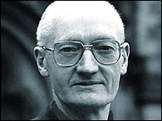
Lemn Sissay

Lemn Sissay was interviewed by Stephen Sackur on BBC’s Hard Talk a few weeks ago.  At the time, I was impressed by this man who lifted himself from ignorant child immigrant to intellectual star in the most adverse circumstances imaginable.

Lemn Sissay

Sissay’s mother, an immigrant from Ethiopia and pregnant with him, arrived in England in 1966.  He was born in Wigan, Lancashire in 1967.  The social worker responsible for his mother renamed him ‘Norman’ and gave him to foster parents with the suggestion that they should consider it an adoption, while his mother went to Bracknell to finish her studies.  She refused to sign the adoption papers, saying that she wanted her son back when she was more settled.  Social services ignored this.

Sissay’s adoptive parents, being strongly religious, wanted to rename him Mark after the Christian evangelist and give him their surname: Greenwood.  They were very strict parents, but kind in their way.  When Sissay reached the age of 12, he became somewhat difficult to manage.  The Greenwoods, who by then had three children of their own, decided he was possessed by the devil, turned him over to social services, and announced that they wanted nothing more to do with him.

From the age of 12 to 18, Sissay was held in four childrens’ homes where he was physically, emotionally and racially abused.  When he left the care system, he was given a flat with no bed; the head of social services said he should be taught a lesson, but what was the lesson?  Sissay asked to see his files from social services; he had no family, no papers and no photos.  His life history was contained in those files.  He was given only two documents.  One showed that his real name was Lemn Sissay.  The second was a letter his mother had written to the social worker when Sissay was one, pleading for his return.

He continued to request his files.  In 2015, after being told that the files were in remote storage and had been lost, he was given his files and an apology by Wigan Council.

In 1988, after a long search, he met his birth mother in Gambia where she was working for the UN.

At the age of 17, Sissay used his unemployment money to self publish a pamphlet of poetry .  He released his first book of poetry in 1988 at the age of 21 and he has been a full-time writer since the age of 24, performing internationally.  He has written eight books, and eleven plays, four for BBC radio, many featuring his maltreatment as a child.

In 2009, he was made an honorary doctor of letters by the University of Huddersfield and the following year he was appointed an MBE (Member of the Order of the British Empire).

In June 2015 he was elected Chancellor of the University of Manchester for a term of seven years.  In January 2016, Sissay wrote an article for The Guardian in which he said, “How a society treats those children who have no one to look after them is a measure of how civilised it is. It is scandalous that a prime minister should have to admit, as David Cameron did last autumn, that the care system ‘shames our country’ and that Ofsted should report that there are more councils judged as ‘inadequate’ than ‘good’ for their children’s services.”

Simon Hattenstone, a journalist with The Guardian, said, “Sissay is an old friend of mine. He is one of the funniest and warmest people I know, extraordinarily animated with a life-affirming laugh. He is also one of the most damaged people I know, suffering paralysing depression that forces him to withdraw into himself and disappear for months at a time, sometimes longer.”

During the Hard Talk interview, Sissay made the following observations which I think are memorable:

  • Our families are the repositories of our histories and therefor of our memory.  Without family we are amnesiac.
  • Forgiveness of the injuries we have suffered leads to healing of those injuries.
  • “Define me by my healing not by my suffering.”
  • “Forgiveness lets you live in the present.”


Judging a Book by its Cover

In the May/June issue of The Independent magazine, there is an article Converting Book Browsers to Book Buyers by Kristin Fields, Associate Editor.

Kristin Fields

The article is quite lengthy, but the part that I found particularly interesting concerned cover design.

Ms Fields says, “There are two deeply held misunderstandings about the nature and role of a book’s “cover” in trade publishing. First, that its main purpose is to be “liked,” when, in fact, its primary role is to motivate browsing. One of the “ugliest,” least liked covers Codex has ever tested was Tina Fey’s Bossypants (featuring Tina Fey with what appear to be massive, hairy, man arms), and yet it had phenomenal browsing impact and became the #2 overall bestselling book on Amazon for its publication year.

“Second, it’s essential to understand book buyers use the cover as the book’s message, relying heavily on it to tell them what the book is, why they should be interested in it, and to judge if it’s worth the effort of browsing—very similar to the role of a strong campaign slogan in politics—conveyed through word and image combined.

“Book publishers consistently make the mistake of undervaluing the cover as simply a piece of decoration, when in fact the data is very clear that it’s the combined impact of title, subtitle, reading line, author name, blurb, and design that together either move, or more often dissuade, a book consumer from browsing. We have to continually remind ourselves that book people are “word people”; they love and respond to words first and foremost. Nearly 15 years of Codex testing has consistently shown that a book’s title, subtitle, or reading line copy are in fact almost always the most important conversion factor in a book’s cover, not the art. While great cover art brings a very important added dimension, amplification, and visual recall to a book, great cover art alone rarely drives the book consumer to act, except in breakthrough examples like Bossypants.

“Here are some examples of past Codex Preview testing case studies to provide additional insight into some key findings on book conversion (buying decision):

“In a rebranding project on the For Dummies series, for example, two message options were tested: Staying Young for Dummies and Healthy Aging for Dummies. Because the Dummies brand audience skewed 55+, the “Healthy Aging” message spoke more powerfully to that audience, best fulfilled the brand’s values, and had the highest conversion.


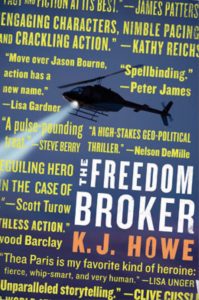
“In another Preview test, when it comes to blurbs, less can be more. While one test version of the cover for The Freedom Broker by K.J. Howe was plastered with over a dozen “blurbs to die for” from some of the biggest names in thriller writing, category fans were skeptical, less hype with a single quote and an emphasis on the title.


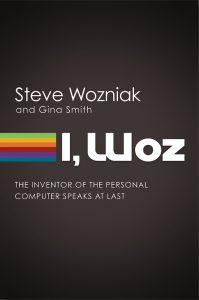
“Using faces on a book’s cover can also be unpredictable. The biography of Apple co-founder and inventor of the personal computer, Steve Wozniak, is a good example. Codex results confirmed that few book buyers were even familiar with the author’s name, let alone his face. One test treatment featured a photo of a young Wozniak from the 1970s, which motivated far less browsing than a text-based presentation that emphasized the message “The Inventor of the Personal Computer Speaks at Last” highlighted by Apple’s iconic rainbow stripes. Faces can be unpredictable conversion drivers because of they may be unrecognizable, distracting, or unrelateable. It’s best to pre-test before committing if you’re unsure.

“While publishers and designers are deeply involved in a cover’s development over weeks or months at a time, it’s important to remember that a book browser typically relies on just a split second gut reaction to make a browsing decision.”

For the indie author, whose books do not usually appear in bookstores, the issues are slightly different, because decisions are not quite so instantaneous.  But, the indie author should still be trying for a cover which says, “Here’s what I’m about” and “Read me!”

The Nobel Delay

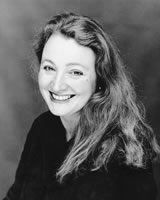
Amanda Craig has written an article in The Daily Telegraph on May 5 about the one-year delay in awarding the Nobel Prize for Literature.  Her website says: “Amanda Craig is a British novelist, short-story writer and critic. Born in South Africa in 1959, she grew up in Italy, where her parents worked for the UN, and was educated at Bedales School and Clare College Cambridge”.  She has worked in advertising and PR before becoming a journalist and a novelist – currently working on her eighth novel.  Her last novel, Hearts And Minds, was long-listed for the Bailey’s Prize for Women’s Fiction.

Amanda Craig

In the Telegraph article she says:The world of literary prizes is such a vexed and vexatious one, and having rarely been listed for one myself, I may have a jaundiced view of their value.  The Nobel is, due to its sheer pecuniary value, supposedly the Big One, the Everest of achievement and the Moby Dick that has certain Booker winners checking their mobiles every year to see if they have won.

“Does any reader pick a novel because its author has won the prize?  The old saying that a camel is a horse designed by a committee so often comes to mind that those of us who love reading are often grateful to awards for making clear what or who is largely tedious and unreadable.  Let us not forget that the Swedish Academy rewarded Bob Dylan, who, though a revered singer-songwriter, is literature only to the wilder followers of Professor Christopher Ricks.

“What this absurd scandal – involving not a judge but the husband of a judge – obscures is that, although there are outstanding novelists, from Margaret Atwood to Philip Pullman, there is no great genius of literature currently writing in English.  Not one.  I remember the gloom that would descend of the board of the Society of Authors when, every year, we had to put forward a British author for consideration and could only come up with Harold Pinter.

“The trouble with all big prizes is that they lack definition.  What does ‘best’ mean?  Does it mean, as Jane Austin wrote in Northanger Abbey, a novel ‘in which the greatest powers of the mind are displayed, in which the most thorough knowledge of human nature, the happiest definition of its varieties, the liveliest effusions of wit and humour, are conveyed to the world in the best-chosen language’?

“Or does it mean a novel which is all about fine prose, but which dispenses with character, plot or even deep insight into the human condition?  Or, perhaps, indeed, a book in which wit and humour are wholly absent?

“All of us have encountered prize-winning novels like these, and all too often.”

As for me, I have, on several occasions, selected a novel by a Nobel winner, just to see what was special about it, and I have been disappointed.  I certainly agree with Ms Craig, and I have said so myself, that the remits of the major prizes need to be clarified, so that not everyone is trying to find that obscure and sometimes cranky, ‘best’  I rather like Jane Austin’s definition, though I would substitute ‘broadest’ for ‘happiest’.

My earliest suspicion that Ms Craig does, indeed, have a jaundiced view of the situation was confirmed by her penultimate sentence: “Usually, what the Nobel Prize seems to award above all is the possession of a penis.”

Review: Seeking Father Khaliq

Pat Kennedy has posted this review of Seeking Father Khaliq on the IndieReader website:

“William Peace begins his modern allegory on a common allegorical premise – the quest. Professor al-Busiri is approached by an unannounced visitor and asked to meet Princess Basheera. When they meet, she has one request of him, to find Father Khaliq which she believes can be accomplished if the professor takes the Hajj. With only the advice to trust her and to use his wisdom and intuition, the professor is to take the religious pilgrimage in search of the mysterious Father Khaliq without a physical description of the man.

“What follows is a wonderful discussion of philosophy, religion, and individual motivation. Peace, having done extensive travel in the world, has a great understanding of how the major religions work and how various sects interpret their religious documents. The conflicts within Islam are discussed through various situations and conversation between Professor al-Busiri and fellow travelers as he undertakes his religious pilgrimage. As the professor travels along his path facing dangers and prejudices and encountering different sects and sometimes radical organizations, the reader gets a better understanding of the motives and problems of the middle east.

“Not only does Peace offer insight into Muslim philosophy and thought, through Professor al-Busiri’s memories and thoughts about his dead Christian wife, we’re given insight into the Christian faith in Egypt. Peace is skillful in incorporating the three major world religions into this allegorical writing and unlocking key ideas and thoughts as they are related to the modern Middle East and philosophical thought. The professors two sons represent two extremes of modern Middle Eastern life, with one joining the army and other the Muslim Brotherhood. Everywhere in the Professor’s world he finds conflict and opposing viewpoints. With his unfruitful search for Father Khaliq becoming an obsession, he continues to search for the answers he seeks.

“As the book is an allegory, it would have been beneficial to have included a glossary of terms and meanings. Peace does give a few clues within the text, for example, the surname of Princess Basheera is Chagma, meaning “wisdom,” and all major meanings are defined, but an inclusion of other meanings of names and terms would be an interesting addition. That doesn’t take away from the novel’s overall impact. As allegories do, SEEKING FATHER KHALIQ leads us to question own beliefs, asking if we have sought the right answers. A fascinating look into a world that affects us all.”

This is a very kind review.  I have to confess, that it is not my ‘extensive travels’ – though I have been to Egypt and Saudi Arabia – that have lead to the ‘great understanding’; it is many hours of internet research, including watching videos of the Hajj and Arba’een.  In fact, I spent more time on research for this book than I did on writing it.  This is probably an unusual ratio of research to writing for a novel, but may be quite typical of non-fiction.

I find it interesting that no mention is made of the focus of the book: one man’s search for God.  (Professor al-Busiri is a secular Muslim – an agnostic – ‘Khaliq’ is one of the more obscure 99 names for Allah.)  Maybe it’s out of fashion for reviewers to do God anymore.

“Publishers Live in Marble Palaces”

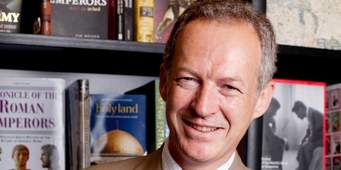
That is the title of an interview in The Daily Telegraph of James Daunt, the managing director of Waterstones by Jake Kerridge, journalist and art critic.

James Daunt

Kerridge writes: “When HMV sold the Waterstones book chain to the Russian businessman Alexander Mamut in 2011, the company was hurtling towards the knacker’s yard. But Mamut made an inspired decision when he appointed Daunt as his managing director. The 54-year-old, the founder of the small but much-admired independent chain Daunt Books, has transformed the company, brought it back into the black, and defied predictions that the mighty Amazon was going to stomp bricks-and-mortar bookshops into oblivion.

“Now, though, the much-loved book chain faces another threat to its existence – from a ruthless hedge fund. Elliot Management, owned by the controversial New York billionaire Paul Singer, announced at the end of last month that it was buying the company from Mamut, sparking fears of asset stripping. Anne Stevens, CEO of British engineering firm GKN (in which Elliott has a stake) has complained that Elliott does not “give a crap” about long-term outcomes, and Singer himself was once described as a “financial terrorist” by the president of Argentina for his ruthless pursuit of debts.

Kerridge asks Daunt what he thinks about the prophesies of doom that blossomed at the acquisition by Elliott.  Daunt says: ‘We’re opening more shops than we’re closing. Some people have this notion that we’re always about to close shops – if we close one we must be going to close a hundred – which I simply don’t understand.’

When asked about future plans from Elliott, Daunt says, “I obviously have asked them why they’re buying us and what they expect, and the answer has been: ‘Carry on as you’re doing. We think that you can grow, and if you do grow, we’ll sell you for a profit’.”

“What Daunt has been doing has certainly been successful.  At the beginning of this year, Waterstones announced an 80 per cent jump in its annual profits.  The stores have become nicer places to visit, with more flowers and comfy furniture. He insists that staff make their own decisions about how their branches are run; every shop has a different customer demographic, so all key decisions – what books to stock, pricing structure, layout – have been left to branch managers. At the same time, readers have fallen back in love with physical books, something Daunt believes has to do with the power of the book as a decorative item.

“I ask him if he is bothered by reports of a crisis in “literary” fiction, with sales reportedly plummeting.  , ‘I’ve been nearly 30 years a bookseller,’ Daunt says, ‘and I don’t think I’ve ever heard anything different. We sell astonishing numbers of whatever the latest literary bestseller is, and our bestselling book almost every year is a novel, and a literary novel at that. Publishers wring their hands and say woe is us and the end of the world is nigh. Nonetheless, when I started as a bookseller they were all in small buildings with rickety staircases. Now they’re in marble palaces along the Thames. I shouldn’t mock, but they really aren’t doing badly.”

“He is sanguine about the threat to reading posed by competing forms of entertainment, be it Netflix or social media. ‘Any parent, of which I’m one, who watches their children flick between a million things, thinks: are they going to sit down and read? But then I just think back to my childhood, and my parents were convinced that television was going to be the end of reading. I’m not so worried because books do provide astonishingly good entertainment.’

“After talking to him I have a quick look around and end up so beguiled I spend too much money and am late for my next appointment. Millions of people have the same experience in Waterstones’ branches across the country.”

I think it’s a welcome relief to hear that a major bookseller is growing and making money.  A retail, brick and mortar, bookstore can give us an up close and personal experience of books that no internet site can match.  And it’s nice to hear that publishers aren’t suffering as much as they would have us believe!


Why So Few Prizes for Female Writers?

In her Guardian article on 23 January, Stephanie Merritt argues that female authors ‘rule literary fiction’, but receive few prizes.  This complaint, while it may be justified, is poorly documented.

Ms Merritt, born in 1974 in Surrey, is a literary critic, author and feature writer for the Observer and Guardian.  She read  English at Queens College and graduated from Cambridge University in 1996.  Her first novel, Gaveston, won the Betty Trask Award from the Society of Authors in 2002.  She has since written six historical novels featuring Giordano Bruno under the pseudonym S J Parris, and a memoir called The Devil Within, which was shortlisted for the Mind Book Award, about her experience coping with depression.

Stephanie Merritt at the 2016 Hay Festival

She says: “On the face of it, the revelation that female writers dominated the UK bestseller lists in 2017 might seem cause for celebration.  According to the Bookseller, only one man, Haruki Murakami made it to the top ten that saw a generation of female writers, including Sarah Perry, Naomi Alderman and Zadie Smith displace venerable fixtures of the literary landscape such as Julian Barnes, Ian McEwan and Nobel laureate Kazuo Ishiguro.

“But does this really represent a dramatic shift in the recognition of female literary talent?  The Bookseller list was compiled, by its own admission, according to a narrow definition of ‘literary’, limiting its choices principally to authors who have won, or been shortlisted for, major awards.

“Given the well-documented bias of the big prizes in favour of male authors – in 2015, the author Kamila Shamsie established that less than 40% of the titles submitted by publishers for the Booker in the previous five years had been by women – this results in a very small pool of eligible names.

“If you were to take at face value the discrepancy in coverage in major newspapers and journals, you might conclude that men are simply producing more ‘serious’ fiction than women.  But, as Francine Prose pointed out twenty years ago in her essay Scent of a Woman’s Ink, this is largely to do with an inherent bias in the way men’s and women’s wok is perceived.  When a male author writes about a family, it is regarded as social commentary; when a woman does, it’s a domestic tale.

“As recently at 2015, the author Catherine Nichols wrote about the experience of having her first novel universally rejected, only to meet with a very different response when she resubmitted it under a male pseudonym.”

I understand Ms Merritt’s complaint, and it is probably quite just, but this article doesn’t prove it.  She says that 9 of the top ten literary writers in 2017 were women, but women don’t receive a fair share of prizes.  Yet she says that one has to be a prize winner or shortlisted for a prize to make the list at all.

She says that less than 40% of the titles submitted for Booker consideration were by women.  All things being equal, this number should be 50%, and therefore, in my opinion, 40% does not result in a ‘very small pool’.

She refers to the ‘well documented bias’ of big prizes in favour of male authors.  It would have been useful to her case if she had cited some specifics.

That said, the points made by Francine Prose and Catherine Nichols appear to point to an injustice.

Review: Waiting for the Last Bus

I saw an announcement of the publication of Waiting for the Last Bus in the newspaper, and thought I would read it as I am working on a new novel about religion, death and growing old.  I was further attracted to Waiting by the fact that it is written by the former Bishop of Edinburgh, Richard Holloway.

;

Richard Holloway

Holloway, clergyman, writer and broadcaster, was born in Scotland in 1933, educated at Kelham and Edinburgh Theological Colleges and Union Theological Seminary. From 1958 to 1986 he served as curate, vicar and rector at parishes in Scotland and the US.  In 1986 he became Bishop of Edinburgh and in 1992, Primus (presiding bishop of the Scottish Episcopal Church); he resigned both positions in 2000, and adopted an agnostic world view.

Waiting is a brief (156 page), erudite book filled with poetic quotations, and it reads like a rambling valedictory.  It has tones of human optimism as well as pessimism in the loss of loved ones and the doubt of existence after death.  Holloway recalls many experiences of ministering to the bereaved and the dying, ranging from the uplifting to the tragic, but all genuine and thought-provoking.  Holloway quotes from scripture, not to make a point about faith, but to strengthen an assertion about human nature. The spectrum of issues which Holloway addresses is virtually all-inclusive: the history of attitudes toward death, heaven and hell, aging, the fight for survival, the imperative of death, religion as the human response to existence, predestination, forgiveness, near-death experiences, reincarnation, Hinduism, Buddhism, Islam, cryo-preservation, memory and remembrance, the death of a child, the meaning of the universe, obituaries, and grief.

For me, one observation I could take away is Holloway’s assertion that people can be divided into four categories by religious or agnostic vs fearful or acceptance of death.  I put myself in the religious and accepting category (though with a twinge of concern).

And I would have liked to hear more from Holloway about his personal beliefs and why they are what they are.  My curiosity is precipitated by his renunciation of formal religion.  OK, thanks for the in-depth discussion of the issues, now, tell us, wise old man, ex-clergyman, and thoughtful writer and philosopher, what is your opinion?

I have no hesitation in recommending this book.  It is thought-provoking, well-written, balanced in its message and not too long.