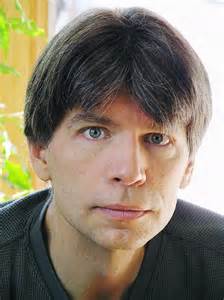
Review: Do No Harm

My wife recommended this book to me.  It was written by a neurosurgeon, Henry Marsh, to whom she was referred with back pain.  We both met him in his outpatient clinic, and he impressed us – partly because he said that no surgery would be required.  When Mr Marsh’s book was published and was shortlisted for a 2014 Costa Award, my wife naturally wanted to read it.

thNU4LCIHQ

Henry Marsh

The book is subtitled “Stories of Life, Death and Brain Surgery”, and I found it to be a very engaging read.  The subject matter: brain surgery is quite mysterious, but Mr Marsh explains procedures so that the main points are quite understandable without being technically obscure.  His writing flows pleasantly, and sincerely; one never feels that he is the least bit condescending.  In fact, he lays bare the mistakes he has made in surgery, and reveals the anguish he has felt.  Successful, life-saving procedures are dealt with matter-of-factly.  With twenty-five chapters, each dealing with a different condition, one feels well-exposed to brain surgery.  Mr Marsh tells the reader of his development from nursing aide to med school, through the doctors’ hierarchy to consultant, and includes vignettes of the teaching of junior doctors.  The book is not from a doctor’s perspective only; he reveals the thinking and the feelings of patients, too.  The hospital setting is covered: nurses are caring but over-worked; managers are bureaucratic, unsympathetic and stubborn.  Stories from his voluntary practice in Ukraine are included, as well, and these provide a strong contrast to the state of the art and the clinical and management culture in the UK.

One can’t help but feel, as one reads the book: Why in the world would anyone want to be a neurosurgeon, given the complex opportunities for failure?  Mr Marsh doesn’t answer this question directly, but I think his view would be that the euphoria that one can feel from saving a life or advancing the technology more than offsets the anguish one feels from a mistake that leaves a patient paralysed.  Given, therefore, that a neurosurgeon has control over the life and death of his (or her) patients, Isn’t it tempting for a neurosurgeon to feel like a god?  Again, Mr Marsh does not answer directly.  He seems to say that any pretence at being a god is destroyed in the humility of the learning process.

Do No Harm was one of five books shortlisted in the biography category of a Costa Book Award in 2014.  The winning book was H is for Hawk by Helen Macdonald about  her struggle to train a goshawk.  On the face of it, one would think that Marsh’s book would have a leg up: after all, a book about the ramifications of life-saving surgery sounds more important than the difficulty of training a very wild animal.  Perhaps a clue can be found in what the Costa judges said about H is for Hawk: “A unique and beautiful book with a searing emotional honesty, and descriptive language that is unparalleled in modern literature.”  I haven’t read H is for Hawk, but what I think the judges are saying is that Helen Macdonald’s writing is what won the prize for her.  Still, I would recommend putting Do No Harm at the top of your reading list.

Who Defines Quality These Days?

The following article by Jillian Bergsma, a writer and contributing editor for Independent Publisher, appears in the current issue of the Independent Publisher Newsletter.  I think it’s worth repeating in its entirety.

jillian22

Jillian Bergsma

“A few months ago I received an interesting question from an Independent Publisher reader: “Who defines [book] quality these days?” In today’s publishing landscape, we’ve seen a dramatic shift in who owns the power to say a book is good, bad, or just okay. For a long time, a writer had to be vetted by so many people: a literary agent, the editor or publisher, the copyeditor, the proofreader, the reviewer, the bookseller or librarian, and then—finally—the reader.

“But now many self-published authors cut out most or all of those middlemen, going straight to the consumer. . . . So without the horde of literary mavens between an author and a reader, who does define the quality of a book?

“The question has several answers. Let’s start with those aforementioned mavens who are often left out of the equation. Thousands of writers still submit to agents and publishing houses each year. There’s a certain prestige associated with traditional publishing, and for good reason. You get a team of people to get your book into the best shape possible; you don’t have to pay the out-of-pocket costs to get the book on the market; and you have professionals selling your work.

“However, for a lot of aspiring authors, rejections from agents and publishers become the norm. Some folks say it takes scores of queries before you’re likely to find the right match (see Chuck Sambuchino’s article “Don’t Give Up Until You’ve Queried 80 Agents or More”). As harsh as the rejections can sometimes seem, they aren’t usually unfounded. Some rejections are on a taste basis—an agent or publisher just doesn’t connect with the material or think it would be right for their list. To each their own. But sometimes a rejection letter will come back that can give valuable feedback to a writer. Perhaps the level of writing wasn’t strong enough, the characters not fully developed, the plot too similar to a blockbuster book already in the market. In these ways, agents and publishers still serve a vital role in determining the quality of books in the marketplace. They know their stuff, so if you’re lucky enough to get more than a form response back, take the advice they give and put it to use.

“Booksellers and librarians are another group that can fall by the wayside if you’re self-publishing, which may be even more devastating than the loss of agents and publishers. The folks working in your local indie bookshop or at the town library are incredible resources and often have incredible taste. These days especially they must be extremely selective when choosing books for their shelves—books are expensive, shelf space is ever shrinking, and readers may be more likely to download a $0.99 ebook than to spring for the $26.99 hardcover.

“Booksellers and librarians have long been the real touch point for readers—before you could look up the ratings on Amazon, you needed your librarian to give you recommendations on which mystery novel to read next. So if you do have the opportunity to connect with your local library or bookstore, do it. Their responses to a book can be invaluable, even if that response isn’t the one you are looking for.

“The next category of gatekeepers includes bloggers and reviewers—opinions from other readers who aren’t directly in the line of producing or selling books. With the rise in social media, these folks are becoming bigger players in the game. Many of us follow a handful of favorite blogs penned by fellow readers who will tell us if a book is wonderful or a waste of time. For most people, the logo on the spine of the book doesn’t matter nearly as much as the opinion of someone we trust. And of course there are certain established reviewing outlets (think New York Times, etc.) that can turn us on or off a book in a matter of a few sentences. More than ever, these third-party reviews are gaining power in determining the quality of a book.

“And finally: THE READER. I have to say that the reader is the most influential person in determining the quality of a book. And perhaps that is how reading was always meant to be. What does it really matter if your best friend or your boss or a publisher you’ll never meet loves or hates a book? What matters is that you do. In the publishing cycle, the reader is the customer, and how does that age-old adage go? The customer is always right.

“Okay,” you say. “Sure, the reader is the most important. But what power do they really have beyond buying and selling books? How can they influence what gets published in the first place?”

“Having worked in publishing for several years, I can tell you that the reader is more powerful than they know. Editors routinely check Goodreads, Amazon, and blogs to look at what people are responding to in terms of writing style, characters, covers, and genres. Some publishers, like Amazon, are even introducing programs such as Kindle Scout, where readers decide which books are worthy of publication.

“So yes, at the end of the day, the reader holds the best hand. The publishing business wouldn’t be very successful if we didn’t understand how important our end-users really are, but today more than ever we are able to benefit from the thoughts and opinions of readers. Of course, the people I’ve discussed up until now—the agent, the publisher, the bookseller, the librarian, the reviewer, the blogger—are all readers too. And they want you, another reader, to enjoy or despise a book just like they do. At the end of the day, we’re all after the same thing here: a great read. “

Coaches & Editors

I just returned home from a coaching session with the chief executive of a London charity.  (I accept assignments from the Cranfield Trust for pro bono assignments with charities which need help.  Cranfield Trust is, itself, a charity – originally associated with Cranfield Business School – and which maintains a roster of management consultants.  The Trust’s role is to match consultants with charities in need.)

Like a professional football coach, I am supposed to be more experienced than the players (charity managers) I coach, and I am supposed to see problems and solutions which the player (charity manager) didn’t see or hadn’t seen yet.

images9DY2U8VS

The chief executive I’m coaching has some difficult problems.  The charity he is running is teetering on the edge of bankruptcy, and his board of trustees see their role as asking a lot of questions, rather than taking difficult decisions.  Moreover, the trustees seem to be allergic to the idea of making a personal commitment to do something useful.  I am by no means a perfect trustee, but I am treasurer of another charity which was technically bankrupt, and which absolutely had to win a particular contract to survive.  The chairman and I put a lot of personal hours into helping the managing director prepare a proposal which brought in £1.5 million in revenue.

My chief executive coachee believes that one strategy might be to merge with a larger, related charity.  Such a merger would reduce overheads, and, with a larger activity, would make fund raising easier.  But the trustees seem to feel that the charity would lose its identity, and they are insisting on meeting with the charity’s employees to get their opinions.  I think it’s pretty obvious that most employees, being worried about job security, will oppose any merger.  Some of the trustees seem to be so emotionally wedded to the current identity of the charity that they are unable to see that there is a larger question: which is better: a charity that does things differently with a different identity or no charity at all?

The chief executive is struggling to keep the trustees from behaving like lemmings and diving, en mass, into the sea.  We want to keep the trustees moving toward a rational decision: talk to other charities about their views on a potential merger.  In the meetings that he and I have, we talk about the details of how to: instill a sense of urgency; keep things rational; obtain a decision, and often, in our discussions, I will suggest a tactic, or an approach that he hadn’t thought of.

So, I got to thinking about the similarities between a coach and a literary editor.  As you may know, I don’t have a literary editor, but I would really like to have one.  An editor would be someone who might say: “These couple of pages don’t really add anything to your theme.  Cut it down to one well-constructed paragraph” or “This character would be more interesting and would add emphasis to your theme if you exposed this trait in her character” or “This section here comes across as foggy; what are you trying to say?”

As it is, I have to rely on my own judgement, but like the chief executive, I may sometimes miss a crucial point or detail.  And, I’m sure my writing would benefit from having an editor.

My publisher doesn’t offer an editorial service.  There is a lady who reviews submissions and accepts or rejects them, as submitted, in their entirety.  Traditional publishers have assigned editors who read the entire manuscript carefully, and suggest changes before publication.

I realize that I could hire an editor to review my manuscript.  But apart from the fact that I, personally, would have to pay him/her, the editor wouldn’t be part of a publication team that knows the market and is working together to please readers and increase sales.

So, I guess what I’m saying is that I, too, would like to have a coach, and that I haven’t given up on the idea of working with a traditional publisher.

Reviews

Reviews are very important to an author in two ways: they can provide valuable feedback to the author, and they can arouse the interest of other potential readers.  Reviews can also come to the attention of a prospective publisher.  It goes without saying that authors want favourable reviews, but, in my opinion it’s better to have an honest, unfavourable review than no review at all.  After all, one wants to learn and grow as an author.

There are two measures of the value of a review: credibility and expertise.  A review by, for example, the book editor of the New York Times is far more valuable than a review by your aunt Martha.  The trouble, from an author’s perspective, is that its pretty easy to get a review by Aunt Martha, and it’s very difficult to get one from the editor of the Times.

So, how are book reviews used?  The short answer is that they are used in a myriad of ways to market an author and his/her book.   They appear on the Amazon book web pages and on Goodreads.  They are on the back cover of the book, inside the front cover and bits of a review may appear on the front cover.  Reviews are featured in billboard and newspaper/magazine adverts, and on promotional materials in book shops.

How do I get my reviews?  There are several ways.  I have an old friend who reviews my books; I think she does a thorough and objective job.  I have used paid review services like BookReview.com, but their credibility is fairly low.  There are book bloggers who offer to review books – mostly for free.  At one point I must have trolled through fifty book blogger’s sites to find three that said my book sounded interesting, would I please send it?  I think all this resulted in one review.  I have given away books on Goodreads as a part of the contests they run.  Theoretically, the deal is that if you win a free book from an author, the winner is supposed to write a review.  I sent out ten books to the winners and received one review.  Perhaps people just like to have free stuff! There are spontaneous reviews that one tends to get from readers who have bought a book on Amazon.  These spontaneous ones can be interesting.  There was a one-star review who didn’t like my book at all because it ‘wasn’t credible’. (That was the complete review.)  There was one that looked like a third grade book report.  And, of course, there are insightful, semi-professional reviews.  I have a practice of not commenting on reviews, except – where appropriate – to say ‘thank you’.

Yesterday, I signed onto a webinar that was put on by the Independent Book Publishers Association.  It featured a spokesman from Foreword Reviews who explained how they chose books that they review.  Having a review on Foreword Reviews would be very helpful.  Their quarterly magazine reaches plenty of librarians, publishers and editors – as well as the general public.  From my point of view, it also has the advantage or specialising in indie (independently published) books.  Two problems, though: first, there has to be intense competition to be selected: the magazine is published four times a year, and there are well over a hundred thousand indie books coming out every year.  And second, one has to submit the book near the publication date, so if a book has been out more than six months, it is probably of little interest.

If any of my readers considers himself/herself to be a budding reviewer and would like to have a go at one of my books, please choose a title on my website (www.williampeace.net), send me an email (bill@williampeace.net) with your address, and I’ll send you a copy.

Review: Orfeo

I decided to read Richard Powers’ Orfeo (published in January, this year) when it was on the long list of ten novels for the Booker Prize. It has since been omitted from the short list for this year’s prize.

Richard Powers is an American novelist, born in 1957, in Evanston, Illinois. At the age of eleven, he moved with his family to Thailand where he became an avid musician. He began his studies at the University of Illinois at Urbana-Champaign (UIUC) with a major in physics, but he graduated with a BA in English literature, followed by an MA. He worked as a computer programmer in Boston, but he quit that job to devote time to writing. His first novel was published in 1985. In 1992, he returned to the University of Illinois as writer-in-residence. In 2010 and 2013, Powers was a Stein Visiting Writer at Stanford University, during which time he partly assisted in the lab of biochemist Aaron Straight. He was named the Phil and Penny Knight Professor of Creative Writing in the Department of English at Stanford in 2013. He currently teaches a graduate course in multimedia authoring, as well as an undergraduate course on the mechanics of narrative, at UIUC, where he is the Swanlund Professor of English. He has written ten novels and has won a number of literary awards.

th

Orfeo follows much of the fictional life of Peter Els, a composer, music professor, and amateur bio-scientist. He dabbles in genetic experiments on bacteria and viruses in parallel with music composition, seeing similarities between the infinite variety of music and basic organisms. Els is driven not by fame or fortune, but by a compulsion to compose a piece of music which will have a lasting, ethereal effect on the listener. When he composes a piece which, for the first time, elicits critical acclaim, he refuses offers to stage it again.

The focus of the novel is on the sinister net of terror-prevention which tries to capture him when he becomes a bio-terror suspect, and which he tries to elude.

One has to admire Powers’ multiple competencies as a musician, as a poet and as a technologist. Nonetheless, this is not an easy novel to read. There are no chapters, and the shifts in scene and timeframe are sometimes difficult to follow. I say Powers is a poet because there are frequent passages of music description similar to:

“Then the damning glockenspiel, mute for three songs, silent for so long that the ear forgets the forecast from song one. Child’s toy, funeral chime, light in the night. A bell from out of the pitch-black; a shock but no surprise. A sound that makes hope sound primitive.”

If one is musically literate, and if one is familiar with the piece about which Powers is writing, I’m sure this would be lovely. (I was a singer, and I enjoy classical music, but never learned to read music.) Powers also uses unexpected nouns and adjectives in his descriptions. Sometimes, these seem very clever; at other times they are confusing.

The character of Peter Els is, for me, difficult to relate to: not because he is a musician or a bio-chemist, but because he seems, until near the end, to be a self-proclaimed, born loser. There are not sufficient likeable features with which to empathise. One shakes one’s head each time he makes a stupid mistake (mistakes which Els himself confesses), but there isn’t enough redeeming motivation for the mistake for us to understand and respect him, nonetheless.

Perhaps Powers was not aiming at any particular market when he wrote Orfeo. If you are an amateur composer or a competent musician and someone who is concerned about the encroachment of authority on our freedom of expression, Orfeo is a must read.


Review: Sable Shadow and The Presence

Readers Favorite has awarded Sable Shadow and The Presence Five Stars:

5star-flat-hr

Their review of the novel is as follows:

Author: William Peace

Genre: Fiction –

General   Appearance: Cover, Construction, Chapter Headings, Illustrations, Table of Contents 5

The appearance of a book makes a dramatic difference in the experience of the reader. Appearance includes everything from an enticing cover and intriguing table of contents, to interesting chapter headings and eye-catching illustrations. This book excelled in all of these areas.

Plot: Concept, Characters, Originality 5

The characters of a book should be well defined, and while they do not have to be likable, the reader does have to be able to form a connection with them. The theme should be consistent and the plot should be original or told from a unique perspective. All of these elements are exceptionally well done in this book.

Development: Description, Dialogue, Creativity, Organization, Length, Fluidity, Coherence 5

Besides the plot, the development of a book is the most critical. The dialogue should be realistic, the descriptions should be vivid, and the material should be concise and flow smoothly. The development of this book is very well done.

Formatting: Editing, Proofreading, Layout 4

Editing and proofreading is where most authors fail. An author should have more than one person proofread their book. The best plot will fail if the reader has to stumble through misspelled words, misused words, bad punctuation, and poor grammar. This book needs a bit of editing.

Marketability: Theme, Subject Matter, Size of Target Audience 5

Marketability refers to how well your book can be marketed and sold. The larger the target audience a book has, the greater the value it will have to publishers and retailers. Although this element is not indicative of the quality of a book, it is important to the success of a book. This book has a wide appeal and can be marketed to many types of readers.

Overall Opinion: Overall Starred Rating 5

This rating takes into account all previous elements and the reader’s overall opinion of the book. This is an excellent, very well written book.

Review: Reviewed by Mamta Madhavan for Readers’ Favorite
Sable Shadow & The Presence by William Peace is the the fictional autobiography of Henry Lawson who hears two voices from his childhood. These two voices represent good and evil and, like any of us, Henry also hears them while making decisions. The story takes us through Henry’s childhood to his college days, to his relationships, to his marriage and his business. Henry suffers a series of tragedies at the peak of his career which sees him attempting suicide. He recovers from that dark phase with the help of his wife and a psychiatrist. It is a story of triumph, tragedy, good, and evil.
The book has many interesting twists and turns in the plot. The author’s fascination for existentialism is revealed through Henry Lawson’s interest in the writings of Jean-Paul Sartre. That contributes a lot of wisdom in the discussions that occur in the story. The characters are well developed and they help in making the plot strong and powerful. There are some thought provoking details on good and evil which give readers an opportunity to think more about their individual beliefs and ideas. I found the representation of the good and the bad voices very practical and relatable. Readers can connect to that very easily.
The character of Henry Lawson has many shades which make him an interesting person. The author has captured well the triumph, tragedy, good, evil, sorrows, and happiness of human life that are palpable
good, evil, sorrows, and happiness of human life that are palpable while reading the book.

Review: Favors and Lies

I decided to buy and read a copy of Mark Gilleo’s novel, Favours and Lies, because it received an award at a recent book festival. (One always wants to understand what other successful writers are doing.)

The brief biography at the back of the book says: “Mark Gilleo holds a graduate degree in international business from the University of South Carolina and an undergraduate degree in business form George Mason University. He enjoys traveling, hiking and biking. He speaks Japanese. A fourth-generation Washingtonian, he currently resides in the DC area. His first two novels, Love thy Neighbor and the national best seller Sweat were recognised as finalist and semi-finalist, respectively, in the William Faulkner-Wisdom creative writing competition.”

facephoto-150x150

This photo appears on his website.

Favours and Lies concerns Dan Lord, a private investigator with a law degree and a selected list of clients. He works in the DC area on ‘the blurred line between right and wrong’. When his brother’s widowed sister-in-law, Vicky, and her son, Conner, die under very strange circumstances, Dan takes a particular interest. Vicky dies in an apparent suicide and Conner dies of what seems like a drug overdose. Neither of these deaths make sense to Dan. Then the detective who was investigating the deaths of mother and son is killed, as is the son’s girlfriend. Dan finds that the records of several key phone calls have disappeared, and Dan engages a computer wizard to find out what happened to the phone call on-line records. There is a secretive company, the address and phone number of which are unlisted. There is a high class madam, a Russian intelligence officer, a medical doctor, a barber, a martial arts trainer an assistant district attorney, a night club owner, with whom Dan exchanges favors and lies in order to find the killers of his relatives. Some of these people end up dead; Dan, nearly so on several occasions. Toward the conclusion of the novel, we learn the reason for Conner’s death, and of the illegal conspiracy which lay behind it. The motivation for Conner’s death and those responsible is quite a shocking surprise. Fortunately, the favors given to Dan by those friends who remain alive are repaid.

Favors and Lies is a fast-moving book, which is difficult to put down: one wants to find out what happens next. The characters are distinctive and interesting, but they are ‘on stage’ for such short periods, in many cases, and described in terms of their appearance and history more than in terms of their values. One feels little empathy for many of them, the exceptions being Dan and Detective Wallace. The dialogue is clipped and punchy, fully in keeping with a fast-moving detective thriller. The locations of the various scenes are described is such detail that one senses the author’s pride in his familiarity with the streets of the US capital. There is some technology on which the plot for Favors and Lies depends, but it is pretty much understandable. For me – a very literal-minded person – the difficulty I have with Favors and Lies is the credibility of the plot, taken as a rapid-fire whole. But, in the genre of gripping, no-holds-barred detective stories, there are few better.


Review: The Guns at Last Light

I bought this book on the recommendation of a friend who fought (and won a Silver Star) in the Second World War.  It was well worth reading, although the text runs to 641 pages (plus 234 pages of Notes, Sources, Acknowledgements and Index).  There are 16 pages of photographs, as well.

This is volume three of the Liberation Trilogy written by Rick Atkinson, and it covers the war in Western Europe, 1944-1945, beginning with the invasion of Normandy.  It won the Pulitzer Prize.  The other two volumes of the Liberation Trilogy are: An Army at Dawn (covering the war in North Africa, 1942-1943) and Day of Battle (covering the war in Sicily and Italy, 1943-1944).

For me, the most remarkable aspect of The Guns at Last Light is the enormous depth of research that went into it.  In fact, Atkinson says in his Acknowledgements that it took him fourteen years to write the Trilogy.  Every battle is described so that one feels like a well-informed observer, and there are maps aplenty to which to refer.  One is left with a clear understanding of what the objective of the battle was, what went right and what went wrong, and, and what difference in made, ultimately.  The story is largely told from the viewpoint of the relevant commanding officer, but with commentary provided by junior officers and even enlisted men.

The focus is strategic, rather than tactical, and Atkinson reinforces this emphasis with portraits of the officers in command.  These portraits are formed from the comments of colleagues, superiors, subordinates, others and the individual himself.  For example, Eisenhower comes across to me as a man who had an extraordinary ability to motivate, cajole, an occasionally order wayward senior officers to pull together in the same direction.  Montgomery comes across as an egotistical prima donna, who over-rated his own skills as a general.  These portraits come alive through timely, pithy remarks that Atkinson has found and included.

There are statistics on everything from the quantities of ammunition expended to the number and sizes of boots used by the GI’s, but they are inserted at appropriate moments.  Moreover, the battles behind the lines are covered, as well: particularly logistics; but also care for the wounded, injured  and dead; and ‘recreation’.

Perhaps the one thing which is missing is the perspective of the individual soldier in combat, though there are many brief comments on what it was like.  To be fair, I think it is impossible to tell so sweeping a story from the perspective of both the commander and the individual soldier.  What does come across clearly it the enormous physical, mental and spiritual hardships that the soldiers endured.

The story is not told entirely from the allied point of view.  There are passages which cover German activities, from Hitler on down.

For as long as it is, this is not an easy book to put down.  The writing is fresh and innovative.   There is a sense of immediacy.  One knows in general, how things will turn out, but once a particular battle has begun, one wants to find out exactly what happened and why.  When one does put it aside, it is easy (and rewarding) to pick it up again.

Because of my own interest in Italy, I’m planning to ready the second of the Trilogy books.

If you’re interested in military history, they don’t come any better than this.

Literary Criticism

Many (most?) authors think about literary criticism.  We tend, after all, to be surrounded with it.  Some we like.  Some we don’t like, particularly criticism which we feel is unfair, or doesn’t understand what we are trying to achieve.  Ultimately, the challenge that criticism (fair or unfair, understanding or oblivious) offers those of us who write is to try to see the criticism from the critic’s point of view, and to take away at least something of value.

I think it’s interesting to compare criticism with creativity.  In a sense, they are opposite sides of the same coin.  Both activities involve the creative impulse.  The creative person (or author) produces something, and the critic evaluates it.  They are interdependent activities it the sense that creating without evaluation may produce rubbish, while the critic depends on the author to produce something.  As to which comes first (the chicken or the egg), I think that the creative impulse produces something and its existence calls the critic into being.  Both the critic and the author speak the language of creativity, but their philosophies in the use of the language are quite different.  The author uses the language to produce something which s/he sees as having value, while the critic’s urge is to find or evaluate that value.  I think it is fair to say that that both the author and the critic could benefit from having some of the skills of the other.  Certainly, authors could profit from having some of the critic’s ability to think about what is valuable.  And critics would be more effective if they had more understanding of and familiarity with the creative process.

What makes all of this quite interesting is that there are no objective standards for what ‘good’ is for a writer or a critic.  There are no tests to pass or qualifications to earn to be considered a ‘good writer’ or a ‘good critic’.  ‘Good literary critics’ tend to be ‘prominent’ or ‘recognised’ – whatever that means – and ‘good writers’ are viewed similarly.

One of the difficulties which authors have with literary criticism is: on what basis is my work being judged?  Is that a meaningful basis for my particular work? Critics seem to emphasise particular criteria as they evaluate a work.  For example:

  • Is the plot interesting and credible?
  • Are the characters truly human (or not)?
  • Is the setting believable or realistic?
  • What about the author’s use of language?
  • What about spelling, grammar and syntax?  (I read recently that a novel without any punctuation was awarded a major prize in the UK. Imagine what a nightmare that would be for the reader.)
  • What is the intended audience for this work?
  • Will this piece of work make money?  (Critics associated with main stream publishers put much emphasis on this.)
  • If we look at this piece of work from a philosophical, religious, ethical, sociological point of view, what do we find?
  • What ‘school of literature’ (if any) does this writer represent?

There are also various ‘schools’ of criticism, such as:

  • Reader Response Criticism: how and why will the reader (what sort of reader?) see this novel?
  • New or Formal Criticism which treats the work as a stand-alone entity, without reference to the author, the reader or historical context
  • Feminine Criticism: it’s all about gender or lack of gender: the text reflects a particular view of men or women?
  • Marxist Criticism: focuses on economic issue, capitalism and the plight of the poor
  • Historical Criticism: analyses the work from the perspective of history
  • Psychoanalytic Criticism: views the work through the lens of psychology
  • Authorial Criticism: to know the work one must know the author

So . . . Might it not be better of the author and the critic could actually discuss a critical point of view before it is published, not with the purpose of  ‘watering down’ or changing the criticism, but with gaining a clearer perspective of each other’s understanding and intentions?

More reviews: Sable Shadow and The Presence

Two people from Reader’s Favourite have submitted the following reviews:

Kathryn Bennett:        “Sable Shadow & The Presence by William Peace is the fictional autobiography of bright introvert Henry Lawson. He hears strange voices at a young age, voices that he does not recognize and believes one to be the Sable Shadow, who is a confidant of the devil, and the other is The Presence who may be a worker of God. For him life becomes a struggle in a chess game of sorts and these voices follow him
from childhood through life until he attempts to kill himself, and must then begin to rebuild himself, making a new identity and essentially a new person.

Some books touch you deeply and some make you think, and some manage to do both
within the pages of one book. For me Sable Shadow & The Presence by William
Peace did both. It made me think and it touched me. The thoughts that this book
manages to provoke about good and evil will certainly make you delve into some
interesting discussions with friends and loved ones. Each page for me was like
peeling back another layer of the onion to enjoy and read. I picked it up and
was not able to set it down until I was finished, and even then I felt like I
could read more. What would you do if you had the presence of good and the
presence of evil speaking to you for your entire life? While Henry has his
issues, I personally may not have come out as well as he did and I am not sure
I would be able to rebuild myself even with support after such a hard fall.
William Peace gets a thumbs up from this author on an inventive story line that
evokes thoughts and emotions – a recommended read.    5 stars”

Ray Simmons:       Sable Shadow & The Presence is a thoughtful and illuminating work of fiction by William Peace.  The main character is Henry, an observant man, a natural philosopher who goes through life looking for meaning and trying to figure out what lies behind appearances. He also goes through life listening to two opposing voices that
may represent good and evil. The voices are subtle and indeed, for a period
when he is younger, he’s not sure if they aren’t from inside himself, but over
time he becomes convinced that they are external. We follow Henry as he goes
through the major events of his life. During early childhood he confides in his
sister Jenny about the voices and it is she who names the sinister voice Sable
Shadow. In many ways Henry has a typical American life, if there is such a
thing. He takes us through childhood, the teenage years, first love, first
tragedy, the college years, and a stint in the Navy. We watch him fall in love
and navigate his way through the adult years.

William Peace has created an enduring and thought provoking work in Sable
Shadow & The Presence. The novel avoids the exaggerated melodrama found in
so many current novels. The writing is clean, crisp, and directly to the point.
The characters and situations reflect a modern American life and the musings of
Henry mirror questions all educated, thoughtful people have asked at some point
in their lives. I give it five stars. There should be more novels of this
nature out there.   5 stars”