I listened to this novel by Robert Harris on our drive down to Sicily from London.
Harris is a British novelist and journalist born in 1957. He was educate at Cambridge, and began his career at the BBC where he worked in news and current affairs programs. He became the political editor of The Observer at the age of 30. From 1982 to 1990 he wrote five non-fiction books. His first novel, a commercial success, was Fatherland, based on the Nazis having won the Second World War and published in 1992. He has written fourteen further novels. The Ghost was published in 2007 and was made into a film starring Pierce Brosnan.
Robert Harris
The Ghost is told in the first person by an unnamed professional ghostwriter, who is hired by a prominent publisher to complete the memoirs of Adam Lang, an ex-prime minister of the UK, thinly based on Tony Blair. Lang’s original ghostwriter, Mike McAra, a former aid to Lang, had died in strange circumstances, having fallen overboard from the Woods Hole Ferry. Most of the action takes place on Nantucket Island, Massachusetts, where the publisher owns a lavish summer home. Lang’s wife is depicted as a scheming manipulator, while Lang is having an affair with his attractive female assistant. Frustrated with having an opaque picture of the real Adam Lang, the ghostwriter gets into McAra’s rented car an allows it to follow a previously set destination. This takes him to a Professor Paul Emmett, who went to Cambridge with Lang, was an associate of Lang’s wife and was a CIA agent. Lang’s former Foreign Secretary, Richard Rycart, loosely based on Robin Cook, is now working at the UN and has produced documentation that Lang had four terror suspects arrested in Pakistan by the SAS, and turned over to the CIA for interrogation. Potentially, Lang would be charged with was crimes. The ghostwriter finds Rycart’s phone number in McAra’s files, and arranges to meet Rycart in New York, where Rycart confirms that he and McAra had concluded that Emmett had recruited Lang into the CIA. Lang is assassinated by a protester. The ghostwriter finishes the book, but does not reveal Lang’s secret, because he does not confirm it before he is killed.
The book is brilliantly read by Michael Jayston who uses a distinctive voice for each major character. The plot unfolds beautifully and with constant tension until it seems likely that Lang was a CIA agent. This seems far fetched and renders a satisfactory conclusion to the book nearly impossible. The writing is captivating, though it occasionally wanders into unnecessary detail. The characters are well draw and credible. Two events struck me as lacking substantiation: the fling between the ghostwriter and Lang’s wife and the beach scene at night where McAra’s body washed up.
Perhaps Mr Harris permitted his disenchantment with Tony Blair to overrule his literary craft.
There is an interesting article on the Washington Post website dated 8 February 2023 by the Book Critic, Ron Charles, about what book readers hate.
Since the article is quite long, I have posted excerpts below:
“A few weeks ago, I asked readers of our Book Club newsletter to describe the things that most annoy them in books.
The responses were a tsunami of bile. Apparently, book lovers have been storing up their pet peeves in the cellar for years, just waiting for someone to ask. Hundreds and hundreds of people responded, exceeding my wildest dreams.
Dreams, in fact, are a primary irritation for a number of readers. Such reverie might have worked for Charles Dickens’s “A Christmas Carol” or Shakespeare’s “A Midsummer Night’s Dream” but no more, thank you very much. “I absolutely hate dream sequences,” writes Michael Ream. “They are always SO LITERAL,” Jennifer Gaffney adds, “usually an example of lazy writing.”
Laziness may be the underlying cause of several other major irritants.
Sharp-eyed readers are particularly exasperated by typos and grammatical errors. Patricia Tannian, a retired copy editor, writes, “It seems that few authors can spell ‘minuscule’ or know the difference between ‘flout’ and ‘flaunt.’” Katherine A. Powers, Book World’s audiobook reviewer, laments that so many “authors don’t know the difference between ‘lie’ and ‘lay.’”
“If those who write and publish the book won’t make the effort to get it right,” says Jane Ratteree, “the book doesn’t deserve my time and attention.”
A few words need to be retired or at least sent to the corner of the page for a timeout. Andrew Shaffer — a novelist himself — says no one should use “the word ‘lubricious’ more than once in a book (looking at you, James Hynes).” And don’t get that confused with “lugubrious,” which Wanda Daoust is equally tired of. Meanwhile, Cali Bellini finds that the word “preternatural” is “overused, abused and never necessary.”
While we’re at it, let’s avoid “bemused.” “It doesn’t mean what you think it means,” says Paula Willey.
If these responses suggest anything, it’s that readers don’t want to waste their time.
Excessive length was a frequent complaint. Jean Murray says, “First books by best-selling authors are reasonable in length; then they start believing that every word they write is golden and shouldn’t be cut.” She notes that Elizabeth George’s first novel, “A Great Deliverance” was 432 pages. Her most recent, “Something to Hide” is more than 700.
But it’s not just the books that are too long. Everything in them is too long, too. Readers complained about interminable prologues, introductions, expositions, chapters, explanations, descriptions, paragraphs, sentences, conversations, sex scenes, fistfights and italicized passages.
In fact, McCarthy may be the source of another frequent irritant: the evaporation of quotation marks. If it’s meant to seem sophisticated or streamlined, it’s not working. Speaking of Amor Towles’s “Lincoln Highway” Nancy George says the lack of “quotation marks for dialogue is just distracting.”
When authors don’t use quotation marks, “sometimes you have to reread a passage to determine who is speaking,” writes Linda Hahn.
It’s like a film director shooting in black-and-white to signal seriousness of purpose, writes Michael Bourne. Mostly, though, it just makes it hard to tell when the characters are talking. See?
Such confusion is akin to a larger objection: Readers have had quite enough of what Susan Mackay Smith calls “gratuitously confusing timelines.”
“Everything doesn’t have to be a linear timeline,” concedes Kate Stevens, “but often authors seem to employ a structure that makes the book unreadable (or at least very difficult to follow). There seems to be no reason why this is done other than to show off how clever they are.”
But clever authors are still preferable to preternaturally unrealistically clever children or talking animals, who are deeply irksome in novels — along with disabled characters who exist only to provide treacly inspiration.
And how discouraging at this late date to find so many “women who always need rescuing,” as Deborah Gravel puts it. The old sexist tropes are still shambling along in too many novels. Even when female characters are given modern-day responsibilities and occupations, they’re often pictured through the same old gauzy lens. “Nothing makes me put down a book faster,” writes Heather Martin-Detka, “than overly sexy descriptions of women in unsexy situations, e.g. a scientist at work in the lab.”
NJ Baker is done with “stupid women who start out with intelligence, then turn into blithering idiots over men who aren’t worth their shoe leather.” She admits, “Sure, it worked for Jane Austen (think ‘Pride and Prejudice’), but if you’re stuck in that type of story arc, you are not Austen.”
Of course, the classic objections that have dogged novels since they began are still current. Many readers are disgusted with explicit sex scenes (including references to “his member”) and gratuitous violence, especially against animals, children and women. “I love detective fiction of all sorts,” writes Margaret Crick, “but graphic descriptions that go on for pages, no.”
Surely, somewhere some cynical, market-driven AI scientist is working on a novel-writing program that can accommodate all these complaints for maximum marketability. Trouble is, the things we hate in books demonstrate not only infinite variety but infinite specificity.
I bought this book because it was listed by the Guardian as one of the best one hundred novels written in English, and I had never heard of it.
The author, Penelope Fitzgerald was born in London in 1915, and was one of the first women to graduate from Oxford. For a time in the 1960s she co-edited a literary magazine with her husband, an alcoholic, who was barred as a lawyer. This led to a decade of poverty during which the Fitzgeralds lived in subsidized housing. Mrs Fitzgerald taught theatre and at school until she was 70. Her writing career began at 58. She wrote nine novels, three of which, including this novel, were shortlisted for the Booker Prize. In 1979 she won the Booker Prize for a fourth novel, Offshore. She died in April 2000.
Penelope Fitzgerald
The Beginning of Spring is set largely in Moscow in 1913. The principal character is Frank Reid, an Englishman who was born in Moscow and has a printing business there. Without any notice, his wife Nellie leaves to go back to England with the three children, but while they are still in Russia, the children are sent back to their father. Frank contacts his wife’s brother, Charlie, but he does not know where she is.
Frank seeks a nanny to take care of the children. He rejects an older, professional nanny, who for reasons unknown has been dismissed from her position, and he hires a beautiful, young salesgirl, Lisa, from adepartment store. Lisa is quiet and serene; the children admire her. Frank falls in love with her, he makes advances and she reciprocates. A student who breaks into Frank’s printing business is apparently Lisa’s ex-lover. Selwyn Crane, Frank’s chief accountant confesses that he had planned to run away with Nellie, but he decided against it. Nellie went to live in a Tolstoyan community in England, but she decided she does not like the communal life, and suddenly returns to Moscow. Meanwhile, Lisa leaves Russia illegally.
This is a gentle, almost passive novel, which nonetheless holds one’s attention through the uncertainties of the intentions of the characters. Moreover, the descriptions of the settings, the characters and the events are of sufficient clarity that one feels comfortable with them, but one cannot predict the direction of travel. In fact, the novel ends without answering some of the lingering questions. Ms Fitzgerald’s descriptions of the culture, the people and the settings of Moscow a century ago, are startling in their unique accuracy. She studied Russian in he 1960’s and visited Moscow in 1975.
What makes this novel unique is its Moscow setting and its simultaneous clarity and uncertainty. The story is also quite captivating.
Today’ Telegraph devotes two entire pages (and there is even more on its subscribers only internet site as well as three paragraphs of editorial) to a detailed description of the changes made to Roald Dahl’s books by sensitivity editors under the supervision of Puffin, a Penguin Random House imprint. Ultimate control resides in Netflix which bought the books in 2021 for $686 million. Puffin is the largest publisher of childrens’ books globally. The article is written by Ed Cumming, Genevieve Holl-Allan and Benedict Smith.
““Words matter,” begins the discreet notice, which sits at the bottom of the copyright page of Puffin’s latest editions of Roald Dahl’s books. “The wonderful words of Roald Dahl can transport you to different worlds and introduce you to the most marvellous characters. This book was written many years ago, and so we regularly review the language to ensure that it can continue to be enjoyed by all today.”
“Put simply: these may not be the words Dahl wrote. The publishers have given themselves licence to edit the writer as they see fit, chopping, altering and adding where necessary to bring his books in line with contemporary sensibilities. By comparing the latest editions with earlier versions of the texts, The Telegraph has found hundreds of changes to Dahl’s stories. Language related to weight, mental health, violence, gender and race has been cut and rewritten. Hundreds of changes to some of the best-loved children’s books ever written. Even Quentin Blake’s illustrations do not make it through the sensitivity reading unscathed. Earlier editions of Charlie and the Chocolate Factory include three sketches of Mike Teavee with 18 toy pistols “hanging from belts around his body”, but the guns have been scrubbed out by 2022, as well as a related sentence.
“Puffin and the Roald Dahl Story Company made the latest changes in conjunction with Inclusive Minds, which its spokesperson describes as “a collective for people who are passionate about inclusion and accessibility in children’s literature”. Organisations such as Inclusive Minds have sprung up to help publishers navigate these newly choppy waters. Alexandra Strick, a co-founder of Inclusive Minds, says they “aim to ensure authentic representation, by working closely with the book world and with those who have lived experience of any facet of diversity”. To do this, they call on a team of “Inclusion Ambassadors” with a variety of “lived experience”. She says they mostly work with authors writing now, but are sometimes asked to work on older texts.
“When it came to children’s books, Matthew Dennison (a biographer of Dahl) says Dahl didn’t care what adults thought as long as his target readers were happy. “‘I don’t give a b—-r what grown-ups think,’ was a characteristic statement,” Dennison says. “And I’m almost certain that he would have recognised that alterations to his novels prompted by the political climate were driven by adults rather than children, and this always inspired derision, if not contempt, in Dahl. He never, for example, had any truck with librarians who criticised his books as too frightening, lacking moral role models, negative in their portrayal of women, etc,” he continues. “Dahl wrote stories intended to kindle in children a lifelong love of reading and to remind them of the childhood wonderlands of magic and enchantment, aims in which he succeeded triumphantly. Adult anxieties about political niceties didn’t register in this outlook. This said, although Dahl could be unabashed in offending adults, he took pains never to alienate or make unhappy his child readers.””
My view is that Puffin and Inclusive Minds have got it largely wrong. I grew up reading classic stories that were absolutely enchanting and also included violence and bits of racism and misogyny. I could have done without the latter two items, but in retrospect, I didn’t pay much attention to them, nor was I brainwashed by them. Children like stories with strange elements, and for this reason, I think that focusing on appearance, colour, weight, health, gender, and violence (up to a point) is actually counter productive. The story becomes too bland. I have a suspicion that most of the ‘Ambassadors’ of Inclusive Minds, while they may have some ‘lived experience’, none of their lived experience includes reading to six to thirteen year old children.
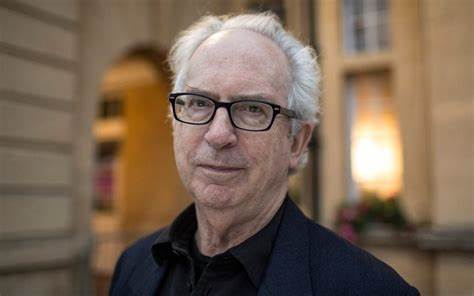
I missed reading this novel when it came out in 2000, won the Booker Prize and was made into a movie in 2019. It was written by Peter Carey, an Australian author, who had previously won another Booker. He was born in 1943. He dropped out of the pursuit of a science degree at university and started work in advertising. He began to read important novelists and wrote five unpublished novels. Having spent two years in London, working in advertising, he returned to Australia in 1970. In 1980 he opened his own advertising agency and the following year published his first novel, Bliss. Toward the end of the Australian phase of his career, Oscar and Lucinda was published in 1988 and won the Booker McConnell Prize as it was then known. Carey, who moved to New York in 1990 continues to live there, has received fourteen literary awards, several more than once, nominated twice for musical awards as lyricist, written fourteen novels, two short story collections, a stage play and has been married three times.
Peter Carey
There was a Kelly Gang in Australia in the 1880’s which was famous for its exploits, and for its identity with the marginalised immigrant population. The ‘True History’, however, departs from the historic facts on several points. The character, Mary Hearn, who became Ned Kelly’ lover and the mother of his daughter, never existed. There is no evidence that Kelly sired any children. The relationship between Kelly’s mother, Ellen, and Harry Power, the famous bushranger is a literary fabrication.
The story is told by Ned Kelly himself, in semi-literate writing, without punctuation, to tell his life history to his daughter from his point of view. He began life as the oldest boy of destitute family of Irish extraction trying to survive on a remote farm. His father had numerous brushes with the self-serving rural police which resulted in his death when Ned was 12. His mother then apprenticed Ned to Harry Power so that he could survive as a bushranger. He leaves Power and tries to live within the law, but he is imprisoned for three years for receiving a stolen horse, which he claims was given to him. Released from jail, he worked for two years in a sawmill, but he is drawn back into bushranging when a herd of his horses is stolen by a rival settler. Serious trouble with the police begins when he shoots the gun out of the hand of a corrupt police constable who makes advances on Ned’s younger sister. Four police are sent to kill Kelly, but Ned kills three of them in an ambush. The Kelly gang of four (Ned, his brother, Dan, and two friends are eventually surrounded by a crowd of police who kill the other three gang members and wound Ned. The shootout and Kelly’s death by hanging are told by ‘C. S.’, presumably the relative of the local teacher, Thomas Curnow, who ended up with all the Kelly manuscripts and who warned the police that the train tracks via which they were approaching the gang for the final shootout had been sabotaged. Kelly died a hero to most of the people of northeast Victoria, who amplified his life story over time.
The novel draws an accurate picture of the hard life lived by the large majority of the settlers and of the culture of the police, the judiciary and the ruling class in southeast Australia in the nineteenth century. Life was very hard and it created hard men. The story is told in the uneducated language of an impoverished Irish farmer, who clings to his family and its traditions. Ned never ceases to do what he believes is the just thing, and, in the process, there is an inevitable censure of the values and actions of the authorities. The characters are credible – if unsavory. The action is non-stop. This is a big jump above a good American western in its authenticity, its interest and its contribution to history.
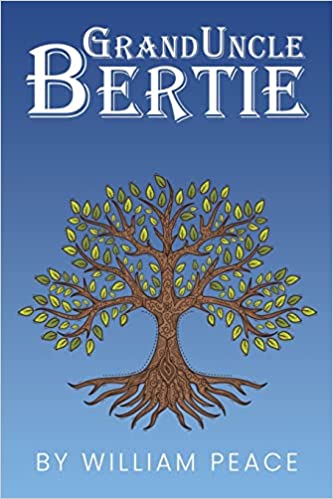
This time it is one of my novels that’s reviewed, by Maria Victoria Beltran for Readers’ Favorite.
She gives it a 5 for Appearance, 5 for Plot, 4 for Development, 5 for Formatting, 4 for Marketability, and 5 for Overall Opinion.
She goes on to say: “Granduncle Bertie by William Peace is an inspirational novel about one man’s quest for a peaceful death. The story unravels when Albert Smithson asks his grandniece Sarah to help him write his memoir. In the last seven years, the two have been partners in writing popular children’s picture books, with Granduncle Bertie as the writer and Sarah as the illustrator. As the story unravels, Sarah finds out that Bertie is traumatized by the excruciating death of his father and suffers from thanatophobia or fear of death. He has lived a good life and has overcome many difficulties, and now he wants his memoir to reflect his inner struggles. It will chronicle events in his life that make him realize that to die in a peaceful state, he has to accomplish three conditions. William Peace’s Granduncle Bertie is a thought-provoking read. All human beings begin life, and all human beings die. This is undoubtedly a theme relevant to all of us. William Peace’s literary style engages his readers quickly in considering essential questions not only about how we want to die but also about how we want to live. Narrated from the point of view of Sarah, a woman in her late twenties, the tone is chatty and informal. Most of us can relate to Granduncle Bertie as a familiar family story. What makes it unique is that it attempts to explore a sensitive theme. This book suggests that exploring one’s fear of death may allow us to live more fully.
Having never read any James Joyce, I decided I should start with something shorter, that Ulysses. I am disappointed, but not put off enough to abandon the idea of tackling Ulysses.
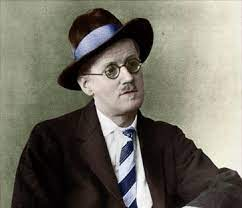
Joyce was born in 1882 into a middle class family in Dublin. He was educated at Catholic schools and universities, a brilliant student. In 1904 he met his future wife and they moved to mainland Europe. He published a book of poems, Chamber Music, and a short story collection Dubliners, before serially publishing Portrait of the Artist as a Young Man. Ulysses was published in Paris in 1922; it’s publication in the UK and the US was prohibited because of its perceived obscenity until the mid 1930’s. In 1939, the next major work, Finnegan’s Wake, was published. He died Zurich in 1941 shortly after surgery for a perforated ulcer at the age of 58.
James Joyce
Portrait is set in Dublin in the late 1800’s and is narrated by an omniscient, neutral third person, except for some stream of conscious in the final chapter. It traces the experiences of its protagonist, Stephen Daedalus, from his childhood to his early 20’s. Stephen is a bright, perceptive individual, but he lacks self-confidence, and his relations with classmates are somewhat difficult. The themes in the novel are family: his father is a heavy drinker and an unreliable bread-winner. His mother is kind and loving but dedicated, uncritically, to the Catholic church. The church restricts Stephen’s desire for artistic freedom, and there is likewise a tension in his image of women: virginal purity vs prostitute. There is also tension in Stephen’s view of Ireland and its culture: loyalty to its homely comforts vs a ‘nation of clodhoppers’. Amidst all this conflict, Stephen searches for his own identity: priest vs artist. He chooses the later, leaving family, Dublin and the church behind. Joyce’s innovative techniques, including stream of consciousness, internal monologue and description of a characters psychic state rather than his actual surroundings.
Joyce’s prose is certainly captivating; one never has a doubt of what is going on in Stephen’s mind, but, for me, sometimes it seems too detailed. I felt that there was to much of it, that it would be better to show rather than tell. Do we have to know exactly how he was feeling? Would not a hint now and then suffice? Let the reader pick up the thread.
Some of the scenes in the novel seemed superfluous or repetitious in their effect.
But my largest complaint about Portrait is that my edition had over fifty pages of footnotes, so that one had to continually flip back and forth. Some of the footnotes had to do with Dublin places or real Irish people, and might be skipped. But many others were translations of Irish word or Latin phrases, and were a necessary aid to comprehension. One has the impression of a novel set in a particular time and place, and that therefore its issues and messages may not be transferable. For me, this rules it out as a classic.
Ani Kokobobo has an article which was published on The Conversation website on 6 April 2022 which raises the question of reading the two Russian icons with the war in Ukraine in mind.
Ani Kokobobo is Assistant Professor and Director of Graduate Studies in the Department of Slavic Languages and Literatures at the University of Kansas.
Ani Kokobobo
She says, “As someone who teaches Russian literature, I can’t help but process the world through the country’s novels, stories, poems and plays, even at a time when Russian cultural productions are being cancelled around the world.
With the Russian army perpetrating devastating violence in Ukraine – which includes includes the slaughter of civilians in Bucha – the discussion of what to do with Russian literature has naturally arisen.
I’m not worried that truly valuable art can ever be canceled. Enduring works of literature are enduring, in part, because they are capacious enough to be read critically against the vicissitudes of the present.
You could make this argument about any great work of Russian literature, but as a scholar of Leo Tolstoy and Fyodor Dostoevsky, I will stick with Russia’s most famous literary exports.
Upon learning that Russian writer Ivan Turgenev had looked away at the last minute when witnessing the execution of a man, Dostoevsky made his own position clear: “[A] human being living on the surface of the earth has no right to turn away and ignore what is happening on earth, and there are higher moral imperatives for this.”
Seeing the rubble of a theater in Mariupol, hearing of Mariupol citizens starving because of Russian airstrikes, I wonder what Dostoevsky – who specifically focused his piercing moral eye on the question of the suffering of children in his 1880 novel “The Brothers Karamazov” – would say in response to the Russian army’s bombing a theater where children were sheltering. The word “children” was spelled out on the pavement outside the theater in large type so it could be seen from the sky. There was no misunderstanding of who was there.
Ivan Karamazov, the central protagonist in “The Brothers Karamazov,” is far more focused on questions of moral accountability than Christian acceptance or forgiveness and reconciliation. In conversation, Ivan routinely brings up examples of children’s being harmed, imploring the other characters to recognize the atrocities in their midst. He is determined to seek retribution.
Surely the intentional shelling of children in Mariupol is something Dostoevsky couldn’t possibly look away from either. Could he possibly defend a vision of Russian morality while seeing innocent civilians – men, women and children – lying on the streets of Bucha?
At the same time, nor should readers look away from the unseemliness of Dostoevsky and his sense of Russian exceptionalism. These dogmatic ideas about Russian greatness and Russia’s messianic mission are connected to the broader ideology that has fueled Russia’s past colonial mission, and current Russian foreign politics on violent display in Ukraine.
Yet Dostoevsky was also a great humanist thinker who tied this vision of Russian greatness to Russian suffering and faith. Seeing the spiritual value of human suffering was perhaps a natural outcome for a man sent to a labor camp in Siberia for five years for simply participating in a glorified socialist book club. Dostoevsky grew out of his suffering, but, arguably, not to a place where he could accept state-sponsored terror.
Would an author who, in his 1866 novel “Crime and Punishment,” explains in excruciating detail the toll of murder on the murderer – who explains that when someone takes a life, they kill part of themselves – possibly accept Putin’s vision of Russia? Warts and all, would Russia’s greatest metaphysical rebel have recoiled and rebelled against Russian violence in Ukraine?
I hope that he would, as many contemporary Russian writers have. But the dogmas of the Kremlin are pervasive, and many Russians accept them. Many Russians look away.
No writer captures warfare in Russia more poignantly than Tolstoy, a former soldier turned Russia’s most famous pacifist. In his last work, “Hadji Murat,” which scrutinizes Russia’s colonial exploits in North Caucasus, Tolstoy showed how senseless Russian violence toward a Chechen village caused instant hatred of Russians.
Tolstoy’s greatest work about Russian warfare, “War and Peace,” is a novel that Russians have traditionally read during great wars, including World War II. In “War and Peace,” Tolstoy contends that the morale of the Russian military is the key to victory. The battles most likely to succeed are defensive ones, in which soldiers understand why they are fighting and what they are fighting to protect: their home.
Even then, he’s able to convey the harrowing experiences of young Russian soldiers coming into direct confrontation with the instruments of death and destruction on the battlefield. They disappear into the crowd of their battalion, but even a single loss is devastating for the families awaiting their safe return.
After publishing “War and Peace,” Tolstoy publicly denounced many Russian military campaigns. The last part of his 1878 novel “Anna Karenina” originally wasn’t published because it criticized Russia’s actions in the Russo-Turkish War. Tolstoy’s alter ego in that novel, Konstantin Levin, calls the Russian intervention in the war “murder” and thinks it is inappropriate that Russian people are dragged into it.
“The people sacrifice and are always prepared to sacrifice themselves for their soul, not for murder,” he says.
In 1904, Tolstoy penned a public letter denouncing the Russo-Japanese War, which has sometimes been compared with Russia’s war in Ukraine.
“Again war,” he wrote. “Again sufferings, necessary to nobody, utterly uncalled for; again fraud, again the universal stupefaction and brutalization of men.” One can almost hear him shouting “Bethink Yourselves,” the title of that essay, to his countrymen now.
In one of his most famous pacifist writings, 1900’s “Thou Shalt Not Kill,” Tolstoy presciently diagnosed the problem of today’s Russia.
“The misery of nations is caused not by particular persons, but by the particular order of Society under which the people are so bound up together that they find themselves all in the power of a few men, or more often in the power of one single man: a man so perverted by his unnatural position as arbiter of the fate and lives of millions, that he is always in an unhealthy state, and always suffers more or less from a mania of self-aggrandizement.”
These writers have little to do with the current war. They cannot expunge or mitigate the actions of the Russian army in Ukraine. But they’re embedded on some level within the Russian cultural fabric, and how their books are still read matters. Not because Russian literature can explain any of what is happening, because it cannot. But because, as Ukrainian writer Serhiy Zhadan wrote in March 2022, Russia’s war in Ukraine marked a defeat for Russia’s great humanist tradition.
As this culture copes with a Russian army that has indiscriminately bombed and massacred Ukrainians, Russia’s great authors can and should be read critically, with one urgent question in mind: how to stop the violence. Russian opposition leader Alexey Navalny noted during his March 2022 trial that Tolstoy urged his countrymen to fight both despotism and war because one enables the other.
And Ukrainian artist Alevtina Kakhidze cited “War and Peace” in a February 2022 entry in her graphic diary.
“I’ve read your f—ing literature,” she wrote. “But looks like Putin did not, and you have forgotten.””
Matthew FitzSimmons has an article on writing dialogue, dated September 1, 2021, on the Writer’s Digest website. He makes some points that wouldn’t normally be high on the last for a writing class, but nonetheless, I think they’re worth remembering.
Matthew FitzSimmons is the author of Constance, as well as the Wall Street Journal bestselling Gibson Vaughn series, which includes Origami Man, Debris Line, Cold Harbor, Poisonfeather, and The Short Drop. Born in Illinois and raised in London, he now lives in Washington, DC.
Matthew FitzSimmons
Mr FitzSimmons says, “I was teaching English at a high school in Washington, D.C., when I wrote my first novel, The Short Drop. One of the perks of being a teacher is having summers off, and it took me a little over two years to finish the manuscript. At the time, I thought one of the book’s strengths was the dialogue. After all, I came from a theater background and so much of directing is thinking about the spoken word. Plus, and I don’t say this to brag, but at that point I had 40-plus years of practical, hands-on experience in “talking.” So how hard could writing dialogue really be?
Well, my developmental editor on The Short Drop, the wonderful Ed Stackler, got his ink-stained mitts on it and disabused me of the notion that a lifetime achievement award for best original dialogue was my destiny. After that, I stopped taking dialogue for granted and began to craft a personal writing philosophy on the art and artifice of dialogue. Here are a few of the guidelines I keep in mind each day I sit down at my desk.
1. No One Uses a Name Without a Reason
Ed’s first lesson was one that in retrospect should have been painfully obvious—no one says anyone’s name in general conversation. (Alright, not never, but rarely.) When a name is spoken, it has purpose behind it. A few examples to illustrate the point:
When someone is trying to get another person’s attention: “Matt. What do you want from the bar?”
When someone is attempting to dominate another person: “Isn’t that right, Mr. FitzSimmons?”
When someone is showing off that they were paying attention when you met and actually remember your name: “Matthew, good to see you again.”
There are, of course, many others, but always for a reason. When was the last time you used the name of your best friend?
2. Hemingway’s Non Sequiturs (or, Not Everyone is Having the Same Conversation)
Whatever your opinion of Ernest Hemingway, the man was brilliant with dialogue. I strongly recommend his short stories—“Hills Like White Elephants”, for example, is a masterclass of elliptical dialogue. But it was a couplet of dialogue between Lady Brett Ashley and Jake Barnes from chapter IV of The Sun Also Rises that taught me that the most interesting dialogue is rarely a straight line. It goes:
“Don’t worry,” Brett said. “I’ve never let you down, have I?” “Heard from Mike?”
Not a lot to it until you consider that Jake is hopelessly in love with Brett and that Mike is Brett’s latest husband. Read it again. Now what was merely an innocent non sequitur becomes a cutting, passive-aggressive barb more incisive than any five-page argument. How people answer, or don’t answer, questions is an incredibly useful tool for revealing relationship, character, and agenda.
3. Complete Sentences/Correct Grammar
Dialogue composed of nothing but complete sentences will sound false to the ear. Grammar also tends to take a backseat as well. A character who uses who/whom correctly in casual speech is revealing a lot about their background. More often than not, people use shortcuts to limit the number of words necessary to communicate information. One example: Personal pronouns are frequently omitted—“I’m running late,” often becomes “Running late,” and so on. Listen to, and become a student of, how people speak, and what it can tell a reader about your characters.
4. Multitask
I always aim for dialogue to perform more than one purpose. If a passage of exposition is absolutely necessary, I always ask, “What other jobs can that dialogue be performing in terms of character and story?” Small talk is especially challenging, because as a species we (sadly) depend on it to navigate almost every social interaction. In prose, small talk is deadly to a reader’s interest and less is definitely more.
5. Not Everyone Sounds Like Me
If you spent any significant time around me, you’d quickly pick up on my conversation style, my verbal tics, and my sense of humor. When I first began writing seriously in my 20s, there was a tendency for all of my characters to sound like versions of myself. What was pleasant in small doses (I hope) was catastrophic in large ones (the world really doesn’t need more than one Matthew FitzSimmons in any conversation). It was an incredibly important self-discovery. I realized that if all my characters sounded like me that I wasn’t putting in the work to fully realize each of my characters. A habit I’ve developed in the years since is to write “interviews” with my characters to think through how they speak and why. Once I understand their conversational posture, I have a much better insight into who they are as people.”
Mr FitzSimmons point about people not using names was brought home to me when the manuscript for my novel Nebrodi Mountains came back from the editor with many names deleted. And I particularly like Hemingway’s not sequiturs as a clever dialogue device.
There is an article in Literature News dated 18 December 2020, written by an anonymous subscriber, which struck me as being quite indicative of the times. The article is subtitled: ‘Yes, it used to be classic but now it’s mostly crass!’
I have edited the article which appears below:
“Modern literature in English, the books published after 2010, mostly, have been popular because of many factors that have affected the sensibilities, choices, preferences and ideals of the masses. However, for a certain group of readers, increasing obscenity in casual literature is also a reason that has increased their interest in literature, frequency in buying and reading books and also took them away from what we can call sensible and meaningful literature. Well, all of it, most of the times, comes down to the description of sexual and intimate moments in literary work. For example, works like Fifty Shades of Grey have taken it too far, when we talk about the international literary horizon.
“I want to f*** your mouth, Anastasia, and I will soon,” his voice is hoarse, raw, his breathing more disjointed.”
This comes from E. L. James’ novel Fifty Shades of Grey and the extract below may be said to be something more:
“Keep still,” he orders, his voice soft but urgent, and slowly he inserts his thumb inside me, rotating it around and around, stroking the front wall of my v*****. The effect is mind-blowing—all my energy concentrating on this one small space inside my body. I moan.”
So, anyone can read, the intimate moments have become intense (in the literature of the day) and their descriptions have become raw, direct and even more than what could actually be. And this may be called a sudden outburst because mainstream literature has been filled with such works by the novelists who have taken it to the next level while describing the sexual scenes. Authors have begun providing a special set of readers with what cannot be exhibited even in the inline content platforms.
“He kissed my nipples. He moved up and kissed my collarbone. He kissed my chin and then my lips for several minutes. He tugged at my panties. My heart beat fast. Was I really going to get fully naked in front of a man?”
There are many new authors who are coming up with even ‘better’ versions, even more explicit details. It makes things aroused for a moment or two, an hour or two and may meet the sexual fantasies of readers (especially teenagers and youths for whom things are all new). However, in this process, what we forget is ‘fiction’ and the target readers of these authors seldom judge such books on merits. Problem for none and a win-win situation for the novelists.
In those days, when the authors like Lawrence and Hardy tried to portray sexual actions on the pages of their novel, things were very different and everything was almost ‘beautiful. Things were suggestive, narrated wonderfully and also felt good to read. This may be coming out of my bias for classics and against the modern nonsense which is served in the name of realism. However, you can realise more if you read these lines by Lawrence which detail a scene of love-making between Paul and Miriam in Sons and Lovers:
“She put her hands over him, on his hair, on his shoulders, to feel if the raindrops fell on him. She loved him dearly. He, as he lay with his face on the dead pine-leaves, felt extraordinarily quiet. He did not mind if the raindrops came on him: he would have lain and got wet through: he felt as if nothing mattered, as if his living were smeared away into the beyond, near and quite lovable. This strange, gentle reaching-out to death was new to him.”
And you can feel the sentiments in the extract below but you cannot find that obscenity:
“And afterwards he loved her—loved her to the last fibre of his being. He loved her.”
Now, the readers may have their say on what they want to enjoy and to which extent. There is nothing that I would ask them to leave or accept. However, as a critical thinker, I find modern description of love-making rather elaborated to the naughty sides of our conscious. It is, however and somehow, doing great with the time.”
I agree with the sentiments of the writer. For me, literary fiction (as distinct from generic fiction) should employ the imagination of the reader. When characters engage in love-making, it is enough to set the scene and concentrate on revealing the emotions of the couple. This defines their relationship. ‘Mechanical’ details of the interaction, while possibly of peripheral interest to the reader, distract from an understanding of the relationship.



 William Peace Blog