I was attracted to this book by a favourable review and by it having been on the Sunday Times bestseller list. It was written by Layla F Saad, “who is a writer, speaker, and podcast host on the topics of race, identity, leadership, personal transformation and social change. As a East African, Arab, British, Black, Muslim woman who was born in and grew up in the UK and currently lives in Qatar, Layla has always sat at a unique intersection of identities from which she us able to draw rich and intriguing perspectives.”
The book cover
You’ll notice the subtitle, “How to Recognise Your Privilege, Combat Racism and Change the World”. Before I opened the book, I didn’t expect to learn a great deal from it, but I do recognise my privilege, having grown up in an environment of private education. And I think it is fair to say that my mother and grandparents were racist. I never accepted my mother’s views, or the views of my Navy colleagues who were white, Southern officers. I felt they were wrong, but I’m sorry to admit that I didn’t ‘call them out’.
Ms Saad’s book is very well organised. After several chapters which lay the groundwork very clearly and well, the book has a chapter-a-day format for four weeks. In each chapter, a particular aspect of white supremacy is described in depth. There is a chapter, for example, on white fragility in which the action is explained, examples are given, when it shows up, why it’s important to understand it, and some searching questions for the reader on his/her experience and understanding of white fragility. The reader is asked to write their answers in a journal. For me the number of actions which make up white supremacy is astonishing. Many of them, like tone policing, I never heard of before, but I could see how each action contributed to the white supremacy structure.
Toward the end of the book, Ms Saad begins to move the reader gradually toward action, with chapters like, You and Your Friends, You and Your Family, You and Your Values, You and Losing Privilege, You and Your Commitments. She lists a number of possible commitments. One, for example, is “I am committed to my lifelong antiracist education by . . .” There is also a section toward the end of the book that deals with how groups should work through the book together.
Probably the best aspect of this book is its persuasiveness. Ms Saad’s tone is friendly, factual, clear and certain. She knows what is wrong and how to correct it. This book will stay with me for the rest of my life. It should be required reading for every sensible white person.
An MFA (Master of Fine Arts in creative writing) Is a program which aspiring authors often consider as a stepping stone to a professional writing career. There is an article In Creative Writing News, of 23 January 2022, by Chiziterem Chijioke which analyses the pros and cons surrounding MFA’s.
Chiziterem Chijioke
Chiziterem Chijioke is a creative writer, editor and a student of mass communication. She has worked as a volunteer and is a member of Fresh Writers Community and currently works as an editor for Creative Writing News.
Ms Chijioke says: “In recent years, MFA programs have become so competitive because many writers see them as gateways to building successful writing careers. Research shows that in the U.S alone, there are over 350 creative writing programs at the MFA. And each year, an estimate of over 20,000 people apply to be admitted into MFA programs. But some literary greats have continued to debate whether an MFA is a prerequisite for a successful career in writing.
Many writers want an MFA based on myths that surround the program. One of such myths is that an MFA is the key to a successful career. While the program has served as a catapult for some successful writers, many others with the degree have failed to take off. You need much more than an MFA to carve out a niche for yourself in your creative writing career.
Pros of Getting an MFA in Creative Writing.
An MFA helps writers grow in their craft.
Writers must understand that learning is an endless process. When getting an MFA, learning is basically what you would be doing. You would learn in order to harness your inborn craft. It is an opportunity to learn to write better than you already do. There is always a great advantage in expanding your knowledge. It makes you more exposed, more aware and better in any field.
2. It connects a writer with a community of writers:
The beauty of creativity is sharing that creativeness with people who understand. While taking a writing program, you meet people who understand your skill and share similar experiences with you. These experiences may bewriter’s block, story setting, narrative style, genre, niche. Most times, your knowledge may bloom from discussions with your pairs, who have been through similar situations like you have and although they might not have a manual on how to overcome certain blocks, their experiences might inspire you on how to go about yours.
3. It makes a writer more open to Criticism:
Creatives receive criticisms all the time. Most times, you may feel your work or that what you have written is perfect. But then, criticisms can shatter that perception and make us wonder why our perfect work is unworthy to someone. Again, some writers can question the sanity of someone who criticized their written content. An MFA program helps a writer grow a thick skin for criticism. The lecturers would have you correcting written work time and time again. Your ideas or writing standard may not align with theirs and this may lead to a lot of criticism.
4. An MFA helps a writer read more:
Many writers are selective in their reading habits. An MFA program forces you to read books you would not consider on a normal day. Reading widely exposes students to various writing styles, which can help you become a better writer. Many writers do not understand that reading widely is a big part of being a better writer. You read to learn, you read to understand, you read to know more. Where better to improve your reading than in a school? Reading is part of a learning process and it is therefore inevitable during an MFA program.
5. An MFA makes a writer dynamic while discovering their niche:
Although many people can juggle different genres, some writers struggle with settling on what genre is their niche. A writing program might help you uncover that. An MFA does not give you what you want to read or know — it throws in various aspects of writing and helps you understand it.
6. Writers’ Workshops:
A writers’ workshop is an instructional program created to gradually build a person’s independent writing skills. It focuses on the writer. Each workshop is organized to provide a gradual release of instruction, moving writers from a class writing exercise to independent writing. During an MFA program, a lot of writing workshops would take place and this would help broaden your mind. It would also make you more open to learning, because a writers’ workshop focuses on nurturing a writer.
Cons/ Myths about getting an MFA in Creative Writing
An MFA does not guarantee that you get published as a writer:
Many writers think getting an MFA in creative writing is a ticket to getting published. It is not true. An MFA only helps you become a better writer, it does not guarantee that publishing houses would choose your work.
2. MFA does not determine your success as a writer:
Whether or not you become published, an MFA is not what guarantees how far you go or how successful you would be in this field.
3. An MFA is Expensive:
One important question to ask when considering getting an MFA in creative writing is “how much does an MFA in creative writing cost?” A con of aiming to get an MFA as a creative writer is that the program is costly. Research shows that the average fee of getting an MFA in creative writing in the USA is $13,800 a year at Public Universities; $36,300 at Private Universities.
4.Making a community does not mean it lasts forever:
Most times in life we encounter beautiful people and things and we hold great hope that it is everlasting. An MFA in a creative writing program would introduce you to people, but this does not mean that these connections would last forever especially after graduation. It also does not mean that your success rate might be the same.
5. A masters of fine art program does not give you access to literary agents:
Another myth about MFA programs is that it guarantees you access to literary agents. Just like the statement about getting published, an MFA does not guarantee that you would get a literary agent.
6. It might affect your writing:
One criticism of MFA programs is that it stifles originality and creativity. During the process of learning and gathering novel ideas and knowledge, the mind becomes affected. There might be a clash between your voice and that of the person whom you are learning from. Always hold on to who you are. Hold on to the fact that every story needs to be told, including yours. Always hold on to who you are. Hold on to the fact that every story needs to be told, including yours.
Final Thoughts.
A creative writer doesn’t necessarily need an MFA. It doesn’t help you get a job. It doesn’t help you get published, and it doesn’t teach you how to be a successful writer. It just gives you an opportunity to focus and grow in writing.”
I was given this book (a New York Times no. 1 bestseller) by one of my sons-in-law who rowed crew at university, but didn’t know that I had done some rowing, although I was never very good. In spite of the pain that one suffers when one is racing in an eight-man shell, it can be a truly addictive sport. And it can be very exciting for spectators cheering their boat, particularly during the last minute of a race.
This is an historic novel, and, paradoxically, quite suspenseful, written by Daniel James Brown. On his website he says: “I grew up in the San Francisco Bay Area and attended Diablo Valley College, the University of California at Berkeley, and UCLA. I taught writing at San Jose State University and Stanford before becoming a technical writer and editor. I now write narrative nonfiction books full time. My primary interest as a writer is in bringing compelling historical events to life as vividly and accurately as I can. I live in the country outside of Seattle, Washington with my wife, two daughters, and an assortment of cats, dogs, chickens, and honeybees. When I am not writing, I am likely to be birding, gardening, fly fishing, reading American history, or chasing bears away from the bee hives.”
Daniel James Brown
This book is about the eight-man (and a coxswain) crew from the University of Washington which won the Olympics in Nazi Germany in 1936. It is a true and memorable story, though almost none of us alive today have any memory of the event, and few ever heard the story. The central character is Joe Rantz, a poor, but tall and strong boy, who is beginning his freshman year at the University of Washington in the Depression of 1933. We learn about his checkered family background and his decision to row in an eight-man shell, of the difficulties he went through to win a place on the freshmen’s no. 1 boat. From that point, Joe struggles to win a seat on the junior varsity boat, the Washington varsity boat and the US Olympic boat, in all that time never losing a competitive race. The competition included the University of California crews and the best eastern crews: Penn, Navy, Cornell and Syracuse. There are plenty of obstacles that Joe and the rest of his crew have to overcome: financial worries, exhaustion, family relationship issues, training problems, and more. Each major race they face is clouded with uncertainty, but, since it’s a true story, we know in advance the real outcome, yet we live through the tension with Joe and his teammates. In Germany, for example, the final race seems to be stacked against the Americans: the Germans and and the Italians are given the two most favourable lanes; the Americans, the least favourable lane. Moreover, the American stroke (the stern-most oarsman who sets the pace) was ill.
Apart from the vivid writing and nearly constant tension maintained throughout, one has to marvel at the extensive and detailed research which the author had to do: interviewing Joe’s daughter, fellow crewmen, dozens of others and reading reams of records. Through it all, he is able to capture the magic that an eight-man crew can create when they are in the ‘swing’. There is plenty of captivating rowing folklore here. It’s a thoroughly enjoyable and interesting book.
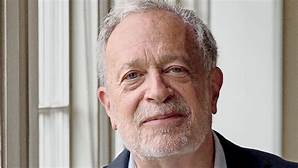
I heard Robert Reich speak on a subscription program – was it a Guardian program? And I was impressed enough to order his book, The System: Who Rigged it, How We Fix It.
Robert B Reich is Chancellor’s Professor of Public Policy at the Goldman School of Public Policy at the University of California, Berkley. He has served in three national administrations and written sixteen books. His articles have appeared in top newspapers and journals. He writes a weekly column for The Guardian and Newsweek. He lives in Berkeley.
Robert B Reich
This book is about what has gone wrong with the American political system, how it has occurred, and what can be done to recover our democracy. Professor Reich says there are three major power shifts which have occurred and, together, they have, over the last forty years transformed the United States from a democracy to an oligarchy, where power is concentrated in the hands of an elite group of very wealthy individuals. The power shift was brought about by corporate raiders who made the shareholder the only stakeholder in publically traded companies. Previously, the employees, the communities in which they were located, their suppliers and customers were also stakeholders. This led to a strict focus on profits, resulting in wage stagnation, loss of union power, off-shoring of production, and, in turn, to tremendous increases in CEO compensation. CEO’s gained tremendous wealth and power. So, Professor Reich says that the first power shift was from stakeholder capitalism to shareholder capitalism, and the second was a shift in bargaining power from large unions to large corporations. And the third shift was unleashing the financial sector (Wall Street) from laws regulation. This meant huge financial rewards for CEO’s, hedge funds, derivatives traders, and others. With vast financial resources available to few people, and with the Supreme Court’s ruling on political campaign finance, it became possible for this limited pool of powerful people to ‘bribe’ politicians with huge contributions to obtain the laws, regulations and taxation they wanted. The top ten percent of Americans became richer, the bottom ninety percent became poorer, with lower quality education, health care and basic infrastructure. Professor Reich argues that it is possible for the ninety percent to act in concert to change the system.
In the book, Professor Reich singles out Jamie Dimon, the CEO of JPMorgan, the huge bank, as an example of an individual who uses his power to change the system. He and many other specific examples populate this book with a host of convincing evidence. A multi-page appendix lists the sources of the evidence. There is also much evidence of the wage, benefits, health care and educational erosion for the ninety percent, including personal examples. The book is written with considerable emotion and conviction.
As accurate and convincing as the book is, I have two minor criticisms of it. It is often repetitive, making the same point repeatedly. It is also not organized like a legal brief, the points are all there, but they tend to get somewhat tangled. Perhaps these ‘faults’ were intentional on the part of the author and his publisher. They intended this book to be an emotional tirade. If so, it is very convincing.
On September 10, 2020, Writer’s Digest ran a reprint of a 1925 article written by Thomas H Uzzell, the former fiction editor of Colliers Weekly and author of Narrative Technique. He also wrote The Technique of the Novel – a Handbook on the Craft of the Long Narrative, Grandee Jim: A Novel of Action, Romance and History in Old Santa Fe, and was the editor of Short Story Hits. I was unable to fine a picture of Mr Uzzell, who said:
“Just before I sat down to write this article, a young woman came to me saying she wanted help in writing short stories. I asked her how much writing she had done, and her answer was, “None,” and she had been wanting to write for eight years! A hopeless case. People who want to write, write; they don’t think about it. They may write very badly because they are too subjective and have no idea of an audience and know nothing about technique, but—they will write something. Their interest gives them the energy needed to get the writing done.
On the intensity and the endurance of a person’s interest in his writing does his success hang more utterly than on any other single factor. Love of the medium and love of the deed or want of that love make or break 95 out of every 100 aspirants. Where that love is, you find something as deep as life itself. How much writing have you already done? The answer to this question will offer the best solution I know as to how much writing you are going to do.
Legions of people with literary ambitions who get nowhere are more pre-occupied with the thought of why they would like to success than with the thought of how they are going to win success. They want to “win fame,” “earn some money,” to “fulfill ambition,” “make their friends proud of them;” and, alas, too many of them have turned to fiction after failing at everything else they have tried, as the one thing within their slender powers.
Desire for money or fame are not at all inconsistent with a genuine literary purpose; they are generally incentives to energetic action; but if the action is not the putting of ideas in the shape of words on paper, all resolutions will come to nothing.
One of the commonest errors with regard to this desire to write is the mistaking of a love of reading for a talent for writing. Once he realizes that the easier a book is to read the more painful the labor that produced it, the person with this “book-lover” complex becomes discouraged. His interest was not in self-expression, but in being “literary.”
A handicap even greater than this “book-lover complex” is that caused by some pathological inhibition, some nervous disorder which prevents the writer from comprehending the conduct of normal human beings. His writings express not life as it is, but some suppressed personal desires. This psychopathologic problem of writers is too wide and intricate a subject to be more than touched on here.
The highest mark of genuine writing talent is an interest in the art so deep that copy in quantity is produced. Jack London was fond of quoting his favorite author, Conrad, as follows: “An artist is a man of action.” Action for the literary artists is writing.
Nearly every student writer postpones too long the hour of beginning. He hopes for the beautifully finished plot, the perfect word, the high inspiration. The art of writing is a well-developed habit under constant control. Years of writing are necessary for practically every aspirant to develop this habit effectively enough to release his message to the world. For the average student a million words are needed for this training in habit only.
Whether or not you should write is a question you must decide for yourself. It is both a moral and a literary problem. Most of us do the things we want to do, and writing is no exception. If you have an interest in writing you are writing; if you haven’t you are not, and that is just about all there is to it—on the moral side. If, however, you have been writing persistently without attaining satisfactory results, you may well seek expert advice as to the things which may be hindering you. Such advice can only direct and guide your energies which in themselves are your main asset.
If it were possible to give a “formula for literary success,” such analyses of writers’ assets as I have made would lead me to say that, in the case of the average writer of second and third-rate popular stories we would find that his success depended
60 percent on sheer industry or energy,
10 percent on personality,
30 percent on technical skill.
The writer who produces a bestseller or wins national fame for the high quality of his art owes his success, we would find,
45 percent to sheer industry,
45 percent to personality,
10 percent to technique.
If I am even approximately right in my analysis, the factor of energy or industry plays a larger role in literary talent than is generally supposed. It is also my belief that beyond a certain point, when sufficient energy is allowed, a writer succeeds in his work in exact proportion to the depth and richness of his personality. This last factor is the variable one. It is the only true inspiration. It is that gift which may most truly be said to be born in us, and the possession of which may be said to rest in the laps of the gods and, as one disappointed writer I know says, “The gods sometimes stand up!””
I certainly agree with Mr Uzzell that ‘love of the craft’ is essential to literary success, but I don’t see ‘love of the craft’ as being literary talent. I think one has to have Love of the Craft and Technique/Skill in about equal measure. I also agree that personality enters into the equation, as well, in the from of Creativity, Imagination, Intelligence, and a Sense of Freedom.
I was looking for a book with the title Hostage to the Devil, that I read a long time ago. It was written by a man who was a priest and a psychiatrist, and it dealt with about five genuine cases of ‘possession’ that he had experienced. Unfortunately I couldn’t find it, so it must be out of print. There is a newer book with the same title, but its reviews put me off buying it. Instead, I bought Lucifer Exposed by Derek Prince (1915-2003), which had many excellent reviews -106 reviews, of which 96% are four or five stars.
Derek Prince’s website says that he was “born in India of British parents. Educated as a scholar of Greek and Latin at Eton College and Cambridge University, England, he held a Fellowship in Ancient and Modern Philosophy at King’s College. He also studied Hebrew and Aramaic, at Cambridge University and the Hebrew University in Jerusalem.
“While serving with the British army in World War II, he began to study the Bible and experienced a life-changing encounter with Jesus Christ. Out of this encounter he formed two conclusions: first, that Jesus Christ is alive; second, that the Bible is a true, relevant, up-to-date book. These conclusions altered the whole course of his life, which he then devoted to studying and teaching the Bible.”
Derek Prince
Lucifer Exposed uses numerous quotations from the Bible to describe the history, the motivation, the intentions and the actions of the devil. It describes the devil a a beautiful fallen angel whose fall was caused by his trying to usurp the power of God. The devil’s power over death was destroyed by the death of God’s son on the cross and his resurrection. The devil’s reaction had been to try to estrange humanity from God by tempting us into sin, and by destroying the power of the church to disseminate Jesus’ teaching. The book makes the point that escape from Satan’s clutches cannot be achieved by following the law, because there is always another law we have neglected. Salvation can only be achieved by faith in Jesus and his teachings. The book draws a major distinction between citizenship in the World (the temporal, secular place of which the devil is the ruler) and citizenship of Heaven (God’s spiritual world).
This is an excellent piece of Biblical scholarship: well written, thoroughly referenced, and completely logical and believable. My only comment is that I would have liked to have seen some secular arguments (as well as the religious ones) for the existence of and the extreme hardships caused by the devil. These hardships are often wrongfully blamed on God’s ‘negligence’. There is, I think, abundant evidence that most of the World’s hardships are caused by the devil.
I found a well-used copy of The Kite Runner on the bookshelves of our Sicilian house just at a time I needed something to read. How it got there is a bit of a mystery as my wife hasn’t read it. I guest must have left it. It is a book, by Khaled Hosseini, that I have wanted to read for some time.
Mr Hosseini was born in Kabul, Afghanistan in 1965 into a privileged family. His father was a diplomat and his mother a language teacher. In 1970 the family moved to Tehran, where his father worked at the Afghan embassy. They returned to Kabul in 1973. In 1976 they relocated to Paris, but were unable to return to Afghanistan because of the 1978 Saur Revolution and the Soviet invasion. In 1980 they applied for asylum in the US and settled in San Jose, California, where Mr Hosseini attended high school, Santa Clara University and University of Calfornia, San Diego Medical School. He practiced medicine until 2005. The Kite Runner was released in 2003, A Thousand Suns in 2007, And the Mountains Echoed in 2013, and Sea Prayer in 2018. His novels have sold 55 million copies, globally. He, his wife and two sons live in northern California.
Khaled Hosseini
The Kite Runner is set in Kabul and San Jose, with brief stops in Peshawar, Pakistan beginning in the mid 1960’s. The central character is a boy, Amir, who lives with his well-to-do father in the best section of Kabul. They have two low caste servants, Ali, who’s wife deserted him and Hassan, a boy of Amir’s age, who is his best friend. Amir’s father seems to like Hassan better than Amir, a source of much jealousy for Amir. Amir witnesses a terrible assault on his friend Hassan, without making an effort to come to his rescue. Ali and Hassan leave the household when Amir implicates Hassan in a theft. Amir and his father flee Afghanistan and find asylum in the US. Years later, after Amir’s father dies, Amir is called to Pakistan by his father’s old friend, Rahim Khan, who tells him that Hassan and his wife have been executed by the Taliban. Rahim also tells Amir that he and Hassan were half-brothers, and that Hassan and his late wife had an orphaned son. Amir confronts his lack of courage to rescue the orphan and take him to the US.
This is a splendid book about family: good and bad, strong and weak. It’s also about how childhood can shape our adult lives. As one reads, one can’t help wonder if this isn’t a memoir rather than a novel. One feels transported to the old prosperous Kabul, to the savage, wrecked Kabul after years of war, and the strange life of exile in an Afghan settlement in America. Mr Hosseini is extremely adept at having the reader feel what the characters are feeling, be it jealousy, love, fear or anger. I’m glad I found this book. It’s a compelling story wonderfully told.
An article with the title ‘While Offensive TV Shows Get Pulled, Problematic Books Are Still Inspiring Debate and Conversation’ dated July 3, 2020 and written by Ron Charles appeared in the Washington Post.
Ron Charles writes about books and publishing for The Washington Post. For a dozen years, he enjoyed teaching American literature and critical theory in the Midwest. Before moving to the District, he edited the books section of the Christian Science Monitor in Boston. His wife is an English teacher and the cinematographer of their satirical series, “The Totally Hip Video Book Review.”
Ron Charles
The article, in its entirety is as follows.
“As Confederate statues finally tumble across America, television networks are marching through their catalogs looking to take down racially offensive content. It turns out that little video monuments are lurking all across the TV canon — more shocking with each new announcement. Just this month, blackface scenes have been rediscovered and removed from “The Office,” “Community,” “30 Rock” and “Scrubs.”
“The Office”? — really? I don’t remember that scene.
Of course not. Collective amnesia is an essential condition for perpetuating poisonous stereotypes, the way bad sanitation leads to cholera.
In her most recent novel, Swing Time, Zadie Smith captures the disorienting surprise of running across an old racist trope. Her title Swing Time is borrowed from a 1936 musical comedy starring Fred Astaire. In Smith’s prologue, a young woman googles a favorite scene from that movie that shows Astaire performing a tribute called “Bojangles of Harlem.” With a shock, she sees what she had not noticed as a child: “I hardly understood what we were looking at,” she says. There’s Astaire dancing as magically as ever, but he’s in blackface with “the rolling eyes, the white gloves, the Bojangles grin.” Her beloved scene suddenly feels ruined by racist exaggerations.
The great reckoning now sweeping across pop culture has been working through the stacks of literature for far longer. The effects of time are twofold: Most books have fallen into dust, along with the racist values they imbibed. And those few texts that survive have been subjected to rigorous — and ongoing — debate.
Any theater launching a production of “Othello,” for instance, must begin with a rich body of scholarship on Shakespeare’s sources and intentions. What are we to make of the Moor, the Venetian general manipulated into murderous rage by his villainous white colleague? Even before Othello comes onstage, he’s subjected to obscene racist ridicule. And later, Othello himself laments, “Haply, for I am black and have not those soft parts of conversation that chamberers have.”
As a Renaissance writer working in England 250 years before the Emancipation Proclamation in the United States, Shakespeare surely held the white supremacist values of his culture. But is “Othello” a racist play, or is it a fledgling critique of racism?
And most important: Is that a distinction we’re willing to investigate anymore?
Twitter would, no doubt, trend with #CancelShakespeare. By the end of a ferocious week, the Bard would withdraw his play, begin a listening tour, and issue a statement expressing deep regret for the pain he has caused by appropriating the experience of a Moor.
Monuments celebrating racist traitors, which were erected to fabricate history and terrify black Americans, are not works of art that deserve our respect or preservation. Similarly, scenes of modern-day white comedians reenacting minstrel-show caricatures are not ironical interrogations of racism that we have to stomach any longer.
Blackface has long been an issue in comedy. Look no further than ‘Saturday Night Live’ for proof.
But. complex works of literature are large, they contain multitudes.
Uncle Tom’s Cabin presents a fascinating trajectory of the currents of American sensitivities. Harriet Beecher Stowe’s anti-slavery melodrama electrified the nation when it was published in the early 1850s. Northern abolitionists wielded the novel as a sword for their cause. Southern defenders of slavery answered Stowe’s work with condemnations and counter stories. Even if President Lincoln never actually told Stowe, “So you’re the little woman who wrote the book that started this Great War,” the sentiment of that legend is true: Stowe energized the debate that led to battle. Frederick Douglass wrote that the novel’s “effect was amazing, instantaneous, and universal.” In the 20th century, though, the book fell out of favor. Critics complained that it traffics in subservient racial stereotypes; the name “Uncle Tom” became a racial insult denoting complicity with one’s oppressors. But in 2006, Henry Louis Gates Jr. and Hollis Robbins published The Annotated ‘Uncle Tom’s Cabin’ which offers a complex reappraisal of the novel as a “strange, startling, and audacious work.”
That is the nature of literature. The words on the page may be frozen, but we’re not. To engage with them carefully and with each other civilly is to reap a better understanding of who we were and are.
Just a few weeks after it was published in 1885, Adventures of Huckleberry Finn was banned by the Concord Public Library, which condemned Twain’s novel as “absolutely immoral.” Complaints came from white readers alarmed by the book’s coarse language; the Brooklyn Public Library was shocked that Huck said “sweat” instead of “perspiration.” Heaven forfend! But in the 20th century, that silliness gave way to thoughtful considerations of the novel’s treatment of racism and racist slurs. By the 1950s, a movement had begun to remove the novel from American schools because of its frequent use of the n-word. As that push gained momentum, critics debated whether Twain’s portrayal of Jim is sympathetic or humiliating; others suggested editing the novel to fit contemporary tastes. The critical arguments have been illuminating, exploring, among many subjects, Twain’s regard for black people and the deleterious effects of racist language on African American students.
Even weak novels can spur great debates. This year, a thriller by Jeanine Cummins called American Dirt would have fallen quickly into the obscurity that awaits most thrillers. But several insightful critics uses Cummins’ book to highlight the persistence of racist stereotypes in popular literature. Their critiques and subsequent activism promise to permanently improve the representation of Latino people in publishing.
Under the best circumstances, that’s the enriching conversation that literature can inspire: the alchemy that transmutes authors’ moral and artistic flaws into insight and understanding. I don’t mean to suggest that we’re under any super-sophisticated obligation to tolerate plainly racist books. But if cancel culture has a weakness, it’s that it risks short-circuiting the process of critical engagement that leads to our enlightenment.
What’s more insidious is the self-satisfaction that comes from calibrating our Racism Detector to spot only a few obvious sins. Scanning videos for blackface or searching text files for the n-word is so much easier than contending with, say, the systemic tokenism of TV rom-coms or the unbearable whiteness of Jane Austen.
It is a truth universally acknowledged, that a man in possession of a point like that must be in want of a quarrel.
A post with the above title was published on the Writer’s Digest bog on October 18, 2018. I was interested because until recently I had not used a first class editor, and when I did, I found it to be an entirely different experience. The authors of this piece are freelance professional editor, Pam Johnson and novelist Steven James, whose “award-winning, pulse-pounding thrillers continue to gain wide critical acclaim and a growing fan base,” his website claims.
Steven James and Pam Johnson
Their Seven Deadly Sins are:
1. Lack of Communication: Failing to specify expectations.
When I submitted my manuscript the editor, I highlighted my own concerns and reservations about the novel. This gave him something meaty to work on.
2. Sloppiness: Not submitting your best work.
“Poor punctuation, grammar, spelling and so on is so distracting to an editor that she will struggle to concentrate on the story she’s been hired to edit.”
This seems obvious.
3. Stubbornness: Refusing to change your course of action.
The editor suggested a major rewrite which involved a change in the narration and a different role for a minor character. It was, I admit, a difficult pill to swallow, but once I started on it, I could see what a huge difference it would make.
4. Impatience: Not realizing that writing a book is a long process.
I was certainly guilty of this when I started writing, and, unfortunately, the self publishing process makes it easy hurry things through to completion. When an agent and the publishers editor are involved and both of them have a financial incentive to produce the best quality novel, the process becomes more thorough and careful.
5. Passing the Buck: Expecting your editor to write the book.
This expectation is lazy, wishful thinking. With benefit of hindsight, I probably should have asked the editor to review the re-written manuscript, but I was hoping that the next edit would be done by my agent and the one after than by the publisher’s editor,
6. Testiness: Getting upset with your editor when she’s only trying to help.
Fortunately, my editor takes the view that ‘criticism is the enemy of creativity’, so he always had reasons for any major changes suggested. This helped me to latch onto his point of view.
7. Throwing in the Towel: When the going gets tough, the author quits.
“Writing a book is a long, difficult process—and editing can be equally strenuous. You need to be patient and work hard. Even if your current book doesn’t make it into Barnes & Noble, you will learn so much from writing it. Maybe the experience will lead to a future bestselling novel. And the sense of accomplishment when you’ve completed your work truly is priceless.”
I bought a copy of this historical novel written by Lisa Wingate. Ms Wingate’s long bio reads, in part: “Lisa Wingate is the author of the #1 New York Times bestseller Before We Were Yours, which remained on the bestseller list for fifty-four weeks in hardcover and has sold over 2 million copies. She has penned over thirty novels and coauthored a nonfiction book, Before and After with Judy Christie. Her award-winning works have been selected for state and community One Book reads throughout the country, have been published in over forty languages, and have appeared on bestseller lists worldwide. Booklist summed up her work by saying, “Lisa Wingate is, quite simply, a master storyteller.”
Lisa Wingate
Before We Were Yours is a historical novel written in two parts. One part is set along the Mississippi River, near Memphis, in the late 1930’s and early ’40’s. The second part, in Georgia, is more contemporary. The first part centers on a family of ‘river gypsies’ who live in a shanty boat on the river. The parents are Briny and Queenie Foss; their five children are Rill, the narrator, a girl of twelve and the oldest, Camilla, Lark, Fern and Gabion, a male toddler. The story begins with Queenie in the throes of giving a difficult birth to twins. Briny takes her to the hospital in Memphis, leaving the children on the boat in Rill’s care. All five children are abducted and taken into care by the Tennessee Children’s Home Society, a real abduction and orphanage mill which made an estimated $10 million for it’s real owner, Georgia Tann, and was active from the 1920’s until it was shut down in 1950. It made a habit of taking children into custody on false premises and placing them in wealthy, childless families. Most of the first part deals with the hardships faced by the Foss children as they wait for a family to take them away: first Gabion, then Camilla is separated and disappears, then Lark. Rill and Fern escape from the family that took them in, only to find that Queenie is dead in the childbirth and Briny is mortally crippled with drink. Rill and Fern return voluntarily to their assigned parents.
The second part is told by Avery, single in her 30’s, who turns out to be the granddaughter of one of Queenie’s twins, who survived, and was also taken in by the Tennessee Children’s Home Society and adopted. The grandmother, Judy, now in her 70’s and suffering from dementia, is the widow of a Stafford, who are a dynasty of Georgia senators. Avery is being prepped to run for the Senate, replacing her father, who is ill. She meets May Crandall, who is in her 90’s and in a nursing home, during a pre-campaign visit to the nursing home. May, we discover later, is Rill. Much of the second part is taken up with Avery, being assisted by the grandson of a friend of Judy’s, trying to piece together her family history.
Ms Wingate is clearly a talented writer. She describes her characters and the life on a shanty boat so clearly that they are real. She is also a master at keeping the reader turning pages, a one suffers anxiety about what happens next. The story itself is heart-rendingly captivating.
In my view, though, the novel has its flaws. In the first part, there are too many chapters, with too much detail, about the hardships the Foss children endured, while they were awaiting adoption. I think the story would be stronger if it were edited down, In the second part, there are secondary issues that aren’t well enough developed to stand alongside the children’s story: the effect that disclosure of their real heritage would have on the Stafford name, and Avery’s decision about whom to marry. There are also too many family events that do not really contribute to character development or the plot. More rigorous editing would have made this a memorable novel.