Endings

There was an interesting email the other day from Harry Bingham of Jericho Writers.

Harry said, “Beginnings are important. If you don’t get your reader onto the story-train in that opening chapter, you’ve basically lost the game before it’s really started.

And also: if you don’t set expectations just so in those opening pages, you’re likely to confuse your reader or upset them later in the book – another way to lose the game.

But endings matter too. To a huge extent, they set an architecture for the whole book. They determine the way you understand it.

Endings matter at least as much as beginnings and the reason I don’t talk about them much is simply that endings mostly write themselves.

I don’t know about your experience, but my endings generally pass in a rush. It’s as though the entirety of the preceding novel is there to allow me to write the final chunk in a blaze of understanding and joy.

The understanding is: I know my characters. I know how all my little plot intricacies need to play out. I know what the grand finale needs to deliver. The prior 90,000 words involved me figuring those things out. The last 20,000 are my reward.

The joy is partly the ease of writing. But it’s also the joy of completing the arc. It’s like writing one long punchline, where you already know that the joke is going to land. I’ve certainly had some spectacularly happy writing sessions that haven’t involved endings. But mostly – the writing sessions I remember with most pleasure involve endings. Words flowing and the text satisfying.

So maybe you don’t need help with the endings. I think there’s an argument that if the preceding story has worked properly, the ending should just fall into place. But here, for what it’s worth, is a checklist to keep at hand …

Exterior drama

Have you properly completed your exterior drama? In the kind of books I write, that’ll typically involve some good splash of violence – a sinking boat, a fight, a burning building. But that’s not necessary. In Pride and Prejudice, the exterior ‘drama’ involves a naïve girl eloping with Mr Wrong and the Romantic Hero doing (off-screen) what Romantic Heroes are there to do. The off-screen quality of that drama is probably a little underweight for a modern audience, but so long as you have some dramatic action that’s well suited to your genre and readership, you’re fine.

Interior drama

The flipside of the exterior action needs to be some serious internal pressure. In a standalone novel, that pressure needs to have the sense of being pivotal – life-altering, life-defining. In a series novel, you can’t quite get away with a new life-defining moment with every installment, but the stakes still need to be high. Series characters take a bit of a battering as a result.

Most books, not all, will involve a romantic relationship. And – of course – the pressures of your grand finale are also pressures that test and define that relationship. You definitely don’t have to kiss and get married at the end of every book. I’ve ended a book with my protagonist ending what had seemed like a strong and constructive relationship. But when your character enters the furnaces of your ending, everything is tested, everything will either prove itself durable or fallible. The relationship can’t simply be as it was before. (Again, series characters need to play those things differently, but ‘differently’ doesn’t mean you can just ignore the issue.)

Other key friendships / relationships

Of course, there are a ton of other relationships that build up over the course of a book. Those might be best-friend type relationships, or children, or parents. They can (importantly) be office colleagues, which sounds dull but they can matter too. My detective’s relationship with her boss and other colleagues is just quite central to the architecture of her life and the books. These relationships too don’t need profound alteration necessarily, but they need some token of ending. A boss hugging your character (when he/she never normally would), or talking about a promotion, or offering a holiday – those things sound trivial, but they can define something important about everyone’s relationship to what has just happened. You don’t necessarily need much here. Half a page? A page? That might be ample. But if you book misses that page, it’ll never quite satisfy as it ought to.

Mystery resolution

Most books – not just crime novels – will often have some kind of mystery at the heart. That mystery will probably be unfolded in your grand action-climax, but that won’t always be true. Modern fiction has (rightly) moved away from that moustache-twirling final chapter where the Great Detective reveals the mystery to a completely static audience. But it’ll often be the case that little questions and niggles remain. Those things need to be addressed. It’s even OK if they’re addressed by saying, “We’ll never know exactly how / why / who X.” But you need to resolve your mysteries or acknowledge that you haven’t.

Movement

And, since we’ve just dissed static and moustache-twirling final chapters, I’d add that maintaining some kind of motion still matters at the end. Just as you’ll want to move settings fairly frequently in your middle chapters, I think you’ll want to do the same at the end. Physical motion is still a good way to convey story motion.

The closing shot

And –

There’s a theory in film-structure that the opening shot should show the ‘Before’ state of a character and the closing shot should show the ‘After’ – where the before/after vignettes somehow encapsulate the alteration brought about by the story. So to take the (vastly excellent) Miss Congeniality movie, the opening shot shows Sandra Bullock as goofy, unkempt, and without close female friends. The closing shot shows her kempt, still her, but now with close female friends. That’s the key transition in the movie.

I don’t quite like the mechanical nature of these movie plotting guides, but I do think it’s worth reflecting on the closing shot. What are you wanting to show? What’s the image of your character that you want to leave with your reader? In one of my books, a girl had been long separated from her father. Fiona’s last act in the book is to rejoin the two. She’s not physically present when the two meet – she’s set up the meeting, but remains in a car outside, watching. And that maybe is just the right tone for the book. Fiona plays this almost Christ-like role – suffering for others, undoing wrongs – but nevertheless remains on the outside of ordinary human society. That point isn’t made in any direct way, but it doesn’t have to be. An indirect point lingers longer than one made more crudely.”

What Is a Short Story?

The website Blurb has a post with this title which I found interesting because I am currently writing a collection of short stories set in America. The author of this ‘blurb’ is not identified, and it is not dated.

“Compared to novels, short stories often get overlooked as an art form, but these singular works of fiction deserve a closer look. Short stories give readers all the compelling characters, drama, and descriptive language of great fiction but in a truly compact package.

So what is the secret behind those potent, carefully written gems? Here we tackle the definition of a short story, the key elements, examples, and some of the most common questions about short stories.

What is a short story?

A short story is a work of prose fiction that can be read in one sitting—usually between 20 minutes to an hour. There is no maximum length, but the average short story is 1,000 to 7,500 words, with some outliers reaching 10,000 or 15,000 words. At around 10 to 25 pages, that makes short stories much shorter than novels, with only a few approaching novella length. A piece of fiction shorter than 1,000 words is considered a “short short story” or “flash fiction,” and anything less than 300 words is rightfully called “microfiction.”

What are the key elements of a short story?

The setting of a short story is often simplified (one time and place), and one or two main characters may be introduced without full backstories. In this concise, concentrated format, every word and story detail has to work extra hard!

Short stories typically focus on a single plot instead of multiple subplots, as you might see in novels. Some stories follow a traditional narrative arc, with exposition (description) at the beginning, rising action, a climax (peak moment of conflict or action), and a resolution at the end. However, contemporary short fiction is more likely to begin in the middle of the action (in medias res), drawing readers right into a dramatic scene.

While short stories of the past often revolved around a central theme or moral lesson, today it is common to find stories with ambiguous endings. This type of unresolved story invites open-ended readings and suggests a more complex understanding of reality and human behavior.

The short story genre is well suited to experimentation in prose writing style and form, but most short story authors still work to create a distinct mood using classic literary devices (point of view, imagery, foreshadowing, metaphor, diction/word choice, tone, and sentence structure).

Short stories have one or two main characters

What is the history of the short story?

Short-form storytelling can be traced back to ancient legends, mythology, folklore, and fables found in communities all over the world. Some of these stories existed in written form, but many were passed down through oral traditions. By the 14th century, the most well-known stories included One Thousand and One Nights (Middle Eastern folk tales by multiple authors, later known as Arabian Nights) and Canterbury Tales (by Geoffrey Chaucer).

It wasn’t until the early 19th century that short story collections by individual authors appeared more regularly in print. First, it was the publication of the Brothers Grimm fairy tales, then Edgar Allen Poe’s Gothic fiction, and eventually, stories by Anton Chekhov, who is often credited as a founder of the modern short story.

The popularity of short stories grew along with the surge of print magazines and journals. Newspaper and magazine editors began publishing stories as entertainment, creating a demand for short, plot-driven narratives with mass appeal. By the early 1900s, The Atlantic MonthlyThe New Yorker, and Harper’s Magazine were paying good money for short stories that showed more literary techniques. That golden era of publishing gave rise to the short story as we know it today.

What are the different types of short stories?

Short stories come in all kinds of categories: action, adventure, biography, comedy, crime, detective, drama, dystopia, fable, fantasy, history, horror, mystery, philosophy, politics, romance, satire, science fiction, supernatural, thriller, tragedy, and Western. Here are some popular types of short stories, literary styles, and authors associated with them:  

  • Fable: A tale that provides a moral lesson, often using animals, mythical creatures, forces of nature, or inanimate objects to come to life (Brothers Grimm, Aesop)
  • Flash fiction: A story between 5 to 2,000 words that lacks traditional plot structure or character development and is often characterized by a surprise or twist of fate (Lydia Davis)
  • Mini saga: A type of micro-fiction using exactly 50 words (!) to tell a story
  • Vignette: A descriptive scene or defining moment that does not contain a complete plot or narrative but reveals an important detail about a character or idea (Sandra Cisneros)
  • Modernism: Experimenting with narrative form, style, and chronology (inner monologues, stream of consciousness) to capture the experience of an individual (James Joyce, Virginia Woolf)
  • Postmodernism: Using fragmentation, paradox, or unreliable narrators to explore the relationship between the author, reader, and text (Donald Barthelme, Jorge Luis Borges)
  • Magical realism: Combining realistic narrative or setting with elements of surrealism, dreams, or fantasy (Gabriel García Márquez)
  • Minimalism: Writing characterized by brevity, straightforward language, and a lack of plot resolutions (Raymond Carver, Amy Hempel)”

I don’t agree that the above list represents an inclusive list of ‘popular types of short stories’. The stories I write tend to be either plot or character driven. It is the length of the story (10 to 12 pages) which is challenging; there is only space for essential description, dialogue must be to the point, and action tends to be terse and clear. It is possible to inject tone through the language used by the narrator and the characters.

For me, the most important challenge is inventing new stories. I’ll need at least 25 stories, and at the moment, I’m only half way finished. I do rely on personal experiences, or stories which I’ve heard about which strike my fancy. On several occasions, I’ve started a story, realised that I wasn’t enthusiastic about it, and deleted it. The experience of writing a short story in quite intense compared to writing a novel.

Endings Matter

In Harry Bingham’s latest email, he discusses the importance of the ending of a novel.

“I just realised that I write quite often about beginning a novel, and not all that often about ending it.

And yes: beginnings are important. If you don’t get your reader onto the story-train in that opening chapter, you’ve basically lost the game before it’s really started.

Endings matter at least as much as beginnings and the reason I don’t talk about them much is simply that endings mostly write themselves.

I don’t know about your experience, but my endings generally pass in a rush. It’s as though the entirety of the preceding novel is there to allow me to write the final chunk in a blaze of understanding and joy.

The understanding is: I know my characters. I know how all my little plot intricacies need to play out. I know what the grand finale needs to deliver. The prior 90,000 words involved me figuring those things out. The last 20,000 are my reward.

The joy is partly the ease of writing. But it’s also the joy of completing the arc. It’s like writing one long punchline, where you already know that the joke is going to land. I’ve certainly had some spectacularly happy writing sessions that haven’t involved endings. (Giving Fiona hypothermia in the snows of Love Story, with Murders was joyous. And I did enjoy burying her underground in The Dead House.) But mostly – the writing sessions I remember with most pleasure involve endings. Words flowing and the text satisfying.

So maybe you don’t need help with the endings. I think there’s an argument that if the preceding story has worked properly, the ending should just fall into place. But here, for what it’s worth, is a checklist to keep at hand …

Exterior drama

Have you properly completed your exterior drama? In the kind of books I write, that’ll typically involve some good splash of violence – a sinking boat, a fight, a burning building. But that’s not necessary. In Pride and Prejudice, the exterior ‘drama’ involves a naïve girl eloping with Mr Wrong and the Romantic Hero doing (off-screen) what Romantic Heroes are there to do. The off-screen quality of that drama is probably a little underweight for a modern audience, but so long as you have some dramatic action that’s well suited to your genre and readership, you’re fine.

Interior drama

The flipside of the exterior action needs to be some serious internal pressure. In a standalone novel, that pressure needs to have the sense of being pivotal – life-altering, life-defining. In a series novel, you can’t quite get away with a new life-defining moment with every instalment, but the stakes still need to be high. Series characters take a bit of a battering as a result. (I once did an ‘interview’ with Fiona, in which she grumped at me for giving her a rough time. Reading it back, I have to say that she’s in the right. I’ll never tell her that though.)

Romantic relationship

Most books, not all, will involve a romantic relationship. And – of course – the pressures of your grand finale are also pressures that test and define that relationship. You definitely don’t have to kiss and get married at the end of every book. I’ve ended a book with my protagonist ending what had seemed like a strong and constructive relationship. But when your character enters the furnaces of your ending, everything is tested, everything will either prove itself durable or fallible. The relationship can’t simply be as it was before. (Again, series characters need to play those things differently, but ‘differently’ doesn’t mean you can just ignore the issue.)

Other key friendships / relationships

Of course, there are a ton of other relationships that build up over the course of a book. Those might be best-friend type relationships, or children, or parents. They can (importantly) be office colleagues, which sounds dull but they can matter too. My detective’s relationship with her boss and other colleagues is just quite central to the architecture of her life and the books. These relationships too don’t need profound alteration necessarily, but they need some token of ending. A boss hugging your character (when he/she never normally would), or talking about a promotion, or offering a holiday – those things sound trivial, but they can define something important about everyone’s relationship to what has just happened. You don’t necessarily need much here. Half a page? A page? That might be ample. But if you book misses that page, it’ll never quite satisfy as it ought to.

Mystery resolution

Most books – not just crime novels – will often have some kind of mystery at the heart. That mystery will probably be unfolded in your grand action-climax, but that won’t always be true. Modern fiction has (rightly) moved away from that moustache-twirling final chapter where the Great Detective reveals the mystery to a completely static audience. But it’ll often be the case that little questions and niggles remain. Those things need to be addressed. It’s even OK if they’re addressed by saying, “We’ll never know exactly how / why / who X.” But you need to resolve your mysteries or acknowledge that you haven’t.

Movement

And, since we’ve just dissed static and moustache-twirling final chapters, I’d add that maintaining some kind of motion still matters at the end. Just as you’ll want to move settings fairly frequently in your middle chapters, I think you’ll want to do the same at the end. Physical motion is still a good way to convey story motion.

The closing shot

And –

There’s a theory in film-structure that the opening shot should show the ‘Before’ state of a character and the closing shot should show the ‘After’ – where the before/after vignettes somehow encapsulate the alteration brought about by the story. So to take the (vastly excellent) Miss Congeniality movie, the opening shot shows Sandra Bullock as goofy, unkempt, and without close female friends. The closing shot shows her kempt, still her, but now with close female friends. That’s the key transition in the movie.

I don’t quite like the mechanical nature of these movie plotting guides, but I do think it’s worth reflecting on the closing shot. What are you wanting to show? What’s the image of your character that you want to leave with your reader? In one of my books, a girl had been long separated from her father. Fiona’s last act in the book is to rejoin the two. She’s not physically present when the two meet – she’s set up the meeting, but remains in a car outside, watching. And that maybe is just the right tone for the book. Fiona plays this almost Christ-like role – suffering for others, undoing wrongs – but nevertheless remains on the outside of ordinary human society. That point isn’t made in any direct way, but it doesn’t have to be. An indirect point lingers longer than one made more crudely.

Review: Tropic of Cancer

As you may know, this novel by Henry Miller was banned in the US as obscene for twenty-seven years after it was first published in Paris in 1934. Having never read any of Henry Miller’s work, I decided to start with this one. Now, having read it, I would say that it is not obscene (although it is occasionally explicit and does not shy away from bad language), it is, in my opinion, misogynistic. Henry Miller has little respect for women as equals.

Henry Miller was born in New York in 1891. Surprisingly, he attended City University for only one semester. (He writes with considerable skill and with an astonishing vocabulary.) He worked in personnel at Western Union for ten years before devoting himself entirely to writing. He developed a semi-autobiographical, stream of consciousness style. He lived in Paris during the 1930’s, in Greece briefly and in California until his death in 1980. He was married five times. His major works, aside from Tropic of Cancer, include The Rosy Crucifixion, Black Spring, Tropic of Capricorn and The Colossus of Maroussi.

Henry Miller

Tropic of Cancer is set in Bohemian Paris during the 1930’s when Miller was a destitute, struggling writer there, having separated from his second wife, whom he recollects warmly. The book is written in the first person, as Henry Miller, and is a commentary on the human condition from a low-down, devil-may-care perspective. Many of the characters are thinly disguised friends and associates of Miller’s. The narrative is disorderly, sometimes in the present and sometimes a recollection of past events. The subjects are the peculiarities of the characters, their influences on one another, the scarcity of money, various venues and scenes in the city, sexual encounters, writing, philosophy, and employment, all revealed unvarnished and with clarity. Millers’s writing is characterised by an eagerness to reveal all, and he views his desperate financial circumstances and challenging relationships with startling optimism.

Tropic of Cancer is clearly a literary milestone in its construction, style, subject and narrative. Strangely, perhaps, it makes an engaging read. One wants to discover what Henry will discover next. For me, there is no overarching theme or message, and if one tried to construct a philosophy from the events, it would probably be self defeating. For example, Miller seems to view the church disdainfully, but his observations are congruent with Christian theology. The writing is extraordinary its clarity and erudition. While I take strong exception to Miller’s view of the role of women, I have to admire the way he has described his experiences in Bohemian Paris in the 30’s. Is it a great literary treasure? I think not. Is it a book one should read. Yes!

Short Stories

I’m writing a collection of short stories to be published as a book, and I found a post on the Writer’s Digest website written by Lisa Cupolo which is interesting.

Lisa Cupolo is the author of Have Mercy on Us (January, 2023; Regal House), which won the W.S. Porter Prize for a short story collection. Born in Niagara Falls, Canada, she has lived and worked all over the world but currently resided in Southern California, where she has taught fiction writing at Chapman University.

Lisa Cupolo

She says, “When writing my short story collection Have Mercy on Us, my biggest challenge was not getting too lost in my character’s backstory and presenting the trouble of the story right from the start.

“A novel tells us everything while the short story only tells us one thing,” V.S. Pritchard said. This is a great premise to hold onto while writing a short story; stories are a window into a life, not the whole enchilada.

These five tips for making sure you’re creating enough conflict to keep your reader turning the pages may seem like basics, but I still use them as good reminders about what’s crucial to writing an engaging short story. Often, I’ll write an entire draft and forget about a few of these necessary elements. But always, they show themselves through many revisions, as they are always necessary to make a story really sing.

1. Have your character want something.

Your character needs to be presented in a way that they desire something, but they do not have it yet. It can be a possession, a person, even a trip to somewhere. In the title story of my book, Alina is stalking her daughter’s boyfriend in a creepy way. In the first paragraph we learn she is outside the boyfriend’s apartment every morning, in the afternoons she’s at the coffee shop when he gets his cup of joe, she’s hoping he’ll be haunted by her presence.

He is the reason her daughter is in trouble, the story declares. I wrote this line after many revisions as I knew I had to be upfront about the conflict in the story. In this way, the reader wants to find out what the guy did to her daughter, and feels empathy for the mother in the situation.

2. Create a situation that involves danger.

Any kind of danger, from seeing a suspicious text on a spouse’s phone to being caught in a bank robbery. The tension of that situation is what carries the story forward and becomes its anchor. Unlike novels, every sentence in a short story has to involve developing the plot or revealing more about the character.

In revision, I tend to move paragraphs and reshape the way a story unfolds, not unlike rearranging furniture in a room. I cut big chunks that don’t need to be there, like taking out that old sofa you love, but in the end, it has to go.

In my story, “How I Became A Banker,” the first line is, When I was twelve I made a promise to myself, that I’d make a shitload of money. The reader immediately wants to know why the narrator made such a promise and at such a young age. Again, I didn’t come to this line until after many revisions.

3. Conjure up complications.

Whatever the situation you create, add some complication to it: Nicola is tempted to flirt with the tattoo artist, and does so, and then discovers that the tattoo artist’s assistant is an old school buddy of her boyfriend. She flirts because she is determined to ruin her life, her goal is self-destruction, not messing up her relationship.

It’s complicated and sorrowful and the reader is hooked. Be on the lookout for plots that surprise you. It’s usually a good thing.

4. Hide the real problem.

“It’s not the mud on the floor,” my mother used to say. She meant it as a metaphor for when things go wrong and it seems it’s one thing that’s bothering a person, but it’s usually something else.

For example, in my story “You’re Here Now,” Sylvie has never met her father but she’s on the way to his funeral. The story seems to be about the loss of ever having a relationship with her father, but the reader soon realizes the story is about the resentment she has toward her mother, who never let her see her father or his large family. It’s the hidden thing, the complication behind what is initially presented that can make stories so rich.

5. Make sure the readers know the trouble early, like a few paragraphs in.

It’s almost a cliché to say write a story and then delete the first two pages to get to the “heat” or “pulse” of it.

In Flannery O’Connor’s famous story “A Good Man is Hard to Find,” the first line gives trouble that seems minor, though it will lead to the catastrophe at the end: The grandmother didn’t want to go to Florida. It can be as simple as that, to start.”

I would add that there is almost no space for backstory in a short story. For this reason, any essential history about a character (and it really has to be essential – not nice to know) has to be inserted cleverly into dialogue or into brief descriptions of the character.

Writing that Moves Us

There is an interview in Writer’s Digest of Nguyễn Phan Quế Mai, who is the Vietnamese author of nine novels, in which she talks about writing The Mountains Sing, which was published in 2020 and reviewed by The New York Times.

Born into the Việt Nam War in 1973, Nguyễn Phan Quế Mai grew up witnessing the war’s devastation and its aftermath. She worked as a street seller and rice farmer before winning a scholarship to attend university in Australia. She is the author of eight books of poetry, fiction and nonfiction published in Vietnamese, and her writing has been translated and published in more than ten countries, most recently in Norton’s Inheriting the War anthology. She has been honored with many awards, including the Poetry of the Year 2010 Award from the Hà Nội Writers Association, as well as many grants and fellowships.

Nguyễn Phan Quế Mai

What prompted you to write this book?

Then, in 2012, when I was traveling with a Vietnamese friend in a car, I asked him what it was like for him during the Việt Nam War. He told me that he was 12 years old when Hà Nội was targeted by B-52 bombers. His parents were in Russia at that time and he was living with his grandmother, who saved him from the bombing raids. His story moved me so much. When I went home that evening, after putting my two young children to bed, I sat down at my computer and googled about the bombings of Hà Nội. I heard audio broadcasts of the sirens warning citizens about bombing raids. With tears running down my face, I penned 2,000 words which eventually become the opening scene of The Mountains Sing. I wrote without knowing where the story would lead me. But I knew I had to let Grandma Diệu Lan have many children, who would be separated by historical events which in turn lead them to becoming the enemy of one another.

How long did it take to go from idea to publication? And did the idea change during the process? 

I took me seven years to write and edit. My vision for the book stayed the same, but the objectives became clearer: that I needed to write about war to highlight the value of peace, about darkness to be able to talk about light, and about desperation to be able to bring a sense of hope.

Were there any surprises or learning moments in the publishing process for this title? 

I have published eight books in Vietnamese and The Mountains Sing is my first novel and first book I have written in English. I learned English in the eighth grade so penning this novel felt like climbing a mountain barefoot. I arrived at the mountaintop and am stunned that the magnificent view of all the love which has been pouring in for The Mountains Sing. Never in my wildest dream did I dare think my book would be reviewed on the New York Times, NPR and is picked as a Best Book of the Month/Season by The New York TimesThe Washington PostO, The Oprah MagazineUSA TodayReal Simple…. Readers’ feedback on Goodreads has also been amazing and I am grateful beyond words.

Were there any surprises in the writing process for this book? 

The Mountains Sing was fueled by my wish to have a grandmother. Both of my grandmas had died before my birth. Growing up, I was very jealous of my friends who had grandmothers to tell them tales and stories of their family. So I told myself I would write a novel one day with a grandmother figure in it. And finally I found Grandma Diệu Lan in The Mountains Sing.

I have no photos of my grandmothers and as I wrote the novel, I could imagine how my grandmothers looked, I could hear their voices. Grandma Diệu Lan and her granddaughter Hương are very real to me, as well as all other characters, including Hương’ parents, uncles, and aunt.

As a writer, I used to underestimate the power of imagination. I learned that once I let go of my fears and trusted my imagination, my writing will soar and take me where it is destined to be. Of course the imagination has to be grounded in knowledge for it to be believable, so research and hard work is key.

I used to be a documentary filmmaker, and a film director once told me: “You can’t make a good film unless your hands tremble behind the camera.” Let us write stories that move us to the core, because when our pen is trembling, the reader can feel it, too.

Have Celebrities Ruined Kids’ Books?

Ben Lawrence has an article in today’s Daily Telegraph which makes the arguments that not only have celebrities seriously reduced the quality of kids’ books, but they have also captured the publishing space to the detriment of competent kids’ writers.

Ben Lawrence, Commissioning Editor of the Telegraph

In the article, he says: “Long ago, when I was young, I had a vivid imagination that needed feeding. While TV shows and computer games went a little way to inspiring me, nothing shaped my thoughts like a good book. This was the 1980s, so I caught the tail end of the second golden age of children’s literature. I happily lost myself in the vivid, sometimes strange worlds of Nina Bawden, Alan Garner, Leon Garfield and Susan Cooper, while supplementing my addiction with the classics: Kenneth Grahame, E Nesbit, C S Lewis and Eve Garnett. Books build a child, and my career in writing and editing would not have evolved without them.

I was lucky: I had bookish parents, both acting as in-house curators, full of ideas of what I should (and shouldn’t) read. Yet if I were small now, I am not sure that I would have the same access to great children’s fiction. You could make the usual noises about social media and attention spans, but there are other worrying factors in regard to the 21st-century child.

First, I benefitted greatly from my local library, which had a staggering selection of books both old and new – and we all know what has happened to Britain’s libraries. There were, I remember, plenty of friendly librarians, armed with incredible knowledge and an infectious love of reading, who could make recommendations to me. In an age when primary-school teachers were less constricted by a national curriculum, we also had the luxury of “reading afternoons”: we could sit and browse the books in both the school library and the shelves which lined our classroom.

There is now also the serious problem of brand recognition. Writers today (whose average salary, in Britain, is down to £7,000 per annum) are unable to gain a foothold in the children’s market because they are being muscled out by celebrity names whose publishers can afford the most prominent slots in bookshops and supermarkets.

It never felt like such a problem in the days of JK Rowling’s reign: she, at least, was a career writer whose works – though not, I’m afraid to say, that well written – displayed a vivid imagination, and who did a great deal to get children interested in reading.

For the harried parent trying to find a book for their child, a familiar name on a bookshelf is always going to be the obvious option. The Duchess of York went first in 1989, with Budgie the Little Helicopter. But in truth, blame Madonna: 14 years later, her wafty Kabbalah nonsense, The English Roses, started a ghastly trend. Fearne Cotton’s Yoga Babies, Katie Price’s Perfect Ponies, Clare Balding’s The Girl Who Thought She Was a Dog – they all feel like cynical cash-ins.

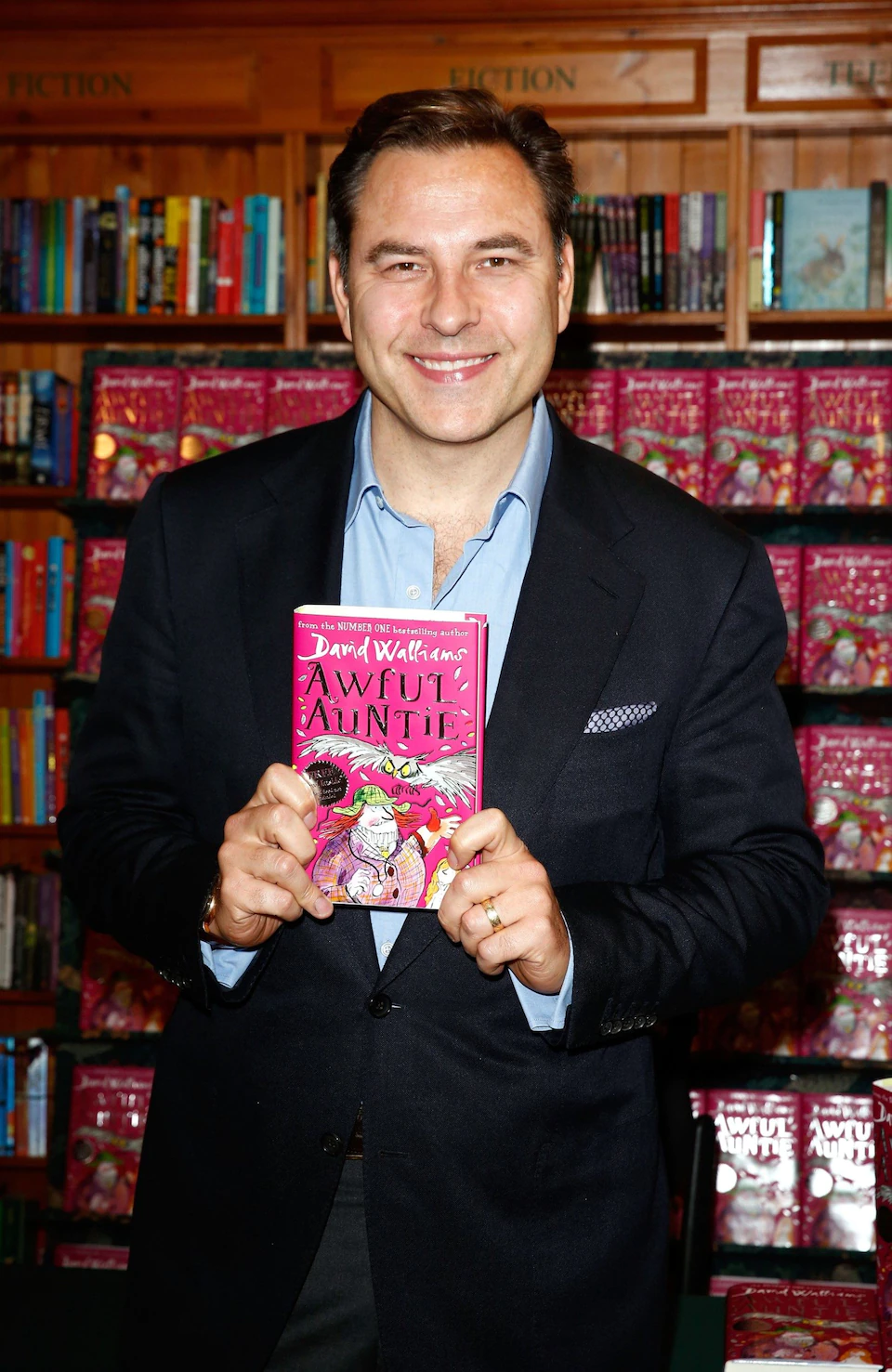
Perhaps the most egregious example, however, is the comedian David Walliams, now the most successful children’s author in Britain. Anecdotally, I’m told by parents who’ve bought his best-selling books that they’re appalling: sub-Roald Dahl (of whom Walliams is a fan), and devoid of heart or writerly flair.

David Walliams

The only thing worse than a child deprived of books is a child immersed in bad ones. Defenders might say that at least a writer such as Walliams gets more children interested in reading, but I see no evidence that he is acting as a gateway drug to better quality gear.

All of this is heartbreaking, because there’s so much to recommend. A quick ring-round to friends and colleagues resulted in my being bombarded with names. You should mention Emma Carroll, they said. Julia Copus is brilliant, said another. MG Leonard, Ross Montgomery, Nadia Shireen, SF Said, Katherine Rundell, Jenny McLachlan… Yet with the exception of Rundell, I’m ashamed to say that I hadn’t heard of any of them (even if, not having any children of my own, I have a reasonable excuse).

It was enough proof to me that children’s literature is as strong now as it was 40 years ago when I was young. So: enough is enough. It is time to attempt to end the depressing monopoly of a small selection of not-very-talented writers. A concert pianist never achieves success by being mediocre, so why should a children’s author?

There is, I admit, a slight air of nostra culpa here. Children’s fiction has always been the Cinderella of the book world, and we journalists need to work much harder in highlighting works for children. As the children’s author and scriptwriter Frank Cottrell-Boyce argued persuasively on Radio 4’s Today programme on Tuesday, newspapers run plenty of restaurant reviews, featuring swanky places that 99.9 per cent of the population are never going to actually visit. Books, on the other hand, are comparatively cheap, and even cheaper if they’re loaned or shared.

So I’m going to make a pledge. From January, we will review a new book by a children’s author once a week. It could be a picture book for younger readers, a novel for pre-teens, or perhaps some Young Adult fiction. It could be a book by an established (professional) author, or a debut by someone brilliant and unknown. What you won’t see, I promise, is anything by a non-writer who is pushing larger talents out of the way in order to extend their personal brand.”

It seems to me that publishers bear some responsibility for this situation. They certainly know what a good quality children’s book is. To favour a celebrity brand-builder, who offers a short-term sugar rush of poor quality sales, over a professional author, who offers long-term sales to happy customers, is making bad business decisions.

Are Publishers Becoming Censors?

There is an article by Anita Singh in Yesterday’s Daily Telegraph in which Chimamanda Ngozi Adichie is quoted as saying that it is unlikely that Salman Rushdie’s novel The Satanic Verses would have been published had Rushdie written it today. Adichie goes on to say that it is unlikely that Rushdie would have decided to write it today.

Chimamanda Ngozi Adichie was born in Enugu, Nigeria in 1977. She grew up on the campus of the University of Nigeria, Nsukka, where her father was a professor and her mother was the first female Registrar. She studied medicine for a year at Nsukka and then left for the US at the age of 19 to continue her education on a different path. She graduated summa cum laude from Eastern Connecticut State University with a degree in Communication and Political Science. She has a Master’s Degree in Creative Writing from Johns Hopkins University and a Master of Arts degree in African History from Yale University. Her first novel, Purple Hibiscus (2003), won the Commonwealth Writers’ Prize, and her second novel, Half of a Yellow Sun (2006), won the Orange Prize. Her 2013 novel Americanah won the US National Book Critics Circle Award. Her most recent work, Notes On Grief, an essay about losing her father, was published in 2021. She was named one of TIME Magazine’s 100 Most Influential People in the World in 2015. In 2017, Fortune Magazine named her one of the World’s 50 Greatest Leaders. She is a member of both the American Academy of Arts and Letters and the American Academy of Arts and Sciences.

Chimamanda Ngozi Adichie

The article says, “In the first of this year’s BBC Radio 4 Reith Lectures, Ngozi Adichie spoke about freedom of speech.

She said: “Here is a question I’ve been thinking about: would Rushdie’s novel be published today? Probably not. Would it even be written? Possibly not.

“There are writers like Rushdie who want to write novels about sensitive subjects, but are held back by the spectre of social censure.

“Literature is increasingly viewed through ideological rather than artistic lenses. Nothing demonstrates this better than the recent phenomenon of ‘sensitivity readers’ in the world of publishing, people whose job it is to cleanse unpublished manuscripts of potentially offensive words.”

Ngozi Adichie said that publishers are also wary of committing “secular blasphemy”.

She claimed that the issue went far beyond the publishing world, with young people caught in an “epidemic of self-censorship” because they are too afraid of being cancelled.

The author faced her own backlash in 2017 after stating in an interview: “When people talk about, ‘Are trans women women?’ my feeling is [that] trans women are trans women.”

In her lecture, Ngozi Adichie said: “We now live in broad settled ideological tribes. Our tribes demand from us a devotion to orthodoxy and they abide not reason, but faith.

“Many young people are growing up in this cauldron afraid to ask questions for fear of asking the wrong questions. And so they practise an exquisite kind of self-censorship. Even if they believe something to be true or important, they do not say so because they should not say so.”

Ngozi Adichie said the alternative to this “epidemic” of self-censorship was people stating their beliefs and as a result facing a “terrible” online backlash of “ugly personal insults, putting addresses of homes and children’s schools online, trying to make people lose their jobs”.

She said: “To anyone who thinks, ‘Well, some people who have said terrible things deserve it,’: no. Nobody deserves it. It is unconscionable barbarism.

“It is a virtual vigilante action whose aim is not just to silence the person who has spoken but to create a vengeful atmosphere that deters others from speaking. There is something honest about an authoritarianism that recognises itself to be what it is.

“Such a system is easier to challenge because the battle lines are clear. But this new social censure demands consensus while being wilfully blind to its own tyranny. I think it portends the death of curiosity, the death of learning and the death of creativity.”

Ngozi Adichie called for a raising of standards on social media, and reforms including the removal of anonymous accounts.

She suggested that “opinion sharers, political and cultural leaders, editors [and] social media influencers” across the political spectrum should form “a coalition of the reasonable” to moderate extreme speech.

I agree with Ngozi Adichie that social media needs drastic reform to stop harmful misinformation, libel and threats. She seems to believe that the ‘tech’ owners of the social media platforms will not regulate properly because of the cost. She is right, but the cavalry is coming in two regiments. One regiment is government regulation and legislation which is starting to be announced and enacted. This will say ‘reform or pay billions’ and if social media platforms want of survive, they must change their business models. The other regiment is the digital advertisers, who, as the defunding of Twitter shows, do not want to be a part of their customers’ misery.

Publishers and authors are different kinds of problems. Publishers have historically had to navigate a fine line between capturing the public interest on the one hand and not causing public outrage on the other. Some authors face a similar set of choices. But neither publisher nor author has an incentive to lie or cover up the truth. On the contrary.

It seems to me that The Satanic Verses is a special case that has nothing to do with current truths or falsehoods. Most Muslims would regard passages in Verses as blasphemous, though is seems doubtful that Rushdie actually intended such severe criticism of Islam. To me, it seems that he intended the dream sequences featuring Mohammad (the Messenger), the polytheistic deities, the devil and the Prophet’s companion as a demonstration of how absolutist systems can go horribly wrong – one of the themes of the book. But the author framed the example with fictional characters and action which are completely contrary to Islam.

In September 2012, Rushdie expressed doubt that The Satanic Verses would be published today because of a climate of “fear and nervousness”. I agree that it wouldn’t be published even today, in 2022, but I wouldn’t attribute the decision to ‘fear and nervousness’. Today, most publishers would look at the manuscript and think, Muslims won’t like it and there will be mass protests. If he wants us to publish it, the dream sequences have to go.

You can call it the ‘sensitivity reader effect’, but really it’s a question about what’s good for the business.

A Banned Author Talks

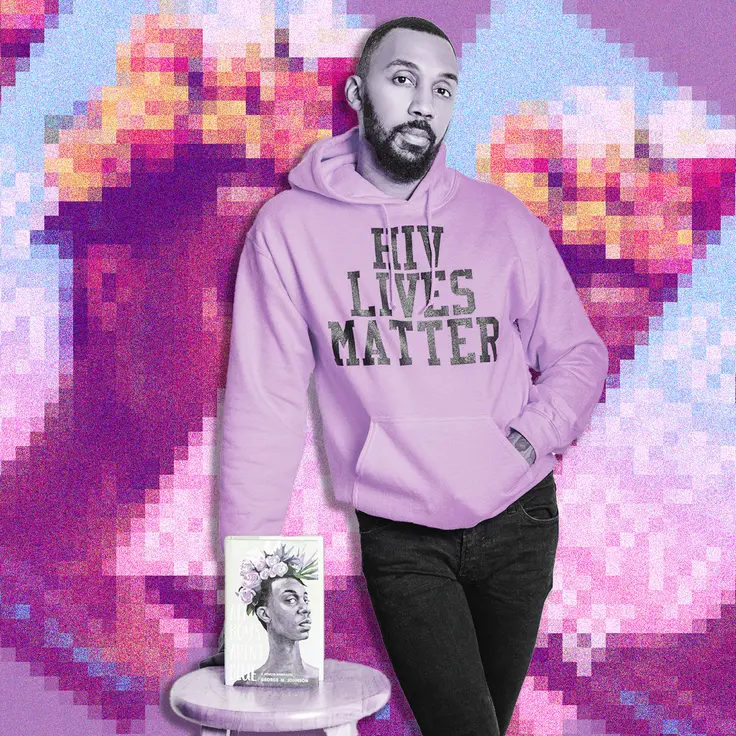
This week, I’ve decided to post the commentary from a black, gay author whose book has been banned from US school districts. The commentary is on HuffPost, 24 September 2022. I haven’t read the book, so I have no basis for deciding whether it should or should not be banned. But the author, George M Johnson, says he wrote it for 14 to 18 year olds, and it’s about his experience growing up, so, if I were a school librarian, I might discourage a ten-year-old from reading it on the basis that he or she probably wouldn’t have the life experience to deal with the book emotionally. But, I might not refuse a 15 year-old.

George M Johnson

“It was sometime during 2019, before COVID turned the world upside down, that I had the first meeting with my publisher. Her team and I sat in a room around a table and discussed the strategy — the marketing and promotion, mostly — for dropping my first book, which I’d recently finished. I was truly living my dreams. Amid the excited conversation, something in my spirit told me to ask a question: “What happens if you need security at an event?” They all looked puzzled. One of them asked why I’d need that. “I know this book will be banned, ” I replied. “I don’t know when or how widely, but I know that it will be.”

“A report from PEN America this week showed that my book, having survived various criminal complaints, was the second-most banned in the United States, with bans in 29 school districts. States’ continued efforts to ban my work is not easy to wake up to daily. For the past year, there have been constant Google alerts, messages on social media from people calling me a “pedophile or groomer,” and other unsavory attempts to deny my story and the very existence of Black queer people everywhere. I never thought I would be at the center of a political issue moving into an election — nor should I ever have been.

“My book, “All Boys Aren’t Blue,” is a young adult memoir about my experience growing up Black and queer in America. In my story, I discuss growing up in a Black family who loved and affirmed me; the good, bad and ugly truths about what teens really deal with; and my journey through gender and social identity. My life was and still is full of joy, but also include some painful moments involving nonconsensual sex, as well as my experience with losing my virginity. Unfortunately, my sexual experiences have been deemed “an issue” — pornographic by some. To be clear, this book is for ages 14-18 and it contains truths that many of us have experienced and are healing from.

“Books about our experience are not too “explicit” just because they discuss gender, race and other crucial topics that teen readers need to process as they learn about themselves and the world they live in.

“Our books (the banned ones, if you will) often tell stories that are uncomfortable and important. Book banning is nothing new in the U.S., but it has rarely been seen at this magnitude in recent decades. But we can’t just talk about book banning without discussing the suppression of storytelling. Books written by enslaved people, that described their reality, had to be written under pseudonyms to protect the authors. Some of the greatest literary icons of our time — Toni Morrison, James Baldwin and even Harper Lee — have had their books banned despite their works being part of the landscape and foundation for many generations of writers.

“But that is why writing and other types of storytelling are such revolutionary rights.They change lives, provide community, and serve as a lifeline for those who feel unseen, unheard and alone.

“When I first wrote my memoir, I kept reminding myself that this was not for the 33-year-old version of me. This was for my 10-year-old self who had important things to say and had been silenced for so many years. And as I wrote about my experience, I felt lighter. I felt freer. I felt I had tapped a power I never knew existed.

“And then I watched as reader after reader, from teenagers to people well into their 70s, discussed how this book made them feel — how the stories healed and informed them. I was told that my simple existence (me being out here and sticking to my intentions) was something that they could hold on to on their roughest of days. And that’s the truly revolutionary thing about art. Toni Morrison once said, “If there is a book you want to read and it hasn’t been written yet, then you must write it.” That’s what I did. And while all the book bans are weaponizing my words, I know that they’re providing armor for those who have gone through anything I did.

“I have more books to write and more stories to dismantle this system. And I’ll be damned if anyone denies my right to write them.”

I say, “Carry on, George!”

Writing Sex Scenes

Sharon Short’s final segment on Point of View hasn’t been published yet, so let’s look at writing sex scenes. Jessica Martin has a piece in Writer’s Digest titled ‘How to Write a Sex Scene Like Nobody Is Watching’.

Jessica Martin is a lawyer by trade, a writer by choice, and a complete smart ass by all accounts. Based in the suburban wilds of Boston, Jess shares her life with a finance geek, a small sass-based human, and a pair of dogs named after Bond characters.

Jessica Martin

Ms Martin writes, “There are some key scenes in your typical rom-com that writers have to nail. Chief among them is the sex scene. But writing one can stir up all sorts of feelings: anxiety, excitement, a bone deep certainty that if you write a bad one, no one will ever let you live it down. It runs the gamut and while every writer has a different strategy, here’s mine.

The name of the game is distance.

First up physical space. To actually write a sex scene like nobody is watching it helps if nobody is actually watching. For me, this means leaving my house because although I have a perfectly good writing space, there’s a six-year-old beastie who likes to barge in and demand to know why caterpillars don’t eat meat. Or whether you can hear a fish fart under water. Kid, I have no idea how to answer that.

This house I speak of is also occupied by two scheming dogs who lie in wait until I’m in a writing groove. They drop their heads on my leg and drool until I have no choice but to submit to the world’s most devastating puppy dog eyes, bursting with longing that only translates into one thing: Hey human, go fetch me a snack, will you?

And then there’s the husband.

I hope this isn’t shocking to anyone here, but I’ve had sex with him. I don’t want to think about him when writing a sex scene, because I’m pretty sure that violates the sanctity of the marriage pact or something—I don’t know, it’s just weird.

In any event, I vacate the house when I need to write a scene that involves the words thrust, pant, or moan. During COVID, there weren’t a ton of options for non-germy solitude, so I wrote the majority of these scenes in the front seat of my car parked in a state forest. Wearing a ratty hoodie and sucking down tea from a thermos for warmth. Hey, I live in New England and the nights are chilly. You know what else the nights were like in that state forest? Decidedly, not private.

What I didn’t realize is that after the park shuts down for the day, it’s apparently a hotbed of illicit activity. As teens swarmed the woods armed with their flashlights and pilfered booze, they would sometimes comment on the weirdo sitting alone in her car and wondering if I was a NARC. So, I’d need to wait until they’d dispersed into the woods like horror movie cautionary tales before I could get down to the good stuff.

OK, so now I’m physically alone. Now I need to be mentally alone.

Recently, I was out to dinner with my boss, who casually mentioned he’d bought 50 copies(!) of my book for our entire legal team. I was incredibly touched but also momentarily panicked as I sputtered that it was a rom-com … and when the room went silent, I blurted out, “There’s a sex scene.”

As every eye in the room turned to regard me, a colleague asked, “What kind of sex scene we talking here?”

“A tasteful one,” I replied archly (or at least nonchalantly. Please let me be remembered as being calm and cool in that moment).

It wasn’t like I hadn’t thought about it before, it was just that interaction finally drove home that someday, somewhere, my husband, parents, kid brother, my actual kid (when she graduates to books without pictures), friends, neighbors, coworkers, former classmates whose Instagram accounts I follow but otherwise wouldn’t recognize, my incredibly bendy yoga instructor and a whole host of others might one day pick up my book and wonder, SO THAT SEX SCENE, IS SHE DRAWING FROM PERSONAL EXPERIENCE?

While I freely admit to stealing snatches of conversation (especially insults, I love standing behind teenagers in lines), character traits I admire in my friends, and sometimes wholesale shenanigans from my free-wheeling law school days, I draw the line at digging into my own personal cache of sexcapades. Why? Frankly, because I’d like to look that subset of people in the eyes again. Call me a prude, but I like to have a bit of an air of mystery about me. That and I don’t want anyone thinking about my sex faces.

But I’ll peel back the curtain and allow you a peek into my process.

There I am, sitting alone in a car in a dark forest (OK, that sounds creepy, but bear with me) and I warm up by watching YouTube compilations of my favorite on-screen couples. You know the ones, set to angsty music where beloved characters eye each other across a room, a shared smile passing between them. Or maybe it’s that near brush of the lips or a finger tracing a bare collar bone, a shirt goes up and over the head. For me it’s less about what the characters are actually doing and more about that delicious moment of mutual (and completely consensual) commitment to the path of no return, no going back to being friends or enemies or indifferent strangers—it’s on.

Once I’m there, then I imagine my characters, their expressions, their voices, their sex faces (not mine, thank you very much) and what the timbre of their sex scene is. Is it slightly humorous, two people fumbling around knocking stuff over in their jubilant haste to get to one another? Is it full of murmured teasing as one character deliberately seduces the other? Is it rushed but somehow decadent because it’s going down somewhere where any moment our lovers could be discovered?

That’s the feel part.

Then comes the mechanics. I cannot remember where this nugget of wisdom originated, but someone once told me that sex scenes are like fight scenes. Watch the hands. I love this, because it makes me go back and smooth out the scene once I’ve finished with the heady feeling part to make sure it all syncs up. For example, if his pants were carelessly discarded like caution to the wind on the floor a moment ago, as he slides up her body, his hands worshipfully tracing the topography of her hips, then he shouldn’t be reaching for protection in his pocket, right? It has to be in the bedside table or if they’re outside, maybe she’s the resourceful one who still has pants on and whips out the foil packet with a triumphant cry? Details count.

Once I’ve nailed the feeling and true up the details, I break the veil of solitude, I leave the deep dark woods (I’m sure you psych majors are having a field day). I slip back into being a lawyer, a wife, a mother, that person who almost always uses a turn signal when changing lanes. I send the sex scene to my beta readers, then my agent and my editor. I’ll ask them, “This isn’t gross, right?” and that’s usually all I need to feel confident that it’s there.

At least until someone tells me they bought fifty copies of it and they’re giving it to all my coworkers.”