Review: Remains of the Day

This ‘modern classic’ was first published in 1989, and won the Booker Prize that year. While I had heard of the novel, I had never read it; I was further motivated to read it as a Booker Prize winner and by the author being a Japanese writer I didn’t know.

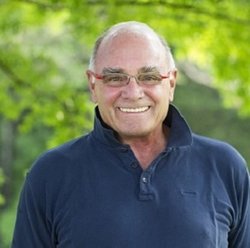
Kazou Ishiguro was born in Nagasaki, Japan in 1954 and moved to the UK at the age of five. He has written six novels, all of which have won prizes or received major recognition. He currently lives in London with his wife and daughter.

untitled

Kazou Ishiguro

The novel is told in the first person by Stevens, who was the butler in Darlington Hall, which was the residence of Lord Darlington in the 1930’s. Darlington Hall was a grand place, with many servants, Stevens having overall responsibility. Lord Darlington was a man of considerable wealth and influence, both socially and politically. He died after the war, and Darlington Hall was sold to an American, Mr Faraday, who has downsized both the staff and the use of the Hall.

Much of the book is Stevens’ recollections of events that took place when his lordship was in residence, and we learn that Stevens is preoccupied with the extent to which he was (like his father) a top butler. Stevens comes to define a top butler as a true professional who carries great dignity to his profession. The descriptions of relationships (and dialogue) among staff and with the lord of the manor are brilliant: they convey clearly the culture of the English aristocracy in the 20’s and 30’s.

Mr Faraday plans to be in the States for an extended period, and he suggests to Stevens that he take the motorcar on a sightseeing trip. Stevens accepts his offer and coincidently decides to call on a Miss Kenton who was the one who supervised all the housemaids at Darlington Hall. Miss Kenton left the Hall years ago, and has married. Now, Stevens wonders whether he can persuade her to return to the Hall, as there are hints that her marriage is in difficulty. The working relationship between Stevens and Kenton was very formal, but one cannot help but wonder if there is an unacknowledged attraction between them.   In the last chapter, they meet again, and the message of the novel is revealed: Stevens muses: “After all, what can we ever gain forever looking back and blaming ourselves if our lives have not turned out quite as we might have wished?”

The novel moves at a very leisurely pace, with very little action. Major events are recounted by Stevens factually and without emotion. The characters, the setting and the story-telling all completely support that retrospective, self-doubting theme. In spite of Stevens’ wordiness, his character shines through in a way that he is able to maintain the reader’s attention.

If one is looking for tale with plenty of action and excitement, The Remains of the Day would not be a good choice. But if one would like to curl up with a superbly-written story, immersed in history, and long-forgotten characters, a story that succeeds admirably in making its point, then Remains is for you.

As a sort of aside, I would add that the criteria for winning the Booker Prize may have shifted over the last twenty-five years. It’s hard to imagine that a novel with little overt physical or emotional action could win, given the level of current competition.

The Guilty Secretes of E-book Readers

There was an article in The Daily Telegraph last week which reported on the popularity of titles of e-books vs titles of physical books.

“A newly published list of Amazon.co.uk’s biggest selling e-books of the year features psychological thrillers, misery memoirs, Mills and Boon and a book by the Tory MP Nadine Dorries, whose first work was memorably described by a Telegraph reviewer as “the worst novel I’ve read in 10 years”.  Notably, 18 of the top 20 authors were women, including thriller writers Angela Marsons, Fiona Neill and Rachel Abbott.

“However a parallel list  of physical books compiled by Waterstones to cover the same period is significantly more highbrow, and features four times as many male authors.  They include Richard Flanagan, author of the Man-Booker Prize-winning The Narrows Road to the Deep North, and Anthony Doerr, with his All the Light We Cannot See.  There were also books by Colm Toibin, Ian McEwan and Victoria Hislop.  The print list is topped by Harper Lee’s Go Set a Watchman, which does not make the Amazon e-books list.

“There is some overlap.  Paula Hawkin’s runaway bestseller The Girl on the Train, and the latest risqué offering form E L James appear in the top three of both lists. But the disparity between the books we put on show and those we download suggests that e-book reads can be ‘guilty pleasures’.

“Benedict Page of The Bookseller said: ‘There are certain kinds of books that people like to own.  If they have a favourite heavyweight literary author who they have followed for many years, they are likely to want to possess the printed book because it’s beautiful and durable and represents a readerly commitment.'”

I think that Page’s analysis is probably correct in that we tend to regard e-books as disposable, and printed books something to be retained. The high proportion of female writers on the e-book list is interesting.  My theory would be that at least some of the female authors on the e-book list write primarily for women, and are more interested in achieving volume than literary recognition.  I’m also guessing that more women than men own e-book readers.  These two theories seem to converge on the supply and demand sides.

What’s your view?

Review: Writing with the Master

This is the true story of a retired businessman who’s been writing novels and having them rejected by publishers/agents.  The businessman’s friend John Grisham (the best-selling author) offers to coach him in the writing of a new novel. The book sets out, in detail, all of the coaching provided over two years.

511C2LhqQFL__UX250_imagesT0ZHRO92

Tony Vanderwarker                               John Grisham

Tony Vanderwarker is a retired advertising executive who had his own, very successful, ad agency, sold it and moved from Chicago to Charlottesville, Virginia with his family.  John Grisham, also a Charlottesville resident, is a friend of Tony’s, and one day, over lunch, John offers to ‘mentor’ Tony in writing a new novel.  Grisham had previously referred one of Tony’s works to an agent whose review was positive, but not quite good enough to be published.

The process started with John asking Tony what he wanted to write about.  Tony’s first two ideas were rejected out of hand.  His third idea was a thriller about nuclear weapons lost by the US Air Force in air crashes where the weapon was not recovered.  There are nearly a dozen such weapons, dating back to the 1950’s.  Tony prepared a three sentence description of the plot and then a full, multi-page outline.  At each stage we see portions of what Tony has written and John’s written critiques.  The critiques are blunt and to the point.  After three and a half months of trial and error, Tony revises his plot outline, and is ready to start chapter outlines.  During this process, we see a reflection of the way John Grisham writes his novels.  First, a one paragraph outline: is it interesting enough, strong enough?  Then the three page outline, complete with characters: do the subplots support the main plot or are they extraneous?  Are the events credible?  Are the characters interesting and likeable?  Then comes the first draft of the manuscript.  In Tony’s case, John tears into the manuscript and points out a number of problems:

  • the writing is sloppy: there are repeated words and phrases and factual inconsistencies.
  • there are too many distractions to the basic plot
  • the actions of a key character don’t make sense
  • too many bad guys
  • minor character isn’t fully credible
  • inserting the author’s political views into the story
  • make the dialogue real: repeat it out loud.
  • Show! Don’t Tell!

Tony is absolutely gutted by this critique!  He turns his attention to the notes John has written on individual pages of the manuscript.  Here, again, we see the text and the comment.  Tony divides the manuscript into seven piles and begins the task of rewriting, which takes a year.  Once again Grisham responds with a cover letter describing his principal concerns and returns the manuscript with page-by-page comments, including:

  • too many detours; too much backfilling
  • don’t be afraid to cut
  • not allowing the suspense to build

Tony makes the suggested changes and submits the manuscript to John’s agent, who likes it and refers it to another agent because it doesn’t fit for him.  The agent to whom it is referred is very complimentary but declines. Tony goes back to the default mode of mass submissions, without success.

When Tony has essentially given up on getting his novel published, he gets a great idea.  Why not write a book about the process that he and John Grisham have been through.  Grisham agrees, and the book is published by Skyhorse Publishing, who also agree to publish the mentored novel: Sleeping Dogs.

For anyone who is interested in the process of writing fiction, this book is a must read.  And for those with only a passing interest in the creative effort, there is enough of the rest of Tony’s life fitted neatly in to make to book a good read: his life as an advertising executive, his work for an environmental charity, his relationship with his wife and the Charlottesville area.

Personally, I’m not surprised that Sleeping Dogs didn’t get published on the first attempt.  From my point of view, there’s too much that stretches credibility.  But, I’m not surprised that Skyhorse decided to take it up.  Writing with the Master is a great promotion for Sleeping Dogs.

As for John Grisham’s advice, I think that ninety percent is spot on.  Two quibbles: I believe in outlining, but not to the extent that John does.  I think that detailed outlines can stifle creativity, and I notice that Tony has reached a similar conclusion.  There’s not much in John’s advice about the use of creative language, which I think is important to differentiate the writer and his/her text from the mundane.

Tony writes well, and I’m glad that he decided to follow-up on his brainstorm: why not write a book about the mentoring process?

Review: Nichijo: The Testimony of John Provoo

As a participant in the Reader’s Favourite book review scheme, I had to select a book from among those that had been submitted for review. Nearly all of the books submitted are in electronic format. I prefer hard copies, so I selected the book I wanted to read and bought it on Amazon.

Nichijo: The Testimony of John Provoo interested me for several reasons: It concerned the Second World War in the Pacific, and there were elements of Buddhism and Japanese culture. (I read much of the book while on a recent trip to Japan.)

IMG_20150605_0001

The author is John Oliver who has a Batchelor’s degree in Political Science and Religious Studies from the University of California at Santa Barbara.  He was working in Hawaii when he met John Provoo and decided to tell his story. The book is therefore an autobiography; as it is written in the first person.

According to his ‘testimony’, John Provoo grew up in San Francisco, having been born in 1917. He was attracted to Buddhism and believed in the sanctity of all life. In March 1940, he went to Japan to study for the Buddhist priesthood.   He returned to the US in May 1941 under the threat of imminent war, and enlisted in the US Army. He was sent to the Philippines where he worked as a clerk in Army headquarters in Manila. He was captured by the Japanese in the Battle of Corregidor and became a prisoner of war. Much of the book concerns his time as a Japanese prisoner. Because of his fluency in Japanese and his understanding of Japanese culture he often had to deal directly with his captors. This led simultaneously to somewhat more lenient treatment of fellow prisoners and suspicions by the same fellow prisoners that Provoo was giving aid and comfort to the enemy. When he returned to the US, he was accused of collaboration with the enemy, was acquitted and re-enlisted in 1946. For most of the next ten years, he was pursued by the US Justice Department for treason, and underwent several trials, during which his homosexuality was used against him. Eventually, he was acquitted and went to Japan to complete his Buddhist training and to Hawaii, where, as a high level Buddhist priest he lived the rest of his life, dying in 2001.

One has the sense, in reading the book, of an honest re-counting of history, and, as such, it makes very interesting reading: in particular, the conflicted position in which a Japanese-speaking Provoo found himself as a Japanese prisoner of war; the shameful conduct of the Justice Department in mounting a hugely costly campaign against him and in using his homosexuality against him. It appears that John Oliver undertook a considerable amount of independent research to complete this book, and that he did not rely only on what Provoo told him.

There are several areas that are worth mentioning. John Provoo was clearly a very complex character, but one does not get a full understanding of this complexity in the book. Rather, the emphasis is on the historic (what was done) rather than the psychological (why it was done). Might it have been a more interesting piece of literature if instead of being entirely in the first person, the author had intervened as the narrator now and then? In the latter part of the book, there is too much name dropping (who the various interested parties were), and on exactly what they said. I think it would have been sufficient to summarise the key points, and use footnotes where essential. While the writing is good and effective, there is very little description of the various environments in which Provoo found himself: again the emphasis on history rather than literature.

That said, Nichijo, (Provoo’s name as a Buddhist priest) is quite an interesting read. I enjoyed it.

Review: Revere Beach Boulevard

I bought Revere Beach Boulevard because there was a piece in my alumni magazine about a fellow writer and a fellow alumnus, and I read most of it while I was on a brief holiday in Sicily.

untitled

Revere Beach Boulevard is a contemporary novel set in Revere, Massachusetts, a suburb of Boston. Four of the principal characters are an Italian-American family: Lucy, the mother, is dying of cancer; Vito, the father is a retired carpenter; Peter, a son in his forties, sells real estate and has a serious gambling addiction; Joanie, the older sister with a secret, is apparently a successful newsreader for a Boston TV station. The other characters – friends and acquaintances – are part of the immigrant culture of Family, Church, and Food, and as such, the novel does them justice. The plot revolves around Peter who is heavily in debt to the local Mafioso. He hasn’t the money to pay, and friends and family are largely losing patience, as is the malevolent Chelsea Eddie, who finds that he doesn’t hold all the cards. Joanne is about the run a TV special on criminals like Eddie.

Without revealing the outcome, the plot has all the elements of a well-written thriller. I found it difficult to put it down. But there is much more to it than a thriller: the examination of values like love, trust, faith and above all: who we are as human beings. The characters, particularly Peter, Vito and Alfonse – the police chief with a secret – are very real and imperfectly human.

Without detracting much from the value and readability of this novel, one aspect that I didn’t particularly like was that each of the characters told a part of the story. This meant that one often had to read a whole paragraph before one knew which of about nine characters was talking. I felt that Peter and an omniscient narrator could have told the story equally well. I had minor reservations about two of the characters. I didn’t think that Chelsea Eddie would worry so much about what Joanie would say about him on the air: any Mafioso worth his salt has an anti-libel lawyer on standby, and Joanie had no solid evidence. Maybe is she were FBI rather than a newsreader? For me, Joanie’s loss of self-control during her visit to her dying mother didn’t ring true. She is a highly-paid TV executive who fought her way up to that position. Distressed, but not an injured child. Neither of these quibbles had any impact on the splendid plot.

The final proof-reading of the text could have been better. Frequently there were extra spaces between words, and hyphens were used instead of dashes to offset parenthetical phrases. For me, this caused confusion.

I certainly recommend Revere Beach Boulevard. It is unusual; it is interesting; it is captivating; it is well-written

Icarus as an Artist

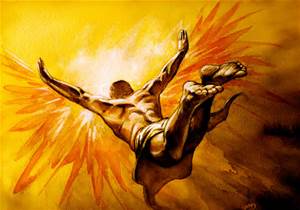
The myth of Icarus, who, with his father, Daedalus, tried to escape from Crete, using wings that his father made from feathers and wax, is subject to interpretation.  Icarus disobeyed his father’s instructions not to fly too high, because the heat of the sun would melt the wax of his wings.  Icarus flew too high, the wax melted and he fell into the sea.

th

The usual interpretation seems to be that it was hubris – over-ambition – which caused Icarus to fall to his death.  The moral being that we should not fly too low in our lives, as that would not do justice to our capabilities, but we should not try to fly higher than or capabilities.

A few days ago, I heard another interpretation: that Icarus is a symbol of the artist, trying always to stretch and improve his art.  This was suggested by Jorg Widman, clarinettist, composer and conductor.  He was conducting the London Chamber Orchestra and introducing his own piece: Icarus’ Lament.  He said that his piece was inspired by Charles Baudelaire’s poem Lament of an Icarus:

Lovers of whores don’t care,
happy, calm and replete:
But my arms are incomplete,
grasping the empty air.
Thanks to stars, incomparable ones,
that blaze in the depths of the skies,
all my destroyed eyes
see, are the memories of suns.
I look, in vain, for beginning and end
of the heavens’ slow revolve:
Under an unknown eye of fire, I ascend
feeling my wings dissolve.
And, scorched by desire for the beautiful,
I will not know the bliss,
of giving my name to that abyss,
that knows my tomb and funeral.

Jorg Widman’s Icarus Lament was an interesting piece – quite unconventional- played only by the string section of the orchestra.  It began with the violins playing a very high note, pausing momentarily and continuing.  One could visualise a winged creature beating its wings laboriously in very high flight.  Then came the cellos, playing a more sombre melody, as a sort of counter-force to the violins.  Finally, the violas joined in playing a more lively melody.  One definitely had the feeling of the creative force (violins) struggling to assert themselves over the force of gravity (cellos), while the world (violas) looked on.

So I suppose that Icarus could stand as a symbol of the artist who is not content with the safe journey, and who yearns to stretch his talents.

For myself, I see it slightly differently: as a learning and development process.  With each novel, I feel well, I’ve done that; what can I do next that’s a little more challenging?  I suppose what I don’t do is to focus on what my readers would like, because that will tend to be ‘more of the same’.  Rather, I think, if I do this new novel well, my readers will probably like it And if they don’t?  I hope that they’ll tell me what they didn’t like.  But, if they do like it, and I feel I’ve met my challenge, I’m ready to move on to the next challenge!

Plot vs Theme

I think we all understand what is meant by the plot of a novel.  It is the story line; the summary of what happens.  The theme is the message that the author is trying to get the reader to think about.  It is the philosophical/theological/social/psychological message of the novel.  The theme may not be very clear; it may be quite subtle or implied, because the author wants to present the reader with a puzzle: something important to consider.

It is probably fair to say that every novel has a plot, but not every novel has a theme.  For example, my novel, The Iranian Scorpion, is a thriller, and as such, it has a plot, but I didn’t intend it to have a theme.  I suppose, considering the novel retrospectively, one might say that its theme is the near impossibility of banning addictive drugs such as heroin, but I didn’t intend to write the novel to make that point.

Consider To Kill a Mockingbird, one of the great novels of the 2oth century.  The plot is quite complex.  It involves two young children, Scout and Jem, who live with their widowed father, a lawyer, in a small Alabama town in the 1930’s.  The father, Atticus, is appointed by a judge to defend a black man who is accused of raping a white woman.  In the course of the trial, Atticus establishes that the white woman and her father are lying.  Nonetheless, the black man, Tom Robinson, is convicted by the jury.  Tom is killed in escaping from jail.  What follows is an attack by Bob Ewell, the accused’s father, on the children at night.  Boo, an elusive and mysterious neighbour, intervenes.  Bob Ewell is thought to have fallen on his own knife and died.  The plot itself has elements of uncertainty: the evidence presented at trial, the attack on the children, the motivation of Boo.

The overriding theme of the novel is the racial prejudice which existed in the American South in the ’30’s.  But there is also the idealistic courage of Atticus and his children in the face of prejudice.  In addition, there are issues around social class and gender which are touched on.

I think it is fair to say that the plot, while it reflects some of the author, Harper Lee’s, childhood experiences, is constructed so as to develop the themes for the reader.  Harper Lee took two and a half years to complete the novel, and during that time, she became so frustrated that at one point she threw the manuscript out a window into the snow.  (Her agent made her retrieve it.)  In my view, To Kill a Mockingbird is the best example of compelling plot and themes beautifully integrated.

A lesser example would be my novel, Sable Shadow and The Presence, which has as its themes the overriding importance of identity for us as human beings.  Identity is who, why and what we are.  It is critical in determining how happy we are in the life we lead, and our identity can be changed under certain circumstances.  The plot is the life of a bright, but introverted male character who grows and develops into a ‘great success’, only to see his success evaporate, and having to build a new identity.

Mark Zuckerberg on reading

James Walton has an article in yesterday’s Daily Telegraph which is entitled: ‘Reading Books is not a duty, Mr Zuckerberg’.


thHD0QESRQ

Walton begins by saying:

“Books,” according to the chick-lit author and  former Member of Parliament Louise Mensch, “were what we used to do before the internet.”  Now, though, it seems that these ancient artefacts may be making a comeback.  No less a figure than Mark Zuckerberg, Facebook’s founder, has declared 2015 “A Year of Books” and is inviting his website users to join him in his New Year’s resolution of reading and discussing one a fortnight.  His first choice is Moisés Naim’s The End of Power, which explores the growing power of ‘anti-political’ movements such as the Tea Party and Ukip – thanks, as luck wold have it, to their use of Facebook.  Zuckerberg launched his project by announcing, with what sounds almost like surprise, that books are “intellectually fulfilling” and “allow you too explore a topic . . . in a deeper way than most media today”.  For old school book lovers, the literary reference that springs most readily to mind is “no —-, Sherlock”.

Walton continues: You might also be tempted to imagine a world in which there had been 700 years of internet, before, in the Nineties, somebody invented books.  It would surely seem a miracle that, instead of trawling acres of semi-reliable information, you could have a guaranteed, portable and inexpensive source of knowledge from someone who knows both how to write and what they’re talking about.  But it appears that in his shock discovery of books potential, Zuckerberg is not alone.  A recent article in The Wall Street Journal praised a new campaign of “slow reading”, whose members meet once a week in a café, turn off their phones for a whole hour and read in silence.  Such quiet reading, the headline declared, can “benefit your brain” (again, not a revelation that would have startled Sherlock Holmes.)  While today’s bibliophiles might want to pounce on anything that smacks of good news, I can’t help wondering if using books purely as a means of self improvement – with elements of self-congratulation thrown in – misses the point of reading.

Walton goes on to make the point, via Nick Hornby, that people should read books for enjoyment and should not bother to finish the ones they don’t enjoy.  “Every time we pick up a book from a sense of duty, we’re reinforcing the notion that reading is something you should do, but television (or, presumably, surfing the internet) is something that you want to do.”  He makes the further point that Zuckerberg has fallen into the philistine idea that books should be relevant to your life.

I certainly agree with Walton, but I’m surprised that he doesn’t mention that Goodreads is owned by Facebook.  All the more reason for Zuckerberg to promote reading.  And I agree that it’s good for us to expand our intellectual horizons by reading something entirely new to us.  My wife recently finished reading Do No Harm, a book by neurosurgeon Henry Marsh about his life and practice.  She recommends it, and since I know nothing about the subject, it’s at the top of my To Read list.

Topics for Novels

How do writers choose a topic to write about?  What factors influence the setting, the characters, the time frame, the key events?

I suspect that every author will have a slightly different answer to these questions.  In my case, there was a different set of criteria which influenced the topic for each of my six (so far) novels.  I often think it would be easier if I had a consistent topic and some repeat characters, as the late P D James had with her detective stories.  The problem for me is that I get restless with repetitive tasks.  I would make a very poor assembly line worker.  I changed my major in college twice – from architecture, to mathematics – before settling on physics.  As a naval officer, every day was different.  As a salesman of heavy electrical equipment, every sale was unique.  As a manager and as a management consultant, every situation one faces is different.

Starting with Fishing in Foreign Seas, I tried to stay within my experience: romance, Sicily, the north-eastern US, raising a family and the sale of heavy electrical equipment.  I added some sex and some intrigue for seasoning.  For me, this worked, but I wanted something grander, more important.

What could be more important than sin?  What could be grander than six life stories entwined?  That was the premise of Sin and Contrition.  With a chapter devoted to each sin, I found that each character developed uniquely, and that my imagination could add interesting – but credible – surprises.

Efraim’s Eye came about because of a charity assignment I had in Mexico, where we suspected the chief executive of the charity of being corrupt.  I felt that a corrupt charity was interesting, but probably not gripping.  But, what if the purpose of the charity’s corruption was the financing of a terrorist attack?  And what if there was an intense love story?

The feedback from readers of Efraim’s Eye was very good: it was an exciting thriller with believable characters.  I decided that I wanted to write another thriller; this time about the drugs trade, and I decided that Afghanistan, with its huge output of opium for heroin, and being in the public eye, was the setting.  But, I also needed an immediate destination for the heroin, as very little of it is consumed in Afghanistan.  Some research convinced me to make Iran the home of the bad guy and the immediate destination of the heroin in The Iranian Scorpion. 

Before I finished Scorpion, I started on a novel in the first person about a bright, self-conscious boy who hears unfamiliar voices, which, over time, he attributes to representatives of God and the devil.  I wanted to write a serious novel which, through the life of Henry, explored psychological, theological, and sociological issues around the choices we make in our lives – for better or worse.  I wrote three chapters of Sable Shadow and The Presence before setting it aside: I had lost my way and needed to take a break.  But with the completion of The Iranian Scorpion, I came back to Sable Shadow with new enthusiasm, and I completed it.

In the back of my mind was another novel, slightly similar to Sable Shadow, but an allegory, told in the first person, set largely in the Middle East, with Middle Eastern characters, and dealing with the search for meaning in life.  I’m working full tilt on it now, but before getting really started, I wrote Hidden Battlefields, another thriller, this one about a huge shipment of cocaine from Peru to the ‘Ndrangheta mafia in southern Italy. Four of the main characters from Scorpion are in Hidden Battlefields.  The theme of Battlefields is how major conflicts in our values and priorities can affect who we really are.

As I look back on the progression of novels, two trends stand out, both of which amount to increasing levels of challenge for me as a writer:

First, my craft as a writer is being challenged on all fronts: character development, thematic subtlety, language, credibility and interest.

Second, I have to do more and more research, to the point now where I spend more time on research than I do on writing.


Review: Orfeo

I decided to read Richard Powers’ Orfeo (published in January, this year) when it was on the long list of ten novels for the Booker Prize. It has since been omitted from the short list for this year’s prize.

Richard Powers is an American novelist, born in 1957, in Evanston, Illinois. At the age of eleven, he moved with his family to Thailand where he became an avid musician. He began his studies at the University of Illinois at Urbana-Champaign (UIUC) with a major in physics, but he graduated with a BA in English literature, followed by an MA. He worked as a computer programmer in Boston, but he quit that job to devote time to writing. His first novel was published in 1985. In 1992, he returned to the University of Illinois as writer-in-residence. In 2010 and 2013, Powers was a Stein Visiting Writer at Stanford University, during which time he partly assisted in the lab of biochemist Aaron Straight. He was named the Phil and Penny Knight Professor of Creative Writing in the Department of English at Stanford in 2013. He currently teaches a graduate course in multimedia authoring, as well as an undergraduate course on the mechanics of narrative, at UIUC, where he is the Swanlund Professor of English. He has written ten novels and has won a number of literary awards.

th

Orfeo follows much of the fictional life of Peter Els, a composer, music professor, and amateur bio-scientist. He dabbles in genetic experiments on bacteria and viruses in parallel with music composition, seeing similarities between the infinite variety of music and basic organisms. Els is driven not by fame or fortune, but by a compulsion to compose a piece of music which will have a lasting, ethereal effect on the listener. When he composes a piece which, for the first time, elicits critical acclaim, he refuses offers to stage it again.

The focus of the novel is on the sinister net of terror-prevention which tries to capture him when he becomes a bio-terror suspect, and which he tries to elude.

One has to admire Powers’ multiple competencies as a musician, as a poet and as a technologist. Nonetheless, this is not an easy novel to read. There are no chapters, and the shifts in scene and timeframe are sometimes difficult to follow. I say Powers is a poet because there are frequent passages of music description similar to:

“Then the damning glockenspiel, mute for three songs, silent for so long that the ear forgets the forecast from song one. Child’s toy, funeral chime, light in the night. A bell from out of the pitch-black; a shock but no surprise. A sound that makes hope sound primitive.”

If one is musically literate, and if one is familiar with the piece about which Powers is writing, I’m sure this would be lovely. (I was a singer, and I enjoy classical music, but never learned to read music.) Powers also uses unexpected nouns and adjectives in his descriptions. Sometimes, these seem very clever; at other times they are confusing.

The character of Peter Els is, for me, difficult to relate to: not because he is a musician or a bio-chemist, but because he seems, until near the end, to be a self-proclaimed, born loser. There are not sufficient likeable features with which to empathise. One shakes one’s head each time he makes a stupid mistake (mistakes which Els himself confesses), but there isn’t enough redeeming motivation for the mistake for us to understand and respect him, nonetheless.

Perhaps Powers was not aiming at any particular market when he wrote Orfeo. If you are an amateur composer or a competent musician and someone who is concerned about the encroachment of authority on our freedom of expression, Orfeo is a must read.