Literary Fiction vs Genre Fiction

I have been somewhat unclear in my mind as to whether I am writing literary fiction or genre (inspirational) fiction.  In some of my early posts, I saw myself as a genre writer of thrillers, but more recently i have moved away from pure thrillers to books which are more philosophical and somewhat theological, although all the books I have written have elements of fairly intense suspense.  So where does that put me: in literary or genre?

I’ve recently found an article in the Huffington Post written by Steven Petite on the above subject.   He is a freelance writer, who, according to the Huffington Post, has appeared in Cigale Literary Magazine. His work has appeared on Playboy.com, Fiction Southeast, New York Game Critics Circle, Indie Game Magazine, The Rock Office, Bago Games, and Cavs Nation.  Well, we won’t hold any of that against him, because

download

Steven Petite

his article, for me, makes a lot of sense.  He says:

“Fiction, of course, is a work that is imagined from the mind, a different world than reality.

“An argument can be made that there are two types of fiction when it comes to novels: Genre Fiction and Literary Fiction. The former includes many subcategories such as Mystery/Thriller, Horror, Romance, Western, Fantasy, Science Fiction, etc. The latter is more difficult to classify or break apart into subcategories. To put it simply, Literary Fiction is anything that does not fit into a genre.

“There are certainly high brow literary readers who believe that genre fiction does not deserve any merit. Then there are the types who exclusively read one or two sub-types of genre fiction and automatically classify any “serious” works of literature as pretentious or boring.

“While changing opinions on reading tastes is not easily controllable, the war between Literary Fiction and Genre Fiction is one that will probably continue for years to come.

“The main reason for a person to read Genre Fiction is for entertainment, for a riveting story, an escape from reality. Literary Fiction separates itself from Genre because it is not about escaping from reality, instead, it provides a means to better understand the world and delivers real emotional responses.

“All of the most prestigious awards for fiction each year are given to works of Literary Fiction, which makes it sometimes easy to say that writers who write literary sorts of books are better writers.

“In reality, neither of the two categories of writers necessarily deserve the distinction of being better writers. Different writers is a better word choice.

“Yes, across the bestseller lists there are novels that contain poor writing, and those lists are normally dominated by Genre Fiction. That does not mean that all Genre Fiction writers cannot form competent and engaging prose. The works of Stephen King, Thomas Harris, Michael Crichton, Neil Gaiman, George R.R. Martin, and many others are written with great prose that shows a sound grasp on the written word. Do these types of writers sweep a reader down into their fictionalized world? Yes. But do they provide a means to stay inside reality, through the trials and tribulations of every day life, and deliver a memorable experience that will stick with you emotionally for the rest of your life? In my opinion, no. The works that are well written by genre writers are the ones that provide the best form of entertainment and escapism that fiction has to offer.

“On the other hand, works by writers such as David Foster Wallace, Jonathan Franzen, Haruki Murakami, Cormac McCarthy, Zadie Smith, Don DeLillo, a multitude of other modern day writers, and all of the twentieth century giants such as Hemingway, Fitzgerald, Faulkner, and Joyce, touch the reader in a different way. There is a sense of accomplishment and fulfillment from finishing a “serious” book and the most important aspect in determining if the novel was indeed a remarkable escape not from reality, but into reality, is if a reader reflects on the words after the last page is turned. With really great pieces of Literary Fiction, this reflection can last for days, weeks, months, even years, until the novel pulls you back in to experience the magic all over again.

In essence, the best Genre Fiction contains great writing, with the goal of telling a captivating story to escape from reality. Literary Fiction is comprised of the heart and soul of a writer’s being, and is experienced as an emotional journey through the symphony of words, leading to a stronger grasp of the universe and of ourselves.”

I find this discussion helpful in giving me a clearer definition of what is Literary and what is Genre.  But it doesn’t help me put a specific label on the novels I have written.  They have characteristics of both types.  The article helps be establish a clear direction in which I want to travel: into my reality in a way that fascinates and challenges my readers to explore new ideas.

Joan Wickersham

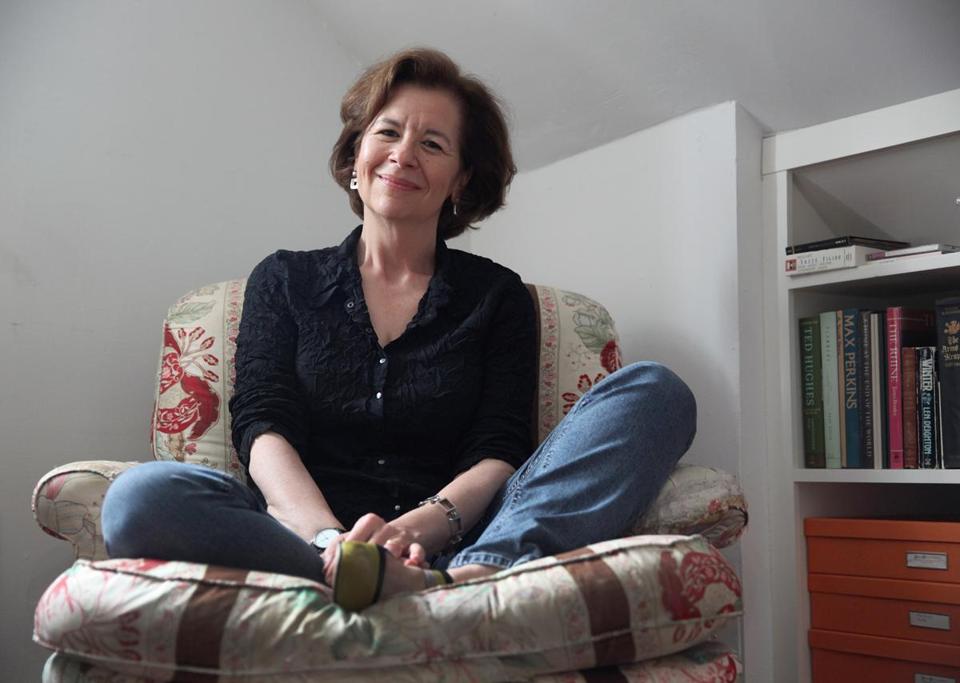
There is an interview called “Inside the Writing Life” in my high school alumni magazine.  A prominent English instructor is interviewing Joan Wickersham who graduated nearly two decades after me.  Ms Wickersham has been writing most of the time since graduation; her work includes her memoir and 2008 National Book Award finalist, The Suicide Index; a book of short fiction, The News from Spain; and The Paper Anniversary, a novel.  She writes a regular op-ed column for The  Boston Globe; her writing has been published in prominent literary journals; and she has read her work on National Public Radio.

maeda_writers_g1

Joan Wickersham

Two questions and answers in this interview caught my eye.

Q: (David Weber) “You’ve sustained your output over many years.  Does the problem of writer’s block seem remote to you, or have you struggled at times to give your work the priority required?”

Wickersham: “There’s a very funny little moment in a movie I once saw, where a bored, impatient woman is trying to figure out where a piece fits in a jigsaw puzzle and she finally just puts in somewhere and smacks it in with her fist.  Writer’s block is a sign that what I’m doing isn’t working, and I can’t fix it by trying to ram something into a place where it doesn’t belong. It can take months to figure out that what I thought was a piece of the sky is actually a piece of the ocean, or that its a part of a different puzzle altogether.  I hate writer’s block, but I’m always grateful to it in hindsight.  It usually means that what I’ve been writing is somehow false, which is just as bad in fiction as nonfiction.  Writer’s block slows me down and makes me throw out pages and drafts – after I’d been working on the book about my father’s suicide for nine years, I threw out a 400 page manuscript and started over – but getting stuck can be an important investment in finding the right way to tell a story.”

I like this way of thinking about writer’s block: it’s not you that are the problem; it’s the story.  Sometimes, when I sit down to write, I feel cornered.  I’ll look back over what  I’ve written, and ask myself ‘what’s not working?’  Other times, particularly when I’m lying awake at night, I’ll start feeling uneasy about the direction of a particular novel.  That feeling generally leads to surgery.  When I was writing Sable Shadow & The Presence, I threw out and re-wrote whole chapters of the book, which has gone on to win eight awards.

Q: “Does a fully realized piece require its own new form, not just descriptive skill and the authority of honesty?”

Wickersham: “A lot of what I’m doing when I write is trying to figure out the inherent rules of a particular piece – the form or structure which will be most true to the story.  My husband, Jay, is trained as an architect.  A long time ago, when I was struggling to write about my father’s suicide, he told me that the students at the École des Beaux-Arts begin each design with a parti – an organizing principle.  I found this idea of the parti exciting and liberating.  I’d been wresting for years with how to organize the messy and painful story of my father’s death, and part of the problem was that the story defied any attempt at a conventional linear narrative.  When I stumbled in the parti of organizing the book as an index, suddenly I had this cool, numb structure that simultaneously imposed order and ridiculed the idea of imposing order on an inherently chaotic experience”.

I never heard of the term parti before, but it makes sense.  The novel I’m currently working on has an unusual organizing principle: two increasingly hostile narrators, whose identity is obscure at first, tell alternating chapters about three, very different, young protagonists over whom they have influence, but no control.  The setting is present day East Africa.

Review: Selection Day

My wife bought me a copy of this novel – signed by the author!  – while I was briefly in the hospital (nothing very serious) and I wanted something to read.  Hospitals are a great place to read: one is always waiting for the next procedure to take place; one can make oneself comfortable; and it is not particularly noisy!  She bought it because I had asked for a novel by a Man Booker shortlist author.  The author, Aravind Adiga, actually won the Man Booker in 2008 for his first novel, The White Tiger.  Adiga was born in Madras (new Chennai) India in 1974; after achieving his secondary school certificate, he emigrated with his family to Australia, where he graduated from high school in Sydney.  He graduated, next, from Columbia University in 1997 and subsequently studied English literature at Magdelan College, Oxford.  He began his business career as a financial journalist with the Financial Times, Money and Time before becoming freelance.

download

Aravind Adiga

Selection Day is a book focused on Indian cricket and its effect on a Mumbai slum family of two boys and their compulsive father.  Radha, the older brother, expects to fulfill his father’s dream of being selected for a top Indian team.  Tommy Sir, a coach/agent/promoter introduces the boys father, Mohan, to a ‘businessman’, Anand Mehta, who pays Mohan a stipend in return for a large slice of the boy’s earnings when they become famous.  Unexpectedly, Manju, the younger boy, is the better batsman, scoring 497 not out in a crucial contest.  Radha has a ‘weight transfer problem’ which is inhibiting his effectiveness as a batsman.  Enter a rival, Javed, a cocky, rebellious, rich kid who is also a fine batsman, and who happens to be gay.  Manju, at the center of the story, is his older brother’s best friend and rival, and his father’s severest but respectful critic.  The younger batsman is torn between his admiration for Javed, and his reluctance to commit to an intimate relationship; and between careers in cricketing or in science.

Selection Day offers a rich mixture of conflicted, imperfect characters with whom the reader cannot help but empathize.  The setting of Mumbai is drawn with natural clarity; one feels truly present.  And without being a ‘book about cricket’, Selection Day, presents the culture, the mystique, the competitiveness of Indian youth critic captivatingly, without technical fussiness.  The dialogue is credible, but occasionally seems too tangential to lead the reader to any firm conclusions.  Perhaps, this is Mr Adiga’s intention with this novel: to make the point that, try as one might, there can never be the achievement of one’s ultimate dream.

This sense of failure seems to carry over into the two concluding parts of the novel: what happens after selection day and in the epilogue.  One cannot help but be engaged by the beautiful writing, the energy, and the unfolding future in the lead up to selection day.  The writing is as good, but the energy and the future have dissipated after selection day.  Perhaps this novel could feel more whole, more consistent, if dreams could be scaled back rather than dispelled, and the energy and the future modestly re-directed.

Books as Therapy

The November 7th issue of Time Magazine has an article Read a Novel: it’s just what the doctor ordered, written by Sarah Begley.   Ms Begley is a staff writer for Time; she writes book reviews and culture stories for the magazine.  She has worked at Newsweek, The Daily Beast and Hearst Magazines.  She lives in the New York City area and is a graduate of Vassar College.

download

Sarah Begley

She says, “the latest round of research on the benefits of literature focuses on how it improves not our IQ but our EQ.”  Researchers at the New School for Social Research found a link between ‘theory of mind’ (the ability to know what a person is thinking or feeling) and reading a passage of literary fiction (as distinguished from popular fiction).  Ms Begley continues, “Maria Eugenia Panero of Boston College says it is ‘hard to know whether reading literary fiction increases theory of mind or if people who naturally have a higher theory of mind are more drawn to literary fiction'”.

Ms Begley reports that a 2012 study at Ohio State University had undergraduates read different versions of a story in which a protagonist overcomes challenges (car trouble, bad weather, long lines, etc.) in order to vote.  Those who read a version of the story which led them to identify strongly with the character were more likely to vote in a real election a few days later: 65% reported having voted as compared to 29% of those who read a less relatable version of the story.  The story did affect the behaviour of some readers.

Bibliotherapy, which involves the prescription of novels to ‘cure life’s ailments’, is practices at the School of Life in London.  Ella Berthoud, an artist, and Susan Elderkin, a novelist, are friends from their Cambridge days when they left books for each other to deal with the crisis of the week: be it romance, work stress, or whatever.  Now, while they are not trained at therapists, their clients pay £100 to spend 50 minutes with them, in person or via Skype.  The clients fill out a questionnaire about what they like to read and what is going on in their lives.  “The bibliotherapist makes an ‘instant prescription’ at the end of the session and then sends a list of six to eight books and the reasons for the recommendation a few days later.  They say the feedback is 99% positive.”

Ms Begley concludes: “The science behind reading for mental health is limited, but researchers like Panero are eager to continue exploring the benefits.  ‘I think we all have some intuitive sense that we get something from fiction’, Panero says.  ‘So in our field we’re interested in saying – well, what is it that we’re getting?’  Even the greatest novel cannot cure clinical depression, erase post-traumatic stress or turn an egomaniac into a self-denying saint.  But it might ease a midlife crisis or provide comfort in a time of grief.  As Elderkin says, it’s natural for readers to find it’satisfying when people come up with ‘proof’ of something which they’ve always felt to be true.'”

As for me, I certainly subscribe to the theories presented by Ms Begley in her article.  That is why I write novels like Seeking Father Khaliq.

Review: The Last Confession of Thomas Hawkins

I bought this book – an historic novel – in a Waterstones bookstore because I had nothing to read at that moment and it looked interesting.  Its author is Antonia Hodgson who grew up in Derby and studied English at the University of Leeds.  Her first novel, The Devil in Marshalsea, won the 2014 Historical Dagger Award.  Ms Hodgson lives in London, where she is an editor.

download

Antonia Hodgson

The Last Confession of Thomas Hawkins is set in a rather down-market section of Georgian London.  Its principal character, Thomas Hawkins is a ‘gentleman’ who killed a man in self-defense in prison, and throughout the story is under threat of being hung for murder.  There are several intertwining plots.  One involves a rather loathsome neighbour who is a member of the Society for the Reformation of Manners (a pathological moralist) and whose own morals permit him to consort with prostitutes and to beat his children.  The neighbour is suddenly dead.  Who killed him?  Thomas, one of the children, the apprentice, the son of a notorious gang?  Another plot involves King George’ mistress who is also a lady in waiting to Queen Charlotte.  This Henrietta Howard (who was a real person) is a pawn in the struggle of her very evil, estranged husband to extort money from the king.  The queen, also a real person, is caught in the middle and manages to capture Thomas as her rook to defeat the black knight, Charles Howard.  To keep things going, there is Kitty, the pretty and libidinous girlfriend of Thomas.

There is plenty of action in this rather engaging tale which moves along at a frenetic pace with many twists and turns along the way.  The characters are well-developed and likable or despicable; the dialogue is terse and credible.  The Covent Garden area of London is well described in physical and moral terms, but it was difficult to picture oneself in the setting.  It is not just a familiarity with the Covent Garden of today that blocked – to some extent – the credibility of the scene; it was more that at a feeling level one is somewhat remote. Having said this, one has to admire the depth of Ms Hodgson’s research into the times, the issues and the characters.  There are plenty of surprises in The Last Confession of Thomas Hawkins – they certainly keep the reader engaged – but sometimes the events seemed a little too contrived.  For example, the events around the ambush of Henrietta’s carriage by her husband, and the conclusion where Thomas is sent on a new mission by the queen.  The cockfight and the duel of the female gladiators, while authentic and interesting, added little to the story line.

For those who like a historical novel with an anchor in truth, one with many fascinating twists and turns, with important, stand-out characters, and a good helping of mystery, The Last Confession of Thomas Hawkins is the novel for you!

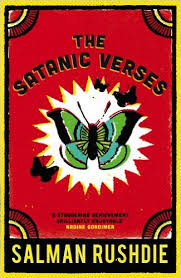
Review: The Satanic Verses

download


I decided to read this novel by Salman Rushdie because I had not read any of his work, because this particular novel is famous, and because of my interest in better understanding Islam.  The novel is famous for the fatwa issued by the Ayatollah Khomeini calling for the death of Rushdie for having committed blasphemy and for mocking the Islamic faith.   There was a bounty of £2.8 million on Rushdie’s head and several failed assassination attempts; others associated with the novel were not as fortunate: Hitoshi Igarashi the Japanese translator, was stabbed to death on 11 July 1991, and a number of attempts were made on the lives of others.  The novel was published in 1988, and it was shortlisted for the Booker Prize, but won the Whitbread Award for novel of the year. The fatwa was issued on 14 February 1989.  In the UK, 13 Muslim barristers drafted an indictment for the High Court attempting to justify a charge of blasphemy.  This attempt failed and blasphemy is no longer an offense under English law. For years, Rushdie lived at no fixed abode under Special Branch protection.  In 1998, Iran issued a conciliatory statement and Rushdie declared he would no longer live in hiding.   The Iranian state news agency reported in 2006 that the fatwa would remain in place permanently since fatwas can only be rescinded by the person who first issued them, and Khomeini had since died.

In the context of blasphemy, it is worth a brief description of the origin of the term ‘satanic verses’.  Muhammad was living in Mecca at the time and he was experiencing difficulty persuading powerful Meccans to accept that he was the prophet of God.  There is a theory – repeated in Rushdie’s novel – that, as a concession to these men, he gave brief permission for prayer to three popular idols.  What is certain is that Muhammad originally recited several verses naming the idols, praising them and indicating that they should not be neglected.  Muhammad then inserted three replacement verses which say that the idols are only ‘names’ and that ‘God revealed no authority for them’.  His explanation for the change was that Satan had managed to slip in the verses without him knowing it.

In the novel, Muhammad (called Mahound) comes across as a weak, indecisive individual who uses religion for his own benefit.  But the sequences in the novel involving Mahound are contained in the dreams of the character, Gibreel Farishta, who is mentally ill and who believes that he has become the archangel Gabriel, so these characterisations cannot be said to represent the author’s personal views.

The central plot of the novel is that two Indian Muslim actors fall from the sky over the English Channel when the flight they are on is blown up.  Miraculously, they both survive, and they take on the personalities of the archangel Gabriel (Gibreel Farista) and the devil (Saladin Chamcha).  Each of them has difficulty being accepted in London, each finds to a prior love, and each returns to his previous occupation.  Chamcha seeks revenge on Farista for having deserted him after their fall from the sky, and he stokes Farista’s pathological jealousy, destroying his love relationship.  Farista realises what his colleague has done and he forgives him.  Nonetheless, Farista kills his lover, Alleluia Cone, and commits suicide.  Chamcha returns to India and is reconciled to his dying father.

The novel – at 547 pages – has a great deal beyond this simple plot, including dream sequences involving the prophet Mahound.  There are also sequences involving relationships of the primary characters with lovers, friends and acquaintances.

This is not an easy book to read.  The sentences are long, sometimes complex, and the references to characters, places and things unfamiliar.  There is one sentence 146 words long.  Being somewhat familiar with Islamic history, I recognised some to the dream characters, but I could have benefited from a working knowledge of Indian mythology.  It is also not easy to follow what is going on: is this part of a dream or reality?  Having said that, I did find much of the writing uniquely engaging.

The feelings one encounters in reading the book are doubt bordering on hopelessness with some offsetting glimpses of humour.  The doubt has to do with the purpose of life, religion, acceptance as an individual, and perception vs reality.


The Book is No Longer Doomed!

In case you didn’t see it, there was an article in The Daily Telegraph last month: ‘A New Chapter as Sales of Print Books Recover’, and it goes on to say:

“. . . Reports of the death of the traditional book have been greatly exaggerated, according to the definitive annual survey of the industry.  The Publishers Association study (UK) revealed sales of print books are rising while digital sales are down for the first time since the invention of the e-reader.  Experts say the claim the ‘physical book is doomed’ can ‘finally be refuted’.

“Stephen Lotinga, the Publishers Association chief executive said: ‘Those who made predictions about the death of the book may have underestimated just how much people love paper’.

“This year’s annual report shows physical book sales of £2.76 billion in 2015, up from £2.75 billion in 2014.  Digital sales dropped from £563 million to £554 million, the first year-on-year fall since 2011 when the association started measuring e-book sales.  The change has been attributed to readers realising the pleasure to be taken in a physical book, as well as the popularity of lifestyle non-fiction that does not translate well to digital.  Among those are adult colouring books, which have seen a boom in the last year, along with cookery books and retro humour such as the spoof How to . . . Ladybird series, which proved popular at Christmas.

“Hardback versions of much-hyped new works such as Harper Lee’s Go Set a Watchman also proved best sellers, along with cult novels such as The Girl on the Train by Paula Hawkins.

“Joanna Prior, managing director of Penguin General Books, said: ‘Both the increase (in physical book sales)and decrease (in digital sales) are too small . . . for us to make any claims for big shifts in consumer behaviour or make predictions for what lies ahead.  But I do think any suggestion that the physical book is doomed can now be definitively refuted.’

I, for one, am pleased to see these results.  In the first place, I have never been able to convince myself to read a digital book.  For me, having real book in my hands and being able to turn the pages is the essence of comfort in reading.  When I was doing a lot of driving, I found that audio books were a much better form of entertainment on a long drive than listening to the radio, so I was a regular user of the audio books section of the local library.  In fact, when I stopped taking long trips by car, I wanted to read the Qur’an.  I downloaded a copy to my iPod and listened to in when I was in the gym.  (Now, when I’m in the gym, I watch BBC News, and, occasionally, listen to country music.  I find the activity in the gym too distracting to concentrate on a good, new novel.)

Secondly, I get a sense of personal satisfaction from producing a physical book: one that I can hold in my hands of give to a friend.  And, finally, author royalties tend to be better – per unit sold – for physical rather than electronic books.

Adult Coloring Books

I must live a very sheltered life because until this morning, I never heard of adult coloring books.  If I had to guess, I would have supposed that this was a very minor niche in the publishing business and that it is dedicated to adults with learning disabilities.  To my amazement, it was in part due to the sales of adult coloring books that kept print book publishing out of the red in 2015.  {Print book sales increased in 2015 over 2014, largely due to Big Publishing’s victory over Amazon: it won the right to a larger say in the pricing of ebooks.  As ebook prices increased, readers turned to the print versions.  As a whole, in 2015, the industry experienced a decline in sales (down 4.1% from 5.82 to 5.58 billion dollars)}.

So, adult coloring books are a big thing currently.  Here is what Laura Marsh had to say in an article last December in New Republic:

“In 1962, Barbra Streisand channeled all the emotional turmoil and lyric despair of an abandoned lover into what must be the strangest four minutes of pop music ever written. “Crayons ready?” she croons, “Begin to color me.”  The opening lines of the song, “My Coloring Book,” refer to that year’s fevered interest in coloring books for adults, much like the trend that has taken off recently. “For those who fancy coloring books / As certain people do,” Streisand sings, before asking listeners to fill her sorrowful life with equally sorrowful hues. When the song came out, coloring books for adults permeated pop culture, as Mort Drucker’s JFK Coloring Book spent 14 weeks at the top of the New York Times bestseller list in 1962, and sales of adult coloring books reached $1 million. Today, coloring books are perhaps even more profitable: Johanna Basford’s Secret Garden and Enchanted Forest were the two best-selling books on Amazon in April, responsible for some of the year’s recovery in print sales. (Basford has sold nearly 10 million coloring books since Secret Garden was published in 2013.) But their powerful appeal—enthusiasts say they are a “great way to de-stress” —has very little in common with adult coloring books from the 1960s. Where today’s titles offer consumers a neat package of therapy, escape and nostalgia, 1960s coloring books were both genuinely novel and subversive.

“The first adult coloring book, published in late 1961, mocked the conformism that dominated the post-war corporate workplace. Created by three admen in Chicago, the Executuve Coloring Book showed pictures of a businessman going through each stage in his day, as though teaching a child what daddy does at work. But the captions, which give instructions on how to color the image, are uniformly desolate. “This is my suit. Color it gray or I will lose my job,” reads a caption next to a picture of a man getting dressed for work. Another page shows men in bowler hats boarding their commuter train. “This is my train,” it reads. “It takes me to my office every day. You meet lots of interesting people on the train. Color them all gray.” The rare appearance of a non-gray color is even more disturbing: “This is my pill. It is round. It is pink. It makes me not care.”

From The Executive Coloring Book, 1961.Ad to the Bone

“The coloring books that followed managed to cover, between them, a selection of the decade’s neuroses: national security, the red scare, technology, sex, mental illness. Two popular books took aim at President Kennedy: Drucker’s JFK Coloring Book and Joe B. Nation’s New Frontier Coloring Book. There were coloring books that made fun of communists and coloring books that made fun of people who were scared of communists.  Krushchev’s Top Secret Coloring Book: Your First Red Reader caricatured Soviet leaders and life under communist rule, but was still deemed “objectionable” and banned in the United States Military. Meanwhile, the John Birch Society Coloring Book, which ridiculed conspiracy theorists and extremists, stretched the coloring book concept to its limits with a blank page, captioned: “How many Communists can you find in this picture? I can find 11. It takes practice.” In August 1963, the Washington Post reported on a doctor who proposed using a 12-page coloring booklet “as a diagnostic tool…to classify patients by their types of disorders” from schizophrenia to brain damage. The Post called it the ‘Psychotic’s Coloring Book’.”

Julia Felsenthal writing in the December 2015 issue of Vogue had this to say about more recent interest in adult coloring books:

“But, in spite of the fact that I do on occasion sketch and paint with watercolors, I’ve never once felt moved to pick up a coloring book and go to town. Nor did I imagine that people in my social sphere were doing so. Were those Instagram-famous coloring parties a total anomaly? Or were my other friends also secretly brandishing markers in their spare time?

“I posted the query to Facebook and the response—entirely from women—was surprisingly immediate and enthusiastic. “My aunt-in-law brought coloring books and fancy markers to Thanksgiving and I was all ‘pshhhh, really??’ ” wrote Dean, a designer in Chicago whose funky style I’ve long admired on social media. “Next thing I know, I’m suuuuper chill with a glass of wine, coloring a picture of a flower shop. It’s surprisingly kind of awesome.”

“Other ladies seemed to agree. “I do this,” an old colleague who works in video production admitted with a trace of sheepishness. A writer acquaintance raved about Chat Thérapie, a French, feline-themed coloring book she uses after dinner as a means to avoid screen-induced insomnia. A fashion-school grad explained that coloring-book patterns help her dream up jewelry designs. A mom of two avowed that the hobby keeps her sane. A friend in Austin described how coloring books have begun to appear at packed house parties, psychedelic concerts, and on camping trips. Another friend, a therapist, agreed with Beck that they’re best enjoyed while bingeing on TV.”

OK.  I get it.  But I don’t think I’ll enter the market any time soon.

Review: A God in Ruins

For the last couple of weeks, I’ve been out of the office: my PC has been neglected, but I’ve done some reading.

A God in Ruins by Kate Atkinson is without a doubt the best book I’ve read in a long time, and it’s easy to see why it won last year’s Costa Book Award.  In fact, the judges called it, “Utterly magnificent and in a class of its own.  A genius book.”

The author has some pretty heavy-weight credentials.  Kate Atkinson won the Whitbread (now Costa) Book of the Year in 1995 with her first novel, Behind the Scenes at the Museum.  Her four bestselling novels featuring former detective Jackson Brodie became the BBC television series.  Her last novel, Life After Life, was the winner of the 2013 Costa Novel Award.  She was appointed MBE in the 2011 Queen’s Birthday Honours.

index

Kate Atkinson

A God in Ruins is the story of Teddy Todd, a would-be poet, lover of the countryside, and heroic bomber pilot during World War II.  The story begins in 1925 and zig-zags back and forth in time until its conclusion in 2012.  As the number of his completed combat missions piles up, Teddy does not expect to see the ‘Afterwards’ in which he will become a husband and a father.  Throughout the story, he faces life as it is without complaints about lost opportunities, heartbreak, or feelings un-expressed.  He is surrounded by the characters of his own family and by some of the family who are neighbours.

The writing is captivating and tight; there is no excess baggage here even though the book runs to over 500 pages.  The characters are distinct, and the story line never lags.  What most impressed me about the novel was the authenticity of the descriptions of flying bombing missions in a Halifax, but then, at the end of the book is a three page bibliography of sources.  Ms Atkinson did a lot of research!  I understand why it too two years to write this novel.  There is an interesting device she used which turns fiction on its head.  Fascinating!  But I’m not going to give it away.  Sometimes I felt slightly put off by the broken chronology, but in reading the book over a period of days, I began to feel that it was building nicely to a conclusion.  This is a novel which fully engages both one’s emotions and one’s beliefs.

Review: The Meursault Investigation

This novel, written by Kamel Daoud, reveals the hidden side of Albert Camus’ novel The Stranger.  In The Stranger, Camus has his principal character, Meursault, shoot and kill a nameless Arab for no apparent reason other than possible disorientation from sunstroke.  In The Meursault Investigation, Daoud names the murdered Arab as ‘Musa’ (Moses), and considers the implications of the murder from the viewpoint of Musa’s brother ‘Harun’ (Aaron).

Camus was a French-Algerian philosopher, an ‘absurdist’ who held that human life is absurd.  He was also regarded as an existentialist (he disagreed) and a pacifist.  He was born in 1913, won the Nobel Prize for Literature in 1957, and died in 1960.  In The Stranger, which was published in 1942, Camus used the murder of the nameless Arab for no reason as an example of the absurdity of human life.

Kamel Daoud is an Algerian journalist based in Oman.  His background is similar to that of Camus: French-speaking, Algerian writer and philosopher. The Mersualt Investigation is Daoud’s first novel, published in 2015, and it has been recognised with several prizes in France.

index

Kamel Daoud

In The Mersault Investigatiom, Harun is in a bar in Oman reflecting morosely on his brother, his mother and the book by the listener’s hero (Camus).  Included in his reflections are thoughts on Algeria, its people and its relationship to France.  The tone of the book is pessimistic and its conclusions are ambiguous (much like the tone and content of The Stranger).  One is left with the impression that there can be no God, and that life itself can have no meaning.

This is not an enjoyable book to read, because of its pessimistic philosophy, and because nothing conclusive arises from its reflective monologue.  No new ‘facts’ emerge about any of the characters, except that Musa was a real person who was loved by his mother and close the the heart of his younger brother.  Still, one has the impression that The Mersault Investigation is a classic in the absurdist philosophical tradition.  If you liked Camus’ writing, you will certainly appreciate Daoud’s.  He has created a well-written philosophical sequel to one of Camus’ great works.