Review: A God in Ruins

For the last couple of weeks, I’ve been out of the office: my PC has been neglected, but I’ve done some reading.

A God in Ruins by Kate Atkinson is without a doubt the best book I’ve read in a long time, and it’s easy to see why it won last year’s Costa Book Award.  In fact, the judges called it, “Utterly magnificent and in a class of its own.  A genius book.”

The author has some pretty heavy-weight credentials.  Kate Atkinson won the Whitbread (now Costa) Book of the Year in 1995 with her first novel, Behind the Scenes at the Museum.  Her four bestselling novels featuring former detective Jackson Brodie became the BBC television series.  Her last novel, Life After Life, was the winner of the 2013 Costa Novel Award.  She was appointed MBE in the 2011 Queen’s Birthday Honours.

index

Kate Atkinson

A God in Ruins is the story of Teddy Todd, a would-be poet, lover of the countryside, and heroic bomber pilot during World War II.  The story begins in 1925 and zig-zags back and forth in time until its conclusion in 2012.  As the number of his completed combat missions piles up, Teddy does not expect to see the ‘Afterwards’ in which he will become a husband and a father.  Throughout the story, he faces life as it is without complaints about lost opportunities, heartbreak, or feelings un-expressed.  He is surrounded by the characters of his own family and by some of the family who are neighbours.

The writing is captivating and tight; there is no excess baggage here even though the book runs to over 500 pages.  The characters are distinct, and the story line never lags.  What most impressed me about the novel was the authenticity of the descriptions of flying bombing missions in a Halifax, but then, at the end of the book is a three page bibliography of sources.  Ms Atkinson did a lot of research!  I understand why it too two years to write this novel.  There is an interesting device she used which turns fiction on its head.  Fascinating!  But I’m not going to give it away.  Sometimes I felt slightly put off by the broken chronology, but in reading the book over a period of days, I began to feel that it was building nicely to a conclusion.  This is a novel which fully engages both one’s emotions and one’s beliefs.

Review: The Meursault Investigation

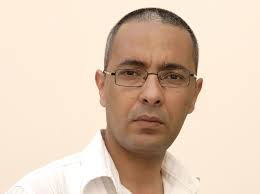
This novel, written by Kamel Daoud, reveals the hidden side of Albert Camus’ novel The Stranger.  In The Stranger, Camus has his principal character, Meursault, shoot and kill a nameless Arab for no apparent reason other than possible disorientation from sunstroke.  In The Meursault Investigation, Daoud names the murdered Arab as ‘Musa’ (Moses), and considers the implications of the murder from the viewpoint of Musa’s brother ‘Harun’ (Aaron).

Camus was a French-Algerian philosopher, an ‘absurdist’ who held that human life is absurd.  He was also regarded as an existentialist (he disagreed) and a pacifist.  He was born in 1913, won the Nobel Prize for Literature in 1957, and died in 1960.  In The Stranger, which was published in 1942, Camus used the murder of the nameless Arab for no reason as an example of the absurdity of human life.

Kamel Daoud is an Algerian journalist based in Oman.  His background is similar to that of Camus: French-speaking, Algerian writer and philosopher. The Mersualt Investigation is Daoud’s first novel, published in 2015, and it has been recognised with several prizes in France.

index

Kamel Daoud

In The Mersault Investigatiom, Harun is in a bar in Oman reflecting morosely on his brother, his mother and the book by the listener’s hero (Camus).  Included in his reflections are thoughts on Algeria, its people and its relationship to France.  The tone of the book is pessimistic and its conclusions are ambiguous (much like the tone and content of The Stranger).  One is left with the impression that there can be no God, and that life itself can have no meaning.

This is not an enjoyable book to read, because of its pessimistic philosophy, and because nothing conclusive arises from its reflective monologue.  No new ‘facts’ emerge about any of the characters, except that Musa was a real person who was loved by his mother and close the the heart of his younger brother.  Still, one has the impression that The Mersault Investigation is a classic in the absurdist philosophical tradition.  If you liked Camus’ writing, you will certainly appreciate Daoud’s.  He has created a well-written philosophical sequel to one of Camus’ great works.

What Makes a Best-Selling Novel?

I just stumbled on this article from The Daily Telegraph of 9 January 2014 and written by Matthew Sparkes.

Scientists have developed an algorithm which can analyse a book and predict with 84 per cent accuracy whether or not it will be a commercial success.  A technique called statistical stylometry, which mathematically examines the use of words and grammar, was found to be “surprisingly effective” in determining how popular a book would be.

The group of computer scientists from Stony Brook University in New York said that a range of factors determine whether or not a book will enjoy success, including “interestingness”, novelty, style of writing, and how engaging the storyline is, but admit that external factors such as luck can also play a role.

By downloading classic books from the Project Gutenberg (a library of over 50,000 free e-books) archive they were able to analyse texts with their algorithm and compare its predictions to historical information on the success of the work. Everything from science fiction to classic literature and poetry was included.  It was found that the predictions matched the actual popularity of the book 84 per cent of the time.  They found several trends that were often found in successful books, including heavy use of conjunctions such as “and” and “but” and large numbers of nouns and adjectives.

Less successful work tended to include more verbs and adverbs and relied on words that explicitly describe actions and emotions such as “wanted”, “took” or “promised”, while more successful books favoured verbs that describe thought processes such as “recognised” or “remembered”.  To find “less successful” books for their tests, the researchers scoured Amazon for low-ranking books in terms of sales. They also included Dan Brown’s The Lost Symbol, despite its commercial success, because of “negative critiques it had attracted from media”.

“Predicting the success of literary works poses a massive dilemma for publishers and aspiring writers alike,” said Assistant Professor Yejin Choi, one of the authors of the paper published by the Association if Computational Linguistics.  To the best of our knowledge, our work is the first that provides quantitative insights into the connection between the writing style and the success of literary works.  Previous work has attempted to gain insights into the ‘secret recipe’ of successful books. But most of these studies were qualitative, based on a dozen books, and focused primarily on high-level content – the personalities of protagonists and antagonists and the plots. Our work examines a considerably larger collection – 800 books – over multiple genres, providing insights into lexical, syntactic, and discourse patterns that characterise the writing styles commonly shared among the successful literature.”

What I find surprising about this study is statistical correlation between ‘writing style’ and popularity.  Eighty-four percent is a strong correlation!  Conjunctions tend to keep the action moving, hence their frequent use.  We’ve heard for some time that the use of adverbs is to be avoided, and that it is far better to choose a more accurate and descriptive verb.  The frequent use of adjectives makes sense; after all we’re trying to paint a picture in the reader’s mind, and well-chosen adjectives will improve the clarity of the picture.  It is interesting that verbs which convey action or emotion are less successful than verbs which convey thought processes.  Perhaps this is because it is easier for a reader to ‘tune in’ to thought processes than it is for him or her to feel the action or the emotion.  Is the corollary of this proposition a finding that thoughtful characters are more popular than active or emotional characters?  No.  I think this would be carrying the thought process too far.

It would be interesting if the algorithm were able to spot clichés or commonly used phrases, because these are thought to be a real turn-off for readers.

What do you think?

Payments to Authors

There was an interesting article in The Daily Telegraph two days ago about the payments authors receive from the publishers of e-books, as follows:

“Professional writers could become and ‘endangered species’ unless publishers start paying them properly for e-books, the Society of Authors has warned.  The society said lovers of literature would soon be left with less and less quality content.  In an open letter to publishers, the society called on executives to treat authors more fairly, drawing up less punishing contracts and paying them more.  Research has shown that the median income of British authors is £11,000, which the society argues is far below the ‘level deemed necessary for a socially acceptable living standard’.  Nicola Solomon, the society’s chief executive said: ‘Unless publishers treat their authors more equitably, the decline in the number of full-time writers could have serious implications for the breadth and quality of content that drives the economic success and cultural reputation of our creative industries’.  The society calls on publishers to give authors ‘at least 50%’ of revenue from their e-books, as opposed to a ‘mere 25%’, and not to ‘discriminate’ against writers who do not have powerful agents.”

If I look at the 100 Kindle edition paid best sellers on Amazon, the top price is $14.99 (3 books), and the cheapest books were $0.99 (20 books).  There is another list of the 100 Kindle edition free best sellers.  The books selling at very low prices are there because their authors are trying to promote them into best sellers.  This way the author gets ‘fame’ if not fortune.  But if one looks at the best authors, the prices seem to start at $8.99.  There are five J K Rowling books for sale at $8.99.  So, it’s fair to note that authors have some control over the price at which their books are sold as e-books, and, presumably, also some control over their level of royalties.

The problem, it seems to me, is for the relatively unknown author who is trying to make a living from writing good, serious literature.  Let’s say s/he can persuade the publisher to sell his/her e-book at $6.99, with a 25% commission.  If so, s/he will earn $1.75 a copy, and to make £11,000 per year,  s/he has to sell 9,400 copies per year.  This will put his/her book on somebody’s best seller list.  The point is that it is very difficult for a good, serious writer to make a living selling e-books, unless s/he has a best seller.  So, I think the Society of Authors has a point.

What can be done by whom?  I think it’s pretty unlikely that the publishers will all agree to raise their prices enough to give their authors 50% of the price.  They’ll be afraid of losing volume.  Besides, there’s plenty of margin for the publisher in an $8.99 e-book.  Production costs are far less than a dollar, so their major expenses are corporate overheads, author royalties, and advertising, over which they have control.  It’s even less likely that an ‘author’s union’ will be able to force through price increases.

But I think that once an author and a publisher have reached a basic deal to publish hard copies, there’s room for negotiation on the price of the e-book.  This negotiation would recognise the author’s per copy royalty on hard copies, the publishers costs, volume assumptions, and the sensible price differential between hard copies and e-copies from a user’s point of view.  For example, if the hard copy is selling for $17.50, and a Kindle fanatic wants the book, why wouldn’t s/he pay $12 for it, so that the author gets $4 per copy and the publisher gets $8?

Review: Classical Arabic Philosophy

I bought this book as a resource. My latest novel has, as its principle character, a professor of philosophy at a prestigious Egyptian university. I wanted to be able to refer to actual teachings of classical Arabic philosophy in his interactions with students and to use some of the philosophical discussions to help make some of the conclusions in the novel. In these two respects, the book was an excellent resource. I could have the professor discuss the teachings of a particular ancient philosopher with a student, quoting the philosopher by name, dates of birth and death, place of origin, philosophical interests, and exactly what he had written. I could also use what a philosopher had written to establish a point I wanted to make in the novel.

index

The book has a useful index of key words, both in English and Arabic. The text, however is largely in English. It also has, for the serious reader, clarifying footnotes, and an extensive bibliography. The preface will acquaint the reader with the methodology used by the authors in the selection and translation of the material. The introduction gives the background of the classical Arabic philosophy, which is – to a large extent – derived from Greek, particularly Aristolean, philosophy. What I found of particular interest was that the first prominent Arabic philosophers appeared barely two hundred years after the founding of Islam in 622 AD – well before their Western counterparts. While Greek philosophy provided a foundation, there were philosophical debates within Islam which also provided grist for the mill.

The book includes translations of selected, verbatum writings of a dozen philosophers who lived between the 9th and 13th centuries AD. Subjects of discussion for the Arabic philosophers included physics (motion, force, change, etc.); metaphysics (being, knowing, identity, time and space); theology (God, the soul, eternity). The language used by the Arabic philosophers can be quite turgid and difficult to follow. I suspect this was more the convention of the era than a fault in the translation. Also, the use of logical conventions, which appeared in the West later, were not available at the time to structure a clear proof of a theory.

This is not a book that one would want to read for pleasure unless one were a practicing philosopher. It could serve as a text book in the teaching of philosophy. And it is an excellent reference work.

11 Smart Tips for Brilliant Writing

This article appears on the Copyblogger website and was written by Dean Rieck.  He is “Copywriter and Consultant for Direct Mail and Direct Marketing”

dean-rieck-color

Dean Rieck

I agree with much of what he says about “brilliant writing”, but not all.  Perhaps our divergences are mostly about differences in perspective: advertising copywriter vs author.  His blog says:

“Here are 11 ways you can start sounding brilliant:

1. Have something to say

This makes writing easier and faster. When you have nothing to say, you are forced to write sentences that sound meaningful but deliver nothing. Read widely. Take notes. Choose your subjects wisely. Then share your information with readers.

2. Be specific

Consider two sentences:

  • I grow lots of flowers in my back yard
  • I grow 34 varieties of flowers in my back yard, including pink coneflowers, purple asters, yellow daylilies, Shasta daisies, and climbing clematis

Which is more interesting? Which helps you see my back yard?

3. Choose simple words

Write use instead of utilize, near instead of close proximity, help instead of facilitate, for instead of in the amount of, start instead of commence.  Use longer words only if your meaning is so specific no other words will do.

4. Write short sentences

You should keep sentences short for the same reason you keep paragraphs short: they’re easier to read and understand.  Each sentence should have one simple thought. More than that creates complexity and invites confusion.

5. Use the active voice

In English, readers prefer the SVO sentence sequence: Subject, Verb, Object. This is the active voice.

For example:

Passive sentences bore people.

When you reverse the active sequence, you have the OVS or passive sequence: Object, Verb, Subject.

For example:

People are bored by passive sentences.

You can’t always use the active voice, but most writers should use it more often.

6. Keep paragraphs short

Look at any newspaper and notice the short paragraphs.  That’s done to make reading easier, because our brains take in information better when it’s broken into small chunks.  In academic writing, each paragraph develops one idea and often includes many sentences. But in casual, everyday writing, the style is less formal and paragraphs may be as short as a single sentence or even a single word.

7. Eliminate fluff words

Qualifying words, such as very, little, and rather, add nothing to your meaning and suck the life out of your sentences.

For example:

It is very important to basically avoid fluff words because they are rather empty and sometimes a little distracting.

Mark Twain suggested that you should “Substitute damn every time you’re inclined to write very; your editor will delete it and the writing will be just as it should be.”

8. Don’t ramble

Rambling is a big problem for many writers. Not as big as some other problems, such as affordable health insurance or the Middle East, which has been a problem for many decades because of disputes over territory. Speaking of which, the word “territory” has an interesting word origin from terra, meaning earth.

But the point is, don’t ramble.

9. Don’t be redundant or repeat yourself

Also, don’t keep writing the same thing over and over and over. In other words, say something once rather than several times. Because when you repeat yourself or keep writing the same thing, your readers go to sleep.

10. Don’t over write

This is a symptom of having too little to say or too much ego.  Put your reader first. Put yourself in the background. Focus on the message.

11. Edit ruthlessly

Shorten, delete, and rewrite anything that does not add to the meaning. It’s okay to write in a casual style, but don’t inject extra words without good reason.  To make this easier, break your writing into three steps: 1) Write the entire text. 2) Set your text aside for a few hours or days. 3) Return to your text fresh and edit.

None of us can ever be perfect writers, and no one expects us to be. However, we can all improve our style and sound smarter by following these tips and writing naturally.”


I agree with 1, 2, 7, 8, 9, 10, and 11.

3. Choose simple words:

Use of simple words is probably fine for advertising where clarity and conciseness are essential.  But when writing fiction, and when one is trying to paint a complex picture of fact, feelings and suppositions, simple words are rarely fully effective.  Maybe an unlikely combination of two or three special words is necessary to convey the mixture of fact and feelings.

4. Write short sentences:

Here again, punchiness isn’t necessarily what we want.  Short sentences can lack lyricism or intellectual interest.  They can be boring if repeated.  Use of some longer sentences can keep the reader interested.

5. Use the active voice:

OK, but switch now and then to keep the reader alert.

6. Keep paragraphs short:

I believe that paragraphs should be used as a clue to the reader that the action is changing: different time, different setting, different characters.  There is no other reason to break up the text other than that a paragraph longer than one page can make it feel to the reader that the reading is becoming laborious!

How do you know if you’re a good writer?

Last month, there was an article in the online Huffington Post by Brook Warner, with the subtitle: “3 Ways to Get Validation of Your Writing’.  I agree with most of what she says:

“Writing stands out to me as the craft that people most easily dismiss and judge.  Because of its accessibility – anyone can do it and everyone seems to be doing it – writing is to the arts what running is to sports.  There are elites and there are hobbyists.  Unlike music, art and film, there’s a low barrier to entry.  You don’t need an instrument other than your hand, a canvas other than a piece of paper; not do you need a team, a budget, or outsider talent to practice your craft.  Everyone thinks they can do it, and the truth is that a lot of people do it well.  One of the great difficulties publishing faces right now is that there are many, many good books worthy of being published, but rather than finding ways to celebrate hobbyists and emerging talent (which is what’s happening in film), the industry has instead turned its back and turned up its nose at the very people who make possible what they do for a living: aspiring authors.

“So how, given this climate where the odds for success are stacked against you, the industry itself has no vested interest in you until you prove yourself a talent, and everyone thinks they can write, how are you supposed to know whether what you’re writing is worthwhile?”

She mentions three places to start:

1. Get a professional opinion

“You have to pay for this, but it’s worthwhile to get your work assessed at some point in your writing process, sooner rather than later.  This is a high level opinion from someone who knows good writing.  People who read for a living are qualified to pick apart your work and tell you what’s working and not working. . . . Your family and friends are not good readers for your work.  While all readers are subjective, family and friends are the most subjective. . . .”

She mentions that her company She Writes Press offers an assessment of 25 pages of an author’s work.  But apparently, this is part of an expensive co-operative-publishing package.  I think it can be money well invested if one selects a real professional reviewer.

2. Submit your work to contests and at conferences

“Judges of literary of literary contests are selected because they are readers.  They love good books and good writing, and they have wisdom and expertise to impart.  Contests are valuable not just for the accolades you might get, but for the feedback. It’s a cheap way to see what a stranger thinks of your work. . . .”

In my experience, one doesn’t get good quality feedback from most contests.  There tends to be cursory and superficial, or non-existent feedback.  What I have found to be useful is the ‘batting average’ one gets from submitting a particular work to multiple contests.  I have entered Sable Shadow & The Presence in about ten contests.  It has won eight awards ranging from honourable mention (2) to runner up (2) to winner (4) of the fiction category.  I must be doing something right, and this is consistent with my own view that Sable Shadows is a serious, quality piece of work.

3. Submit your work to an agent or publisher

“Many writers I know are so eager to pitch agents and editors that they go out too early, before their books or proposals are fully cooked.  But if you’re suffering from a need to know whether there’s any merit to your project, I believe (though some may disagree with me) that it doesn’t hurt to send to  a handful of agents or editors (not both at the same time) to test the waters. . . .”

I have done this with all six of my published books, but I’m still using my original publisher.  The amount of feedback I have received has been is essentially zero.  It should be said, however, that there is a skill in approaching an agent, as I have learned from reading the 2015 Guide to  Literary Agents.  A considerable amount of effort is required to produce a winning proposal.

Ms Warner poses another question at the close of her blog: “How do I know if I’m done?”  Her point is that if you’re a serious writer, you’re never done.  You keep on learning and writing with greater skill.  I agree completely.

I think I would be inclined to add a fourth item: Read and Write Book Reviews.  I find that reading good quality, recommended books, exposes me to the diverse techniques and skills of other authors.  And when I require myself to write a review of the book, I force myself to identify what I admired about the writing and what I felt didn’t work.

Review: The Power of the Dog

This novel is probably the grittiest I have read. I mean ‘grittiest’ in the sense of terse, violent and gripping. In 541 pages, Don Winslow sets out a compelling picture of the drugs wars in the America from New York City to Columbia. Nothing is withheld, abbreviated or glossed-over: the actions, reactions and motivations of dozens of very real characters. The scope of the novel draws in not only the drugs lords, the law enforcers and their subordinates on many levels, but also the politicians, and the military, so that, ultimately, it is not just about drugs, but also about perceived national interest and long term political strategy. One has to admire the depth of research Winslow must have completed to write this novel. The details of places, organisations, and procedures are all there with crystal clarity. One is tempted to believe that this is not a novel, but a description of the real world.

index

Don Winslow

The characterisations are excellent. There are about six characters who make it all the way through the book, and dozens more who fall (or are pushed) by the wayside. Each of the characters is distinct, and none is completely repellent: we understand their motivation even if it is just survival. The dialogue is terse, but fit for purpose.

One challenge for a reader of this novel is being able to connect the threads of location, character and motivation, as the story skips around from place to place. But Winslow is not trying to tell a simple story, and his skipping about technique reinforces the overall message: this game is very complex.

I found the book hard to put down, but when I did, I looked forward to finding out ‘what happens next’.

Winslow’s style of writing is not ‘literary’. This is not a work of literary art; it is a fast-moving story told in the street language of the characters themselves.

This book is not a pleasant read: the casual violence can be gut-wrenching, but if you are a reader with a strong stomach, and a love of realistic, complex and, ultimately, important action, this is the book for you.

Review: Dark Waters

A friend of mine who is aware of my US Navy background, gave me a copy of Dark Waters, An Insider’s account of the NR-1, the Cold War’s Undercover Nuclear Sub. The authors are Lee Vyborny, who was a member of the NR-1 crew and Don Davis, a news correspondent.

I was interested, not because I served in submarines – I didn’t – but because I spent four years in destroyers whose mission it was to destroy enemy submarines. There were plenty of exercises during which we practiced hunting and killing submarines. One particular exercise comes to mind: my ship had just finished a refit in the Brooklyn Naval Shipyard and was sent to Guantanamo Bay for training exercises. One of our new weapon systems was AsRoc, an anti-submarine missile system which could be armed with either a state-of-the-art torpedo or a nuclear depth charge. We were also fitted with an advanced sonar system. Our first exercise one morning was to hunt down and ‘destroy’ a US Navy submarine which was playing ‘the enemy’. As soon as we were clear of the harbour, our sonar picked up the submarine at a distance of 10,000 yards (five miles). The captain sent the submarine an underwater telephone message telling them that the exercise had begun. Immediately, he fired an AsRoc with a dummy torpedo. The missile took off with a tremendous roar and splashed down within 200 yards of the submarine. The torpedo detached from the missile, energised its sonar, discovered the submarine, and ran toward it, hitting the submarine’ hull with a clang.

Dark Waters tells the story of the creation of NR-1 and its subsequent use.   The motivations for designing an autonomous, deep-diving submarine were multiple. The loss of the USS Thresher with its entire crew in an accident in the North Atlantic suggested the need for a deep rescue vehicle. The deep-diving vehicles which existed in the mid 60’s were either limited in their depth capability or were tied to a surface vessel. There was also an accident involving a B-52 bomber in which a nuclear weapon was dropped into the Atlantic off the coast of Spain. How to find it in deep water? And then there were almost endless possibilities for snooping on the Soviets.

Admiral Rickover was given responsibility for the Deep Submergence Systems Project. I had an interview with the admiral in 1964 in his rather scruffy office in Washington. He was assisted by the captain of the first nuclear aircraft carrier, USS Enterprise, who was in dress white uniform; the admiral was in casual civilian clothes. “Why did you have so many D’s in college?” the interview began.”

“I don’t recall that I did, sir.”

“You did. Why?”

“I don’t know, sir.”

“Are you stupid or are you lazy?”

“I must be lazy, sir.”

“How can you afford to be lazy? Is your father a millionaire?”

“No, sir.”

“Lieutenant, let me ask you a question. Suppose your wife served a pie that was absolutely awful. What would you do?”

“Well, sir, I wouldn’t say anything and she would ask about it.”

“That may work for you, lieutenant, but let me tell you the correct answer. You should pick the pie up, throw it on the floor and say, ‘this pies isn’t fit for the dogs. Get another baker!”

I received orders to go to the nuclear submarine training school, but I resigned from the Navy.

I can say that the authors paint a very accurate picture of the man who was dogged, insensitive, brilliant and highly effective in achieving his vision. I certainly enjoyed reading more of his episodes of shameful manipulation!

The NR-1, being nuclear powered has a theoretically unlimited range submerged; it is, however, underpowered, which limits its speed to about six knots and makes it somewhat vulnerable to rough seas when surfaced. It is small: about 250 tons, 130 feet long, 13 feet in diameter, with a crew of about a dozen.

index

NR-1

The book covers the selection and training of the crew, what life was like on board and some of the assignment which NR-1 was given. One of the assignments, for example, was the recovery of a US Navy F-14 jet fighter and its highly classified air to air missile. Both were lost in a launch accident off the west coast of Ireland. The recovery was severely complicated by the presence of the Soviet navy which also wanted to make the recovery. Its classified missions (and there must have been some of them) are not discussed. One point which stands out for me is the many mishaps that befell NR-1. In fact, the authors say: “Few ships in naval history would have as many close calls, repeatedly, over many years, than its smallest nuclear-powered submarine.” I often wondered, when reading: couldn’t that problem have been eliminated by design?

The book is certainly well-written: the technology is understandable, the human interactions are revealed with particular skill, and the pace of the story is about right. I felt that there was not enough ‘meat on the bones’: the most exciting episodes involved malfunctions of NR-1 rather than espionage derring-do. (Probably because the Navy wouldn’t grant permission for those episodes to be published.) Having said that, for those who have in interest in submarines, it is recommended reading.

The Guilty Secretes of E-book Readers

There was an article in The Daily Telegraph last week which reported on the popularity of titles of e-books vs titles of physical books.

“A newly published list of Amazon.co.uk’s biggest selling e-books of the year features psychological thrillers, misery memoirs, Mills and Boon and a book by the Tory MP Nadine Dorries, whose first work was memorably described by a Telegraph reviewer as “the worst novel I’ve read in 10 years”.  Notably, 18 of the top 20 authors were women, including thriller writers Angela Marsons, Fiona Neill and Rachel Abbott.

“However a parallel list  of physical books compiled by Waterstones to cover the same period is significantly more highbrow, and features four times as many male authors.  They include Richard Flanagan, author of the Man-Booker Prize-winning The Narrows Road to the Deep North, and Anthony Doerr, with his All the Light We Cannot See.  There were also books by Colm Toibin, Ian McEwan and Victoria Hislop.  The print list is topped by Harper Lee’s Go Set a Watchman, which does not make the Amazon e-books list.

“There is some overlap.  Paula Hawkin’s runaway bestseller The Girl on the Train, and the latest risqué offering form E L James appear in the top three of both lists. But the disparity between the books we put on show and those we download suggests that e-book reads can be ‘guilty pleasures’.

“Benedict Page of The Bookseller said: ‘There are certain kinds of books that people like to own.  If they have a favourite heavyweight literary author who they have followed for many years, they are likely to want to possess the printed book because it’s beautiful and durable and represents a readerly commitment.'”

I think that Page’s analysis is probably correct in that we tend to regard e-books as disposable, and printed books something to be retained. The high proportion of female writers on the e-book list is interesting.  My theory would be that at least some of the female authors on the e-book list write primarily for women, and are more interested in achieving volume than literary recognition.  I’m also guessing that more women than men own e-book readers.  These two theories seem to converge on the supply and demand sides.

What’s your view?