Review: How to Slay a Dragon

I saw some publicity about this book before it was published, and I ordered it. The dragon in the title refers to Vladimir Putin and the Kremlin, generally, and the author is Mikhail Khordorkovsky, who is a Russian oligarch who spent ten years in prison for criticising Putin. I decided it had to be a good read.

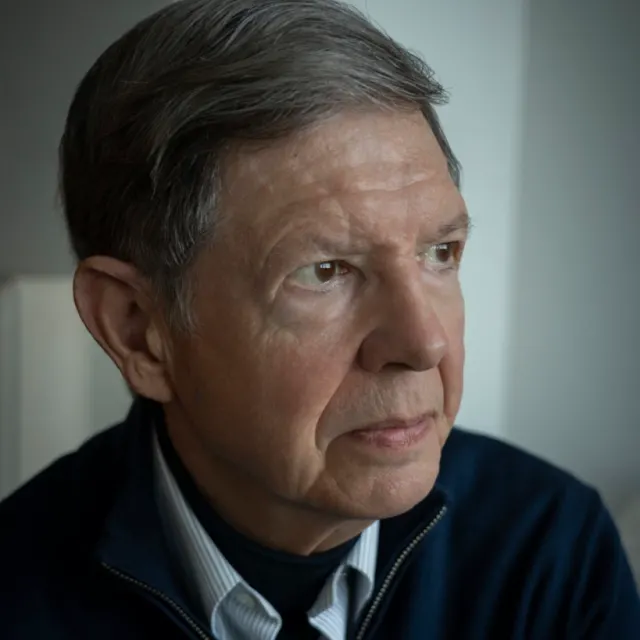
Mikhail Khordorkovsky

Khordorkovsky was born in Moscow in 1963 to a Jewish father and an Orthodox Christian mother, both his parents were engineers. He graduated with a degree in chemical engineering in 1986. As a young man, he was a fervent patriot, a committed communist and well introduced in the Soviet apparatus. In 1988 he founded a private bank and was a financial advisor to Boris Yeltsin. In the early 1990’s, he took advantage of runaway inflation to make a fortune in currency trading. In the mid 1990’s he bought 78% of the shares of Yukos, an oil conglomerate for 318 million dollars. (The shares were worth 5 billion dollars.) By 2003, the shares were worth $16 billion, and Khordorkovsky was the richest man in Russia. That same year, during a television appearance with Putin, he criticised the endemic corruption in Russia. He was then arrested for tax fraud and in 2005 he was sentenced to nine years in prison. Meanwhile, Yukos lost most of its value and was acquired by Rosneft, a state-owned company. In 2010, he was convicted of embezzlement and money laundering and his sentence was extended to 2017. Most independent observers, including Amnesty International, consider Khordorkovsky to be a prisoner of conscience.In prison he wrote of the need to “turn left” and adopt more liberal views in Russian governance, and he engaged in several hunger strikes for the benefit of fellow celebrity prisoners. In July 2014, the Permanent Court of Arbitration in The Hague ruled that the Russian government deliberately bankrupted Yukos to seize its assets and ordered it to reimburse Yukos shareholders a sum of approximately $50 billion. No such payments have been made. On 20 September 2014, Khodorkovsky officially relaunched the Open Russia movement , with a live teleconference broadcast with pro-democracy opposition and civil society activist groups in several Russian cities.  According to media reports around the time of the launch, Open Russia was intended to unite pro-European Russians in an attempt to challenge Putin’s grip on power. Khodorkovsky said the organization would promote independent media, political education, the rule of law, support for activists and journalists, free and fair elections and a program to reform Russia’s law enforcement and justice system. He has also said that the power should be shifted from Putin to parliament and the judiciary. He lives in London.

In How to Slay a Dragon, Khodorkovsky does not really address his ‘How to’ question except to suggest that it may happen from peaceful protest or uprising, what he calls a ‘revolution’. He is also vague about any role he might have in a future Russian government; he insists that he just wants to argue the case for a European style government in Russia. Nonetheless, it is clear that one doesn’t write a book as clear, comprehensive and as well argued at this one without having political ambitions. If it were up to me, I would put him in a high office. The strength of this book lies in the thoroughness of its coverage of the possibilities of government: empire vs nation state; superpower vs national interest; democracy vs autocracy; monopoly vs competition; how much freedom of speech; left or right inclination; justice vs mercy; parliamentary vs presidential republic. Khodorkovsky comes down on the liberal side of the available choices, and he is clear that Putin must go, Russia must change and victory should belong to Ukraine. The author makes these choices based on what is best for Russia, and he argues each case from the perspective of how the Russian culture is now, how it was historically, and how it should be for Russia’s and the world’s benefit. His knowledge of the details of Russian history is impressive. A very good read.

Endings

There was an interesting email the other day from Harry Bingham of Jericho Writers.

Harry said, “Beginnings are important. If you don’t get your reader onto the story-train in that opening chapter, you’ve basically lost the game before it’s really started.

And also: if you don’t set expectations just so in those opening pages, you’re likely to confuse your reader or upset them later in the book – another way to lose the game.

But endings matter too. To a huge extent, they set an architecture for the whole book. They determine the way you understand it.

Endings matter at least as much as beginnings and the reason I don’t talk about them much is simply that endings mostly write themselves.

I don’t know about your experience, but my endings generally pass in a rush. It’s as though the entirety of the preceding novel is there to allow me to write the final chunk in a blaze of understanding and joy.

The understanding is: I know my characters. I know how all my little plot intricacies need to play out. I know what the grand finale needs to deliver. The prior 90,000 words involved me figuring those things out. The last 20,000 are my reward.

The joy is partly the ease of writing. But it’s also the joy of completing the arc. It’s like writing one long punchline, where you already know that the joke is going to land. I’ve certainly had some spectacularly happy writing sessions that haven’t involved endings. But mostly – the writing sessions I remember with most pleasure involve endings. Words flowing and the text satisfying.

So maybe you don’t need help with the endings. I think there’s an argument that if the preceding story has worked properly, the ending should just fall into place. But here, for what it’s worth, is a checklist to keep at hand …

Exterior drama

Have you properly completed your exterior drama? In the kind of books I write, that’ll typically involve some good splash of violence – a sinking boat, a fight, a burning building. But that’s not necessary. In Pride and Prejudice, the exterior ‘drama’ involves a naïve girl eloping with Mr Wrong and the Romantic Hero doing (off-screen) what Romantic Heroes are there to do. The off-screen quality of that drama is probably a little underweight for a modern audience, but so long as you have some dramatic action that’s well suited to your genre and readership, you’re fine.

Interior drama

The flipside of the exterior action needs to be some serious internal pressure. In a standalone novel, that pressure needs to have the sense of being pivotal – life-altering, life-defining. In a series novel, you can’t quite get away with a new life-defining moment with every installment, but the stakes still need to be high. Series characters take a bit of a battering as a result.

Most books, not all, will involve a romantic relationship. And – of course – the pressures of your grand finale are also pressures that test and define that relationship. You definitely don’t have to kiss and get married at the end of every book. I’ve ended a book with my protagonist ending what had seemed like a strong and constructive relationship. But when your character enters the furnaces of your ending, everything is tested, everything will either prove itself durable or fallible. The relationship can’t simply be as it was before. (Again, series characters need to play those things differently, but ‘differently’ doesn’t mean you can just ignore the issue.)

Other key friendships / relationships

Of course, there are a ton of other relationships that build up over the course of a book. Those might be best-friend type relationships, or children, or parents. They can (importantly) be office colleagues, which sounds dull but they can matter too. My detective’s relationship with her boss and other colleagues is just quite central to the architecture of her life and the books. These relationships too don’t need profound alteration necessarily, but they need some token of ending. A boss hugging your character (when he/she never normally would), or talking about a promotion, or offering a holiday – those things sound trivial, but they can define something important about everyone’s relationship to what has just happened. You don’t necessarily need much here. Half a page? A page? That might be ample. But if you book misses that page, it’ll never quite satisfy as it ought to.

Mystery resolution

Most books – not just crime novels – will often have some kind of mystery at the heart. That mystery will probably be unfolded in your grand action-climax, but that won’t always be true. Modern fiction has (rightly) moved away from that moustache-twirling final chapter where the Great Detective reveals the mystery to a completely static audience. But it’ll often be the case that little questions and niggles remain. Those things need to be addressed. It’s even OK if they’re addressed by saying, “We’ll never know exactly how / why / who X.” But you need to resolve your mysteries or acknowledge that you haven’t.

Movement

And, since we’ve just dissed static and moustache-twirling final chapters, I’d add that maintaining some kind of motion still matters at the end. Just as you’ll want to move settings fairly frequently in your middle chapters, I think you’ll want to do the same at the end. Physical motion is still a good way to convey story motion.

The closing shot

And –

There’s a theory in film-structure that the opening shot should show the ‘Before’ state of a character and the closing shot should show the ‘After’ – where the before/after vignettes somehow encapsulate the alteration brought about by the story. So to take the (vastly excellent) Miss Congeniality movie, the opening shot shows Sandra Bullock as goofy, unkempt, and without close female friends. The closing shot shows her kempt, still her, but now with close female friends. That’s the key transition in the movie.

I don’t quite like the mechanical nature of these movie plotting guides, but I do think it’s worth reflecting on the closing shot. What are you wanting to show? What’s the image of your character that you want to leave with your reader? In one of my books, a girl had been long separated from her father. Fiona’s last act in the book is to rejoin the two. She’s not physically present when the two meet – she’s set up the meeting, but remains in a car outside, watching. And that maybe is just the right tone for the book. Fiona plays this almost Christ-like role – suffering for others, undoing wrongs – but nevertheless remains on the outside of ordinary human society. That point isn’t made in any direct way, but it doesn’t have to be. An indirect point lingers longer than one made more crudely.”

Review: Truth to Power: My Three Years Inside Eskom

Eskom used to be a customer of mine when I worked for Westinghouse in the 1970’s. I took several trips to South Africa, but never got any business. Retrospectively, possibly because Westinghouse didn’t pay bribes. Eskom’s current severe load shedding attracted me to this book by André de Ruyter, the CEO of Eskom during the three year period 2020 -2022.

André de Ruyter must have written this book in a hurry. He resigned as CEO of Eskom in late February this year, and the book was distributed in late August. That’s six months to strike a deal with the publisher, Penguin, write the book, have it edited, publicised and published. At just over 300 pages it is filled with facts that he would have had to look up. As most novels have a ‘gestation time’ of at least a year, it is a remarkable feat to publish this book in six months.

de Ruyter got the top job at Eskom in January 2020. He says that 28 presumably qualified black candidates turned down the job. This gives an indication of how tough the job was. Eskom was shedding load regularly, deeply in debt, owned by the South African state, subject to political manipulations, and racked by corruption. de Ruyter says he took the job because it represented a challenge, and out of patriotism to South Africa and not for the low compensation.

In the book, de Ruyter describes the difficulties he faced as CEO:

  • Eskom had no reserve generating capacity, owing to years of indecision by the government. Government regulation made it impossible for privately owned generation to enter the market. The government wanted 100% control of the electric power market.
  • Eskom’s tariffs were below cost, and the government resisted efforts to raise tariffs, on the basis that cheap energy was desirable, but this only led to a huge debt mountain.
  • Municipalities did not pay the bills for power delivered to them. They had to be taken to court.
  • The government was biased in favor of coal fuel. This made it difficult to plan for renewables for power generation. Moreover, the quality of available coal was deteriorating, contributing to maintenance and output problems.
  • Corruption was rife in the purchasing of coal fuel oil and goods. A major, privately funded investigation found that senior ANC members were involved in corruption.
  • Local police did not co-operate in the prosecution of criminal employees
  • Violent threats were made against whistle blowers, including the CEO who had to have body guards.
  • The CEO was served a cup of coffee that had been laced with cyanide
  • The skills base was badly eroded. Regulations made it difficult to re-hire skilled white workers and difficult also to dismiss under performing black workers.
  • The average age of the power stations was more than forty years, and they had not been subject to routine maintenance
  • Regulations made it difficult to obtain OEM spare parts directly. This opened the possibilities of corruption
  • Sabotage of operating plant for political ends was not uncommon.

In spite of these challenges, de Ruyter did accomplish quite a lot:

  • a plan to transition to a low carbon future with privately- and Eskom-owned renewable generation
  • a culture change in Eskom: loyalty, accountability, and values based
  • the division of Eskom into three entities: generation, transmission and distribution

de Ruyter resigned when a new chairman was appointed with a brief to run a ‘hands on’ board. This led to management being undermined and second-guessed by amateurs at every turn. Unfortunately, that chairman is still in place.

This book will have caused consternation within the ANC. There are many specific accounts of named government leaders taking decisions and actions which are contrary to the interests of the country.

I have two criticisms of this book. First, it is not well organised. Topics and the timeline are frequently switched around. The whole story still gets told, but in a somewhat disjointed way. Second, de Ruyter lectures the reader frequently about why his management style and techniques are right. They are right, but the average reader will not need the lecture.

This book is a very valuable piece of work. It exposes the inherent weaknesses of a naive, Marxist-oriented government, shows the risks in government ownership of business, and makes the undoubtable case for competent, modern management.

Page One

In yesterday’s email, Harry Bingham , whose company, Jericho Writers, is running a First 500 Novel Competition, provided some feedback from his reading of the submissions. His comments all have to do with Page One, of course, which includes the first 500 words.

“This last week, I’ve spent quite a bit of time looking at your opening chunks. A few things struck me, including how amazingly common it is for people to have multiple time threads on their very first page. Normally, we think a book starts at time T0, then proceeds in a logical sequence to time T100. Contemporary readers are, of course, well used to more complex schemes – multiple time strands, some flashbacks, perhaps a flashforward in a prologue and so on. But the only real purpose of your first page is to get your reader into your story-train. Unless your reader has chosen to embark with you, nothing else can happen. And it’s just astonishing how many impediments we writers put in the way of readers climbing on board. One of the most common issues is that people insert multiple timelines into their first page. So one (otherwise perfectly capable) opening chunk ran like something this: Para 1: Very short para saying what happened at the end of the conference, let’s say Sunday evening. Para 2: Step back to summarise the weekend that had just elapsed. Para 3: Step back to the Friday drinks reception. Para 4: Step back again to what arrival had been like on Friday morning. Written out like that, it’s nuts – but as I say, multiple timelines on the first page are genuinely common. And each time you shift the time, the reader has to mentally relocate. (“Where are we now? We were on Sunday night, I think, but we’re surely now talking about the weekend generally. OK, so yes, we’re in a new place. Righty-ho. Let’s see if I can make sense of what’s happening now.”) Each of those relocations is a small mental challenge to the reader and each of those challenges makes it more likely that the reader’s going to think, “You know, there are other books out there which are going to make me work less for the same rewards.” Perplexing chronology is a common problem. A lot of same-sounding names and relationships all laid out on page 1 is also challenging. Ditto anything without a clear physical setting (such as for example, the reflections of a character about something you don’t properly understand.) Or prologues than run to literally no more than 2-3 paragraphs, before the book starts all over again. The key question to ask yourself is simply this: am I making it easy or hard for a reader to enter my book and get to grips with it? If you are writing high-end literary work (and I mean the sort of stuff that could win the Booker Prize), you have my permission to make things complicated. In all other cases, you have to seduce your reader. Make their life easy and rewarding. And talking of which … If it sounds like writing Elmore Leonard famously said, that ‘if it sounds like writing, I rewrite it.’ I got a deeper appreciation of what he meant when I read your opening chunks last week. Part of the problem, I think, is that we have a “First 500” Novel Competition and those competitions encourage a somewhat flashy response.
For what it’s worth, I doubt if any of my books ever would have been seriously considered for a prize in a “first 500” type competition. My books just don’t choose to reveal much in the first page and a bit. Why would they? But the problem goes deeper. Writers are tempted to write flashily, to show off, to draw praise. And, OK, none of us mind a bit of praise – but, please, not at the expense of clarity. So lots of you wrote something that had this kind of tenor: They were only kids, yes, but kids who could run the universe. Jake could ride the lip of the slide and fly. Crash landings happened sometimes, but even the bruises were proof of something. Jonno had his bruises too, from similar antics. Blood brothers. The universe twins.
Yes, there’s some flashy writing going on there. But what the hell does it mean? How does the reader get on board with a story, when it’s simply unclear what’s happening? Here’s the same kind of thing, delivered in a way that makes sense: It was the hardest trick in the playground, but Jake had mastered it. Ride the skateboard down the raised metal lip that formed the edge of the slide, then fly three or four feet through the air before hitting the scuffed-up dirt at its foot. Jake was confident now, though he’d collected enough bruises over those summer months … [and so on]
You’re more likely to elicit applause with the first of those two chunks, but you’re a damn sight more likely to get readers with the second. So when you’re writing your opening chunk – whether for Feedback Friday, or the First 500 Novel Competition, or just because you want to write a saleable book – please don’t ask, “Does this sound like great writing?”. Ask: Is this clear? Am I obstructing the reader? Can the reader get easily onto my story-train? If it sounds like writing, you really might want to rewrite it.

How NOT to Begin a Novel

We’ve all seen plenty of advice about how to begin a novel, but Chuck Chambuchino has an article on the Writer Un-Boxed website, dated April 22, 2023, in which he lists agents’ advice on how NOT to begin a novel. Most of the advice is quite sensible: some is amusing.
 Chuck Sambuchino is a freelance editor of query letters, synopses, book proposals, and manuscripts. As an editor for Writer’s Digest Books, he edits the Guide to Literary Agents and the Children’s Writer’s & Ilustrator’s Market. His Guide to Literary Agents Blog is one of the largest blogs in publishing. His own books include the bestselling humor book, How to Survive a Garden Gnome Attack, which was optioned by Sony Pictures.

Chuck Sambuchino

“No one reads more prospective novel beginnings than literary agents. They’re the ones on the front lines — sifting through inboxes and slush piles. And they’re the ones who can tell us which Chapter 1 approaches are overused and cliche, as well as which techniques just plain don’t work. Below find a smattering of feedback from experienced literary agents on what they hate to see the (in) first pages of a writer’s submission. Avoid these problems and tighten your submission!

FALSE BEGINNINGS

“I don’t like it when the main character dies at the end of Chapter 1. Why did I just spend all this time with this character? I feel cheated.”

Cricket Freeman, The August Agency

“I dislike opening scenes that you think are real, then the protagonist wakes up. It makes me feel cheated.”
– Laurie McLean, Foreword Literary

IN SCIENCE FICTION

“A sci-fi novel that spends the first two pages describing the strange landscape.”

Chip MacGregor, MacGregor Literary

PROLOGUES

“I’m not a fan of prologues, preferring to find myself in the midst of a moving plot on page 1 rather than being kept outside of it, or eased into it.”

Michelle Andelman, Regal Literary

“Most agents hate prologues. Just make the first chapter relevant and well written.”
– Andrea Brown, Andrea Brown Literary Agency

“Prologues are usually a lazy way to give back-story chunks to the reader and can be handled with more finesse throughout the story. Damn the prologue, full speed ahead!”
– Laurie McLean, Foreword Literary

EXPOSITION/DESCRIPTION

“Perhaps my biggest pet peeve with an opening chapter is when an author features too much exposition – when they go beyond what is necessary for simply ‘setting the scene.’ I want to feel as if I’m in the hands of a master storyteller, and starting a story with long, flowery, overly-descriptive sentences (kind of like this one) makes the writer seem amateurish and the story contrived. Of course, an equally jarring beginning can be nearly as off-putting, and I hesitate to read on if I’m feeling disoriented by the fifth page. I enjoy when writers can find a good balance between exposition and mystery. Too much accounting always ruins the mystery of a novel, and the unknown is what propels us to read further.”
– Peter Miller, PMA Literary and Film Management

“I dislike endless ‘laundry list’ character descriptions. For example: ‘She had eyes the color of a summer sky and long blonde hair that fell in ringlets past her shoulders. Her petite nose was the perfect size for her heart-shaped face. Her azure dress—with the empire waist and long, tight sleeves—sported tiny pearl buttons down the bodice. Ivory lace peeked out of the hem in front, blah, blah.’ Who cares! Work it into the story.”
– Laurie McLean, Foreword Literary

STARTING TOO SLOW

“Characters that are moving around doing little things, but essentially nothing. Washing dishes & thinking, staring out the window & thinking, tying shoes, thinking.”

Dan Lazar, Writers House

“I don’t really like ‘first day of school’ beginnings, ‘from the beginning of time,’ or ‘once upon a time.’ Specifically, I dislike a Chapter 1 in which nothing happens.”

Jessica Regel, Jean V Naggar Literary Agency

IN CRIME FICTION

“Someone squinting into the sunlight with a hangover in a crime novel. Good grief — been done a million times.”

Chip MacGregor, MacGregor Literary

IN FANTASY

“Cliché openings in fantasy can include an opening scene set in a battle (and my peeve is that I don’t know any of the characters yet so why should I care about this battle) or with a pastoral scene where the protagonist is gathering herbs (I didn’t realize how common this is).”

Kristin Nelson, Nelson Literary

VOICE

“I know this may sound obvious, but too much ‘telling’ vs. ‘showing’ in the first chapter is a definite warning sign for me. The first chapter should present a compelling scene, not a road map for the rest of the book. The goal is to make the reader curious about your characters, fill their heads with questions that must be answered, not fill them in on exactly where, when, who and how.”
– Emily Sylvan Kim, Prospect Agency

“I hate reading purple prose – describing something so beautifully that has nothing to do with the actual story.”
– Cherry Weiner, Cherry Weiner Literary

“A cheesy hook drives me nuts. They say ‘Open with a hook!’ to grab the reader. That’s true, but there’s a fine line between an intriguing hook and one that’s just silly. An example of a silly hook would be opening with a line of overtly sexual dialogue.”

Daniel Lazar, Writers House

“I don’t like an opening line that’s ‘My name is…,’ introducing the narrator to the reader so blatantly. There are far better ways in Chapter 1 to establish an instant connection between narrator and reader.”

Michelle Andelman, Regal Literary

“Sometimes a reasonably good writer will create an interesting character and describe him in a compelling way, but then he’ll turn out to be some unimportant bit player.”

Ellen Pepus, Signature Literary Agency

IN ROMANCE

“In romance, I can’t stand this scenario: A woman is awakened to find a strange man in her bedroom—and then automatically finds him attractive. I’m sorry, but if I awoke to a strange man in my bedroom, I’d be reaching for a weapon—not admiring the view.”

Kristin Nelson, Nelson Literary Agency

CHARACTERS AND BACKSTORY

“I don’t like descriptions of the characters where writers make them too perfect. Heroines (and heroes) who are described physically as being virtually unflawed come across as unrelatable and boring. No ‘flowing, wind-swept golden locks’; no ‘eyes as blue as the sky’; no ‘willowy, perfect figures.’ ”

Laura Bradford, Bradford Literary Agency

“Many writers express the character’s backstory before they get to the plot. Good writers will go back and cut that stuff out and get right to the plot. The character’s backstory stays with them—it’s in their DNA.”
– Adam Chromy, Movable Type Management

“I’m turned off when a writer feels the need to fill in all the backstory before starting the story; a story that opens on the protagonist’s mental reflection of their situation is a red flag.”

Stephany Evans, FinePrint Literary Management

“One of the biggest problems is the ‘information dump’ in the first few pages, where the author is trying to tell us everything we supposedly need to know to understand the story. Getting to know characters in a story is like getting to know people in real life. You find out their personality and details of their life over time.”

Rachelle Gardner, Books & Such Literary

Use of Misdirection

Robert McCaw has an article dated June 7, 2023 on the Readers Digest site which explores the use of misdirection on plot twists and surprise endings. He has some good advice.

Robert McCaw is the author of Fire and VengeanceOff the Grid, and Death of a Messenger. McCaw grew up in a military family, traveling the world. He is a graduate of Georgetown University, served as a U.S. Army lieutenant, and earned a law degree from the University of Virginia. He was a partner in a major international law firm in Washington, D.C. and New York City, representing major Wall Street clients in complex civil and criminal cases. Having lived on the Big Island of Hawaii, McCaw imbues his writing of the Islands with his more than 20-year love affair with this Pacific paradise. He now lives in New York City with his wife, Calli.

Robert McCaw

“Misdirection in fiction has a long and hallowed history, from Sophocles’ tragedy Oedipus Rex to Shakespeare’s Othello to the revelation of Darth Vader’s identity in Star Wars. J. K. Rowling opined that “misdirection is the key to a good story.” Margaret Atwood refers to misdirection as a “powerful tool.”

As the author of the Koa Kāne Hawaiian Mystery series, I love to incorporate misdirection in my novels. It works like magic to lead the reader to anticipate one scenario only to be surprised when something dramatically different unfolds. But misdirection needs careful crafting and reinforcement to be effective.

Think of two stories involving the same characters and settings—one that progresses step by step to a logical conclusion and a second version that arrives at a diametrically different ending—then subtly mix them together. Let the first version lead the reader down the wrong path while characters expose thoughts and take actions, dropping hints that serve as the fulcrum for the transition to what will be the surprise ending taken from the second story.

Misdirection also requires subtlety. The reader will feel crassly manipulated if the surprise ending arrives without sufficient hints or foreshadowing. Ideally, good misdirection makes the reader look back at various telltale clues peppered throughout the story, hopefully leading them to admire the author’s skill in setting up and obscuring the ultimate surprise.

Primary plot misdirection leads to surprise endings, but the technique can also facilitate twists in the main plot or subplots. Such twists hopefully keep the reader engaged, but like too many intertwined stories or too many characters, too much misdirection can obscure the principal themes and may confuse the reader. So, too much secret sauce can spoil the dish!

Merging the conflicting narratives requires deftly manipulating the tools of misdirection. These include creating characters who pursue false assumptions, are driven by hidden motives and mislead or lie to cover up their faults. These players may also have faulty memories, speak ambiguously, take unexpected actions, and show different faces in different settings. Their common human foibles—such as insecurity, arrogance, greed, selfishness, fear, jealousy, family-relationship secrets, or misplaced loyalty—help hide the ball until the final reveals. Red herrings—clues heading nowhere—can likewise often lead readers astray but must be used wisely.

For example, false assumptions and lies abound in Treachery Times Two, the fourth in the Koa Kāne series. One of the characters has a made-up background, and secret jealousy poisons another’s friendship. All these deceptions are critical to the surprise ending, but all present clues about what is to come.

While character traits are critical in setting up persuasive misdirection, setting, action, ambiguous evidence, conflict, and circumstances create opportunities both to reinforce the impression you want the reader to take away and to provide hints of your future reveal.

For example, in Retribution, the fifth and newest book in the Koa Kāne series, the knife used in an alleyway murder and the rifle used in an attempted assassination carry implications designed to mislead the reader.

In detective stories and police procedurals, bureaucracy often serves as an errand boy for misdirection. Messages get lost, forensic technicians miss clues, competing assignments, and departmental politics—what Michael Connelly labels as “high jingo” in the Harry Bosch novels—add countless opportunities for unexpected twists.

Another of my favorite techniques is the false or penultimate ending. In this case, the narrative comes to a neat close. The protagonist solves the mysteries and identifies the culprit. There are no loose strings. The story is over, except it’s not. Instead, another chapter surprises the reader with a new and different take on the ending, often creating the opportunity to begin a new story, perhaps in another book. And who knows, perhaps now the final ending of Retribution may even surprise you.”

Review: The Marriage Portrait

I recently bought a copy of The Marriage Portrait by Maggie O’Farrell, having been attracted by the brief description of a historical novel involving a marriage in XVI century Italy, and by the author’s biography.

Maggie O’Farrell is the author of Hamnet, winner the Women’s Prize for Fiction 2020, and the memoir I am, I am, I am, both Sunday Times  no. 1 bestsellers. She was born in Northern Ireland in 1972 and raised in Wales and Scotland. Her novel The Hand that First Held Mine won the 2010 Costa Novel Award, and The Distance between Us won a Somerset Maugham Award. She currently lives in Edinburgh.

Maggie O’Farrell

The Marriage Portrait is set in XVI century Florence and Ferrara, Italy. The protagonist is Lucrezia, the fifth child of the Duke of Tuscany, a somewhat rebellious child, who stroked a captured tiger in the basement of her father’s castle and was thought to have charmed the beast. At the age of thirteen she was betrothed to Alfonso II, Duke of Ferrara who was more than ten years her senior. He had previously been betrothed to an older sister who died. Her marriage took place when she was sixteen in Florence and she moved to Ferrara as a young duchess with a maid, Emilia, who is two years older and the daughter of her childhood nanny. There is political intrigue in Ferrara, where Alfonso’s mother has taken up a hostile alliance. One of Alfonso’s two sisters, Elizabetta, is having an affair with the captain of the palace guards, Ercole Contrari, and the other sister, Nunciata, seems hostile to Lucrezia. When Alfonso discovers the love affair between Elizabetta and Ercole, he orders that Ercole be strangled by the brutal Baldassare, the dukes cousin, while Elizabetta is required to watch. It becomes clear to Lucrezia that she is required to produce a male heir for Alfonso. She must perform her marital duty frequently. Her husband sometimes strikes her as cruel and distant and warm and loving at other times. When the couple move to a remote hunting lodge, Lucrezia is convinced that her husband intends to murder her. He refers to a marriage portrait of Lucrezia as “my first duchess”. I won’t give away the ending which is quite satisfactory, but I will say that the real first duchess, on whom Lucrezia is based, was reported to have died of a “putrid fever”, but there were rumors that she was murdered by her husband. The real Alfonso II married twice more; neither duchess produced an heir.

I have only one major criticism of this novel, and that is that it is too long. It is 432 pages long, but it could be trimmed without any significant loss and it would gain urgency. Ms O’Farrell likes to describe her settings in poetic detail which makes them beautifully clear but a bit laborious. The plot of the novel is excellent. One is convinced of being immersed in XVI century Italy with characters who are living like royalty and servants can at best survive. The values and traditions of the times are captured as well. There is a frequent transition between a short chapter which is set in the final hunting lodge and an earlier, longer chapter containing events leading up to the end. This sequencing can be confusing, and I’m not convinced it is necessary to maintain the ‘is he really going to kill me?’ tension.

Use of Crying

Benjamin Perry has an article on Writer’s Digest dated May 25, 2023 on how crying can shape a story and a character. His analysis strikes me as particularly useful to writers.

Benjamin Perry is a minister at Middle Church and an award-winning writer whose work has appeared in outlets like The Washington PostSlateSojourners, and Bustle. He has a degree in psychology from SUNY Geneseo and an MDiv from Union Theological Seminary.

Mr Perry says, “Why do characters cry? At face value, it’s an easy question: They cry because people cry. Authors want their creations to feel life-like, so just as characters share our laughter and struggle, our hopes and wild dreaming, they must share our weeping, too. But tears, like any action, can feel authentic or forced. When crying is handled poorly it can feel incidental at best and, at worst, a disingenuous attempt to make the reader feel something that the writer has not earned. However, when tears are artfully woven into the narrative, they can provide unparalleled emotional complexity and catharsis for the reader.

“In the two years I spent writing Cry, Baby: Why Our Tears Matter—a nonfiction book about the science and social ethics of crying—I was particularly attuned to how authors portrayed weeping in the fictional books I read. The book devotes an entire chapter to the way tears function in novels, myths, and sacred texts, but here I’ll condense a few of the bigger lessons I learned about how to effectively portray sobbing in a story.

1. Crying Isn’t Just About Sadness

“A common pitfall I see is writers only linking tears to sorrow. Obviously, sadness is a significant reason why people cry, but—even when it’s a principal cause—real emotions are usually more layered and multivalent. Often, it’s not just the sadness that makes our eyes well up, it’s frustration with our situation, anger at unjust circumstances, our longing for something different.

“There’s a scene in Torrey Peters’ wonderful novel Detransition, Baby where one of the main characters sits weeping on the floor of her ex-partner’s closet. Certainly, loss from the breakup is part of why she’s crying. But what truly gives the scene its power is how that loss mingles with her fragile hope about the possibility of becoming a mother—and the anger she feels about receiving what she longs for from someone she feels betrayed her. If crying is used as lazy shorthand for “sad,” we lose that emotional richness.

2. Weeping Helps to Cross a Threshold

“Crying is startlingly effective as an action to bring a character into a new place—either physically or in their heart. One of the most famous examples of this are the tears that Alice weeps when entering wonderland. Growing giant, she weeps a sea into which she later becomes literally awash. She must travel through that soggy morass to enter the door to a different world, a striking metaphor for the character’s emotional journey.

3. Link Tears to Transformation

“While tears are often connected to a particular emotion (anger, pride, joy, etc.), they’re also extremely effective to show how a character is changing or has changed. The archetypal example of this, for me, is Ebenezer Scrooge. Throughout A Christmas Carol, Charles Dickens punctuates Scrooge’s ghostly visions with frequent tears, to show how the experience is changing him. This all culminates on Christmas morning when Scrooge leaps from his bed, “laughing and crying in the same breath,” upon learning that there is still time for him to choose a different future.

4. Crying Shouldn’t Only Happen Where You Expect

“Because of social forces that shape who is more comfortable crying openly, there are many cultural misconceptions about crying. Men, for example, are far less frequently depicted crying in our stories. (And the absence of those portrayals is likely part of why so many men only feel comfortable crying in private.) There is so much power in subverting these expectations!

“It’s not a book, but one of my favorite recent depictions of masculinity is the titular character in Ted Lasso. The show follows an ebullient soccer coach who motivates his characters through praise and kindness. Part of what makes the character so vibrant, however, is the way he’s shown weeping in private moments—often literally in the dark. It’s the tension between the public joy and quiet sorrow that gives Ted so much pathos.

5. There Are Many Types of Tears

“We cry for so many reasons: Awe at the majesty of a forest; pride at accomplishing something long-awaited; confusion when something happens that we don’t expect; even cunning tears wielded to deceive. Part of the beauty and mystery of tears comes from the way that they refract the fullness of our humanity. So, embrace that complexity!

“The more you’re able to use tears in multifaceted ways, the nearer they will strike reality—and the more your reader will resonate with what’s on the page. Similarly, there are lots of ways we cry: a single glimmering tear, a silent stream, or the howling sorrow of full, body wracking sobs. Matching physical embodiment to the narrative event will cultivate realism, helping your characters come alive.”

Review: Tropic of Cancer

As you may know, this novel by Henry Miller was banned in the US as obscene for twenty-seven years after it was first published in Paris in 1934. Having never read any of Henry Miller’s work, I decided to start with this one. Now, having read it, I would say that it is not obscene (although it is occasionally explicit and does not shy away from bad language), it is, in my opinion, misogynistic. Henry Miller has little respect for women as equals.

Henry Miller was born in New York in 1891. Surprisingly, he attended City University for only one semester. (He writes with considerable skill and with an astonishing vocabulary.) He worked in personnel at Western Union for ten years before devoting himself entirely to writing. He developed a semi-autobiographical, stream of consciousness style. He lived in Paris during the 1930’s, in Greece briefly and in California until his death in 1980. He was married five times. His major works, aside from Tropic of Cancer, include The Rosy Crucifixion, Black Spring, Tropic of Capricorn and The Colossus of Maroussi.

Henry Miller

Tropic of Cancer is set in Bohemian Paris during the 1930’s when Miller was a destitute, struggling writer there, having separated from his second wife, whom he recollects warmly. The book is written in the first person, as Henry Miller, and is a commentary on the human condition from a low-down, devil-may-care perspective. Many of the characters are thinly disguised friends and associates of Miller’s. The narrative is disorderly, sometimes in the present and sometimes a recollection of past events. The subjects are the peculiarities of the characters, their influences on one another, the scarcity of money, various venues and scenes in the city, sexual encounters, writing, philosophy, and employment, all revealed unvarnished and with clarity. Millers’s writing is characterised by an eagerness to reveal all, and he views his desperate financial circumstances and challenging relationships with startling optimism.

Tropic of Cancer is clearly a literary milestone in its construction, style, subject and narrative. Strangely, perhaps, it makes an engaging read. One wants to discover what Henry will discover next. For me, there is no overarching theme or message, and if one tried to construct a philosophy from the events, it would probably be self defeating. For example, Miller seems to view the church disdainfully, but his observations are congruent with Christian theology. The writing is extraordinary its clarity and erudition. While I take strong exception to Miller’s view of the role of women, I have to admire the way he has described his experiences in Bohemian Paris in the 30’s. Is it a great literary treasure? I think not. Is it a book one should read. Yes!

Review: The Maid

The second novel – a crime novel – that my wife and I listed to during the drive down to Sicily was The Maid by Nita Prose and narrated by Lauren Ambrose. It is certainly an entertaining book, though when we started to listen I wasn’t expecting a crime novel; I was expecting a romance or an adventure. It has sold over a million copies and won a couple of awards.

Ms Prose says, “As for my professional life, I work in the publishing industry. I began years ago as an intern, photocopying edited manuscripts and secretly snooping the fascinating margin conversations between editors and writers. Currently, I’m vice president and editorial director at Simon & Schuster in Toronto, Canada, where I have the privilege of working with an incredible array of authors and publishing colleagues whom I credit with teaching me, manuscript by manuscript, book by book, the wondrous craft of writing.”

Nita Prose

The central character is Molly, who is a maid in the Regency Grand Hotel, a job to which she feels she was born and is obsessively dedicated. She likes nothing more than restoring a filthy, messy room to perfection. She has such an orderly, Polly-Anna-ish mind that I thought she has learning disabilities until I learned that she had completed some university level courses. Molly lived alone with her grandmother, who has a similar character, is full of simple-minded advice, and who dies halfway through the book. The other characters are a supervising maid, who is lazy and apt to purloin tips that have been left for Molly. There was a boyfriend who stole a large nest egg which Molly’s grandma had been saving for them. Molly’s current crush is the hotel bartender, who has suspicious friends and treats her with indifference. The hotel manager is a harried soul who treats Molly with respect, and there is the hotel dishwasher, a conscientious Mexican worker whose immigration papers are not in order. Mr Black, an older, very rich, disagreeable man in doubtful businesses, and his younger, trophy wife are frequent guests at the hotel. Molly strikes up a friendship with the wife, and Molly finds Mr Black dead in his room. It was murder and Molly is the prime suspect according to a zealous police detective. Fortunately, the doorman has a daughter who is a very clever criminal lawyer and who devises a scheme to prove Molly not guilty and to reveal the actual perpetrator. A drugs operation involving the bartender, Mr Black and assorted outside thugs is discovered. Molly knows who actually killed Mr Black, but for personal, sympathetic reasons, she does not reveal the person at the trial.

Certainly it is a clever device to create a character who goes against our reflex notions of a hotel maid: invisible, unmotivated and slap-dash. This strange character wins our sympathy, though perhaps a little reluctantly in my case. For me, Molly is a little too dedicated to her simple-minded perfectionism to be fully credible. Perhaps if Molly had some learning disabilities she would have worked better for me. The writing is lively, though not of literary quality, nor should it be. The scenes and characters are clear. The plot is well conceived, and tension is maintained throughout. For me, Molly’s motivation not to reveal the true killer was not strong enough, and in the real world the killer would have been identified.