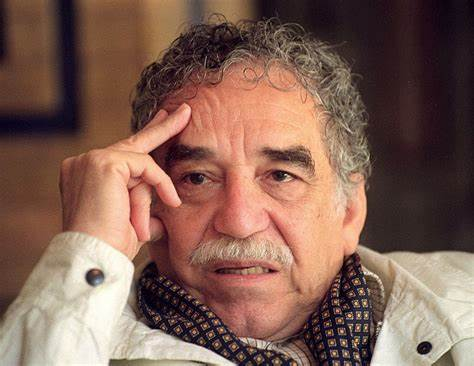
Under the Books section of the Guardian’s website, there is a So You Want to Be a Writer Page which has advice from prominent authors, living and dead. One piece of advice I found particularly appropriate was from Gabriel García Márquez on creating characters.
Gabriel José de la Concordia García Márquez (6 March 1927 – 17 April 2014) was a Colombian novelist, short-story writer, screenwriter, and journalist, known affectionately as Gabo or Gabito throughout Latin America. Considered one of the most significant authors of the 20th century, particularly in the Spanish language, he was awarded the 1972 Neustadt International Prize for Literature and the 1982 Nobel Prize in Literature. He pursued a self-directed education that resulted in leaving law school for a career in journalism. From early on he showed no inhibitions in his criticism of Colombian and foreign politics.
Gabriel García Márquez
He says, “Writing a character into being is like meeting someone you want to fall in love with. You don’t care (yet) about the facts of his/her life. Don’t overload us with too much information. Allow that to seep out later. We are attracted by a moment in time – a singular moment of flux or change or collapse – not by grand curricula vitae. So don’t generalise. Be specific. Go granular. The reader must fall in love with your characters quickly (or indeed, learn to hate them quickly).
We have to have something happen to them: something that jolts our tired hearts awake. Make it traumatic, make it mournful, make it jubilant, it doesn’t matter – just allow your reader to care for the physical body that your words evoke, the person behind the language. Later on in the story we can settle down with them and get to know them in a wider sense.
Sometimes we take a character from our own immediate lives and we build a new person upon that scarecrow. Or sometimes we take well-known characters in history and shape them in new ways. Either way we have a responsibility to write them into life.
In the end you should probably know your characters as well as you know yourself. You should be able to close your eyes and dwell inside that character’s body. The sound of her voice. The texture of her footsteps. Walk around with her for a while. Let her dwell in the rattlebag of your head. Make a mental list of who/what she is, where she comes from. Appearance. Body language. Unique mannerisms. Childhood. Conflicts. Desires. Voice. Allow your characters to surprise you. When it seems they should go right, send them left. When they appear too joyful, break them. When they want to leave the page, force them to stay a sentence longer. Complicate them. Conflict them. Give them forked tongues. This is what real life is all about. Don’t be too logical. Logic can paralyse us.
Nabokov says that his characters are just his galley slaves – but he’s Nabokov, and he’s allowed to say things like that. Let me respectfully disagree. Your characters deserve your respect. Some reverence. Some life of their own. You must thank them for surprising you, and for ringing the doorbell of your imagination.”
I think his point about being creative/imaginative with characters is very important, because it results in the reader being engaged with the character, trying to understand him/her and seeking to predict her/his next actions, which will (hopefully) surprise or delight us.
There is an interesting article on the Washington Post website dated 8 February 2023 by the Book Critic, Ron Charles, about what book readers hate.
Since the article is quite long, I have posted excerpts below:
“A few weeks ago, I asked readers of our Book Club newsletter to describe the things that most annoy them in books.
The responses were a tsunami of bile. Apparently, book lovers have been storing up their pet peeves in the cellar for years, just waiting for someone to ask. Hundreds and hundreds of people responded, exceeding my wildest dreams.
Dreams, in fact, are a primary irritation for a number of readers. Such reverie might have worked for Charles Dickens’s “A Christmas Carol” or Shakespeare’s “A Midsummer Night’s Dream” but no more, thank you very much. “I absolutely hate dream sequences,” writes Michael Ream. “They are always SO LITERAL,” Jennifer Gaffney adds, “usually an example of lazy writing.”
Laziness may be the underlying cause of several other major irritants.
Sharp-eyed readers are particularly exasperated by typos and grammatical errors. Patricia Tannian, a retired copy editor, writes, “It seems that few authors can spell ‘minuscule’ or know the difference between ‘flout’ and ‘flaunt.’” Katherine A. Powers, Book World’s audiobook reviewer, laments that so many “authors don’t know the difference between ‘lie’ and ‘lay.’”
“If those who write and publish the book won’t make the effort to get it right,” says Jane Ratteree, “the book doesn’t deserve my time and attention.”
A few words need to be retired or at least sent to the corner of the page for a timeout. Andrew Shaffer — a novelist himself — says no one should use “the word ‘lubricious’ more than once in a book (looking at you, James Hynes).” And don’t get that confused with “lugubrious,” which Wanda Daoust is equally tired of. Meanwhile, Cali Bellini finds that the word “preternatural” is “overused, abused and never necessary.”
While we’re at it, let’s avoid “bemused.” “It doesn’t mean what you think it means,” says Paula Willey.
If these responses suggest anything, it’s that readers don’t want to waste their time.
Excessive length was a frequent complaint. Jean Murray says, “First books by best-selling authors are reasonable in length; then they start believing that every word they write is golden and shouldn’t be cut.” She notes that Elizabeth George’s first novel, “A Great Deliverance” was 432 pages. Her most recent, “Something to Hide” is more than 700.
But it’s not just the books that are too long. Everything in them is too long, too. Readers complained about interminable prologues, introductions, expositions, chapters, explanations, descriptions, paragraphs, sentences, conversations, sex scenes, fistfights and italicized passages.
In fact, McCarthy may be the source of another frequent irritant: the evaporation of quotation marks. If it’s meant to seem sophisticated or streamlined, it’s not working. Speaking of Amor Towles’s “Lincoln Highway” Nancy George says the lack of “quotation marks for dialogue is just distracting.”
When authors don’t use quotation marks, “sometimes you have to reread a passage to determine who is speaking,” writes Linda Hahn.
It’s like a film director shooting in black-and-white to signal seriousness of purpose, writes Michael Bourne. Mostly, though, it just makes it hard to tell when the characters are talking. See?
Such confusion is akin to a larger objection: Readers have had quite enough of what Susan Mackay Smith calls “gratuitously confusing timelines.”
“Everything doesn’t have to be a linear timeline,” concedes Kate Stevens, “but often authors seem to employ a structure that makes the book unreadable (or at least very difficult to follow). There seems to be no reason why this is done other than to show off how clever they are.”
But clever authors are still preferable to preternaturally unrealistically clever children or talking animals, who are deeply irksome in novels — along with disabled characters who exist only to provide treacly inspiration.
And how discouraging at this late date to find so many “women who always need rescuing,” as Deborah Gravel puts it. The old sexist tropes are still shambling along in too many novels. Even when female characters are given modern-day responsibilities and occupations, they’re often pictured through the same old gauzy lens. “Nothing makes me put down a book faster,” writes Heather Martin-Detka, “than overly sexy descriptions of women in unsexy situations, e.g. a scientist at work in the lab.”
NJ Baker is done with “stupid women who start out with intelligence, then turn into blithering idiots over men who aren’t worth their shoe leather.” She admits, “Sure, it worked for Jane Austen (think ‘Pride and Prejudice’), but if you’re stuck in that type of story arc, you are not Austen.”
Of course, the classic objections that have dogged novels since they began are still current. Many readers are disgusted with explicit sex scenes (including references to “his member”) and gratuitous violence, especially against animals, children and women. “I love detective fiction of all sorts,” writes Margaret Crick, “but graphic descriptions that go on for pages, no.”
Surely, somewhere some cynical, market-driven AI scientist is working on a novel-writing program that can accommodate all these complaints for maximum marketability. Trouble is, the things we hate in books demonstrate not only infinite variety but infinite specificity.
There is an interview in Writer’s Digest of Nguyễn Phan Quế Mai, who is the Vietnamese author of nine novels, in which she talks about writing The Mountains Sing, which was published in 2020 and reviewed by The New York Times.
Born into the Việt Nam War in 1973, Nguyễn Phan Quế Mai grew up witnessing the war’s devastation and its aftermath. She worked as a street seller and rice farmer before winning a scholarship to attend university in Australia. She is the author of eight books of poetry, fiction and nonfiction published in Vietnamese, and her writing has been translated and published in more than ten countries, most recently in Norton’s Inheriting the War anthology. She has been honored with many awards, including the Poetry of the Year 2010 Award from the Hà Nội Writers Association, as well as many grants and fellowships.
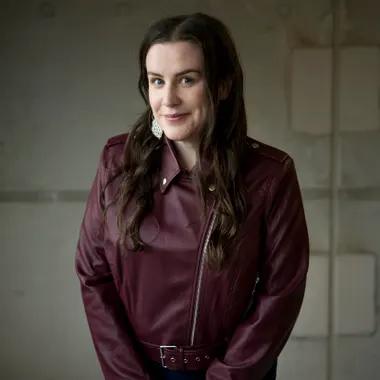
Nguyễn Phan Quế Mai
What prompted you to write this book?
Then, in 2012, when I was traveling with a Vietnamese friend in a car, I asked him what it was like for him during the Việt Nam War. He told me that he was 12 years old when Hà Nội was targeted by B-52 bombers. His parents were in Russia at that time and he was living with his grandmother, who saved him from the bombing raids. His story moved me so much. When I went home that evening, after putting my two young children to bed, I sat down at my computer and googled about the bombings of Hà Nội. I heard audio broadcasts of the sirens warning citizens about bombing raids. With tears running down my face, I penned 2,000 words which eventually become the opening scene of The Mountains Sing. I wrote without knowing where the story would lead me. But I knew I had to let Grandma Diệu Lan have many children, who would be separated by historical events which in turn lead them to becoming the enemy of one another.
How long did it take to go from idea to publication? And did the idea change during the process?
I took me seven years to write and edit. My vision for the book stayed the same, but the objectives became clearer: that I needed to write about war to highlight the value of peace, about darkness to be able to talk about light, and about desperation to be able to bring a sense of hope.
Were there any surprises or learning moments in the publishing process for this title?
I have published eight books in Vietnamese and The Mountains Sing is my first novel and first book I have written in English. I learned English in the eighth grade so penning this novel felt like climbing a mountain barefoot. I arrived at the mountaintop and am stunned that the magnificent view of all the love which has been pouring in for The Mountains Sing. Never in my wildest dream did I dare think my book would be reviewed on the New York Times, NPR and is picked as a Best Book of the Month/Season by The New York Times, The Washington Post, O, The Oprah Magazine, USA Today, Real Simple…. Readers’ feedback on Goodreads has also been amazing and I am grateful beyond words.
Were there any surprises in the writing process for this book?
The Mountains Sing was fueled by my wish to have a grandmother. Both of my grandmas had died before my birth. Growing up, I was very jealous of my friends who had grandmothers to tell them tales and stories of their family. So I told myself I would write a novel one day with a grandmother figure in it. And finally I found Grandma Diệu Lan in The Mountains Sing.
I have no photos of my grandmothers and as I wrote the novel, I could imagine how my grandmothers looked, I could hear their voices. Grandma Diệu Lan and her granddaughter Hương are very real to me, as well as all other characters, including Hương’ parents, uncles, and aunt.
As a writer, I used to underestimate the power of imagination. I learned that once I let go of my fears and trusted my imagination, my writing will soar and take me where it is destined to be. Of course the imagination has to be grounded in knowledge for it to be believable, so research and hard work is key.
I used to be a documentary filmmaker, and a film director once told me: “You can’t make a good film unless your hands tremble behind the camera.” Let us write stories that move us to the core, because when our pen is trembling, the reader can feel it, too.
There is an article by Anita Singh in yesterday’s Daily Telegraph which gives some insight into why Ms Rowling took on the Scottish National Party and Nicola Sturgeon in the Big Trans Row.
J K Rowling
“J K Rowling has defended her stance on women-only spaces by stating the ’98-99 percent of sexual offences are caused by those born with penises.’ The Harry Potter author said she felt a ‘moral obligation’ to take on trans activists who had adopted ‘the attitude of the fundamentalist’. Those close to Rowling had implored her not to enter the debate. ‘There were people close to me who were begging me not to do it,’ she said in the latest episode of The Witch Trials of J K Rowling podcast. But Rowling said she had no choice but to stand up against ‘a movement that I see as authoritarian, illiberal. I think I have a very realistic view, not a scaremongering view, on what may happen when you loosen boundaries around single sex spaces for women and girls,’ she said. ‘I can already hear the screams of outrage: ‘You are saying that trans people are all predators.’ Of course I am not, any more than I’m saying all men are predators. I have good men in my life who are among my favourite people. But I am also aware the 98-99 percent of sexual offences are caused by those born with penises. The problem is male violence.’
According to the Crime Survey for England and Wales, between 2017 and 2020, the 98 percent of victims who had experienced rape or assault by penetration since they were 16 years old reported that the perpetrator was male. Data also show that in the year ending in June, of the 6,403 people convicted of serious sexual offences, 6,223 were male – or 97.2 percent.
On why she felt moved to act, Rowling said: ‘I had been becoming increasingly concerned about the way in which women were being shut down. I was starting to see activists behaving in a very aggressive way outside feminist meetings. I’m looking at an assault now on freedom of speech, freedom of thought, even freedom of association.'”
It seems to me that some trans activists have lost the distinction between Respect and Rights in a democracy. Like any other person, a trans individual is entitled to our Respect. But Rights and Freedoms in a democracy are not unlimited. Rights and Freedoms can be trumped by individual Safety, Privacy and Fairness, as is the case with women-only spaces and most women’s sporting competitions.
I bought this book because it was listed by the Guardian as one of the best one hundred novels written in English, and I had never heard of it.
The author, Penelope Fitzgerald was born in London in 1915, and was one of the first women to graduate from Oxford. For a time in the 1960s she co-edited a literary magazine with her husband, an alcoholic, who was barred as a lawyer. This led to a decade of poverty during which the Fitzgeralds lived in subsidized housing. Mrs Fitzgerald taught theatre and at school until she was 70. Her writing career began at 58. She wrote nine novels, three of which, including this novel, were shortlisted for the Booker Prize. In 1979 she won the Booker Prize for a fourth novel, Offshore. She died in April 2000.
Penelope Fitzgerald
The Beginning of Spring is set largely in Moscow in 1913. The principal character is Frank Reid, an Englishman who was born in Moscow and has a printing business there. Without any notice, his wife Nellie leaves to go back to England with the three children, but while they are still in Russia, the children are sent back to their father. Frank contacts his wife’s brother, Charlie, but he does not know where she is.
Frank seeks a nanny to take care of the children. He rejects an older, professional nanny, who for reasons unknown has been dismissed from her position, and he hires a beautiful, young salesgirl, Lisa, from adepartment store. Lisa is quiet and serene; the children admire her. Frank falls in love with her, he makes advances and she reciprocates. A student who breaks into Frank’s printing business is apparently Lisa’s ex-lover. Selwyn Crane, Frank’s chief accountant confesses that he had planned to run away with Nellie, but he decided against it. Nellie went to live in a Tolstoyan community in England, but she decided she does not like the communal life, and suddenly returns to Moscow. Meanwhile, Lisa leaves Russia illegally.
This is a gentle, almost passive novel, which nonetheless holds one’s attention through the uncertainties of the intentions of the characters. Moreover, the descriptions of the settings, the characters and the events are of sufficient clarity that one feels comfortable with them, but one cannot predict the direction of travel. In fact, the novel ends without answering some of the lingering questions. Ms Fitzgerald’s descriptions of the culture, the people and the settings of Moscow a century ago, are startling in their unique accuracy. She studied Russian in he 1960’s and visited Moscow in 1975.
What makes this novel unique is its Moscow setting and its simultaneous clarity and uncertainty. The story is also quite captivating.
According to an article in the Daily Telegraph, 2 February 2023, by Craig Simpson, Ulysses is being banned again.
“Academics say the Dublin-born author’s early novel contains ‘explicit references’ to ‘sexual matters’ that some may find ‘difficult’
Outraged censors banned Ulysses in 1922, and a century later academics fear the novel may be too shocking for modern students, as James Joyce’s work has been issued with a trigger warning for being potentially “offensive”.
James Joyce
The 800-page story of an ordinary man’s day in Dublin is taught on a dedicated module at the University of Glasgow, where staff now alert students to possibly upsetting “language and attitudes” in the writer’s work
Joyce’s writing contains “explicit” references “to sexual matters”, according to a trigger warning seen by the Telegraph states, highlighting the same issue which led Britain to ban his work 100 years ago.
Modern students are also warned they may be offended by references to “race, gender and national identity” in the work of the Irish author, who famously lampooned the nationalism of his homeland.
The blanket warning for the dedicated James Joyce English literature module at Glasgow states: “As part of this course we will examine texts that include explicit or graphic references to sexual matters.sec
“We recognise that some students may find this difficult and may find some of the language and attitudes towards race, gender and national identity that we discuss in relation to Joyce’s work offensive.”
The warning adds that a safe space will be provided to discuss Joyce’s literary output, stating staff will “endeavour to make seminars a space where everyone can discuss these ideas and engage with this content sensitively, empathetically and respectfully”.
The Dublin-born author, who died in 1941 at the age of 58, is regarded as among the greatest modern writers, particularly for his masterpiece Ulysses, which was initially banned in the UK and the US for the “obscenity” of passages describing sex and masturbation. The British ban was eventually lifted in 1936.
Censors principally objected to a passage from the point of view of Joyce’s heroine Molly Bloom. The main discussion of race in the work centres on the Jewish identity of the book’s hero, Leopold Bloom.
This identity clashes with the Irish nationalist sentiment of other characters in the book, which Joyce lampoons in Ulysses and his other writings, including A Portrait of the Artist as Young Man, which contains complaints that Ireland is an “old sow” with “too much god”.
This early novel is taught along with his final work Finnegan’s Wake on the Glasgow module, which has been given the trigger warning, a move which has been criticised.
Prof Frank Furedi, an education expert at the University of Kent, said: “The trigger warning brigade demonstrates that the impulse to censor is alive and well. The spirit of the old-school censors who banned Ulysses in 1922 lives on.
“It was only a matter of time before the grievance archeologists dug up something to feel traumatised about in Joyce’s great work.
“The trigger hunters could not possibly give the author of Ulysses a free pass. For the record, if you find Joyce triggering you better confine your reading to the London phone directory.”
A spokesman for the University of Glasgow said: “We give warnings to students who may find some contexts disturbing or for whom a particular class session may cause upset.
“We are, however, keen for everyone to engage, and endeavour to make seminars and lectures a space where everyone can discuss these ideas and engage with this content sensitively, empathetically and respectfully.””
I find this controversy somewhat amusing. Does it not occur to these nervous academics that the internet is awash with pornography, and that only an extreme ‘snowflake’ could be upset by it. One is tempted to advise these snowflakes, ‘Grow up, or don’t study literature.’
I bought a copy of Volodymyr Zelensky’s collected speeches at an airport bookshop in December. It’s a small book, just the size to wedge into a suitcase, 118 pages at £9.99, of which President Zelensky’s personal income from the book (at least £0.60 per copy) will go to his charity, United24, in support of Ukraine.
I’ve been impressed by Zelensky: his absolute commitment to his country, his ability to lead his people in their struggle against a much larger, heartless, autocratic and immoral aggressor, his skill at coaching Western democracies to come to his aid, but perhaps most of all for his restraint in not criticising donors who pinch pennies. It would be so tempting to call Macron out as a egotistical, French, Putin-loving, tightwad. But whatever he may have thought of Macron, he kept it pretty much to himself. And now, low and behold, there is a transformation: France is backing a military victory for Ukraine and is going to send Ukraine light tanks, prompting Germany to do the same and adding Patriot missile batteries.
Zelensky’s Wikipedia page reads: “Born to a Ukrainian Jewish family, Zelenskyy (in Ukrainian, his surname is spelt with two y’s) grew up as a native Russian speaker in Kryvyi Rih, a major city in central Ukraine. Prior to his acting career, he obtained a degree in law. He then pursued a career in comedy and created the production company Kvartal 95, which produced films, cartoons, and TV shows including the TV series Servant of the People, in which Zelenskyy played the role of the Ukrainian president. The series aired from 2015 to 2019 and was immensely popular. A political party bearing the same name as the television show was created in March 2018 by employees of Kvartal 95.
Zelenskyy announced his candidacy in the 2019 presidential election on the evening of 31 December 2018, alongside the New Year’s Eve address of then-president Petro Poroshenko on TV. A political outsider, he had already become one of the frontrunners in opinion polls for the election. He won the election with 73.23 percent of the vote in the second round, defeating Poroshenko. He has positioned himself as an anti-establishment and anti-corruption figure. As president, Zelenskyy has been a proponent of e-government and of unity between the Ukrainian and Russian speaking parts of the country’s population. His communication style makes extensive use of social media. His party won a landslide victory in the snap legislative election held shortly after his inauguration as president. During the first two years of his administration, Zelenskyy oversaw the lifting of legal immunity for members of parliament, the country’s response to the COVID-19 pandemic and subsequent economic recession, and some limited progress in tackling corruption in Ukraine.
During his presidential campaign, Zelenskyy promised to end Ukraine’s protracted conflict with Russia, and he has attempted to engage in dialogue with Russian president Putin. Zelenskyy’s strategy during the Russian military buildup was to calm the Ukrainian populace and assure the international community that Ukraine was not seeking to retaliate. He initially distanced himself from warnings of an imminent war, while also calling for security guarantees and military support from NATO to “withstand” the threat. After the start of the invasion, Zelenskyy declared martial law across Ukraine and a general mobilisation of the armed forces. His leadership during the crisis has won him widespread international praise, and he has been described as a symbol of the Ukrainian resistance. Zelenskyy was named the Time person of the Year for 2022 and opinion polls in Ukraine have ranked him as Ukraine’s greatest president.”
The speeches – there are 16 of them – were selected by Zelensky for the book, and range from his inaugural address to the Ukrainian parliament to Ukrainian Independence Day on 24 August 2022. There is a useful preface by Arkady Ostrovsky, the Russian and Eastern Europe editor of the Economist. This is followed by an introduction by Zelensky in which he reflects on changing the past.
His speeches are focused on several themes. Ukraine is a free, sovereign, independent country. Russia is engaged in an illegal and immoral invasion. Russia must be stopped because ultimately, it is at war with Western democracy, its values and principles. If Ukraine loses the war, Europe itself will be next. Ukraine can and must win this war. It will end when all the Russian occupiers are gone.
The language and the images are highly motivational. This is an excellent, two-hour read.
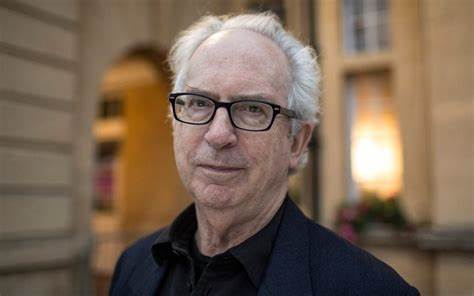
I missed reading this novel when it came out in 2000, won the Booker Prize and was made into a movie in 2019. It was written by Peter Carey, an Australian author, who had previously won another Booker. He was born in 1943. He dropped out of the pursuit of a science degree at university and started work in advertising. He began to read important novelists and wrote five unpublished novels. Having spent two years in London, working in advertising, he returned to Australia in 1970. In 1980 he opened his own advertising agency and the following year published his first novel, Bliss. Toward the end of the Australian phase of his career, Oscar and Lucinda was published in 1988 and won the Booker McConnell Prize as it was then known. Carey, who moved to New York in 1990 continues to live there, has received fourteen literary awards, several more than once, nominated twice for musical awards as lyricist, written fourteen novels, two short story collections, a stage play and has been married three times.
Peter Carey
There was a Kelly Gang in Australia in the 1880’s which was famous for its exploits, and for its identity with the marginalised immigrant population. The ‘True History’, however, departs from the historic facts on several points. The character, Mary Hearn, who became Ned Kelly’ lover and the mother of his daughter, never existed. There is no evidence that Kelly sired any children. The relationship between Kelly’s mother, Ellen, and Harry Power, the famous bushranger is a literary fabrication.
The story is told by Ned Kelly himself, in semi-literate writing, without punctuation, to tell his life history to his daughter from his point of view. He began life as the oldest boy of destitute family of Irish extraction trying to survive on a remote farm. His father had numerous brushes with the self-serving rural police which resulted in his death when Ned was 12. His mother then apprenticed Ned to Harry Power so that he could survive as a bushranger. He leaves Power and tries to live within the law, but he is imprisoned for three years for receiving a stolen horse, which he claims was given to him. Released from jail, he worked for two years in a sawmill, but he is drawn back into bushranging when a herd of his horses is stolen by a rival settler. Serious trouble with the police begins when he shoots the gun out of the hand of a corrupt police constable who makes advances on Ned’s younger sister. Four police are sent to kill Kelly, but Ned kills three of them in an ambush. The Kelly gang of four (Ned, his brother, Dan, and two friends are eventually surrounded by a crowd of police who kill the other three gang members and wound Ned. The shootout and Kelly’s death by hanging are told by ‘C. S.’, presumably the relative of the local teacher, Thomas Curnow, who ended up with all the Kelly manuscripts and who warned the police that the train tracks via which they were approaching the gang for the final shootout had been sabotaged. Kelly died a hero to most of the people of northeast Victoria, who amplified his life story over time.
The novel draws an accurate picture of the hard life lived by the large majority of the settlers and of the culture of the police, the judiciary and the ruling class in southeast Australia in the nineteenth century. Life was very hard and it created hard men. The story is told in the uneducated language of an impoverished Irish farmer, who clings to his family and its traditions. Ned never ceases to do what he believes is the just thing, and, in the process, there is an inevitable censure of the values and actions of the authorities. The characters are credible – if unsavory. The action is non-stop. This is a big jump above a good American western in its authenticity, its interest and its contribution to history.
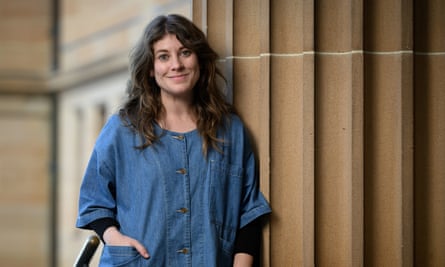
The Guardian has an article today by Rafqa Touma ‘Don’t Give Up Your Day Job: How Australia’s Favourite Authors Are Making Ends Meet’.
Ms Touma writes:”According to new research by Macquarie University, the Australia Council and the Copyright Agency, the average annual incomefrom practising as an author is only $18,200 (Australian = £10,000). This has left two-fifths of authors relying on their partner’s income, and two-fifths relying on a day job unrelated to their writing. We spoke to some of Australia’s most celebrated authors who are supplementing their income with day jobs. Here is what they have to say:
Jennifer Down: the Miles Franklin-winning copywriter
Down won the 2022 Miles Franklin for her novel Bodies of Light, which was also shortlisted for the Victorian Premier’s prize, the Stella prize and the Voss prize. She is also the author of Our Magic Hour and Pulse Points.
At a weekend writers’ festival in October, Jennifer Down had work to finish for her day job: a brand launch campaign was coming up. So she sat down at a pub and pulled out her laptop.
“I thought if I have to work on a Sunday afternoon, I’ll do it with a pint,” she says. She looked so focused that a group at the table across from her made a passing joke: “Have you finished your novel yet?”
Little did they know Down had in fact finished her novel, which had just won the country’s most important literary prize. “The irony is that it is a Sunday afternoon, and I’m doing my money job while at a festival for my non-money job.”
Down was named the Sydney Morning Herald’s young novelist of the year consecutively in 2017 and 2018. At the time, she was working as an in-house copywriter for an Australian skincare company, being paid less than $50,000. “I was living in a five-person share house, and I could barely pay my bills.”
“It is surreal,” she says. “Outside of work, my writing is really respected. I had this modest critical acclaim coming in. Then at work, I’m having social media copy corrected by a person who doesn’t understand what subordinate clauses are and hasn’t read a book in 10 years.”
Down currently works as a copywriter full-time. She sets her alarm for 4am to write for herself; the alternative is foregoing social engagement.
“I don’t know if it has paid off. It is gratifying to have won prizes, but I feel like it can be incredibly isolating at times.”
It also means she’s effectively working seven days a week. “I don’t really remember the last time I have had two consecutive days off,” she says. “It is paid for in the sense I have been able to produce work, but it is not without a cost.”
Holden Sheppard: the manual labourer with a TV deal
Holden Sheppard’s debut novel Invisible Boys won the 2019 WA Premier’s prize for an emerging writer, the 2019 Kathleen Mitchell award, the 2018 City of Fremantle Hungerford award and the 2017 Ray Koppe residency award. He is also the author of The Brink.
Holden Sheppard is well loved among high school readers, with a TV adaptation of his multi-award-winning novel Invisible Boys currently in production. He is now writing his third book under contract; to fund it, he is working as a manual labourer in a timber yard.
“Authors are sole traders,” he says. “The part that doesn’t get seen is that there is a huge amount of admin.”
The Australia Council report found writers spend only half their writing time actually producing original writing. With invoicing, emailing, social media managing, talks at schools, event appearances and podcasting to fit between his work at the timber yard, Sheppard says he is left to write whenever it fits.
The annual income of children’s book authors sits at $26,800 – higher than the $18,200 average. Sheppard acknowledges his books have sold well, “but as much as it might appear successful, it is still not enough to live off”.
He deliberately looks for casual jobs instead of permanent part-time ones, for the sake of flexibility. “If there is a media interview opportunity, or an event I really want to do on a day of work, it is hard to get it off,” he says. “You jeopardise your day job and your income.” This precarious work he chooses rarely comes with entitlements such as annual leave and sick leave.
In 2015, Sheppard received an Australian Council Art Start grant for $10,000, but the program was scrapped after his round. “I feel that is needed again.” He also advocates for digital lending rights, which don’t exist in Australia.
“Each revenue stream helps us. When people take a book out of an e-library, we don’t see that revenue.”
Michael Mohammed Ahmad: the award-winning novelist who wrote behind the counter
Michael Mohammed Ahmed won the 2015 Sydney Morning Herald Best Young Novelists award for his debut novel The Tribe. His second novel The Lebs won the 2019 NSW Premier’s Multicultural Literary award and was shortlisted for the 2019 Miles Franklin. He also founded the Sweatshop literacy movement.
“I am a multi-award winning author, and I have a doctorate in literature. I am about as educated as you can get. I have sold tens of thousands of books. Still, I don’t have the job security of a manager at McDonald’s.”
While writing three acclaimed novels – The Tribe (2014), The Lebs (2018) and The Other Half of You (2021) – and setting up the western Sydney-based literacy agency Sweatshop, Michael Mohammad Ahmad worked at his father’s army disposal shop.
“When customers weren’t there, I’d be writing my novels behind the counter,” he says. “I only stopped working there about two or three years ago.”
He’s proud he was able to support his family this way, he says. “But it is insane that I had to do that. The industry isn’t set up to support people.”
Mohammad Ahmad still works seven days a week, with weekends spent writing. “I feel fortunate that in my case it is a job I am passionate about,” he says. “Writers didn’t enter the industry for money.
“It is an activity we’ve been participating in since humans could begin to think. It is fostering the next generation of thinking. It is something we find valuable outside of the capitalist construct of wealth. Even though writers aren’t making ends meet, they are still going to do it.
Anna Spargo-Ryan: the acclaimed author doing everything all at once
Anna Spargo-Ryan won the inaugural Horne prize in 2016 for her essay The Suicide Gene. She was longlisted for ABIA’s Matt Richell award in 2017 for her novel The Gulf. She is also the author of novel The Paper House and 2022 memoir A Kind of Magic.
According to the research, more than one-fifth of authors have a day job that’s related to being a writer – but that doesn’t make it easier for them to write a book.
Since 2013, Anna Spargo-Ryan has been balancing a full-time freelance mix of jobs, from ghostwriting and advertising copywriting to writing podcasts, websites, brand guidelines and feature articles.
“I do a lot of writing,” she says. “But all of it is for other people. A very small proportion of it is for my own writing work.”
Spargo-Ryan once held a romanticised idea of working as a writer. “But over the past 10 years … I have realised that the only way to get writing done is to fit it in.”
This year she published her first nonfiction book, A Kind of Magic. Although she spent the last three years writing it, she “barely remembers” the process. “I had a deadline, I had a contract, so I had to write it, but I didn’t have the leisure of having lots of time to get that done,” she says.
“So I wrote it in all kinds of small gaps. Waiting for the kids at school, before meetings, during meetings, editing on the treadmill. Whenever I could get bits of time … which I don’t really recommend as a writing process.”
Spargo-Ryan recommends writers learn to diversify their craft. “You might get an advance that is like a tenth of your annual salary, and that would be quite a good advance,” she says. “Then you are going to earn like three cents a word, for 100,000 words. In itself it isn’t sustainable.
“No one has a patron who pays for you to do your creative work. Part of being a writer is the hustle, trying new things, and diversifying the work you are doing.”
Omar Sakr: the PM’s literary award-winner looking for a day job
Omar Sakr won the 2020 Prime Minister’s Literary award for poetry for his collection The Lost Arabs. It was also shortlisted for the NSW Premier’s Literary award, the John Bray Poetry award, the Judith Wright Calanthe award and the Colin Roderick award. He is also the author of These Wild Houses and Son of Sin.
“[It was] easy enough to do at first because I was couch-surfing and didn’t have much in the way of expenses,” he says. “But it has become increasingly difficult as I settled down and started a family.”
Grants and prizes gave him time to write his debut novel Son of Sin, but publishing involves a “relentless grind” of writing and touring, which has been “impossible” to sustain since his wife gave birth to their son this year.
The report finds more than half of authors find searching for income elsewhere to be a competing demand on their writing time.
“Now I find myself in a very precarious financial position, and actively trying to find a day job,” Sakr says. “Full-time freelancing relies too much on uncertain outcomes and requires too much of me, on top of being a dad. I already knew that our society doesn’t support artists enough, but it’s brutal to realise we also don’t support parents in a meaningful way either.”
Ben Lawrence has an article in today’s Daily Telegraph which makes the arguments that not only have celebrities seriously reduced the quality of kids’ books, but they have also captured the publishing space to the detriment of competent kids’ writers.
Ben Lawrence, Commissioning Editor of the Telegraph
In the article, he says: “Long ago, when I was young, I had a vivid imagination that needed feeding. While TV shows and computer games went a little way to inspiring me, nothing shaped my thoughts like a good book. This was the 1980s, so I caught the tail end of the second golden age of children’s literature. I happily lost myself in the vivid, sometimes strange worlds of Nina Bawden, Alan Garner, Leon Garfield and Susan Cooper, while supplementing my addiction with the classics: Kenneth Grahame, E Nesbit, C S Lewis and Eve Garnett. Books build a child, and my career in writing and editing would not have evolved without them.
I was lucky: I had bookish parents, both acting as in-house curators, full of ideas of what I should (and shouldn’t) read. Yet if I were small now, I am not sure that I would have the same access to great children’s fiction. You could make the usual noises about social media and attention spans, but there are other worrying factors in regard to the 21st-century child.
First, I benefitted greatly from my local library, which had a staggering selection of books both old and new – and we all know what has happened to Britain’s libraries. There were, I remember, plenty of friendly librarians, armed with incredible knowledge and an infectious love of reading, who could make recommendations to me. In an age when primary-school teachers were less constricted by a national curriculum, we also had the luxury of “reading afternoons”: we could sit and browse the books in both the school library and the shelves which lined our classroom.
There is now also the serious problem of brand recognition. Writers today (whose average salary, in Britain, is down to £7,000 per annum) are unable to gain a foothold in the children’s market because they are being muscled out by celebrity names whose publishers can afford the most prominent slots in bookshops and supermarkets.
It never felt like such a problem in the days of JK Rowling’s reign: she, at least, was a career writer whose works – though not, I’m afraid to say, that well written – displayed a vivid imagination, and who did a great deal to get children interested in reading.
For the harried parent trying to find a book for their child, a familiar name on a bookshelf is always going to be the obvious option. The Duchess of York went first in 1989, with Budgie the Little Helicopter. But in truth, blame Madonna: 14 years later, her wafty Kabbalah nonsense, The English Roses, started a ghastly trend. Fearne Cotton’s Yoga Babies, Katie Price’s Perfect Ponies, Clare Balding’s The Girl Who Thought She Was a Dog – they all feel like cynical cash-ins.
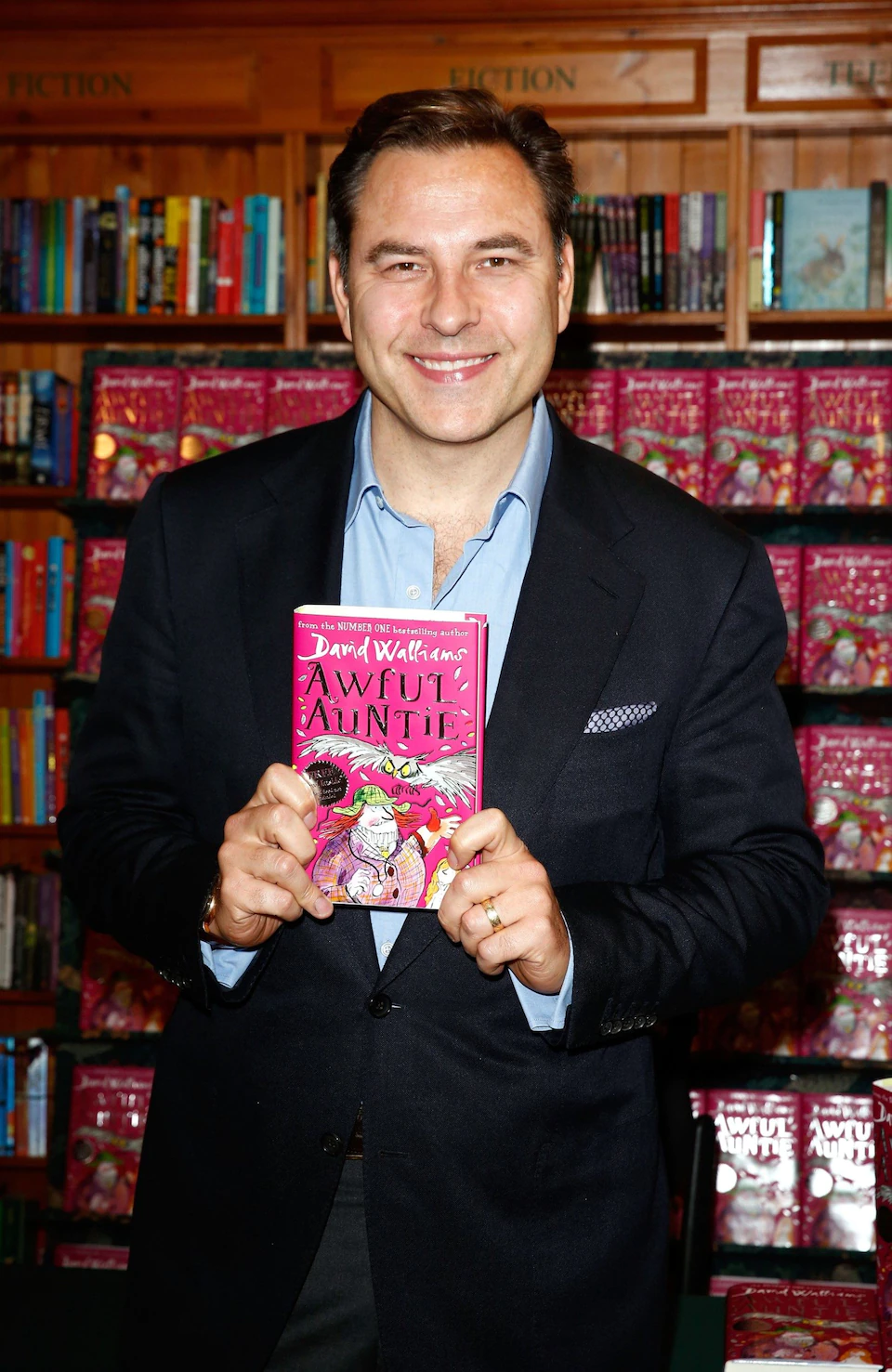
Perhaps the most egregious example, however, is the comedian David Walliams, now the most successful children’s author in Britain. Anecdotally, I’m told by parents who’ve bought his best-selling books that they’re appalling: sub-Roald Dahl (of whom Walliams is a fan), and devoid of heart or writerly flair.
David Walliams
The only thing worse than a child deprived of books is a child immersed in bad ones. Defenders might say that at least a writer such as Walliams gets more children interested in reading, but I see no evidence that he is acting as a gateway drug to better quality gear.
All of this is heartbreaking, because there’s so much to recommend. A quick ring-round to friends and colleagues resulted in my being bombarded with names. You should mention Emma Carroll, they said. Julia Copus is brilliant, said another. MG Leonard, Ross Montgomery, Nadia Shireen, SF Said, Katherine Rundell, Jenny McLachlan… Yet with the exception of Rundell, I’m ashamed to say that I hadn’t heard of any of them (even if, not having any children of my own, I have a reasonable excuse).
It was enough proof to me that children’s literature is as strong now as it was 40 years ago when I was young. So: enough is enough. It is time to attempt to end the depressing monopoly of a small selection of not-very-talented writers. A concert pianist never achieves success by being mediocre, so why should a children’s author?
There is, I admit, a slight air of nostra culpa here. Children’s fiction has always been the Cinderella of the book world, and we journalists need to work much harder in highlighting works for children. As the children’s author and scriptwriter Frank Cottrell-Boyce argued persuasively on Radio 4’s Today programme on Tuesday, newspapers run plenty of restaurant reviews, featuring swanky places that 99.9 per cent of the population are never going to actually visit. Books, on the other hand, are comparatively cheap, and even cheaper if they’re loaned or shared.
So I’m going to make a pledge. From January, we will review a new book by a children’s author once a week. It could be a picture book for younger readers, a novel for pre-teens, or perhaps some Young Adult fiction. It could be a book by an established (professional) author, or a debut by someone brilliant and unknown. What you won’t see, I promise, is anything by a non-writer who is pushing larger talents out of the way in order to extend their personal brand.”
It seems to me that publishers bear some responsibility for this situation. They certainly know what a good quality children’s book is. To favour a celebrity brand-builder, who offers a short-term sugar rush of poor quality sales, over a professional author, who offers long-term sales to happy customers, is making bad business decisions.





 William Peace Blog