More: Amazon vz Hachette

My last post mentioned the dispute between Amazon and Hachette (the fourth largest US publisher) in which Hachette has refused Amazon’s insistence on paying Hachette less for its books, and in which Amazon is delaying the shipment of orders for Hachette’s books.  Now 900 authors have entered the fray, as this article in yesterday’s New York Times states, in part:

Douglas Preston, who summers in this coastal hamlet of Round Pond, Maine, is a best-selling writer — or was, until Amazon decided to discourage readers from buying books from his publisher, Hachette, as a way of pressuring it into giving Amazon a better deal on e-books. So he wrote an open letter to his readers asking them to contact Jeff Bezos, Amazon’s chief executive, demanding that Amazon stop using writers as hostages in its negotiations.

The letter  spread through the literary community. As of earlier this week 909 writers had signed on, including household names like John Grisham and Stephen King. It is scheduled to run as a full-page ad in The New York Times this Sunday.

Amazon, unsettled by the actions of a group that used to be among its biggest fans, is responding by attacking Mr Preston, calling the 58-year-old thriller writer “entitled” and “an opportunist” while simultaneously trying to woo him and his fellow dissenters into silence.

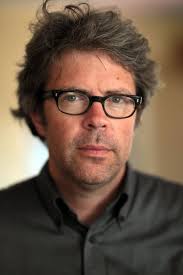
Mr Preston, pictured, right, is un-swayed.

08amazon-web2-superJumbo


“Jeff Bezos used books as the cutting edge to help sell everything from computer cables to lawn mowers, and what a good idea that was,” he said. “Now Amazon has turned its back on us. Don’t they value us more than that? Don’t they feel any loyalty? That’s why authors are mad.”

This latest uproar in Amazon’s three-month public battle with Hachette comes at a vulnerable moment for the Internet giant, which is rapidly transforming itself into an empire that not only sells culture but creates it, too.

Amazon does not want to be seen as hostile to content creators, one of the four groups it says on its investor relations web page it is expressly set up to serve. But it also has to price their creations cheaply enough to draw hordes of consumers, while at the same time making enough of a profit to satisfy investors.

It is a complicated balancing act. Some argue it is impossible. Amazon just surprised Wall Street by saying it may lose more than $800 million this quarter, potentially wiping out its profits for the last three years, partly because creating video content is expensive. The prospect of this unexpected loss has raised questions about whether Amazon’s money-losing ways are finally catching up with it — and whether that is the real reason it is making new demands on publishers like Hachette.

Amazon has been forced by the controversy to shed its long-time practice of refusing to comment on anything. Asked about the writers’ rebellion, it issued a statement that put the focus back on Hachette, bringing up the Justice Department’s antitrust lawsuit against Hachette and other publishers in 2012: “First, Hachette was willing to break the law to get higher e-book prices, and now they’re determined to keep their own authors in the line of fire in order to achieve that same end. Amazon has made three separate proposals to take authors out of the middle, all of which Hachette has quickly dismissed.”

Mr Preston pointed out it was Amazon that put the authors in the line of fire in the first place. Russell Grandinetti, Amazon’s vice president for e-books, has called Mr Preston twice in recent weeks, trying to get him to endorse the company’s proposals to settle the dispute, as well as to pipe down. The most recent proposal would have Amazon selling Hachette books again, but with Hachette and Amazon giving their proceeds to charity.

No thanks, Mr Preston said. A proposal that weakens Hachette by cutting its profits was not in the interests of Hachette’s authors. But he took the opportunity to ask Mr Grandinetti why Amazon was squeezing the writers in the first place.

His response, according to Mr Preston: “This was the only leverage we had.” Amazon declined to comment.

“It’s like talking to a 5-year-old,” Mr Preston said. “ ‘She made me hit her!’ No one is making Amazon do anything.”

No one is making Mr Preston do anything, either. He dismisses Amazon’s suggestions that he is a “human shield” for Hachette, one of the Big 5 publishers in the United States. He and the other writers say they are acting independently. Most, in any case, are not published by Hachette.

Mr Preston is not sure how he has found himself in charge of a group calling itself Authors United. “I don’t like fighting,” he said. “I’m a wimp. When the bullies in seventh grade said they would meet me in the parking lot after school, I made sure I was nowhere near it.”

Other writers who signed the letter include Robert A. Caro, Junot Díaz, Malcolm Gladwell, Lemony Snicket (the pen name of Daniel Handler), Michael Chabon, Michael Lewis, Jon Krakauer, Scott Turow, George Saunders, Sebastian Junger, Philip Pullman and Nora Roberts.

“We feel strongly that no bookseller should block the sale of books or otherwise prevent or discourage customers from ordering or receiving the books they want,” the letter states.

Some writers wholeheartedly supported the letter but were afraid to sign, Mr Preston said. A few signed it and then backed out, citing the same reason. The Times ad, which cost $104,000, was paid for by a handful of the more successful writers.

I’m sure there’ll be more to come!


Summer Reading

There was an interesting article in The Daily Telegraph on July 8th which was subtitled: “‘I couldn’t put it down . . . Holidays are not the time and place to read books that you think you ought to read’, says A N Wilson. So, yes, leave Thomas Piketty at home.”

Wikipedia informs me that “Andrew Norman Wilson (born 27 October 1950) is an English writer and newspaper columnist, known for his critical biographies, novels, works of popular history and religious views. He is an occasional columnist for the Daily Mail and former columnist for the London Evening Standard, and has been an occasional contributor to the Times Literary Supplement, New Statesman, The Spectator and The Observer.”

untitled

Mr Wilson says that “there is a revealing and amusing survey that has been conducted  by a maths professor for the Wall Street Journal.  It is based on the ‘popular highlights’ chosen by users of the Amazon Kindle and comes up with a list of the summer’s ‘most un-read books’.  In the past when we only read books in book form, it was impossible to know, scientifically,  how far the average reader had penetrated into , say, Stephen Hawking’s A Brief History of Time – an impenetrable work, which it is sometimes tempting to believe that no one, except, perhaps, the book’s original copy-editor, has ever read to the end.  But now that so many of us read books on Kindle, it is possible to make an educated guess about how far the average reader has got.

“Each best-selling book’s Kindle page lists the five passages most highlighted by readers.  These extracts, designed to whet the appetite of other Kindle users, would – if they represented a thorough reading of the works considered – surely contain quotations from the whole book, and not just from the first few pages.  Jordan Ellerberg has come up with a playful ‘Hawking Index’ with which to estimate how much of a book most people have read.  The top five ‘highlights’ from Donna Tartt’s novel The Goldfinch, for example, all come from the final 20 pages of the book, which suggests that 98.5 percent of readers made it to the end.  Highlights from Michael Lewis’ page-turning analysis of financial sharp practice, Flash Boys, suggest most people only read the first 21.7 percent of the book.

“And how about the book we of the Chattering Classes are all supposed to be reading and talking about this year – the French economist Thomas Piketty’s Capital in the Twenty-First Century?  Here the quotes do not dig deeper into his 700 pages than a pathetic 2.4 percent – in other words, Piketty, the great economic sage of our time, is as unread as Hawking, our greatest scientific sage.

Wilson goes on to observe that, for most of us, a holiday is a time of relaxation with the distractions of children, sightseeing, family and friends.  He says, “Many is the thick paperback edition of some supposedly ‘great book’ that either gets left behind in the rented villa or hotel, or comes back home with only its first 30 pages smudged with sun-tan lotion.  The idea that this should induce ‘guilt’ is absurd.  Although to be as well-read as possible is a sort of duty of any intelligent person, this does not mean that it is a duty to read Plato’s Republic on a beach, or Proust by the poolside.”

Wilson says that the best sort of holiday reading is short.  In this case, he would probably recommend taking Hemingway’s short stories along, and I would agree.  In my view, the best summer reading is something that keeps inviting us back, all the while keeping us interested.

Of my own works, I would recommend Sin and Contrition (there’s a different sin in every chapter, and a discussion with the sinners at the end).  Or Efraim’s Eye or The Iranian Scorpion (both are unique thrillers).


Review: The Guns at Last Light

I bought this book on the recommendation of a friend who fought (and won a Silver Star) in the Second World War.  It was well worth reading, although the text runs to 641 pages (plus 234 pages of Notes, Sources, Acknowledgements and Index).  There are 16 pages of photographs, as well.

This is volume three of the Liberation Trilogy written by Rick Atkinson, and it covers the war in Western Europe, 1944-1945, beginning with the invasion of Normandy.  It won the Pulitzer Prize.  The other two volumes of the Liberation Trilogy are: An Army at Dawn (covering the war in North Africa, 1942-1943) and Day of Battle (covering the war in Sicily and Italy, 1943-1944).

For me, the most remarkable aspect of The Guns at Last Light is the enormous depth of research that went into it.  In fact, Atkinson says in his Acknowledgements that it took him fourteen years to write the Trilogy.  Every battle is described so that one feels like a well-informed observer, and there are maps aplenty to which to refer.  One is left with a clear understanding of what the objective of the battle was, what went right and what went wrong, and, and what difference in made, ultimately.  The story is largely told from the viewpoint of the relevant commanding officer, but with commentary provided by junior officers and even enlisted men.

The focus is strategic, rather than tactical, and Atkinson reinforces this emphasis with portraits of the officers in command.  These portraits are formed from the comments of colleagues, superiors, subordinates, others and the individual himself.  For example, Eisenhower comes across to me as a man who had an extraordinary ability to motivate, cajole, an occasionally order wayward senior officers to pull together in the same direction.  Montgomery comes across as an egotistical prima donna, who over-rated his own skills as a general.  These portraits come alive through timely, pithy remarks that Atkinson has found and included.

There are statistics on everything from the quantities of ammunition expended to the number and sizes of boots used by the GI’s, but they are inserted at appropriate moments.  Moreover, the battles behind the lines are covered, as well: particularly logistics; but also care for the wounded, injured  and dead; and ‘recreation’.

Perhaps the one thing which is missing is the perspective of the individual soldier in combat, though there are many brief comments on what it was like.  To be fair, I think it is impossible to tell so sweeping a story from the perspective of both the commander and the individual soldier.  What does come across clearly it the enormous physical, mental and spiritual hardships that the soldiers endured.

The story is not told entirely from the allied point of view.  There are passages which cover German activities, from Hitler on down.

For as long as it is, this is not an easy book to put down.  The writing is fresh and innovative.   There is a sense of immediacy.  One knows in general, how things will turn out, but once a particular battle has begun, one wants to find out exactly what happened and why.  When one does put it aside, it is easy (and rewarding) to pick it up again.

Because of my own interest in Italy, I’m planning to ready the second of the Trilogy books.

If you’re interested in military history, they don’t come any better than this.

Penny Vincenzi

There was a full page article on the June 16 issue of The Daily Telegraph about Penny Vincenzi.  It was written by Byrony Gordon, who covers women’s issues for the Telegraph.  She says that “Penny Vincenzi’s books are an epic saga containing family secrets, romance and seriously strong women. ”  I’ve read one of Vincenzi’s novels (there are 17) and I would agree with this characterization.

Penny Vincenzi

One particular quote in the article caught my eye.  After saying that it takes her about a year to write a book and she never plots anything out, Gordon quotes Vincenzi, “I haven’t the faintest idea what is going to happen, ever.  I just get the kernel of the idea, which in this case was supposing a company was about to go under, and then the characters wander in.  I never have any idea what is going to happen at the end.  I truly don’t, which is why they are so long.”

Does she ever get writer’s block?
“Oh no,” she says with a shake of her head.  “I have a friend who does books, too, and he was party to a rather intense conversation about writing.  Someone asked, ‘What do you do when you get writer’s block?’ and he said, ‘I’m not clever enough to get writer’s block!’  I do think there’s an element of: ‘Oh, it’s my art, you can’t cut that bit out because  that’s the core’ .  I don’t agonise.  I do have terrible days when I realise I have gone down a completely blind alley and I’ve got to come back.  The only cure is to press the delete button, I’m afraid.  I once deleted 20,000 words and I felt much better after that.”

One has to admire this about Vincenzi: she has an extraordinary talent to write in what sounds like a stream-of-consciousness mode while at the same time having a keen awareness of what her readers like.  She is a successful writer and it works for her.

What caught my eye about this article was the contrast with my style.  I, too, take about a year to write a book, but I do a lot of charity work and my books are shorter than hers.  I write about 8 pages a week; she writes at least twice as much.  Part of the difference is that I do agonise, and I do a lot of editing in multiple stages.  For me, a novel has to be credible, and since I write ‘modern. real-world novels’, I spend plenty of time on research.  For example, I’m currently writing a novel which is partly set in north west Africa, and I want it to be accurate.  I also do quite a bit of planning: novel outline, chapter outlines, character portraits, and with my more recent novels: what’s the point of this novel?  what’s its message?  what would I like the reader to take away?  This message is, for me, the central nervous system of the novel.  The characters, the events all have to support this core sense.  If there is no core sense, the novel is just entertainment, but, of course, it can be delicious entertainment.

As to writer’s block, I would call it a barrier, rather than a blockage.  There are times, particularly in starting a new situation, when I’m unsure how to proceed.  I’ve learned that what’s necessary for me is to sit here and think about it.  An idea will present itself.  I’ll reject it.  Not good enough.  How about this?  I takes patience and perseverance, and sometimes – I agree with Vincenzi – it means starting over.

So, in a way, I envy the free-flowing style of Vincenzi, particularly when I’m trying to write something that engages our ideas, our emotions, our senses and our instincts all at once.  But the free-flowing style would not be me.


US Book Ban

The following article from today’s issue of The Daily Telegraph caught my eye:


Michael Grove will regret the decision to divide literature into “nationalistic categories” on the GCSE syllabus, a Nobel Prize-winning author has said. Toni Morrison, an American, attacked the Education Secretary’s reported plans to drop classic US novels and plays from the school curriculum in favour of British works.  She also joked that the decision was “payback” for US universities replacing English literature with American literature  in their syllabuses.

Mr Grove has been criticised after reports that he wanted To Kill a Mocking Bird by Harper Lee, John Srteinbeck’s Of Mice and Men and The Crucible by Arthur Miller to be removed from the curriculum.  More than 30,000 people have signed an online petition calling for them to stay.

Morrison, made a Nobel laureate in 1993, was asked about Mr Grove’s reforms when she appeared at the Hay Festival.  “I tell you [they] will regret it,” she said.  “When I started in grad school in the fifties at Cornell University, that was the first time there was such a thing as American literature.  It was always English literature.  American, what was that?  So now it’s just payback.  Just because we got  rid of English literature and moved to American, you’re going to fix it.”

Paul Dodd, of the OCR exam board, said at the weekend that it had left American texts off its English GCSE syllabus because of government guidelines.  “The essential thing is that in the new GCSE English literature you cannot do fiction or drama from 1914 unless it is British,” he said.

Mr Gove denied the claim, saying: “I have not banned anything.  Nor has anyone else.  All we are doing is asking exam boards to broaden – not narrow – the books young people can study for GCSE.”  But the OCR last night confirmed that it had dropped many American texts form GCSE English so pupils could study more novels and poems by British writers.  The new syllabus will see pupils study Shakespeare along with novels by George Orwell, Meera Syal, Charles Dickens and HG Wells.


My reaction to this – as an American – is that it’s all a tempest in a tea pot, and I doubt very much that there is any sort of “payback” involved.  Who cares about the nationality of an author?  Is there a distinctive ‘American Writing Style’?  While the characters and the settings of American novels will tend to be different than their British counterparts, does this make the appreciation of the work, as literature, in the mind of a fifteen-year-old different?  I think what a fifteen-year-old will notice is the unfamiliar settings and maybe the strange characters, but will s/he think, “this is a different kind of literature”?  I doubt it.  In fact, if what we want to do with fifteen-year-old students is to confirm in them a joy of reading, isn’t it sensible to suggest works that will seem more comfortable and familiar – rather than foreign – to them?

Kurt Vonnegut

Kurt Vonnegut, in his book, Bagombo Snuff Box: Uncollected Short Fiction, listed eight rules for writing a short story.  While I would probably adopt a different set of eight rules, I think Vonnegut’s rules are quite interesting:

1. Use the time of a total stranger in such a way that he or she will not feel the time was wasted.

For me, the important parts of this rule are: “total stranger” and “time wasted”.  One never knows who will decide to read a book that one has written, and it’s important that whoever decides to read it feels that it is time well spent.  This suggests that the onknown reader got something out of the story: enjoyment, new knowledge, new ideas . . .

2. Give the reader at least one character he or she can root for.

This is essential!

3. Every character should want something, even if it is only a glass of water.

A character with no desires is not human and therefore not very attractive or interesting.

4. Start as close to the end as possible.

For a short story, this certainly makes sense.  I’m not sure this holds true for a novel.  One example that springs to mind is Emily Bronté’s Wuthering Heights in which the characters are young children at the beginning.  The Russian novelist, Tolstoy, didn’t believe in this, nor did Sholokov.  However, the rule, it seems to me, is useful in that it encourages one not to included unnecessary material.

5. Every sentence must do one of two things-reveal character or advance the action.

It depends, I think, on what one means by “advance the action”.  A short story, by its very nature has to be tightly told.  In a novel, there is more latitude for scene- and context-setting.  I would argue that setting the scene and establishing the context are important in advancing the action, so long as they hold the reader’s interest.

6. Be a Sadist. No matter how sweet and innocent your leading characters, make awful things happen to them-in order that the reader may see what they are made of.

I’m not sure one has to be a Sadist, but it certainly shows the reader what a character is made of when tragedy strikes.  I good example is the principal character Henry in Sable Shadow and The Presence.

7. Write to please just one person. If you open a window and make love to the world, so to speak, your story will get pneumonia.

I sense a slight conflict between this rule and rule number 1.  The one person for whom we write is a total stranger?  For me, the second sentence in this rule makes sense: one has to have focus in one’s writing, otherwise, it pleases no one.

8. Give your readers as much information as possible as soon as possible. To hell with suspense. Readers should have such complete understanding of what is going on, where and why, that they could finish the story themselves, should cockroaches eat the last few pages.

I think this applies to a short story more than to a novel, but I’m not sure that Hemingway would have agreed with this.  His short stories often have surprising endings.

Review: Midnight Rumba

Eduardo Santiago’s novel, Midnight Rumba, was runner-up in the New England Book Festival’s 2013 General Fiction category.  I decided to buy a copy and read it, because it is set in the 1950’s Cuba (Mr Santiago’s native country), and my wife and I were going to Cuba for a ten day holiday.

The principal characters are Estelita, the daughter and only child of Esteban, a charming, itinerant musician, who is part of a minor, travelling circus; Aspirrina, an inept dancer who becomes a sort of surrogate mother to Estelita; Juan Carlos, an orphan boy who makes good in the gaudy world of Havana casinos; and Lasky, the American who runs the casino where Estelita and Juan Carlos work.  There are other characters, as well: various circus performers, Delfino, a homosexual from a wealthy family. Maria, also from a rich family but now the mother superior in a convent, and Delfino’s two lovers.

The plot is that  Esteban slides into helpless, violent alcoholism.  Aspirrina and Estelita escape to Havana, where Estelita becomes lead dancer in a casino and has a part in a minor Mexican movie.  In spite of the hedonistic world around her, Estelita retains her purity until she falls in love with Juan Carlos.  From the time she leaves her father in the hospital, Estelita is determined to retrieve her father from the hospital and make a home for him.  As the novel unfolds, Fidel Castro and his rebels close in on Havana.  Some of the characters side with the rebels, others try to remain loyal to Batista, the dictator.  At the end, Estelita reconnects with her now sober father and becomes a minor, provincial dancer.

The book does an excellent job in depicting Cuba at that time: the wild indulgence, the crazy glamour, and also the desperate poverty.  The brutality of the Batista regime (and of the rebels) is also clear.

The novel started off as an 800 page manuscript; as published, it is 414 pages.  At times the story-telling gets bogged down in detail, so that it could well have benefitted from another 100 pages of editing.  Eduardo Santiago’s writing style is clear, friendly, and innovative, but occasionally, one has the feeling that he is hurrying to tell the story, and then the language becomes too ordinary.

I enjoyed reading the book, particularly as I was in Cuba at the time.  For me, it fleshed out the history of the beautiful (but now crumbling) infrastructure of Havana.  I could better understand the people, as well.  But after I finished reading Midnight Rumba, I felt the absence of a message – particularly from a native Cuban now living in the States.  Perhaps it was just intended to be – without commentary – a very good historical story.

What Makes a Good Novel?

In her blog, Words in the Kitchen Sink, Jane Heiress asks: What makes a good novel?

She got quite a few responses, some of which I have selectively included in quotation marks under the below categories.

Is it character development?  “This one is crucial. I tend to love characters that have similar personalities, ideals, or experiences as I do myself or someone I love. I don’t care nearly as much about plot or setting as I do about being able to love at least one character. Really, almost every other one of my preferences can be ignored, if an author can create a strong connection between me and a character. Maybe I’m narrow-minded, but I think most best-sellers find a trait or feeling that almost everyone can personally connect with.  Along the same lines, how does an author make me love a flawed character? One way is by giving him or her flaws that I have myself. I have many quirks that other people may see as “flaws,” but I consider ‘personality traits.’ Even when a character is truly flawed, I’ll give them more mercy if I can empathize with them.”

Memorable archetypes?  “I’m not too strong on archetypes, so I won’t comment on that one. I think the best fantasy novels use the archetypes in new ways, like what Tolkien did by making a hobbit a hero, or what Robin McKinley does with her awkward, misfit female warriors.”  Personally, I try to avoid archetypes.
Neat and logical plot?  I’m not sure a plot, to be successful, has just got to be neat and logical.  Slightly messy and somewhat illogical could make it captivating.  The plot is very important: it is the device which conveys the story and its meaning.  To my mind a plot should be believable, it should be original and it should be interesting.
Unpackaged realism?  “I think that realism has a place in a good novel, but to write a novel with the sole aim to expose reality is actually a very bad idea. If you want reality, you read the newspaper–though I guess it’s all about difference in taste, because journalists in general just can’t write, so if you want realism written in a coherent, logical, and truly unbiased way, you’re kind of up a creek. Anyway, the whole reason we read is so that we can feel like we’re not alone without actually surrendering our own sense of individuality (I stole that from C.S. Lewis). So there has to be enough of reality in a novel to help us feel that the characters might have the same sort of feeling we do when faced with tragic or happy life events.”
Societal issues?   “Societal issues are important if not too heavy-handed.  Harriet Beecher Stowe wrote Uncle Tom’s Cabin as an expose on slavery in the South, and it was very effective, but have you read that book?  I would hardly call it good, except as an expose on slavery, and if you want that, you could read the Narrative of the Life of Frederick Douglass, or other first-hand accounts of former slaves.  Much more powerful.”
Moral lessons?  “Moral lessons don’t belong in a good novel.  They can be part of a novel, but if that’s the focus, I put the novel down and read the scriptures.”  I agree except that I think that ethical dilemmas have a place in a novel.  Ethical issues are more uncertain than moral issues, and are more subject to interpretation of the situation.  They therefore tend to involve the heart and mind of the reader.
Richness of setting?  “Richness of setting is very important.  Novels with a strong sense of place and circumstance are usually good.  Even though sometimes reading through the descriptions can be tedious.”  I’m not convinced that a setting has to be ‘rich’ to add importance.  In my opinion, it is more important for a setting to be both credible and interesting.
Quality of prose?  “Quality of prose is essential.  I mean, really, the only reason anyone reads The Great Gatsby is because the words are sparkly and fluid and they practically float off the page.  Jane Austen has beautiful sentences; Charles Dickens plays games with grammar as part of his subplots; Chaim Potok paints murals with words, so reading one of his novels is almost like going to an art gallery; Geoge Eliot uses such quality of phrasing that you can’t help loving the words she chooses to describe something.
Suspense?  Dramatic intensity? “Suspense is important, but I get bored if there’s too much of it.  I don’t guess ahead, and if you pack in the action and tension too heavily, I disengage and go on to something that unfolds more gradually.  I’m going to combine this one with dramatic intensity and use a movie as an example.  I don’t like action flicks because sometimes they go too fast and too much happens at once.  It’s not that I’m too dumb to follow it, but the high-speed car chases and stuff are not the substance of a story for me, so if there’s too much of that, I’m finished. There’s also a book out now, by James Patterson, a new series for teens, that is non-stop action.  Kids like it, but I thought it was second-rate, just because there wasn’t any good character development and his sentence structure was severely lacking in quality.  Robin McKinley sometimes goes the other way and tries to turn her high-speed moments of tension into epic poems.  It doesn’t work either.  J.K. Rowling’s action scenes work very well, mostly because they’re short.”
Comedy?  No one commented on this. I think that if one is writing a serious novel, rather than a comedy, comedy can have a place: either as a device to relieve tension for the reader, or to shed light on a character.  If suspense goes on too long, as the comment above suggests, the reader can lose interest.  Or, if a character says or does something funny, one sees a new dimension of him or her.
Emotional response?  “As for emotional response, if you can’t get emotionally involved with a book, it isn’t worth reading.”  Agreed!
Expanding intellectual horizons?  “When you’re trying to expand someone’s intellectual horizons, that’s tricky.  Any book worth reading will not do that on purpose, because no-one likes to feel dumb, or to feel like they’re being taught something.  A book that expands your intellectual horizons will do it in a painless way–too many new ideas too fast will not make a lasting impression.  The important thing is that a book will set itself up on familiar turf, then take your ideas to the next level.”

.


Imagination

There is an article in the books section of Last Saturday’s Daily Telegraph which caught my attention.  It is written by Hanif Kureishi, who is a novelist and a teacher of writing.  He makes the basic point that to be a ‘good writer’ one should not concentrate on a study of such things as plot, perspective and dialogue; rather, one should give the imagination free rein.  He goes on to make the following specific points:

“The imagination rarely behaves well. It can be ignored and censored, but never entirely willed away.  Such a willing away would be a mistake because, unlike fantasy, which is inert and unchanging – in fantasy we tend to see the same things repeatedly – the imagination represents hope, rebirth and a new way of being.  If fantasy is a return of the familiar, you might say that an inspiration is a suddenly uncovered part of the self, something newly seen or understood.  Emerson, who tells us in ‘Compensation’ that ‘growth comes by shocks’, writes in another essay, ‘The best moments of life are those delicious awakenings of the higher powers.’

“One of my students said he read books in order to have ‘more ideas about life’. You’d have to say that the imagination is an essential faculty, and that it can be developed and followed.  It is as necessary as love, because without it we are trapped in the bleak polarities of either/or, in a North Korea of the mind, dead and empty, with not much to look at.  Without imagination we cannot reconceive what we know, or see far enough. The imagination, while struggling with inhibition, represents more thought and possibility; it is myriad, complex, liquid, wild and erotic.

“The imagination is not only an instrument of art.  We cannot delegate speculation to artists.  Or rather: whether we like it or not, we are all condemned to be artists. We are the creators and artists of our own lives, of the future and of the past – of whether, for instance, we view the past as a corpse, a resource or something else.  We are artists in the way we see, interpret and construct the world.  We are daily artists of play, conversation, walks, food, friendship, sex and love.  Every kiss, every piece of work or meal, every exchanged word and every heard thing – there are better ways of listening – has some art in it, or none.

“To survive successfully in the world requires great capability.  To be bold and original is difficult labour; it can seem impossible, because we have histories and characters that become fixed identities.  We are made before we know it; we are held back by who we are made into.  Not only that, we are inhabited by destructive, chattering devils who want less than the best for us. . . .  There is nothing as dangerous as safety, keeping us from reinvention and re-creation.  Imaginative work can seem destructive, and might annihilate that which we are most attached to.

“Naturally, if we can do this, we pay for our pleasures in guilt.  However, in the end, misery and despair are more expensive, and make us ill.  Let madness be our guide, not our destination.

“Aspiring writer who wish to be taught plot, structure and narrative are not mistaken, but following the rules produces only obedience and mediocrity.  Great writing and great ideas are strange: their sorcery and magic are more like dreaming with intent than they are like descriptions of the world.  Daily art makes and remakes the world, giving it meaning and substance. . . . The imagination creates reality rather than imitates it.  There is no interesting consensus about the way the world is.  In the end, there is nothing more out there but what we make of it, and whether we make more or less of it is a daily question about how we want to live and who we want to be.”

I think this is a brilliant essay about the role of imagination in writing and in life.  For more about identity, how it is formed and shapes our lives, I refer the reader to Sable Shadow and The Presence.

Review: The Shadow of the Crescent Moon

The Shadow of the Crescent Moon is the first novel by Fatima Bhutto, who is the granddaughter of Zulfikar Ali Bhutto, the former President and Prime Minister of Pakistan, whose sister was Benazir Bhutto.  Fatima Bhutto graduated from Columbia University in 2004.  She lives in Karachi, and is a freelance writer.  Interestingly, her website does not mention this book.  Instead, it mentions three other books.  Judging by one article on her website, she seems to be a political radical.

The Shadow of the Crescent Moon is an interesting novel, relatively brief and quite intense.  It is set in the tribal region of northwest Pakistan and involves three brothers who are preparing to celebrate Eid, the Muslim feast at the end of Ramadan.  The oldest son has decided to leave his childhood sweetheart and go into business away from his home town of Mir Ali.  The middle son has become a doctor in Mir Ali and the youngest has joined his brother’s sweetheart as an insurgent.  In the novel, Mir Ali is the focal point for the armed struggle between Pakistan’s army and local people who crave their own freedom.

Fatima Bhutto does a very good job describing the culture, the issues, the people and the setting.  One gets the sense of a long-running, life-and-death struggle in the northwest of Pakistan.  It is clear that the author’s sentiments are with the insurgents.

I found the novel frustrating in the sense that it lacks focus.  There is an insurgent plot to kill a minister, and the story seems to be headed to a climax there, but the novel ends in uncertainty.  Was he killed?  Who killed him?  Or if not, why not?  There is some uncertainty as to who the insurgents are.  Some are Taliban; some are ordinary people.  What is the relationship between them?  The Pakistani government is clearly an evil influence, but in a book like this which is somewhat polemical, it would be a redeeming feature to hint more broadly at what the government should do differently (other than bringing in local conscripts).  There are also some religious issues: notably Sunnis vs. Shiites, but there are problems for Christians and Hindus, as well.  How do these issues fit into the over-arching themes of justice and freedom?

Ms. Bhutto’s writing in quite engaging.  Occasionally, there is a too long sentence which requires a second reading to gain understanding.  And, like all ‘young, modern authors’ she likes to use unconventional words rather than the conventional.  Mostly, this works well, but there is the occasional grating which disturbs the flow.  The characterisation of the two older brothers, the female sweetheart and the Pakistani colonel are all clear and intriguing.  The character of the youngest brother – the insurgent – is somewhat opaque.  We can understand why the two older brothers do what they do, but what – apart from his father’s lectures – motivates this brother to be an insurgent?

An interesting book and a particularly interesting author. I’m sure we’ll hear more from her!