Business Rule for Freelance Writers

There is an article by C. Hope Clark dated March 29, 2023 which will interest those of you who are freelance writers or are thinking to go in that direction.

C. Hope Clark is the founder of FundsforWriters.com, noted by Writer’s Digest for its 101 Best Websites for Writers for 20+ years. She is a freelance writer, motivational speaker, and award-winning author of 16 mysteries.

C. Hope Clark

Ms Clark describes the 25/50/25 rule of freelance writing. “You’ve been submitting to a few places, and you’ve published a few pieces. This freelance writing business is intriguing, but you’d love taking it from hobby level to professional, so what is the answer?

Submit more often? Of course. Your goal is to increase your acceptance rate, and that takes more submissions. Let’s say you do this for months, and you have some acceptances under your belt, but the income isn’t quite what you hoped it would be.

You do have a few regular markets that provide steady income. It might not be the best income, but it’s reliable. They’ll take almost anything you write, so you keep sending them pieces. They take up a major chunk of your time when you stay insanely busy writing, researching, and pitching. So busy, yet you can’t break the ceiling of mediocre pay.

Let’s visit the rule of 25/50/25 when it comes to pitching your talents.

The First 25

Twenty-five represents a percentage of your submissions. This first 25 are those lovely, easy markets you know you can pitch to and get accepted most of the time. These are the markets you are close to, most familiar with, and rely upon for money. They come through for you time and time again.

These markets are the easiest to get attached to and the hardest to say no to. They become all that you write for because they feel safe. Your rejection rate is minimal, and you waste little time on pitches that say no. While cranking out 100 of them might gain you an elementary level income, what if you want more than that?

These piece-of-cake markets are why your income is stagnant. They should comprise no more than 25 percent of your work. Let them give you some security but don’t let them consume your life such that you remain stuck at that level.

You want to be more than that.

The Second 50

Fifty represents markets that are much more difficult, and you expect to be rejected almost as much or more so than accepted. You feel you have a chance at these, and they usually pay more.

Remember, your goal is not only to gain in income, but in reputation as well. Your name is money as your portfolio builds. This 50 percent category should comprise your meat and potatoes part of your day. To make the math simple, think of a 40-hour work week. Researching, pitching, and writing for these markets should eat up half of your hours.

That sounds scary. That’s a lot of time to invest into a 50-50 chance of being accepted, but the payback for landing these is so much better than sticking to the first 25 percent. Not only are the checks usually larger, but once you land one, you have a connection to go back to. Then you have another. Then three or four or more.

You might be amazed at how you hunger more for these projects than the original, low-paying ones that got you started. These make you feel more alive, more talented, and hopefully, more financially comfortable.

The Third 25

These are the dream markets. These are the top-shelf opportunities you’d love to land but were too afraid to pitch. They now are on your calendar. You study them and believe you could grow to be as good as half of the submissions, but to run with that crew feels awful intimidating. The rejection rate surely has to be 70, 80, or 90 percent of the time.

But that also means an acceptance rate of 10, 20, or even 30 percent.

What if you won one of these markets? You’d dance, scream, buy yourself a wonderful dinner with drinks, and pat yourself on the back that you broke through that wall and proved you had some modicum of talent.

Why not try to make it happen again?

Then again?

Out of your 40-hour week, that’s 10 hours of stepping up your game. It doesn’t ruin your schedule, and it has way better odds than winning the lottery. With a quarter of your time devoted to what you feel is a gold-plated world, a level market you’d love to spend most of your time writing for, you haven’t shirked your other writing duties.

The Surprising Results

If you are diligent in this 25/50/25 search for freelance work, you spend a quarter of your day on the easy stuff, half on the difficult yet achievable, and a quarter on the next-to-impossible.

Stick with it for several months, long enough to pitch and receive replies . . . hopefully with contracts. The journey has to be long enough to see the big picture.

The surprising results are that you become magnetized to climbing the ladder to the more lucrative markets. With each acceptance, you unknowingly take another step higher. Before long, you find yourself sliding along the 25/50/25 scale.”

Believable Co-incidents in Fiction

This post is from an article by Steven James on the Writers Digest website dated September 7, 2018. The focus of his article is making co-incidents believable.

“We’ve all read stories in which the cavalry arrives just in time to save the day, or the hero just happens to find the time machine/ray gun/escape hatch/shark repellent right when he needs it in order to survive the climax. Although coincidences may happen in real life, they can kill believability if they appear at the wrong time or aren’t handled the right way in a story.

Coincidence is necessary to get a story started, but is often deadly at the end. However, too many authors use it backward: They work hard to get readers to buy into the plausibility of the beginning, but then bring in chance or convenience at the climax—when readers’ coincidence tolerance is at its lowest.

For handling coincidence deftly, follow these seven strategies to unlock its power.

7 Clever Strategies for Harnessing Coincidences in Fiction

Strategy 1: Capitalize on the coincidence that initiates your story

We don’t typically think of it this way, but really all stories start with a coincidence.

Stories begin when the author dips into the stream of cause and effect and pulls out a moment that initiates all that will follow. Readers accept this without consciously identifying the event as coincidental:

  • The young couple serendipitously meets in a tiny Parisian cafe.
  • The suicide bomber ends up killing the president’s niece in the airline attack.
  • The woman’s fiancé is diagnosed with terminal cancer the day he proposes marriage.

Readers don’t say, “Yeah right. The detective who ends up being the protagonist just happens to be assigned to the case that this book is about. I don’t buy it.”

Of course not. Readers know that a story must start somewhere and, whether they realize it or not, an event that doesn’t require much in the way of explanation typically gets things rolling.

Use the story’s opening sequence to justify incidents that would otherwise seem too convenient. This is where coincidences will fly under your readers’ radar.

For example, a cryptic phone call can set up a number of storylines:

“So, is the meeting still on for 7?”

“No. We’ve had to move it back an hour so Fayed can make it.”

“And we’re still on target for tomorrow at the raceway for—”

“It’s all set. Everything is set. Now, no more questions.”

If this type of conversation occurs early on in the book, readers won’t much care why it was Fayed couldn’t come at the originally scheduled time, and you don’t have to explain. However, if the conversation were to happen later in the story, readers may very well be wondering why Fayed was going to be late—and they’ll be expecting a good reason.

If your story requires the inclusion of an unlikely event, move it closer to the start—or even use it as the inciting incident—to capitalize on your readers’ willingness to suspend disbelief.

Strategy 2: Avoid justifying what readers readily accept

In contrast to what we’ve just established—that the earlier a coincidence occurs in the story, the less it needs to be justified in the minds of readers—many authors spend excessive time trying to explain why the opening should make sense.

Often, they’ll include an exciting hook, then drop into backstory to explain what instances led up to the hook occurring. This not only hurts the flow of the narrative, but also decreases escalation and hampers your readers’ engagement with the story.

Can lightning strike the person standing beside your protagonist during the first scene of the story? Yes, of course. Is that a coincidence? Absolutely. Will readers accept it? Sure, because that’s how the story begins.

Can lightning strike the bad guy at the climax right when it looks like he’s about to kill the hero? Well, technically anything can happen, but if it does, it’s likely to solicit eye rolls and book throwing—unless the main character somehow causes that to happen through a conscious choice and in a way that readers will readily believe but not anticipate.

Does your hero need to know karate late in the story? Show him sparring early. You don’t need to explain why or when he started sparring; you don’t need to give a history of all the karate tournaments he’s been in since high school. All of that information is unnecessary. He’s a black belt. Got it. Now move on.

Strategy 3: Leverage genre conventions

Coincidences are more acceptable in some genres than in others. For instance, fate tends to play a bigger role in romance, fantasy, and horror: The lovers are destined to be together (regardless of when in the story that destiny is revealed), the prophecy about the young wizard must come true, and readers might anticipate that the demon will somehow survive at the end to wreak havoc again.

In those cases, or when the thematic nature of a story revolves around fate, destiny, prophecy, or divine intervention, coincidences play a bigger role in the story’s progression.

However, most people believe that free will plays a more significant role in our destiny than fate does, so even in genres that are friendly to coincidences, consider searching for a way to have a freely made choice rather than simply destiny or an act of God resolve things at the climax.

Strategy 4: Point out coincidences in the middle

Every coincidence except the opening one requires a leap of faith. So, the further you move into a story, the more coincidences will undermine believability.

Certain forces press in upon a story to help shape it—believability, tension, escalation, characterization, and so on. Sometimes authors overlook the importance of causality, or the fact that each subsequent event in a story is causally linked. In other words, every event is caused by the one that precedes it.

At times, the flow of a story might require a break-in causality, a jump in logic, or the necessity for something inexplicable to happen. If that’s the case in your story, readers will often sense a gap in believability—unless you point it out to them.

You can do this by having a character note that what’s happening seems unbelievable:

“It just doesn’t seem like Judy to lose her patience like that.”

“I can’t believe he would say that.”

“I could tell something was up. She just wasn’t acting like herself.”

Readers will think, “Aha! Yes! I thought something weird was going on, too!” And, rather than be turned off by what seems too unbelievable or too convenient, they’ll be drawn deeper into the story. They’ll trust that there’s more going on than meets the eye and that, in the broader context of where the story is heading, this event will retrospectively make sense.

Strategy 5: Anticipate readers’ reactions

Be your own worst critic of seemingly arbitrary events in your story. Think through the reactions that readers will have to the events as they occur:

Oh, that’s convenient.

I don’t buy it.

Yeah, right.

This doesn’t make sense.

Why doesn’t he just …?

We often talk about silencing our inner critics when we write, but this is one time when you should listen to that voice. When it pipes up, find a way in your story to answer it.

Strategy 6: Look for what’s missing

Avoiding coincidence isn’t just about spotting what does occur that’s not the logical result of the preceding events, it’s also about recognizing what doesn’t occur that should, given the current circumstances.

For example, the woman is being chased by the knife-wielding killer. She runs out of the house and tries to fire up the car—it won’t start. (Oh, that’s convenient.)

So, she gets out of the car and runs to the cellar instead of toward the highway. (I don’t buy it.)

Where she rallies her strength and punches the killer in the face, knocking him out. (Yeah, right.)

In those three cases, the coincidence comes from the actions she takes. But such contrivances are equally ineffective when they come from what should happen but too conveniently does not:

She carefully and quietly steps over his unconscious body to get to the staircase again. (This doesn’t make sense. Why doesn’t she tie him up, finish him off, use that knife of his against him?)

Any time your readers would have one of those reactions, you’ve identified a coincidence that needs to be addressed in the service of the story’s believability.

Strategy 7: Foreshadow to remove coincidence from the climax

Of all the scenes in your story, the climax should contain the least amount of coincidence. Foreshadowing is a powerful tool that can serve to remove coincidence, and thus the climax should be foreshadowed more than any other scene.

I’ve already pointed out that in far too many stories, things are reversed. Why do so many authors use coincidence to resolve the climax? Well, because they’re trying to come up with an ending that readers won’t guess. As the author brainstorms ways to surprise them, he also runs out of believable ways for the protagonist to solve his own problem, or to make the defining choice of the story in a way that will satisfy readers. It’s much easier to just put the protagonist in a terrible fix, stick her in
a situation that looks impossible to escape from, and then have someone else show up in the nick of time to save her.

But that’s lazy writing, and it’s not giving readers what they want.

Conclusions depend on choices, not on chance, coincidence, or rescue. By definition the hero should do the rescuing rather than needing to be rescued. He makes a choice that depends not on coincidence but instead on causality, and that choice determines the ending of the story.

Think back to Strategy 2: If your character needs that Swiss Army Knife at the climax, foreshadow earlier that she has it with her. If he needs to be a rock climber, show him on the crag with his buddies in a previous scene. If she needs to be able to solve complex mathematic equations in her head, foreshadow that she’s a human calculator.

The location, the character, the asset (or liability) that comes into play at the climax—anything that ends up being significant to the outcome of the struggle—should have been introduced long ago, or it’ll seem too convenient that it arrives when the protagonist needs it most.

At its best, foreshadowing should make so much sense in that earlier scene that readers don’t notice that the scene is foreshadowing anything at all. Only later, when that special skill, ability, or asset shows up again, will readers think, Oh yeah! That’s right. He knows how to fly a helicopter. Excellent. I forgot about that.

Readers should never think that the story’s conclusion “came out of nowhere,” but rather that it logically followed all that preceded it, even if the story ends with a twist.”

Review: The Hobbit

I had never read any J R R Tolkien, because I had the impression it is trendy, other worldly. But I decided that I had to give him a try when he made the One Hundred Best Writers’ list, and I bought a copy of The Hobbit, his first novel. I’m glad I did.

J R R Tolkien

The Tolkien Society says,”John Ronald Reuel Tolkien (1892–1973) was a major scholar of the English language, specialising in Old and Middle English. Twice Professor of Anglo-Saxon (Old English) at the University of Oxford, he also wrote a number of stories, including most famously The Hobbit (1937) and The Lord of the Rings (1954–1955), which are set in a pre-historic era in an invented version of our world which he called by the Middle English name of Middle-earth. This was peopled by Men (and women), Elves, Dwarves, Trolls, Orcs (or Goblins) and of course Hobbits. He has regularly been condemned by the Eng. Lit. establishment, with honourable exceptions, but loved by literally millions of readers worldwide”.

The Hobbit was written to entertain his children. Incidentally, Tolkien defined ‘hobbit’ as ‘little people, about half our height, and smaller than the bearded Dwarves…. There is little or no magic about them, except the ordinary everyday sort which helps them to disappear when large stupid folk like you and me come blundering along…. are inclined to be fat and have good-natured faces, and deep fruity laughs (especially after dinner).’ They also live in comfortable accommodation underground.

The Hobbit begins with Mr Bilbo Baggins, a hobbit, being called upon unexpectedly in his home by Gandalf, the magician, who invites him to go on a profitable adventure. Baggins declines, but the next day he finds himself serving tea to Gandalf and thirteen dwarves, who have a plan to kill a distant evil dragon and take his immense riches which had been stolen from the king of the dwarves and others. Gandalf identifies Baggins as the burglar of the group. They set off across dense forests, rivers and mountains, experiencing many exciting events, including attacks by wolves, giant spiders, hostile elves, goblins. During these adventures, Bilbo finds a magic ring which makes him invisible when he wears it. The ring is very useful as he sneaks into the dragon’s den and spots its fatal vulnerability. The dragon is killed by a human archer as it flies over a village setting fire to the thatched roofs with its flaming breath. A great war is fought over the dragon’s immense wealth between the goblins and wolves on one side and the dwarves, men, elves and eagles on the other. The latter prevail. Bilbo, having been given a chest of gold and another of silver for his services returns to his home in the company of Gandalf.

This is a thoroughly engaging and remarkable story. It is set a long time ago in an environment we would recognise: nothing strange about rivers, mountains, forest and lakes. We know about magicians, goblins, elves and dragons. and we know about dwarves, wolves, eagles and spiders, but perhaps not really giant spiders. The only new character is the hobbit, but his endearing character soon makes him our hero. The story is not fantasy and does not struggle with credibility. The principal characters, good and evil, each has his own quirky identity which builds his stature. The mishaps that befall the dwarves and hobbit are real, credible emergencies, and each is unique. The level of tension is constantly high. Even the narrator (Tolkien) does not remain anonymous. He comments, occasionally on the characters and their situations.

The Hobbit is a masterful piece of story telling!

Dealing with Adversity

On the Novelry website, Dr Stephany Carty has a post dated October 22, 2023 in which she, a psychologist and a novelist, talks about how to write characters’ responses to adversity that are interesting, credible and define the character by showing, rather than telling.

Dr Stephanie Carty is a published writer, as well as a Consultant Clinical Psychologist and NHS Head of Psychology in the UK. Her fiction has been shortlisted for many competitions, and her writers’ craft book, Inside Fictional Minds: Tips from Psychology for Creating Characters, has been an invaluable source of inspiration and education.

Dr Stephany Carty

Dr Carty says, “At some point in all of our novels, our characters – be they protagonists, villains, or even the person holding up the queue in the coffee shop – are going to have to deal with some sort of adversity. Adversity is what propels our characters to change, as they stand in the face of their demons, or are given the wrong Starbucks order.

And how our characters react to that adversity can tell our readers a whole lot about who they are as people. In fact, it’s a great tool for showing (and not telling) your reader, what your characters are truly like.

But how do you decide on their reaction? Where will it come from? And how can you be sure it’s psychologically sound?

Survival mode: characters dealing with adversity

When we hurl difficult situations at our characters, they react in ways that match their history. Some will have picked up methods that focus on how to survive whereas others are able to thrive.

You can either work backwards from how you need your character to react, then figure out a backstory that matches; or you can take what you know about them already and discover their reaction by digging deeper into their survival mechanisms.

Decide on their worldview

In their early years and beyond, what did your character learn about how safe other people are?

If they were mistreated, bullied, surrounded by anger or fear, then they learned from a young age that the world is a dangerous place and that other people are potentially harmful.

This leads them to developing hypervigilance for danger and learning which responses help them to survive: fight back, withdraw, be charming, feign illness, make allies with the aggressor, blame someone else, and so on.

These early strategies reoccur in times that are (or are perceived to be) threatening. Their focus under real or anticipated danger is to go into survival mode.

Now consider a different trajectory for your character: they were cherished and nurtured in childhood. They were allowed to take steps to independence safe in the knowledge there would be back-up if needed. They learned that the world is a relatively safe place, and that other people help you when things get tough.

So their response to a challenge as an adult is to trust in their capacity to cope, to seek help and to help others, to believe that there is a way forward which facilitates problem-solving. They have a potential to thrive in difficult circumstances.

As you can see, the worldview informs what behaviour occurs. These can differ widely according to what has been learned to be effective.

Distinguish the root cause

What looks like the same behaviour on the surface could be either a sign of thriving or a sign of surviving.

Let’s take the example of a character who is cheerful at the harshest time, focusing their efforts on helping others.

This could be an example of thriving in someone who genuinely believes in themselves and that the future will be positive. However, it could also be a mask that has been learned as a survival strategy – that to act happy instead of scared and put other people first keeps them safe from the anger of others.

Your task is to show the reader the difference between the two by writing through the eyes of the character.

Choose some subtle signs of survival

Your reader can absorb clues about your character all the way through your novel without even realising. What little details could you choose to pay attention to that give more information than would appear at first glance?

Ideas for how you can ‘show’ a character’s survival pattern:

  • Environment – if your character tends to be in survival mode, then in scenes from their point of view, use what seems like background description of a room or street to show the reader what is foremost in the character’s attention. For example, you could mention that the exit is to their left (without needing to state this is someone who automatically checks for an escape route due to being in high threat mode), or that the second streetlight is flickering as if it could switch off any moment (they are hypervigilant to threat outdoors as well as inside).
  • Self-monitoring – show the focus that a character in survival mode may have on their own body. For example, someone who has learned to act passive in order to stay safe might sit on their hands or grip a chair to hide their anger; whilst a character who has been conditioned to act tough, and never show weakness to avoid being harmed, may be very aware if they are sweating or flushed.
  • Appearance – has your character learned to keep themselves looking drab and folded over to avoid unwanted attention, or are they immaculately turned out in popular brand name clothes as a survival strategy of fitting in to avoid bullying? You don’t need to explain this or make it stand out too much, you can simply name drop a label or the particular shade of nail polish in mint condition for example.

Differentiate

It’s really important to remember that survival mode has developed in a certain set of circumstances. This means that survival responses differ for each character.

Let’s say you have a section of the novel where your three characters are reacting to a threatening note that has been delivered to their flat.

Milly is fearful of coming to harm, just like her mum who was attacked in her twenties. This triggers her to panic and want to leave the area.

Jamie is fearful of being seen to be scared. He was bullied at school and learned to mask his fear to avoid being beaten up – or worse. He makes jokes about the letter but inside is scared that he’ll not be able to protect his friends.

Daniella’s survival strategy means she doesn’t notice her fear and goes straight into anger. She learned in her teens that the only way to stop her dad from hurting her mum was to fight back. She grabs a knife and sits by the door, ready for action.

Outside of this clear threat, you could find that Milly often stays home and does a lot of her social life online, Jamie is focused on how he looks in public and lifts weights at the gym for hours on end, whereas Daniella goads people to test them out and prove she’s the most capable.

You want the small scenes to add up to the same picture as the behaviour found towards the main threat.

You can plan this out for your characters by answering the following statements for each:

  • My survival mode is triggered by… (type of threat)
  • I keep myself safe by… (action)
  • I get my needs met by… (action)

A final point to remember is that your characters don’t have to fit neatly into one box or another. They may go into survival mode in some contexts and thrive in others, or you can have an arc that moves them out of threat mode across time.”

The Redemption Arc

There is a post on the Reedsy Blog dated 12 April 2024 which can be informative to those of us who write. I quote from it below:

“A redemption arc is when a previously morally gray (or even downright evil) character turns over a new leaf. But what, exactly, does this redemption look like? 

Something to keep in mind is that one good deed does not make a redemption arc. The character you’re trying to redeem needs to develop some maturity, not just act positively once after a lifetime of villainy. Readers want to see someone grappling with their past and ultimately coming to terms with it through reflection and intentional behaviour as opposed to a quick and sudden change — in other words, it has to feel realistic. 

As a character recognizes the flaws in their past actions, their arc typically culminates in a pivotal redemptive moment where they selflessly sacrifice their desires — or sometimes even their life — for the greater good or for others. Importantly, this gesture must be significant enough to convincingly atone for all their past misdeeds.   

Audiences are drawn to these kinds of stories because we, as humans, are flawed and make mistakes. Seeing characters move past their misdeeds, make amends, and be forgiven by others gives us hope that we too can be offered that same grace. 

To get an idea of what that looks like, and to understand the power a redemptive arc can have for a character, let’s look at three popular examples. 

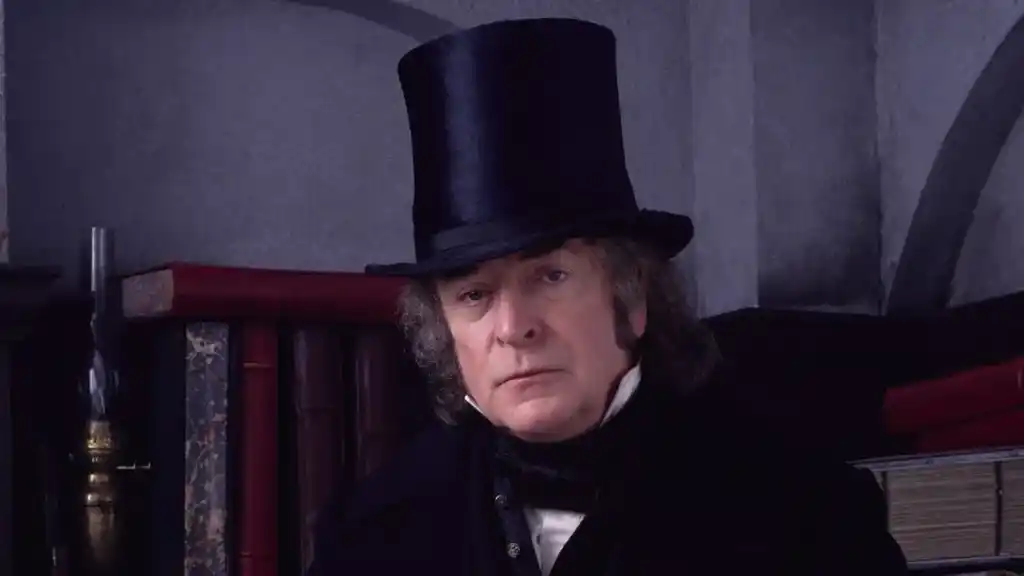
Ebenezer Scrooge in A Christmas Carol

Ebenezer Scrooge’s story is a classic example of a redemption arc. From the moment we meet him on a bleak Christmas Eve, we know he’s not a good guy. He’s callous with his overworked, underpaid employee and with the poor who come asking for donations. 

Michael Caine as Scrooge in a Muppets Christmas Carol
Michael Caine makes a pretty good Scrooge, right alongside some Muppets in A Muppets Christmas Carol. (Source: Walt Disney Pictures)

While his solitary, penny-pinching ways make his life — and the lives of those around him — miserable, he doesn’t seem like he’s going to change. That is, until the appearance of some ghosts, and a little bit of time travel, challenge Scrooge to re-examine his ways. 

The ghost of his old business partner, Marley, and the Ghosts of Christmas Past, Present, and Future force Scrooge to re-examine his life. They remind him of the better man he used to be, what he’s missing out on now, and the way his life will end if he continues on his current path. Deeply affected by what he’s seen, Scrooge vows to change his ways.

Once he returns to waking life, he immediately donates a huge sum of money to the previously-rejected charity, raises his employee’s pay, and goes to his nephew’s Christmas party. Scrooge even becomes a father figure to Bob Cratchit’s sickly son, further cementing his new commitment to doing good.

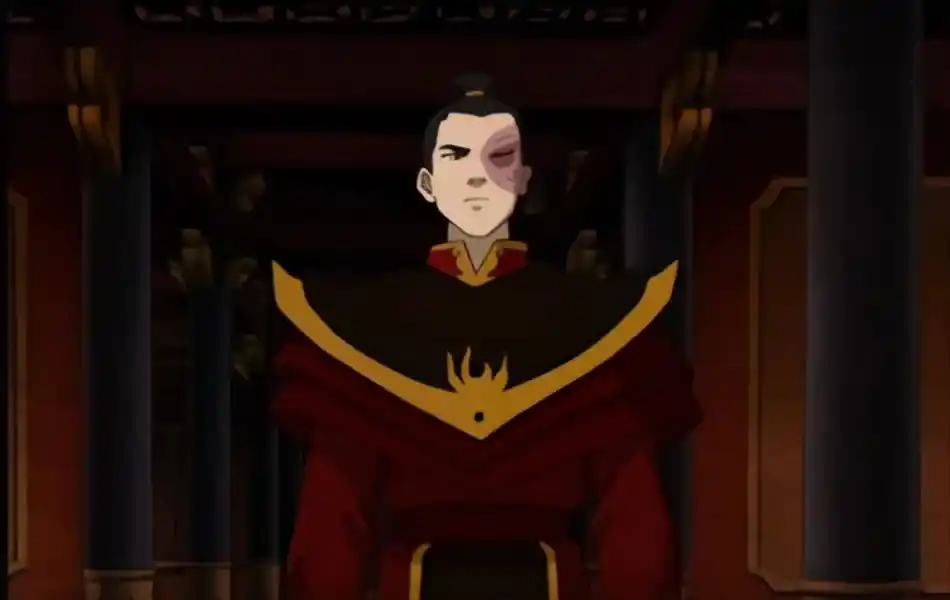
Zuko in Avatar: The Last Airbender

After being exiled from the Fire Nation by his cruel and demanding father, Prince Zuko has only one goal: capture the Avatar in order to regain his honour. The audience is first introduced to him as he does everything in his power to apprehend the main character, Aang. In other words, he starts the series as a fairly typical antagonist: hard, spiteful, and constantly doing whatever he can to stop the good Aang is trying to do.

But as we quickly learn, there’s far more to Zuko than meets the eye. He struggles with the expectations placed upon him by his father, a man who permanently scarred him (both physically and emotionally) for daring to speak up, and then sent him on a fool’s errand to get him out of the way. Zuko isn’t always sure he’s doing the right thing and constantly struggles to balance his father’s expectations with what he wants for himself — which is to be seen and respected for his achievements, without necessarily doing wicked things. 

Prince Zuko from Avatar: The Last Airbender
Prince Zuko eventually becomes Fire Lord Zuko, earning his redemption and restoring his honor. (Source: Nickelodeon)

Eventually, he is allowed to return to the Fire Nation with his honour restored, with the Avatar supposedly dead because of him. But his doubts never go away and he remains uncertain of his decision to “kill” Aang and return home. 

When he learns of his father’s plan to burn the Earth Kingdom to the ground, and of his own connection to the Avatar before Aang, Zuko decides he’s had enough. He confronts his father about his abusive treatment and imperialistic plans and declares his intentions to teach Aang firebending so the Avatar can stop him once and for all. Zuko sacrifices the one thing he’s always wanted, his father’s approval, in the name of the greater good — and, in the end, proves himself to be an honourable man. 

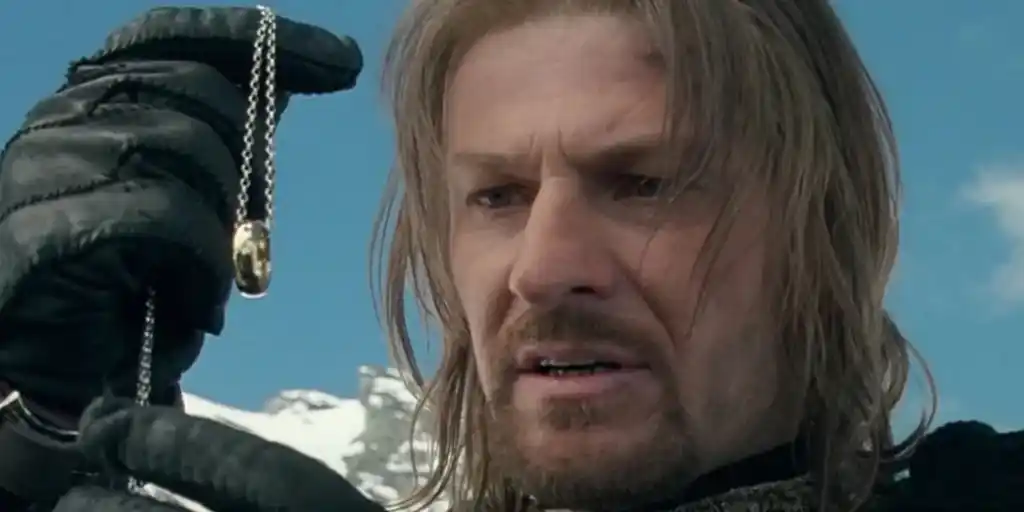
Boromir in The Lord of the Rings

On the surface, Boromir doesn’t seem like the kind of character who would need a redemption arc. A noble son of the kingdom of Gondor, he joins the Fellowship in their quest to destroy the One Ring with only the best intentions.

However, even he isn’t immune to the Ring’s corruptive powers, and as they continue on their journey, he becomes more and more aggressive in trying to convince Frodo to hand over the Ring to him so he can use it to defeat Sauron once and for all.

Sean Bean as Boromir in The Lord of the Rings
No one is immune to the temptation of the Ring, not even Boromir. (Source: New Line Cinema)

This comes to a head when Boromir attacks Frodo in the hopes of gaining the Ring. He doesn’t succeed, but this does break Frodo’s trust in the Fellowship and ultimately causes him to run away to complete the quest on his own. Boromir is consumed by guilt and, though unable to admit to his part in Frodo’s flight, he helps the rest of the hobbits search for them and fights to protect them from orcs — though he ultimately fails. However, he then manages to alert the rest of the company to the hobbits capture and admits how he failed Frodo with his dying breath. 

Boromir recognizes where he went wrong, and though he can’t make it up to Frodo, he proves himself a decent man in the end by defending his friends and giving the remaining members of the Fellowship a chance to save themselves.

There’s no one correct way to craft a redemption arc. Every character is different and so is their journey. But there are some key elements you should include to successfully convince your reader of a character’s change of heart. 

4 tips to write a redemption arc

1. Show them at their worst

First impressions make or break character. If you want the reader to root for them, you typically paint them in a good light from the start, perhaps by having them be generous to strangers or kind to children.

But when your character is in need of redemption, they likely won’t start off in such a good place. In fact, you want to show how terribly they’re doing, the evil deeds they’re committing, the way they’re being callous or pushing others too hard. 

For example, when we first meet Prince Zuko, he’s clearly positioned as the antagonist. He’s hunting Aang and attacks a defenseless village in an attempt to capture him, leaving a wake of destruction behind him as he goes. 

Showing your character at at their worst provides a stark contrast and sets the foundation for their redemptive journey, making the reader ask 一 will they ever change? And if so, how? 

2. Hint at why they are the way they are

Nobody exists in a vacuum, and past circumstances influence who a character is now. Perhaps the death of a loved one pushed them down a dark path, or the rejection of a parental figure altered the way they look at the world. Whatever it is, show the reader the motivation behind a character’s actions. 

This is important no matter what kind of character you’re writing — whether villain, hero, anti-hero, or soon-to-be-redeemed villain — but it’s especially important when dealing with a character you want the reader to give a second chance.

When we can understand a character’s motivations, we’ll be more likely to see their redeeming qualities and want them to do better. It doesn’t excuse what they do, but it offers an explanation, which allows a reader to sympathize, or even empathize, with them. 

3. Give them a moment of realization

As your character moves along their journey, they’ll learn new things about themself, achieve new perspectives, and perhaps have their morals and ideals challenged. These many small moments and thoughts will chip away at a character’s set ways until eventually, it crescendos into a defining moment. This is when they finally see the error of their ways and choose to set out on a different path — if not towards outright good, then at least to something better.

4. Let them atone through sacrifice

Demonstrating the character’s commitment to their new way of being is an essential aspect of the redemption arc. Actions speak louder than words, after all. To prove to both the audience and their companions how serious they are about changing, and to make up for their previous mistakes, a sacrifice will show their commitment. 

Many classic redemption stories will have a character heroically lay down their life for a new cause. While this is the ultimate form of sacrifice, and can be an impactful way to conclude a character arc, it’s also become something of a cliché. As an alternative, consider what else your character might sacrifice. Perhaps it’s their wealth, a prestigious position, or even a relationship that they give up in the name of the greater good. 

Whatever the sacrifice is, it should be big and important enough to your character that it would’ve been unthinkable for them to cast it aside when we first met them. With that, their redemption will be solidified and they will emerge a new person.”

Review: Origins

This book, by Lewis Dartnell and subtitled ‘How the Earth Shaped Human History’ caught my attention because it deals with the intersection of science, history and human evolution.

Lewis Dartnell is professor of science communication at the University of Westminster. He has won several awards for his science writing and contributes to the Guardian, The Times and New Scientist. He has also written for television and appeared on the BBC’s Horizon, Sky News, Wonders of the Universe, Stargazing Live and The Sky at Night.

Lewis Dartnell

This book is rich in its recounting of the history of humanity from its evolution in Africa to its spread across the land masses of the world. It then covers the development of the flora and fauna put to different uses by peoples in various parts of the world. This was our early agrarian existence. What we build with, from mud to marble is accounted for in a chapter which describes how these substances originated. Man entered the Iron Age with the smelting of iron ore, but there was also tin, copper, gold and more modern metals. We learn how these metals were formed, where they are found and why. Depending on the places where they settled, people became migrant herdsmen, settled farmers, or traders. The earth is a great ‘wind machine’ whose dependable winds are capable of carrying sailors to particular destinations of interest around the world. This led to exploration and the establishment of global trade. Finally, the discovery of coal and oil led to the industrial revolution, and we learn how these fuels were formed millions of years ago. Along this journey covering millions of years we discover why particular current facts were pre-ordained million of years ago. For example, one can trace the pockets of historic Democratic voting in regions of the American South, to the prevalence of large slave populations to cotton plantations, to particular soil which was left by an ancient receding sea. It is this kind of linkage of human culture and behaviour to geography which provides fascinating insights. Throughout the book there are references to the drifting and collisions of land masses, the resulting mountains and volcanoes, earth’s temperature changes, and the resulting lakes, seas and ice caps.

The book is well worth reading, even if one feels that one has a good sense of the geographic history of the world. It is the relating of the outcomes of that ancient history to specific present-day economic, political and cultural situations, with names, dates and places, which makes it so memorable and interesting.

Write for the Screen

Ryan G Van Cleave has an article on the Writer’s Digest website dated 6 April 2024 covering the techniques used by screenwriters to produce blockbuster movies. The same techniques apply when writing compelling fiction.

In addition to running the creative writing program at Ringling College of Art and Design, Ryan Van Cleave is Editor for Bushel & Peck Books and has authored 20+ books. As The Picture Book Whisperer, Ryan helps celebrities and high-profile clients write picture book and kidlit titles.

Ryan G Van Cleave

Ryan said, “As a writer, you’re not just a teller of tales. You’re a director, a cinematographer, a set designer, and an editor—all combined. Harnessing the cinematic techniques used by screenwriters can make your fiction zing off the page, pulling readers in with a vivid reality that they can “see,” “hear,” and “feel.”

Cue the Perspectives

Much like directors choosing the best angle for a shot, writers must find the perfect perspective for their story. Instead of settling for the predictable, stretch your creative wings and explore innovative viewpoints.

Create the Perfect Shot

Visuals in film serve as the language that brings the script to life, captivating the audience in the world the filmmakers have created. Similarly, in prose, the words you choose craft the images that populate the reader’s imagination. But how can you make those images as evocative as possible?

Start with the nuances—details that serve as the brushstrokes in the painting you’re creating. Whether it’s the sheen of sweat on a protagonist’s forehead, the ominous shadows on a villain’s face, or the dappling sunlight through a leafy canopy, these descriptions add depth to the story’s atmosphere.

Compare the standard description, “It was a stormy night,” with something more atmospheric like, “Lightning shattered the night, casting eerie silhouettes against the thundering rain-slicked cobblestones.” The latter not only sets the stage but also stimulates the reader’s senses, pulling them deeper into the narrative.

Daniel Knauf—creator of the HBO series Carnivàle and writer/producer for The Blacklist—points out that in contemporary screenplays, specific shots are rarely called due to a variety of reasons—primarily to allow the director to do his or her job. “Better to simply call out a telling detail, such as ‘John’s eyes flicker down to his attacker’s knife’ or ‘Janet twitches a smile,’ actions that can only be achieved with an extreme close-up. Likewise, a long or wide shot can be indicated as follows, ‘John stands alone on a desolate strand of sand at the edge of the Pacific.’”

Using Visual Cues

In film, visual cues such as color, depth, motion, and contrast are indispensable tools for eliciting specific emotional responses from the audience. For instance, a scene featuring a heated argument might employ sharp contrasts and rapid motions to intensify feelings of chaos or discomfort.

Can fiction writers do the same thing? “Absolutely,” says Knauf. “Imagine the character, their emotions within the context of the scene.” He offers the following examples to showcase this technique.

Version 1
Janet chuckled softly, the rim of a glass of Chardonnay resting on her lower lip. “Frankly, John’s a pain in the ass,” she said, “but I love him to pieces.”

Version 2
Janet held herself tightly, shrinking into the chair in the detective’s office as if attempting to will herself invisible. She took a nervous puff off her third Marlboro and said, “Frankly, John’s a pain in the ass. But I love him to pieces.”

The actions and settings of the character in the second version guide the reader’s emotions in a specific direction. This serves a similar purpose to visual cues in film—it sets the emotional tone of the scene. In essence, the setting and actions of your characters can function as your narrative’s visual cues. It’s another layer of storytelling that can add significant weight to your prose.

Maximizing Set Pieces

A set piece is a particularly dramatic or memorable scene in a film, often involving intense action or extraordinary visuals. In writing, these are your critical scenes—the moments of high drama, intense emotion, or suspenseful intrigue. They’re the scenes that make your reader’s pulse quicken and their eyes fly across the page. They’re the memorable, big-money shots.

A well-crafted set piece immerses the reader fully in the moment, using sensory detail and character reactions to heighten the experience. It’s not just about describing what’s happening, but making the reader feel as though they’re in the midst of the action.

For example, instead of saying, “The dragon attacked the village,” you could write, “With a roar that shook the mountains, the dragon swooped, emerald scales shimmering, and fire bloomed, transforming homes into a sea of flames. Villagers scattered, their screams lost in the monstrous inferno.”

Sure, this scene would be a nightmare for a film’s budget with all those CGI effects and a burning village set, but that’s not your problem—you’re writing prose, after all. Your budget is unlimited, so make your big moments as rich and spectacular as needed for the audience to be Hollywood-quality dazzled.

The Art of Transitions

Transitions in writing are like the dissolvejump cut, or fade out in films—they determine the pace and flow of your story.

dissolve can be likened to subtle shifts in time or perspective: “As the sun set, she finally allowed herself to sleep, and in her dreams, he was still alive …” Here, we dissolve from reality to dreams, moving smoothly from one state to another.

jump cut is a sudden shift, often used for surprise or emphasis: “He was enjoying his morning coffee when the gunshot rang out.” We jump from the mundane to the shocking with no transition, which mimics how such moments feel in real life. They’re abrupt and jarring.

Finally, the fade out allows a scene to come to a gradual close: “As he walked away, his form became smaller and smaller, swallowed by the distance until he was just a speck, then nothing at all.” The scene fades from the reader’s mind, providing a gentle, smooth closure. Of course, this is a popular option for a story’s final scene, but it works just as well for a chapter ending or a potent scene that requires a bit of space before the next scene gets cooking.

A transition is not merely a mechanical device to move from one scene to another; it is an artistic tool to help you build the right emotional resonance and rhythm. By mastering the art of transitions, you give your story the fluidity it needs to captivate from start to finish.

The Power of Pacing

In the world of storytelling, pacing is akin to the heartbeat of your narrative. It provides the tempo, setting the rate at which your story unfolds. Good pacing keeps readers intrigued, wanting to turn the page yet savor each moment. As you write, pay attention to sentence length, paragraph breaks, and chapter cuts to control the pace of your narrative. A well-paced story can be a gripping story.

Knauf adds, “Good pacing is good pacing in both media. Change up the delivery from sentence to sentence, short, short, long, short, long, long, short. Prose is like a dance. Find the rhythm inside your paragraphs. Start every scene at the last possible moment; end it at the first possible moment. In other words, don’t begin a scene before something interesting happens and end it as soon as things aren’t interesting anymore.”

Sound and Music

In film, sound and music are more than mere embellishments; they elevate the story, adding another layer to the characters and the worlds they inhabit. The soundtrack of a movie can make hearts swell or race, just as a well-timed silence can speak volumes. For writers, sound in prose isn’t heard through the ears, but it can be just as potent when felt through words.

“A writer can describe ambient noise lyrically to set a scene,” Knauf explains. “For instance, ‘The droning babble of the marketplace was punctuated by the bellowing pitches of the merchants, the laughter of children, the dickering back-and-forth of customers and vendors and the shrill cries of seagulls circling for tasty scraps.’”

Never underestimate the impact of a well-placed whisper or CLANG in your narrative. These elements add another layer to your storytelling and can help build a vibrant sensory world. And remember, these auditory cues work hand-in-hand with other cinematic elements like visual cues and perspectives to offer a more engaging and well-rounded reading experience.

Openings and Closings

In both film and literature, the first and last scenes are pivotal. They hold the power to hook your audience or leave them with a lasting impression. The way you introduce your characters and set up your world can make or break the reader’s commitment to your story. Just as important are your closing scenes—they provide resolution or set up a tantalizing cliffhanger that leaves readers yearning for more.

Knauf has made a career out of strong openings and closings. One of his best tips? “Starting very tight on the protagonist is a very effective technique. Raising questions like ‘Who is he?’ and ‘What’s he doing?’ suck the audience into the story. Likewise, pulling out is a great way to escort the audience out of a story. Or ending on an unexpected line is always good.”

Does he have an example of that last point? Of course, he does.

“You’re a monster!”

“Yeah. I know.”

Just like a great movie can be ruined by a poor ending, your story’s closing lines should be as carefully crafted as the first. Provide a sense of closure or a compelling hook, depending on what your narrative demands.

Final Cut

Write your fiction with the reader’s imagination in mind. Your words are the building blocks, but their minds are the theater where your story comes to life. By applying these cinematic techniques, you can make your work more immersive, engaging, and compelling.

You’re not just a writer—you’re a director, guiding your readers through a world that only you can create. Don’t be afraid to yell, “Cut!” and rework a scene. And when you’re ready, let your work shine in the spotlight.

Action!”

Slow Writers

Lauren Alwan has an article on The Millions website dated two days ago in which she discusses the virtues of being a slow writer.

Lauren’s fiction and essays have appeared in The O. Henry Prize Stories, The Southern Review, ZYZZYVA, The Bellevue Literary Review, Story Quarterly, Alaska Quarterly Review, Catapult, The Millions, World Literature Today, Alta Journal, and other publications. Her work is included in the anthology AMap Is Only One Story: Twenty Writers on Immigration, Family and the Meaning of Home (ed. Nicole Chung and Mensah Demary). She is the recipient of a First Pages Prize from the de Groot Foundation, the Bellevue Literary Review’s Goldenberg Prize for Fiction, and a citation of Notable in Best American Essays.

Lauren Alwan

“As a writer at work on a book that’s taken far longer than expected—a story collection begun in 2008 now a novel in-progress—I’m interested in how, in a world that values speed, the slow writer learns to tolerate the uncertainty that comes with the long project. Is it possible to tune out the noise of doubt and the proverbial ticking clock when writing goes into overtime? Having lost count of my revisions, and in need of advice, I went looking for other slow writers and discovered that more often than not, a book’s gestation takes place over years, frequently decades. I found too that the slow writer embraces the protracted and unpredictable timeline, seeing it not as fraught or frustrating but an opportunity for openness and discovery. As J.R.R Tolkien said to W. H. Auden, on the 12 years he spent writing Lord of the Rings, “I met a lot of things on the way that astonished me.”

The world can be impatient with slow writers. Nearly a decade after Jeffrey Eugenides published Middlesex, Dwight Garner wrote in The New York Times, “It has been a long, lonely vigil. We’d nearly forgotten he was out there.” Garner’s2011 article, “Dear Important Novelists: Be Less Like Moses and More Like Howard Cosell,” argues the “long gestation period” among the period’s young writers (Middlesex was written over nine) marks “a desalinating tidal change in the place novelists occupy in our culturre.” The writer, hidden away in monkish solitude, is no longer a commentator on events of the moment in the vein of, say, Saul Bellow. Bellow wrote four massive books in 11 years, and in doing so, Garner says, “snatched control, with piratical confidence and a throbbing id, of American literature’s hive mind.” Comparing Eugenides’s books, he notes, “So much time elapses between them that his image in dust-jacket photographs can change alarmingly.” Write slowly and not only do you risk being forgotten, you may no longer be recognizable.

Books known for their protracted writing time—10, 20 years or more—span genre, length, and era. Salinger’s Catcher in the Rye, 10 years. Min Jin Lee’s Pachinko, 28 years—and 11 for her debut, I Free Food for Millionaires Edward P. Jones imagined The Known World in his head for over a decade before writing it out in seven months, and John Steinbeck made notes for East of Eden for 11 years before writing it in a year of continual work.

Still, there are those writers who seem to work best at a clip. Anne Rice wrote Interview with a Vampire  in five weeks and Muriel Spark The Prime of Miss Jean Brodie in less than four. Kazuo Ishiguro drafted The Remains of the Day in four weeks—achieved, he’s said, by implementing a process he calls The Crash: “do nothing but write from 9am to 10.30pm, Monday through Saturday. […] One hour off for lunch and two for dinner. I’d not see, let alone answer, any mail, and would not go near the phone.”

Donna Tartt, known for long intervals between books, gets through on faith in the process. The Secret History was written over a decade, and The Little Friend appeared 10 years later. Of the 11 years Tartt spent on The Goldfinch (Garner describes the author during this time as “vanished”), she’s said, “Things will come to you and you’re not going to know exactly how they fit in. You have to trust in the way they all fit together, that your subconscious knows what you’re doing.”

Min Jin Lee has described the 28 years spent writing Pachinko—beginning with the novel’s inception during her student days at Yale to publication in 2017—as “far too long.” It wasn’t until years into the novel’s writing that the project took a turn. During a four-year stay in Japan, after interviewing Japanese Koreans in Osaka, Lee came to realize she’d “been wrong about everything,” and soon after rewrote the manuscript from the beginning. “I was so impressed by the breadth and complexity of the people I met in Japan,” she said, “that I had to start the book again in 2008, and I continued to write it and revise it until the sale of the manuscript in 2015.”

The writer engaged in the long project hopes for such turns of luck, and wanting to know firsthand how luck and persistence inform the long project, I turned to writers I know, hoping for advice on how to tune out my own questioning and cultivate a next-level order of patience.

John Huddleston, photographer and professor emeritus at Middlebury College, is the author of four books—hybrid works of text and image that examine time, history, and place. Killing Ground: The Civil War and the Changing American Landscape (2003), is the product of 15 years of travel and research, and pairs historical photographs of Civil War battle sites with contemporary photos of the same locations. Healing Ground: Walking the Farms if Vermont (2011), and At Home in the Northern Forest: Photographs of the Changing Vermont Landscape (2020) each took a decade, as Huddleston says, “to better understand what I was seeing.” His current project, an interrogation of Mexico’s religious sites and his own Catholicism—has run nearly 50 years. How does he pace himself? “I think the long periods of constructing my books have engendered a maturity in the editing and printing of images,” he says. “A more nuanced and interesting perspective develops with time.”

Drue Heinz prizewinner Leslie Pietrzyk, the author of This Angel on My Chest (2015), believes in staying open to change: “My advice is to remain flexible. Perhaps my greatest ‘being flexible’ moment was working on what I imagined was a novel about a political family for two and a half years, abandoning it, and picking it up again four years later.” She repurposed much of that material, including random and forgotten prompt pieces, into her most recent collection, Admit This to No One (2021), linked stories about power in Washington, DC.

Poet, essayist, and Fulbright fellow Natasha Saje’s five books include The Future Will Call You Something Else (2023), a book of criticism, Windows and Doors: A Poet Reads Literary Theory (2014), and a memoir-in-essays, Terroir (2020). Windows and Doors was written over 16 years, and Terroir, 10. A self-professed feedback junkie, she seeks out frank, even harsh readers. “There’s always some truth in what they don’t like,” she says, and then revises extensively, as she puts it, “like a maniac.”

Thaïs Miller wrote her first two books in less than a year and published both before she was 21. The author of Our Machinery (2008) and The Subconscious Mutiny and Other Stories (2009), Miller says of those early quicksilver efforts, “Beginner’s luck is an understatement.” Currently a PhD candidate in Creative Writing, her dissertation includes a novel begun in 2009, one that’s still finding its shape. These days, Samuel Beckett’s words, “Fail better,” are pinned on a board above her desk, a reminder that “writers are always failing to achieve a perfectionist ideal. […] These words let me off the hook and enable me to experiment and play with my work, to try out new things.”

How, amid doubt, does a writer keep focus, and pace herself over years, even decades? Saje says, “I write and then get pieces published, which gives me confidence that there will be readers for the book.” Pietryzk writes prompts around her novel’s characters and settings and the material often becomes short stories she publishes in literary journals. For Huddleston, over time the work “integrates into the self, into one’s life. I generally work intensely until I can’t stand it anymore, let the work sit, then repeat. If I have a particular problem I’ll often hold it in mind without actively thinking about it.”

This immersion over years, or decades, what George Saunders calls “rigorous, iterative engagement,” can be fruitful, but it can also make a book’s endpoint more difficult to see. Huddleston’s 50-year project, which is nearing completion, has in the end surprised him. “I’ve returned to the project many times after feeling it was done,” he says, and in doing so, encountered an unexpected complication: wishing the work could go on. Similarly, Vauhini Vara, author of The Immortal King Rao (2022), says of the 13 years it took to write her debut novel, “On some level I wanted to keep spending time with it, finding its unexplored corners, tunneling into its wormholes. I didn’t want to let it go.”

So—know when to let go, keep faith in the process, be flexible, fail better, and whenever possible, stay astonished. Though perhaps most importantly, recognize the value that comes with the passing of time itself. In The Art of Slow Writing: Reflections of Time, Craft and Creativity, essayist Louise DeSalvo writes, “We’ve internalized the idea that that the only actions worth taking are those that can be accomplished quickly, […] that if our writing takes so long, we might not be cut out for the writing life.” The Art of Slow Writing is a manifesto for giving a book the time it needs, for cultivating patience and connection. DeSalvo describes, among other things, the challenge of “not knowing how long a book will take, and being comfortable with not knowing.”

Of Jeffrey Eugenides’s slow pace, DeSalvo writes that he “works with rather than against the fact that his books take long to write.” The years writing Middlesex, she notes, saw both the death of his father and the birth of his daughter, and over time these significant life events led to preoccupations with family history and genetic discourse that found their way into the book: “He wanted the novel to respond to those changes as he worked.” This synergy can blur the line between life and art and make completing a long project its own challenge. But as DeSalvo observes, finishing isn’t really the end if “we see our writing life as a continuum,” a larger process that connects each project, whether short or long, within the learned experience of the writer’s practice.

And as DeSalvo notes, there’s always the next book.”

Review: LUKA

This novel was recommended to me by a friend, and as it is about civil conflict situations, I bought a copy.

The author, Ian Bancroft, is a writer and former diplomat based in the former Yugoslavia for over fifteen years. He has written travel articles for various publications, and he has produced foreign policy analysis for The Guardian, Radio Free Europe, UN Global Experts and others. Ian’s first book, ‘Dragon’s teeth – tales from north Kosovo’, was published in 2020.

There are four main characters in LUKA. ‘A’ is a beautiful girl who grew up in Old Town; she has lived through a prior war. She is single and now twenty-seven. ‘L’ is a talented young painter who also lives in Old Town. ‘U’ is a long-serving police officer who never questioned the wisdom of his superiors. ‘K’ is the mother of ‘A’, and an assembly-line worker in a munitions factors. She vigorously defends her father known by the nom de guerre ‘Jinn’, as in ‘djinn’, owing to his almost mystical ability to conjure things into existence. Her father is rumoured to profit from illegal arms sales. ‘A’s great grandfather – unnamed- also appears in the context of previous wars. Most of the book deals with the historic and current conflicts of Old Town, New Town, Upper Town and Lower Town. These are not straight forward military conflicts, but anti-civilian conflicts, involving snipers, rape, torture, imprisonment, and other crimes against humanity. ‘L’ is imprisoned in Luka, an assortment of warehouses in a port. His left hand, which he uses to paint, is crushed by an invisible woman using a hammer. The woman smells of vanilla. At the conclusion of the conflict, ‘A’ and ‘L’ plan to marry. ‘L’ visits ‘A’ at ‘K’s house, where he suddenly recognises ‘K’ as the woman who smells of vanilla. ‘K’ runs out of the house, pursued by ‘A’ and into a nearby forest which is mined. There is an explosion which ends the novel.

LUKA is almost a catalogue of crimes against humanity, presented factually, but there is relatively little explanation of the motivations, the reasons, impulses, etc. which generate these crimes. The characters are realistic, but the use of generic letters to identify them deprives them of flesh and blood. Similarly, the use of generic place names takes away their authenticity. The time line of the book is sometimes difficult to follow. The actual narrative covers about twenty years, but the historic references cover nearly a century. A more conventional structure, cause and effect, and real world identification would have been far more satisfying.

Feedback

Harry Bingham of Jericho Writers had this to say about feedback in last Friday’s email:

“One thing that mildly panics me when I offer advice via Feedback Friday is this: What if my advice is totally wrong?
There are some areas where I don’t have those worries. Sometimes, for example, I give specific editorial advice on a particular passage.
For example: “Your long second sentence would be better split over two sentences.” “The image of the X in this passage is interesting but currently a bit confused.” “You could lose word count here and still convey what you need to convey.”
In all those instances, I’d mostly expect any competent editor to agree with me, or at the very least to understand my concern. Exact strategies for dealing with the concern are legion, of course, but the editorial process is basically the same three steps, repeated endlessly: Figure out if you have a bad feeling; Figure out where that feeling is coming from; Figure out what to do about it. Those three steps are the same whether you’re a paid third-party editor, or a free beta-reader, or just you re-reading and re-editing your own work.
Obviously, the editorial process would be a bit pointless without that third and final step, but the first two steps are often the ones that feel transformative. “Oh, gosh, you’re right! Now I know why I felt uneasy and I can already see several different solutions all of which could work.”
Likewise, if I’m talking about something very brief and self-contained – an elevator pitch, for example – I feel well-qualified to offer feedback. Coming of age story in the world of Shakespeare’s Macbeth? That’s a wonderful, saleable pitch, and I’d pick that book up in a bookshop. Near-future eco-disaster novel for adults involving mermaids, flying killer robots and a talking rabbit? Um. Maybe not quite so good. Even here, it’s hard to be confident quite what I’m criticising.
If I come across a less-than-compelling elevator pitch, is it the pitch that’s at fault (a simple fix)? Or is it that the book itself doesn’t work (a terrifying prospect)? Because of this uncertainty, I try to proceed gently but I do tend to trust my gut feeling about the material in front of me. Other reasonable people might disagree, but I’d expect my views to be echoed by most genuinely competent judges. (Though, having said that, I’m meaner than most. Whenever I’ve given feedback alongside agents, I’m almost always pickier than they are. I’m Simon Cowell, minus the botox.)
Then we get to some more delicate areas. In last week’s Feedback Friday, we looked at very brief plot synopses. Thar’s a super-useful exercise for any writer because it forces them to consider the top-level shape of their plot as well as the causal unity of it. (What do I mean by causal unity? Simply that most novels don’t work if it’s one thing, followed by another thing, followed by another disconnected thing. We want the various events to flow, seemingly inevitably, from the one event that incites everything.) In those cases where I was underwhelmed by a synopsis, what exactly should the author deduce? That the synopsis is poor? That the book’s basic plot structure is poor? Or just that Harry didn’t like something, as a matter of his own personal taste? Honestly, in a lot of cases, I think any one of those three explanations are possible.
A short synopsis isn’t much to go on and a certain humility is in order from anyone offering advice. Much the same goes for any criticism of a passage where context is significant. So let’s say for example, I’m not that impressed by a passage where Princess Kara faces the dark Lord Mephilo. Suppose I think that Princess K just wouldn’t be likely to say or do X, or that a particular emotional reaction feels awry, or something else of that sort. Well, is that because the passage isn’t convincing? Or because there’s backstory dealt with elsewhere in the book which makes those things explicable? Again, any sane editor just has to approach questions like these with humility. All you can do is note an uneasiness and let the author use that observation in any way that’s helpful. In the end, the responsibility is always yours, the author’s. The issue isn’t really whether you like what I, or some other editor, say. Often enough you won’t. But I want the mermaids! I insist on keeping Pep the Talking Rabbit! And fair enough: this is your book, not mine. The question is always, “Is this comment useful?” Does it illuminate something? Do you the author get an insight that you personally find useful and actionable? Authorial responsibility never changes, no matter how far you go. Comments from me via Feedback Friday? Comments from an editorial buddy or beta reader? Detailed comments from a pro Jericho Writers editor following a read of your entire manuscript? Comments from an agent? From a publishing editor? From a copy editor who’s preparing your manuscript for publication? You must never let go. The manuscript remains yours. I literally don’t let a publisher change a comma without my approval.
When I’ve had copy editors who didn’t get my style, I’ve been through a whole 100,000+ word manuscript reversing the changes that have been made. It’s your book and no one else’s. Ever If a comment chimes, use it. If a comment doesn’t, disregard it. If a comment alerts you to a particular issue, but you want to deal with the issue in some way other than the one suggested, then go with your solution.
It’s your book.”