Trends in Novel Genres

Chip MacGregor is a “book guy” by his own admission, and he runs the MacGregor Literary Agency.  He was asked recently: “Can you tell us the latest trends you’re seeing in fiction?”  Here is the (abbreviated) answer from his blog:

index

Chip MacGregor

The continued growth of romance — particularly historical romance. Let’s face it, last year the publisher who saw the biggest growth was Harlequin, and they did it in a down year for most publishers. Readers in a bad economy like to escape by reading romance novels. You can roll your eyes if you want to, but it’s the truth.

Thrillers aren’t selling like they used to.  James Patterson and other bestselling novelists can still move large quantities, but once you move away from the bestselling authors, it’s much slower (and, frankly, much harder to place a new novelist). 

There is a renewed interest in Americana, particularly during sunnier days. We’re seeing interest in the Victorian and Edwardian periods, for example (assuming it’s fair to use British terms for American history). That seems to be a trend away from seeing so many wartime sagas — perhaps a reflection on our fatigue with the never-ending war in Iraq. 

We’ve seen a lot of growth with fiction that surrounds historical events. Not a retelling of the events, but of stories that touch on history. So, for example, we’re not seeing novels that re-tell the assassination of President Lincoln, but we ARE seeing novels that have to do with people who were in the vicinity, or who knew John Wilkes Booth, or who were at Ford’s Theater, or who were part of the chase to catch the conspirators, etc. Again, not so much focused on the event itself, but on characters who were influenced by the event. 

Literary fiction is definitely a growth category in American publishing. Take a look at any bestseller list, and you’ll see a lot of literary fiction. Not only that, but many of the books have a clear spiritual thread — something I don’t see many people recognizing or reporting on. 

One of the most-reported growth trends has been in paranormal fiction.

 I see mixed signals in the horror category. Some think it’s up; others think it has run its course. I don’t have a firm opinion one way or the other. 

Of course there has been huge growth in the Christian/inspirational category over the past 7 or 8 years. The incredible growth has slowed, making some think religious fiction is hurting, but that’s just not true. Christian fiction is still a HUGE category, and there is still growing interest from those houses who were late to jump on board during the heyday. So while, yes, we’re not seeing the big growth in titles that we did a couple years ago, compare the number of titles and the number of genres and sub-genres to what we saw just three years ago. 

One of the most visible areas of growth in the inspirational category has been Amish fiction (or “bonnet novels”). Some people have said that it’s going to fade out, but I don’t believe it. I think it has established itself as its own sub-genre. What Bev Lewis started and Cindy Woodsmall followed has turned into its own category of fiction. That sort of thing happens sometimes — consider Louis L’Amour creating the giant interest in westerns, or Edgar Allan Poe basically establishing horror fiction. People are still buying it, so it has clearly found its audience. 

He goes on the mention the growth of small presses (including those who specialise only in the production of e-books) and the growth of e-books themselves.  He continues: “I don’t think ink-and-paper books are going away any time soon — most every reader still loves printed books. But I’ve got three kids in their 20’s, and all of them are comfortable reading a book on a screen — even an iPhone screen. That tells me when their generation is in charge, the e-book will be a core business, not a side business. It will be a major part of every publishing decision, not simply a sub-rights discussion. 

I can comment on two genres mentioned above: thrillers, and spiritual literary fiction.  Five of the soon to be seven books I’ve published are in these two categories.  The three thrillers I’ve written are all pretty gripping, and realistic.  But, I’m beginning to feel ‘been there, done that.  Sable Shadow & The Presence is spiritual literary fiction, and it has won eight (minor) awards to date.  Writing it and the reaction I’ve had to it have motivated me to (nearly) complete my seventh novel, which has a definite spiritual dimension, and is set in the Middle East.  In spite of the fact a tremendous amount to research was required, I greatly enjoyed the experience.  I’ll tell you more about it as soon as the publishing contract is signed.

Review: Classical Arabic Philosophy

I bought this book as a resource. My latest novel has, as its principle character, a professor of philosophy at a prestigious Egyptian university. I wanted to be able to refer to actual teachings of classical Arabic philosophy in his interactions with students and to use some of the philosophical discussions to help make some of the conclusions in the novel. In these two respects, the book was an excellent resource. I could have the professor discuss the teachings of a particular ancient philosopher with a student, quoting the philosopher by name, dates of birth and death, place of origin, philosophical interests, and exactly what he had written. I could also use what a philosopher had written to establish a point I wanted to make in the novel.

index

The book has a useful index of key words, both in English and Arabic. The text, however is largely in English. It also has, for the serious reader, clarifying footnotes, and an extensive bibliography. The preface will acquaint the reader with the methodology used by the authors in the selection and translation of the material. The introduction gives the background of the classical Arabic philosophy, which is – to a large extent – derived from Greek, particularly Aristolean, philosophy. What I found of particular interest was that the first prominent Arabic philosophers appeared barely two hundred years after the founding of Islam in 622 AD – well before their Western counterparts. While Greek philosophy provided a foundation, there were philosophical debates within Islam which also provided grist for the mill.

The book includes translations of selected, verbatum writings of a dozen philosophers who lived between the 9th and 13th centuries AD. Subjects of discussion for the Arabic philosophers included physics (motion, force, change, etc.); metaphysics (being, knowing, identity, time and space); theology (God, the soul, eternity). The language used by the Arabic philosophers can be quite turgid and difficult to follow. I suspect this was more the convention of the era than a fault in the translation. Also, the use of logical conventions, which appeared in the West later, were not available at the time to structure a clear proof of a theory.

This is not a book that one would want to read for pleasure unless one were a practicing philosopher. It could serve as a text book in the teaching of philosophy. And it is an excellent reference work.

Review: Where My Heart Used to Beat

Christian Faulks’ new novel is the story of a male psychologist, Robert, told in the first person.

index

Sebastian Faulks

Robert is a middle-aged and living alone with his dog.  There is a girl friend  who ditches him for incongruous reasons.  His social life seems rather awkward, and his practice somewhat neglected.  Robert was two when his father was killed in the First World War; he was brought up by his mother in rural England in constrained financial circumstances.  Robert, however, was a good student: selected for grammar school, and able to get a place at a good university, he joined a partnership with others psychologists who ran a care home for people with severe psychological problems.

He receives a letter from an aging army colleague, Pereira, of his father’s who lives in the south of France and who promises information about his father, as well as the opportunity to manage some psychological intellectual property.  Having accepted Pereira’s invitation to go to his house on an island in the Mediterranean, Robert discloses much of his history.  He joined the army in the Second World War and fought in North Africa, later in Italy. His experiences in Italy are told in graphic detail.  They left a lasting impression on him.  While he is on medical leave recovering from a serious wound, Robert meets an Italian girl, Luisa, and the two fall hopelessly in love.  However, the two are separated when Robert is called back to duty.  He later learns that the Italian girl has gone back to her husband.

We are brought back to the present (1970’s), and Robert is sought out by the brother-in-law of Luisa.  Luisa is very ill and wants to see Robert again.  They meet again, but I won’t give away the ending of the story.

Where My Heart Used to Beat is a solemn, somewhat pessimistic story, and one of the themes of the novel has to do with the extent to which we have choices in life.  Nonetheless, I found it hard to put down.  One is torn between sympathy for the difficulties Robert faces, and frustration that he does not make better choices for himself.  Faulks does an excellent job building Robert into an understandable, complex character.  We are aware of his thoughts and feelings as well as his actions. Some of the psychological sub-themes didn’t work for me: for example, Robert has a theory that some severe mental illnesses have cellular causes.  The arguments for the theory were rather obscure and I failed to see the relevance of the theory to the novel.  Unless it is that our choices is life are limited by the cells in our brains, but, as I say, this didn’t work for me.  What did work was the picture of a tragic life that could have been less tragic.  The story of that life is beautifully written, and attention-capturing.  Most of the events in that life are rather extraordinary.  This, I think, makes it more difficult to draw general (ordinary) conclusions from it.

Review: The Power of the Dog

This novel is probably the grittiest I have read. I mean ‘grittiest’ in the sense of terse, violent and gripping. In 541 pages, Don Winslow sets out a compelling picture of the drugs wars in the America from New York City to Columbia. Nothing is withheld, abbreviated or glossed-over: the actions, reactions and motivations of dozens of very real characters. The scope of the novel draws in not only the drugs lords, the law enforcers and their subordinates on many levels, but also the politicians, and the military, so that, ultimately, it is not just about drugs, but also about perceived national interest and long term political strategy. One has to admire the depth of research Winslow must have completed to write this novel. The details of places, organisations, and procedures are all there with crystal clarity. One is tempted to believe that this is not a novel, but a description of the real world.

index

Don Winslow

The characterisations are excellent. There are about six characters who make it all the way through the book, and dozens more who fall (or are pushed) by the wayside. Each of the characters is distinct, and none is completely repellent: we understand their motivation even if it is just survival. The dialogue is terse, but fit for purpose.

One challenge for a reader of this novel is being able to connect the threads of location, character and motivation, as the story skips around from place to place. But Winslow is not trying to tell a simple story, and his skipping about technique reinforces the overall message: this game is very complex.

I found the book hard to put down, but when I did, I looked forward to finding out ‘what happens next’.

Winslow’s style of writing is not ‘literary’. This is not a work of literary art; it is a fast-moving story told in the street language of the characters themselves.

This book is not a pleasant read: the casual violence can be gut-wrenching, but if you are a reader with a strong stomach, and a love of realistic, complex and, ultimately, important action, this is the book for you.

Review: Dark Waters

A friend of mine who is aware of my US Navy background, gave me a copy of Dark Waters, An Insider’s account of the NR-1, the Cold War’s Undercover Nuclear Sub. The authors are Lee Vyborny, who was a member of the NR-1 crew and Don Davis, a news correspondent.

I was interested, not because I served in submarines – I didn’t – but because I spent four years in destroyers whose mission it was to destroy enemy submarines. There were plenty of exercises during which we practiced hunting and killing submarines. One particular exercise comes to mind: my ship had just finished a refit in the Brooklyn Naval Shipyard and was sent to Guantanamo Bay for training exercises. One of our new weapon systems was AsRoc, an anti-submarine missile system which could be armed with either a state-of-the-art torpedo or a nuclear depth charge. We were also fitted with an advanced sonar system. Our first exercise one morning was to hunt down and ‘destroy’ a US Navy submarine which was playing ‘the enemy’. As soon as we were clear of the harbour, our sonar picked up the submarine at a distance of 10,000 yards (five miles). The captain sent the submarine an underwater telephone message telling them that the exercise had begun. Immediately, he fired an AsRoc with a dummy torpedo. The missile took off with a tremendous roar and splashed down within 200 yards of the submarine. The torpedo detached from the missile, energised its sonar, discovered the submarine, and ran toward it, hitting the submarine’ hull with a clang.

Dark Waters tells the story of the creation of NR-1 and its subsequent use.   The motivations for designing an autonomous, deep-diving submarine were multiple. The loss of the USS Thresher with its entire crew in an accident in the North Atlantic suggested the need for a deep rescue vehicle. The deep-diving vehicles which existed in the mid 60’s were either limited in their depth capability or were tied to a surface vessel. There was also an accident involving a B-52 bomber in which a nuclear weapon was dropped into the Atlantic off the coast of Spain. How to find it in deep water? And then there were almost endless possibilities for snooping on the Soviets.

Admiral Rickover was given responsibility for the Deep Submergence Systems Project. I had an interview with the admiral in 1964 in his rather scruffy office in Washington. He was assisted by the captain of the first nuclear aircraft carrier, USS Enterprise, who was in dress white uniform; the admiral was in casual civilian clothes. “Why did you have so many D’s in college?” the interview began.”

“I don’t recall that I did, sir.”

“You did. Why?”

“I don’t know, sir.”

“Are you stupid or are you lazy?”

“I must be lazy, sir.”

“How can you afford to be lazy? Is your father a millionaire?”

“No, sir.”

“Lieutenant, let me ask you a question. Suppose your wife served a pie that was absolutely awful. What would you do?”

“Well, sir, I wouldn’t say anything and she would ask about it.”

“That may work for you, lieutenant, but let me tell you the correct answer. You should pick the pie up, throw it on the floor and say, ‘this pies isn’t fit for the dogs. Get another baker!”

I received orders to go to the nuclear submarine training school, but I resigned from the Navy.

I can say that the authors paint a very accurate picture of the man who was dogged, insensitive, brilliant and highly effective in achieving his vision. I certainly enjoyed reading more of his episodes of shameful manipulation!

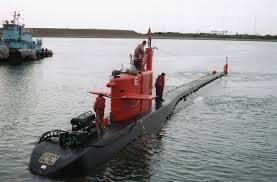
The NR-1, being nuclear powered has a theoretically unlimited range submerged; it is, however, underpowered, which limits its speed to about six knots and makes it somewhat vulnerable to rough seas when surfaced. It is small: about 250 tons, 130 feet long, 13 feet in diameter, with a crew of about a dozen.

index

NR-1

The book covers the selection and training of the crew, what life was like on board and some of the assignment which NR-1 was given. One of the assignments, for example, was the recovery of a US Navy F-14 jet fighter and its highly classified air to air missile. Both were lost in a launch accident off the west coast of Ireland. The recovery was severely complicated by the presence of the Soviet navy which also wanted to make the recovery. Its classified missions (and there must have been some of them) are not discussed. One point which stands out for me is the many mishaps that befell NR-1. In fact, the authors say: “Few ships in naval history would have as many close calls, repeatedly, over many years, than its smallest nuclear-powered submarine.” I often wondered, when reading: couldn’t that problem have been eliminated by design?

The book is certainly well-written: the technology is understandable, the human interactions are revealed with particular skill, and the pace of the story is about right. I felt that there was not enough ‘meat on the bones’: the most exciting episodes involved malfunctions of NR-1 rather than espionage derring-do. (Probably because the Navy wouldn’t grant permission for those episodes to be published.) Having said that, for those who have in interest in submarines, it is recommended reading.

Review: Remains of the Day

This ‘modern classic’ was first published in 1989, and won the Booker Prize that year. While I had heard of the novel, I had never read it; I was further motivated to read it as a Booker Prize winner and by the author being a Japanese writer I didn’t know.

Kazou Ishiguro was born in Nagasaki, Japan in 1954 and moved to the UK at the age of five. He has written six novels, all of which have won prizes or received major recognition. He currently lives in London with his wife and daughter.

untitled

Kazou Ishiguro

The novel is told in the first person by Stevens, who was the butler in Darlington Hall, which was the residence of Lord Darlington in the 1930’s. Darlington Hall was a grand place, with many servants, Stevens having overall responsibility. Lord Darlington was a man of considerable wealth and influence, both socially and politically. He died after the war, and Darlington Hall was sold to an American, Mr Faraday, who has downsized both the staff and the use of the Hall.

Much of the book is Stevens’ recollections of events that took place when his lordship was in residence, and we learn that Stevens is preoccupied with the extent to which he was (like his father) a top butler. Stevens comes to define a top butler as a true professional who carries great dignity to his profession. The descriptions of relationships (and dialogue) among staff and with the lord of the manor are brilliant: they convey clearly the culture of the English aristocracy in the 20’s and 30’s.

Mr Faraday plans to be in the States for an extended period, and he suggests to Stevens that he take the motorcar on a sightseeing trip. Stevens accepts his offer and coincidently decides to call on a Miss Kenton who was the one who supervised all the housemaids at Darlington Hall. Miss Kenton left the Hall years ago, and has married. Now, Stevens wonders whether he can persuade her to return to the Hall, as there are hints that her marriage is in difficulty. The working relationship between Stevens and Kenton was very formal, but one cannot help but wonder if there is an unacknowledged attraction between them.   In the last chapter, they meet again, and the message of the novel is revealed: Stevens muses: “After all, what can we ever gain forever looking back and blaming ourselves if our lives have not turned out quite as we might have wished?”

The novel moves at a very leisurely pace, with very little action. Major events are recounted by Stevens factually and without emotion. The characters, the setting and the story-telling all completely support that retrospective, self-doubting theme. In spite of Stevens’ wordiness, his character shines through in a way that he is able to maintain the reader’s attention.

If one is looking for tale with plenty of action and excitement, The Remains of the Day would not be a good choice. But if one would like to curl up with a superbly-written story, immersed in history, and long-forgotten characters, a story that succeeds admirably in making its point, then Remains is for you.

As a sort of aside, I would add that the criteria for winning the Booker Prize may have shifted over the last twenty-five years. It’s hard to imagine that a novel with little overt physical or emotional action could win, given the level of current competition.

The Guilty Secretes of E-book Readers

There was an article in The Daily Telegraph last week which reported on the popularity of titles of e-books vs titles of physical books.

“A newly published list of Amazon.co.uk’s biggest selling e-books of the year features psychological thrillers, misery memoirs, Mills and Boon and a book by the Tory MP Nadine Dorries, whose first work was memorably described by a Telegraph reviewer as “the worst novel I’ve read in 10 years”.  Notably, 18 of the top 20 authors were women, including thriller writers Angela Marsons, Fiona Neill and Rachel Abbott.

“However a parallel list  of physical books compiled by Waterstones to cover the same period is significantly more highbrow, and features four times as many male authors.  They include Richard Flanagan, author of the Man-Booker Prize-winning The Narrows Road to the Deep North, and Anthony Doerr, with his All the Light We Cannot See.  There were also books by Colm Toibin, Ian McEwan and Victoria Hislop.  The print list is topped by Harper Lee’s Go Set a Watchman, which does not make the Amazon e-books list.

“There is some overlap.  Paula Hawkin’s runaway bestseller The Girl on the Train, and the latest risqué offering form E L James appear in the top three of both lists. But the disparity between the books we put on show and those we download suggests that e-book reads can be ‘guilty pleasures’.

“Benedict Page of The Bookseller said: ‘There are certain kinds of books that people like to own.  If they have a favourite heavyweight literary author who they have followed for many years, they are likely to want to possess the printed book because it’s beautiful and durable and represents a readerly commitment.'”

I think that Page’s analysis is probably correct in that we tend to regard e-books as disposable, and printed books something to be retained. The high proportion of female writers on the e-book list is interesting.  My theory would be that at least some of the female authors on the e-book list write primarily for women, and are more interested in achieving volume than literary recognition.  I’m also guessing that more women than men own e-book readers.  These two theories seem to converge on the supply and demand sides.

What’s your view?

Review: Nichijo: The Testimony of John Provoo

As a participant in the Reader’s Favourite book review scheme, I had to select a book from among those that had been submitted for review. Nearly all of the books submitted are in electronic format. I prefer hard copies, so I selected the book I wanted to read and bought it on Amazon.

Nichijo: The Testimony of John Provoo interested me for several reasons: It concerned the Second World War in the Pacific, and there were elements of Buddhism and Japanese culture. (I read much of the book while on a recent trip to Japan.)

IMG_20150605_0001

The author is John Oliver who has a Batchelor’s degree in Political Science and Religious Studies from the University of California at Santa Barbara.  He was working in Hawaii when he met John Provoo and decided to tell his story. The book is therefore an autobiography; as it is written in the first person.

According to his ‘testimony’, John Provoo grew up in San Francisco, having been born in 1917. He was attracted to Buddhism and believed in the sanctity of all life. In March 1940, he went to Japan to study for the Buddhist priesthood.   He returned to the US in May 1941 under the threat of imminent war, and enlisted in the US Army. He was sent to the Philippines where he worked as a clerk in Army headquarters in Manila. He was captured by the Japanese in the Battle of Corregidor and became a prisoner of war. Much of the book concerns his time as a Japanese prisoner. Because of his fluency in Japanese and his understanding of Japanese culture he often had to deal directly with his captors. This led simultaneously to somewhat more lenient treatment of fellow prisoners and suspicions by the same fellow prisoners that Provoo was giving aid and comfort to the enemy. When he returned to the US, he was accused of collaboration with the enemy, was acquitted and re-enlisted in 1946. For most of the next ten years, he was pursued by the US Justice Department for treason, and underwent several trials, during which his homosexuality was used against him. Eventually, he was acquitted and went to Japan to complete his Buddhist training and to Hawaii, where, as a high level Buddhist priest he lived the rest of his life, dying in 2001.

One has the sense, in reading the book, of an honest re-counting of history, and, as such, it makes very interesting reading: in particular, the conflicted position in which a Japanese-speaking Provoo found himself as a Japanese prisoner of war; the shameful conduct of the Justice Department in mounting a hugely costly campaign against him and in using his homosexuality against him. It appears that John Oliver undertook a considerable amount of independent research to complete this book, and that he did not rely only on what Provoo told him.

There are several areas that are worth mentioning. John Provoo was clearly a very complex character, but one does not get a full understanding of this complexity in the book. Rather, the emphasis is on the historic (what was done) rather than the psychological (why it was done). Might it have been a more interesting piece of literature if instead of being entirely in the first person, the author had intervened as the narrator now and then? In the latter part of the book, there is too much name dropping (who the various interested parties were), and on exactly what they said. I think it would have been sufficient to summarise the key points, and use footnotes where essential. While the writing is good and effective, there is very little description of the various environments in which Provoo found himself: again the emphasis on history rather than literature.

That said, Nichijo, (Provoo’s name as a Buddhist priest) is quite an interesting read. I enjoyed it.

Review: H is for Hawk

Having read Henry Marsh’s Do No Harm, which was shortlisted for the Costa Book of the Year Award, I have now read H is for Hawk by Helen Macdonald which won the top prize.

IMG_20150522_0001

H is for Hawk tells the experiences of Helen Macdonald, a writer, illustrator, historian and lecturer at Cambridge University in training a wild hawk. Macdonald had some advantages in this task: she was fascinated by falconry and hawks as a child, and she had experience of hunting with hawks, but she had never trained a wild hawk to hunt. There was a major disadvantage: her much-loved father, a renowned photographer, had just died suddenly when she acquired the hawk for £800 from a breeder in Northern Ireland. Much of the book deals with the intense commitment and frustrations which the falconer must endure over the lengthy process of winning the trust of a wild predatory animal so that it works together with the falconer in killing wild game. The goshawk in the book has personality: feral, proud and beautiful, unpredictable, iconic. One learns, incidentally, that Macdonald is a scholar, an intelligent and sensitive person, but the author also exposes her vulnerabilities: in particular, her crippling grief over the loss of her father. In parallel with the story of Macdonald’s goshawk, she tells the story of T H White, now deceased, a dedicated, but somewhat eccentric falconer and the author of The Goshawk. We learn of his mistakes and his anguish as he tries to train a goshawk. So this book operates at several levels: a present, objective account of the training of a wild hawk; there is a past, reported account of the training of a different hawk; there are psychological explorations of both the author and her role model, T H White. This may sound rather complex, and, in a way, it is, but Macdonald weaves it all together beautifully so that it is quite natural.

The writing, in style and language is exquisite. In particular, the descriptions of natural settings and the behaviour of the hawk are breath-taking. For example: “. . . she (the hawk) sees something through the trees, out there on the other side of the hedge. Her pupils grow wide. She snakes her neck and flattens her crown, and the tiny grey hair-feathers around her beak and eyes crinkle into a frown that I’ve learned means there’s something there.” And: “The fields are shorn, yellowed into stalky, rabbit-grazed sward spotted with foraging rooks.”

H is for Hawk is clearly a major labour of love. This love and its result: a durable classic about nature, surely merited the Costa Award.

As a child, I was very interested in falconry; I read everything I could lay my hands on the subject – even flirting with the idea of obtaining a hawk. For me, H is for Hawk has a special resonance, but I suspect that some potential readers may be put off by a book on falconry. For those potential readers, I would say, “This isn’t just a book about falconry. It’s a book about nature, the human condition, grief, joy, life and death.”

Review: Do No Harm

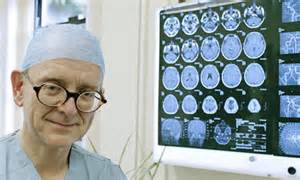
My wife recommended this book to me.  It was written by a neurosurgeon, Henry Marsh, to whom she was referred with back pain.  We both met him in his outpatient clinic, and he impressed us – partly because he said that no surgery would be required.  When Mr Marsh’s book was published and was shortlisted for a 2014 Costa Award, my wife naturally wanted to read it.

thNU4LCIHQ

Henry Marsh

The book is subtitled “Stories of Life, Death and Brain Surgery”, and I found it to be a very engaging read.  The subject matter: brain surgery is quite mysterious, but Mr Marsh explains procedures so that the main points are quite understandable without being technically obscure.  His writing flows pleasantly, and sincerely; one never feels that he is the least bit condescending.  In fact, he lays bare the mistakes he has made in surgery, and reveals the anguish he has felt.  Successful, life-saving procedures are dealt with matter-of-factly.  With twenty-five chapters, each dealing with a different condition, one feels well-exposed to brain surgery.  Mr Marsh tells the reader of his development from nursing aide to med school, through the doctors’ hierarchy to consultant, and includes vignettes of the teaching of junior doctors.  The book is not from a doctor’s perspective only; he reveals the thinking and the feelings of patients, too.  The hospital setting is covered: nurses are caring but over-worked; managers are bureaucratic, unsympathetic and stubborn.  Stories from his voluntary practice in Ukraine are included, as well, and these provide a strong contrast to the state of the art and the clinical and management culture in the UK.

One can’t help but feel, as one reads the book: Why in the world would anyone want to be a neurosurgeon, given the complex opportunities for failure?  Mr Marsh doesn’t answer this question directly, but I think his view would be that the euphoria that one can feel from saving a life or advancing the technology more than offsets the anguish one feels from a mistake that leaves a patient paralysed.  Given, therefore, that a neurosurgeon has control over the life and death of his (or her) patients, Isn’t it tempting for a neurosurgeon to feel like a god?  Again, Mr Marsh does not answer directly.  He seems to say that any pretence at being a god is destroyed in the humility of the learning process.

Do No Harm was one of five books shortlisted in the biography category of a Costa Book Award in 2014.  The winning book was H is for Hawk by Helen Macdonald about  her struggle to train a goshawk.  On the face of it, one would think that Marsh’s book would have a leg up: after all, a book about the ramifications of life-saving surgery sounds more important than the difficulty of training a very wild animal.  Perhaps a clue can be found in what the Costa judges said about H is for Hawk: “A unique and beautiful book with a searing emotional honesty, and descriptive language that is unparalleled in modern literature.”  I haven’t read H is for Hawk, but what I think the judges are saying is that Helen Macdonald’s writing is what won the prize for her.  Still, I would recommend putting Do No Harm at the top of your reading list.