Why Are Book Editors So Expensive?

There is an article with the above title in the IBPA Independent magazine, December 2017, written by Belinda Pollard which is of interest because I often wonder about the size of the bills I receive from editors, both structural and copy.  Belinda Pollard is a writer, editor, and publishing consultant based in Brisbane, Australia .

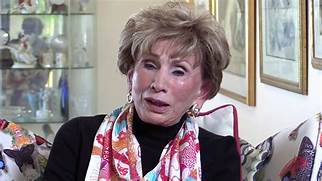
Belinda Pollard

She says: “In all my years as a book editor and chatting with other editors and authors, I’ve noticed two key misunderstandings about the whole process. First, editing a book takes longer than most people think. Second, an editor’s fee covers much more than their salary.

Good Editing Is Time-Consuming

Wikipedia tells us: “The average adult reads prose text at 250 to 300 words per minute. While proofreading materials, people are able to read at 200 wpm on paper, and 180 wpm on a monitor.”

So, let’s say someone is going to read carefully (not just skim) your 100,000-word crime novel at 200 wpm. That adds up to about 8.5 hours just to read your book once. A quality edit usually involves two readings, at least. At the 200 wpm rate for careful reading, we’re up to 17 hours for two passes through the manuscript.

Editors are not just reading, however. They’re writing, as well—jotting down changes as they make their way through the draft. Editors need to take the time to express themselves clearly in their notes to ensure the author will be able to understand the logic of their comments and have enough information to make well-informed decisions about the recommendations. A good editor will also take the time to express themselves graciously, present options, and show respect for the author. It takes much longer to write thoughtful, sensitive, useful feedback than to say, “I hated this part.”

A content/developmental/structural editor needs to read and think creatively, evaluating the book in terms of where it’s heading and where it could go to make it a stronger book. They can often read quickly because they are looking at the big picture rather than the small details, but the creative side needs some time to breathe.

A copy/mechanical editor needs to read every letter of every word on every page, along with every punctuation mark—no skimming. They might be required to check sources, depending on the brief. While they do all this, they need to think analytically, weighing not only correct versus incorrect, but also OK versus better. This applies to a range of areas, including spelling, grammar, punctuation, and expression.

About how many hours is that? The Chicago Manual of Style (16th Edition, p. 71) says: “A 100,000-word book manuscript, edited by an experienced editor, might take seventy-five to one hundred hours of work before being sent to the author, plus ten to twenty additional hours after the author’s review.”

So that’s averaging around one hour per 1,000 words of manuscript! Has CMOS gone mad? Let’s double-check against the Editorial Freelancers Association. They’re saying 500 to 1,250 words per hour for heavy copy editing. For basic copy editing, they suggest 1,250 to 2,500 words per hour, and 250 to 1,250 words per hour for developmental editing. Seems like they are in the same ballpark.

An Editor’s Fee Is Not Their Salary

The second misunderstanding I encounter is that people often compare editing fees to the hourly rate of their own wage or salary. Only a small portion of a freelance editor’s fee goes to pay their salary. It also has to cover a range of business expenses, and many unpaid tasks that are needed to run a business.

When I first started freelancing back in the late 1990s, I didn’t understand this. I worried that the rates recommended by my national association seemed too high, and that no one would pay them. I charged too little, and ended up working 60 to 80 hours a week for less than minimum wage, even though I had two university degrees and a significant amount of experience.

I burnt out, got cranky and depressed, and got a job at a company. They used to charge out my services to clients for $110 an hour (and this was about 10 years ago, so adjust for inflation). I was astonished. It seemed like a king’s ransom. Of course, they didn’t pay me $110 an hour. I finally grasped that the hourly rate they charged to the client needed to cover the whole cost of employing me.

Freelance editors need to do something similar. A freelance editor doesn’t have the large overhead of a big company, but they also don’t have lots of people to share the costs, or the tasks. Just one person has to bear all those financial burdens, and either do those tasks themselves or pay someone else to do it.”

(She gives a long list)

“For many freelancers this can easily add up to $20,000 a year or more, for someone working at a highly professional level. And if that isn’t bad enough, on average, freelance editors find that they can only spend half of the hours in the week actually doing what are known as “billable hours.” Those are the hours that are charged out to clients. The other half of the week is spent running the business, doing administrative tasks, interacting with clients and potential clients, and building the business.

I’ve had times when it’s taken me up to eight hours just to prepare a detailed proposal for a potential client—without any guarantee of income from it. So, out of only perhaps 20 to 25 “billable hours” per week, a freelancer has to pay their own salary plus many expenses.

If you find yourself thinking, “I shouldn’t have to pay for all those things,” the follow-up question is, “Well, then, who should?” It has to be shared around the freelancer’s clients; that’s the only way.

I’m not going to lie to you—I’d love to get someone to do a great edit on my books for a tiny price. Who wouldn’t? And I have found it a financial burden to come up with the editor’s fees on my own indie books. But, having been on the other side of the fence, I have to show integrity, and try not to be one of those people pressuring an editor to live in poverty. Editors are expensive, yes, but very few of them are overpriced. It’s just an expensive and necessary part of the publishing process.”

On reflection, I think the best solution for me is to find the right freelance editor who will do a more thorough and less expensive job than the workmanship I’ve experienced with agencies.

Judge’s Commentary

I have received the following email form Nicole with Writers Digest Competitions, in which I entered Seeking Father Khaliq.

A few quick notes~

  • Books are evaluated on a scale of 1 to 5, with 1 meaning “needs improvement” and 5 meaning “outstanding”.
  • The 1-5 scale is strictly to provide a point of reference; the scores are meant only to be a gauge, and are not a cumulative score, nor are they tallied or used in ranking. 

Entry Title: Seeking Father Khaliq

Author: William Peace

Judge Number: 33

Entry Category: Inspirational

Structure, Organization, and Pacing: 5

Spelling, Punctuation, and Grammar: 5

Production Quality and Cover Design: 5

Plot and Story Appeal: 5

Character Appeal and Development: 5

Voice and Writing Style: 5

Judge’s Commentary*:

Author has a gorgeous writing voice, varying in formality as needed by the narrative and establishing position for Professor al-Basiri with language and inner thought. We get fine characterization throughout, especially impressive given the long list of supporting characters. Author has done well to differentiate their speaking voices, and engage us with their movement styles (regal for Princess Basheera and cautious for those he encounters on his journey, etc.) Author consistently builds a fine sense of setting for each scene, with sensory details that enliven the action and allow us to feel present in the scenes. The story is finely structured with gripping intrigue moving the story forward, and author doesn’t shy away from gory moments. Well done. Very well-layered. Dialogue shines with natural language, movement, inner dialogue, gestures and physical contact. At many times during this book, the scenes were so visual and so richly realistic, I saw them as a movie playing out. Well done. That’s the essence of good narrative. Some gorgeous phrasing here, such as young people being caught up ‘in immediacy and perceived wisdom.’ There’s a lot to digest there. Author never misses an opportunity to allow us a scenic view, such as from the bus, especially serving to the reader since the journey and the land is a character in itself. The search is well-paced, and well-written transitions carry us from chapter to chapter. With his concern for his son, we get a very strong subplot that invites additional layers of his character. The telegram announcing the death of Naquib, and the cold manner of invitation to collect his body, feels like a kick to the reader’s gut in its delivery, and tears flow at the scene of the professor washing his son’s body. Devastating. Elizabeth and God existing, and being needed, are revelations that tie the book’s soul together for us at the end. Beautifully done.

Creating An Author Persona for Interviews and Live Events

A post with the above title appeared on The Creative Penn blog back in September, and it caught my eye.  The Creative Penn is a business started by Joanna Penn, author, speaker and creative entrepreneur.  Her website says she is a New York Times and USA Today bestselling author of thrillers and non-fiction, and an international professional speaker and entrepreneur voted as one of The Guardian UK’s Top 100 Creative Professionals in 2013.

Joanna Penn with some of her books

“First let go of your belief that writers get to simply clack away at the keyboard, spinning tales and immersing themselves in story.  Most successful authors have social media accounts and go on blog tours, but they also complete interviews, participate in panels, set up book signings, and maybe even deliver keynote speeches.  These are great ways to build an audience, but a far cry for the reality most of us imagined when we dreamed of becoming authors.

“Shannon Baker has published seven books and says she still finds it difficult to network at conferences and meetings ‘Often, I’m hovering around the outskirts of conversation groups, feeling awkward and dull-witted.  Then, I get tongue-tied or flat-out say the wrong thing,’ Shannon says.

“Fortunately, there is a way for an introvert to navigate this situation and maintain her sanity: create an author persona.  Jess Lourey, an author of sixteen books says she received some of the best writing advice early in her career.  She says, ‘It came from Carl Brookins, a gruff, Minnesota mystery author with a background in television.  He said that to survive, I should create an author persona.  I told him I was no actor.  He said it’s not acting: it’s taking that gregarious, unique person we all have somewhere in us, and shoving her on stage,’

“The steps:

  1. When creating your author persona, try to keep your mask as close to your real face as possible, but make the public one more cheerier and more upbeat.
  2. Make a conscious decision about whether your public persona will discuss (online and in person) politics, religion, civil rights. i.e. important polarising issues. Shannon avoids these areas, Jess does not.  You have to decide what your comfort level is, but make the decision consciously and early so your audience knows what to expect.
  3. Choose one quality that you like about the real you, and amp that up in your author persona.  For Jess, it’s humour; for Shannon, it’s being an excellent listener.  Deciding what organic quality of yours you’ll rely on in public situations keeps it authentic while also giving you comfort.
  4. Finally, have a special wardrobe that  you save for author events.  Don’t go out and buy something new and expensive.  Rather, use your regular wardrobe, but make it a little more fun.  Some authors are know for wearing hats, or a scarf, or blue shoes.  The item/wardrobe signals to you that you’re about to perform.”

I think this is good advice, and I’ll welcome the opportunity to putting it into practice.

Yesterday, I received notification that my latest novel, Achieving Superpersonhood: Three East African Lives, was the winner, Inspirational, in the Beverly Hills Book Awards, 2018.


Why a Book Tour Is More Brutal Than a Political Campaign

There was an article written by Steve Israel in the New York Times on this past Tuesday with the above title.  I had to find out how this could possibly be the case, so I read it.  Steve Israel represented New York in Congress from 2001 to 2017. His most recent novel is Big Guns, published last April.  The Amazon website for Big Guns calls it, “a hilarious indictment of American politics, whose author knows from bitter experience how sensible laws almost never get passed by Congress.”

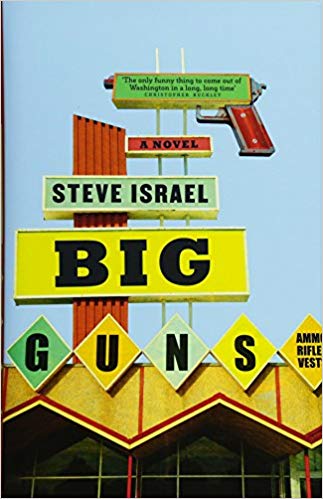
Steve Israel and his novel

He said, “During the course of eight successful campaigns for Congress in my Long Island district, I was called every imaginable name by unhappy voters, including, but not limited to, idiot, Communist, socialist, liberal (what’s worse than that?), Pelosi puppet, Obama lackey and Bush sellout. I was criticized as too progressive, too conservative, too middle-of-the-road. In 2010, when Tea Party fever swept through congressional districts, I sat in a slow-moving convertible, waving to crowds at a Memorial Day parade. People waved back, many with one particular finger.  I didn’t let any of it get to me. I brushed it off. In a swing district with about as many Democrats as Republicans — but all opinionated New Yorkers — dealing with voter rejection had become second nature.

So you’d think that I’d be inoculated against the indifference of some readers during the recent book tour for my novel.

Wrong.

In politics, one’s skin must be impenetrable to insult and even the occasional knife in the back. But sitting behind a pile of books at an Authors Night, watching people pick up your book as if it’s a piece of spongy fruit at the market, is sheer torture. Often, they frown sceptically, weigh the book in their hands, glance at a few pages and toss it back on the pile. All right in front of you.

In August, I participated in a signing to benefit a historic public library in Connecticut. I was one of only a few novelists in a tent filled with nonfiction authors. My book, a political satire on the National Rifle Association, sat in a pile that actually seemed to grow higher as the evening progressed. Among the questions I received were:

1: “Is this a novel?” (The words “A Novel” appear on the cover.)

2: “Are you pro-gun or anti-gun?”

And my favourite: “I shoot bear. Will this book help?”

Each question was deflating. I remember receiving a letter when I was in Congress telling me that my support for Obamacare was so odious that the writer was voting for my opponent, then asking who, exactly, my opponent was. I laughed. But in that tent in Connecticut, I had to restrain myself when a reader asked me if my passion for exposing the insanity of the N.R.A.’s influence in a novel (written in 90,000 words and taking over two years of my life) might improve his bear-hunting skills. “Dude, this book’s not for you,” I replied.

Then I sat down, jiggling my signing pen, watching the line get longer at Simon Winchester’s table.

There’s some solace in knowing that I’m not alone. The producer and writer Alan Zweibel recently shared with me his favourite story about the occasional solitude of the book-signing tour earlier in his career. Zweibel was one of the original writers on “Saturday Night Live,” and the author of numerous books. He’d been invited to promote his book at the Barnes & Noble in Paramus, N.J. The night before, he had appeared on “Late Show With David Letterman,” the kind of visibility an author or publicist craves. Anticipating a large crowd, the Barnes & Noble staff put out about 200 folding chairs. There was a crowd, Zweibel said — only they were rushing to the multiplex on the other side of the mall for the opening of a new movie. Zweibel made the best of it, gracefully taking his audience of five to dinner at the local Legal Sea Foods.

My presence at authors nights usually draws folks I call “political leaners.” They don’t lean to the ideological left or right. They lean forward. On my books. Blocking people who might actually buy my work while they fulminate about Mueller, Putin, impeachment, climate change, the obscure member of Congress whom they hate/love, the granddaughter who wants to go into politics or the president’s latest kooky tweet. Sometimes they want a handshake and a selfie. Then they move on. But so have the people behind them.

So how is it that rejection in politics rolled off my back while even one person’s rejection of my book sticks in my craw? For me, there’s a big difference between being snubbed in an election and being ignored on a book tour.

The maxim in politics is that “it’s not personal, it’s just business.” Maybe that’s the psychological armour every politician wears against insults and indignities. Someone’s going to run against you, lie about you, spend millions of dollars vilifying you — but it’s not personal. If angry voters spew, it’s not about you, it’s about that unpopular vote that you cast, or the tough political environment for your party or because they’re uninformed. Writing a book, on the other hand, is deeply personal. Politicians put on protective gear, fiction writers take it off — fully exposing their creativity, emotions, fantasies. It’s like unburdening oneself on a therapist’s couch, only every reader on earth is your therapist.

Plus, there’s the issue of space. At elections, people reject you in the privacy of a voting booth. It stings, but it’s distant and anonymous. At a book signing, the judgements are cast from a distance of a few feet and in real time. The response to you is immediate.

Thankfully, at each signing I somehow manage to sell a fair share of books. And although I left politics (undefeated and unindicted), political skill hasn’t completely left me. For instance, I’ve figured a way to rationalise setback. In an election, anything over 50 percent is a win. At a book signing, I’ve decided that selling over 50 percent of my book pile is also a win.

So I’ll continue, skin thin, signing-pen sharp. And the next time someone asks me if my novel will help him shoot a bear, I’ll let my political instincts take over. I’ll say “Yes!” Then I’ll suggest he take extra copies for other bear hunters.

After all, it’s not personal. It’s business.”


“Don’t Call It ‘Chick Lit'”

There was an article in the 20th October issue of The Daily Telegraph, written by Camilla Tominey, titled: Don’t refer to women’s fiction as chic lit, says author’.  “Books should not be referred to as ‘chick lit’ because more women than men read novels – and it should be men’s fiction that is the ‘sub-category’, the author of Big Little Lies has said.  Liane Moriarty, who sold the rights to the book to Nicole Kidman and Reese Witherspoon for a blockbuster TV series, said women’s fiction should never be treated as a sub-genre because women read more than men.”

Ms Moriarty’s page on Goodreads says: “Liane Moriarty is the Australian author of six internationally best-selling novels, Three Wishes, The Last Anniversary, What Alice Forgot, The Hypnotist’s Love Story and the number 1 New York Times bestsellers, The Husband’s Secret and Big Little Lies.  Her breakout novel The Husband’s Secret sold over three million copies worldwide, was a number 1 UK bestseller, an Amazon Best Book of 2013 and has been translated into over 40 languages. It spent over a year on the New York Times bestseller list. CBS Films has acquired the film rights.  With the launch of Big Little Lies, Liane became the first Australian author to have a novel debut at number one on the New York Times bestseller list. An HBO series based on Big Little Lies is currently in production, starring Nicole Kidman and Reese Witherspoon. . . . Liane lives in Sydney with her husband, son and daughter. Her new novel, Truly Madly Guilty, will be released in July 2016.”

Actually, the first series of Big Little Lies completed in April of last year, and a second series was announced in December. Ms Moriarty has since written Three Perfect Strangers.

Liane Moriarty

Most of the rest of the Telegraph article deals with Ms Moriarty’s excitement in meeting Nicole Kidman, reaching an agreement on the sale of rights, and of her creation a a character to be played by Meryl Streep, whose real name is Mary-Louise, we are informed.

But to return to the main point of the article, I certainly have some sympathy for the name given to what Wikipedia calls ‘genre fiction which consists of heroine-centered narratives that focus on the trials and tribulations of their individual protagonists”, because ‘chick lit’ has become a somewhat pejorative term.  Wikipedia goes on to say, “While chick lit has been very popular with readers, critics largely disapproved of the genre. Reviewer Alex Kuczynski, writing for The New York Times condemned Helen Fielding’s novel, in particular, writing ‘Bridget is such a sorry spectacle, wallowing in her man-crazed helplessness, that her foolishness cannot be excused.’ Writer Doris Lessing deemed the genre “instantly forgettable” while Beryl Bainbridge called the genre ‘a froth sort of thing’.

As I mentioned in an earlier blog, there are literary agencies which specialise in chick lit, though they don’t specifically say so; their focus is immediately clear from the covers and titles of their authors.  Chick lit is big business!

It seems to me that if Ms Moriarty doesn’t like her work to be called chick lit, she should change her subject matter and style or she should invent a new name for her genre – something like ‘Good Women’s’.   It certainly doesn’t classify at Literary Fiction.

To argue, in effect, that the chick lit genre should be deleted because women read more fiction than men – while it is true that women read more – doesn’t make sense.  How are we going to distinguish serious female writers like Kate Atkinson from writers like Helen Fielding?

London Literature Festival

My wife and I attended two events at the London Literature Festival: readings by Carol Ann Duffy (the Poet Laureate,) ‘and friends’; and an interview with Salman Rushdie, both at the Southbank Centre, London

Carol Ann Duffy was the last of four readers; the other three were Imtiaz Dharker, Keith Hutson and Mark Pajak.  Ms Duffy, born 1955, is a Scottish poet and playwright. She is Professor of Contemporary Poetry at Manchester Metropolitan University and was appointed Poet Laureate in 2009. She is the first woman, the first Scot and the first openly gay to hold the position.  Her poems address issues such as oppression, gender, and violence in an accessible language that has made them popular in schools.

Carol Ann Duffy

Of the four poets, I liked the readings of Mark Pajak best.  His poems were quite ordinary in their subjects – the one I liked best was about removing dead birds from a hen battery – but he has a way of expressing emotions with unique yet powerfully descriptive phrases.  This is a talent which I aspire to emulate.  Mr Pajak is quite a young poet, currently completing an MA in creative writing at Manchester Metropolitan University.   My wife’s preference was Imitiaz Dharker, a Pakistani-born, English poet in her mid-sixties.  Ms Duffy’s concluding poem was a bad-language rant against the corrupt elite using seven key words.  It was intended to be clever but for me, it came across as bombastic.

Salman Rushdie was interviewed by Erica Wagner, and American-born (1967) author and critic, who was literary editor of The Times from 1996 to 2013; she has written several books, including a novel, a collection of stories and a biography.  She has served twice as Booker Prize judge.

The discussion with Salman Rushdie began with Midnight’s Children, which he characterised as a history.   He made the point that one writes an historic novel, one must have a road map of places and events to be covered before one starts writing.  This road map makes the task of writing quite different than when one starts with a character-based novel, and lets the development of the characters control the flow of the novel.  He confessed to being very torn between Midnight’s Children and Children of Midnight.  After writing both titles down repeatedly on a sheet of paper, he woke up the next morning and realised that Midnight’s Children is the better title.  He said that while in Italian and Spanish, there is a similar choice between the two constructions, in French there is only one, so one has to be attentive to the advice of translators.

He confessed to be a reader who is ‘not anxious to turn the page’, and this confession reminded me of my criticism of Rushdie’s writing: that it is sometimes too verbose.

The narrator of his latest novel is a young man called René, and he made the point that it is an important decision for an author to select the narrator: there have to be good reasons for the selection.  I agree.  He then spoke about the difficulty for a seventy-year-old writer in getting into the head of a hip young New Yorker – though he didn’t mention his technique for the transformation.

Much of the dialogue with Ms Wagner was about The Golden House, Rushdie’s most recent, which is a parable of American politics, written after the Obama inauguration.  There is a Trump-like character who likes to refer to himself as The Joker.  Rushdie said, “In a deck of cards, only two of them don’t behave properly: One is the trump and the other is a joker.”  He read from The Golden House: “It was the year of The Joker in Gotham and beyond, as America had left reality behind and entered the comic-book universe. . . Suddenly lying was funny, and hatred was funny, and bigotry was funny.”

Suggesting that perhaps Donald Trump, The Joker is insane, Rushdie said, “people backed him because he was insane, not in spite of it. What would have disqualified any other candidate made him his followers’ hero.”

Most of The Golden House was  written before Trump was president, so it was prescient in predicting the outcome. “The book knew,” Rushdie joked.

Having met on several occasions, Rushdie and Trump are acquaintances, though there is some doubt that Trump has read the novel, not being much of a reader.  “I’m still waiting for that tweet.” Rushdie said.

Writing a Negative Review

Susan Violante, the Managing Editor, of Reader Views, places a post with this title on the Reader Views blog.  Since, as you know, I like to write reviews, and have occasionally been quite critical of what I have read, I was interested in what she had to say.

“Let’s face it, being a reviewer does not mean liking all books. There is a big chance that a book will not live up to the expectation of a reviewer, and thus result in a negative review. Other books simply do not even meet publishing standards in writing, editing, or production, in which case reviewers have trouble even completing the book. Being an author and a reviewer, I get both sides of the coin, and I have written many editorials from the author’s point of view about receiving a negative review of their title. This time, I want to focus on the reviewer’s end in hopes of helping reviewers write honest negative reviews, while remaining respectful and professional. Here are some tips on writing negative reviews:

“Do not let it get personal or be biased.  Actually, reviewers pretty much review only what they choose themselves. There is no need to take the author’s opinions personally and reflect that in the review. A review should be just an opinion of the storyline, the writer’s craft, and the book’s production.

“Being a reviewer is not all about reading; it has a lot to do with communication and the ability to express an opinion to an audience in writing. The success of a reviewer is actually measured on the size of their following audience, not on the number of reviews under their belt. This indicates the importance of the quality of their writing skills. If a reviewer communicates honestly and skilfully, the audience will look for that opinion before deciding to purchase a book. Readers want an impartial opinion about titles that will communicate to them the positive and negatives of the book as a product, so that they can decide whether to buy and read it.

“Enjoy reviewing. There are two kinds of reviewers. The ones that read because they love it, and get into reviewing; and the ones that won’t read unless they are reviewing. To the second type I say, please just stop. As a bookworm (writing and reading), I got into reviewing because I not only love to read, I also love to write, and even more, I love talking about what I read! Because I am having fun doing reviews, I will always find a positive and a negative in everything I read. Actually, sometimes I only find positives…but my point is that since I am reviewing only what I like to read, I will always be able to find a positive worth mentioning in my reviews, even when writing a negative review.

“Even if the book had flaws, or did not live up to the reviewer’s expectations, a reviewer needs to be respectful of the author’s efforts by choosing their words carefully when pointing out those flaws. There is no reason to be offensive when being honest, and reviewers who are passionate about books and reviewing will enjoy the process of writing a review that will be honest, yet respectful.”

I agree with what Ms Violante says.  I would add that keeping the format of the review professional can also keep a distance of professionalism between the author and the reviewer.  I usually start out with why I selected the book, and then give a summary of the story line in neutral language.  After the summary, I begin with what I liked about the book, followed by what I saw as its weaknesses.  It’s on the subject of weaknesses that tact needs to come into play: if in mentioning a weakness, I feel fairly certain that the author would understand and agree, I simply state the weakness using neutral language.  If I sense that it is just my opinion, or that the author might well disagree, I will say, “In my opinion . . .” or “It seems to me that . . .”

I usually end the review with a general positive recommendation, but if I don’t think that would be honest, I will say what kind of readers would like the book.  As far as I can remember, I’ve written only one one-star review, and that one ended without a recommendation.


Freelance Editing

There is an article on the Independent Book Publishers Association (IBPA) website with the title ‘Freelance Editors: Find and Cultivate Top Notch Talent’ by Deb Vanasse who is a reporter with the IBPA Independent magazine.  Wikipedia says that: “Deb Vanasse is an American writer of more than a dozen books, many of which are set in Alaska. Her children’s books include six picture books and two young adult novels.”

Deb Vanasse

While the  article appears to be directed mainly toward publishers, it interested me, because I used an editor for the first time on Achieving Superpersonhood, and while the editor did a reasonably good job for me, I felt that she was sometimes missing the points I was making in the novel.  So, while I’m now committed to using an editor, I need a better process to select him/her.  An editor can help the author see problems in the construction – the substance –  of a novel that an author might miss.  So I am interested in getting some ideas about a selection process.  I should mention that the editorial work to which I’m referring here precedes the copy editing which comes just before preparation for printing and which includes grammar, punctuation, spelling, etc.

I also thought that there is material in the article which could be of interest to readers of this blog who wish to become freelance editors.

Ms Vanasse says, “Within the past decade, market changes have created a healthy supply of freelance editorial talent. But in the wide-open field of freelance editing, quantity is no guarantee of quality.  ‘There are more editors looking for freelance work since the Big Five have let a vast number go from full-time or part-time work,’ says Geoff Brown, acquisitions editor at Cohesion Press. ‘Combine that with the many self-published writers who think they can now work as editors because they put out a memoir or urban fantasy through Kindle Direct Publishing, and you have a lot of freelancers looking for work.’

“Freelance editor Amanda Spedding laments that some in her field fail to grasp the nuances of language or understand how it contributes to storytelling. ‘I know of a lot of authors who have been burned by people claiming to be editors when they have no right to call themselves such,’ she says. ‘It gives a bad name to those of us who have done the study, have put in the long hours, who continue to learn, and keep up to date. I hate defending my profession, but I’ve had to do so more these last few years.’  Some publishers even outsource editorial work overseas, a trend that puzzles freelance editor Kelly Lydick. ‘To me, this is a difficult thing to understand,’ she says. ‘Not just because it affects me personally and narrows the job market, but in particular how a non-native English speaker could have an expert command over grammar in the same way a native English speaker could. It is a genuine concern when the ultimate goal is to honour an author’s work.’  Lydick ranks those in her profession in terms of good, excellent, and superb. ‘A good editor will have a sense of content and how content can be organised so that it’s interesting and sparks something in a reader—hopefully inspiration,’ she says. ‘An excellent editor will have a good sense of audience and how a particular work will be received by a reader—and will tailor the work with this in mind. A superb editor will have a sense of the literary marketplace and how and why a book may do well in the market, knowing that it’s often a tough market to predict.’

“‘Talented freelancers also enjoy what they do’, says Renni Browne, founder of an editing service called The Editorial Department. ‘I’ve been at it for over 50 years, and I’ve never known a good one who found their work boring,’ she says. ‘Every author is different, every manuscript is different, every chapter, paragraph, sentence is different.’  Ms Browne likens the work of a developmental editors to that of an architect, suggesting where to place lines and paragraphs for maximum effect. Ross adds that good developmental editors use diagnostic skills to identify strengths and weaknesses, which they must then convey effectively to the author.  When they work at the line level, Renni likens editors to mimics who recognise an author’s distinct voice and then work to make it shine. Line editors also need a good ear, says Ross, Renni’s son. ‘By ear I mean sensitivity to the way language sounds, the way it flows, to the rhythm between dialogue and narrative,’ he says. ‘They’ll know what sounds real and what sounds phony, what sounds natural and what has a strained literary effect. And they probably won’t think about any of this.’

Internet searches, professional associations, and personal recommendations are among the resources for publishers to tap when seeking editorial talent.  An internet search led Crosstown Publishing’s Jim Laughren to The Editorial Department. ‘I saw they were owned by Renni Browne, author of Self-Editing for Fiction Writers, a book I had read and been impressed with,’ Laughren says. ‘There are good bios of all their editors on the website, so I was able to select an editor who I felt was most appropriate for my particular book.’  Geoff Brown, acquisitions editor at Cohesion Press, discovered Spedding through a professional association of writers. After he confirmed her qualifications and experience and checked references from previous clients, he hired her to handle all editorial functions at his small press.  Professional associations may offer request-for-quote (RFQ) services that broadcast publisher needs to their members, notes Ross Browne. But depending on how the service is set up, he warns that the response can be overwhelming. ‘Editorial Freelancers Association has several thousand members, and you can expect several dozen members to respond to your RFQ,’ he says. ‘Thankfully, EFA also allows you to post a supplemental notice stating you have received sufficient replies.’   Other professional associations of freelance editors include the American Copyeditors Society and the National Association of Independent Writers and Editors.

“Editorial relationships begin with an exchange of information between publisher and editor. Specifying the scope of services, scheduling, and compensation, a formal or informal agreement binds the relationship.  ‘When I’m exploring the possibility of a new project, I first get a sense of how well I communicate with the author and how well the author communicates with me,’ Lydick says. “’ also take a look at the content and see if it’s within my scope of understanding or, even better, expertise—a subject I know a lot about—and also whether I like the style of the writing.’

“At The Editorial Department, the business relationship begins as something of a matchmaking process in which Ross Browne works with the client to choose the best fit for the project from among the company’s 16 editors.  ‘We ask a lot of questions of our new clients at the intake stage about the manuscript and its author, including publication goals and intended readership, the author’s experience with writing and publishing, and where they feel they need the most help,’ he explains. ‘I read some of the manuscript to make sure it’s ready for our process and to get a feel for the writing so I can make a good match to an editor.’  After recommending an editor, Browne offers details of the services, costs, and time frame proposed for the project. He provides formal agreements upon request.

“Lydick affirms arrangements with work orders, project agreements and, if necessary, confidentiality agreements.”


Review: Midnight’s Children

Having finished the books I brought with me to Sicily, I went to the local bookstore which has a small selection of English language books, but I found nothing that intrigued me.  Looking on the bookshelves in the house, where guests occasionally leave books, I found Midnight’s Children by Salman Rushdie.  Mitigating against reading it were its length (647 pages), and its author (I’ve read The Satanic Verses and admired it, but didn’t particularly enjoy it).  The main factor in favour of reading it is that it is twice the winner of the Booker of Bookers: the best Booker Prize winner in the last 25 years and 40 years.

First Edition

The story, written in 1981, deals with the recent colonial past of the Indian subcontinent, its independence and its partition into two states: India and Pakistan.  The narrator is Saleem Sinai who was born at midnight, the precise moment of India’s independence, and who is telling the story to his future wife, Padma.  Saleem is born with a huge, dripping nose with exceptional olfactory powers, such that he is able to read thoughts and identify intentions.  He learns that all the children born at the moment of independence are gifted with extraordinary powers, and he forms a Midnight Children’s Conference to try to influence events, including political developments and subcontinental wars.    In particular, allegorical style is used to critique the governance of Indira Gandhi during the ‘Emergency’ period.  Mrs Gandhi brought a suit against Rushdie, not for his slating of her administration, but for a single sentence criticising her family relationships; this sentence has been removed from current editions.  As well as the Conference, the tale involves Saleem’s extended family: mother, father, sister, grandparents, aunts, uncles and his infant son.  The style of the book is magical realism, not conforming to any particular genre, it is factual, comical, suspenseful, magical, surreal, historical and mythic.

In his introduction to the 2006 edition, Rushdie says, “In the West, people tended to read Midnight’s Children as a fantasy, while in India, people thought of it as pretty realistic, almost a history book.”  Though I have traveled to India three times, and know something of its history and culture, I read the book primarily as a fantasy, which is a shame: I feel I have missed an important dimension of the book.  It must be said that Salman Rushdie is an extraordinary story-teller: he has great imagination and invention, and sometimes I felt that he has invented himself into a corner – how can he get out of this one?- only to read a clever, smooth and sensible transition out.  His command of language is breath-taking, leaving one with the clearest possible image of what is happening.  Occasionally, though, I felt left out by his use of Hindi (or other native) words and expressions which are undoubtedly appropriate.  There were also times when I felt that his excursions into descriptive fantasy were too lengthy, and yet, long as it is, I wanted to read on.

So, for me Midnight’s Children is a literary masterpiece, and there is much to learn from Rushdie’s skill as a writer and a story-teller.  But did I enjoy it?  Not particularly, having missed too much of it,

Achieving Superpersonhood

My latest novel, Achieving Superpersonhood: Three East African Lives, has just been released.  Three young, black East Africans, Kamiri, Dorothy and Hassan, of dissimilar backgrounds, struggle with hard times and become friends in their intersecting searches for a demanding yet satisfying personal identity – what Nietzsche called ‘super personhood’.  Two voices are heard throughout: the One, likely the voice of God, and the Other, probably Satan’s voice, as they offer conflicting guidance on achieving alternative identities.

The synopsis:

                Kamiri, a dirt-poor, but likable and intelligent migrant, who was raised in the tribal faith, is drawn to the city where he joins his brother in the drugs trade.  Disgusted, he finds work in an abattoir, but his comradeship with Hassan leads him into professional football.  Kamiri’s jealous brother, Warari, turned terrorist, shoots him in the knee, ending his athletic career, and he returns to the solace of the wilderness as a park ranger.  Accidentally, he kills an ivory poacher and faces prosecution until Hassan’s older, half-brother hires him to work as a ranger in an up-market safari park.  Can Kamiri become the park’s general manager, and can he marry Dorothy?

Dorothy, a college graduate from a professional, middle class, Christian family is an impatient idealist who is unsure whether her future lies on politics or medicine.  As an intern working for an MP, she becomes involved in a sting on corrupt exploitation of a diamond mine. Realising that the low ethical standards of politics are an obstacle for her, she opts for medicine, only to be raped by a senior doctor.  Her faith in medicine is also shaken, but she mounts a civil suit and media campaign in retaliation for her humiliation.  Can she find success and happiness as a doctor, and whom will she marry: Kamiri or Hassan?

Hassan, of doubtful parentage, is the youngest child in a rich and powerful Muslim family.  Lonely, insecure and drifting at university, he joins Dorothy in a political protest which goes wrong for him: he receives a two-year suspended jail sentence.  While helping Dorothy in the mining sting, he trespasses on a claim, and fearful of being sent to prison, he immerses himself in suspect Islamic studies and is misled into a terrorist organisation.  Appalled by the terrorists’ values and deeds, he escapes to Kamiri who provides him with a safe haven while he considers his options.  Hassan’s father is able to place him in the Army’s officer candidate school.  Will Hassan make a good Army officer, and will he marry Dorothy?

The setting is current in the startling diversity (cultural, economic, social and political) that is East Africa.

If you would like to read Achieving Superpersonhood, I will send free copies to the first twenty-five of you who send your postal address to bill@williampeace.net.  What I ask in return is that you write a review.  Happy reading!