Interview with Norm Goldman

I have had an e-interview with Norm Goldman, Publisher and Editor of Bookpleasures,com.
download

Norm Goldman

Norm: How did you get started in writing? What keeps you going?

William:  I had taken a writing course at university, and I always enjoyed writing reports in business, but I had never considered myself a writer of fiction.  About eight years ago, I was on holiday in Sicily and I had a series of romantic dreams in which I was involved as a bystander.  I thought: it would be fun to write these down.  I began writing and by the time I got to page 70, I decided to finish it.  That was my first novel.  Since then, I’ve derived an increasing satisfaction from completing novels which are better and better.

Norm:  What do you think most characterizes your writing?

William: There is always at least one character who is facing ethical/moral dilemmas.  I try also to give the reader a strong sense that what she is reading is true and real.

Norm: What did you find most useful in learning to write? What was least useful or most destructive?

William:  What has been most useful is the feedback I have had on my writing.  I am also a fairly avid reader, and I always publish a review of the books I read.  This sharpens my critical skills which are important when I’m writing.  I really can’t think of an experience which has been destructive.

Norm: How many times in your career have you experienced rejection? How did they shape you?

William:  Countless times.  I received several dozen rejections for my first novel, and I was ready to give up on getting it published when Eloquent Books (the predecessor of my current publisher) came to me with a co-op publishing offer.  Since then I have approached about twenty literary agents and publishers for every novel I’ve written; my approaches have been universally rejected (usually politely) or ignored.  I’ve stayed with Strategic Book Publishing.  My impression is that to get a contract with a traditional, main-stream publisher, one must have a third-party intervention or recommendation.  This is an understandable symptom of risk avoidance in the publishing industry, but it also suggests a lack of independent, creative thinking in the industry.  My lack of acceptance by main stream publishers has not deterred me.  I will carry on writing better and better novels.  Someone will almost certainly notice.

Norm:  In your bio you indicated that the spiritual/religious genre is your preferred choice. Could you explain to our readers, why?

William:  I am a religious person, but not evangelical.  The romance and the three thrillers all have religious aspects.  I started writing Sable Shadow & The Presence as a kind of experiment, and I had to re-write large portions of it, but, at the end, I felt particularly good about it.  Several excellent reviews and being awarded seven minor prizes convinced me that I had found my venue.

Norm: How did you become involved with the subject or theme of Seeking Father Khaliq? As a follow up, have you ever lived in Egypt?

William:  Before I started Seeking Father Khaliq, I decided to write about one character’s search for God, but I didn’t want a typically evangelical book. It had to involve a faith other than Christianity and a venue outside the West.  Also, the book had to have more issues than a singular focus on spirituality.  I’ve never lived in Egypt, but I’ve visited the country several times.  In creating Seeking Father Khaliq, I spent as much time on research as I did on writing.

Norm: What were your goals and intentions in this book, and how well do you feel you achieved them?

William: My intention was to leave a gentle message that if one wants to find God, He can be found, and that sometimes He is revealed in the midst of adversity.  I think the message is there and perhaps made a bit more interesting by Egypt, philosophy, Islam (good and bad), and the will-of-the-wisp Princess Basheera.

Norm: Do you worry about the human race?

William:  Not in the long term.  The short term can be a horrendous mess, but somehow we will muddle through.

Norm: How did you go about creating the character of Professor Kareem al-Busiri? (As a passing note,  I am married to someone born in Egypt and who lived there until the age of 18, I am familiar with the male Egyptian mindset and you seemed to have vividly captured it).

William:  My specifications for Kareem were:

  • A respected professor of philosophy at a prominent Egyptian university (I wanted to include philosophy to add richness)
  • He should be a secular Muslim: a sort of agnostic
  • He should be single to introduce a romantic element
  • He should be open-minded and a bit naïve (to believe Princess Basheera)
  • He should have adult children to add complexity

Norm:  What are some of the references that you used while researching this book? As a follow up, can you share some stories about people you met while researching this book?

William:  My principal reference was Classical Arabic Philosophy, an Anthology of Sources, by Jon McGinnis (Translation), David C. Reisman (Editor).  I spent countless hours on the internet to gather facts, opinions and experiences.  I don’t remember their names, but I enjoyed vivid personal accounts by pilgrims on the Hajj and Arba’een.

Norm: What was the most difficult part of writing this book and what did you enjoy most about writing this book?

William: The most difficult part was staying factual in detail, down to the specifications of the Russian-made weapon which killed Kalifa.  Most satisfying and enjoyable was integrating all the pieces of a complex story.

Norm:  Did you learn anything from writing the book and what was it?

William:  While I have read quite a lot about Islam, and I’ve read the Qur’an, I gained a perspective of Islamic culture, and its effect of the values of people.

Norm: Where can our readers find out more about you and Seeking Father Khaliq?

William: I have blog (https://williampeaceblog.com/) which has been going for six years, and which includes my opinions and experiences as a writer.  I’ll let Father Khaliq speak for himself.

Norm: What is next for William Peace?

William:  I’m writing another novel, set in East Africa, with three main young adult characters: a penniless man of traditional tribal faith; a middle class, Christian woman; and a Muslim man from a wealthy, prominent family.  All are black: there is plenty of interaction and clashes in values and beliefs.

Norm: As this interview draws to a close what one question would you have liked me to ask you? Please share your answer.

William:  What else does your ‘day job’ consist of?  Because I write with intensity only three or four hours a day, I need ‘alternative occupations’.  These include pro bono consulting work for London charities, treasurer of a charity which provides psychotherapy, and involvement with two of our daughters and their families who live nearby.



A Real UK Threat to Freedom of the Press

For most of us it probably seems unlikely that freedom of the press could disappear in the UK – that the government will control what the press can publish, or that publishers will be afraid to run exposés of politicians and other public figures.  But that is exactly what could happen when the government’s consultation regarding the implementation of Section 40 of the Crime and Courts Act, 2013 ends next Tuesday.

2221-e1401807045253

The Crime and Courts Act, 2013 is a result of the Levenson Inquiry after the phone-hacking scandal that put the News of the World out of business.  Section 40, a part of the statute that was never implemented, would require that every newspaper not signed up to regulation by Impress would pay all costs in any libel case brought against it, even if it won the case.  So, for example, if a major newspaper ran an exposé of an MP involved in a money for votes  scandal, the newspaper would have to pay all of the MP’s legal expenses, no matter the outcome.

Impress is funded by Max Mosley, a barrister and former racing driver with interests in Formula One and other automotive organisations.  He is the son of Sir Oswald Mosley, the former leader of the British Union of Fascists.  In 2008, his sexual exploits were exposed by News of the World.  He sued and won, not on the basis that the reported exploits didn’t happen, but on the basis that they were falsely described as being fascist.   Mr Mosley funds Impress to the extent of £3.8 million, and says he may continue funding for years.

Impress is the only media regulator to have won the backing of Press Regulation Panel, which has been set up with a royal charter, introducing a degree of government involvement.  About 50 media outlets have signed up to be regulated by Impress.  The other media regulator is IPSO, the Independent Press Standards Organisation, with over 2,500 members,  IPSO does not submit to the Press Regulation Panel, and is governed by the media industry.  IPSO has an Editor’s Code of Practice, they can levy fines of up to £1 million, they can force publication of corrections, there is a 24-hour anti-harassment hotline, a whistle-blower’s hotline, they can investigate complaints and require their members to submit annual reports of compliance with the Editor’s Code and how they have handled complaints.  This is a regulator with professional due process and teeth!

Mr Mosley suggests that requiring a media defendant to pay all legal expenses is an incentive to arbitrate disputes.  He is disingenuous.  A new horde of ambulance-chasing lawyers will certainly appear, attracted by the high fees to file ‘no-win-no-fee’ lawsuits.  Why would they be interested in arbitration?  He says that Impress will screen out frivolous law suits.   Really?

You may be asking why I, as a writer, am interested in this issue.  The answer is that I care greatly about the preservation of our democracy, and history has taught me that once laws are passed to regulate the press, it is not long before other freedoms of expression are regulated or discouraged.

If you agree with me, and if the government decides to put Section 40 to a vote in Parliament, please make the case for a ‘NO!’ with your MP.

Review: All that Man Is

My wife bought this book for me when I was in the hospital and needed something to read during what would have been periods of utter boredom.  I had asked her to find a book which had been shortlisted for the Booker Prize.

The author is David Szalay, who was born in Canada in 1974, moved to the UK, has lived in Belgium and is now based in Budapest.  He studied at Oxford University, has written dramas for the BBC and his four novels have attracted several prizes including a listing for the Booker Prize in 2016.

4206

David Szalay

All that Man Is is nine short stories about men, away from home, in different stages of their lives, each of whom tries to come to grips with what it means to be alive.   In the final story a 73 year-old man – knighted for his services in Whitehall twenty years ago, on his own, in a small, old Italian house considers, gloomily, his mortality, and it is this story which – for me – comes closest to establishing a theme for the work.  Before this story, we have: a thoroughly bored 17 year-old university student travelling around Europe with an acquaintance; a university drop-out on a down-market holiday in Cyprus where he meets two willing fat women; a tough guy employed to protect an aloof call girl; a driver delivering a car to his disconnected girlfriend’s father; a journalist involved in a political scandal; a real estate developer who meets an attractive young woman in Switzerland; an English drifter in Croatia is stung by a local con man; a suicidal billionaire on his super yacht.

The stories are well-written except that an occasional detail about setting makes one wish for a similar detail about a character.  The characters are interesting – not least because the reader cannot help but try to understand them. There is an undertow of submerged emotion in the book.  Also,  an air of pessimism in the written tone and in the actions of the characters, so that the reader might ask: ‘what is the point of this?’  With most of the characters, one feels urged to shout: ‘Why don’t you get a grip?  Make an effort for goodness sake!  No one ever promised you a rose garden!’  Is Szalay trying to express a sort of  nihilist philosophy?

For me, this more a collection of short stories than a novel, because there is little to connect the pieces except the tone, European geography and men facing dilemmas.  In summary, this is an interesting, if slightly flawed, book

Bookworms Live Longer!

There is an article in the latest issue of my alumni magazine under the heading ‘Findings’ which announces: “Book readers’ lives were two years longer than non-readers.”

download

The article continues: “The next time you talk to a clinician about how you’re taking care of your health, you might want to include a discussion of your reading habits.  Although sedentary activities are not usually regarded as promoting health, a recent study by Yale researchers showed a significant link between book reading and longevity.  (The work was published in the journal Social Science and Medicine.)  Researchers examined data from 3,635 individuals who have been involved over several years is a nationwide health study of people over the age of 50.  Based on their answers  to the question: “How many hours did you spend last week reading books?” respondents were divided into three groups: those who read no books, those who read books for up to  three and a half hours, and those who read books for more than three and a half hours.

“The study showed a marked advantage for book readers.  Over twelve years of follow-up, those who read books for up to three and a half hours per week were 17 percent less likely to die than those who did not read books, while those who read most were 23 percent less likely.  Book readers averaged a two-year longer life span than those who did not read at all.

“Older individuals, regardless of gender, health status, wealth, or education showed the survival advantage of reading books,” says Becca Levy, a professor of epidemiology and psychology.  The survival advantage, she adds, persisted after adjustments for baseline cognition – meaning that it was the benefits of reading, rather that the reader’s cognitive capacity, that helped lengthen life spans.  “More questions need to be answered,” Levy says.  “But we know that reading books involves two cognitive processes that could confer a survival advantage: the slows, deep immersion needed to connect to content; and promotion of empathy, social perception and emotional intelligence.”

Merry Christmas and a long life to all my readers!

A Literate Electorate

An article in the  October 24 issue of Time Magazine got my attention.  Its title is “The Literacy of Long-Form Thinking”, and it was written by James Patterson.  Here’s what Wikipedia has to say about James Patterson: “(born March 22, 1947) is an American author. He is largely known for his novels about fictional psychologist Alex Cross, the protagonist of the Alex Cross series. Patterson also wrote the Michael Bennett, Women’s Murder Club, Maximum Ride, Daniel X, NYPD Red, and Witch and Wizard series, as well as many stand-alone thrillers, non-fiction and romance novels. His books have sold more than 300 million copies and he holds the Guinness World Record for being the first person to sell 1 million e-books.  In 2016, Patterson topped Forbe’s  list of highest-paid authors for the third consecutive year, earning $95 million.  His total earnings over a decade are estimated at approximately $700 million.

In November 2015, Patterson received the Literarian Award from the National Book Foundation, which cited him as a “passionate campaigner to make books and reading a national priority. A generous supporter of universities, teachers colleges, independent bookstores, school libraries, and college students, Patterson has donated millions of dollars in grants and scholarships with the purpose of encouraging Americans of all ages to read more books.

download

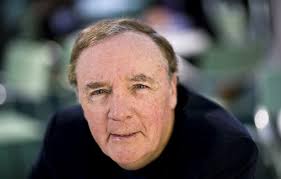
James Patterson

The article begins: “A man from ancient Rome said it was better to know nothing about a subject than to half-know it.  I’m worried that this republic of ours is set on proving this wisdom all over again.  Only, we aren’t even bothering to know 50% of what’s going on.  Seems to me we’re satisfied with understanding 10% of something before we grow bored and turn to the next thing.  I say this based on what I know about the most important knowledge-building habit we have: reading.  We’re becoming a nation of functional illiterates . . . incapable of pursuing a train of thought for more than minutes at a time.

“The annual survey on time use by the Bureau of Labor Statistics put some proof to something I think we all knew was coming our way.  We have let our standards fall so far that this year’s first-time voters are, on average,  in the habit of reading for personal interest less than 10 minutes a day.  People aged 75 and older read about an hour a day.  The habit drops off through each 10-year bracket below that  until you get  to people ages 35 to 44 years old.  They’re reading 12 minutes on Saturdays and Sundays and less than 10 during the week.  Younger than that , it gets only worse.   That’s right – the majority of potential voters are reading less than 10 minutes a day,  You scared of that?  I am.  But I’m not surprised.  As a country, we seem to be entirely losing the capacity for long-term thinking.

“. . . An adult who absorbs words only through captions, tweets, posts, memes and – at best – smartphone screen-sized articles is not literate.  Not in my book anyhow.  I’d argue . . . that if we’re not in the habit of reading books or at least long-form articles that take us the better part of an hour in the course of an entire day, we are fundamentally damaging our society’s fabric, and our future.   We are becoming a nation of distracted nincompoops who don’t have the patience to bother finding out if lies are lies and – because we have lost the mental capacity to do otherwise – are forced to judge issues on the basis of style and delivery rather than substance and accuracy.

“Are you upset about the direction of this society?  Then fix it.  You’re a reader.  You know what reading does for your ability to think things through.  Get out there and make this your number 1 priority.  Got a kid?  Make her read 20 minutes a day.  Got a neighbor who stares at this phone all day?  Get him a good book.  Volunteer at the library.  Volunteer at  school.  At the very least, subscribe to a newspaper or magazine that supports long-term journalism and stop reading stuff for free through your screen.”

I couldn’t agree more!  Western society – not just  the US – is in very serious trouble!

Joan Wickersham

There is an interview called “Inside the Writing Life” in my high school alumni magazine.  A prominent English instructor is interviewing Joan Wickersham who graduated nearly two decades after me.  Ms Wickersham has been writing most of the time since graduation; her work includes her memoir and 2008 National Book Award finalist, The Suicide Index; a book of short fiction, The News from Spain; and The Paper Anniversary, a novel.  She writes a regular op-ed column for The  Boston Globe; her writing has been published in prominent literary journals; and she has read her work on National Public Radio.

maeda_writers_g1

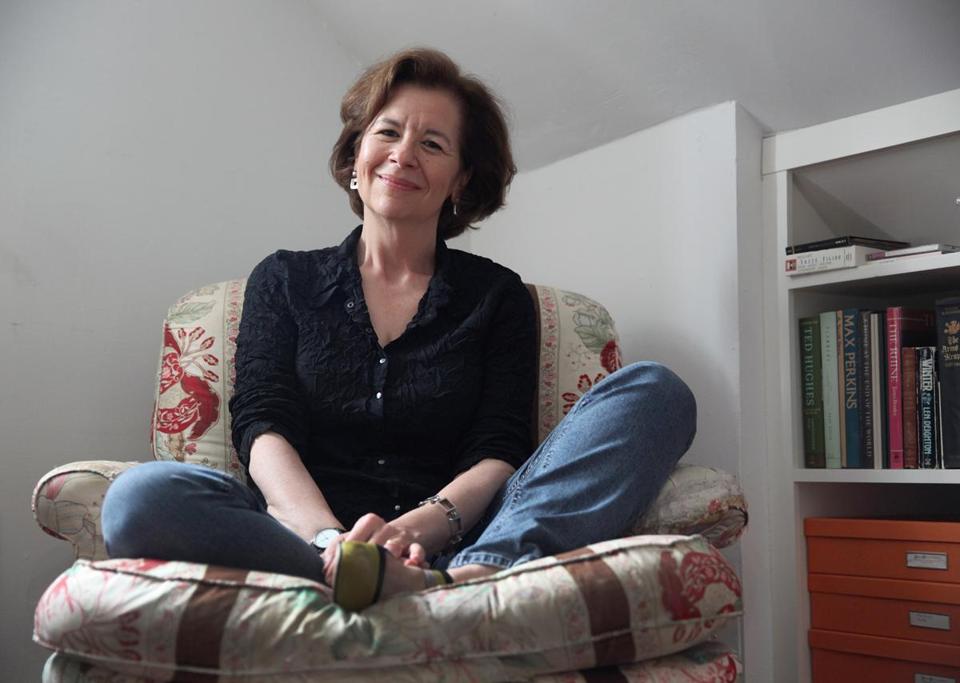
Joan Wickersham

Two questions and answers in this interview caught my eye.

Q: (David Weber) “You’ve sustained your output over many years.  Does the problem of writer’s block seem remote to you, or have you struggled at times to give your work the priority required?”

Wickersham: “There’s a very funny little moment in a movie I once saw, where a bored, impatient woman is trying to figure out where a piece fits in a jigsaw puzzle and she finally just puts in somewhere and smacks it in with her fist.  Writer’s block is a sign that what I’m doing isn’t working, and I can’t fix it by trying to ram something into a place where it doesn’t belong. It can take months to figure out that what I thought was a piece of the sky is actually a piece of the ocean, or that its a part of a different puzzle altogether.  I hate writer’s block, but I’m always grateful to it in hindsight.  It usually means that what I’ve been writing is somehow false, which is just as bad in fiction as nonfiction.  Writer’s block slows me down and makes me throw out pages and drafts – after I’d been working on the book about my father’s suicide for nine years, I threw out a 400 page manuscript and started over – but getting stuck can be an important investment in finding the right way to tell a story.”

I like this way of thinking about writer’s block: it’s not you that are the problem; it’s the story.  Sometimes, when I sit down to write, I feel cornered.  I’ll look back over what  I’ve written, and ask myself ‘what’s not working?’  Other times, particularly when I’m lying awake at night, I’ll start feeling uneasy about the direction of a particular novel.  That feeling generally leads to surgery.  When I was writing Sable Shadow & The Presence, I threw out and re-wrote whole chapters of the book, which has gone on to win eight awards.

Q: “Does a fully realized piece require its own new form, not just descriptive skill and the authority of honesty?”

Wickersham: “A lot of what I’m doing when I write is trying to figure out the inherent rules of a particular piece – the form or structure which will be most true to the story.  My husband, Jay, is trained as an architect.  A long time ago, when I was struggling to write about my father’s suicide, he told me that the students at the École des Beaux-Arts begin each design with a parti – an organizing principle.  I found this idea of the parti exciting and liberating.  I’d been wresting for years with how to organize the messy and painful story of my father’s death, and part of the problem was that the story defied any attempt at a conventional linear narrative.  When I stumbled in the parti of organizing the book as an index, suddenly I had this cool, numb structure that simultaneously imposed order and ridiculed the idea of imposing order on an inherently chaotic experience”.

I never heard of the term parti before, but it makes sense.  The novel I’m currently working on has an unusual organizing principle: two increasingly hostile narrators, whose identity is obscure at first, tell alternating chapters about three, very different, young protagonists over whom they have influence, but no control.  The setting is present day East Africa.

Review: Selection Day

My wife bought me a copy of this novel – signed by the author!  – while I was briefly in the hospital (nothing very serious) and I wanted something to read.  Hospitals are a great place to read: one is always waiting for the next procedure to take place; one can make oneself comfortable; and it is not particularly noisy!  She bought it because I had asked for a novel by a Man Booker shortlist author.  The author, Aravind Adiga, actually won the Man Booker in 2008 for his first novel, The White Tiger.  Adiga was born in Madras (new Chennai) India in 1974; after achieving his secondary school certificate, he emigrated with his family to Australia, where he graduated from high school in Sydney.  He graduated, next, from Columbia University in 1997 and subsequently studied English literature at Magdelan College, Oxford.  He began his business career as a financial journalist with the Financial Times, Money and Time before becoming freelance.

download

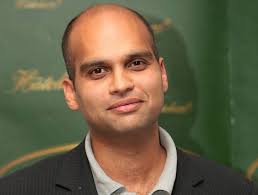
Aravind Adiga

Selection Day is a book focused on Indian cricket and its effect on a Mumbai slum family of two boys and their compulsive father.  Radha, the older brother, expects to fulfill his father’s dream of being selected for a top Indian team.  Tommy Sir, a coach/agent/promoter introduces the boys father, Mohan, to a ‘businessman’, Anand Mehta, who pays Mohan a stipend in return for a large slice of the boy’s earnings when they become famous.  Unexpectedly, Manju, the younger boy, is the better batsman, scoring 497 not out in a crucial contest.  Radha has a ‘weight transfer problem’ which is inhibiting his effectiveness as a batsman.  Enter a rival, Javed, a cocky, rebellious, rich kid who is also a fine batsman, and who happens to be gay.  Manju, at the center of the story, is his older brother’s best friend and rival, and his father’s severest but respectful critic.  The younger batsman is torn between his admiration for Javed, and his reluctance to commit to an intimate relationship; and between careers in cricketing or in science.

Selection Day offers a rich mixture of conflicted, imperfect characters with whom the reader cannot help but empathize.  The setting of Mumbai is drawn with natural clarity; one feels truly present.  And without being a ‘book about cricket’, Selection Day, presents the culture, the mystique, the competitiveness of Indian youth critic captivatingly, without technical fussiness.  The dialogue is credible, but occasionally seems too tangential to lead the reader to any firm conclusions.  Perhaps, this is Mr Adiga’s intention with this novel: to make the point that, try as one might, there can never be the achievement of one’s ultimate dream.

This sense of failure seems to carry over into the two concluding parts of the novel: what happens after selection day and in the epilogue.  One cannot help but be engaged by the beautiful writing, the energy, and the unfolding future in the lead up to selection day.  The writing is as good, but the energy and the future have dissipated after selection day.  Perhaps this novel could feel more whole, more consistent, if dreams could be scaled back rather than dispelled, and the energy and the future modestly re-directed.

Books as Therapy

The November 7th issue of Time Magazine has an article Read a Novel: it’s just what the doctor ordered, written by Sarah Begley.   Ms Begley is a staff writer for Time; she writes book reviews and culture stories for the magazine.  She has worked at Newsweek, The Daily Beast and Hearst Magazines.  She lives in the New York City area and is a graduate of Vassar College.

download

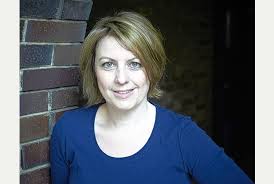
Sarah Begley

She says, “the latest round of research on the benefits of literature focuses on how it improves not our IQ but our EQ.”  Researchers at the New School for Social Research found a link between ‘theory of mind’ (the ability to know what a person is thinking or feeling) and reading a passage of literary fiction (as distinguished from popular fiction).  Ms Begley continues, “Maria Eugenia Panero of Boston College says it is ‘hard to know whether reading literary fiction increases theory of mind or if people who naturally have a higher theory of mind are more drawn to literary fiction'”.

Ms Begley reports that a 2012 study at Ohio State University had undergraduates read different versions of a story in which a protagonist overcomes challenges (car trouble, bad weather, long lines, etc.) in order to vote.  Those who read a version of the story which led them to identify strongly with the character were more likely to vote in a real election a few days later: 65% reported having voted as compared to 29% of those who read a less relatable version of the story.  The story did affect the behaviour of some readers.

Bibliotherapy, which involves the prescription of novels to ‘cure life’s ailments’, is practices at the School of Life in London.  Ella Berthoud, an artist, and Susan Elderkin, a novelist, are friends from their Cambridge days when they left books for each other to deal with the crisis of the week: be it romance, work stress, or whatever.  Now, while they are not trained at therapists, their clients pay £100 to spend 50 minutes with them, in person or via Skype.  The clients fill out a questionnaire about what they like to read and what is going on in their lives.  “The bibliotherapist makes an ‘instant prescription’ at the end of the session and then sends a list of six to eight books and the reasons for the recommendation a few days later.  They say the feedback is 99% positive.”

Ms Begley concludes: “The science behind reading for mental health is limited, but researchers like Panero are eager to continue exploring the benefits.  ‘I think we all have some intuitive sense that we get something from fiction’, Panero says.  ‘So in our field we’re interested in saying – well, what is it that we’re getting?’  Even the greatest novel cannot cure clinical depression, erase post-traumatic stress or turn an egomaniac into a self-denying saint.  But it might ease a midlife crisis or provide comfort in a time of grief.  As Elderkin says, it’s natural for readers to find it’satisfying when people come up with ‘proof’ of something which they’ve always felt to be true.'”

As for me, I certainly subscribe to the theories presented by Ms Begley in her article.  That is why I write novels like Seeking Father Khaliq.

Review: The Last Confession of Thomas Hawkins

I bought this book – an historic novel – in a Waterstones bookstore because I had nothing to read at that moment and it looked interesting.  Its author is Antonia Hodgson who grew up in Derby and studied English at the University of Leeds.  Her first novel, The Devil in Marshalsea, won the 2014 Historical Dagger Award.  Ms Hodgson lives in London, where she is an editor.

download

Antonia Hodgson

The Last Confession of Thomas Hawkins is set in a rather down-market section of Georgian London.  Its principal character, Thomas Hawkins is a ‘gentleman’ who killed a man in self-defense in prison, and throughout the story is under threat of being hung for murder.  There are several intertwining plots.  One involves a rather loathsome neighbour who is a member of the Society for the Reformation of Manners (a pathological moralist) and whose own morals permit him to consort with prostitutes and to beat his children.  The neighbour is suddenly dead.  Who killed him?  Thomas, one of the children, the apprentice, the son of a notorious gang?  Another plot involves King George’ mistress who is also a lady in waiting to Queen Charlotte.  This Henrietta Howard (who was a real person) is a pawn in the struggle of her very evil, estranged husband to extort money from the king.  The queen, also a real person, is caught in the middle and manages to capture Thomas as her rook to defeat the black knight, Charles Howard.  To keep things going, there is Kitty, the pretty and libidinous girlfriend of Thomas.

There is plenty of action in this rather engaging tale which moves along at a frenetic pace with many twists and turns along the way.  The characters are well-developed and likable or despicable; the dialogue is terse and credible.  The Covent Garden area of London is well described in physical and moral terms, but it was difficult to picture oneself in the setting.  It is not just a familiarity with the Covent Garden of today that blocked – to some extent – the credibility of the scene; it was more that at a feeling level one is somewhat remote. Having said this, one has to admire the depth of Ms Hodgson’s research into the times, the issues and the characters.  There are plenty of surprises in The Last Confession of Thomas Hawkins – they certainly keep the reader engaged – but sometimes the events seemed a little too contrived.  For example, the events around the ambush of Henrietta’s carriage by her husband, and the conclusion where Thomas is sent on a new mission by the queen.  The cockfight and the duel of the female gladiators, while authentic and interesting, added little to the story line.

For those who like a historical novel with an anchor in truth, one with many fascinating twists and turns, with important, stand-out characters, and a good helping of mystery, The Last Confession of Thomas Hawkins is the novel for you!

Characterization

My wife and I went to see the Picasso exhibition of portraits at the National Portrait Gallery last Saturday.  Until I went to the exhibition, I hadn’t been aware of the enormous range of portraits, in varying styles, Picasso had painted, and most were not included in the exhibition.  I have to confess that I liked best Picasso’s paintings in the traditional style.  In these paintings, one can really see Picasso’s artistic skill.

One other aspect of these paintings that impressed me was that the character of the subject was clearly identified in the picture.  It was this aspect that reminded me of the writer’s task in establishing an identity in his characters.  Picasso was less interested in presenting a clear likeness of his subject than in suggesting to the viewer the personality of the subject.

Let me illustrate:

images-1

Olga Khokhlova

These are two portraits of Olga Khokhlova, Picasso’s first wife and a Ukrainian ballerina whom Picasso married in 1918.  The painting on the right was done early in the relationship.  In it one can see an elegant, beautifully dressed woman whom Picasso admired greatly.  Olga was, in fact an aristocrat who enjoyed a full social life.  Picasso grew tired of the meaningless social life and returned to his private, bohemian lifestyle, eventually beginning an affair with the 17 year-old Parisian girl, Marie-Thérèse Walter.  The two stayed married until Olga’s death in 1955 because Picasso refused to grant a divorce which would have given her half his assets.  The portrait on the left is of Olga painted during the period of estrangement.  Her head appears to be precariously attached to her body signifying, perhaps, lack of substance.  Her hair is orderly and disorderly.  The stylish purple hat looks rather silly.  The black eyes look out toward Picasso critically.  The mouth is small and a bit sad.  In these two portraits one can see both a changed relationship and two different views of the same person.

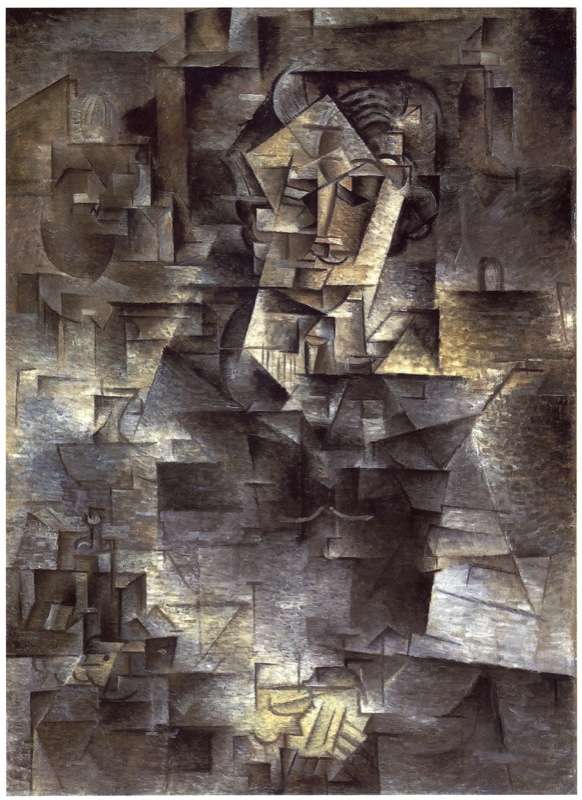
picasso-portrait-of-kahnweiler-1910

Daniel-Henry Kahnweiler

Kahnweiler was a German-born art historian, art collector, and one of the premier French art dealers of the 20th century. He became prominent as an art gallery owner in Paris beginning in 1907 and he was among the first champions of cubism and Picasso.  Picasso wrote of Kahnweiler “What would have become of us if Kahnweiler hadn’t had a business sense?”  The figure in the painting is imposing, the head powerful, the hands relaxed but commanding.  There is light that seems to emanate from the head and the hands.  One has the impression of a dynamic, creative and important person.  When one looks at the painting itself, which must be about a meter and a half tall, one can’t help but be impressed by the intricacy of the brushwork and the hours that Picasso worked on this portrait.  It is certainly a fitting tribute to a very important influence in Picasso’s life.

f_6405600_1

Jacqueline Roque

Jacqueline Roque was Picasso’s second wife whom he married in 1961, and she outlived him.  She was his favorite female subject; in 1963 he painted her portrait 160 times, and continued to paint her, in increasingly abstracted forms, until 1972.  In looking at the portrait, one has a sense of a strong relationship between the subject and the painter.  She is dressed in black but does not seem to be in mourning; in fact her forthright stare and raised eyebrows suggest a positive outlook.  She appears to be about to disclose something important.  The figure expresses confidence and femininity.

old_man

Old Man

This is a self-portrait of Picasso in a posture similar to a Rembrandt self-portrait; Picasso greatly admired Rembrandt.  This was painted in the last year of Picasso’s life, and suggests a powerful figure looking out on the world.  There is little motion in the picture, except for what appears to be heat on the right which dissipates toward the left.  His right hand is clearly shown; the left hand is somehow disabled.  His exposed upper torso conveys a sense of vitality in spite if the stasis.  The face seems prepared to make an announcement.  Overall, one has the impression of a painter who knows what he wants to paint and why and who cares very little for the reaction of his audience.

Picasso was highly skilled in communicating a message along with the image in his paintings, and this is particularly evident in his portraits.  Artists and writers share a challenge: defining a character to the viewer/reader.