Review: Favors and Lies

I decided to buy and read a copy of Mark Gilleo’s novel, Favours and Lies, because it received an award at a recent book festival. (One always wants to understand what other successful writers are doing.)

The brief biography at the back of the book says: “Mark Gilleo holds a graduate degree in international business from the University of South Carolina and an undergraduate degree in business form George Mason University. He enjoys traveling, hiking and biking. He speaks Japanese. A fourth-generation Washingtonian, he currently resides in the DC area. His first two novels, Love thy Neighbor and the national best seller Sweat were recognised as finalist and semi-finalist, respectively, in the William Faulkner-Wisdom creative writing competition.”

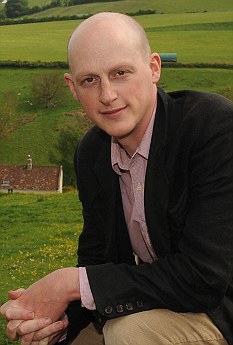
facephoto-150x150

This photo appears on his website.

Favours and Lies concerns Dan Lord, a private investigator with a law degree and a selected list of clients. He works in the DC area on ‘the blurred line between right and wrong’. When his brother’s widowed sister-in-law, Vicky, and her son, Conner, die under very strange circumstances, Dan takes a particular interest. Vicky dies in an apparent suicide and Conner dies of what seems like a drug overdose. Neither of these deaths make sense to Dan. Then the detective who was investigating the deaths of mother and son is killed, as is the son’s girlfriend. Dan finds that the records of several key phone calls have disappeared, and Dan engages a computer wizard to find out what happened to the phone call on-line records. There is a secretive company, the address and phone number of which are unlisted. There is a high class madam, a Russian intelligence officer, a medical doctor, a barber, a martial arts trainer an assistant district attorney, a night club owner, with whom Dan exchanges favors and lies in order to find the killers of his relatives. Some of these people end up dead; Dan, nearly so on several occasions. Toward the conclusion of the novel, we learn the reason for Conner’s death, and of the illegal conspiracy which lay behind it. The motivation for Conner’s death and those responsible is quite a shocking surprise. Fortunately, the favors given to Dan by those friends who remain alive are repaid.

Favors and Lies is a fast-moving book, which is difficult to put down: one wants to find out what happens next. The characters are distinctive and interesting, but they are ‘on stage’ for such short periods, in many cases, and described in terms of their appearance and history more than in terms of their values. One feels little empathy for many of them, the exceptions being Dan and Detective Wallace. The dialogue is clipped and punchy, fully in keeping with a fast-moving detective thriller. The locations of the various scenes are described is such detail that one senses the author’s pride in his familiarity with the streets of the US capital. There is some technology on which the plot for Favors and Lies depends, but it is pretty much understandable. For me – a very literal-minded person – the difficulty I have with Favors and Lies is the credibility of the plot, taken as a rapid-fire whole. But, in the genre of gripping, no-holds-barred detective stories, there are few better.


A Critic’s Article


There was an article by Rowan Pelling in The Daily Telegraph recently. Since the article had to do with literary criticism, I took an interest in it.

According to Wikipedia, Rowan Pelling is a British journalist, broadcaster, writer and stand-up comedienne who first achieved note as the editor (or “editrice”, to use her term) of monthly literary/erotic magazine, the Erotic Review. She was a judge of the 2004 Man Booker Prize. She is now a columnist for the Daily Telegraph, is working on her first novel, and is the mother of two sons.


Ms Pelling’s article (her photo is above) is as follows:

“It is easy to recall the moments in my life when I’ve been so overwhelmed by sudden shame and remorse that I’ve prayed for a meteorite to smite me on the spot. One occurred this summer, as I walked into the green room of The Curious Art Festival at Hampshire’s Pylewell Park. I greeted a friend who gesticulated to the table behind him, saying, “You must know Fay Weldon.” Yes, yes, I know – by daunting reputation – the celebrated writer and feminist icon. You could even say she’s welded on my brain, because I gave a complete stinker of a review to an erotic novel written under a pseudonym; only to be told, once I’d submitted it, that the author was almost certainly Weldon. By then, I’d dismissed the book at “fearful tosh” and opined that it read “like one of those saucy stories written by schoolgirls and passed under the desks at RE”. I considered asking my editor to soften my view as I am generally a big fan of Weldon’s oeuvre. . . . However, my first duty as a reviewer was undoubtedly to the reader, and I wasn’t sure they would be well advised to allocate hard-earned cash to a pseudo-Dennis Wheatley sex romp. So the review ran in its unflattering entirety pointing me inexorably to the day when I would stand quaking before Weldon, wondering whether it was best to apologise, or hope that merciful amnesia had drawn a veil over the episode. But long experience tells me that praise, however extravagant, will be absorbed, or taken as one’s due, while criticism, however trivial, will remain engraved on the artist’s heart. So I grovelled and blushed and the leonine Weldon was magnanimity personified.”

Ms Pelling goes on to mention several instances where authors and film-makers reacted with a mixture of hurt and venom to savage reviews by other critics.

She goes on to say: “Yes, it’s far easier to sit at your desk and take an entertainment apart than to actually write a novel and, yes, any fool with a blog can stumble home drunk and say they loved a film. The difference, however, is that you don’t feel that accountable when you tell your Facebook friends you gave a great big “Meh” to The Grand Budapest Hotel. When you put those judgments into print, however, you feel enormous responsibility; but not primarily to the work’s creators. In an over-stimulated, time-poor world it is ever more the critic’s job to steer his or her readers firmly towards what most deserves their split attention. . . . What’s certain is that not only do critics need rhino hide to function, so do writers who post painstaking works of creativity out in the harsh spotlight. I understand the desire to call reviewers to task, but an offended writer will appear more powerful if they float above the controversy with regal detachment.”

She concludes by saying: “There’s one thing all critics know: you can’t take it back.”

To Ms Pelling’s article, I can only add: “Amen!”

Allegory

My seventh novel is going to be an allegory.  It will be written in the first person and set mainly in the Middle East.  The themes will be philosophical, theological, psychological and social.  I have never written an allegory before (at least not knowingly), and I think it will be an interesting challenge.  But more importantly, I think an allegorical approach is the most effective way to communicate with the reader about the themes I have in mind.

In this instance, the indirectness of allegory is what appeals to me: themes are suggested to the reader without being specific, and the reader is at liberty to interpret the themes in her/his own way.  In my view, this approach adds richness to the presentation.

Wikipedia defines ‘allegory’ as: “a rhetorical device in which characters or events in a literary, visual, or musical art form represent or symbolize ideas and concepts. Allegory has been used widely throughout the histories of all forms of art; a major reason for this is its immense power to illustrate complex ideas and concepts in ways that are easily digestible and tangible to its viewers, readers, or listeners. An allegory conveys its hidden message through symbolic figures, actions, imagery, and/or events.”

A visual example is this painting, ‘Allegory of Music’, by Filippino Lippi; painted in 1475 to 1500:

300px-Filippino_Lippi_001

I have to confess that I ‘don’t get it’ when looking at this picture.  Perhaps that is because it makes use of Greek mythological symbols which were popular during the High Renaissance.  But I concede that the painting does evoke feelings of motion, as with music.

Last night I watched the Ingmar Bergman film The Seventh Seal, which was released in 1957 in black and white.  I remember being a fan of Ingmar Bergman when I was in university, but I don’t think I ever saw this particular film before.  The film is considered a major classic in world cinema, perhaps because of its scenes and allegorical content.  While I certainly enjoyed watching it, I have to admit that it would not be a money-maker if it were released today.  In the film, Bergman transports the viewer to Sweden in the early Middle Ages.  The principal character is a knight who has returned home from a crusade a the time the Black Death is sweeping through Sweden.  The knight feels that his life has been wasted and fears for his death.  He wants to perform ‘one meaningful deed’, and longs to hear the voice of God.

220px-Ingmar_Bergman-The_Seventh_Seal-01

In this scene from the film, the knight (on the right) offers Death his choice of chess pieces; Death chooses black.

The film is peopled with diverse characters: a woman who has been condemned to death for speaking with the devil; Death himself who play an extended game of chess with the knight; the knight’s wife who has waited for him all these years; there are religious zealots, criminals, actors, and immoral people.  For me, Bergman seems to be saying something like the following: God and the devil are invisible, and God may seem silent; death is inescapable; and ‘one meaningful deed’ may be enough.

Bergman is never specific in his points.  For me, this is the beauty of allegory.  The reader (viewer or listener) has to form his or her own conclusions.

In any event, this film gets one thinking.

Email to Amazon

I sent the following email to Jeff Bezos, Chief Executive of Amazon.com today.

Dear Jeff,

I have taken an interest in Amazon’s dispute with Hachette and various authors for two reasons.  I, myself, am a published author (five novels and two more in the pipeline).  I am also a senior management consultant.

First, let me say that as a buyer of books (and many other things, including mosquito-repellent bracelets), I find Amazon to be an excellent supplier: good prices, extraordinarily wide choices, very prompt delivery, and plenty of product information, including other customers’ reviews.

As an author, I am pleased to see my books presented in colour, thoroughly described and reviewed, and available from stock.  I am less pleased to see the price levels to which they are discounted for two reasons.  First, every dollar of discount Amazon offers to buyer means fifty cents out of my pocket.  It is in this sense that authors are not being used as ‘human shields’ by the publishers.  We aren’t hostages; we, too, are under attack!  And, second, I believe Amazon is ‘leaving money on the table’ with such large discounts.  In other words, prices are less elastic than Amazon apparently believes.  More on this later.

As I understand it, Amazon has two objectives in pursuing greater discounts from the publishers: one explicit and the other implied.  The explicit objective is to recoup the losses Amazon has recently suffered ($126 million net loss in the second quarter of this year). The implicit objective is to have nothing between the author and the reader.

I have no problem with the explicit objective – depending on how it is pursued.  The implicit objective is more complicated.  I can understand how Amazon would like to be the ‘transformational vehicle’ between the author’s output and the reader’s input.  The problem is that there is a huge collection of what Amazon probably regards as time-honoured baggage in that gap between the author and the reader.  Why doesn’t the author just sell his output to Amazon (for which s/he would be handsomely rewarded) and Amazon would produce (mostly) ebooks for readers (for which service it would be handsomely rewarded)?  A sensible objective, on the face of it.  But, there are powerful opposing forces which may be irrational, but will, nonetheless, be difficult for Amazon to overcome.

The first of these forces is that some readers (like me) love the sense of a physical book, and will not buy an ebook.  (Although, all of my novels are also available as ebooks.)  For me, the physical presence of a book while I’m reading it, and in knowing that it’s on my bookshelf, far outweigh the ‘convenience’ and lower cost of an ebook.  Will we – hard-copy addicts, who are currently in the majority – disappear over time?  Possibly.  But not for at least a generation.

Aside from physical printing, there are other tasks which lie in the gap between author and reader.  Amongst these tasks are author and book selection, editorial advice, editing, cover design, administration and a wide variety of sales, marketing and promotional services.  Some of these tasks can be carried out by the author at additional cost to the author, but many authors, particularly best-selling authors, would object to being ‘burdened’ with these tasks.  Is Amazon prepared to scale up or make acquisitions to ‘fill these gaps’ between author and reader?

Then, there is the whole contentions issue of literary/artistic/professional gatekeeping.  Currently, publishers and literary agents largely decide who and what gets published.  They may not always make the right choices, but the fact is that their choices are generally supported by professional critics and educated readers.  Is Amazon prepared to hire a host of these gurus, or would Amazon’s strategy be: ‘Let the Market decide!’  If Amazon would opt for the latter strategy, I suggest that the outcome would be catastrophic: a market saturated with low-quality, popular books: a situation which would not be tolerated by educators or educated readers.  It is wise to recall that literary gatekeeping grew up with the publishing industry out of demands by an educated market.

So, what would I, as a professional management consultant, advise Amazon to do?  I would advise Amazon to proceed very cautiously in its efforts to fill the gap between author and reader: a misstep could be punitive (from the market or from government).  I would recommend that Amazon raise its prices, across the board, by an average of 2.5% real for each of the next two years.  This 5% price increase will not (in my opinion) result in an equivalent reduction in sales.  Amazon is well known for its low prices and gradual, selective price increases will not affect that reputation.  Pessimistically, there could be a 2% decrease in sales from $80 billion to $78.5 billion.  $78.5 billion at 5% higher prices will yield almost $4 billion in additional annual profits.

This course of action would not only makes Amazon look very attractive to its shareholders; it would facilitate amicable agreements with publishers and authors; it would stop the criticism from the media and the marketplace; and would cause government regulators to lose interest.

Yours sincerely,

William Peace


More: Amazon vz Hachette

My last post mentioned the dispute between Amazon and Hachette (the fourth largest US publisher) in which Hachette has refused Amazon’s insistence on paying Hachette less for its books, and in which Amazon is delaying the shipment of orders for Hachette’s books.  Now 900 authors have entered the fray, as this article in yesterday’s New York Times states, in part:

Douglas Preston, who summers in this coastal hamlet of Round Pond, Maine, is a best-selling writer — or was, until Amazon decided to discourage readers from buying books from his publisher, Hachette, as a way of pressuring it into giving Amazon a better deal on e-books. So he wrote an open letter to his readers asking them to contact Jeff Bezos, Amazon’s chief executive, demanding that Amazon stop using writers as hostages in its negotiations.

The letter  spread through the literary community. As of earlier this week 909 writers had signed on, including household names like John Grisham and Stephen King. It is scheduled to run as a full-page ad in The New York Times this Sunday.

Amazon, unsettled by the actions of a group that used to be among its biggest fans, is responding by attacking Mr Preston, calling the 58-year-old thriller writer “entitled” and “an opportunist” while simultaneously trying to woo him and his fellow dissenters into silence.

Mr Preston, pictured, right, is un-swayed.

08amazon-web2-superJumbo


“Jeff Bezos used books as the cutting edge to help sell everything from computer cables to lawn mowers, and what a good idea that was,” he said. “Now Amazon has turned its back on us. Don’t they value us more than that? Don’t they feel any loyalty? That’s why authors are mad.”

This latest uproar in Amazon’s three-month public battle with Hachette comes at a vulnerable moment for the Internet giant, which is rapidly transforming itself into an empire that not only sells culture but creates it, too.

Amazon does not want to be seen as hostile to content creators, one of the four groups it says on its investor relations web page it is expressly set up to serve. But it also has to price their creations cheaply enough to draw hordes of consumers, while at the same time making enough of a profit to satisfy investors.

It is a complicated balancing act. Some argue it is impossible. Amazon just surprised Wall Street by saying it may lose more than $800 million this quarter, potentially wiping out its profits for the last three years, partly because creating video content is expensive. The prospect of this unexpected loss has raised questions about whether Amazon’s money-losing ways are finally catching up with it — and whether that is the real reason it is making new demands on publishers like Hachette.

Amazon has been forced by the controversy to shed its long-time practice of refusing to comment on anything. Asked about the writers’ rebellion, it issued a statement that put the focus back on Hachette, bringing up the Justice Department’s antitrust lawsuit against Hachette and other publishers in 2012: “First, Hachette was willing to break the law to get higher e-book prices, and now they’re determined to keep their own authors in the line of fire in order to achieve that same end. Amazon has made three separate proposals to take authors out of the middle, all of which Hachette has quickly dismissed.”

Mr Preston pointed out it was Amazon that put the authors in the line of fire in the first place. Russell Grandinetti, Amazon’s vice president for e-books, has called Mr Preston twice in recent weeks, trying to get him to endorse the company’s proposals to settle the dispute, as well as to pipe down. The most recent proposal would have Amazon selling Hachette books again, but with Hachette and Amazon giving their proceeds to charity.

No thanks, Mr Preston said. A proposal that weakens Hachette by cutting its profits was not in the interests of Hachette’s authors. But he took the opportunity to ask Mr Grandinetti why Amazon was squeezing the writers in the first place.

His response, according to Mr Preston: “This was the only leverage we had.” Amazon declined to comment.

“It’s like talking to a 5-year-old,” Mr Preston said. “ ‘She made me hit her!’ No one is making Amazon do anything.”

No one is making Mr Preston do anything, either. He dismisses Amazon’s suggestions that he is a “human shield” for Hachette, one of the Big 5 publishers in the United States. He and the other writers say they are acting independently. Most, in any case, are not published by Hachette.

Mr Preston is not sure how he has found himself in charge of a group calling itself Authors United. “I don’t like fighting,” he said. “I’m a wimp. When the bullies in seventh grade said they would meet me in the parking lot after school, I made sure I was nowhere near it.”

Other writers who signed the letter include Robert A. Caro, Junot Díaz, Malcolm Gladwell, Lemony Snicket (the pen name of Daniel Handler), Michael Chabon, Michael Lewis, Jon Krakauer, Scott Turow, George Saunders, Sebastian Junger, Philip Pullman and Nora Roberts.

“We feel strongly that no bookseller should block the sale of books or otherwise prevent or discourage customers from ordering or receiving the books they want,” the letter states.

Some writers wholeheartedly supported the letter but were afraid to sign, Mr Preston said. A few signed it and then backed out, citing the same reason. The Times ad, which cost $104,000, was paid for by a handful of the more successful writers.

I’m sure there’ll be more to come!


“Up Against Amazon”

There is an article in the August 2014 issue of Independent, the journal of the Independent Book Publishers Association that I’d like to share with you.   It is written by Karen Christensen, who is a publisher, author, journalist and blogger.  She wrote:

“Amazon doesn’t just take orders.  It is used to barking orders at publishers and getting us to salute.  But bullying only goes so far, and I’m thankful that a single large publisher, Hachette, stood up to it and that the New York Times ran an editorial about its strong arm tactics.

“I’ve been sitting on my own Amazon story for a while after receiving a threatening phone call from its legal department when I refused to agree to a unilateral change of terms.  But with all the publicity and debate about Hachette, I thought other publishers, as well as Berkshire Publishing’s (the author’s publishing company) friends, colleagues and customers might like to know about our experiences and why I believe that Amazon is destroying healthy competition in the publishing world.

“I am and academic publisher as well as an environmental author (with one book publisher by Hachette, in fact).  My company is very small. Amazon has a market cap of $US 141 billion.  “They have infinite resources,” said a friend when I told him that I had received an angry phone call from Amazon.com’s legal department.  The telephone call wasn’t to discuss terms, but to threaten me for “telling lies about Amazon”.  What I had written was that if we had to stop supplying Amazon I would have to write to all my customers, authors and colleagues to tell them why.

“My fight with Amazon began when it decided to go after traditional “short discount” publishers (academic presses as well as presses like Berkshire Publishing) with a unilaterally imposed change in business terms announced only in a “case note” within their order processing platform.  This platform is normally used to inquire about the availability of certain books and is used by customer service staff.

“A colleague of mine whose staff was puzzled enough to pass the “case note” along to him asked Amazon to contact him directly by telephone or email, saying that business terms were a matter for our company’s executive team.  Amazon refused to talk – communication would take place through the “case”.

“Berkshire Publishing had sold print through Amazon since 2006.  Although it originally demanded a 40% discount – four times our standard – I decided we should make books available through any major platform that individual readers and libraries use. Out authors like knowing that their books are readily available worldwide.  And we reach some people who wold never otherwise know about our titles.  In fact, I was recently at a meeting in Beijing and showed a copy of our book This is China: The first 5000 Years.  Two of the people there started whispering and giggling, and finally one spoke up, “I have that book.  I ordered it from Amazon!”

“Amazon’s demand in 2012 was for a an additional 5% bringing the discount to 45% (some academic presses had been at 25%, so the change to 45% meant a reduction of 80% in their net income from Amazon sales).  Bookstores generally get a discount of 30-40%.  Amazon has been getting 50-55% from big trade presses, and the current battles are part over further discounts that Amazon is demanding to increase its marginal profits.

“It is not only publishers who are affected (who, after all, really feels sorry for publishers?); independent bookstores cannot compete with this kind of pricing.  Amazon discounting also affects authors, because may book contracts specify a lower royalty percentage if the discount is 50% or higher.

“In the end it is readers – students, professionals and those who read for pleasure – who will suffer because innovative writers won’t get the chance they deserve and hard-working midlist authors won’t be able to afford the time they need to write.

“And who says cut-rate pricing will continue after Amazon’s market dominance is assured?  Publishers, including self-publishers love the 70% Amazon pays them on e-books now, but the split was 70% for Amazon until after agency pricing, and the contract allows Amazon to change it at any time.  There is no reason to think that the company won’t impose changes on any group of suppliers (which is what we authors and publishers are).

“Amazon, by the way, does not necessarily pass those discounts on to the customer.  Most Berkshire books are educational reference works that sell for hundreds of dollars; Amazon has generally sold them at full price, keeping that substantial “discount” as its profit, which is far greater than our profit on our own books.

“Amazon is destroying competition and innovation because it is not letting the market determine winners and losers, but is instead making the selection itself, deciding arbitrarily where to take its pound of flesh and shore up its feeble margins.  Publishers (and authors) would be fine if they were actually competing with one another for sales without Amazon sucking the life out of every transaction.

“Finally, what happened?  Are Berkshire Publishing  titles available through Amazon?  Dear reader, I capitulated after four months.  It wasn’t fair; it wasn’t good for anyone but Amazon, but I was losing sales that I needed and I gave in.  Amazon made one change, too: it hired its first small-press liaison, and I met her at BookExpo last year.  I didn’t her from her this year and have no idea if that department of one still exists, but I hope that in the future we will be able too discuss and agree on terms that make sense.  “Hurray” for Hachette and for everyone else who is now standing up to Amazon.”


I’ll cover the Hachette – Amazon dispute in a later blog, but I have some comments on Ms Christensen’s article.  Certainly, as a small publisher one has to have some real sympathy for her: she has a very tough business.  It is unconscionable that a giant purchaser like Amazon tried to slip in a major change in its terms of business without proper notice or discussion.  That is the worst kind of arrogance.   She is also correct that Amazon’s pressure for large discounts affects authors.  In my particular case, for every additional increment of discount which Amazon takes, I lose half of that increment in royalties. Who consults me about that?  No one.

It seems to me that the Amazon business model is designed to weaken, if not to destroy, independent bookstores.  Their discounting structure makes it difficult for small bookstores to compete.  I’m sure that Amazon would deny that their discounting is predatory.  They would say that they have the title that the buyer wants in stock, so that the buyer can have a copy as quickly as the following day, instead of having to wait a week, or more.  They would also point out that they don’t have the option of returning unsold books to the publisher for full credit, as bookstores do.  And, they would point to a number of value added features on their website, including descriptions, reviews, and copious author information.

Still, it’s Amazon’s apparent ‘might makes right’ attitude which is troubling.  From Ozymandias to his modern day counterparts, arrogance invariably destroys its owner.

Subtlety

One of my learnings as I’ve been writing and reading other authors’ work is the importance of subtlety.  Rather than spell out what has happened or what is going to happen, it is often better to imply and let the reader draw his/her own conclusions, or guess.  Obviously, there are times when it is necessary to be explicit: for example, when an author wants to elicit strong  feelings in the reader.  But there can be a fine line between developing strong feelings about a character and the reader developing negative feelings about the book.

Sex is one area where I feel, now, that less is sometimes more.  Presently, I feel that the use of explicit words can interrupt the reader’s attention, and force him/her to develop an explicit mental picture of what is happening.  Depending on the reader’s reaction, the explicit picture may or may not be erotic, or enjoyable.

Here is an example of the more explicit approach from my first novel, Fishing in Foreign Seas:


He stepped into the shower and closed the door behind him. They embraced, luxuriating in the delicious feel of wet skin against wet skin. He redirected the shower head so that it did not spray into their faces. They began a long, sensuous French kiss, their hands wandering over each other. Caterina’s legs had drifted apart, and his fingers found her black curls and then her secret cleft. “Oh, Jamie, don’t stop.” Her hand found his erection, and began to stroke. They moaned into each others mouths, their hearts racing and their breathing erratic, as they clung more strongly to each other, their eyes closed. She became rigid and stifled a cry of release.

“Oh, yes!” he groaned, and she opened her eyes to see his semen disappear in the streaming water.

They kissed slowly and lovingly, holding each other close.

Oh, God!

“What a beautiful way to start the day!”


And here’s a sample from my latest novel, which will be sent for final editing next week:


“Mary Jo, I must have tried to visualise you as you are now a hundred times.”

There was a slight giggle. “I didn’t try to visualise. I tried to feel your touch and smell your body. Now, it’s so nice to be real.”

He run his hand slowly and repeatedly from her cheek to her knee, pausing at her breast, her navel and her mound. “God, you’re a beautiful woman!”

“Well I’m not, but I’m glad you think so. Let me see your scars.”

She raised herself to a sitting position. She giggled again. “Rob!”

“What?”

“You know perfectly well what.”

“What am I supposed to do about it?”

“Nothing right now. Maybe later. How many stitches do you have here?”


Another area where caution is required is in descriptions of violence.  Violent scenes are sometimes necessary: they may represent an essential turning point in the plot; they may shed clarifying light on one or more of the characters, but too much clarity can turn the reader off.

Writing my latest novel, I discovered the importance of the use of ambiguity in the description of what has happened to a character, what she is doing, or what she is thinking.  Sometimes, if one paints too clear picture of these events, we are forced to develop a specific view of the character: strong approval, or disapproval.  What the author may want is a feeling of ambiguity about the character: I like her, but . . .  So,  for example, in my latest novel, one of the main characters may have become pregnant by her brother.  The circumstances and the symptoms are not clear.  What did she (and he) do?

Punctuation: the comma

There was an article by Harry Mount in The Daily Telegraph recently.  It was titled: “Commas and colons: without them we’re sunk.”

Harry Mount (born 1971) is an English author and journalist, since 2009 a frequent contributor to the Daily Mail.  He has written several non-fiction books; topics include his time working in a barrister’s office, British architecture, the Latin language, and the English character and landscape.


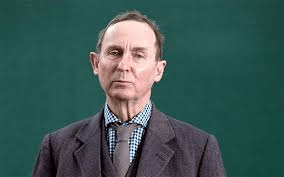
article-2203012-09AA8E5C000005DC-653_233x345

I don’t know Harry Mount, but he looks like a presentable, intelligent chap.  In any case, what he said about punctuation makes sense to me:

“There’s one aspect of grammar that’s wonderfully simple and easy to learn. . . . Putting aside a few really obscure punctuation marks, the 15  main elements are: the full stop; colon; semicolon, comma, apostrophe, quote marks; question mark, exclamation mark;  round brackets; square brackets; hyphen; dash; asterisk; ellipsis and slash.  Most of these are pretty easy.  Even people with dodgy grammar can use practically all of them pretty well. . . . It’s mainly the comma and the apostrophe that let people down.  The apostrophe gets wickedly abused and not just  by grocers.  The comma is underused, particularly in its agile capacity as a throat-clearer, a pause-provider and direction market in a sentence.  Just look at Churchill’s famous speech – and one of his longest sentences – without the merciful assistance of the comma (and the odd semicolon):

We shall fight on the beaches we shall fight on the landing grounds we shall fight in the fields and in the streets we shall fight in the hills we shall never surrender and even if which I do not for a moment believe this island or a large part of it were subjugated and starving then our empire beyond the seas armed and guarded by the British fleet would carry on the struggle until in God’s good time the New World with all its power and might steps forth to the rescue and the liberation of the old.

“Without the commas, Churchillian prose loses all its careful pacing – and you’re lost, too.

“Punctuation, more than anything else, turns the written word into the spoken word inside your head.  Know your punctuation, and you can magically signal to the reader of your writing when to speed up; when to slow down; when to make the prose flow; when to give it a stop-start, staccato rhythm; when to pause; when to trail off into ellipsis . . .

“Without precise punctuation, who could tell the difference in meaning between these two sentences? (a) “My favourite things in the world are Abba, tartar sauce, and fish and chips on the last fairway.” (b) My favourite things in the world are Abba, tartar sauce and fish, and chips on the last fairway.”  It’s the Oxford comma there that distinguishes between the keen gourmet and the keen golfer.

“At first hearing, an expression such as “the non-restrictive comma” will freeze all but the biggest brains.  But explain the difference between “Sailors, who are drunks, are dangerous” and “Sailors who are drunks are dangerous”, and most children will get it in a second.  Insert the non-restrictive commas and you’re being rude to all sailors; take them away and you’re being rude only to the restricted group of sailors who are drunk.”

Summer Reading

There was an interesting article in The Daily Telegraph on July 8th which was subtitled: “‘I couldn’t put it down . . . Holidays are not the time and place to read books that you think you ought to read’, says A N Wilson. So, yes, leave Thomas Piketty at home.”

Wikipedia informs me that “Andrew Norman Wilson (born 27 October 1950) is an English writer and newspaper columnist, known for his critical biographies, novels, works of popular history and religious views. He is an occasional columnist for the Daily Mail and former columnist for the London Evening Standard, and has been an occasional contributor to the Times Literary Supplement, New Statesman, The Spectator and The Observer.”

untitled

Mr Wilson says that “there is a revealing and amusing survey that has been conducted  by a maths professor for the Wall Street Journal.  It is based on the ‘popular highlights’ chosen by users of the Amazon Kindle and comes up with a list of the summer’s ‘most un-read books’.  In the past when we only read books in book form, it was impossible to know, scientifically,  how far the average reader had penetrated into , say, Stephen Hawking’s A Brief History of Time – an impenetrable work, which it is sometimes tempting to believe that no one, except, perhaps, the book’s original copy-editor, has ever read to the end.  But now that so many of us read books on Kindle, it is possible to make an educated guess about how far the average reader has got.

“Each best-selling book’s Kindle page lists the five passages most highlighted by readers.  These extracts, designed to whet the appetite of other Kindle users, would – if they represented a thorough reading of the works considered – surely contain quotations from the whole book, and not just from the first few pages.  Jordan Ellerberg has come up with a playful ‘Hawking Index’ with which to estimate how much of a book most people have read.  The top five ‘highlights’ from Donna Tartt’s novel The Goldfinch, for example, all come from the final 20 pages of the book, which suggests that 98.5 percent of readers made it to the end.  Highlights from Michael Lewis’ page-turning analysis of financial sharp practice, Flash Boys, suggest most people only read the first 21.7 percent of the book.

“And how about the book we of the Chattering Classes are all supposed to be reading and talking about this year – the French economist Thomas Piketty’s Capital in the Twenty-First Century?  Here the quotes do not dig deeper into his 700 pages than a pathetic 2.4 percent – in other words, Piketty, the great economic sage of our time, is as unread as Hawking, our greatest scientific sage.

Wilson goes on to observe that, for most of us, a holiday is a time of relaxation with the distractions of children, sightseeing, family and friends.  He says, “Many is the thick paperback edition of some supposedly ‘great book’ that either gets left behind in the rented villa or hotel, or comes back home with only its first 30 pages smudged with sun-tan lotion.  The idea that this should induce ‘guilt’ is absurd.  Although to be as well-read as possible is a sort of duty of any intelligent person, this does not mean that it is a duty to read Plato’s Republic on a beach, or Proust by the poolside.”

Wilson says that the best sort of holiday reading is short.  In this case, he would probably recommend taking Hemingway’s short stories along, and I would agree.  In my view, the best summer reading is something that keeps inviting us back, all the while keeping us interested.

Of my own works, I would recommend Sin and Contrition (there’s a different sin in every chapter, and a discussion with the sinners at the end).  Or Efraim’s Eye or The Iranian Scorpion (both are unique thrillers).


Review: The Guns at Last Light

I bought this book on the recommendation of a friend who fought (and won a Silver Star) in the Second World War.  It was well worth reading, although the text runs to 641 pages (plus 234 pages of Notes, Sources, Acknowledgements and Index).  There are 16 pages of photographs, as well.

This is volume three of the Liberation Trilogy written by Rick Atkinson, and it covers the war in Western Europe, 1944-1945, beginning with the invasion of Normandy.  It won the Pulitzer Prize.  The other two volumes of the Liberation Trilogy are: An Army at Dawn (covering the war in North Africa, 1942-1943) and Day of Battle (covering the war in Sicily and Italy, 1943-1944).

For me, the most remarkable aspect of The Guns at Last Light is the enormous depth of research that went into it.  In fact, Atkinson says in his Acknowledgements that it took him fourteen years to write the Trilogy.  Every battle is described so that one feels like a well-informed observer, and there are maps aplenty to which to refer.  One is left with a clear understanding of what the objective of the battle was, what went right and what went wrong, and, and what difference in made, ultimately.  The story is largely told from the viewpoint of the relevant commanding officer, but with commentary provided by junior officers and even enlisted men.

The focus is strategic, rather than tactical, and Atkinson reinforces this emphasis with portraits of the officers in command.  These portraits are formed from the comments of colleagues, superiors, subordinates, others and the individual himself.  For example, Eisenhower comes across to me as a man who had an extraordinary ability to motivate, cajole, an occasionally order wayward senior officers to pull together in the same direction.  Montgomery comes across as an egotistical prima donna, who over-rated his own skills as a general.  These portraits come alive through timely, pithy remarks that Atkinson has found and included.

There are statistics on everything from the quantities of ammunition expended to the number and sizes of boots used by the GI’s, but they are inserted at appropriate moments.  Moreover, the battles behind the lines are covered, as well: particularly logistics; but also care for the wounded, injured  and dead; and ‘recreation’.

Perhaps the one thing which is missing is the perspective of the individual soldier in combat, though there are many brief comments on what it was like.  To be fair, I think it is impossible to tell so sweeping a story from the perspective of both the commander and the individual soldier.  What does come across clearly it the enormous physical, mental and spiritual hardships that the soldiers endured.

The story is not told entirely from the allied point of view.  There are passages which cover German activities, from Hitler on down.

For as long as it is, this is not an easy book to put down.  The writing is fresh and innovative.   There is a sense of immediacy.  One knows in general, how things will turn out, but once a particular battle has begun, one wants to find out exactly what happened and why.  When one does put it aside, it is easy (and rewarding) to pick it up again.

Because of my own interest in Italy, I’m planning to ready the second of the Trilogy books.

If you’re interested in military history, they don’t come any better than this.