Male and Female Writers’ Coverage Bias

There is an article by Alison Flood in The Guardian on March 18, 2019 in which she analyses the Emilia Report.

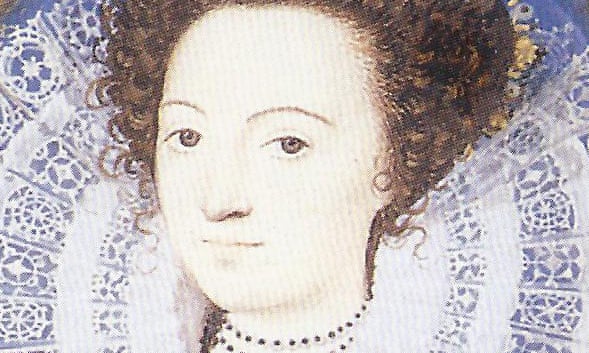
Emilia Bassano (portrait circa 1590 by Nicholas Hilliard)


Excerpts from the article are quoted below:

“Emilia Bassano became England’s first published female poet in 1611 and – according to some – could be the “Dark Lady” of Shakespeare’s sonnets. But Bassano has largely been forgotten by posterity, with her reputation eclipsed by male contemporaries. Four hundred years later, research commissioned by the producers of Emilia, a play about Bassano’s struggle for recognition as an artist, has found that women writers continue to be judged by the “pram in the hallway”, and pigeonholed as domestic rather than taken seriously as authors.

“The Emilia Report compared broadsheet coverage of 10 male and female writers in the same market. It found a “marked bias” towards male writers, who received 56% of review coverage. Looking at comparable authors Neil Gaiman and Joanne Harris, who had both written new works of fantasy – Gaiman’s Norse Mythology and Harris’s A Pocket Full of Crows – researchers found that while Gaiman’s received widespread coverage, Harris’s did not receive any coverage at all. A similar story emerged for commercial fiction authors Matt Haig and Rowan Coleman; his How to Stop Time was mentioned 12 times by newspapers, in a mix of reviews, interviews and news, while her The Summer of Impossible Things got just three mentions.

“References to women writers’ ages were “ubiquitous”, even in reviews, the researchers found, with women twice as likely to have their age referenced as part of their coverage. In the case of Sally Rooney, only five pieces out of 16 failed to mention her age, three of which were reviews.

“Coleman, one of 27 female authors interviewed for the report on her experience of being published, said she had never been reviewed by a broadsheet, despite writing a string of bestselling novels. “For a man writing is a career,” she said. “For a woman, so often her writing is treated like it’s a hobby, it is a nice thing to do on the side. That attitude is deeply embedded in our culture.”

“Harris reported similar experiences: “In general, when you compare the coverage of my work to that of men writing in similar areas, the emphasis in my case has been on the domestic, and in theirs on the academic,” she said. “Women are still viewed as a niche group, dealing solely with women’s issues, whereas men (even in the same area) are thought of as dealing with important, universal themes.”

“Danuta Kean, the report’s author, said that just as it was for Bassano, “women still aren’t provided with an equal platform to men upon which their work can be judged.”

“The Emilia report recommends challenging publishers over gender stereotypes on covers, which “undermine the credibility of fiction by women and their ability to be taken seriously”, and asking literary editors to examine any gender bias in their review coverage.

“Playwright Morgan Lloyd Malcolm, whose play Emilia is transferring to London’s West End, said that the research showed that Bassano’s struggles for recognition “sadly still chime with those of her fellow women writers 400 years later”.

“Bassano managed to publish a book, Salve Deus Rex Judaeorum, getting around censorship that limited women to writing only religious texts. Yet she is scarcely known outside academic circles.”

What was it the Virginia Slims cigarette advertisement used to say?  “You’ve come a long way, baby.”  (From 1590 to 2020, but there’s a long way still to go.)

Small Publishers Fear Closure

There is an article by Alison Flood in the May 7th issue of The Guardian which is timely.  Te headline is “Majority of Small Publishers Fear Closure in the Wake of Coronavirus.   Alison Flood is the Guardian’s books reporter and the former news editor of the Bookseller.

Alison Flood

The article says, “More than half of the UK’s small publishers fear they could be out of business by the autumn as a result of the coronavirus pandemic, according to research by the Bookseller, which warns of a “whole tranche of writers that either will not write, or will be unable to see their work published”.

With author events cancelled, titles delayed and bookshop sales severely hit by lockdown, the survey of 672 small publishers reveals almost 60% fear closure by the autumn. The Bookseller said that 57% reported they had no cashflow to support their business, and 85% had seen sales drop by more than half.

According to the Bookseller’s editor Philip Jones, the survey shows that the outbreak threatens many small presses, including some of the UK’s best-known independents.

“These are not big publishers, or even the bigger indies, but the very smallest, many of them Arts Council-funded, publishing into areas often overlooked by other publishers, with a particular emphasis on debut writers, and those from BAME or working-class backgrounds,” said Jones. “There’s a whole tranche of writers that either will not write, or will be unable to see their work published, if these fears come true, and it is incumbent on the publishing sector, arts funders and governments to look at how the situation can be resolved.”

Independents often take risks on authors that mainstream publishers shy away from: Norwich-based indie Galley Beggar Press published Eimear McBride’s award-winning A Girl Is a Half-formed Thing after it was rejected by a string of major presses, while independents dominated the longlist for this year’s International Booker prize.

After winning the London category of the small press of the year award at the 2020 British Book Awards, the founder of Jacaranda Books, Valerie Brandes, had been looking at her “strongest, most ambitious year of publishing”, including a commitment to publish 20 black British writers.

“The pandemic and the resultant crisis has not only decimated our plans for these new authors, but has also impacted our publishing programme in every aspect overall, from future acquisitions to sales and distribution,” said Brandes. “We have had to adapt, as small presses have to, turning to our website to sell directly, making changes to our publishing schedule and connecting more with our community. This is all compounded by the industry-wide uncertainty; we have no idea how far we will fall or for how long.”

Jacaranda has teamed up with Knights Of, another publisher specialising in diverse authors, to launch a crowdfunding campaign, administered by independent writing charity Spread the Word. It is looking to raise £100,000, 80% of which will be split between the two presses, with 20% to go to other diversity-focused independents. The money raised will be “vital to ensuring that our shared work can survive this crisis and come out strong and together at the other end”, said Knights Of publisher Aimée Felone.

England’s literature development agencies warned in a joint statement that small and independent presses are “at the forefront of discovering new writers and opening up reading choices through publishing titles often ignored by mainstream publishers” and “if we want to continue to open up writing as a career choice, particularly for under-represented writers, and to develop new audiences for books, we need a healthy independent sector”.”


Top Ten Publishing Industry Trends

Written Word Media has an article dated January 9, 2020 which sets out their top ten trends for 2020.

Excerpts are as follows:

1. Audiobooks will continue to gain popularity, and more indie authors will invest

It seems like almost everyone you meet is talking about audio these days. Whether it’s podcasts or audiobooks, people are consuming more spoken word audio than ever, and the stats back it up.  A 2019 survey from Edison Research revealed that half of all Americans over the age of 12 have listened to an audiobook in the past year. Additionally, audiobook listeners trended younger. Fifty-five percent of listeners were below the age of 45. The survey stats showed an increase from 2018, and the expectation is that audio will continue to grow. “For audiobooks, 2019 was really the year of the library. We saw incredible library sales growth for authors in 2019.   With better access to audiobook creation and distribution, we expect to see more audiobooks in the marketplace in 2020. Marketing audiobooks remains a challenge for authors but effective marketing will become more important as the space gets more crowded.

2. More indie authors will collaborate on marketing

Authors have long seen success with collaborative marketing techniques like email list swaps and group giveaways. In 2020, we expect to see more cooperative marketing as competition grows and indie authors find creative ways to gain an edge.  Michael Anderle of Kurtherian News sees indies aggressively pooling resources in 2020, saying that “many teams will pool resources to get a minimum of one million emails in their email co-op group.”  Of course, authors will need to be strategic to see success here. Oversaturating readers or marketing to the wrong audience can damage an email list. But, as many authors know, getting it right will pay off.

3. We’ll see more published works from author groups

As we learned from our author survey this year, successful authors tend to have large backlists. In 2020, we expect to see more authors collaborate on series and universes to speed up the process of building their backlists.  Bryan Cohen of the Sell More Books Show broke down how he sees this trend. “2020 will bring more author-publishers. It started with romance but sci-fi and fantasy authors are creating giant interconnected universes with a stable of co-writers and ghostwriters. They’re taking the James Patterson model to the nth degree.”

Granted, sharing a backlist will require sharing income in some fashion, but with tools like Abacus from PublishDrive, revenue sharing is getting easier. We expect more authors to join together and make more money faster from this shared model than they could on their own.

4. Organic reach will decline

This publishing trend is a reality across every online industry. As the big players, like Amazon, Google, and Facebook rely more and more on advertising money, they lose incentive to provide a broad reach for free.  This means that blog posts, Facebook posts, and Amazon book listings will see fewer views for free (also known as organic reach). Facebook CEO Mark Zuckerberg announced in 2018 that organic reach of branded pages would decline, and that has played out as expected over the past two years.  Mark Dawson observed a similar trend on Amazon, “Organic visibility is being reduced on Amazon, with authors – including me – reporting big dips in income when also-boughts disappeared from book detail pages. What replaced them? Carousels of ads.”

5. Running ads will become a requirement

As mentioned in the preceding trend, getting your book in front of readers for free is going to get even more difficult. No one is thrilled about this, but it is the reality of a maturing marketplace.  “Advertising is no longer going to be something that you could do, or even should do – it’s going to become something that you must do, at least if you want to pursue writing as a viable full-time career,” says Mark Dawson. Online advertising is widespread to the point where in many industries, you MUST run ads to compete. As self-publishing grows and organic reach declines, we expect to see the same in publishing.

6. Big five publishers will start using KDP Select

This trend comes to us from the great mind of Michael Anderle. He anticipates that Hachette, HarperCollins, Macmillan, Penguin Random House and Simon & Schuster will look to capitalize on Amazon’s reach by using Kindle Unlimited.   According to Anderle, “We will see big five publishers using KDP (Amazon Kindle Unlimited) in 2020 as they seek to acquire income with their enormous backlists.”  Logically, this makes sense, and some major titles (Harry Potter series) are already available within Kindle Unlimited. Getting readers going on a series is a proven way to make some serious cash, and no one has as many series as the big five.

7. Scam services will continue to pop up

Unfortunately, this trend will continue in 2020. With self-publishing continuing to grow, more shady characters will be attracted to the money in the market.  The good news? There are some tremendous people who regularly expose and spread the word about bad actors. We recommend following Victoria Strauss and David Gaughran on Twitter as they both regularly identify and publicize scams aimed at indie authors.

8. The eBook market will grow even more in 2020

There’s been some buzz about younger readers not buying eBooks, but Nate Hoffelder debunked these rumors in a recent post. Hoffelder includes data from Pew and eBooks.com that show that younger readers are buying eBooks and reading eBooks as much, if not more, than older readers.  As more young readers enter the market, it stands to reason that eBook sales will only increase. Because almost all young people use a digital device every day, moving to eBooks will be a much more seamless transition than the one made by older readers who grew up reading print.

9. Email lists will increase in value

With organic reach declining, spending money on ads becoming a requirement, and collaboration increasing in popularity, an author’s email list becomes an incredibly valuable asset.  Your email list is a marketing channel that you actually own. Once you have a reader’s email, you have a direct, inexpensive line to them. Readers who give you their email addresses are also opting in. They WANT you to email them. Otherwise, they wouldn’t sign up.  An author’s email list is also a valuable way to attract partner authors. The bigger your list, the more authors will want to partner with you to get in front of your audience.  Email isn’t without its challenges. Gmail and other inbox providers will continue to work to declutter their user’s inboxes, so getting eyes on your content may get more difficult. It is increasingly important to maintain clean lists and to educate your subscribers to expect your emails.

10. Creative indies will experiment with new ways to make money

In 2020, more indie authors will experiment with other ways to make money and try new models for selling books.   Jane Freidman aptly noted, “I expect more writers to charge for content that’s been free in the past, although not every writer will be successful at it. I’m seeing more people adeptly use Patreon to secure donations and early sales for all types of work, and Substack to solicit donations and subscriptions for newsletter content.”


Books and Marijuana

Here are excerpts from an article by Wendy Paris dated 31 March 2020 in the Los Angeles Times.

“Why should it be easier to buy marijuana than a good book at a store in Los Angeles during the coronavirus shutdown?

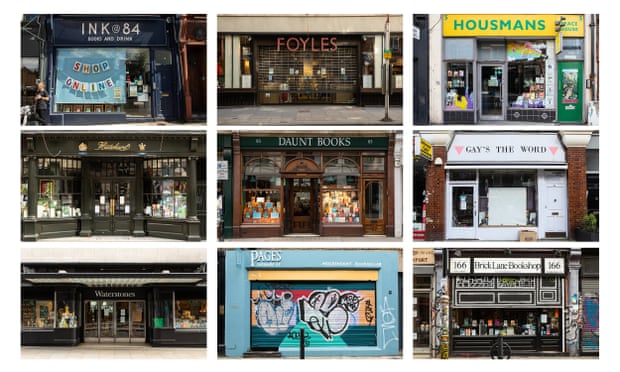
“Mayor Eric Garcetti and Gov. Gavin Newsom’s stay-at-home edicts let dispensaries stay open but force bookshops to shutter indefinitely.  Chavalier’s in Larchmont will take phone orders. Skylight Books in Los Feliz, Book Soup in West Hollywood and Vroman’s in Pasadena are “closed temporarily” but forwarding online orders to Ingram, a wholesaler that will ship direct to buyers. The Last Bookstore, downtown, is seeing customers by appointment.

“Powell’s Books, one of the nation’s largest independent bookstores, with five Oregon locations, laid off more than 300 staff members, although many were rehired as a surge of online orders came in. This legendary institution is still shipping books from its warehouse, but you can’t go in and browse, even in small numbers, separated by plenty of open space.

“And it could get worse. “These are unprecedented and grievous times,” Emily Powell wrote in her initial letter to employees, calling the path ahead “dark and scary.” When she announced that as of Saturday, she’d been able to rehire 100 staffers, she was grateful to her customers but only marginally more optimistic: “We don’t know what the future holds — none of us does. We’re going to keep the doors of Powells.com open as long as we can….”

“Diesel in Brentwood has opted for an ad hoc form of curbside pickup, leaving books in bags with customers’ names on them on a table just inside the store’s door for a few hours each day. Though they’re still recommending books by phone, Diesel’s employees are uncertain about the future. “We consider ourselves essential, like newspapers, media, magazines. That is our mindset,” said bookseller Lynn Aime.

“Aime is right. Books are essential goods and that ought to mean bookstores are exempt from shutting down during the coronavirus pandemic. As are bread and milk, gas and aspirin, alcohol and marijuana, books should be available, with safety precautions in place, at the usual places we buy them in our neighborhoods.

“States are largely left to make their own decisions about public health shutdowns. Newsom could put California in the vanguard by expressly adding bookstores to the list of essential businesses. Surely with people maintaining six feet of social distance, hand sanitizer everywhere, a strict limit on the number of customers let inside and the by-appointment option — in-person book buying can be made at least as safe as shopping for dry pasta.

“In the meantime, some bookstore owners are trying to pay their staffs even while books aren’t going out at the usual rate and most of their employees are staying home. As Linda McLoughlin Figel of Pages in Manhattan Beach put it, dryly: “It’s a bit tricky.” Bookstores will get some sort of help from the emergency stimulus bill Congress has teed up, but bricks-and-mortar bookshops are already fragile enterprises, so who knows how many will survive the shutdown?

“We readers can help. Until bookshops fully reopen, we can use our discretionary income to order books directly from independent booksellers. We can buy gift cards to help the bottom line too. While it’s true we can also get deliveries from the likes of behemoth Amazon, or download ebooks and audiobooks, those shopping choices are already part of independent bookstores’ economic woes. Besides, there are many customers with lower incomes who don’t have access to iPads or Kindles. With libraries also out of the picture, these readers are left without words.

“Finally, we can also let our city, county and state leaders know how much we need bookshops and their staffs as the shutdown goes on, and once it’s over.

“Books provide spiritual nourishment, education, enlightenment, role models, diversion. As Lori Gottlieb, therapist and author puts it, “One way to feel understood and part of something bigger, less alone, is to immerse ourselves in stories. They help us see ourselves.”

“Journalist and novelist Michael Scott Moore, who was held hostage in Somalia for more than two years, had scraps of newspapers but no books when he was trapped with nowhere to go. As Moore says, “I don’t wish a coronavirus lockdown on anyone without books.”

“The health of a nation’s literature depends on its availability to the people, and “if a nation’s literature declines,” wrote Ezra Pound, “the nation atrophies and decays.” Bookstores are essential because books are essential.”


Writing a Good Book Blurb

Boob blurbs are on the front line of battles for book sales.  The Reedsy website defines book blurbs as: “a short description of a book that is written for promotional purposes.  For a paperback book it usually appears on the back cover. Generally, 150-200 words are more than enough for a full blurb.  In the modern publishing landscape, where more books are being purchased online than in bricks and mortar stores, you are more likely to encounter blurbs on the product page of Amazon or any other digital retailer. Sometimes, you will hear them referred to as ‘book descriptions.’”

“The opening of your blurb has to be incredibly precise and dynamic,” says editor Rebecca Heyman. “For a lot of first-time authors, I think there’s an instinct to make sure readers understand everything that happened in the book’s universe before the beginning of the actual story. That’s generally a mistake.”

So if it shouldn’t set the stage for a reader who’s about to dive into your book, what should the blurb do?

Reedsy recommends a four step process as follows:

1. Introduce your main character(s)

“Your blurb has to be about characters. Consciously or not, readers check out the synopsis to see whether they want to spend time with your main characters. They don’t need to know their entire backstory, though — just enough to understand how they figure into the story’s primary conflict…

2. Set the stage for your primary conflict

“The primary conflict is what drives your story.  Without a real-world conflict, you don’t have a story readers can sink their teeth into.

“It‘s tempting to talk about “interior journeys” in your blurb, but that’s something best avoided in most cases. While a character’s compelling internal conflicts might turn out to be an aspect that reader enjoy once they read your novel, they don’t work well in a blurb.  “Your primary conflict has to exist in the physical world of your manuscript,” says Heyman. “That’s not to say that character arcs are not a critical part of what makes a plot dynamic, but they are certainly not going to hook most readers.”

3. Establish the stakes

“Without consequences, a conflict lacks drama. A blurb that says “Jack Ryan has 24 hours to rescue the Russian ambassador,” isn’t as impactful unless we know what’s at stake: “…his failure will result in certain nuclear war.”

“In JoJo Moyes’s Me Before You, a young woman becomes a caregiver for a quadriplegic millionaire and begins to fall for him.  “When she learns that Will has shocking plans of his own, she sets out to show him that life is still worth living.”  This single sentence not only establishes the external conflict (“Louisa must convince Will to live”), it also lays out the stakes, which are literally life-and-death.

“To show your story’s full potential, the reader must be aware that something hangs in the balance for your characters.

4. Show the reader why this book is for them

“Most readers have an idea of the book they’re looking to read next. A well-tuned blurb won’t try to sell everybody on the book — it will help people who already want a book like yours see that it’s for them.

“It’s important subtly highlight how your book is familiar by including elements that readers are already excited by,” says Sione Aeschliman, an editor who regularly helps authors through events such processes. The key is to imply similarities between comparable books without sounding derivative: ensure you also distinguish what makes your book unique.”

In my experience, it’s best to be quite choosy about the words you select: they should be clear and they should convey the feelings you want the reader to have about the book.  Set it aside and keep improving it.  The first shot is never good enough.

The Popularity of Poetry

There is an article, “Poetry Sales Soar as Political Millennials Search for Clarity”, in the January 21 issue of The Guardian by Donna Ferguson, which I found interesting.   Donna Ferguson is an award winning freelance journalist specialising in finance.  (Perhaps she knows something about literature, as well.)

Donna Ferguson

“A passion for politics, particularly among teenagers and young millennials, is fuelling a dramatic growth in the popularity of poetry, with sales of poetry books hitting an all-time high in 2018.  Statistics from UK book sales monitor Nielsen BookScan show that sales grew by just over 12% last year, for the second year in a row. In total, 1.3m volumes of poetry were sold in 2018, adding up to £12.3m in sales, a rise of £1.3m on 2017. Two-thirds of buyers were younger than 34 and 41% were aged 13 to 22, with teenage girls and young women identified as the biggest consumers last year.

“Rupi Kaur, a 26-year-old Canadian poet with 3.4 million followers on Instagram, leads the bestsellers list and was responsible for almost £1m of sales. “You tell me to quiet down / cause my opinions make me less beautiful,” she writes in Milk and Honey, the No 1 bestselling collection of 2018, “but I was not made with a fire in my belly / so I could be put out.”  (It’s interesting that at least one poet is able to make a decent living.)

“Andre Breedt, for Nielsen, said that sales were booming because in times of political upheaval and uncertainty, people turn to poems to make sense of the world: “Poetry is resonating with people who are looking for understanding. It is a really good way to explore complex, difficult emotions and uncertainty.”  He added that the form’s brevity also meant it could be easily consumed on phones and shared on social media.

“In the immediate aftermath of the Manchester bombing, Tony Walsh’s reading of his poem, This is the Place, at Manchester town hall was shared thousands of times online and became instantly famous worldwide. Ben Okri’s poem, Grenfell Tower, June 2017, written in the aftermath of the fire, followed a similar trajectory.

“At these moments of national crisis, the words that spread and the words that were heard were not the words of politicians, they were the words of poets,” said Susannah Herbert, director of the Forward Arts Foundation, which runs the Forward prizes for poetry and National Poetry Day. “Almost everything a politician says is incredibly forgettable. There is a hunger out there for more nuanced and memorable forms of language.”  People wanted to cut through the verbiage of Brexit to see the bigger picture in 2018, she said: “Language gets stale in politics. Words begin to lose their meaning. Poetry occupies a different space to the humdrum. It is a way of renewing what words actually mean. It offers you a different way of looking at the world.”

“Poetry as a form can capture the immediate responses of people to divisive and controversial current events. It questions who has the authority to put their narrative forward, when it is written by people who don’t otherwise hold this power,” she said. “Writing poetry and sharing it in this context is a radical event, an act of resistance to encourage other people to come round to your perspective.”  Social media and technology have made poetry much easier to access and pass along, magnifying its impact, Shaw said.

Could this mean that millennials want existential emotion in their novels?


Royalty Rates

There is an article in the Nov/Dec issue of the IBPA Independent magazine written by Stephanie Beard, ‘The Royalty Rates Publishers Are Actually Offering’.  Ms Beard is the executive editor at Turner Publishing, and industry-leading independent publisher based in Nashville, Tennessee.  Turner has a backlist of over 5000 books and publishes 36 new books per year across all genres.

She says, “Over 100 publishers offered data for this article and responded to questions about royalty rates and release formats.  For these purposes, I am defining traditional publishing as a publishing house that releases books in print and, usually, e-book form that are then distributed through retailers, libraries, online sellers, etc.  These books are acquired by the publishing house’s editors and the rights are granted to the publisher through the signing of a publishing agreement wherein the publisher bears all or most of the editorial, marketing and distribution costs, and the author is, in exchange, pair royalties on sales derived from their books.

“With respect to responses about royalty rates, authors should expect to see rates based either on a percentage of the retail price set by the publisher or a percentage of net receipts or sales.  For royalty rates based on retail price, most publishers responded that their rates for paperback and hardcover formats were as low as 5%, averaged 7.5%, and were as high at 10% on hardcover.  In our poll, most publishers who responded pay their royalties based on net receipts or sales, which is the amount actually received by the publisher for sales of the books after discounts.  These amounts were surprisingly quite varied.  For paperback books sold. most publishers responded that their rates were between 10-15% (with the average being just shy of 12%) of net, with nearly every publisher noting that their hardcover rates are the same as their paperback rates.  The most surprising revelation came from e-books, which average 25%, but were sometimes as low as 10% and as high as 50% – proving that we are quite far from consensus across the industry when it comes to digital books.

“Publishers were also asked to share their subsidiary rights rates, which traditionally include audio, book club, foreign language, and other rights depending on the publisher’s  own abilities and rights programs.  The majority of publishers responded that their subsidiary rights are 50% of net, while there were some who offered as low at 10% and very few who offered rates as high s 70-80% (typically for audio rights).”

For me, a quick summary of all this is that authors working with a traditional publisher can expect royalties of about $1 per copy sold.

Changes in Book Publishing

There is a post on The Idea Logic blog about the seven changes that are coming in publishing over the next several years.   The Idea Logic Company is the creation of Mike Shatzkin who, according to his website, is “a widely-acknowledged thought leader about digital change in the book publishing industry.  In his nearly 50 years in publishing, he has played almost all the roles: bookseller, author, agent, production director, sales and marketing director, and, for the past 30 years, consultant.”

Mike Shatzkin

Mr Shatzkin begins by describing the evolution which has already taken place in publishing, beginning when a publisher needed to own a substantial infrastructure to deliver printed books to thousands of retail locations. “Now more than half the book sales and an even greater amount of the “discovery” takes place online and a lot of the discovery and a lion’s share of the purchases happen at a single account: Amazon. You don’t need a big organization to cover a single account nor a big infrastructure to service it. The other half of the sales in the US, and sales around the world, are now facilitated by another single account, Ingram Content Group.  Ingram provides every component of the fixed-cost infrastructure that any book publisher requires and, in fact, provides all or any part of that infrastructure to an ever-growing number of publishers. . . . All the things that publishers do that don’t require a big infrastructure: finding and developing books, editing them, designing them, and marketing them (increasingly using digital opportunities to talk directly to consumers) can be delivered by a vast network of freelancers and small company service providers.”

Mr Shatzkin continues with his predictions which are excerpted below:

“1. Sales will continue to move to online. The movement of book sales from physical stores to online has been unabated since Amazon began. There is no reason for it to stop. Books have a ton of characteristics that make them perfect for online shopping. You want to shop from a full selection no store has.

2. The other big general online retailers will be Amazon’s biggest competitors for book sales. So far, Amazon has been about the only beneficiary of the shift to online buying. That may be changing. Other big retailing brands like Walmart and Costco have built robust online businesses. Ingram now enables them to carry a full line of books as well.

3. The bifurcated book market will continue. There is a whole digital-first publishing world, spawned by self-publishers, that offers (mostly) genre fiction at prices commercial publishers can’t match: $4.99 and under. The net result has been that commercial publishers are finding it increasingly difficult, if not impossible, to compete in the genre fiction market of customers who measure their reading in books-consumed-per-week.

4. Publishers will progressively shed overheads for service providers. As the commercial publishing business shrinks because of reduced shelf space and increased competition from publishers enabled by the new circumstances, the big publishers will find it increasingly difficult to support their overheads.  We’ll see the number of sales forces calling on bookstores and the number of warehouses shipping to them decline progressively in the next few years.

5. Big publishers will see an ever-growing share of their own sales from their backlist. While it is getting increasingly difficult for publishers to successfully launch new books, there are new opportunities appearing on the radar every day for titles on the backlist. This is true both because digital information sources find and publicize books regardless of their age and because publishers don’t need to position inventory in stores to make them accessible to the public.

6. Amazon Publishing will continue to make inroads signing big authors; only a ruling from courts could eventually stop them. When Amazon launched their book publishing program ten years ago, they probably had about half the market share they have now. Big authors want to reach the whole public, and when indie and chain bookstores combined to effectively boycott Amazon titles, it meant large parts of the consumer base were hard for them to reach.  From here it looks like Amazon exploits an unfair advantage, being the biggest retailer competing with their suppliers for customers that Amazon owns. But for that to matter, it has to be a court’s opinion, not just mine. Perhaps as the effect of the current market circumstances on competition become clearer, a court will see it that way.

7. “Entity self-publishing” will increase dramatically, presenting more challenges to commercial non-fiction publishing. The pieces are all in place for “publishing books” to become part of any big entity’s marketing strategy. You don’t need to own a book publisher to issue them any more than you need to own a newspaper or magazine to get a story out.  Over the next few years, we will see a tsunami of non-fiction publishing from capable entities much like the tsunami we have seen of genre fiction publishing direct from authors.”

All of this makes sense to me.

Rules for Acquiring Editors

Publishers Weekly ran an article 10 Rules for Book Editors by Jonathan Karp on 20 October 2017.  I’ve rediscovered it and I think it’s worth sharing here partly because of what he says (interesting) and partly because of who he is.

Simon and Schuster’s press release dated 6 March last year says: “Jonathan Karp has been promoted to President and Publisher, Simon & Schuster Adult Publishing, effective immediately.  In this new role, he will have overall responsibility for Simon & Schuster’s New York–based adult trade publishing, which includes Atria Books, Gallery Books, Scribner, Simon & Schuster, Touchstone and their associated sub-imprints and lines, and he will report to President and CEO Carolyn Reidy. Mr. Karp will also continue to serve as Publisher of the Simon & Schuster trade imprint.”

Jonathan Karp

His article is excerpted below:

” I’ve been acquiring books for 25 years, and there are times in the acquisitions process when I don’t even agree with myself! With that caveat, here are some general rules for thinking about trade acquisitions.

1. Love it

This is the most common advice given by acquisitions editors, but it raises questions. Is it possible to love many books at the same time without winding up in a polyamorous predicament? Would it be easier on the editor’s heart to arrange a few marriages of convenience? Some editors fall in love too easily. Others withhold their love with such discipline that it’s an event whenever they want to buy something. The inescapable truth is that each new acquisition marks the beginning of a relationship, one in which you will be reading an author’s work closely and engaging in what is usually an extensive conversation and collaboration. If you don’t begin that relationship with enthusiasm or desire, the project is likely to become a grind or a burden.

2. Wait for Authority

Whether the work is fiction or nonfiction, readers respect authors who deeply understand their subject. It’s apparent when a writer is in command, and this command is the surest justification for asking readers to devote hours of their time to a book. It’s possible for someone who deeply understands a subject to write an authoritative book in less than 12 months, but it’s unlikely. The 2015 and 2014 winners of the Pulitzer Prize for fiction, Anthony Doerr and Donna Tartt, each took about a decade to write their books. Editors should learn to recognize when a book will be worth the wait, contractual due date or not.

3. If You Cry, Buy!

I once asked publisher Jamie Raab why she had the confidence to spend a vast sum to acquire a first novel. She responded, “I cried at the last page.” Her reaction was purely emotional, and she was right not to overthink it. The Notebook by Nicholas Sparks went on to become a phenomenon. Often the books readers most enthusiastically embrace are the ones they experience emotionally, not just intellectually.

4. Make a Promise, Have a Purpose

Some altruistic readers out there might hope to better the world through their book purchases, but many potential consumers are probably asking, “What’s in it for me?” The works most likely to appeal to them are the ones that make them the most direct and appealing promise. In 2015 the nation’s number-one nonfiction bestseller was The Life-Changing Magic of Tidying Up—an inspired promise, because it is within every lazy slob’s reach and does not strain credulity.

5. Resist the Urge to Acquire in Slow Periods

One of my colleagues, when asked by strangers what he does for a living, tells them, “I read bad books so you don’t have to.” But what happens when the book isn’t bad? What if it’s good but not great? The most frequent comment I hear from less experienced acquisitions editors is “I’m on the fence.” If you’re on the fence, get off, don’t buy it, and find something else to read.

6. Tell Me Something I Don’t Know

Chris Matthews always used to end his Sunday-morning TV show with a segment called “Tell Me Something I Don’t Know,” in which his guests had to offer one piece of news. On an elemental level, books serve the same purpose. On some hot topics, such as abortion or gun rights or immigration, readers can’t be told anything because they’ve already made up their minds. Other topics aren’t urgent enough to require attention. An agent once sent me a proposal for a book on procrastination. I decided readers would never get around to buying it.

7. Know the Audience

One reason editors tend to specialize in certain categories is that they become familiar with the tastes of the most active buyers in those categories. An experienced editor of crime fiction may sense that a novel is too wild or too mild for the intended audience. A history editor will know whether a “new” Lincoln biography on submission says anything distinctive enough to spark commentary. Conversely, an editor who really knows her market may spot a niche that hasn’t been filled.

8. Have Your Own Ideas . . .

Great acquisitions editors are always thinking of books they’d like to publish. Ann Godoff suggested to her author Ron Chernow that he write a biography of John D. Rockefeller. At Random House, Kate Medina pursued Tom Brokaw for a long time before he wrote The Greatest Generation. In the early 1980s, Simon & Schuster editor Alice Mayhew was sharing a cab home with a young magazine reporter. She asked him to write a group biography of the men most responsible for America’s international leadership after World War II. The writer was Walter Isaacson, and that conversation marked the beginning of an editorial relationship that has lasted more than 30 years.

9. Don’t Be Cynical

There are certain books for which there is almost always an audience, but they have to withstand scrutiny. Maybe there’s an author capable of convincing me that The Macaroni and Cheese Diet will reduce my waistline while also boosting my productivity, but the evidence would have to be compelling. Don’t assume that a book will sell because the author is famous or well connected. A personality in search of an idea is a waste of time. Be wary of sequels, too. A literary agent once tried to convince me to pay a large advance for an author’s second memoir. When I asked him to name one author whose subsequent memoir had outsold the first book, the agent’s only response was . . . “Proust.”

10. Have Conviction

Great editors push hard for the works they want to publish. At Simon & Schuster, Editor in Chief Marysue Rucci felt such conviction about a novelist named Matthew Thomas that we did not hesitate to make an offer for his first novel, We Are Not Ourselves. She knew the audience (readers of sophisticated fiction who love books with a strong female protagonist). She had a purpose (to give voice to an indelible portrait of the impact of Alzheimer’s disease on a family). And to top it all off, the novel made Marysue cry, so she was certain of its emotional power. Upon its publication, We Are Not Ourselves was an instant bestseller and one of the best-reviewed books of 2014. If you’re a new editor, your fresh perspective is the one advantage you’ll have over the weathered veterans who have been evaluating manuscripts for years. If a new voice speaks to you, persist in your crusade on behalf of that writer. The lack of a successful precedent is often used as a reason for not publishing a book, but it can also be the reason that a book will connect with the public: precisely because no writer has ever done it quite this way, and quite this well, before.”

All of this, for me, makes sense, except that I would entitle number 9 “Be Cynical Sometimes”.

The Sins of Amazon

There is an interesting article in the 23 June 2019 issue of The New York Times written by David Streitfeld, titled “What Happens After Amazon’s Dominance is Complete? Its Bookstore Offers Clues”.  It is too long to quote in its entirety, but I’ve excerpted it below:

“’The Sanford Guide to Antimicrobial Therapy’ is a medical handbook that recommends the right amount of the right drug for treating ailments from bacterial pneumonia to infected wounds. Lives depend on it.

The guide’s publisher, Antimicrobial Therapy, has, for the past two years, been confronted a flood of counterfeits — many of which were poorly printed and hard to read — in Amazon’s vast bookstore.

“This threatens a bunch of patients — and our whole business,” said Scott Kelly, the publisher’s vice president.

Mr. Kelly’s problems arise directly from Amazon’s domination of the book business  But Amazon takes a hands-off approach to what goes on in its bookstore, never checking the authenticity, much less the quality, of what it sells. It does not oversee the sellers who have flocked to its site in any organized way.

That has resulted in a kind of lawlessness. Publishers, writers and groups such as the Authors Guild said counterfeiting of books on Amazon had surged. The company has been reactive rather than proactive in dealing with the issue, they said, often taking action only when a buyer complains. Many times, they added, there is nowhere to appeal and their only recourse is to integrate even more closely with Amazon.

The scope of counterfeiting across Amazon goes far beyond books. E-commerce has taken counterfeit goods from flea markets to the mainstream, and Amazon is by far the e-commerce heavyweight. But books offer a way to see the depths of the issue.

“Being a tech monopoly means you don’t have to care about quality,” said Bill Pollock, a San Francisco publisher who has dealt with fake versions of his firm’s computer books on Amazon.

An Amazon spokeswoman denied that counterfeiting of books was a problem, saying, “This report cites a handful of complaints, but even a handful is too many and we will keep working until it’s zero.” The company said it strictly prohibited counterfeit products and last year denied accounts to more than one million suspected “bad actors.”

What happens after a tech giant dominates an industry is increasingly a question as lawmakers and regulators begin asking when dominance shades into a monopoly. This month, lawmakers in the House said they were scrutinizing the tech giants’ possible anticompetitive behavior. And the Federal Trade Commission is specifically examining Amazon.

Those who write a popular book open themselves up to being “summarized” on Amazon. At least eight books purport to summarize Bad Blood, John Carreyrou’s best-selling account of fraud in Silicon Valley. The popular novel “Where the Crawdads Sing” has at least seven summaries. “Discover a beautiful coming-of-age story without all of the unnecessary information included in the actual novel!” says one that has 19 five-star reviews, all of which read as if they were fake.

“I’m furiou,” the author, Andrew Seen Greer, tweeted after people complained last summer that fakes of his Pulitzer Prize-winning novel, “Less,” were being sold as the real thing. There was a counterfeit edition of Danielle Trussoni’s acclaimed memoir, “Falling Through the Earth,” on the site that misspelled her name on the cover. Lauren Groff said that there was an ‘illegal paperback’ of Florida, her National Book Award nominee, on Amazon.

Dead writers get hit, too. Arthur Miller’s “The Crucible” was pirated. So was a volume of classic stories by Jorge Luis Borges. For 18 months Amazon has sold a counterfeit of Agatha Christie’s “Murder on the Orient Express” despite warnings in reader reviews that it is a “monstrosity,” dispensing with such standard features as proofreading and paragraph indenting.

This is not really negligence on Amazon’s part. It is the company’s business model.  “It is your responsibility to ensure that your content doesn’t violate laws or copyright, trademark, privacy, publicity or other rights,” it tells prospective publishers and sellers.

At Antimicrobial Therapy, the first warning that something was amiss with the Sanford Guide came with reviews on Amazon. “Several pages smudged and unable to read,” one buyer said in 2017.  “Seems as the book was photocopied,” said a second. “Characters are smeared,” wrote a third.

The company, whose books were sold to Amazon by distributors, did test buys. It got some copies from Amazon and others from its third-party sellers, including UsedText4u, Robinhood Book Foundation and 24×7 Book. Of the 34 books that Mr. Kelly bought, at least 30 were counterfeit. None of the booksellers responded to requests for comment.

Mr. Kelly wrote to the retailer’s founder, Jeff Bezos, saying, “Amazon is knowingly and willfully fulfilling most orders for our title with counterfeits that may contain errors leading to injury or death of their patients.”

Mr. Kelly got a response two weeks later from “Raj,” a member of “the Amazon Seller Performance team.” Raj said that an unnamed third-party seller had been barred from selling the book but that the seller might now appeal directly to AMT, and that if the company wanted to retract the whole thing, here was what to do.  “They were very reluctant to actually engage with us about the problem,” Mr. Kelly said of Amazon.

In February, Amazon included counterfeiting in its financial disclosures as a risk factor for the first time saying it might not be able to prevent its merchants “from selling unlawful, counterfeit, pirated or stolen goods” or “selling goods in an unlawful or unethical manner.”  Yet the company has such a grip on books that counterfeits do not seem to harm it. They might even increase its business.

“A book takes a year or more to write,” said Andrew Hunt of the Pragmatic Bookshelf, a North Carolina publisher of computer books that had at least one of its titles stolen. “But to steal the book and upload it to Amazon takes only a minute.  And when someone buys a counterfeit, the real author may get cheated but Amazon still makes a sale. You could ask, What’s their incentive to do something?”

Bait-and-switch schemes are common in the Amazon bookstore. If someone wants to title a book of self-published poetry “To Kill a Mockingbird” — and someone did — Amazon will sell it next to Harper Lee’s classic novel. Some customers wrote in Amazon reviews that they felt tricked by the author of the verse “Mockingbird,” whose many other titles include “War and Peace” and “For Whom the Bell Tolls.”

In February, Amazon introduced a plan called Project Zero. No longer would brands have to report counterfeits and wait for the retailer to investigate. Project Zero, Amazon said, would give brands “an unprecedented ability to directly control and remove listings.”

Mr Pollock said Project Zero was a further insult. “Why should we be responsible for policing Amazon for fakes? That’s their job.”

The communications impasse between Amazon and Antimicrobial Therapy was complicated by the fact that they did not have a direct relationship. So in December, AMT opened vendor site on Amazon, with the bookseller getting a commission of about 20 percent on each copy sold. Under this arrangement, Amazon tells Antimicrobial Therapy where the customer lives, and the publisher ships the book from Sperryville.

As AMT was getting ready this spring to release the 2019 guide, it proposed an even deeper integration with Amazon.  “To eliminate the possibility of Amazon facilitating the sale of counterfeit books, we would like to offer Amazon the opportunity to serve as a wholesaler of our titles, cutting out the middle man,” Mr. Kelly wrote to the company. It was, in essence, rewarding Amazon by surrendering to its dominance. “We’d rather not be on Amazon,” Mr. Kelly said. “But we felt like we didn’t have a choice.”

* * *

My view is that Amazon does not want to engage with this problem at the scale that is required.  It would be too costly for them.  But, in my opinion, this is a short-sighted view.  The solution that may be coming is a requirement that any book seller, at any level, must warrant that the books it sells are free of any copyright defects.