A Nobel Artist

Bob Dylan’s selection to receive the Nobel Prize for literature in 2016 has stirred up considerable controversy.  People are either strongly in favor or very much opposed.  The award seems to be intended for a unique poet/songwriter.  The Nobel Academy said Dylan “Created new poetic expressions within the great American song tradition”.  Sara Danius, the Nobel Academy’s permanent secretary, said she “hoped” the decision would not be heavily criticized.  She said, “If you look back, far back, 2,500 years or so, you discover Homer and Sappho and they wrote poetic texts that were meant to be listened to.  They were meant to be performed, often together with instruments. and it’s the same way with Bob Dylan.”

Here are some Dylan lyrics:

From Tangled up in Blue (Blood on the Tracks, 1975):

We always did feel the same       We just saw it from a different point of view       Tangled up in blue

From My Back Pages (Another Side of Bob Dylan, 1964):

“Equality”, I spoke the word as if a wedding vow       Ah, I was so much older then, I’m younger than that now

From Lay Lady Lay (Nashville Skyline. 1969:

Lay, lady, lay, lay across my big brass bed       Whatever colors you have in your mind      I’ll show them to you and you’ll see them shine

From Sad Eyed Lady of the Lowlands (Blonde on Blonde, 1966)

With your mercury mouth in the missionary times     And your eyes like smoke and your prayers like rhymes        And your silver cross and your your voice like chimes    Oh, who do they think could bury you?
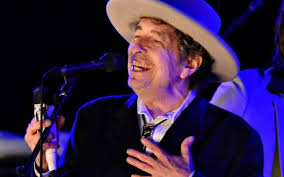
images

Bob Dylan

Objections surfaced quickly all over the world.  One commentator labeled the selection, “an ill-conceived nostalgia award.”  Another said it insulted “ten thousand fine writers” who could have won the award in his place.  Fiammetta Rocco, manager of the Man Booker International Prize and culture editor of The Economist, said, “It’s a gimmick.  With all the extraordinary fiction that is being written all over the world, by writers whose lives are in danger and who could to some degree be protected by a Nobel Prize, why do this?  Bob Dylan doesn’t need it.  He is an old white man who is rich, famous, and physically safe”.

But, Professor Seamus Perry, head of the English faculty at Oxford University, said, “Dylan winning the Nobel was always the thing you thought should happen in a reasonable world but still seemed quite unimaginable in this one.  He is, more than any other, the poet of our times, as Tennyson was of his, representative yet wholly individual, humane, angry, funny, and tender by turn; really, wholly himself, one of the greats.”  Salman Rushdie said it was a “great choice” and the Dylan is “the brilliant inheritor of the bardic tradition”.

Edna Gundersen’s article, resulting from a recent interview of Dylan, appeared in last Saturday’s Daily Telegraph.  In the interview, Dylan says that the award was, “amazing, incredible.  Who ever dreams of something like that?”  And that he intends to attend the awards ceremony in Stockholm “if it’s at all possible.”  She says: “In interviews over the years, the famously unpredictable Dylan has been by turns combative, amiable, taciturn, philosophical, charismatic, caustic and cryptic.  He has seemed, most of all, on being fiercely private and frustratingly unknowable.  His apparent toying with the Noble committee cannot be said to have come entirely out of the blue.”  When asked whether he could have just taken the calls from the Noble Committee, he says, “Well, I’m right here”, as if it was just a matter of the committee dialing the right number.  Ms Gundersen says: “As a painter, writer, film-maker, actor and disc-jockey, Dylan plainly sees no limitations to artistic expression.”  I think one should add ‘musician’ and ‘sculptor’ to that list.

As for me, I think the award is a great choice.  It recognizes a man of extraordinary talent, who speaks for the times.  Is it a ‘gimmick’?  No.  I would call it a ‘departure from the norm’ which is sometimes necessary to breathe new life into an old process.  What about the ‘ten thousand other writers’?  Would selecting one of the ten thousand have satisfied the other nine thousand nine hundred and ninety-nine?  I don’t think so; it would, if anything, have intensified their sense of entitlement.  What about the writers whose lives are in danger and who could be ‘protected by a Noble Prize’?  Is it the function of a Nobel Prize for Literature to protect writers?  I don’t think so.  There will always be writers who are hated by their governments.  God bless these writers!  Bravo, Nobel Committee!

 

Promotion

Now that I have a new novel out, it’s time to think about promoting it, right?

Actually, one has to think about promoting a novel before one starts writing it.  Probably, the first question to ask is: who’s going to read it?

Let me give you a summary of my experience using various promotion channels.  And I should confess that while I have a marketing background, I would much rather write than promote (because I think I’m better at writing than at selling and I enjoy writing more)

images

Press Release: My publisher writes a draft press release which I edit and it goes out to ‘thousands of libraries, book shops, media outlets’.  Fortunately, it’s in an electronic form, so that no trees are actually killed (not even from recipients printing it out, which, as far as I know, has never happened).

Website:  I have a website (www.williampeace.net), which I share with the publisher.  At the moment, I’m waiting for the publisher’s IT guru to add Seeking Father Khaliq.  Then, I’ll ask my IT handyman to add some real content.  Essential?  Yes.  Has it sold any books?  Doubtful.

Blog:  Here we are!  For me the main value of a blog is the work I have to do each week – other than writing – to prepare something which might be stimulating.  And, I very much enjoy it when someone responds!

Twitter:  Pass.  Unless you’re a big name author and people want to know what you had for breakfast, I doubt that 140 characters per day sells many books.

Goodreads & Amazon Author Pages:  Yes.  They even run my blog down the side – as does my website.

Facebook Pages:  Yes.  I have a personal page, an author’s page and there’s a page for each of my books.

Advertising:  Yes.  Five of my books have regular advertisements on Goodreads.  What I’ve got to do now is to revisit the advertising copy on some of the ads because the click-through-rate is too low.  There have been quite a few books added to readers’ lists.  Currently, I’m running a Facebook ad which covers the commuter homebase north of Manhattan.  Lots and lots of ‘Likes’.  Sales?  Hard to say.  The Facebook ads are expensive.

Giveaways:  I ran a giveaway on Goodreads last year.  Over one hundred people applied for ten books.  After I sent the books out, I got one semi-literate review, instead of the ten I should have received.  Don’t they do book reports in school any more?

Brick & Mortar Bookshops:  Bookshops will carry books only if they are bought on a sale or return basis.  That way, they get left with zero unsold stock.  My publisher offers a ‘deal’ where the author underwrites the cost of returns from bookshops.  When I pointed out that since they had something to gain from sales to bookshops, they ought to participate in the underwriting.  Their response was to put a cap on my potential exposure.  I signed up to that for a while, but there was no evidence that any bookshops bought copies.  I’ve offered to carry the stock for several independent bookshops in London, but there was no interest in even a sample book. I approached Barnes & Noble about carrying one or two of my books in selected stores.  No interest.  With (very) rare exceptions brick and mortar bookshops buy from traditional publishers.  Period.

Book Signings: A few years ago, my publisher would arrange book signings.  In fact I was offered a signing at a rural bookshop in Maine, but I had to buy and carry 50 books with me.  This service has since been discontinued.  In fact, I have the impression that book signings work only for non-fiction accounts of a juicy scandal written by one of the perpetrators.

Awards:  This is a semi-major project area for me. I’ve stopped submitting to the outfits that run multiple contests with unidentified judges.  That still leaves about one contest per month, and I’m getting recognition about half the time.  (No serious money yet.)

Reviews:  You may know that Amazon has cracked down on pay-for-review outfits: they won’t let them post reviews.  This makes some sense in that the money might be trying to buy a good review.  The problem is that there isn’t enough review capacity in the industry.  Willing and educated reviewers tend to flock to the best sellers.  Bloggers who offer  reviews typically have a very long waiting list.  Reciprocal reviewing services are an option, but, to be fair, one has to reading some marginally interesting stuff to win a hasty review.  Recently, I tried a different approach to the literary editors of large newspapers.  I had previously sent a few of them samples of my latest book.  No response.  I identified about fifteen literary editors of major newspapers in the UK, US and Canada, and I sent them carefully crafted messages about Seeking Father Khaliq, inviting them to review it.  There were two polite ‘no thank you’s.

So let me end with a fantastic offer!  If any of my readers would like to receive a free copy of Seeking Father Khaliq with an obligation to publish a brief, learned review, please email me at  bill(at)williampeace(dot)net!

Composition: Music and Prose

Last night, I heard, for the first time, evidence of the shared skills of composers and authors.  My wife and I went to a Royal Philharmonic Orchestra concert which featured Wagner’s Tannháuser Overture, Chopin’s Piano Concerto No. 2, and Beethoven’s Symphony No. 4.  Pierre Vallet was the conductor and Elizabeth Sombart was the pianist.  For me the music got better as the evening progressed.  I should explain that I am no music critic; I never played an instrument, and I can’t really read music, although I sang first tenor and then baritone in two different small singing groups in high school and college.

The Wagner piece was enjoyable, but it didn’t really engage me.  I kept thinking of Nietzsche’s criticism of Wagner: that he became an insufferable egotist.  Elizabeth Sombart’s recital of Chopin was very impressive.   I sat there and thought: ‘How wonderful it must be to be able to play like that!’  And Chopin’s music was lovely.  But it was Beethoven’s Fourth that really caught my attention.  I’ve heard it played at least a dozen times before, but, until last night, never by a live orchestra.

download

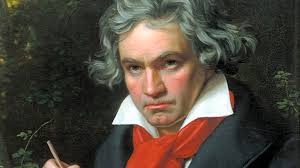
Composer of the Fourth Symphony

The music was captivating, and I watched the musicians play with what seemed like gusto.  I began to think about the composition of the music to which I was listening  This was a very clever composer: he keeps his audience fully engaged.  And I began to identify aspects of the music that I felt bore similarities to the composition of good prose.

  • The piece has a unity to it.  It was clearly the work of one composer: it was telling one musical story in four movements.  Each movement shared musical themes and techniques with the others, but one felt a progression in the movements.  At times, I have felt that a particular piece of classical music could have been serially composed by two or more people.
  • There was plenty of emotion.  Sometimes a flute and first violins would pick out a sweet and gentle theme.  At other times the timpani, brass and eight basses would thunder out in rage.  There was love, there was anger, there was joy and wonder.
  • There was plenty of suspense.  The first movement begins with a dark, gloomy section: What is this about?  But gradually it gives way to a bright, cheerful theme: Will this continue?  Whenever a new theme was introduced, it would begin to tease, and one would wonder what is coming?  The techniques for generating suspense varied: Pianissimo building to Forte, or the other way ’round, or themes evolving in variations; or sudden shifts in the instruments; or instruments playing ascending scales.
  • There was a lot of conversation.  For, example the violins would start a theme which would be picked up and changed by the cellos; the violins would respond with the changed theme and change it further.
  • There were changes in pace.  Sometimes the music was slowly deliberate: in no hurry; at other times, it was in a sensational rush, particularly in the fourth movement.

With this insight, perhaps I will enjoy classical music more than I have in the past.  And I have always enjoyed going to concerts.

A Writer Unmasked

You may have read that the New York Review of Books’ investigative reporter Claudio Gatti has unmasked best-selling novelist Elena Ferrante.

schwartz-unmasking-elena-ferrante-1200

 Perhaps it is best to quote from an article in The New Yorker by Alexandra Schwartz:
“The news that the true identity of the writer Elena Ferrante has, allegedly, been uncovered was published on the blog of The New York Review of Booksat 1 a.m. on Sunday—the Internet’s witching hour, when salacious tidbits are unloaded online to greet the unsuspecting citizens of Twitter bright and early in the morning. It was met with widespread consternation from Ferrante fans. People are pissed. The sleuth, an Italian journalist named Claudio Gatti, has gone beyond the efforts of previous Ferrante truthers, who have generally tried either to compare the biographies of various Italian writers with what is known or inferred about Ferrante’s life or to match their literary style with hers, and used forensic accounting to uncover a money trail that, he believes, leads straight to the source. The process has taken him months. If only someone had got him interested in Trump’s tax returns during the primaries, just think where we might be today.

“I hate to do it, but in the interest of clarity, here, briefly, is what Gatti claims. Ferrante, he says, is Anita Raja, a translator who lives in Rome with her husband, the Neapolitan writer Domenico Starnone. For many years, Raja has translated books from the German for Edizione E/O, the publishing house that puts out Ferrante’s work. Gatti says that payments from the publisher to Raja “have increased dramatically in recent years,” in line with the increase in revenues that Edizioni E/O has enjoyed as Ferrante has become an international literary star, and thus “appear to make her the overwhelming beneficiary of Ferrante’s success.” (He obtained information about Edizioni E/O’s revenue and Raja’s income from an anonymous source.)

“To this evidence Gatti adds the further proof of Raja and Starnone’s real-estate dealings. In 2000, the year that Ferrante’s first novel was made into a movie in Italy, Raja bought a seven-room apartment in what Gatti assures us is an expensive neighborhood in Rome. In 2001, she bought a country house in Tuscany. This past June, Gatti reports, Starnone bought an eleven-room apartment “on the top floor of an elegant pre-war building in one of the most beautiful streets in Rome,” not far from Raja’s apartment. Gatti, after making a brief foray into Italian tax law to explain his suspicion that it is Raja who has purchased the new apartment in Starnone’s name, reminds us that most translators do not earn enough from the sweat of their labor to be able to afford such nice things. Raja has risen suspiciously above her station.

“The part of Gatti’s claim that has unavoidable meaning for readers is that Anita Raja’s biography does not at all correspond to that of Elena Ferrante as gleaned from her novels, or as described in “Frantumaglia,” a work of autobiographical fragments that first appeared in Italy more than a decade ago and which will be published in the United States on November 1st. In that book, Ferrante writes that she grew up in Naples, the daughter of a local seamstress. Raja’s mother, Golda Frieda Petzenbaum, worked as a teacher, and was born in Worms, Germany, into a Polish Jewish family that fled to Italy in 1937. She married a Neapolitan magistrate, but the family moved to Rome, in 1956, when Raja was three. If Raja is Elena Ferrante, that would mean, among many other things, that she has no firsthand knowledge of the postwar Naples milieu that she evokes with such fiercely unsentimental strokes, the oppressive rione on the city’s outskirts that anchors the Neapolitan novels and gives them their extraordinary texture of lived truth.”

Ferrante, through her publisher had said: “I have my private life and as far as my public life goes I am fully represented by my books. . . Thanks to this decision, I have gained a space of my own, a space that is free. . . . To relinquish it would be very painful.”  For me, the appalling aspect of all this is the character of Gatti.  He seems to be motivated entirely by selfish interests: enhancing his career, making money, putting himself in the limelight while injuring the interests of another person.  His allegations that Raja (if indeed it is she) was engaging in a kind of publicity stunt, and that eventually she would be found out.  He seemed to imply that she was asking for it.

I sincerely hope that Gatti will continue to be showered with approbation and that other ‘investigative journalists’ will not try to follow in his footsteps.  Life is about making choices; it is not about frustrating other people’s choices.

Review: Why the West Rules ~ for Now

I was given this imposing book by a friend who thought highly of it.  I say ‘imposing’ because it is 645 pages long (including one appendix but not counting 100 pages of notes and index).  I’ve had time to read it because I’m on holiday in Sicily.  Not only is it imposing but it is very interesting and thought-provoking.  The book examines 16,000 years of human history (and other forms of data) to explore why the West has more power than the East, and what is likely to happen in the future.

The author, Ian Morris, was born in 1960; he is currently Willard Professor of Classics at Stanford University.  He is an archaeologist as well as an historian, and the interesting aspect of this book is that in relies of archaeological, biological, geological, linguistic, genetic, social as well as historical evidence.  Published in 2010, the book has won many awards and has  been translated into 13 languages.

index

Ian Morris

The book is a ‘brief’ summary of human history beginning at the end of the last ice age (but with with an exposition of the prior evolution of humanity).  Professor Morris uses four indices of human development to quantify the progress of civilisation in the East and the West.  He provides captivating commentary on why the various indices grew or shrank over time.  His indices are social (the size of the largest city in the region); military (the most powerful military force in the region); technological (who had the technological advantage); and who was making the most use of energy.  There are plenty of brief descriptions of the brilliant (or catastrophically stupid) moves of the movers and shakers – eastern and western -in each age, but he demonstrates that it was not their brilliance or stupidity that really changed history.  Nor was it political or cultural or genetic.  It was geography which finally gave the West a major advantage at the end of he eighteenth century.

Looking ahead, Professor Morris concludes that the East will take over the lead in the twenty-first century: largely based on China surpassing the US in financial terms.  But he also says that it may not matter who ‘rules’, because sometime in this century there is more likely to be one world than an east and west.  Looking still further into the future, he postulates two major scenarios: Singularity where human intelligence becomes so well integrated with computers that all intelligence becomes shared, and humanity becomes something altogether different; and Nightfall where humanity is essentially wiped out by a catastrophe such as nuclear war or environmental disaster.  (There are plenty of other undesirable scenarios suggested.)  At the conclusion, he hopes that Singularity will prevail.

This book is very thought-provoking, interesting reading, calling as it does on a wide range of specific data, and events in human history.  I found it interesting that religion had almost no part to play in human development.  Instead, the steadfast theme of human brutality is omnipresent.  War, it seems, was always the preferred option.  Professor Morris attributes human development to fear, greed or laziness, saying that all human innovation arises from one of those three motivations.  Sadly, I’m afraid he is right  So, in addition to giving the reader a fascinating lesson in human history, Professor Morris provides a rather depressing picture of human character.

I must say that I don’t necessarily agree that the East will – via China – rule the world.  Economic, military or political disaster could overtake China (or the US for that matter).  But I do agree that we are converging on One World rather than East vs West.

This is a brilliant book, worth all the time it takes to consume it all!

Review: The Satanic Verses

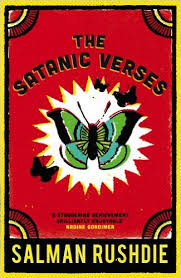
download


I decided to read this novel by Salman Rushdie because I had not read any of his work, because this particular novel is famous, and because of my interest in better understanding Islam.  The novel is famous for the fatwa issued by the Ayatollah Khomeini calling for the death of Rushdie for having committed blasphemy and for mocking the Islamic faith.   There was a bounty of £2.8 million on Rushdie’s head and several failed assassination attempts; others associated with the novel were not as fortunate: Hitoshi Igarashi the Japanese translator, was stabbed to death on 11 July 1991, and a number of attempts were made on the lives of others.  The novel was published in 1988, and it was shortlisted for the Booker Prize, but won the Whitbread Award for novel of the year. The fatwa was issued on 14 February 1989.  In the UK, 13 Muslim barristers drafted an indictment for the High Court attempting to justify a charge of blasphemy.  This attempt failed and blasphemy is no longer an offense under English law. For years, Rushdie lived at no fixed abode under Special Branch protection.  In 1998, Iran issued a conciliatory statement and Rushdie declared he would no longer live in hiding.   The Iranian state news agency reported in 2006 that the fatwa would remain in place permanently since fatwas can only be rescinded by the person who first issued them, and Khomeini had since died.

In the context of blasphemy, it is worth a brief description of the origin of the term ‘satanic verses’.  Muhammad was living in Mecca at the time and he was experiencing difficulty persuading powerful Meccans to accept that he was the prophet of God.  There is a theory – repeated in Rushdie’s novel – that, as a concession to these men, he gave brief permission for prayer to three popular idols.  What is certain is that Muhammad originally recited several verses naming the idols, praising them and indicating that they should not be neglected.  Muhammad then inserted three replacement verses which say that the idols are only ‘names’ and that ‘God revealed no authority for them’.  His explanation for the change was that Satan had managed to slip in the verses without him knowing it.

In the novel, Muhammad (called Mahound) comes across as a weak, indecisive individual who uses religion for his own benefit.  But the sequences in the novel involving Mahound are contained in the dreams of the character, Gibreel Farishta, who is mentally ill and who believes that he has become the archangel Gabriel, so these characterisations cannot be said to represent the author’s personal views.

The central plot of the novel is that two Indian Muslim actors fall from the sky over the English Channel when the flight they are on is blown up.  Miraculously, they both survive, and they take on the personalities of the archangel Gabriel (Gibreel Farista) and the devil (Saladin Chamcha).  Each of them has difficulty being accepted in London, each finds to a prior love, and each returns to his previous occupation.  Chamcha seeks revenge on Farista for having deserted him after their fall from the sky, and he stokes Farista’s pathological jealousy, destroying his love relationship.  Farista realises what his colleague has done and he forgives him.  Nonetheless, Farista kills his lover, Alleluia Cone, and commits suicide.  Chamcha returns to India and is reconciled to his dying father.

The novel – at 547 pages – has a great deal beyond this simple plot, including dream sequences involving the prophet Mahound.  There are also sequences involving relationships of the primary characters with lovers, friends and acquaintances.

This is not an easy book to read.  The sentences are long, sometimes complex, and the references to characters, places and things unfamiliar.  There is one sentence 146 words long.  Being somewhat familiar with Islamic history, I recognised some to the dream characters, but I could have benefited from a working knowledge of Indian mythology.  It is also not easy to follow what is going on: is this part of a dream or reality?  Having said that, I did find much of the writing uniquely engaging.

The feelings one encounters in reading the book are doubt bordering on hopelessness with some offsetting glimpses of humour.  The doubt has to do with the purpose of life, religion, acceptance as an individual, and perception vs reality.


Review: Whiskey Tango Foxtrot

My wife and I saw this film last weekend.  It was a disappointment.  The film, which is military code for ‘what the f**k’, is based on the memoir, The Taliban Shuffle, written by Kim Barker, about her assignments as a war correspondent in Pakistan and Afghanistan.  I haven’t read the book; I read an article about Ms Barker and the book that appeared in The Telegraph.  The book sounded interesting and thoughtful, with a black sense of humour.  In fact, the New York Times book review confirmed this.

jp-book-popup

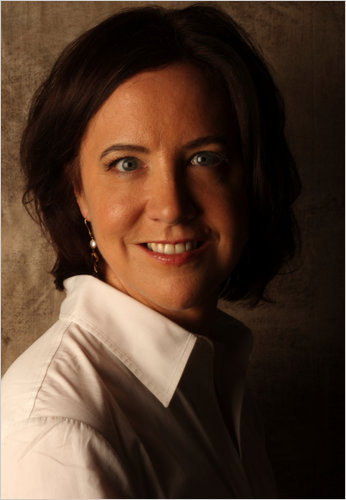
Kim Barker

The film, which has Tina Fey playing Ms Barker, begins with her volunteering for an assignment in Afghanistan to escape her humdrum assignment of covering minor stories; besides: she is single with no children.  She is thrown into cheap accommodation in the green zone with a lot of other expatriates, some of whom are competing for the same stories.  A US Marine general regards her as an inexperienced liability, but she achieves credibility by gaining candid interviews with US soldiers, putting herself in harms way to capture video footage, and by gaining the respect of some Afghans.  Eventually, she realises that being a war correspondent is not in her best long term interest, and she returns to the States.

Tina_Fey_Muppets_Most_Wanted_Premiere_(cropped)

                                                                                                                                   Tina Fey

I had three problems with WTF.  First of all there was too much emphasis on the partying going on among the correspondents and other expats.  The film left me with the impression that every night was an Animal House blow-out.  While I’m sure there was uninhibited drinking and casual sex, the emphasis on that aspect of life as a war correspondent made it difficult to position the film as a serious commentary, which Ms Barker’s book clearly is.

Secondly, the dialogue was difficult to follow.  Actors were speaking at a frantic pace and using lots of slang.  Eventually, I realised I could understand what was going on by just watching the video.  If the audience can’t follow the dialogue, why include it?

Third, and most important, the film was a series of events, some funny, some sad, some thought provoking, some totally forgettable, without a unifying theme or message, except that the danger involved in covering a war can be addicting.  Ms Barker, in her book draws several sobering conclusions about the ‘Af-Pak’ region, and why the West was doomed to fail in its strategy of involvement.

I will say that Tina Fey is engaging in the lead role, Christopher Abbott is credible as her Afghan fixer, and Martin Freeman does a fine job as the lustful, flippant Scottish correspondent.  Some of the video footage is worth seeing, and there are some examples which illustrate the huge culture gap, but these opportunities are largely lost.

Freedom of Speech

Most of us are in favor of freedom of speech; we regard it as one of the great benefits of living in the West.  I, as a writer, am bound to be a strong supporter of free speech.  But recently, there have been at least three categories of objection to freedom of speech:

  1. Government, and other public bodies, which do not want certain items of their information exposed
  2. Individuals (mostly celebrities) who do know want their actions to be publicized
  3. Religious groups who do not wish to see any criticism of their beliefs

As a writer, I am not involved in categories 1 & 2, but I can’t resist commenting on each of them.  Regarding Category 1, the usual objection by a governmental body to disclosure of information is: ‘The public don’t need to know’ or some similar excuse.  In my experience, the real reason is; ‘We’ll be embarrassed if that is disclosed’.  To which my response would be: “All the more reason to disclose it!”  I believe that the only legitimate reason not to disclose the requested information is ‘national security’.  Not infrequently, the body will protest that disclosure represents a financial burden.  If this is actually the case (reams of information, much photocopying, etc), I believe the requesting party should reimburse the costs (but only the costs – no discouragement fees).

Category 2 has been in the news lately with some individuals obtaining court orders prohibiting the media from publicizing acts (usually sexual) which they don’t want ‘people’ (read their wives) knowing, or about which they feel embarrassed.  I have no sympathy whatsoever for these individuals.  The appropriate remedy for these problems is not to prohibit their disclosure but to avoid creating them in the first place.

Category 3 is one where I’m involved.  In several of my books, my characters have criticized some aspects of religious culture or practices.  I have, for example, characters saying that Catholicism is nearly ‘polytheistic’, because Catholics are encouraged to pray to saints, rather than to God.  This being similar to Aztec or ancient Greek beliefs in multiple Gods.  My characters have also said that Islam, unlike Christianity, has no formal, overriding instruction to love your fellow men.  They have also said that Muslims can be too defensive of their religion, thereby conveying the impression that Islam requires protection.  Undoubtedly, some Christians and Muslims would object to these comments, but they are made ‘in good faith’ without any intention to insult or injure.  In my view, no religion is perfect; only God is perfect, but no religion should be mocked.  While I defend the right of the Charlie Hebdo journalists to publish demeaning caricatures of the Prophet, I consider it to be insulting, stupid, and in bad taste to do so.  I am currently reading Salman Rushdie’s The Satanic Verses.  (Better late than never.)  In it, there is a character Mahound, who is a weak, indecisive prophet, who speaks with an angel Gibril, who doesn’t know what to say.  I haven’t read enough of the book to know what happens with these characters, but my reaction, so far, is that Rushdie is making fun of Islam, and, in particular, of the Satanic Verses in the Qur’an.  I’m not a Muslim, but I don’t think it’s funny, or amusing.  If Rushdie wants to say these kinds of things, he has a right to do so.  But, it’s intentionally insulting to Muslims to do so.  Back to my point about the defensiveness of Islam, I consider it a gross overreaction to sentence Rushdie to death.  If I were a Muslim who felt insulted by The Satanic Verses, I would tell the author how I felt, ask for an apology, and read nothing more that he wrote.  (But since I’m a Christian, I’ll continue reading.)

Publishers Have a Lot to Learn from J K Rowling

Allison Pearson had a column in The Daily Telegraph last Wednesday under the above title.  Ms Pearson is a Welsh author and newspaper columnist. Her novel, I Don’t Know How She Does It, published in 2002, has been made into a movie of the same name  starring Sarah Jessica Parker.   Her second novel, I Think I Love You,  was published in 2010.   A sequel to I Don’t Know How She Does It was announced in 2015.  The column will amuse all of us who struggle to receive a contract from a first line publisher.

index

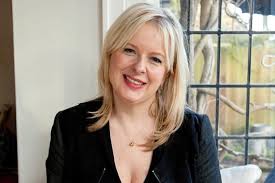
Allison Pearson

“J K Rowling has shared a rejection letter from a publisher for her first adult crime novel, written under the pseudonym of Robert Galbraith.  The publisher suggests that The Cuckoo’s Calling could not be published ‘with commercial success’, and adds, for good measure, that the author might be helped by a writing course.

“Rowling is to be congratulated for not immediately conjuring a Harry Potter spell, such as Avada Kedavra (Killing Curse) against this dimwit with no literary judgement.  As it happens, I am addicted to Rowling/Galbraith’s novels with their wonderful Caliban-meets-Columbo detective, Cormoran Strike.  The quality, both of writing and observation, is evident from the first page.

“Rejection, alas, is the lot of the new writer.  I am currently judging the Lucy Cavendish College Fiction Prize and am reading the entries with tender  care – so well do I remember the sting of being rejected myself.

“Fourteen years ago, I sent some chapters and a synopsis to a celebrated editor of women’s fiction.  I was quietly confident that the story of a stressed-out working mother would strike a chord.  The editor emailed back and said that the novel was not for her.  Should I seriously wish to become an author, I might like to go away and read a recent novel by one of her writers.  Was I familiar with her work?

“I was, indeed.  Ah, rejection dejection.  The slump lasted a while until I was lucky enough to be snapped up by a couple of brilliant women editors at Chatto and Vintage.  The book they published, the same one rejected by the first editor, was I Don’t Know How She Does It.

“When that novel was number one on Amazon in the Unites States, did I think with quiet satisfaction of the nitwit who had rejected it?  I did, dear reader, I certainly did.  As J K Rowling would probably tell you, revenge is a dish best served cold with an international bestseller.”

Review: The Past

I bought Tessa Hadley’s latest novel, The Past, because of a very favourable review in Time Magazine.  Ms Hadley is the author of five previous novels which have achieved recognition.  She has also produced two short story collections, and her writing appears regularly in The New Yorker.

index

Tessa Hadley

The Past is about the journey of three sisters and a brother, all adult, to their grandparents’ run-down, abandoned, old home in the Somerset countryside.  They meet there for three weeks of holiday in the summer to decide what to do with the house, now that their parents are dead.  The house is filled with memories; their mother took them there as children when she left her husband.  Conflicts, jealousies and attachments emerge during the three weeks.  Fran’s two young children, Ivy and Arthur; Molly, Roland’s sixteen-year-old daughter; his third wife, Pilar; and Kasim, the twenty-year-old son of Alice’s ex-boyfriend, add interest and complexity.

Ms Hadley’s writing is beautiful.  The descriptions of the Somerset country are almost poetic: her fondness for rural England is unmistakable.  The characters are real and well-drawn, with the possible exceptions of Kasim, who often seems petulantly distant for a man of college age, and Ivy, whose behaviour seems unaccountably contrarian.

The only problem I had with The Past is that nothing of real significance happens.  There is plenty of interaction among the characters which sheds light on their personalities and values.  Personal histories emerge.  The most significant events are the children finding a dead dog, Kasim and Molly making love, Harriet making a pass at Pilar, and one of the sisters estranged husbands’ being sent away.  The inside of the dust jacket says, “small disturbances build into familial crises”, but the crises are neither grand, nor ultimately meaningful.

However, if one is seeking a comfortable, quintessential British story about family, The Past would be a very good choice.