Censoring Imagination

Moira Marquis has an article dated December 7, 2023 on the Lit Hub website is which she talks about the importance of magical thinking for the incarcerated. She has a PhD and senior manager in the Freewrite Project at PEN America’s Prison and Justice Writing program; she previously organized programs to supply books in prisons.

Moira Marquis

Moira writes: “In 2009 I was working with the prison book program in Asheville, North Carolina when I got a request for shapeshifting. I was shocked and thought it was funny, until I came to realize esoteric interests like this are common with incarcerated people.

Incarceration removes people from friends and family. Most are unsure of when they will be released, and inside prisons people aren’t supposed to touch each other, talk in private or share belongings. Perhaps this is why literature on magic, fantasy and esoteric ideas like alchemy and shapeshifting are so popular with incarcerated people.

When deprived of human intimacy and other avenues for creating meaning out of life, escapist thought provides perhaps a necessary release, without which a potentially crushing realism would extinguish all hope and make continued living near impossible. Many incarcerated people, potentially with decades of time to do ahead of them, escape through ideas.

Which is why it’s especially cruel that U.S. prisons ban magical literature. As PEN America’s new report Reading Between the Bars shows, books banned in prisons by some states dwarf all other book censorship in school and public libraries. Prison censorship robs those behind bars of everything from exercise and health to art and even yoga, often for reasons that strain credulity.

The strangest category of bans however, are the ones on magical and fantastical literature.

Looking through the lists of titles prison authorities have gone to the trouble of prohibiting people from reading you find Invisibility: Mastering the Art of Vanishing and Magic: An Occult Primer in Louisiana, Practical Mental Magic in Connecticut, all intriguingly for “safety and security reasons.” The Clavis or Key to the Magic of Solomon in Arizona, Maskim Hul Babylonian Magick in California. Nearly every state that has a list of banned titles contains books on magic.

Do carceral authorities believe that magic is real?

Courts affirm that magical thinking is dangerous. For example, the seventh circuit court upheld a ban on the Dungeons and Dragons role playing game for incarcerated people because prison authorities argued that such “fantasy role playing” creates “competitive hostility, violence, addictive escape behaviors, and possible gambling.”

A particularly strange example of banning magic can be seen on Louisiana’s censored list.

Fantasy Artist’s Pocket Reference contains explanations of traditional nonhuman beings like elves, fairies and the like. It also features drawings of these beings and some guidance on how to draw them using traditional or computer based art. The explanation for this book’s censorship on Louisiana’s banned list reads, “Sectarian content (promotion of Wicca) based on the connection of this type of literature and the murder of Capt. Knapps.” Captain Knapps was a corrections officer in the once plantation now prison, Angola, in Louisiana. Knapps was killed in 1999 during an uprising that the New York Times attributed  to the successful negotiation of other incarcerated people for their deportation to Cuba at a different facility in Louisiana prior that year. It is unclear how this incident is linked in the minds of the mailroom staff with Wicca or this book—which is a broad fantasy text and not Wiccan per se. (Prison mailrooms are where censorship decisions are—at least initially—made).

As confused as this example is, what is clear is that these seemingly disparate links are understood by others within the Louisiana Department of Corrections since Captain Knapps’ death continues to be cited as rationale for why fantasy books are not allowed.

Is the banning of fantastical literature in prisons just carceral paranoia—or it is indicative of a larger cultural attitude that simultaneously denigrates and fears imagination? After all, prisons are part of U.S. culture which, despite a thriving culture industry that trafficks in magic and fantasy, nonetheless degrades it as lesser than realism. We see this most clearly in the literary designation of high literature as realist fiction and genre fiction like science fiction, Afrofuturism, magical realism as not as serious.

Magic’s status as deception and unreality is a relatively recent invention. Like the prison itself, it is a reform of older conceptions. In Chaucer’s time and place, ‘magic’ was a field of study. For example, in The Canterbury Tales, written in 1392, he writes, “He kepte his pacient a ful greet deel/ In houres, by his magyk natureel” when speaking about a doctor whose knowledge of plants was medicinal. Magic was connected to knowledge in Chaucer’s mind because of its connection with the Neoplatonic tradition, which acknowledged the limits of human knowledge. The known and the unknown were in a kind of relationship.

However, the Oxford English Dictionary notes, “Subsequently, with the spread of rationalistic and scientific explanations of the natural world in the West, the status of magic has declined.” Beginning with OED entries from the 1600s, “magic” becomes a term to designate manipulation of an evil kind.

At this time in Europe and its settler colonies, ‘magic’ became applied to a huge variety of practices increasingly seen as pernicious, from healing with herbs to rituals associated with nature spirit figures, like the Green Man and fairies, to astrology and divination. The diverse practices popularly labeled ‘magical’ were lumped together only through their association with intentional deception, superstition and error.

Writers like Ursula Le Guin have gone to great lengths to contest the supposedly firm divide between magic and reality. She argues that imagination is eminently practical and necessary:

Hard times are coming, when we’ll be wanting the voices of writers who can see alternatives to how we live now, can see through our fear-stricken society and its obsessive technologies to other ways of being, and even imagine real grounds for hope. We’ll need writers who can remember freedom — poets, visionaries — realists of a larger reality.

For Le Guin, rejecting imagination is the ultimate collapse of the human social project.

Joan Didion’s conception of magical thinking as escapism is not far from this. The imagination that allows us mental respite from trauma is a bedfellow to the imagination that envisions our world unmoored to current conditions. There are so many issues that demand wild dreams to be addressed in more than shallow and inadequate ways.

It’s much simpler and less disruptive, of course, to deny dreams as unrealistic and to assert their danger. Imagination’s potential for disrupting systems already in place is clear. Those that cite this danger as a reason to foreclose imagination may even admit current systems imperfections yet, necessity. This may be the perspective of prison censorship of magical literature—commonly banned under the justification that these ideas are a “threat to security.”

Incarcerated readers say the censorship they experience oppresses their thoughts and intellectual freedoms. Leo Cardez says, “They [books] are how we escape, we cope, we learn, we grow…for many (too many) it is our sole companion.” Jason Centrone, incarcerated in Oregon, expresses exasperation with the mentality that sees magical thinking as threatening: “Or, lo! The material is riddled with survival skills, martial art maneuvers, knot-tying, tips on how to disappear—like this.”

Banning fantasy is particularly pernicious. Regardless of how you view incarceration—as an existence in a degraded and injurious confinement, or the justifiable requisitioning of people who have done harm away from others—we should all agree that we want incarcerated people to be able to imagine otherwise. Whether it’s imagining themselves or systems differently, creativity of thought is a tool to build a better life for everyone.

Such foreclosure of the imagination, a preemptive denial of the possibility of alternatives are a death-knell for betterment both individually and socially.

We need more magic, not less.”

I agree with Moira: imagination is a vital part of our humanity.

Book Banning

There are several news items relating to book banning, which is becoming a controversial topic in the USA. For example, there is this from Publisher’s Weekly dated 3 October 2023:

“The U.S. Court of Appeals for the Fifth Circuit has set a tentative schedule to decide whether a judge’s order blocking the state’s controversial book rating law, HB 900, should stand. But an administrative stay issued last week by a separate motions panel of the Fifth Circuit remains in force—meaning that the law is now in effect, putting Texas booksellers in a precarious position…

“Signed by Texas governor Greg Abbott on June 12, HB 900 requires book vendors, at their own expense, to review and rate books for sexual content under a vaguely articulated standard as a condition of doing business with Texas public schools. The law includes both the thousands of books previously sold to schools and any new books. Furthermore, the law gives the state the unchecked power to change the rating on any book, which vendors would then have to accept as their own or be barred from doing business with Texas public schools.”

and this from The Book Browse website dated 29 September 2023:

“In partnership with the Freedom to Read Foundation, PEN America, and the Little Free Library, Penguin Random House is launching the Banned Wagon Tour, which during Banned Books Week will travel across the South, stopping in communities affected by censorship, celebrating the power of literature, and getting books to the people who need and want them most. PRH called the Banned Wagon part of its “ongoing efforts to combat book banning and censorship, which includes legal actions, tailored support for various stakeholders, and advocacy for First Amendment rights.”

“The Banned Wagon will feature a selection of 12 books that are currently being banned and challenged across the country, distributing free copies (while supplies last) to event attendees in each city. The Banned Wagon will also drop banned books in Little Free Libraries along the tour route and make a book donation after each Banned Wagon event. The Banned Wagon will include material from the Freedom to Read Foundation about how to write letters to school boards and elected officials, as well as regional spotlights from PEN America highlighting books and challenges being banned in specific states.”

and this from the Shelf Awareness website dated 29 September 2023:

“Coinciding with Banned Books Week, which begins this Sunday, October 1, the New Republic will launch the Banned Books Tour 2023, aimed at “championing the First Amendment and combating censorship.” The bookmobile, a symbol of literary liberation, will visit states that have experienced some of the highest incidences of book censorship, including Texas, Florida, Missouri, Virginia, and Pennsylvania, and continue to operate through the month of October.

“The tour will start at the Brooklyn Book Festival this weekend, where, in partnership with House of SpeakEasy, the New Republic will accept book and financial donations at the SpeakEasy Bookmobile. All literature may be donated, with a preference for banned and challenged books. These books will be given away in communities on the tour where access has been restricted or limited.

“Launching a book festival on wheels is a huge new undertaking for us, and I can’t wait to hit the road to support the importance of reading, New Republic CEO and publisher Michael Caruso said. “It’s even more exciting that we can embark in time to support ALA’s Banned Books Week. The New Republic has been a leading defender of the First Amendment for over a century, and this is a new way to give people the tools to join the fight for the freedom to read.”

J K Rowling Explains

There is an article by Anita Singh in yesterday’s Daily Telegraph which gives some insight into why Ms Rowling took on the Scottish National Party and Nicola Sturgeon in the Big Trans Row.

J K Rowling

“J K Rowling has defended her stance on women-only spaces by stating the ’98-99 percent of sexual offences are caused by those born with penises.’ The Harry Potter author said she felt a ‘moral obligation’ to take on trans activists who had adopted ‘the attitude of the fundamentalist’. Those close to Rowling had implored her not to enter the debate. ‘There were people close to me who were begging me not to do it,’ she said in the latest episode of The Witch Trials of J K Rowling podcast. But Rowling said she had no choice but to stand up against ‘a movement that I see as authoritarian, illiberal. I think I have a very realistic view, not a scaremongering view, on what may happen when you loosen boundaries around single sex spaces for women and girls,’ she said. ‘I can already hear the screams of outrage: ‘You are saying that trans people are all predators.’ Of course I am not, any more than I’m saying all men are predators. I have good men in my life who are among my favourite people. But I am also aware the 98-99 percent of sexual offences are caused by those born with penises. The problem is male violence.’

According to the Crime Survey for England and Wales, between 2017 and 2020, the 98 percent of victims who had experienced rape or assault by penetration since they were 16 years old reported that the perpetrator was male. Data also show that in the year ending in June, of the 6,403 people convicted of serious sexual offences, 6,223 were male – or 97.2 percent.

On why she felt moved to act, Rowling said: ‘I had been becoming increasingly concerned about the way in which women were being shut down. I was starting to see activists behaving in a very aggressive way outside feminist meetings. I’m looking at an assault now on freedom of speech, freedom of thought, even freedom of association.'”

It seems to me that some trans activists have lost the distinction between Respect and Rights in a democracy. Like any other person, a trans individual is entitled to our Respect. But Rights and Freedoms in a democracy are not unlimited. Rights and Freedoms can be trumped by individual Safety, Privacy and Fairness, as is the case with women-only spaces and most women’s sporting competitions.

Ulysses Deemed Offensive

According to an article in the Daily Telegraph, 2 February 2023, by Craig Simpson, Ulysses is being banned again.

“Academics say the Dublin-born author’s early novel contains ‘explicit references’ to ‘sexual matters’ that some may find ‘difficult’

Outraged censors banned Ulysses in 1922, and a century later academics fear the novel may be too shocking for modern students, as James Joyce’s work has been issued with a trigger warning for being potentially “offensive”.

James Joyce

The 800-page story of an ordinary man’s day in Dublin is taught on a dedicated module at the University of Glasgow, where staff now alert students to possibly upsetting “language and attitudes” in the writer’s work

Joyce’s writing contains “explicit” references “to sexual matters”, according to a trigger warning seen by the Telegraph states, highlighting the same issue which led Britain to ban his work 100 years ago.

Modern students are also warned they may be offended by references to “race, gender and national identity” in the work of the Irish author, who famously lampooned the nationalism of his homeland.

The blanket warning for the dedicated James Joyce English literature module at Glasgow states: “As part of this course we will examine texts that include explicit or graphic references to sexual matters.sec

“We recognise that some students may find this difficult and may find some of the language and attitudes towards race, gender and national identity that we discuss in relation to Joyce’s work offensive.”

The warning adds that a safe space will be provided to discuss Joyce’s literary output, stating staff will “endeavour to make seminars a space where everyone can discuss these ideas and engage with this content sensitively, empathetically and respectfully”.

The Dublin-born author, who died in 1941 at the age of 58, is regarded as among the greatest modern writers, particularly for his masterpiece Ulysses, which was initially banned in the UK and the US for the “obscenity” of passages describing sex and masturbation. The British ban was eventually lifted in 1936.

Censors principally objected to a passage from the point of view of Joyce’s heroine Molly Bloom. The main discussion of race in the work centres on the Jewish identity of the book’s hero, Leopold Bloom.

This identity clashes with the Irish nationalist sentiment of other characters in the book, which Joyce lampoons in Ulysses and his other writings, including A Portrait of the Artist as Young Man, which contains complaints that Ireland is an “old sow” with “too much god”.

This early novel is taught along with his final work Finnegan’s Wake on the Glasgow module, which has been given the trigger warning, a move which has been criticised.

Prof Frank Furedi, an education expert at the University of Kent, said: “The trigger warning brigade demonstrates that the impulse to censor is alive and well. The spirit of the old-school censors who banned Ulysses in 1922 lives on.

“It was only a matter of time before the grievance archeologists dug up something to feel traumatised about in Joyce’s great work.

“The trigger hunters could not possibly give the author of Ulysses a free pass. For the record, if you find Joyce triggering you better confine your reading to the London phone directory.”

A spokesman for the University of Glasgow said: “We give warnings to students who may find some contexts disturbing or for whom a particular class session may cause upset. 

“We are, however, keen for everyone to engage, and endeavour to make seminars and lectures a space where everyone can discuss these ideas and engage with this content sensitively, empathetically and respectfully.””

I find this controversy somewhat amusing. Does it not occur to these nervous academics that the internet is awash with pornography, and that only an extreme ‘snowflake’ could be upset by it. One is tempted to advise these snowflakes, ‘Grow up, or don’t study literature.’

Are Publishers Becoming Censors?

There is an article by Anita Singh in Yesterday’s Daily Telegraph in which Chimamanda Ngozi Adichie is quoted as saying that it is unlikely that Salman Rushdie’s novel The Satanic Verses would have been published had Rushdie written it today. Adichie goes on to say that it is unlikely that Rushdie would have decided to write it today.

Chimamanda Ngozi Adichie was born in Enugu, Nigeria in 1977. She grew up on the campus of the University of Nigeria, Nsukka, where her father was a professor and her mother was the first female Registrar. She studied medicine for a year at Nsukka and then left for the US at the age of 19 to continue her education on a different path. She graduated summa cum laude from Eastern Connecticut State University with a degree in Communication and Political Science. She has a Master’s Degree in Creative Writing from Johns Hopkins University and a Master of Arts degree in African History from Yale University. Her first novel, Purple Hibiscus (2003), won the Commonwealth Writers’ Prize, and her second novel, Half of a Yellow Sun (2006), won the Orange Prize. Her 2013 novel Americanah won the US National Book Critics Circle Award. Her most recent work, Notes On Grief, an essay about losing her father, was published in 2021. She was named one of TIME Magazine’s 100 Most Influential People in the World in 2015. In 2017, Fortune Magazine named her one of the World’s 50 Greatest Leaders. She is a member of both the American Academy of Arts and Letters and the American Academy of Arts and Sciences.

Chimamanda Ngozi Adichie

The article says, “In the first of this year’s BBC Radio 4 Reith Lectures, Ngozi Adichie spoke about freedom of speech.

She said: “Here is a question I’ve been thinking about: would Rushdie’s novel be published today? Probably not. Would it even be written? Possibly not.

“There are writers like Rushdie who want to write novels about sensitive subjects, but are held back by the spectre of social censure.

“Literature is increasingly viewed through ideological rather than artistic lenses. Nothing demonstrates this better than the recent phenomenon of ‘sensitivity readers’ in the world of publishing, people whose job it is to cleanse unpublished manuscripts of potentially offensive words.”

Ngozi Adichie said that publishers are also wary of committing “secular blasphemy”.

She claimed that the issue went far beyond the publishing world, with young people caught in an “epidemic of self-censorship” because they are too afraid of being cancelled.

The author faced her own backlash in 2017 after stating in an interview: “When people talk about, ‘Are trans women women?’ my feeling is [that] trans women are trans women.”

In her lecture, Ngozi Adichie said: “We now live in broad settled ideological tribes. Our tribes demand from us a devotion to orthodoxy and they abide not reason, but faith.

“Many young people are growing up in this cauldron afraid to ask questions for fear of asking the wrong questions. And so they practise an exquisite kind of self-censorship. Even if they believe something to be true or important, they do not say so because they should not say so.”

Ngozi Adichie said the alternative to this “epidemic” of self-censorship was people stating their beliefs and as a result facing a “terrible” online backlash of “ugly personal insults, putting addresses of homes and children’s schools online, trying to make people lose their jobs”.

She said: “To anyone who thinks, ‘Well, some people who have said terrible things deserve it,’: no. Nobody deserves it. It is unconscionable barbarism.

“It is a virtual vigilante action whose aim is not just to silence the person who has spoken but to create a vengeful atmosphere that deters others from speaking. There is something honest about an authoritarianism that recognises itself to be what it is.

“Such a system is easier to challenge because the battle lines are clear. But this new social censure demands consensus while being wilfully blind to its own tyranny. I think it portends the death of curiosity, the death of learning and the death of creativity.”

Ngozi Adichie called for a raising of standards on social media, and reforms including the removal of anonymous accounts.

She suggested that “opinion sharers, political and cultural leaders, editors [and] social media influencers” across the political spectrum should form “a coalition of the reasonable” to moderate extreme speech.

I agree with Ngozi Adichie that social media needs drastic reform to stop harmful misinformation, libel and threats. She seems to believe that the ‘tech’ owners of the social media platforms will not regulate properly because of the cost. She is right, but the cavalry is coming in two regiments. One regiment is government regulation and legislation which is starting to be announced and enacted. This will say ‘reform or pay billions’ and if social media platforms want of survive, they must change their business models. The other regiment is the digital advertisers, who, as the defunding of Twitter shows, do not want to be a part of their customers’ misery.

Publishers and authors are different kinds of problems. Publishers have historically had to navigate a fine line between capturing the public interest on the one hand and not causing public outrage on the other. Some authors face a similar set of choices. But neither publisher nor author has an incentive to lie or cover up the truth. On the contrary.

It seems to me that The Satanic Verses is a special case that has nothing to do with current truths or falsehoods. Most Muslims would regard passages in Verses as blasphemous, though is seems doubtful that Rushdie actually intended such severe criticism of Islam. To me, it seems that he intended the dream sequences featuring Mohammad (the Messenger), the polytheistic deities, the devil and the Prophet’s companion as a demonstration of how absolutist systems can go horribly wrong – one of the themes of the book. But the author framed the example with fictional characters and action which are completely contrary to Islam.

In September 2012, Rushdie expressed doubt that The Satanic Verses would be published today because of a climate of “fear and nervousness”. I agree that it wouldn’t be published even today, in 2022, but I wouldn’t attribute the decision to ‘fear and nervousness’. Today, most publishers would look at the manuscript and think, Muslims won’t like it and there will be mass protests. If he wants us to publish it, the dream sequences have to go.

You can call it the ‘sensitivity reader effect’, but really it’s a question about what’s good for the business.

A Banned Author Talks

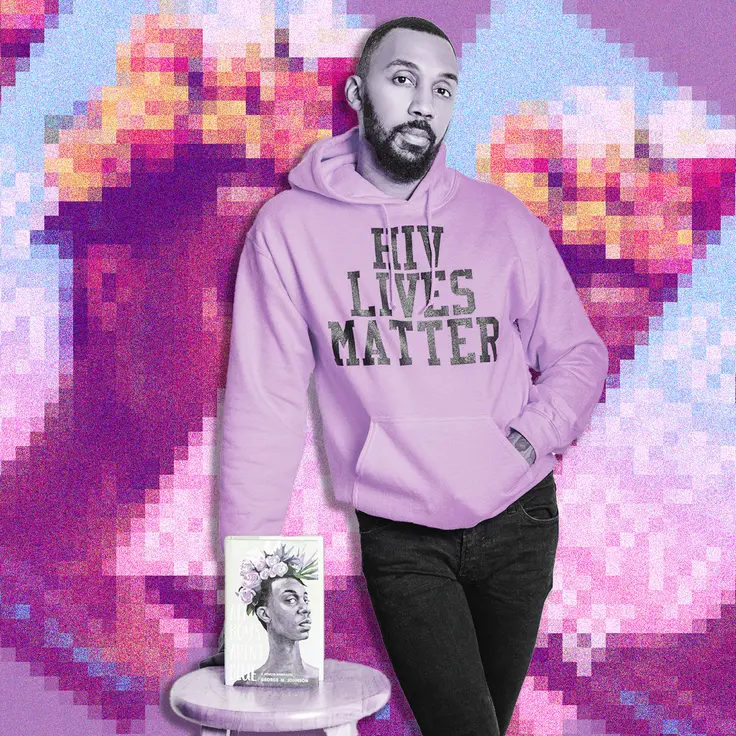
This week, I’ve decided to post the commentary from a black, gay author whose book has been banned from US school districts. The commentary is on HuffPost, 24 September 2022. I haven’t read the book, so I have no basis for deciding whether it should or should not be banned. But the author, George M Johnson, says he wrote it for 14 to 18 year olds, and it’s about his experience growing up, so, if I were a school librarian, I might discourage a ten-year-old from reading it on the basis that he or she probably wouldn’t have the life experience to deal with the book emotionally. But, I might not refuse a 15 year-old.

George M Johnson

“It was sometime during 2019, before COVID turned the world upside down, that I had the first meeting with my publisher. Her team and I sat in a room around a table and discussed the strategy — the marketing and promotion, mostly — for dropping my first book, which I’d recently finished. I was truly living my dreams. Amid the excited conversation, something in my spirit told me to ask a question: “What happens if you need security at an event?” They all looked puzzled. One of them asked why I’d need that. “I know this book will be banned, ” I replied. “I don’t know when or how widely, but I know that it will be.”

“A report from PEN America this week showed that my book, having survived various criminal complaints, was the second-most banned in the United States, with bans in 29 school districts. States’ continued efforts to ban my work is not easy to wake up to daily. For the past year, there have been constant Google alerts, messages on social media from people calling me a “pedophile or groomer,” and other unsavory attempts to deny my story and the very existence of Black queer people everywhere. I never thought I would be at the center of a political issue moving into an election — nor should I ever have been.

“My book, “All Boys Aren’t Blue,” is a young adult memoir about my experience growing up Black and queer in America. In my story, I discuss growing up in a Black family who loved and affirmed me; the good, bad and ugly truths about what teens really deal with; and my journey through gender and social identity. My life was and still is full of joy, but also include some painful moments involving nonconsensual sex, as well as my experience with losing my virginity. Unfortunately, my sexual experiences have been deemed “an issue” — pornographic by some. To be clear, this book is for ages 14-18 and it contains truths that many of us have experienced and are healing from.

“Books about our experience are not too “explicit” just because they discuss gender, race and other crucial topics that teen readers need to process as they learn about themselves and the world they live in.

“Our books (the banned ones, if you will) often tell stories that are uncomfortable and important. Book banning is nothing new in the U.S., but it has rarely been seen at this magnitude in recent decades. But we can’t just talk about book banning without discussing the suppression of storytelling. Books written by enslaved people, that described their reality, had to be written under pseudonyms to protect the authors. Some of the greatest literary icons of our time — Toni Morrison, James Baldwin and even Harper Lee — have had their books banned despite their works being part of the landscape and foundation for many generations of writers.

“But that is why writing and other types of storytelling are such revolutionary rights.They change lives, provide community, and serve as a lifeline for those who feel unseen, unheard and alone.

“When I first wrote my memoir, I kept reminding myself that this was not for the 33-year-old version of me. This was for my 10-year-old self who had important things to say and had been silenced for so many years. And as I wrote about my experience, I felt lighter. I felt freer. I felt I had tapped a power I never knew existed.

“And then I watched as reader after reader, from teenagers to people well into their 70s, discussed how this book made them feel — how the stories healed and informed them. I was told that my simple existence (me being out here and sticking to my intentions) was something that they could hold on to on their roughest of days. And that’s the truly revolutionary thing about art. Toni Morrison once said, “If there is a book you want to read and it hasn’t been written yet, then you must write it.” That’s what I did. And while all the book bans are weaponizing my words, I know that they’re providing armor for those who have gone through anything I did.

“I have more books to write and more stories to dismantle this system. And I’ll be damned if anyone denies my right to write them.”

I say, “Carry on, George!”

Reading Dostoevsky and Tolstoy in the Context of the Ukraine War

Ani Kokobobo has an article which was published on The Conversation website on 6 April 2022 which raises the question of reading the two Russian icons with the war in Ukraine in mind.

Ani Kokobobo is Assistant Professor and Director of Graduate Studies in the Department of Slavic Languages and Literatures at the University of Kansas.

Ani Kokobobo

She says, “As someone who teaches Russian literature, I can’t help but process the world through the country’s novels, stories, poems and plays, even at a time when Russian cultural productions are being cancelled around the world. 

With the Russian army perpetrating devastating violence in Ukraine – which includes includes the slaughter of civilians in Bucha – the discussion of what to do with Russian literature has naturally arisen.

I’m not worried that truly valuable art can ever be canceled. Enduring works of literature are enduring, in part, because they are capacious enough to be read critically against the vicissitudes of the present.

You could make this argument about any great work of Russian literature, but as a scholar of Leo Tolstoy and Fyodor Dostoevsky, I will stick with Russia’s most famous literary exports.

Upon learning that Russian writer Ivan Turgenev had looked away at the last minute when witnessing the execution of a man, Dostoevsky made his own position clear: “[A] human being living on the surface of the earth has no right to turn away and ignore what is happening on earth, and there are higher moral imperatives for this.”

Seeing the rubble of a theater in Mariupol, hearing of Mariupol citizens starving because of Russian airstrikes, I wonder what Dostoevsky – who specifically focused his piercing moral eye on the question of the suffering of children in his 1880 novel “The Brothers Karamazov” – would say in response to the Russian army’s bombing a theater where children were sheltering. The word “children” was spelled out on the pavement outside the theater in large type so it could be seen from the sky. There was no misunderstanding of who was there.

Ivan Karamazov, the central protagonist in “The Brothers Karamazov,” is far more focused on questions of moral accountability than Christian acceptance or forgiveness and reconciliation. In conversation, Ivan routinely brings up examples of children’s being harmed, imploring the other characters to recognize the atrocities in their midst. He is determined to seek retribution.

Surely the intentional shelling of children in Mariupol is something Dostoevsky couldn’t possibly look away from either. Could he possibly defend a vision of Russian morality while seeing innocent civilians – men, women and children – lying on the streets of Bucha?

At the same time, nor should readers look away from the unseemliness of Dostoevsky and his sense of Russian exceptionalism. These dogmatic ideas about Russian greatness and Russia’s messianic mission are connected to the broader ideology that has fueled Russia’s past colonial mission, and current Russian foreign politics on violent display in Ukraine.

Yet Dostoevsky was also a great humanist thinker who tied this vision of Russian greatness to Russian suffering and faith. Seeing the spiritual value of human suffering was perhaps a natural outcome for a man sent to a labor camp in Siberia for five years for simply participating in a glorified socialist book club. Dostoevsky grew out of his suffering, but, arguably, not to a place where he could accept state-sponsored terror.

Would an author who, in his 1866 novel “Crime and Punishment,” explains in excruciating detail the toll of murder on the murderer – who explains that when someone takes a life, they kill part of themselves – possibly accept Putin’s vision of Russia? Warts and all, would Russia’s greatest metaphysical rebel have recoiled and rebelled against Russian violence in Ukraine?

I hope that he would, as many contemporary Russian writers have. But the dogmas of the Kremlin are pervasive, and many Russians accept them. Many Russians look away.

No writer captures warfare in Russia more poignantly than Tolstoy, a former soldier turned Russia’s most famous pacifist. In his last work, “Hadji Murat,” which scrutinizes Russia’s colonial exploits in North Caucasus, Tolstoy showed how senseless Russian violence toward a Chechen village caused instant hatred of Russians.

Tolstoy’s greatest work about Russian warfare, “War and Peace,” is a novel that Russians have traditionally read during great wars, including World War II. In “War and Peace,” Tolstoy contends that the morale of the Russian military is the key to victory. The battles most likely to succeed are defensive ones, in which soldiers understand why they are fighting and what they are fighting to protect: their home.

Even then, he’s able to convey the harrowing experiences of young Russian soldiers coming into direct confrontation with the instruments of death and destruction on the battlefield. They disappear into the crowd of their battalion, but even a single loss is devastating for the families awaiting their safe return.

After publishing “War and Peace,” Tolstoy publicly denounced many Russian military campaigns. The last part of his 1878 novel “Anna Karenina” originally wasn’t published because it criticized Russia’s actions in the Russo-Turkish War. Tolstoy’s alter ego in that novel, Konstantin Levin, calls the Russian intervention in the war “murder” and thinks it is inappropriate that Russian people are dragged into it.

“The people sacrifice and are always prepared to sacrifice themselves for their soul, not for murder,” he says.

In 1904, Tolstoy penned a public letter denouncing the Russo-Japanese War, which has sometimes been compared with Russia’s war in Ukraine.

“Again war,” he wrote. “Again sufferings, necessary to nobody, utterly uncalled for; again fraud, again the universal stupefaction and brutalization of men.” One can almost hear him shouting “Bethink Yourselves,” the title of that essay, to his countrymen now.

In one of his most famous pacifist writings, 1900’s “Thou Shalt Not Kill,” Tolstoy presciently diagnosed the problem of today’s Russia.

“The misery of nations is caused not by particular persons, but by the particular order of Society under which the people are so bound up together that they find themselves all in the power of a few men, or more often in the power of one single man: a man so perverted by his unnatural position as arbiter of the fate and lives of millions, that he is always in an unhealthy state, and always suffers more or less from a mania of self-aggrandizement.”

These writers have little to do with the current war. They cannot expunge or mitigate the actions of the Russian army in Ukraine. But they’re embedded on some level within the Russian cultural fabric, and how their books are still read matters. Not because Russian literature can explain any of what is happening, because it cannot. But because, as Ukrainian writer Serhiy Zhadan wrote in March 2022, Russia’s war in Ukraine marked a defeat for Russia’s great humanist tradition.

As this culture copes with a Russian army that has indiscriminately bombed and massacred Ukrainians, Russia’s great authors can and should be read critically, with one urgent question in mind: how to stop the violence. Russian opposition leader Alexey Navalny noted during his March 2022 trial that Tolstoy urged his countrymen to fight both despotism and war because one enables the other.

And Ukrainian artist Alevtina Kakhidze cited “War and Peace” in a February 2022 entry in her graphic diary.

“I’ve read your f—ing literature,” she wrote. “But looks like Putin did not, and you have forgotten.””

Are Racist Books Still in Circulation?

An article with the title ‘While Offensive TV Shows Get Pulled, Problematic Books Are Still Inspiring Debate and Conversation’ dated July 3, 2020 and written by Ron Charles appeared in the Washington Post.

Ron Charles writes about books and publishing for The Washington Post. For a dozen years, he enjoyed teaching American literature and critical theory in the Midwest. Before moving to the District, he edited the books section of the Christian Science Monitor in Boston. His wife is an English teacher and the cinematographer of their satirical series, “The Totally Hip Video Book Review.”

Ron Charles

The article, in its entirety is as follows.

“As Confederate statues finally tumble across America, television networks are marching through their catalogs looking to take down racially offensive content. It turns out that little video monuments are lurking all across the TV canon — more shocking with each new announcement. Just this month, blackface scenes have been rediscovered and removed from “The Office,” “Community,” “30 Rock” and “Scrubs.”

“The Office”? — really? I don’t remember that scene.

Of course not. Collective amnesia is an essential condition for perpetuating poisonous stereotypes, the way bad sanitation leads to cholera.

In her most recent novel, Swing Time, Zadie Smith captures the disorienting surprise of running across an old racist trope. Her title Swing Time is borrowed from a 1936 musical comedy starring Fred Astaire. In Smith’s prologue, a young woman googles a favorite scene from that movie that shows Astaire performing a tribute called “Bojangles of Harlem.” With a shock, she sees what she had not noticed as a child: “I hardly understood what we were looking at,” she says. There’s Astaire dancing as magically as ever, but he’s in blackface with “the rolling eyes, the white gloves, the Bojangles grin.” Her beloved scene suddenly feels ruined by racist exaggerations.

Any theater launching a production of “Othello,” for instance, must begin with a rich body of scholarship on Shakespeare’s sources and intentions. What are we to make of the Moor, the Venetian general manipulated into murderous rage by his villainous white colleague? Even before Othello comes onstage, he’s subjected to obscene racist ridicule. And later, Othello himself laments, “Haply, for I am black and have not those soft parts of conversation that chamberers have.”

As a Renaissance writer working in England 250 years before the Emancipation Proclamation in the United States, Shakespeare surely held the white supremacist values of his culture. But is “Othello” a racist play, or is it a fledgling critique of racism?

Twitter would, no doubt, trend with #CancelShakespeare. By the end of a ferocious week, the Bard would withdraw his play, begin a listening tour, and issue a statement expressing deep regret for the pain he has caused by appropriating the experience of a Moor.

Monuments celebrating racist traitors, which were erected to fabricate history and terrify black Americans, are not works of art that deserve our respect or preservation. Similarly, scenes of modern-day white comedians reenacting minstrel-show caricatures are not ironical interrogations of racism that we have to stomach any longer.

Blackface has long been an issue in comedy.  Look no further than ‘Saturday Night Live’ for proof.

But. complex works of literature are large, they contain multitudes.

Uncle Tom’s Cabin presents a fascinating trajectory of the currents of American sensitivities. Harriet Beecher Stowe’s anti-slavery melodrama electrified the nation when it was published in the early 1850s. Northern abolitionists wielded the novel as a sword for their cause. Southern defenders of slavery answered Stowe’s work with condemnations and counter stories. Even if President Lincoln never actually told Stowe, “So you’re the little woman who wrote the book that started this Great War,” the sentiment of that legend is true: Stowe energized the debate that led to battle. Frederick Douglass wrote that the novel’s “effect was amazing, instantaneous, and universal.” In the 20th century, though, the book fell out of favor. Critics complained that it traffics in subservient racial stereotypes; the name “Uncle Tom” became a racial insult denoting complicity with one’s oppressors. But in 2006, Henry Louis Gates Jr. and Hollis Robbins published The Annotated ‘Uncle Tom’s Cabin’ which offers a complex reappraisal of the novel as a “strange, startling, and audacious work.”

Just a few weeks after it was published in 1885, Adventures of Huckleberry Finn was banned by the Concord Public Library, which condemned Twain’s novel as “absolutely immoral.” Complaints came from white readers alarmed by the book’s coarse language; the Brooklyn Public Library was shocked that Huck said “sweat” instead of “perspiration.” Heaven forfend! But in the 20th century, that silliness gave way to thoughtful considerations of the novel’s treatment of racism and racist slurs. By the 1950s, a movement had begun to remove the novel from American schools because of its frequent use of the n-word. As that push gained momentum, critics debated whether Twain’s portrayal of Jim is sympathetic or humiliating; others suggested editing the novel to fit contemporary tastes. The critical arguments have been illuminating, exploring, among many subjects, Twain’s regard for black people and the deleterious effects of racist language on African American students.

Even weak novels can spur great debates. This year, a thriller by Jeanine Cummins called American Dirt would have fallen quickly into the obscurity that awaits most thrillers. But several insightful critics uses Cummins’ book to highlight the persistence of racist stereotypes in popular literature.  Their critiques and subsequent activism promise to permanently improve the representation of Latino people in publishing.

What’s more insidious is the self-satisfaction that comes from calibrating our Racism Detector to spot only a few obvious sins. Scanning videos for blackface or searching text files for the n-word is so much easier than contending with, say, the systemic tokenism of TV rom-coms or the unbearable whiteness of Jane Austen.

It is a truth universally acknowledged, that a man in possession of a point like that must be in want of a quarrel.

Bring it.”

A Letter on Justice and Open Debate

On July 7, 2020, Harper’s Magazine has published a letter with the above title signed by over 150 writers and academics.  I would also have signed it, if I had been invited.

The full text of the letter and the list of signatories is below.  Harper’s says, “The below letter will be appearing in the Letters section of the magazine’s October issue. We welcome responses at letters@harpers.org.”

“Our cultural institutions are facing a moment of trial. Powerful protests for racial and social justice are leading to overdue demands for police reform, along with wider calls for greater equality and inclusion across our society, not least in higher education, journalism, philanthropy, and the arts. But this needed reckoning has also intensified a new set of moral attitudes and political commitments that tend to weaken our norms of open debate and toleration of differences in favor of ideological conformity. As we applaud the first development, we also raise our voices against the second. The forces of illiberalism are gaining strength throughout the world and have a powerful ally in Donald Trump, who represents a real threat to democracy. But resistance must not be allowed to harden into its own brand of dogma or coercion—which right-wing demagogues are already exploiting. The democratic inclusion we want can be achieved only if we speak out against the intolerant climate that has set in on all sides.

The free exchange of information and ideas, the lifeblood of a liberal society, is daily becoming more constricted. While we have come to expect this on the radical right, censoriousness is also spreading more widely in our culture: an intolerance of opposing views, a vogue for public shaming and ostracism, and the tendency to dissolve complex policy issues in a blinding moral certainty. We uphold the value of robust and even caustic counter-speech from all quarters. But it is now all too common to hear calls for swift and severe retribution in response to perceived transgressions of speech and thought. More troubling still, institutional leaders, in a spirit of panicked damage control, are delivering hasty and disproportionate punishments instead of considered reforms. Editors are fired for running controversial pieces; books are withdrawn for alleged inauthenticity; journalists are barred from writing on certain topics; professors are investigated for quoting works of literature in class; a researcher is fired for circulating a peer-reviewed academic study; and the heads of organizations are ousted for what are sometimes just clumsy mistakes. Whatever the arguments around each particular incident, the result has been to steadily narrow the boundaries of what can be said without the threat of reprisal. We are already paying the price in greater risk aversion among writers, artists, and journalists who fear for their livelihoods if they depart from the consensus, or even lack sufficient zeal in agreement.

This stifling atmosphere will ultimately harm the most vital causes of our time. The restriction of debate, whether by a repressive government or an intolerant society, invariably hurts those who lack power and makes everyone less capable of democratic participation. The way to defeat bad ideas is by exposure, argument, and persuasion, not by trying to silence or wish them away. We refuse any false choice between justice and freedom, which cannot exist without each other. As writers we need a culture that leaves us room for experimentation, risk taking, and even mistakes. We need to preserve the possibility of good-faith disagreement without dire professional consequences. If we won’t defend the very thing on which our work depends, we shouldn’t expect the public or the state to defend it for us.”

Elliot Ackerman
Saladin Ambar, Rutgers University
Martin Amis
Anne Applebaum
Marie Arana, author
Margaret Atwood
John Banville
Mia Bay, historian
Louis Begley, writer
Roger Berkowitz, Bard College
Paul Berman, writer
Sheri Berman, Barnard College
Reginald Dwayne Betts, poet
Neil Blair, agent
David W. Blight, Yale University
Jennifer Finney Boylan, author
David Bromwich
David Brooks, columnist
Ian Buruma, Bard College
Lea Carpenter
Noam Chomsky, MIT (emeritus)
Nicholas A. Christakis, Yale University
Roger Cohen, writer
Ambassador Frances D. Cook, ret.
Drucilla Cornell, Founder, uBuntu Project
Kamel Daoud
Meghan Daum, writer
Gerald Early, Washington University-St. Louis
Jeffrey Eugenides, writer
Dexter Filkins
Federico Finchelstein, The New School
Caitlin Flanagan
Richard T. Ford, Stanford Law School
Kmele Foster
David Frum, journalist
Francis Fukuyama, Stanford University
Atul Gawande, Harvard University
Todd Gitlin, Columbia University
Kim Ghattas
Malcolm Gladwell
Michelle Goldberg, columnist
Rebecca Goldstein, writer
Anthony Grafton, Princeton University
David Greenberg, Rutgers University
Linda Greenhouse
Rinne B. Groff, playwright
Sarah Haider, activist
Jonathan Haidt, NYU-Stern
Roya Hakakian, writer
Shadi Hamid, Brookings Institution
Jeet Heer, The Nation
Katie Herzog, podcast host
Susannah Heschel, Dartmouth College
Adam Hochschild, author
Arlie Russell Hochschild, author
Eva Hoffman, writer
Coleman Hughes, writer/Manhattan Institute
Hussein Ibish, Arab Gulf States Institute
Michael Ignatieff
Zaid Jilani, journalist
Bill T. Jones, New York Live Arts
Wendy Kaminer, writer
Matthew Karp, Princeton University
Garry Kasparov, Renew Democracy Initiative
Daniel Kehlmann, writer
Randall Kennedy
Khaled Khalifa, writer
Parag Khanna, author
Laura Kipnis, Northwestern University
Frances Kissling, Center for Health, Ethics, Social Policy
Enrique Krauze, historian
Anthony Kronman, Yale University
Joy Ladin, Yeshiva University
Nicholas Lemann, Columbia University
Mark Lilla, Columbia University
Susie Linfield, New York University
Damon Linker, writer
Dahlia Lithwick, Slate
Steven Lukes, New York University
John R. MacArthur, publisher, writer
Susan Madrak, writer
Phoebe Maltz Bovy
, writer
Greil Marcus
Wynton Marsalis, Jazz at Lincoln Center
Kati Marton, author
Debra Mashek, scholar
Deirdre McCloskey, University of Illinois at Chicago
John McWhorter, Columbia University
Uday Mehta, City University of New York
Andrew Moravcsik, Princeton University
Yascha Mounk, Persuasion
Samuel Moyn, Yale University
Meera Nanda, writer and teacher
Cary Nelson, University of Illinois at Urbana-Champaign
Olivia Nuzzi, New York Magazine
Mark Oppenheimer, Yale University
Dael Orlandersmith, writer/performer
George Packer
Nell Irvin Painter, Princeton University (emerita)
Greg Pardlo, Rutgers University – Camden
Orlando Patterson, Harvard University
Steven Pinker, Harvard University
Letty Cottin Pogrebin
Katha Pollitt
, writer
Claire Bond Potter, The New School
Taufiq Rahim
Zia Haider Rahman, writer
Jennifer Ratner-Rosenhagen, University of Wisconsin
Jonathan Rauch, Brookings Institution/The Atlantic
Neil Roberts, political theorist
Melvin Rogers, Brown University
Kat Rosenfield, writer
Loretta J. Ross, Smith College
J.K. Rowling
Salman Rushdie, New York University
Karim Sadjadpour, Carnegie Endowment
Daryl Michael Scott, Howard University
Diana Senechal, teacher and writer
Jennifer Senior, columnist
Judith Shulevitz, writer
Jesse Singal, journalist
Anne-Marie Slaughter
Andrew Solomon, writer
Deborah Solomon, critic and biographer
Allison Stanger, Middlebury College
Paul Starr, American Prospect/Princeton University
Wendell Steavenson, writer
Gloria Steinem, writer and activist
Nadine Strossen, New York Law School
Ronald S. Sullivan Jr., Harvard Law School
Kian Tajbakhsh, Columbia University
Zephyr Teachout, Fordham University
Cynthia Tucker, University of South Alabama
Adaner Usmani, Harvard University
Chloe Valdary
Helen Vendler, Harvard University
Judy B. Walzer
Michael Walzer
Eric K. Washington, historian
Caroline Weber, historian
Randi Weingarten, American Federation of Teachers
Bari Weiss
Sean Wilentz, Princeton University
Garry Wills
Thomas Chatterton Williams, writer
Robert F. Worth, journalist and author
Molly Worthen, University of North Carolina at Chapel Hill
Matthew Yglesias
Emily Yoffe, journalist
Cathy Young, journalist
Fareed Zakaria

Institutions are listed for identification purposes only.

Censorship

There is an article form the November 1965 issue of the Writer’s Digest by Alma Boice Holland that was re-published in the March 16, 2020 issue.  In their lead-in to the article, WD says: “Today is Freedom of Information day and while censorship isn’t necessarily the same as withholding information, they are, to some degree, related. Here’s a piece from the November 1965 issue of WD by Alma Boice Holland with her thoughts about censors and the arts.”

WD says, “Alma Boice Holland’s published works range from a book of philosophical essays, to short plays, articles, short stories in a wide list of magazines from Family Circle to Saturday Evening Post.”  Below is the cover of a magazine which features one of her articles:


In the WD article, Ms Holland says. “Approximately one billion dollars a year is spent in the United States to decide what the public should be allowed to look at, hear, and to read. The output of obscenity in books, magazines, movies, television, and pornographic records has become Big Business. The United States Post Office believes the yearly output may reach five hundred million dollars. An equal amount is spent by the government and private censoring organizations to police the arts, and deny lewdness the protection of the Bill of Rights.

The battle rages continually and it is not occupied with sex alone. It can even be political and result in open book-banning. As early as 35 A.D. the Roman, Emperor Caligula, tried to suppress Homer’s Odyssey because it did not agree with his own thinking about individual freedoms.

Boston’s Superior Court condemned Theodore Dreiser’s novel, An American Tragedy, in 1930. While the publisher was paying a fine of $300, the book was listed as required reading in a Harvard English course. The next year, a certain bestselling book was banned in China. Want to guess? It was Lewis Carroll’s Alice in Wonderland. Want to know why? The objection was to the idea that animals could talk.

Practically anybody can be a censor. No license or other permit is necessary. There are two varieties, preventative and punitive. The first tries to stop material from reaching the market. He reads gallery proof, sees movies and television plays ahead of release, passes on magazine pictures, etcetera. He is not popular among the producers and publishers who often disagree with him.

The punitive censor arouses criticism after the book or play or other medium has already reached the public. It is then that he takes action. He is helped in this effort by the statues which are the laws in every state in the union. In addition, more than 150 cities have passed ordinances against obscenity. All of these laws can be used by the self-appointed censor. So why should his job be a problem?

It has become a problem because of the ever-changing moral climate. The general public is more lenient and the courts less biased. Movies and television plays are being shown today which most certainly would have been banned a mere decade ago. Books that were once sold from under the counter are now openly displayed. Inhibitions are fading away and, so far, there seems to be nothing to take their place. The censor is almost out of a job. He has been thrown so many curves that he has become bewildered. Is this good?

Over the years, and all over the world, there have always been these self-appointed guardians of the public morals. Some of the manifestations have been both strange and explainable. At the same moment that Gilbert and Sullivan’s The Mikado was being barred in London, for fear it would displease the Japanese, these same Japanese were applauding the score aboard their warships.

Do American readers need to depend on censors? Or can the censors depend on support from American readers? The subject is open to debate and the argument seems to be self-perpetuating. Each might consider the words of Lord Thomas Robert Dewar: “Minds are like parachutes; they only function when they are open.””

While Ms Holland’s name may not be immediately recognisable in the literary world – Wikipedia has no listing for her, Amazon has her 80 page book of essays published in 1969, Google seems quite uncertain – it is difficult to disagree with her conclusion.