Summer Reading

There was an interesting article in The Daily Telegraph on July 8th which was subtitled: “‘I couldn’t put it down . . . Holidays are not the time and place to read books that you think you ought to read’, says A N Wilson. So, yes, leave Thomas Piketty at home.”

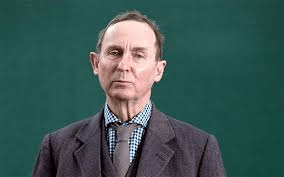
Wikipedia informs me that “Andrew Norman Wilson (born 27 October 1950) is an English writer and newspaper columnist, known for his critical biographies, novels, works of popular history and religious views. He is an occasional columnist for the Daily Mail and former columnist for the London Evening Standard, and has been an occasional contributor to the Times Literary Supplement, New Statesman, The Spectator and The Observer.”

untitled

Mr Wilson says that “there is a revealing and amusing survey that has been conducted  by a maths professor for the Wall Street Journal.  It is based on the ‘popular highlights’ chosen by users of the Amazon Kindle and comes up with a list of the summer’s ‘most un-read books’.  In the past when we only read books in book form, it was impossible to know, scientifically,  how far the average reader had penetrated into , say, Stephen Hawking’s A Brief History of Time – an impenetrable work, which it is sometimes tempting to believe that no one, except, perhaps, the book’s original copy-editor, has ever read to the end.  But now that so many of us read books on Kindle, it is possible to make an educated guess about how far the average reader has got.

“Each best-selling book’s Kindle page lists the five passages most highlighted by readers.  These extracts, designed to whet the appetite of other Kindle users, would – if they represented a thorough reading of the works considered – surely contain quotations from the whole book, and not just from the first few pages.  Jordan Ellerberg has come up with a playful ‘Hawking Index’ with which to estimate how much of a book most people have read.  The top five ‘highlights’ from Donna Tartt’s novel The Goldfinch, for example, all come from the final 20 pages of the book, which suggests that 98.5 percent of readers made it to the end.  Highlights from Michael Lewis’ page-turning analysis of financial sharp practice, Flash Boys, suggest most people only read the first 21.7 percent of the book.

“And how about the book we of the Chattering Classes are all supposed to be reading and talking about this year – the French economist Thomas Piketty’s Capital in the Twenty-First Century?  Here the quotes do not dig deeper into his 700 pages than a pathetic 2.4 percent – in other words, Piketty, the great economic sage of our time, is as unread as Hawking, our greatest scientific sage.

Wilson goes on to observe that, for most of us, a holiday is a time of relaxation with the distractions of children, sightseeing, family and friends.  He says, “Many is the thick paperback edition of some supposedly ‘great book’ that either gets left behind in the rented villa or hotel, or comes back home with only its first 30 pages smudged with sun-tan lotion.  The idea that this should induce ‘guilt’ is absurd.  Although to be as well-read as possible is a sort of duty of any intelligent person, this does not mean that it is a duty to read Plato’s Republic on a beach, or Proust by the poolside.”

Wilson says that the best sort of holiday reading is short.  In this case, he would probably recommend taking Hemingway’s short stories along, and I would agree.  In my view, the best summer reading is something that keeps inviting us back, all the while keeping us interested.

Of my own works, I would recommend Sin and Contrition (there’s a different sin in every chapter, and a discussion with the sinners at the end).  Or Efraim’s Eye or The Iranian Scorpion (both are unique thrillers).


Penny Vincenzi

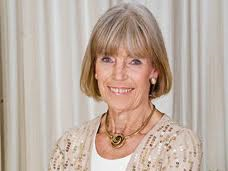
There was a full page article on the June 16 issue of The Daily Telegraph about Penny Vincenzi.  It was written by Byrony Gordon, who covers women’s issues for the Telegraph.  She says that “Penny Vincenzi’s books are an epic saga containing family secrets, romance and seriously strong women. ”  I’ve read one of Vincenzi’s novels (there are 17) and I would agree with this characterization.

Penny Vincenzi

One particular quote in the article caught my eye.  After saying that it takes her about a year to write a book and she never plots anything out, Gordon quotes Vincenzi, “I haven’t the faintest idea what is going to happen, ever.  I just get the kernel of the idea, which in this case was supposing a company was about to go under, and then the characters wander in.  I never have any idea what is going to happen at the end.  I truly don’t, which is why they are so long.”

Does she ever get writer’s block?
“Oh no,” she says with a shake of her head.  “I have a friend who does books, too, and he was party to a rather intense conversation about writing.  Someone asked, ‘What do you do when you get writer’s block?’ and he said, ‘I’m not clever enough to get writer’s block!’  I do think there’s an element of: ‘Oh, it’s my art, you can’t cut that bit out because  that’s the core’ .  I don’t agonise.  I do have terrible days when I realise I have gone down a completely blind alley and I’ve got to come back.  The only cure is to press the delete button, I’m afraid.  I once deleted 20,000 words and I felt much better after that.”

One has to admire this about Vincenzi: she has an extraordinary talent to write in what sounds like a stream-of-consciousness mode while at the same time having a keen awareness of what her readers like.  She is a successful writer and it works for her.

What caught my eye about this article was the contrast with my style.  I, too, take about a year to write a book, but I do a lot of charity work and my books are shorter than hers.  I write about 8 pages a week; she writes at least twice as much.  Part of the difference is that I do agonise, and I do a lot of editing in multiple stages.  For me, a novel has to be credible, and since I write ‘modern. real-world novels’, I spend plenty of time on research.  For example, I’m currently writing a novel which is partly set in north west Africa, and I want it to be accurate.  I also do quite a bit of planning: novel outline, chapter outlines, character portraits, and with my more recent novels: what’s the point of this novel?  what’s its message?  what would I like the reader to take away?  This message is, for me, the central nervous system of the novel.  The characters, the events all have to support this core sense.  If there is no core sense, the novel is just entertainment, but, of course, it can be delicious entertainment.

As to writer’s block, I would call it a barrier, rather than a blockage.  There are times, particularly in starting a new situation, when I’m unsure how to proceed.  I’ve learned that what’s necessary for me is to sit here and think about it.  An idea will present itself.  I’ll reject it.  Not good enough.  How about this?  I takes patience and perseverance, and sometimes – I agree with Vincenzi – it means starting over.

So, in a way, I envy the free-flowing style of Vincenzi, particularly when I’m trying to write something that engages our ideas, our emotions, our senses and our instincts all at once.  But the free-flowing style would not be me.


Review: Midnight Rumba

Eduardo Santiago’s novel, Midnight Rumba, was runner-up in the New England Book Festival’s 2013 General Fiction category.  I decided to buy a copy and read it, because it is set in the 1950’s Cuba (Mr Santiago’s native country), and my wife and I were going to Cuba for a ten day holiday.

The principal characters are Estelita, the daughter and only child of Esteban, a charming, itinerant musician, who is part of a minor, travelling circus; Aspirrina, an inept dancer who becomes a sort of surrogate mother to Estelita; Juan Carlos, an orphan boy who makes good in the gaudy world of Havana casinos; and Lasky, the American who runs the casino where Estelita and Juan Carlos work.  There are other characters, as well: various circus performers, Delfino, a homosexual from a wealthy family. Maria, also from a rich family but now the mother superior in a convent, and Delfino’s two lovers.

The plot is that  Esteban slides into helpless, violent alcoholism.  Aspirrina and Estelita escape to Havana, where Estelita becomes lead dancer in a casino and has a part in a minor Mexican movie.  In spite of the hedonistic world around her, Estelita retains her purity until she falls in love with Juan Carlos.  From the time she leaves her father in the hospital, Estelita is determined to retrieve her father from the hospital and make a home for him.  As the novel unfolds, Fidel Castro and his rebels close in on Havana.  Some of the characters side with the rebels, others try to remain loyal to Batista, the dictator.  At the end, Estelita reconnects with her now sober father and becomes a minor, provincial dancer.

The book does an excellent job in depicting Cuba at that time: the wild indulgence, the crazy glamour, and also the desperate poverty.  The brutality of the Batista regime (and of the rebels) is also clear.

The novel started off as an 800 page manuscript; as published, it is 414 pages.  At times the story-telling gets bogged down in detail, so that it could well have benefitted from another 100 pages of editing.  Eduardo Santiago’s writing style is clear, friendly, and innovative, but occasionally, one has the feeling that he is hurrying to tell the story, and then the language becomes too ordinary.

I enjoyed reading the book, particularly as I was in Cuba at the time.  For me, it fleshed out the history of the beautiful (but now crumbling) infrastructure of Havana.  I could better understand the people, as well.  But after I finished reading Midnight Rumba, I felt the absence of a message – particularly from a native Cuban now living in the States.  Perhaps it was just intended to be – without commentary – a very good historical story.

The Plot

I was thinking, the other day, about the process of developing a plot for a novel.   When I looked up the subject up on the Internet, I found all sorts of rules which struck me as simplistic.  These rules covered such things as structuring a novel like a three act play, with a beginning, a middle and an end.  The plot should have lots of action to keep the reader interested, and it should have a central character with whom the reader relates, and who has difficulty achieving his/her objectives. Also, it was pointed out that the tension should steadily increase.

All my novels started with an idea, rather than a plot.  Four of my five published novels started with a central character in mind, and in each case he starts out quite well toward his objective, but, at some point, disaster strikes.  He is able, by the end of the novel to recover from the disaster – more or less.  In the fifth novel, Sin and Contrition, there are six central characters who react in different ways to different human temptations. I, as the author, interview each of them as they reach advanced years, and ask them about how they have lived their lives.

There is the classical structure of a plot involving a central character: she/he:

  1. Is challenged
  2. Refuses the challenge
  3. Accepts the challenge
  4. Goes through the adventure
  5. Fails to meet the challenge
  6. Succeeds!

I have never actually written down a plot.  Rather the details of the plot tend to develop as the writing progresses.  Usually, I’ll write an outline of each chapter before beginning it, but I don’t stick religiously to the outline.  What happens for me is that the characters, themselves, tend to steer both the plot and the action which takes place in each chapter.  Not infrequently, when I wake up early in the morning, I’ll have a new idea about the evolution of the plot and its supporting action.  So, for me, developing a plot is an organic process.

More recently, I have begun to pay considerable attention to the ‘message’ or the point of the story.  For me, a ‘message’ is an idea: philosophical, spiritual, or social.  It shouldn’t be obvious; it may be controversial, but at least it should engage the reader at a different level than the story itself. The message tends to affect the action in the plot, and the characters themselves.

Some of my ‘rules’ about a plot are:

  • It has to be credible.  I’ve never tried to write science fiction or fantasy, but even in those genres, it seems to me that if the author steps outside the bounds of what the reader can believe, the reader is lost.  Credibility is a multi-dimensional measure: it applies to characters, to the setting and to the action.
  • Action is important, but it doesn’t have to be non-stop or physical action, only.  Action can involve emotional, intellectual or spiritual tension, as well.  In fact, physical action without an emotional response, may strike the reader as dry.
  • Characters need to have balance.  Good guys have to have defects and bad girls should have redeeming features.  We can relate to people’s redeeming features or to their defects.  All good or all bad characters do not exist in the real world.
  • Elapsed time is another vital dimension.  If events unfold too quickly they lose credibility; too slowly, and the reader may lose interest.  There are various devices one can use to slow down the pace of events: scene setting, inserting a new action that is minor but relevant, inserting a flash back, etc.

In looking over the rules on the Internet, there is one item worth adding: “Every scene and every chapter must keep the protagonist off-balance – things may get better for him/her, or worse, but they need to be constantly changing.”  (This from The Writer’s Workshop.)  This is a good point.  The reader is living vicariously through each page; if nothing’s changing, why read on?

What Makes a Good Novel?

In her blog, Words in the Kitchen Sink, Jane Heiress asks: What makes a good novel?

She got quite a few responses, some of which I have selectively included in quotation marks under the below categories.

Is it character development?  “This one is crucial. I tend to love characters that have similar personalities, ideals, or experiences as I do myself or someone I love. I don’t care nearly as much about plot or setting as I do about being able to love at least one character. Really, almost every other one of my preferences can be ignored, if an author can create a strong connection between me and a character. Maybe I’m narrow-minded, but I think most best-sellers find a trait or feeling that almost everyone can personally connect with.  Along the same lines, how does an author make me love a flawed character? One way is by giving him or her flaws that I have myself. I have many quirks that other people may see as “flaws,” but I consider ‘personality traits.’ Even when a character is truly flawed, I’ll give them more mercy if I can empathize with them.”

Memorable archetypes?  “I’m not too strong on archetypes, so I won’t comment on that one. I think the best fantasy novels use the archetypes in new ways, like what Tolkien did by making a hobbit a hero, or what Robin McKinley does with her awkward, misfit female warriors.”  Personally, I try to avoid archetypes.
Neat and logical plot?  I’m not sure a plot, to be successful, has just got to be neat and logical.  Slightly messy and somewhat illogical could make it captivating.  The plot is very important: it is the device which conveys the story and its meaning.  To my mind a plot should be believable, it should be original and it should be interesting.
Unpackaged realism?  “I think that realism has a place in a good novel, but to write a novel with the sole aim to expose reality is actually a very bad idea. If you want reality, you read the newspaper–though I guess it’s all about difference in taste, because journalists in general just can’t write, so if you want realism written in a coherent, logical, and truly unbiased way, you’re kind of up a creek. Anyway, the whole reason we read is so that we can feel like we’re not alone without actually surrendering our own sense of individuality (I stole that from C.S. Lewis). So there has to be enough of reality in a novel to help us feel that the characters might have the same sort of feeling we do when faced with tragic or happy life events.”
Societal issues?   “Societal issues are important if not too heavy-handed.  Harriet Beecher Stowe wrote Uncle Tom’s Cabin as an expose on slavery in the South, and it was very effective, but have you read that book?  I would hardly call it good, except as an expose on slavery, and if you want that, you could read the Narrative of the Life of Frederick Douglass, or other first-hand accounts of former slaves.  Much more powerful.”
Moral lessons?  “Moral lessons don’t belong in a good novel.  They can be part of a novel, but if that’s the focus, I put the novel down and read the scriptures.”  I agree except that I think that ethical dilemmas have a place in a novel.  Ethical issues are more uncertain than moral issues, and are more subject to interpretation of the situation.  They therefore tend to involve the heart and mind of the reader.
Richness of setting?  “Richness of setting is very important.  Novels with a strong sense of place and circumstance are usually good.  Even though sometimes reading through the descriptions can be tedious.”  I’m not convinced that a setting has to be ‘rich’ to add importance.  In my opinion, it is more important for a setting to be both credible and interesting.
Quality of prose?  “Quality of prose is essential.  I mean, really, the only reason anyone reads The Great Gatsby is because the words are sparkly and fluid and they practically float off the page.  Jane Austen has beautiful sentences; Charles Dickens plays games with grammar as part of his subplots; Chaim Potok paints murals with words, so reading one of his novels is almost like going to an art gallery; Geoge Eliot uses such quality of phrasing that you can’t help loving the words she chooses to describe something.
Suspense?  Dramatic intensity? “Suspense is important, but I get bored if there’s too much of it.  I don’t guess ahead, and if you pack in the action and tension too heavily, I disengage and go on to something that unfolds more gradually.  I’m going to combine this one with dramatic intensity and use a movie as an example.  I don’t like action flicks because sometimes they go too fast and too much happens at once.  It’s not that I’m too dumb to follow it, but the high-speed car chases and stuff are not the substance of a story for me, so if there’s too much of that, I’m finished. There’s also a book out now, by James Patterson, a new series for teens, that is non-stop action.  Kids like it, but I thought it was second-rate, just because there wasn’t any good character development and his sentence structure was severely lacking in quality.  Robin McKinley sometimes goes the other way and tries to turn her high-speed moments of tension into epic poems.  It doesn’t work either.  J.K. Rowling’s action scenes work very well, mostly because they’re short.”
Comedy?  No one commented on this. I think that if one is writing a serious novel, rather than a comedy, comedy can have a place: either as a device to relieve tension for the reader, or to shed light on a character.  If suspense goes on too long, as the comment above suggests, the reader can lose interest.  Or, if a character says or does something funny, one sees a new dimension of him or her.
Emotional response?  “As for emotional response, if you can’t get emotionally involved with a book, it isn’t worth reading.”  Agreed!
Expanding intellectual horizons?  “When you’re trying to expand someone’s intellectual horizons, that’s tricky.  Any book worth reading will not do that on purpose, because no-one likes to feel dumb, or to feel like they’re being taught something.  A book that expands your intellectual horizons will do it in a painless way–too many new ideas too fast will not make a lasting impression.  The important thing is that a book will set itself up on familiar turf, then take your ideas to the next level.”

.


Review: The Shadow of the Crescent Moon

The Shadow of the Crescent Moon is the first novel by Fatima Bhutto, who is the granddaughter of Zulfikar Ali Bhutto, the former President and Prime Minister of Pakistan, whose sister was Benazir Bhutto.  Fatima Bhutto graduated from Columbia University in 2004.  She lives in Karachi, and is a freelance writer.  Interestingly, her website does not mention this book.  Instead, it mentions three other books.  Judging by one article on her website, she seems to be a political radical.

The Shadow of the Crescent Moon is an interesting novel, relatively brief and quite intense.  It is set in the tribal region of northwest Pakistan and involves three brothers who are preparing to celebrate Eid, the Muslim feast at the end of Ramadan.  The oldest son has decided to leave his childhood sweetheart and go into business away from his home town of Mir Ali.  The middle son has become a doctor in Mir Ali and the youngest has joined his brother’s sweetheart as an insurgent.  In the novel, Mir Ali is the focal point for the armed struggle between Pakistan’s army and local people who crave their own freedom.

Fatima Bhutto does a very good job describing the culture, the issues, the people and the setting.  One gets the sense of a long-running, life-and-death struggle in the northwest of Pakistan.  It is clear that the author’s sentiments are with the insurgents.

I found the novel frustrating in the sense that it lacks focus.  There is an insurgent plot to kill a minister, and the story seems to be headed to a climax there, but the novel ends in uncertainty.  Was he killed?  Who killed him?  Or if not, why not?  There is some uncertainty as to who the insurgents are.  Some are Taliban; some are ordinary people.  What is the relationship between them?  The Pakistani government is clearly an evil influence, but in a book like this which is somewhat polemical, it would be a redeeming feature to hint more broadly at what the government should do differently (other than bringing in local conscripts).  There are also some religious issues: notably Sunnis vs. Shiites, but there are problems for Christians and Hindus, as well.  How do these issues fit into the over-arching themes of justice and freedom?

Ms. Bhutto’s writing in quite engaging.  Occasionally, there is a too long sentence which requires a second reading to gain understanding.  And, like all ‘young, modern authors’ she likes to use unconventional words rather than the conventional.  Mostly, this works well, but there is the occasional grating which disturbs the flow.  The characterisation of the two older brothers, the female sweetheart and the Pakistani colonel are all clear and intriguing.  The character of the youngest brother – the insurgent – is somewhat opaque.  We can understand why the two older brothers do what they do, but what – apart from his father’s lectures – motivates this brother to be an insurgent?

An interesting book and a particularly interesting author. I’m sure we’ll hear more from her!

Sable Shadow and The Presence

My fifth novel, Sable Shadow & The Presence, has just been published.

 Photo

The publisher’s press release says the following:

“Is the Voice You Hear Your Conscience, Or Is It Something Else? 
From an early age, Henry Lawson hears voices. He attributes one to the Sable Shadow, a confidant of the devil, and the other to The Presence, a representative of God.  He believes his life becomes a “board game” between these two powerful influences. 
Sable Shadow & The Presence is the fictional autobiography of a bright, but introverted and slightly insecure young man, one who studies the writings of Jean-Paul Sartre.  He begins to see life in existential terms, although this does not infringe on his rudimentary Christian beliefs. Upon Henry’s entry into the business world, he receives vital guidance from Sable Shadow, and advances to a high corporate level. With his career nearly at its peak, Henry suffers a series of devastating tragedies and attempts suicide. With the help of his wife and a psychiatrist, with whom he engages in philosophical dialogue, he constructs a completely new identity to overcome his past.  But will this identity escape the influence of Sable Shadow? 
This thought-provoking, psychological novel is rich in triumph and tragedy, success and failure, good and evil. It is a modern day look at Paradise Lost.”

I would recommend it, if:

  • you like biography (this is a fictional autobiography)
  • you are interested in philosophy (layman’s level, not academic level)
  • you’ve wondered what existentialism is all about
  • you are interested in what it takes to get ahead (and fail) in the corporate world
  • you have a layman’s interest in theology
  • you think you might be interested in Henry Lawson’s theory of how to succeed in life

or

  • if you’re just interested in a good story


“Let Children Pick Their Own Books”

“There is no such thing as a bad book for children,” says author Neil Gaiman, best-selling writer and Carnegie Medal-winner.  He was delivering the second annual Reading Agency lecture at London’s Barbican on October 14.  He said that compelling children to read books deemed appropriate by adults will leave them convinced that reading is ‘uncool and unpleasant’. . . There are no bad authors for children that children like and want to read and seek out, because every child is different. . . . They can find the stories they need to, and they bring themselves to stories.  A hackneyed worn-out idea isn’t hackneyed or worn out to them.  This is the first time the child has encountered it. . . . Do not discourage children from reading because you feel they are reading the wrong thing.  Fiction you do not like is the gateway drug to other books you may prefer. . . . Well-meaning adults can easily destroy a child’s love  of reading: stop them reading what they enjoy, or give them worthy-but-dull books that you like, the 21st-century equivalents of Victorian ‘improving’ literature.”  My own recent experience with children’s reading involves my grandchildren.  In Sicily this past summer, I brought along two illustrated books: one of Aesop’s fables and the other of fairy tales.  After dinner, I offered to read to them.  One grandson, in particular, was very keen to listen.  He would select one book or the other, pick out a particular story, and comment on it after I had read it (or even during the reading).  His younger brother and sister were interested, initially, but they preferred other occupations. More recently, I read bedtime stories to two other grandsons, aged 5 and 3.  They each picked out a book they wanted me to read.  (They had to take turns.)  The older one picked out a child’s book that would have been difficult for a thirteen-year-old to follow.  (It was a compilation of ancient fairy tales in ancient language.)  I pointed out that it maybe he wouldn’t like it so much, but he insisted that I carry on with the reading, perhaps because he wanted to get an idea of what older children liked to read.  After about the third tale, he selected another book.  His younger brother wanted to be read to, also, but his idea of being read to was to explore illustrated pop-up books, and comment on them. I can remember when I was about thirteen, there was a paperback novel called The Amboy Dukes in which my classmates were highly interested.  I was told, when I finally got a copy, was that the cover illustration was two teenagers having sex.  This seemed rather doubtful, as both the boy and the girl were dressed.  I remember showing the book to my mother, and pointing out the cover illustration.  She, too, was sceptical, but she made no other comment.  But, I decided to read it, in case there were salacious sections.  There weren’t.  It was boring.  King Arthur was much more interesting.

Review: Restless

William Boyd’s Restless won the Costa Novel Award in 2006, and when I found a copy in our small library in Sicily (it had probably been left by a guest), I decided I had to read it.  The reviews on the cover were effusive in their praise.  For example, The Times was quoted on the front cover as saying: “Boyd is a first-rate storyteller and this is a first-rate story . . . An utterly absorbing page-turner.”

The setting of the novel is the early years of World War II, when Britain and Russia were fighting against Nazi Germany alone, and the US had not entered the war.  The central female characters are Eva Delectorskaya and her daughter, Ruth.  The chapters alternate between Ruth telling her side of the story, in the first person, from 1947 onwards, and Eva’s story being told in the third person from 1935 until 1941.  Ruth does not know her mother as Eva; she knows her as Sally Gilmartin, née Fairchild.  She also didn’t know that her mother was half Russian, half English, and was living in Paris, age 28, when the war broke out in 1939.  The principal male character is Lucas Romer, who recruits Eva into a special branch of the British Secret Service.  Eva is beautiful and fluent in Russian, English and French.  After being recruited and trained in Scotland, one expects that Eva will be parachuted into France to work alongside the French resistance.  But we learn – partly through the files that Eva/Sally passes to her daughter and partly from Eva herself – that she has been recruited into an organisation which attacks Germany through the media.  The stories that the organisation places are sometimes fabrications and sometimes exaggerations or little-noticed Nazi misdeeds. In 1940, the organisation, including Lucas and Eva, move to New York City, where their focus shifts to persuading a reluctant American people to join the war against Germany.  Eva and Lucas become lovers, and for Eva, Lucas is the perfect secret agent: brilliant, and devious, but devastatingly attractive.  Of course, they succeed in persuading the White House to go to war, but just before Pearl Harbor, Eva is sent on a mission during which she is nearly killed.  Suspecting everyone, including Lucas, she goes onto hiding: first in Canada and then in England.  Years later, as an old woman, she persuades Ruth to help her unmask the traitor.

What could be a better story?

What I particularly liked about it was the subversive activity involving the use of the media.  One wouldn’t expect media people to be literally assassins, but when one is a traitor and one has to prevent something from happening, one uses strong measures.  The daughter who doesn’t know the truth about her mother, who discovers it during the course of the novel, and who collaborates with her in realising the conclusion, is another appealing feature.  The story is very well-written – not in a literary style – but in straight-forward, clear language.

The only faults I could find were what seemed to be a little bit of ‘filler material’ about Ruth’s occupation: teaching English as a second language to business people.  I also wasn’t clear about what actually happened during Ruth’s nearly-fatal mission.  Somehow, it didn’t all fit together.

But having said that Restless is a first rate thriller, and if you decide to pick it up, be sure you haven’t any pressing engagements: it’s difficult to put it down.

Book review: Aleph

I’ve been on holiday in Sicily for almost three weeks, so I had some time to do a little reading.  (The weather, the sea, the beaches and, most importantly, the company were all very nice.)  At the news stand/book store in the main square of Capo d’Orlando, I had a look through their collection of English language books, which are to be found in the darkest inner recesses of the store, mixed in with German language books. Aleph, by Paulo Coelho, a popular and well-regarded Brazilian author, caught my eye.  I had read his Eleven Minutes some time ago, and I was impressed.  It is the allegorical story of a young girl who, through her failures to achieve true love, goes to Switzerland where she becomes a successful prostitute.  But then she meets and falls in love with Ralf, an artist with whom she falls in love, and she discovers sacred sex: a mixture of sex and love in which one gives up one’s soul for the loved one.  Thought provoking and a very nice story.

Aleph is written in the first person, and it is, at one level, an interesting story about a trip across Russia on the Trans-Siberian Railway.  At the allegorical level it is Paulo Coelho’s complex exploration of self discovery.

The train trip seems to involve the author himself: he reports on his interactions with his publishers, editors, journalists and readers in a very modest yet engaging way.  One sympathises with his hardships: lack of sleep, the cold and bad-tempered colleagues.  I found it easy to wish that I, too, were on that hellish train just for a chance to meet Paulo Coelho.

But the ‘meat’ of the story involves a perceived sin that Paulo committed in an earlier life: as an official in the Spanish Inquisition, he failed to testify to the innocence of several young women who were then burned alive.  One of the young women has been reincarnated as Hilal, a young Turkish woman who believes that her life depends on making contact with him.  Diligently, she tries to establish a relationship with him without really understanding her own motivation.  Paulo learns in a sequence of dreams what he did.  She forgives him unconditionally and unknowingly, and he finally declares his sin to her, and is able to persuade her to get on with her own life as a concert violinist.

The ‘Aleph’ is a condition where all things in the universe and all time are able to converge at one point.  It represents perfect enlightenment.  Paulo and Hilal are almost in an Aleph at a certain point between the carriages of the train.

Interestingly, there is no sex between Paulo and Hilal: not that he isn’t tempted and that she isn’t willing.  At one point, she appears naked to him and he remembers her naked before the Inquisition.  The only difference being that then she had pubic hair, but now she is shaved.  He comments negatively (and quite rightly, I think) on the popularity of women shaving.

This is quite an interesting novel.  The trip, the characters, their relationships, and the actual events are all captivating.  And Coelho’s writing style is both engaging and clear.  The problem for me with this book is that I don’t believe there is such a thing as an aleph, nor do I believe that, if there is such a thing as reincarnation, we carry a debt from one life to another.  It’s another example of my literal mind getting in the way!