The Guilty Secretes of E-book Readers

There was an article in The Daily Telegraph last week which reported on the popularity of titles of e-books vs titles of physical books.

“A newly published list of Amazon.co.uk’s biggest selling e-books of the year features psychological thrillers, misery memoirs, Mills and Boon and a book by the Tory MP Nadine Dorries, whose first work was memorably described by a Telegraph reviewer as “the worst novel I’ve read in 10 years”.  Notably, 18 of the top 20 authors were women, including thriller writers Angela Marsons, Fiona Neill and Rachel Abbott.

“However a parallel list  of physical books compiled by Waterstones to cover the same period is significantly more highbrow, and features four times as many male authors.  They include Richard Flanagan, author of the Man-Booker Prize-winning The Narrows Road to the Deep North, and Anthony Doerr, with his All the Light We Cannot See.  There were also books by Colm Toibin, Ian McEwan and Victoria Hislop.  The print list is topped by Harper Lee’s Go Set a Watchman, which does not make the Amazon e-books list.

“There is some overlap.  Paula Hawkin’s runaway bestseller The Girl on the Train, and the latest risqué offering form E L James appear in the top three of both lists. But the disparity between the books we put on show and those we download suggests that e-book reads can be ‘guilty pleasures’.

“Benedict Page of The Bookseller said: ‘There are certain kinds of books that people like to own.  If they have a favourite heavyweight literary author who they have followed for many years, they are likely to want to possess the printed book because it’s beautiful and durable and represents a readerly commitment.'”

I think that Page’s analysis is probably correct in that we tend to regard e-books as disposable, and printed books something to be retained. The high proportion of female writers on the e-book list is interesting.  My theory would be that at least some of the female authors on the e-book list write primarily for women, and are more interested in achieving volume than literary recognition.  I’m also guessing that more women than men own e-book readers.  These two theories seem to converge on the supply and demand sides.

What’s your view?

Review: Writing with the Master

This is the true story of a retired businessman who’s been writing novels and having them rejected by publishers/agents.  The businessman’s friend John Grisham (the best-selling author) offers to coach him in the writing of a new novel. The book sets out, in detail, all of the coaching provided over two years.

511C2LhqQFL__UX250_imagesT0ZHRO92

Tony Vanderwarker                               John Grisham

Tony Vanderwarker is a retired advertising executive who had his own, very successful, ad agency, sold it and moved from Chicago to Charlottesville, Virginia with his family.  John Grisham, also a Charlottesville resident, is a friend of Tony’s, and one day, over lunch, John offers to ‘mentor’ Tony in writing a new novel.  Grisham had previously referred one of Tony’s works to an agent whose review was positive, but not quite good enough to be published.

The process started with John asking Tony what he wanted to write about.  Tony’s first two ideas were rejected out of hand.  His third idea was a thriller about nuclear weapons lost by the US Air Force in air crashes where the weapon was not recovered.  There are nearly a dozen such weapons, dating back to the 1950’s.  Tony prepared a three sentence description of the plot and then a full, multi-page outline.  At each stage we see portions of what Tony has written and John’s written critiques.  The critiques are blunt and to the point.  After three and a half months of trial and error, Tony revises his plot outline, and is ready to start chapter outlines.  During this process, we see a reflection of the way John Grisham writes his novels.  First, a one paragraph outline: is it interesting enough, strong enough?  Then the three page outline, complete with characters: do the subplots support the main plot or are they extraneous?  Are the events credible?  Are the characters interesting and likeable?  Then comes the first draft of the manuscript.  In Tony’s case, John tears into the manuscript and points out a number of problems:

  • the writing is sloppy: there are repeated words and phrases and factual inconsistencies.
  • there are too many distractions to the basic plot
  • the actions of a key character don’t make sense
  • too many bad guys
  • minor character isn’t fully credible
  • inserting the author’s political views into the story
  • make the dialogue real: repeat it out loud.
  • Show! Don’t Tell!

Tony is absolutely gutted by this critique!  He turns his attention to the notes John has written on individual pages of the manuscript.  Here, again, we see the text and the comment.  Tony divides the manuscript into seven piles and begins the task of rewriting, which takes a year.  Once again Grisham responds with a cover letter describing his principal concerns and returns the manuscript with page-by-page comments, including:

  • too many detours; too much backfilling
  • don’t be afraid to cut
  • not allowing the suspense to build

Tony makes the suggested changes and submits the manuscript to John’s agent, who likes it and refers it to another agent because it doesn’t fit for him.  The agent to whom it is referred is very complimentary but declines. Tony goes back to the default mode of mass submissions, without success.

When Tony has essentially given up on getting his novel published, he gets a great idea.  Why not write a book about the process that he and John Grisham have been through.  Grisham agrees, and the book is published by Skyhorse Publishing, who also agree to publish the mentored novel: Sleeping Dogs.

For anyone who is interested in the process of writing fiction, this book is a must read.  And for those with only a passing interest in the creative effort, there is enough of the rest of Tony’s life fitted neatly in to make to book a good read: his life as an advertising executive, his work for an environmental charity, his relationship with his wife and the Charlottesville area.

Personally, I’m not surprised that Sleeping Dogs didn’t get published on the first attempt.  From my point of view, there’s too much that stretches credibility.  But, I’m not surprised that Skyhorse decided to take it up.  Writing with the Master is a great promotion for Sleeping Dogs.

As for John Grisham’s advice, I think that ninety percent is spot on.  Two quibbles: I believe in outlining, but not to the extent that John does.  I think that detailed outlines can stifle creativity, and I notice that Tony has reached a similar conclusion.  There’s not much in John’s advice about the use of creative language, which I think is important to differentiate the writer and his/her text from the mundane.

Tony writes well, and I’m glad that he decided to follow-up on his brainstorm: why not write a book about the mentoring process?

Dealing with Pirates

The July issue of IBPA Independent magazine has an article entitled “My Battle with Pirates” by Rhonda Rees.

untitled

Rhonda Rees

The article begins:

Late one evening, shortly after I had self-published Profit and Profit with Public Relations: Insider Secrets to Make You a Success, I decided to run a Google search for it – and there it was, staring me right in the face.  My book, along with hundreds of others, was being given away free with the simple click of a button.  By the time I had discovered this, one website had already given away 600 copies of my book, and another one, which had the nerve to say that it had my blessing, had given away 1,500 copies.  As you can imagine, I was shocked.  And as I now know, you may find yourself in this very same unwanted position.  Any book can be pirated online.  It’s not just the famous writers and recording artists who are being ripped off.  Even the fact that I trademarked and registered my title here in the United States didn’t keep my book safe, since many pirates are located overseas.

I decided to take her advice and run a Google search: “<title of book> free download”.  Three of my six novels produced results of commercial websites that had my copyright material on them.  Two of the three promise “free downloads”.  All three referred me to the website http://www.donnaplay.com, where I had to register to be eligible for the free downloads.  It turned out that I had to provide my credit card information, because after a five day free trial, there is a monthly fee.  So the downloads aren’t really free.

The two websites that initially came up promising free downloads had contact forms where I could request that the page be deleted from their site.  The third had a similar request form, but it was not live, and the telephone and email information was obviously false.

So what does Ms Rees recommend?

  • Run a Whois search to find information such as who owns the domain names, where and when they were registered, and when they expire.
  • Send out emails to find out what company is hosting the site so that a DMCA (Digital Millennium Copyright Act) notice can be sent out.  The notice has to be correctly worded and DMCA.com can help with that task.  There is also a free sample DMCA letter posted by Gene Quinn, a patent attorney and the founder of IPWatchdog.com (ipwatchdog.com/2009/07/06/sample-dmca-take-down-letter/id-4501)
  • Send the DMCA takedown notice by email to the web hosting company which is obligated to notify its clients (the culprits) within 24 hours to have them remove all the information.

I, also, was rather shocked that half of my novels are being pirated.  I think my next step will be to get my publisher involved with http://www.donnaplay.com.  If that illegal site has three of my novels, they must have at least one hundred of the publishers other titles.

I’ll keep you posted!

Payments by the Page

In yesterday’s Daily Telegraph there was an article “Amazon to Pay Authors by How Much We Read”.  It said that Amazon will begin paying royalties based on the number of pages read by Kindle users, rather than the books they download.  This system will begin on July 1 and “initially” applies to authors who self publish their books via the Kindle Direct Publishing Select (KDP Select), which makes books available to download from the Kindle library and to Amazon Prime customers.

The article said that if a reader abandons a book a quarter of the way in, the author will get only a quarter f the money they would have earned if the reader had finished the book.

Amazon claims its method is a fair way of rewarding authors who write lengthy books but have previously earned the same as someone who crafts 100 pages.  “We’re making this switch in response to great feedback we received from authors who asked us to better align payments with the length of books and how much customers read”, the company said.  “Under the new payment method, you’ll be paid for each page individual customers read of your book, the first time they read it.”  To prevent authors beating the system by enlarging the type and spreading our their work over a larger number of pages, Amazon has developed a “Kindle Edition Normalised Page Count” which standardises the font, line height and line spacing.

The article mentions Unfinished: Kindle’s most difficult books:

Capital in the 21st Century, by Thomas Piketty:  2.4% completed

A Brief History of Time, by Stephen Hawking: 6.6% completed

Thinking Fast and Slow, by Daniel Kahneman: 6.8% completed

Lean In, by Sheryl Sandberg: 12.3% completed

Flash Boys, by Michael Lewis: 21.7% completed

Also mentioned in the article was data released by Kobo, the Kindle rival, which showed that only 44% of readers finished The Goldfinch, by Donna Tartt, which was one of the biggest sellers in 2014.

Hari Kunzru, the award-winning author of The Impressionist, said the system “feels like the thin edge of a wedge.”

Peter Maass, a writer and editor, said on Twitter: “I’d like the same in restaurants – pay for how much of a burger I eat.”

Kerry Wilkinson, whose Jessica Daniel crime series propelled him to the top of the Amazon bestseller list as a self-published author, believes the system is fair.  “If readers give up on a title after half a dozen pages, why should the writer be paid in full?” he said.  “If authors don’t like it, they don’t have to use KDP Select.  It’s opt in, not opt out.”  But Wilkinson found it “eerie” that Amazon was keeping tabs on what – and how – you are reading.  Even if it’s anonymous, that’s a lot of data mining.”

To Kunzru’s comment, there is no reason this system could not be extended to all Kindle editions, so that whoever holds the copyright (usually the publisher) would be paid on the percentage of a title that is read.  And, of course, other e-books (like Kobo) could adopt the same system.  So, it definitely sounds to me like the thin edge of the wedge.

I think the system sounds fair for mass market books which are intended for a broad group of readers.  I suspect that readers of crime, thriller, romance, historical novels (and other genres) generally finish the books they have bought.  But I also suspect that non-fiction books (such as self-help, political, business, nature, science, environment, etc.) are probably not finished in many cases.  Does this suggest that their authors deserve a lesser reward?  I don’t think so (only one of my published books – from long ago – is in one of the latter categories).  A reader may buy a non-fiction book, read 25% of it, and still be pleased with the book: s/he may well feel that s/he got her money’s worth, and in such a case shouldn’t the author get the full royalty?

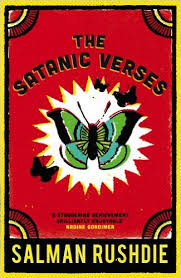
The other concern I have is about works of top-class, leading edge fiction.  The Hawk comes to mind.  I suspect that quite a few readers decided that the prose or the subject matter was not for them.  This may also be true of works by Salman Rushdie or Jonathan Franzen, where the writing just went over the reader’s head.  I suppose that one could argue that if a potential reader had to pay only say 25% of the cost of a book to try it, that would provide the reader with an incentive to buy it and at least try it.  And, it would provide the author with at least some compensation.  I’ll be interested to hear what the top-class authors have to say about the Amazon scheme.  I don’t think they’re going to like it.  After all, they’re probably selling a lot of books that end up on the I Once Tried to Read This shelf.


Amazon: Friend or Foe?

An article entitled: “Amazon: Friend or Foe? A Simple Question with a Complicated Answer” is in the June 2015 issue of the Independent, the monthly journal of the Independent Book Publishers Association.  It is written by Mike Shatzkin, who is CEO of The Idea Logical Company and a publishing industry consultant.  His blog, the Shatzkin Files (idealog.com/blog) is the source of the article. I think it is worth summarising Mr Shatzkin’s points.

images

Mike Shatzkin

Mr Shatzkin begins by saying that Amazon has profoundly changed the publishing industry in three ways.  First, it has consolidated the book-buying audience online and delivers it with extraordinary efficiency.  For most publishers, Amazon is their most profitable account, if volume, returns and cost of servicing are taken into account.  Since this fact is almost never acknowledged, it is “one of the industry’s dirty little secrets”. For this reason, he says that Amazon must feel justified in trying to take more margin, an effort which the publishers resist because they don’t know where the demands will cease.  At the same time and in spite of the profitability of the Amazon account, many publishers feel more comfortable with a whole range of customer accounts.

Secondly, “Amazon just about singlehandedly created the e-book business”.  They made an e-reading device with built-in connectivity for direct downloading; this was done in pre-WiFi days so that Amazon was taking a risk that connection charges could destroy margins.  Amazon had the clout to persuade publishers to make more books available in e-versions, and they had the loyalty of book readers who bought e-books.

Finally, the success of the Kindle made self-publishing attractive.  E-books could be produced cheaply and sold at low prices with high margins.  It facilitated the process by creating an easy-to-use interface and efficient self-service.  Amazon represented a ready market for self-published e-books.

Shatzkin says that the first two of these three changes made Amazon a friend of the traditional publishing industry, while the third puts them more in the category of foe.

He goes on to say that Amazon’s data policies make them a foe: they do not share information.  Amazon does not use the industry standard identifier, the ISBN, for the titles that it publishes: it uses the ASIN and does not report on the volumes or the categories of ASIN’s.  There is a black hole in the data.

Amazon also does not report on its sales of used books.  The used book market may help publishers sell more new books as the used book market offers a means for buyers to get a portion of their investment back.  But at the same time, when used versions are available almost simultaneously with new books, they represent a downward pressure on new book prices.  Over time, as demand for a given title decreases and the volume of used copies for sale increases, the price of used copies will decline.  But only Amazon has the useful data about the used book market.

Traditional publishers have no idea how large Amazon’s proprietary book publishing business is.  What volumes?   What categories?  How will recently published Amazon titles affect the prospects for titles under consideration by traditional publishers?

Shatzkin says that Amazon never saw the book business as a stand alone business.  Rather, it was focused on creating “life-time customer value” across a broad range of products.  While it clearly dominates the English-speaking book world, language differences mean that book markets will remain ‘local’ for a long time and strong local players will be hard to dislodge.

He says that the Kindle and Amazon Prime are powerful tools to retain customer loyalty.  Once one subscribes to Prime, all shipping charges are waived, removing the incentive to buy from others.  And, of course, Amazon has the world’s largest selection of printed and digital books in one place.

Looking ahead, Shatzkin sees the subscription services, such as Scribd, Oyster, 24Symbols and Bookmate (as well as Amazon’s own Kindle Unlimited) as pulling customers away from á la carte book buying.  Most of these sales will come out of Amazon’s hide.

His conclusion: Amazon will remain dominant in most of the world for the foreseeable future.  Although, with the next round of marketplace changes, Amazon will be challenged as it will dominate a small portion of the overall market.

Writers Earn £11,000 per Year

-There was an articled in the April 21st edition of The Daily Telegraph entitled ‘Want to write?   Expect to earn £11,000 a year’.

This was sufficiently eye-catching that I think it bears repeating.  I quote:

To many, it is the dream job: toiling to create a fine work of literature or academia.  But the reality of being a writer has been laid bare in a new report highlighting the low earnings many endure.  A study, conducted by Queen Mary University of London, showed only one in ten authors can afford to earn a living from writing alone, a drop from 40% a decade ago.  A typical professional writer, it found, earned £11,000 annually.  In real terms, the average earnings of authors is down 8% since 2005, according to the report commissioned by the Authors’ Licensing and Collecting Society.  Five percent of authors earn 42.3% of all income earned by writers, with the struggle for those working in non-fiction and academia particularly acute.  The study points to a publishing world where houses are less willing to take a chance on new authors, opting instead for ‘safe bets’ and celebrity writers.  The report, entitled The Business of Being an Author and based on a survey of nearly 2,500 writers, noted: ‘For the majority, writing remains a low-earning profession.’  A remarkable 17 percent of writers did not earn any money in 2013 despite 98% having had work recently published.  Women were found to earn 80% of the income of their male counterparts. Nicola Solomon, the chief executive of the Society of Authors, said publishers had been compelled to tighten their belts in recent years, investing in high-demand authors.  ‘There is a tendency towards safe,’ she said.  ‘But do we want safe?  Surely the whole point of reading is to be introduced to things that are daring and challenging and different?’   The report was ‘a bit depressing’, she said.  Earlier this year, a YouGov poll found being an author was the most desirable job in Britain, with 60% of people claiming they would like to do it for a living.

images

Unquote.

This doesn’t surprise me and it confirms some of my own experience.  For me, as a retired business executive, I’m not writing to make a living.  I’m writing because I enjoy it, and because people who read my books tell me that they enjoy them.  I don’t feel that I have to concentrate on ‘what will sell’.  Rather, I can concentrate on what interests me and what will interest some people.  As long as I’m in good health, I don’t really have a deadline.  Someday, if I’m lucky, one of my novels will ‘go viral’, and I’ll have a £11,000 windfall!

Coaches & Editors

I just returned home from a coaching session with the chief executive of a London charity.  (I accept assignments from the Cranfield Trust for pro bono assignments with charities which need help.  Cranfield Trust is, itself, a charity – originally associated with Cranfield Business School – and which maintains a roster of management consultants.  The Trust’s role is to match consultants with charities in need.)

Like a professional football coach, I am supposed to be more experienced than the players (charity managers) I coach, and I am supposed to see problems and solutions which the player (charity manager) didn’t see or hadn’t seen yet.

images9DY2U8VS

The chief executive I’m coaching has some difficult problems.  The charity he is running is teetering on the edge of bankruptcy, and his board of trustees see their role as asking a lot of questions, rather than taking difficult decisions.  Moreover, the trustees seem to be allergic to the idea of making a personal commitment to do something useful.  I am by no means a perfect trustee, but I am treasurer of another charity which was technically bankrupt, and which absolutely had to win a particular contract to survive.  The chairman and I put a lot of personal hours into helping the managing director prepare a proposal which brought in £1.5 million in revenue.

My chief executive coachee believes that one strategy might be to merge with a larger, related charity.  Such a merger would reduce overheads, and, with a larger activity, would make fund raising easier.  But the trustees seem to feel that the charity would lose its identity, and they are insisting on meeting with the charity’s employees to get their opinions.  I think it’s pretty obvious that most employees, being worried about job security, will oppose any merger.  Some of the trustees seem to be so emotionally wedded to the current identity of the charity that they are unable to see that there is a larger question: which is better: a charity that does things differently with a different identity or no charity at all?

The chief executive is struggling to keep the trustees from behaving like lemmings and diving, en mass, into the sea.  We want to keep the trustees moving toward a rational decision: talk to other charities about their views on a potential merger.  In the meetings that he and I have, we talk about the details of how to: instill a sense of urgency; keep things rational; obtain a decision, and often, in our discussions, I will suggest a tactic, or an approach that he hadn’t thought of.

So, I got to thinking about the similarities between a coach and a literary editor.  As you may know, I don’t have a literary editor, but I would really like to have one.  An editor would be someone who might say: “These couple of pages don’t really add anything to your theme.  Cut it down to one well-constructed paragraph” or “This character would be more interesting and would add emphasis to your theme if you exposed this trait in her character” or “This section here comes across as foggy; what are you trying to say?”

As it is, I have to rely on my own judgement, but like the chief executive, I may sometimes miss a crucial point or detail.  And, I’m sure my writing would benefit from having an editor.

My publisher doesn’t offer an editorial service.  There is a lady who reviews submissions and accepts or rejects them, as submitted, in their entirety.  Traditional publishers have assigned editors who read the entire manuscript carefully, and suggest changes before publication.

I realize that I could hire an editor to review my manuscript.  But apart from the fact that I, personally, would have to pay him/her, the editor wouldn’t be part of a publication team that knows the market and is working together to please readers and increase sales.

So, I guess what I’m saying is that I, too, would like to have a coach, and that I haven’t given up on the idea of working with a traditional publisher.

Reviews

Reviews are very important to an author in two ways: they can provide valuable feedback to the author, and they can arouse the interest of other potential readers.  Reviews can also come to the attention of a prospective publisher.  It goes without saying that authors want favourable reviews, but, in my opinion it’s better to have an honest, unfavourable review than no review at all.  After all, one wants to learn and grow as an author.

There are two measures of the value of a review: credibility and expertise.  A review by, for example, the book editor of the New York Times is far more valuable than a review by your aunt Martha.  The trouble, from an author’s perspective, is that its pretty easy to get a review by Aunt Martha, and it’s very difficult to get one from the editor of the Times.

So, how are book reviews used?  The short answer is that they are used in a myriad of ways to market an author and his/her book.   They appear on the Amazon book web pages and on Goodreads.  They are on the back cover of the book, inside the front cover and bits of a review may appear on the front cover.  Reviews are featured in billboard and newspaper/magazine adverts, and on promotional materials in book shops.

How do I get my reviews?  There are several ways.  I have an old friend who reviews my books; I think she does a thorough and objective job.  I have used paid review services like BookReview.com, but their credibility is fairly low.  There are book bloggers who offer to review books – mostly for free.  At one point I must have trolled through fifty book blogger’s sites to find three that said my book sounded interesting, would I please send it?  I think all this resulted in one review.  I have given away books on Goodreads as a part of the contests they run.  Theoretically, the deal is that if you win a free book from an author, the winner is supposed to write a review.  I sent out ten books to the winners and received one review.  Perhaps people just like to have free stuff! There are spontaneous reviews that one tends to get from readers who have bought a book on Amazon.  These spontaneous ones can be interesting.  There was a one-star review who didn’t like my book at all because it ‘wasn’t credible’. (That was the complete review.)  There was one that looked like a third grade book report.  And, of course, there are insightful, semi-professional reviews.  I have a practice of not commenting on reviews, except – where appropriate – to say ‘thank you’.

Yesterday, I signed onto a webinar that was put on by the Independent Book Publishers Association.  It featured a spokesman from Foreword Reviews who explained how they chose books that they review.  Having a review on Foreword Reviews would be very helpful.  Their quarterly magazine reaches plenty of librarians, publishers and editors – as well as the general public.  From my point of view, it also has the advantage or specialising in indie (independently published) books.  Two problems, though: first, there has to be intense competition to be selected: the magazine is published four times a year, and there are well over a hundred thousand indie books coming out every year.  And second, one has to submit the book near the publication date, so if a book has been out more than six months, it is probably of little interest.

If any of my readers considers himself/herself to be a budding reviewer and would like to have a go at one of my books, please choose a title on my website (www.williampeace.net), send me an email (bill@williampeace.net) with your address, and I’ll send you a copy.

Amazon vs. Hachette

Regular readers will know that I have been following the dispute between Hachette, the French-owned publishing house and Amazon.  The two companies have now signed a deal to end their long-running price dispute.

According to the Daily Telegraph: the two firms had disagreed about the price of ebooks which can be read on Amazon’s market-leading Kindle device.  Amazon believed most new ebooks should be $9.99, which many in the traditional publishing industry said was not financially sustainable.  It also wanted to restructure the way revenues were split between the publisher, author and  itself.  Hachette refused to back down on lowering prices.  The dispute gained public attention earlier this year when hundreds of authors supported Hachette.  They argued that  Amazon’s pricing tactics were damaging writers and high streets around the world. The online retailer responded by increasing shipping times on Hachette books, blocking pre-orders, and redirecting customers to other publishers.  In August a group of 900 writers paid for a full page advert in The New York Times criticising Amazon’s actions: “These sanctions have driven down Hachette’s authors’ sales on Amazon by at least 50%.  Amazon has other negotiating tools at its disposal; it does not need to inflict harm on some of the very authors who have helped it to become one of the largest retailers in the world.”

Under the agreement which has been reached between the two companies, Hachette will have responsibility for setting prices of its ebooks, and “will benefit from better terms when it delivers lower prices for readers,” according to a joint press release.

Hachette said: “This is great news for writers.  The agreement will benefit Hachette authors for years to come.”

David Naggar, vice president of Kindle, said, “We are pleased with this new agreement as it includes specific financial incentives for Hachette to deliver  lower prices, which we believe will be a great win for readers and authors alike.”

How can all three of the statements in quotation marks, above, be true at the same time?

The short answer is, I don’t know.  But I have a theory.  Suppose under the old deal at $9.99, Amazon got 40% and Hachette got 60%: $4 for Amazon and $6 for Hachette, and suppose that Hachette pays its authors a one third royalty from its revenue: $2 per copy.  And suppose, under the new deal, Hachette prices its ebooks at $15 per copy and gets 55% of the selling price, while Amazon gets 45%.  This would give Hachette income of $8.25 per copy, and the author would get $2.75 per copy: a better deal for all three parties assuming that the volume of the ebook is not price sensitive.  But, if for example, only half as many copies are sold at $15 as at $10, everybody is worse off.  This is where Amazon’s obsession comes in: the lower the price the more you sell!  I’ll bet that the deal is structured so that Hachette’s share of the sale increases as the price is lowered.  In this example, for each dollar reduction in price, Hachette would get one percent more of the selling price.

So:

Statement no. 1 is true: Hachette gets better terms as it lowers its price (not better revenue, but better terms)

Statement no. 2 is true: Hachette authors will benefit ($2.75 vs $2 assuming that the volume of sales are not particularly affected at the higher price)

Statement no. 3 is true: lower prices are a win for authors and readers alike (assuming lower prices mean greater sales volumes)

It seems to me that this dispute boils down to different views on the price elasticity of books.  Amazon believes that price is very elastic: the higher the price, the less you sell and the lower the price the more you sell.  Amazon apparently has some data which supports this theory.

Hachette believes that, within a certain price band, the price is inelastic: volume is largely unaffected by price.

My own view is that Hachette is probably right.  They have experience with their authors and their genres to be able to predict volume, and they have a pretty good idea of where the price band should be.  They will be quite sure that if they price a book at a third of its normal price band, it won’t sell four times as many.

Creating a Cover Design

Creating a cover design is a difficult process.

I always start with a cover concept in mind.  My latest novel is a thriller which has as its theme how conflicting priorities can change who we are: our identity.  One of the characters is a international, freelance journalist, who has found that long-term relationships don’t work very well when one is working in a country like Afghanistan.  She has therefore decided to focus on her career in journalism, and, in doing so, she has won a Pulitzer prize.  But, she is lonely and longs for a loving relationship – a relationship which will make her the person she wants to be.

Given this theme, I asked the cover designer to produce a graphic which included a transparent human head inside of which are toy soldiers engaged in combat.

Here is what they came up with initially:

9781631355684-Peace_CV_100114-page1

Not surprisingly, I didn’t like it at all.  My wife said it looked like the cover for some kind of a cult book.  I objected to the spirals; I was told that they are watermarks which will be removed when the head image is purchased.  I didn’t like the iridescent blue: that had to go.  The dozens of small images in the background just added confusion.  The soldiers (which one can barely see in this image) were too small and didn’t look as though they were fighting.  After some discussion, I sent the designer copies of the images below:

images

images1

I found these images on the internet, and the only problem was that they weren’t high resolution.  The designer worked on the images to sharpen them.

Then, rather than have a transparent, three-dimensional head, I opted for a simple, two-dimensional outline of a head.  I asked that the colour scheme be simplified: red, blue and black only.

Then we got into a lengthy back-and-forth about the fonts on the original cover, which I didn’t particularly like.  My wife and I were in Rome a couple of weeks ago, and at the check-out counter of a local supermarket, she spotted the cover of Paulo Coelho’s latest novel which appeared to have an embossed font.  Very stylish!  I sent a picture of the cover to the designer, but it turned out that if ‘Hidden Battlefields’ were to be in that font, it would have to be on two lines rather than one.  So we compromised on the font.

So, here, at last, is the cover:

Peace Cover Web

 The book itself should be available in a week to ten days.