The Guardian reported on May 6 that major publishers were suing Meta for copyright.
The article said, “Five major publishers sued Meta Platforms in Manhattan federal court on Tuesday, alleging that the tech giant misused their books and journal articles to train its artificial intelligence models.
Elsevier, Cengage, Hachette, Macmillan and McGraw Hill, as well as author Scott Turow, alleged in the proposed class-action complaint that Meta pirated millions of their works and used them without permission to train its Llama large language models to respond to human prompts.
“Meta’s mass-scale infringement isn’t public progress, and AI will never be properly realized if tech companies prioritize pirate sites over scholarship and imagination,” Maria Pallante, the president of the Association of American Publishers, said in a statement.
Meta has denied any wrongdoing.
“AI is powering transformative innovations, productivity and creativity for individuals and companies, and courts have rightly found that training AI on copyrighted material can qualify as fair use,” a Meta spokesperson responded in a statement on Tuesday. “We will fight this lawsuit aggressively.“
The publishers allege that Meta pirated works ranging from textbooks to scientific articles to novels including The Fifth Season by NK Jemisin and The Wild Robot by Peter Brown for its AI training. They asked the court for permission to represent a larger class of copyright owners and an unspecified amount of monetary damages.
The lawsuit opens a new front in the ongoing copyright battle between creators and tech companies over AI training, in which dozens of authors, news outlets, visual artists and other plaintiffs have sued companies including Meta, OpenAI and Anthropic for infringement. All of the pending cases are likely to revolve around whether AI systems make fair use of copyrighted material by using it to create new, transformative content. The first two judges to consider the matter issued diverging rulings last year. Amazon- and Google-backed Anthropic was the first major AI company to settle one of the cases, agreeing last year to pay a group of authors $1.5bn to resolve a class-action lawsuit that could have cost the company billions more in damages for alleged piracy. The New York Times has sued OpenAI and Microsoft for copyright infringement as well.”
There is an article in yesterday’s Telegraph by Cal Revely-Calder with a title similar to the above, which, for once, puts the shoe on the other foot. Instead of complaining about AI invading the creative space, it objects to those who admit AI to the literary space.
Cal Revely-Calder is the literary editor of the Telegraph.
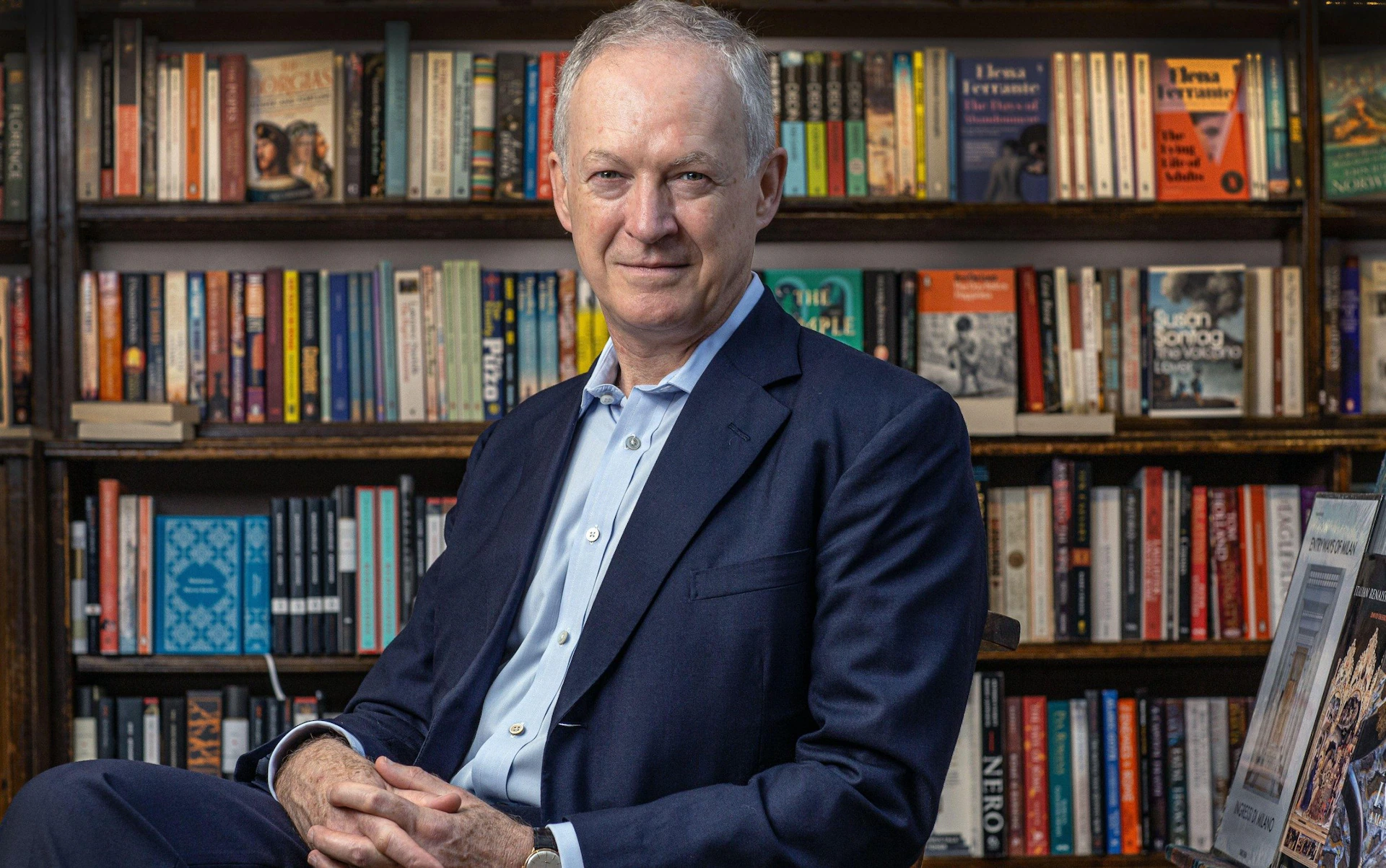
He said, “Self-respect, Joan Didion once wrote, cannot be faked. It depends on “a sense of one’s intrinsic worth”. You can pretend or lie or dissemble if you want to boost your reputation, but in the end you’ll always lack “what was once called character”.
This thought occurs to me whenever – and these days it’s pretty often – I see someone in the literary world stand accused of secretly using AI. Recently, for those alleged sins, the novelist Mia Ballard has had her second book pulled from shelves; the politician Matt Goodwin has had his state-of-Britain polemic castigated; and the critic Alex Preston has had a book review near-disowned by the New York Times.
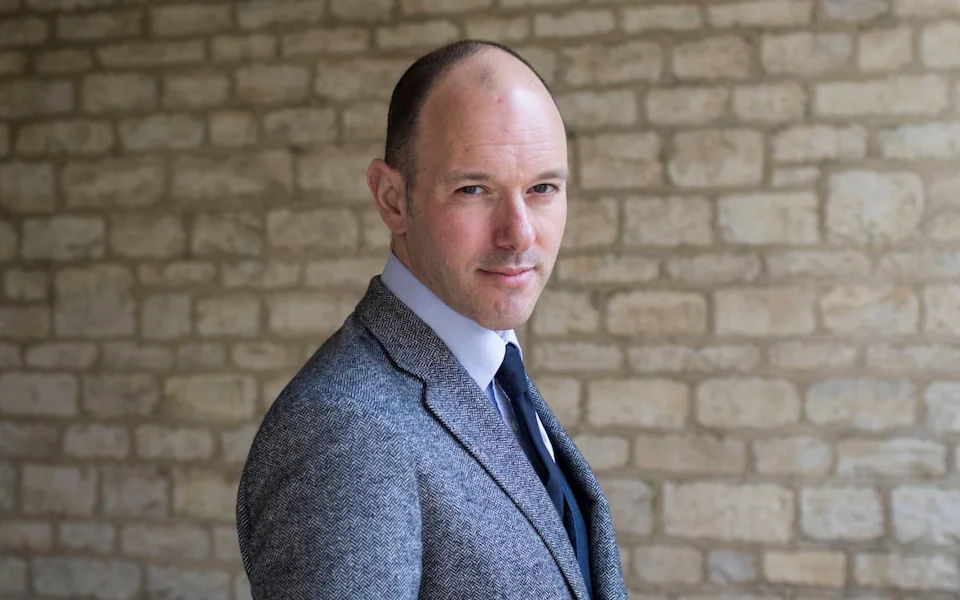
Alex Preston
All three have confessed to some degree of AI use and, to me, none of the confessions are good enough. Ballard blamed a human editor she had hired to revise her novel, though you might expect a novelist to check her own final draft. Preston blamed himself, claiming he had been struggling to meet the NYT’s demand – a modest 1,000 words – and, in desperation, had resorted to help from AI, which plagiarised a piece in the Guardian. Again, Preston seems not to have checked.
Goodwin has been more defensive. Confronted by critics who claimed that his new book, Suicide of a Nation, was full of ersatz quotations, dubious claims and incorrect facts, he retorted that the detractors were partly wrong and partly missing the point. After all, his core thesis – that migration is destroying Britain – was untouched; some “errors and typos” were inevitable if you self-published to avoid the “woke” publishing industry; and his opponents were “Lefties and losers” anyway. Goodwin insists that he was working from notes and did not use AI to write one word, merely (as he wrote in the Spectator) “to interrogate data”.
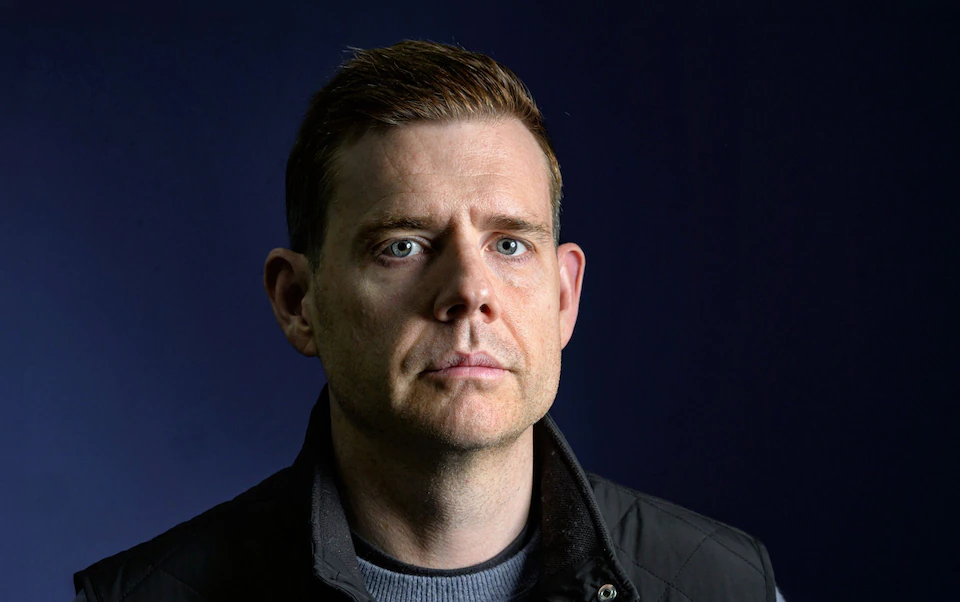
Matt Goodwin, academic-turned-politician, has admitted using AI ‘to interrogate data’ for his new book Suicide of a Nation Credit: Paul Cooper
But even if we believe him, and charge only Preston and Ballard with subcontracting their work to AI, something in the culture is clearly amiss. To use an AI tool may be wise if your job involves crunching data sets or summoning figures – though you would be advised to check the robot’s homework – and it is probably true that, in such empirical areas, its use will become society’s norm. To use such a tool if your job is to write, whether creatively or critically, misunderstands your brief. Writing is thinking. They are inseparable processes. Circumvent them and you may as well not have bothered. Readers are human beings, and they want human thoughts and feelings to be expressed.
This applies, to be clear, to non-fiction as well as fiction. Short of being a pure list of dates or statistics, any book of any genre requires a guiding intelligence. Writing and reading are parallel ways of touching another mind, another soul. That is what you, the reader, are doing now. People can use AI for computation or research, but if they use AI to write one per cent of their work, as Ballard and Preston certainly did – and, again, Matt Goodwin strongly denies it – they have abrogated one per cent of the essence that makes them a human being. Morality confers on us basic obligations; one of those is treating humans, ourselves and others, as creatures worthy of dignity. To filter yourself through a robot that cannot “know” anything, that just blends other people’s books into an oracular mulch – the plagiarism device on your phone – is to insult everyone involved.
You may think this sounds moralistic. Well, good. Publishing, like fast food or arms manufacturing, is an industry, and it will function amorally, by supply and demand unless someone takes the trouble to care and shape what it does. Hence we need people – editors, booksellers and, yes, writers – to preserve, for no reason greater than feeling and taste, the human element.
Without that preservation – and corners of Amazon already look this way – AI-created writing will extract and remix the real thing, then remix itself, in an ouroboros of slop. We will be drawing on data, past tense, to generate the future, and that way stagnation lies. Genres will calcify; mistakes will multiply. And the tide is rising. Talk to anyone behind the scenes, from agents to publishers, and you will hear that AI-written submissions are pouring onto their desks. The literary agency Curtis Brown complained last week that harried agents were, in turn, feeding submissions into ChatGPT to give them summaries, without the writer’s consent.
But that is the cost of convenience, the ruling lifestyle of our age. Why do anything difficult, complex or slow when you can get a machine to do it on your behalf? If this question seems genuine to you, and you are a writer, please stop. Do literally anything else. Because good writing is extremely difficult. Ask any novelist or critic worth their salt. It involves introspection and false starts and revisions, and interventions from editors, at least if you want to do it well; and the final product will comprise, however half-remembered and half-buried, every single one of those things, alchemically changed into something new – something, you hope, now worth the attention of someone else.
Preston, at least, seems repentant, though it is a mystery to me why anyone would cheat on a book review. Such pieces cannot be written en sufficient masse to earn you a living, no matter how much AI you use, and I say that as one of the few people left commissioning them. Ballard, for her part, has gone prudently silent. Goodwin has kept raging online; you can form your own judgment of him.
In the meantime, these writers’ varying fates, as with those who come next – and there will be more – should stand as a warning to the literary world. If writing is just a product to you, just the sum total of stuff you add together to form other stuff, then it might as well be done by AI, for what difference does it make? Writing becomes mere information, data, flat and lifeless, smoothly and efficiently recombined. But if it is more than that, as I hope for most people remains the case, keep it out of your books. Have some self-respect.”
Maris Kreizman digs into which is best for Reader and Writer on Literary Hub dated 20 March 2026.
Maris Kreizman hosted the literary podcast, The Maris Review, for four years. Her essays and criticism have appeared in the New York Times, New York Magazine, The Atlantic, Vanity Fair, Esquire, The New Republic, and more. Her essay collection, I Want to Burn This Place Down, is forthcoming from Ecco/HarperCollins.
Maris Kreizman
Maris says, “If you conducted a survey, I am fairly certain you’d find that the majority of readers prefer paperbacks to hardcover books. I have no stats to back this up, but I know what I’ve heard anecdotally for years. Paperbacks are lighter and smaller and more lithe, easier to put in a pocket or a backpack and carry around. They’re also significantly cheaper. Now that the kind of mass market paperback you could find in any local grocery or drugstore have officially been retired, you’d think that the mighty trade paperback would rule the world (of books, at least).
But it’s not that simple. When my publisher originally planned for my debut essay collection to be a trade paperback original, I begged and begged them to change their minds. I had written a humorous collection, which is the genre of book that is ground zero for the TPO format, but I also wanted the essays to be seen as literary. But I know from having covered books for decades that a hardcover release signals, at least to me, that the publisher is more invested in the title.
I knew that having a hardcover release would mean more reviewers would take my book more seriously. I wasn’t planning on being a megabestseller, but I did want to make sure I got as much review coverage as possible. And, of course, the price of hardcovers is higher, which means there’s more profit, especially because the royalty split for authors is 10-15 percent for hardcover and only 7.5-10 percent for paperback.
Recently Barnes & Noble has tried to convince more publishers to publish paperback originals, particularly for YA and middle grade books. But choosing a format to please one vendor, no matter the size of that vendor, is limiting, especially when smaller indie bookstores run on such tight margins in the first place.
This is not to say that all trade paperbacks are unserious or undeserving of coverage. Paperback imprints like Vintage and Picador, as well as a great number of indie press imprints, are putting out new and impressive originals regularly. In fact in the 1980’s some of the greatest works in literature were put out as TPOs. This, of course, was before Amazon devalued the price of hardcovers so that readers expected to get brand new hardcovers at trade paper prices. I would love to read a good piece about what has happened to the viability of trade paperbacks between then and now.
I love when I see a trade paperback reprint find another life in its new format. Maybe the publisher changes the jacket design to emphasize themes that resonated with readers, or maybe there are new review blurbs that make the book design pop. At best, the trade paper reprint gives both the author and publisher a second chance at success.
My essay collection was published last July, so this coming July will see the paperback edition. I know just how lucky I am to get to be published in both formats: often, if a book isn’t a big seller in hardcover, the publisher won’t bother with a paperback at all. I hope that readers who don’t buy new hardcovers (who I don’t blame one bit) might find their way to it now. I hope the slimmer, cheaper version of my book will take a whole different journey in its new format even if we’re sticking with the old cover design, which was already totally perfect. But I also worry.
For about a year in the pre-Covid times, I reviewed five or six new-in-paperback books a month for Vulture/New York Magazine. Again, I don’t have any stats, but I’m fairly certain that approximately four or five people read those columns in total, and they were all publicists. I didn’t realize how good I had it then.
The idea of books slipping through the cracks and remaining undiscovered keeps me up at night. Currently there is not nearly enough coverage even for new hardcovers, let alone trade paper reprints. I currently don’t cover reprints because I already feel weirdly responsible for covering as many new books as I possibly can (alas, I am only one person so I am constantly feeling inadequate). I am constantly trying to stay up to date with new releases and publishers keep on putting out more. This would be a very good problem if there were more people covering books overall.
And yet, my favorite table at a bookstore will always be the new paperback table. It’s the ultimate place of discovery. In an ideal world, the trade paperback is the format for longevity, the kind of book that is perennially in stock and available at your favorite local indie so that new readers can find it again and again.”
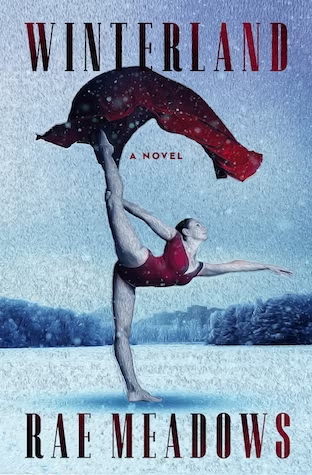
There is an interview in Writer’s Digest of author Rae Meadows about how her love of gymnastics shaped one of her novels.
Rae Meadows is the author of four previous novels, including I Will Send Rain. She is the recipient of multiple awards, including the Goldenberg Prize for Fiction, the Hackney Literary Award for the novel, and the Utah Book Award. Her work has appeared in many literary journals, as well as Under Purple Skies: The Minneapolis Anthology, Contexts, and online.
She grew up admiring the Soviet gymnasts of the 1970s, and in her 40s decided to go back to the thing she loved as a child. She now trains regularly in adult gymnastics. She lives with her family in Brooklyn.
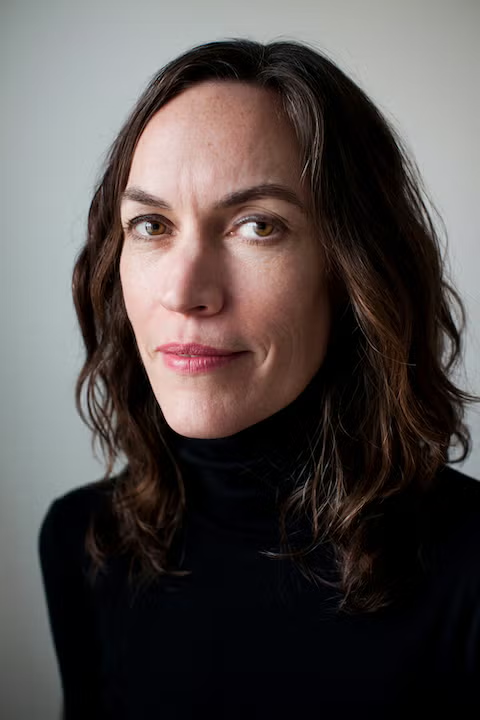
Rae Meadows
Elevator pitch for the book: In 1970, in an Arctic town on the far edge of the Soviet Union, a young mother disappears leaving a mystery that haunts her husband and daughter, Anya, a gymnast in the grueling state system. From the wild tundra of Norilsk to the golden age of Soviet gymnastics to gritty late-90s Brooklyn, Winterland is the story of a woman—and an era—shaped by glory and loss.
What prompted you to write this book?
If I could point to one thing that set the novel in motion for me, it was reading about Elena Mukhina, the Soviet gymnast who won all-around gold at the 1978 World Championships. She broke her neck two years later, just before the Olympics, performing a skill on the floor she was not prepared for, which left her a quadriplegic.
Her injury was then covered up by the Soviets. There is a character in the book based on Mukhina, and she plays a pivotal role in Anya’s life.
How long did it take to go from idea to publication? And did the idea change during the process?
It took about four years from idea to publication, with COVID mucking up the process. When I first began the novel, there was going to be a peripheral character who was a former gymnast. But I loved researching so much—my life orbits around gymnastics as a mom, a fan, and a passionate adult gymnast—gymnastics soon took over.
I could spend hours watching videos of Soviet gymnasts and call it research. I wrote much of the book in the parent area of the gym where my daughter trains.
Were there any surprises or learning moments in the publishing process for this title?
It’s hard for me to believe this is my fifth novel. I feel so fortunate. Each publishing experience has been different, but this one has been by far the best.
I had the absolute lottery win of having Amy Einhorn as an editor, and I felt like she “got” this book from the beginning. I am an understated writer to a fault, and she pushed me to be less subtle, which I think improved the book immensely. I was able to trust the editing process more than I ever had before.
Were there any surprises in the writing process for this book?
For one, I never thought I would use my high school Russian! I am a big believer in serendipity in the process. Winterland was initially going to be set entirely in Brooklyn, but I read an article about Norilsk, where the novel is set, and it just took root in my imagination.
I don’t outline or do much planning when I write. I generally know the beginning and the end, which makes for many surprises along the way.
What do you hope readers will get out of your book?
I hope Winterland feels transportive, a book readers can immerse themselves in. It’s set in the not-too-distant past, but the Soviet Union is a vanished place, despite some eerie similarities of late. Much of the novel takes place in a city carved out of the Arctic by gulag labor, one that is still closed to anyone not granted permission to enter, so to me it has an otherworldly quality.
And, of course, I want readers to feel for the characters, especially Anya, to follow her from age eight into adulthood. I have always been drawn to the idea of extraordinary stories behind ordinary lives. She could be someone you see on the subway and she has this remarkable past.
If you could share one piece of advice with other writers, what would it be?
My very first writing teacher used to call excess setting up of a scene “furniture moving.” Streamline, take out the furniture moving, trust your reader to get from A to B without describing every last detail in between.
Yesterday the Telegraph had an article to this effect written by Hannah Boland, the Retail Editor.
Hannah said, “Across Britain, fewer and fewer people are reading books. The data are plain as day.
The number of children who read outside of school every day has halved over the past two decades, while the number of children who say they enjoy reading in their spare time is down by 36pc.
Among adults, reading numbers are also in freefall. In a YouGov survey last year, two in five people said they had not read or listened to a book in the past year – compared with around a quarter of adults in 2001.
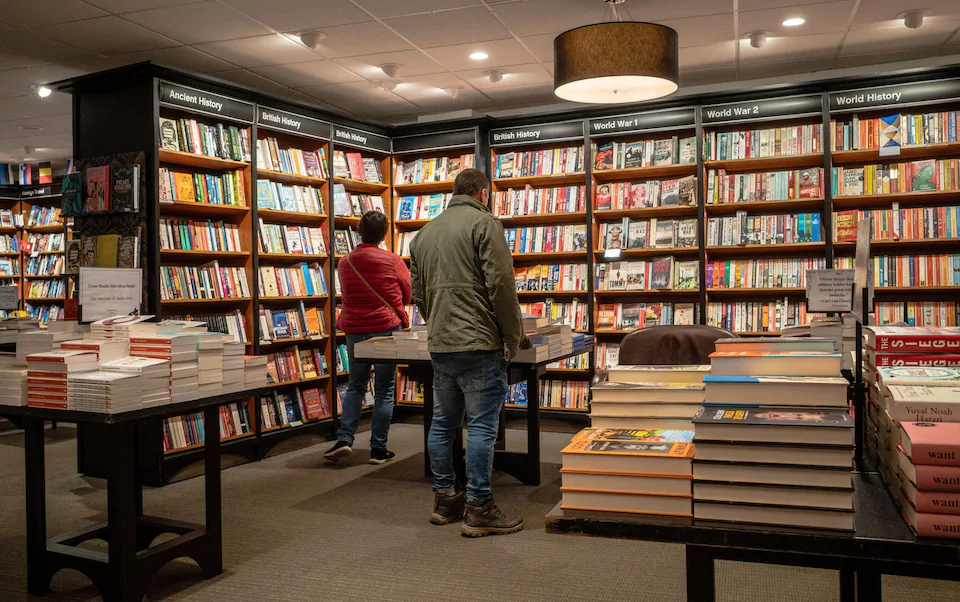
For Waterstones, figures such as these would be expected to raise alarm bells. With the high street in crisis, you would think the decline of reading would put businesses such as Waterstones next in line to face the chop.
Yet the mood is anything but sombre at Britain’s biggest bookseller. In fact, Waterstones’ owners are so confident in the business that they are gearing up for a multibillion-pound stock market listing, with a float expected as soon as this summer.
This month, it emerged that Elliott Advisors, the company’s owner, had lined up advisers at Rothschild to work on the process.
The private equity group is preparing to list both Waterstones and its US cousin Barnes & Noble together as one business.
In a sign of just how well Waterstones appears to be doing, Elliott is understood to be leaning towards the London Stock Exchange for a debut of the combined company.
James Daunt, the bookseller’s lauded chief executive who also runs Barnes & Noble, is himself a Briton.
Daunt, who runs both booksellers, described 2025 as a “fantastic year for us”, with both the US and UK businesses expanding into new areas.
Barnes & Noble opened 67 new stores while Waterstone is adding around 10 new shops a year, even though expansion is harder given it is so well-established.
“Stories of declines in reading evidently do not correlate to book buying,” he says. “Publishers and independent booksellers, as well as ourselves, are all doing well in both the US and the UK.”
The figures back him up. The number of independent booksellers across the UK rose slightly last year, even as the high street was struck by a series of retail collapses and store closures.
Between them, Barnes & Noble and Waterstones made a profit of $400m (£300m) last year, with sales standing at $3bn.
That is despite Barnes & Noble facing the same problem with declining reading numbers as Waterstones. A study by the University of Florida in August found that the number of Americans reading for pleasure had plunged by 40pc over the past 20 years.
Official accounts show that Waterstones’ sales rose to £565.6m for the 12 months to May 3, compared with £528.4m a year earlier, according to documents published on Companies House this week. It made pre-tax profits of £40m for the year.
Barnes & Noble opened 67 new stores while Waterstone is adding around 10 new shops a year, even though expansion is harder given it is so well-established.
Waterstones recently said it had been boosted by growing demand for “romantasy” novels – known colloquially as fairy porn.
These fantastical tales of heroines being swept off their feet by knights and wizards have gained huge numbers of fans among British women.
Sarah J Maas, author of romantasy novel A Court of Thorns and Roses, has sold more than 75 million copies of her books globally. Publisher Bloomsbury said demand for Maas’s books helped it to the highest first-half sales and earnings in its history last year.
Elliott is understood to be planning to remain as the biggest shareholder in the combined bookselling business for some time following the market debut, which may give new investors more confidence in its future.
One banking source suggested now was as good a time as any for Elliott to kick off the process of listing Waterstones on the stock market and realising some return on its investment.
“Everything is a bit s–t,” they said. “But that’s not going to change anytime soon and there have been so few returns back on private equity that if they can, they probably should.”
For Daunt, his focus continues to be on the day-to-day. Over the past week, he has been travelling down the west coast of the US to visit Barnes & Noble shops. Despite falling reader numbers across both the US and UK, Daunt says stores are thriving.
Harry Bingham, the Founder and CEO of Jericho Writers, makes a good point about the inertia we sometimes feel as writers.
He says, “Just Jump!”
Harry says, “
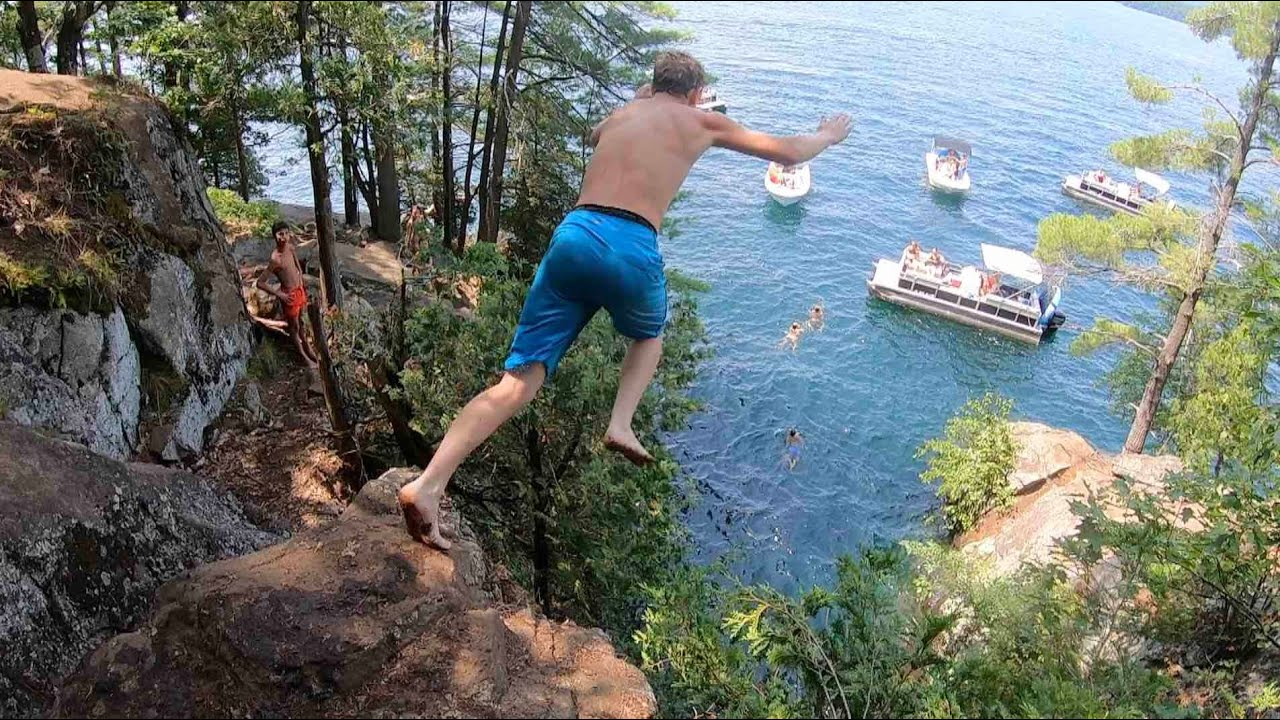
Ray Bradbury, the author of Farenheit 451 and much else, was a fan of the future. A fan of boldness and technological adventure. In an interview with the New York Times, he said, “If we listened to our intellect, we’d never have a love affair. We’d never have a friendship. We’d never go into business because we’d be cynical: ‘It’s gonna go wrong.’ Or ‘She’s going to hurt me.’ Or ‘I had a couple of bad love affairs so therefore …’ Well, that’s nonsense. You’re going to miss life. You’ve got to jump off the cliff all the time and build your wings on the way down.” That cliff-jumper is you. It’s me. It’s all of us. It’s certainly true for any first-time novelist. My first book was a giant 180,000 words long. (And yes, it went to print at that length. And no, it’s not a length that publishers are especially looking for. But if a book is good enough, the length is kinda immaterial.) I was naïve. I literally had no idea that writing a book and getting it published might be hard. I just assumed I could do it, and would do it. My track record (Oxford University, fancy American bank) was one of achievement. I knew I liked reading. I’d always assumed I’d end up being an author. So: write a book – how hard could it be? I knew how to write a sentence, so just do that over and over, and I’d have a book. Everyone receiving this email is less naïve. The tone of voice needed for a fast commercial adventure-caper was not the same tone as that had produced success in Oxford philosophy essays. Once I’d written 180,000 words, I looked back at the start and realised it was … ahem, in need of vigorous editing. The kind of editing that involved selecting 60,000 words and hitting Delete. So I deleted the rubbish and rewrote it. Wrote it better. But: That wasn’t a failure. It was the second most important step on the road to success. The most important was writing the first word, the first sentence, the first paragraph, the first chapter. The most important step is always the same: it’s jumping off the cliff in the first place. Deleting 60,000 words was the next crucial step: acknowledging that what I’d done wasn’t good enough; that more work could fix it; that I needed to design and use some better wings. But you don’t get to the better-wing-design stage until you’ve got to the plummeting-downwards-out-of-control stage. You need them both. And honestly: the challenges probably get a little bit less as you write more books, get them published, get paid, learn the industry, build a readership. But each book is its own cliff – its own well of uncertainty. As you know, I’m a huge believer in nailing an elevator pitch before you start writing. I don’t care about pretty formulations – I don’t mind whether you have the kind of phrase that would look good on a book jacket or movie poster. But a list of ingredients that would spark interest in a potential book-buyer? That’s essential. But oh sweet lord, there is a huge gap between knowing that you have, in theory, a commercially viable novel and actually making it so. I have sometimes written books that flowed, start to finish, with no huge mid-point challenges, but those have been the exception. Mostly, there’s been a hole – a gap – a problem. I’m not a huge fan of pre-planning novels in vast detail. (But do what you like: it’s whatever works for you.) The only way to find that hole is to leap off the cliff. It’s the flying through the air that tells you what wings you need. So jump. Be uncertain. Jump anyway. Take the biggest boldest leap you can, knowing that you don’t have the answers. Just jump. Jump knowing that your wings aren’t ready. They get born by jumping. Wings that surprise you and delight you and complete you. So jump. Good luck. And happy Christmas.
In last Saturday’s Telegraph there was an article by Tom McArdle with the title “Waterstones chief: AI could produce the next War and Peace”.
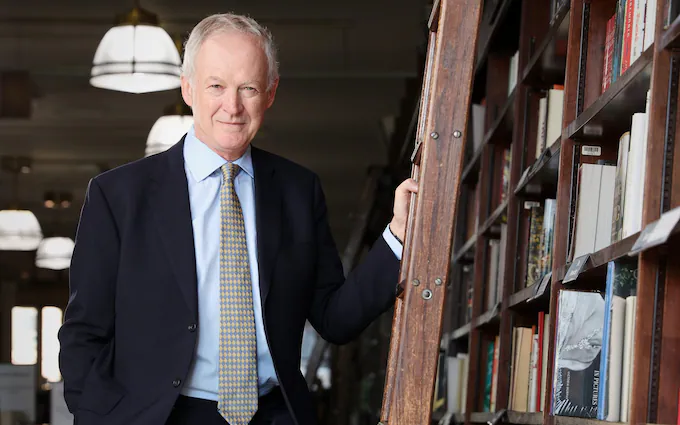
James Daunt, CEO, Waterstones and Barnes & Nobel
THE chief executive of Waterstones has said he is open to the company selling books created by Artificial Intelligence, as long as they are clearly labelled.
James Daunt said it would be “up to the reader” whether to purchase them if they end up on his stores’ bookshelves.
There are major concerns from authors about the impact AI-generated content will have on the book industry, after a recent study found most writers feared their jobs were at risk from the technology.
But Mr Daunt, who has been the CEO of Waterstones since 2011, told BBC’s Big Boss podcast that AI could produce “the next War and Peace”.
“There’s a huge proliferation of AI-generated content and most of it is not books that we should be selling,” he said. “Hopefully, publishers avoid it; we as booksellers would certainly, naturally and instinctively, disdain it.”
A University of Cambridge study last month found widespread concerns from novelists about their jobs being replaced by the technology and fears that work written by humans could become “an expensive luxury”.
In response, Mr Daunt said: “At the more literary end I don’t see that being the case. There is a clear identification of readers with authors, and booksellers play an important role in joining authors and readers.
“That does require a real person.
“As a bookseller, we sell what publishers publish, but I can say that, instinctively, that is something we would recoil [from]. It’s really important that authors earn a living.”
Asked whether the high-street bookshop would sell AI books, he said: “We would never intentionally sell an AI-generated book that was disguising itself as being other than that.”
When pressed on whether he would consider it if they were clearly labelled, he responded: “Yeah, if it was clear what it was, then I think it’s up to the reader.
“Do I think that our booksellers are likely to put those kinds of books front and centre? I would be surprised.”
He warned that given the exorbitant sums of money being spent by tech companies on AI, it was hard to know its limits.
“Who’s to know,” he said. “They are spending trillions and trillions on AI and maybe it’s going to produce the next War and Peace. If people want to read that book – AI-generated or not – we will be selling it. As long as it doesn’t pretend to be something that it isn’t.”
There is an article in today’s Telegraph written by Tom Mc Ardle which reports on a study done by Dr Clementine Collett at Cambridge University on AI’s effects on literary trends.
Dr Clementine Collett is a DPhil student on the ‘Information, Communication and the Social Sciences’ course at the Oxford Internet Institute. Clementine’s doctoral research explores gender bias in artificial intelligence (AI) recruitment technology.
Clementine has worked as lead author on reports such as IA and Gender: Four Proposals for Future Research (2019) with the Leverhulme Centre for the Future of Intelligence at the University of Cambridge and The Effects of AI on the Working Lives 0f Women (2022) with the IDB, OECD and UNESCO.
Dr Clementine Collett
Novels written without artificial intelligence will become an “expensive luxury”, according the report.
Dr Clementine Collett has claimed that the creative market could become “tiered”, with only those who could afford human-written work being able to read it.
“[There] is a real concern from literary creatives that we will have a two-tier market, more so than we have already,” she told BBC Radio 4’s Today programme.
“Where human-written work will be more expensive – a luxury item.Those who can afford it will read human-written novels and AI generated content will be cheap or free and that will potentially have big societal implications as well.”
Dr Collett, who conducted the study at the University of Cambridge’s Minderoo Centre for Technology and Democracy (MCTD), interviewed to nearly 400 literary creatives across the UK about the threat of generative AI.
“There is widespread concern from novelists that generative AI trained on vast amounts of fiction will undermine the value of writing and compete with human novelists,” she said.
Dr Collett called on the Government to weigh up the economic growth it has so far prioritised by developing AI, against the potential impact on the creative industries, including readers and the novel itself.
The study found that almost two thirds (59 per cent) of novelists reported that their work had already been used to train large language models, which power AI tools, without permission or payment.
Such practices have already impacted the livelihoods of those surveyed, with more than a third (39 per cent) reporting their income being negatively affected by AI.
The report found genre fiction, especially romance, thrillers and crime, is more at risk from displacement than more highbrow literary fiction. Dr Collett said this was because of their more “formulaic” make up.
“We don’t know what generative AI is going to be able to do in the future in terms of producing more original content,” she added.
“It’s really important because novels are such a bedrock of our thriving British creative industry and they’re the core part of our humanity.” She called on Government intervention to help protect the industry.
Prof Gina Neff, executive director of the MCTD, said: “Our creative industries are not expendable collateral damage in the race to develop AI. They are national treasures worth defending.”
A spokesman for the Department for Science, Innovation and Technology said: “We’ve always been clear on the need to work with both the creative industries and the AI sector to drive AI innovation and ensure robust protections for creators.”
The subtitle of this book is ‘& Behind the Scenes of Shadow Cell’. The author is ‘Harry Greene’.
After reading an article in the Atlantic about two CIA agents who fell in love on an assignment involving the creation of a shadow cell inside a global competitor of USA, I searched on Amazon for their book.
There appeared to be several, but I couldn’t find one with Shadow Cell in the main title. So I picked this one out as a likely candidate.
This book at 135 pages. The interesting information in it could have been divulged in ten pages. It is repetitious on several subjects: tight security at CIA; the two agents felt under great pressure at CIA for their relationship; the agents were clever, top performers. There were almost no examples backing up these assertions. The author is very careful to speak kindly of the CIA and the agents, and not to mention even a trivial fact which might be classified. He probably wants to be clear of any litigation, should his real name be known.
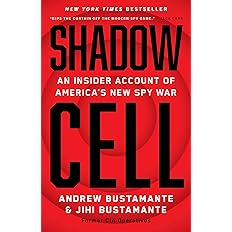
How wrong my choice was! This one is most likely a knock off of the real book (pictured below). A knock-off written by a Joe Bloggs under the pen name of a Harry Green. There is a Harry Green listed on Amazon who has written 16 fiction and non-fiction books on various subjects, none of which include the CIA. This book has an ISBN number (which no longer comes up on Amazon searches). In fact, this book no longer exists according to Amazon. This book doesn’t mention its publisher or its printer. It says only that the book was printed in New Haven, Connecticut on 10 September 2025. There is no author biography or statement of his/her relationship to the agents or the CIA. The narrator starts right in as if he had permission to tell the story.
The real book: a New York Times Bestseller!
Interestingly, I don’t believe the real book was listed on amazon.co.uk when I bought the knock-off. In fact, it still doesn’t seem to be listed. I just bought a real copy on amazon.com. It was published on 9 September 2025.
So what’s all the hubbub about? Well, here’s the publicity from the real thing:
“INSTANT NEW YORK TIMES BESTSELLER | A thrilling firsthand account by husband-and-wife CIA operatives who, against all odds, triumphed in a deadly cat-and-mouse game against a mole within the agency—an unprecedented insider account of 21st-century spycraft in the tradition of Argo and Black Ops.
Andrew and Jihi Bustamante were a “tandem couple”: married spies who’d dedicated their lives to the CIA. They met as trainees at Langley, and got married while hunting terrorists across the globe. Then, suddenly, they were assigned to a mission so sensitive and explosive that the CIA still has never acknowledged it. The CIA’s source network in a country code-named “Falcon”—one of America’s most formidable rivals—had been compromised by a mole, and the agency needed a new way to collect intelligence there. Young newlyweds, the Bustamantes were considered safe choices for this daunting task precisely because they had no experience in Falcon. They were also loyal, forgettable, and completely disposable—operatives who could help to strengthen the CIA’s position in Falcon while simultaneously serving as bait for the mole.
But although their superiors at the CIA didn’t realize it, the Bustamantes also brought another advantage to the table: a granular understanding of how terrorist cells operate, and how the agency could exploit those same tactics to keep America safe. Assembling a rag-tag team of fellow operatives and recruiting new sources from Falcon, the Bustamantes pioneered a new way of spying by building a cell of their own—right at the heart of the CIA.
The propulsive, untold tale of one of history’s greatest intelligence crises and the unlikely band of agents who were sent in to clean up the mess, Shadow Cell allows us to peer behind the curtain to see how today’s spy wars are being fought—and won.”
There is an article in the Atlantic magazine on 19 September about how the publishing industry views AI. It is written by Boris Kachka, Senior Editor of the Atlantic. He titles the article ‘Publishing’s New Microgenre’
Boris Kachka
“Book publishing has, let’s say, a complicated relationship with artificial intelligence. Earlier this month, Anthropic settled a lawsuit brought by authors and publishers, agreeing to pay $1.5 billion after training its chatbot, Claude, on pirated text; hundreds of such copyright lawsuits against data-scraping tech companies are still making their way through the courts. Many in the culture industries see AI as not just a thief but an existential competitor, ready to replace human writers at every turn. Yet publishers are also fascinated by the technology (and not only because they use it for marketing and other tasks). The major imprints have been churning out a robust collection of books (more than 20 this year, by my count) that explain, extol, deride, fictionalize, and occasionally incorporate AI.
Among these recent releases, one overarching theme is a debate occurring between so-called accelerationists and doomers—those who think superintelligence will hugely benefit humanity and those who suspect it will kill us all. Adam Becker, a journalist and former astrophysicist, disagrees with both groups. Becker, the author of the recent anti-utopian critique More Everything Forever, wrote about his problems with a new dystopian manifesto, If Anyone Builds It, Everyone Dies, by Eliezer Yudkowsky and Nate Soares.
Becker’s main objection to both sides is that they overhype the long-term, world-altering effects of superintelligence while downplaying the “much more immediate and well-founded concerns about the dangers of thoughtlessly deployed technology,” he writes. The kinds of ongoing changes that he would prefer to focus on are well accounted for in 2025’s AI book haul. Readers can find out more about how AI’s processes resemble the workings of our brains (or don’t); how the technology is changing medicine, warfare, education, business, and politics; how it has already profoundly altered society. But to me, the most interesting of the crop (or maybe just the most fun) are the works that explore our individual relationships with AI, through fiction or memoir.
Novels such as Amy Shearn’s Animal Instinct and Jayson Greene’s UnWorld imagine chatbots standing in for boyfriends or dead loved ones; politician-author Stacey Abrams invents a rogue medical-AI company in her latest legal thriller, Coded Justice. Hamid Ismailov’s wildly experimental novel We Computers, translated from Uzbek and longlisted for a 2025 National Book Award, creates an alternate history in which a 1980s computer intelligently generates a new kind of mind-expanding, transnational literature.
Occupying a category all its own is Searches, a fragmented memoir in which Vauhini Vara works through her complex feelings about technology. Vara interweaves the story of the rise of the internet with the narrative of her life and work as a tech reporter. She also includes strange interludes: prose-poetic lists of her Google searches; a collection of her Amazon-purchase reviews; and, most strikingly, a series of long interactions with ChatGPT-3 as she works to revise an essay about a sister who died years ago. As Matteo Wong noted in his Atlantic article about the book, the large language model produced what Vara considered to be the essay’s best lines while also inserting plenty of lies. She wound up employing the bot not to think for her, but to prod her into a different kind of thinking; it forced her, she writes, “to assert my own consciousness by writing against the falsehoods.” I enjoyed the book in part because it was less about what technology is doing to us than what we are doing in response.”