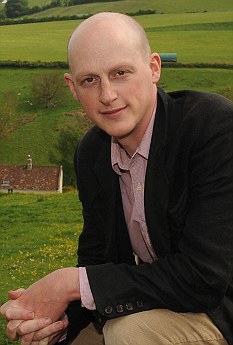
Interview: John Grisham

In last Saturday’s Daily Telegraph, there was an interview of John Grisham which I thought was interesting, because of some of the points he made.

According to Wikipedia, John Ray Grisham, Jr., born in 1955 is an American lawyer, politician, and author, best known for his popular legal thrillers. His books have been translated into forty-two different languages.  He graduated from Mississippi State University before attending the University of Mississippi Law School in 1981, and practiced criminal law for about a decade. He also served in the House of Representatives in Mississippi from January 1984 to September 1990.  He began writing his first novel, A Time to Kill, in 1984, and it was published in June 1989.  As of 2012, his books had sold over 275 million copies worldwide.   A Galaxy British Book Awards winner, Grisham is one of only three authors to sell 2 million copies on a first printing, the others being Tom Clancy  and J K Rowling.  Grisham’s first bestseller was The Firm. Released in 1991, it sold more than seven million copies.  The book was later adapted into a feature film of the same name, starring Tom Cruise.

images

The interview took place in his loft office in Charlottesville, Virginia.  His interviewers (Peter Foster among them) had tried, without success, to operate the front door intercom.  Coming ’round from the back, Grisham told them, “Sorry, guys, tha’ thing’s been broken for a while. Y’all come round this way”.  There are no agents, flunkies, or receptionist to retrieve his visitors.  His office, where he once hosted a fund-raiser for Hilary Clinton in 2008, is decorated with posters from the movies The Firm, The Pelican Brief, The Client.  There is also a black and white photo from 1993 showing fans queuing around the block to buy a copy of The Client at a Memphis book store.  But Peter Foster says that Grisham recognizes that the world of his heyday has faded, both in the bookstores and in films.  Grisham says that Amazon is drumming the book stores out of business, and the films are no longer being made.  There are five films in development, but “these days the financing always seems to fall through . . . Hollywood doesn’t want to make those sorts of movies any more.”

Foster said that Grisham seems to be genuinely grateful for his monumental success (he still earns $10 million a year), but he is like the big league athlete whose time has passed, but who is conscious that the world has moved on.

As of last week he had a Twitter account, but only because his publishers made him open one.  He says, “I can’t think of anything worse than stopping several times a day and sharing my thoughts and activities with a bunch of people, and I damn sure don’t want to know what you’re doing, so just leave me alone.  I have a Twitter account, but I don’t mess with it.”

He views the rise of Amazon and ebooks in much the same way, equating Jeff Bezos with the ‘Robber Barons’ of the 19th century who established monopolies in order to crush the competition.  “Amazon is driving prices down and they say, ‘We’re good guys, we’ll sell more and everybody makes more money.’  What I want to say is, ‘Hey, I had a very nice career going before Amazon.’

Grisham gets up every morning at 7 am and writes until lunch time.  Every January 2nd, he writes the outline of a new novel, and the process ends on July 1 when he delivers the manuscript for publication in October.

He is a Democrat with some strong political views.  He says that in American politics, “the money is just so rampant and corrosive.  We should call it corruption.  You’re actually buying votes, that’s what you’re doing.  But it’s all legal.  It’s a rotten system and it’s getting worse every year in this country.”

The plot of his next novel is inspired by the shootings of black teenagers by white policemen.  He says he wants to explore the flaws of a criminal justice system in America that imprisons its population at five times the rate of Britain and most other developed countries.  He says that the system, “treats black teenage boys and white teenage boys so differently for the same crimes.  Always drugs.  We have a million black guys in prison now for non-violent drug offenses.  One million.”  He said that the system also comes down too hard on non-violent white collar criminals like Martha Stewart.

I agree with most of what Grisham said, but the article mentions remarks he had made earlier in the week about “old white guys his age who once had too many drinks and looked at some child pornography” ending up in prison.  The case to which Grisham probably had reference didn’t involve ‘some child pornography’; it involved a lot of pictures of children being sexually abused.  In my view, ‘old white guys’ like that ought to go to prison!  Also, I have little sympathy for Martha Stewart who made false statements and obstructed the investigation into insider trading.

Website

I thought I might remind my readers that I have a website, as well as this blog.

My website is http://www.williampeace.net, and it has just recently been updated.  The website is arranged with a home page, which has a bit about me as the author, but I think that the About section of this blog is more informative.  My blog runs down the right hand column of the home page in real time.  (This blog also runs in real time on my Amazon author’s page and on Goodreads.)  Then, there is one page for each of my novels: currently five and a sixth is about to go to the printer.  Each book page has an image of the cover, a short introduction to the novel and a synopsis.  There are links to a sample chapter, the publisher’s press release, and reviews of the novel.  A link the list of awards which a novel has won are also available.

In some cases, there are links to where the book can be purchased, but my books are available from stock on Amazon and Barnes & Noble.  Kindle versions, in addition to hard copies, are available for all.  My first novel, Fishing in Foreign Seas, is the only one available with a hard cover.  The rest are in soft covers, as this is a good way of keeping the cost and price of a book down.

Comments on my website are welcome!

A Critic’s Article


There was an article by Rowan Pelling in The Daily Telegraph recently. Since the article had to do with literary criticism, I took an interest in it.

According to Wikipedia, Rowan Pelling is a British journalist, broadcaster, writer and stand-up comedienne who first achieved note as the editor (or “editrice”, to use her term) of monthly literary/erotic magazine, the Erotic Review. She was a judge of the 2004 Man Booker Prize. She is now a columnist for the Daily Telegraph, is working on her first novel, and is the mother of two sons.


Ms Pelling’s article (her photo is above) is as follows:

“It is easy to recall the moments in my life when I’ve been so overwhelmed by sudden shame and remorse that I’ve prayed for a meteorite to smite me on the spot. One occurred this summer, as I walked into the green room of The Curious Art Festival at Hampshire’s Pylewell Park. I greeted a friend who gesticulated to the table behind him, saying, “You must know Fay Weldon.” Yes, yes, I know – by daunting reputation – the celebrated writer and feminist icon. You could even say she’s welded on my brain, because I gave a complete stinker of a review to an erotic novel written under a pseudonym; only to be told, once I’d submitted it, that the author was almost certainly Weldon. By then, I’d dismissed the book at “fearful tosh” and opined that it read “like one of those saucy stories written by schoolgirls and passed under the desks at RE”. I considered asking my editor to soften my view as I am generally a big fan of Weldon’s oeuvre. . . . However, my first duty as a reviewer was undoubtedly to the reader, and I wasn’t sure they would be well advised to allocate hard-earned cash to a pseudo-Dennis Wheatley sex romp. So the review ran in its unflattering entirety pointing me inexorably to the day when I would stand quaking before Weldon, wondering whether it was best to apologise, or hope that merciful amnesia had drawn a veil over the episode. But long experience tells me that praise, however extravagant, will be absorbed, or taken as one’s due, while criticism, however trivial, will remain engraved on the artist’s heart. So I grovelled and blushed and the leonine Weldon was magnanimity personified.”

Ms Pelling goes on to mention several instances where authors and film-makers reacted with a mixture of hurt and venom to savage reviews by other critics.

She goes on to say: “Yes, it’s far easier to sit at your desk and take an entertainment apart than to actually write a novel and, yes, any fool with a blog can stumble home drunk and say they loved a film. The difference, however, is that you don’t feel that accountable when you tell your Facebook friends you gave a great big “Meh” to The Grand Budapest Hotel. When you put those judgments into print, however, you feel enormous responsibility; but not primarily to the work’s creators. In an over-stimulated, time-poor world it is ever more the critic’s job to steer his or her readers firmly towards what most deserves their split attention. . . . What’s certain is that not only do critics need rhino hide to function, so do writers who post painstaking works of creativity out in the harsh spotlight. I understand the desire to call reviewers to task, but an offended writer will appear more powerful if they float above the controversy with regal detachment.”

She concludes by saying: “There’s one thing all critics know: you can’t take it back.”

To Ms Pelling’s article, I can only add: “Amen!”

Allegory

My seventh novel is going to be an allegory.  It will be written in the first person and set mainly in the Middle East.  The themes will be philosophical, theological, psychological and social.  I have never written an allegory before (at least not knowingly), and I think it will be an interesting challenge.  But more importantly, I think an allegorical approach is the most effective way to communicate with the reader about the themes I have in mind.

In this instance, the indirectness of allegory is what appeals to me: themes are suggested to the reader without being specific, and the reader is at liberty to interpret the themes in her/his own way.  In my view, this approach adds richness to the presentation.

Wikipedia defines ‘allegory’ as: “a rhetorical device in which characters or events in a literary, visual, or musical art form represent or symbolize ideas and concepts. Allegory has been used widely throughout the histories of all forms of art; a major reason for this is its immense power to illustrate complex ideas and concepts in ways that are easily digestible and tangible to its viewers, readers, or listeners. An allegory conveys its hidden message through symbolic figures, actions, imagery, and/or events.”

A visual example is this painting, ‘Allegory of Music’, by Filippino Lippi; painted in 1475 to 1500:

300px-Filippino_Lippi_001

I have to confess that I ‘don’t get it’ when looking at this picture.  Perhaps that is because it makes use of Greek mythological symbols which were popular during the High Renaissance.  But I concede that the painting does evoke feelings of motion, as with music.

Last night I watched the Ingmar Bergman film The Seventh Seal, which was released in 1957 in black and white.  I remember being a fan of Ingmar Bergman when I was in university, but I don’t think I ever saw this particular film before.  The film is considered a major classic in world cinema, perhaps because of its scenes and allegorical content.  While I certainly enjoyed watching it, I have to admit that it would not be a money-maker if it were released today.  In the film, Bergman transports the viewer to Sweden in the early Middle Ages.  The principal character is a knight who has returned home from a crusade a the time the Black Death is sweeping through Sweden.  The knight feels that his life has been wasted and fears for his death.  He wants to perform ‘one meaningful deed’, and longs to hear the voice of God.

220px-Ingmar_Bergman-The_Seventh_Seal-01

In this scene from the film, the knight (on the right) offers Death his choice of chess pieces; Death chooses black.

The film is peopled with diverse characters: a woman who has been condemned to death for speaking with the devil; Death himself who play an extended game of chess with the knight; the knight’s wife who has waited for him all these years; there are religious zealots, criminals, actors, and immoral people.  For me, Bergman seems to be saying something like the following: God and the devil are invisible, and God may seem silent; death is inescapable; and ‘one meaningful deed’ may be enough.

Bergman is never specific in his points.  For me, this is the beauty of allegory.  The reader (viewer or listener) has to form his or her own conclusions.

In any event, this film gets one thinking.

Email to Amazon

I sent the following email to Jeff Bezos, Chief Executive of Amazon.com today.

Dear Jeff,

I have taken an interest in Amazon’s dispute with Hachette and various authors for two reasons.  I, myself, am a published author (five novels and two more in the pipeline).  I am also a senior management consultant.

First, let me say that as a buyer of books (and many other things, including mosquito-repellent bracelets), I find Amazon to be an excellent supplier: good prices, extraordinarily wide choices, very prompt delivery, and plenty of product information, including other customers’ reviews.

As an author, I am pleased to see my books presented in colour, thoroughly described and reviewed, and available from stock.  I am less pleased to see the price levels to which they are discounted for two reasons.  First, every dollar of discount Amazon offers to buyer means fifty cents out of my pocket.  It is in this sense that authors are not being used as ‘human shields’ by the publishers.  We aren’t hostages; we, too, are under attack!  And, second, I believe Amazon is ‘leaving money on the table’ with such large discounts.  In other words, prices are less elastic than Amazon apparently believes.  More on this later.

As I understand it, Amazon has two objectives in pursuing greater discounts from the publishers: one explicit and the other implied.  The explicit objective is to recoup the losses Amazon has recently suffered ($126 million net loss in the second quarter of this year). The implicit objective is to have nothing between the author and the reader.

I have no problem with the explicit objective – depending on how it is pursued.  The implicit objective is more complicated.  I can understand how Amazon would like to be the ‘transformational vehicle’ between the author’s output and the reader’s input.  The problem is that there is a huge collection of what Amazon probably regards as time-honoured baggage in that gap between the author and the reader.  Why doesn’t the author just sell his output to Amazon (for which s/he would be handsomely rewarded) and Amazon would produce (mostly) ebooks for readers (for which service it would be handsomely rewarded)?  A sensible objective, on the face of it.  But, there are powerful opposing forces which may be irrational, but will, nonetheless, be difficult for Amazon to overcome.

The first of these forces is that some readers (like me) love the sense of a physical book, and will not buy an ebook.  (Although, all of my novels are also available as ebooks.)  For me, the physical presence of a book while I’m reading it, and in knowing that it’s on my bookshelf, far outweigh the ‘convenience’ and lower cost of an ebook.  Will we – hard-copy addicts, who are currently in the majority – disappear over time?  Possibly.  But not for at least a generation.

Aside from physical printing, there are other tasks which lie in the gap between author and reader.  Amongst these tasks are author and book selection, editorial advice, editing, cover design, administration and a wide variety of sales, marketing and promotional services.  Some of these tasks can be carried out by the author at additional cost to the author, but many authors, particularly best-selling authors, would object to being ‘burdened’ with these tasks.  Is Amazon prepared to scale up or make acquisitions to ‘fill these gaps’ between author and reader?

Then, there is the whole contentions issue of literary/artistic/professional gatekeeping.  Currently, publishers and literary agents largely decide who and what gets published.  They may not always make the right choices, but the fact is that their choices are generally supported by professional critics and educated readers.  Is Amazon prepared to hire a host of these gurus, or would Amazon’s strategy be: ‘Let the Market decide!’  If Amazon would opt for the latter strategy, I suggest that the outcome would be catastrophic: a market saturated with low-quality, popular books: a situation which would not be tolerated by educators or educated readers.  It is wise to recall that literary gatekeeping grew up with the publishing industry out of demands by an educated market.

So, what would I, as a professional management consultant, advise Amazon to do?  I would advise Amazon to proceed very cautiously in its efforts to fill the gap between author and reader: a misstep could be punitive (from the market or from government).  I would recommend that Amazon raise its prices, across the board, by an average of 2.5% real for each of the next two years.  This 5% price increase will not (in my opinion) result in an equivalent reduction in sales.  Amazon is well known for its low prices and gradual, selective price increases will not affect that reputation.  Pessimistically, there could be a 2% decrease in sales from $80 billion to $78.5 billion.  $78.5 billion at 5% higher prices will yield almost $4 billion in additional annual profits.

This course of action would not only makes Amazon look very attractive to its shareholders; it would facilitate amicable agreements with publishers and authors; it would stop the criticism from the media and the marketplace; and would cause government regulators to lose interest.

Yours sincerely,

William Peace


Punctuation: the comma

There was an article by Harry Mount in The Daily Telegraph recently.  It was titled: “Commas and colons: without them we’re sunk.”

Harry Mount (born 1971) is an English author and journalist, since 2009 a frequent contributor to the Daily Mail.  He has written several non-fiction books; topics include his time working in a barrister’s office, British architecture, the Latin language, and the English character and landscape.


article-2203012-09AA8E5C000005DC-653_233x345

I don’t know Harry Mount, but he looks like a presentable, intelligent chap.  In any case, what he said about punctuation makes sense to me:

“There’s one aspect of grammar that’s wonderfully simple and easy to learn. . . . Putting aside a few really obscure punctuation marks, the 15  main elements are: the full stop; colon; semicolon, comma, apostrophe, quote marks; question mark, exclamation mark;  round brackets; square brackets; hyphen; dash; asterisk; ellipsis and slash.  Most of these are pretty easy.  Even people with dodgy grammar can use practically all of them pretty well. . . . It’s mainly the comma and the apostrophe that let people down.  The apostrophe gets wickedly abused and not just  by grocers.  The comma is underused, particularly in its agile capacity as a throat-clearer, a pause-provider and direction market in a sentence.  Just look at Churchill’s famous speech – and one of his longest sentences – without the merciful assistance of the comma (and the odd semicolon):

We shall fight on the beaches we shall fight on the landing grounds we shall fight in the fields and in the streets we shall fight in the hills we shall never surrender and even if which I do not for a moment believe this island or a large part of it were subjugated and starving then our empire beyond the seas armed and guarded by the British fleet would carry on the struggle until in God’s good time the New World with all its power and might steps forth to the rescue and the liberation of the old.

“Without the commas, Churchillian prose loses all its careful pacing – and you’re lost, too.

“Punctuation, more than anything else, turns the written word into the spoken word inside your head.  Know your punctuation, and you can magically signal to the reader of your writing when to speed up; when to slow down; when to make the prose flow; when to give it a stop-start, staccato rhythm; when to pause; when to trail off into ellipsis . . .

“Without precise punctuation, who could tell the difference in meaning between these two sentences? (a) “My favourite things in the world are Abba, tartar sauce, and fish and chips on the last fairway.” (b) My favourite things in the world are Abba, tartar sauce and fish, and chips on the last fairway.”  It’s the Oxford comma there that distinguishes between the keen gourmet and the keen golfer.

“At first hearing, an expression such as “the non-restrictive comma” will freeze all but the biggest brains.  But explain the difference between “Sailors, who are drunks, are dangerous” and “Sailors who are drunks are dangerous”, and most children will get it in a second.  Insert the non-restrictive commas and you’re being rude to all sailors; take them away and you’re being rude only to the restricted group of sailors who are drunk.”

More reviews: Sable Shadow and The Presence

Two people from Reader’s Favourite have submitted the following reviews:

Kathryn Bennett:        “Sable Shadow & The Presence by William Peace is the fictional autobiography of bright introvert Henry Lawson. He hears strange voices at a young age, voices that he does not recognize and believes one to be the Sable Shadow, who is a confidant of the devil, and the other is The Presence who may be a worker of God. For him life becomes a struggle in a chess game of sorts and these voices follow him
from childhood through life until he attempts to kill himself, and must then begin to rebuild himself, making a new identity and essentially a new person.

Some books touch you deeply and some make you think, and some manage to do both
within the pages of one book. For me Sable Shadow & The Presence by William
Peace did both. It made me think and it touched me. The thoughts that this book
manages to provoke about good and evil will certainly make you delve into some
interesting discussions with friends and loved ones. Each page for me was like
peeling back another layer of the onion to enjoy and read. I picked it up and
was not able to set it down until I was finished, and even then I felt like I
could read more. What would you do if you had the presence of good and the
presence of evil speaking to you for your entire life? While Henry has his
issues, I personally may not have come out as well as he did and I am not sure
I would be able to rebuild myself even with support after such a hard fall.
William Peace gets a thumbs up from this author on an inventive story line that
evokes thoughts and emotions – a recommended read.    5 stars”

Ray Simmons:       Sable Shadow & The Presence is a thoughtful and illuminating work of fiction by William Peace.  The main character is Henry, an observant man, a natural philosopher who goes through life looking for meaning and trying to figure out what lies behind appearances. He also goes through life listening to two opposing voices that
may represent good and evil. The voices are subtle and indeed, for a period
when he is younger, he’s not sure if they aren’t from inside himself, but over
time he becomes convinced that they are external. We follow Henry as he goes
through the major events of his life. During early childhood he confides in his
sister Jenny about the voices and it is she who names the sinister voice Sable
Shadow. In many ways Henry has a typical American life, if there is such a
thing. He takes us through childhood, the teenage years, first love, first
tragedy, the college years, and a stint in the Navy. We watch him fall in love
and navigate his way through the adult years.

William Peace has created an enduring and thought provoking work in Sable
Shadow & The Presence. The novel avoids the exaggerated melodrama found in
so many current novels. The writing is clean, crisp, and directly to the point.
The characters and situations reflect a modern American life and the musings of
Henry mirror questions all educated, thoughtful people have asked at some point
in their lives. I give it five stars. There should be more novels of this
nature out there.   5 stars”

Composition

I have noticed that it takes me longer to produce a page of output than it used to.  When I first started writing, I would write about one page per hour.  Now it takes me at least twice as long.  I’d like to think that’s because the quality of my writing has improved.  What I can say is that I take extra time to:

  • Capture the characters’ feelings
  • Avoid common-place language
  • Make the story interesting to the reader
  • Clarify the scene and the context
  • Be concise

I thought it would be interesting to compare an actual passage from my first novel, Fishing in Foreign Seas, with the same passage as I would write it today.  Here, for example is a discussion between Caterina (the heroine) and Jamie (the hero).  They have just come back from a sailing trip with her parents, her brother, Pino, and Pino’s girlfriend, Marina:

They were in her car, driving back from Marsala.

“Caterina, I don’t understand.  Why didn’t your mother object to all the touching and giggling that was going on between Pino and Marina . . . and that swimsuit she was wearing . . . whereas, she would have objected if we had behaved the same, and you had worn a similar suit?”

Caterina smiled: “It is not Mama’s problem.”

“What do you mean?”

“Mama wants me to be a virgin when I get married, and that includes ‘virginal behavior’ until the big day.  For boys it’s different.  He must not get a girl pregnant before he marries her.  I’m sure Papa has made that very clear to Peppino, and explained, in detail, how not to get a girl pregnant.”

“But Marina was behaving like a bit of a tart.”

“What is a ‘tart’?  ‘A whore’?

“No, just a very sexy girl.”

“That is her mother’s problem.  And when the cat’s away, the mice will play,” she said looking at him with a mischievous grin.  “I bet that Marina spends plenty of ‘after hours’ time at the winery.”

Jamie was puzzled: “Why at the winery?”

“Because Pino has a little apartment there.”

“How convenient! Can I get one there, too?”

“You do not need one. . .   He has an apartment there, because there is a need to keep someone on the premises after hours.”

“Why is that?”

“About two years ago some thieves broke into the storage area and stole over one thousand cases of wine.  Since then, we’ve put in an elaborate alarm system, we fixed up an apartment for Pino, and there are three rather fierce guard dogs which are let out at night.”
“I take it that the guard dogs won’t bite Marina when she comes visiting?”

“The dogs obey Pino, and I guess she calls to tell him she is coming.”

“Was it the Mafia who stole the wine?”

“I doubt it.  When Papa took over the winery from grandfather, the Mafia began asking for protection money.  Papa refused.  They threatened.  For several years, Papa had two carabinieri either parked at the winery or next to his car at home, depending on where he was.”

“Good God!  Why doesn’t he have them now?”

“About three years ago the local Mafia had a shoot out with the police.  One policeman and three Mafioso were killed – two more were captured.  One of those killed was the local Capo Mafia.  He was the one pushing the protection scheme.  Since then three men have been arrested and convicted for attempted extortion.  The public was also getting angry at what amounted to theft from honest people.  Omerta was breaking down, so the Mafia decided to stick to drugs, gambling and prostitution – at least around Marsala.”


And here is the way I would write the same passage today:

Jamie was pensive as she was driving back from Marsala.  “Caternia, did you notice all the touching and giggling that was going on between Pino and Marina?”  His eyes were wide with exaggeration.  “And the bathing suit she was wearing?”

She gave a slight shrug.  “Yes.”

“Your mother doesn’t object to any of that?”
“She may not approve, but it’s not her problem.”  She glanced at Jamie, who wore a perplexed frown.  “Jamie,” she continued, “you have to remember that in Sicily young women are treated very differently from young men.  Mothers expect that their daughters will be virgins when they are married.  Fathers expect their sons to experiment, but not to the point of getting a girl pregnant.”  She tapped the steering wheel for emphasis.  “Those are the rules!”

“So Marina’s mother doesn’t know what’s going on?”

“Probably not.  Marina’s a smart girl – maybe a bit oversexed, but she knows what she can get away with.”  Caterina gave Jamie a sly smile.  “And she gets away with plenty!”

“What do you mean by ’plenty’?”  He was intrigued.

“Well, she goes to the winery in the evening to meet Pino.”  Jamie was puzzled.  “Pino has an apartment at the winery,” she added

“And your father knows about that?”

“Yes.  There was a break-in at the winery two years ago.  Thieves made off with about a thousand cases of wine.  After that, Papa wanted the premises to be occupied twenty-four hour a day.  So the apartment, an alarm system and guard dogs were added.”

“And Marina can get past all the security?”  Caterina smiled and shrugged.  “Do you think it was the Mafia who stole the wine?”

She shook her head.  “Burglary isn’t really their thing.  They specialize in protection money, and when Papa took over the winery from my grandfather, they started demanding money to ‘keep things safe’.  Papa refused.  They threatened him.  He reported them to the carabinieri (the Italian civil police), and for a couple years there were two carabinieri parked either at the winery or at home.”

Jamie frowned.  “Why aren’t they there now?”

“About three years ago, there was a shoot-out in which three Mafiosi and a carabiniero were killed.  One of the dead Mafia is believed to be the one who ran the extortion racket.  Since then, Sicilians are less fearful, and key Mafiosi have ended up in prison.”  She smiled.  “Now, their business is mainly drugs, gambling and prostitution.”


This first passage is 462 words in length; the second has 405 words: about 15% shorter.  I will leave it for you to judge which version you like better.  My only comment would be that I believe practice can make one a more skillful writer.

Review: Sable Shadow and The Presence

The following review by ‘Kitty Book Lover’ was recently published on Amazon.com:

William Peace has done it again.  His latest book, Sable Shadow and The Presence, which has already won several awards,  combines a clever plot with thought provoking discussions on good and evil, the contradictions and complexities of life, and the meaning of relationships.  The book is written by the main character, Henry Lawson,  in autobiographical form.  It is difficult to sustain the first person voice and not have the reader tire of it, but Mr. Peace has managed to make the story interesting, readable, and anything but tiring.  We meet Henry’s parents, learn about  their individual personalities and the way their relationship develops over a long marriage and his very likeable, but different from him, sister, who is also his friend.  His grandfather and uncles seem to Henry to be more successful than his father and Henry admires them, while not yet understanding his father or his motivations. As he matures, he grows in his understanding of his mother and his father is able to help them through this crisis in their marriage.  We follow Henry through college, his success in business, his marriage to a woman he deeply loves. There are some wonderful vignettes describing the world of office politics and what some people do to get ahead.  Everything seems to be going just the way Henry has planned until a tragic fire in a plant in Mexico that he technically supervises results in the deaths of many people.  Sentenced to jail in Mexico, his career over, he begins to think about what is really important in life and when he is released, turns his life in a completely different direction.
Mr. Lawson explains in the first chapter what the title means.  Sable Shadow and the Presence are two voices that Henry begins to hear as a child.  Lest you think that Henry is just some closet schizophrenic, that is not the case.  These two represent “good” and “evil” and Henry hears them the way we all do when we are making a decision, whether it be a serious moral one, like deciding to have an extra-marital relationship or something more practical like choosing a career.  How many of us have felt/heard  those voices arguing inside of us, each presenting a different way of looking at the problem.,
As in previous books, Mr. Peace explores questions of religion.  In Efraim’s Eye and The Iranian Scorpion he investigated Islam and it’s tenets.  In  Sin and Contrition  different branches of Christianity were examined.  In this book he presents the thesis that existentialism is not necessarily in conflict with the beliefs of Christians.  Not everyone will agree with him., but he posits some compelling arguments to support his ideas.
As in all his previous books, the research is amazing.  Many famous authors employ researches.  Mr. Peace does all of his own and does a superb job with it.
One of the things I like best about Mr. Peace’s writing is that one is able to read on so many different levels.  His plots are well thought out and his characters developed nicely.  One is anxious to turn the page and find out what will happen next.  But when the story is over, one is left thinking about the ideas that have been raised.  What are good and evil?  What makes success and how do we measure it?  What makes something moral and something immoral?  It is easy to see why it has won awards.

And the following review is by Mamta Madhavan for Readers’ Favorite:

Sable Shadow & The Presence by William Peace is the fictional autobiography of Henry
Lawson who hears two voices from his childhood. These two voices represent good
and evil and, like any of us, Henry also hears them while making decisions. The
story takes us through Henry’s childhood to his college days, to his
relationships, to his marriage and his business. Henry suffers a series of
tragedies at the peak of his career which sees him attempting suicide. He
recovers from that dark phase with the help of his wife and a psychiatrist. It
is a story of triumph, tragedy, good, and evil.

The book has many interesting twists and turns in the plot. The author’s
fascination for existentialism is revealed through Henry Lawson’s interest in
the writings of Jean-Paul Sartre. That contributes a lot of wisdom in the
discussions that occur in the story. The characters are well developed and they
help in making the plot strong and powerful. There are some thought provoking
details on good and evil which give readers an opportunity to think more about
their individual beliefs and ideas. I found the representation of the good and
the bad voices very practical and relatable. Readers can connect to that very
easily.

The character of Henry Lawson has many shades which make him an interesting
person. The author has captured well the triumph, tragedy, good, evil, sorrows,
and happiness of human life that are palpable while reading the book.


Awards: Sable Shadow and The Presence

This novel was the winner in the General Fiction category of three regional contests this year: Los Angeles, Southwest and Northwest; it was runner up in the General Fiction category at the 2014 Great Southeast Book Festival.
These book festivals typically attract over 2000 entries.  Of the five festivals in which Sable Shadow and The Presence has been entered, it won first place in three and second place in two.