Review: Remains of the Day

This ‘modern classic’ was first published in 1989, and won the Booker Prize that year. While I had heard of the novel, I had never read it; I was further motivated to read it as a Booker Prize winner and by the author being a Japanese writer I didn’t know.

Kazou Ishiguro was born in Nagasaki, Japan in 1954 and moved to the UK at the age of five. He has written six novels, all of which have won prizes or received major recognition. He currently lives in London with his wife and daughter.

untitled

Kazou Ishiguro

The novel is told in the first person by Stevens, who was the butler in Darlington Hall, which was the residence of Lord Darlington in the 1930’s. Darlington Hall was a grand place, with many servants, Stevens having overall responsibility. Lord Darlington was a man of considerable wealth and influence, both socially and politically. He died after the war, and Darlington Hall was sold to an American, Mr Faraday, who has downsized both the staff and the use of the Hall.

Much of the book is Stevens’ recollections of events that took place when his lordship was in residence, and we learn that Stevens is preoccupied with the extent to which he was (like his father) a top butler. Stevens comes to define a top butler as a true professional who carries great dignity to his profession. The descriptions of relationships (and dialogue) among staff and with the lord of the manor are brilliant: they convey clearly the culture of the English aristocracy in the 20’s and 30’s.

Mr Faraday plans to be in the States for an extended period, and he suggests to Stevens that he take the motorcar on a sightseeing trip. Stevens accepts his offer and coincidently decides to call on a Miss Kenton who was the one who supervised all the housemaids at Darlington Hall. Miss Kenton left the Hall years ago, and has married. Now, Stevens wonders whether he can persuade her to return to the Hall, as there are hints that her marriage is in difficulty. The working relationship between Stevens and Kenton was very formal, but one cannot help but wonder if there is an unacknowledged attraction between them.   In the last chapter, they meet again, and the message of the novel is revealed: Stevens muses: “After all, what can we ever gain forever looking back and blaming ourselves if our lives have not turned out quite as we might have wished?”

The novel moves at a very leisurely pace, with very little action. Major events are recounted by Stevens factually and without emotion. The characters, the setting and the story-telling all completely support that retrospective, self-doubting theme. In spite of Stevens’ wordiness, his character shines through in a way that he is able to maintain the reader’s attention.

If one is looking for tale with plenty of action and excitement, The Remains of the Day would not be a good choice. But if one would like to curl up with a superbly-written story, immersed in history, and long-forgotten characters, a story that succeeds admirably in making its point, then Remains is for you.

As a sort of aside, I would add that the criteria for winning the Booker Prize may have shifted over the last twenty-five years. It’s hard to imagine that a novel with little overt physical or emotional action could win, given the level of current competition.

The Guilty Secretes of E-book Readers

There was an article in The Daily Telegraph last week which reported on the popularity of titles of e-books vs titles of physical books.

“A newly published list of Amazon.co.uk’s biggest selling e-books of the year features psychological thrillers, misery memoirs, Mills and Boon and a book by the Tory MP Nadine Dorries, whose first work was memorably described by a Telegraph reviewer as “the worst novel I’ve read in 10 years”.  Notably, 18 of the top 20 authors were women, including thriller writers Angela Marsons, Fiona Neill and Rachel Abbott.

“However a parallel list  of physical books compiled by Waterstones to cover the same period is significantly more highbrow, and features four times as many male authors.  They include Richard Flanagan, author of the Man-Booker Prize-winning The Narrows Road to the Deep North, and Anthony Doerr, with his All the Light We Cannot See.  There were also books by Colm Toibin, Ian McEwan and Victoria Hislop.  The print list is topped by Harper Lee’s Go Set a Watchman, which does not make the Amazon e-books list.

“There is some overlap.  Paula Hawkin’s runaway bestseller The Girl on the Train, and the latest risqué offering form E L James appear in the top three of both lists. But the disparity between the books we put on show and those we download suggests that e-book reads can be ‘guilty pleasures’.

“Benedict Page of The Bookseller said: ‘There are certain kinds of books that people like to own.  If they have a favourite heavyweight literary author who they have followed for many years, they are likely to want to possess the printed book because it’s beautiful and durable and represents a readerly commitment.'”

I think that Page’s analysis is probably correct in that we tend to regard e-books as disposable, and printed books something to be retained. The high proportion of female writers on the e-book list is interesting.  My theory would be that at least some of the female authors on the e-book list write primarily for women, and are more interested in achieving volume than literary recognition.  I’m also guessing that more women than men own e-book readers.  These two theories seem to converge on the supply and demand sides.

What’s your view?

Review: Writing with the Master

This is the true story of a retired businessman who’s been writing novels and having them rejected by publishers/agents.  The businessman’s friend John Grisham (the best-selling author) offers to coach him in the writing of a new novel. The book sets out, in detail, all of the coaching provided over two years.

511C2LhqQFL__UX250_imagesT0ZHRO92

Tony Vanderwarker                               John Grisham

Tony Vanderwarker is a retired advertising executive who had his own, very successful, ad agency, sold it and moved from Chicago to Charlottesville, Virginia with his family.  John Grisham, also a Charlottesville resident, is a friend of Tony’s, and one day, over lunch, John offers to ‘mentor’ Tony in writing a new novel.  Grisham had previously referred one of Tony’s works to an agent whose review was positive, but not quite good enough to be published.

The process started with John asking Tony what he wanted to write about.  Tony’s first two ideas were rejected out of hand.  His third idea was a thriller about nuclear weapons lost by the US Air Force in air crashes where the weapon was not recovered.  There are nearly a dozen such weapons, dating back to the 1950’s.  Tony prepared a three sentence description of the plot and then a full, multi-page outline.  At each stage we see portions of what Tony has written and John’s written critiques.  The critiques are blunt and to the point.  After three and a half months of trial and error, Tony revises his plot outline, and is ready to start chapter outlines.  During this process, we see a reflection of the way John Grisham writes his novels.  First, a one paragraph outline: is it interesting enough, strong enough?  Then the three page outline, complete with characters: do the subplots support the main plot or are they extraneous?  Are the events credible?  Are the characters interesting and likeable?  Then comes the first draft of the manuscript.  In Tony’s case, John tears into the manuscript and points out a number of problems:

  • the writing is sloppy: there are repeated words and phrases and factual inconsistencies.
  • there are too many distractions to the basic plot
  • the actions of a key character don’t make sense
  • too many bad guys
  • minor character isn’t fully credible
  • inserting the author’s political views into the story
  • make the dialogue real: repeat it out loud.
  • Show! Don’t Tell!

Tony is absolutely gutted by this critique!  He turns his attention to the notes John has written on individual pages of the manuscript.  Here, again, we see the text and the comment.  Tony divides the manuscript into seven piles and begins the task of rewriting, which takes a year.  Once again Grisham responds with a cover letter describing his principal concerns and returns the manuscript with page-by-page comments, including:

  • too many detours; too much backfilling
  • don’t be afraid to cut
  • not allowing the suspense to build

Tony makes the suggested changes and submits the manuscript to John’s agent, who likes it and refers it to another agent because it doesn’t fit for him.  The agent to whom it is referred is very complimentary but declines. Tony goes back to the default mode of mass submissions, without success.

When Tony has essentially given up on getting his novel published, he gets a great idea.  Why not write a book about the process that he and John Grisham have been through.  Grisham agrees, and the book is published by Skyhorse Publishing, who also agree to publish the mentored novel: Sleeping Dogs.

For anyone who is interested in the process of writing fiction, this book is a must read.  And for those with only a passing interest in the creative effort, there is enough of the rest of Tony’s life fitted neatly in to make to book a good read: his life as an advertising executive, his work for an environmental charity, his relationship with his wife and the Charlottesville area.

Personally, I’m not surprised that Sleeping Dogs didn’t get published on the first attempt.  From my point of view, there’s too much that stretches credibility.  But, I’m not surprised that Skyhorse decided to take it up.  Writing with the Master is a great promotion for Sleeping Dogs.

As for John Grisham’s advice, I think that ninety percent is spot on.  Two quibbles: I believe in outlining, but not to the extent that John does.  I think that detailed outlines can stifle creativity, and I notice that Tony has reached a similar conclusion.  There’s not much in John’s advice about the use of creative language, which I think is important to differentiate the writer and his/her text from the mundane.

Tony writes well, and I’m glad that he decided to follow-up on his brainstorm: why not write a book about the mentoring process?

Social Media Backlash

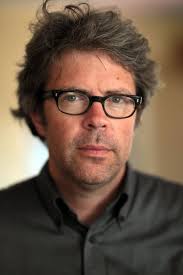
There was an article entitled “Authors Stifled by Fear of Social Media Backlash, Franzen Warns” which appeared in the 22 August edition of The Daily Telegraph.  Jonathan Franzen is an award-winning novel and author of Freedom and The Corrections.

images

Jonathan Franzen

Franzen claims it is becoming more difficult for writers to produce great novels in the era of social media because they are too frightened of a public backlash to be truthful.  He says that the “firewalls” protecting authors from their readers have now disappeared, and there is now too much pressure to use social media to promote new works.

The article says that he has famously refused to go on Twitter, having labelled it “unspeakably irritating”.  Now he has spoken of his concern it its impact on novelists, telling The Guardian: “The ways in which self-censorship operates – the fear of being called a bad name – people become very careful.  And it becomes very hard to be creative, actually.  Because you’re worried  about what you might be called, and whether its true or not.  There used to be rather serious firewalls between the artist and the buying public – the gallery, the publisher.  And technology demolishes that wall and basically says: self-promote or die.  And that is a bad head for any sort of artist to be forced into.”

Yesterday he was derided on Twitter after revealing he had once considered adopting an Iraqi orphan, adding: “One of the things that had put me in mind of adoption was a sense of alienation from the younger generation.  They seemed politically not the way they should be as young people.”

I’m afraid I don’t agree with much of what Franzen says.  I congratulate him for wanting to adopt and Iraqi orphan; let’s hope it wasn’t critics who dissuaded him!  I grew up in an era where we used to say to bullies, “Sticks and stones will break my bones, but names will never hurt me!”

I believe that if an author takes a well-reasoned position on a subject which may be controversial, and he is derided by trolls, there will be plenty of people who agree with the author but don’t bother to say so.  This is what good authors have done for centuries, and this is no time, in an age of social media and terrorism, for authors to lose their courage to speak freely!

Franzen might well say to me, “Well, but you have never been attacked by trolls.”  True.  But I’m certainly not going to change my position if they do.  Besides, I live in a country where personal threats are illegal.  There are some things which my characters have said in my novels which may very well offend some sensitive people.  They’ll just have to get over it.

As to social media, I have this blog and several Facebook accounts.  I’m on Goodreads and Amazon.  I’m not on Twitter – mainly for the reason that I don’t have time to prepare daily tweets.  The world is changing: get on board!

Franzen bemoans the loss of “firewalls”.  I don’t think that firewalls are helpful to the author in the long run.  Any artist should have access to the public’s reactions to his/her work – good or bad.  Dickens had very few “firewalls” between himself and the public.  Why should we?

The Creative Benefits of Keeping a Diary

There is an article by Maria Popova on her BrainPickings.org site about the creative benefits to writers of keeping a diary.  Since I have not kept a diary except briefly in my early teens, and that has long since disappeared, I was curious about the benefits.  Maria Popova is  a Bulgarian writer, blogger, and critic living in Brooklyn, New York.  Her Brain Pickings blog features her writing on culture, books, and eclectic subjects.

Maria Popova founder of Brain Pickings

Maria Popova

Ms Popova says: Journaling, I believe, is a practice that teaches us better than any other the elusive art of solitude — how to be present with our own selves, bear witness to our experience, and fully inhabit our inner lives.  She goes on to quote famous writers who have kept journals to discover their perceived benefits.

Anais Nim, from a lecture at Dartmouth college: Of these the most important (benefits) is naturalness and spontaneity. These elements sprung, I observed, from my freedom of selection: in the Diary I only wrote of what interested me genuinely, what I felt most strongly at the moment, and I found this fervour, this enthusiasm produced a vividness which often withered in the formal work.

Virginia Wolff says:  Still if (my diary) were not written rather faster than the fastest type-writing, if I stopped and took thought, it would never be written at all; and the advantage of the method is that it sweeps up accidentally several stray matters which I should exclude if I hesitated, but which are the diamonds of the dust heap.

André Gide’s view: A diary is useful during conscious, intentional, and painful spiritual evolutions. Then you want to know where you stand… An intimate diary is interesting especially when it records the awakening of ideas; or the awakening of the senses at puberty; or else when you feel yourself to be dying.

Susan Sontag says: Of course, a writer’s journal must not be judged by the standards of a diary. The notebooks of a writer have a very special function: in them he builds up, piece by piece, the identity of a writer to himself. Typically, writers’ notebooks are crammed with statements about the will: the will to write, the will to love, the will to renounce love, the will to go on living. The journal is where a writer is heroic to himself. In it he exists solely as a perceiving, suffering, struggling being.

Eugéne Delacroix muses: Even one task fulfilled at regular intervals in a man’s life can bring order into his life as a whole; everything else hinges upon it. By keeping a record of my experiences I live my life twice over. The past returns to me. The future is always with me.

Virginia Wolff again: How far, we must ask ourselves, is a book influenced by its writer’s life — how far is it safe to let the man interpret the writer? How far shall we resist or give way to the sympathies and antipathies that the man himself rouses in us — so sensitive are words, so receptive of the character of the author? These are questions that press upon us when we read lives and letters, and we must answer them for ourselves, for nothing can be more fatal than to be guided by the preferences of others in a matter so personal.

And, in conclusion, Ms Popova writes: This, perhaps, is the greatest gift of the diary — its capacity to stand as a living monument to our own fluidity, a reminder that our present selves are chronically unreliable predictors of our future values and that we change unrecognizably over the course of our lives.

I must say that I’m un-persuaded.  I don’t feel the need for a ‘living monument’ to my fluidity of self.  I seem to have enough difficulty managing the fluidity of my feelings, my values, my priorities, my relationships, my identity from moment to moment and from day to day!  But it does seem to me that the idea of capturing a ‘diamond in the dust’ is a good one; perhaps I should establish just such a file!  One activity that I find myself engaged in more and more as I grow older and I observe what are actually ordinary things and events is to ask Why? The answers are quite astonishing sometimes, ranging from the whimsical to the unlikely to the enlightening.  Also, I’m beginning to make a habit, when I observe an unusual facial expression or event, of asking, How would you describe that?  It’s an exercise in creativity, of avoiding ordinary language.


Payments by the Page

In yesterday’s Daily Telegraph there was an article “Amazon to Pay Authors by How Much We Read”.  It said that Amazon will begin paying royalties based on the number of pages read by Kindle users, rather than the books they download.  This system will begin on July 1 and “initially” applies to authors who self publish their books via the Kindle Direct Publishing Select (KDP Select), which makes books available to download from the Kindle library and to Amazon Prime customers.

The article said that if a reader abandons a book a quarter of the way in, the author will get only a quarter f the money they would have earned if the reader had finished the book.

Amazon claims its method is a fair way of rewarding authors who write lengthy books but have previously earned the same as someone who crafts 100 pages.  “We’re making this switch in response to great feedback we received from authors who asked us to better align payments with the length of books and how much customers read”, the company said.  “Under the new payment method, you’ll be paid for each page individual customers read of your book, the first time they read it.”  To prevent authors beating the system by enlarging the type and spreading our their work over a larger number of pages, Amazon has developed a “Kindle Edition Normalised Page Count” which standardises the font, line height and line spacing.

The article mentions Unfinished: Kindle’s most difficult books:

Capital in the 21st Century, by Thomas Piketty:  2.4% completed

A Brief History of Time, by Stephen Hawking: 6.6% completed

Thinking Fast and Slow, by Daniel Kahneman: 6.8% completed

Lean In, by Sheryl Sandberg: 12.3% completed

Flash Boys, by Michael Lewis: 21.7% completed

Also mentioned in the article was data released by Kobo, the Kindle rival, which showed that only 44% of readers finished The Goldfinch, by Donna Tartt, which was one of the biggest sellers in 2014.

Hari Kunzru, the award-winning author of The Impressionist, said the system “feels like the thin edge of a wedge.”

Peter Maass, a writer and editor, said on Twitter: “I’d like the same in restaurants – pay for how much of a burger I eat.”

Kerry Wilkinson, whose Jessica Daniel crime series propelled him to the top of the Amazon bestseller list as a self-published author, believes the system is fair.  “If readers give up on a title after half a dozen pages, why should the writer be paid in full?” he said.  “If authors don’t like it, they don’t have to use KDP Select.  It’s opt in, not opt out.”  But Wilkinson found it “eerie” that Amazon was keeping tabs on what – and how – you are reading.  Even if it’s anonymous, that’s a lot of data mining.”

To Kunzru’s comment, there is no reason this system could not be extended to all Kindle editions, so that whoever holds the copyright (usually the publisher) would be paid on the percentage of a title that is read.  And, of course, other e-books (like Kobo) could adopt the same system.  So, it definitely sounds to me like the thin edge of the wedge.

I think the system sounds fair for mass market books which are intended for a broad group of readers.  I suspect that readers of crime, thriller, romance, historical novels (and other genres) generally finish the books they have bought.  But I also suspect that non-fiction books (such as self-help, political, business, nature, science, environment, etc.) are probably not finished in many cases.  Does this suggest that their authors deserve a lesser reward?  I don’t think so (only one of my published books – from long ago – is in one of the latter categories).  A reader may buy a non-fiction book, read 25% of it, and still be pleased with the book: s/he may well feel that s/he got her money’s worth, and in such a case shouldn’t the author get the full royalty?

The other concern I have is about works of top-class, leading edge fiction.  The Hawk comes to mind.  I suspect that quite a few readers decided that the prose or the subject matter was not for them.  This may also be true of works by Salman Rushdie or Jonathan Franzen, where the writing just went over the reader’s head.  I suppose that one could argue that if a potential reader had to pay only say 25% of the cost of a book to try it, that would provide the reader with an incentive to buy it and at least try it.  And, it would provide the author with at least some compensation.  I’ll be interested to hear what the top-class authors have to say about the Amazon scheme.  I don’t think they’re going to like it.  After all, they’re probably selling a lot of books that end up on the I Once Tried to Read This shelf.


Review: Nichijo: The Testimony of John Provoo

As a participant in the Reader’s Favourite book review scheme, I had to select a book from among those that had been submitted for review. Nearly all of the books submitted are in electronic format. I prefer hard copies, so I selected the book I wanted to read and bought it on Amazon.

Nichijo: The Testimony of John Provoo interested me for several reasons: It concerned the Second World War in the Pacific, and there were elements of Buddhism and Japanese culture. (I read much of the book while on a recent trip to Japan.)

IMG_20150605_0001

The author is John Oliver who has a Batchelor’s degree in Political Science and Religious Studies from the University of California at Santa Barbara.  He was working in Hawaii when he met John Provoo and decided to tell his story. The book is therefore an autobiography; as it is written in the first person.

According to his ‘testimony’, John Provoo grew up in San Francisco, having been born in 1917. He was attracted to Buddhism and believed in the sanctity of all life. In March 1940, he went to Japan to study for the Buddhist priesthood.   He returned to the US in May 1941 under the threat of imminent war, and enlisted in the US Army. He was sent to the Philippines where he worked as a clerk in Army headquarters in Manila. He was captured by the Japanese in the Battle of Corregidor and became a prisoner of war. Much of the book concerns his time as a Japanese prisoner. Because of his fluency in Japanese and his understanding of Japanese culture he often had to deal directly with his captors. This led simultaneously to somewhat more lenient treatment of fellow prisoners and suspicions by the same fellow prisoners that Provoo was giving aid and comfort to the enemy. When he returned to the US, he was accused of collaboration with the enemy, was acquitted and re-enlisted in 1946. For most of the next ten years, he was pursued by the US Justice Department for treason, and underwent several trials, during which his homosexuality was used against him. Eventually, he was acquitted and went to Japan to complete his Buddhist training and to Hawaii, where, as a high level Buddhist priest he lived the rest of his life, dying in 2001.

One has the sense, in reading the book, of an honest re-counting of history, and, as such, it makes very interesting reading: in particular, the conflicted position in which a Japanese-speaking Provoo found himself as a Japanese prisoner of war; the shameful conduct of the Justice Department in mounting a hugely costly campaign against him and in using his homosexuality against him. It appears that John Oliver undertook a considerable amount of independent research to complete this book, and that he did not rely only on what Provoo told him.

There are several areas that are worth mentioning. John Provoo was clearly a very complex character, but one does not get a full understanding of this complexity in the book. Rather, the emphasis is on the historic (what was done) rather than the psychological (why it was done). Might it have been a more interesting piece of literature if instead of being entirely in the first person, the author had intervened as the narrator now and then? In the latter part of the book, there is too much name dropping (who the various interested parties were), and on exactly what they said. I think it would have been sufficient to summarise the key points, and use footnotes where essential. While the writing is good and effective, there is very little description of the various environments in which Provoo found himself: again the emphasis on history rather than literature.

That said, Nichijo, (Provoo’s name as a Buddhist priest) is quite an interesting read. I enjoyed it.

Writers Earn £11,000 per Year

-There was an articled in the April 21st edition of The Daily Telegraph entitled ‘Want to write?   Expect to earn £11,000 a year’.

This was sufficiently eye-catching that I think it bears repeating.  I quote:

To many, it is the dream job: toiling to create a fine work of literature or academia.  But the reality of being a writer has been laid bare in a new report highlighting the low earnings many endure.  A study, conducted by Queen Mary University of London, showed only one in ten authors can afford to earn a living from writing alone, a drop from 40% a decade ago.  A typical professional writer, it found, earned £11,000 annually.  In real terms, the average earnings of authors is down 8% since 2005, according to the report commissioned by the Authors’ Licensing and Collecting Society.  Five percent of authors earn 42.3% of all income earned by writers, with the struggle for those working in non-fiction and academia particularly acute.  The study points to a publishing world where houses are less willing to take a chance on new authors, opting instead for ‘safe bets’ and celebrity writers.  The report, entitled The Business of Being an Author and based on a survey of nearly 2,500 writers, noted: ‘For the majority, writing remains a low-earning profession.’  A remarkable 17 percent of writers did not earn any money in 2013 despite 98% having had work recently published.  Women were found to earn 80% of the income of their male counterparts. Nicola Solomon, the chief executive of the Society of Authors, said publishers had been compelled to tighten their belts in recent years, investing in high-demand authors.  ‘There is a tendency towards safe,’ she said.  ‘But do we want safe?  Surely the whole point of reading is to be introduced to things that are daring and challenging and different?’   The report was ‘a bit depressing’, she said.  Earlier this year, a YouGov poll found being an author was the most desirable job in Britain, with 60% of people claiming they would like to do it for a living.

images

Unquote.

This doesn’t surprise me and it confirms some of my own experience.  For me, as a retired business executive, I’m not writing to make a living.  I’m writing because I enjoy it, and because people who read my books tell me that they enjoy them.  I don’t feel that I have to concentrate on ‘what will sell’.  Rather, I can concentrate on what interests me and what will interest some people.  As long as I’m in good health, I don’t really have a deadline.  Someday, if I’m lucky, one of my novels will ‘go viral’, and I’ll have a £11,000 windfall!

Review: H is for Hawk

Having read Henry Marsh’s Do No Harm, which was shortlisted for the Costa Book of the Year Award, I have now read H is for Hawk by Helen Macdonald which won the top prize.

IMG_20150522_0001

H is for Hawk tells the experiences of Helen Macdonald, a writer, illustrator, historian and lecturer at Cambridge University in training a wild hawk. Macdonald had some advantages in this task: she was fascinated by falconry and hawks as a child, and she had experience of hunting with hawks, but she had never trained a wild hawk to hunt. There was a major disadvantage: her much-loved father, a renowned photographer, had just died suddenly when she acquired the hawk for £800 from a breeder in Northern Ireland. Much of the book deals with the intense commitment and frustrations which the falconer must endure over the lengthy process of winning the trust of a wild predatory animal so that it works together with the falconer in killing wild game. The goshawk in the book has personality: feral, proud and beautiful, unpredictable, iconic. One learns, incidentally, that Macdonald is a scholar, an intelligent and sensitive person, but the author also exposes her vulnerabilities: in particular, her crippling grief over the loss of her father. In parallel with the story of Macdonald’s goshawk, she tells the story of T H White, now deceased, a dedicated, but somewhat eccentric falconer and the author of The Goshawk. We learn of his mistakes and his anguish as he tries to train a goshawk. So this book operates at several levels: a present, objective account of the training of a wild hawk; there is a past, reported account of the training of a different hawk; there are psychological explorations of both the author and her role model, T H White. This may sound rather complex, and, in a way, it is, but Macdonald weaves it all together beautifully so that it is quite natural.

The writing, in style and language is exquisite. In particular, the descriptions of natural settings and the behaviour of the hawk are breath-taking. For example: “. . . she (the hawk) sees something through the trees, out there on the other side of the hedge. Her pupils grow wide. She snakes her neck and flattens her crown, and the tiny grey hair-feathers around her beak and eyes crinkle into a frown that I’ve learned means there’s something there.” And: “The fields are shorn, yellowed into stalky, rabbit-grazed sward spotted with foraging rooks.”

H is for Hawk is clearly a major labour of love. This love and its result: a durable classic about nature, surely merited the Costa Award.

As a child, I was very interested in falconry; I read everything I could lay my hands on the subject – even flirting with the idea of obtaining a hawk. For me, H is for Hawk has a special resonance, but I suspect that some potential readers may be put off by a book on falconry. For those potential readers, I would say, “This isn’t just a book about falconry. It’s a book about nature, the human condition, grief, joy, life and death.”

Review: Revere Beach Boulevard

I bought Revere Beach Boulevard because there was a piece in my alumni magazine about a fellow writer and a fellow alumnus, and I read most of it while I was on a brief holiday in Sicily.

untitled

Revere Beach Boulevard is a contemporary novel set in Revere, Massachusetts, a suburb of Boston. Four of the principal characters are an Italian-American family: Lucy, the mother, is dying of cancer; Vito, the father is a retired carpenter; Peter, a son in his forties, sells real estate and has a serious gambling addiction; Joanie, the older sister with a secret, is apparently a successful newsreader for a Boston TV station. The other characters – friends and acquaintances – are part of the immigrant culture of Family, Church, and Food, and as such, the novel does them justice. The plot revolves around Peter who is heavily in debt to the local Mafioso. He hasn’t the money to pay, and friends and family are largely losing patience, as is the malevolent Chelsea Eddie, who finds that he doesn’t hold all the cards. Joanne is about the run a TV special on criminals like Eddie.

Without revealing the outcome, the plot has all the elements of a well-written thriller. I found it difficult to put it down. But there is much more to it than a thriller: the examination of values like love, trust, faith and above all: who we are as human beings. The characters, particularly Peter, Vito and Alfonse – the police chief with a secret – are very real and imperfectly human.

Without detracting much from the value and readability of this novel, one aspect that I didn’t particularly like was that each of the characters told a part of the story. This meant that one often had to read a whole paragraph before one knew which of about nine characters was talking. I felt that Peter and an omniscient narrator could have told the story equally well. I had minor reservations about two of the characters. I didn’t think that Chelsea Eddie would worry so much about what Joanie would say about him on the air: any Mafioso worth his salt has an anti-libel lawyer on standby, and Joanie had no solid evidence. Maybe is she were FBI rather than a newsreader? For me, Joanie’s loss of self-control during her visit to her dying mother didn’t ring true. She is a highly-paid TV executive who fought her way up to that position. Distressed, but not an injured child. Neither of these quibbles had any impact on the splendid plot.

The final proof-reading of the text could have been better. Frequently there were extra spaces between words, and hyphens were used instead of dashes to offset parenthetical phrases. For me, this caused confusion.

I certainly recommend Revere Beach Boulevard. It is unusual; it is interesting; it is captivating; it is well-written