Joan Wickersham

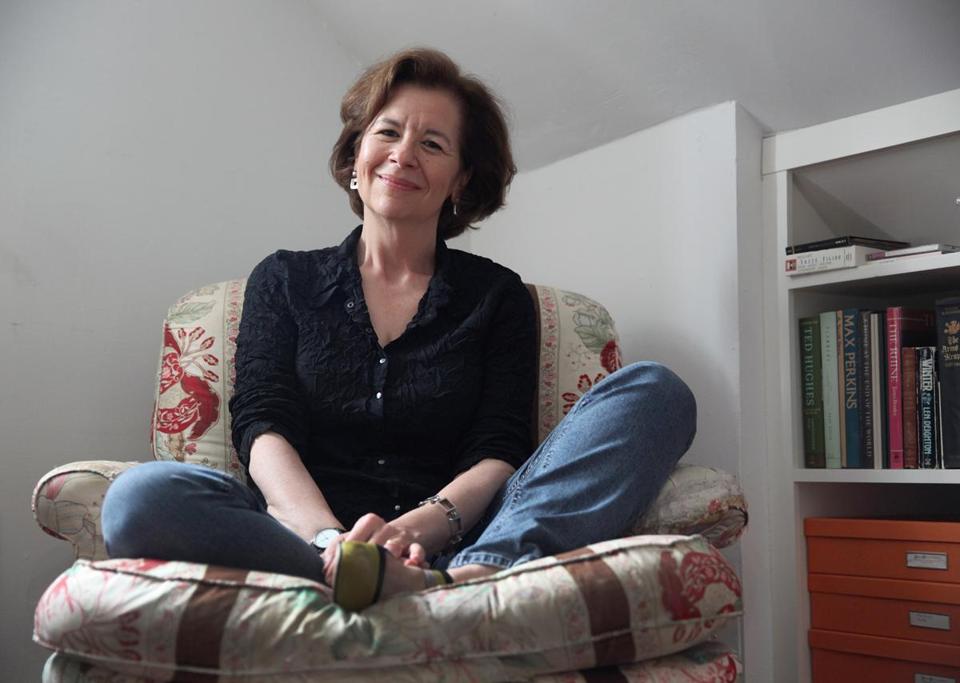
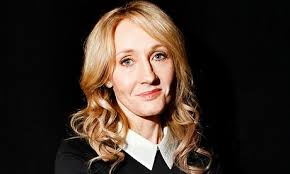
There is an interview called “Inside the Writing Life” in my high school alumni magazine.  A prominent English instructor is interviewing Joan Wickersham who graduated nearly two decades after me.  Ms Wickersham has been writing most of the time since graduation; her work includes her memoir and 2008 National Book Award finalist, The Suicide Index; a book of short fiction, The News from Spain; and The Paper Anniversary, a novel.  She writes a regular op-ed column for The  Boston Globe; her writing has been published in prominent literary journals; and she has read her work on National Public Radio.

maeda_writers_g1

Joan Wickersham

Two questions and answers in this interview caught my eye.

Q: (David Weber) “You’ve sustained your output over many years.  Does the problem of writer’s block seem remote to you, or have you struggled at times to give your work the priority required?”

Wickersham: “There’s a very funny little moment in a movie I once saw, where a bored, impatient woman is trying to figure out where a piece fits in a jigsaw puzzle and she finally just puts in somewhere and smacks it in with her fist.  Writer’s block is a sign that what I’m doing isn’t working, and I can’t fix it by trying to ram something into a place where it doesn’t belong. It can take months to figure out that what I thought was a piece of the sky is actually a piece of the ocean, or that its a part of a different puzzle altogether.  I hate writer’s block, but I’m always grateful to it in hindsight.  It usually means that what I’ve been writing is somehow false, which is just as bad in fiction as nonfiction.  Writer’s block slows me down and makes me throw out pages and drafts – after I’d been working on the book about my father’s suicide for nine years, I threw out a 400 page manuscript and started over – but getting stuck can be an important investment in finding the right way to tell a story.”

I like this way of thinking about writer’s block: it’s not you that are the problem; it’s the story.  Sometimes, when I sit down to write, I feel cornered.  I’ll look back over what  I’ve written, and ask myself ‘what’s not working?’  Other times, particularly when I’m lying awake at night, I’ll start feeling uneasy about the direction of a particular novel.  That feeling generally leads to surgery.  When I was writing Sable Shadow & The Presence, I threw out and re-wrote whole chapters of the book, which has gone on to win eight awards.

Q: “Does a fully realized piece require its own new form, not just descriptive skill and the authority of honesty?”

Wickersham: “A lot of what I’m doing when I write is trying to figure out the inherent rules of a particular piece – the form or structure which will be most true to the story.  My husband, Jay, is trained as an architect.  A long time ago, when I was struggling to write about my father’s suicide, he told me that the students at the École des Beaux-Arts begin each design with a parti – an organizing principle.  I found this idea of the parti exciting and liberating.  I’d been wresting for years with how to organize the messy and painful story of my father’s death, and part of the problem was that the story defied any attempt at a conventional linear narrative.  When I stumbled in the parti of organizing the book as an index, suddenly I had this cool, numb structure that simultaneously imposed order and ridiculed the idea of imposing order on an inherently chaotic experience”.

I never heard of the term parti before, but it makes sense.  The novel I’m currently working on has an unusual organizing principle: two increasingly hostile narrators, whose identity is obscure at first, tell alternating chapters about three, very different, young protagonists over whom they have influence, but no control.  The setting is present day East Africa.

Review: The Last Confession of Thomas Hawkins

I bought this book – an historic novel – in a Waterstones bookstore because I had nothing to read at that moment and it looked interesting.  Its author is Antonia Hodgson who grew up in Derby and studied English at the University of Leeds.  Her first novel, The Devil in Marshalsea, won the 2014 Historical Dagger Award.  Ms Hodgson lives in London, where she is an editor.

download

Antonia Hodgson

The Last Confession of Thomas Hawkins is set in a rather down-market section of Georgian London.  Its principal character, Thomas Hawkins is a ‘gentleman’ who killed a man in self-defense in prison, and throughout the story is under threat of being hung for murder.  There are several intertwining plots.  One involves a rather loathsome neighbour who is a member of the Society for the Reformation of Manners (a pathological moralist) and whose own morals permit him to consort with prostitutes and to beat his children.  The neighbour is suddenly dead.  Who killed him?  Thomas, one of the children, the apprentice, the son of a notorious gang?  Another plot involves King George’ mistress who is also a lady in waiting to Queen Charlotte.  This Henrietta Howard (who was a real person) is a pawn in the struggle of her very evil, estranged husband to extort money from the king.  The queen, also a real person, is caught in the middle and manages to capture Thomas as her rook to defeat the black knight, Charles Howard.  To keep things going, there is Kitty, the pretty and libidinous girlfriend of Thomas.

There is plenty of action in this rather engaging tale which moves along at a frenetic pace with many twists and turns along the way.  The characters are well-developed and likable or despicable; the dialogue is terse and credible.  The Covent Garden area of London is well described in physical and moral terms, but it was difficult to picture oneself in the setting.  It is not just a familiarity with the Covent Garden of today that blocked – to some extent – the credibility of the scene; it was more that at a feeling level one is somewhat remote. Having said this, one has to admire the depth of Ms Hodgson’s research into the times, the issues and the characters.  There are plenty of surprises in The Last Confession of Thomas Hawkins – they certainly keep the reader engaged – but sometimes the events seemed a little too contrived.  For example, the events around the ambush of Henrietta’s carriage by her husband, and the conclusion where Thomas is sent on a new mission by the queen.  The cockfight and the duel of the female gladiators, while authentic and interesting, added little to the story line.

For those who like a historical novel with an anchor in truth, one with many fascinating twists and turns, with important, stand-out characters, and a good helping of mystery, The Last Confession of Thomas Hawkins is the novel for you!

Composition: Music and Prose

Last night, I heard, for the first time, evidence of the shared skills of composers and authors.  My wife and I went to a Royal Philharmonic Orchestra concert which featured Wagner’s Tannháuser Overture, Chopin’s Piano Concerto No. 2, and Beethoven’s Symphony No. 4.  Pierre Vallet was the conductor and Elizabeth Sombart was the pianist.  For me the music got better as the evening progressed.  I should explain that I am no music critic; I never played an instrument, and I can’t really read music, although I sang first tenor and then baritone in two different small singing groups in high school and college.

The Wagner piece was enjoyable, but it didn’t really engage me.  I kept thinking of Nietzsche’s criticism of Wagner: that he became an insufferable egotist.  Elizabeth Sombart’s recital of Chopin was very impressive.   I sat there and thought: ‘How wonderful it must be to be able to play like that!’  And Chopin’s music was lovely.  But it was Beethoven’s Fourth that really caught my attention.  I’ve heard it played at least a dozen times before, but, until last night, never by a live orchestra.

download

Composer of the Fourth Symphony

The music was captivating, and I watched the musicians play with what seemed like gusto.  I began to think about the composition of the music to which I was listening  This was a very clever composer: he keeps his audience fully engaged.  And I began to identify aspects of the music that I felt bore similarities to the composition of good prose.

  • The piece has a unity to it.  It was clearly the work of one composer: it was telling one musical story in four movements.  Each movement shared musical themes and techniques with the others, but one felt a progression in the movements.  At times, I have felt that a particular piece of classical music could have been serially composed by two or more people.
  • There was plenty of emotion.  Sometimes a flute and first violins would pick out a sweet and gentle theme.  At other times the timpani, brass and eight basses would thunder out in rage.  There was love, there was anger, there was joy and wonder.
  • There was plenty of suspense.  The first movement begins with a dark, gloomy section: What is this about?  But gradually it gives way to a bright, cheerful theme: Will this continue?  Whenever a new theme was introduced, it would begin to tease, and one would wonder what is coming?  The techniques for generating suspense varied: Pianissimo building to Forte, or the other way ’round, or themes evolving in variations; or sudden shifts in the instruments; or instruments playing ascending scales.
  • There was a lot of conversation.  For, example the violins would start a theme which would be picked up and changed by the cellos; the violins would respond with the changed theme and change it further.
  • There were changes in pace.  Sometimes the music was slowly deliberate: in no hurry; at other times, it was in a sensational rush, particularly in the fourth movement.

With this insight, perhaps I will enjoy classical music more than I have in the past.  And I have always enjoyed going to concerts.

First Amendment Problems

As you may know the first amendment to the US Constitution covers free speech.  There is an article in my alumni magazine which addresses the ‘First Amendment Problem’.  You will know that freedom of speech is, to me as an author, a key issue.  The article says that hate speech isn’t the issue; politics isn’t the issue; the problem, says the dean of Yale Law School, is that nobody knows how to think about free speech.

The article says,” Take Sorrell v. IMS Health.  In 2007, Vermont passed a law restricting the sale of doctors’ prescriptions to drug companies, which were using the records in their marketing.  The drug companies, along with data mining companies sued, saying that the law violated their First Amendment rights. Vermont argued that the law regulated commerce, not speech.  The case reached the US Supreme Court, where Justice Anthony Kennedy delivered the majority opinion in 2011.  Marketing, he reasoned, consists of speech.  Therefore, singling out marketers amounts to government censorship.

Sorrell wasn’t treated like a blockbuster in the press, but it caused a sensation in the legal world.  It’s hard to argue with Kennedy’s declaration that ‘the state cannot engage in content based discrimination to advance its own side of the debate’.  But if that’s true for pharmaceutical marketers, what else does it apply to?  All kinds of commercial and professional regulations restrict speech based on its content.  Under Sorrell, can states still require psychologists to be licensed, considering that therapy is speech?  Can a public school teacher be fired for telling students that the earth is flat?”

images-1

Robert Post

Robert Post, the dean of Yale Law School and an expert on the First Amendment, has been following Supreme Court rulings on freedom of speech for about 30 years.  He has been trying to deduce the criteria that the court uses in making its decisions.  For example, the Supreme Court recently ruled that a newspaper couldn’t publish confidential information it had obtained through the discovery process in a civil lawsuit.  At first, Post disagreed, but he came to the conclusion that the court had made the right decision.  “The legal system, Post realised, isn’t an open forum for public debate; it’s a government institution designed for a specific purpose.  For the courts to function, judges have to have the power to regulate speech in a trial setting’”

Post’s insight is that “the amendment applies differently is different contexts or ‘constitutional domains’.  The most important domain is what he calls ‘public discourse’, because the goal of free speech is self-government.  Only speech relevant to that goal should get the highest level of protection.  Because public opinion shapes laws in a democracy, people need a chance to affect it: otherwise they won’t experience self-government.”

An interesting example is that some dentists believe that the mercury contained in some dental fillings can leach into the body, but they are punished by their professional regulators for malpractice if they advise their patients to remove the fillings.  The same dentists can, without censure, write op-ed pieces setting out their views.  This latter case is ‘public discourse’ and has First Amendment protection, while advice to a patient is not ‘public discourse’.

The question for an author, whose work is clearly ‘public discourse’, is: how far can you go?  If I were to write a piece belittling or making fun of the Prophet Muhammad (which I have no reason to consider), that would probably be OK, based on the Charlie Hebdo cartoons and The Satanic Verses.  But if I were to write a treatise recommending that the readers go and join ISIL, I might well end up in jail (like Anjem Choudary, the UK hate preacher).  What’s the difference, legally?  Professor Post doesn’t say, but I guess the legal differences arise from two subjective factors:

  • Public opinion, and
  • The perceived threat to a democratic form of government

J K Rowling’s Writing Tips

Recently, I accompanied my grandchildren on a trip to the Harry Potter exhibition at Warner Brothers Studios near Watford.  I have to confess that I am not a Harry Potter fan, but I certainly enjoyed the outing to the exhibition.  I found it astonishing the detail that goes into creating the real visual effects that appear on the screen.

Certainly J K Rowling is a brilliant author to have created the seven Harry Potter books which are so popular, worldwide.  Yesterday, I ran across her top five writing tips on the Now Novel blog.  I thought I would republish and comment on them.

download

J K Rowling

1.    Write in whatever time you have

One of J.K. Rowling’s most famous quotes is: “Sometimes you have to get your writing done in spare moments here and there.” This is crucial advice on writing a book. It’s easy for us to imagine successful writers spending all day penning beautiful paragraphs, but everybody had to start somewhere. For Rowling, that somewhere included full-time work and finding stolen pockets of time to write. Much as it might be a dream to take six months out to write your book, odds are you’re going to have to fit it into your everyday life.

I agree that it is unwise – even couterproductive – to establish an overall deadline (unless you publisher insists on it).  For me, the minimum size of a ‘stolen pocket’ is an hour.  In less than an hour, I can’t get into a fully creative mode.

2.    Planning is essential

Instead of diving right into line 1, J.K. Rowling advises taking the time to plan out the world your books will live in. She took five years to create and develop every last detail of the Harry Potter world. Every part of Rowling’s books was planned and worked out, right down to how the Wizards and Muggles interacted (and the word Muggles, to begin with!) what the education was like, how magic helped in every day life and how the wizarding world of government worked. She also plotted out all the events of the seven books before she started writing the first.

Great if you can do it!  I write a two page outline of a novel before I start it, but for me, this is just a framework.  I find that characters want to behave differently and therefor events change, or I get an ‘inspiration’ that causes me to deviate from the original plan.  I depend a lot on these inspirations!

3.    Rewriting is just as essential

You would think after five years, J.K. Rowling would just be able to dive right in and write the whole of the first Harry Potter book, Harry Potter and the Philosopher’s Stone, without much rewriting. She rewrote the opening chapter of her first book a total of fifteen times, however. It’s easy to imagine published authors writing with the greatest of ease, but actually the process is just as difficult for them.

I agree!  I don’t think I’ve ever reached fifteen re-writes, but four of five is not uncommon.  For me, the scope of a rewrite tends to decrease over time: after a major rewrite, what follows tends to be less and less radical.

4.    Be aware of plot and pacing

Even when you’ve plotted out all seven of the books you want to write in a series, you can trip yourself up. In fact, that’s one of the big things to be aware of when you’ve done the necessary planning: even though you know what’s going to happen next, your readers shouldn’t. They need to have a sense of excitement and uncertainty as the plot and pacing unfolds because this is where magic lies. After J.K. Rowling finished the first book in the Harry Potter series, she realised she’d given away the whole plot of the series. So she had to rewrite it, and hold back a number of integral plot points.

I tend to make changes to the plot once I’ve started writing a novel.  These changes make the novel more interesting, more exciting, or better convey the overall message of the work.  But I agree that one has to be careful that the revised plot flows seamlessly with no inconsistencies.

5.    Write your passion

Perhaps a favourite J.K. Rowling quote is: “What you write becomes who you are… So make sure you love what you write!” One of the reasons the Harry Potter books are so infectious is because you can tell she really loves the world she created – and all the characters in them. If you’re going to approach your book in a half-hearted manner, there’s no point even beginning it. Make sure you’re passionate about what you write and you’ll draw your readers along with you.

This is very true!  Occasionally, I find that the work is starting to lose interest for me.  Then I know that something is wrong and significant changes are required.  For example, I gave a literary friend a draft of Sable Shadow & The Presence before it was finished.  His comment: “It’s boring.”  I agreed, and I put it aside while I wrote Hidden Battlefields.  When I came back to the manuscript it was with new ideas and new enthusiasm.  When I finished, my friend (like many others) gave it a very good review.

Review: Whiskey Tango Foxtrot

My wife and I saw this film last weekend.  It was a disappointment.  The film, which is military code for ‘what the f**k’, is based on the memoir, The Taliban Shuffle, written by Kim Barker, about her assignments as a war correspondent in Pakistan and Afghanistan.  I haven’t read the book; I read an article about Ms Barker and the book that appeared in The Telegraph.  The book sounded interesting and thoughtful, with a black sense of humour.  In fact, the New York Times book review confirmed this.

jp-book-popup

Kim Barker

The film, which has Tina Fey playing Ms Barker, begins with her volunteering for an assignment in Afghanistan to escape her humdrum assignment of covering minor stories; besides: she is single with no children.  She is thrown into cheap accommodation in the green zone with a lot of other expatriates, some of whom are competing for the same stories.  A US Marine general regards her as an inexperienced liability, but she achieves credibility by gaining candid interviews with US soldiers, putting herself in harms way to capture video footage, and by gaining the respect of some Afghans.  Eventually, she realises that being a war correspondent is not in her best long term interest, and she returns to the States.

Tina_Fey_Muppets_Most_Wanted_Premiere_(cropped)

                                                                                                                                   Tina Fey

I had three problems with WTF.  First of all there was too much emphasis on the partying going on among the correspondents and other expats.  The film left me with the impression that every night was an Animal House blow-out.  While I’m sure there was uninhibited drinking and casual sex, the emphasis on that aspect of life as a war correspondent made it difficult to position the film as a serious commentary, which Ms Barker’s book clearly is.

Secondly, the dialogue was difficult to follow.  Actors were speaking at a frantic pace and using lots of slang.  Eventually, I realised I could understand what was going on by just watching the video.  If the audience can’t follow the dialogue, why include it?

Third, and most important, the film was a series of events, some funny, some sad, some thought provoking, some totally forgettable, without a unifying theme or message, except that the danger involved in covering a war can be addicting.  Ms Barker, in her book draws several sobering conclusions about the ‘Af-Pak’ region, and why the West was doomed to fail in its strategy of involvement.

I will say that Tina Fey is engaging in the lead role, Christopher Abbott is credible as her Afghan fixer, and Martin Freeman does a fine job as the lustful, flippant Scottish correspondent.  Some of the video footage is worth seeing, and there are some examples which illustrate the huge culture gap, but these opportunities are largely lost.

Review: The Past

I bought Tessa Hadley’s latest novel, The Past, because of a very favourable review in Time Magazine.  Ms Hadley is the author of five previous novels which have achieved recognition.  She has also produced two short story collections, and her writing appears regularly in The New Yorker.

index

Tessa Hadley

The Past is about the journey of three sisters and a brother, all adult, to their grandparents’ run-down, abandoned, old home in the Somerset countryside.  They meet there for three weeks of holiday in the summer to decide what to do with the house, now that their parents are dead.  The house is filled with memories; their mother took them there as children when she left her husband.  Conflicts, jealousies and attachments emerge during the three weeks.  Fran’s two young children, Ivy and Arthur; Molly, Roland’s sixteen-year-old daughter; his third wife, Pilar; and Kasim, the twenty-year-old son of Alice’s ex-boyfriend, add interest and complexity.

Ms Hadley’s writing is beautiful.  The descriptions of the Somerset country are almost poetic: her fondness for rural England is unmistakable.  The characters are real and well-drawn, with the possible exceptions of Kasim, who often seems petulantly distant for a man of college age, and Ivy, whose behaviour seems unaccountably contrarian.

The only problem I had with The Past is that nothing of real significance happens.  There is plenty of interaction among the characters which sheds light on their personalities and values.  Personal histories emerge.  The most significant events are the children finding a dead dog, Kasim and Molly making love, Harriet making a pass at Pilar, and one of the sisters estranged husbands’ being sent away.  The inside of the dust jacket says, “small disturbances build into familial crises”, but the crises are neither grand, nor ultimately meaningful.

However, if one is seeking a comfortable, quintessential British story about family, The Past would be a very good choice.

What Literary Agents Dislike

Chuck Sambuchino contributed an interesting  post to the Writer UnBoxed blog, excerpts of which appear below.  Chuck is a freelance editor of query letters, synopses, book proposals, and manuscripts. As an editor for Writer’s Digest Books, he edits the Guide to Literary Agents.

img_1970

Chuck Sambuchino

“No one reads more prospective novel beginnings than literary agents. They’re the ones on the front lines — sifting through inboxes and slush piles. And they’re the ones who can tell us which Chapter 1 approaches are overused and cliche, as well as which techniques just plain don’t work. Below find a smattering of feedback from experienced literary agents on what they hate to see the first pages of a writer’s submission. Avoid these problems and tighten your submission!

FALSE BEGINNINGS

“I don’t like it when the main character dies at the end of Chapter 1. Why did I just spend all this time with this character? I feel cheated.”
– Cricket Freeman, The August Agency

“I dislike opening scenes that you think are real, then the protagonist wakes up. It makes me feel cheated.”
– Laurie McLean, Foreword Literary

PROLOGUES

“I’m not a fan of prologues, preferring to find myself in the midst of a moving plot on page 1 rather than being kept outside of it, or eased into it.”
– Michelle Andelman, Regal Agency

“Most agents hate prologues. Just make the first chapter relevant and well written.”
– Andrea Brown, Andrea Brown Literary Agency

“Prologues are usually a lazy way to give back-story chunks to the reader and can be handled with more finesse throughout the story. Damn the prologue, full speed ahead!”
– Laurie McLean, Foreword Literary

EXPOSITION/DESCRIPTION

“Perhaps my biggest pet peeve with an opening chapter is when an author features too much exposition – when they go beyond what is necessary for simply ‘setting the scene.’ I want to feel as if I’m in the hands of a master storyteller, and starting a story with long, flowery, overly-descriptive sentences (kind of like this one) makes the writer seem amateurish and the story contrived. Of course, an equally jarring beginning can be nearly as off-putting, and I hesitate to read on if I’m feeling disoriented by the fifth page. I enjoy when writers can find a good balance between exposition and mystery. Too much accounting always ruins the mystery of a novel, and the unknown is what propels us to read further.”
– Peter Miller, PMA Literary and Film Management

“I dislike endless ‘laundry list’ character descriptions. For example: ‘She had eyes the color of a summer sky and long blonde hair that fell in ringlets past her shoulders. Her petite nose was the perfect size for her heart-shaped face. Her azure dress—with the empire waist and long, tight sleeves—sported tiny pearl buttons down the bodice. Ivory lace peeked out of the hem in front, blah, blah.’ Who cares! Work it into the story.”
– Laurie McLean, Foreword Literary

STARTING TOO SLOW

“Characters that are moving around doing little things, but essentially nothing. Washing dishes & thinking, staring out the window & thinking, tying shoes, thinking.”
– Dan Lazaar, Writers House

“I don’t really like ‘first day of school’ beginnings, ‘from the beginning of time,’ or ‘once upon a time.’ Specifically, I dislike a Chapter 1 in which nothing happens.”
– Jessica Regel, Jean V. Naggar Literary Agency

VOICE

“I know this may sound obvious, but too much ‘telling’ vs. ‘showing’ in the first chapter is a definite warning sign for me. The first chapter should present a compelling scene, not a road map for the rest of the book. The goal is to make the reader curious about your characters, fill their heads with questions that must be answered, not fill them in on exactly where, when, who and how.”
– Emily Sylvan Kim, Prospect Agency

“I hate reading purple prose – describing something so beautifully that has nothing to do with the actual story.”
– Cherry Weiner, Cherry Weiner Literary

“A cheesy hook drives me nuts. They say ‘Open with a hook!’ to grab the reader. That’s true, but there’s a fine line between an intriguing hook and one that’s just silly. An example of a silly hook would be opening with a line of overtly sexual dialogue.”
– Daniel Lazaar, Writers House

“I don’t like an opening line that’s ‘My name is…,’ introducing the narrator to the reader so blatantly. There are far better ways in Chapter 1 to establish an instant connection between narrator and reader.”
– Michelle Andelman, Regal Literary

“Sometimes a reasonably good writer will create an interesting character and describe him in a compelling way, but then he’ll turn out to be some unimportant bit player.”
– Ellen Pepus, Signature Literary Agency

CHARACTERS AND BACKSTORY

“I don’t like descriptions of the characters where writers make them too perfect. Heroines (and heroes) who are described physically as being virtually unflawed come across as unrelatable and boring. No ‘flowing, wind-swept golden locks’; no ‘eyes as blue as the sky’; no ‘willowy, perfect figures.’ ”
– Laura Bradford, Bradford Literary Agency

“Many writers express the character’s backstory before they get to the plot. Good writers will go back and cut that stuff out and get right to the plot. The character’s backstory stays with them—it’s in their DNA.”
– Adam Chromy, Movable Type Management

“I’m turned off when a writer feels the need to fill in all the backstory before starting the story; a story that opens on the protagonist’s mental reflection of their situation is a red flag.”
– Stephany Evans, FinePrint Literary Management

“One of the biggest problems is the ‘information dump’ in the first few pages, where the author is trying to tell us everything we supposedly need to know to understand the story. Getting to know characters in a story is like getting to know people in real life. You find out their personality and details of their life over time.”
– Rachelle Gardner, Books & Such Literary

I agree with all of these points except ‘Prologue’ (in some cases).  I have a prologue in two of my novels.  The first novel has a prologue and an epilogue, set in a later time frame, to help the reader understand that the narrator is an adult who was a child in the story.  If I had it to do over again, I would do it differently.

Sable Shadow & The Presence has a prologue and an epilogue.  In this case, the prologue has no back story; rather, it jumps ahead and establishes a central theme of the novel.  The epilogue tells the reader what happened after that.  So, I think there situations where a prologue can be useful.

What Makes a Best-Selling Novel?

I just stumbled on this article from The Daily Telegraph of 9 January 2014 and written by Matthew Sparkes.

Scientists have developed an algorithm which can analyse a book and predict with 84 per cent accuracy whether or not it will be a commercial success.  A technique called statistical stylometry, which mathematically examines the use of words and grammar, was found to be “surprisingly effective” in determining how popular a book would be.

The group of computer scientists from Stony Brook University in New York said that a range of factors determine whether or not a book will enjoy success, including “interestingness”, novelty, style of writing, and how engaging the storyline is, but admit that external factors such as luck can also play a role.

By downloading classic books from the Project Gutenberg (a library of over 50,000 free e-books) archive they were able to analyse texts with their algorithm and compare its predictions to historical information on the success of the work. Everything from science fiction to classic literature and poetry was included.  It was found that the predictions matched the actual popularity of the book 84 per cent of the time.  They found several trends that were often found in successful books, including heavy use of conjunctions such as “and” and “but” and large numbers of nouns and adjectives.

Less successful work tended to include more verbs and adverbs and relied on words that explicitly describe actions and emotions such as “wanted”, “took” or “promised”, while more successful books favoured verbs that describe thought processes such as “recognised” or “remembered”.  To find “less successful” books for their tests, the researchers scoured Amazon for low-ranking books in terms of sales. They also included Dan Brown’s The Lost Symbol, despite its commercial success, because of “negative critiques it had attracted from media”.

“Predicting the success of literary works poses a massive dilemma for publishers and aspiring writers alike,” said Assistant Professor Yejin Choi, one of the authors of the paper published by the Association if Computational Linguistics.  To the best of our knowledge, our work is the first that provides quantitative insights into the connection between the writing style and the success of literary works.  Previous work has attempted to gain insights into the ‘secret recipe’ of successful books. But most of these studies were qualitative, based on a dozen books, and focused primarily on high-level content – the personalities of protagonists and antagonists and the plots. Our work examines a considerably larger collection – 800 books – over multiple genres, providing insights into lexical, syntactic, and discourse patterns that characterise the writing styles commonly shared among the successful literature.”

What I find surprising about this study is statistical correlation between ‘writing style’ and popularity.  Eighty-four percent is a strong correlation!  Conjunctions tend to keep the action moving, hence their frequent use.  We’ve heard for some time that the use of adverbs is to be avoided, and that it is far better to choose a more accurate and descriptive verb.  The frequent use of adjectives makes sense; after all we’re trying to paint a picture in the reader’s mind, and well-chosen adjectives will improve the clarity of the picture.  It is interesting that verbs which convey action or emotion are less successful than verbs which convey thought processes.  Perhaps this is because it is easier for a reader to ‘tune in’ to thought processes than it is for him or her to feel the action or the emotion.  Is the corollary of this proposition a finding that thoughtful characters are more popular than active or emotional characters?  No.  I think this would be carrying the thought process too far.

It would be interesting if the algorithm were able to spot clichés or commonly used phrases, because these are thought to be a real turn-off for readers.

What do you think?

Editing by the Author

I used to believe that the only editing I, as an author, had to do was to scan each piece of text five times: check for typos, punctuation, spelling, and was it saying what I wanted to say

  1. When I had finished a sentence
  2. When I had finished a paragraph
  3. When I had finished writing for the day – usually 2-3 pages
  4. Re-read the entire chapter
  5. Re-read the entire novel

At the end of step five, I would turn the completed text over to a professional editor who would spot additional typos, spelling and punctuation errors, and who might also raise some questions about characters or events.

index

But with my latest novel, I find that these five steps are not enough.  After completing the final chapter and before step five, I have found it necessary to review each chapter, from the beginning, in detail, again.  Why is this necessary?  When I finished the last chapter, I had some concerns about what I had written before:

  • Was each character developed consistently, and in keeping with his/her role in the story?  For example, the credibility of one character depends on the reader believing that he has a high level of curiosity.  Was this curiosity trait well enough developed?
  • Was the setting described so that it was both clear and credible without being be-labored?  This was important because the entire novel (except for part of one chapter) is set in the Middle East, and all the characters speak Arabic as their mother tongue.  Would a Western reader lose sight of the setting, and therefore miss the cultural dimension of the story?
  • Were the events in the novel supportive of the themes – the messages – which I’m trying to convey?  I have to check both the events and the characters’ reactions to them to be sure that what was happening wasn’t superfluous and was leaving the reader with the right impression.

The way I am going about this chapter-by-chapter review is to begin with a critical re-read.  I’ve made mental notes to add a paragraph here to include a piece of history about a character, or to change an event so that it contributes more effectively to the message.  As I read, I find typos, and language that is too ordinary, or does not leave a clear unique impression.  I find unnecessary phrases and pieces of dialogue. I also find mistakes.  For example, in chapter 2, a peripheral character has three children, but in chapter twelve she has two.  I’ll go through each chapter at least three times before I have taken care of all the big issues and the little ‘niggles’ I’ve found.  As I re-read and re-write, I’m constantly asking: does this feel like the Middle East?  This detailed  review has to be done with all pride of authorship set aside.  I have to pretend that I am a very senior, experienced editor working with a red pencil on the work of a talented young author.  It is a time-consuming process, and it can take two or three days to complete a twelve page (single-spaced) chapter.  But it is also challenging, mostly enjoyable and ultimately satisfying.