Review: A God in Ruins

For the last couple of weeks, I’ve been out of the office: my PC has been neglected, but I’ve done some reading.

A God in Ruins by Kate Atkinson is without a doubt the best book I’ve read in a long time, and it’s easy to see why it won last year’s Costa Book Award.  In fact, the judges called it, “Utterly magnificent and in a class of its own.  A genius book.”

The author has some pretty heavy-weight credentials.  Kate Atkinson won the Whitbread (now Costa) Book of the Year in 1995 with her first novel, Behind the Scenes at the Museum.  Her four bestselling novels featuring former detective Jackson Brodie became the BBC television series.  Her last novel, Life After Life, was the winner of the 2013 Costa Novel Award.  She was appointed MBE in the 2011 Queen’s Birthday Honours.

index

Kate Atkinson

A God in Ruins is the story of Teddy Todd, a would-be poet, lover of the countryside, and heroic bomber pilot during World War II.  The story begins in 1925 and zig-zags back and forth in time until its conclusion in 2012.  As the number of his completed combat missions piles up, Teddy does not expect to see the ‘Afterwards’ in which he will become a husband and a father.  Throughout the story, he faces life as it is without complaints about lost opportunities, heartbreak, or feelings un-expressed.  He is surrounded by the characters of his own family and by some of the family who are neighbours.

The writing is captivating and tight; there is no excess baggage here even though the book runs to over 500 pages.  The characters are distinct, and the story line never lags.  What most impressed me about the novel was the authenticity of the descriptions of flying bombing missions in a Halifax, but then, at the end of the book is a three page bibliography of sources.  Ms Atkinson did a lot of research!  I understand why it too two years to write this novel.  There is an interesting device she used which turns fiction on its head.  Fascinating!  But I’m not going to give it away.  Sometimes I felt slightly put off by the broken chronology, but in reading the book over a period of days, I began to feel that it was building nicely to a conclusion.  This is a novel which fully engages both one’s emotions and one’s beliefs.

What Makes a Best-Selling Novel?

I just stumbled on this article from The Daily Telegraph of 9 January 2014 and written by Matthew Sparkes.

Scientists have developed an algorithm which can analyse a book and predict with 84 per cent accuracy whether or not it will be a commercial success.  A technique called statistical stylometry, which mathematically examines the use of words and grammar, was found to be “surprisingly effective” in determining how popular a book would be.

The group of computer scientists from Stony Brook University in New York said that a range of factors determine whether or not a book will enjoy success, including “interestingness”, novelty, style of writing, and how engaging the storyline is, but admit that external factors such as luck can also play a role.

By downloading classic books from the Project Gutenberg (a library of over 50,000 free e-books) archive they were able to analyse texts with their algorithm and compare its predictions to historical information on the success of the work. Everything from science fiction to classic literature and poetry was included.  It was found that the predictions matched the actual popularity of the book 84 per cent of the time.  They found several trends that were often found in successful books, including heavy use of conjunctions such as “and” and “but” and large numbers of nouns and adjectives.

Less successful work tended to include more verbs and adverbs and relied on words that explicitly describe actions and emotions such as “wanted”, “took” or “promised”, while more successful books favoured verbs that describe thought processes such as “recognised” or “remembered”.  To find “less successful” books for their tests, the researchers scoured Amazon for low-ranking books in terms of sales. They also included Dan Brown’s The Lost Symbol, despite its commercial success, because of “negative critiques it had attracted from media”.

“Predicting the success of literary works poses a massive dilemma for publishers and aspiring writers alike,” said Assistant Professor Yejin Choi, one of the authors of the paper published by the Association if Computational Linguistics.  To the best of our knowledge, our work is the first that provides quantitative insights into the connection between the writing style and the success of literary works.  Previous work has attempted to gain insights into the ‘secret recipe’ of successful books. But most of these studies were qualitative, based on a dozen books, and focused primarily on high-level content – the personalities of protagonists and antagonists and the plots. Our work examines a considerably larger collection – 800 books – over multiple genres, providing insights into lexical, syntactic, and discourse patterns that characterise the writing styles commonly shared among the successful literature.”

What I find surprising about this study is statistical correlation between ‘writing style’ and popularity.  Eighty-four percent is a strong correlation!  Conjunctions tend to keep the action moving, hence their frequent use.  We’ve heard for some time that the use of adverbs is to be avoided, and that it is far better to choose a more accurate and descriptive verb.  The frequent use of adjectives makes sense; after all we’re trying to paint a picture in the reader’s mind, and well-chosen adjectives will improve the clarity of the picture.  It is interesting that verbs which convey action or emotion are less successful than verbs which convey thought processes.  Perhaps this is because it is easier for a reader to ‘tune in’ to thought processes than it is for him or her to feel the action or the emotion.  Is the corollary of this proposition a finding that thoughtful characters are more popular than active or emotional characters?  No.  I think this would be carrying the thought process too far.

It would be interesting if the algorithm were able to spot clichés or commonly used phrases, because these are thought to be a real turn-off for readers.

What do you think?

Editing by the Author

I used to believe that the only editing I, as an author, had to do was to scan each piece of text five times: check for typos, punctuation, spelling, and was it saying what I wanted to say

  1. When I had finished a sentence
  2. When I had finished a paragraph
  3. When I had finished writing for the day – usually 2-3 pages
  4. Re-read the entire chapter
  5. Re-read the entire novel

At the end of step five, I would turn the completed text over to a professional editor who would spot additional typos, spelling and punctuation errors, and who might also raise some questions about characters or events.

index

But with my latest novel, I find that these five steps are not enough.  After completing the final chapter and before step five, I have found it necessary to review each chapter, from the beginning, in detail, again.  Why is this necessary?  When I finished the last chapter, I had some concerns about what I had written before:

  • Was each character developed consistently, and in keeping with his/her role in the story?  For example, the credibility of one character depends on the reader believing that he has a high level of curiosity.  Was this curiosity trait well enough developed?
  • Was the setting described so that it was both clear and credible without being be-labored?  This was important because the entire novel (except for part of one chapter) is set in the Middle East, and all the characters speak Arabic as their mother tongue.  Would a Western reader lose sight of the setting, and therefore miss the cultural dimension of the story?
  • Were the events in the novel supportive of the themes – the messages – which I’m trying to convey?  I have to check both the events and the characters’ reactions to them to be sure that what was happening wasn’t superfluous and was leaving the reader with the right impression.

The way I am going about this chapter-by-chapter review is to begin with a critical re-read.  I’ve made mental notes to add a paragraph here to include a piece of history about a character, or to change an event so that it contributes more effectively to the message.  As I read, I find typos, and language that is too ordinary, or does not leave a clear unique impression.  I find unnecessary phrases and pieces of dialogue. I also find mistakes.  For example, in chapter 2, a peripheral character has three children, but in chapter twelve she has two.  I’ll go through each chapter at least three times before I have taken care of all the big issues and the little ‘niggles’ I’ve found.  As I re-read and re-write, I’m constantly asking: does this feel like the Middle East?  This detailed  review has to be done with all pride of authorship set aside.  I have to pretend that I am a very senior, experienced editor working with a red pencil on the work of a talented young author.  It is a time-consuming process, and it can take two or three days to complete a twelve page (single-spaced) chapter.  But it is also challenging, mostly enjoyable and ultimately satisfying.

11 Smart Tips for Brilliant Writing

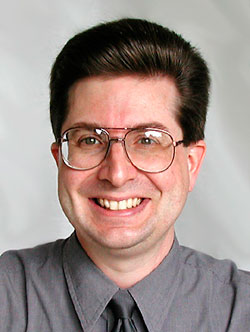
This article appears on the Copyblogger website and was written by Dean Rieck.  He is “Copywriter and Consultant for Direct Mail and Direct Marketing”
dean-rieck-color

Dean Rieck

I agree with much of what he says about “brilliant writing”, but not all.  Perhaps our divergences are mostly about differences in perspective: advertising copywriter vs author.  His blog says:

“Here are 11 ways you can start sounding brilliant:

1. Have something to say

This makes writing easier and faster. When you have nothing to say, you are forced to write sentences that sound meaningful but deliver nothing. Read widely. Take notes. Choose your subjects wisely. Then share your information with readers.

2. Be specific

Consider two sentences:

  • I grow lots of flowers in my back yard
  • I grow 34 varieties of flowers in my back yard, including pink coneflowers, purple asters, yellow daylilies, Shasta daisies, and climbing clematis

Which is more interesting? Which helps you see my back yard?

3. Choose simple words

Write use instead of utilize, near instead of close proximity, help instead of facilitate, for instead of in the amount of, start instead of commence.  Use longer words only if your meaning is so specific no other words will do.

4. Write short sentences

You should keep sentences short for the same reason you keep paragraphs short: they’re easier to read and understand.  Each sentence should have one simple thought. More than that creates complexity and invites confusion.

5. Use the active voice

In English, readers prefer the SVO sentence sequence: Subject, Verb, Object. This is the active voice.

For example:

Passive sentences bore people.

When you reverse the active sequence, you have the OVS or passive sequence: Object, Verb, Subject.

For example:

People are bored by passive sentences.

You can’t always use the active voice, but most writers should use it more often.

6. Keep paragraphs short

Look at any newspaper and notice the short paragraphs.  That’s done to make reading easier, because our brains take in information better when it’s broken into small chunks.  In academic writing, each paragraph develops one idea and often includes many sentences. But in casual, everyday writing, the style is less formal and paragraphs may be as short as a single sentence or even a single word.

7. Eliminate fluff words

Qualifying words, such as very, little, and rather, add nothing to your meaning and suck the life out of your sentences.

For example:

It is very important to basically avoid fluff words because they are rather empty and sometimes a little distracting.

Mark Twain suggested that you should “Substitute damn every time you’re inclined to write very; your editor will delete it and the writing will be just as it should be.”

8. Don’t ramble

Rambling is a big problem for many writers. Not as big as some other problems, such as affordable health insurance or the Middle East, which has been a problem for many decades because of disputes over territory. Speaking of which, the word “territory” has an interesting word origin from terra, meaning earth.

But the point is, don’t ramble.

9. Don’t be redundant or repeat yourself

Also, don’t keep writing the same thing over and over and over. In other words, say something once rather than several times. Because when you repeat yourself or keep writing the same thing, your readers go to sleep.

10. Don’t over write

This is a symptom of having too little to say or too much ego.  Put your reader first. Put yourself in the background. Focus on the message.

11. Edit ruthlessly

Shorten, delete, and rewrite anything that does not add to the meaning. It’s okay to write in a casual style, but don’t inject extra words without good reason.  To make this easier, break your writing into three steps: 1) Write the entire text. 2) Set your text aside for a few hours or days. 3) Return to your text fresh and edit.

None of us can ever be perfect writers, and no one expects us to be. However, we can all improve our style and sound smarter by following these tips and writing naturally.”


I agree with 1, 2, 7, 8, 9, 10, and 11.

3. Choose simple words:

Use of simple words is probably fine for advertising where clarity and conciseness are essential.  But when writing fiction, and when one is trying to paint a complex picture of fact, feelings and suppositions, simple words are rarely fully effective.  Maybe an unlikely combination of two or three special words is necessary to convey the mixture of fact and feelings.

4. Write short sentences:

Here again, punchiness isn’t necessarily what we want.  Short sentences can lack lyricism or intellectual interest.  They can be boring if repeated.  Use of some longer sentences can keep the reader interested.

5. Use the active voice:

OK, but switch now and then to keep the reader alert.

6. Keep paragraphs short:

I believe that paragraphs should be used as a clue to the reader that the action is changing: different time, different setting, different characters.  There is no other reason to break up the text other than that a paragraph longer than one page can make it feel to the reader that the reading is becoming laborious!

Review: Where My Heart Used to Beat

Christian Faulks’ new novel is the story of a male psychologist, Robert, told in the first person.

index

Sebastian Faulks

Robert is a middle-aged and living alone with his dog.  There is a girl friend  who ditches him for incongruous reasons.  His social life seems rather awkward, and his practice somewhat neglected.  Robert was two when his father was killed in the First World War; he was brought up by his mother in rural England in constrained financial circumstances.  Robert, however, was a good student: selected for grammar school, and able to get a place at a good university, he joined a partnership with others psychologists who ran a care home for people with severe psychological problems.

He receives a letter from an aging army colleague, Pereira, of his father’s who lives in the south of France and who promises information about his father, as well as the opportunity to manage some psychological intellectual property.  Having accepted Pereira’s invitation to go to his house on an island in the Mediterranean, Robert discloses much of his history.  He joined the army in the Second World War and fought in North Africa, later in Italy. His experiences in Italy are told in graphic detail.  They left a lasting impression on him.  While he is on medical leave recovering from a serious wound, Robert meets an Italian girl, Luisa, and the two fall hopelessly in love.  However, the two are separated when Robert is called back to duty.  He later learns that the Italian girl has gone back to her husband.

We are brought back to the present (1970’s), and Robert is sought out by the brother-in-law of Luisa.  Luisa is very ill and wants to see Robert again.  They meet again, but I won’t give away the ending of the story.

Where My Heart Used to Beat is a solemn, somewhat pessimistic story, and one of the themes of the novel has to do with the extent to which we have choices in life.  Nonetheless, I found it hard to put down.  One is torn between sympathy for the difficulties Robert faces, and frustration that he does not make better choices for himself.  Faulks does an excellent job building Robert into an understandable, complex character.  We are aware of his thoughts and feelings as well as his actions. Some of the psychological sub-themes didn’t work for me: for example, Robert has a theory that some severe mental illnesses have cellular causes.  The arguments for the theory were rather obscure and I failed to see the relevance of the theory to the novel.  Unless it is that our choices is life are limited by the cells in our brains, but, as I say, this didn’t work for me.  What did work was the picture of a tragic life that could have been less tragic.  The story of that life is beautifully written, and attention-capturing.  Most of the events in that life are rather extraordinary.  This, I think, makes it more difficult to draw general (ordinary) conclusions from it.

Creativity

There is a post on the Goodreads blog by Cynthia (26-10/15): “Elizabeth Gilbert’s Top 10 Tips to Stay Inspired and Kick-Start Your Creativity”

The To 10 are:

  1. Start writing: set a timer for 15 minutes, sit down and write anything. Stuff will start to happen.
  2. Be creative every day. Do a little bit every day.
  3. Go looking for inspiration. Seek ideas everywhere.
  4. Surround yourself with optimists. Pessimists should be avoided.
  5. Dare yourself to keep working.
  6. Trust your curiosity. If something interests you, pursue it.
  7. Create a ritual. Research and preparation are essential.
  8. Don’t believe in writer’s block.
  9. Write for yourself
  10. Imagine your reader. Tell the story to that person.

This advice is from Ms Gilbert’s book Big Magic: Creative Living Beyond Fear.

images

Elizabeth Gilbert

The only one of these Top 10 that I agree with whole-heartedly is no. 8: Don’t Believe in Writer’s Block. In my experience, writer’s block is a self-fulfilling prophesy. Yes, there are times when I don’t feel like writing, but rather than attributing it to writer’s block, I ask myself why I don’t feel like writing. If I’m tired, that’s not a good time to start writing. Otherwise, I’ll start trying out opening phrases in my head until one of them sounds good. I’ll type it, and see where it leads me. Frequently, when I begin to feel inspired, I’ll go back and re-create that opening phrase. In this sense, for me, creativity is a trial and error process. I’ll re-read what I’ve written, an hour later, a day later, a month later and six months later. I’ll re-read it slowly and ‘loudly’ in my mind. Anything that jars me gets attention. Maybe it’s the wrong word, or phrase or emphasis. And again, I’ll try alternatives in my mind until something clicks.

I think I know what Ms Gilbert means by ’write for yourself’. It is that one should write for personal pleasure. But then she says, “I never promised the universe I would be a GOOD writer.” If one doesn’t care about being ‘good’ at a major activity (apart from exercise) what’s the point?

In my opinion, creativity can’t be forced with timers, rituals or dares. I’m at my creative best when I’m feeling alert, unencumbered by extraneous concerns, and with no visual or auditory distractions. I’ll start the process with a question like ‘how can I make the sinister nature of this character more believable?’ Suggestions will pop into my head. I don’t grab the first one or one of the first three. I find that the suggestions help me redefine the question, making it more specific.

As I mentioned in an earlier post, I tend to be quite creative when I’m awake, in bed, in the dark, with no distractions. My mind will generate almost endless ideas. I just have to narrow down and refine the alternatives.

Review: The Power of the Dog

This novel is probably the grittiest I have read. I mean ‘grittiest’ in the sense of terse, violent and gripping. In 541 pages, Don Winslow sets out a compelling picture of the drugs wars in the America from New York City to Columbia. Nothing is withheld, abbreviated or glossed-over: the actions, reactions and motivations of dozens of very real characters. The scope of the novel draws in not only the drugs lords, the law enforcers and their subordinates on many levels, but also the politicians, and the military, so that, ultimately, it is not just about drugs, but also about perceived national interest and long term political strategy. One has to admire the depth of research Winslow must have completed to write this novel. The details of places, organisations, and procedures are all there with crystal clarity. One is tempted to believe that this is not a novel, but a description of the real world.

index

Don Winslow

The characterisations are excellent. There are about six characters who make it all the way through the book, and dozens more who fall (or are pushed) by the wayside. Each of the characters is distinct, and none is completely repellent: we understand their motivation even if it is just survival. The dialogue is terse, but fit for purpose.

One challenge for a reader of this novel is being able to connect the threads of location, character and motivation, as the story skips around from place to place. But Winslow is not trying to tell a simple story, and his skipping about technique reinforces the overall message: this game is very complex.

I found the book hard to put down, but when I did, I looked forward to finding out ‘what happens next’.

Winslow’s style of writing is not ‘literary’. This is not a work of literary art; it is a fast-moving story told in the street language of the characters themselves.

This book is not a pleasant read: the casual violence can be gut-wrenching, but if you are a reader with a strong stomach, and a love of realistic, complex and, ultimately, important action, this is the book for you.

A Learning Experience

As a writer, I have found it very helpful to read the work of other authors. One discovers techniques and approaches which can be very effective. My latest experience in learning from others involves not my own reading, but my wife’s reading. She has been reading a series of novels in Italian by Elena Ferrante (a pen name). She said the first in the series is extremely good; it concerns two young girls with very different personalities growing up in the 1940’s. She said the remarkable aspect of the novel is that nothing extraordinary happens, but that the writing was so good that it was captivating.

I got to thinking. How could this be? Then I realised that it wasn’t the content but rather the characters’ reactions to the content that was important. In other words, the novel constantly explored the characters’ emotions and reactions to events which, in and of themselves, were ordinary, but the emotions and reactions painted a vivid picture of the character.

I am reading a novel by Sebastian Faulks which makes frequent pauses to describe the principal character’s inner reactions to events, or to describe a relevant snippet of his history. Faulks and Ferrante are using similar techniques.

It occurred to me that, having started out as a story-teller and a writer of thrillers, I have a tendency to keep the action moving. My dialogue is crisp and to the point. The words express what the characters are feeling and they imply values. But this approach misses a dimension of richness by not pausing to see the characters more completely in their history, their personality and their values.

I am about 75% of the way through a new novel, and I’ve decided to continue with brief diversions on the characters’ feelings, history and values. But these diversions have to be succinct, relevant, and truly interesting – perhaps unexpected. My further intention is to review the 75% which is ‘completed’ and add similar passages.

Review: Remains of the Day

This ‘modern classic’ was first published in 1989, and won the Booker Prize that year. While I had heard of the novel, I had never read it; I was further motivated to read it as a Booker Prize winner and by the author being a Japanese writer I didn’t know.

Kazou Ishiguro was born in Nagasaki, Japan in 1954 and moved to the UK at the age of five. He has written six novels, all of which have won prizes or received major recognition. He currently lives in London with his wife and daughter.

untitled

Kazou Ishiguro

The novel is told in the first person by Stevens, who was the butler in Darlington Hall, which was the residence of Lord Darlington in the 1930’s. Darlington Hall was a grand place, with many servants, Stevens having overall responsibility. Lord Darlington was a man of considerable wealth and influence, both socially and politically. He died after the war, and Darlington Hall was sold to an American, Mr Faraday, who has downsized both the staff and the use of the Hall.

Much of the book is Stevens’ recollections of events that took place when his lordship was in residence, and we learn that Stevens is preoccupied with the extent to which he was (like his father) a top butler. Stevens comes to define a top butler as a true professional who carries great dignity to his profession. The descriptions of relationships (and dialogue) among staff and with the lord of the manor are brilliant: they convey clearly the culture of the English aristocracy in the 20’s and 30’s.

Mr Faraday plans to be in the States for an extended period, and he suggests to Stevens that he take the motorcar on a sightseeing trip. Stevens accepts his offer and coincidently decides to call on a Miss Kenton who was the one who supervised all the housemaids at Darlington Hall. Miss Kenton left the Hall years ago, and has married. Now, Stevens wonders whether he can persuade her to return to the Hall, as there are hints that her marriage is in difficulty. The working relationship between Stevens and Kenton was very formal, but one cannot help but wonder if there is an unacknowledged attraction between them.   In the last chapter, they meet again, and the message of the novel is revealed: Stevens muses: “After all, what can we ever gain forever looking back and blaming ourselves if our lives have not turned out quite as we might have wished?”

The novel moves at a very leisurely pace, with very little action. Major events are recounted by Stevens factually and without emotion. The characters, the setting and the story-telling all completely support that retrospective, self-doubting theme. In spite of Stevens’ wordiness, his character shines through in a way that he is able to maintain the reader’s attention.

If one is looking for tale with plenty of action and excitement, The Remains of the Day would not be a good choice. But if one would like to curl up with a superbly-written story, immersed in history, and long-forgotten characters, a story that succeeds admirably in making its point, then Remains is for you.

As a sort of aside, I would add that the criteria for winning the Booker Prize may have shifted over the last twenty-five years. It’s hard to imagine that a novel with little overt physical or emotional action could win, given the level of current competition.

Review: Writing with the Master

This is the true story of a retired businessman who’s been writing novels and having them rejected by publishers/agents.  The businessman’s friend John Grisham (the best-selling author) offers to coach him in the writing of a new novel. The book sets out, in detail, all of the coaching provided over two years.

511C2LhqQFL__UX250_imagesT0ZHRO92

Tony Vanderwarker                               John Grisham

Tony Vanderwarker is a retired advertising executive who had his own, very successful, ad agency, sold it and moved from Chicago to Charlottesville, Virginia with his family.  John Grisham, also a Charlottesville resident, is a friend of Tony’s, and one day, over lunch, John offers to ‘mentor’ Tony in writing a new novel.  Grisham had previously referred one of Tony’s works to an agent whose review was positive, but not quite good enough to be published.

The process started with John asking Tony what he wanted to write about.  Tony’s first two ideas were rejected out of hand.  His third idea was a thriller about nuclear weapons lost by the US Air Force in air crashes where the weapon was not recovered.  There are nearly a dozen such weapons, dating back to the 1950’s.  Tony prepared a three sentence description of the plot and then a full, multi-page outline.  At each stage we see portions of what Tony has written and John’s written critiques.  The critiques are blunt and to the point.  After three and a half months of trial and error, Tony revises his plot outline, and is ready to start chapter outlines.  During this process, we see a reflection of the way John Grisham writes his novels.  First, a one paragraph outline: is it interesting enough, strong enough?  Then the three page outline, complete with characters: do the subplots support the main plot or are they extraneous?  Are the events credible?  Are the characters interesting and likeable?  Then comes the first draft of the manuscript.  In Tony’s case, John tears into the manuscript and points out a number of problems:

  • the writing is sloppy: there are repeated words and phrases and factual inconsistencies.
  • there are too many distractions to the basic plot
  • the actions of a key character don’t make sense
  • too many bad guys
  • minor character isn’t fully credible
  • inserting the author’s political views into the story
  • make the dialogue real: repeat it out loud.
  • Show! Don’t Tell!

Tony is absolutely gutted by this critique!  He turns his attention to the notes John has written on individual pages of the manuscript.  Here, again, we see the text and the comment.  Tony divides the manuscript into seven piles and begins the task of rewriting, which takes a year.  Once again Grisham responds with a cover letter describing his principal concerns and returns the manuscript with page-by-page comments, including:

  • too many detours; too much backfilling
  • don’t be afraid to cut
  • not allowing the suspense to build

Tony makes the suggested changes and submits the manuscript to John’s agent, who likes it and refers it to another agent because it doesn’t fit for him.  The agent to whom it is referred is very complimentary but declines. Tony goes back to the default mode of mass submissions, without success.

When Tony has essentially given up on getting his novel published, he gets a great idea.  Why not write a book about the process that he and John Grisham have been through.  Grisham agrees, and the book is published by Skyhorse Publishing, who also agree to publish the mentored novel: Sleeping Dogs.

For anyone who is interested in the process of writing fiction, this book is a must read.  And for those with only a passing interest in the creative effort, there is enough of the rest of Tony’s life fitted neatly in to make to book a good read: his life as an advertising executive, his work for an environmental charity, his relationship with his wife and the Charlottesville area.

Personally, I’m not surprised that Sleeping Dogs didn’t get published on the first attempt.  From my point of view, there’s too much that stretches credibility.  But, I’m not surprised that Skyhorse decided to take it up.  Writing with the Master is a great promotion for Sleeping Dogs.

As for John Grisham’s advice, I think that ninety percent is spot on.  Two quibbles: I believe in outlining, but not to the extent that John does.  I think that detailed outlines can stifle creativity, and I notice that Tony has reached a similar conclusion.  There’s not much in John’s advice about the use of creative language, which I think is important to differentiate the writer and his/her text from the mundane.

Tony writes well, and I’m glad that he decided to follow-up on his brainstorm: why not write a book about the mentoring process?