Review: The Marriage Portrait

I recently bought a copy of The Marriage Portrait by Maggie O’Farrell, having been attracted by the brief description of a historical novel involving a marriage in XVI century Italy, and by the author’s biography.

Maggie O’Farrell is the author of Hamnet, winner the Women’s Prize for Fiction 2020, and the memoir I am, I am, I am, both Sunday Times  no. 1 bestsellers. She was born in Northern Ireland in 1972 and raised in Wales and Scotland. Her novel The Hand that First Held Mine won the 2010 Costa Novel Award, and The Distance between Us won a Somerset Maugham Award. She currently lives in Edinburgh.

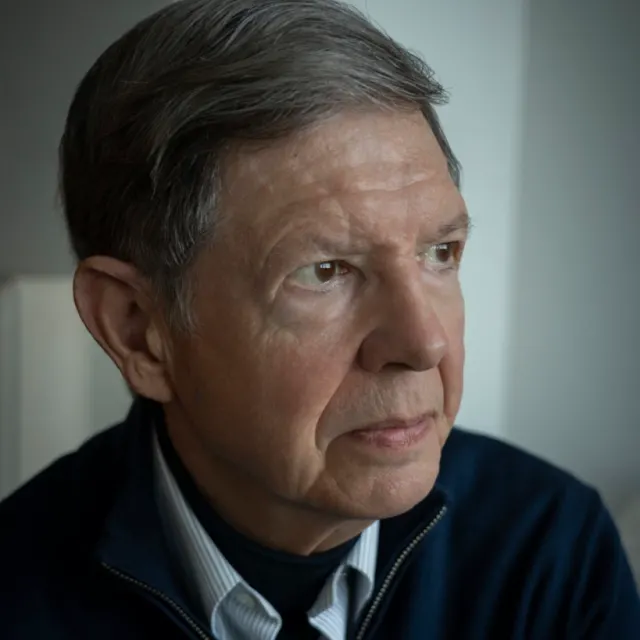
Maggie O’Farrell

The Marriage Portrait is set in XVI century Florence and Ferrara, Italy. The protagonist is Lucrezia, the fifth child of the Duke of Tuscany, a somewhat rebellious child, who stroked a captured tiger in the basement of her father’s castle and was thought to have charmed the beast. At the age of thirteen she was betrothed to Alfonso II, Duke of Ferrara who was more than ten years her senior. He had previously been betrothed to an older sister who died. Her marriage took place when she was sixteen in Florence and she moved to Ferrara as a young duchess with a maid, Emilia, who is two years older and the daughter of her childhood nanny. There is political intrigue in Ferrara, where Alfonso’s mother has taken up a hostile alliance. One of Alfonso’s two sisters, Elizabetta, is having an affair with the captain of the palace guards, Ercole Contrari, and the other sister, Nunciata, seems hostile to Lucrezia. When Alfonso discovers the love affair between Elizabetta and Ercole, he orders that Ercole be strangled by the brutal Baldassare, the dukes cousin, while Elizabetta is required to watch. It becomes clear to Lucrezia that she is required to produce a male heir for Alfonso. She must perform her marital duty frequently. Her husband sometimes strikes her as cruel and distant and warm and loving at other times. When the couple move to a remote hunting lodge, Lucrezia is convinced that her husband intends to murder her. He refers to a marriage portrait of Lucrezia as “my first duchess”. I won’t give away the ending which is quite satisfactory, but I will say that the real first duchess, on whom Lucrezia is based, was reported to have died of a “putrid fever”, but there were rumors that she was murdered by her husband. The real Alfonso II married twice more; neither duchess produced an heir.

I have only one major criticism of this novel, and that is that it is too long. It is 432 pages long, but it could be trimmed without any significant loss and it would gain urgency. Ms O’Farrell likes to describe her settings in poetic detail which makes them beautifully clear but a bit laborious. The plot of the novel is excellent. One is convinced of being immersed in XVI century Italy with characters who are living like royalty and servants can at best survive. The values and traditions of the times are captured as well. There is a frequent transition between a short chapter which is set in the final hunting lodge and an earlier, longer chapter containing events leading up to the end. This sequencing can be confusing, and I’m not convinced it is necessary to maintain the ‘is he really going to kill me?’ tension.

Hear Your Own Voice

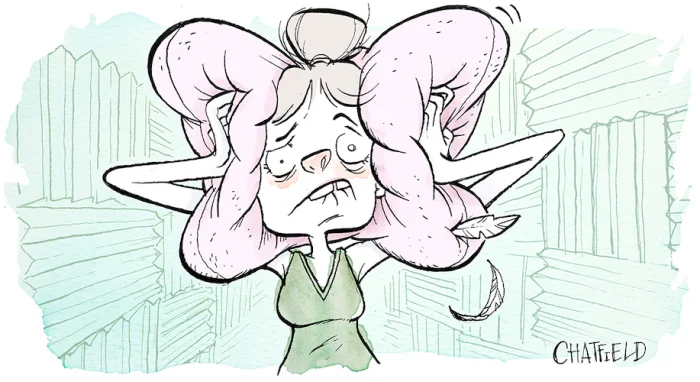
Jason Chatfield has an article on the Writers Digest website dated June 13, 2023 with the title ‘Five Ways to Turn Down the Volume to Hear Your Own Voice’. His basic point is we can’t hear our own genuine voice as writers with all the ambient noise.

Jason Chatfield is an Australian cartoonist and comedian based in New York. He is Australia’s most widely-syndicated cartoonist, producing the iconic comic strip Ginger Meggs which is syndicated daily in over 30 countries through Andrews McMeel Syndication. Ginger Meggs has been running since 1921, making it one of the longest-running comic strips in history, celebrating its 100th anniversary in 2021.

Jason says,”There’s something to be said for immersing yourself in the marketplace of ideas and being exposed to what your contemporaries are doing. There is, however, a very real danger that in doing so, you become the kind of creative individual that does more on-looking than creating.

The ability to yank yourself out of the endless slip-stream of “content” and quietly explore your own ideas is one that should be cultivated above all else. That is, unless, you like the idea of mimicking everyone around you by osmosis and wondering why nobody is noticing your work.

Artists only languish when their primary drive is to merely strive to keep up with what their peers are doing. If they are only exposed to the contemporary trends of their art form, their ideas will reflect that limitation. But, this isn’t a new problem. As long as art has been created, it has been mimicked and iterated on to the detriment of true originality.

For example, in 1801, Ludwig van Beethoven was lamenting the fact that he was slowly going deaf. By 1800, his hearing was in full decline. He was 30 years old. Over the following years, he had to accept that there was no hope of remission and would have to live the rest of his life without the ability to properly hear a musical note. He told people that without sound, his life would be meaningless. But what happened as a result changed the world and holds a lesson for us more than two centuries later.

By Age 46, Beethoven’s deafness was complete, so music only existed in his imagination. During that period, Beethoven was unable to hear the popular compositions of the day. Across the decades, while others were busy replicating each other with slight variations on the same themes, Beethoven was in his own mind, writing the music that he alone wanted to write. This ability to work in a creative silo culminated in his greatest work: his famous Ninth Symphony, which would define his unique style, change music permanently, and make him one of the greatest composers of all time.

With that in mind, here are five of my best pieces of advice for turning down the volume to hear your own unique voice:

1. Become Comfortable With Silence.

Becoming comfortable with silence is one of the hardest skills to cultivate in the modern world, but it is the most important. It’s made even harder with a seemingly infinite amount of ways to disturb the silence. We’ve become so used to cramming “content” into our audio and visual senses at all waking moments that we’ve lost the capacity to just be.

Be honest with yourself; can you remember the last time you left your house without your earbuds? Or got in your car without turning on the radio or a podcast, an audiobook, music, or something else to fill the dead air?

It can be tempting during quiet moments to simply play some soft background music, or some white noise, or even a loop of a crackling fireplace or some rain, but it is essential that your mind benefits from the absence of any sound whatsoever.

2. Deactivate Your Social Media.

We’ve lost much of our ability to examine our own thoughts, ideas, and opinions—to cultivate our own unique voice in the world. Most of the time, our opinions are just a simulacrum of those we’ve heard online, on every topic from immigration law to Taylor Swift. Here’s the truth: You don’t need to have an opinion on everything, even if the social media slipstream insists you do. Doing this is diverting your creative energy away from the things that would actually bear original artistic fruit.

If you have the ability to do so, I would highly recommend the practice of taking yourself as far from the aforementioned slipstream as you can: Deactivate all social media, remove the apps from your phone, and disable all notifications. Remove your default browser if it means you won’t be tempted to check social media in your browser app. If need be, you can reactivate them and showcase your work when you finally have something unique and original to share.

Think people will panic and wonder where you went if you stop posting to Instagram? I’m going to tell you a very upsetting truth that I and many others have discovered: Most of them won’t even notice. Try it for one month and tell me I’m wrong.

3. Clear Your Calendar.

Learning to say “No” to every invitation is a skill that needs to be learned like anything else. A “No” after saying “Yes” is even harder to master, but I guarantee you it will be of great value if you want to dig down and do the work needed to cultivate your most authentic work. As James Clear writes in his book, Atomic Habits, “No is a decision: Yes is a responsibility.”

In the same way that rest days are important for physical training, deliberately building in time to turn down the volume on the rest of the world is essential if you want to be able to cultivate your own distinct voice. By maintaining routine blocks of protected solitude, the world’s greatest artists have produced their most innovative creative work, pushing their medium forward into previously unexplored terrain. There’s absolutely no good reason for you not to do the same.

4. Get Away From It All.

Some of the most satisfying, deep and original creative work I’ve managed to accomplish as an artist has been during times of great isolation—picking up from the city and driving off to a tiny cabin in the woods with an empty sketchbook, a french press, and a bottle of scotch. (OK, and my dog.)

5. Bring Only What Is Necessary.

You’re going to be tempted to listen to something or read something if you bring novelties to fill the silence. Instead, bring only what is necessary to do your work. Nothing else. Limitation breeds extraordinary clarity and creativity. Turning down the volume includes not reading and looking at other artists’ work in print.

Try these tips today, and tell me they don’t make a massive difference to your creative output over the coming months.”

Use of Crying

Benjamin Perry has an article on Writer’s Digest dated May 25, 2023 on how crying can shape a story and a character. His analysis strikes me as particularly useful to writers.

Benjamin Perry is a minister at Middle Church and an award-winning writer whose work has appeared in outlets like The Washington PostSlateSojourners, and Bustle. He has a degree in psychology from SUNY Geneseo and an MDiv from Union Theological Seminary.

Mr Perry says, “Why do characters cry? At face value, it’s an easy question: They cry because people cry. Authors want their creations to feel life-like, so just as characters share our laughter and struggle, our hopes and wild dreaming, they must share our weeping, too. But tears, like any action, can feel authentic or forced. When crying is handled poorly it can feel incidental at best and, at worst, a disingenuous attempt to make the reader feel something that the writer has not earned. However, when tears are artfully woven into the narrative, they can provide unparalleled emotional complexity and catharsis for the reader.

“In the two years I spent writing Cry, Baby: Why Our Tears Matter—a nonfiction book about the science and social ethics of crying—I was particularly attuned to how authors portrayed weeping in the fictional books I read. The book devotes an entire chapter to the way tears function in novels, myths, and sacred texts, but here I’ll condense a few of the bigger lessons I learned about how to effectively portray sobbing in a story.

1. Crying Isn’t Just About Sadness

“A common pitfall I see is writers only linking tears to sorrow. Obviously, sadness is a significant reason why people cry, but—even when it’s a principal cause—real emotions are usually more layered and multivalent. Often, it’s not just the sadness that makes our eyes well up, it’s frustration with our situation, anger at unjust circumstances, our longing for something different.

“There’s a scene in Torrey Peters’ wonderful novel Detransition, Baby where one of the main characters sits weeping on the floor of her ex-partner’s closet. Certainly, loss from the breakup is part of why she’s crying. But what truly gives the scene its power is how that loss mingles with her fragile hope about the possibility of becoming a mother—and the anger she feels about receiving what she longs for from someone she feels betrayed her. If crying is used as lazy shorthand for “sad,” we lose that emotional richness.

2. Weeping Helps to Cross a Threshold

“Crying is startlingly effective as an action to bring a character into a new place—either physically or in their heart. One of the most famous examples of this are the tears that Alice weeps when entering wonderland. Growing giant, she weeps a sea into which she later becomes literally awash. She must travel through that soggy morass to enter the door to a different world, a striking metaphor for the character’s emotional journey.

3. Link Tears to Transformation

“While tears are often connected to a particular emotion (anger, pride, joy, etc.), they’re also extremely effective to show how a character is changing or has changed. The archetypal example of this, for me, is Ebenezer Scrooge. Throughout A Christmas Carol, Charles Dickens punctuates Scrooge’s ghostly visions with frequent tears, to show how the experience is changing him. This all culminates on Christmas morning when Scrooge leaps from his bed, “laughing and crying in the same breath,” upon learning that there is still time for him to choose a different future.

4. Crying Shouldn’t Only Happen Where You Expect

“Because of social forces that shape who is more comfortable crying openly, there are many cultural misconceptions about crying. Men, for example, are far less frequently depicted crying in our stories. (And the absence of those portrayals is likely part of why so many men only feel comfortable crying in private.) There is so much power in subverting these expectations!

“It’s not a book, but one of my favorite recent depictions of masculinity is the titular character in Ted Lasso. The show follows an ebullient soccer coach who motivates his characters through praise and kindness. Part of what makes the character so vibrant, however, is the way he’s shown weeping in private moments—often literally in the dark. It’s the tension between the public joy and quiet sorrow that gives Ted so much pathos.

5. There Are Many Types of Tears

“We cry for so many reasons: Awe at the majesty of a forest; pride at accomplishing something long-awaited; confusion when something happens that we don’t expect; even cunning tears wielded to deceive. Part of the beauty and mystery of tears comes from the way that they refract the fullness of our humanity. So, embrace that complexity!

“The more you’re able to use tears in multifaceted ways, the nearer they will strike reality—and the more your reader will resonate with what’s on the page. Similarly, there are lots of ways we cry: a single glimmering tear, a silent stream, or the howling sorrow of full, body wracking sobs. Matching physical embodiment to the narrative event will cultivate realism, helping your characters come alive.”

Endings Matter

In Harry Bingham’s latest email, he discusses the importance of the ending of a novel.

“I just realised that I write quite often about beginning a novel, and not all that often about ending it.

And yes: beginnings are important. If you don’t get your reader onto the story-train in that opening chapter, you’ve basically lost the game before it’s really started.

Endings matter at least as much as beginnings and the reason I don’t talk about them much is simply that endings mostly write themselves.

I don’t know about your experience, but my endings generally pass in a rush. It’s as though the entirety of the preceding novel is there to allow me to write the final chunk in a blaze of understanding and joy.

The understanding is: I know my characters. I know how all my little plot intricacies need to play out. I know what the grand finale needs to deliver. The prior 90,000 words involved me figuring those things out. The last 20,000 are my reward.

The joy is partly the ease of writing. But it’s also the joy of completing the arc. It’s like writing one long punchline, where you already know that the joke is going to land. I’ve certainly had some spectacularly happy writing sessions that haven’t involved endings. (Giving Fiona hypothermia in the snows of Love Story, with Murders was joyous. And I did enjoy burying her underground in The Dead House.) But mostly – the writing sessions I remember with most pleasure involve endings. Words flowing and the text satisfying.

So maybe you don’t need help with the endings. I think there’s an argument that if the preceding story has worked properly, the ending should just fall into place. But here, for what it’s worth, is a checklist to keep at hand …

Exterior drama

Have you properly completed your exterior drama? In the kind of books I write, that’ll typically involve some good splash of violence – a sinking boat, a fight, a burning building. But that’s not necessary. In Pride and Prejudice, the exterior ‘drama’ involves a naïve girl eloping with Mr Wrong and the Romantic Hero doing (off-screen) what Romantic Heroes are there to do. The off-screen quality of that drama is probably a little underweight for a modern audience, but so long as you have some dramatic action that’s well suited to your genre and readership, you’re fine.

Interior drama

The flipside of the exterior action needs to be some serious internal pressure. In a standalone novel, that pressure needs to have the sense of being pivotal – life-altering, life-defining. In a series novel, you can’t quite get away with a new life-defining moment with every instalment, but the stakes still need to be high. Series characters take a bit of a battering as a result. (I once did an ‘interview’ with Fiona, in which she grumped at me for giving her a rough time. Reading it back, I have to say that she’s in the right. I’ll never tell her that though.)

Romantic relationship

Most books, not all, will involve a romantic relationship. And – of course – the pressures of your grand finale are also pressures that test and define that relationship. You definitely don’t have to kiss and get married at the end of every book. I’ve ended a book with my protagonist ending what had seemed like a strong and constructive relationship. But when your character enters the furnaces of your ending, everything is tested, everything will either prove itself durable or fallible. The relationship can’t simply be as it was before. (Again, series characters need to play those things differently, but ‘differently’ doesn’t mean you can just ignore the issue.)

Other key friendships / relationships

Of course, there are a ton of other relationships that build up over the course of a book. Those might be best-friend type relationships, or children, or parents. They can (importantly) be office colleagues, which sounds dull but they can matter too. My detective’s relationship with her boss and other colleagues is just quite central to the architecture of her life and the books. These relationships too don’t need profound alteration necessarily, but they need some token of ending. A boss hugging your character (when he/she never normally would), or talking about a promotion, or offering a holiday – those things sound trivial, but they can define something important about everyone’s relationship to what has just happened. You don’t necessarily need much here. Half a page? A page? That might be ample. But if you book misses that page, it’ll never quite satisfy as it ought to.

Mystery resolution

Most books – not just crime novels – will often have some kind of mystery at the heart. That mystery will probably be unfolded in your grand action-climax, but that won’t always be true. Modern fiction has (rightly) moved away from that moustache-twirling final chapter where the Great Detective reveals the mystery to a completely static audience. But it’ll often be the case that little questions and niggles remain. Those things need to be addressed. It’s even OK if they’re addressed by saying, “We’ll never know exactly how / why / who X.” But you need to resolve your mysteries or acknowledge that you haven’t.

Movement

And, since we’ve just dissed static and moustache-twirling final chapters, I’d add that maintaining some kind of motion still matters at the end. Just as you’ll want to move settings fairly frequently in your middle chapters, I think you’ll want to do the same at the end. Physical motion is still a good way to convey story motion.

The closing shot

And –

There’s a theory in film-structure that the opening shot should show the ‘Before’ state of a character and the closing shot should show the ‘After’ – where the before/after vignettes somehow encapsulate the alteration brought about by the story. So to take the (vastly excellent) Miss Congeniality movie, the opening shot shows Sandra Bullock as goofy, unkempt, and without close female friends. The closing shot shows her kempt, still her, but now with close female friends. That’s the key transition in the movie.

I don’t quite like the mechanical nature of these movie plotting guides, but I do think it’s worth reflecting on the closing shot. What are you wanting to show? What’s the image of your character that you want to leave with your reader? In one of my books, a girl had been long separated from her father. Fiona’s last act in the book is to rejoin the two. She’s not physically present when the two meet – she’s set up the meeting, but remains in a car outside, watching. And that maybe is just the right tone for the book. Fiona plays this almost Christ-like role – suffering for others, undoing wrongs – but nevertheless remains on the outside of ordinary human society. That point isn’t made in any direct way, but it doesn’t have to be. An indirect point lingers longer than one made more crudely.

Review: Tropic of Cancer

As you may know, this novel by Henry Miller was banned in the US as obscene for twenty-seven years after it was first published in Paris in 1934. Having never read any of Henry Miller’s work, I decided to start with this one. Now, having read it, I would say that it is not obscene (although it is occasionally explicit and does not shy away from bad language), it is, in my opinion, misogynistic. Henry Miller has little respect for women as equals.

Henry Miller was born in New York in 1891. Surprisingly, he attended City University for only one semester. (He writes with considerable skill and with an astonishing vocabulary.) He worked in personnel at Western Union for ten years before devoting himself entirely to writing. He developed a semi-autobiographical, stream of consciousness style. He lived in Paris during the 1930’s, in Greece briefly and in California until his death in 1980. He was married five times. His major works, aside from Tropic of Cancer, include The Rosy Crucifixion, Black Spring, Tropic of Capricorn and The Colossus of Maroussi.

Henry Miller

Tropic of Cancer is set in Bohemian Paris during the 1930’s when Miller was a destitute, struggling writer there, having separated from his second wife, whom he recollects warmly. The book is written in the first person, as Henry Miller, and is a commentary on the human condition from a low-down, devil-may-care perspective. Many of the characters are thinly disguised friends and associates of Miller’s. The narrative is disorderly, sometimes in the present and sometimes a recollection of past events. The subjects are the peculiarities of the characters, their influences on one another, the scarcity of money, various venues and scenes in the city, sexual encounters, writing, philosophy, and employment, all revealed unvarnished and with clarity. Millers’s writing is characterised by an eagerness to reveal all, and he views his desperate financial circumstances and challenging relationships with startling optimism.

Tropic of Cancer is clearly a literary milestone in its construction, style, subject and narrative. Strangely, perhaps, it makes an engaging read. One wants to discover what Henry will discover next. For me, there is no overarching theme or message, and if one tried to construct a philosophy from the events, it would probably be self defeating. For example, Miller seems to view the church disdainfully, but his observations are congruent with Christian theology. The writing is extraordinary its clarity and erudition. While I take strong exception to Miller’s view of the role of women, I have to admire the way he has described his experiences in Bohemian Paris in the 30’s. Is it a great literary treasure? I think not. Is it a book one should read. Yes!

Review: The Maid

The second novel – a crime novel – that my wife and I listed to during the drive down to Sicily was The Maid by Nita Prose and narrated by Lauren Ambrose. It is certainly an entertaining book, though when we started to listen I wasn’t expecting a crime novel; I was expecting a romance or an adventure. It has sold over a million copies and won a couple of awards.

Ms Prose says, “As for my professional life, I work in the publishing industry. I began years ago as an intern, photocopying edited manuscripts and secretly snooping the fascinating margin conversations between editors and writers. Currently, I’m vice president and editorial director at Simon & Schuster in Toronto, Canada, where I have the privilege of working with an incredible array of authors and publishing colleagues whom I credit with teaching me, manuscript by manuscript, book by book, the wondrous craft of writing.”

Nita Prose

The central character is Molly, who is a maid in the Regency Grand Hotel, a job to which she feels she was born and is obsessively dedicated. She likes nothing more than restoring a filthy, messy room to perfection. She has such an orderly, Polly-Anna-ish mind that I thought she has learning disabilities until I learned that she had completed some university level courses. Molly lived alone with her grandmother, who has a similar character, is full of simple-minded advice, and who dies halfway through the book. The other characters are a supervising maid, who is lazy and apt to purloin tips that have been left for Molly. There was a boyfriend who stole a large nest egg which Molly’s grandma had been saving for them. Molly’s current crush is the hotel bartender, who has suspicious friends and treats her with indifference. The hotel manager is a harried soul who treats Molly with respect, and there is the hotel dishwasher, a conscientious Mexican worker whose immigration papers are not in order. Mr Black, an older, very rich, disagreeable man in doubtful businesses, and his younger, trophy wife are frequent guests at the hotel. Molly strikes up a friendship with the wife, and Molly finds Mr Black dead in his room. It was murder and Molly is the prime suspect according to a zealous police detective. Fortunately, the doorman has a daughter who is a very clever criminal lawyer and who devises a scheme to prove Molly not guilty and to reveal the actual perpetrator. A drugs operation involving the bartender, Mr Black and assorted outside thugs is discovered. Molly knows who actually killed Mr Black, but for personal, sympathetic reasons, she does not reveal the person at the trial.

Certainly it is a clever device to create a character who goes against our reflex notions of a hotel maid: invisible, unmotivated and slap-dash. This strange character wins our sympathy, though perhaps a little reluctantly in my case. For me, Molly is a little too dedicated to her simple-minded perfectionism to be fully credible. Perhaps if Molly had some learning disabilities she would have worked better for me. The writing is lively, though not of literary quality, nor should it be. The scenes and characters are clear. The plot is well conceived, and tension is maintained throughout. For me, Molly’s motivation not to reveal the true killer was not strong enough, and in the real world the killer would have been identified.

Review: The Ghost

I listened to this novel by Robert Harris on our drive down to Sicily from London.

Harris is a British novelist and journalist born in 1957. He was educate at Cambridge, and began his career at the BBC where he worked in news and current affairs programs. He became the political editor of The Observer at the age of 30. From 1982 to 1990 he wrote five non-fiction books. His first novel, a commercial success, was Fatherland, based on the Nazis having won the Second World War and published in 1992. He has written fourteen further novels. The Ghost was published in 2007 and was made into a film starring Pierce Brosnan.

Robert Harris

The Ghost is told in the first person by an unnamed professional ghostwriter, who is hired by a prominent publisher to complete the memoirs of Adam Lang, an ex-prime minister of the UK, thinly based on Tony Blair. Lang’s original ghostwriter, Mike McAra, a former aid to Lang, had died in strange circumstances, having fallen overboard from the Woods Hole Ferry. Most of the action takes place on Nantucket Island, Massachusetts, where the publisher owns a lavish summer home. Lang’s wife is depicted as a scheming manipulator, while Lang is having an affair with his attractive female assistant. Frustrated with having an opaque picture of the real Adam Lang, the ghostwriter gets into McAra’s rented car an allows it to follow a previously set destination. This takes him to a Professor Paul Emmett, who went to Cambridge with Lang, was an associate of Lang’s wife and was a CIA agent. Lang’s former Foreign Secretary, Richard Rycart, loosely based on Robin Cook, is now working at the UN and has produced documentation that Lang had four terror suspects arrested in Pakistan by the SAS, and turned over to the CIA for interrogation. Potentially, Lang would be charged with was crimes. The ghostwriter finds Rycart’s phone number in McAra’s files, and arranges to meet Rycart in New York, where Rycart confirms that he and McAra had concluded that Emmett had recruited Lang into the CIA. Lang is assassinated by a protester. The ghostwriter finishes the book, but does not reveal Lang’s secret, because he does not confirm it before he is killed.

The book is brilliantly read by Michael Jayston who uses a distinctive voice for each major character. The plot unfolds beautifully and with constant tension until it seems likely that Lang was a CIA agent. This seems far fetched and renders a satisfactory conclusion to the book nearly impossible. The writing is captivating, though it occasionally wanders into unnecessary detail. The characters are well draw and credible. Two events struck me as lacking substantiation: the fling between the ghostwriter and Lang’s wife and the beach scene at night where McAra’s body washed up.

Perhaps Mr Harris permitted his disenchantment with Tony Blair to overrule his literary craft.

Novels Left Unpublished

Bryan VanDyke has an essay on The Millions website with the catchy title “To All the Novels I Never Published”. In my case, I’ve abandoned a novel after writing seventy pages, then come back a year and a half later, rewrote much of what I had written, and finally published it. But I’ve never put a completed manuscript in a drawer and left it there indefinitely. I was interested in what Mr VanDyke had to say.

Bryan VanDyke’s essays and fiction have appeared in The Millions, The Rumpus, Carve, and Pacific Standard. He is the author of Only the Trying, a book-length essay on the nature of illness and recovery. He lives in Manhattan with his wife and two children.

“I’ve had a manuscript locked in a drawer for three and a half years now. It’s a coming-of-age novel about a boy who believes a supernatural force has seized the minds of the adults in his life. He and his best friend confront and defeat the supernatural force, but victory comes at the cost of their innocence—the classic trade-off. I don’t know if it’s my best work, but it’s my favorite. Perhaps inevitably, I’m terrified of ever trying to sell it to someone.

I’m not new to this writing jig. A few weeks ago, I went deep into my hard drive archives and tallied the numbers. Here’s what I learned: over the last 25 years, I’ve finished seven novels, three dozen short stories, and 55 essays. The number of published pieces is, well, much smaller. This is all to say that I’m well acquainted with the creative process, its thralls and its jiltings. There is work that I’ve rushed to share with the world and work that I’ve held back. The hard part is getting wise to which is which.

In college, I pursued a double concentration in both poetry and fiction. That’s how much I wanted to be a writer. At the end of senior year, I won an award from the English Department for one of my short stories. A handful of students were honored at a small reception, and we received $300 checks from Alfred Appel, a professor and author of four books on Vladimir Nabokov (my first literary god). This check, Professor Appel told us, might be the most money you ever earn for a single piece of creative work. He grinned like he was joking. He wasn’t joking.

After college I was lucky enough—or damn fool enough, depending on your perspective—to jet straight off to an MFA program. To afford tuition, I juggled four jobs: I spent a part of each week as a web developer, a departmental admin, a researcher for a magazine, an LSAT teacher, and a tutor. I did most of my writing after midnight. I felt like the luckiest guy in the world.

At one point for a workshop I was paired with Mary Gordon, a thoughtful teacher and tenacious stylist whom I’d heard great things about. You’ll love her, one of my mentors said. Professor Gordon told me in our first private conference: I’m going to be hard on you because I think you’re a good writer. Oh, wow, I said, flattered. I suspect this was a line she delivered to many if not most students. If it was a ploy, it worked: I never thought she was harsh, even when she derided the archaic diction in my stories.

During class one afternoon Professor Gordon said: After I finish a novel, I always put it in a drawer for a year. All of the apprentices in the room sat up a little at this. A year? The disbelief was perceptible, like a shift in the wind. Yes, she insisted, gathering forcefulness as she repeated herself. You must do this with a book. It’s the only way to really figure out if something’s any good. You need space.

Her advice bothered me because it was both wise and inconvenient. Our entire MFA program was oriented around the idea that your thesis would be either a story collections or a novel—either way, you needed a finished manuscript in order to graduate.  With what I was paying in tuition, my pockets weren’t deep enough to wait a whole year to figure out if what I wrote was any good. I barreled onward, advice be damned, and when I finished my thesis, I turned it in. I had no time for locked drawers. 

I spent five years sharing and revising my first novel. I gathered feedback from agents and editors and friends. I incorporated their suggestions. I signed a contract with an agent. But I never managed to sell the book. The material never quite struck the mark. I only understood why after a critique from my mother, the woman who taught me to read, the relentless reader whose reading habits I first emulated. I had hoped to impress her with what I’d made, the product of all that effort, all that education, all that patience. “I don’t know what I just read,” she wrote on the first page of a print-out of the first chapter. 

She did not mean the words in unkindness; she was honestly confused by the novel’s cold open, a poetic description of a cleaning woman as she watches another woman ride a horse down a street. I had long believed that good writing could—would!—connect with anyone. Suddenly, I saw how the problem with my novel was bigger than my novel. I had to accept one of two unacceptable conclusions: either a) my core belief in the universality of good writing was not true; or, b) what I’d labored over for years wasn’t actually good writing. Now that I have the distance of years, I can reread those pages and see, ah, yes. The problem was a little bit of a), and a whole lot of b).

William Faulkner wrote two failed novels (his words) before he famously gave up writing for other people and began to write just for himself. The books he wrote after that volta are the ones that students still read for classes around the world. “Write for yourself” is easy to say, and even easier to understand, but in practice it’s dangerous. If you’re not careful, it leaves you with a hefty tally of novels, stories, and essays, proof that you’re a writer, but confusion about what being a writer has actually done for you. 

A few years later I wrote another novel, one that my wife told me had “perfect bones.” I posted to Facebook about how good I felt about her feedback. Other friends, some I knew well, some I hadn’t seen in years, asked to read the manuscript. Eager to share, I had copies of the text printed and bound and mailed to everyone who had inquired. Then I leaned back and waited to hear what people thought. I got at least one or two wonderful emails. A few short notes. But from half of the people, well, I’m still waiting for word.

Did they not like it? Did they not have time to read it? Did they shut the pages at some point and say quietly to an empty room, I don’t know what I just read? I don’t know. Perhaps there is only one thing I can be sure of: anything you put into the world is something that you must accept uncertainty about. Is it enjoyable? Was it understood? It’s impossible to know. It can no longer be your perfect idea. It isn’t even fully yours anymore.

All this has led me to conclude that any given piece of writing must be categorized: the ones you keep, and the ones you share. In order to truly finish a piece you must be ready to know what you want from it. Is it a book that you need many people to read? Or is it something you can lock in a drawer and smile after fondly, knowing you have done what you’ve done, even if no one else sees it? Some of the things that I write are for others, essays like this one. Some of them are just for me, like that novel in the drawer that I love. 

I have in truth shared the novel I love with a very select group. My teenage daughter read it in a day and said she wanted more—quite a compliment. My dad said the book’s setting made him think fondly of the town where he (and I) grew up. I sent the novel to a fellow writer, and she said it lifted her heart. I haven’t edited or revised the manuscript in ages but if I close my eyes I can still see the scenes. I feel the words. I don’t have a synopsis and I don’t have a plan and I don’t have an expectation that anyone other than a handful people will ever read it—but what if I told you that this feeling, the feeling of a tale that I felt and then captured in words, is the best feeling I’ve ever had as a writer? The one that I love most? The one that I would never trade, even if it meant somebody paid me a bunch of money for this book in the drawer and all the other ones that I wrote and failed to sell, too? 

Nothing feels as good. Not even when someone tells me they’ve read my book and it was great. Not even when an editor writes back to tell me, yes, they’d like to run my essay. Don’t get me wrong or mark me as ungrateful. Those latter moments are great, even necessary at times. But they’re post facto. They’re director’s notes for a part that I’m no longer performing. Like life, art moves on.”

I don’t quite know what to make of this essay. It’s not clear to me why it didn’t get published. It’s his favourite, so why is he afraid of selling it? It’s not as if he would lose possession of it. If Bryan is reading this, yes, I’d like to read it.

Isabel Allende on Writing

Isabel Allende is a Chilean writer, born 2 August 1942. She is famous for writing novels such as The House of Spirits and City of the Beasts. Her latest book is A Long Petal of the Sea.

Allende, who is a novelist, feminist, and philanthropist, is one of the most widely-read authors in the world, having sold more than 74 million books.

Her books have been translated into more than 42 languages. Allende is known for entertaining and educating readers by interweaving imaginative stories with significant historical events.

She has received 15 honorary doctorates, including one from Harvard University, and the PEN Center Lifetime Achievement Award. In 2014, President Barack Obama awarded Allende the Presidential Medal of Freedom, the nation’s highest civilian honour. She received Chile’s National Literature Prize in 2010.

Isabel Allende

On her website, she says this about writing: “On January 8, 1981, I was living in Venezuela and I received a phone call that my beloved grandfather was dying. I began a letter for him that later became my first novel, The House of Spirits. It was such a lucky book from the very beginning that I kept that lucky date to start.

“January 8th is a sacred day for me. I come to my office very early in the morning, alone. I light some candles for the spirits and the muses. I meditate for a while. I always have fresh flowers and incense. And I open myself completely to the experience that begins in that moment. I never know exactly what I’m going to write. I may have finished a book months before and may have been planning something, but it has happened already twice that when I sit down at the computer and turn it on, another thing comes out. It is as if I was pregnant with something, an elephant’s pregnancy, something that has been there for a very long time, growing, and then when I am able to relax completely and open myself to the writing, then the real book comes out.

“I try to write the first sentence in a state of trance, as if somebody else was writing it through me. That first sentence usually determines the whole book. It’s a door that opens to an unknown territory that I have to explore with my characters. And slowly, as I write, the story seems to unfold itself, in spite of me. It just happens.

“I spend ten, twelve hours a day alone in a room writing. I don’t talk to anybody. I don’t answer the telephone. I’m just a medium or an instrument of something that is happening beyond me, voices that talk through me. I’m creating a world that is fiction but that doesn’t belong to me. I’m not God; I’m just an instrument. And in that long, very patient daily exercise of writing I have discovered a lot about myself and about life. I have learned. I’m not conscious of what I’m writing. It’s a strange process—as if by this lying-in-fiction you discover little things that are true about yourself, about life, about people, about how the world works.

“I take notes all the time. I have a notebook in my purse and when I see or hear something interesting, I make a note. I cut clippings from newspapers and write notes about the news I hear on TV. I write notes on stories that people tell me. When I start a book I pull out all these notes because they inspire me. I write directly on my computer using no outline, just following my instinct. Once the story has been told on the screen, I print it for the first time and read it. Then I know what the book is about. The second draft deals with language, tension, tone, and rhythm.

“When I develop a character I usually look for a person who can serve as a model. If I have that person in mind, it is easier for me to create characters that are believable. People are complex and complicated—they seldom show all the aspects of their personalities. Characters should be that way too. I allow the characters to live their own lives in the book. Often I have the feeling that I don’t control them. The story goes in unexpected directions and my job is to write it down, not to force it into my previous ideas.”

Characterisation

In his email of 10 March, Harry Bingham, of Jericho Writers, wrote about the problem of making characters memorable to the reader.

He said, “I’m reading a book at the moment that came recommended, a psychological thriller about a small, close group of friends.

I’ve started the book. I’m seventy pages in. I already know I won’t finish it.

The problem, a terribly common one, is that I haven’t bonded with the characters. They don’t feel like real people. If I’m honest, I can’t tell one from another.

Now, quite likely, part of the problem is me. I’m TERRIBLE with names and faces. Always have been, always will be. I forget character names in my own books. I fail to recognise people I know and have chatted with extensively. My uselessness in real life probably carries over into books too.

But good characterisation should still overcome reader idiocy. Perhaps I might be slow to assemble the characters in my head, but I should still get there in the end, no? I shouldn’t be fifty pages in and still have no meaningful idea of who these people are.

Also – alarmingly – this book has avoided all the common pitfalls. So, the author has:

  • Been sure to give the characters distinctive names. They’re not all Amy, Anna, Alice and Andy.
  • Given them distinct physical characteristics. We have (inevitably) the pretty sexy one, the hunk, the dark scowling one, and so on.
  • Put a bit of zing in their dialogue
  • Endowed them with plenty of interpersonal history, likes and dislikes, divergent backgrounds and so on.

It looks like the author has done all the things she’s meant to have done – all the things that the writing books suggest. All the things that, erm, helpful weekly emails on writing advice are likely to suggest.

So what’s the problem? Why do some books never quite ground themselves? Why do some characters end the book still feeling two-dimensional and unreal?

The short answer – I’m not sure.

The longer answer is threefold.

First, I’m confident that you can’t just introduce your characters in a rush. When you’re at a party, that “Harry, meet Amy, Baz, Charlie, Dino and Esmerelda” thing doesn’t really give you a chance to remember who everyone is. But if you get five or ten minutes chatting with Amy before you get to meet Baz, and so on, you’re likely to win this game. Amy is no longer just a face and a name. She’s now someone who comes stored with her own little fact-file. When you meet Baz, you have enough data on Amy that she can safely be put into storage as you meet Baz.

I think the same rule applies in books. Slower introductions are better. And if, for example, your book just does have a group of characters turning up in a cluster – a group of friends meeting up for a long weekend – you can still split them apart. Amy and Baz can hike to the house from the rural train station. Dino and Charlie can score a cheeky snog in the kitchen. Esmerelda can just be late (she’s always late) and arrive in a flurry at the end of chapter two.

And then too, I think you need to look away from, not directly at, the issue.

What I mean here is that you don’t solve the problem of character identification by aiming to provide a torrent of quick data. “Hey, reader, you haven’t met Charlie before, so here’s a quick summary of what you need to know. She’s the tall, blonde, pretty one, OK? Gifted at university (studied English), but wasted in a sort of glam-but-dead-endy PR job. Blah blah blah.”

That kind of introduction, especially if it comes amongst a spatter of other such introductions, is likely to wash over and through the reader. I think they just don’t work.

Instead, just show your characters in action. Then it’s simple: just tell the reader what the reader needs to know to make sense of the action. So let’s say that two or three friends have gone out to dinner. Leaving the restaurant, Charlie breaks a heel. You now have a perfectly sensible opportunity to describe her clothes. You might well use the chance to describe her appearance more generally. (“I could see passers-by looking over at us. A woman, blonde and pretty, in a silver sequinned dress, lying on the pavement. You can tell they thought she was drunk, and perhaps she was a bit …”)

You’re still conveying data to the reader, but you’re not doing so by presenting an index-card of facts. You’re doing so by telling a story. The reader doesn’t feel engaged by the index-card approach (it feels like work), but they do feel engaged by story (it’s why they’re reading.)

The third trick, I think, is that you can do much less than you think. It’s easy to think that you need to do it all: How tall is our pretty Charlie? What’s her eye colour? What do her mum and dad do for a living? Can she ride? (I bet she can ride.) Was she academically strong? Is she lazy? Does she love kids?

The more facts you shove at the reader, the more the reader is likely to resist.

And – it doesn’t matter.

Your mantra can be simply this: tell the reader what’s necessary for the story. Not more, not less.

That way, you’re not asking the reader to keep track of data that they don’t need. You’re giving them only what they do need, when they need it, in a way that slots logically into your story. Right at the end of the PSes, I’ve put a chunk of text from early in a novel – a group of five people going out to dinner.

What’s interesting to me, reading that chunk back in the light of this email, is how brusque I am. Two of my five characters aren’t relevant longer term, so I essentially discard them. I tell the reader next to nothing about them.

The other three do have longer term relevance, but even here I present virtually no character-data unless and until it becomes relevant to the moment in question. So one of the characters – David ‘Buzz’ Brydon – is a fit, intelligent, capable, courageous police officer. He’s not introduced like that, until it becomes relevant. Then, when the story needs him to run, Fiona says simply, “Buzz, who’s superfit …” That data slots so naturally into the story, that the reader just absorbs it with the story. There’s no sense anywhere of an index-card being presented.

With Buzz’s colleague, Jon Breakell, it’s the same thing to start with: appearances don’t matter. Then Fiona asks him to stay with the two women and he “puffs out his not-very-mighty chest and indicates his willingness to protect the women from all perils and dangers of this night.” That’s still hardly a complete physical description, but you already have something about him that’s memorable and presented in a way wholly congruent with the story-task at hand.

Buzz and Jon Breakell start to take shape as the story takes shape. The reader’s expected knowledge of those two keeps exact pace with the story itself.

You can do the same. Go slow. Stick with story. Do less than you think you ought to.”

And here is Harry’s text about the five characters:

“Pizza. Puddings. The works. A nice enough evening, except that it’s got to the point where everyone wants to go home.

So we troop up the Hayes, beneath a soft night sky and the first hints of oncoming rain. We’re talking of nothing much, when Buzz’s phone bleeps a text. He looks at the phone and says ‘Crime report. Up here.’

His finger points us up the Hayes, where it forks off into Victoria Place. He starts walking faster. I can see he wants to run, except he doesn’t want to abandon his Intended.

I say, ‘Jon, can you stay with Penny and Jade? We’ll meet you up by the castle.’

Jon nods. Puffs out his not-very-mighty chest and indicates his willingness to protect the women from all perils and dangers of this night. [As soon as Jon becomes relevant to the story, he starts to take shape. Fiona is characteristically colourful in the way she speaks about him, and we still don’t know hair colour or family background or that kind of thing, but we start to feel Jon because we see and feel him in the setting of a story.] Buzz and I jog, then outright run, up Victoria Place, then down Church Street.

Buzz, who’s superfit, says, ‘Double assault. Ambulance on the way. Uniforms present. Sounds nasty.’ [Now we start to get more data about Buzz – he’s fit, he’s efficient in a police-y sort of way – but again, we only get data relevant to the situation.]

I don’t comment, just run. The truth is, if the scene is already being attended by police and ambulance services, our services aren’t really required. Buzz isn’t even a detective these days. He now runs a Data Intelligence Team which helps the force direct its resources to where they’re most needed.

But still. Buzz is the kind of man whose boots run towards disasters, not away from them. My own, more elegant, boots share that same basic mentality. [More data in these two paras. Again, directly relevant to the matter at hand.]”