Mt latest novel, Nebrodi Mountains: The Billionaire and the Mafia, recently reached the stage where the front cover design had to be finalised. I suggested to the publisher’s art department that it could be a picture of the real Nebrodi Mountains modified to make them mysterious, and I attached the following as a sample:
Nebrodi Mountains
The art department came back to me with the following. “I am attaching two cover design samples for your review. I thought that, rather than just have a lovely mountain landscape on the cover, that we shoot for something a bit more dramatic. I keyed off of the subtitle: “The Billionaire and the Mafia,” and selected a figure that might represent the mafia and a figure that could represent the American billionaire. I purposely made the “mafia” figure darker and more malevolent. Please let me know if either of these cover designs will work for you.”
and
To this, I responded, “I like the first one better that the second. The brown colouring in the second looks unexciting, and the billionaire is too young. The first one has possibilities, if the man is a handsome, black billionaire, early 50’s. His slightly superior attitude is good. Could his suit be a blue blazer, his shirt be whiter, his tie dark red, and can you fit in a gold watch? The mountains need to be largely green – no snow cover – and I think they should look real and take up more of the picture.
The artist responded with: “I am attaching a new jpg proof for your review.”
My comment on this was: ” We’re getting there! I think the man is too young, and I don’t think he would have a scar on his cheek. Attached are some photos that fit my picture of the billionaire. I think all of them are copyright, but I can tell you who the copyright owner is, if you’re interested. The mountains in the background need to have more character (visible details) and look more like mountains than hills. (I sent him three sample pictures if black men.)
The artist responded: “Here’s a revised cover proof…
My comment was, “I understand that the orange colour scheme is thematic, but it doesn’t work for me. Could you do the mountains in natural green and the sky in natural shades of grey/white with threatening storm clouds and perhaps a stroke of lightening? With this change, the subtitle, The Billionaire and the Mafia, should probably be in black, same font as ‘Nebrodi Mountains’.
He responded: “Here’s the latest incarnation…”
And I said, “It’s excellent! I assume you’ll eliminate the watermark across the man’s face.”
When I saw the press release of this book by Yale historian Paul Kennedy, I knew, as an ex-US Navy officer, that I had to get a copy. It makes for fascinating reading, particularly in the context of the Russian invasion of Ukraine.
Paul Kennedy the author of The Rise and Fall of the Great Powers, a New York Times bestseller. He has also written Grand Strategies in War and Peace, and Engineers of Victory: The Problem SolversWho Turned the Tide in the Second World War. He s J Richardson Dilworth Professor of History and Director of International Security Studies at Yale University.
Bismark under Attack 1941
This history book includes a remarkable series of fifty-five paintings of warships by Ian Marshall who was a fellow and past president of the American Society of Marine Artists. The paintings are a valuable addition, bringing the text alive.
Written in five parts and three appendices, it begins with stage-setting background of the development of the six navies involved in WW II: USA, the UK, Germany, France, Italy and Japan. There is also a discussion of sea power in the sweep of history, and an overview of geographic and economic considerations. Kennedy argues, persuasively, that geography and economics favoured the United States, while both factors worked against the Axis alliance.
The next four parts cover the periods 1939-42 (the early years, which favoured the Axis); 1943 (the critical year); 1944-45 (triumph of the Allies); and Aftermath and Reflections. In these sections, Kennedy does not describe the sea battles in detail. Rather, he describes the situation, the strategies, the combatants, and the results materially and psychologically. Even without the real time detail, one has a feeling for what the battle was like.
The principle point which Kennedy is making in this book is that one the US decided to enter the war, the conclusion was inevitable principally because of the economic potential of the country. It had access to all the natural resources it needed; at the end of a major recession, the human resources were available; and the financial resources were made available by wealthy, patriotic individuals. Geography also favoured the US in the sense that none of the conflict came within its borders.
In the appendices, there are examples of American production of weapons. In 1945, the US had a cumulative total of eleven an a a half million tons of warships, and increase of nine million tons since 1941. In 1945, the US had considerably more warships than the rest of the world, combined. Similar gains were achieved in aircraft and tank production. Kennedy argues that this increase in productivity resulted in the US becoming the world leader with about 50% of the world’s GDP.
This book makes clear that, given the right resources and motivation, major changes in the world order are possible in a short time period. And it leaves me with a question: If NATO really wants to defeat Russia in Ukraine, if it gathers the necessary military hardware and if the West keeps its sanctions in place, will Russia become anything other than a weak, failed state?
Having never read any James Joyce, I decided I should start with something shorter, that Ulysses. I am disappointed, but not put off enough to abandon the idea of tackling Ulysses.
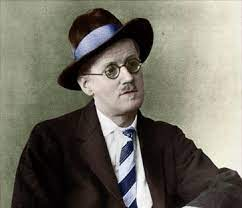
Joyce was born in 1882 into a middle class family in Dublin. He was educated at Catholic schools and universities, a brilliant student. In 1904 he met his future wife and they moved to mainland Europe. He published a book of poems, Chamber Music, and a short story collection Dubliners, before serially publishing Portrait of the Artist as a Young Man. Ulysses was published in Paris in 1922; it’s publication in the UK and the US was prohibited because of its perceived obscenity until the mid 1930’s. In 1939, the next major work, Finnegan’s Wake, was published. He died Zurich in 1941 shortly after surgery for a perforated ulcer at the age of 58.
James Joyce
Portrait is set in Dublin in the late 1800’s and is narrated by an omniscient, neutral third person, except for some stream of conscious in the final chapter. It traces the experiences of its protagonist, Stephen Daedalus, from his childhood to his early 20’s. Stephen is a bright, perceptive individual, but he lacks self-confidence, and his relations with classmates are somewhat difficult. The themes in the novel are family: his father is a heavy drinker and an unreliable bread-winner. His mother is kind and loving but dedicated, uncritically, to the Catholic church. The church restricts Stephen’s desire for artistic freedom, and there is likewise a tension in his image of women: virginal purity vs prostitute. There is also tension in Stephen’s view of Ireland and its culture: loyalty to its homely comforts vs a ‘nation of clodhoppers’. Amidst all this conflict, Stephen searches for his own identity: priest vs artist. He chooses the later, leaving family, Dublin and the church behind. Joyce’s innovative techniques, including stream of consciousness, internal monologue and description of a characters psychic state rather than his actual surroundings.
Joyce’s prose is certainly captivating; one never has a doubt of what is going on in Stephen’s mind, but, for me, sometimes it seems too detailed. I felt that there was to much of it, that it would be better to show rather than tell. Do we have to know exactly how he was feeling? Would not a hint now and then suffice? Let the reader pick up the thread.
Some of the scenes in the novel seemed superfluous or repetitious in their effect.
But my largest complaint about Portrait is that my edition had over fifty pages of footnotes, so that one had to continually flip back and forth. Some of the footnotes had to do with Dublin places or real Irish people, and might be skipped. But many others were translations of Irish word or Latin phrases, and were a necessary aid to comprehension. One has the impression of a novel set in a particular time and place, and that therefore its issues and messages may not be transferable. For me, this rules it out as a classic.
Ani Kokobobo has an article which was published on The Conversation website on 6 April 2022 which raises the question of reading the two Russian icons with the war in Ukraine in mind.
Ani Kokobobo is Assistant Professor and Director of Graduate Studies in the Department of Slavic Languages and Literatures at the University of Kansas.
Ani Kokobobo
She says, “As someone who teaches Russian literature, I can’t help but process the world through the country’s novels, stories, poems and plays, even at a time when Russian cultural productions are being cancelled around the world.
With the Russian army perpetrating devastating violence in Ukraine – which includes includes the slaughter of civilians in Bucha – the discussion of what to do with Russian literature has naturally arisen.
I’m not worried that truly valuable art can ever be canceled. Enduring works of literature are enduring, in part, because they are capacious enough to be read critically against the vicissitudes of the present.
You could make this argument about any great work of Russian literature, but as a scholar of Leo Tolstoy and Fyodor Dostoevsky, I will stick with Russia’s most famous literary exports.
Upon learning that Russian writer Ivan Turgenev had looked away at the last minute when witnessing the execution of a man, Dostoevsky made his own position clear: “[A] human being living on the surface of the earth has no right to turn away and ignore what is happening on earth, and there are higher moral imperatives for this.”
Seeing the rubble of a theater in Mariupol, hearing of Mariupol citizens starving because of Russian airstrikes, I wonder what Dostoevsky – who specifically focused his piercing moral eye on the question of the suffering of children in his 1880 novel “The Brothers Karamazov” – would say in response to the Russian army’s bombing a theater where children were sheltering. The word “children” was spelled out on the pavement outside the theater in large type so it could be seen from the sky. There was no misunderstanding of who was there.
Ivan Karamazov, the central protagonist in “The Brothers Karamazov,” is far more focused on questions of moral accountability than Christian acceptance or forgiveness and reconciliation. In conversation, Ivan routinely brings up examples of children’s being harmed, imploring the other characters to recognize the atrocities in their midst. He is determined to seek retribution.
Surely the intentional shelling of children in Mariupol is something Dostoevsky couldn’t possibly look away from either. Could he possibly defend a vision of Russian morality while seeing innocent civilians – men, women and children – lying on the streets of Bucha?
At the same time, nor should readers look away from the unseemliness of Dostoevsky and his sense of Russian exceptionalism. These dogmatic ideas about Russian greatness and Russia’s messianic mission are connected to the broader ideology that has fueled Russia’s past colonial mission, and current Russian foreign politics on violent display in Ukraine.
Yet Dostoevsky was also a great humanist thinker who tied this vision of Russian greatness to Russian suffering and faith. Seeing the spiritual value of human suffering was perhaps a natural outcome for a man sent to a labor camp in Siberia for five years for simply participating in a glorified socialist book club. Dostoevsky grew out of his suffering, but, arguably, not to a place where he could accept state-sponsored terror.
Would an author who, in his 1866 novel “Crime and Punishment,” explains in excruciating detail the toll of murder on the murderer – who explains that when someone takes a life, they kill part of themselves – possibly accept Putin’s vision of Russia? Warts and all, would Russia’s greatest metaphysical rebel have recoiled and rebelled against Russian violence in Ukraine?
I hope that he would, as many contemporary Russian writers have. But the dogmas of the Kremlin are pervasive, and many Russians accept them. Many Russians look away.
No writer captures warfare in Russia more poignantly than Tolstoy, a former soldier turned Russia’s most famous pacifist. In his last work, “Hadji Murat,” which scrutinizes Russia’s colonial exploits in North Caucasus, Tolstoy showed how senseless Russian violence toward a Chechen village caused instant hatred of Russians.
Tolstoy’s greatest work about Russian warfare, “War and Peace,” is a novel that Russians have traditionally read during great wars, including World War II. In “War and Peace,” Tolstoy contends that the morale of the Russian military is the key to victory. The battles most likely to succeed are defensive ones, in which soldiers understand why they are fighting and what they are fighting to protect: their home.
Even then, he’s able to convey the harrowing experiences of young Russian soldiers coming into direct confrontation with the instruments of death and destruction on the battlefield. They disappear into the crowd of their battalion, but even a single loss is devastating for the families awaiting their safe return.
After publishing “War and Peace,” Tolstoy publicly denounced many Russian military campaigns. The last part of his 1878 novel “Anna Karenina” originally wasn’t published because it criticized Russia’s actions in the Russo-Turkish War. Tolstoy’s alter ego in that novel, Konstantin Levin, calls the Russian intervention in the war “murder” and thinks it is inappropriate that Russian people are dragged into it.
“The people sacrifice and are always prepared to sacrifice themselves for their soul, not for murder,” he says.
In 1904, Tolstoy penned a public letter denouncing the Russo-Japanese War, which has sometimes been compared with Russia’s war in Ukraine.
“Again war,” he wrote. “Again sufferings, necessary to nobody, utterly uncalled for; again fraud, again the universal stupefaction and brutalization of men.” One can almost hear him shouting “Bethink Yourselves,” the title of that essay, to his countrymen now.
In one of his most famous pacifist writings, 1900’s “Thou Shalt Not Kill,” Tolstoy presciently diagnosed the problem of today’s Russia.
“The misery of nations is caused not by particular persons, but by the particular order of Society under which the people are so bound up together that they find themselves all in the power of a few men, or more often in the power of one single man: a man so perverted by his unnatural position as arbiter of the fate and lives of millions, that he is always in an unhealthy state, and always suffers more or less from a mania of self-aggrandizement.”
These writers have little to do with the current war. They cannot expunge or mitigate the actions of the Russian army in Ukraine. But they’re embedded on some level within the Russian cultural fabric, and how their books are still read matters. Not because Russian literature can explain any of what is happening, because it cannot. But because, as Ukrainian writer Serhiy Zhadan wrote in March 2022, Russia’s war in Ukraine marked a defeat for Russia’s great humanist tradition.
As this culture copes with a Russian army that has indiscriminately bombed and massacred Ukrainians, Russia’s great authors can and should be read critically, with one urgent question in mind: how to stop the violence. Russian opposition leader Alexey Navalny noted during his March 2022 trial that Tolstoy urged his countrymen to fight both despotism and war because one enables the other.
And Ukrainian artist Alevtina Kakhidze cited “War and Peace” in a February 2022 entry in her graphic diary.
“I’ve read your f—ing literature,” she wrote. “But looks like Putin did not, and you have forgotten.””
Sharon Short’s final segment on Point of View hasn’t been published yet, so let’s look at writing sex scenes. Jessica Martin has a piece in Writer’s Digest titled ‘How to Write a Sex Scene Like Nobody Is Watching’.
Jessica Martin is a lawyer by trade, a writer by choice, and a complete smart ass by all accounts. Based in the suburban wilds of Boston, Jess shares her life with a finance geek, a small sass-based human, and a pair of dogs named after Bond characters.
Jessica Martin
Ms Martin writes, “There are some key scenes in your typical rom-com that writers have to nail. Chief among them is the sex scene. But writing one can stir up all sorts of feelings: anxiety, excitement, a bone deep certainty that if you write a bad one, no one will ever let you live it down. It runs the gamut and while every writer has a different strategy, here’s mine.
The name of the game is distance.
First up physical space. To actually write a sex scene like nobody is watching it helps if nobody is actually watching. For me, this means leaving my house because although I have a perfectly good writing space, there’s a six-year-old beastie who likes to barge in and demand to know why caterpillars don’t eat meat. Or whether you can hear a fish fart under water. Kid, I have no idea how to answer that.
This house I speak of is also occupied by two scheming dogs who lie in wait until I’m in a writing groove. They drop their heads on my leg and drool until I have no choice but to submit to the world’s most devastating puppy dog eyes, bursting with longing that only translates into one thing: Hey human, go fetch me a snack, will you?
And then there’s the husband.
I hope this isn’t shocking to anyone here, but I’ve had sex with him. I don’t want to think about him when writing a sex scene, because I’m pretty sure that violates the sanctity of the marriage pact or something—I don’t know, it’s just weird.
In any event, I vacate the house when I need to write a scene that involves the words thrust, pant, or moan. During COVID, there weren’t a ton of options for non-germy solitude, so I wrote the majority of these scenes in the front seat of my car parked in a state forest. Wearing a ratty hoodie and sucking down tea from a thermos for warmth. Hey, I live in New England and the nights are chilly. You know what else the nights were like in that state forest? Decidedly, not private.
What I didn’t realize is that after the park shuts down for the day, it’s apparently a hotbed of illicit activity. As teens swarmed the woods armed with their flashlights and pilfered booze, they would sometimes comment on the weirdo sitting alone in her car and wondering if I was a NARC. So, I’d need to wait until they’d dispersed into the woods like horror movie cautionary tales before I could get down to the good stuff.
OK, so now I’m physically alone. Now I need to be mentally alone.
Recently, I was out to dinner with my boss, who casually mentioned he’d bought 50 copies(!) of my book for our entire legal team. I was incredibly touched but also momentarily panicked as I sputtered that it was a rom-com … and when the room went silent, I blurted out, “There’s a sex scene.”
As every eye in the room turned to regard me, a colleague asked, “What kind of sex scene we talking here?”
“A tasteful one,” I replied archly (or at least nonchalantly. Please let me be remembered as being calm and cool in that moment).
It wasn’t like I hadn’t thought about it before, it was just that interaction finally drove home that someday, somewhere, my husband, parents, kid brother, my actual kid (when she graduates to books without pictures), friends, neighbors, coworkers, former classmates whose Instagram accounts I follow but otherwise wouldn’t recognize, my incredibly bendy yoga instructor and a whole host of others might one day pick up my book and wonder, SO THAT SEX SCENE, IS SHE DRAWING FROM PERSONAL EXPERIENCE?
While I freely admit to stealing snatches of conversation (especially insults, I love standing behind teenagers in lines), character traits I admire in my friends, and sometimes wholesale shenanigans from my free-wheeling law school days, I draw the line at digging into my own personal cache of sexcapades. Why? Frankly, because I’d like to look that subset of people in the eyes again. Call me a prude, but I like to have a bit of an air of mystery about me. That and I don’t want anyone thinking about my sex faces.
But I’ll peel back the curtain and allow you a peek into my process.
There I am, sitting alone in a car in a dark forest (OK, that sounds creepy, but bear with me) and I warm up by watching YouTube compilations of my favorite on-screen couples. You know the ones, set to angsty music where beloved characters eye each other across a room, a shared smile passing between them. Or maybe it’s that near brush of the lips or a finger tracing a bare collar bone, a shirt goes up and over the head. For me it’s less about what the characters are actually doing and more about that delicious moment of mutual (and completely consensual) commitment to the path of no return, no going back to being friends or enemies or indifferent strangers—it’s on.
Once I’m there, then I imagine my characters, their expressions, their voices, their sex faces (not mine, thank you very much) and what the timbre of their sex scene is. Is it slightly humorous, two people fumbling around knocking stuff over in their jubilant haste to get to one another? Is it full of murmured teasing as one character deliberately seduces the other? Is it rushed but somehow decadent because it’s going down somewhere where any moment our lovers could be discovered?
That’s the feel part.
Then comes the mechanics. I cannot remember where this nugget of wisdom originated, but someone once told me that sex scenes are like fight scenes. Watch the hands. I love this, because it makes me go back and smooth out the scene once I’ve finished with the heady feeling part to make sure it all syncs up. For example, if his pants were carelessly discarded like caution to the wind on the floor a moment ago, as he slides up her body, his hands worshipfully tracing the topography of her hips, then he shouldn’t be reaching for protection in his pocket, right? It has to be in the bedside table or if they’re outside, maybe she’s the resourceful one who still has pants on and whips out the foil packet with a triumphant cry? Details count.
Once I’ve nailed the feeling and true up the details, I break the veil of solitude, I leave the deep dark woods (I’m sure you psych majors are having a field day). I slip back into being a lawyer, a wife, a mother, that person who almost always uses a turn signal when changing lanes. I send the sex scene to my beta readers, then my agent and my editor. I’ll ask them, “This isn’t gross, right?” and that’s usually all I need to feel confident that it’s there.
At least until someone tells me they bought fifty copies of it and they’re giving it to all my coworkers.”
This is the second in a three part series written by Sharon Short for Writer’s Digest.
Sharon says, “Just how “into” your narrator’s head and heart do you want your readers to be? Do you want them to feel emotionally embedded with your narrator(s)? Or observe your characters’ experiences from afar? What emotional distance (close, far, or a mix) should you strike to achieve the best point of view for your story, novel, or memoir?
The answer, of course, depends on the type of story you’re telling as well as the experience you want your readers to have.
Luckily, you don’t need to know the answer before you begin writing—though it’s fine if you do. Somewhere in the process of drafting and revising, you’ll need to figure out the emotional distance that’s right for your story’s point of view (POV)—and your readers.
Deep POV—or Not?
A common pearl of wisdom is first person is more personal and immediate than third or omniscient—after all, the narrator is telling their story directly to the reader.
Consider this example:
I had to stay late for work, and as I was driving home, I wondered whether mac ’n’ cheese from a box would be OK for dinner, and I hoped that tonight I could finally get my 12-year-old daughter, Stacy, to open up to me. I was distracted and didn’t notice the pickup truck slowing down in front of me until it was too late and I rear-ended it.
Hmm. This feels a bit flat and distant, doesn’t it? The use of linking verbs (“was”), past progressive tense (“was driving”), and verbs that describe emotional and mental processes (“wondered,” “hoped,” also known as filter words) all hold the reader at bay.
Revise into what’s often called “deep POV” with active verbs and emotions to pull your readers into your narrator’s head and heart:
At first, I relaxed as I drove home; traffic was light, an unexpected boon of working late on another set of expense ledgers. But that also meant dinner would be late—again. Would everyone be OK with mac ’n’ cheese—again? Maybe I could get Stacy to help me—she always opens up when we’re doing a task together. I’d rather hear her prattle on about seventh-grade drama than worry about the water heater repair bill … Boom! Oh, crap. I hit the back of the pickup truck in front of me. If only I could stay focused on what’s right in front of me—whether ledgers or red brake lights.
Same information and then some—we know more about the narrator’s relationship with her daughter and financial worries, get a sense of her personality, and are right there with her when she rear-ends the truck.
This works just as well with third person:
At first, Donna relaxed as she drove home; traffic was light, an unexpected boon of working late on another set of expense ledgers. But that also meant dinner would be late—again. Would everyone be OK with mac ’n’ cheese—again? Maybe she could get Stacy’s help—the kid always opened up when they did a task together—and Donna would rather hear her daughter prattle on about seventh-grade drama than …
Notice how this deep POV and third person combination feels more distant than the deep POV and first person combination, but a lot closer than the initial example of first person.
But what if you want the reader to feel distant from Donna? Perhaps she’s a stiff, uptight character who doesn’t let anyone easily into her feelings. That’s fine—but it doesn’t mean you need to revert to verbs and filter words that describe, rather than show, experience. A less distracting way to create distance is to use active verbs, eliminate immediate thoughts and feelings, and stick to the facts of the narrator’s situation:
Reviewing another set of expense ledgers meant I left work late, but by then, traffic was light. Dinner would be late. Mac ’n’ cheese would be sufficient. Stacy could help make it. That would mean listening to the kid talk about seventh-grade drama. Suddenly, I crashed into the back of the pickup truck in front of me …
Every writer I know finds that being a writer is an emotional experience. Oh, we all try to be practical when talking about our experiences in public—focusing on craft techniques or business practices.
But when talking with trusted writer friends, we admit writing is an emotional endeavor—both as we create, and as we put our work out into the world.
While creating, you might get so into your work that the characters and situations become real. I’ve both burst out crying while writing a particularly moving scene and laughed aloud at my characters’ hijinks. (I’ve had family members catch me in such moments and ask, with some worry, for reassurance that I do know I’ve made up these characters and their situations. Well, sure. But, that’s beside the point. They feel real to us!)
That’s a great kind of emotional closeness to your work. It’s part of the joy of creation, after all, and though experiencing this as you write won’t ensure that every reader will feel the same way, it surely shows you’re on the path to creating something that is visceral and authentic.
On the other hand, when it’s time to revise, emotional distance becomes your ally. That hilarious scene that had you in stitches as you wrote it? If it’s slowing the pace of your story, it may need to be shortened—or even cut altogether. (But save it in a different file! Outtakes can be bonus material for readers in the future, or worked into new pieces.)
Then, dear writer friend, there’s the emotion of putting our work out into the world—perhaps sharing it with a trusted writer group, or submitting to agents or editors, or having it published for readers to enjoy (or, alas, sometimes not.)
Depending on our personalities and the reactions our work receives, emotions can run the gamut from joy and excitement (woo hoo, I have a request for my writing or my writing group loves my new scene!), to despair (I’ll never find a home for this story), to anger (how could a reviewer or writing group member say that about my work?).
Let yourself process all of those emotions but discipline yourself to hold back on expressing them. (Well, except if you have great news. That you can shout from the rooftops!)
Remember that setbacks are temporary. Not every piece of writing will please every reader; you’re not writing to please everyone anyway. Remind yourself that if you receive a pass on your work that it’s the work that’s being rejected—not you.”
Sharon Short, a Writer’s Digest columnist has three pieces on Point of View (POV). Her first is choosing the right point of view for your story.
Sharon Short is the author of 12 published novels, most recently in her Kinship Historical Mystery series, which she writes under her pen name Jess Montgomery. The Hollows is the most recent title in the series, published by Minotaur Books and inspired by Ohio’s true first female sheriff in 1925. Set in the Appalachian region, the series draws on themes of workers’ rights and women’s roles, and has garnered several awards.
Sharon Short
“POV is the principle that pulls together every other element of your prose. You might have a compelling premise, interesting characters, beautiful writing, and great pace. But if the POV is not right, the reader will sense something is off as if it’s ice cream curdling in the bowl.
Intimidating? Yes. But this and the next two “Level Up” columns will focus on POV: busting myths, exploring emotional distance, and examining the element of time for first, third-limited, third-multiple, or omniscient POVs. (Though it’s often used in advice columns such as this, second is rarely used in prose, so I’m setting it aside.) My hope is that the three columns will give you a mini POV tool kit to apply to your project.
POV Myths—Busted!
First-person POV is the easiest!
In first-person POV, the weight of the entire piece rests in the voice of the narrator—for 300 pages or longer for book-length works! Don’t do yourself, or your work, the disservice of thinking of first POV as easy simply because of the “I” pronoun. Each POV has its own challenges. And sustaining a distinctive, strong voice for the narrator’s POV for the entire work is the challenge in first. Of course, if done well, this is also the charm of first.
But … First-person POV is simply the narrator telling the story!
No, you, as the writer are always the invisible narrator in any work of prose—even first-person POV. You are always in control of the story. In first-person POV, you allow one character (at a time—even working in first, you can still have multiple narrators) to narrate the story in his, her, or their voice.
Well, first is the only way to use a deep POV.
It may seem easiest to have a deep POV (sharing of thoughts, emotions, reactions) in first, but the drawback of that seeming simplicity is the temptation to overshare. Or to share in a way that feels either false or overwrought. And you can certainly have deep POV in third as well. (More on deep POV in the upcoming column on emotional distance.)
That’s all right. Third-person POV is more high concept anyway!
Every novel, story, memoir, or essay must be driven by a guiding concept—the heart of the piece. High concept simply means the premise of the piece can be described succinctly (in a few sentences) in a way that intrigues and incents readers to want to read the full work. Fulfilling that promise depends on getting all the elements just right—including POV. Of course, examples of high concept third-person POV novels abound, but high concept first-person POV novel examples include The Great Gatsby (F. Scott Fitzgerald) or The Hunger Games (Suzanne Collins) or the bestselling thriller The Last Thing He Told Me by Laura Dave. It’s hard to imagine those first-person POV examples working as well in third person.
You can only have multiple POVs in third person, though.
Again, that depends on the story. Hank Phillippi Ryan’s novel Her Perfect Life alternates between third-person limited and first-person POVs. This works because the main character (third-person limited POV) needs to keep her distance from the public, while the first-person POV character, who works for the main character, has many opinions that we might have—until we get to know the main character. In Heather Webber’s South of the Buttonwood Tree, two first-person POV characters trade off narration of the story—and third-person POV anecdotes are interspersed throughout. By the end, the narrative lines all braid together to create a complete story tapestry.
No one writes omniscient anymore, and besides, isn’t it the same as head hopping?
Omniscient differs from multiple POV in that the latter strictly relegates each POV to a section or chapter. And it differs from head hopping—the confusing effect of jumping from one character’s thought to the next character’s thought—by switching perspectives based on which character’s reaction is the most important in a given moment. Usually, that also means that we stay in one character’s POV for a sentence or paragraph, rather than hopping from one character’s head to the next in the same sentence. An excellent example of omniscient POV mastery is Louise Penny, who uses this POV in her Chief Inspector Gamache novels.
Changing POV is as simple as changing pronouns.
This is a common myth—that if somehow first-person POV isn’t working, then switching to third-person POV is as simple as replacing all the “I’s” with “She, he, they,” or a name. But it’s not that simple. Proper POV depends so much on emotional distance and time—more on those elements in the next two columns.
What’s Your POV, Dear Writer?
Now, take a moment and consider your POV about your own work—and your writing life.
What are the myths you might have given into?
This is my first novel—so it has to be in first-person POV.
I’ve never written in third POV before because it feels too hard. (Or similar fear for first or omniscient POVs.)
I’m used to this particular POV, so I’d better stick to it.
Part of the joy (and yes, pain, but hopefully more joy than pain!) of any creative endeavor is experimenting and pushing yourself to grow.
If you’ve always written in first-person POV, try a short story or flash fiction in third. Or if you’ve always written in third, try writing an essay in first.”
On her website, J K Rowling has a page in which she answers the question, “Do you have tips for others trying to write?”
Ms Rowling says, ” I have to say that I can’t stand lists of ‘must do’s’, whether in life or in writing.
I haven’t got ten rules that guarantee success, although I promise I’d share them if I did. The truth is that I found success by stumbling off alone in a direction most people thought was a dead end, breaking all the 1990s shibboleths about children’s books in the process. Male protagonists are unfashionable. Boarding schools are anathema. No kids book should be longer than 45,000 words.
So forget the ‘must do’s’ and concentrate on the ‘you probably won’t get far withouts’, which are:
Reading
This is especially for younger writers. You can’t be a good writer without being a devoted reader. Reading is the best way of analysing what makes a good book. Notice what works and what doesn’t, what you enjoyed and why. At first you’ll probably imitate your favourite writers, but that’s a good way to learn. After a while, you’ll find your own distinctive voice.
Discipline
Moments of pure inspiration are glorious, but most of a writer’s life is, to adapt the old cliché, about perspiration rather than inspiration. Sometimes you have to write even when the muse isn’t cooperating.
Resilience and humility
These go hand-in-hand, because rejection and criticism are part of a writer’s life. Informed feedback is useful and necessary, but some of the greatest writers were rejected multiple times. Being able to pick yourself up and keep going is invaluable if you’re to survive your work being publicly assessed. The harshest critic is often inside your own head. These days I can usually calm that particular critic down by feeding her a biscuit and giving her a break, although in the early days I sometimes had to take a week off before she’d take a more kindly view of the work in progress. Part of the reason there were seven years between having the idea for Philosopher’s Stone and getting it published, was that I kept putting the manuscript away for months at a time, convinced it was rubbish.
Courage
Fear of failure is the saddest reason on earth not to do what you were meant to do. I finally found the courage to start submitting my first book to agents and publishers at a time when I felt a conspicuous failure. Only then did I decide that I was going to try this one thing that I always suspected I could do, and, if it didn’t work out, well, I’d faced worse and survived.
Ultimately, wouldn’t you rather be the person who actually finished the project you’re dreaming about, rather than the one who talks about ‘always having wanted to’?
Independence
By this, I mean resisting the pressure to think you have to follow all the Top Ten Tips religiously, which these days take the form not just of online lists, but of entire books promising to tell you how to write a bestseller/what you MUST do to be published/how to make a million dollars from writing.
I often recommend a website called Writer Beware (https://accrispin.blogspot.com) to new and aspiring writers. It’s a fantastic resource for anyone who’s trying to decide what might be useful, what’s worth paying for and what should be avoided at all costs. Unfortunately, there are all kinds of scams out there that didn’t exist when I started out, especially online.
Ultimately, in writing as in life, your job is to do the best you can, improving your own inherent limitations where possible, learning as much as you can and accepting that perfect works of art are only slightly less rare than perfect human beings. I’ve often taken comfort from Robert Benchley’s words: ‘It took me fifteen years to discover I had no talent for writing, but I couldn’t give it up, because by that time I was too famous.’”
Matthew FitzSimmons has an article on writing dialogue, dated September 1, 2021, on the Writer’s Digest website. He makes some points that wouldn’t normally be high on the last for a writing class, but nonetheless, I think they’re worth remembering.
Matthew FitzSimmons is the author of Constance, as well as the Wall Street Journal bestselling Gibson Vaughn series, which includes Origami Man, Debris Line, Cold Harbor, Poisonfeather, and The Short Drop. Born in Illinois and raised in London, he now lives in Washington, DC.
Matthew FitzSimmons
Mr FitzSimmons says, “I was teaching English at a high school in Washington, D.C., when I wrote my first novel, The Short Drop. One of the perks of being a teacher is having summers off, and it took me a little over two years to finish the manuscript. At the time, I thought one of the book’s strengths was the dialogue. After all, I came from a theater background and so much of directing is thinking about the spoken word. Plus, and I don’t say this to brag, but at that point I had 40-plus years of practical, hands-on experience in “talking.” So how hard could writing dialogue really be?
Well, my developmental editor on The Short Drop, the wonderful Ed Stackler, got his ink-stained mitts on it and disabused me of the notion that a lifetime achievement award for best original dialogue was my destiny. After that, I stopped taking dialogue for granted and began to craft a personal writing philosophy on the art and artifice of dialogue. Here are a few of the guidelines I keep in mind each day I sit down at my desk.
1. No One Uses a Name Without a Reason
Ed’s first lesson was one that in retrospect should have been painfully obvious—no one says anyone’s name in general conversation. (Alright, not never, but rarely.) When a name is spoken, it has purpose behind it. A few examples to illustrate the point:
When someone is trying to get another person’s attention: “Matt. What do you want from the bar?”
When someone is attempting to dominate another person: “Isn’t that right, Mr. FitzSimmons?”
When someone is showing off that they were paying attention when you met and actually remember your name: “Matthew, good to see you again.”
There are, of course, many others, but always for a reason. When was the last time you used the name of your best friend?
2. Hemingway’s Non Sequiturs (or, Not Everyone is Having the Same Conversation)
Whatever your opinion of Ernest Hemingway, the man was brilliant with dialogue. I strongly recommend his short stories—“Hills Like White Elephants”, for example, is a masterclass of elliptical dialogue. But it was a couplet of dialogue between Lady Brett Ashley and Jake Barnes from chapter IV of The Sun Also Rises that taught me that the most interesting dialogue is rarely a straight line. It goes:
“Don’t worry,” Brett said. “I’ve never let you down, have I?” “Heard from Mike?”
Not a lot to it until you consider that Jake is hopelessly in love with Brett and that Mike is Brett’s latest husband. Read it again. Now what was merely an innocent non sequitur becomes a cutting, passive-aggressive barb more incisive than any five-page argument. How people answer, or don’t answer, questions is an incredibly useful tool for revealing relationship, character, and agenda.
3. Complete Sentences/Correct Grammar
Dialogue composed of nothing but complete sentences will sound false to the ear. Grammar also tends to take a backseat as well. A character who uses who/whom correctly in casual speech is revealing a lot about their background. More often than not, people use shortcuts to limit the number of words necessary to communicate information. One example: Personal pronouns are frequently omitted—“I’m running late,” often becomes “Running late,” and so on. Listen to, and become a student of, how people speak, and what it can tell a reader about your characters.
4. Multitask
I always aim for dialogue to perform more than one purpose. If a passage of exposition is absolutely necessary, I always ask, “What other jobs can that dialogue be performing in terms of character and story?” Small talk is especially challenging, because as a species we (sadly) depend on it to navigate almost every social interaction. In prose, small talk is deadly to a reader’s interest and less is definitely more.
5. Not Everyone Sounds Like Me
If you spent any significant time around me, you’d quickly pick up on my conversation style, my verbal tics, and my sense of humor. When I first began writing seriously in my 20s, there was a tendency for all of my characters to sound like versions of myself. What was pleasant in small doses (I hope) was catastrophic in large ones (the world really doesn’t need more than one Matthew FitzSimmons in any conversation). It was an incredibly important self-discovery. I realized that if all my characters sounded like me that I wasn’t putting in the work to fully realize each of my characters. A habit I’ve developed in the years since is to write “interviews” with my characters to think through how they speak and why. Once I understand their conversational posture, I have a much better insight into who they are as people.”
Mr FitzSimmons point about people not using names was brought home to me when the manuscript for my novel Nebrodi Mountains came back from the editor with many names deleted. And I particularly like Hemingway’s not sequiturs as a clever dialogue device.
James Gault has an article on the Voice of Literature e-zine in which he discusses the elements of plotting.
James says, “I write mostly political thrillers with a touch of humour, set in the present but sometimes with references to the 19th and 20th centuries. Some of my books are in the Scottish vernacular. Some are really comic novels. They always have references to social issues. I try to offer readers interesting and engrossing characters, and favour relatively complex exciting plots with more than one unexpected twist in them.”
James Gault
He says, “What is a plot? Is it just the series of events that occur in a work of fiction, what we might call the story? Or is it perhaps more specific than that? Words can be hijacked to mean whatever the writer wants, and in this case I am shamelessly going to do that and define a plot in a specific sense.
A plot is a story with certain characteristics. For my definition, I am borrowing from a book called The Seven Basic Plots by Christopher Booker, in which he analyses and classifies the stories of works of fiction from different eras and from poems, plays, novels and films. You may not agree with all his classifications, but he puts his finger on what is perhaps the essential element of a fictional plot: a character is presented with a problem and has to overcome the challenges of solving that problem.
In a way, all fictional stories (and possibly all interesting real life ones) fit this model. The structure is obvious in certain genres: mysteries, thrillers, romance etc. Other genres do not at first sight appear to conform, and these I would call episodic genres. They include biographical novels, sagas, slice of life stories and so on. In these cases, there is no central problem to be solved, but a series of different problems which arise and are resolved. So they are more a collection of related plots, tied together by a central theme. For me, this kind of book requires much more talent from the writer, who has to find some other narrative drive to pull readers through to the end of the work.
Of course, the path to coming up with the solution to the main plot problem is normally long and tortuous. Other, smaller problems arise along the way, obstacles are put in the path of the protagonist, attempts to move forward are thwarted and misleading information is presented and misinterpreted with disastrous results. Unexpected plot twists make readers stop and re-evaluate their conclusions so far, and set their imaginations off in new directions. There is often a false ending, where everything seems to be resolved and then some forgotten fact or incident raises its head, plunging the reader back into the problem and looking again for a secure and safe answer, but with heightened suspicion now. Without a good helping of all of these ingredients, no narrative can expect to hold a reader’s attention to the end.
I’m going to risk an oversimplification here. There are other elements to novels, like writing style, atmosphere, accurate details, but I would contend that to be effective, the two main essentials are character and plot. So, for a novel (or play, or film, or TV drama, or narrative poem) to engage its audience. there are two essential goals the writers must reach:
find an interesting and difficult problem for the protagonist to solve
create main characters with whom readers can identify as they try to solve the problem.
Achieving these goals may not result in a best seller, but I do not think any success can be achieved without them.”






 William Peace Blog