Revising

‘Revise’ has a number of synonyms, including: improve, reconsider, update, rewrite, amend and modify.  With my current novel, having finished writing it, I am doing all this and perhaps a bit more.  It is a tedious process, but, to my surprise, I’m enjoying it, because, as I get closer to the end – I’m now about half way through – I’m feeling an increasing sense of pride in the output.

You may recall that in an earlier post, I said that I would print each chapter out in an unusual font and read it aloud, marking anything that jarred on my senses for later correction.  I have done that, and I would recommend it for any author before submitting his/her manuscript for final editing.  Before I started my reading aloud process, I had made a list of ‘lingering concerns’: issues which I felt had to be addressed.  For example, I thought that I had left the characters’ feelings to much to the reader to interpret: they needed to be clearer.

So, here is what my revising process included:

  • Restructuring:  My draft manuscript was 16 chapters long, each about 17 pages.  I thought it would be better to shorten the chapters, particularly because there is a lot that happens in the book.  I’m in the process of reducing the chapter length to about 10 pages, so there will be over 25 chapters.  I also wanted to have a title alluding to the content of each chapter, believing that this would add to reader interest and attention.  The hard part was deciding where to separate the chapters, because previously, I didn’t worry much about that.  As a compromise, I have some material which relates to the topic of a preceding or a following chapter an the beginning or the end of some chapters, but I decided that this was a better solution than having some chapters as short as 6 or 7 pages.
  • Voices: Apart from the narrator, there are two other anonymous, contrarian voices.  I did not want their identity to be obvious, so I have reduced their roles.  But, at the same time, I wanted to reinforce the relevance of these voices to the characters, because they are part of the theme.  I’ve been doing this by having the characters make oblique references to the voices.
  • Characters: I have sharpened the characters so as to make their personalities more unique by having them do or say unusual things which are still in keeping with their individuality.  There are also two minor characters which are too neglected in the original manuscript.  As I’ve mentioned above, clarity of the character’s feelings is essential.  I’ve had to add passages which define the character’s thoughts or actions which reveal feelings, or something about their body language.  I’ve tried to avoid writing ‘the character felt . . .’, but I will let the narrator clarify the character’s feelings without using the word ‘feeling’.
  • Theme:  There is a theme based on Nietzsche which has to do with the development of the individual.  I felt that this theme was well introduced but faded in the later parts.  So, I’m bringing in reminders.
  • Dialog: I have been told that I write good, believable dialog, but I know it can be unnecessarily long.  There is a lot of pruning going on.
  • Unnecessary wording: Like the previous point, I have been unmerciful in deleting text which does not contribute to the reader’s understanding.
  • Time line: The story takes place over a period of about 15 years, but I sensed it was becoming difficult to keep a strict time line in order.  I’m deleting all references to sequence or the passage of time, believing that these milestones tend to be a distraction for the reader.
  • Consistency: I’ve found that I called a restaurant ‘Poseidon’ in the early chapters and ‘Neptune’ in later chapters.  I confess to being hopeless at remembering the names of people and places.  Similarly, in one chapter a terrorist organisation was called Dhul Fikar (Sword of the Prophet) and Dhul Fakir later.  The first spelling is correct.
  • Clichés: When one is reading aloud, clichés tend to reverberate, and they can be re-written
  • Inadequate words: Similarly, an adjective or a verb or even a noun can sound and feel inadequate in best defining the character’s feeling, the situation, or the setting.  Thesaurus to the rescue!
  • Typos: I’ve read the original manuscript three or four times, but I’ve still found (a few) typos!

Making Oneself Clear

Do I Make Myself Clear?: Why Writing Well Matters by Sir Harold Evans Was published in May, this year, and there was an intriguing interview with Sir Harry in the June issue of Time Magazine.

The first two questions caught my eye:

Q: You discuss many writing evils in your book, from pleonasms to pesky pronouns.  What kind of bad writing upsets you most?

A: Writing that is deliberately designed to deceive – insurance policies, political statements.  Business verbosity wastes money, confuses millions.  I find myself getting much more angry about the moral obligation of fairness than I do about a misplaced semicolon.

Q: And do you believe in freedom from the language police?

A: The language police are a bloody nuisance, some linguists in particular.  The English language got corrupted by pettifoggers.  Do you know that word pettifogger?  It is somebody who stumbles over a neck, but misses the body lying on the floor.

Sir Harold Matthew Evans (born 28 June 1928) is a British-born journalist and writer who was editor of The Sunday Times from 1967 to 1981 when he had a falling out with Rupert Murdoch.  He moved to the United States in 1984 and was naturalised as a US citizen in 1993.   He had leading positions in journalism with US News and World Report, The Atlantic Monthly and the New York Daily News.  He has written various books on history and journalism, with his The American Century (1998) receiving particular acclaim. In 2000, he retired from leadership positions in journalism to spend more time on his writing. Since 2001, Evans has served as editor-at-large of The Week magazine and he has been a contributor to The Guardian and BBC Radio 4 since 2005.  In 2004, Evans was knighted for services to journalism, and he became editor-at-large of the Reuters news agency in 2011.

Sir Harry Evans

In a New York Times book review in May 2017,  Tim Holt says: “As a master editor and distinguished author, Evans is well qualified to instruct us on how to write well. But can he delight us in the process? After reading this book, I can affirm that the answer is yes. For the most part. Up to a point.  ‘What really matters is making your meaning clear beyond a doubt,’ Evans tells us. And the key to clarity, he insists, is concision — a virtue allegedly less honoured in the United States than in the author’s native land: ‘Newsprint rationing in wartime Britain enforced economy in language, a conciseness not required in American print journalism, where acres of space invited gentle grazing.’

Holt continues: “I also enjoyed Evans’s history of the ‘readability’ movement, launched by 19th-century American reformers who wanted written sentences to be shorter and easier to understand (especially for immigrants); his witty choice of quotations, like Winston Churchill’s gibe that Prime Minister Ramsay MacDonald had ‘the gift of compressing the largest number of words into the smallest amount of thought’; and his various lists of pet peeves — pleonasms like ‘close proximity’ and ‘self-confessed,’ abused pairs like ‘discomfit/discomfort’ (to discomfort is to make uneasy; to discomfit is to defeat or rout), and ‘flesh-eaters’ like ‘We are in receipt of’ for ‘We received’.

In a Financial Times article in May 2017, Matthew Engel writes: “He is a sworn enemy of . . . the lonely modifier  — which means one had better explain what he means by a lonely modifier. His example is a sentence in the New York Times where presidential ‘advisers’ and the crucial fact that they were taken ‘by surprise’ were separated by 36 words of the same sentence, all irrelevant parenthetical detail. He is also a welcome enemy of two of my own hates. One is the ludicrous non sequitur, found most abundantly in American newspaper obituaries: ‘A keen golfer, he leaves three children.’ The other is what he calls monologophobia, a phrase he credits to Theodore Bernstein of the New York Times, who described a monologaphobe as someone ‘who would rather walk naked in front of Saks Fifth Avenue than be caught using the same word twice in three lines’. This is the widespread practice (also known, too kindly, as ‘elegant variation’) whereby sports writers, having said Federer once, have to refer to him thereafter as ‘the Swiss’, ‘the 35-year-old’ and ‘the seven-times Wimbledon champion’ before they dare use his name again — even if the reader ends up forgetting who is under discussion.

At the very least, Sir Harry has a keen sense of humour!

Artistic Ladder

A good friend of my wife’s and mine is an only child and when her father died, he left her a large industrial site on the outskirts of a major city.  For some years, she thought to sell it to a developer, but the area is not ideal for a residential – or commercial – development.  She is an art lover and gradually, she began to put on exhibitions by two or three eclectic artists in the buildings.  The site became known as an art venue and she developed a mailing list of ten thousand ‘members’ who pay a small fee to be advised of events and are admitted for free.  Recently, she put on an exhibition by three prominent artists in different disciplines from three different countries.  One of them is thinking of establishing a studio on the site.

I asked her what she could do with a grant of one million euros.  Her face lit up and the ideas came tumbling out, but then she stopped and said, “But I haven’t any idea how to raise one million euros.”  We talked about it further, and she agreed that grants in that size can be obtained with the right connections and a persuasive proposal.  She certainly has connections in the art world, if not the actual fund-raising skills.

She also said that her surname will die out with her and she wants to somehow leave her name attached to whatever she does in the art world.  We talked about a way to do that, and then she was back on the subject of the kind of exhibitions she might put on.

I asked her to give serious thought to providing same ‘ladders’ for aspiring, but unknown artists with talent.  I pointed out that in every art discipline (including my own – literature, and including sports) there tends to be an enormous gap between the well-known, well-paid, big names and the skilled but unknown, and unpaid beginners.  I suggested two possible ladders for her to consider when possible.  The first was to put on an aspiring artists exhibition, at least once a year, with exhibitors selected by a panel of experts, and prizes being awarded to those judged to be ‘the best’ by another expert committee.  Perhaps provision could be made for the public to buy individual pieces, or for a gallery to pick artists to carry.  The second ladder was to establish an artist’s workshop space in the premises where young artists could come and paint or sculpt, where they could exchange ideas, and minimise the loneliness of their trade.  Maybe a small coffee shop would be opened to serve them, and perhaps interesting events could be organised.

As those of you who have been following this blog know, I feel that there are not enough ladders to success for aspiring artists of all disciplines.  In fact, in literature there are structural disincentives for the advancement of new talent: the tight grip of the traditional publishers on whom to select and promote.

Review: Absalom, Absalom!

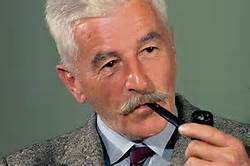
William Faulkner is a novelist I had never read until now – perhaps because I grew up and was educated in the northeastern US.  Now that I have read Absalom, Absalom! I can understand why Faulkner is considered one of the greatest American writers of the 19th century.

Faulkner was born in Mississippi in 1897, was raised by a black nanny, lived most of his life in Oxford, Mississippi, and attended the University of Mississipi (Ol’e Miss).  His family, upper-middle class; his mother was a literature buff who read to him and introduced him to the classics.  Friends and extended family often told tales of the Old South, the Civil War, slavery, and the Ku Klux Klan.  Faulkner received the Nobel Prize for Literature in 1949 and his last novel, The Reivers (1962) was awarded the Pulitzer Prize for Fiction in 1998.  Faulkner died in 1962 after the fall from a horse.

William Faulkner

Absalom, Absalom! (the title relates to the return of the central character’s son, Charles; Absalom, according to the Jewish bible, was the third son of King David.  A handsome, high-living man, Absalom killed his older half-brother for the rape of their sister) is set in the early to middle 19th century, mostly in Mississippi.  The central character, Thomas Sutpen, a rough, ungentlemanly fellow, appears in a small Mississippi town with 20 slaves and considerable funds of suspect origin.  He acquires 100 square miles of property 12 miles outside the town, builds an enormous mansion, grows cotton, marries the town shopkeeper’s daughter, and has a son, Henry, and a daughter, Judith.  Sutpen had married the daughter of a Haitian sugar planter, who bore him a son whom he named, Charles Bon.  When Sutpen discovered that his new wife has negro blood, he pays to have the marriage annulled under obscure circumstances.  In his mid-twenties, Charles Bon suddenly appears at the U of Miss. where Henry is attending and the two become friends, though Henry does not learn Charles’ identity until later, when Charles begins to realise who his father is.  Henry and his mother begin to promote the marriage of Judith to Charles.  Sutpen travels to New Orleans (where Charles first appeared) and learns who he is.  On his return, he tells Henry that Charles is his half-brother and the marriage will not be permitted.  Henry refuses to believe that Charles is his brother.  The Civil War intervenes.  Charles decides to break the impasse by marrying Judith, and Henry kills him.  Other deaths follow until there is no mansion and no living heirs to the Sutpen name.

This is an intriguing story, deeply coloured with the culture of the Old South.  Falkner’s story-telling technique is quite oblique: he makes use of different narrators to illuminate parts of the story that they know first-hand, have heard from others, or suspect, so that the reader is able to gradually pick up the thread.  This technique creates a sense of mystery, uncertainty and ambiguity about a story which was nearly a century old.  Faulkner’s writing is a poetic, erudite, stream of consciousness by the narrator, particularly when the subject is what a character is thinking or feeling; not infrequently, these dissections of a character’s motives can go on for two pages or more, and they are not easy to read, because they lack fluency and are full of parenthetical statements.  Sentences can go on for half a page.  Nonetheless, a careful reader will, at thinking and feeling levels, understand the character.  There is almost no dialogue in the novel; nearlyh all is revealed by the narrators.  Interestingly, the narrators never set the scenes: what the town, the battlefield, the mansion looked like.

The characters are all clearly drawn.  I found it somewhat surprising that all of the female characters were presented as passive.  One gets a clear sense of what life was like in the Old South, particularly before the Civil War, from the point of view of the wealthy few, the middle class and the slaves and poor whites. The slaves themselves had various classes.  As a literally minded person, I found it difficult to accept that Thomas Sutpen could have acquired the wealth he had as the overseer of a Haitian sugar plantation: something is missing.  Similarly, it is doubtful that Sutpen, 20 unskilled slaves and a French architect could have built the huge, elaborate mansion ‘Sutpen’s Hundred’.

Absalom,Absalom! is not an easy read, but it should not be overlooked if one is interested in distinctive American writing – particularly about the Old South.

Review: One Hundred Years of Soliude

Having never read of any of Gabriel Garcia Marquez’ writing, I decided to start with One Hundred Years of Solitude, which is thought to be his greatest novel, a classic, and one of the best by a Latin American author.

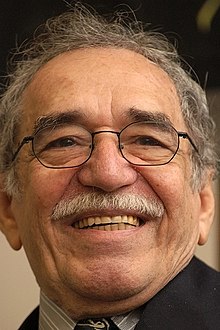
Gabriel García Márquez was born on 6 March 1927 in Aracataca, Colombia.  García Márquez’s grandmother, Doña Tranquilina Iguarán Cotes, played an influential role in his upbringing. He was inspired by the way she “treated the extraordinary as something perfectly natural.”   The house was filled with stories of ghosts and premonitions, omens and portents, all of which were studiously ignored by her husband.   According to García Márquez she was “the source of the magical, superstitious and supernatural view of reality”.  He enjoyed his grandmother’s unique way of telling stories. No matter how fantastic or improbable her statements, she always delivered them as if they were the irrefutable truth. It was a deadpan style that, some thirty years later, heavily influenced her grandson’s writing.  Marquez began his career as a journalist while studying law.  Throughout his life, he was left-leaning politically, adopting socialist thinking, and he held that socialism and democracy are mutually dependent.   García Márquez said, “my grandfather the Colonel was a Liberal. My political ideas probably came from him to begin with because, instead of telling me fairy tales when I was young, he would regale me with horrifying accounts of the last civil war that free-thinkers and anti-clerics waged against the Conservative government.”   In 1955, Marquez published fourteen articles in the El Spectador newspaper based in his interviews of the lone survivor of a shipwreck.  In the articles he made the case that the ship wreck of a Colombian Navy vessel was the result of improperly stowed contraband, rather than the government’s story that the tragedy was due to a storm.

García Márquez received the Nobel Prize in Literature on 8 December 1982 “for his novels and short stories, in which the fantastic and the realistic are combined in a richly composed world of imagination, reflecting a continent’s life and conflicts”.  Marquez wrote 6 novels (Solitude is his second), 5 novellas, 6 collections of short stories, 8 pieces  of non-fiction, and 26 films.  He once remarked: “Most critics don’t realize that a novel like One Hundred Years of Solitude is a bit of a joke, full of signals to close friends; and so, with some pre-ordained right to pontificate they take on the responsibility of decoding the book and risk making terrible fools of themselves.”  Due to his newfound fame and his outspoken views on US imperialism Garcia Márquez was labeled as a subversive and for many years was denied visas by U.S. immigration authorities.  After Bill Clinton was elected U.S. president, he lifted the travel ban and cited One Hundred Years of Solitude as his favorite novel.  García Márquez died of pneumonia at the age of 87 on 17 April 2014 in Mexico City.

Gabriel Garcia Marquez

One Hundred Years of Solitude is the story of seven generations of a prominent Colombian family living in the fictional town of  Macondo which was founded by the family patriarch, José Arcadio Buendía.  Initially, the town is isolated from the rest of the world, but with the arrival of the railroad, it becomes connected.  Among the many family characters, there are themes of inherited traits, incest, selfishness and licentiousness.  In keeping with the style of magical realism, there are some startling events: five years of non-stop rain and one year of contagious insomnia, for example, which are presented as unremarkable in a laconic tone.  There are many references to real events in Colombian history: a long-drawn-out civil war, colonization by an American fruit company and the cover-up of the massacre of workers.  Each of the characters is distinctive and memorable, principally for their actions, which, in some cases, are outrageous, rather than their beliefs.  Life is not presented as a happy, constructive experience, and memory in not to be trusted.

This is clearly a great classic in its innovative style, its extraordinary imagination, fluid writing, and in the complexity of the human issues on which it touches.  Paradoxically, while I found it difficult to read – to follow the thread of the author’s imagination, I could not put the book down: I had to find the conclusion.  (The family and the town die out.)  At over 400 pages, it is not a short book, but it is also intense and dense.  Often, the novel is written in stream-of-consciousness style, with breathless transitions from one event to the next.  There is very little dialogue to relieve the narrative, and the narrative itself can be quite complicated.  There is one sentence in the book which goes on for a page and a half.  To do One Hundred Years of Solitude its due, one needs to be in a position to read it deliberately, without distraction, so that the dots – or at least most of them – are connected.

How Long Should a Novel Be?

There was an article in the 13th August 2017 Sunday Telegaph, written by Ysenda Maxtone Graham entitled “Have People Forgotten How to Write Short Books?”  She makes a number of interesting points which I will quote below.

Ysenda Maxtone Graham is the author of five books: The Church Hesitant: A Portrait of the Church of England TodayThe Real Mrs Miniver, which was shortlisted for the Whitbread Biography Award, 2002; Mr Tibbits’s Catholic SchoolAn Insomniac’s Guide to the Small Hours; and Terms & Conditions: Life in Girls’ Boarding Schools, 1939-1979.  She writes for The Spectator and is a columnist on Country Life.

Ysenda Maxtone Graham

“Stranded in the middle of a great fat brick of a biography recently, I wondered: do books, like films, plays, concerts, sermons, cricket matches and, indeed, life itself have a natural length.  My instinct is that they do and that it’s about 280 pages.  To open a book, particularly a non-fiction one, and see that it’s all going to be over before the 300 page mark makes me set out into it with a spring in my step.  If it goes up to the mid 500’s, as that fat brick did, I check the back section in fervent hope that the last centimeter of its thickness will be taken up by an index, bibliography, extensive footnotes, and at least three pages of acknowledgements.  While reading such a book, I’m forever measuring, comparing ‘amount already read’ to ‘amount still to read’.

“Many fiction addicts insist that, in the case of novels, the longer the better.  Why this hurry to say goodbye to characters you’ve made great friends with?  You’ll feel bereft. When it works it is indeed a delicious feeling to be in the middle of an enthralling fictional world, less like being stranded, more like being enveloped and carried away.

“I ask Richard Beswick, publishing director of Little Brown Book Group. what his thoughts on novel length were.  ‘I like the pleasure of a long absorbing book with lots of attention to psychologically convincing characters played out over time,’ he says.  There is talk of long novels becoming fashionable again, and this ‘may reflect TV tastes for long series’, but he thinks our perception has been skewed by a few, very successful, very long novels, ‘such as those by Donna Tartt and Hilary Mantel’.  From a publisher’s point of view, they are outliers: ‘Eighty thousand words seems to be the kind of length readers like.’  (That equates to my ideal length of about 280 pages.)”

She learned at her favourite bookstore in Chelsea that “some customers had baulked at Paul Auster’s 4321 (880 pages) and Annie Proulx’s Barkskins (772 pages), but had snapped up Robert Seehtalter’s A Whole Life (148 pages) and The Life of Rebecca Jones by Angharad Price (155 pages)”.  She makes the point that there was a craze in the 18th and 19th centuries for the ‘three-volume novel’, and that in the early 20th century, it became fashionable for novels, like skirts, to be short.  (Except Ulysses.)

“I’ve calculated the average length of books reviewed in a literary journal last week, and I’m pleased to announce that it comes in at 296.6 pages.”

As for me, my three thrillers are about 100,000 words, as is Seeking Father Khaliq, which I would classify as inspirational.  The other two inspirational novels: Sable Shadow & The Presence, and the novel I’m just finishing now are in the 120,000 word range.  In my case, what determines the length of a novel is the complexity of the plot.  I would agree with Ms Graham that long novels can be a chore to read.  I’m currently reading On Hundred Years of Solitude (review next week).  It is 417 pages, but not only that, the font is small and the text is tightly packed.  A long read!

Five Types of Readers

On the Goodreads Blog last June, Cynthia (no last name published) posted comments about five types of readers she has encountered.

She said, “As an author, you will encounter many different types of readers over the course of your career.  Some will turn into adoring fans; others might remain a mystery.  Here are five types of readers you’ll probably come across:

1 The Early Buzzer: This type of reader takes pride in reading books many months before they are published, reading books by authors you’ve never heard of, and leaving thoughtful book reviews most likely including quotes from the book.  On their bookshelf: titles without final covers, debut authors.

2 The Casual Reader: Considering that the typical American reads about 5 books a year, you’ll most likely encounter the Casual Reader.  This person leans toward popular bestsellers or classics.  On their bookshelf: The Girl on the Train,  The Catcher in the Rye, and something by Stephen King.

3 The Want-to-Reader: This person has every intention of reading your book, has heard so many good things about it and definitely will eventually read your book.  There are just 300 books on the want-to-read shelf.  (So many books, so little time.)

4 The Dedicated Reader: This reader will be meticulous in writing down every last detail of their reading experience, including where they purchased the book, how long it took them to read the book, where they read the book and what they were wearing that day.  Most likely to point out any factual errors or inconsistencies your editor might have missed.  On their bookshelf: You’ll likely find multiple bookshelves organised by date, season and genre.

5 The Follower: This is the best kind of reader.  Once they’ve read the book, they’ll fall in love with your writing and want to hear about everything you do.  They’ll likely follow you on Goodreads and ask when you’ll be coming to their town on book tour.  Expect lots of ‘likes’ on your content. On their bookshelf: Other books in your genre.  Books you’ve read and loved yourself.”

I suppose this is all well and good, but what I really liked was the first comment on Cynthia’s post published by Peter, who said: “‘Publishing career’ is a bit of a misnomer in my case, but, as far as it goes, here it is:

1 The Secret Reader: This is someone who has bought the book and you are aware from the limited details you have been given that they know you.  But they haven’t told you that they bought it.

2 The Not-So-Secret Reader: This is one of your friends who has bought the book and has let you know that they bought it.  You would have given them a free copy if you’d thought of it.

3 The Window Cleaner: The window cleaner hasn’t read your book (in fact, he probably isn’t aware that you have written one), but he whistles a jolly tune as he wipes the foam from your panes.

4 The Doorman: The doorman snickers as you walk past.  If you knew that you had written a book, he would probably snicker louder.

5 The Reluctant Discussers: These are your friends to whom you have given free copies of the book.  They haven’t mentioned anything about it, possibly because they are overwhelmed or have better things to talk about.”

As for me, if anyone cleans my window it is I, and we don’t have a doorman, so I am spared the attention of these two.  I think all authors wish for more Readers, secret or not-so-secret, and we have to put up with Reluctant Discussers.

How do they decide? Booker shortlist.

In my last post, I argued that critics tend to look for innovation in writing, rather than ‘quality’.  This argument appears to be validated (at least in part) by the shortlist selections for the 2017 Man Booker Prize.

There was a commentary in the Evening Standard on September 13 written by the Literary Editor, David Sexton, from which I quote.

“This year’s Man Booker shortlist is a total surprise.  The two most obvious contenders from the longlist failed to make the cut,  Colson Whitehead’s vivid, inventive novel about slavery, The Underground Railroad. has already won the Pulitzer Prize for Fiction, and the National Book Award in the United States, and been warmly endorsed by Barack Obama and Oprah Winfrey.  Now it has been discarded by the Booker.

“Sebastian Barry’s lyrical ballad about a young Irishman and  his partner fighting through the Civil War in America, Days Without End, won him the Costa Book Award last year – but it doesn’t figure either.  Booksellers will be clasping their heads today.

“Could the judges, chaired by Baroness Young of Hornsey, have possibly been influenced by a desire not to be seen to be following the other big prizes and so seem behind the pace?  Surely not, because the prize’s one criterion is to find ‘the best novel of the year’. regardless.  The problem is that the five judges change every year, so there is no consistency and rarely any clear agreement, producing the erratic decisions that the Booker is famous for – including many terrible eventual winners.  When Julian Barnes dismissed the prize (before he won it) as ‘posh bingo’, he did it too much honour.

“The committee system is simply not a good way of determining ultimate literary value.  If you rope together five individuals and they charge off eagerly in different directions, they are likely all to end up flat on their faces – as I know from my own experience.  Camels are animals designed by committee, and Booker shortlists are compromises.

“Lola Young emphasises that the judges have discovered ‘six unique and intrepid books that collectively push against the borders of convention’.  Perhaps that is all convention ever deserves, to be intrepidly but collectively pushed against?

“The shortlist is certainly great news for the debut novelists, Emily Fridlund. 38, and Fiona Mozley, 29.  Our reviewer called the latter’s novel, Ehmet, ‘a wonder to behold’ and hoped this David would conquer the Goliaths of the Booker.  However, of the novels that have survived this eccentric winnowing, the favourite to win, if it is determined on merit, must surely be Lincoln in the Bardo, by George Saunders, a writer who first came to prominence here through being awarded the Booker’s rival, the Folio Prize, for his short stories.  It’s and extraordinary invention: voices from limbo, counsel from the afterlife, heard as President Lincoln grieves his 11-year-old son, Willie, in 1862.  ‘A dark imagination in service of a tender heart’, said our reviewer Johanna Thomas-Corr.  Properly unique.”

The shortlist for this years Man Booker Prize is:

  • Elmet, by Fiona Mozley
  • Autumn, by Ali Smith
  • 4321, by Paul Auster
  • History of Wolves, by Emily Fridlund
  • East West, by Mohsin Hamid
  • Lincoln in the Bardo, by George Saunders

Critique of Criticism

“There are many differences between critics and sensible human beings, but the main one is this.  Critics are fixated, above all else, with novelty.”

This was how Michael Deacon began his review of the Magpie restaurant on Heddon Street on London.  The Telegraph  lists him as a ‘Parliamentary Sketchwriter’; Wikipedia says he is a British author and political satirist.  In any event, I thought, ‘this guy knows what he’s talking about’.  The review appeared in The Telegraph Magazine on the 2nd of September.  If you’re interested in food, he gave the Magpie four stars and said, “With no menus, adventurous taste buds and an acute sense of smell are required.  Most of the food was terrific.  Essentially, it was dim sum, but with all kinds of influences”

Michael Deacon

He went on to say, “It’s the same in every field of creativity: books, music, film, theatre, painting.  In the eyes of critics, the highest accolade they can bestow is to call a work original – or groundbreaking, bold, radical, seminal, revolutionary.  To them, it’s more important for a book to be original than readable.  More important for music to be original than tuneful.  More important for a play to be original than enjoyable.  Novelty trumps all.  Pleasure is a lesser concern.

“There are two reasons for this.  First, insecurity.  A critic is anxious about dismissing a work that is experimental for fear of how he’ll look to his fellow critics.  He’ll look stuffy, provincial, dim.  He’ll look as if he doesn’t get it.  He has to show them that he’s intelligent enough to understand and appreciate what the artist, this subversive innovator, this trailblazing auteur, is doing.

“The second reason is just as crucial.  Boredom. Think of a teacher marking a stack of essays from an exam in English literature.  In essay after essay, the same topics recur.  An exhausting majority of students have written about the set texts.  Read in isolation, their essays might be perfectly well-written – but read one after the other, they start to seem drainingly uninspired.  So a student who writes about an unusual topic – about novels, plays or poems that weren’t even taught  on the course may get a higher mark than those who wrote about the set texts, even if his essay is inferior.  The marker is simply relieved by the change in scene.  That’s what critics are like.  Sooner or later they run out of things to say about the conventional.  Hey ho, another romantic comedy.  Yawn, another detective thriller.  So when something unusual turns up, they embrace it with desperate gratitude.  What the paying customer is likely to make of it is irrelevant.  What matters is, it’s given the critic something new to write about.  The artist has done the critic a favour – and, more often than not, can expect to be rewarded.

“But of course, the above doesn’t apply only to critics of books, music and the rest.  It applies to restaurant critics, too.  And so when I go out to review a restaurant that’s in some way out of the ordinary, and decide that I like it, I have to ask myself: do I, though?  Am I genuinely enjoying myself?  Honestly?  Or am I just grateful to the chef because he’s just made  my job easier?”

Five stars to Michael Deacon!

Review: The God of Small Things

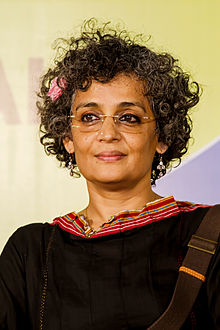
This novel won the Booker Prize in 1997, so I am somewhat tardy in reading this Indian author, Arundhati Roy, whose background interested me almost as much as the novel.  She was born in 1961 in Shillong, Meghalava, India, to Rajib Roy, a Bengali Hindu tea plantation manager from Calcutta and Mary Roy, a Syrian Christian women’s rights activist from Kerala. When she was two, her parents divorced and she returned with her mother and brother to Kerala.  In her early career, Roy worked in television and movies, but she became disenchanted with the world of films and began writing her first novel,  The God of Small Things  in 1992, completing it in 1996.   She has since written The Ministry of Utmost Happiness (2017), and a long list of non-fiction works, most of which seem to be associated with her advocacy work.  Ms Roy has opposed India’s nuclear, industrial, and economic development policies, as well as US foreign policy, Israel, the Sri Lankan government, and numerous other initiatives.  She has been a controversial figure in her home country.

Arundhati Roy

The God of Small Things was critically acclaimed by major newspapers in the US and Canada.  Ms Roy received and advance of £500,ooo which, along with her prize money, she donated to her causes.  The novel was a commercial success.  Critical response in the UK was somewhat less positive, and the award of the Booker Prize was controversial.  Carmen Callili, a 1996 Booker Prize judge called it ‘execrable’, and The Guardian said its context was ‘profoundly depressing’.

I found the book neither execrable nor profoundly depressing, but I didn’t think it is extraordinary as the New York Times did.

The book is set in the 1960’s in Kerala, India, and much of the story is autobiographical about a somewhat dysfunctional middle class family.  The principle characters are young twins Rahel and her brother Estha, aged about 7, their mother Ammu, who is divorced, and their maternal grandmother, Mammachi.  There are also Chacko, Ammu’s derelict cousin, his English ex-wife, Margaret, their nine-year-old daughter Sophie, and Chacko’s mother – the twins great aunt – Baby Kouchamma.  Gradually emerging from the plot is Velutha, a Paravan untouchable, who is beautiful, competent and Ammu’s lover – the God of Small Things.  There are some terrible things that happen: Estha is molested by a soft drink seller in a movie theater, the twins rebel and go into hiding, Sophie drowns, and Ammu’s affair with Velutha is discovered, but none of these events, in the context of India is depressing.  All, with the exception of Estha’s molestation are the natural flow of events.   As it is told, the assault on Estha seems largely preventable.

The writing is certainly very clever: much of the story is told from Rahel’s point of view, with child-like idiosyncrasy.   The characters are unique and credible, though I have a lingering doubt about the fraught relationship between Ammu and her twins: why did it become so bi-polar?  There is a considerable amount of scene description, such that if it were abbreviated, the book would be at least 15% shorter.  But Ms Roy’s descriptive talents are so imaginative, and with some exceptions, so satisfying, that most readers will forgive her.

If you know India and like India, this is a book that should be read, not because it will help one understand India today, but because it provides a context for today’s India.