The Book is No Longer Doomed!

In case you didn’t see it, there was an article in The Daily Telegraph last month: ‘A New Chapter as Sales of Print Books Recover’, and it goes on to say:

“. . . Reports of the death of the traditional book have been greatly exaggerated, according to the definitive annual survey of the industry.  The Publishers Association study (UK) revealed sales of print books are rising while digital sales are down for the first time since the invention of the e-reader.  Experts say the claim the ‘physical book is doomed’ can ‘finally be refuted’.

“Stephen Lotinga, the Publishers Association chief executive said: ‘Those who made predictions about the death of the book may have underestimated just how much people love paper’.

“This year’s annual report shows physical book sales of £2.76 billion in 2015, up from £2.75 billion in 2014.  Digital sales dropped from £563 million to £554 million, the first year-on-year fall since 2011 when the association started measuring e-book sales.  The change has been attributed to readers realising the pleasure to be taken in a physical book, as well as the popularity of lifestyle non-fiction that does not translate well to digital.  Among those are adult colouring books, which have seen a boom in the last year, along with cookery books and retro humour such as the spoof How to . . . Ladybird series, which proved popular at Christmas.

“Hardback versions of much-hyped new works such as Harper Lee’s Go Set a Watchman also proved best sellers, along with cult novels such as The Girl on the Train by Paula Hawkins.

“Joanna Prior, managing director of Penguin General Books, said: ‘Both the increase (in physical book sales)and decrease (in digital sales) are too small . . . for us to make any claims for big shifts in consumer behaviour or make predictions for what lies ahead.  But I do think any suggestion that the physical book is doomed can now be definitively refuted.’

I, for one, am pleased to see these results.  In the first place, I have never been able to convince myself to read a digital book.  For me, having real book in my hands and being able to turn the pages is the essence of comfort in reading.  When I was doing a lot of driving, I found that audio books were a much better form of entertainment on a long drive than listening to the radio, so I was a regular user of the audio books section of the local library.  In fact, when I stopped taking long trips by car, I wanted to read the Qur’an.  I downloaded a copy to my iPod and listened to in when I was in the gym.  (Now, when I’m in the gym, I watch BBC News, and, occasionally, listen to country music.  I find the activity in the gym too distracting to concentrate on a good, new novel.)

Secondly, I get a sense of personal satisfaction from producing a physical book: one that I can hold in my hands of give to a friend.  And, finally, author royalties tend to be better – per unit sold – for physical rather than electronic books.

Famous Books Turned Down by Publishers

There was a column in The Daily Telegraph last month by Charlotte Runcie, who, as far as I can tell, is a poet and freelance journalist.  Her column includes five egregious examples of famous authors whose books were turned down by publishers.

Charlotte_Runcie-small

Charlotte Runcie

Carrie

Stephen King received so many rejection letters for Carrie that he kept them all on a spike in his bedroom.  When it was first published in 1974, it was a runaway success, and the paperback sold more than a million copies in its first year.

Harry Potter and the Philosopher’s Stone

J K Rowling’s first Harry Potter manuscript was snubbed by 12 different publishers.  Eventually, Bloomsbury took a chance on the debut novelist: they offered an advance of £1500 and suggested she get a day job, just in case.

The Spy Who Came in from the Cold

John le Carré’s Cold War classic was brutally rejected by a publisher whose dismissive verdict was that the writer hadn’t ‘got any future’.  Still, it fared better than William Golding’s Lord of the Flies, which was turned down 20 times.

Lolita

This daring novel was rejected by so many American publishers, including one who recommended ‘it be buried under a stone for a thousand years’, that Vladimir Nabokov eventually published it in France – a more enlightened market.

Moby Dick

Herman Melville’s manuscript was dismissed with a despairing note from a publisher who said, ‘First, we must ask, does it have to be a whale?  While this is rather delightful, if somewhat esoteric, plot device, we recommend an antagonist with a more popular visage among the younger readers.  For instance, could not the Captain be struggling with a depravity towards young, perhaps voluptuous maidens?’  The book was eventually published, whale and all, but Melville had to fund the typesetting himself.”

As Andrew Michael Hurley said about the frustrations of writers finding a willing publisher, in a previous post: “So many times you feel like giving up and thinking, this isn’t going to happen.  But it does. It absolutely does.”

Publishing Success

There is a story in The Daily Telegraph last month about how Andrew Michael Hurley achieved success with his first novel, The Loney which won the Costa Prize for the year’s best first novel.  This May, it won the Book of the Year award at the British Book Industry Awards.   Hurley is a former teacher from Preston (northern England).  He self-published two collections of stories before taking up part-time work as a librarian, so that he would have time to work on a novel.  He spent almost four years working on The Loney before showing it to friends and colleagues.

images

Andrew Michael Hurley

The people who read it, he recalls, “Said it was great – but where would it go in bookstores?”  (The novel is set on a wild stretch of northwest English coast, and mixes captivating descriptions of the landscapes with a mixture of the ridiculous and the terrifying.)  The article says, “It follows the activities of a small group of hardline Catholics – the narrator, his developmentally challenged adult brother, his fervently religious parents and two elderly friends – as they mount an expedition to a holy well in the company of their new parish priest.”

Three years ago, Mr Hurley couldn’t find a publisher anywhere.  “He sent it to agents and small publishers, all of whom responded either with silence or with polite notes of refusal.  Eventually, searching the internet for possible publishers, he came across Tartarus, a small press specialising in ‘literary supernatural/strange/horror fiction’ and run from a house in the Yorkshire Dales by the writers Ray Russell and Rosalie Parker.  ‘It was just one of many books when it arrived,’ says Russell.  ‘Ros read it and loved it, but I was slightly sceptical, mainly because over the years we’d had the impression that our customers preferred short story collections.  But as Ros said, the whole idea of Tartarus was to publish books that we liked – and if we liked then, hopefully other people would as well.’

“In London, the sharp-eyed publisher Mark Richards at John Murray read the book and recognised it, he says, as ‘a first novel of extraordinary assuredness.  It felt like the work of someone who had been writing for 40 years.’  He made contact with Hurley and the proprietors of Tartarus and arranged ‘to bring it to the mass market audience that the book could definitely reach.’

“Hurley says, ‘I’m 41 now, so it’s been a long time coming.  I’m very grateful that I can concentrate on doing something that I love more than anything else.  All the rest is just an added – though very welcome – extra. . . . I’m terrible at giving advise on writing,’ he says, ‘but perseverance has to be the key.  So many times you feel like giving up and thinking, this isn’t going to happen.  But it does.  It absolutely does.'”

Review: Whiskey Tango Foxtrot

My wife and I saw this film last weekend.  It was a disappointment.  The film, which is military code for ‘what the f**k’, is based on the memoir, The Taliban Shuffle, written by Kim Barker, about her assignments as a war correspondent in Pakistan and Afghanistan.  I haven’t read the book; I read an article about Ms Barker and the book that appeared in The Telegraph.  The book sounded interesting and thoughtful, with a black sense of humour.  In fact, the New York Times book review confirmed this.

jp-book-popup

Kim Barker

The film, which has Tina Fey playing Ms Barker, begins with her volunteering for an assignment in Afghanistan to escape her humdrum assignment of covering minor stories; besides: she is single with no children.  She is thrown into cheap accommodation in the green zone with a lot of other expatriates, some of whom are competing for the same stories.  A US Marine general regards her as an inexperienced liability, but she achieves credibility by gaining candid interviews with US soldiers, putting herself in harms way to capture video footage, and by gaining the respect of some Afghans.  Eventually, she realises that being a war correspondent is not in her best long term interest, and she returns to the States.

Tina_Fey_Muppets_Most_Wanted_Premiere_(cropped)

                                                                                                                                   Tina Fey

I had three problems with WTF.  First of all there was too much emphasis on the partying going on among the correspondents and other expats.  The film left me with the impression that every night was an Animal House blow-out.  While I’m sure there was uninhibited drinking and casual sex, the emphasis on that aspect of life as a war correspondent made it difficult to position the film as a serious commentary, which Ms Barker’s book clearly is.

Secondly, the dialogue was difficult to follow.  Actors were speaking at a frantic pace and using lots of slang.  Eventually, I realised I could understand what was going on by just watching the video.  If the audience can’t follow the dialogue, why include it?

Third, and most important, the film was a series of events, some funny, some sad, some thought provoking, some totally forgettable, without a unifying theme or message, except that the danger involved in covering a war can be addicting.  Ms Barker, in her book draws several sobering conclusions about the ‘Af-Pak’ region, and why the West was doomed to fail in its strategy of involvement.

I will say that Tina Fey is engaging in the lead role, Christopher Abbott is credible as her Afghan fixer, and Martin Freeman does a fine job as the lustful, flippant Scottish correspondent.  Some of the video footage is worth seeing, and there are some examples which illustrate the huge culture gap, but these opportunities are largely lost.

Freedom of Speech

Most of us are in favor of freedom of speech; we regard it as one of the great benefits of living in the West.  I, as a writer, am bound to be a strong supporter of free speech.  But recently, there have been at least three categories of objection to freedom of speech:

  1. Government, and other public bodies, which do not want certain items of their information exposed
  2. Individuals (mostly celebrities) who do know want their actions to be publicized
  3. Religious groups who do not wish to see any criticism of their beliefs

As a writer, I am not involved in categories 1 & 2, but I can’t resist commenting on each of them.  Regarding Category 1, the usual objection by a governmental body to disclosure of information is: ‘The public don’t need to know’ or some similar excuse.  In my experience, the real reason is; ‘We’ll be embarrassed if that is disclosed’.  To which my response would be: “All the more reason to disclose it!”  I believe that the only legitimate reason not to disclose the requested information is ‘national security’.  Not infrequently, the body will protest that disclosure represents a financial burden.  If this is actually the case (reams of information, much photocopying, etc), I believe the requesting party should reimburse the costs (but only the costs – no discouragement fees).

Category 2 has been in the news lately with some individuals obtaining court orders prohibiting the media from publicizing acts (usually sexual) which they don’t want ‘people’ (read their wives) knowing, or about which they feel embarrassed.  I have no sympathy whatsoever for these individuals.  The appropriate remedy for these problems is not to prohibit their disclosure but to avoid creating them in the first place.

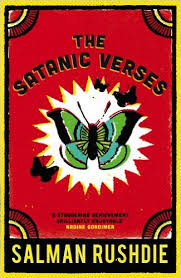
Category 3 is one where I’m involved.  In several of my books, my characters have criticized some aspects of religious culture or practices.  I have, for example, characters saying that Catholicism is nearly ‘polytheistic’, because Catholics are encouraged to pray to saints, rather than to God.  This being similar to Aztec or ancient Greek beliefs in multiple Gods.  My characters have also said that Islam, unlike Christianity, has no formal, overriding instruction to love your fellow men.  They have also said that Muslims can be too defensive of their religion, thereby conveying the impression that Islam requires protection.  Undoubtedly, some Christians and Muslims would object to these comments, but they are made ‘in good faith’ without any intention to insult or injure.  In my view, no religion is perfect; only God is perfect, but no religion should be mocked.  While I defend the right of the Charlie Hebdo journalists to publish demeaning caricatures of the Prophet, I consider it to be insulting, stupid, and in bad taste to do so.  I am currently reading Salman Rushdie’s The Satanic Verses.  (Better late than never.)  In it, there is a character Mahound, who is a weak, indecisive prophet, who speaks with an angel Gibril, who doesn’t know what to say.  I haven’t read enough of the book to know what happens with these characters, but my reaction, so far, is that Rushdie is making fun of Islam, and, in particular, of the Satanic Verses in the Qur’an.  I’m not a Muslim, but I don’t think it’s funny, or amusing.  If Rushdie wants to say these kinds of things, he has a right to do so.  But, it’s intentionally insulting to Muslims to do so.  Back to my point about the defensiveness of Islam, I consider it a gross overreaction to sentence Rushdie to death.  If I were a Muslim who felt insulted by The Satanic Verses, I would tell the author how I felt, ask for an apology, and read nothing more that he wrote.  (But since I’m a Christian, I’ll continue reading.)

When Your Book Becomes a Movie: Rewards and Pitfalls

Carol Pinchefsky has an article under the title Wizard Oil on the Intergalactic Medicine Show website about the pros and cons of having your book become a movie. She is a freelance writer of technology, games, and geekery for various publications living in New York.  Extracted below are some of the key points she makes.

index

Carol Pinchefsky

The Lord of the Rings films and the combined Harry Potter films have earned $7.3 billion. Both sets of movies were adapted from books.  Royalties from her adaptations have helped make Harry Potter author J.K. Rowling the second richest woman in entertainment, as well as the richest author in history. This number is higher than the gross domestic product of some small countries, including the Bahamas and Mongolia, enough to keep an author in orchid-scented paper and gold-dusted typewriter ribbon for several lifetimes. Most science fiction and fantasy authors are happy to get by on a fraction of that amount.

“Here’s how it works: a producer or production company ‘options’ a book — that is, buys the rights (typically for several thousand dollars) to adapt the book for a period of time (typically from eighteen months to two years). If the producers have not adapted the book when the agreed-upon the period of time lapses, the rights revert back to the author.  Few books that are optioned are actually produced; some books get optioned more than once. Although most optioned books languish in “development hell,” with promises of big-name stars dangled in front of the author, only to have the project stymied for years on end, sometimes these promises come to life.  . . . For some authors, seeing their books turned into extravagantly funded film is the culmination of a dream.  But is having a book adapted a good experience for the author?

“Financially, yes. The option fee is like free money: thousands of dollars for what amounts to almost no extra work. And if the book gets produced, the author receives royalties–even more free money.  Plus, books adapted for film or television also get an exposure and recognition that other books do not; curious cinephiles often find their ways to original material of a show they’ve enjoyed. This can catapult an author from a position of moderate success into bestsellerdom.

“But adaptation is not without potential hazards: comically bad acting, stupefying dialog, and a complete and utter lack of understanding of the original book have made their way into the cinema and onto the television…all bearing the name of the author.  (This happens with such frequency that fans of a particular book are reluctant to watch adaptations of their favorite books. Even though they would like to share their passion with the world, fans can bitterly resent shoddy or inconsistent portrait.  The author has no recourse, except to divorce him/herself from the production. But by then, her/his name has become linked to a disaster. For some, no amount of money can heal a wounded reputation.

“However, several authors can proudly bear witness to successes, where they’ve sat on set, consulted with the director, and even contributed to the script. More important to them, they have seen the characters and the worlds they’ve created come alive. “I went to visit the set, and my characters are there, only everybody else can see them too,” says Jim Butcher, author of the Dresden Files, now a new series on the SciFi channel.  Butcher’s joy did not end there. ‘I got to be an extra in one of the shots, I get to be one of Butters’ assistants and morgue guys and I help carry out a coffin.’

“Tanya Huff, author of Vicki Nelson Investigates series, says that not only was she treated well by the producers and asked her opinion on casting decisions, ‘I was so incredibly honoured to be asked to write a script for the show.  I’d never written a script…writing for television being very, very different than writing for print.’

“Despite their positive experiences, some authors were not completely unscathed. Although Mike Mignola, author of the Hellboy, was not present during initial talks with producers, he found that part of the process slightly uncomfortable: ‘They’re dissecting and reassembling your child. You don’t want to be in the room for that.’ For Butcher, ‘if anything, the worst thing has been critics. Apparently now that there’s success, the critics feel much more free to whip out the scalpels and go at you to draw blood.’  But those negative experiences pale next to the worst-case scenario that happened to acclaimed author Ursula K. Le Guin.  The adaptation of her Earthsea series had only a passing resemblance to her original material, for example, dark-skinned characters were made white. Le Guin disowned the made-for-TV movie.  ‘Despite lavish ‘promises’ of consultation, I was entirely excluded from the process. Both films were exploitive, using my books merely for the name and some character names and ideas, but arbitrarily changing and ‘stupidifying’ the story,’ says Le Guin.

“Authors find it flattering to know that people with money care enough about their book to spend months of their lives and millions of dollars on it. But this balm to the ego should not replace common sense. The authors whose books have been adapted have advice:

“Butcher says, ‘Make sure you’re working with an agent you can rely on. Make sure you stay in close contact with your agent. Make sure you read all the contracts, because they say things and you think you know what they mean and you don’t.’

“Le Guin says, “When it comes to the actual contract: If they tell you they love your marvelous book and are going to put it straight onto the screen just as it is, if they promise to send you the screenplay and listen to your reactions to it because they know you are greater than Shakespeare, if they give you a fancy title such as Creative Consultant–even if they give you some money to be Creative Consultant–if they tell you they will consult with you on all important points–don’t believe them…. Mostly the rule for the author is ‘Take the money and run.’ And never look back.’

“Huff says, ‘If the process goes off the rails, as sometimes it does, give your readers credit enough to realize that you had nothing to do with it. And if, as in my case, it’s a wonderfully realized extension of your work, smile and say thank you.’

“Authors with a specific vision as to how their works should be portrayed, and are not willing to compromise, should not allow their books to be filmed–no matter how tempting the financial reward (potentially billions of dollars, but more likely in the tens or perhaps hundreds of thousands). Know yourself.  Mignola says, ‘You have to remember film is an entirely different medium…. I think hopefully nobody is so naive that they think their work is going to be preserved as is on screen. And you don’t want them to mess with it, don’t let them have it.’

“But many authors would like to see their books reach a larger audience while concurrently lining their pockets. How does an author get her/his books turned into the next Hollywood blockbuster?  In all cases, my interviewees were approached by a production company, rather than contacting a production company themselves.  Literary agent Joshua A. Bilmes says this is almost always the case. ‘Just about every project that I have sold to Hollywood has been from somebody finding their own way to a property and wanting it.’

“‘You have to contact someone who has contacts in the film industry. There’s not a lot of forums for unsolicited work to get seen by the film industry,’ says Eli Kirschner, who works for Created By, a management company that specializes in adapting popular books into movies.  Kirschner says the best way for an author to get his/her works adapted is ‘getting your books publicized…. If a writer isn’t really well known or doesn’t get an Entertainment Weekly and Publisher’s Weekly review…I’d say that they do kind of have to know someone in the film business.’ Failing that, ‘If an author believes in his work, he can make a trip to LA and get his book in the hands of people who can do something with it,’ says Kirschner.

“Having a novel adapted is an arduous, lengthy process for an author. And for those who create their own universes and tend to work alone, the loss of control can be unsettling.

“But for some authors, the potential rewards outweigh the very real risks. As Huff says, ‘I have had my character, Henry Fitzroy’s, teeth at my throat. It doesn’t get better than that.'”


Writing Contests: A Cautionary Tale

Warren Adler published the following article, extracted below, on the Huffington Post Books page in June of last year.  Until I read it, I hadn’t realised there was such explosive growth of on-line writing contests.

Warren Adler is best known for The War of the Roses, his masterpiece fictionalization of a macabre divorce turned into the Golden Globe and BAFTA nominated dark comedy hit starring Michael Douglas, Kathleen Turner and Danny DeVito. Adler’s international hit stage adaptation of the novel will premiere on Broadway in 2016. Adler has also optioned and sold film rights for a number of his works including Random Hearts, The Sunset Gang, The War of the Roses – The Children,Target Churchill, Residue, Mourning Glory, and Capitol Crimes.

index

Warren Adler

“When I started the Warren Adler Short Story Contest in 2006 I had rather lofty ideas about integrity and fidelity to the goal of resurrecting the popularity of the short story which was in decline. I appointed qualified people, meaning people who were either authors themselves or teachers of literature or creative writing with the taste and experience to judge the submissions honestly.

“It was a difficult chore at best and I wanted to guarantee that those who were the chosen winners were the very best of those who submitted their work. I offered cash prizes out of my own pocket. The first Prize Winner received $1000 and prizes were offered for our second and third choices. The submissions were free of charge.

“In addition to the cash prizes I promised that the prizewinning stories would be published as an e-book anthology on Amazon and offered for sale with royalties given to the authors of the stories. My hope, of course, was to give a boost not only to the short story format but also to the writing careers of the talented writers who participated. The book, as promised, is available on Amazon.

“The digital publishing revolution was in its infancy and I believe I was the first novelist to ever create such a contest on the Internet. As the cyber world grew so did the submissions. It became difficult and time consuming to read all of the offerings and finding enough quality judges to devote the time to honest assessment was becoming exceedingly burdensome to administer. The last thing I wanted to do was jeopardize the integrity of the contest.

“Eventually I had no choice but to begin charging a small submission fee designed to perhaps curb the number of submissions as well as to provide judges with a stipend that would make it worth their time. Above all, the goal was to maintain the integrity of the contest and further the original goals of the enterprise.

“After seven years of sponsoring the contest, I opted for a hiatus. It was a victim of its own success. To do it right required time, personnel and resources. I finally suspended the contest. I had no desire to create a startup and it was interfering with my own busy writing career.

“What I didn’t imagine was the tsunami of writing contests that it inspired. Worse, I never suspected that it would serve as a business model for entrepreneurs to get into the game just for profit.

“I am somewhat suspect of the value these contests hold for participants.

“Self-publishing requires self-promotion. It is an absolute necessity and comes with the territory, requiring time, effort and funding. The goal is “discoverability.” Most never achieve it, regardless of the quality of their work.

“The rise of self-published fiction authors has been spectacular. Unfortunately the glut has made it difficult for them to stand out from the crowd however excellent their writing is. Genre writers with promotional skills along with lots of money and time might find a niche, although the odds of making enough money to give up their day job is long.

“These writing contests, with their prestigious sounding names, offer the impression of quality promotion for the winners and, of course, bragging rights which can be dubious and of suspect value. One wonders who the judges are that are taking on such a massive amount of submissions. Few of these contest sponsors reveal their methods or the people who read this mass of material and make their judgments. It is often true of the most prestigious awards like the Pulitzer and the Nobel and I often wonder how some of the winners have reached the attention of the judges and who makes the screening decisions.

“By and large, internet-based contests tend to always charge a submission fee, which accounts for the sponsor’s profits as well as its proliferation. Considering that these contests are expanding they must be profitable for the sponsors and are inspiring others to create mirror image money-making opportunities using a similar business plan. Their targets are vulnerable, aspiring writers desperate for recognition and the realization of their dreams.

“Most of these contests are based upon dreams of literary glory, popularity, riches and movie adaptations on the part of authors. All truly believe that their work is deserving of recognition, popularity and prestige. Many probably fit that description. Indeed the sponsors know this and exploit it. It is the key to their monetary success.

“There is a great deal of literary talent out there who go unrecognized and do not attract the traditional publishers. Of course it works both ways. The traditional publishers sometimes gamble on first novels and often lose their bets in the sales arena. Such is the nature of the beast.

“This is not meant to be a blanket condemnation of writing contests. But since the Internet is a vast swamp of snake oil salesman hawking worthless schemes, products and ideas, consider this a cautionary tale.”

My experience of writing contests is very similar to the picture Mr Adler paints.  I have entered a number of contests with most of my books, and I have won some ‘awards’ – but no money.  Even winning first place in a genre did not merit a financial award.  So, I have a wall covered with award certificates.  Invariably, I had to pay an entry fee.  To me, this doesn’t seem unreasonable: there are administrative costs and (presumably) judges fees to be paid.  But, I have never learned how the judging would take place, let alone the identity of a single judge.  I attended one award ceremony in London, at which I expected a journalist or two to be present: there were none.  Attendees consisted of some of the authors who won awards and two low-ranking admin people representing the contest.

Having said this, I still try out new contests that appear to offer more value, particularly those that offer a critique of the work submitted.

Publishers Have a Lot to Learn from J K Rowling

Allison Pearson had a column in The Daily Telegraph last Wednesday under the above title.  Ms Pearson is a Welsh author and newspaper columnist. Her novel, I Don’t Know How She Does It, published in 2002, has been made into a movie of the same name  starring Sarah Jessica Parker.   Her second novel, I Think I Love You,  was published in 2010.   A sequel to I Don’t Know How She Does It was announced in 2015.  The column will amuse all of us who struggle to receive a contract from a first line publisher.

index

Allison Pearson

“J K Rowling has shared a rejection letter from a publisher for her first adult crime novel, written under the pseudonym of Robert Galbraith.  The publisher suggests that The Cuckoo’s Calling could not be published ‘with commercial success’, and adds, for good measure, that the author might be helped by a writing course.

“Rowling is to be congratulated for not immediately conjuring a Harry Potter spell, such as Avada Kedavra (Killing Curse) against this dimwit with no literary judgement.  As it happens, I am addicted to Rowling/Galbraith’s novels with their wonderful Caliban-meets-Columbo detective, Cormoran Strike.  The quality, both of writing and observation, is evident from the first page.

“Rejection, alas, is the lot of the new writer.  I am currently judging the Lucy Cavendish College Fiction Prize and am reading the entries with tender  care – so well do I remember the sting of being rejected myself.

“Fourteen years ago, I sent some chapters and a synopsis to a celebrated editor of women’s fiction.  I was quietly confident that the story of a stressed-out working mother would strike a chord.  The editor emailed back and said that the novel was not for her.  Should I seriously wish to become an author, I might like to go away and read a recent novel by one of her writers.  Was I familiar with her work?

“I was, indeed.  Ah, rejection dejection.  The slump lasted a while until I was lucky enough to be snapped up by a couple of brilliant women editors at Chatto and Vintage.  The book they published, the same one rejected by the first editor, was I Don’t Know How She Does It.

“When that novel was number one on Amazon in the Unites States, did I think with quiet satisfaction of the nitwit who had rejected it?  I did, dear reader, I certainly did.  As J K Rowling would probably tell you, revenge is a dish best served cold with an international bestseller.”

Review: The Past

I bought Tessa Hadley’s latest novel, The Past, because of a very favourable review in Time Magazine.  Ms Hadley is the author of five previous novels which have achieved recognition.  She has also produced two short story collections, and her writing appears regularly in The New Yorker.

index

Tessa Hadley

The Past is about the journey of three sisters and a brother, all adult, to their grandparents’ run-down, abandoned, old home in the Somerset countryside.  They meet there for three weeks of holiday in the summer to decide what to do with the house, now that their parents are dead.  The house is filled with memories; their mother took them there as children when she left her husband.  Conflicts, jealousies and attachments emerge during the three weeks.  Fran’s two young children, Ivy and Arthur; Molly, Roland’s sixteen-year-old daughter; his third wife, Pilar; and Kasim, the twenty-year-old son of Alice’s ex-boyfriend, add interest and complexity.

Ms Hadley’s writing is beautiful.  The descriptions of the Somerset country are almost poetic: her fondness for rural England is unmistakable.  The characters are real and well-drawn, with the possible exceptions of Kasim, who often seems petulantly distant for a man of college age, and Ivy, whose behaviour seems unaccountably contrarian.

The only problem I had with The Past is that nothing of real significance happens.  There is plenty of interaction among the characters which sheds light on their personalities and values.  Personal histories emerge.  The most significant events are the children finding a dead dog, Kasim and Molly making love, Harriet making a pass at Pilar, and one of the sisters estranged husbands’ being sent away.  The inside of the dust jacket says, “small disturbances build into familial crises”, but the crises are neither grand, nor ultimately meaningful.

However, if one is seeking a comfortable, quintessential British story about family, The Past would be a very good choice.

Social Media

I would really like your comments on this post, because while I’m engaged with social media – as I’ll tell you below – I’m not sure I’m making the most efficient/effective use of the various social media.

index

First of all, let me tell you what I have.  I have a website: http://www.williampeace.net, which is actually put in place by my publisher, but I update it from time to time.  The website has a page for each of my books with a sample chapter, synopsis, information about awards, links to Amazon, etc., and a little bit about me.  This blog runs down the margin of the website.  I have an author’s page on Amazon.  On Facebook, in addition to my personal page, I have an author’s page and a page for each of my books.  I have recently started to advertise Sable Shadow & the Presence on Facebook, and I’m getting about 10 Likes per day.  I have an author’s page on Goodreads, where this blog also runs.  I am currently advertising four of my books on Goodreads, but I’m only getting one or two clicks a week: I’ve set a pretty low budget.  When I review a book I’ve read (about once a month), in addition to posting the review here, I post it on Amazon and Goodreads.  When I review a book on Goodreads, the review appears on my personal Facebook page.

Then, there is this blog.  This will be my two hundred and fourteenth post over the course of four and a half years.  Generally, I try to post once a week, and I aim the blog at people like me who are trying to make their way as writers, or who are interested in what writers think and do.  Last year, I paid about £250 for SEO – by my internet service provider – but I haven’t seen a major increase in hits: I’m up from about two per day to four per day – average.

I haven’t done Twitter, although I have registered.  My view is that Twitter isn’t a good vehicle for a busy writer (what could I say every day about writing in less than 140 characters?)  I haven’t done UTube, again because I don’t think it’s the right medium for me.  I looked into Pinterest, but again, I felt that it didn’t fit.

One thing I’m planning to do is to start answering reader’s questions on Goodreads.  That would seem to be a good investment of my time.

What else would you suggest?  I have only two constraints:

  1.   I haven’t got much free time, and what free time I have, I would rather write than promote.
  2.   I’m willing to spend some money, but I’d like to know that I’m getting a return on my investment.  So far, the return has been only what I’ve learned about social media.